A Daily History of Holes, Dots, Lines, Science, History, Math, Physics, Art, the Unintentional Absurd, Architecture, Maps, Data Visualization, Blank and Missing Things, and so on. |1.6 million words, 7500 images, 4.9 million hits| Press & appearances in The Times, Le Figaro, Mensa, The Economist, The Guardian, Discovery News, Slate, Le Monde, Sci American Blogs, Le Pont, and many other places… 5000+ total posts since 2008.

Author: JF Ptak

  • The Similarity of a 16th c Cactus and a 19th c Futuristic NYC

    JF Ptak Science Books  Quick Post  
    Follow Me on Pinterest


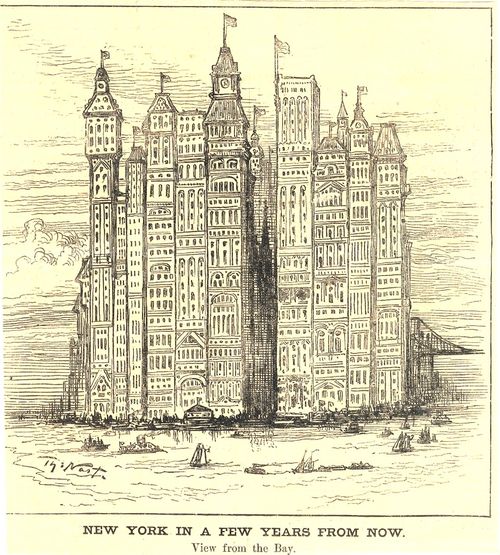
    Cactus818The future is everywhere and nowhere, hidden and obvious, localized and distant; and sometimes it is there when it really isn’t, and vice versa.  This image of the future is the last of these descriptions, though perhaps not even that, because it is a peep at a peep into the future, a reference to a reference.

    First, the cactus, seen here, from G.B. Ramusio’s (1485-1557)  Navigationi et Viaggi, printed in Venice in 1565 (and finally in three volumes, links to which are below).  Ramusio was a geographer and largely a scholar/reader/armchair-traveler, who collected travel accounts of explorers and published them together–the first such effort of its kind. 

    The second image works better if you squint somewhat while looking at the cactus–it comes from the great and slightly problematic Thomas Nast, the Harper’s Weekly social/graphic warrior.  The image appeared in 1881, and depicts New York City in the near future, he result of newly-advanced building techniques, including the elevator (and importantly!) the elevator safety brake, which allowed the construction of buildings to great and fabulous heights.  Nast saw a little bit of overeager sky-scraping in it, and pictured variegated but probably dark future from the architectural commotion. 

    Nast skyscrapper

    I’m well aware of this being an enormous stretch, but I couldn’t think of anything else to get these two images together on a single post.  (Original article here for the Nast.)

    Notes:

    Full text for the Ramusio volumes from the Internet Archives site:


  • An Alphabet of Unexpected Stems of “Un-” from 1828

    JF Ptak Science Books    Post 2139 
    Follow Me on Pinterest


    Un detail2 copy

    Having just made a post of words using the prefix “un-” in Joyces Ulysses, I thought it would be interesting to see the unusual/unexpected un- prefixed words in Noah Webster’s classic 1828 An American Dictionary of the English Language.  It turns out that the created and unusual un-words in Joyce bear a similarity-in-strangeness and the unexpected in the Webster book.  Basically, “un-” is a negative prefix, creating (mostly in adjectives) reversal, release, removal.  It is distinct from the “non-‘” stem, and in some instances understood a little better (in some examples) than the “in-” stem. 

    There are some fantastic examples of words that become quite something else in the modern eye:  beautiful words like “unepitaphed” seem to want to mean that an epitaph would be removed, altered in some way, which is an interesting thought (!), but all it meant in Webster’s hand was to be a grave without an epitaph.  “Unbearded” too–all it means is to be without a beard,, and not to have a beard removed in some way.  “Unextinct”!  A wonderful word that brings visions of resurrection, but it means just to be not-extinct, which is still a little odd. 

    And so I have chosen a few examples of words that might as well have been chosen for their color, or musicality, or potential interpretations than anything else, though basically I like the idea of what the words could become.

    An Alphabet of Un-, 1828

    A. Unaccomplishment, unalmsed, unamazed, unappalled, unanswerableness, unartificial

    B.  Unbar, unbearded, unbeget (as a verb! found in Drden, “to deprive of existence”), unbit, unbenighted (“never being visited by dark”), unbestarred, unblameableness.

    C.  Incentrical, unchristianize, uncompact, uncounterfeit, uincommencement.

    D.  Undeaf, undefaced, undeceiver, undevout, undisappointed, undreaded.

    E.  Uneclipsed, unepitaphed, unexistent, unextinct.

    F.  Unfinisher, unfleshed.

    G.  Ungalled, ungod.

    ·Posted by :

    ·in:


  • A Note on Graphical Display and a Mechanical Heart, 1876

    JF Ptak Science Books  Post 2138
    Follow Me on Pinterest


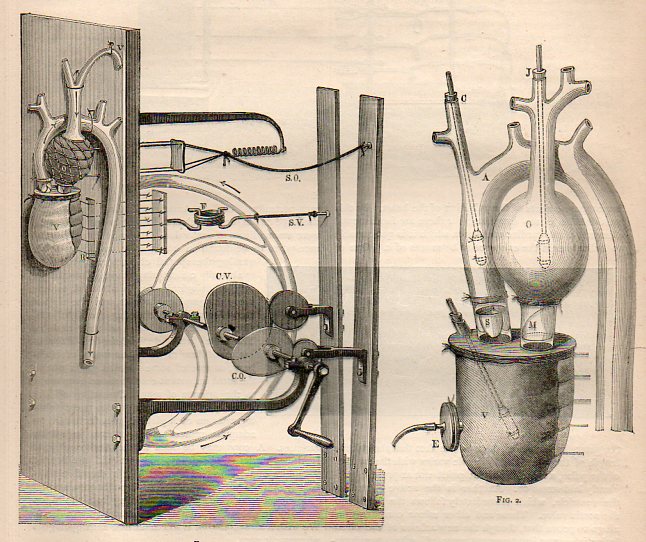
    Marey mechanical heart816

    This quick note comes as the result of a short chase on the detection of the pulse and the ability to determine death–as far back and even before Pliny life was determined by the audible heartbeat, which is where the trouble began, because one can still be very alive with a faint heartbeat. This was a major concern when dealing with folks who were thought to have expired, because in the mid-19th century and before the instruments necessary to make a careful and accurate appraisal of whether the heart was still working were yet finely developed.  Laennec’s stethoscope appeared around 1816, but as much of an improvement as it was this instrument awaited considerable refinements before a truly solid identification of a non-working heart could be established. The gaps in the determination of the arrival of death led to mortuaries where the supposed-dead were left to themselves at room temperature for three days, awaiting the ultimate determination of death which was putrefaction (as in the Munich and Frankfurt Leichenhaus and the Vienna  Zentralfriedhof). Earlier in the history of the determination of death methods were quicker and more brutal (if the patient was still alive) involving bellows-driven tobacco-smoke enema,  as well as tongue pulling and nipple twisting.  (See an earlier post here on the Worst Jobs of the Nineteenth Century for more on this.)

    Marey mechanical heart817

    This led to Etienne Marey (1830-1904), a versatile experimenter and premier instrumentalist who was a scientist, physiologist, and motion-picture/chronographer pioneer, who in the 1880’s created what was essentially the world’s first moving-photographic “slow motion” device. One iteration of Marey’s apparatus was basically a long series of ganged cameras recording a motion for a  simple task at a given time frame and presented on a continuous strip of photographic paper, sort of like a motion picture with the camera speed set at three frames per second. The resulting images were phenomenal and showed people for the first time the exactness of all manners of simple motions–motions that no longer looked so “simple” once all of its aspects could be studied from captured photographic evidence.  Even the act of hopping over a small stool or bending to pick up a bucket of water were enormously revealing in a way like Robert Hooke’s Micrographia displayed the great detail and complexity of the seemingly simple fly.

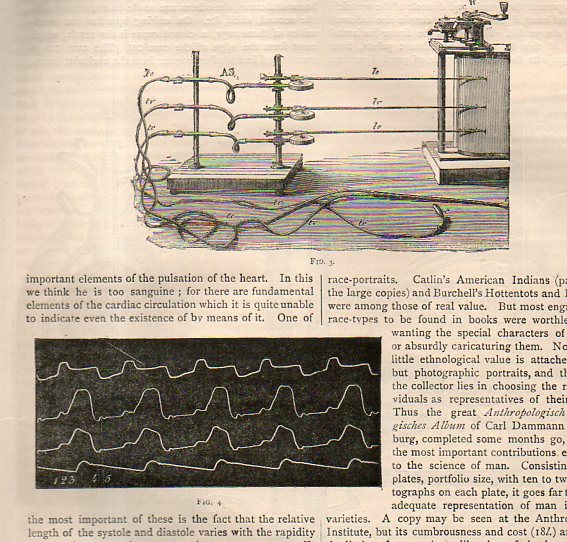
    Aside fron being one of the founders of cinematography, the other aspect of Marey’s interest in capturing and manipulating time was in medicine, where by the time this article of interest in this post was published in 1876 he had already established himself as one of the greatest cardiovascular physiologists.  What we find in this review in Nature (Thursday, January 6, 1876) of Marey’s Physiologie Experimentale (Paris, 1876) was the editor’s keen interest in the mechanical heart Marey had constructed to show the actions and functions of the heart–the first time, the article notes, that all aspects of the action of the heart were exhibited correctly in one model. 

      Of particular interest was the recording device for the pulse of the heart, which was one in a series of devices such as that improved upon, something Marey himself had done with the first-introduced sphygmograph (“pulse wrtier”) of Karl von Vierdodt in 1854.  The 1875/6 Marey instrument made major advancements in continuous graphical registration in instruments of continuous noninvasive arterial responses.


  • Yes, We Have No Bananas

    JF Ptak Science Books   Quick Post

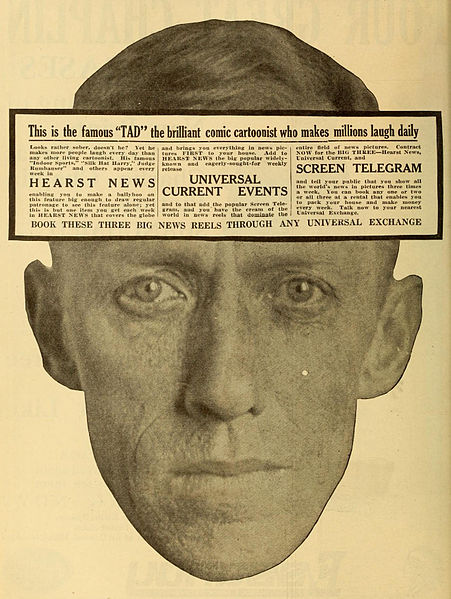
    This unusual promotional featured the perentially unsmiling and striking face of TAD (Thomas A. Drogan, 1877-1928), a cartoonist and sports writer and major contributor to the American slang vernacular. 

    TAD[Source: advertisement in Moving Picture World, January 1919]

    His contriubtions included such words/expressions as “appelsauce” (as an expression of hearing nonesense), “cake-eater”, “cat’s meow/pajamas (expressing high praise), “cheaters” (for eyeglasses), “dogs” (for feet),”dumbbell” (an unkind and slippy word for a not-smart person),  “dumb Dora”, “drugstore cowboy” (for a do-nothing/loafer), “finale hopper”, “hard boiled” (for a street- and ordinary-tough, or detective), “nickel nurse” (a great nickname for a miser/cheap person), “skimmer” (for a hat), and of course the immortal phrases “Yes, we have no bananas” and “You tell ’em!”

    ·Posted by :

    ·in:


  • An Alphabet of Un- Words in “Ulysses”

    JF Ptak Science Books   Quick Post

    James-joyce detailed

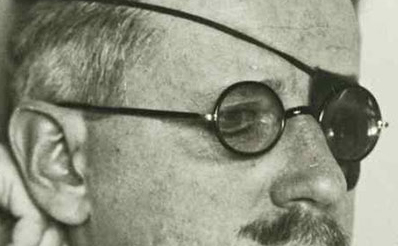
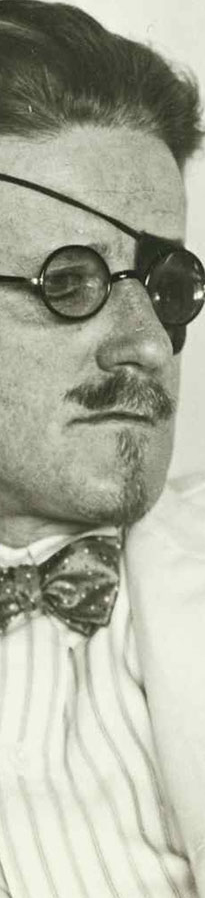
    James Joyce painted with words like perhaps no other–words created and words already created, thousands of them.  What struck me particularly though while looking through Miles Hanley’s Word Index to James Joyce Ulysses, winding my way somehow to the “U” section was the master’s rich un-use use of “un-” words, words prefixed with “un”.  It seems surprising to me that there were so many, but that was just a flash reaction, not compared to Shakespeare or Dickens or anyone else.

    There are about 400 entries for words beginning with “un”.  The following are some examples:

    Un Alphabet

    James-joyce detailed 2A Unaccountable, unadjustable, unaltered, unanswered, unanswering, unascertain, unassuminly, unattached, unattired

    B  Unbeheld, unbelief, unbelieve, unbiond, unblessed, unblioused, unborn, unbaced, unbridled, ubroken, unbuttoned, unbottoning

    C  Uncalledfor, unceasingly, uncertain, uncertainly, uncertainty, unclaimed, unclamping

    D   Un deathliness, underbrim, under jaw, undermines, understandlings, indespairings

    E   Uneager, unexplicated

    F  Unfallen, unfeigned, unledged, unfructified

    G  Unglanced, unguical, ungenitive, ungyved

    H  Unheaded, unhasty, unheeding

    I  Uninterruptedly, uninverted

    J  Unjust  (the only entry)

    K  Unkindly (and three pedestiran others)

    L  Unlace, unlet, unliving, unlookedfor, unlooped

    M  Unmack, unmaided, unmerciful

    N  Unneath, unnumbered

    O  Unobserved, unoffending, unostentationaly

    P  Unplumbed, unpar, unposted, unprepossessing

    Q  Unquestionably (and one other)

    R  Unreason, unremembered, unreeled

    S  Unsaluted, unskirted, unsleeved

    T  Untrammeled

    U  Unweave, unwooded, unwound.

    Unfortunately there are no entries for V, W, X, Y, or Z. 

    I do not have the un-words of Shakespeare, though it is interesting to see the list of words invented by him (from Shakespeare-online.com, here):

    academe accused addiction advertising amazement
    arouse assassination backing bandit bedroom
    beached besmirch birthplace blanket bloodstained
    barefaced blushing bet bump buzzer
    caked cater champion circumstantial cold-blooded
    compromise courtship countless critic dauntless
    dawn deafening discontent dishearten drugged
    dwindle epileptic equivocal elbow excitement
    exposure eyeball fashionable fixture flawed
    frugal generous gloomy gossip green-eyed
    gust hint hobnob hurried impede
    impartial invulnerable jaded label lackluster
    laughable lonely lower luggage lustrous
    madcap majestic marketable metamorphize mimic
    monumental moonbeam mountaineer negotiate noiseless
    obscene obsequiously ode olympian outbreak
    panders pedant premeditated puking radiance
    rant remorseless savagery scuffle secure
    skim milk submerge summit swagger torture
    tranquil undress unreal varied vaulting
    worthless zany gnarled grovel

    ·Posted by :

    ·in:


  • A Map of Nobody Marching Through the Southern Mountains, 1865

    JF Ptak Science Books   Post 2137  One of a series of posts on the History of Blank, Empty,and Missing Things 
    Follow Me on Pinterest


    Civil war--mil map sherman asheville188

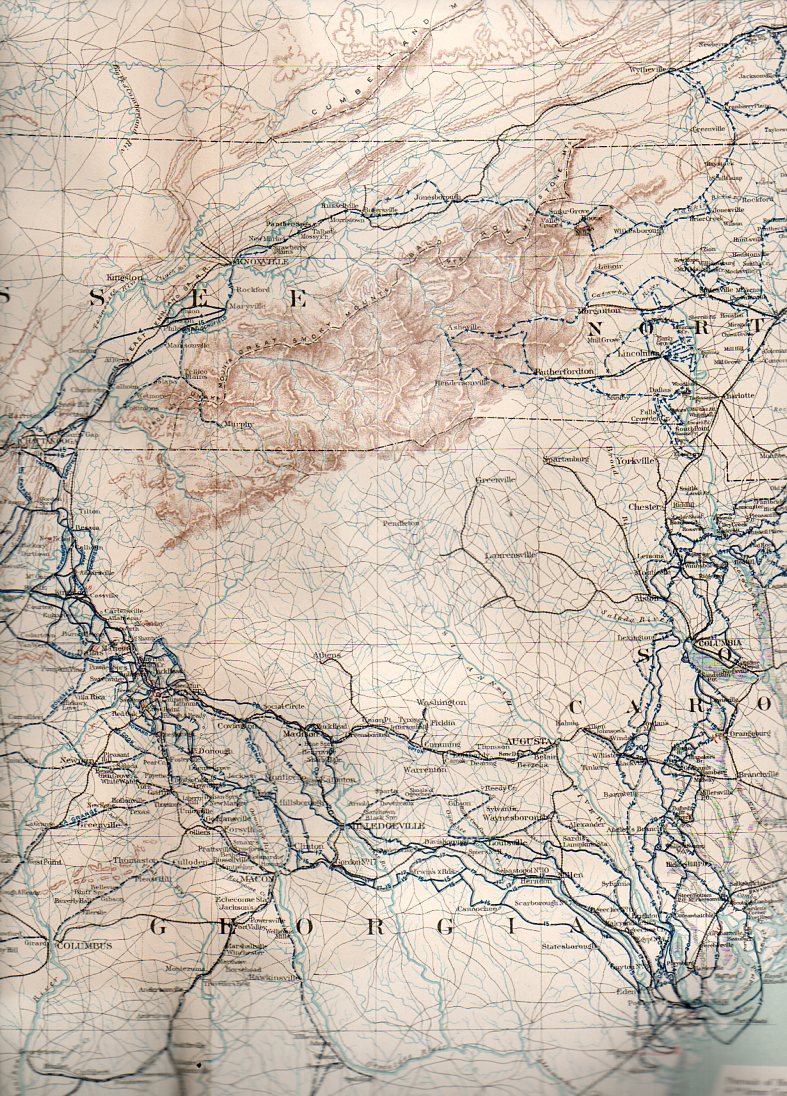
    In the history of blank, empty, and missing things in maps there can be maps with large expanses of nothingness (as in the case seen here with the Bellman’s map from Lewis Carroll’s The Hunting of the Snark, an Agony in Eight Fits), maps with mostly everything that was to be expected to be expected but intentionally wrong (as with these propaganda maps of the Polish and Czech “threats” to Germany), maps with large expanses of nothing because there was simply so data to be displayed, and so on.  And then there are the cases of perfectly good maps that are accurate and secure, but do not display what was thought to be there on the map but wasn’t because it really wasn’t there. 

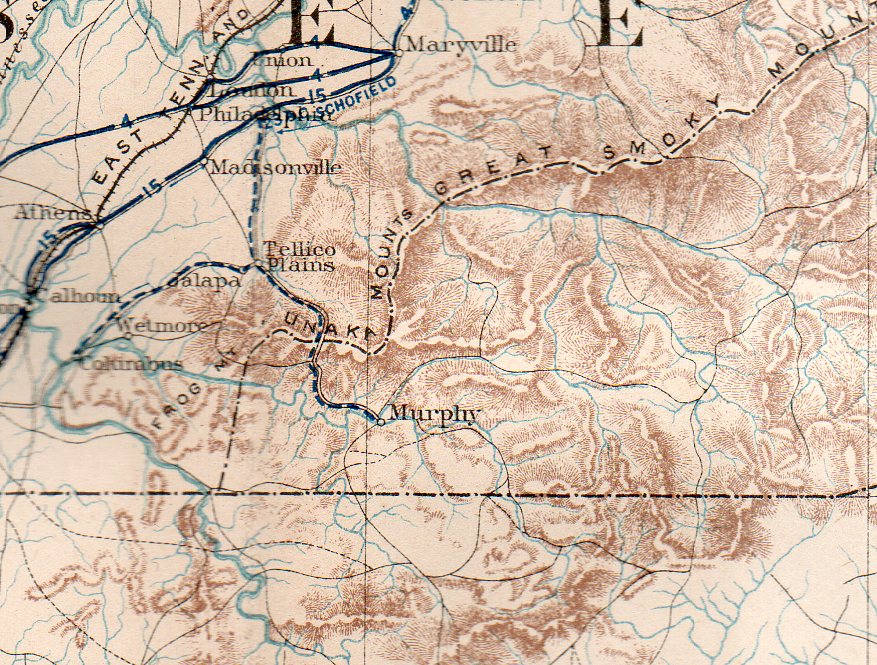
    In the store that I maintained in downtown Asheville, North Carolina, I was often asked about what sort of Civil War action occurred around those parts.  It is the sort of question that jumps out from maps showing troop movements during the war that you see on maps–maps without contour lines, or anything else that might show elevation. The answer to that question about Civil War battles here in the southern reaches of the Appalachians is that there was very little official action–and for the most part the reason for that is because there are in fact the Southern Highlands, and in the mid-19th century this very large region was just too bloody difficult to fight in or fight for. 

    This all becomes cartographically apparent when you look at the region with maps that give you an idea of the terrain. 

    There is an amazing map that shows you the extent to which this land was inhospitable for combat. The Military map of the marches of the United States forces under command of Maj. Gen. W.T. Sherman, U.S.A. during the years 1863, 1864, 18651…., which was originally published in 1865 but more widely known for its inclusion in the Atlas to Accompany the Official Records of the Union and Confederate Armies2 (full text here) in 1895.  As the map graphically shows, there are plenty of blu and gray lines depicting troop movements of the armies, though nearly all swarm around our mountainous region.

    http://farm6.static.flickr.com/5247/5281408282_bdec02e5a4.jpg

    Apart from the difficult terrain, the mountains, and general inaccessibilty, there wasn’t all that much to fight for up here–and so, aside from some regional skirmishes and a lot of political and social conflict, they didn’t.

    Civil war--mil map sherman asheville188

    At least not until the very end of the war, in the Battle of Asheville, April 6, 1865, where about 1500 soldiers met each other about 750 feet away from where we used to live, three days before Appomattox. The action there was indecisive, though Asheville was not taken by Union forces.

    And the detail:

    Civil war--mil map sherman asheville189

    Notes


  • On Mathematics and the Imagination, J.J. Sylvester, 1869

    Photo of SylvesterJF Ptak Science Books   Quick Post

    “When I imagine a triangle, even though such a figure may exist nowhere in the world except in my thought, indeed may never have existed, there is nonetheless a certain nature or form, or particular essence, of this figure that is immutable and eternal, which I did not invent, and which in no way depends on my mind.–Rene Descartes, Meditations on First Philosophy (1641) tr. John Cottingham, Descartes: Meditations on First Philosophy (1986)

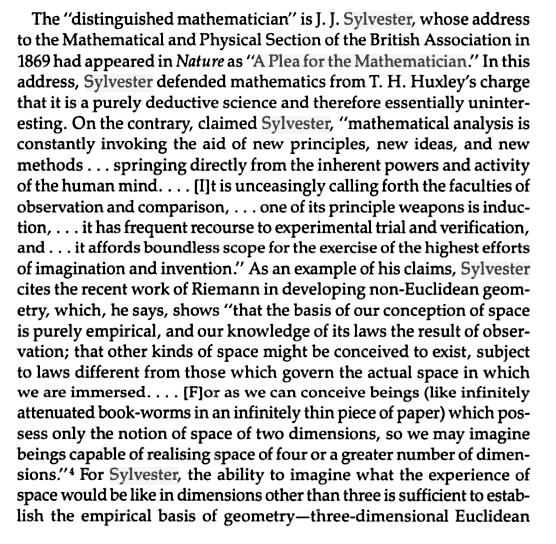
    This is the lovely response by the great mathematician J.J, Sylvester to Thomas Huxley’s muckety comment on the lack of imnagination in the mathematical sciences.  Huxley’s remarks were made at a meeting of the British Association for the Advancement of Science, stating that (Mathematics) “is that study which knows nothing of observation, nothing of induction, nothing of experiment, nothing of causation”1 This quote is taken from Sylvester’s quick and elegant responses in two articles in Nature, December 30, 1869 (231-3) and January 6, 1870 (pp 261-3), as “A Plea for the Mathematician” and “A Plea for the Mathematician II”.

    SYlvester copy“For Sylvester, the ability to be able to imagine  what the experience of space would be like in dimensions other than three is sufficient to establish the empirical basis of geometry–the three-dimensional Euclidean is not the science of space in general, but the science of the space of our experience.”–Fact and Feeling: Baconian Science and the Nineteenth-Century Literary …by Jonathan Smith, pp 181-182

    Ex nihilo nihil fit/Nothing comes out of nothing.–R Descartes, Principia philosophiae, Part I, Article 49

    The original papers are available on this blog’s bookstore section.

    ·Posted by :

    ·in:


  • The Slavery-is-not-a-Sin, Anti-Catholic Diatribist, Samuel Morse

    JF Ptak Science Books   Post 2136 
    Follow Me on Pinterest

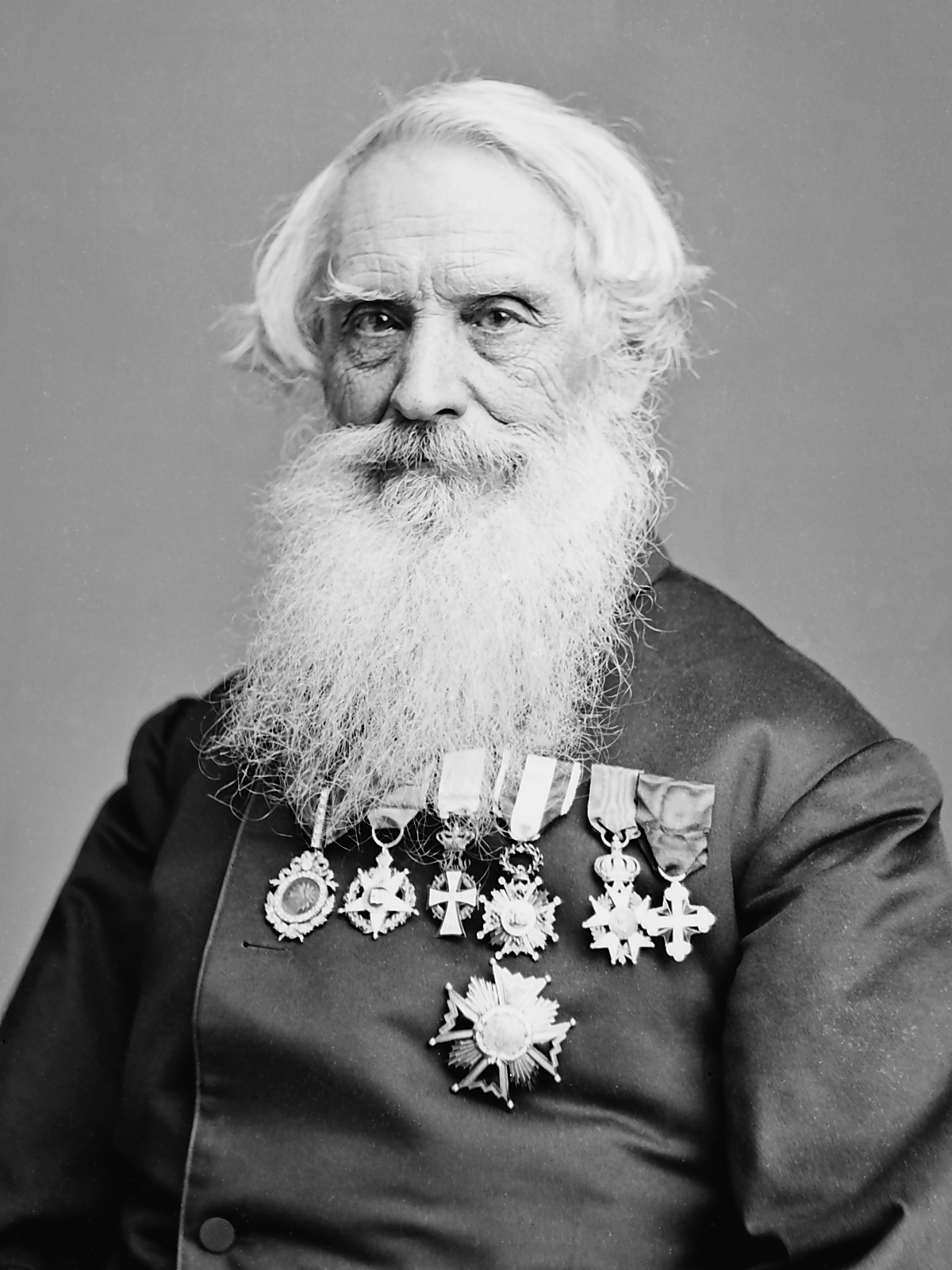
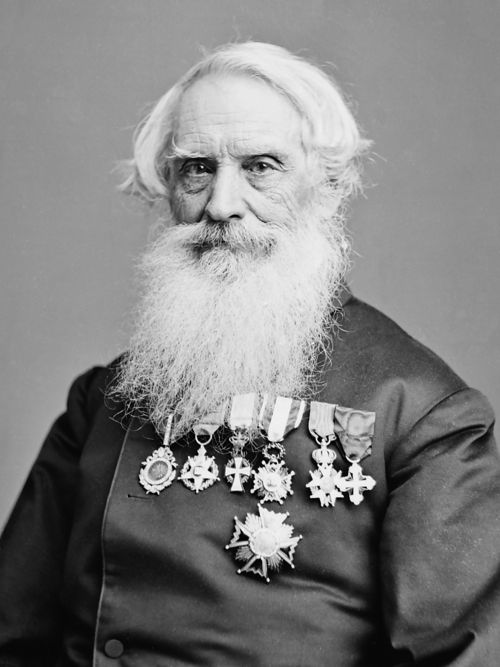
    In what could be a very long thread, this installment in the Just Because You’re Smart Doesn’t Make You Smart series takes place on the ethically/morally suspect creator of the single-wire electrical telegraph, Samuel F.B. Morse. 
    Samuel_Morse det

    Some of this could have been learned at a young age via his “militant” Congregationalist minister father, who created “a household temper…of the deepest animosity against other faiths”1.  And then again, perhaps not–but even weighing the spirit of the times in which he lived (1791-1872), Morse had a particularly long-lived, deep, and very public hatred of the Catholic Church and “Popery”, finding it a creeping abomination that was setting out to destroy the United States via the churches propagandist agents in the Jesuits and through mass immigration.

    Morse’s book on this subject, Foreign Conspiracy Against the Liberties of the United States (1835), became a much-reprinted guidebook for Catholic-haters and immigration conspiracy types, curling itself around the impending priest-ridden despotism of the Vatican and (whatever was left of) the Holy Alliance.

    “Surely American Protestants, freemen, have discernment enough to discover beneath them the cloven foot of this subtle foreign heresy. They will see that Popery is now, what it has ever been, a system of the darkest political intrigue and despotism, cloaking itself to avoid attack under the sacred name of religion. They will be deeply impressed with the truth, that Popery is a political as well as a religious system; that in this respect it differs totally from all other sects, from all other forms of religion in the country.”2

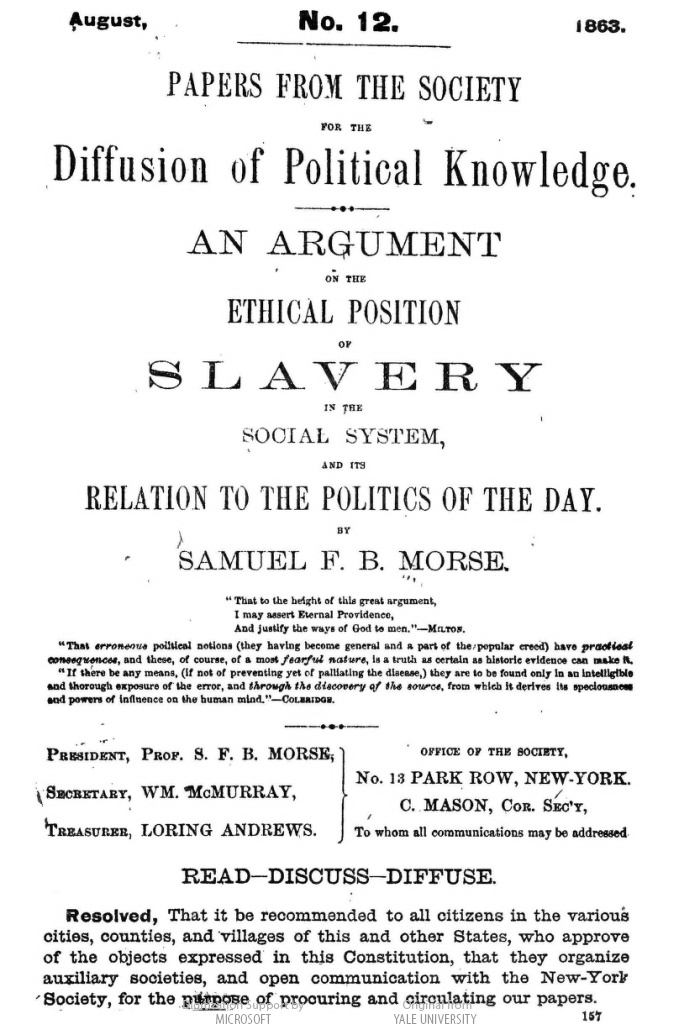
    Morse also found slavery to be an ordained right and a creation of God for right, wise, benevolent and disciplinary purposes,3  writing about it publicly in his pamphlet An Argument on the Ethical Position of Slavery in the Social System, and its relation to the Politics of the Day4 in the middle of the Civil War, 1863.

    “Slavery or the servile relation is proved to be one of the indispensable regulators of the social system, divinely ordained for the discipline of the human race in this world, and that it is in perfect harmony … with the great declared object of the Savior’s mission to earth.” (Morse, Ethical Position of Slavery, 1863, page 10.)

    “My creed on the subject of slavery is short. Slavery per se is not sin. It is a social condition ordained from the beginning of the world for the wisest purposes, benevolent and disciplinary, by Divine Wisdom. The mere holding of slaves, therefore, is a condition having per se nothing of moral character in it, any more than the being a parent, or employer, or ruler.” (Morse, Ethical…, page 13.)
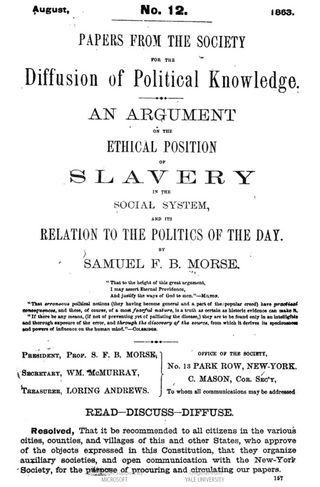
    Morse slavery(Via Yale University Library; also the Yale Slavery treatment of Morse, here.)

    The Yale website also goes on to point out that Morse thought it sacrilegious to oppose slavery and support Abolition (citing Samuel F.B. Morse, Letters and Journals, ed. E. L. Morse, Boston: Houghton Mifflin Company, 1914, 2:416):

    “Conscience in this matter has moved some Christians quite as strongly to view Abolitionism as a sin of the deepest dye, as it has other Christian minds to view Slavery as a sin . . . Who is to decide in a conflict of consciences? If the Bible is to be the umpire, as I hold it to be, then it is the Abolitionist that is denounced as worthy of excommunication; it is the Abolitionist from whom we are commanded to withdraw ourselves, while not a syllable of reproof do I find in the sacred volume administered to those who maintain, in the spirit of the gospel, the relation of Masters and Slaves”

     This goes on and on, a distribe with Scriptural and distanced-moral support, on into a cold dark night of extraordinary egotism and ethical despotism.  And it is a fine example of people with some great abilities and high intelligence could be correct in some things and wrong in so many others. 

    Notes:

    1.Gustavus Myers, A History of Bigotry in the United States, Random House, 1943, p. 160.

    2. Wikipedia article on SFB Morse.

    3.. Edward Lind Morse, editor, Samuel Finley Breese Morse, His Letters and Journals, vol 2, pp 19, 46-8, 531.

    4. An Argument on the Ethical Position of Slavery in the Social System, and its relation to the Politics of the Day (New York, Papers from the Society for the Diffusion of Political Knowledge, no. 12, 1863)
    Samuel_Morse

    ·Posted by :

    ·in:

    —

  • On the Uncommon Black Sky in the Renaissance

    JF Ptak Science Books 
    Follow Me on Pinterest

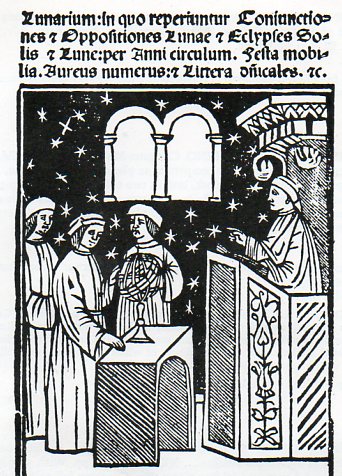
    A quick note here adding to a growing collection of “deep black” antiquarian images–this one, oddly enough, a simple black sky.  As it turns out, there are not that many old images of black skies, night skies…nor are there any great numbers showing dark room interiors, or inside of caves.  So when I come across an interesting old engraving/woodcut with a lot of black, it gains my attention.  And so with the following, which is the title page from the Spanish astronomer Bernardus de Granollachs, Lunarium: in quo reperiuntur Coniunctiones & Oppositiones Lunae…, which was a small pamphlet of 16 pages printed in Rome in 1516.  The booklet contained tables of conjunctions and oppositions of the Moon, as well as this gorgeous title page. 

    Lunarium811


  • John Donne Doth Tell What Scientist is in Hell

    JF Ptak Science Books  Quick Post  
    Follow Me on Pinterest

    “As soone as the doore creekt, I spied a certaine Mathematitian, which till then had bene busied to finde, to deride, to detrude Ptolomey; and now with an erect countenance, and setled pace, came to the gates, and with hands and feet (scarce respecting Lucifer himselfe) beat the dores, and cried; “Are these shut against me, to whom all the Heavens were ever open, who was a Soule to the Earth, and gave it motion?”
        “By this I knew it was Copernicus. For though I had never heard ill of his life, and therefore might wonder to find him there; yet when I remembered, that the Papists have extended the name, & the punishment of Heresie, almost to every thing, and that as yet I used Gregories and Bedes spectacles, by which one saw Origen, who deserved so well of the Christian Church, burning in Hell, I doubted no longer, but assured my selfe that it was Copernicus which I saw.”  –John Donne, Ignatius his Conclave… (The full title: Ignatius his conclave : or, his inthronisation in a late election in hell: wherin many things are mingled by way of satyr. Concerning the disposition of Iesuites, the creation of a new hell, the establishing of a church in the moone. There is also added an apology for Iesuites. All dedicated to the two adversary angels, which are protectors of the Papall Consistory, and of the Colledge of Sorbon. By Iohn Donne, Doctor of Divinitie, and late Deane of Saint Pauls.)

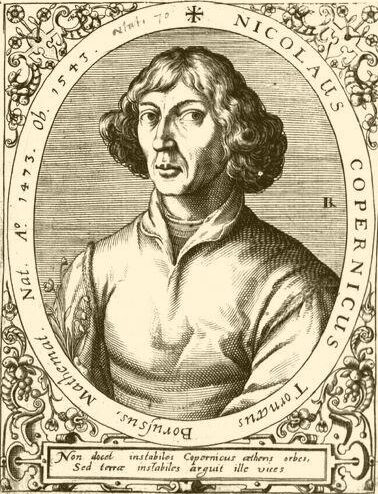
    CopernicusThe poem is a wide attack on the Jesuits and Ignatius of Loyola,depicting them/him int eh deep lake of fire–Copernicus may also be found there in the Devil’s regions, though he wouldn’t stay for long, as he was released from his torment by Mr. Donne.  While there though Donne makes an interesting observation on the Devil itself, thinking that it might be from outer space, an alien from another place, “I thought thee of the race of the starre”:

    “To whome Lucifer sayd; “Who are you? For though even by this boldnesse you seeme worthy to enter, and have attempted a new faction even in Hell, yet you must first satisfie those which stand about you, and which expect the same fortune as you do.”

    “Except, O Lucifer,” answered Copernicus, “I thought thee of the race of the starre Lucifer, with which I am so well acquainted, I should not vouchsafe thee this discourse. I am he, which pitying thee who wert thrust into the Center of the world, raysed both thee, and thy prison, the Earth, up into the Heavens; so as by my meanes God doth not enjoy his revenge upon thee. The Sunne, which was an officious spy, and a betrayer of faults, and so thine enemy, I have appointed to go into the lowest part of the world. Shall these gates be open to such as have innovated in small matters? and shall they be shut against me, who have turned the whole frame of the world, and am thereby almost a new Creator?”

    Ignatius is also released from the confines of Hell, but–as it is stated right there in the title of the work–he is sent on to the Moon to establish himself, in a place where he would do less than than had he remained with the Devil. 

    ·Posted by :

    ·in: