A Daily History of Holes, Dots, Lines, Science, History, Math, Physics, Art, the Unintentional Absurd, Architecture, Maps, Data Visualization, Blank and Missing Things, and so on. |1.6 million words, 7500 images, 4.9 million hits| Press & appearances in The Times, Le Figaro, Mensa, The Economist, The Guardian, Discovery News, Slate, Le Monde, Sci American Blogs, Le Pont, and many other places… 5000+ total posts since 2008.

Author: JF Ptak

  • Ultra-Modern Design in “Parade”, 1917: Picasso, Satie, Cocteau, Diaghilev

    JF Ptak Science Books  Quick Post

    One of the great powerhouse collaborations in the history of earlyish modernism came on 8 May 1917, in the performance of the 15-minute operette, Parade.  Spearheaded by Jean Cocteau, the piece used stage and costume designs by Picasso, was scored by Erik Satie, and performed by Diaghilev’s Ballets Russes. (It was not received indifferently–there was a major upset in the world of the critics and many hated negative response from the audience, evidently much like that received by Stravinsky’s Rite of Spring at its premier seven years earlier, also featuring Diaghilev’s Ballets Russes.)

    The image below is a maquette of the stage by Picasso:
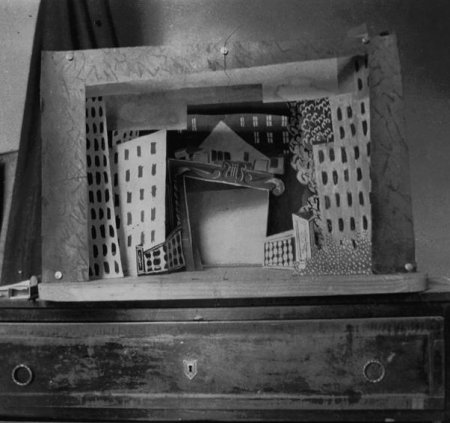
    Parade--picasso marquette[Source]

    The spirit of this object reminds me of Paul Klee’s private puppet theatre productions for his son Felix, which includes this fantastic stage:
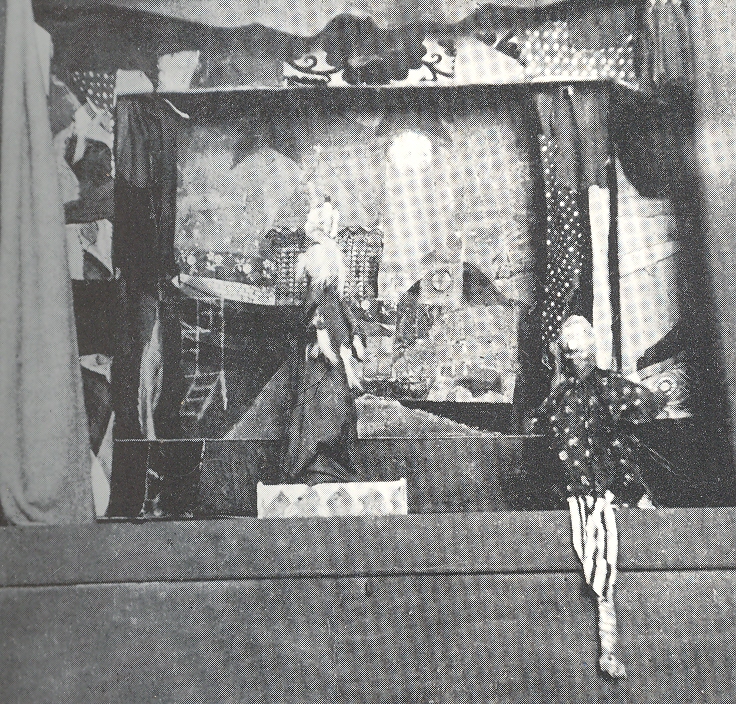
    https://historyofideasblog.com/a/6a00d83542d51e69e20120a5033277970b-pi

     [Source: earlier post on this blog, here.]

    ·Posted by :

    ·in:


  • Astronomical Stero Cards, 1913

    JF Ptak Science Books   Quick Post
    Follow Me on Pinterest

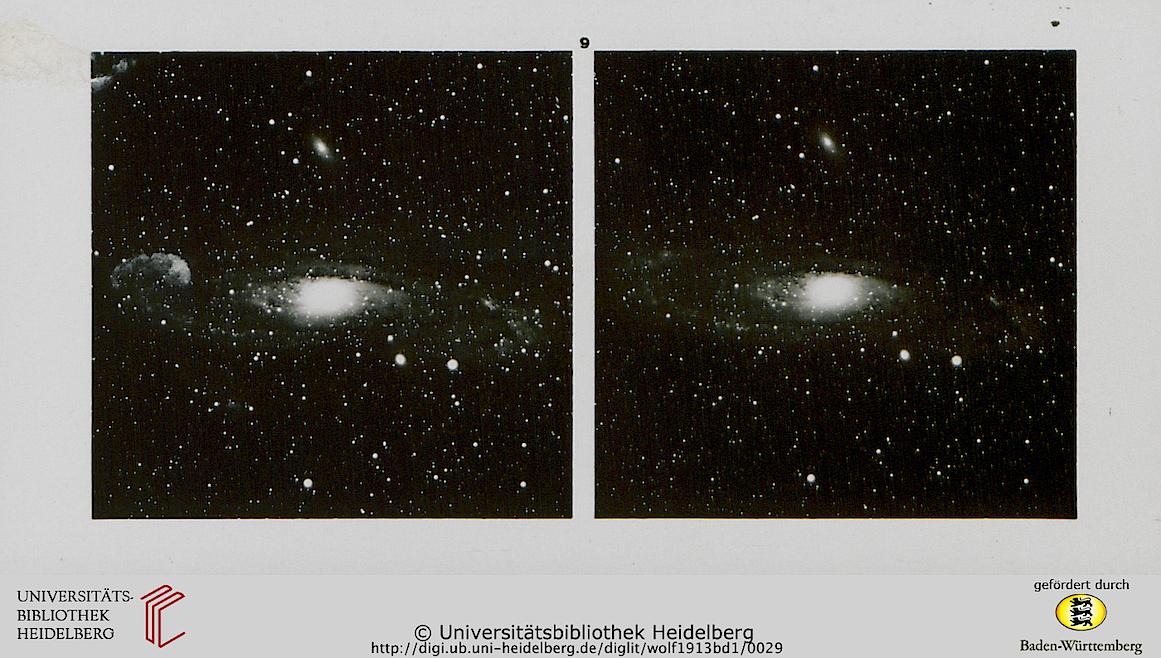
    I own this series of stereoviews but they have yet to surface in our recent move–I did bump into them online at the beautiful University of Heidelberg site, nicely reproduced, though without the the rich glossy blacker-than-black finish in the originals–but these will work nicely. 

    Max Wolf, Stereoskopbilder vom Sternhimmel (1. Serie), Leipzig, 1913.

    ·Posted by :

    ·in:


  • The Zero in Politics

    JF Ptak Science Books   Quick Post  A History of Blank, Empty and Missing Things 

    Follow Me on Pinterest
     

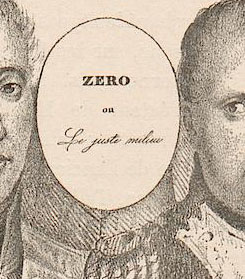
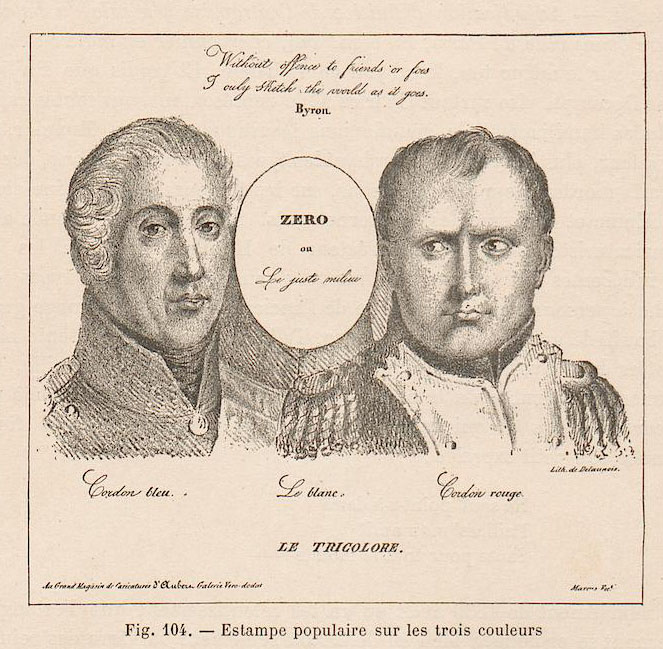
    In this blog’s series on the History of Blank, Empty, and Missing Things there have been I think no contributions to nothingness in the political sphere–which is odd, given how much of the time politics is about just that, staffed by people of that same quality.  The experience of seeing nothing portrayed in a political caricature as seen below was such that it struck me how little I have seen any images quite like it.  The “zero” appears in J. Grand-Carteret’s Les Moeurs et la Caricature en France, a thick book published in 1888 detailing the history of caricature and satiric expression in France.  The image appears in chapter eight, on the political situation in France between 1816 and 1848 (Louis XVIII, Charles X, and Louis-Philippe). (Two years after abdication of Napoleon and right up to the revolutions of 1848.  I wonder what it was like for Napoleon’s mother, outliving her son by 15 years?)

    Blank Napolean_edited-1And the full image:

    Blank NapoleanIt is a overt play on the missing color of the tricolor–the flag and the colors of the flag that came into existence in France beginning with the revolution of 1789, and became the flag of the new republic.  The color of course are red, white and blue (liberty, equality, and fraternity, or perhaps the colors of Paris (red and blue) and the white of the House of Bourbon, or something else.  In any event, the “white” as the artist/commentator saw it, the leader filling that space, was not yet present. 

    The entire book is located at the University of Heidelberg site, here. The book is very highly illustrated, and it also has an appendix with a very useful list of caricature journals (pp 554-620) and biographies of artists (pp 620-675). 


  • “The Cost of Indians to the U.S.”

    JF Ptak Science Books   Quick Post

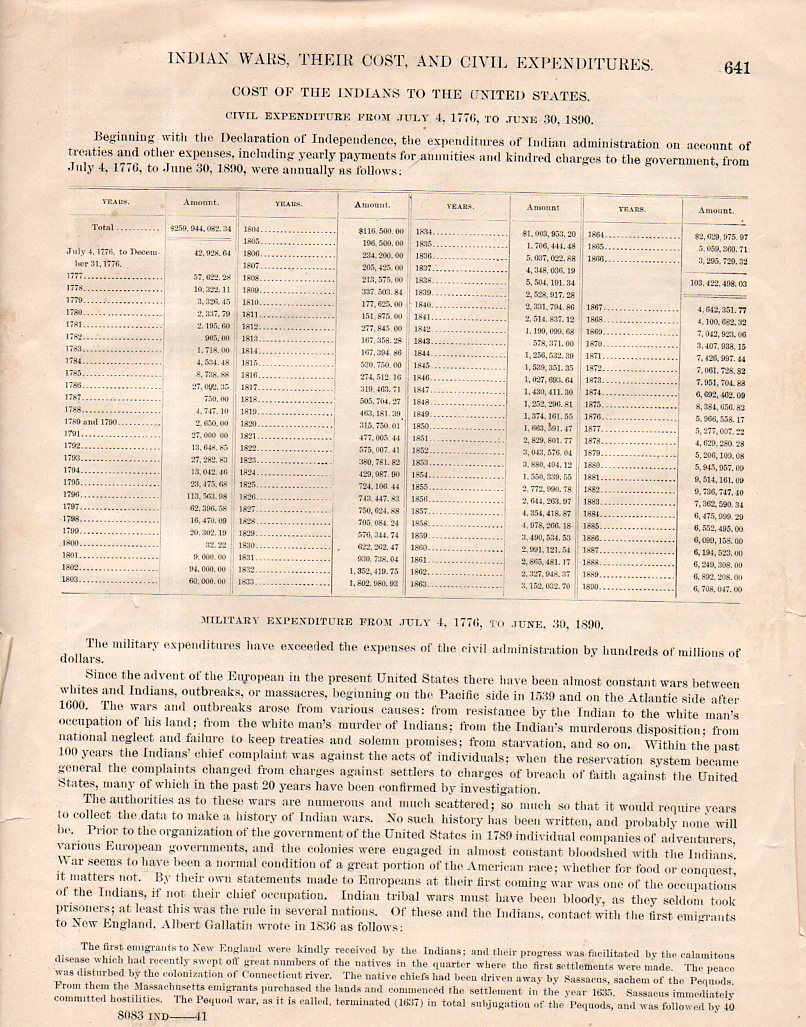
    I came across this very interesting page in the phenomenal work produced as a part of the U.S. Census, Report Indians Taxed and Indians Not Taxed, printed in 1894 as part of the 11th Census of 1890. (The full text is available at the Internet Archive, here.)  It is a dispassionate recollection of monies spent on “Indian administration on account of treaties and other expenses, including yearly payments for annuities and kindred charges to the government”, from 1776 to 1890, noting that “the military expenditures have exceeded the expenses of the civil administration by hundreds of millions of dollars”.  Indeed–$250,000,000 19th-century dollars (or something on the order of 5 or 10 billion dollars in today’s money). Certainly monies that went to “satisfy” treaty obligations or to support Indians driven from their land and life would have been a fractional amount of the overall expense. 

    Indian expenses799

    Details, below:


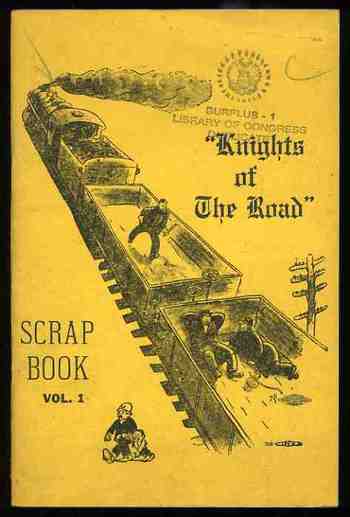
  • A Work on Hobo Slang by the Lifetime King of the Hoboes, 1947

    JF Ptak Science Books 

    1blog_oct_8_hobo_cvr785
    There have been many Kings of the Hoboes, and Emperor of the Hoboes, in the history of American Hobodom.  The most widely recognized of all this royalty is, probably, Mr. Jeff Davis, who was elected King of Hoboes each year from 1908 to 1935–in that year at the Pittsburgh meeting of the annual “Hoboes of America” his minions gave up elected him King for Life. Of hoboes, that is, the Knights of the Road.  Davis was also a real hobo, unlike the pretenders and throne-seekers, who in general were not. (Nels Anderson, in his Men On The Move, written just as the Depression was broken, (1940) observed: “Whatever else may be said of King Jeff, his romanticizing the hobo is not without a basis in reality, and his poetic interest in the species arose from experience. But King Jeff has placed on a pedestal a man who belongs to the past. The hobo belongs with the pre-Hollywood cowboy and the lumberjacks of the Paul Bunyan legends.”)

    ·Posted by :

    ·in:


  • The Mile-High Half-Vertical-Airport, 1935

    JF Ptak Science Books    Post 2134 
    Follow Me on Pinterest


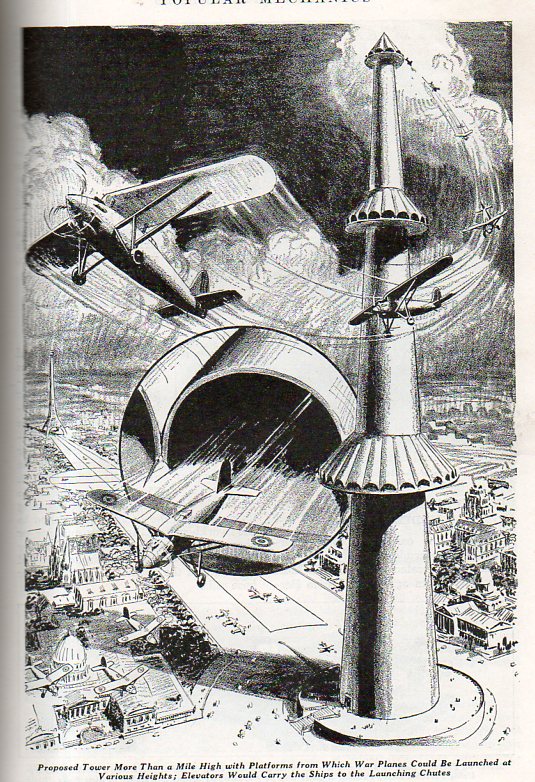
    Airport vertical794[Source: Popular Mechanics, June 1935, p 891.]

    In the history of Mile High Things I doubt there are many entries for airports–or half-airports.  This if not highly questionable structure inverted the horizontal concept of airport into something else, or at least changed the take-off into quite something different while leaving the landing strips the same. (This is the “half-vertical” part of the title to this post; “half-vertical” doesn’t mean “horizontal”, though I like that idea.) The new method of getting a plane into the air was straightforwardly breathtaking:  haul the plane up one mile in an elevator and drop it through one of the “launching chutes”. After everything is said and done, this is one idea that really didn’t need to be three-dimensional.

    There was a ride something like this on Coney Island that was very popular for years, a parachute ride where folks were hoisted skyward in a seat on a parachute and then dropped–a much better idea than this mile-high monster.

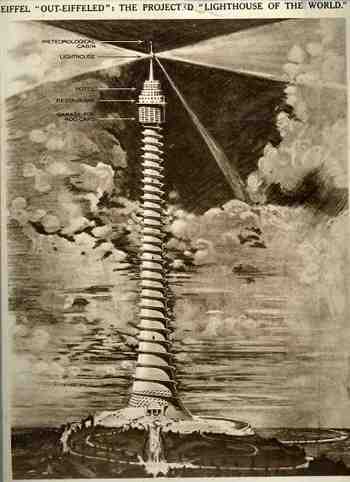
    Here are a few other examples of Mile-High/Long Bits that are posts in this blog:


  • A Chicken in Every Pot, and a Car in Every Living Room

    JF Ptak Science Books  Quick Post  
    Follow Me on Pinterest

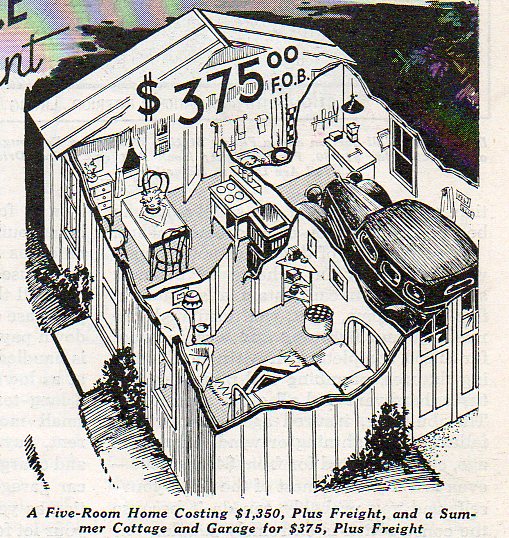
    Herbert Hoover–perhaps a better classical scholar than president–famously promised “a chicken in every pot and a car in every garage”.  Well, in this example of thrift and austerity, we see a summer cottage offered for sale for $375.00 (disassembled plus freight), with room for a car, and even for a family.  A small family. 

    Car living room793Which is a detail from:


  • A Tiny Publication of Enormous Longing–a REAL Car, 1932

    JF Ptak Science Books  Quick Post

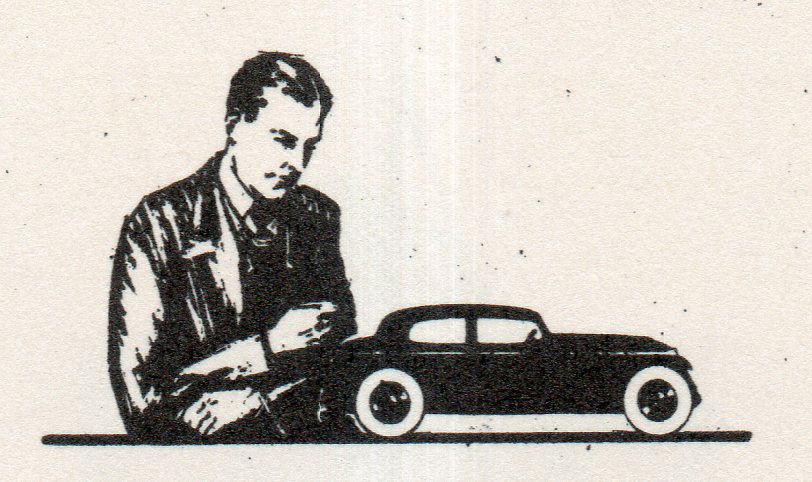
    Car design detail788

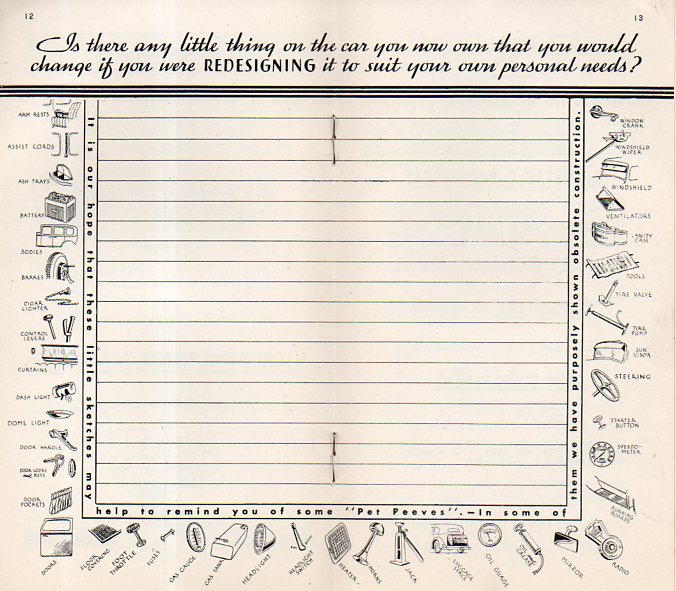
    This pamphlet, Your Car as YOU Would Build It, published by General Motors in 1932, is a partial sales brochure–wish book–planning guide for a variety, bubbled to the top of a box in a series of boxes filled with similar interesting and widely obscure publications.  Its main intent was to increase the interest of the reader in the car designs offered by GM, and it certainly piqued my interest if only in memory and hope–looking at the suggestions and offerings and choices, who in their right mind wouldn’t enjoying making  adecision as the pamphlet offers?

    Car design dbl page fill in785

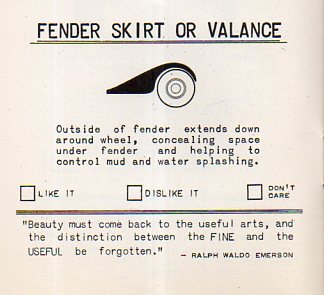
    For example, the fender skirt, long gone now but just going nice and strong in 1934:

    Car design fender skirt786

    ·Posted by :

    ·in:


  • Towards an Alphabet of Piles: Church Bells, Sugar, & Nazis

    JF Ptak Science Books   Post 2133 
    Follow Me on Pinterest

    This six-year-old blog hasn’t seen a new series in a few months–today will see the start of something new to go along with the various histories of dots, lines, nothing, memory, boredom, fear, blank things, missing things, imaginary things, and so on, something else a little different by which some information can be discretely categorized and collected and presented.

    Piles.

    Itg seems as though every other thing in the history of things and ideas can be resolved into piles of one sort or another, even in the history of mathematics, where piles can get very beautiful and interesting and challenging. 

    Bells

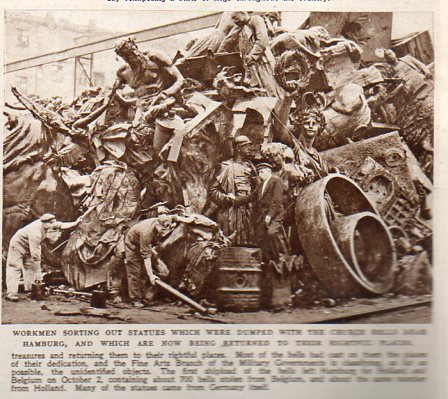
    Piles bells777

    To initiate the series will be a few images found in the pages of the Illustrated London News from the first month or two following the end of World War II.  The first:  piles of church artifacts, from the ILN issue of 13 October 1945.  These bells and other items were most likely ransacked by the Nazis for their precious metals, and the statuary, I guess, were taken for the sake of art and its taking.  The caption of this remarkable photo relates that the first shipment of 700 bells was just making its way to repatriation. 

    And this–an awful picture that reminds me of what these piles created, where were similar piles of wallets and purses and other sorts of identification, and of glasses, and valises, and hair, and teeth, and then, finally, of bodies.  (Source: Illustrated London News, 3 November 1945.)

    Casings, Shells

    Pile--shell casing[American and Korean soldiers in an enormous stack of used shell casings–“this repreenbts four days of shelling on the west coast”. Source:  Pacificparatrooper blog.]

    ·Posted by :

    ·in:


  • Zoomology–Germany, 1945

    JF Ptak Science Books  Quick Post  Follow Me on Pinterest


    I’ve seen figures supporting 20 million people being “displaced” in the month following the end of WWII.  That figure has always seemed very low to me, considering the destruction and ravage–I thought that there might be half that number in the USSR alone.  In any event, “displaced” seems like such a polite word for something that is anything but that.  In browsing a volume for the second half of 1945 I found a photograph with a picture within it of something that might characterize what being “displaced” might actually be–and this is a more “civilized” displacement of a man on a train, not one of the hundreds of thousands of concentration camp survivors, who were considered to be “displaced persons” as well.  That “DP” tag has always rung wrong with me. 

    DP train782

    Which is a detail of the following detail:

    ·Posted by :

    ·in: