A Daily History of Holes, Dots, Lines, Science, History, Math, Physics, Art, the Unintentional Absurd, Architecture, Maps, Data Visualization, Blank and Missing Things, and so on. |1.6 million words, 7500 images, 4.9 million hits| Press & appearances in The Times, Le Figaro, Mensa, The Economist, The Guardian, Discovery News, Slate, Le Monde, Sci American Blogs, Le Pont, and many other places… 5000+ total posts since 2008.

Author: JF Ptak

  • Map of the Information Dirt Road, 1971

    JF Ptak Science Books   Quick Post

    Arpanet3

    [Source: An Atlas of Cyberspace. See also Mappa Mundi for a good article on the 1980 version of this map, here.]

    I can feel the enormous hail coming down on me right now for this title–but by comparison, this 1981 map of ARPAnet must seem somewhat like the first three minutes of creation in the Big Bang saga, in its way.  This was absolutely, positively a remarkable accomplishment for the time, but compared to what it would become–measured in any number of different ways–this map seems proto-historic.  Compared to not being able to construct this map because there was no ARPAnet–well, that would have been a devastating thing. 

    The other thing about looking at the picture of the birth of something was that–unlike many other revolutionary creations–there were many people of high influence who saw the possibilities of the expansion of the thing.  Even Graham Bell and Edison had a difficult time looking into the future of the telephone…


  • Anti-Gravity Anti-Gravitas

    JF Ptak Science Books   Post 2319

    “Similitude of Substance will cause Attraction, where the Body is wholly freed from the Motion of Grauity.”– Bacon, Sylua Syluarum, 1626 

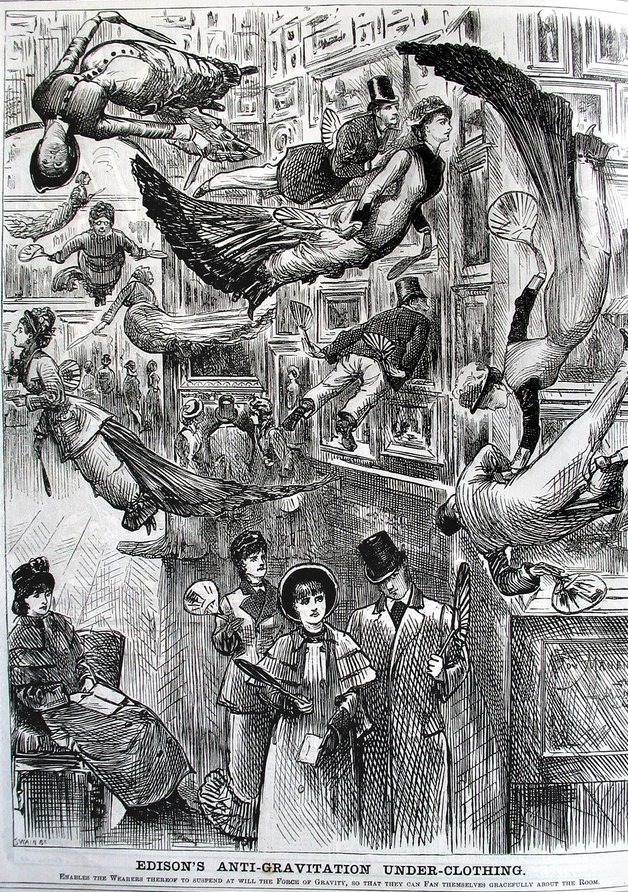
    It seems that in variations of the future that I have read that the concept of anti-gravity-something wasn’t taken so much seriously as it was a half-prank.  For example earlier in this blog I wrote about one of Edison’s least-known and most-nonexistent inventions, antigravity underpants. There was a time in the late 19th century when it was seen that Thomas Edison could do just about anything–so much so that the Brits in The London Punch gave him tongue-in-cheek credit for inventing (flying, so to speak), anti-gravity underwear.  The funny thing about this though is that the best thing that people could do with this new invention would be to go to a super-sized art gallery to look at paintings close to the ceiling. 

    Edison anti gravity b

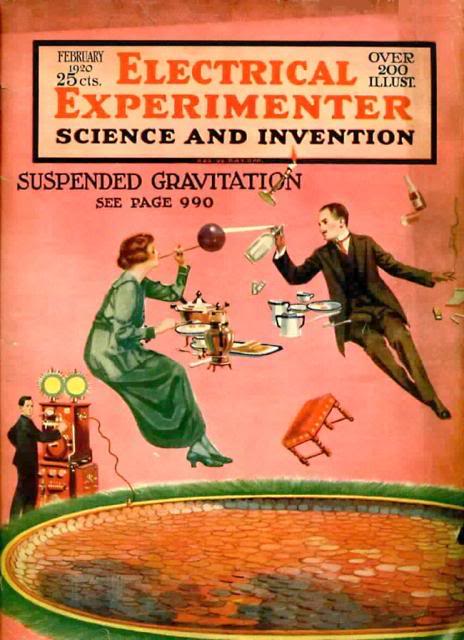
    Another example of gravity taken not-so-heavily is the scientific publication, Electrical Experimenter, where a seated couple is no longer so in the clutches of “suspended gravitation”, and again what the floating people engage in is play, the oman blowing a balloon and the man spraying selzter at it.  

    Anti-Gravity

    [Image source:  My Ear Trumpet, here.]

    The odd bit here is that “gravity” is found early on in the Oxford English Dictionary back to 1622 with G. de Malynes and N. Carpenter in 1625, and then of course with Roger Bacon a year later), though “anti-gravity” does not occur in use until 1945; and clearly the concept is on display in these three quick examples, though the phrase is not. “Anti-gravitation” however is used, though for some reason it is not included in the OED.  

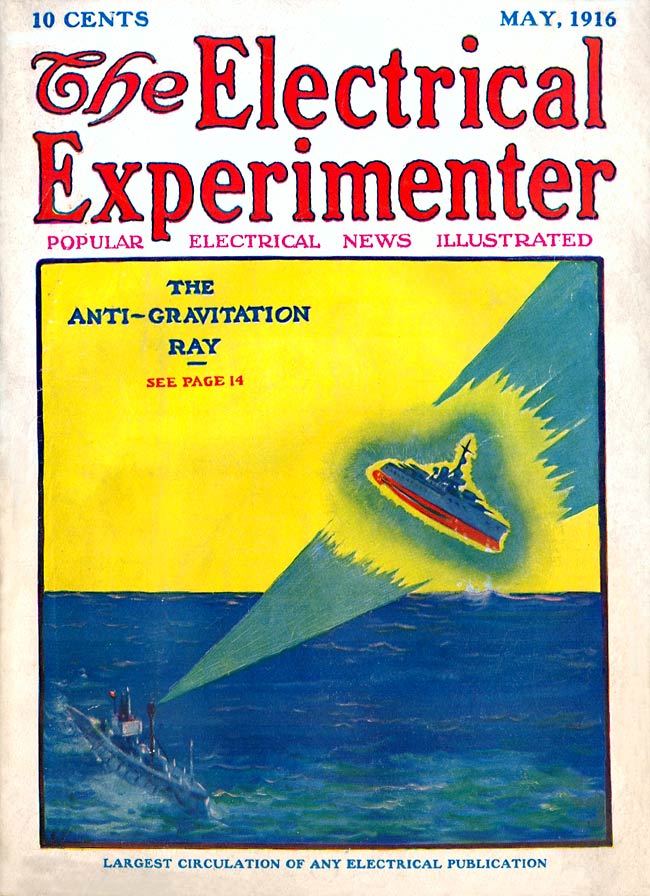
    The article, “Overoming Gravitation” by George Piggott, really did take the matter seriously, in spite of the cover illustration, as a quick read will verify.  More serious than that, though was an earlier and perhaps war-infested thinking mode was the militarily enhanceable anti-gravity ray (May, 1916).  

    Electricalexperimenter anti-gravity

     [Image source: Airminded, in a post about future weapons of the past, here.]

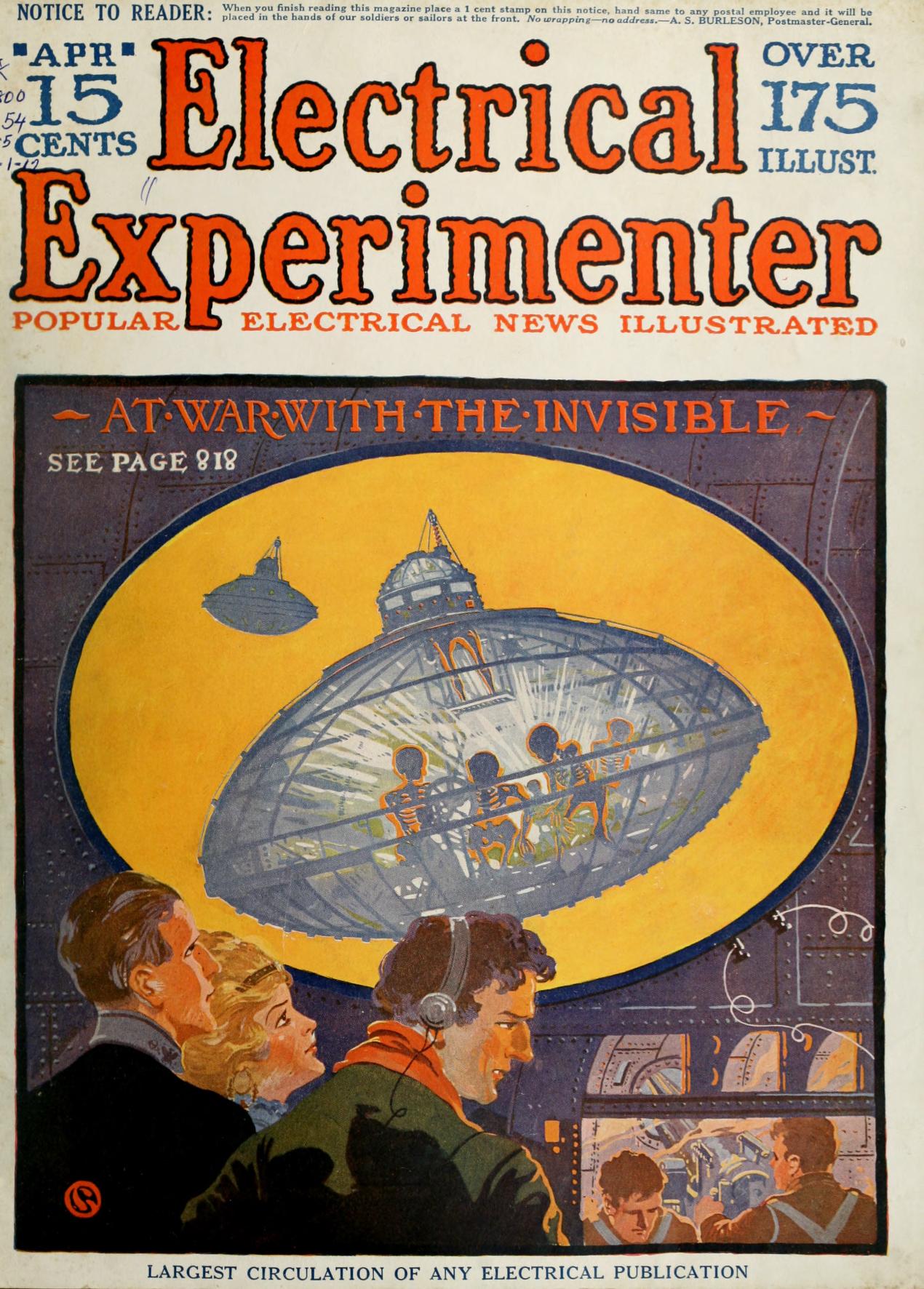
    Better yet (?) is this appearance in 1918 of an anti-gravity craft with invisibility options: 

    Antigravity and invisible

    [Image source: Inernet Archive, here.]

    And then of course there are examples like this, found in another early post on this blog, “Anti-gravity Atomic-powered Sun-fed Underground Woman of the Year 5000!”, here.

    In any event, these are a few example of the anti-gravity idea in the 1880-1920 period. No doubt there is a rich and full literature on this very thing–mainly what I wanted to do here was captued Airmnded‘s image to use for another day.  


  • The Tall in the Short of It–the Giants of Microworlds

    JF Ptak Science Books     Post 2318

    I’ve posted a number of bits in this blog about stupendously large and enormously small things, but it is infrequent to find the story of something made exceptionally large in a reduced world.  Perhaps it is normal fare in the science fiction world, but I found the not-obvious but still-obvious making of a giant in microland to be, well, less than obvious.  

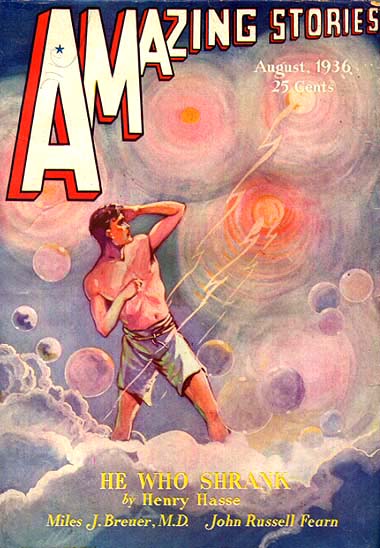
    There have been countless stories told of shrinking people, or the discovery of vastly small communities living withing a larger host community, and so on, like the following:
    http://static.flickr.com/67/202348136_833ca3249d_o.jpg

    This is a story by Henry Hasse and it involves a great scientist and the his elixir called “Shrinx” which after it has been injected into his assistant shrinks the man immeasurably, so science-fictionally small, that he has passed through the microscomos and “subuniverses” to the point where he emerges on a primitive place called Earth.  The assistant has traveled from a planet in a solar system revolving around a sun in a solar system in a galaxy in a universe to something small, something sub-atomic, landing in an electron holding within it its own universe. 

    That’s small. 

    And then there is this piece of magnificent ne plus ultra, where we remain in the microworld but where there are also micro-giants.

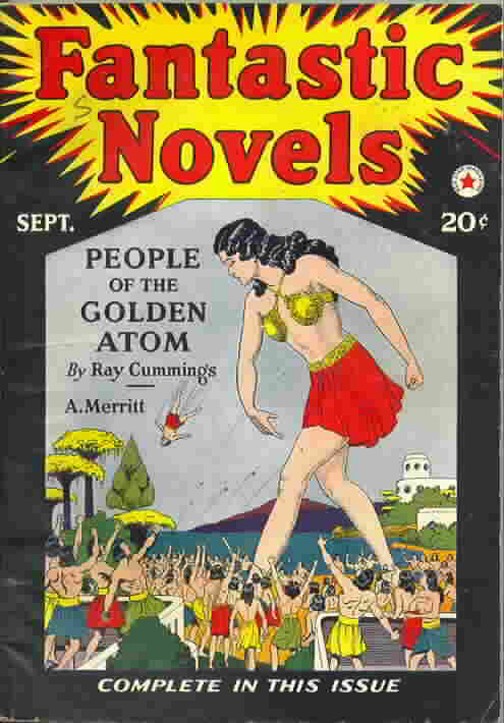
    The cover of Fantastic Novels (1921?) seems to tell a straightforward story, but as it turns out the giant is giant but one living within a world in an atom of a gold wedding ring.
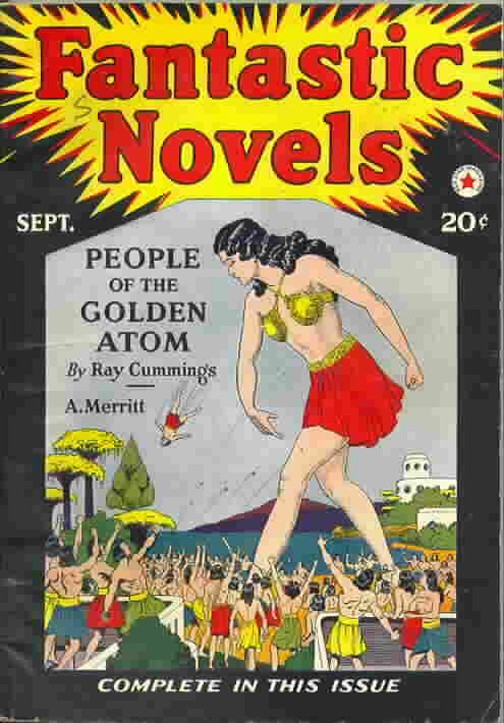
    Man throwing

    Author Ray Cummings (1887-1957) found a nice writing niche for himself in his fictional discovery of a drug that could make people as small as atoms and then, once inside the microworld, could be made as immense as micro-mountains.  The Girl in the Golden Atom was one of a five-part trilogy(?)1 and so far as I can tell, Cummings used the hell out of his original idea.  The prose reads like it is punctuated with invisible periods every fifth word–evidently Cummings was so very busy writing 750 books and short stories that it  left him little time to edit or, maybe, think.

    It was a very nice surprise for me. That said, I can only imagine the giddiness and suspension of (dis-)belief when the mass market readership of Robert Hooke’s Micrographia got a look for the first time on what the small creepy crawlies that lived around them looked like under magnification.  Suddenly the blots and blotches took on real–and sometomes terrifying–forms.  These were basically unseen during their long interactions with human beings, until, suddenly, Mr., Hooke made his investigations and put a face on the unseen microworld and shared it with the General Public. 

    “It is my hope, as well as belief, that these my Labours will be no more comparable to the Productions of many other Natural Philosophers, who are now every where busie about greater things; then my little Objects are to be compar’d to the greater and more beautiful Works of Nature, A Flea, a Mite, a Gnat, to an Horse, an Elephant, or a Lyon” said Mr. Hooke at the end of his 28-page preface to Micrographia in 1665.

    https://historyofideasblog.com/a/6a00d83542d51e69e20120a5ec29c4970c-pi

    [Mr. Hooke’s drawing of his flea, in full and unexpected glory, with as much detail and armor as anything that had ever been imagined–only this thing was real, and common, and lived on you.]

    It may have been a similar shock to those seeing these images for the first time as it was for people to see Galileo’s images of the Moon, or to read him announcing that the perfect sky of Creation was actually not so, and that his telescope revealed ten-fold the number of stars that people could see with only their eyes, and which faith alone could not elaborate. 

    Yes, the incredible shrinking giant woman was a surprise but not on this order, not by a stretch–though it seems to be the world of science rather than scifi that has delivered the most shocking stories of the big and the small. 
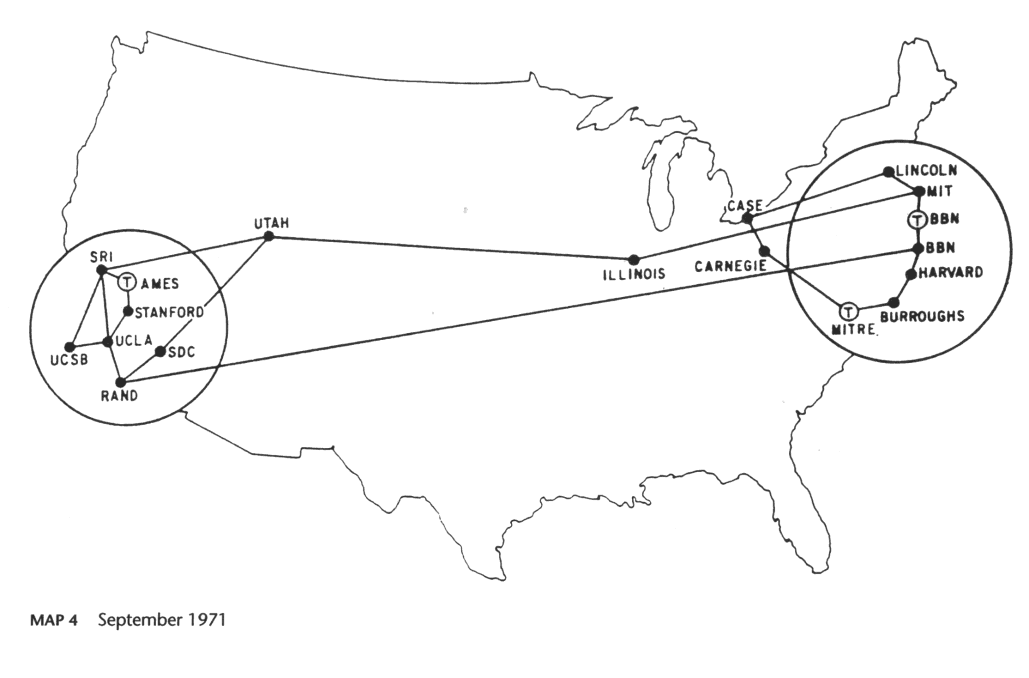

  • Red Radio–Found & Manipulated Tech Art

    JF Ptak Science Books   Quick Post

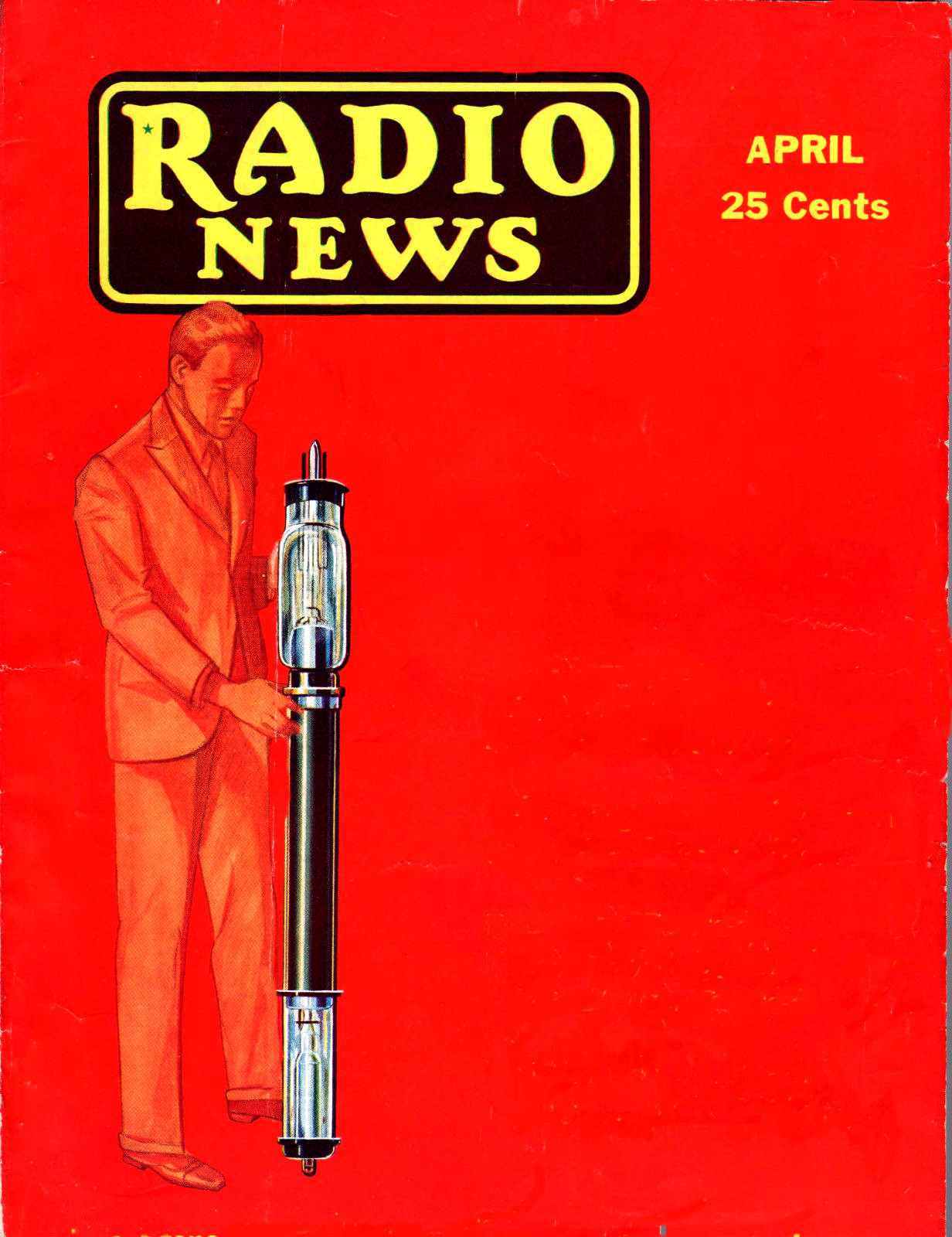
    I just like the cover art for Radio News. For at least the decade that I know about this journal published with very heavily red covers.  This one, for April 1931, was really red and also had some unusual design going on–especially after the cover text was removed. That fellow is standing there with the giant tube that helped the venerable KDKA (Pittsburgh, one of a few contenders for the title of “first commercial radio station” in the U.S.) reach millions of people, with a very powerful 400 kW signal–it basically made the station a local-national. (As it turns out the highest power ever authorized for AM radio was 500 kW to WLW (Cincinnati) in 1934, but which was modified down to 50 KW.)

      Radio News Red[The only manipulation was removing the text from the bottom right that displayed the issue’s contents–everything else is in situ.]


  • History of Fear: Money and Failure in 1933

    JF Ptak Science Books  Post 2317                                                            History of Fear series

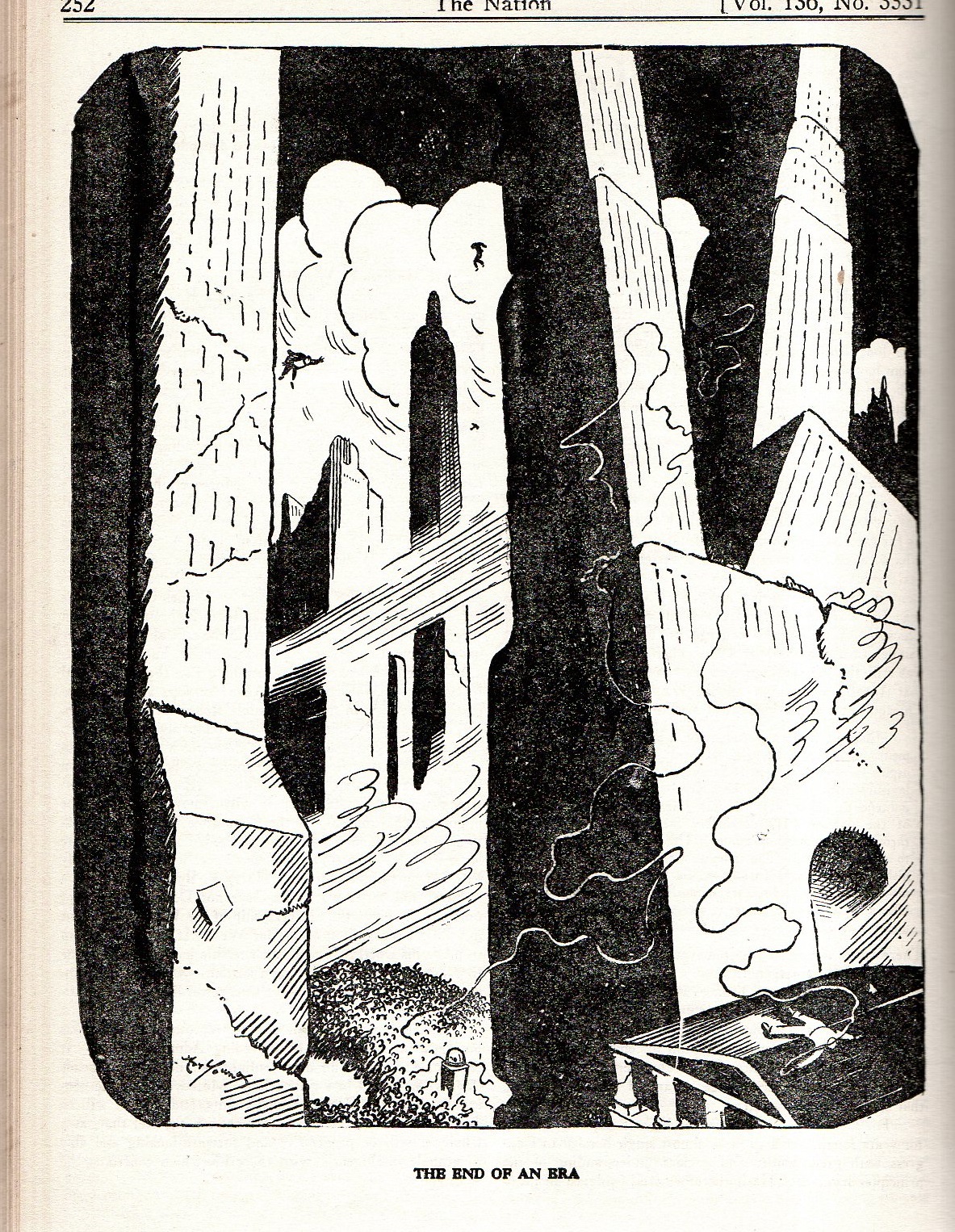
    What this toughly bleak political art is referencing was the gloom and doom of the corruption of the economy, with fortunes and family savings lost, of despondencies, of mass failure. It appeared in The Nation for the issue of March 8, 1933, the first issue printed in the newly inaugurated Roosevelt presidency, four days after the famous inaugural “The only thing we have to fear is fear itself” speech. [See here for text of the speech as well as audio.]

    Nation jumpers317

    So in the first 1100 days or so of the Depression, there was plenty of fear to fear, not the least of which was booming unemployment. The average rate of unemployment for this period went from 3.2% in 1929 to:1930: 8.9%;1931: 16.3%; 1932: 24.1%; 1933: 24.9%; 1934: 21.7%; 1935: 20.1%; 1936: 16.9%; 1937: 14.3%; 1938: 19.0%; 1939: 17.2%.

    There was also the general malaise and partial breakdown of the production of the country as a whole, as measured by the U.S. Gross Domestic Product, which (in current dollars) looked like a retracting landscape, with the pre-crash 1929 figures being $103.6 billion, followed by 1931 at $76.5, 1932 at $58.7, 1933 ($56.4), 1934 ($66 billion and the beginning of the Roosevelt era and through 1937 a period of fantastic recovery and growth); 1935 at $73.3, 1936 at $83.8, 1937 at $91.9,1938 at $86.1, 1939 at $92.1, 1940 at $101 (which was the year that mobilization began in earnest, with huge/record spikes in production); 1941 at $126.7, 1943 at $198.6, 1944 at $219.8, 1945 at $223.

    (And just because I have the figures at hand, the amounts of government spending during the Hoover years were 1929: $9.4 billion; 1930: $10; 1931: $9.9;1932: $8.7; then under Roosevelt in 1933: $8.7 billion: 1934: $10.5; 1935: $10.9; 1936: $13.1;1937: $12.8; 1938: $13.8;1939: $14.8, followed by the war years and buildup, which in itself was explosive growth 1940: $15.0 billion;1941: $26.5;1942: $62.7;1943: $94.8;1944: $105.3; and 1945: $93.  The average government spending as a percentage of GDP under Roosevelt increased to 15% in the 1933-1939 period from 11% under Hoover; during the mobilization the average expanded to about 35%. )

    So, the social commentary by the artist was really a slapping announcement to all readers that the crash of 1929 was still crashing, that the economy was still failing, and that things were getting worse.  Welcome to Washington, Mr. Roosevelt.  

    ·Posted by :

    ·in:

    —

  • An Extraordinary POW Postcard 1918

    JF Ptak Science Books   Post 2316

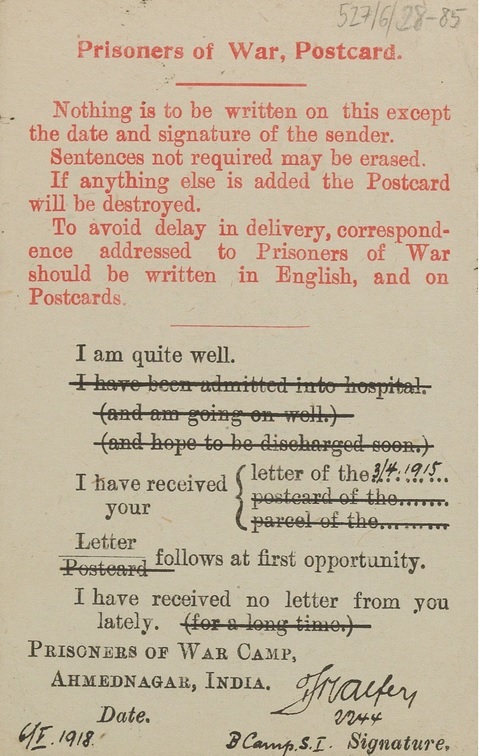
    There is a small collection of WWII propaganda here, mostly Allied-based surrender leaflets and battlefront newspapers. One that I am trying to identify is something simply called “Volksstimme” (“voice of the people”) a very home-made-looking production published in 1944 and which has the feel of being Soviet-produced for German soldiers but which is also extremely anti-Semitic.  As an offshoot of looking for “Volksstimme-ery” things (“Volksstimme” not being a very small handle for a very wide search) I came across a website for the German National Library’s World War I collection, and in one section it displayed this extraordinary postcard:

    WWI POW Postcard

    The German POWs (here based in India) were allowed very limited contact with anyone who had somehow found and written to them.  The instructions were explicit and took up almost as much space on the postcard as the allowed response.  And the response was limited to the POW being well or in hospital, or the status of letters received or not.  It was all attested by an administrative signature, and signed and dated.  And that was it.  

    But, it was at least something.

    “Ahmednagar, a city and fort in India, was the site of one of Great Britain’s prisoner of war camps during World War I. This camp held both prisoners of war and German and Austrian civilians from 1914 and 1918. In contrast, German officers were first sent to Tabora and later usually conveyed to a transitional camp inEgypt or India. The biggest camp was located in Ahmednagar, India, and could accommodate more than 2,000 German prisoners. According to reports from the Red Cross, there were few reasons for complaint. The food was plentiful and housing was acceptable. There were even tennis courts,soccer fields, and billiard tables for the amusement of officers…”–Source

    “Postcard from a British prisoner-of-war camp in India to Gustav Wahl, the Director of the Deutsche Bücherei in Leipzig, 1918”–German National Library, First World War Collection

    [Source: here (http://erster-weltkrieg.dnb.de/WKI/Content/EN/Topics/Kriegsalltag/alltag-kriegsgefangenschaft-en.html)]


  • “The Nation” and the Scottsboro Case, Alabama, 1933

    JF Ptak Science Books   Post 2315

    I’m here again with The Nation, a marvel of social reporting and interpretation.  I was recently able to have 40 years of it come my way, and I have the luxury of sitting down with the odd volume and breezing through it–though it isn’t much of a breeze.  It is shocking to me how much of what they cover is absolutely new and fresh to me, especially since I thought I knew something about the decades that I’m pushing through right now (1919-1945).  

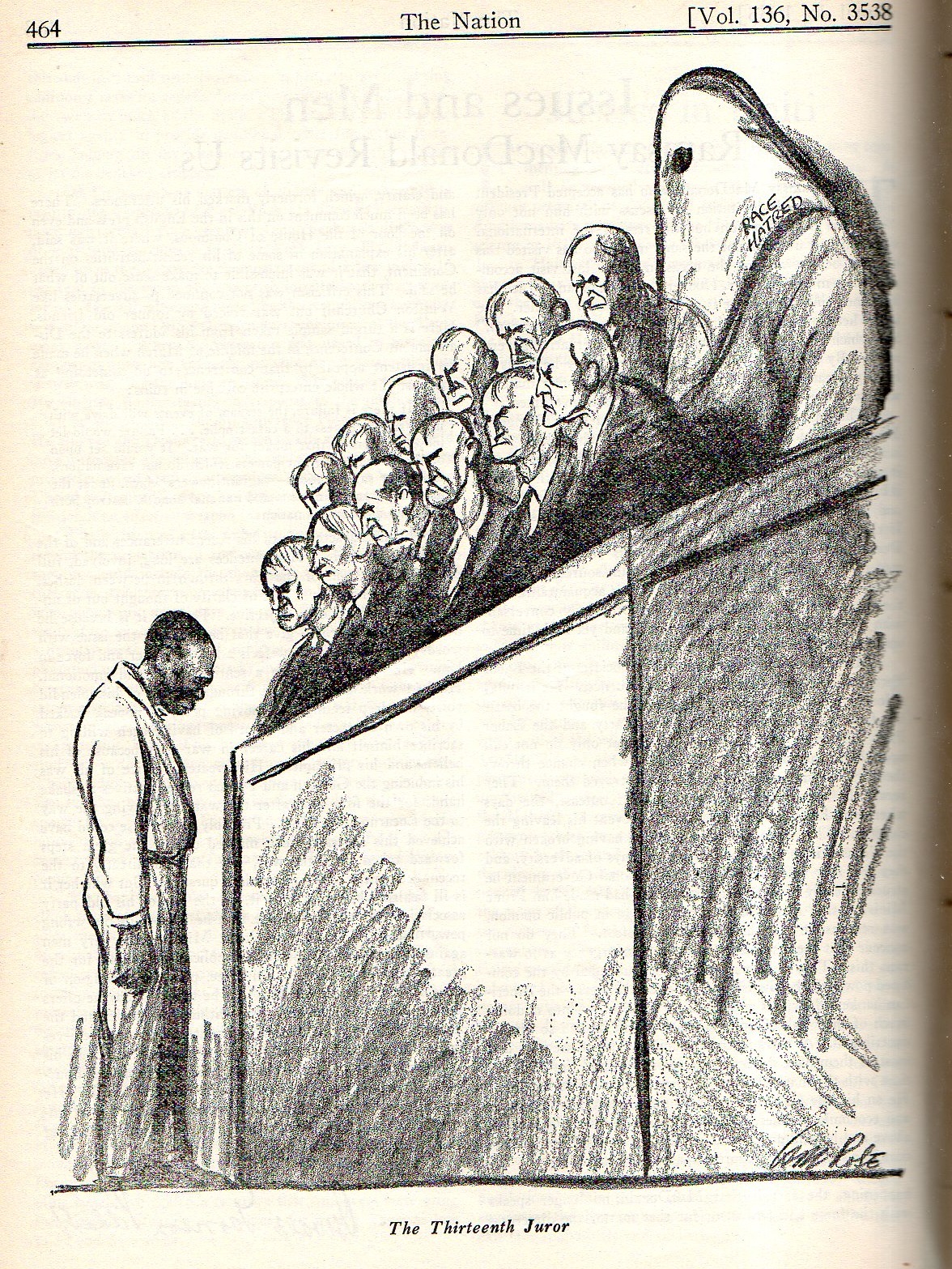
    Nation  lynching316I opened tonight almost immediately to this commentary on the Scottsboro Boys case–and it doesn’t take much to figure out what is going on, even if you never heard of it before,  This illustrate an article on Haywood Patterson, one of the nine African American teenagers who were accused of raping two white women in the state of Alabama in May 1931 and the legal morass and bitter institutional racism that he and the rest of the accused had been dragged through. It is a complicated set of cases –but the fact that there were trials and that there was some sort of legal sensibility to the matter was in itself noteworthy, because the case was highly inflammatory, enraging parts of the population who wanted immediate justice-and-punishment. 

    That didn’t happen in public, but it could be argued that is what was attempted by the Alabama criminal justice system–a judicial lynching.  The cases of these men went back and forth for a number of years, the men being convicted, and then sentenced to death by electrocution, and then appealing, and finding parts of the judgment overturned,  and then starting again, finishing again, overturning again, and other complications.  

    The cases made their way through to 1935 with sentencing in 1937, at which point the death penalties were overturned, but replaced by long prison sentences. 

    Haywood Patterson escaped the electric chair, but was sentenced to 75 years for a crime for which there was no evidence.  He wound up escaping in 1948, and wrote a book about his case (The Scottsboro Boy) in 1950; soon afterwards he was in a bar where he had an argument with a man and knifed him to death; Patterson was subsequently arrested and convicted of manslaughter, and would die of cancer in prison in 1952.  

    Mr. Patterson was evidently the first Afircan American in the history of such cases in the state of Alabama to not be executed for the crime. 

    [Image source:  “The South Speaks”, by John Henry Hammond, Jr., in The Nation, April 26, 1933, opposite page 465.]

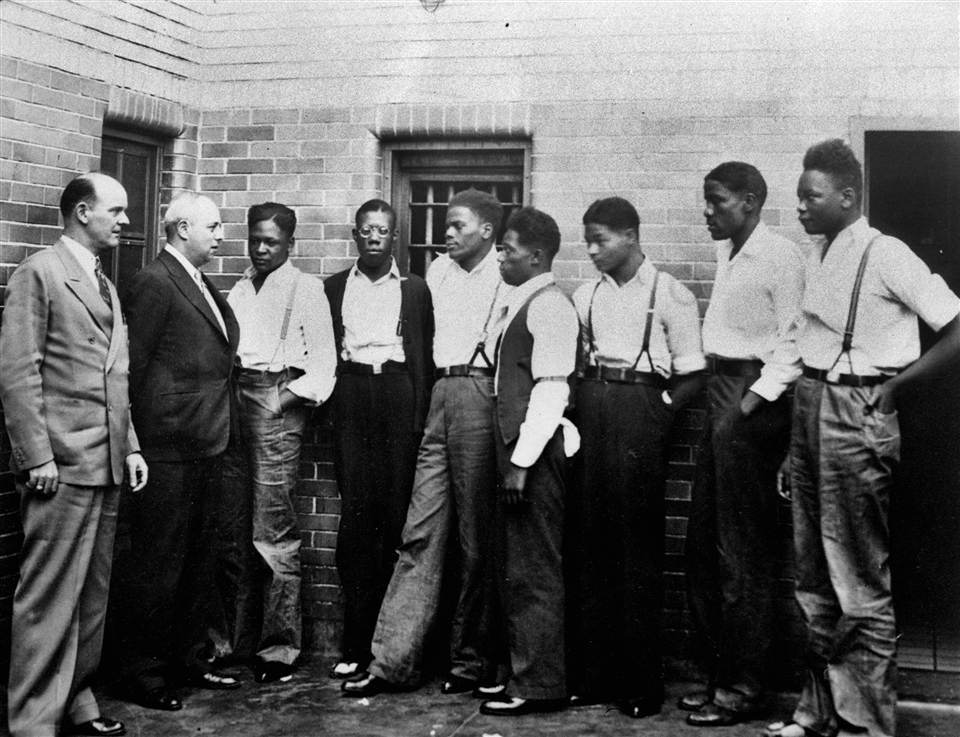
    Lead Belly’s Scottsbor Boys”: 


    Scottsboro photo

    [Source:  NBC News.  http://www.nbcnews.com/news/other/alabama-pardons-scottsboro-boys-after-82-years-f2D11634806]

    “In this May 1, 1935 file photo, attorney Samuel Leibowitz, second left, meets with seven of the Scottsboro defendants at the jail in Scottsboro, Ala. just after he asked the governor to pardon the nine youths held in the case. From left are Deputy Sheriff Charles McComb, Leibowitz, and defendants, Roy Wright, Olen Montgomery, Ozie Powell, Willie Robertson, Eugene Williams, Charlie Weems, and Andy Wright. The black youths were charged with an attack on two white women on March 25, 1931.”–Source as above.

    [Source: Emory University, here http://www.youtube.com/watch?v=TmsYLmqx3wg]


  • What We Spent on Stuff, 1942

    JF Ptak Science Books     Post 2314

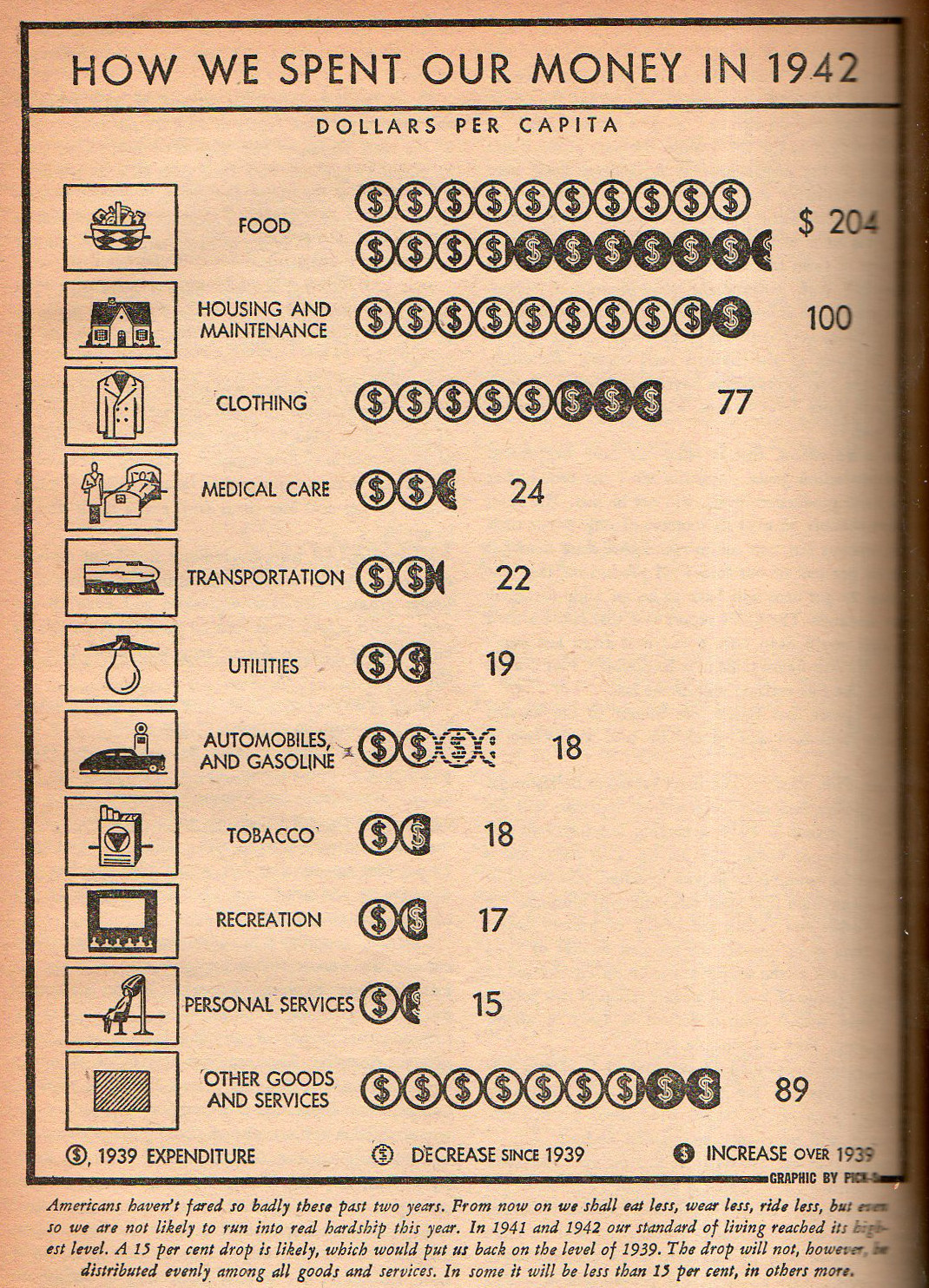
      NATION Graph how we poent our money315

    [Source: The Nation, May 1, 1943.]

    Average 1942 salary of $2,500 = $34,00; Average hourly salary of 30 cents/hour = $4.12; Average cost of house, $8,000 (which is also about three times the average yearly salary) = $109,000 ; Bread, 9 cents = $1.24; Milk, 62 cents = $8.52 First class stamp, 3 cents = 41 cents.  (Disappointingly I’ve seen some pretty wide discrepancies in these figures, not the least of which is housing, where I’ve seen upper-end estimates of $8,500 for a house…)

    Just for the record, according to the Bureau of Labor Statistics, the fair exchange for a one 1942 dollar would be about $13.75 2014 dollars. *These figures too are bumppy–I’ve chosen to use The figures above are disappointing because they’re figured per capita, which is a little difficult to work with, especially when trying to compare the data to family-computed figures with the numbers I have on hand.  In any event $204 is about 8% of the average income, which is less than the percentage a family will spend on food per year nowadays, which seems to be in the 20+% neighborhood.

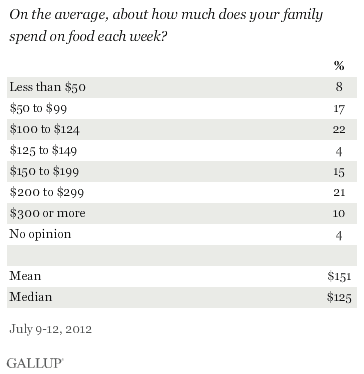
    On the other hand, Gallup reports widely different numbers for that time, namely $15/week or $60/month of $720 a year, per family, which is about 30% of an annual income, which seems more in keeping with expectations.  Adjusted for inflation, that figure is about $200/week in 2012, which is about 25% more than the average family spends today:

    Food expsnse percentages[Source: Gallup, here.]

    The shocking thing from this little adventure is seeing the 8% figure at $50/week, and 25% (!) at the <$100 level.  


  • Invade Europe Now! (And Nazis in New York)

    JF Ptak Science Books     Post 2313

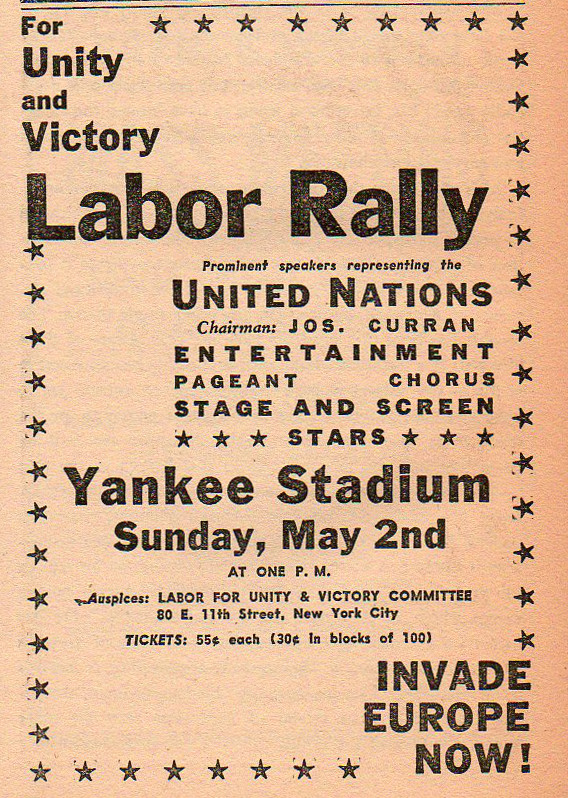
    I found this ad in the April 24, 1943 issue of The Nation, a great magazine already in its 70th year of publication.  I can’t say that I’ve seen a mention of the European invasion like this before, in an ad–certainly everyone was thinking of it, and the issue of where the invasion would take place had been decided (over Mr. Churchill’s desire for the thing to take place in southern Italy), but to see it in a advert like this was surprising.  (It turns out the Paul Robson sang at the event, urging the crowd of 54,000 to fight Fascism “abroad andf at home” (see http://www.bayarearobeson.org/Chronology_3.htm#May%202,%201943)). 

    NATION invade europe now313


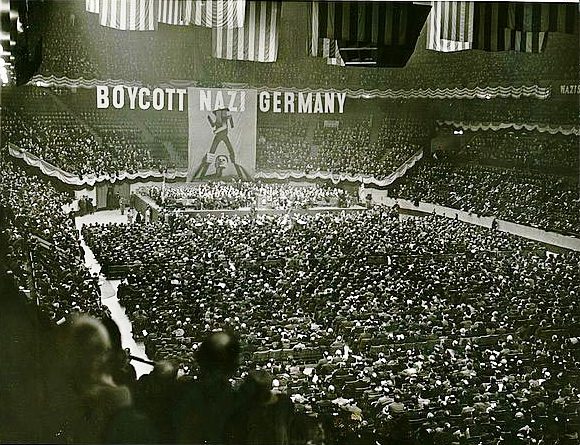
    In searching for images of this event I found something for Madison Square Garden, featuring a packed house for an anti-Nazi even in 1937.  MSG played no particular overt political favorite in the game of renting the facility (free speech and all that), because a year later there was a large meeting of the German American Bund that took places there, with reportedly 20,000 in attendance.  There’s a very unsettling video that I found for this event:

    [Source: http://youtu.be/KPGT7EaCiIY]

    They listened to a lot, not the least of which was the Bund’s leader, Fritz Kuhn, a naturalized American from Germany with a troubled relationship with the Nazi Party, and also with sticky fingers. What brought him to his knees was Fiorello La Gaurdia going after him and with Thomas Dewey prosecuting him for embezzling $14k from the groups general funds to pay for his happy times.  He went to prison in ’43, deported in ’45, and was dead in Germany in ’51.  

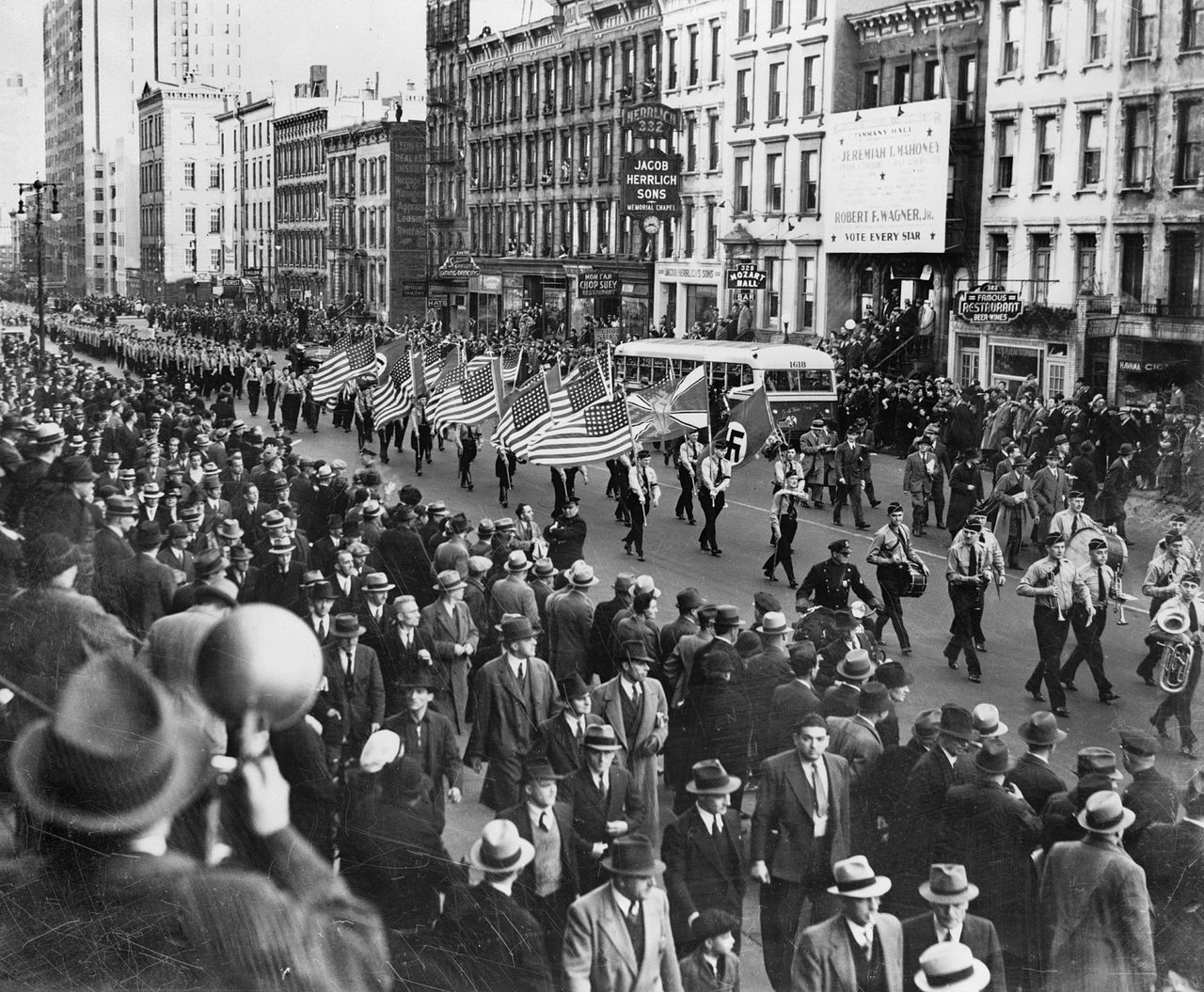
    The Bund paraded down 5th Avenue, too, in October 1939, right after the beginning of the war. From the looks of it the Nazis didn’t come close to even a small fraction of the curious and concerned onlookers.  

    German_American_Bund_NYWTS

    [Source–Wiki images, here]

    For many pro-Nazi groups–including Charles Lindbergh and the America Firsters–the bullshit parade didn’t end until Pearl Harbor, when the U.S. went to war with Germany, and at which point the Hitler admirers had a huge change of heart. Or at least became very quiet and still.

    Here’s an earlier anti-Nazi meeting, which seems to me to have had a much bigger crowd:

    Anti-Nazi rally

    I have my doubts about the 20k mentioned for the 1938 meeting–from what I can tell there were a lot of dark sections and empty chairs…

    ·Posted by :

    ·in:

    —

  • Immigration Map 1903–a Great Display of Data

    JF Ptak Science Books  Post 2113

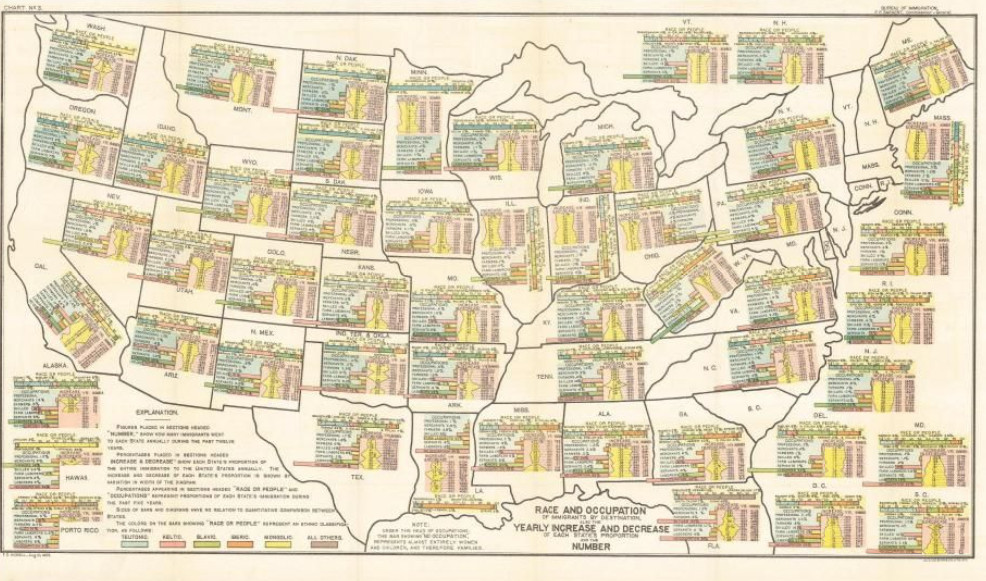
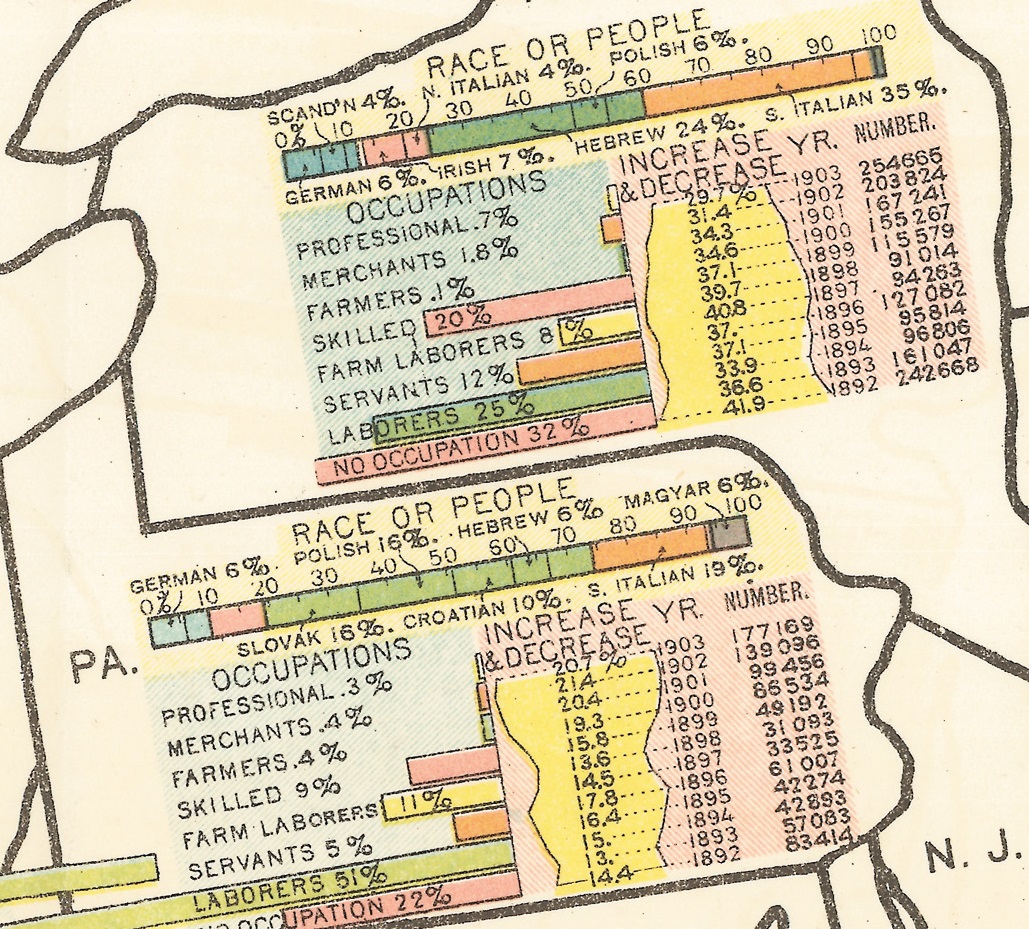
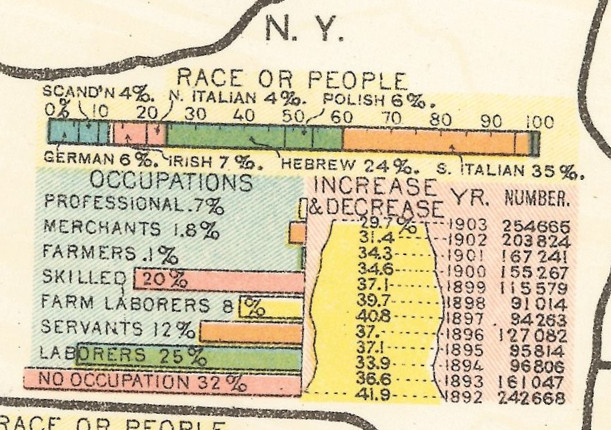
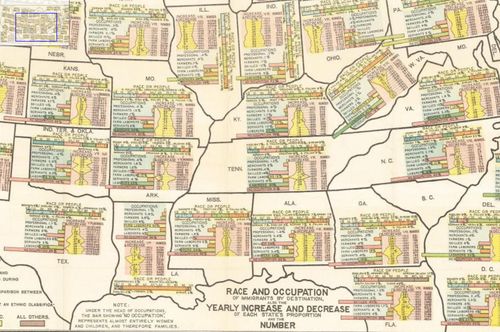
    This map is an interesting early attempt to embed complex statistical information into map form. It shows us the countries of origin of new immigrants to each state and the occupations of the adult male immigrants (with women and children being statistically both invisible and weighty, as they were classified simply as “no occupation”).  New York state saw a huge influx of immigrants–the leading numbers in the country–with more than 150,000 on average every year from 1892-1903,  Most of the South received little interest from immigrants, with Mississippi and North Carolina receiving in the double digits of immigrants, Virginia and Alabama getting in the mid three-figures, and Georgia and Tennessee settling in on average in the single digits.  Florida, on the other hand, is a very different case, receiving in the mid four-figures and also leading the country in the percentage of skilled immigrants (with 42%).  It is interesting to note that Alaska from 1894-1896 received no (legal) immigrants, then having 1 in 1897.  

    In any event it is a fascinating chart to have a browse with.

    Aliem map full

    [A full, zoomable version can be found at Michigan State University library, here.]

    “Race and Occupation of immigrants by destination. Also the yearly increase and decrease of each state’s proportion and the number.” Citation:  Race and Occupation of immigrants by destination. Also the yearly increase and decrease of each state’s proportion and the number. Made in 1903 to accompany the Annual Report of the Commission-General of Immigration for the Fiscal Year ended June 30, 1903 by Frank P. Sargent, Commissioner-General of Immigration and published in Washington in 1903 by the Government Printing Office.

    Immigration NY+PA good

    And New York, closer:

    Alien NY detail


    Alien map middle US