A Daily History of Holes, Dots, Lines, Science, History, Math, Physics, Art, the Unintentional Absurd, Architecture, Maps, Data Visualization, Blank and Missing Things, and so on. |1.6 million words, 7500 images, 4.9 million hits| Press & appearances in The Times, Le Figaro, Mensa, The Economist, The Guardian, Discovery News, Slate, Le Monde, Sci American Blogs, Le Pont, and many other places… 5000+ total posts since 2008.

Author: JF Ptak

  • On Einstein Not Being in the Popular Press Before the Great Eclipse of 1919

    JF Ptak Science Books  Post 2311

    Between the Eighth Avenue Line and Julius Einstein in the New York Times Index for April-September 1919, there is nothing.  No Albert. No Albert Einstein.  At least in the newspapers followed by the Index.  

    Abraham Pais mentions in his wonderful intellectual biography of Einstein Subtle is the Lord that there was no mention of Einstein in this index until after the famous 1919 measurements confirming his theory–this to huge popular acclaim. (This was a months-long series of work on the light rays passing through the gravitational field of the Sun, the Einsteinian theory of gravitation fitting the results rather than the Newtonian, thus determining the soundness of E’s theory of relativity.) The paper1 announcing that was read in the Royal Society in November 1919, and then published in the first issue of the Philosophical Transactions in January 1920…and other places.  But the reports started appearing in the press before that, the scientific reports lagging just a little.  

    I never checked it out until I stumbled upon a 1920 issue of Popular Astronomy, with a January 1 issue reporting on the great expedition.  

    Anyway, its true.  The popular mentions of Einstein just aren’t there.  After the reports from Dyson/Eddington though Einstein begins his journey as a household name, blown out of the relative general obscurity of popular acknowledgment (in spite of his gargantuan year of 1905 and the other great papers of 1907, 1911, 1915, and 1916). 

    Notes, with the Times index following:

    1.  F.W. Dyson, A.S. Eddington, C. Davidson, “A Determination of the Deflection of Light by the Sun’s Gravitational Field, from Observations Made at the Total Eclipse of May 29, 1919”, in The Philosophical Transactions of the Royal Society of London. Volume 220, pp. 291-333 (January 1920).

    New York Times Index, Oct-Dec 1920


    ·Posted by :

    ·in:


  • Human-Powered Flight of an Antique Nature, 1893

    JF Ptak Science Books  Quick Post

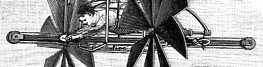
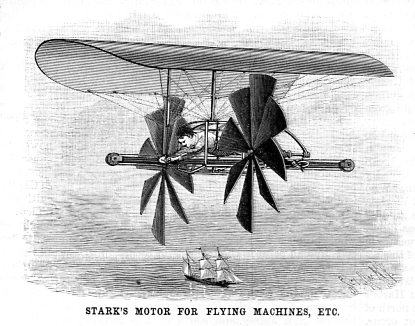
    “A Light and Simple Motor” is the title for this short article in Scientific American (February 11, 1893).  It is the work of Theodore A. Stark of Ottawa, Illinois, for the use on flying machines–it is a odd contraption that is suspended from an “aeroplane” (in this case the word is used to describe only the wing of the flying machine and not the flying machine itself), functioning like a push/pull device by arms and legs, powering the two large propellers that was supposed to keep the aircraft moving and aloft.  This has a curious feel of greater age to it, being only ten years before the powered Wright flight. 

    Ulra light motor flying machine304

    And the detail:

    Ulra light motor flying machine detail305

    ·Posted by :

    ·in:


  • Books are Weapons in the War of Ideas

    JF Ptak Science Books  Post 3210  

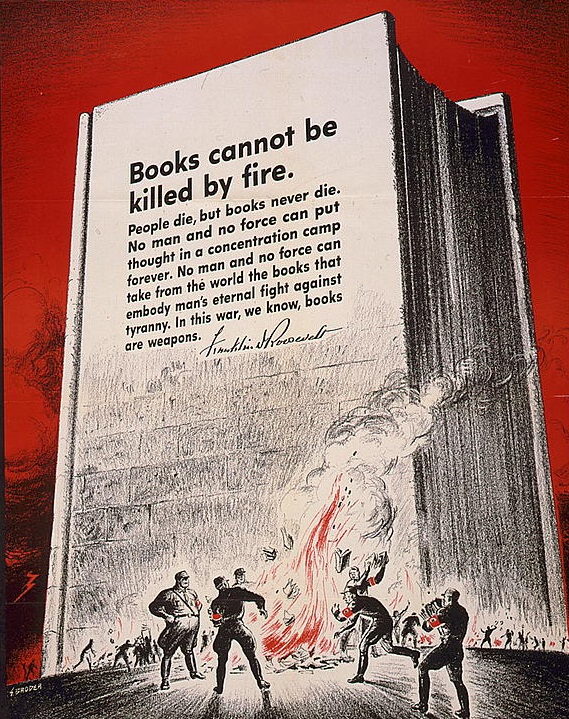
    “Dort, wo man Bücher verbrennt, verbrennt man am Ende auch Menschen” (“Where they burn books, they will in the end also burn people”).–Almansor, Heinrich Heine. 

    Books are weapons309


    Independent and provocative ideas are usually the first things to be attacked by totalitarian regimes, and the Nazis not only did that in spirit but in action, and unfortunately part of a long and very bleak history of killing ideas and books. 

     Books have been destroyed for as long as they have been made, for reasons as varied as those for their writing:  the motivations for biblio-devastation are ever-reaching.  Perhaps the most astounding and appalling of them all resides in the fetid memory and fouled grave of the Chinese emperor Shi Huang Ti (third century BCE), who in his 49 years of life liquidated nearly every book in China, psychotically determined to make himself the most-remembered person in history by eliminating history itself.  Not to be outdone by books, he eliminated authors as well.  And scholars.

    Authors not only have been killed for their works, some have followed them directly into the flames.  Michael Servetus, who has a complicated history and who was found wanting in his relationship with church orthodoxy on many levels, met his end on a pyre with his books.  One of those books, a medical text, challenged the (religious) orthodoxy of the brain being the seat of all power and wisdom of the body, stating that it was the heart that pumped the blood and not the head, providing another chink in the armor of theological doctrine.  Pissed as the reigning Christians were with this belief, this book probably was not the thing that most annoyed them, but it also didn’t help his case, either.  But no matter, he and his books were burned together to ashes for reasonable and logical thought.  There were many others before and after this.

    The great example in the history of burning books in the West is probably Florentine Savonarola’s “Bonfire of the Vanities”, which saw th eworks of Ovid, Propertius, Dante, Bocaccio and many other classics condemned to flame

    The Nazis were interested in not being interested except for the burning of pacifist lit, degenerate art-inspired literature and art books, anything by Jewish people in any field whatsoever (including the sciences, and hence the creation of the “Jewish physics” of Albert Einstein, any works that denigrated the German people or history or anything that could possibly address action against the German state…and on and on. The infamous book burnings took place mostly on May 10, 1933 and again on June 21, functioning under the umbrella of the Main Office for Press and Propaganda of the German Student Union which asserted the great incendiary “Action against the Un-German Spirit”, though of course the orders and instructions for such a miserably fetid melange came from further up the National Socialist food chain. Some of the writers included in the burning and forbidden edicts included Victor Hugo, André Gide, Romain Rolland, Henri Barbusse,  Ernest Hemingway, Upton Sinclair, Theodore Dreiser, Jack London, John Dos Passos, Helen Keller, Joseph Conrad, D.H. Lawrence, H.G. Wells and Aldous Huxley,  James Joyce, Fyodor Dostoyevsky, Maxim Gorki,Isaac Babel, Vladimir Lenin, Vladimir Nabokov, Leo Tolstoy, Leon Trotsky, Vladimir Mayakovsky, and Ilya Ehrenburg.

    It was a pretty inclusive list, and brought the idea of a German intelligensia to wobbly and shattered knees, a prosaic and sickly-sweet German temporalism not so much unlike the music Hitler enjoyed and the very basic things that he painted.

    The response to these actions worldwide was curt and devastating, as is easily imagined, and provided simple platforms for other areas of anti-Nazi hearts and minds offensives.

    The very striking and simple image above was something I just found in the April 24, 1943 issue of The Nation—not much more needed to be said. (The Nation had since 1932 been very vocally anti-Hitler, with issue after issue featuring articles from the earliest periods of Hitler’s Germany detesting what actions the man was taking in that country, as well as gritty and effect political cartoons featuring blood and rats and the like.)

    There were other variations on this theme, like the one below, being made into a poster and using a quote from Franklin Roosevelt, and set in stark contrast to the Nazi book burnings:
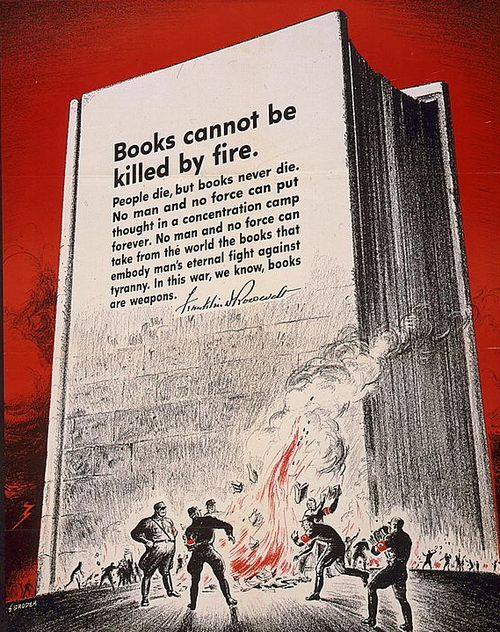
    Books are weapons 2

    [Books are weapons…poster, 1940-1945, via the Library of Congress]

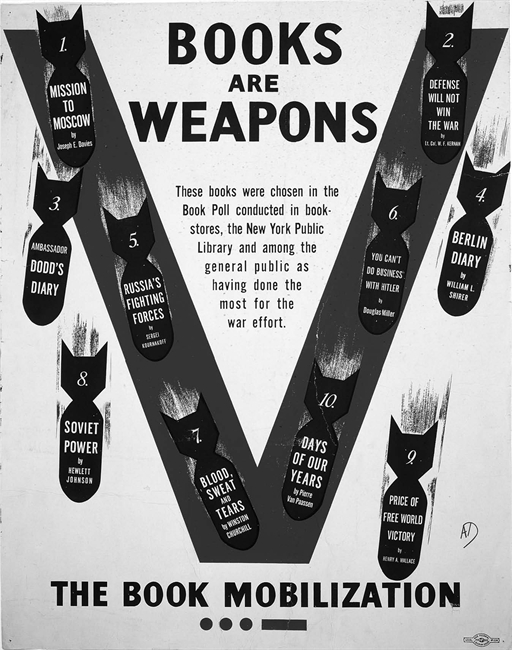
    And another version, suggesting what sorts of books could be used in this war:
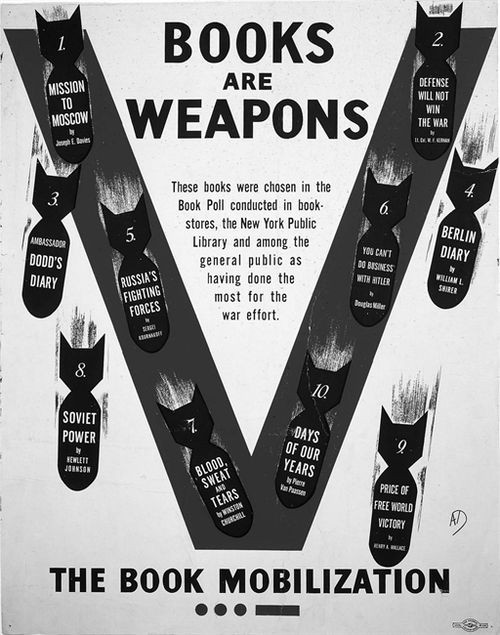
    Books are weapons 3

    Goebbels proclaimed that the flames of the books burning in Berlin were an expression of the German people–that the flames illuminated “the end of an old era and light of the new”.  An anti-Phoenix. 

    [Source: jonathanevincent blog, here.]

  • The Accidental Absurdist: the Conformator, 1878

    JF Ptak Science Books  Post 2308

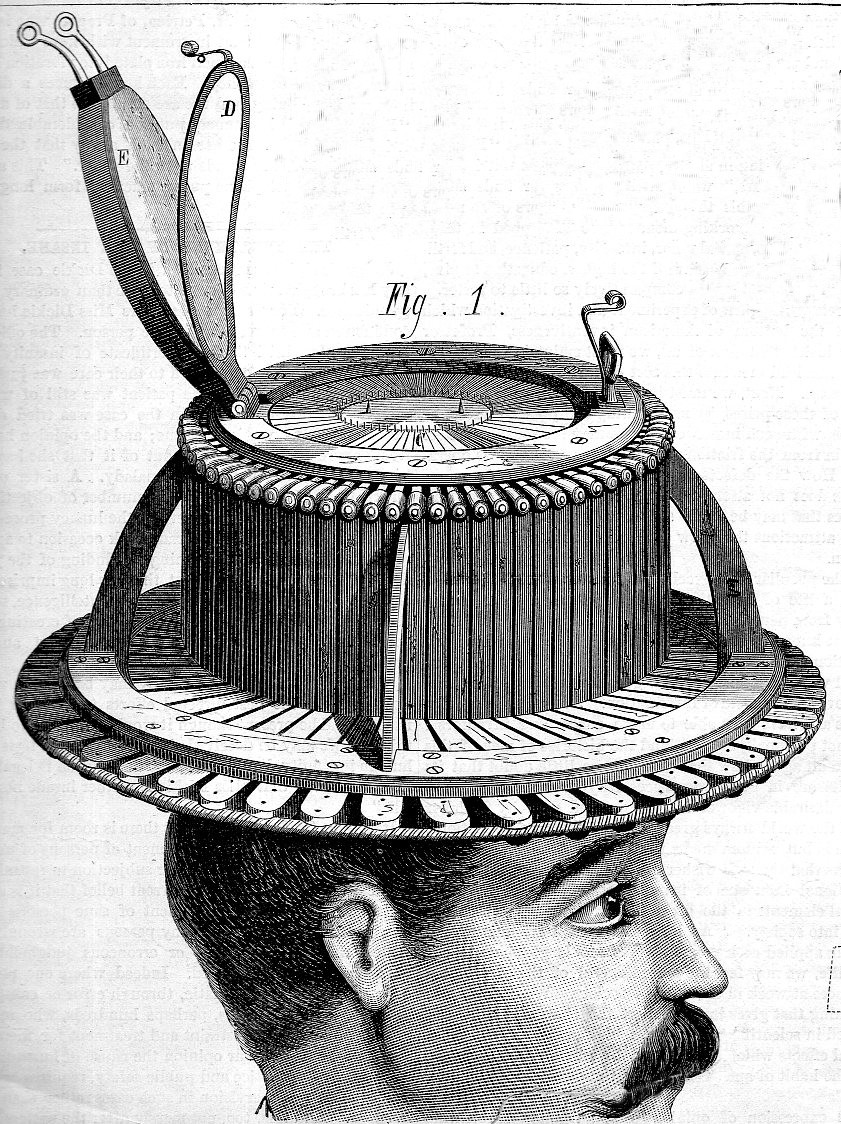
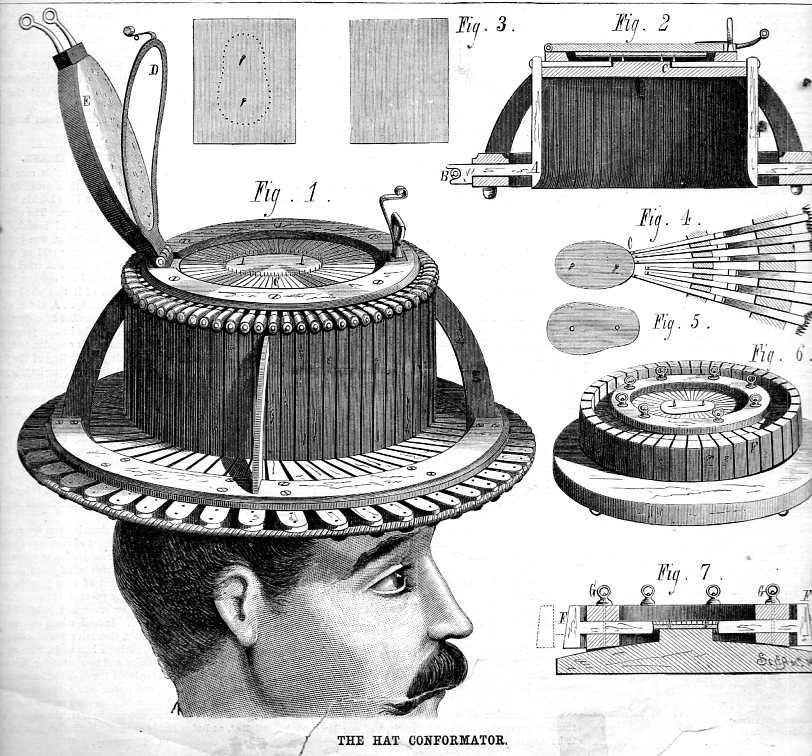
    Here’s another classic of ingenuity mixed with out-of-context accidental absurdist visualisations: the classic (I think) “hat conformator” from the Scientific American in 1878.  


    Hat conformator detail cleaned

    Which is a detail from:

    Hat conformator301

    [Source: Scientific American, March 9, 1878.]

    The $100 instrument (a wide sum in 1878, equal today in buy power to several thousand dollars) was an instrument of use not only to hat makers but to the anthropological and medical professions as well–head shape and its influence on behavior still being a concern to some, the conformator found some occasional use in relating meaning to shape.  That sort of effort would continue for some decades to come.  

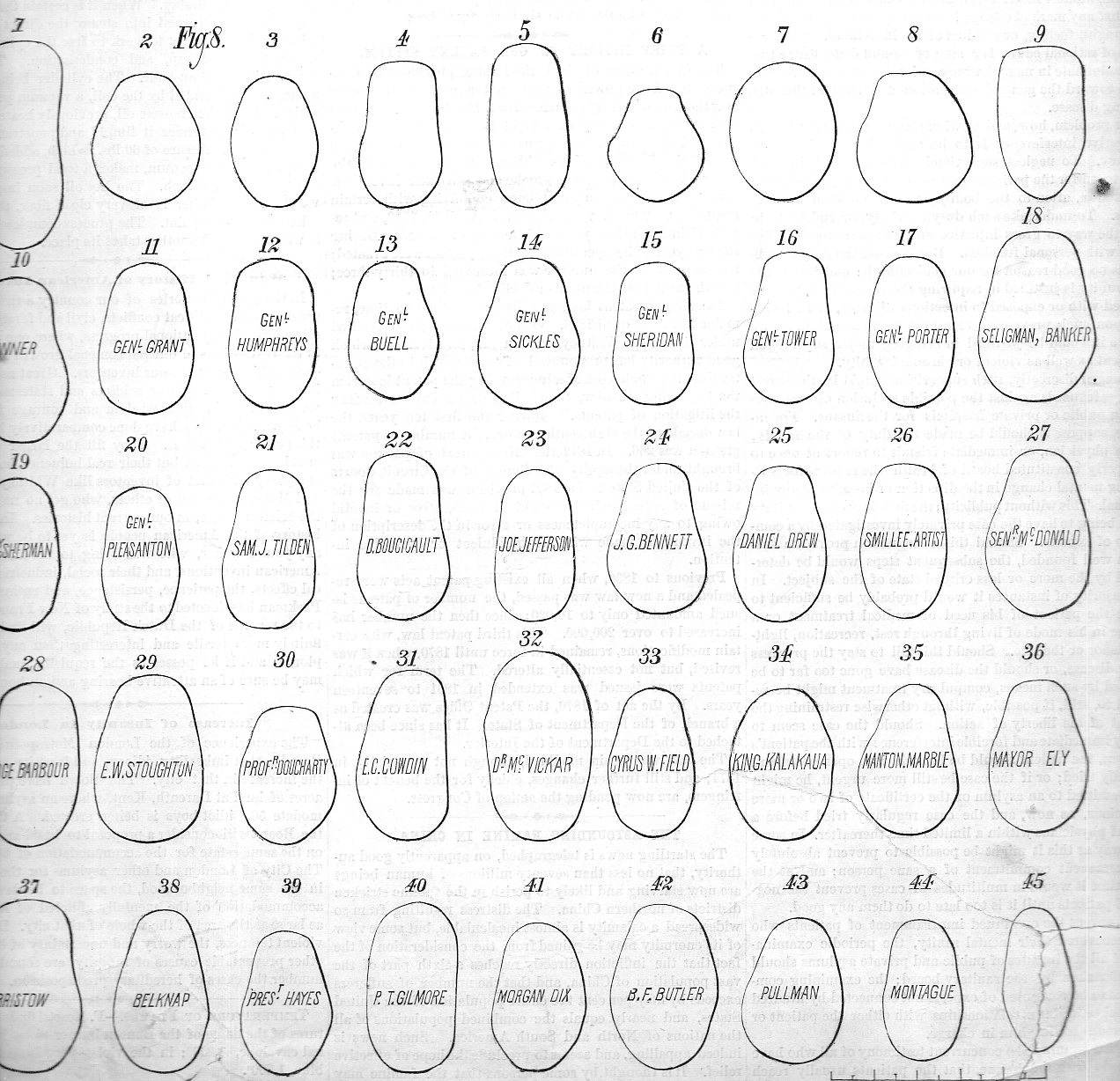
    As a classic illustration the fron page showing the conformator is generally shown when shared online or written about in paper, but I don’t think I’ve ever noticed the posting of the head shapes themselves coming a few pages later. The short chart features the axial view of some famous 1870’s heads–I would say more about this if there was anything useful to say, but really I think there isn’t so I won’t. 

      Hat conformator head shapes303

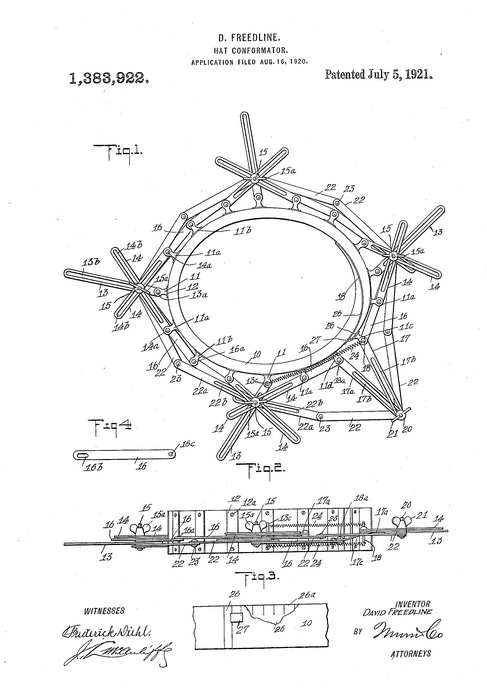
    The 1878 conformator is not unique in the history of head measurement for hats, evidently: “My invention relates to a device to be placed about the head and adjustable to conform to the anatomy thereof”, so states the very wordy originator of another patent device for a “hat-conformator” in 1921–no doubt there are a number of different ways of taking head measurements for a custom-made hat, but I think none are prettier than the 1878 version.

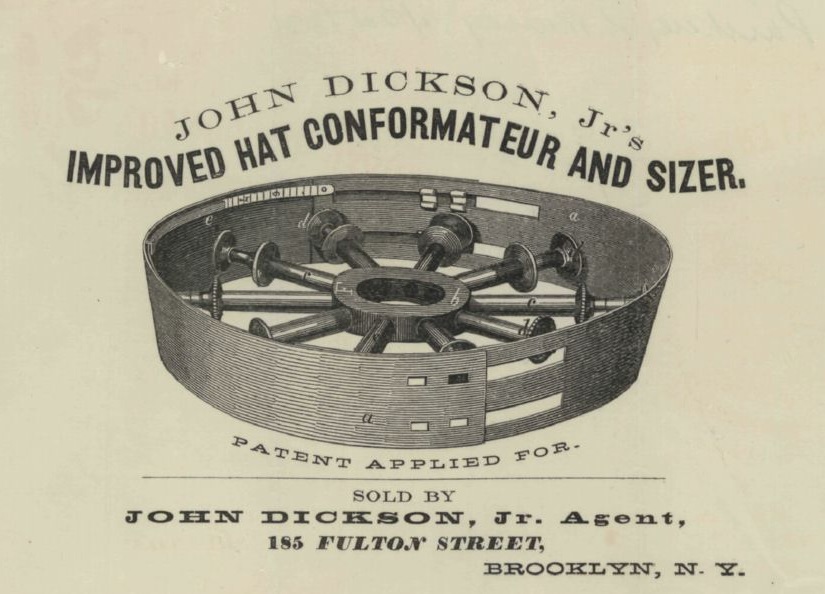
    Hat conformator twoAnd another–no doubt from a field of conformator richness: 

    Hat conformator


    ·Posted by :

    ·in:


  • The Kingdom of Fingers

    JF Ptak Science Books  Quick Post

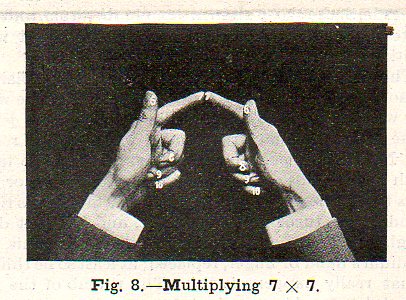
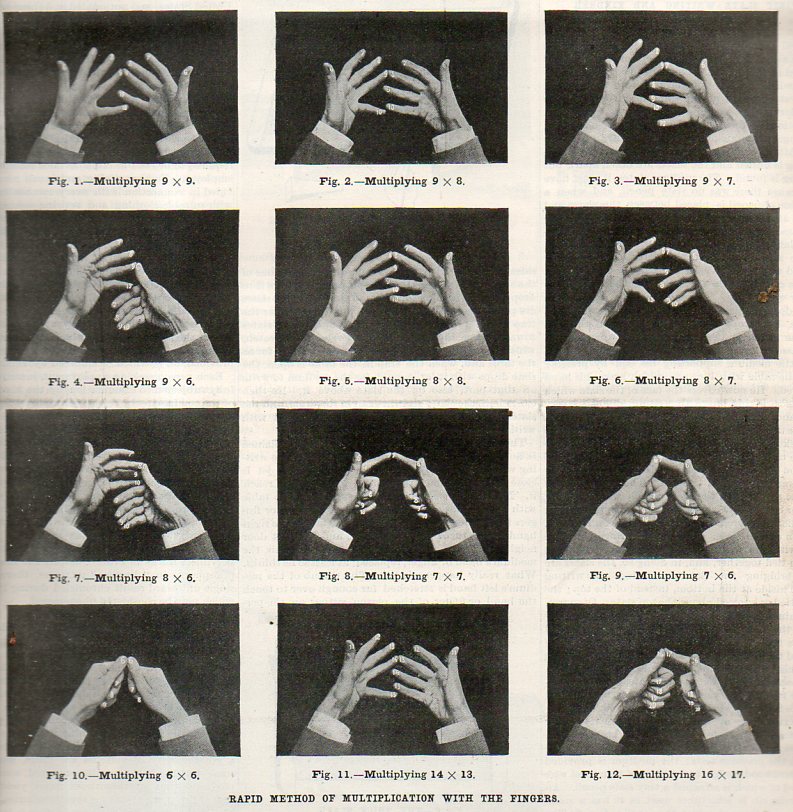
    “The Fingers as an Aid in Multiplication” is another wonderful find coming from a general browse in the great Scientific American (October 22, 1898, page 265). It is an interesting article, using the fingers so that the multiplication tables didn’t have to be memorized by kids–I think that they absolutely should be–but the images taken out of context can also be regarded in some sense for this blog’s “Found Absurdist” series.  (We are told that the system was devised by “a Polish mathematician”, Procopovitch–he is repeatedly referred to as “the Polish mathematician”.)

    • See “Digital “Computers 1450-1750: Memory and Calculating on the Fingers and Hands”, a post on this blog from 2008, here.

    Hand calculating300

    A detail from:

    Hand calculating299


  • Kingdoms of Dust and Street Dirt, and What People Breathed in 1878

    JF Ptak Science Books  Post 2307

    Here’s an extraordinary find, a bump in the grazing field in the Scientific American Supplement for January 19, 1878. The article is about dust–but not the cosmic dust that some folks say is what is being seen in the Big Bang (and not a background radiation signature), nor is it like the dust equation nor the dust of Einstein’s great dust paper of 1905.  It is more like a lower-level plague dust as we see in Arthur Rothstein’s iconic dust bowl photograph made in parched Oklahoma in 1936.  It is about the residue of industry and commerce that did’t get carried of by the mysterious carry-off winds associated with the high and higher chimneys of Victorian London and other industrialized cities, and the leftover bits of the operation of daily cosmopolitan life involving say horses and trains.  It is an article about the significant particulate  matter of dust, which we know today is a high-percentage contributor to air pollution, not to mention the low-level “atmosphere” of the kicked-up business that people would breathe in every day.

    And, evidently, this dust was very heavy-metal rich in composition, which is not so good.  

    The article is “Street Dust”, and the author, Henry G. DeBrunner (who would become professor of chemistry at the Pittsburgh College of Pharmacy), decided to take a look at the dust of Pittsburgh and compare it to reports of the dust of major European cities.  He notes that Paris and London and other cities consist of 35% of “metallic iron, given by the shoes of horses to the stones, besides from 30 to 40% of good glue from the hoofs”.  Now that seems an extraordinary figure, and surprising too in many ways that it came from horse shoes. 

    Dust mask296

     [Source: an advertisment from Scientific American, volume 79, 7 January 1893, back wrapper.

    DeBrunner conducted a study at Thirtieth and Smallman Streets (Pug) and found out that 30% of the sample of dust (“a deep black color”) consisted of silic acid, 26% of “fixed carbon”, ferric oxide at 12%, sulphuric acid at about 1%, gluten 1%, Metallic iron 8.55%.  The details of how all of this was extracted can be seen below, where the entire article is reproduced. There were other samples, and it is interesting to note that in one sample near horse tracks contained 32% heavy metal and lots of glue. 

    The entire article, January 19, 1878, Scientific American Supplement, No. 107:


  • Usherettes, Elevator Operatorettes, and Baseball, Part II

    JF Ptak Science Books   Quick Post

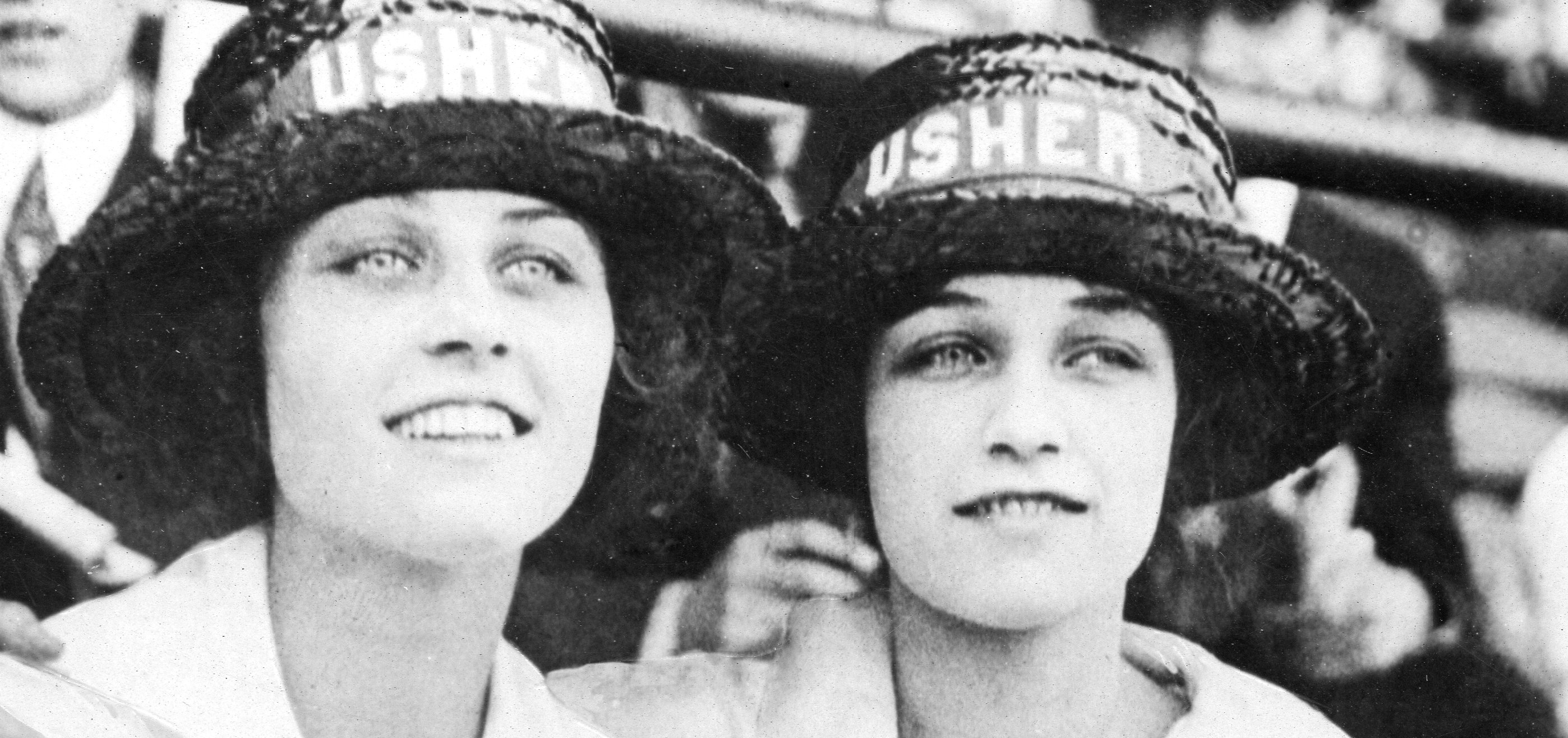
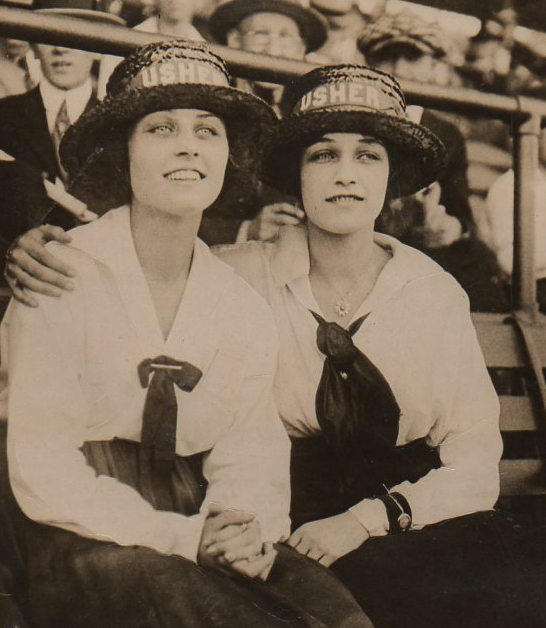
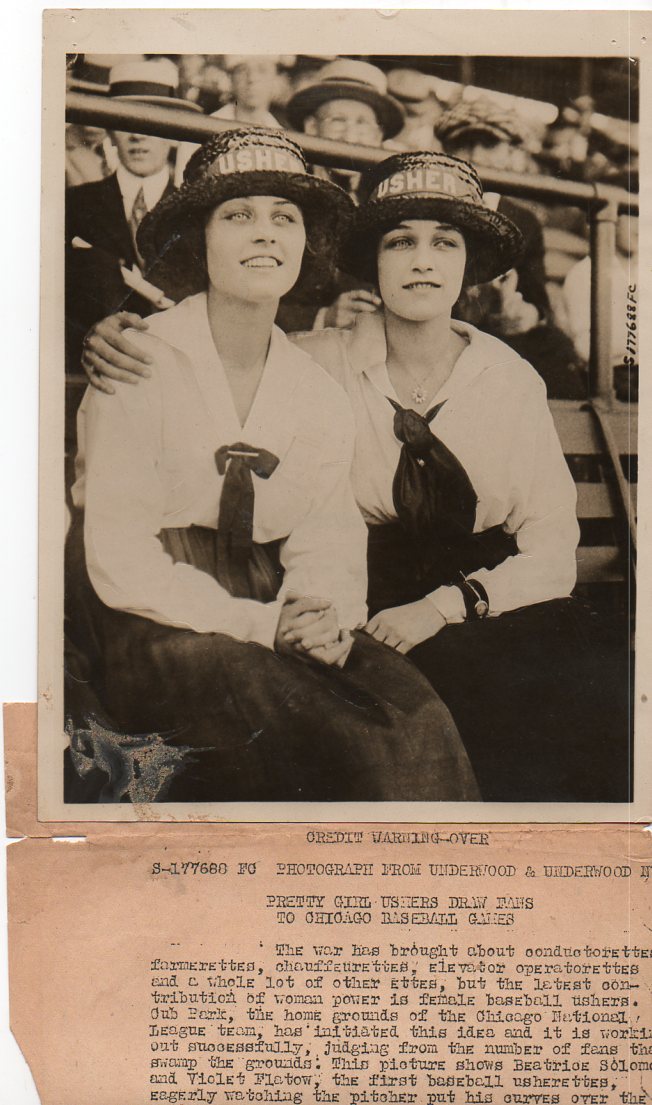
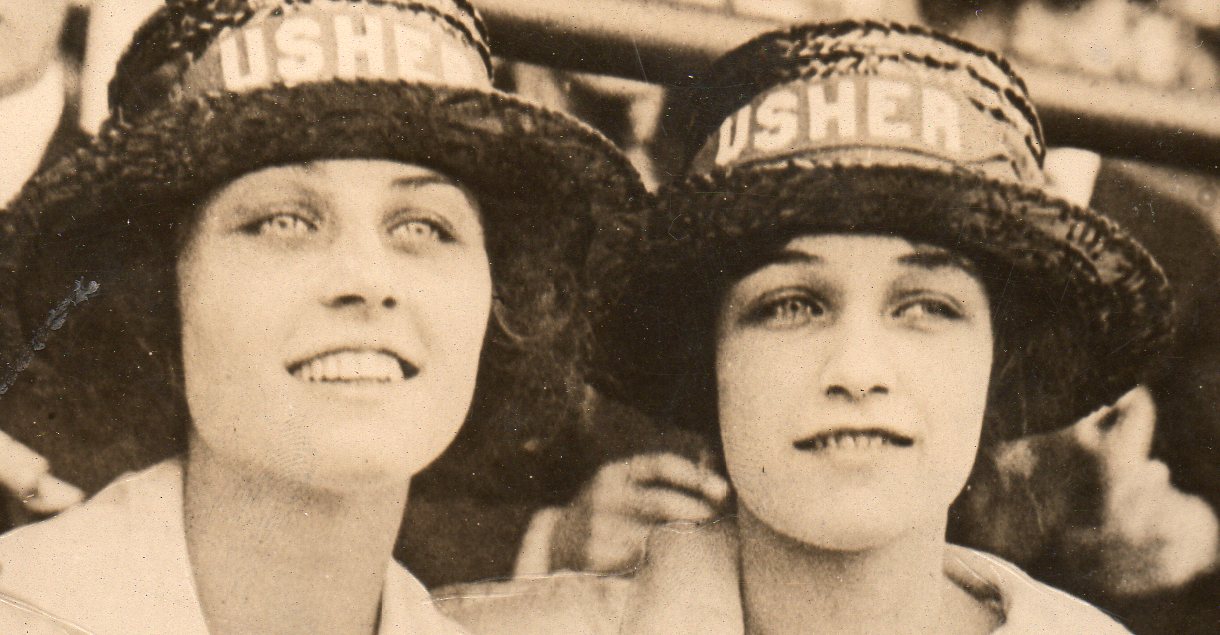
    One of the images that appeared in a post a few days ago (Baseball and World War I) became very popular, appearing in a number of other blogs and retweeted and shared in a number of media. The image was the “Usherettes” of the Chicago Cubs, and the photograph was made by a photographic pool by Underwood & Underwood (N.Y.) and was published July 12, 1918.  Its a wonderful image of two young women–both lovely, with the one of the left having no doubt crystalline light-blue eyes–who were identified as replacements for the male ushers who may have gone off to war.

    POSTER Usherettes detail

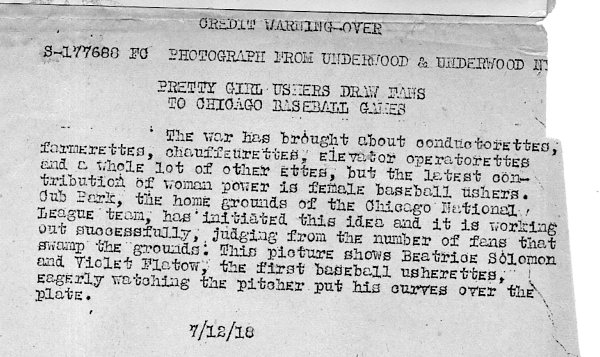
    The photograph was made by one a number of news photo service agencies who submitted their wartime work to censorship so that (basically) only mostly-positive images of the war was shared. This image was not of that particular concern, being made in Chicago at a ballpark and all, but it was still produced  by the photographic group of Underwood & Underwood.  And as was the common practice for this sort of photography the photo was accompanied by a slip of paper that was to be used as a caption for the work. So, if the Asheville Times was interested in using a photo illustrating women in the U.S. doing the work of men who had gone off to war, they’d contact a group like Underwood & Underwood who would supply them with the image as well as the description, both of which would appear in the Asheville paper.  

    Ushettes for blog image

    In any event, the caption (reproduced below) reads in part:

    “the war has brought about conductorettes, farmerettes, chauffeurettes, elevator operatorettes, and a whole lot of other ettes” and which would now include female ushers.  

    ANd just so we’re ont he same page, the Oxford English Dictionary defines the suffix “-ette” so:  

    “Forming nouns denoting small or brief examples of the thing denoted by the first element, as diskette, essayettes, kitchenette, towelette, etc.”   As well as:

    “Forming nouns denoting women or girls linked with, or carrying out a role indicated by, the first element, majorette, suffragette, usherette…”etc.

    It turns out that the use of “usherette” for this image predates the “usherette” first usage in the O.E.D., which gives a date of 1924 for the first appearance of the word.  

    It should be stated that the two women in the photograph above were Beatrice Solomon and Violet Flatow, “the first baseball usherettes”.

    Usherettes text294

    ·Posted by :

    ·in:


  • A Scribble Climate of Antique Numbers

    JF Ptak Science Books   Quick Post

    The ScribbleVerse is a captivating place–similar to a microscope slide or the night sky, there are multiple layers of images, layers of layers, an enormous variety of found connections and contours, a poetry of found nothingnesses.  I guess if you looked hard enough this could easily be someone’s night sky, and it wouldn’t take all that much to start connecting the bits into constellations.  The more you look at images like this, the more there is to look at.  

    Found cover art 289

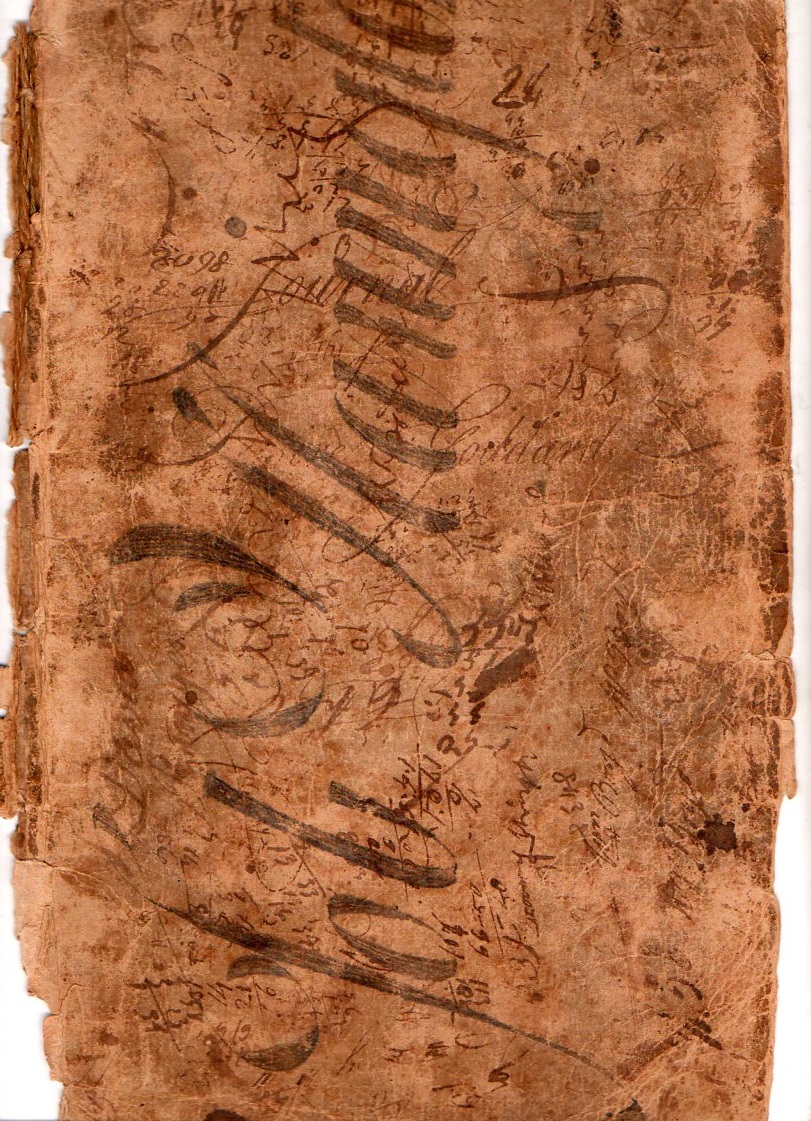
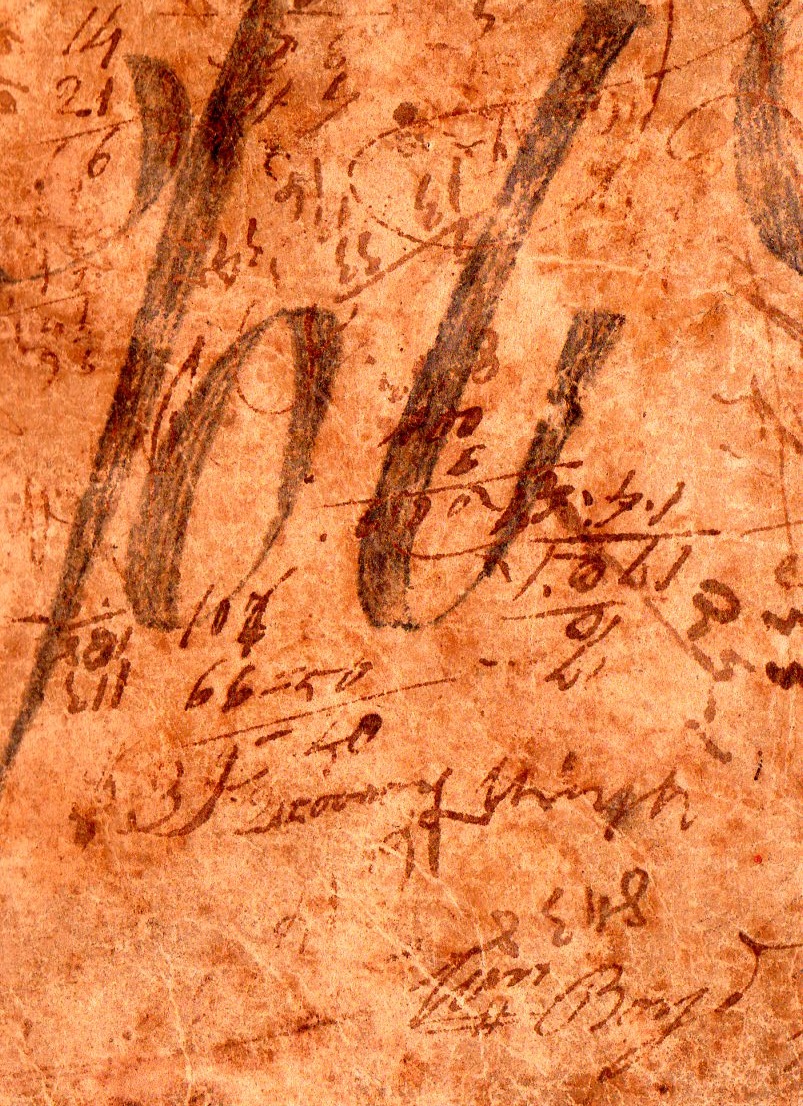
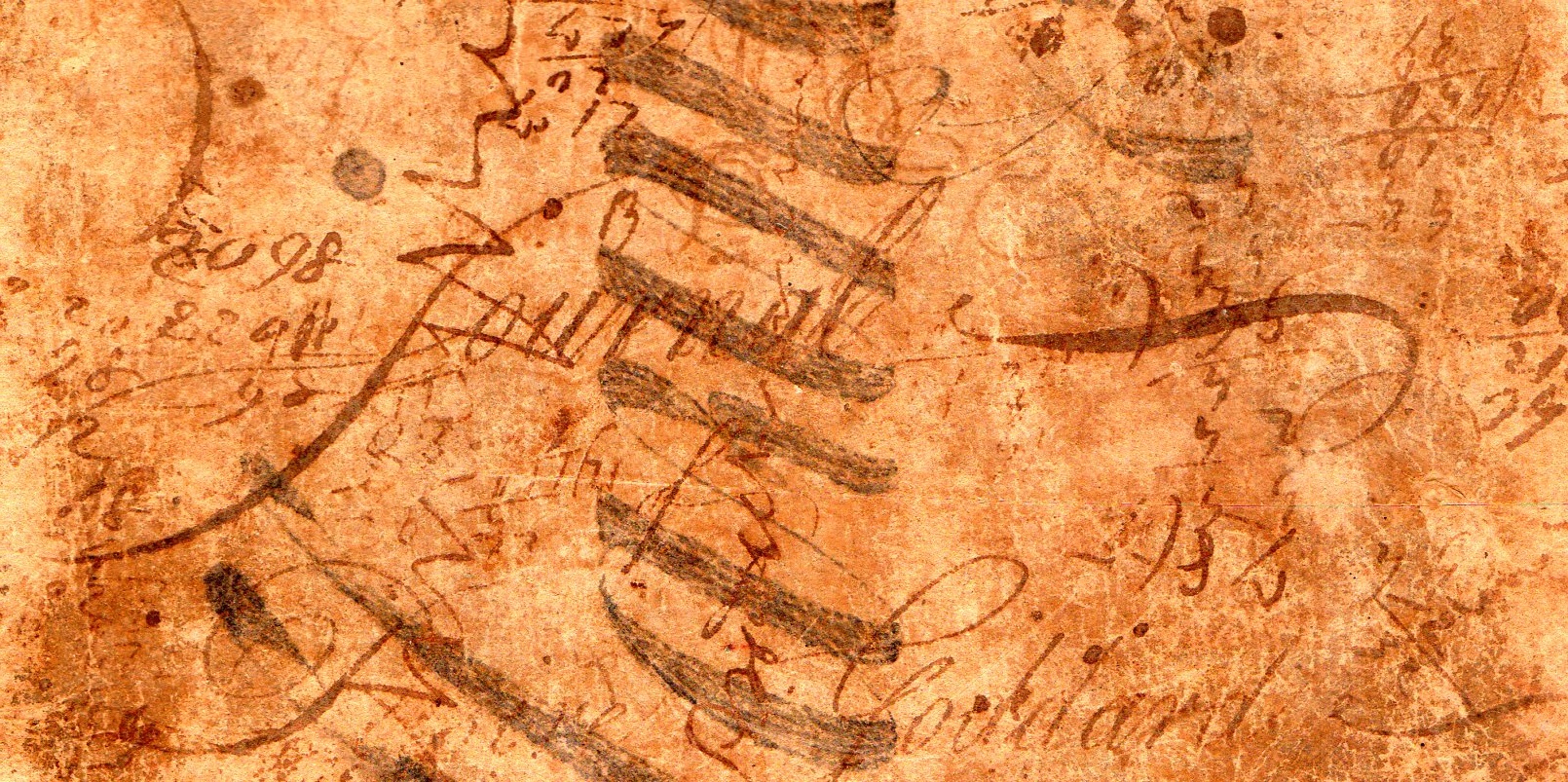
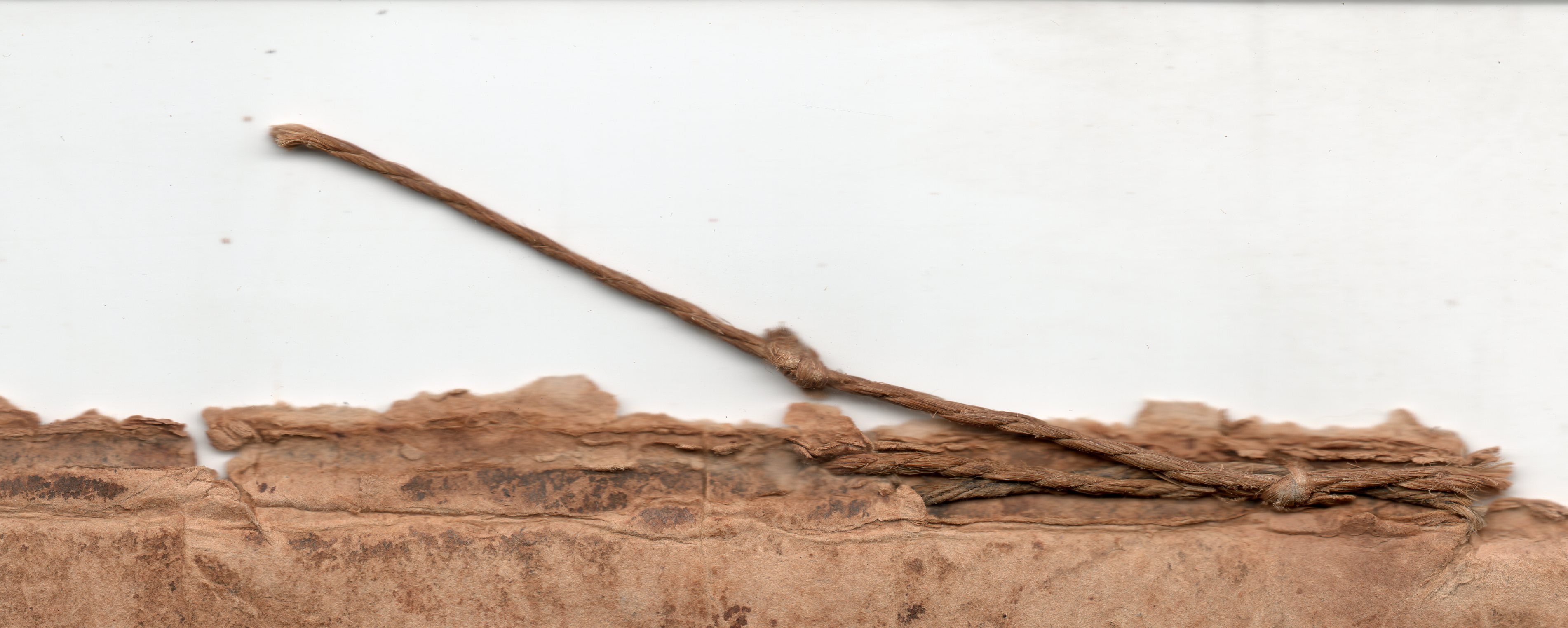
    This is the cover to a ledger/notebook that was probably first owned by someone named “Goddard’, with entries beginning in 1803, but the book itself is older than that.  Not long afterwards the book became the property of John Harrington, who writes a large and embellished signature across the length of the cover. (“John Harrington” appears elsewhere inside the work–the big ownership bit on the front is a bit off, but that is evidently what was being written.)

    And a detail:

    Found cover art  det290

    And another:

    Found cover art  detb291

    And some glorious string:

    Found cover art  detc292

    ·Posted by :

    ·in:


  • “Render the Light Soft and Cool”–Found Poetical Bits in Scientific Advertising, 1899

    JF Ptak Science Books   Quick Post

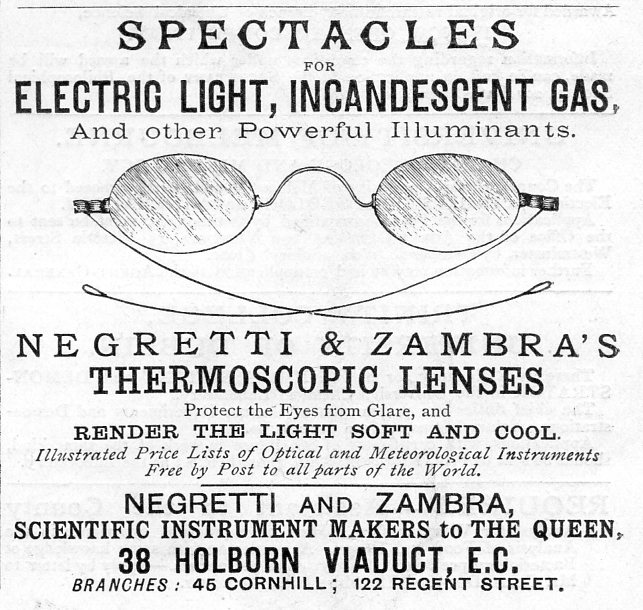
    I have seen many thousands of pages in the populist hard-science journal, Nature, from its opening volume in 1869 through WWII–at least those are what I have in the studiom ready for a browse. (In recent years even a good share of the titles in Nature are mysterious to me–I’m more able to do cover-to-cover grazing before WWII.)  In any event I have notice many times certain poetical phrasing in the ads of the later issues (adverts coming into being a few decades after the first by-subscription issues) and I’m a little sorry now for not saving or noting them.  This ad for lab specs is a decent example: it is a nicely designed bit, and small (less than two square inches int he original issue in 1899), and has the nice turn, “render the light soft and cool”, a line that could be used anywhere.  But here it is, selling specs by the redoubtable Negretti & Zambra.  

    NAture Spectacles286

    ·Posted by :

    ·in:


  • Baseball and World War I

    JF Ptak Science Books   Post 1262 (from 2010)–expanded

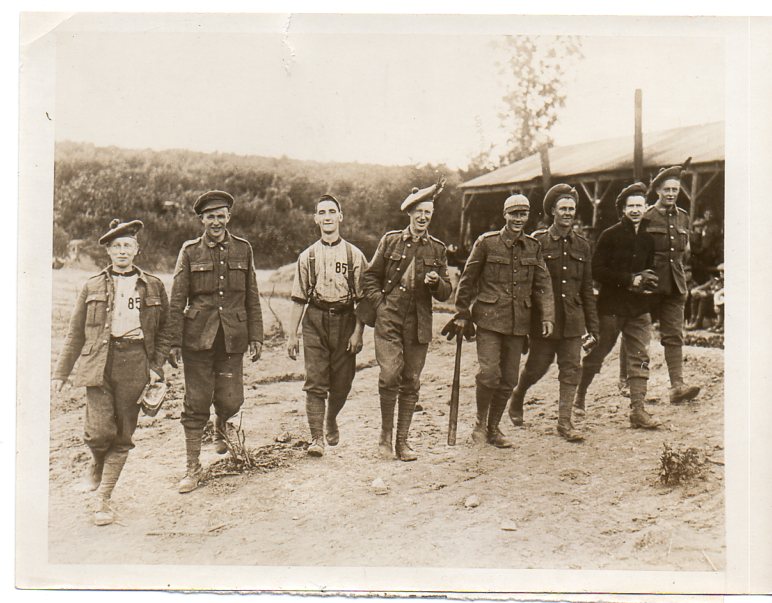
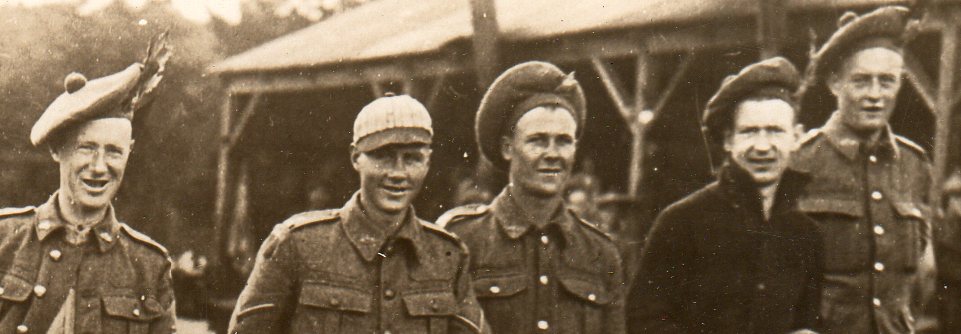
    The following photographs are part of a large-ish archive of news photo service images for the years 1917 and 1918–all are made by American firms, and almost all are related in one way or the other to WWI.  The images below are among the very few depicting wartime sports, and in all cases, these sports was baseball.

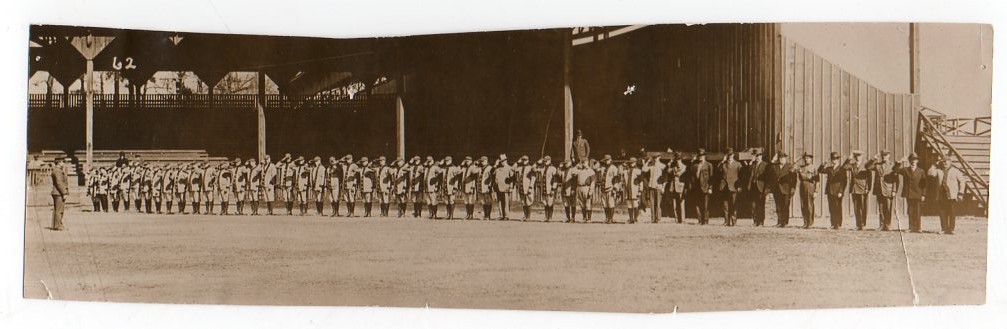
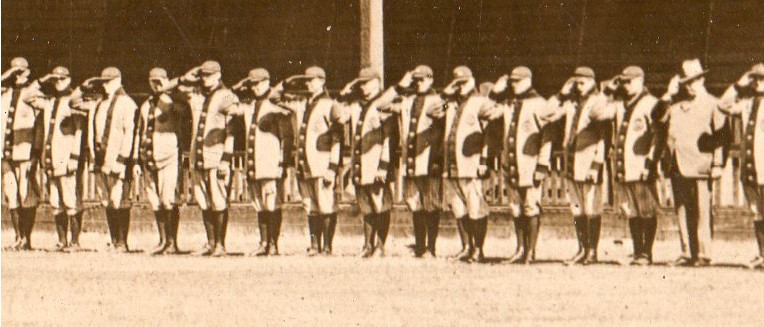
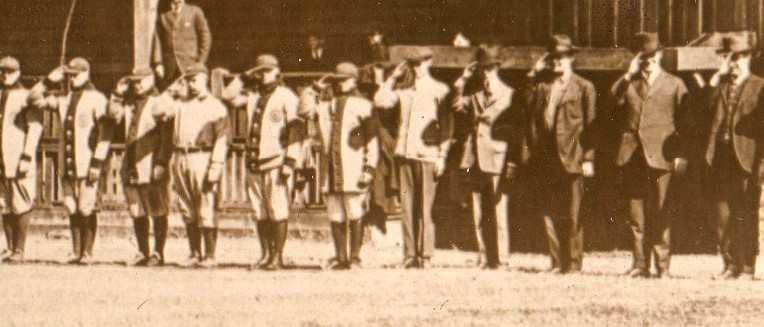
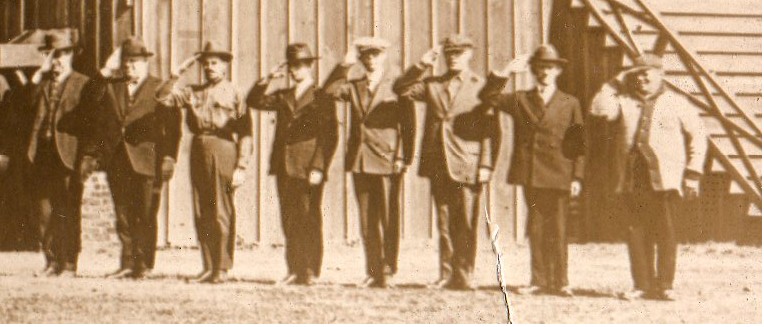
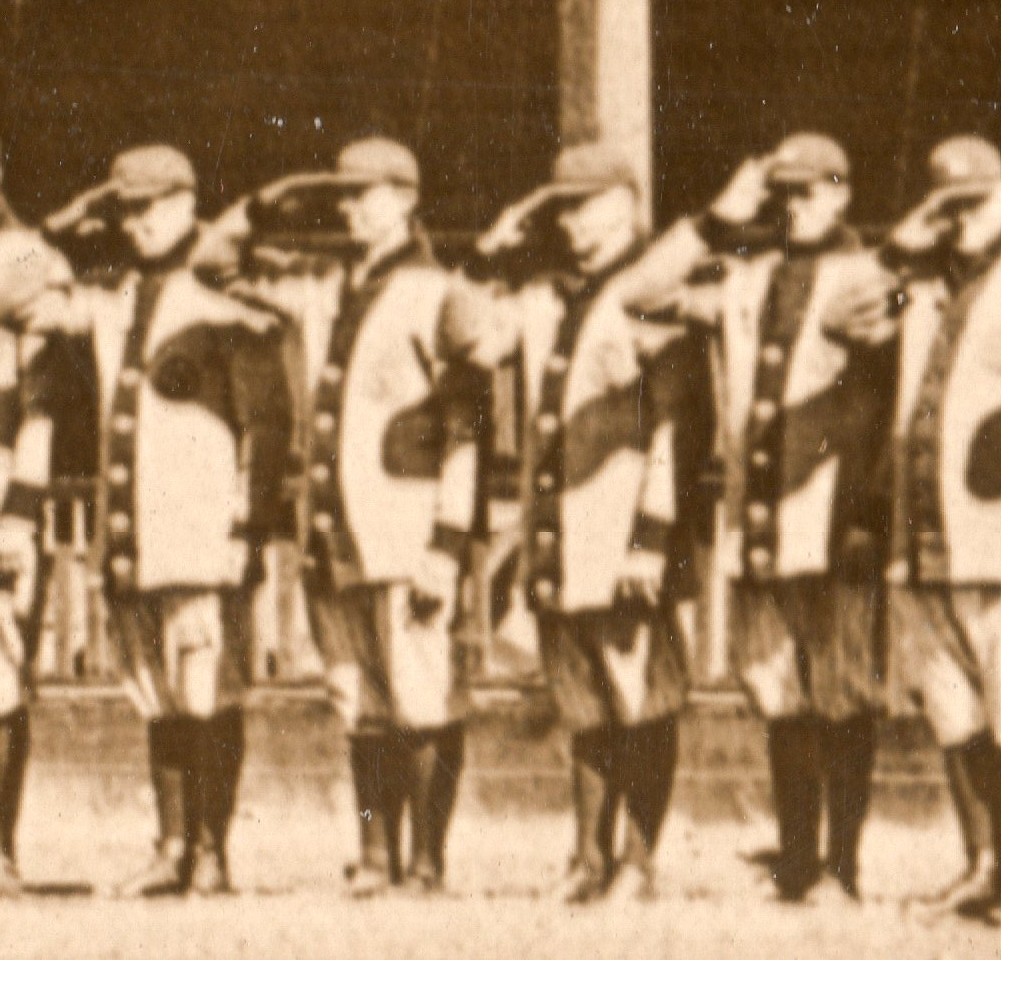
    The first photo is a rather remarkable image of summer training for (as is stamped on the back of the image) “the New York Americans” baseball club, which would be more famously and more continuously called the New York Yankees.

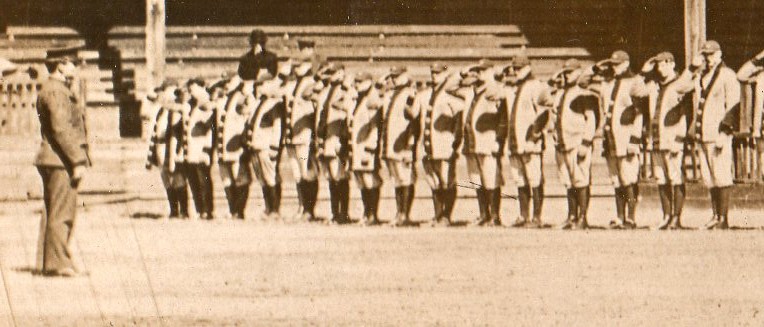
    The identifying stamp on the back also records that among the saluting folks is a sportswriter, Jerry Donovan, “(Wild Bill’s father)”–that “Wild Bill” was also “Smiling Bill”  Donovan (1876-1923), the New York Yankees’ manager for 1915-1917, being replaced in 1918 by Miller Higgins. (Huggins was famously more successful, managing some famous Yankees teams from 1918-1929, winning three World Series, taking six first place finishes, and a .597 career winning percentage with the New York club.)  Donovan was an average manager in his four MLB managerial years (including a last year in 1921 with the Phillies), finishing out with a .479 winning percentage. (He was evidently on his way to a new start with Clark Griffith’s Washington team when he was killed in a train wreck.) Among the other members of the ’17 squad were the beautifully-named Urban Shocker and Slim Love.  

      Baseball 1918022

    And the details:

    Baseball 1918 b023

    Baseball 1918 c024

    Baseball 1918 d025

    Baseball 1918 e026

    Baseball 1918 f massive027

    In 1918 many teams involved their players in “military training”, and this picture shows the Yankees (along with coaches and writers) doing their part to make it look as though they were making some sort of good effort having to do with the war. During the 1918 most teams mostly/sorta let the season go–not so for the Yankees or for Boston (which one its only 20th century World Series title that year).

    Lovely image of two baseball ushers, 1918:

    WWI--e--women ushers684
    WWI--e--women usher dets685

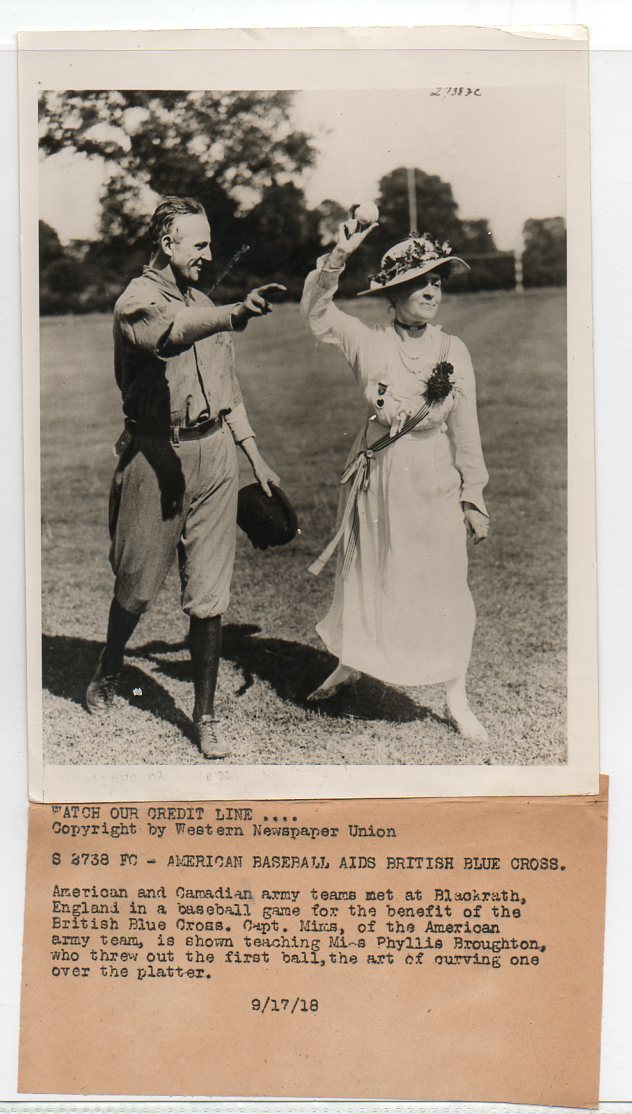
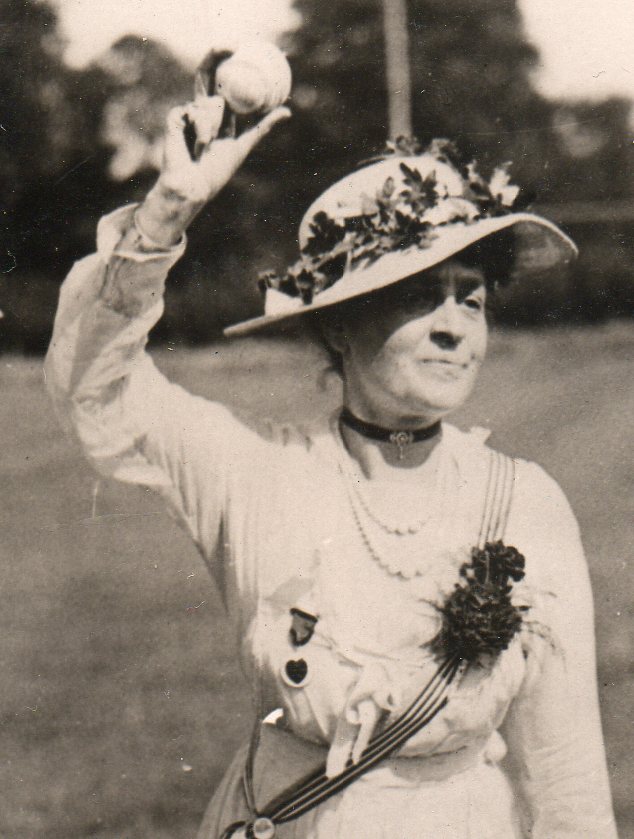
    Also, this lovely picture:

    WWI--e--women-baseball672

    WWI--e--women-baseball det673


    And lastly, this:

    Baseball 1918 happy faces028
    Baseball 1918 happy faces b029

    ·Posted by :

    ·in: