A Daily History of Holes, Dots, Lines, Science, History, Math, Physics, Art, the Unintentional Absurd, Architecture, Maps, Data Visualization, Blank and Missing Things, and so on. |1.6 million words, 7500 images, 4.9 million hits| Press & appearances in The Times, Le Figaro, Mensa, The Economist, The Guardian, Discovery News, Slate, Le Monde, Sci American Blogs, Le Pont, and many other places… 5000+ total posts since 2008.

Author: JF Ptak

  • The Great Green Eye and l’Espirit Humaine (1938)

    JF Ptak Science Books  Quick Post

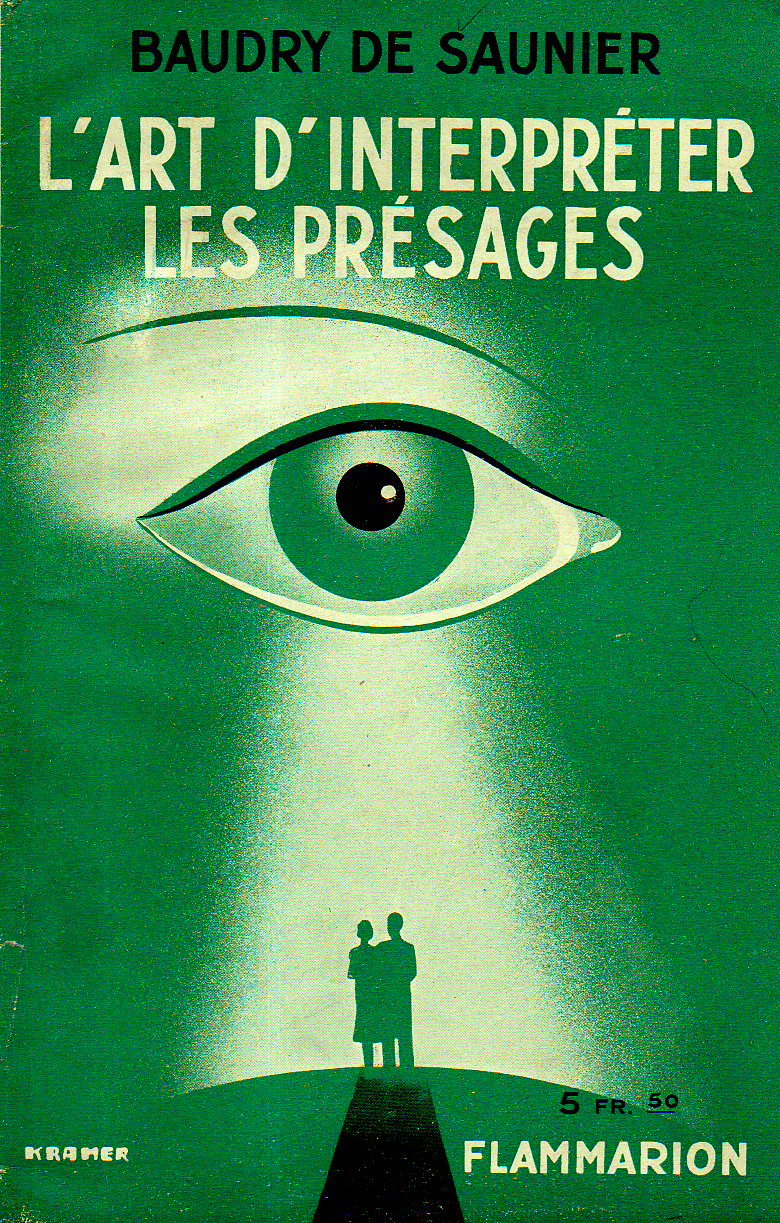
     The author of this attractive (looking) pamphlet seems an interesting man, and evidently was a busy and highly productive popularizer of science. I don’t know his work at all, but looking at some of his books tells me that he was on the scene early and often for several technological breakthroughs. For example, he has several works on the bicycle (Cyclisme théorique et pratique,1892, Les recettes et procédés vélocipédiques 1893,  Suivis de l’Art de la bicyclette, 1894); plus a very early book on the automobile, (L’Automobile théorique et pratique and Traité élémentaire de locomotion à moteur mécanique,1893,  followed by  L’Automobile théorique et pratique II, Voitures à pétrole, 1899); and then another early book on the aeroplane (Éléments de locomotion aérienne,‎ 1907).

    This nicely-designed pamphlet with the provocative cover (the work of “Kramer” in 1938) seems though to have strayed from the mark, resting for a while on the slim shoulders of popular interest in a person’s interpretation of symbols and what they revealed about the viewer, for the “formule de l’espirit humain”.  The book is arranged well, and has a dictionary of sorts of what people saw in Rorschach-like inkblots and what those interpreted images meant.  Ah, well, the cover is great, and one does not often see a big green eye on a tall French pamphlet, and so the cover design is good enough for me, soft&squishy contents or not. That said there are some interesting section headers, like “Do Not Confuse Messages and Beliefs” and “Good or bad, not everything is lost”. 

    Cover design big eye de saunier365

    ·Posted by :

    ·in:


  • Wood, Metal, Cubes, and Words: a Few Story-Machines since Gulliver’s Travels

    JF Ptak Science Books   Post 2579

    Over time I’ve encountered a number of ventures into the future of the future in which writing has become an automated or semi-automated activity, in their antiquarian constructions being made of wood and metal rather than nanobots and biological bits. A famous example is viewed by Jonathan Swift’s  Lemuel Gulliver in Laputa, where he finds a conversation machine, a vast assembly of word cubes set in a 400 square foot frame manipulated by 40 cranks and 40 handles and run by 40 philosophical operators.  There was also the thinking machine of Raymond Lull (of many different spellings) that was so beautifully address by Jorges Borges (“‘Ramon Lull’s Thinking Machine’ in The total library: non-fiction 1922-1986, on pp 155-160), and numerous others, some becoming steam-driven by the time of the early 19th century, and them others computer-inspired as we get into the Asimov-age. 

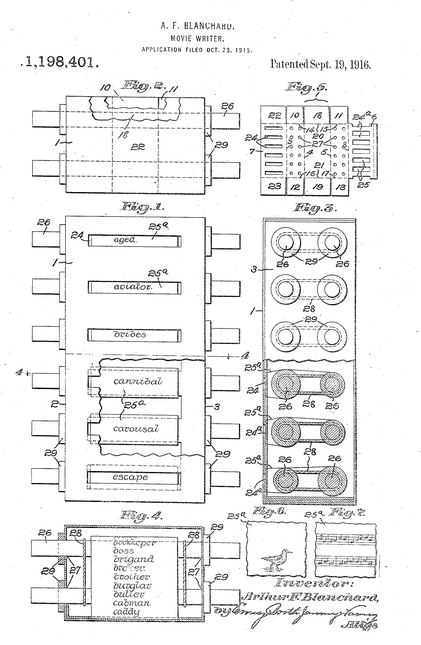
    I was moved to comment on this by a good reference made by Jennifer Ouellette (senior science editor at Gizmodo) to an article by a Gizmodo writer, Anna Green, on Arthur F. Blanchard’s (1865-1953) random story generator patent of 1916.  It is an interesting and lovely thing, lots of words of lots of rollers all working in combination to help formulate a struggling idea in the mind of a writer.  Well, actually, Blanchard writes in his patent description that it was an aid to movie writers, specifically, a kind of idea machine that would help folks with insight into creating a story for a 16-minute tale.  Of course the story might have been a little more interesting had Blanchard made the claim that his ideas for this machine were the product of a similar machine that was lashed together for the production of technical ideas. 

    In this same line of roller-and-paper idea generator I formulated a simple but distinctive device for creating the More Deconstructionist You in “Greasing the Turtle Stack: Derrida’s 10-Second Sentence-Generating Machine” (here)–this would be a fun little generator to make if the outcome wasn’t so useless and pointless, so best leave it as a two-beer bar stool idea.

    Blanchard’s idea seems to be one of the early appearances of word-generators on rollers/cards found in the collection of the U.S. Patent Office.  And so the “Movie Writer” of Albert Blanchard:
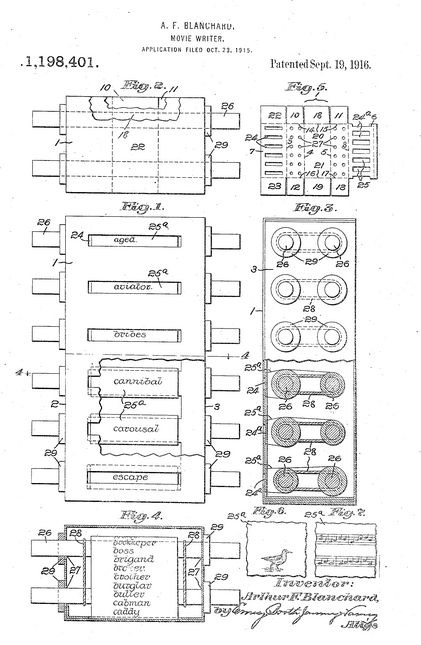
    Story machine _e_[Source:  U.S. patent US1198401, 23 October 1915, 19 Sep 1916, Arthur F Blanchard, Movie-writer at Google Patents ]

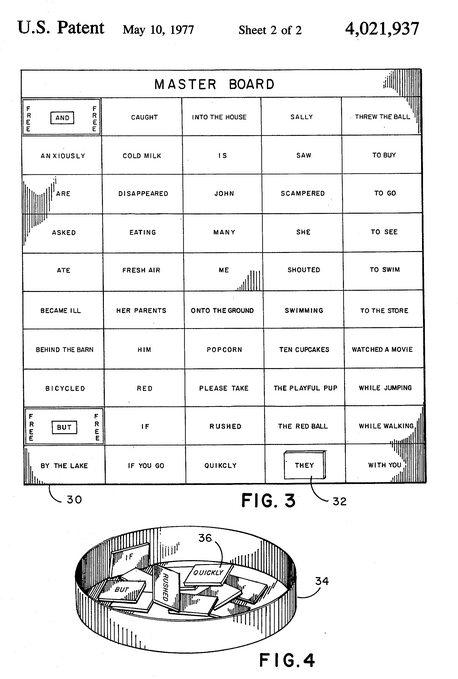
    Later on, the idea–still tried and true, or at least so on paper–came this for the “Educational Game Apparatus”, which was intended again as a spark for creative writing:
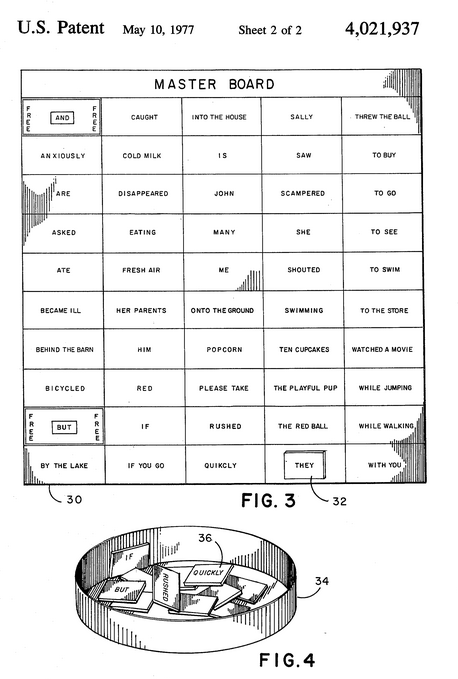
    Story machine patent _c_

    [Source: U.S. Patent US4021937, 2 Sep 1973, 10 May1977, Margery Dena Kravitz, “Educational game apparatus”]


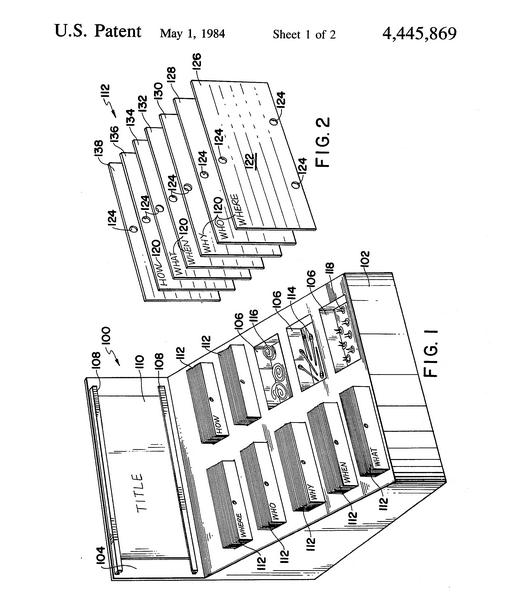
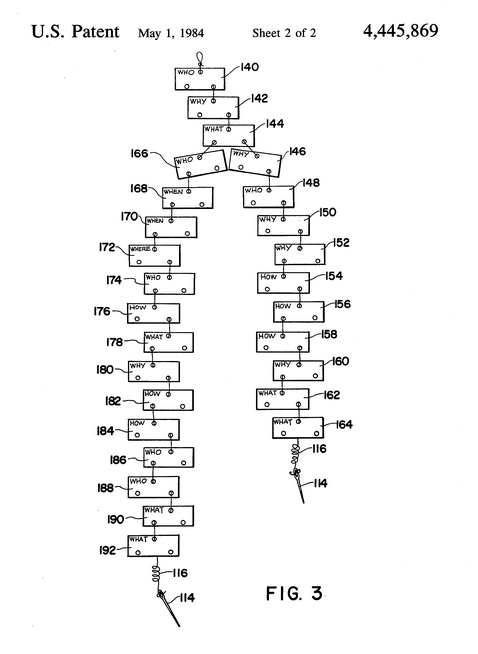
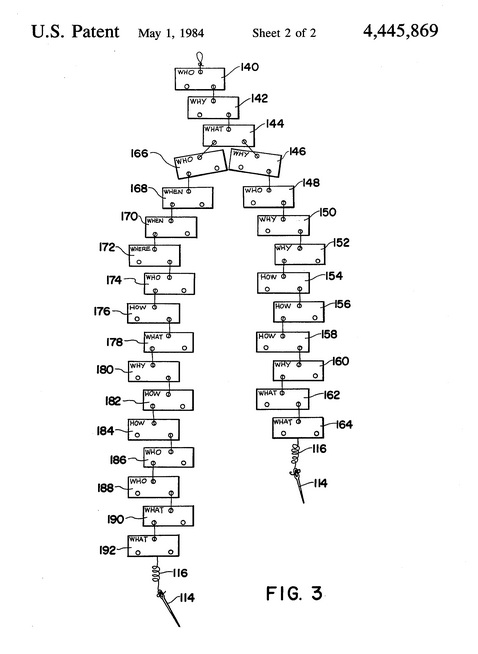
    Still later was this word-o-paper-arranger “Teaching method apparatus”,  a card-based bit that helps jostle ideas by presenting semi-random words to help the student create stories around them:
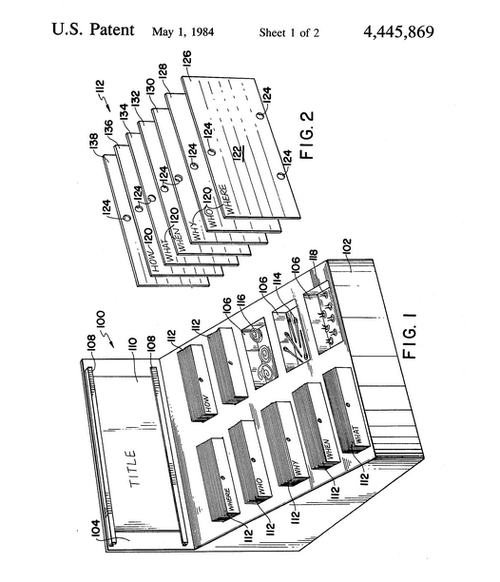
    Story machine patent _a_


    Story Machine patent_b_[ Source: U.S. patent US4445869     Nov 9, 1981    May 1, 1984, Wasserman Myrna D., “Teaching method and apparatus”.]

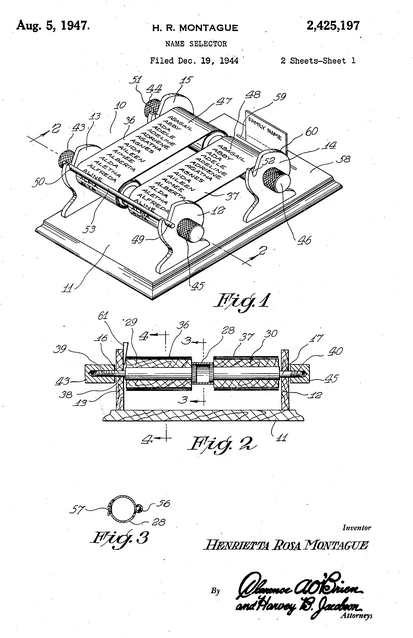
    The “Name Selector” is a simple version of some of what we see above:
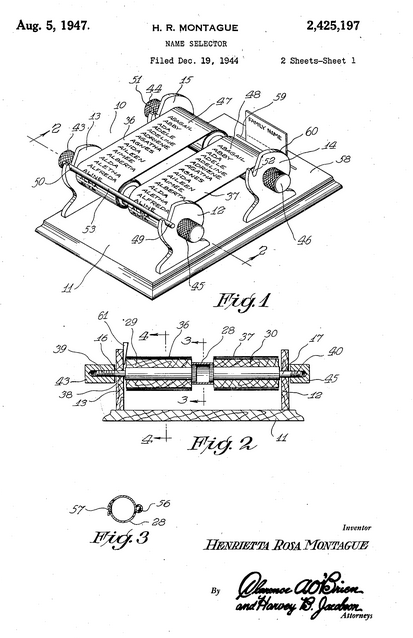
    Story machine _d_[Source: U.S. Patent, US2425197 A   Aug 5, 1947, Rosa Montague Henrietta,   Aug 5, 1947   Name selector]

    No doubt there are more of these patents using this idea of single-words-on-bit-of-paper, but this should do for now.. 

  • The Found Poetry of Gustav Eiffel’s Labor Relations (1888)

    JF Ptak Science Books                                   

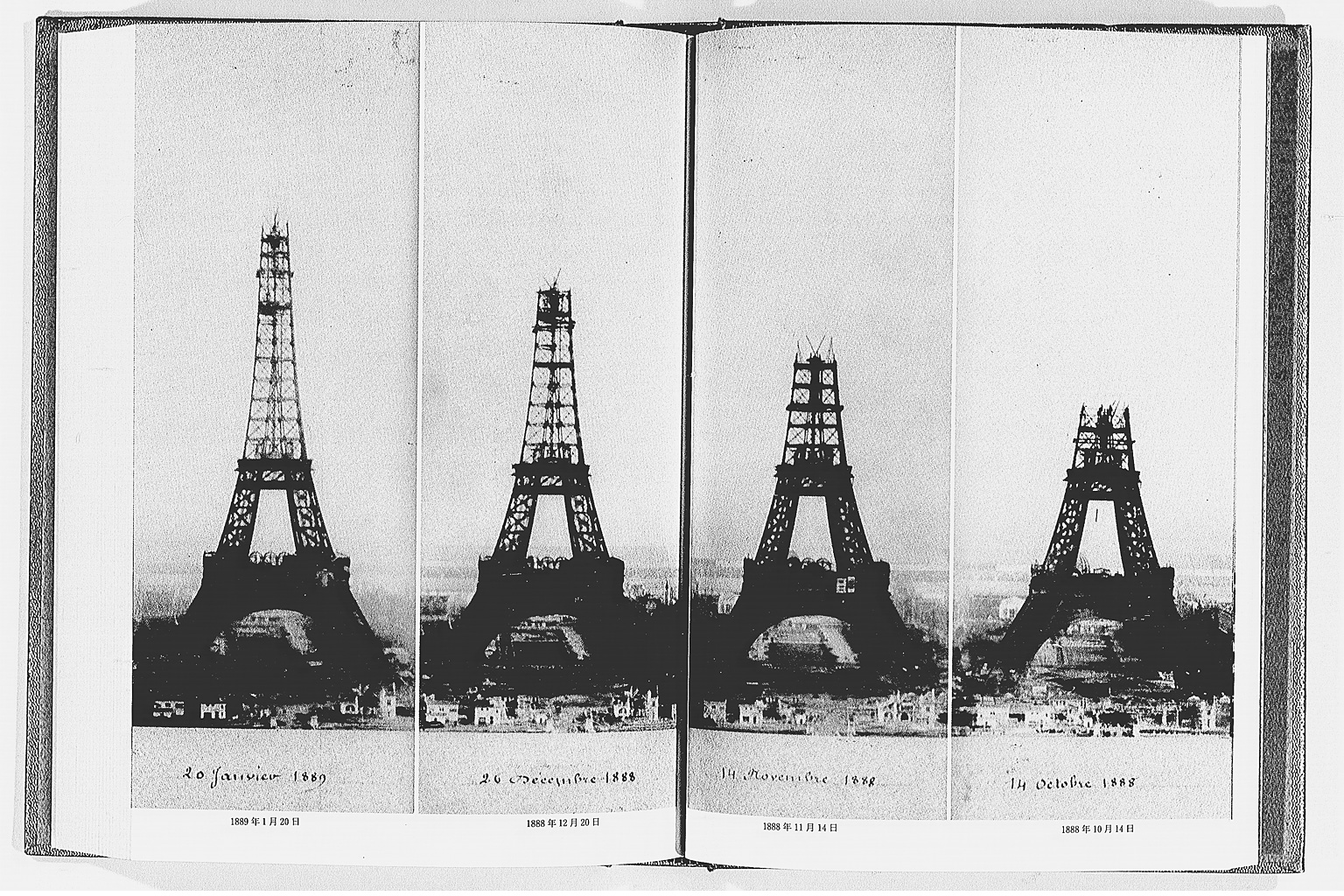
    Eiffel tower under construction sequence[Source; http://www.ndl.go.jp/exposition/e/data/L/158-002l.html]

    This is another in an uncertain series on Found Poetry (a cousin to the Found Book Art series), with this fragment found in the history of technology/labor relations category.  IT seems that in the early and problematic history of the remarkable Eiffel Tower, M. Gustave Eiffel had a few problems with his workers constructing the tower.  Soon after a three-day negotiating session ending the strike of September 19, 1888 (in which workers asked for a four-cent per hour pay increase and where Eiffel slowly met their demands but parsing the raise out one center per month for four months) there was another attempt at a strike, just before Christmas of the same year.  One of the demands floated by Eiffel et Cie was that the workers engaged in the construction at greater heights should receive a higher pay, what with the rain and wind and the possibility of a fatal trip-and-fall.  Eiffel responded with the following efficient answer, set here to some sort of metre:

    The professional risks remained

    the same

    whether a man fell from 40 meters

    or from 300 meters,

    the results were the same–

    certain death.1

    This was a winning argument, and kept his workers working without compensation for working at a higher height,  and the tower’s completion on schedule. 

    Notes:

    1.  Eiffel’s Tower, by Jill Jones, Penguin, 2009, pg 49.

    ·Posted by :

    ·in:


  • On the Heightiest Heights of Traffic Height

    JF Ptak Science Books  Quick Post

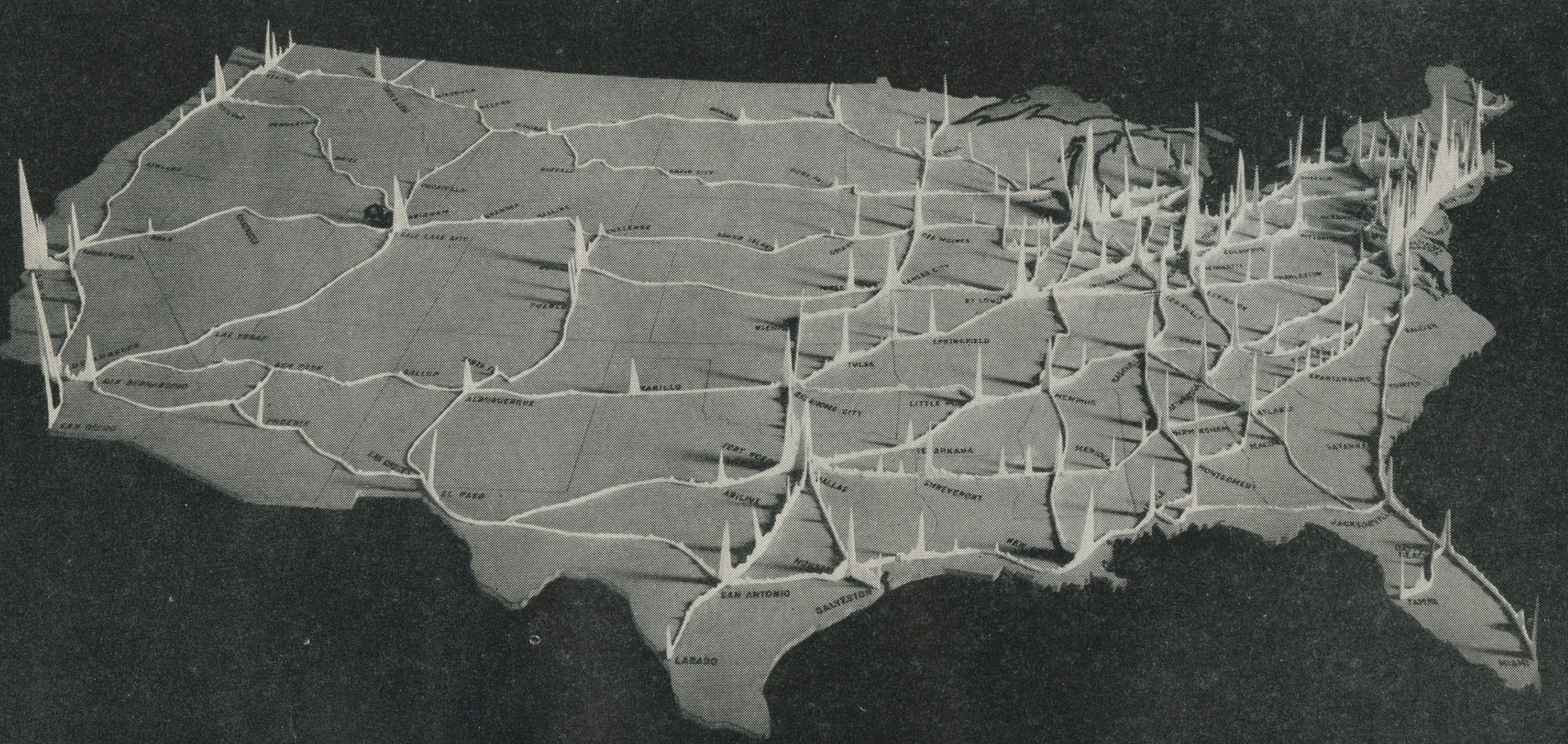
    I found this fabulous map of concentrations of U.S.A. (1944) traffic flow somewhere in the hinterlands. When I started to research its origin I found that the background and story of the map and its source is dealt splendidly by Eric Fischer in a 26-photo Flickr set here: https://www.flickr.com/photos/walkingsf/albums/72157632238833323 


    Map height of traffic

    Map height of traffic

    [Source: Interregional Highways: Message from the President of the United States Transmitting a Report of the National Interregional Highway Committee, Outlining and Recommending a National System of Interregional Highways, January 12, 1944.]


  • Found Poetry in the Sciences (1610 and 1698)

    JF Ptak Science Books   Post 2578

    “The truest attraction of “found poetry” is that it should remain lost”– not Marcel Duchamp

    “The highest pleasure in finding poetry is the ability to lose it again”–not Ambrose Bierce

    There’s a certain identifiable current that runs just beneath the surface of created quotes about found poetry–and I tend to agree, except that I think I enjoy “found poetry” more so than the great majority of poetry-in general, so if I am to read any poetry at all I think that poetry must be found now and then.  And the thing about Found Poetry (now capitalized!) is that is can be obscure  (“Obscurity is never so clear as when it is never noticed”–not Mark Twain) or so much part of the visual culture that its very unforgivable presence makes it invisible–though I have no doubt that the overt intellectual and traitor E. pound would disagree.  

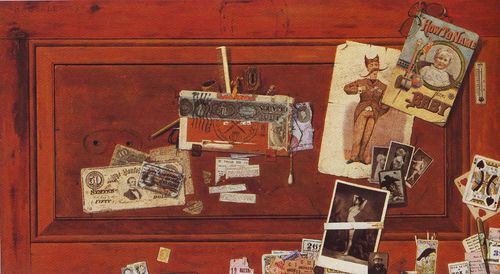
    Found Poetry I think has been around for a century or so, finding its roots with the Dadists and the solitary art anti-movement M. Duchamp.  And probably an argument could be made for the acoustomatic  continuation of another found-hyphenated movement–like Stockhausen/Varese/Xenakis musique concrète–is an outgrowth (or something) of the Found/Readymade embarkation of the nineteen-teens.  Maybe too something could be made of the argument that they are all coming from a long and very slow development of trompe l’oeil and Still Life, as there is a definite visual/found quality to many of these works (as with “A Bachelor’s Drawer”, painted between 1890-1894 by John Haberle).
    Found poetry Haberle bachelor drawer

     [Source: Wikimedia]

    Still Life images like this of “discovered” assortments of human-created bits, snapshots of unintentional arrangements, must certainly have a sense of Foundness surrounding them.  Of course, a pastoral scene of cows-in-a-field or a John Constable sky or some such are necessarily “found” because they are an uncontrollable part of nature–what I’m talking about is a discovered sense of some sort of human construction, and that certainly includes words. (On the other hand, I did write a post “The Found Poetry of the Vocabulary of Clouds” on a John Comenius text of 1726, here: https://historyofideasblog.com/thesciencebookstore/2015/05/annotated-found-poetry-of-clouds-1726.html.)

    So, for today, one part of the concept of Found Poetry I’d like to look at is in the science–in particular, title pages and indexes for works int eh sciences, and in this case the works are historic, though they could easily have been from any odd page in any opened book, anywhere.  

    The first example is the title page of Galileo’s epochal Sidereus Nuncius (1610):

    SIDEREAL MESSENGER
    unfolding great and very wonderful sights
    and displaying to the gaze of everyone,
    but especially philosophers and astronomers,
    the things that were observed by
    GALILEO GALILEI,
    Florentine patrician
    and public mathematician of the University of Padua,
    with the help of a spyglass lately devised by him,
    about the face of the Moon, countless fixed stars,
    the Milky Way, nebulous stars,
    but especially about
    four planets
    flying around the star of Jupiter at unequal intervals
    and periods with wonderful swiftness;
    which, unknown by anyone until this day,
    the first author detected recently
    and decided to name
    MEDICEAN STARS

    [Full text via internet archive, here: https://archive.org/details/siderealmessenge80gali]

     A second example comes from the impossibly accomplished Christian Huygens’ Cosmotheoros, The Celestial World Discover’d: or, Conjectures Concerning the Inhabitants, Plants and Productions of the Worlds in the Planets–and it comes from the table of contents:


    ·Posted by :

    ·in:


  • When the Catcher’s Mitt Was a Cage (1904)

    JF Ptak Science Books  Quick Post

    PAtent catcher cage detail


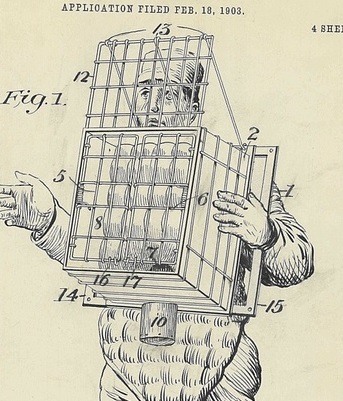
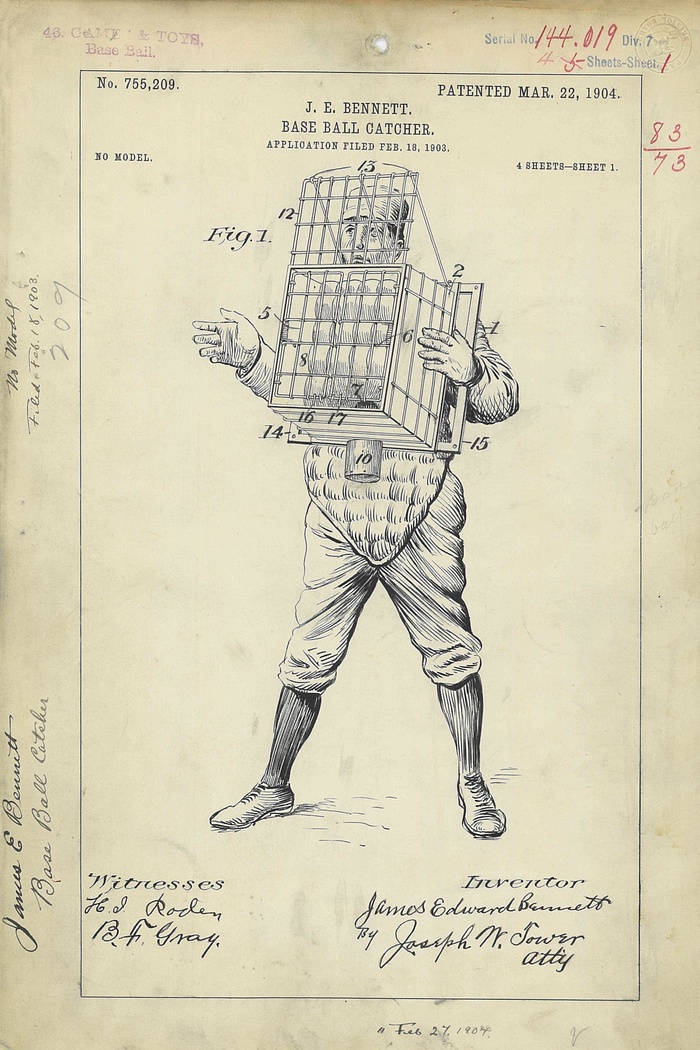
    In the history of baseball gloves–better still, in the history of the catcher’s mitt–there are few ideas that are as singular as the glove/mitt that isn’t a glove, or a mitt.  This was the patent report of the invention of J.E. Bennett in 1904, which proposed to replace the mitt with a cage.  The cage offered a receiving area easily double the size of a catcher’s mitt, with padding at the back of the cage to cushion the capture of the pitched ball, after which the ball would somehow be collected and deposited via that pipe.  I’m not sure what the catcher would do with pitched balls that were low, or high, but the cage certainly did not have any real versatility, particularly when comparing it to a real glove. It seems as though this idea didn’t go far, and that was a good thing. 

    http://www.theguardian.com/technology/gallery/2015/may/14/imagining-the-future-turn-of-the-century-us-patents-in-pictures

    Patent catcher cage


    ·Posted by :

    ·in:

    — —

  • The Eloquence of Baseball (Games), 1904

    JF Ptak Science Books  Quick Post

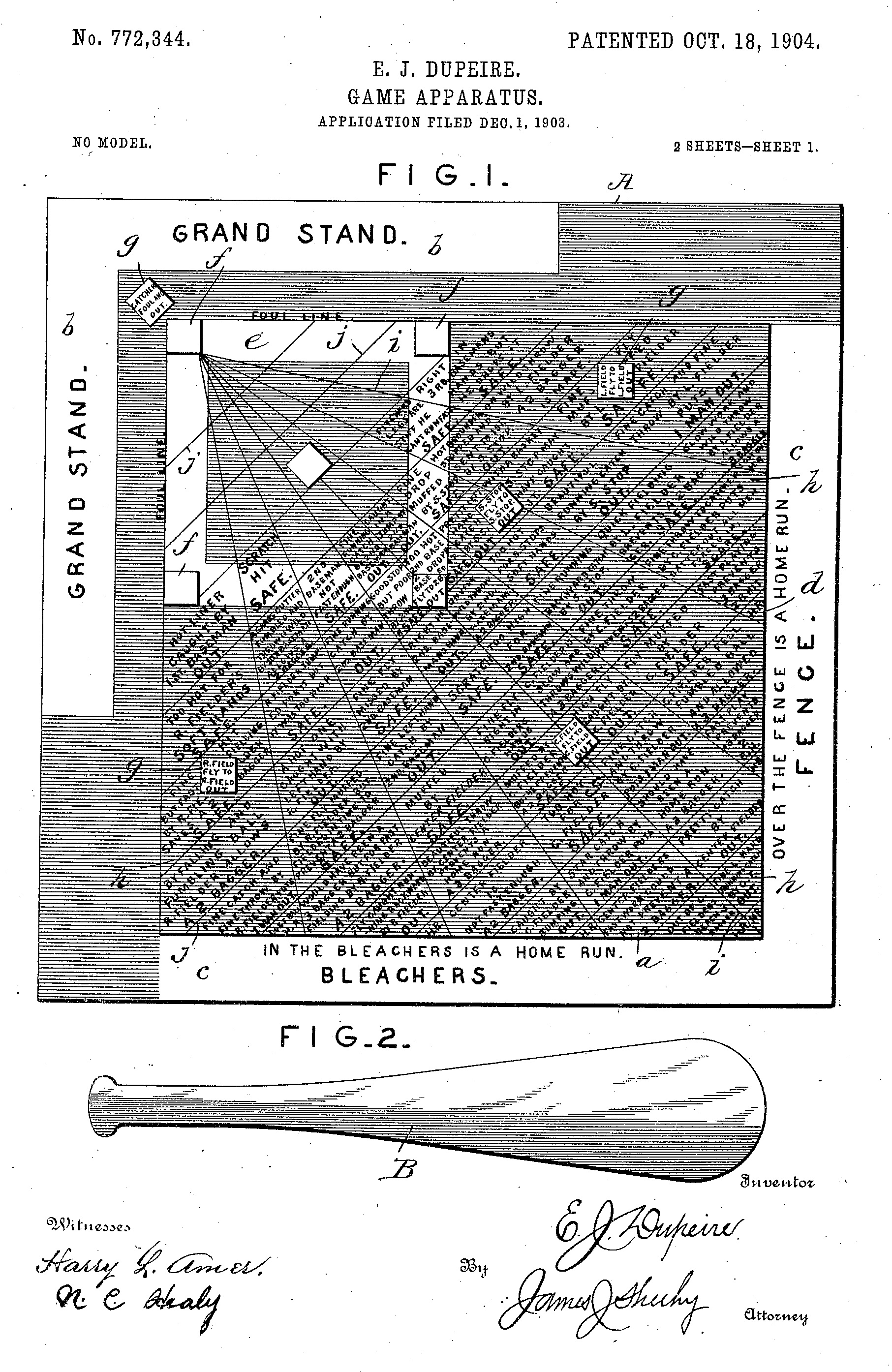
    Baseball season is either here or almost here, so picking around in old patents on baseball games in December is perfectly allowable.  This game (found at Google Patents) probably has more text on it than just about any game of any sort I’ve ever seen (and that may actually include Scrabble), and its lazy-staccato descriptions of the “play” are really quite lovely for a board game1. For example: 

    • “too hot for the right fielder’s hands”
    • “a hot one caught” 
    • “2nd baseman not fast enough”
    • “fine running catch” and “beautiful running catch” and “pretty left hand catch”
    • “good stop, poor throw”
    • “would have been a 3-bagger but for the fast fielding by the right fielder”
    • “slow work and wild throw”
    • “fly muffed”

    Patent baseball game lots of script

    [Source: https://www.google.com/patents/US772344?dq=catcher+baseball&hl=en&sa=X&ved=0ahUKEwiz0–e5L7JAhXK7CYKHWt_CPwQ6wEIVjAI]

    Notes:

    1.  I haven’t read many books on sports in my reading history, but from what I have seen over the years is that baseball literature is good enough to have its own genre. If you’re going to read only one or two baseball books in your life, consider one of these: Roger Kahn, The Boys of Summer (1972);  Eliot Asinof, Eight Men Out: The Black Sox and the 1919 World Series (1965); Jimmy Breslin, Can’t Anybody Here Play This Game? (1963);   Robert Creamer, Babe: The Legend Comes to Life (1974); Arnold Hano, A Day in the Bleachers (1955);  Donald Honig, Baseball When the Grass Was Real: Baseball from the Twenties to the Forties, Told by the Men Who Played It (1975); Bernard Malamud, The Natural, (1952).


    ·Posted by :

    ·in:

    —

  • The .50-Caliber Better Mousetrap

    JF Ptak Science Books   Quick Post    Daily Dose from Dr. Odd

    Patent better mouse trap

      [Source:  Google Patents, https://www.google.com/patents/US269766?dq=patent:269766&hl=en&sa=X&ved=0ahUKEwiyw_r6277JAhUGSiYKHV_eCdkQ6wEILDAC]

    Well, there’s not much that one can say about this that the reader is not already thinking.  

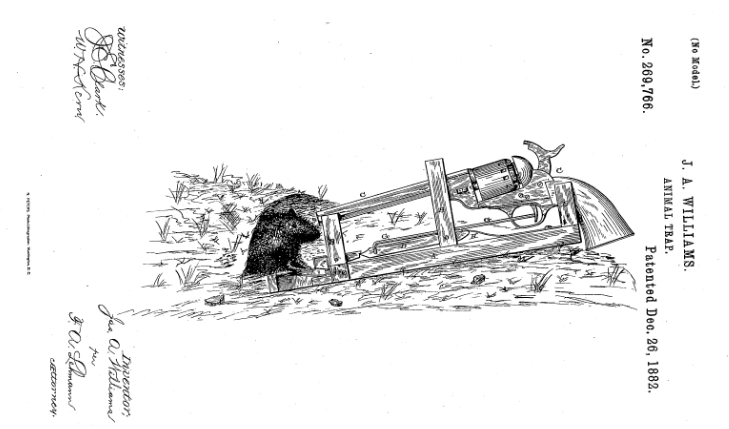
    The idea was that of J.E. Bennett of Fredonia, Texas, who patented the “trap” in 1882.  He reports that this apparatus has been used before, as a house “alarm”. He states in the patent that  “I am aware that burglar-alarms of various kinds have been used, and which have been connected to windows and doors in such a manner that the opening of the window or door causes a pressure upon a lever which discharges a tire-arm; but in no case have the parts been arranged and combined as here shown and described.”  Indeed.  I think that this sort of “alarm” was declared illegal decades ago because its use employed depraved indifference.  Poor little critter.  

    ·Posted by :

    ·in:

    — —

  • Away, Down the Dark Tunnel of Creation….

    JF Ptak Science Books   Quick Post

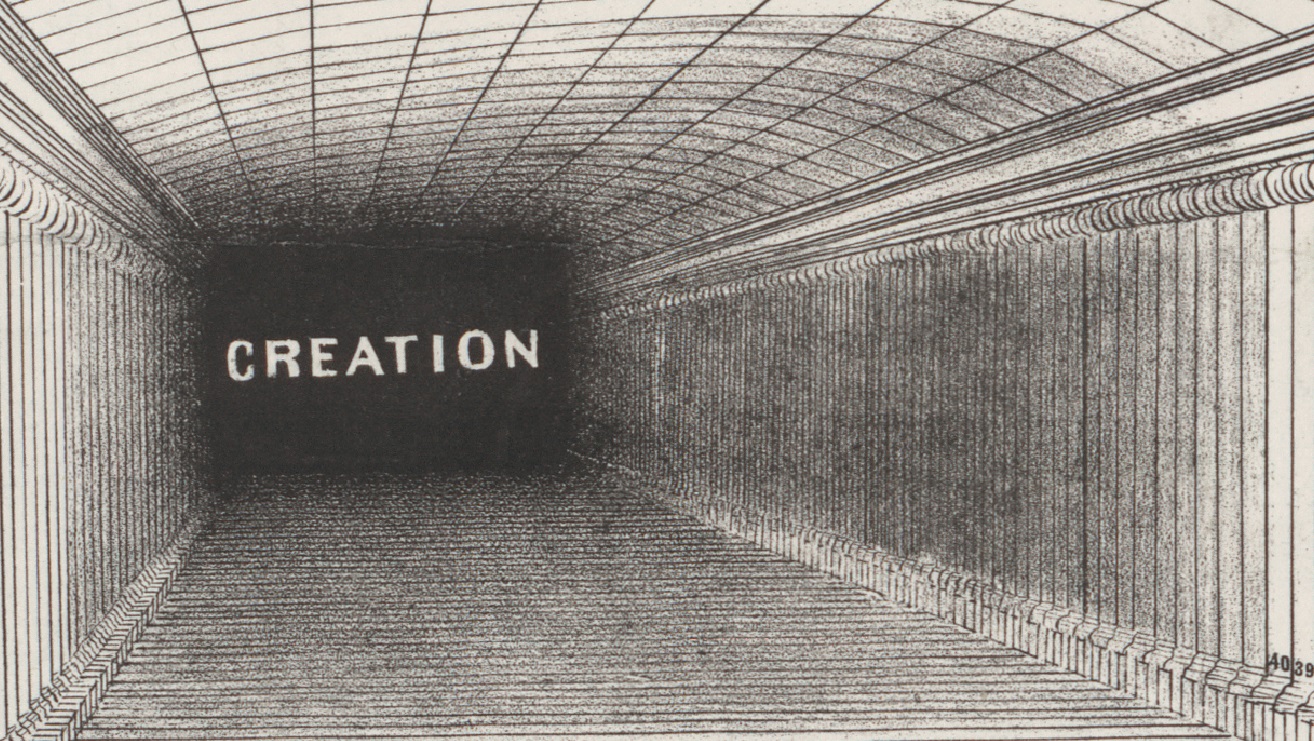
    Infographic Emma Willard detail

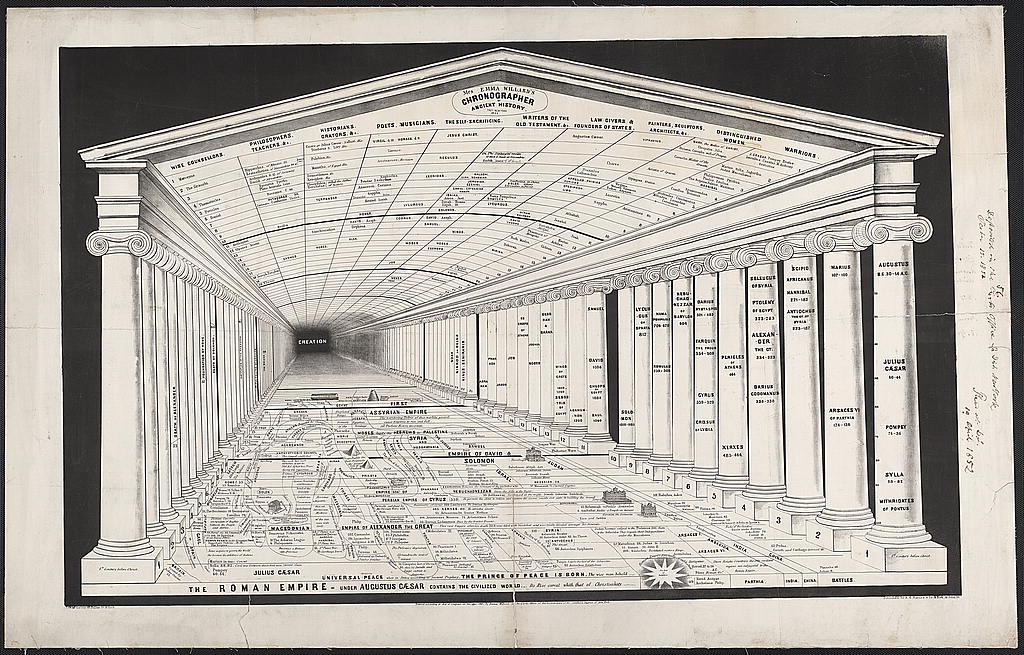
    Emma Willard (1819-1870) has been described as an “apostle” of female higher education in the U.S. She wrote some interesting texts on American history, concentrating in the telling of the story by chronology, and using some interesting visual aids to focus the readers’ attention in a condensed manner. She created several memory palaces in her imagery, making it easier and perhaps more elegant for her readers to be able to more easily record the progression of history.

    The “dark tunnel of creation” here is the background of the events of history housed by an ionic temple–in the original (from the Library of Congress) the word “Creation” is really quite small, and then surrounded by a considerable well of darkness, the millennia slipping by without index or notice, until they don’t. 

    And the full image (images via the Library of Congress, http://www.loc.gov/item/2005694445/):

    Infographic emma willard small version

    (Mrs. Emma Willard’s Chronographer of ancient history, published in Troy, New York, printed by lithography via Sarony of NYC.

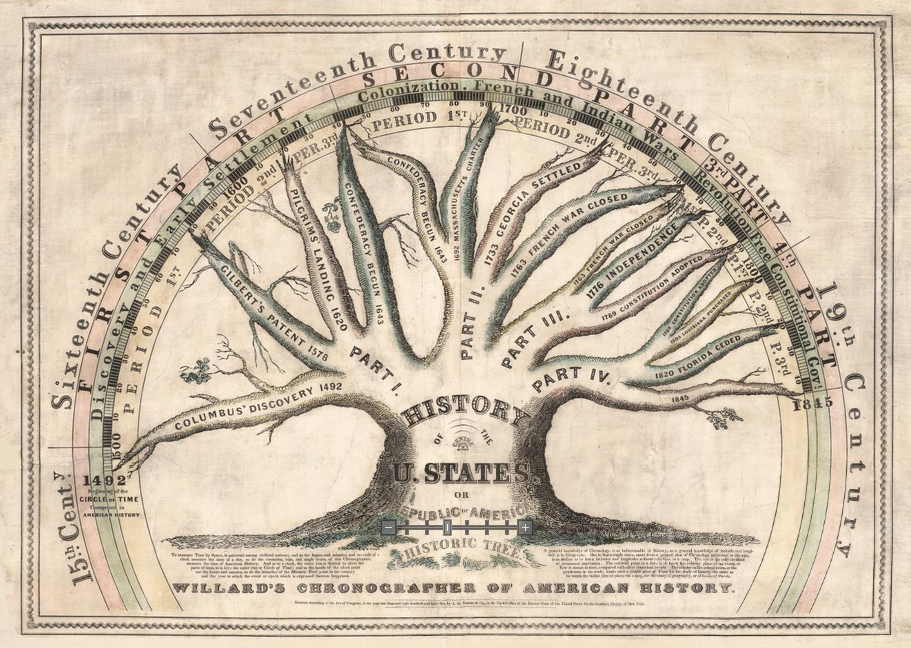
    Emma Willard also produced this beautiful chronological print, meant to be displayed no doubt on a schoolroom wall:

    Willard chronographer of american historyTree of chronology [Source: via DavidRumsey.com maps:  http://www.davidrumsey.com/luna/servlet/detail/RUMSEY~8~1~240521~5512286:Willard-s-Chronographer-of-American?utm_source=hootsuite]


  • A Peep Into the O.S.S. Library Files

    JF Ptak Science Books   Quick Post

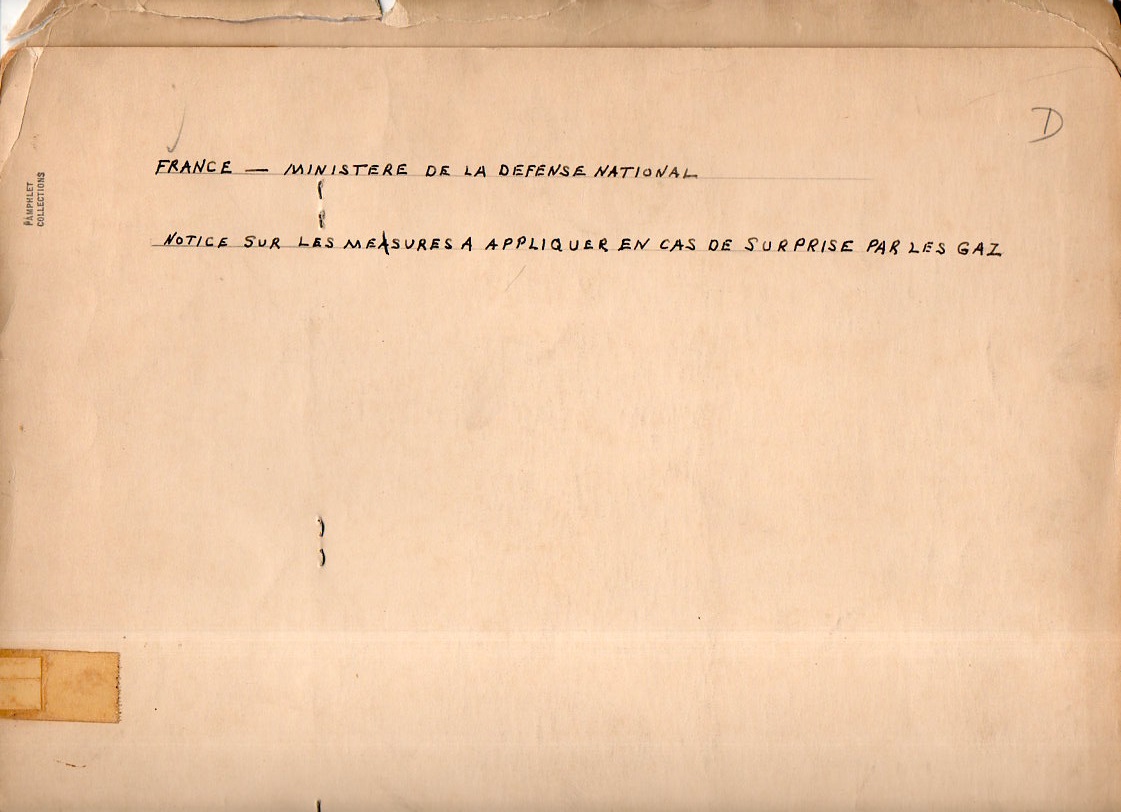
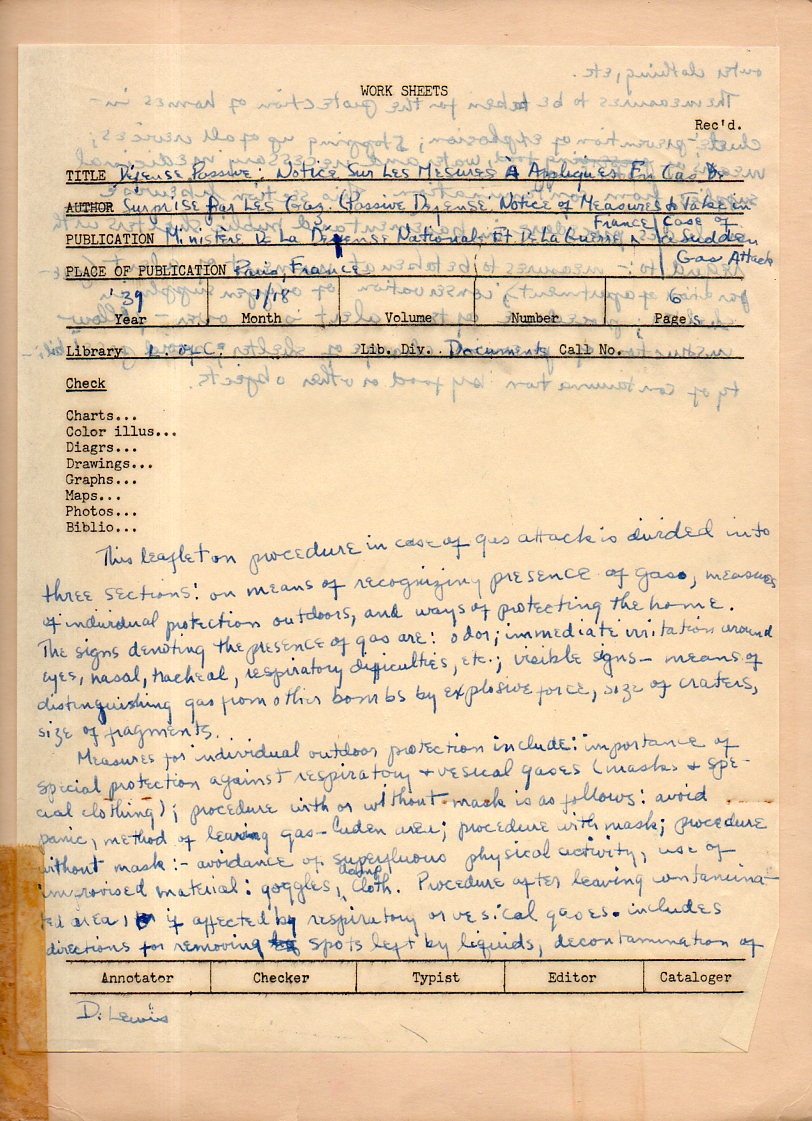
    In the widely-spaced interests of the massive Pamphlet Collection that I purchased of the Library of Congress years ago were a number of items that had once been in the library of the Office of Strategic Services (the O.S.S.), which was the predecessor to today’s Central Intelligence Agency.  Most of the pamphlets were stamped “Library/OSS” as were the foreign language pamphlets, which for my experience were housed in manila folders with internal routing slips.  The example below happens to not have that O.S.S. stamp, though I am sure that it is one among the others–this one though is from 1939, and the O.S.S. wasn’t formed until 1942.

    I’m sharing it here as an example of a small insight into the organizational capacity of the O.S.S. library–it is simply an interesting and thorough classification of ephemeral information. 

    WWII gas attack _a_358

    And inside:

    WWII gas attack _b_359