A Daily History of Holes, Dots, Lines, Science, History, Math, Physics, Art, the Unintentional Absurd, Architecture, Maps, Data Visualization, Blank and Missing Things, and so on. |1.6 million words, 7500 images, 4.9 million hits| Press & appearances in The Times, Le Figaro, Mensa, The Economist, The Guardian, Discovery News, Slate, Le Monde, Sci American Blogs, Le Pont, and many other places… 5000+ total posts since 2008.

Author: JF Ptak

  • A Bicycle-Wheel-Framed Gyroscopic Experimental Aircraft, 1911

    JF Ptak Science Books  Quick Post

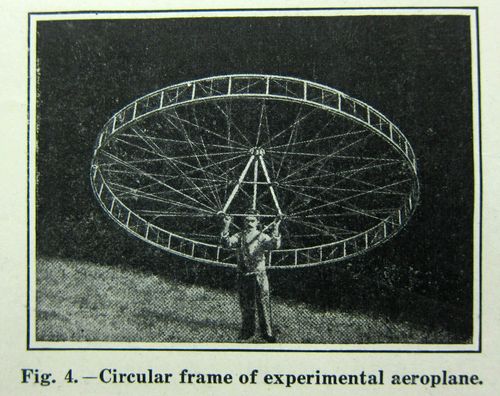
    Capt. Paul-Nicholas Lucas-Girardville of the Military Aviation Park, Vincennes, an interesting inventor and early aviator  (and author of a  Étude sur la navigation aérienne in 1899)  came up with this idea for a “gyroscopic” aeroplane, or flying machine. Initially I thought that there was no gyroscopic action and that the idea was being used for static stability, as a different body for the aircraft. But as it turns out there was some sort of gyroscope being employed here, though I do not understand how it functioned–I have to say though that it seems like an interesting experiment, especially given how early this came in the history of airplanes.  In any event, I bumped into this evocative photo in the pages of the June 22, 1911 issue of Scientific American Supplement and thought to share them.  

    Aviation gyroscope 3

    [Source for the two images, above and below: Scientific American Supplement, July 22, 1911   For the full text of the article in a raw-ish OCR format, see: http://www.scientificamerican.com/article/abstracts-from-current-periodicals-1911-07-22/]


  • Out-of-Context Imagery Department: Floating & Upside Down Trees at Mother Ludlam’s Hole

    JF Ptak Science Books  Quick Post    Series on the Unintentionally Absurd

    Mother Ludlam066

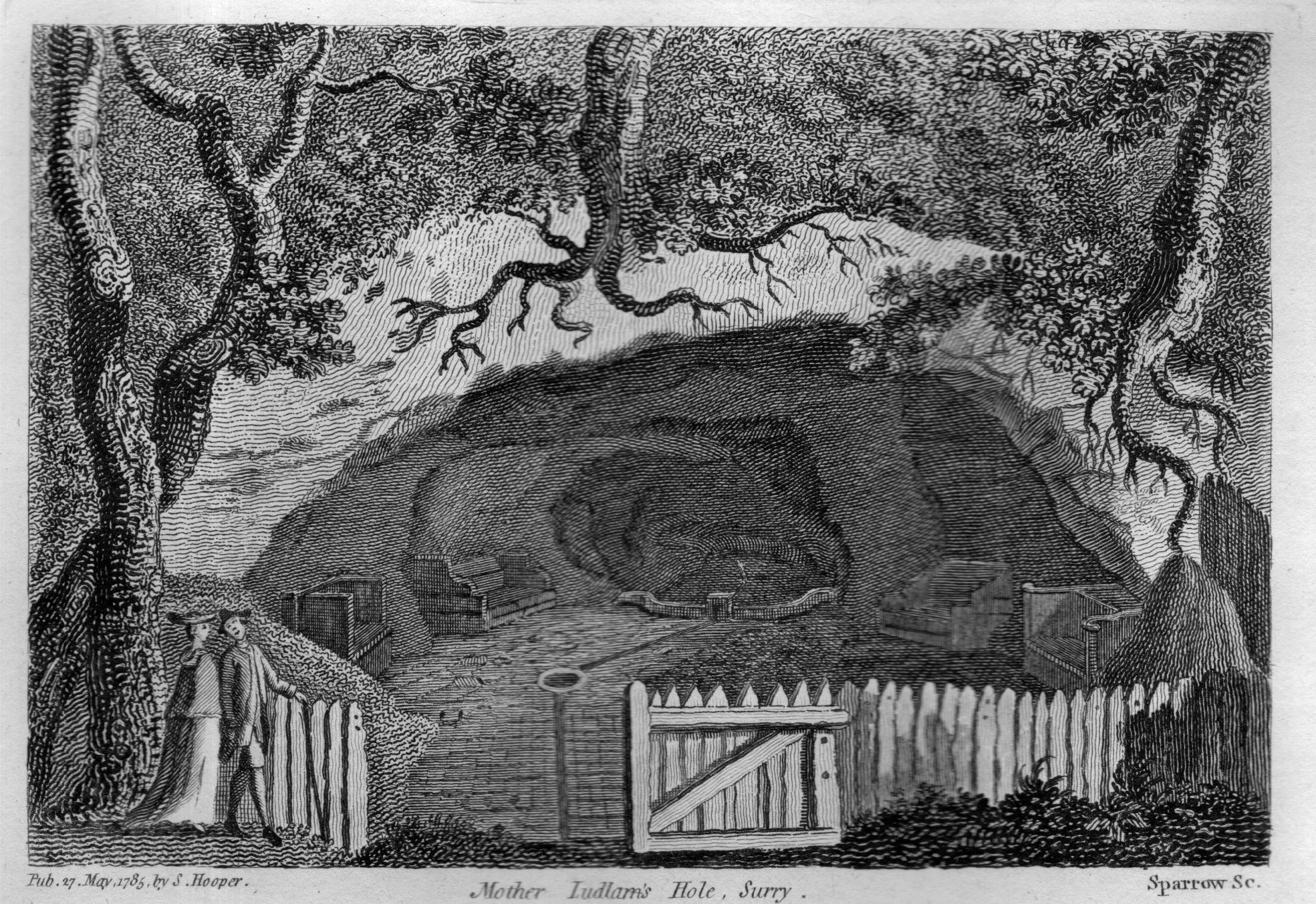
    This unusual image, published in Francis Grose’s The Antiquities of England and Wales in 1785, depicts a cave–and a witch’s cave at that–but taken slightly out of context and with it looks for all the world that there is a tree with roots floating in the air with an upside-down tree floating to its left.  They’re not floating, of course–they’re just trees with roots growing across sandstone with the cave beneath.  Without the story of the cave the floating trees make more interesting thinking–with the story, and the title, the story rules.

    “Mother Ludlam’s Hole” is the cave of a  friendly “White Witch”. It is set into a sandstone cliff in the Wey Valley, Moor Park, near “Farnham” (Frensham), in Surrey. A brief introduction to the story is that Mother Ludlam would grant loans of things to people so long as they returned them in two days. To one person she loaned her cauldron; unfortunately the person never returned it and hid it in a church. That church is said to be St. Mary’s, and there is a cauldron there to this day that has evidently been there for centuries, a product of the action of the witch’s borrower, or fairies. It is said that the cauldron was used to brew ale.  In any event, there is a cauldron in the 13th century St. Mary’s. 

    I think I like the Floating Trees possibilities a little more.  

    According to English Fairy and Other Folk Tales (1890) by Edwin Sidney Hartland,‘IN the vestry of Frensham Church, in Surrey, on the north side of the chancel, is an extraordinary great kettle or caldron, which the inhabitants say, by tradition, was brought hither by the fairies, time out of mind, from Borough-hill about a mile hence. To this place, if any one went to borrow a yoke of oxen, money, etc., he might have it for a year or longer, so be kept his word to return it. There is a cave where some have fancied to hear music. In this Borough-hill is a great stone lying along of the length of about six feet. They went to this stone and knocked at it, and declared what they would borrow, and when they would repay, and a voice would answer when they should come, and that they should find what they desired to borrow at that stone. This caldron, with the trivet, was borrowed here after the manner aforesaid, and not returned according to promise; and though the caldron was afterwards carried to the stone, it could not be received, and ever since that time no borrowing there.’ [Quote source:  Mysterious Britain, http://www.mysteriousbritain.co.uk/england/surrey/folklore/church-of-saint-mary-the-virgin-frensham.html]

    ·Posted by :

    ·in:


  • The Cabinet of Curiosity at Eddystone

    JF Ptak Science Books  Post 2599

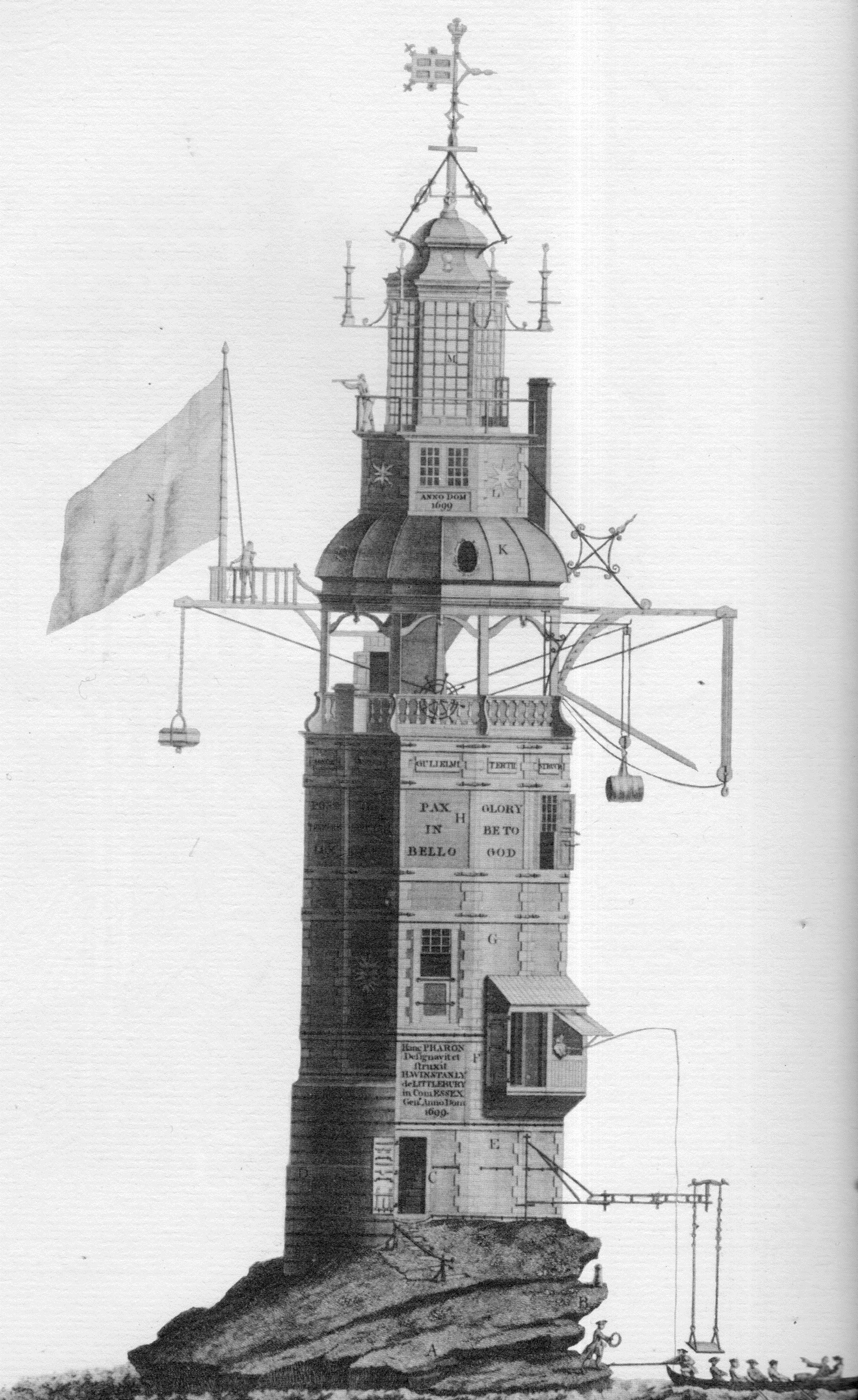
    Henry Wenstanley was an artisan and an engineer with a long interest in architecture who rose to sufficiently high rank to be considered and selected to build a lighthouse at Eddystone (14 miles from Plymouth, built on the Eddystone reef, south of Rame Head). He started in 1696 and was done by 1698, and had successfully constructed the world’s greatest lighthouse. He modified and reinforced it substantially in the next few years, winding up with a stout-looking if cabinet-of-curiosity appearance.  
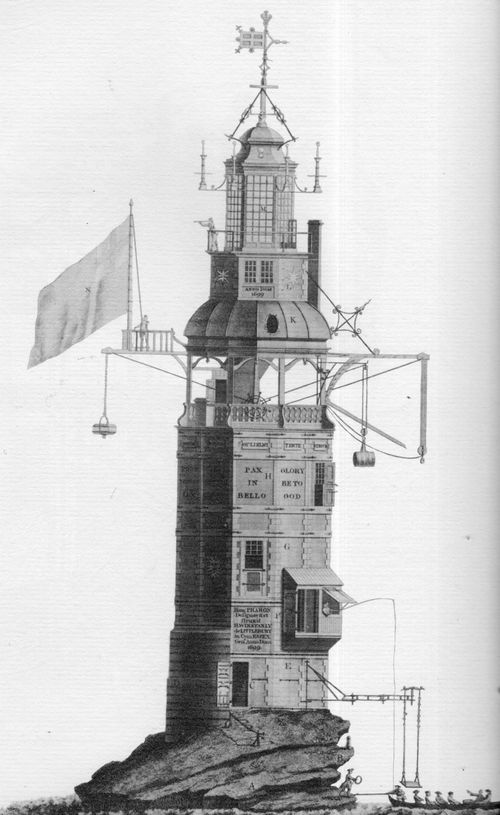
    Eddystone034

    [Image source: Derek Birdsall, Carlo Cipolla, The Technologies of Man, Pinehurst Press (UK), 1979, page 150.]

    The lighthouse was extraordinary, though it did not last for long, and neither did Wenstanley.

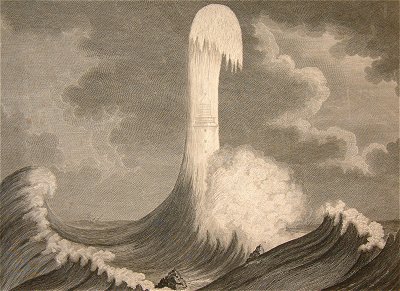
    In November 1703 Wenstanley was in the structure when it suffered a complete loss in a storm, the building swept away, along with everyone in it.  

    A depiction of the impossible wave–an image no doubt that launched a thousand nightmares–fighting the lighthouse is seen here:
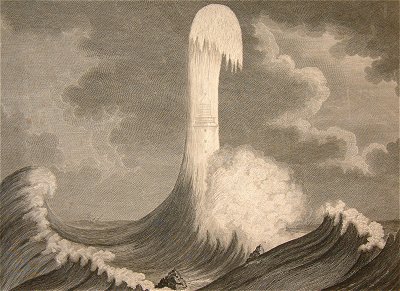
    Eddystone wave

    [Source: Dark Roasted Blend blog; original source unknown http://www.darkroastedblend.com/2006/10/amazing-lighthouse-of-henry-winstanley.html]

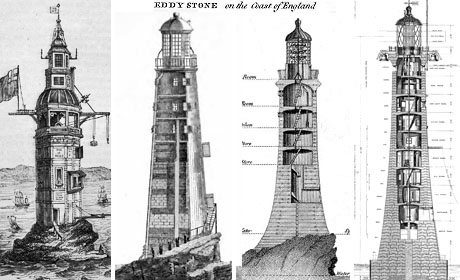
    It is another instance of an inventor/engineer being killed by his/her creation–there’s probably an easy effort to be made in constructing an alphabet of this unfortunate and unhappy crew. This was the first of five Eddystone lighthouses, all difficult building sbuilt ina very difficult location. The first two were built by Winstanley–the first he built in 1696 was damaged so substantially in a winter storm that it was rebuilt almost entirely, bringing to us the second lighthouse in 1698. As we have seen, that one last until the unfortunate 1703 storm, and was replaced by the third lighthouse built by John Rudyerd, constructed from 1708-9 and opened in that second year.  The third lighthouse was constructed by John Smeaton from 1756-9 and lasted for 127 years until it was replaced by James Douglass’ structure in 1882.  Actually, the Smeaton structure (pictured below) was dismantled and rebuilt further inland on the Plymouth Hoe, where it can be found today.  
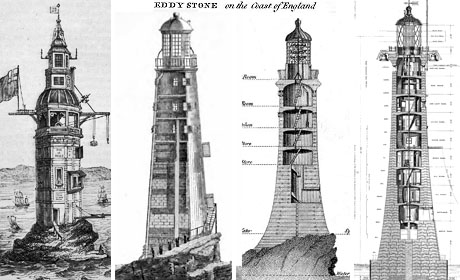
    Eddystone light houses[Image source: Geological Society (UK) via https://www.geolsoc.org.uk/GeositesEddystone]

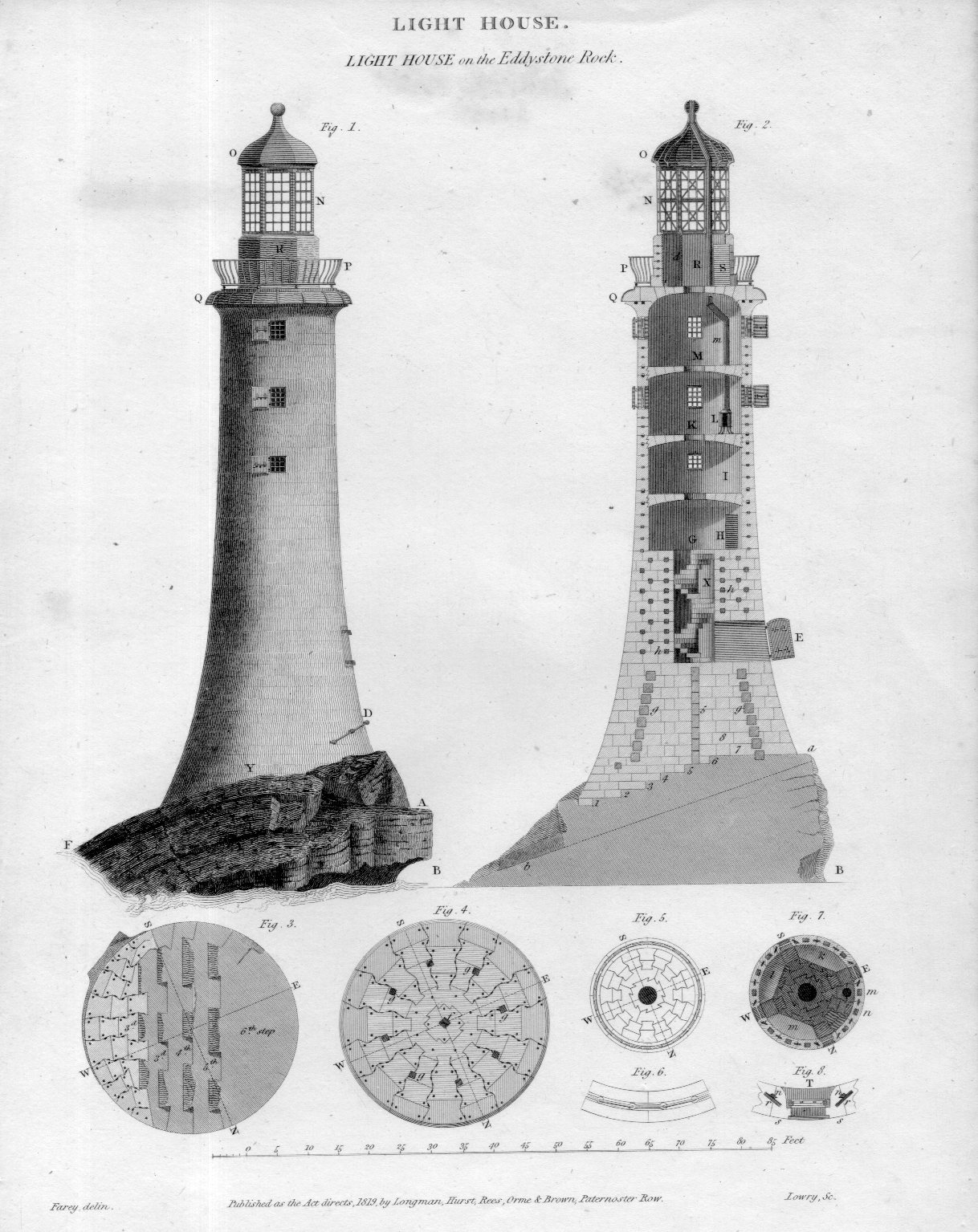
    The following cross section seems to be the third of the lighthouses:
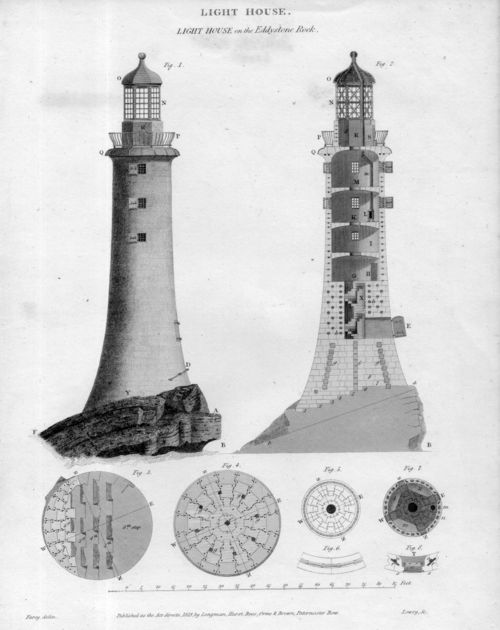
    Eddystone lighthouse050[Source: Abraham Rees Encyclopedia, printed in London in 1819]

    Notes:

    Here’s a charming re-enactment of the failure of the structure by the Parish of Littlebury Millennium Society/History (Junior) Group:  http://www.recordinguttlesfordhistory.org.uk/littlebury/eddystone.html
    ·Posted by :

    ·in:


  • Two Compasses by Paul Revere, 1772

    JF Ptak Science Books  Quick Post

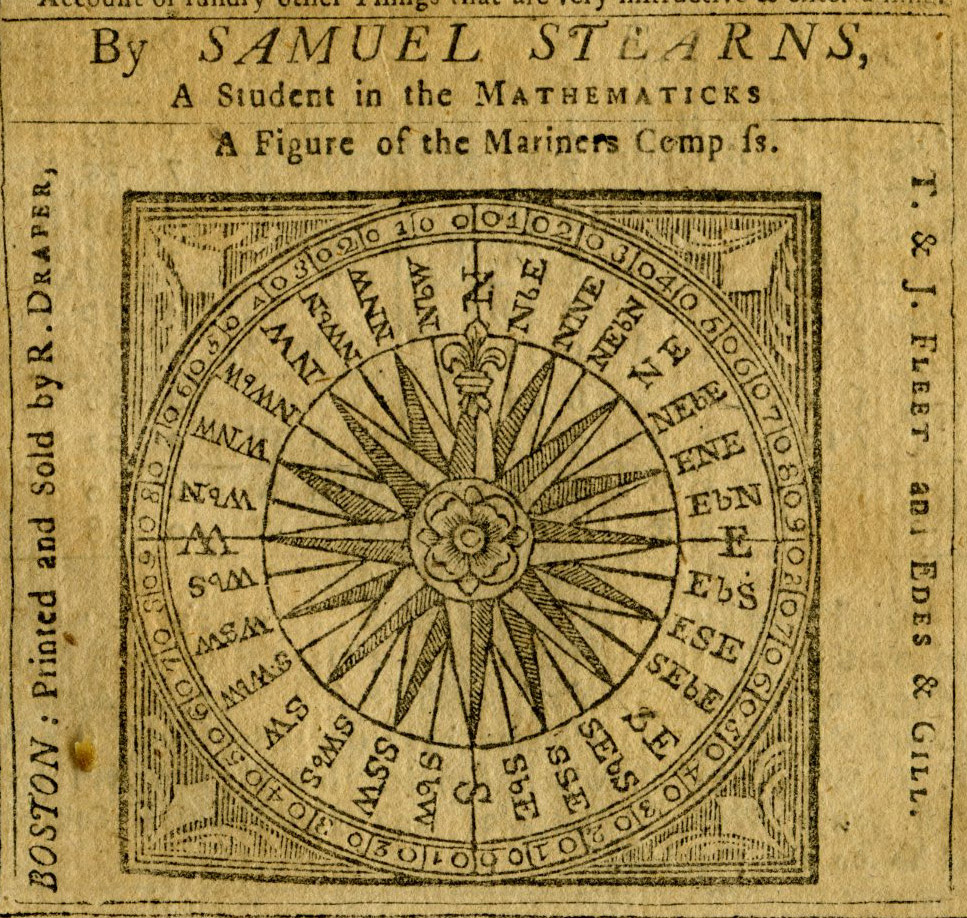
    People no doubt remember Raul Revere (1735-1818) as a patriot, silversmith, and illustrator of the iconic image of the Boston Massacre. Lesser known is his work in book, pamphlet, and magazine illustration–and what I am concerned with presently are a few of his gloriously-country-sympatico technical works.  A fine example is this woodcut from the cover of Samuel Stearns’ The North-American Almanac for 1772–a very strong mariner’s compass:

    Revere compass[Image source: the American Antiquarian Society, here: http://www.americanantiquarian.org/Inventories/Revere/illustrations.htm]

    ·Posted by :

    ·in:

    —

  • Myopia and Disease of “America First!”

    JF Ptak Science Books   Post 2598

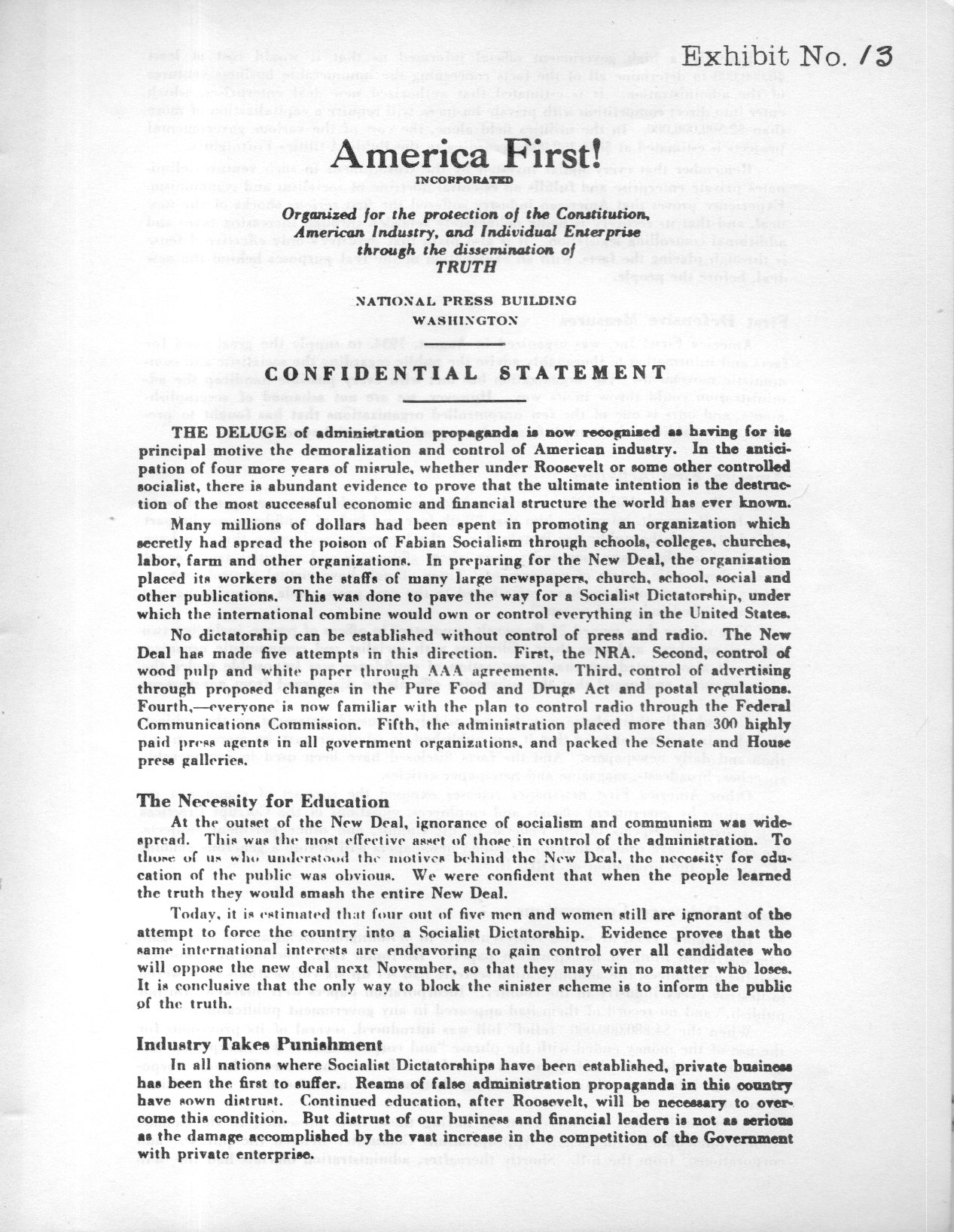
    America first one046This document, America First!…Confidential Statement, is a statement on this ostensibly-patriotic but actually loathsome and bilious hate organization–just goes to show that simply using “America” and exclamation marks does not make a patriotic organization.  If you chose to read the document you’ll see the a bit of the history of the organization, which was founded in 1934.  It was pretty much over by 1938 though there were some continued publications past the beginning of WWII. True was arrested in July 1942 on sedition charges, which was more or less the end of the organization and then, after a few years, the end of True himself. He was a vicious opponent of President Franklin Roosevelt, and an absolutely disgusting anti-Semite.

    In this piece, seen at left and below and reproduced in full, True attacks Roosevelt as a Communist/Socialist controlled by exterior forces bent on destroying the U.S. economic system. There was no appearance of his hatred of the Jews in this document, though that came in other venues, not the least of which was looking into Roosevelt’s “Jewish ancestry”. (This ideas was used by other people as well, as with the traitorous Ezra Pound when he made his racist/anti-Semitic radio broadcasts from Italy during the war, denouncing “Franklin Delano Jewsevelt” in addition to much more.)

    In the first two paragraphs alone there was a deluge of logical blasphemy such as is difficult to imagine.  For example, the principal of the “deluge of administrative propaganda” was no less than the “demoralization and control of American industry”, led by Roosevelt as a “controlled socialist” whose “ultimate intention is the destruction of the most successful economic and financial structure the world has ever known”. Roosevelt was intent on spreading the “poison” of Fabian socialism, seeding administrative operatives in newspapers, schools, and industry, to “pave the way for Socialist Dictatorship, under which the international combine would own or control everything in the United States”. This was to be done by FDR’s creation of agencies to control access to information: the NRA, control of wood pulp industry, control advertising via the Pure Food and Drug Act, controlling radio via the FCC, and of course implanting secret agent reporters in news agencies.  

    And so on and on this document drags its reader–even though it is only four pages long, it makes my eyes and brain feel as though it is forty.  

    True would be dead by 1946 (buried in an unmarked grave in the beautiful Oak Hill Cemetery in Georgetown D.C., home to some magnificent Tulip Poplars), two years after his trial ended in a mistrial due to the death of the judge. (It is possible that this document was an exhibit in the trial.) It turns out that America First! was replaced by a friend of the organization, two-star general George van Horn Moseley, who offered up his own fanatical and vicious “Americans for Constitutional Action”, a vomitous organization hell bent on genetic and ethnic cleansing to rid the U.S. of immigrants and the Jews (who Moseley described as a “syphilis”).  

    I bring this up now because of various noises I hear in the presidential campaigns which are leveraging fear and distrust and hate more so than in any campaign I have seen in my lifetime. The language may be different, but the sentiments are very closely related.  


    ·Posted by :

    ·in:

    —

  • Hearing D-Day: the Earliest Radio Broadcasts

    JF Ptak Science Books  Quick Post

    I’ve just listened to this series of radio broadcasts and found them absolutely fascinating. In the first broadcast we find that the earliest information was based on a 12:30 Berlin broadcast, followed by a 1:00 am news headline which stated “the long waited British American invasion has begun…”–thus the unlikely scenario in which the first announcements of the invasion were made by Germany. This first recording–the first CBS report–aired at about 3:00 am and recounted the events, the radio host Bob Trout doing a superb job in keeping the story straight and the listeners informed.  At the earliest stages the reports from Germany were not believed as they could well have been the expected diversionary feints, done so to draw out Partisan fighters who were in hiding.  They weren’t.

    3am is just about the time that Franklin Roosevelt was woken up–at that point, the president sprang into action, as did the rest of the White House, with the Map Room instantly abuzz. 

    All broadcasts are from youtube.  


    ·Posted by :

    ·in:


  • Big-Thinking Tech: Creating a Sea of the Sahara

    JF Ptak Science Books  Post 2597

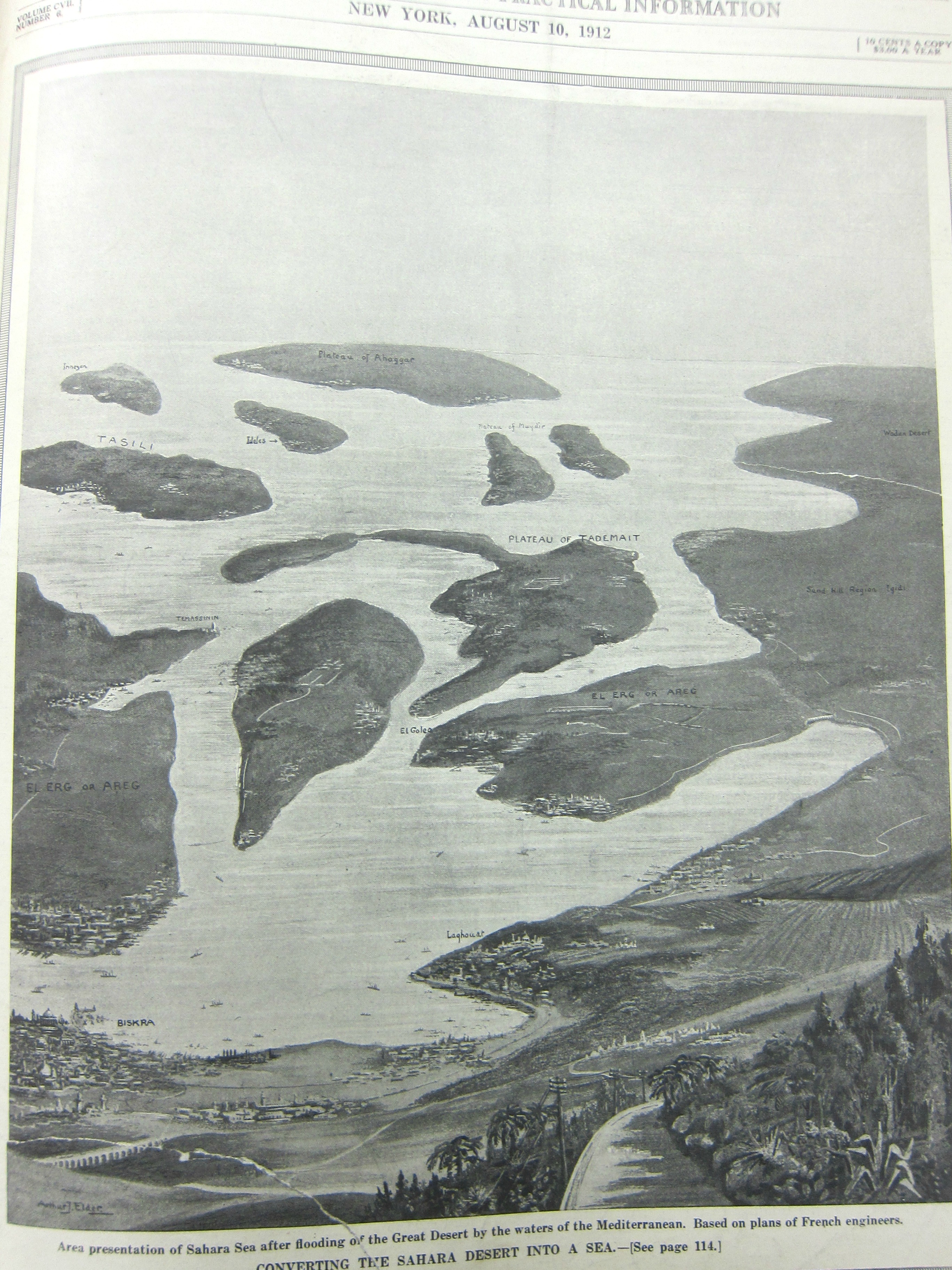
    It is not often one reads about creating an inland sea with trade routes between “Algeria and French West Africa”, It is part of the creation of a vast Saharan sea, half of the size of the Mediterranean.  I read about this version of the plan in an article by G.A. Thompson in an issue of the Scientific American for 19121, though as it turns out it was not the first time someone published on this fantastical idea. In this version,  Prof. Etchegoven proposes a 50-mile long canal that would be built from the Mediterranean inland to a suitably low place and them well, the desert would get, well,  filled up.  The reasoning here was to make Africa accessible those with the money to take advantage of the situation, to establish trade routes, make Christianity more available to whomever it might confront,  and also for “enhancing the value as a place for colonization by Europeans”. In reviewing the proposal Mr. Thompson didn’t see much danger or blowback or environmental issues–it was an outlook that was taken to task about a month later in a review in Nature2, which found his critique rather too-rosy.  

    Sahasa Sea

    In any event there have been plans like this reaching back at least into the late 19th century, a good example being The Flooding of the Sahara: An Account of the Proposed Plan for Opening ... written by Donald Mackenzie and published in 18773. Another significant proposal was made by Francoise Elie Roudaire (1836-1885) in his “An Inland Sea in Algiers”, printed in 1874,m which was an idea he shared with Ferdinand de Lesseps. Actually it was the Roudaire work that seems to have been the basis for some of Jules Verne’s last published work, L’Invasion de la Mer (1905) which took place in the 1930’s and which made a very similar proposal for the Sahara–except in this version nature intervenes with an enormous earthquake, pretty much accomplishing immediately what it would have taken humans many decades to do.  In any event, this is a good example of the Big Techno Think, though it wasn’t necessarily a very good idea.


  • Cruises in Skyland! Uncle Sam, the Canal, and the Zeppelin (1912)

    JF Ptak Science Books  Quick Post


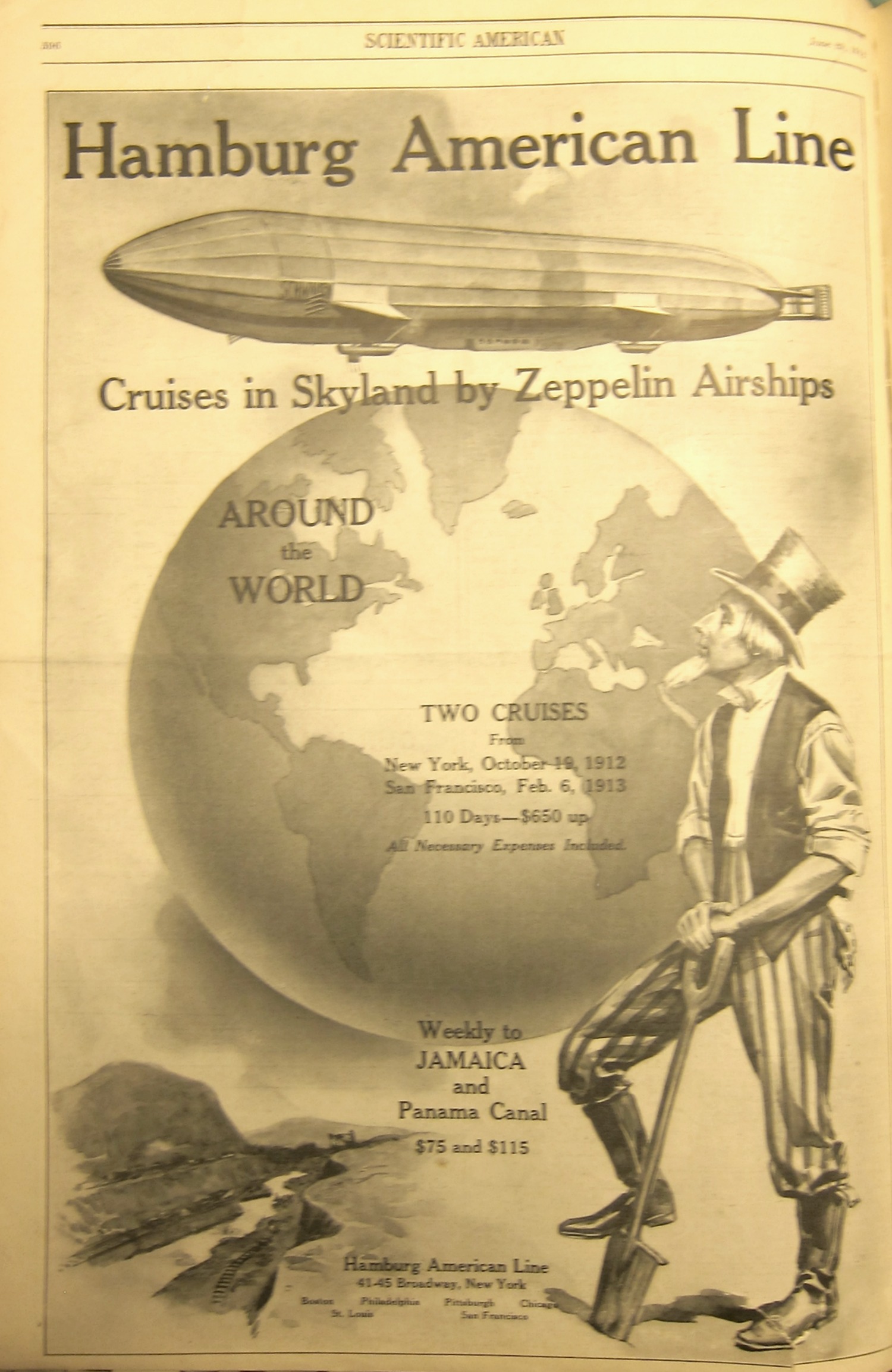
    Scientific American Zeppelin Uncle Sam single

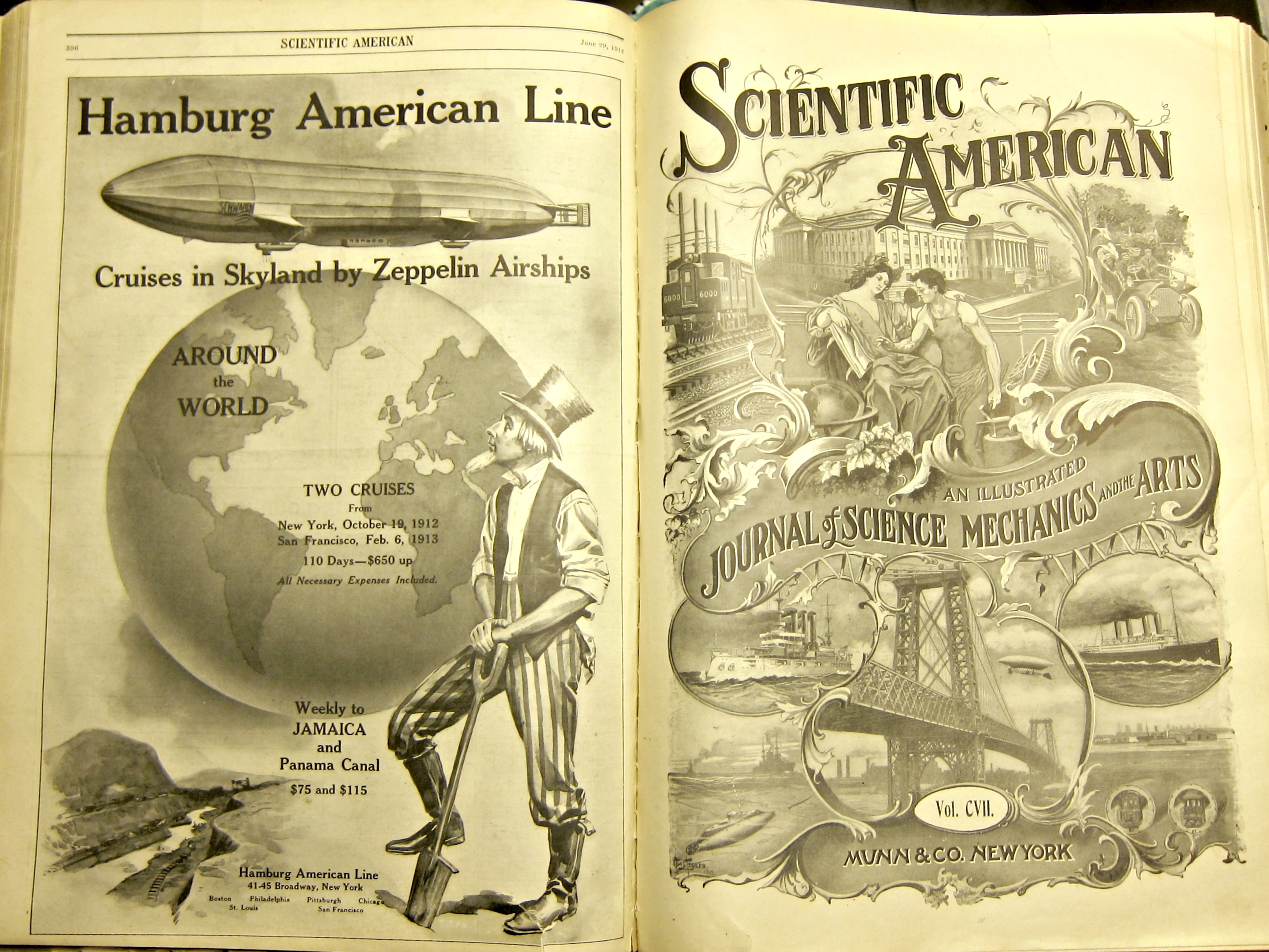
    $650 doesn’t sound like much in today’s dollars, but in 1912 that 650 would be about equal to the average salary of a factory worker1; so, if you calculated the trip of 1/3 year at the average salary today of, say, $45,000, it feels more expensive.  It doesn’t translate all that well, really, but it does give a good idea of what that 650 meant in 1912.  

    Uncle Sam is taking a breather from his work on the Panama Canal, which is clearly under construction in the vignette at bottom left and something that wouldn’t open for business for another two years.  The Hamburg American Line was definitely associating the grand undertaking in Panama with its around-the-world cruise offering–the Panama engineering feat was certainly considered one of the wonders of the world.  The zeppelin flights were extraordinary in themselves, what with making transatlantic flights with 400-800 people (depending on the airship) who received three square meals a day, could rent their own rugs, go to the barber and to the ship’s library, and listen to the airship’s band.

    The bottom line here is that this is a great design, and as advertisements go it seems to be very effective.  

    (See http://www.gjenvick.com/PassengerLists/Hamburg-AmericanLine/Westbound/1912-11-01-PassengerList-PresidentLincoln.html#axzz43r2FHFKT for various passenger lists, activities, menus, and the like.) 


    Scientific American Zeppelin Uncle Sam


    Notes:

    1.  See an earlier posst, https://historyofideasblog.com/thesciencebookstore/2009/09/the-overworked-working-poor-of-1914-women-and-children-and-what-they-didnt-get-paid.html


  • Structures Thankfully Unbuilt–the Lincoln Memorial

    JF Ptak Science Books   Post 2595

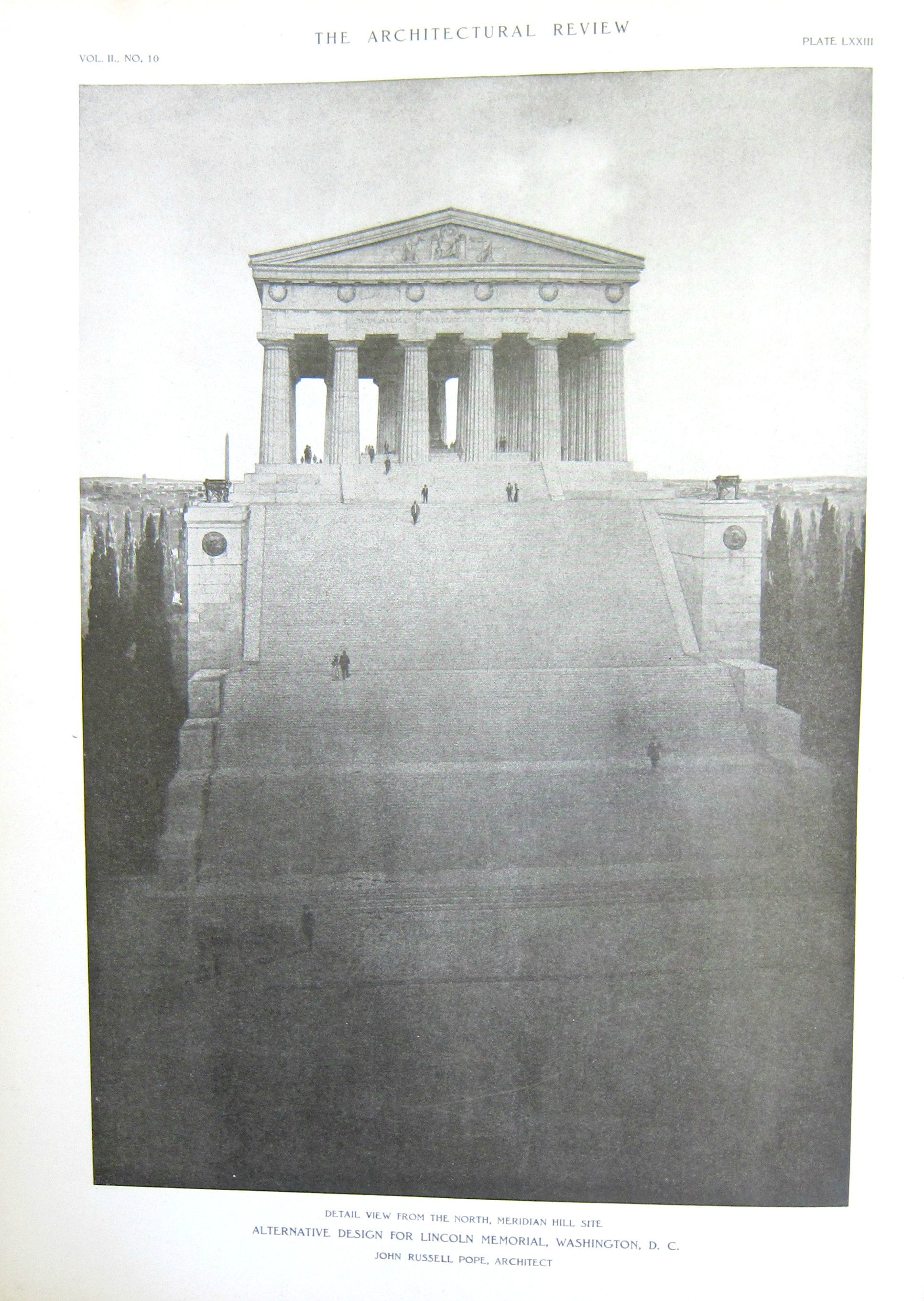
    John Russell Pope (1874-1937) was a “classical” Neo-classical architect whose designs had a profound impact on the way that people experience the U.S. past in Washington, D.C.  He created the Jefferson Memorial, the National Gallery  of Art, and the National Archives, buildings which have that particular beautiful geometry of Roman/Greek essence.  The designs that Pope submitted for the Lincoln Memorial, however, are quite a different story. They were magnificent, and gigantic, and in some ways very appropriate given the enormous nature of Lincoln.

    The plans were far too large–and unlike the other buildings, this one would have made Lincoln far more removed, and unreachable, than is worth the nature of the man. For example, in one of his proposals (just below) we see a Pantheon-like structure sitting at the top of stairs with probably 150 steps (if not more).  It is true that there are a lot of steps at Henry Bacon’s Lincoln Memorial today–58 to the pavement) but that seems just about right, as they give a little time for the statue of Lincoln to reverse-emerge at the top of the stairs.  Doubling the number of steps would be bad; nearly tripling them would have been terrible.  

    Lincoln Memorial big steps


  • Horse Stall Internment “Camps”, 1916

    JF Ptak Science Books    Post 2594

    Internment Camps POW

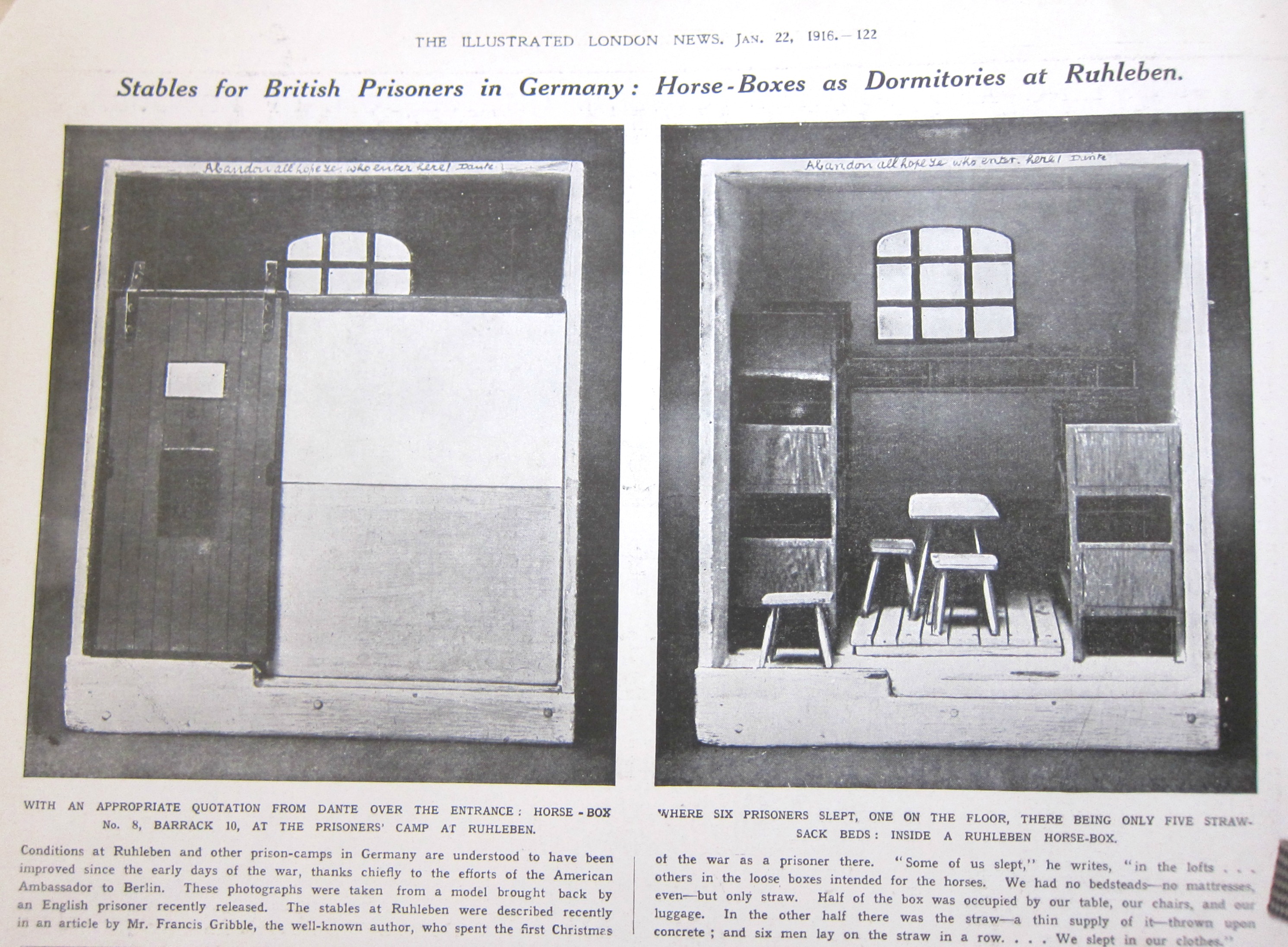
    A year and a half into WWI there appeared in the Illustrated London News1 these two pictures of a an internment camp in which British POWs were held. The photos are of a wooden model made by a former internee, Francis Gribble, who also wrote an account of the time he spent there2. The “dormitories” at the German city of Ruhleben had previously been horse stalls, 6’x8′ enclosures which slept and kept five or six soldiers. I include info on Gribble below, as well as a link for the full text of Gribble’s account.

    It seems as though horse stalls were a common convert for concentration and internment camps of one form or another, including here in the U.S. when 120,000 Japanese were rounded up, shipped off, and jailed during WWII. One of the first stops for the “internees” was Tanofran3 race track in San Bruno, San Francisco, California, where Japanese immigrants and Japanese-American U.S. citizens alike were kept in horse stalls and barracks before being shipped off to more permanent facilities out in the middle of nowhere.   

    There’s something about the “race” in “racetrack” that seems very peculiarly ironic.


    ·Posted by :

    ·in:

    —