A Daily History of Holes, Dots, Lines, Science, History, Math, Physics, Art, the Unintentional Absurd, Architecture, Maps, Data Visualization, Blank and Missing Things, and so on. |1.6 million words, 7500 images, 4.9 million hits| Press & appearances in The Times, Le Figaro, Mensa, The Economist, The Guardian, Discovery News, Slate, Le Monde, Sci American Blogs, Le Pont, and many other places… 5000+ total posts since 2008.

Author: JF Ptak

  • Horse Stall Internment “Camps”, 1916

    JF Ptak Science Books    Post 2594
    Internment Camps POW

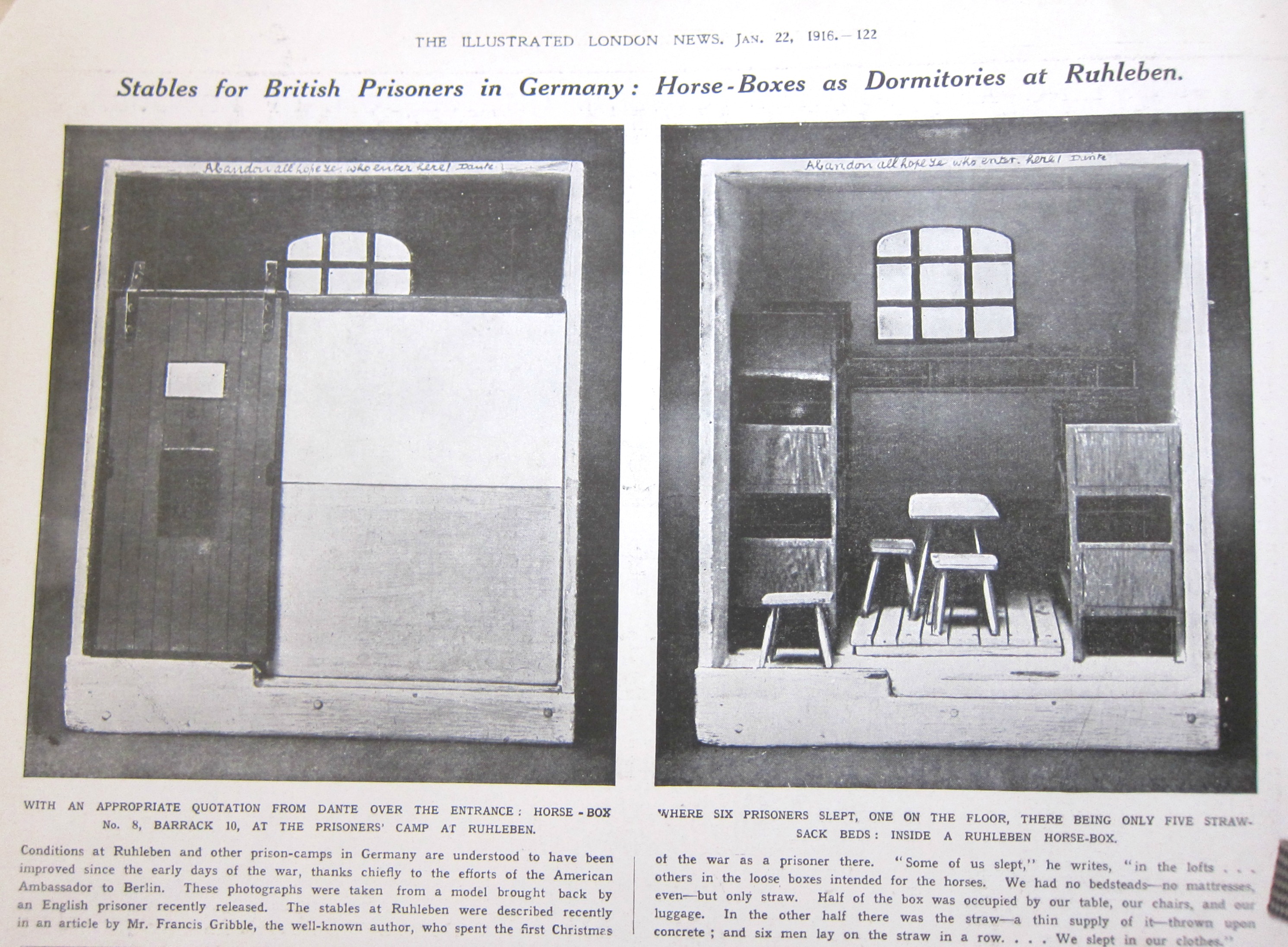
    A year and a half into WWI there appeared in the Illustrated London News1 these two pictures of a an internment camp in which British POWs were held. The photos are of a wooden model made by a former internee, Francis Gribble, who also wrote an account of the time he spent there2. The “dormitories” at the German city of Ruhleben had previously been horse stalls, 6’x8′ enclosures which slept and kept five or six soldiers. I include info on Gribble below, as well as a link for the full text of Gribble’s account.

    It seems as though horse stalls were a common convert for concentration and internment camps of one form or another, including here in the U.S. when 120,000 Japanese were rounded up, shipped off, and jailed during WWII. One of the first stops for the “internees” was Tanofran3 race track in San Bruno, San Francisco, California, where Japanese immigrants and Japanese-American U.S. citizens alike were kept in horse stalls and barracks before being shipped off to more permanent facilities out in the middle of nowhere.   

    There’s something about the “race” in “racetrack” that seems very peculiarly ironic.
     

    ·Posted by :

    ·in:

    —

  • What They Wore, and Didn’t Wear (1917)

    JF Ptak Science Books  Quick Post

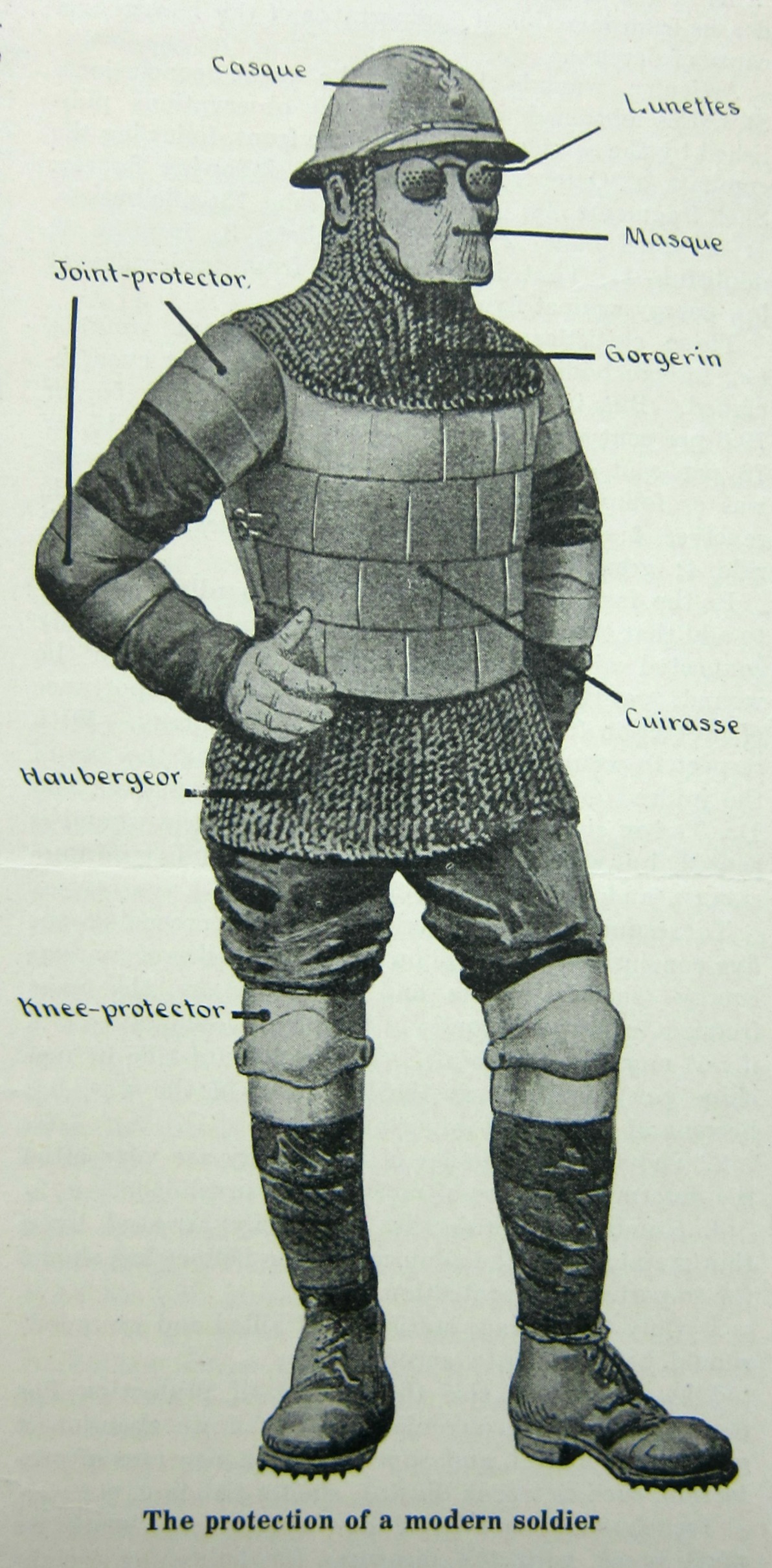
    There are a half-dozen posts on this blog showing what soldiers wore and carried with them into battle, mostly in WWI and WWII.  This addition to that series is more along the lines of what they didn’t carry, though someone at some point was thinking about this sort of protective gear for the fighting French.  The only thing that really made it out alive from this drawing was the helmet, and the puttes. 

    What they wore--didn't wear

    [Source: Scientific American Supplement #2166, July 7, 1917.]

    ·Posted by :

    ·in:


  • A Miniature, Individualized Velodrome (1903)

    JF Ptak Science Books  Quick Post      Daily Dose from Dr. Odd

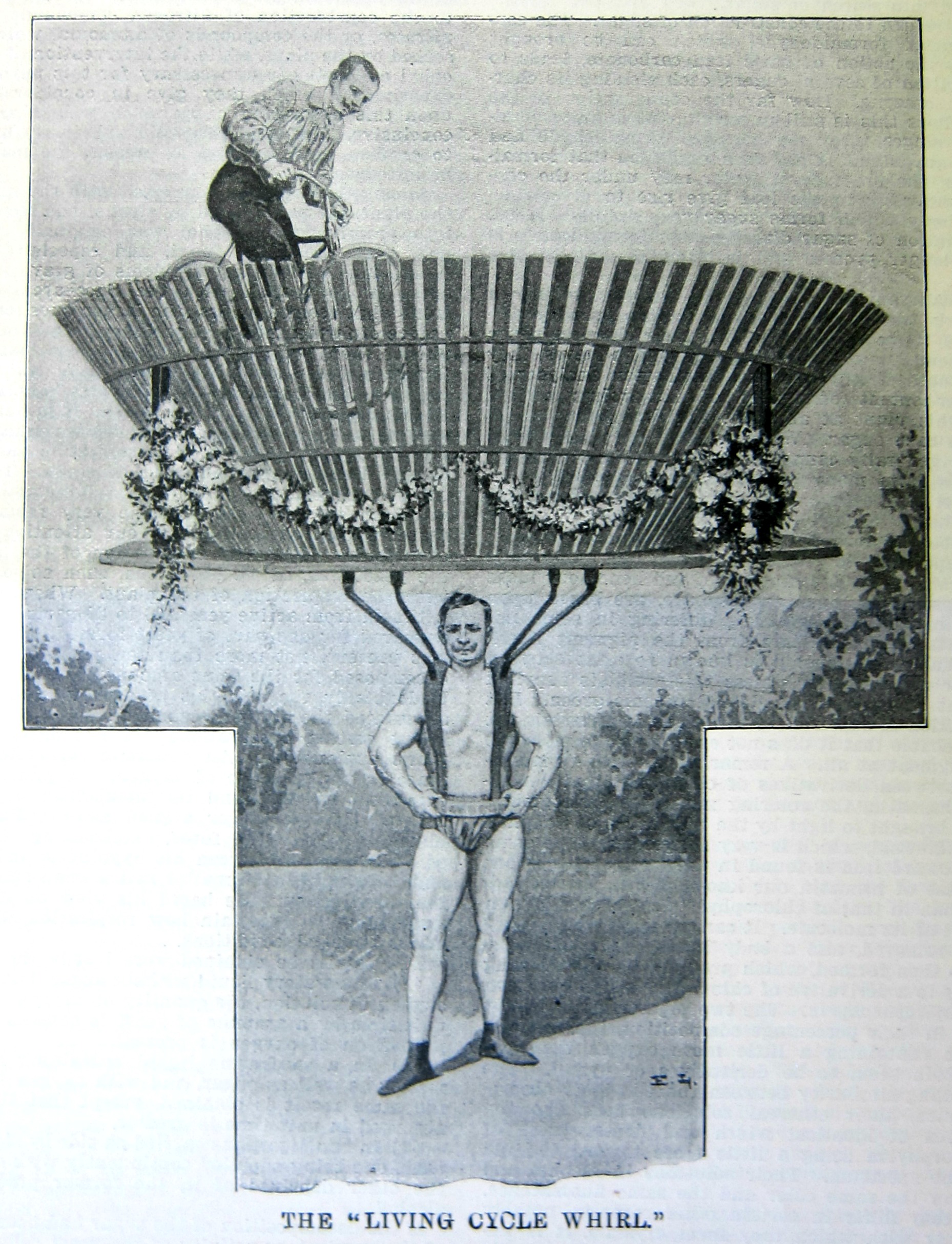
    I couldn’t resist a simple post of this image of solo-velodrome–a curious bit for one rider held by one person.  The “held” part is certainly unusual and very ambitious, the thing being designed for high amusement–it appeared as part of a show at the Dresden Victoria Salon,  and was published in the August 8, 1903 issue of Scientific American.  

    Scientific American bicycle living cycle whirl

    ·Posted by :

    ·in:


  • Serpentinite of the Lizard and the Unintentional Absurd

    JF Ptak Science Books  Quick Post   The Unintentional Absurd series

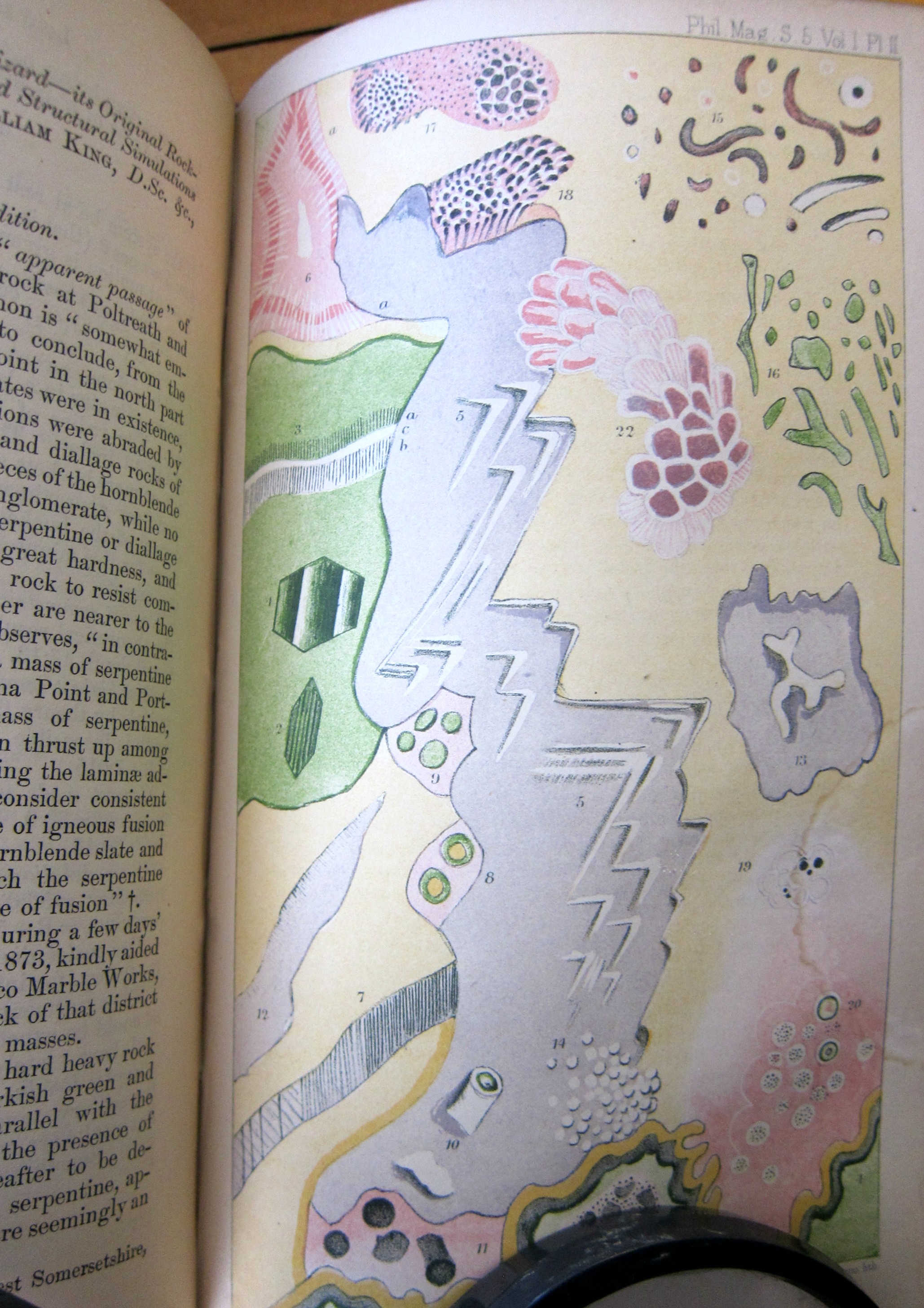
    I was checking out what turned out to be a significant article on solitons (“Called “On Waves”) by Lord Rayleigh in the April, 1876 issue of the Philosophical Magazine when I bumped into a neighboring article1 from the month before with this beautiful found-Abstract art illustration. It is headed with this gorgeous title, “On the Serpentinite2 of the Lizard…”, and written by T.H. Rowney, who addressed its unusual appearance, citing its “organic appearance”, “fossil corals”, and “worm casts”. The geological issues aside, I found the complexity (there are a number of different images contained in this one engraving), color, and the found-design to be all very captivating, especially appearing four decades before the invention of the Absurd.  

    Serpent stone


    Notes:

    1.  Philosophical Magazine, 5th Series, New Series I, March, 1876.

    2.  “Serpentinite is a rock composed of one or more serpentine group minerals. Minerals in this group are formed by serpentinization, a hydration and metamorphic transformation of ultramafic rock from the Earth’s mantle. Themineral alteration is particularly important at the sea floor at tectonic plate boundaries. Serpentinization is a geological low-temperature metamorphic process involving heat and water in which low-silica mafic and ultramafic rocks are oxidized (anaerobic oxidation of Fe2+ by the protons of water leading to the formation of H2) and hydrolyzed with water into serpentinite.”–Wikipedia


    ·Posted by :

    ·in:


  • Measuring Things With Ships (Again)

    JF Ptak Science Books  Quick Post

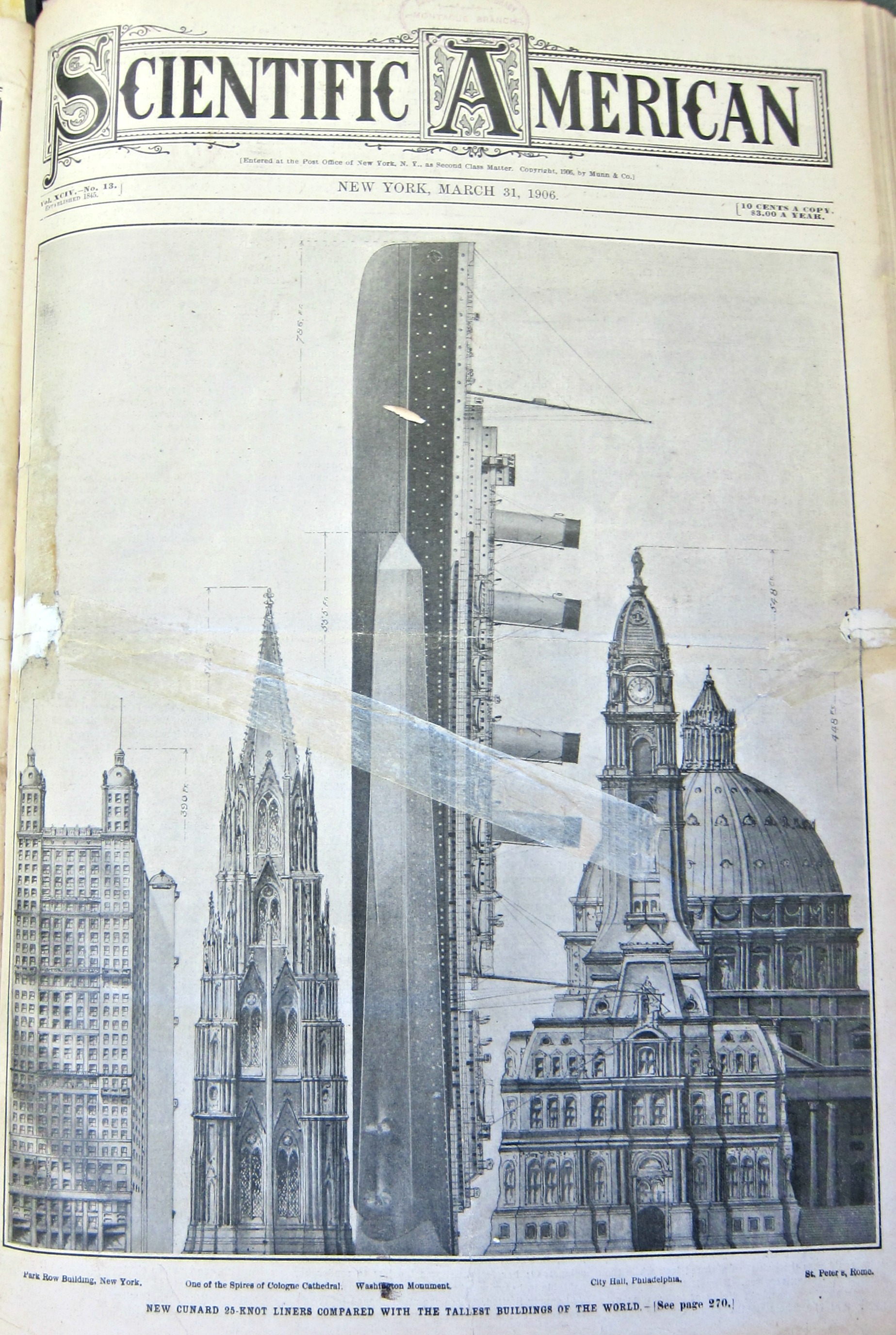
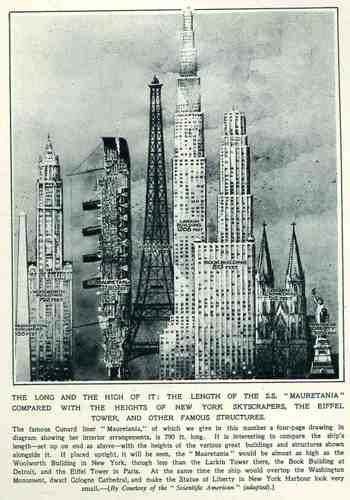
    I didn’t think that there would be many entries for a series on measuring things with ships–they do pop up here and there, as with this issue of the Scientific American for March 31, 1906.  There’s probably room for a History of Measuring Things By Uncommon Non-Standard Means series on this blog–after all, there are examples for ships as a measure, and there are other bits on this blog about measuring things in units of the Eiffel Tower, gargantuanly-oversized bread, enormous nails, collections of beef, Trinity Churches, miles of soldiers, and the like.  Here are a few examples: 

    • Measuring Things in Terms of Trinity Churches https://historyofideasblog.com/thesciencebookstore/2013/12/jf-and-so.html
    • Ships in the Skyline    https://historyofideasblog.com/thesciencebookstore/2008/09/comparative-d-1.html
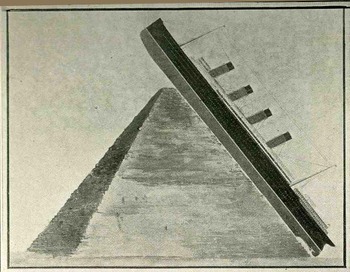
    • Ships on the Pyramid  https://historyofideasblog.com/thesciencebookstore/2008/09/jf-ptak-scien-3.html

    These units of measurement do seem a little odd, but they really have a capacity to humanize inescapably difficult numbers by putting them in context with a known entity, like Trinity Church.  In this new case of ship/measurement, the newest of the Cunard Line’s transatlantic ocean liners (that would be named Lusitania and Mauritania) is presented here on the front page of the Scientific American pressed up against structures that are presumably well known amongst its readers. 

    Scientific American ship standard


    Blog1sept_17_ship_city_btm_det572

    •  [Source:  https://historyofideasblog.com/thesciencebookstore/2008/09/jf-ptak-scien-3.html]

    Blog1sept_16_ship_skyline564

    • [Source: Ships in the Skyline    https://historyofideasblog.com/thesciencebookstore/2008/09/comparative-d-1.html}

  • Looking Straight Ahead Series: the Whitley Bomber

    JF Ptak Science Books   Quick Post

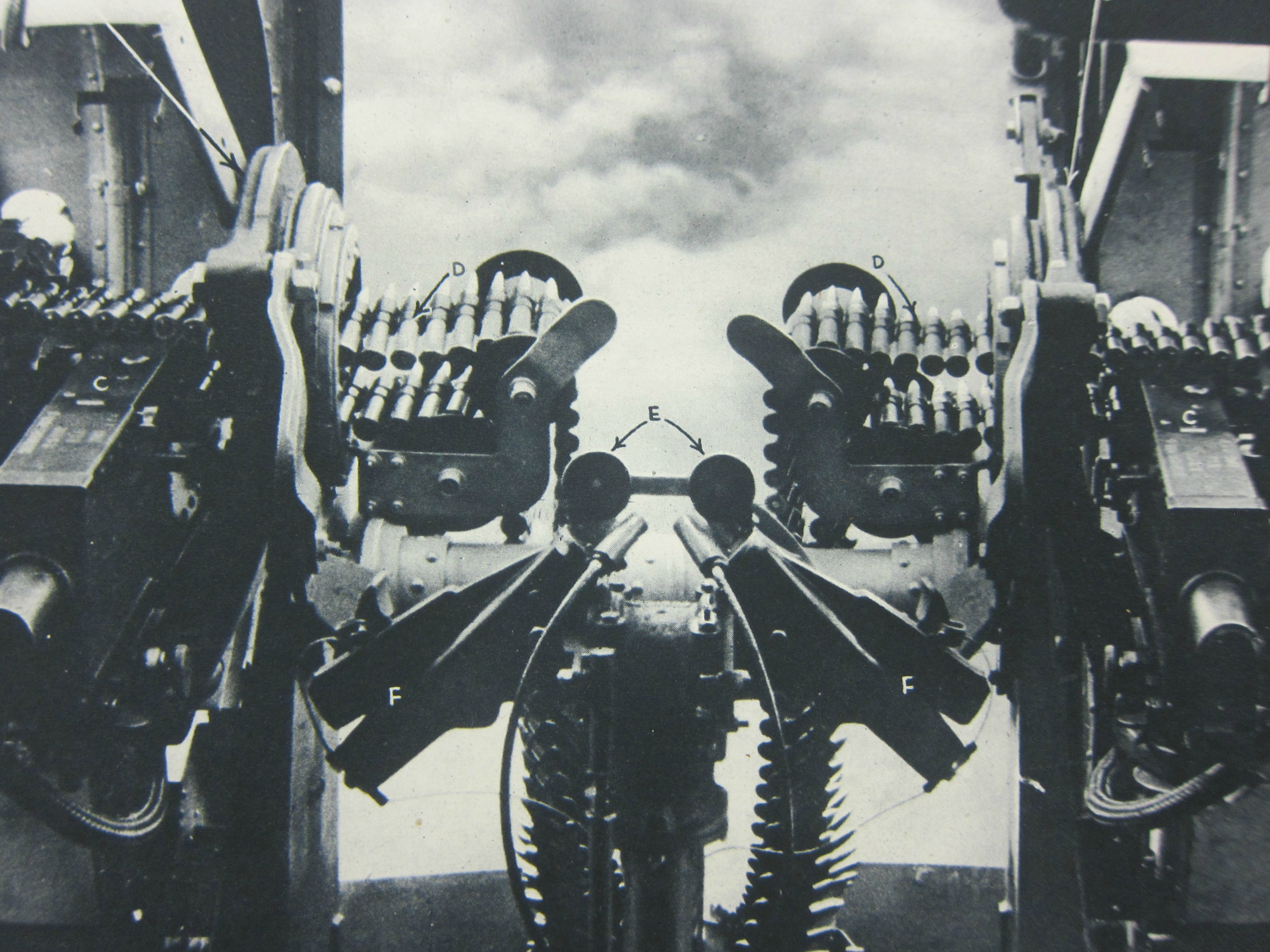
    There are a number of posts on this blog that focus on what turns out to be an unexpectedly unusual perspective–looking at things straight-on. Straight-on as in straight across, and straight up, and straight down, and in images that are not architectural plans or elevations. Today’s entry is similar to an earlier post looking through a Vickers gun sight–this one is looking out from behind the tail gunner’s seat in an Armstrong Whitworth A.W. 38 Whitley.

    Here are a few examples of previous efforts on this subject on this blog:

    • The Straight Series: Looking Straight Through a Vickers Gun Sight, 1916 https://historyofideasblog.com/thesciencebookstore/2015/08/jf-1.html
    • Vision: Looking Straight Up, Down, Across and Through–1525-1905  https://historyofideasblog.com/thesciencebookstore/2009/07/vision-looking-straight-up-down-across-and-through15251905.html
    • Points of View: Inside Looking Out, Outside Looking in, and in-Between  https://historyofideasblog.com/thesciencebookstore/2009/02/points-of-view-inside-looking-out-outside-looking-in-and-inbetween.html
    • Crystallizing a Scarce Perspective: Looking Straight Down & the Art of Photography  https://historyofideasblog.com/thesciencebookstore/2014/03/looking-straight-down-the-art-of-photography.html


    Whitley bomber big

     So, just for perspective’s sake, the two bits labeled “E” are the buttons/triggers located in grips for the four guns which are just barely seen (over-and-under) just to the left and right of the ammunition feeds, and the gunner’s seat would be just a little bit below and back from where the foreground begins. In any event, if you were crowded aft and looked straight out of the back of this workhorse of a medium bomber, this is what you’d see. 

    ·Posted by :

    ·in:


  • The Heavy Stuff–Old School Hardware in Advertisements, 1887

    JF Ptak Science Books  Quick Post

    While looking through a yearly volume of the Scientific American Architects and Builders Supplemental volume for April, 1887, I was very much impressed by the sheer size and heaviness and oddness of some of the good advertised in the back of this one issue.  For example, here’s the distant relation of a convenience that we all take for granted nowadays:

    Scientific American ads old school toilet paper

    ·Posted by :

    ·in:


  • History of the Future of Massiveness: Stadium-Seating Skyscrapers, NYC, 1938 [Part II]

    JF Ptak Science Books  

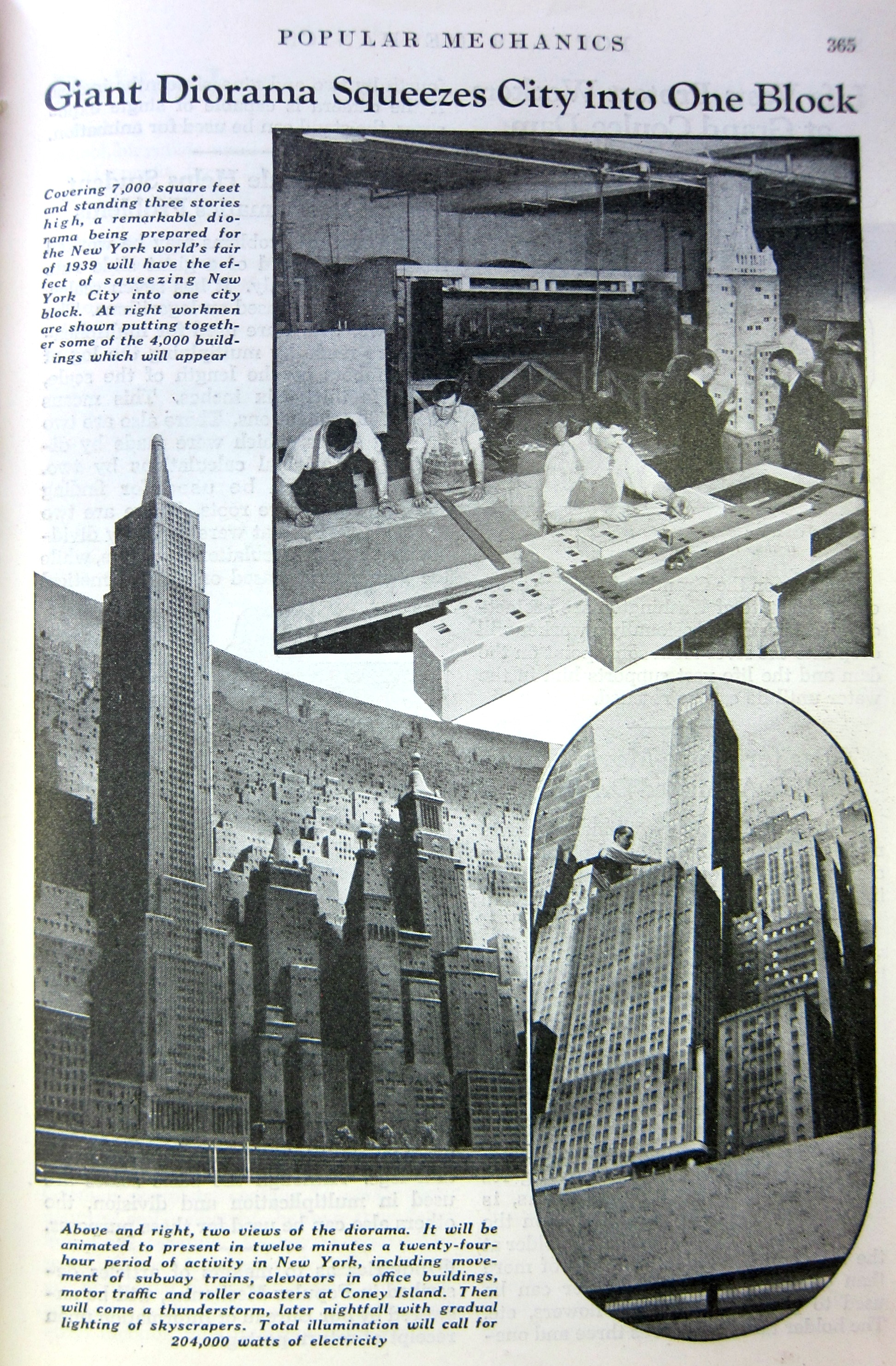
    I wrote earlier in this blog about a wonderful stadium-seating vision of New York City (here https://historyofideasblog.com/thesciencebookstore/2016/02/history-of-the-future-of-massiveness-stadium-seating-skyscrapers-nyc-1938.html)  produced by Con Ed for the 1939 World’s Fair.  What I didn’t realize was that this was a drawing of what was to be a 5,000 square foot model of the buildings of Manhattan, all made to fit on a single block.  The breakthrough for me came in a browse of the September 1938 issue of Popular Mechanics, where I saw a short article with a photo of NYC building models that looked very much like the jam-packed visionary cityscape of ConEd:

    NYC Architecture stadium seating


    Here’s one of the images I posted earlier:

    NYC stadium seating 1938

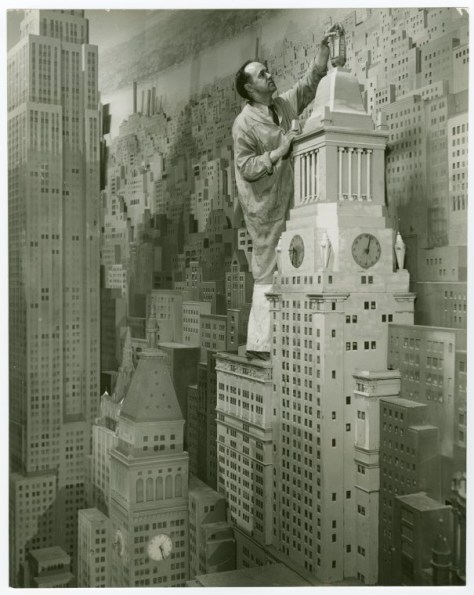
    It turns out that the first images that I posted were drawings for the models that were part of the Consolidated Edison “City of Light” pavilion at the fair, and which constituted the world’s largest diorama.  Here’s an interesting photo showing the scale of the project:


    NYC city of light 1939

    [Source for the image directly above from Architecturalogy which hosts a number of other interesting photos, here:  http://architecturalogy.com/new-york-diorama-the-city-of-light/]


  • An Eight-Person Crew Tricycle, 1896

    JF Ptak Science Books   Quick Post

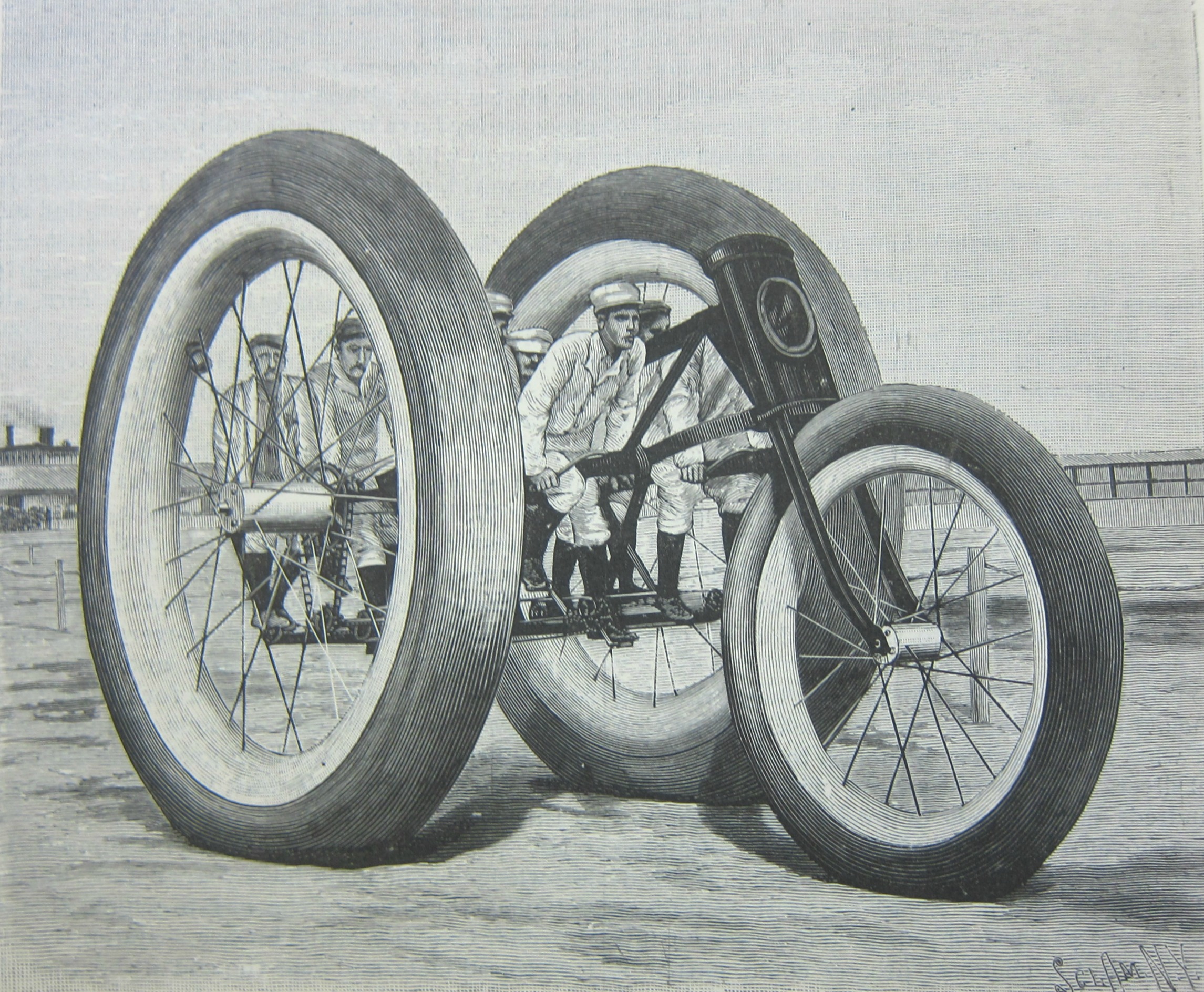
    SO–this is either a very large tricycle with average-sized crew, or an average-sized trike operated by tiny people.  Since it appeared in the November 11, 1896 issue of Scientific American–which had a very very slight leverage on humor–I report here that this was indeed a very large tricycle. As a matter of fact it required a crew of eight to operate, and weighed in at about 1500 pounds.  It was actually constructed, as this crew peddled it around the Boston area for a 125-mile jaunt.  Why this was done–other for the sake of doing it–I do not know.  It seems someone just made a Big Thing, coming (as the short description in the issue says) “in this age of ‘big things’ “.

    Scientific American giant trike 1896


  • In the Golden Age of Bicycles–a 25-cent Bike

    JF Ptak Science Books   Quick Post

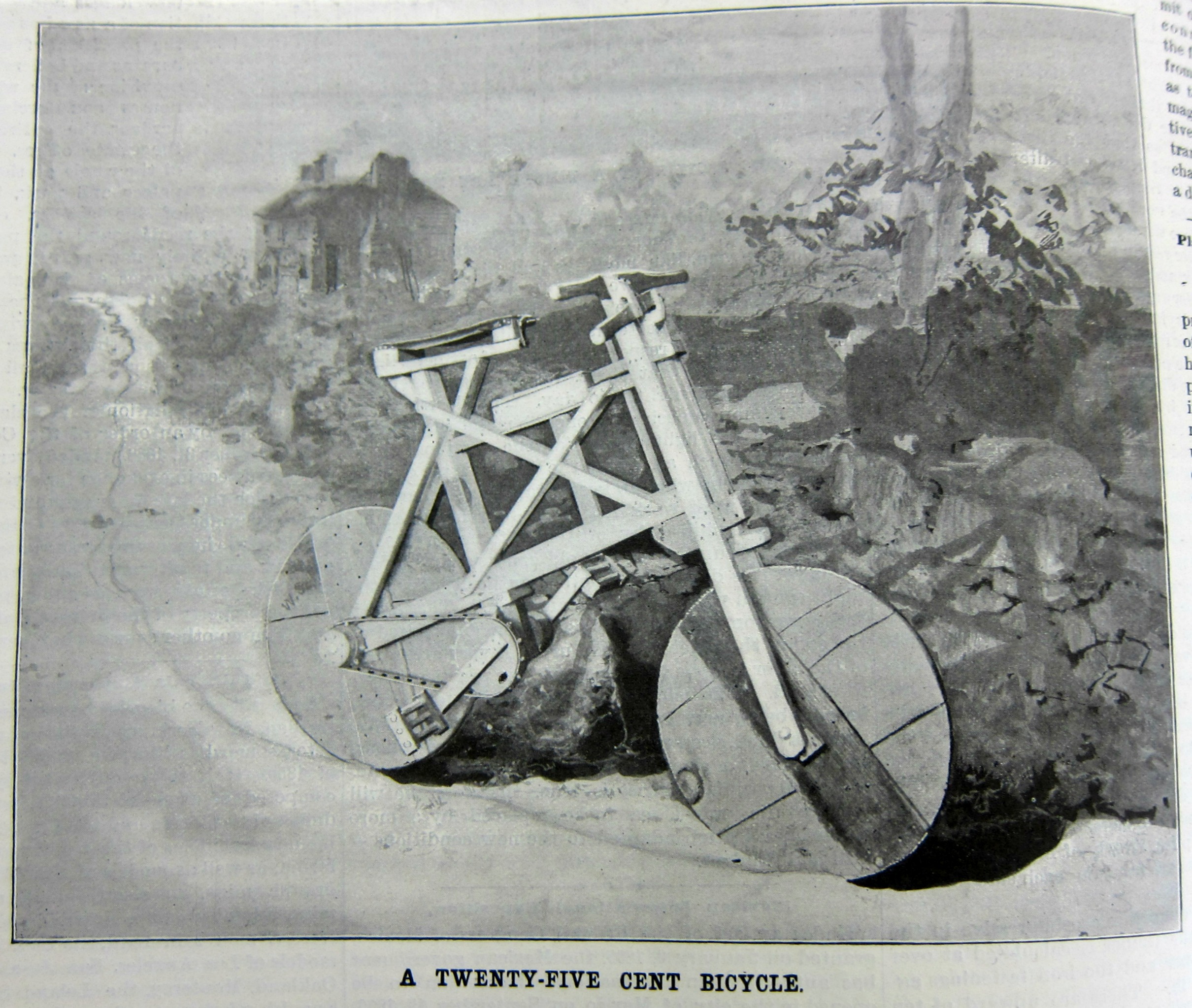
    Today I joked with a neighbor that my car was so old that it has wooden seat belts.  At least it has seat belts, no thanks to the early (pre-1989) efforts of people like Lee Ioccoca to prevent having them automatically installed, and unlike the Flintstones and Jimmy Rockford and others who had no seat belts at all–it is more like Granny’s rope-belt in the Beverly Hillbillies. Be that as it may, this bicycle is a much better creation than my seat belts.  The image appeared in the Scientific American for February 1, 1896, a half tongue-in-check proposal at a time of a great bicycle craze. Even though millions of bicycles were being made, a decent one could cost you $25, which would (according to the Bureau of Labor Statistics inflation calculator) would be about $750-$1000 today–not nothing.  So this Modest Proposal on making a bike from bits, found wood, and a quarter.  

    Bicycle 25 cents