A Daily History of Holes, Dots, Lines, Science, History, Math, Physics, Art, the Unintentional Absurd, Architecture, Maps, Data Visualization, Blank and Missing Things, and so on. |1.6 million words, 7500 images, 4.9 million hits| Press & appearances in The Times, Le Figaro, Mensa, The Economist, The Guardian, Discovery News, Slate, Le Monde, Sci American Blogs, Le Pont, and many other places… 5000+ total posts since 2008.

Author: JF Ptak

  • Rare Eyewitness Holocaust Account, 1944–The Only Reproduction of the Full Document

    JF Ptak Science Books  Post 2608
    Witness from the netherlands detail g171

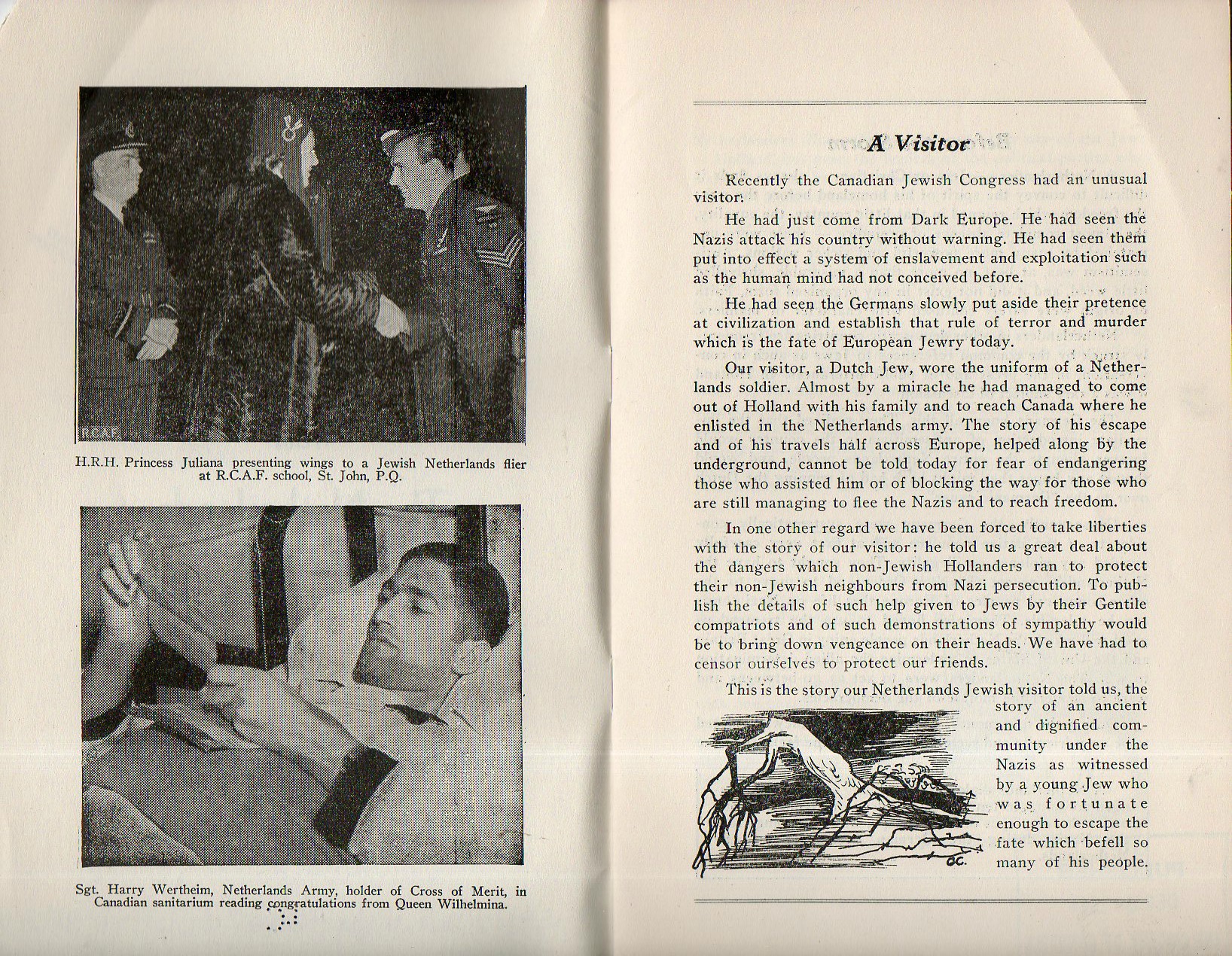
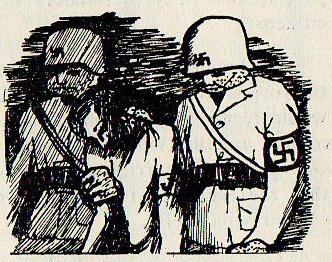
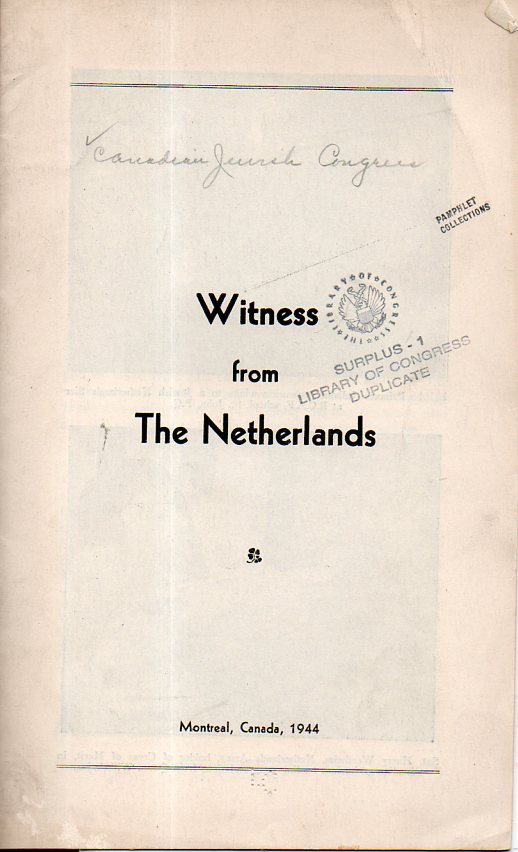
    Witness from the Netherlands is a frank and concise eyewitness account from a Dutch Jew escaped to Canada, his account being published by the Canadian Jewish Congress in Montreal in 1944. He tells of a calm period at the beginning of the occupation by the Nazis and their efforts to ingratiate themselves with the Dutch–one of those methods was to ostensibly form an emigration policy for the Jews and having them register with the “Central Committee for Jewish Emigration”. The facade did not last long, and the rest of the pamphlet is devoted to the violence after January 1941.  The rest of the story is left to the reader–the pamphlet is only about 4000 words, and it is a recommended read.

    The account necessarily leaves out his escape routes and the people who helped him to escape; the same is said for the “non-Jewish Hollanders” who protected him and others “from Nazi persecution”. 

    I’ve scanned the document and made it available below. There looks to be no copyright restriction on the 1944 original, and I won’t add one.  I could not find records of the pamphlet for sale, and an internet search reveals only seven hits (somehow) for the title phrase, with only two of those being for the actual pamphlet, and both of them being library records.  (I don’t have the time or resources to check textual references for the work in the standard histories of the Holocaust, unfortunately.)

    WorldCat/OCLC find 10 copies located in high pedigree, with only copy copy in the U.S. and only three in North America: British Library,  Royal Library (Copenhagen), Konniklijke Bibliotheek,  NIOD Institute for War, Genocide Studies (Amsterdam), Harvard, University of Ottawa, University of Toronto, Tel Aviv University, National Library of Israel, and the Danish National Library. 

    The original is for sale in the blog bookstore:  https://historyofideasblog.com/books/2016/05/rare.html
    Witness from the netherlands a166


    Witness from the netherlands b167

    ·Posted by :

    ·in:

    —

  • Join the Young Communist League of Great Britain! (1937)

    JF Ptak Science Books  Quick Post

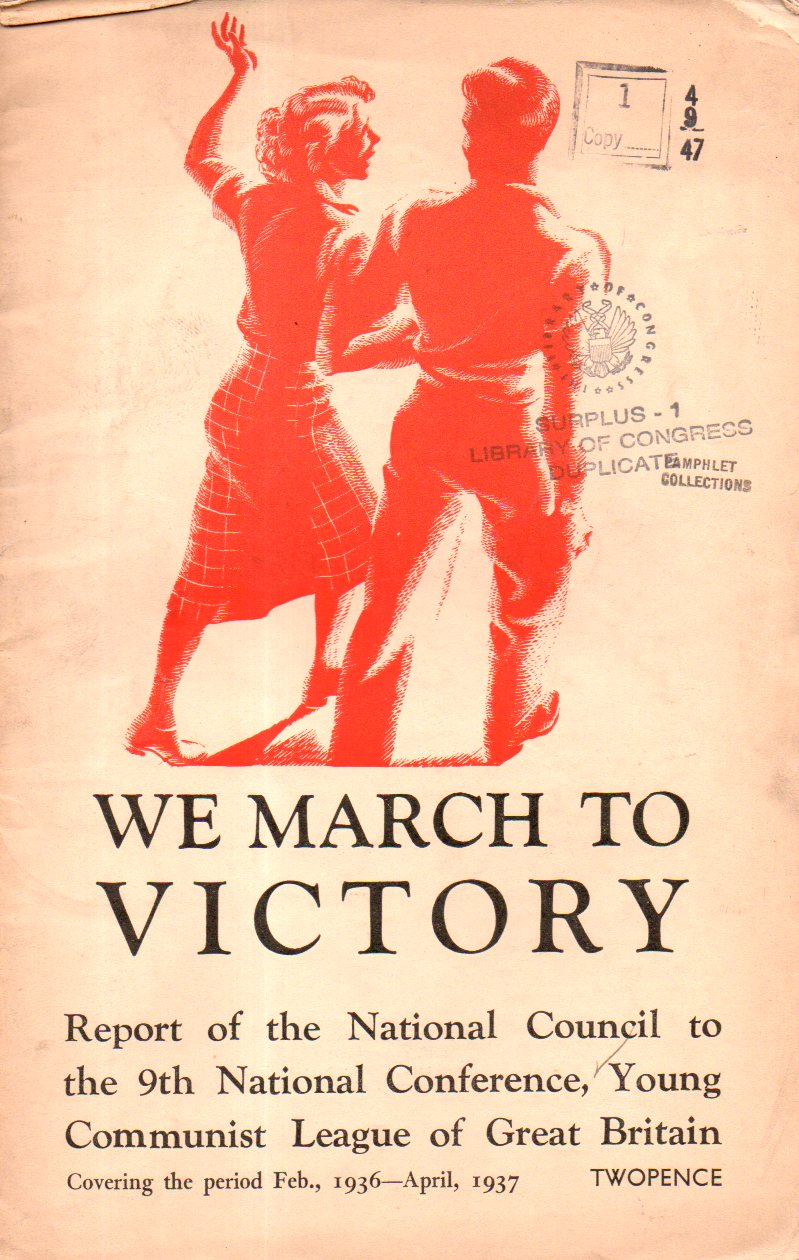
    Oh to be young and free and red! This pamphlet told of the joys and works of the Young Communist League of Britain, a youth version of the Communist Party of Britain.  It was launched in 1922 and somehow survived until 1988.  This pamphlet was published in 1937, which is probably the low point for the Stalinst Soviet Union for the decade of the ‘thirties, which was very low, and enforced-famine-stricken, and murderous, as just about any in the history of worst decades.  There’s a lot in the pamphlet about fighting the Fascists in Spain, and not much more. 

    Communist march to victory142


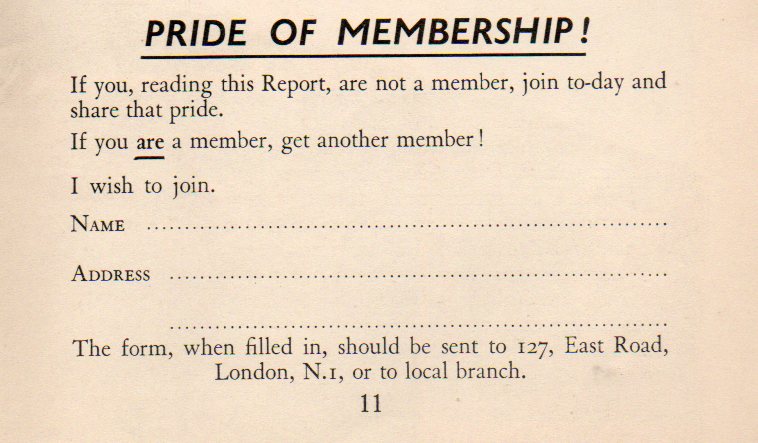
    Become a member today! Be aware to fill in the form before mailing it out! (It looks like today that address is a two-storey apartment building.) 

    Communist march to victory143


  • Television Reaches Out, 1939-1949

    JF Ptak Science Books  Quick Post

    Here are a few things on the top of the stack in the telecom box–I think that I left them like that as a treat to myself for the next time I opened the box:  


    TV montage


  • An Imaginary Skyline: Comparative Chart of the World’s Tallest Structures, 1852

    JF Ptak Science Books  Quick Post

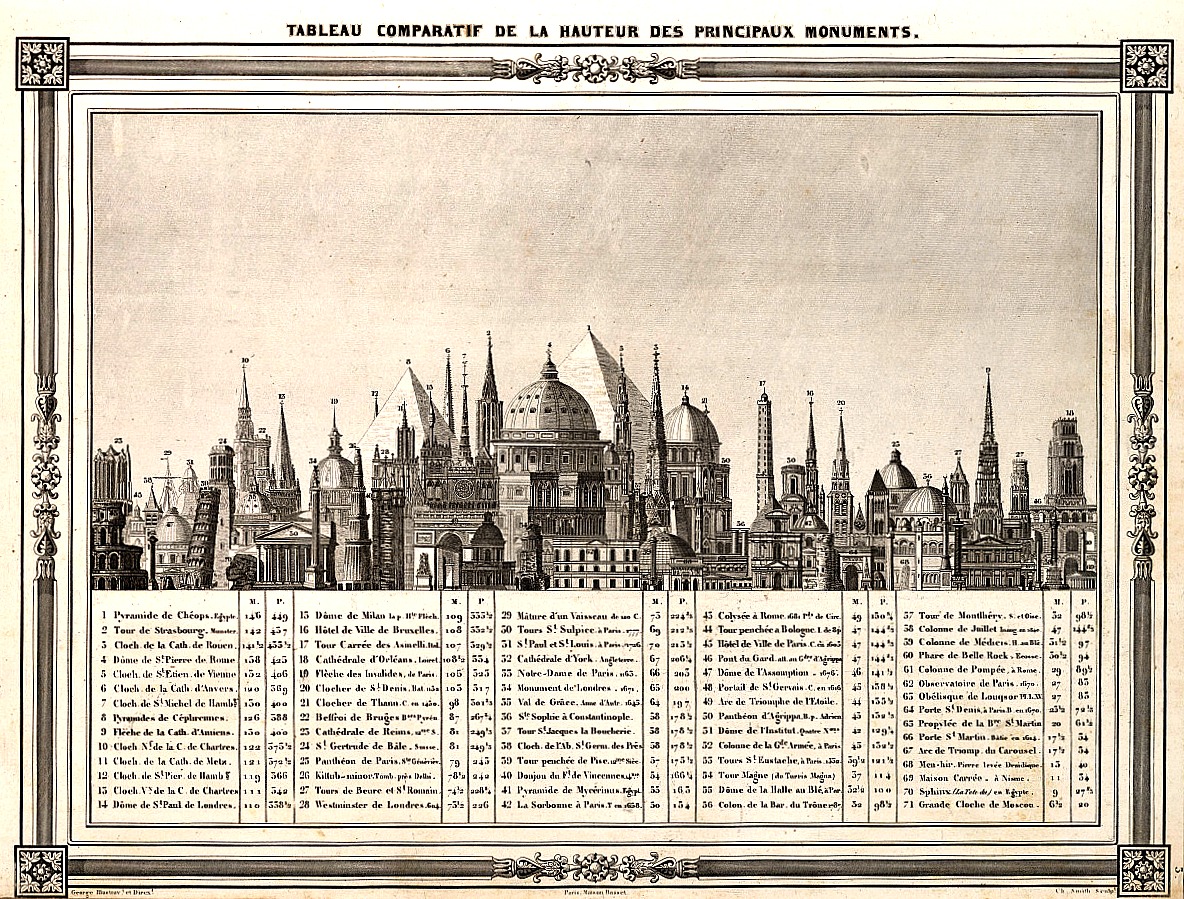
    I came upon this table of the heights of structures while looking for another chart showing the heights of mountains and the lengths of rivers, with the lengths of rivers nestled between the mountains in an upside-down pyramidal mountain form in the sky–yes, it is a striking design. In the attempt of not finding a good copy that could be downloaded and shared there was however success in the serendipitous find of the following print:  

      Comparative building heights

    SOURCE: I was happy to find this at the tumblr account of Atlas of Affinities:  http://atlasofaffinities.tumblr.com/image/76306197926  Barbie du Bocage, “Tableau Comparatif de la Hauteur des Principaux Monuments”, 1852.

    The color isn’t quite right but that came as a result of manipulating the sharpness and clarity (and contrast) to make the legend somewhat more legible than in the original, which wasn’t a very chunky scan. In any event there is a clearer image if you click on this, and I’m pretty sure that all of the numbers and structures are reasonably legible.  


  • Outsider Logic, Part 17: Monkey on the Brain

    JF Ptak Science Books   Quick Post

    There are hundreds and hundreds of pamphlets like the one below in the store’s Outsider Collection–honest work that somehow has gone a little astray, or over-the-side, or reached too high, or fell too low, or some such thing. Sometimes I read in the work a little, and sometimes not–the present pamphlet is in the later category, which means I really have no idea what the author is channeling, except that I know it is fairly evangelically religious and capitalist. I don’t know why the human head profile is on the cover, and I also don’t know what it means. But no doubt it was something encapsulating, something representative to the work as a whole, otherwise it (probably) wouldn’t be there. If I was 25 years old I might stop to read the 193-page work a little; but I’m not, so I won’t.

    (P.S.: the covers are velveteen.)

    Americanism vs communism130


  • A Good Astronomical Bull’s-Eye (ca. 1850)

    JF Ptak Science Books  Quick Post

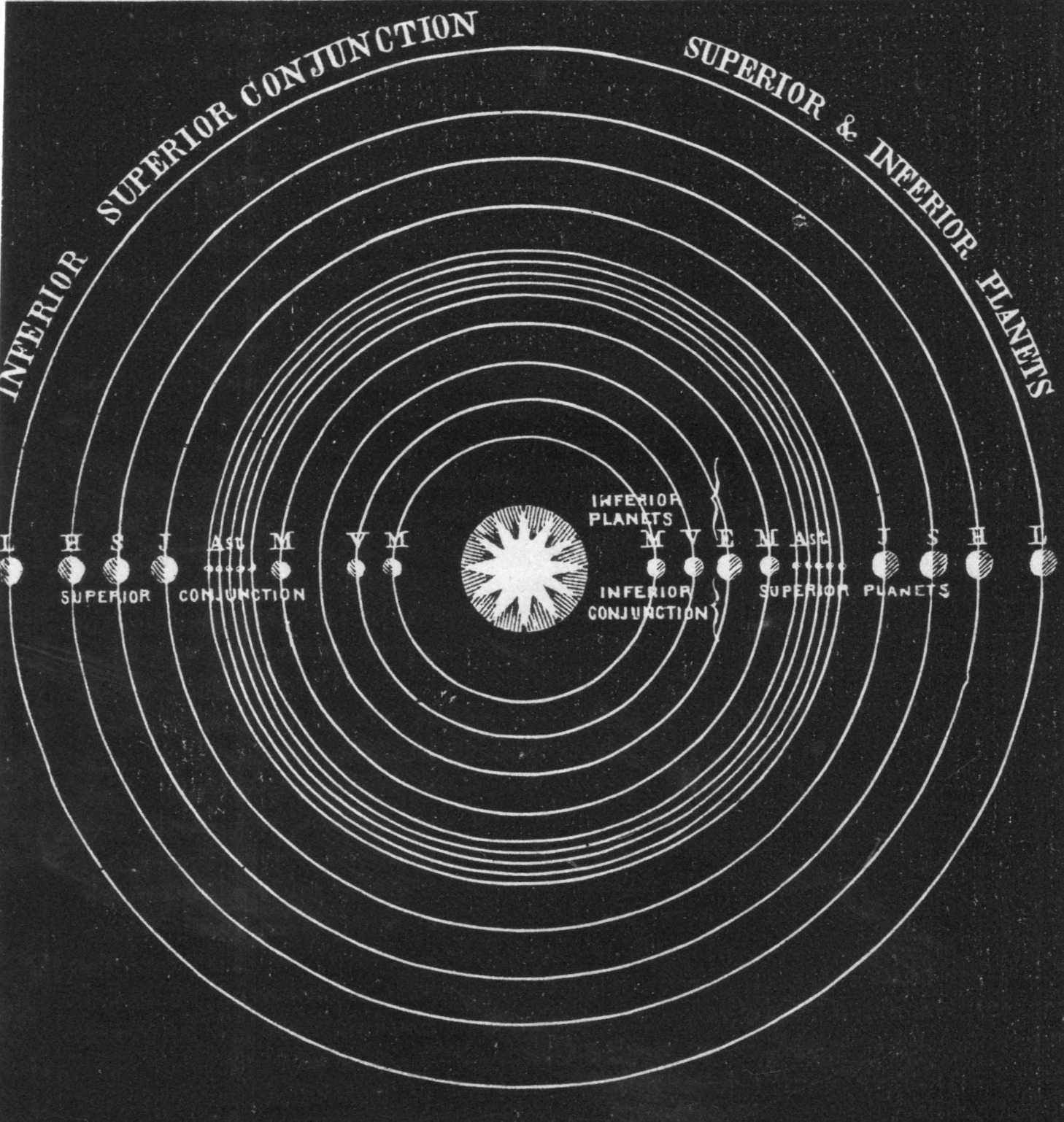
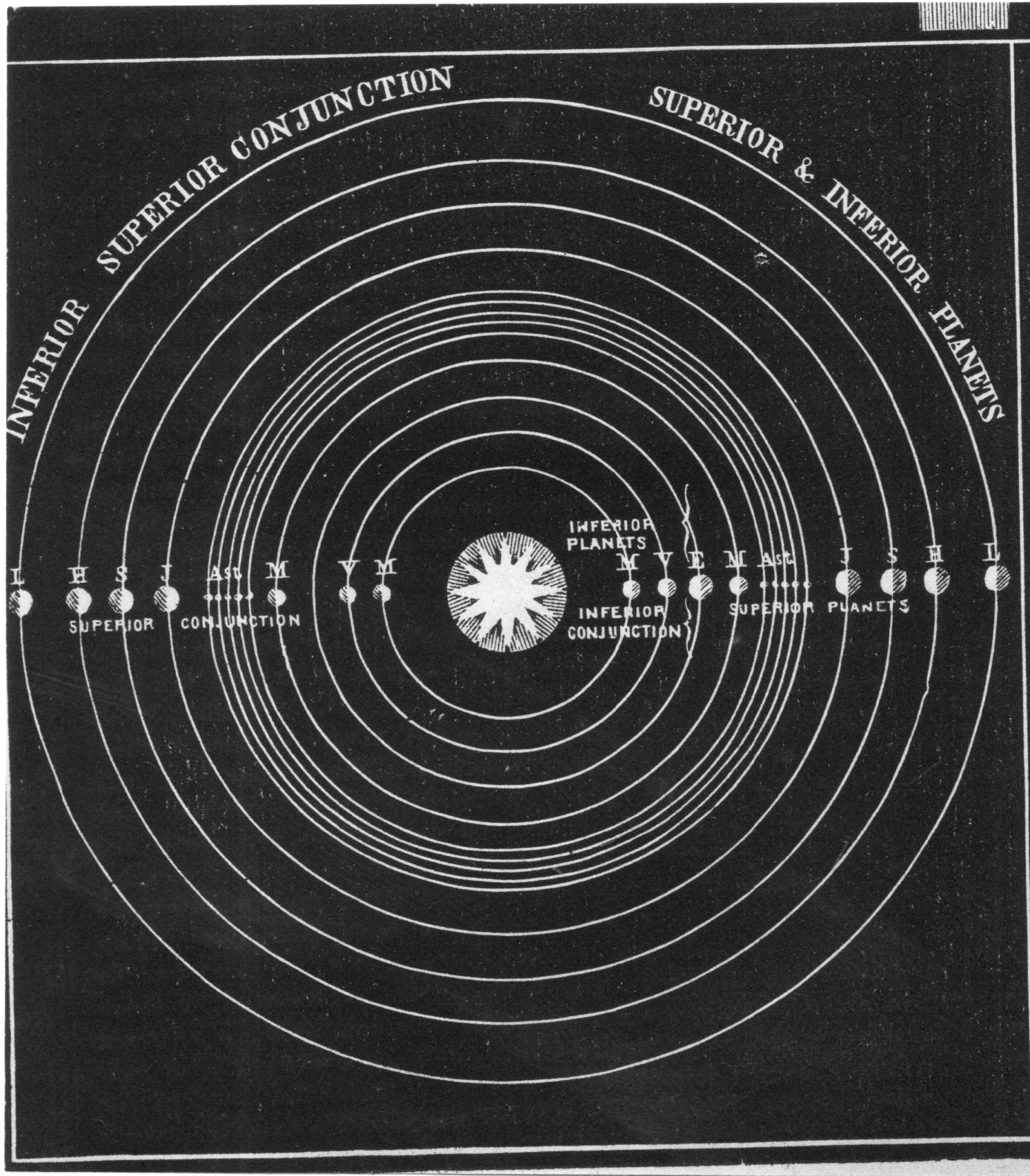
    I was looking through some of the astronomical prints here and came upon this lovely piece of frammento, a bit detached from its source.  I think it may be from Elijah Burritt’s astronomical atlas, but probably not. From what I can tell my guess for the source is the U.S., mid 19th century–or at least after 1846 when Urbain Le Vernier brought its mathematically-suspected existence into the world, and as we can see in the chart Neptune is clearly included in the realm of the planets.  In any event the image is very striking, and it does its job.  


    Solar system a129


  • An Unusual Report on the April 11, 1945 Revolt at Buchenwald

    JF Ptak Science Books  Post 2602

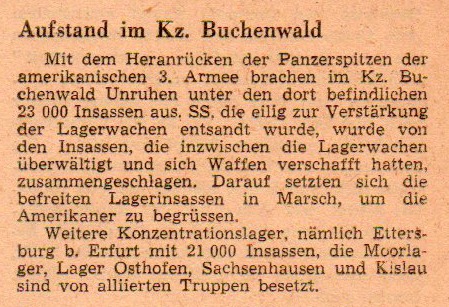
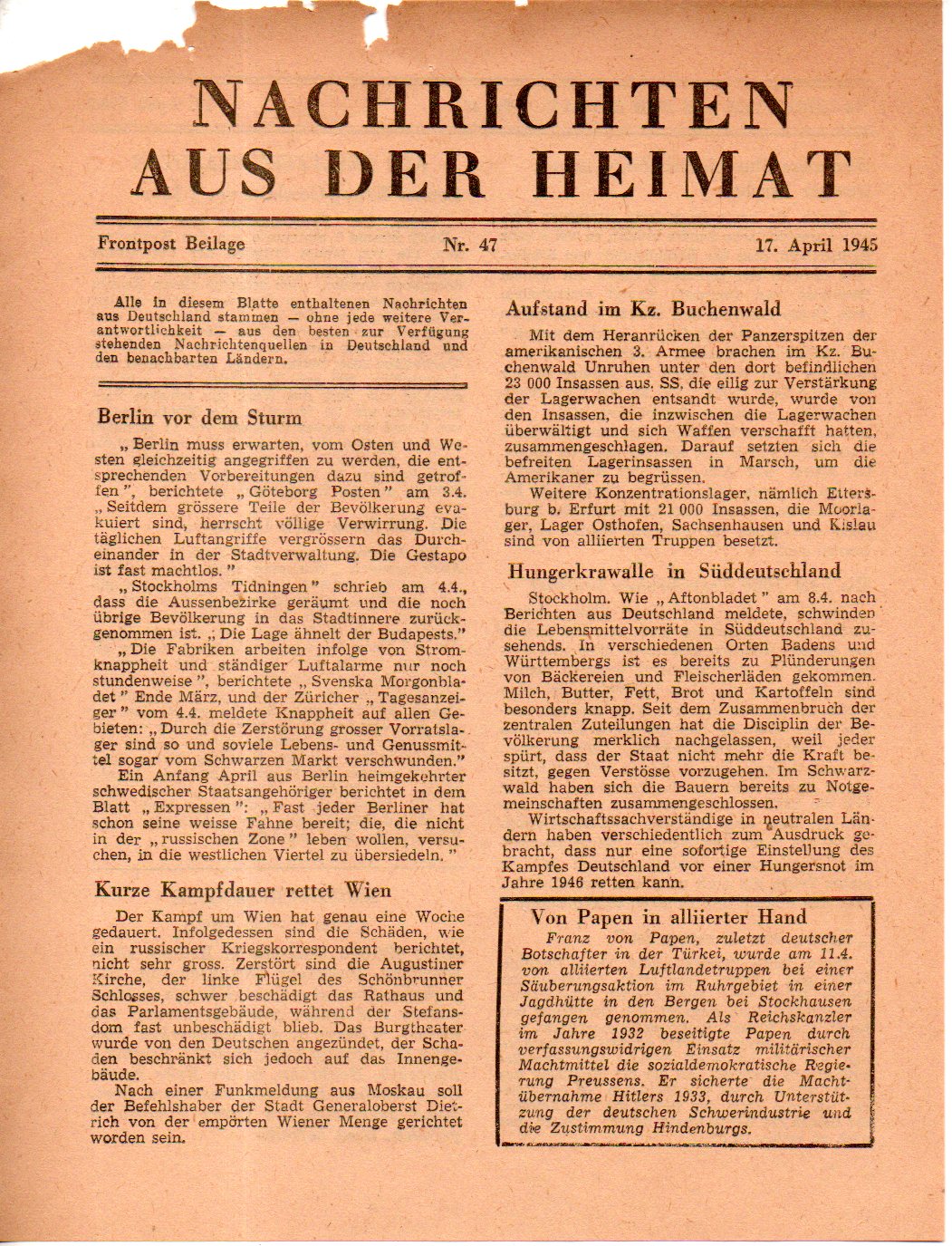
    During WWII the Allied forces engaged in extraordinary subversive and hearts-and-minds psychological warfare against the Axis military machine and its population.  The mechanics of the effort undertaken by the OSS and other agencies is long and complex (and potentially confusing) and too much for getting into right here, though I did want to address one example of their work. This comes in an archive that I have here (formerly part of the “Pamphlet Collection” at the Library of Congress) and is a single-sheet newspaper leaflet printed to be dropped from planes on the enemy lines. Nachrichten aus der Heimat (“News from Home”) was made to resemble, well, news from Germany that just wasn’t being disseminated, like the report of Berlin under attack) and other unflattering military news that was intended to weaken the will of the soldier to fight and the civilian to support Hitler’s regime.  This issue, dated 17 April 1945, also carries a short notice regarding the Buchenwald concentration camp (“Kz”, Konzentrationslager, one of 1000+  that were built from 1933-1945 by the Nazis) that comes six days after its liberation. Beginning in early April 1945 the camp (along with many others) was partially evacuated in an attempt to cover up the activities there, the result being many thousands of deaths due to prolonged marches and executions. On the morning of 11 April there was a revolt by some of the remaining prisoners–as stated in the published note below–who were able to seize control of the camp; elements of the 3rd Army 6th Armored arrived at the camp and liberated it later that afternoon.  There were still 23,000 people at Buchenwald at that time, and the condition of the prisoners and the camp were appalling.That part however was left out of the Nachrichten report–only the revolt part of the liberation is mentioned, while the nature of the camp and its “political prisoners” was left unspoken. Why this is the case I do not know–perhaps the forces at work in crafting the propaganda thought it not-expedient to mention the horrors for teh consumption of the German soldier thinking that might play against a willing to surrender/cooperate.  The story of the liberation of the camp was the main thrust of the intelligence, showing another part of the Reich collapsing and failing.  The Holocaust would have to wait.  

    Buchenwald revolt detail

    All that said the rest of the world would find out about Buchenwald right away. Edward R, Murrow was the first reporter there on the 12th, and on the 15th he reported on the radio exactly what he saw there–it is a very powerful piece of reporting. Murrow actually moves to the first person viewpoint to do most of the report–something that “the reporter” certainly would not do.  

    • For text of the Murrow report see: https://www.jewishvirtuallibrary.org/jsource/Holocaust/murrow.html and another  http://www.scrapbookpages.com/Buchenwald/Liberation3.html (“If I have offended you by this rather mild account of Buchenwald, I’m not in the least sorry….”)
    • Murrow’s radio broadcast can be heard here: https://youtu.be/1o-CUOiKCCg

     A few days later Eisenhower and Patton and a host of others toured the Ohrdruf concentration camp (a sub-camp of Buchenwald)–their visit was graphically reported by the Illustrated London News on teh 28th of April–you can see the story here: https://historyofideasblog.com/thesciencebookstore/2008/09/eisenhower-at-t.html

    Buchenwald revolt124

    This one piece is part of a 164-item propaganda leaflet collection that my bookstore is selling–here’s a link to the full collection:https://historyofideasblog.com/books/2016/04/wwii-psychological-operations-leaflets-and-related-materials-january-april-1945.html

    ·Posted by :

    ·in:


  • Lovely Tech Design Monorail Cover, 1909

    JF Ptak Science Books   Quick Post

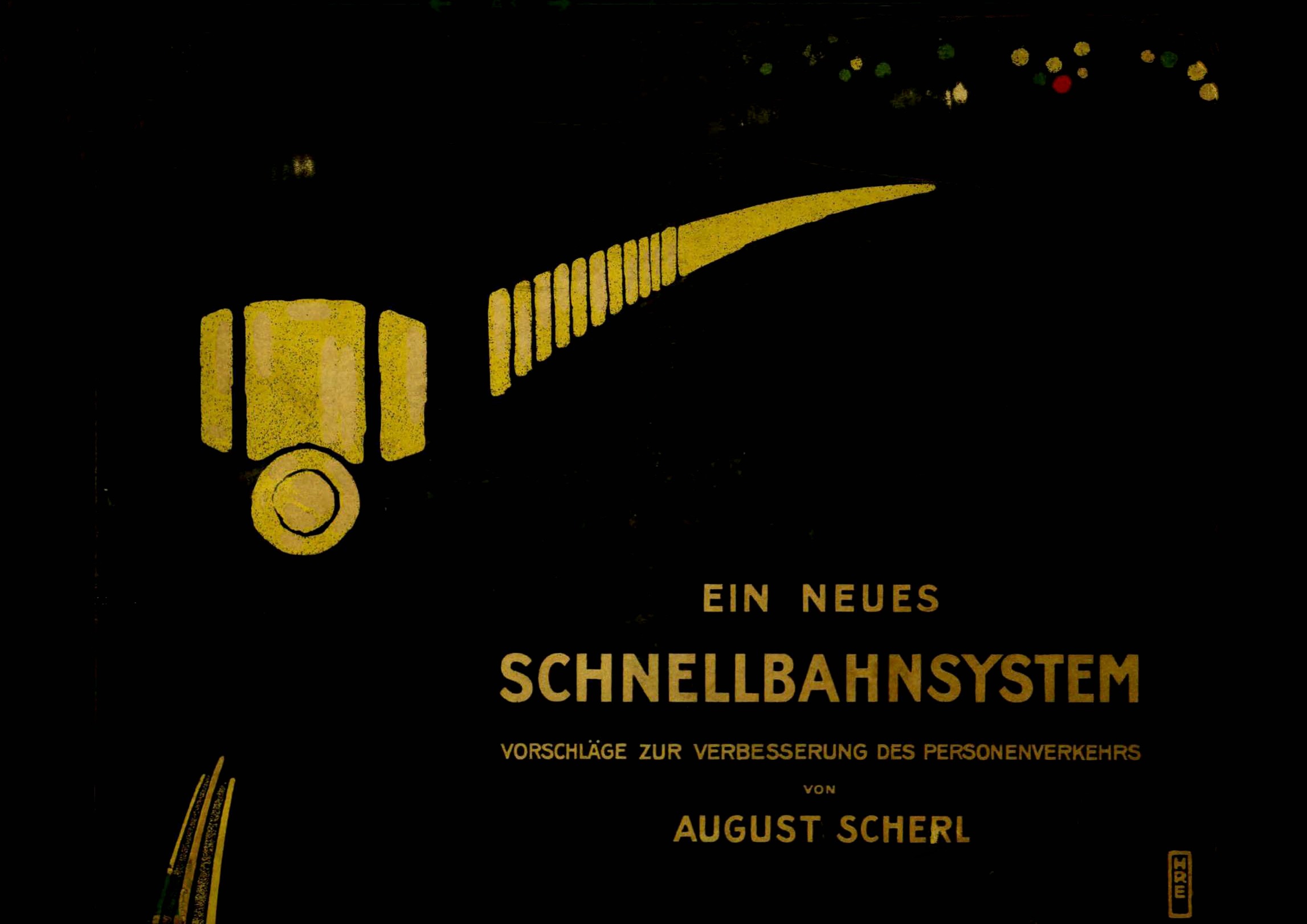
    This lovely pamphlet has a design that seems to me deeper into the modern future than it was–it seems a product more of the 1930’s and perhaps into the 1930’s than the 1909 item that it is.  The pamphlet was on a proposed gyro-monorail, a project funded by publisher August Sherl (1849-1921), who had the idea for constructing separate high speed (200 kph) rapid transit lines while maintaining existing rail for shipping. But as sleek and as stable as it may/might be, the gyro-monorail is one idea that never really got past prototypes and development, as was the case with Sherl’s project, which did actually get to a full-size prototype which was demonstrated in Berlin, but the idea did not flourish, and the project was cancelled.  

    Sherl Ein_neues_Schnellbahn-System


  • DIY Monoplane, 1918

    JF Ptak Science Books   Quick Post

    • “A shop 25 by 35 feet will do”

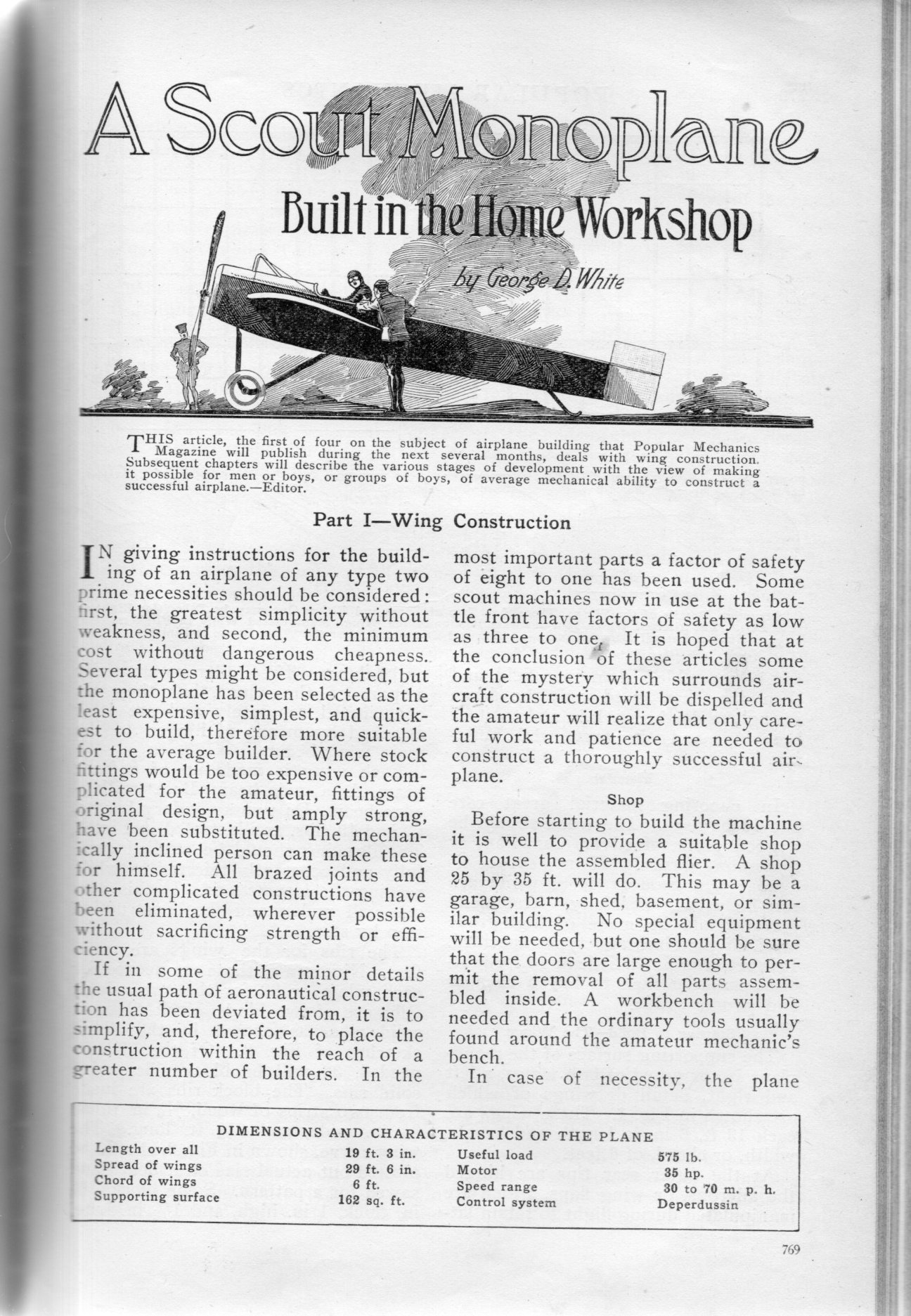
    It is extraordinary that from the time of the Wright Brothers’ first powered flight in 1903 that just 15 years later a casual reader could find an article on how to construct your own airplane at home, which is a long leap from a first-in-history to building-your-own-in-the-garage. And that’s really not fifteen years–development was rather incremental until about 1908 or so, so the tremendous growth period was probably about a decade. Of course, developments in aviation were accelerated during the war, and that in general revolutions in thought were occurring within nearly every discipline (in that magical period of 1895-1920), but still, it stopped me to see this five-page article (“A Scout Monoplane, Built in the Home Workshop” by George D. White) in the pages of Popular Mechanics for June, 1918. 

    The article starts off with a very useful dictum, announcing one of the “prime necessities” for building any type of airplane is “first, the greatest simplicity without weakness”. which can be applied over many areas.  Then in short order the author gives instructions on construction for a 35 h.p., 575-pound load aircraft 10′ long with a 30′ wingspan.  

    Here’s the full text–time to get to work.

    Diy airplane a112

    ·Posted by :

    ·in:


  • Some Good Letters

    JF Ptak Science Books   Quick Post

    Eye exam

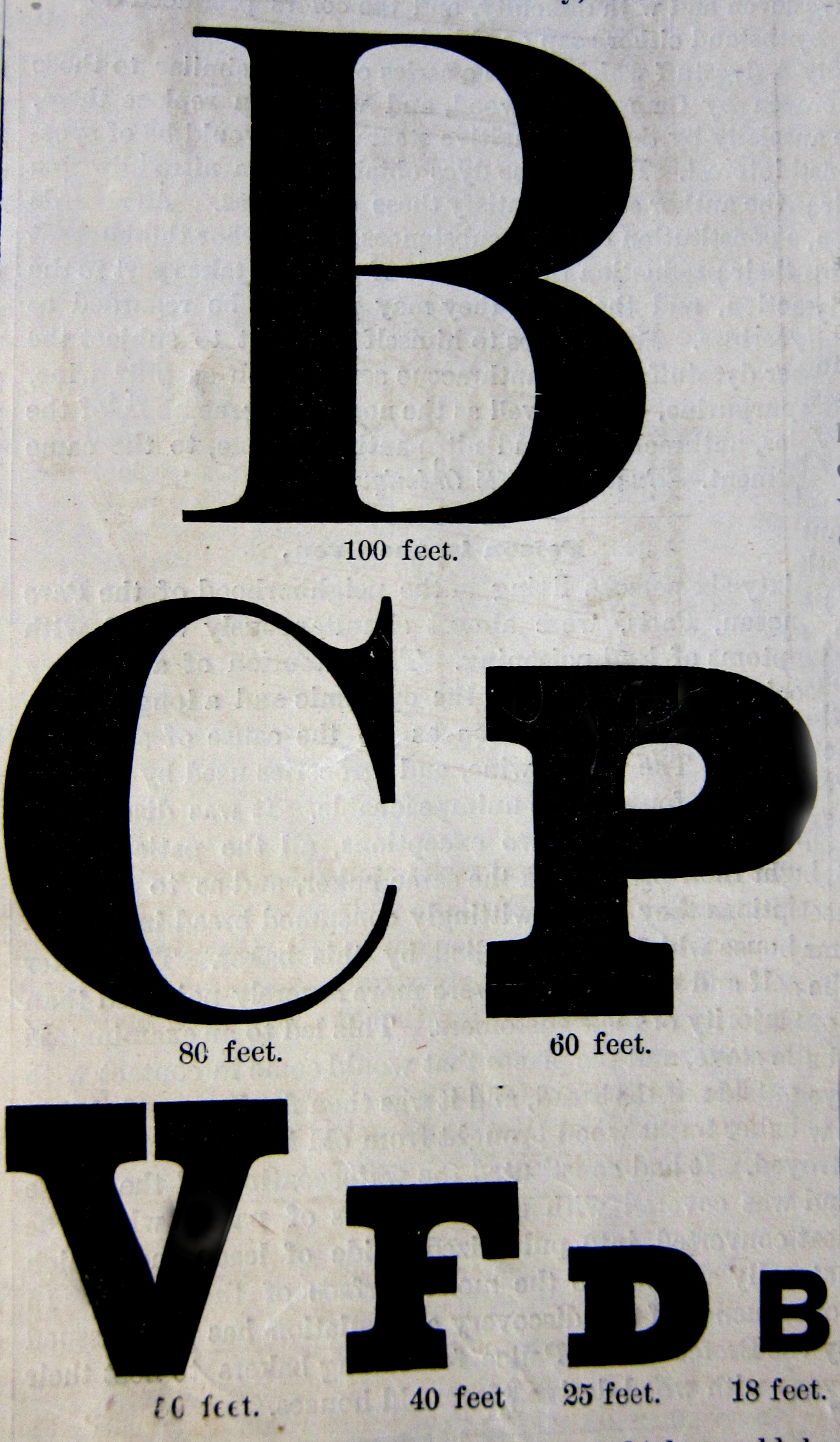
    I found a small notice in the September 18, 1877 issue of Scientific American on employing the following chart for an eye exam–and I just liked the big B and thought to share it.  (The original measures 1.5×2.5 inches.)  That’s it!

    Optical exam

    ·Posted by :

    ·in: