A Daily History of Holes, Dots, Lines, Science, History, Math, Physics, Art, the Unintentional Absurd, Architecture, Maps, Data Visualization, Blank and Missing Things, and so on. |1.6 million words, 7500 images, 4.9 million hits| Press & appearances in The Times, Le Figaro, Mensa, The Economist, The Guardian, Discovery News, Slate, Le Monde, Sci American Blogs, Le Pont, and many other places… 5000+ total posts since 2008.

Category: Technology, History of

  • Flying Wing Aircraft, 1930

    JF Ptak Science Books LLC  Post 919

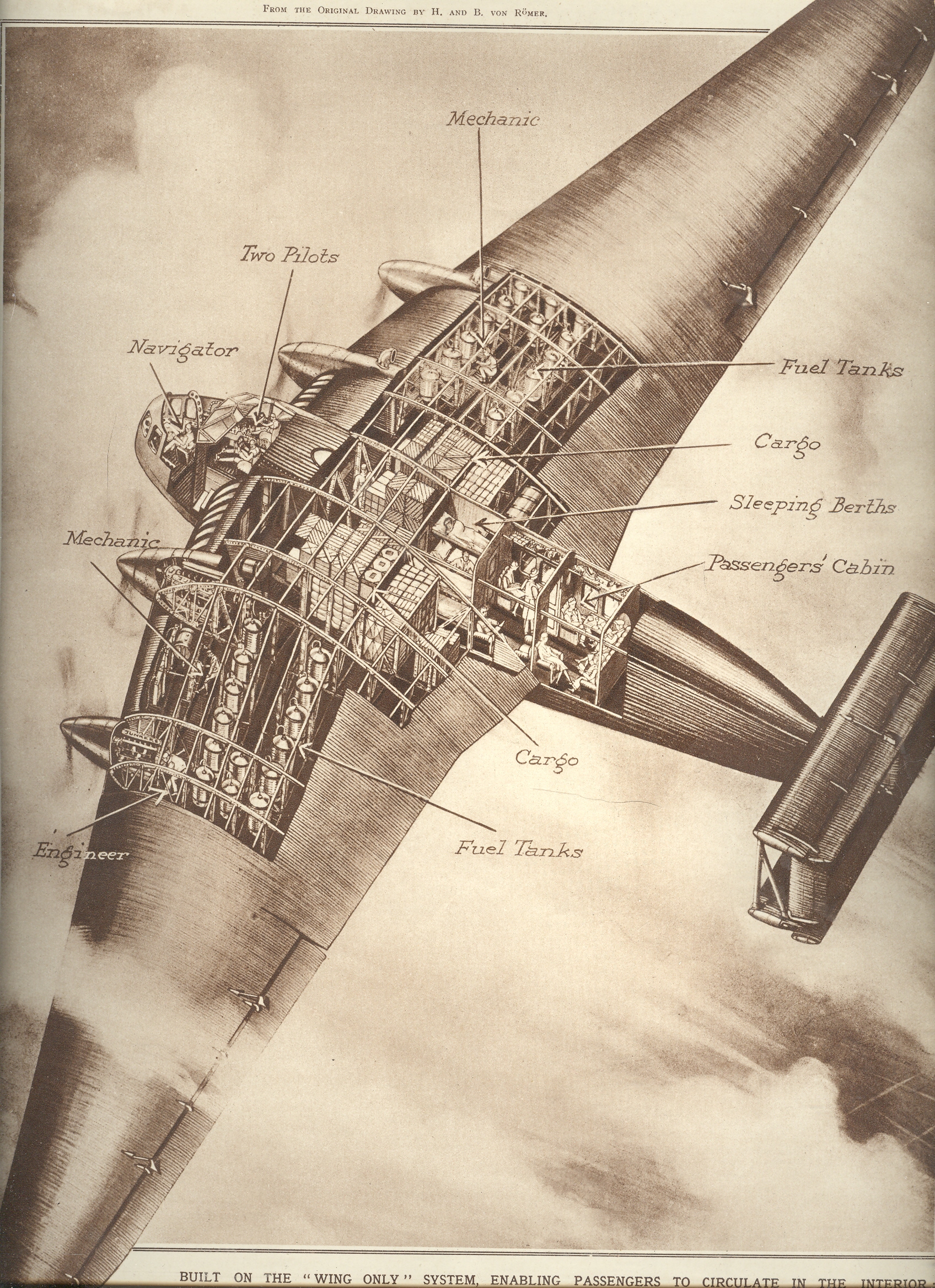
    Blog jan 24 flying wing det title What can I say?  I just like the flying wing. Also I should point out that the Illustrated London News is an excellent resource for schematic cut-aways like this–I think that I have 125 or so of them here for the 1910-1945 period.

    Junkers built this fabulous flying (“inhabited”) “wing only”
    aircraft, sending it up for commercial service in 1929 as the largest airplane
    in the world. Only two were built (though a Japanese military knock-off ran to a production quantity of six), and I imagine that it was quite expensive making the Berlin-London flight, cruising in around at 109 mph.

    Blog jan 24 flying wing

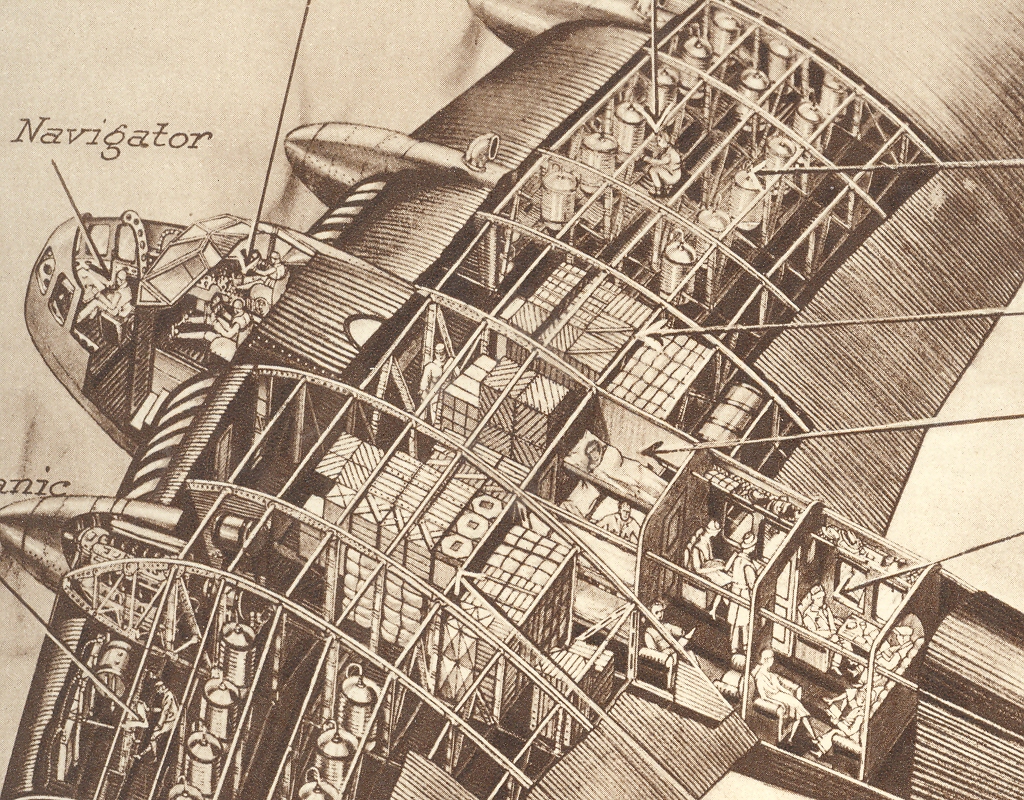
    I would like to know what the artist was thinking about when he decided to draw a standing man in the sleeping compartments. Not only that, the fellow is looking straight at the artist…perhaps it is a sly, tiny self-portrait?

    Blog jan 24 flying wing man

    Blog jan 24 flying wing det


    Notes


    1.  Plane specifications:

    Crew: Seven (including a full-time engineer who could
    service the plane’s four engines from inside the plane).

    Capacity: between 30 and 34 passengers, depending upon
    variation of the aircraft.

    Length:  75 ft

    Wingspan:
    144 ft

    Height: 23 ft

    Wing area: 3,122 sq ft

    Empty weight: 32,893 lbs

    Loaded weight: 52,900 lb

    Max takeoff weight: 46,826 lb

    Maximum speed: 140 mph

    Cruising speed: 109 mp

    Range: 2,150 miles

    Service ceiling: 12,100 ft


  • What 1.5 Billion Pounds Bought the Military in 1938: Finding a Gem Inside a Great Graphic

    JF Ptak Science Books LLC  Post 916Blog jan 22 Brit Mil overview

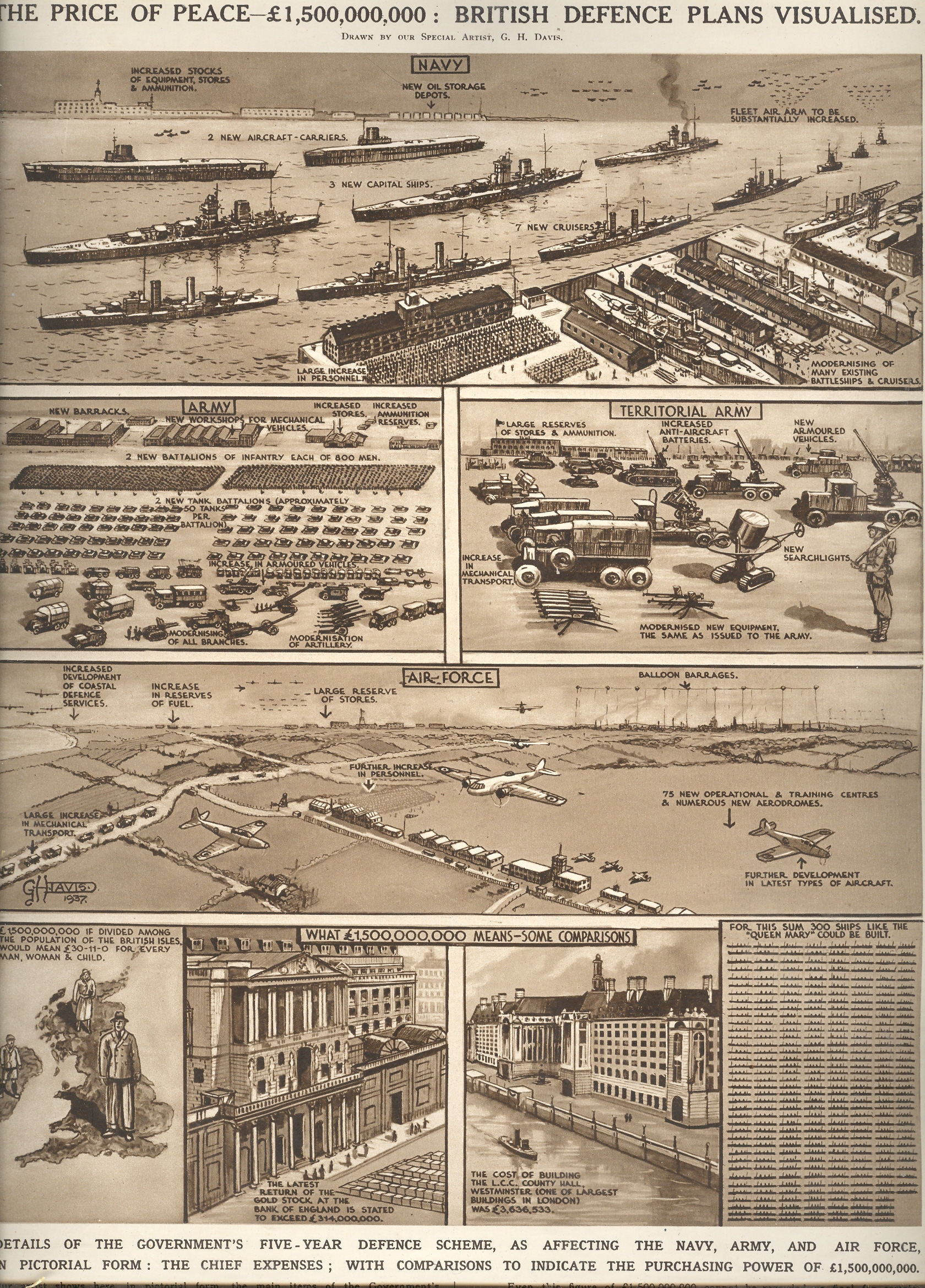
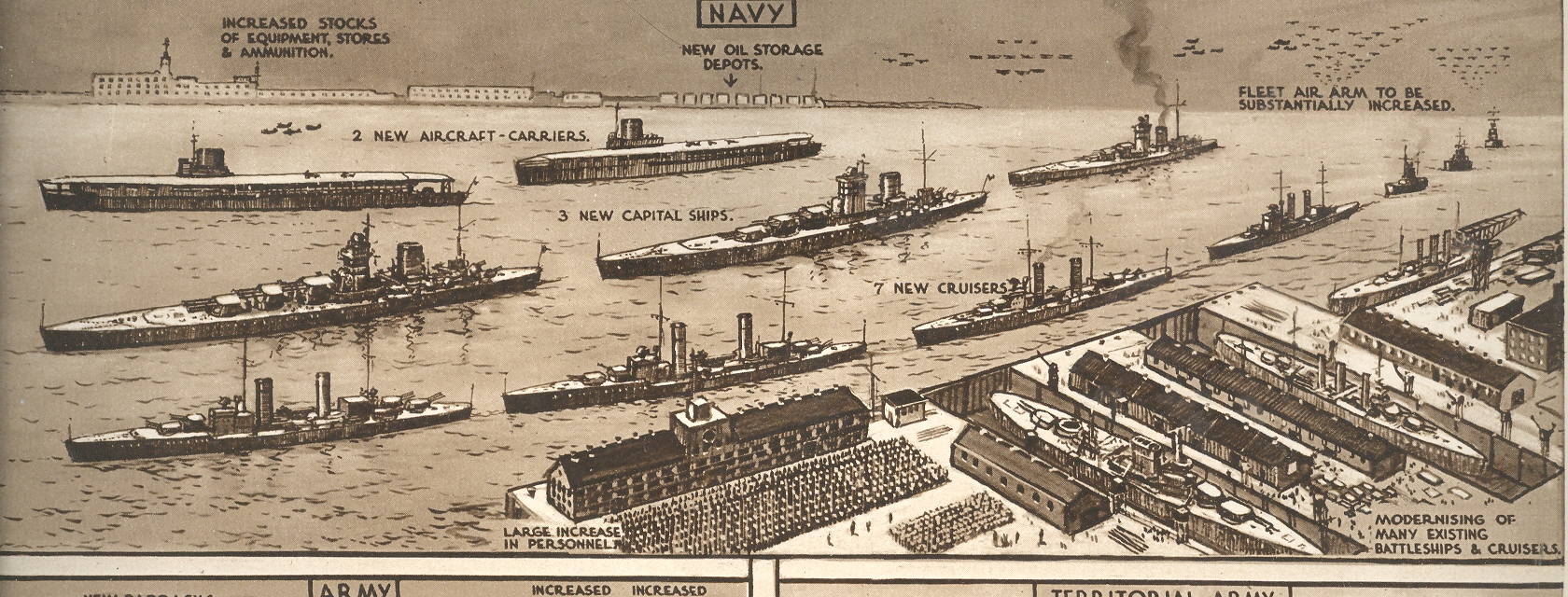
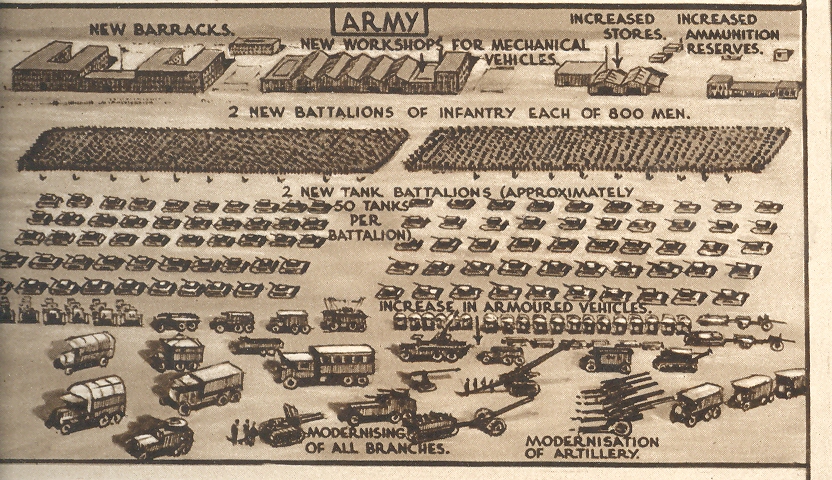
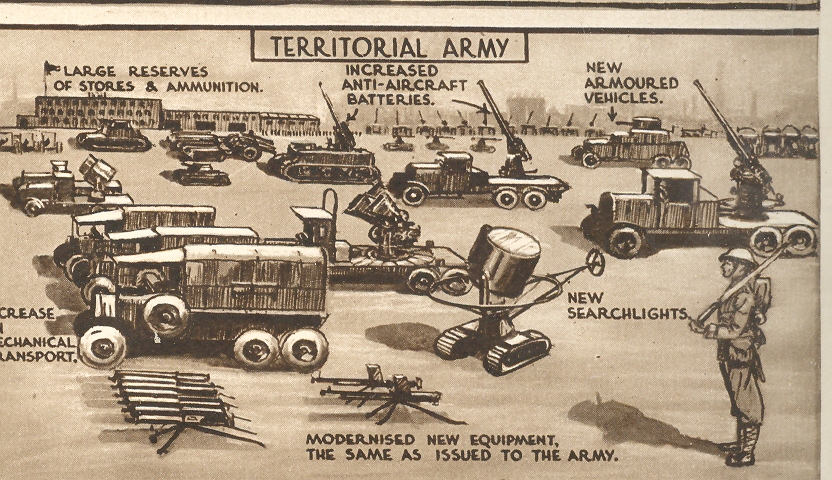
    The Illustrated London News for 27 February 1937 hosted a brilliantly designed graphic illustrating the ways in  which the British War department could/should spend 1.5 billion pounds (or about $100 billion in 2009 dollars, sort of) over a five-year period as the price of keeping the peace.  Of course they wouldn’t make it but a quarter of that distance as Austria fell to Czechoslovakia which fell to Poland and the end.  The full-page pictorial effort is to the right:

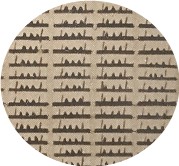
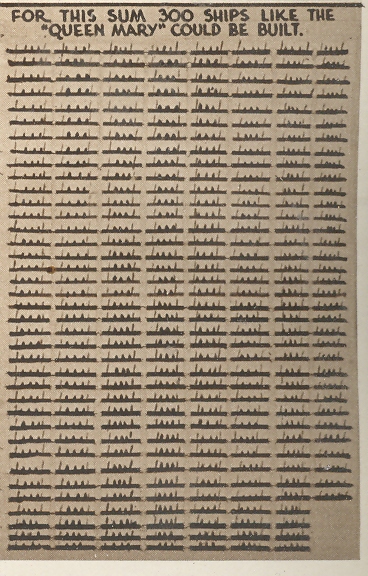
    Nestled in the corner of this page–at about 2×1 inches–is this lovely little graphic, showing that 1.5 bil could purchase 300 Queen Marys, which this delightful little design showed to great effect, and a hidden gem inside of a gem. First is a detail of this detail,

    Blog jan 22 Brit Mil bot right det 

    Followed by the full smidgen of the overall page of comparisons and analogies:

    Blog jan 22 Brit Mil bot right

    Then there’s the semi-standard presentation of what the Navy could purchase:

    Blog jan 22 Brit Mil top

    And then the Army:

    Blog jan 22 Brit Mil middle l

    And of course the Territorial Army:

    Blog jan 22 Brit Mil middle r

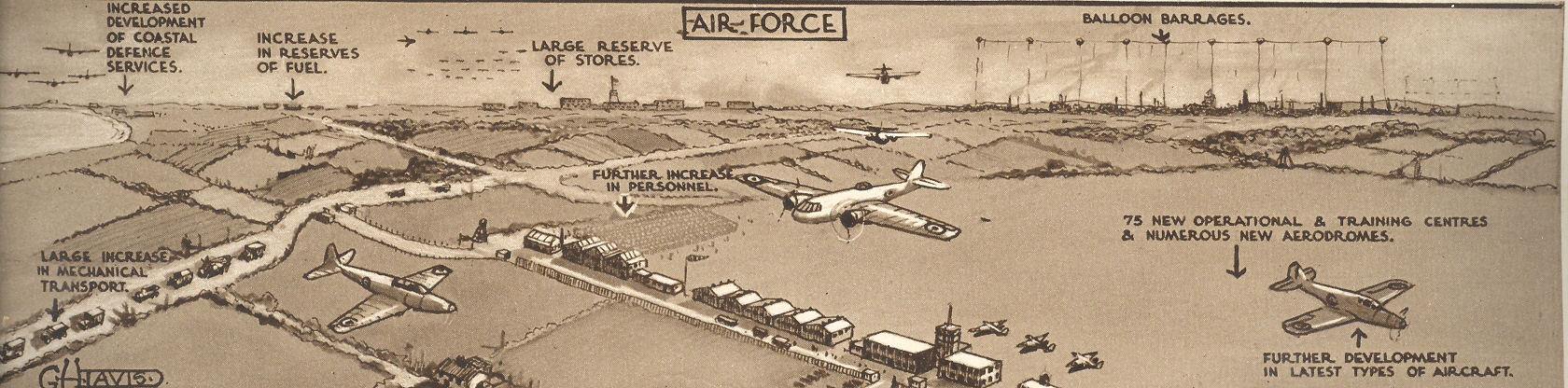
    And the Air Force (which if you look closely includes a balloon barrage  facility at upper right):

    Blog jan 22 Brit Mil middle bot

    By far the most interesting to me is the hidden gemoid of Queen Marys, all produced by the fabulous G.H. Davies, who did many hundreds of such images and sectional cutaways and plans and technical drawings for the ILN over a 25-year period.  M.r Davies may well be my favorite technical artist of this period.


  • When Civilians Aren’t Civilians: Blowing Up Bomb-Proof Cities, 1927-1934.

    JF Ptak Science Books LLC  Post 915

    We’re a few days past the 95th anniversary of the
    first aerial bombing of a city, the first in the long and unhappy calculus of
    eliminating things and people in civilized settings  by dropping high explosives (and etc.) on them
    from the air. 19 January 1915 saw the first bombs dropped from an airship
    during WWI, two German Zeppelins lighting up Great Yarmouth, Sheringham and
    King’s Lynn in the U.K.—the
    physical and strategic outcomes were minimal; the psychological and
    intellectual aspects were not.
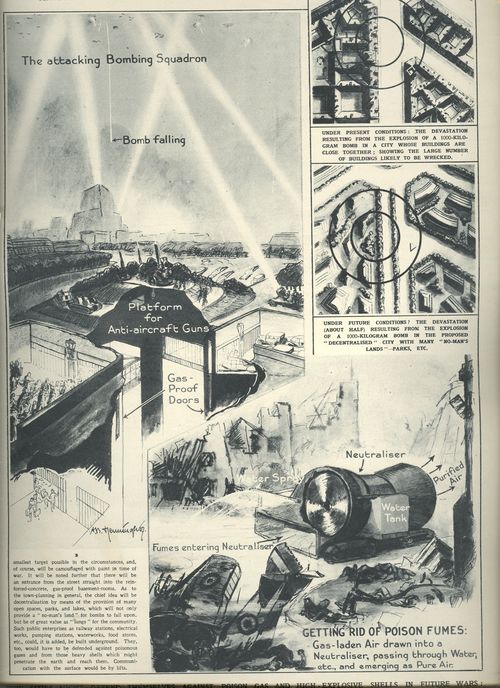
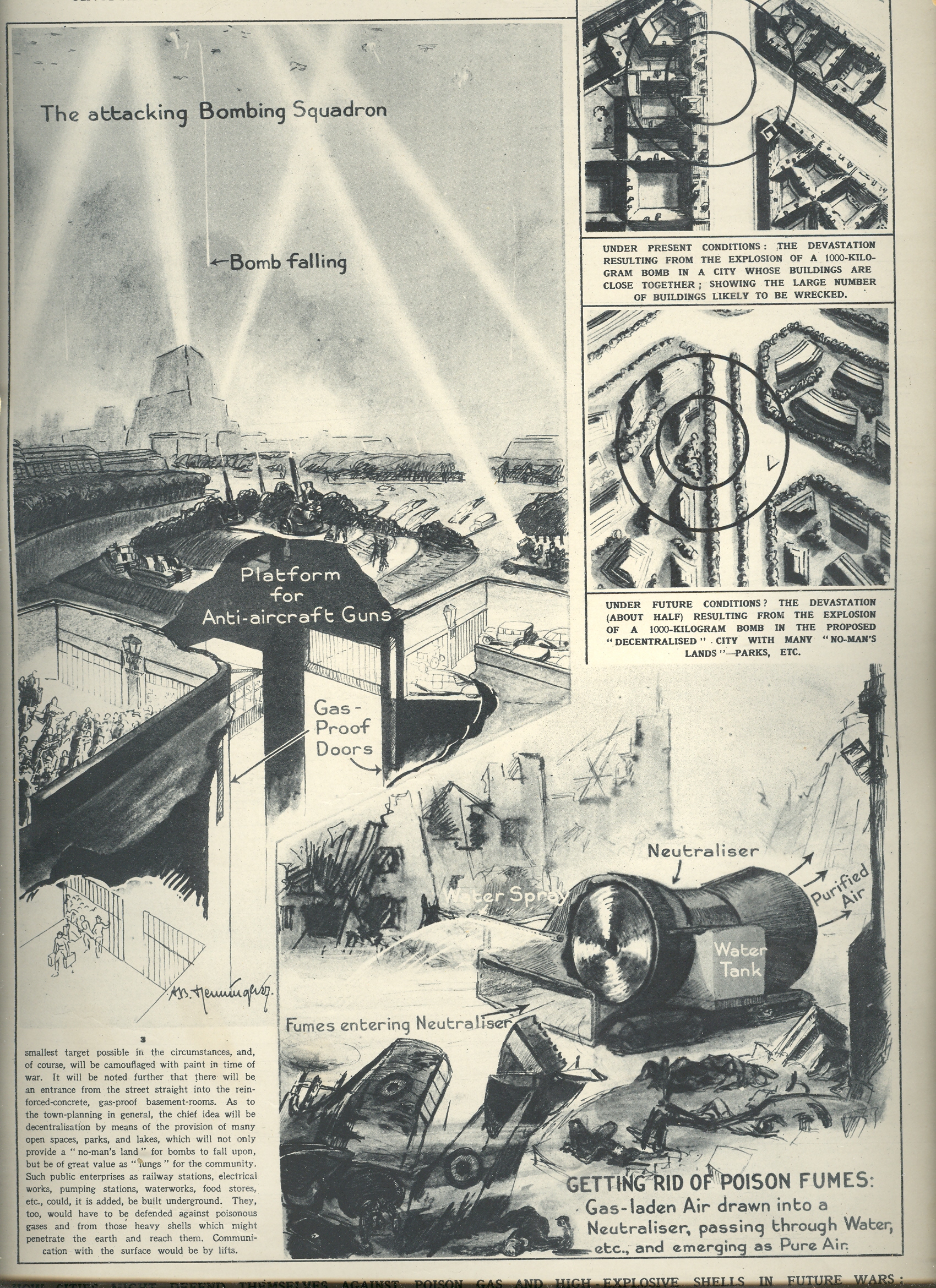
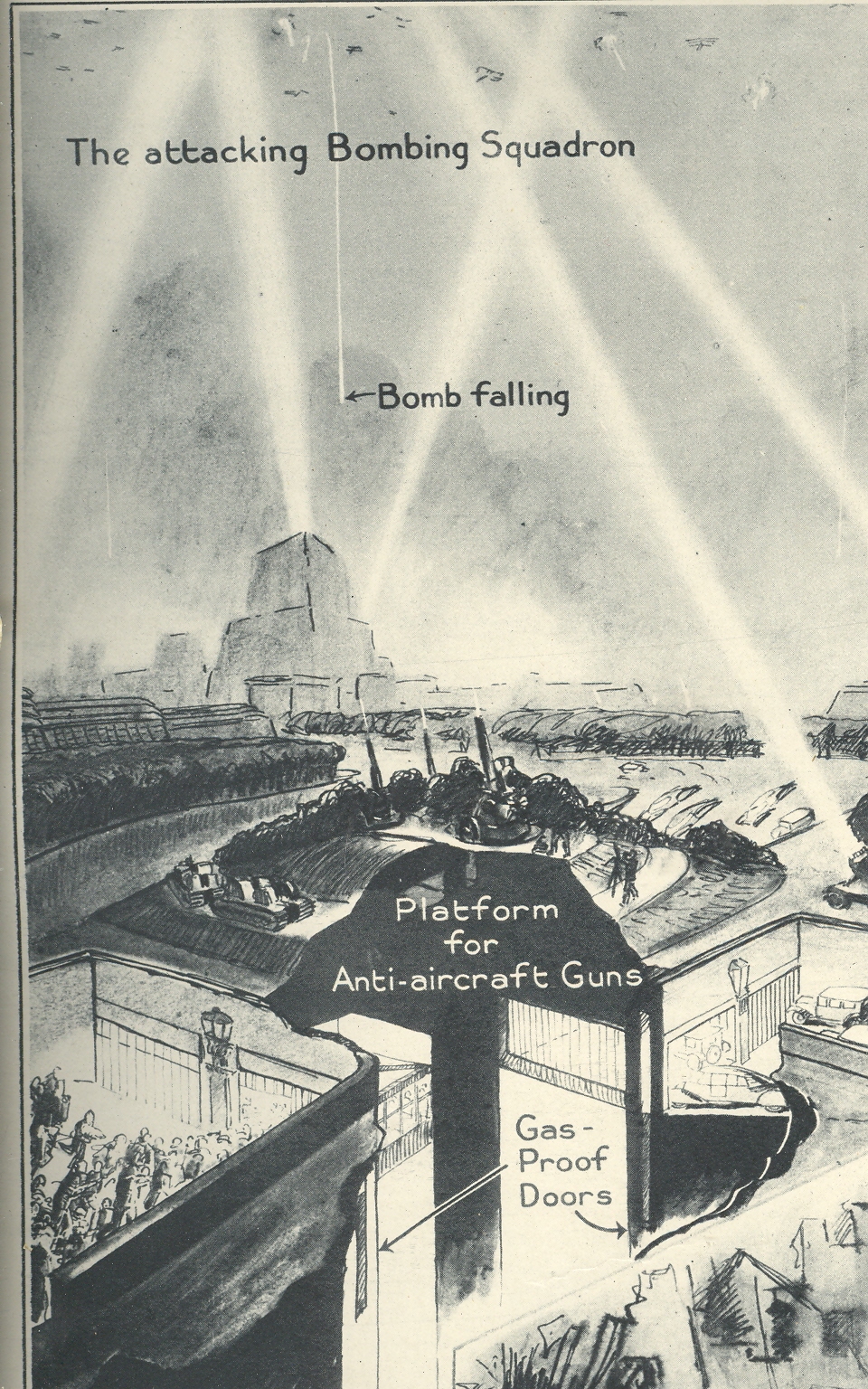
    Blog jan 21 bomb rproof 1927 attack The effectiveness and temerity of bombing escalated
    exponentially–virally by the end of WWII. Aerial bombing’s future
    effectiveness and devastating potential was recognized by the early 1920’s, particularly
     in the form of the Hague Conference
    (1924), where the bombing of cities and civilians was theoretically controlled,
    if not outlawed.  Blog jan 21 bomb rproof 1927 attack det
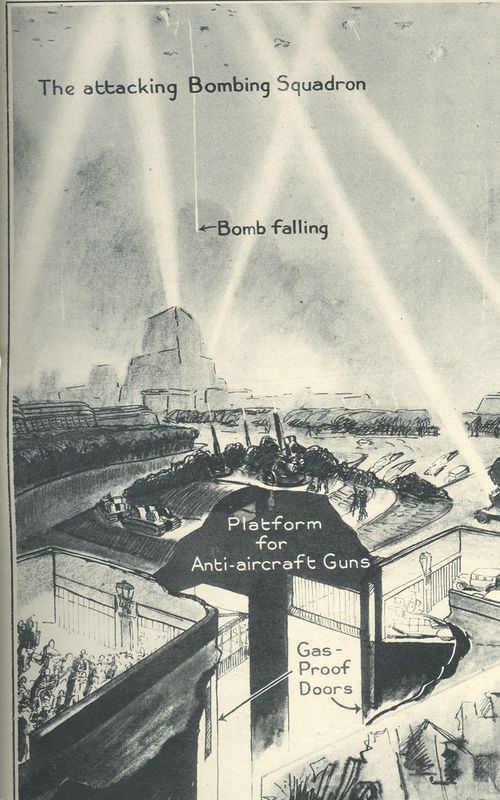
    Of course the definitions of “bombing” and “cities” and “civilians”
    and “non-combatants” were very loosely writ and were completely open to
    (completely) wide interpretation in practice, and were especially liable to
    racist necessities. I should also add that the concepts of “defended” and “undefended”
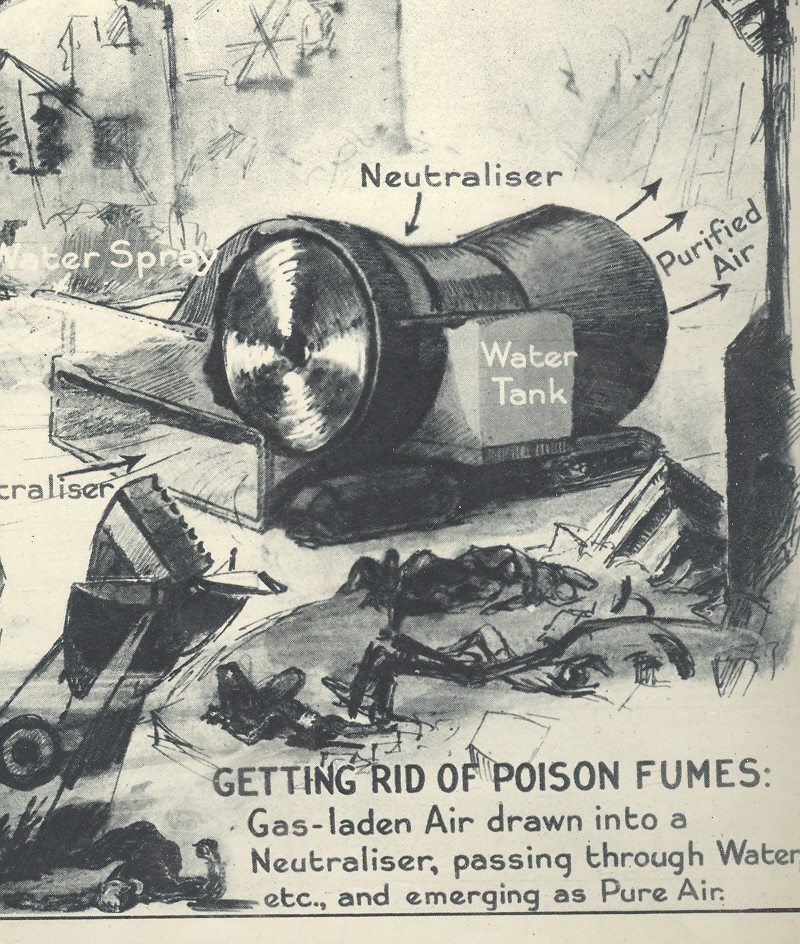
    cities were—somehow—nebulous. Blog jan 21 bomb rproof 1927 gas cleaner
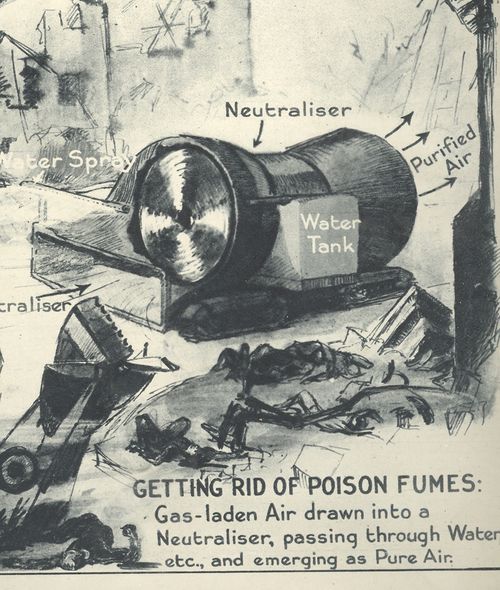
    An encyclopedia could no doubt be written on nothing but the
    these awful bits of bombing.  And for another example of this I turn to
    the French, who can supply more than their share, per capita, pound-for-pound,
    to this equation. No, not the French return to Indochina in 1945 (after having
    done business with the occupying Japanese forces for the entire war) and their
    resurgent colonialism as practiced against the Vietnamese, or the heinous
    practices against the Algerians just prior to that country’s
    independence:  it is their bombing practices in Damascus. Not the Syrian bombings of 1945
    (which also included many other places like Aleppo,
    Hama and etc.) but the French civilian bombings
    of Damascus in
    1925.  For it was in that year that the League of Nations found that the
    French really weren’t bombing and killing civilians indiscriminately when they
    were doing so; they were, ironically, bombing themselves, and so their actions
    were not illegal.  (It was problematic, identifying “civilians”, as the
    League didn’t necessarily grant the same sort of “humanness” to all human,
    finding categories for barbarians and savages.  It was acceptable to bomb
    those later two categories, but not the first.) So the French sought to subdue
    a rebellion against their oppressive rule in that country, identifying the
    Muslim population centers in Damascus
    as probable hotbeds of activities for the “bandits” that were causing them
    their problems.  October 18, 1925 is when this particular outrage
    occurred; the Syrians protested, and the League considered.
    Blog jan 21 bomb rproof 1935

    And that was
    about the size of the story for the Syrians, because as it turns out, the
    French were just maintaining an order that for them was a simple police action;
    civilians populations could not be bombed in the eyes of international law, if
    the bombing was being done to a foreign people; since the French were there and
    occupying the country, they were conducting a police action, and in a sense
    were merely bombing themselves, loosening them from the barriers of whatever
    international law could be applied to their actions by the League of Nations. 
     Blog jan 21 bomb rproof 1935 detail

    These are just a few examples from the French; there are
    plenty more for other countries for every decade, every year.  (The Brits in Teheran in 1924, the Italians
    at Harar in 1935, Franco/Luftwaffe in Guernica
    in 1937, the Japanese against Shanghai/Beijing/Tianjin (etc.) in 1937, and on
    and on.)
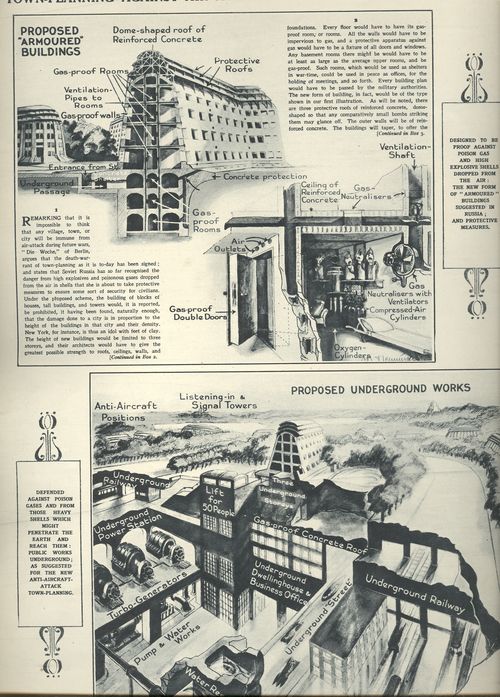
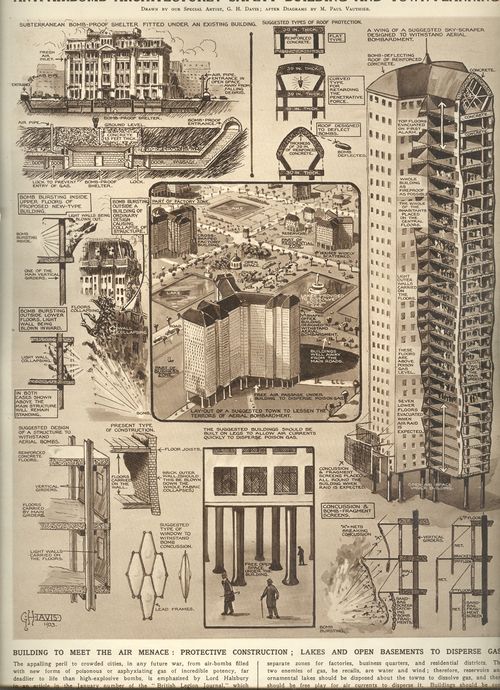
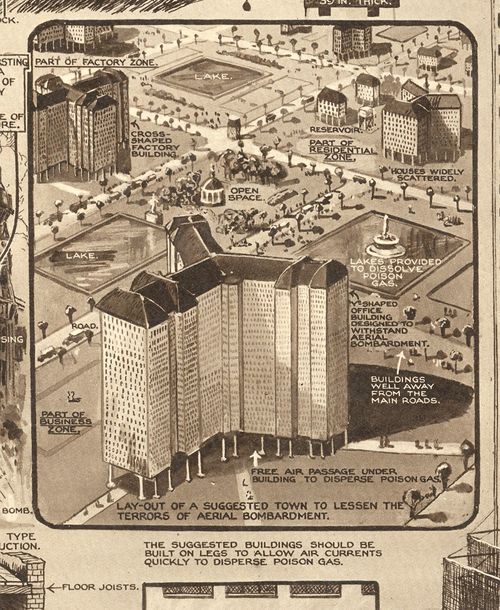
     Blog jan 21 bomb rproof 1927 pt 2

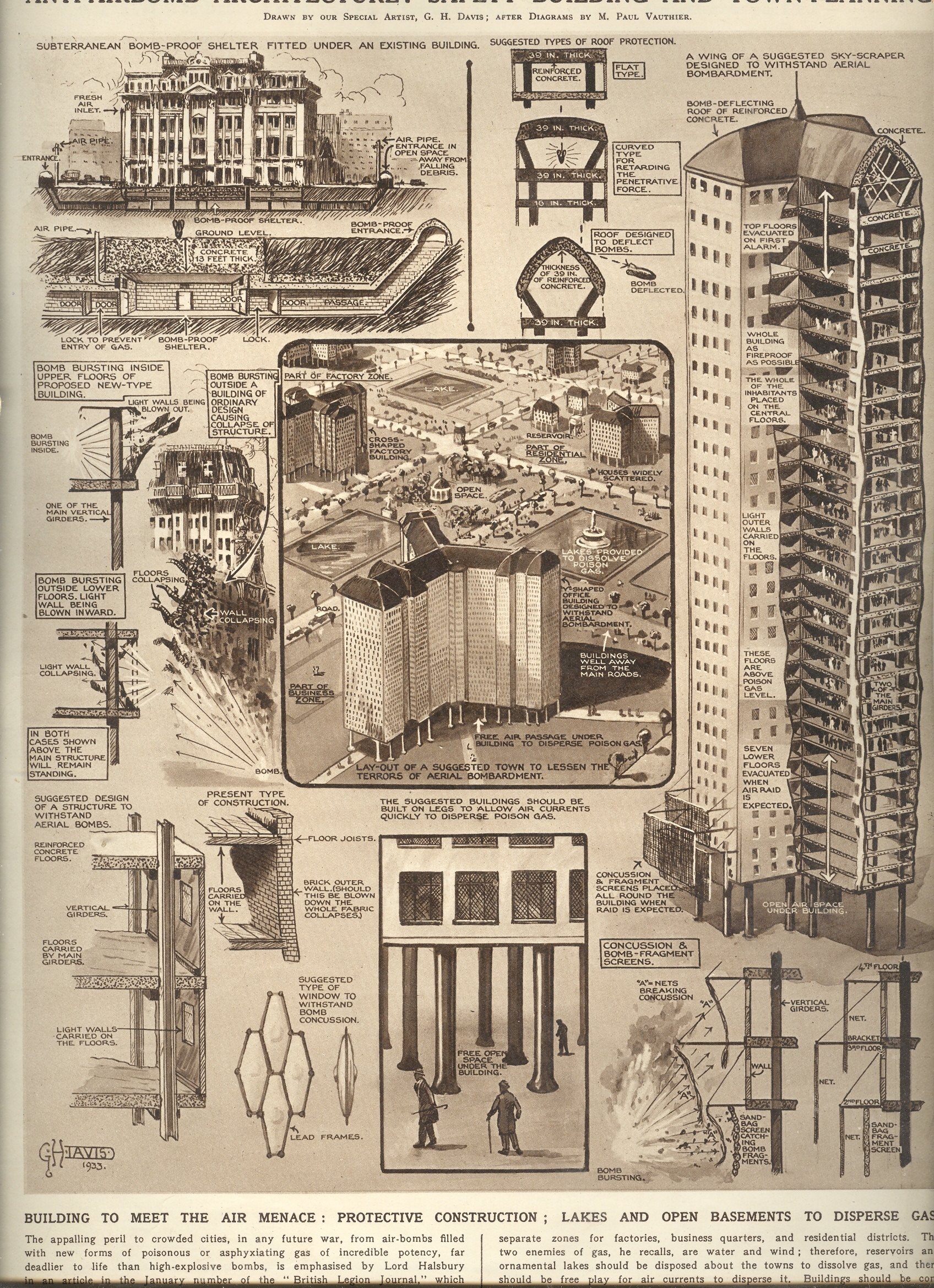
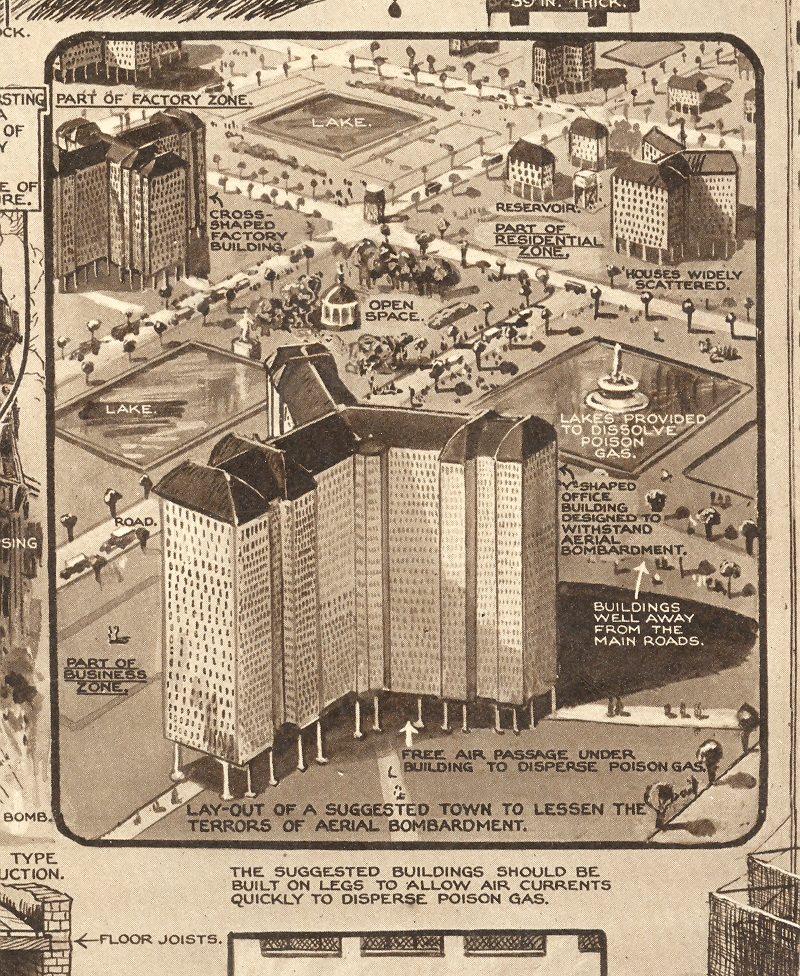
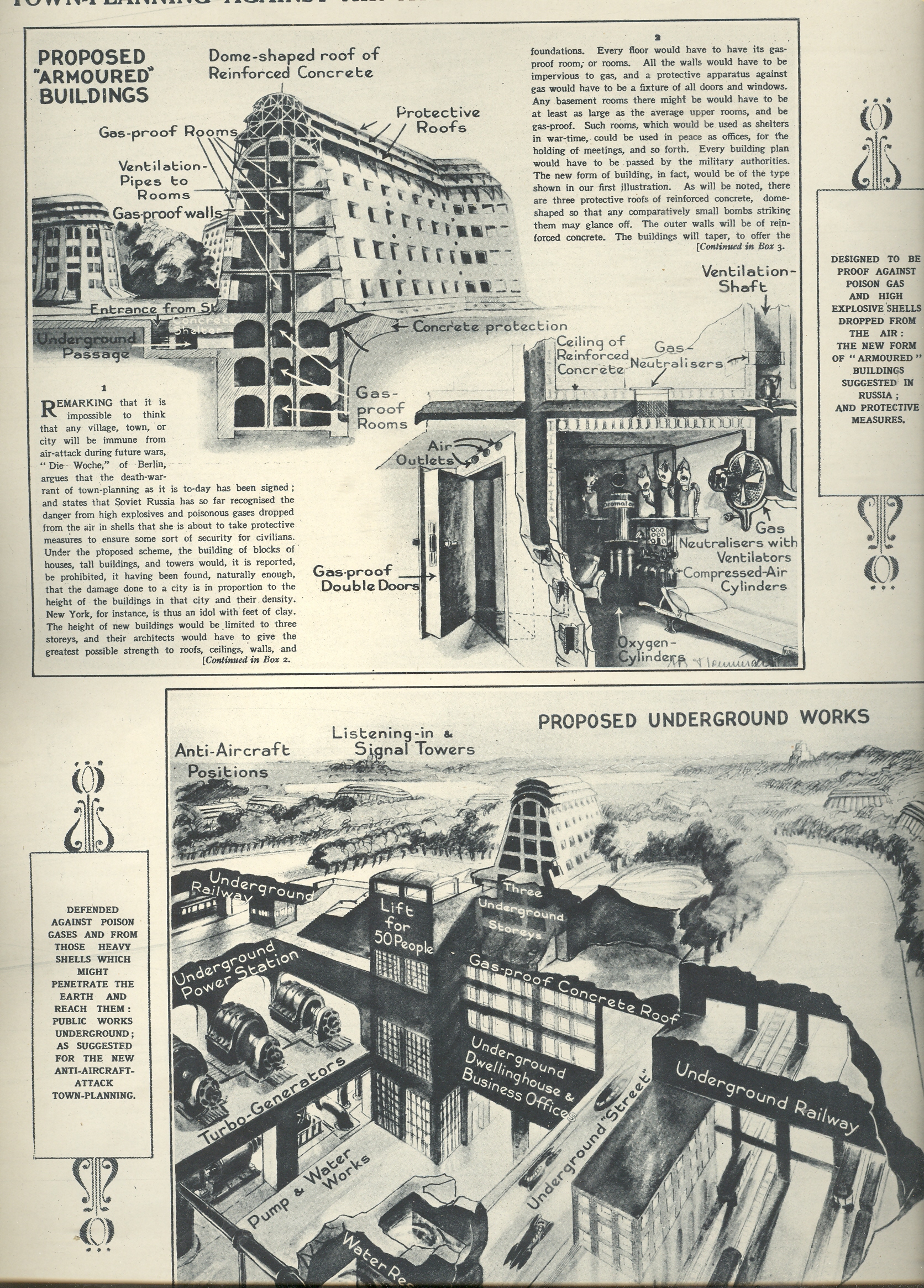
    The Big Fear of bombing from the air and the need to protect
    the populations of cities led to all sorts of anti-bomb/bomb-proof
    architectural plans, most not very good and not very practical.  Such is the price of trying to make your
    people happy.  I happen to have

    a few in
    my files, which are seen above  and below. (The top images were printed in the Illustrated London News in 134; the bottom in 1927.) The results of the plans were no doubt intended to pursue a common belief that cities could be constructed to be bomb-proof, that the future that national leaders were dragging their subjects into wasn’t necessarily as dire as the possibilities of aerial bombings hinted things might be.  Of course the resulting buildings would be massive and impossibly expensive; the prospect for underground cities (and roads!) was just a non-starter.  And these future-views would all be obsolete in less than 15 years what with the development of enormous firepower.  And I’m not talking atomic.  



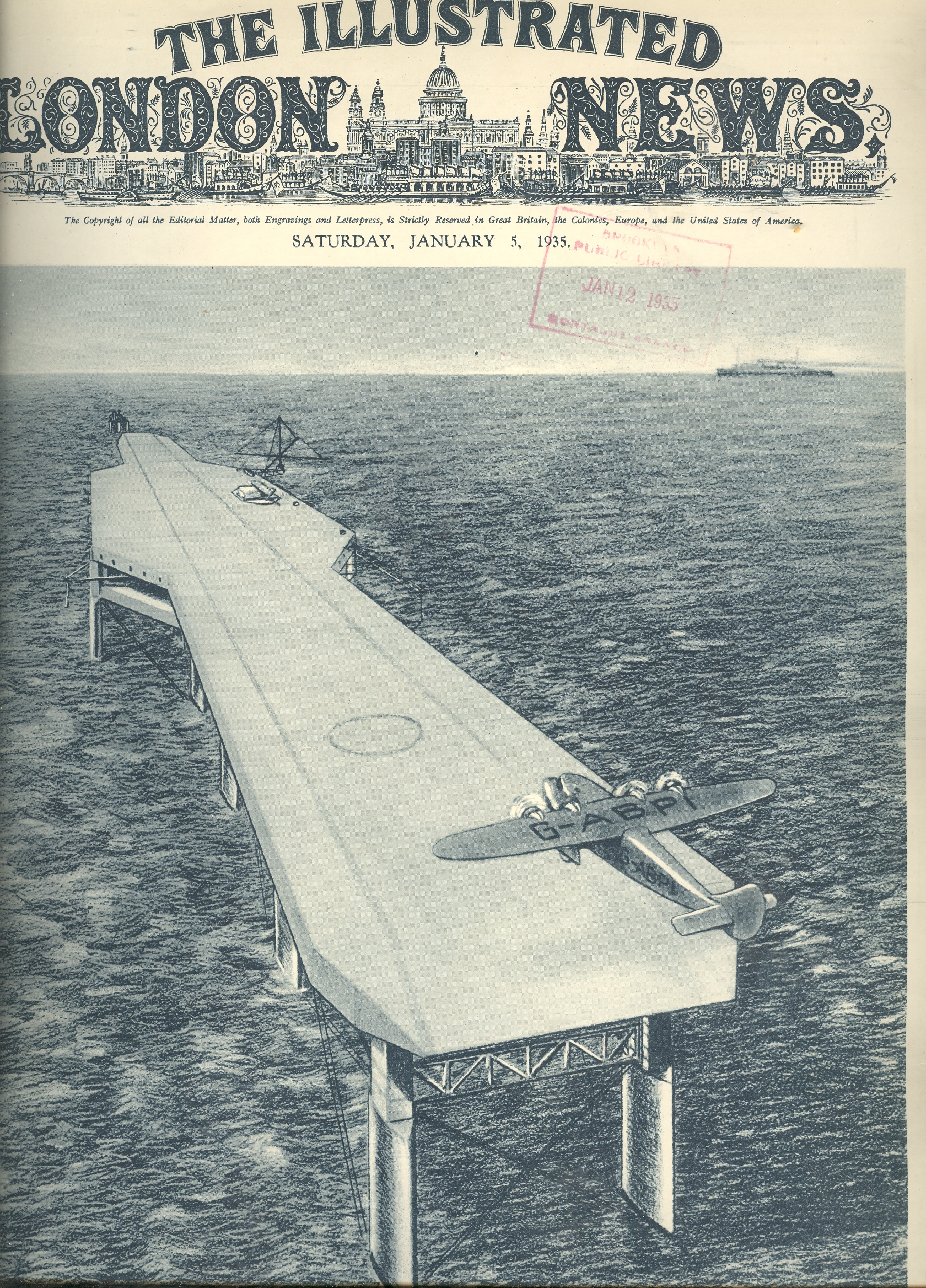
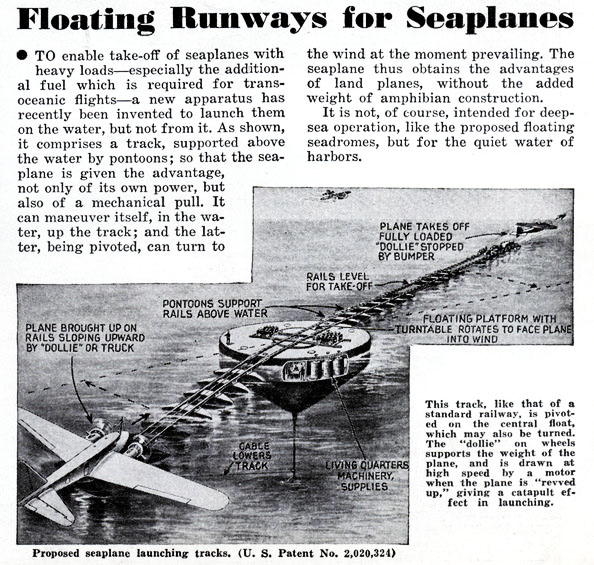
  • Ocean-Crossing Floating Airports Across the Atlantic, 1935

    JF Ptak Science Books LLC  Post 903

    This short
    shelf-lived idea was that of Edward R. Armstrong (1880-1955), who in 1927  first published his plan for a series of 1200’x200’
    floating platforms for refueling and whatnot for transcontinental flights.  These five-acre stations—named the “Langley” in honor of
    Samuel Pierpont Langley1— would be placed every 375 miles across the ocean.  It doesn’t look like a very practical (or
    good) idea, but Armstrong received a $750,000 piece of development change from du
    Pont and GM, which was major dollars in 1929. 
     Blog jan 9 sea airport
    Armstrong’s
    idea would get major play in the popular press from time-to-time, his project
    renamed “The Seadrome” and discussed as a series of floating islands.  Armstrong himself would organize the Seadrome
    Ocean Dock Corp. in the late 1930’s, his pretty but enormously impractical idea
    (reported by
    Time Magazine2 in 1933 as little more than “a perennial gift to Sunday feature
    editors”)
     finally grinding to a salty end with greater
    fuel capacity and efficiency in transatlantic aircraft. 

    An even worse idea appeared in the pages of Science and Mechanics in 1936:

    Blog jan 9

     
    Notes:
    1. A Time
    Magazine article
    published 28 October 1929 [a day before the market crashed!] about the

    Langley oddly states
    that Langley was the “designer of the plane which, except for accidents, might
    have flown before the Wrights’ plane did in 1903”.  Tough potatoes. What the magazine didn’t
    state was that Langley, who was the president of the Smithsonian Institution at
    the time with access to major money and benefactors simply went about the flight
    problem incorrectly, and produced an airplane (or “aerodrome”, as he called it)
    that did not and would not fly. Not flying because of accidents means, well,
    not flying.  The Wrights’ approach to
    problem solving was elegant and beat Langley
    by miles.  Langley deserves credit for his other (many)
    achievements, but not for this aircraft.
     
    This same
    article only references Armstrong as a “swarthy engineer”.
    The article
    is reprinted below.
     

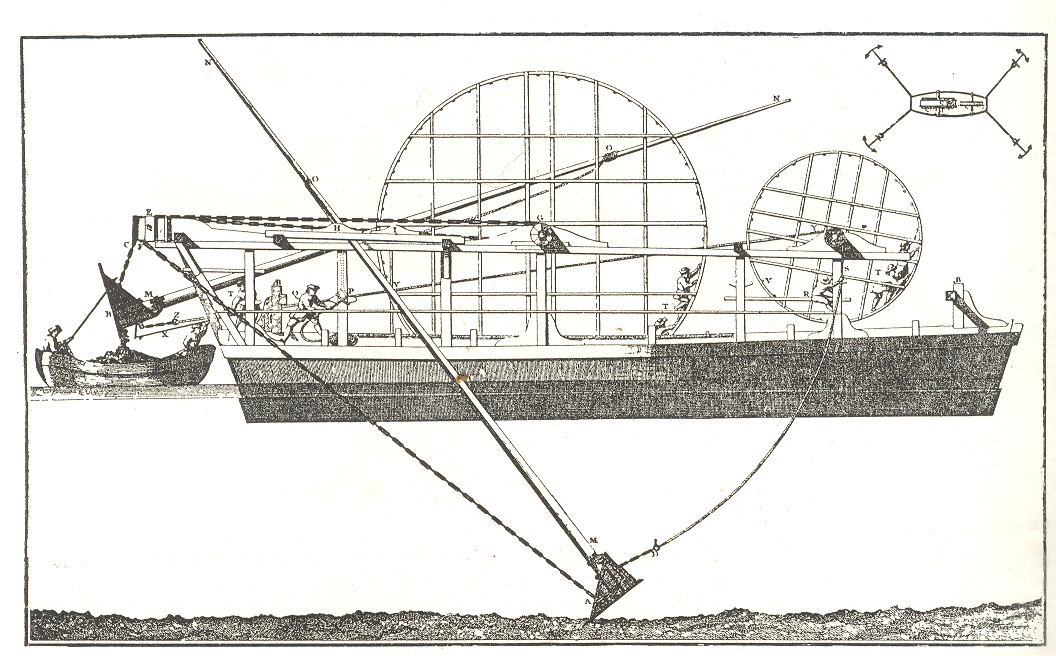
  • Unintentional Absurdist Art: Flying Boats with Bucket Feet, 1745

    JF Ptak Science Books LLC  Post 901

    This
    treadmill-powered French pontoon dredge, printed around 1745, looks for all the
    world as though it is floating in mid-air, propelling itself along with two
    bucket-ended legs, elegantly and impossibly moving its miracle-y-balanced self
    forward against all forms of reason and logic, a clunky 18th century
    non-transforming Transformer.  The
    profile actually and simply shows a dredge at work and just  fails to show the water in which it
    floats. 

    Blog jan 6 absurd

    The
    boat’s dredge is powered by four humans in two treadmills which would move the buckets
    back and forth, scraping up the river silt and then emptying it into the shuttle
    launch aft.  Simple and ingenious—except when
    taken out of context, where it begins to look like some advanced Age of Reason floating
    boat which, although awkward-looking, is not without its charm.  

    Source:  Charles Singer, History of Tecnology, volume IV,
    pg. 634.  Singer loftily notes that this machine
    “is reminiscent of Goethe’s poem Der Zauberlehring
    which inspired Paul Dukas’s well known symphonic poem L’apparenti sorcier” and which would be better known to most folks as
    Mickey’s Sorcerer’s Apprentice gig in Fantasia.


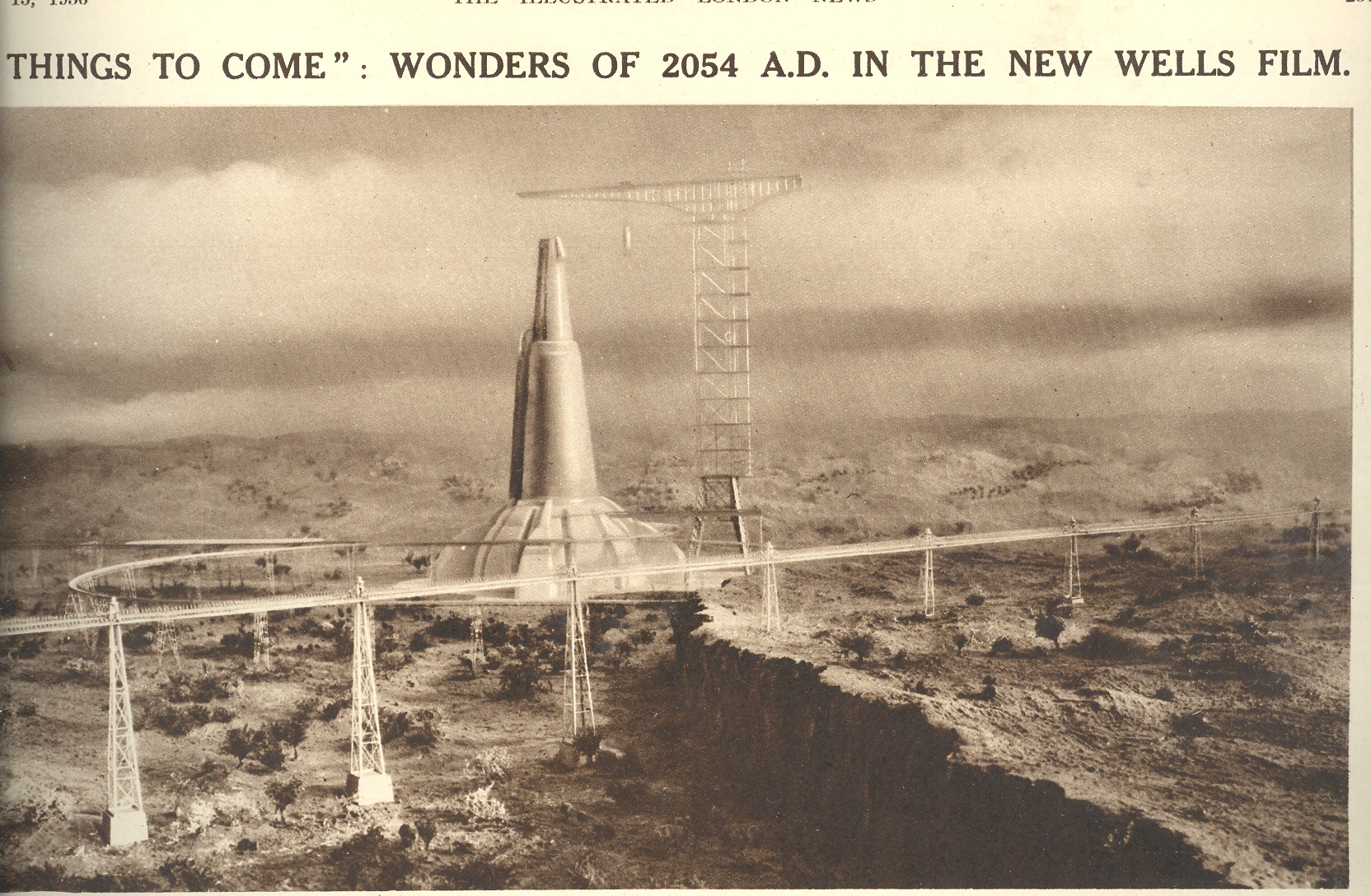
  • History of the Future: Space Cannon Moon Flights Yield Jelly People?(1936)

    JF Ptak Science Books LLC Post 899

    Blog jan 6 wells

    The Babel-like tower pictured below is a still from the movie Things to Come (1936), an adaptation of H.G. Wells’ The Shape of Tings to Come (1931).  (Wells’ himself wrote the screenplay a few years before the movie appeared.)  The story is a history of the period from 1936 to 2054, including a devastating war that begins in December 1940 (complete with major air assault, poison gases and so on), followed by plague and destruction for another forty years, after which there is a confrontation between two classes of remaining humans, with big doses of New World Order, Technocracy, Fascism and glimmers of hope of science and technology saving the future.  There’s a lot that happens in the story, but the part I’m most interested in comes towards the end of the film and depicts a space gun for launching a massive capsules to the Moon–in this case, a capsule containing two “starred-crossed lovers”.

    We are told that the launching apparatus–the “gun”–is 1500 feet tall, which iterates out to a 750′  base and which also makes the capsule about 75′.  That’s impossibly massive firepower. (Don’t forget that somebody had to construct the 1700′ tower next to the gun that lifted the capsule into position, for some reason lowering the thing down the barrel.)

    In the history of big guns, this would be about the most massive ever constructed in the sci fi world so far as I can tell. In the real world, the Kaiser Wilhelm gun (or “Paris Gun”, the Kaiser Wilhelm Geshutz) was a long-barreled, light shelled monster: its 92′ long barrel (plus a 20′ extension) launched a 94kg shell about 130 km, reaching a maximum height of 40km (about 25 miles) high. For all of its mass (the gun weighed 256 tons without the railway cars) the shell that it fired didn’t weight much at all….though the shell did reach an extreme height. (Ironically, the gun was built for attacking the deepest of the deep bunkers of the fortresses along the Maginot Line; it was never needed for that, as the Maginot Line was simply left behind in the Nazi assault on France.)

    The Schwerer Gustav was a 1350 ton beast which fired a 14,000 pound shell (!) about 20 miles. A  little later came the Nazi V-3 (the lesser known of the V-weapons), the Vergeltungsewaffe 3, a 130 metre (!) long, 150mm gun built along the side of a hill, launching a 140 kg shell. The Iraqi Big Babylon gun was sort of like this one, though never built–it was to have a 500′ barrel and would be supported by a hillside. 

    Getting back to the unfortunate Well’s space gun: this thing was supposed to fire a 75′ capsule which must’ve weighed in excess of 10,000 pounds (easy, what with supply and fuels and so on, plus the structural weight) straight up (!!) and somehow reach escape velocity of 11.2 km/s, piercing the exosphere some 400 miles high or thereabouts (or 1.5 orders of magnitude higher than the Paris Gun).  I cannot intuitively imagine the tremendous explosion necessary to achieve this goal, although it could be figured out pretty easily.  Back of the napkin figuring tells me that the speed of the capsule exiting the gun’s barrel would place the occupants in the vicinity of something like 450Gs–that’s more than ten times the lethal amount of force that a human can withstand.  I’m not sure what happens to a person at 450Gs–I do know that it wouldn’t be pretty.  Anyway, none of this part of the space travel section of the movie wasn’t pretty….except for the props, which I like, and which can be seen in the clip below.

    Overall I think that this would make a lovely physics problem for discussion in a high school classroom. 


  • Bad Dirigibles and Balloons from Good Thinkers: Thaddeus Lowe, Konstantin Tsiolkowsky and Dr. Seuss

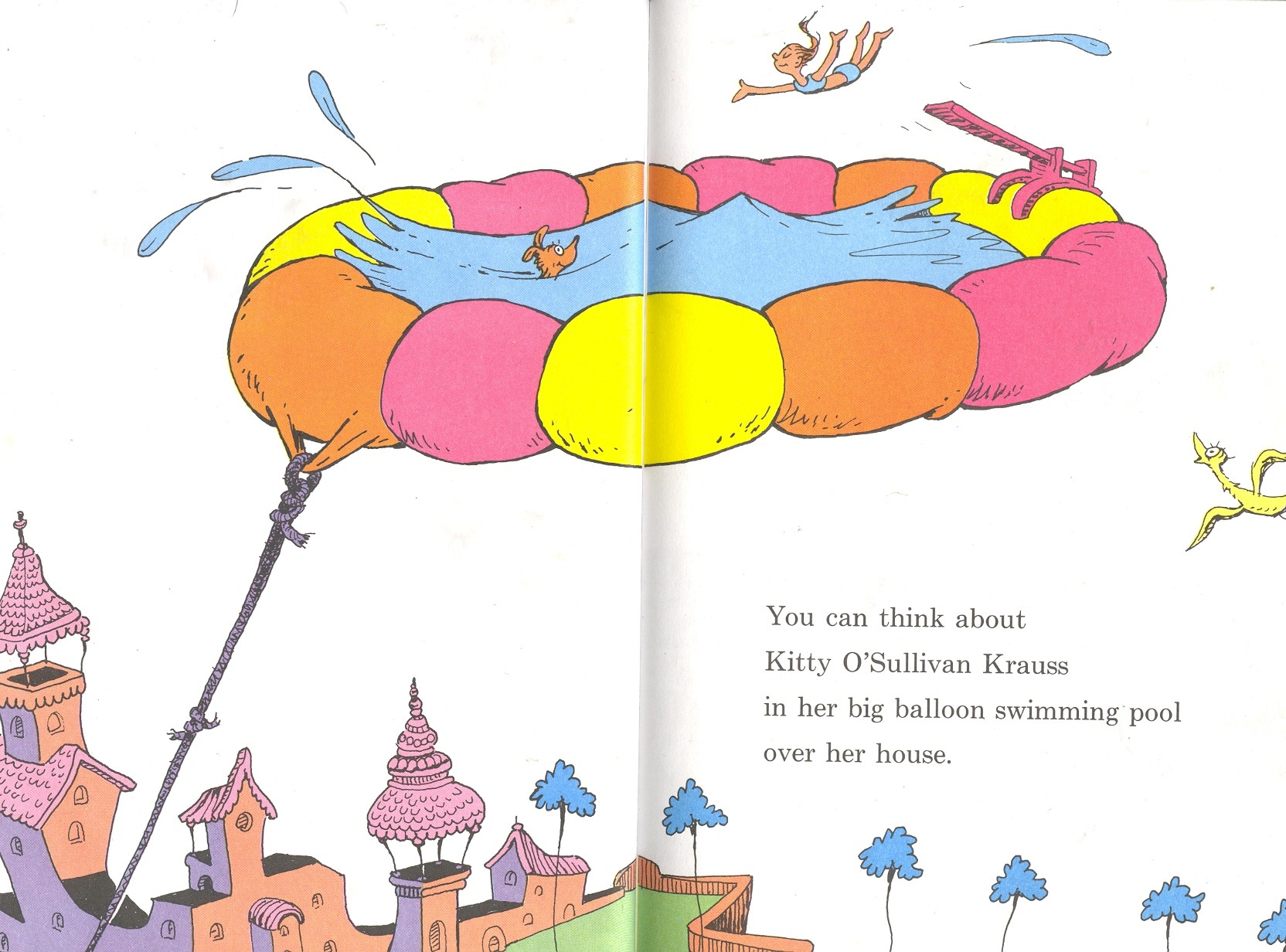
    JF Ptak Science Books LLC  Post 896Blog jan 2 seuss

    Tonight’s
    inspiration comes from one of my daughter Tess’ bedtime stories, Dr. Seuss’ Oh, the Thinks you can Think—particularly
    one of the fantastic illustrations, this one showing a swimming pool
    balloon.  I’ve seen some interesting
    images of balloons and dirigibles taken as serious efforts that reminded me of
    that double-page spread by the good Doctor.  

    In
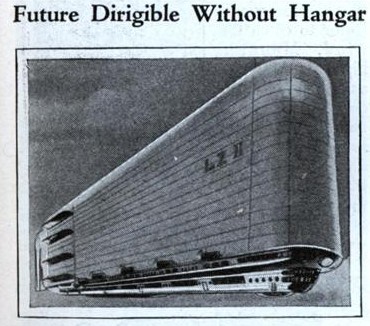
    July, 1931 Konstantin Zilkowsky’s sheet metal dirigible appeared in Modern Mechanics (this image from the
    fabulous Modern Mechanix.com website, cropped), looking a lot like the mountain
    and its imagined whale looked like to Herman Melville at his Arrowhead
    home. 

    Blog jan 2 tsilo dirig  

    This may have been the Omega end
    of bad ideas in the career of Zilkowsky, who is better known by the other
    spelling of his name, Konstantin
    Eduardovich Tsiolkovsky (1857-1835), a Russian misanthrope and space pioneering
    genius who wrote more than 500 works on rocketry and exploration including what
    is arguably the first tech word ever done in the field (in 1903,
    The
    Exploration of Cosmic Space by Means of Reaction Devices
    ). Tsiolkovsky somehow lasted through purges
    and Stalinist tirades, while few of his colleagues did—many mysteriously
    disappeared, while others went to prison and disappeared there.  (Stalin’s crude and insatiable blood lust,
    perhaps the worst of the century, knew no bounds, not even to the scientists
    who could conceivably hand him reigns of rocket/missile-propelled power.)  Anyway, Tsiolkovsky’s dirigible was composed
    of a collapsible metal so that the aircraft could form its own hangar when “docked”.  I don’t know where to begin with this one…

    Blog jan 2 lowe

    The
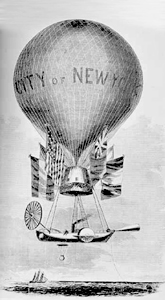
    second (among many other possibilities) is the ship-balloon of Thaddeus Lowe
    (1832-1913) One of Lowe’s great contributions in the
    history of ballooning was providing aerial reconnaissance via (panoramic)
    photographs to the Union army on Confederate army positions—particularly the
    Rebel positions at Richmond (1864) and Fredericksburg (1862). (He had a wide
    span of professional interests and wound up living the high life in L.A. in a half-acre
    home.)  This 130-foot diameter monster
    with a steam-ship escape pod (named The
    City of New York
    and then renamed The
    Great Western
    after the city couldn’t supply enough gas to get the thing
    inflated) was intended to be a transatlantic traveler.  Ready to try this fantastic adventure in
    1860, ready to take charge, ready to begin a very problematic trip across the
    Atlantic in a balloon, Lowe, seemingly ready, had his balloon ripped apart
    while waiting for launching by a chance and not-horrible wind.  Lucky for Lowe and the Union Army, this didn’t
    happen over the ocean somewhere out of reach, and the North’s important info-gatherer
    did not sink like a stone in the cold dark sea. 
    (I’m very cynical that the 100-foot-long, bulbously heavy steam-powered “life
    boat” would’ve landed right-side-up and softly enough to have been of any use
    save for providing some floaty bits that survivors from the balloon could’ve
    clung to for a while before being consumed by King Neptune. 

    I’d vote for Dr. Seuss’ work as the most logical.


  • A War-ready Submersible Aircraft, 1920: the Tessaurian

    JF Ptak Science Books LLC  Post 892

    DARPA
    has had a long-standing Christmas wish—a high-speed, durable, fast, agile tacticly-beautiful
    submersible aircraft.  Such a thing has
    evidently been on the wish list of many agencies in many countries for many
    years. 

    I
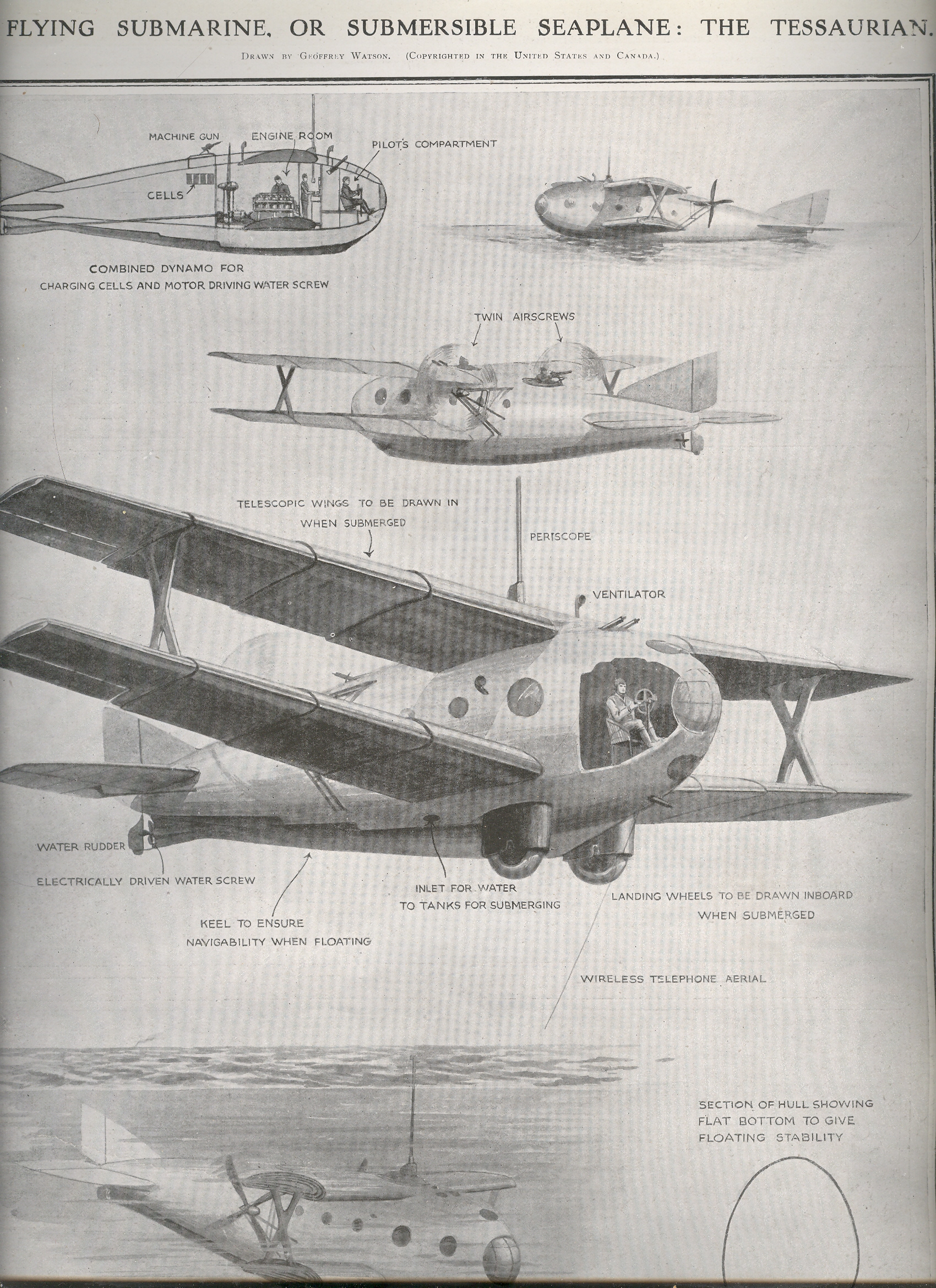
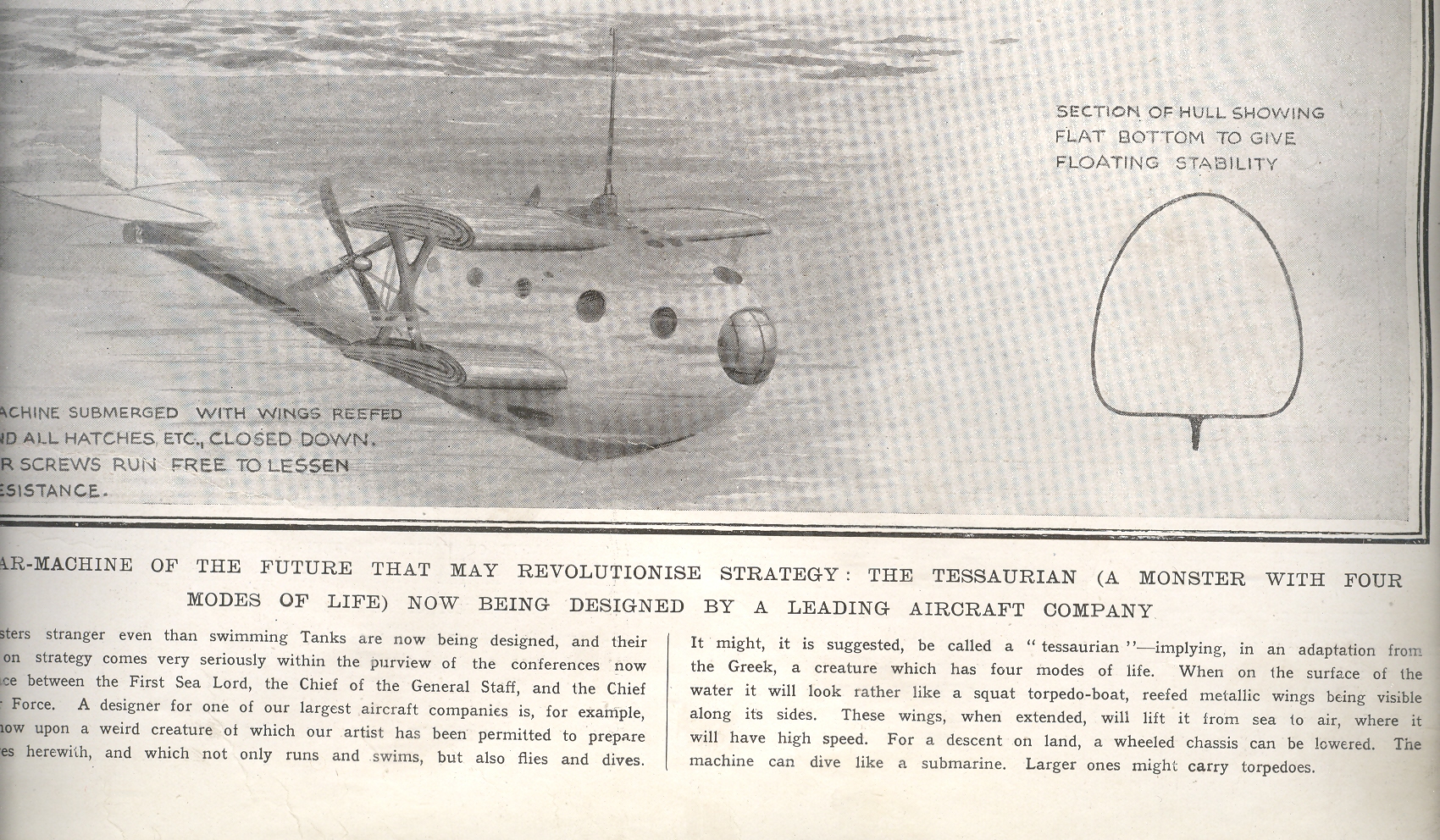
    found the Royal Navy’s version of the DARPA wish in the 24 January 1920 issue
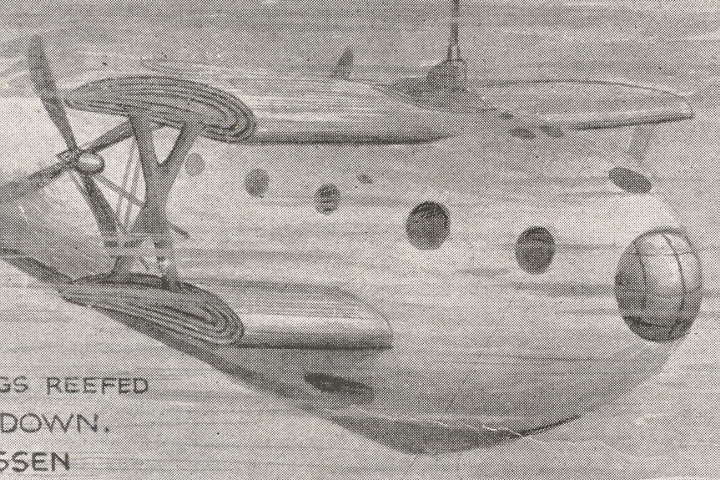
    of The Illustrated London News—the Tessaurian, a dreamable plane capable of
    long flight and long trips under the sea, as well as being able to float on the
    water and land on dry earth.

    Blog dec 30 subplane

    Even the modern Tessaurian has been evasive—certainly
    this 1920 version is nothing short of nothing. 
    The craft just looks too bumpy to do well in any sort of fluid environment,
    air or liquid, the thickness of its skin (necessary for the heavy undersea
    pressures) looking just too heavy to lift off the ground.  Of course the powertrain is suspect, and the
    retracted wings don’t look like they would do anything to glide the beast
    further underwater, assuming it got there (on purpose) to begin with.  Even though I doubt that it could fly, it may
    be able to float a bit—I do think that it could sink like a champ.  

    And
    so I reproduce these heady, unacknowledged and unclaimed drawings (“designed by
    a leading aircraft company”), as I can’t find anything offhand online that
    comes remotely close to its age and concept. 

    Blog dec 30 subplane det

    An
    undergraduate (!) team (headed by Daniel B. Coltey et alia )at Auburn came up with
    the following research paper earlier this year: “Conceptual Design of a
    Submersible Tactical Insertion Aircraft” “This…senior design program…the
    creation of a conceptual design for a submersible airplane is being undertaken
    as a response in part to a challenge by the Defense Advanced Research Projects
    Agency (DARPA).” The authors then state the checklist of DARPA’s needs:  “The design is expected to be a clandestine,
    coastal insertion vehicle with specific abilities of an airplane, surface ship,
    and submarine vessel, which would greatly increase the tactical ability of the United States. The
    aircraft is expected to accommodate eight passengers, including any necessary
    equipment and operators, and an additional 2,000 pounds of cargo, and also to
    have an unrefueled range of 1,000 nautical miles in cruise flight, 200 nautical
    miles surface transit or very low altitude flight, and 24 nautical miles of submerged
    travel. The aircraft requirements also include the ability to complete one
    tactical transit (1,000 nautical miles airborne, 100 nautical miles surface,
    and 12 nautical miles subsurface movement) in a time limit of eight hours. This
    concept also addresses challenges in the areas of structural design, effective
    propulsion in dual fluid flow regimes, and control surface duality…”  I’d want one, too. 

    Blog dec 30 subplane det 001

    SOURCE


  • Bad Ideas Department: Futurized Obsolescence of an Airport ABOVE the River Thames

    JF Ptak Science Books LLC  Post 879  Blog Bookstore

    Its funny how one can live the future in the present but not
    see any part of that future’s future.  Evidently
    completely enveloped in the flying frenzy of the 1930’s, planners in London considered constructing
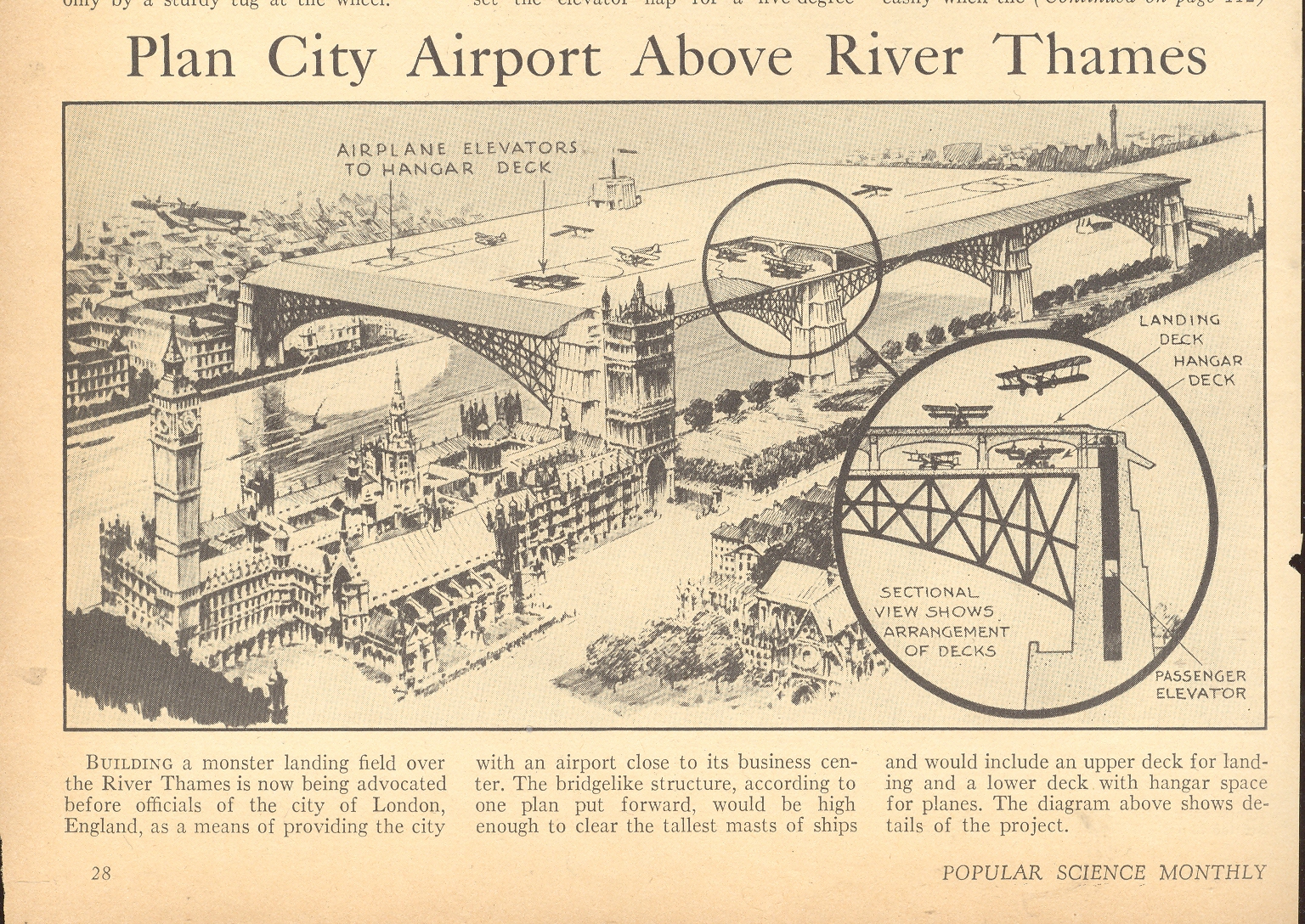
    an airport above the River Thames.  This
    rendition from Popular Science Monthly  (January 1934) shows the beast laid out from
    just above Westminster Bridge to the (newly opened) Lambeth Bridge, covering the
    entire width of the river, with the runways running almost directly into the Victoria
    Tower of Westminster Palace.  

    Blog Dec 17 thames airport

    The
    structure had almost everything going for it to be built in the bad category department:  it was big, ugly, unnecessary, dangerous, a
    hideous eyesore and an architectural atom bomb. 
    It also would have been almost antiquated by the time it was built,
    serving as it did nothing but very small single-prop biplanes, virtually
    useless by the time larger multi-engine propeller planes and jet aircraft would
    appear just a decade and a half into the future. The thing was built high
    enough (the top looking to be at least 300’ high, comparing it to the Victoria Tower) by the forward-thinking planners
    to accommodate “the tallest masts of ships”. 
    No one seemed to take any piece of the future into consideration in planning
    this monster—the planning seemed to take place as a retro event, as though the
    thinking was being done in 1910 rather than 1934. 

    This was a piece of engineering so devoid of the
    possibilities of future development that just as a crew on one end of the airport
    was finishing, it would’ve been just about time for a crew on the first-finished
    end to start demolishing it, an exercise in futurizing obsolescence.  I’d say
    that if you could both build something and take it down in one continuous
    movement, the thing should probably not be built


  • Balloons, Zeppelins & Dirigibles: Ideas Fabulous and Not So

    JF Ptak Science Books LLC

    I should’ve included this list in yesterday’s post about a 1909 zeppelin tramway but it slipped my mind. Here then are most of the posts I’ve made on zeppelins, balloons and dirigibles, mostly having to do with unusual deep-thought applications of their soon-to-be-replaced technologies.

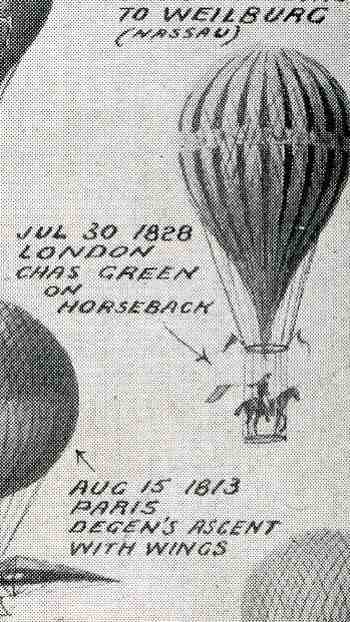
    I like the History of Horses in Flight the most…

    Towards a History of Horses in Flight in the 19th C (here) 

     Balloons--horses

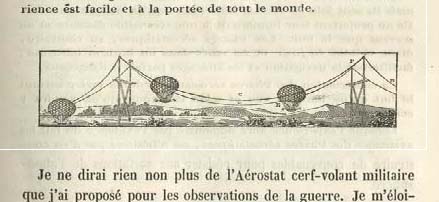
    Balloon Bridges and 600-Foot-Long Airships  (here)  

     Balloon--bridge

    Escape Pods for Women Balloonists, 1820: the Fabulous “Minerve” Balloon (here)

    Balloons--Minerve

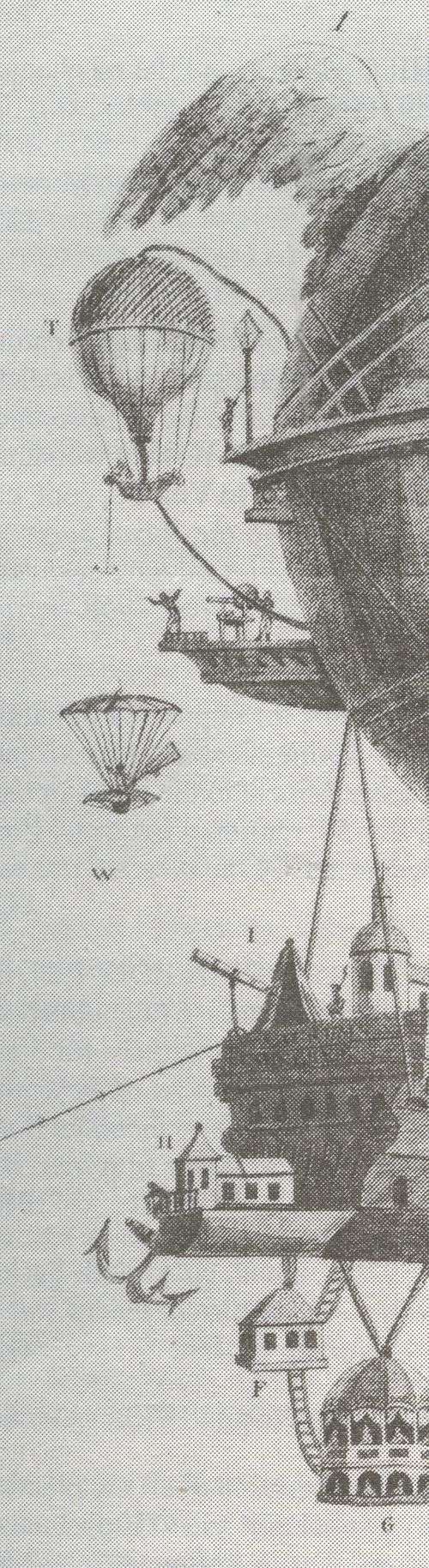
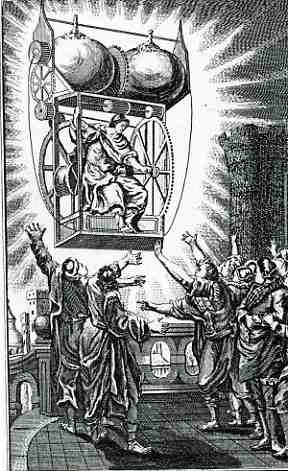
    History of the Future: Electric Balloons, Tethered Eagles and an 18th century Space Station  (here)

    Balloons--electric

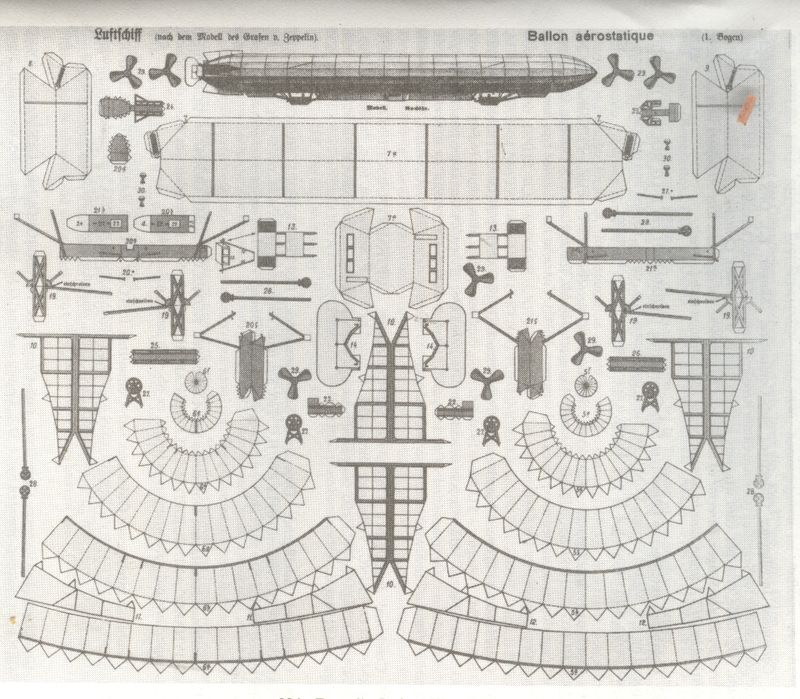
    Zeppelin paper Model 1924  (here)

    Balloon--paper model

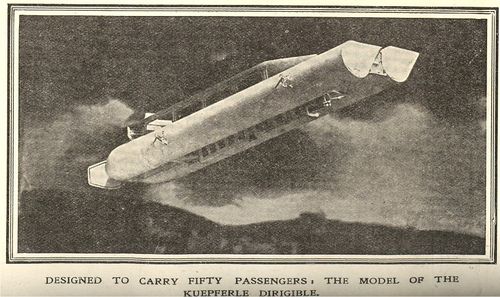
    Advanced Sci-Fi Dirigible Notion, 1909 (here)

    Balloon--scifi dirigib;e 

    Vision: Looking Straight Up, Down, Across and Through–1525-1905  (here)

    Balloon--straight down