A Daily History of Holes, Dots, Lines, Science, History, Math, Physics, Art, the Unintentional Absurd, Architecture, Maps, Data Visualization, Blank and Missing Things, and so on. |1.6 million words, 7500 images, 4.9 million hits| Press & appearances in The Times, Le Figaro, Mensa, The Economist, The Guardian, Discovery News, Slate, Le Monde, Sci American Blogs, Le Pont, and many other places… 5000+ total posts since 2008.

Category: Technology, History of

  • Medieval Chair-Shoveling and a Few Later-Day Shovelers of Note

    JF Ptak Science Books  Post 1672
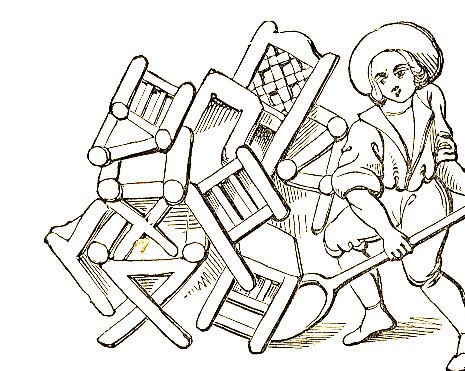
     

    + chair shovel

    Seeing this extraordinary woodcut of a sculpted feature on the Medieval section of the beautiful town hall of Brussels reminded me of famous shoveling, in general.  To begin with, though, I can’t fathom the meaning of this sculpture, shoveling chairs.  Perhaps it is a metaphor for the leaders not recognizing relaxation?  Or the (presumed) fact that there was no seating inside for the people doing business there?  Or that you were expected to seek your business and not loiter at town hall?  I really don’t know.  But images of other shovelers did pop into my mind. 

    The most instant shoveling comes from the song Big Rock Candy Mountain (which I’ve written about earlier here) and the very simple plea from a down-but-not-out man for not having to work with “short handled shovels1”.

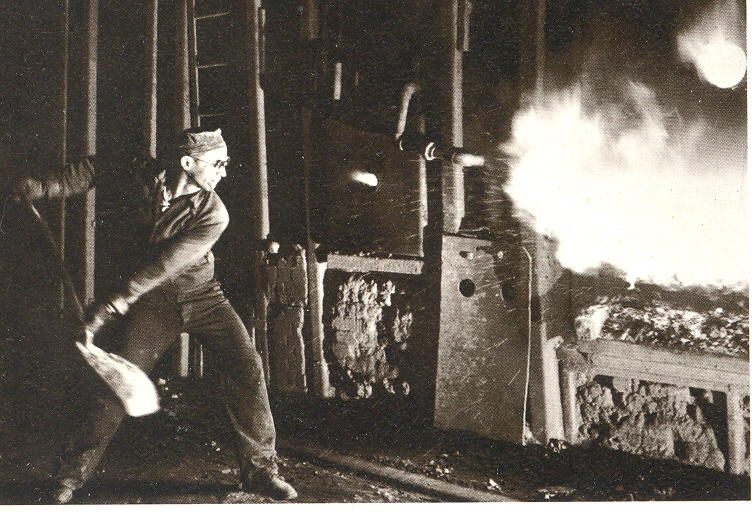
    Next in mind was Frederick Winslow Taylor, who was seen as an iconic leader in establishing human motion studies for efficient factory
    + chair shovelsteel shovel

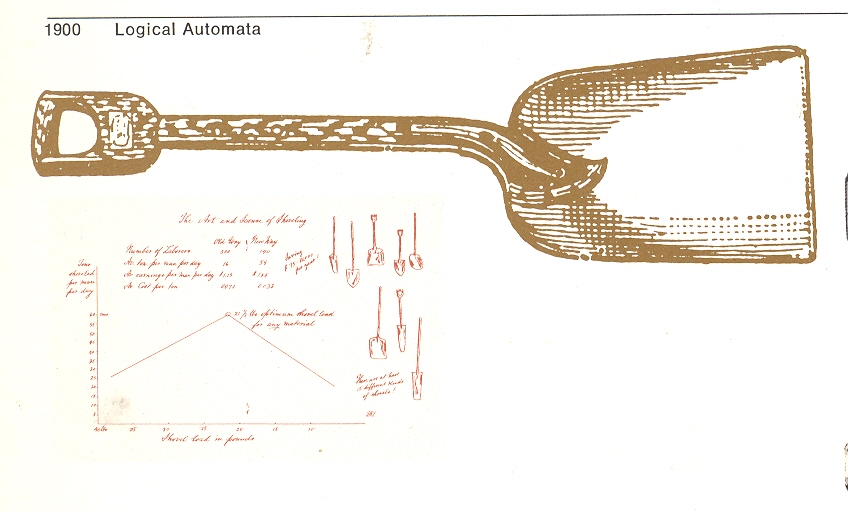
    (and etc.) operations in early 20th century America.  He did very detailed motion studies of people working—say, in this case of a man shoveling coal into a furnace at Bethlehem Steel in 1907—to determine that best sort of arrangement/placement of tools and supplies.  It was very influential work, for sure, and Taylor, who loaned his name to the movement of this sort of effective watchmanship, (“Taylorism” and “Taylorization” and also “scientific management”) and took a huge step forward in establishing efficient factory and business operations and also automatizing the human working cogs in the workplace.  According to the wonderful Eames’ brothers book, A Computer Perspectives (1973), “Taylor established the scientific fact that…a first-class shoveler will do his largest day’s work when he had a shovel load of 21 1/2 pounds.  Then as a matter of common sense…it was necessary to furnish each worker with a shovel which woul dhold exactly 21 1/2 pounds of the particular material which he was called upont to shovel” (page 52).  This, by the way, is also a short handled shovel.+ chair shovelsteel shovel daig
    I then thought about the Seven Dwarfs from Snow White (incidentally Tom Waits covers the “Hi Ho, Hi Ho” song like no one ever did or will) but they all carried picks, not a shovel (so far as I can see) among them. 

    There are undoubtedly many great shovelers—they’re just not people I know about.  I can imagine that Casey Jones must’ve had help to feed his locomotive’s fires; the gold rushes around the world produced some very wealthy shovelers whose numbers were titanicly dwarfed by those who shoveled and lost; soldiers have shoveled themselves into the earth for protection for at least 170 years (actually I don’t know when before the U.S. Civil War that soldiers found protection in their own burrows); and so on, but I just don’t know anyone by name.  And so my rumination ends—I did say that it was wispy.

  • States of Perfection: Television Advertisement Images within Television Images, 1950

    JF Ptak Science Books  Post 618–expanded 26 Nov 2011   

    See also States of Perfection, the Archaeology of Refrigerated Meat, 1954. 

    Blog--tv future

    The concept of the television started pushing its way obliquely into the literature as far back as the 1880’s (with Paul Nipkow’s 18-line resolution “electric telephone”), bumping up again with Arthur Korn in Germany around the turn of the century, and making its way through the ‘teens and early ‘twenties until  hit it big in 1927 with Phil Farnsworth’s “image dissector”. (Baird promised a hope with a mechanical version of the television, complete with a 30-line vi ewer, but it would very soon be replaced with electronic boxes with ten times the resolution.)  There were little or no stations available for viewing even though sets were manufactured and sold.  It wasn’t until the end of WWII  that the television industry took off—the increase in home-ownership of tvs exploded, beginning in 1950.*(A decent timeline of the development of tv is here.)

    Blog--tv future 001


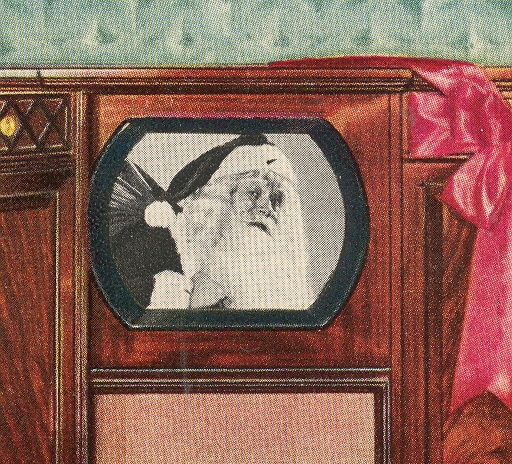
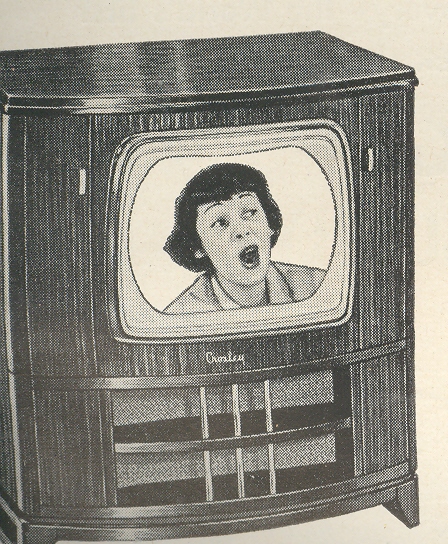
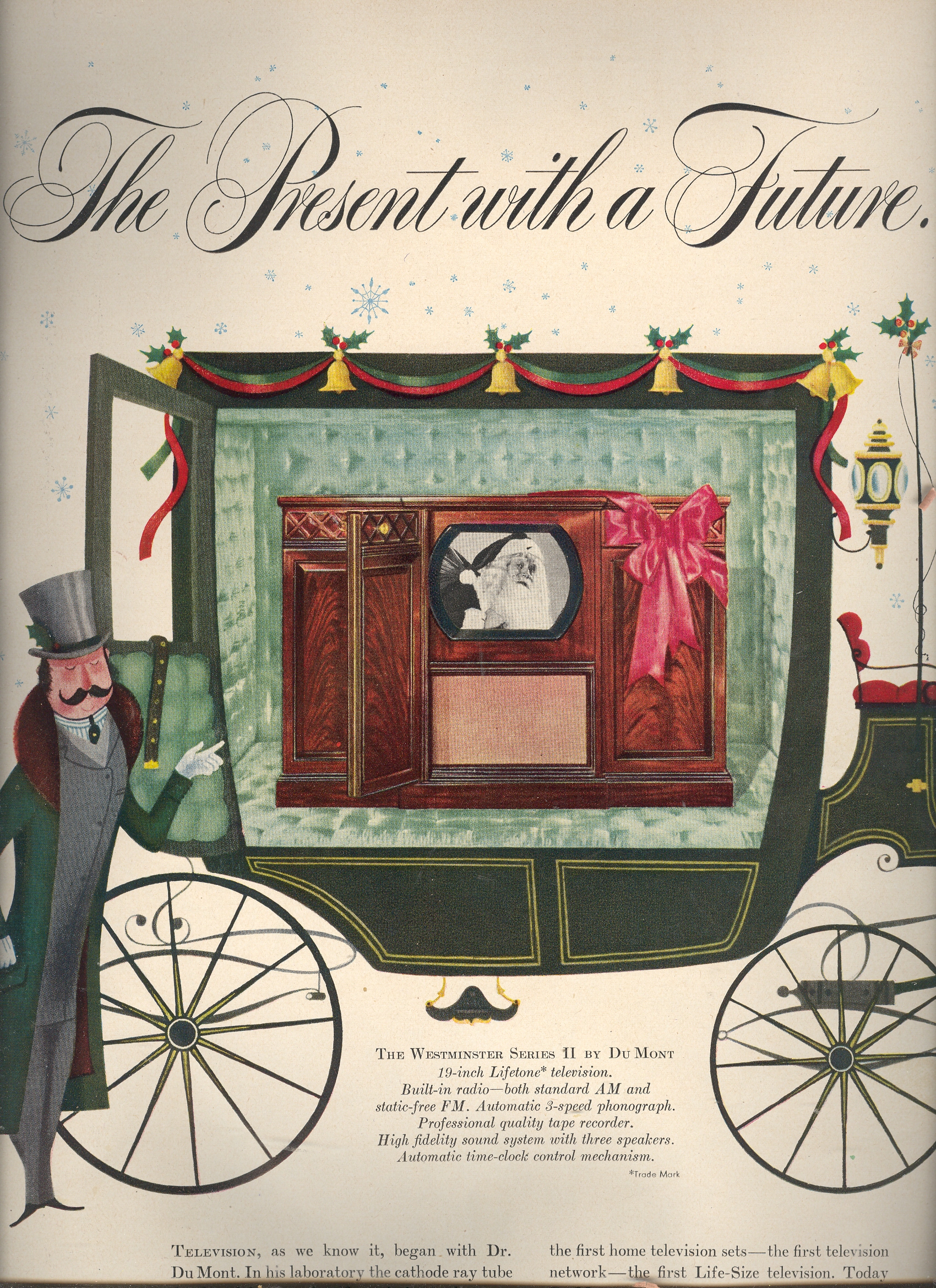
    While looking through a year’s worth of LIFE magazine for 1950 I was struck by the number of ads and the number of different companies selling televisions in the major print market.  But the creeping surprise for me were the images that were used in the tv sets that were pictured in the ads—images within images.  The pictures in the tubes were meant to be enticing, imaginative, imagery of the possible, displaying the possibility of entertainment–the possibility of losing yourself in the new medium.  It was an idea of fabulousness, of great expectations, of the promise of being swept away by the new convenience—and all of that rolled up in the pictures used in the ads. 

    Blog--tv 003

    Blog--tv 001

    To me, sitting here 59 years in the future, it is hard to imagine getting excited by any of these images—except Santa.  Even with the benefit of having looked at millions of images and having an historian’s occasional perspective on stuff, I just can’t appreciate these pictures in the ways that the advertiser meant them to be savored—and they were meant to be savored, as they were the libidinous bait to make the reader jump into the Hudson and buy the advertised set. 

    There are vocabularies for defining the breadth of fabulousness across difficult genres, like describing the fineness of a wine or the scent of a good desert rain.  Difficult perceptions to quantify and describe, but it is done and successfully so.  I can’t find the words fort these pictures. 

    Their fabulousness to the viewer in 1950 must not have been very long lasting—the images seem so contrary to being interesting, as they seem to project almost nothing at all.  I do get the overall effect of polite culture and a race at the occasional arts, but by and large the pictures were vanilla headshots of women.  


  • Baseballs of Death–the Baseball Bomb, 1916

    JF Ptak Science Books   Quick Post

    Baseball of death015
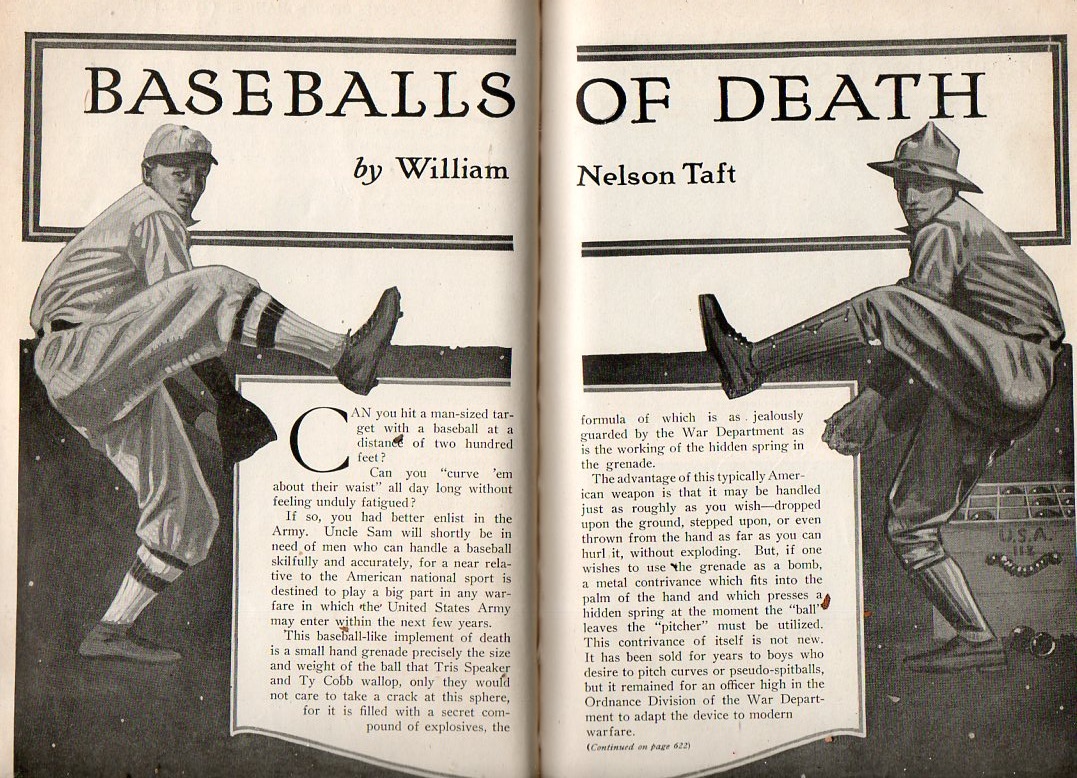
    This unlikely advertisement was for baseball players with good throwing/pitching skills to enlist in the U.S. Army and throw the newly-design, baseball-weighted and -sized hand grenade. 

    “The United States Army needed a grenade that would be accident-proof and the baseball bomb has been the result.–Illustrated World, 1916, page 622.

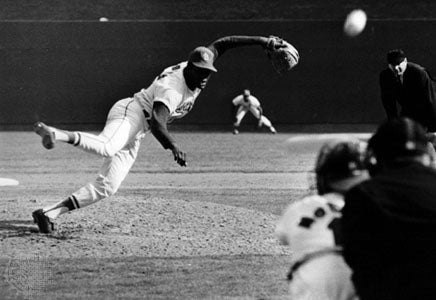
    Bob Gibson threw many of these in the 1960’s.

    gibson_bob

    So did this guy a little later on:

    ·Posted by :

    ·in:


  • Electro-Punk Heavy Metal Birthing Machine–a Fantastically Bad Idea

    JF Ptak Science Books   Re-posting entry #1500

    I found this by accident, and needed to share it immediately, because in the splendid and chilly vastness of the infinite Encyclopedia of Bad Ideas, this entry would seem quite the poster child for such a stupendous effort–the mud to which all dust aspires. 

    The centrifugal machine for human birth…its hard to even finish that sentence, let alone finish it without wincing.

    I think what we have here is the Vitruvian Woman of Bad Ideas relating to human birth, the patent described more fully in this great piece by Marc Abrahams (of the Annals of Improbable Research) in The Guardian, 2006):


    Read the rest of this post here.


  • A Curious Episode in the History of Sitting–Speed Chairs & Trainless Trains

    JF Ptak Science Books    Quick Post

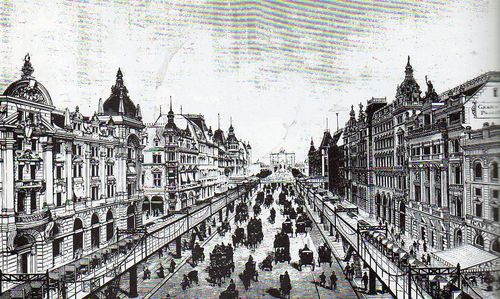
    Sidewalk 997
    It may be that the history of human locomotion is the story of fast sitting.  Except for some of the earliest incarnations of powered movement, it seems one of the most significant engineering aspects moving a person forward is how that person should be carried in the vehicle.  And, well, it seems that in the vast majority of cases, the person is sitting. (There are of course exceptions, notably in say the standing of the engineer in the Tom Thumb when that locomotive set the land speed record;or the Wright Brothers’ powered aircraft, where the pilot was laying down; or say in a chariot powered by a team of horses. Even in some of the earliest versions of steam-powered tractors, the mammoths were steered by a standing operator. It seems though that in very quick order the operator in most of these vehicles find themselves in a seated position.)

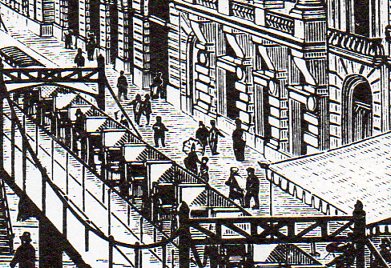
    Sidewalk 998

    A very curious application of moving seated humans is seen in this woodcut of a chaired walkway–for all intents and purposes, the pedestrians looking to use the moving sidewalk would have been offered a chair instead.  It seems as though as its base that this was a very simple form of an elevated subway or trolley, though without the train. 

    The moving seated sidewalk was the dreamchild of Alfred Speer (1823-1910), of Passaic, New Jersey, and it seems as though it might have been the first form of mass rapid transit in the city for which it was intended, which was NYC.  It stood fairly high in the opinions of some prominent New Yorkers (like Horace Greeley and Peter Cooper) when it was presented in the early 1870’s, and even passed the New York State Legislature in an act authorizing funding for the program in 1873 and 1874–but it was each time vetoed by Governor John Dix, and the people-moving dream ended there, right before the Centennial.  (See here for the New York Times obituary for Speer., and see All Ways NY blog for a longer look at Speer’s moving sidewalk, here.)

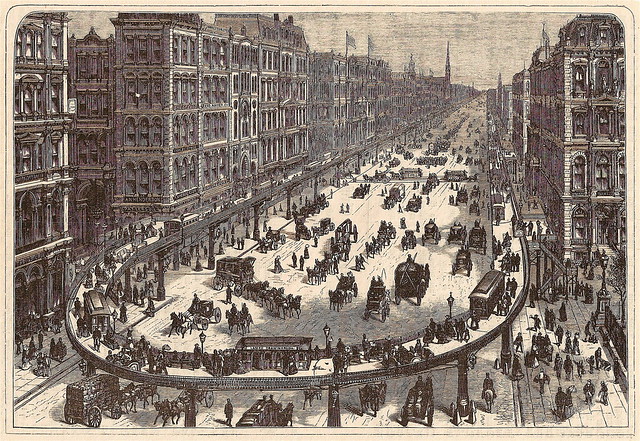
    Here’s another version of Speer’s idea, though this look more like a moving sidewalk, complete with trolley cars, all of which were stationary objects located on the moving walkway.  The idea of course was to free up the chaos and gridlock of the very busy areas of Broadway by placing a large chunk of the confusion on a moving second floor.  It seems as though it might have been a good half-year idea or so, and the $3.7 million dollar price tag might’ve been a hefty one if you calculated the cost per minute of relieved traffic. 

    photo

    [Picture source:  All Ways NY.]

    Mr. Speer seems to have let his vision go and settled down to a life of wine making.


  • Dreaming of the 10-Ton Eiffel Tower Luxury Bullet–addendum

    JF Ptak Science Books  Post 736–addendum

     People find inspiration everywhere, insight to creativity in the obvious and not so.  Great statues have been envisioned in the depths of slabs of marble, solutions to mathematical problems in the step of a bus, the beginning of a new physics in the rolling ball in a wagon.  Its an old and very worn cliché, but the world can be seen in a grain of sand if you could just pieces together the bits of glass:  just as pointillism was seen in the not-simple intercession of two colors and cinematography in the latent image and the structure of the universe in a patch of dancing dust.

    ===blog==aug 30--eiffel

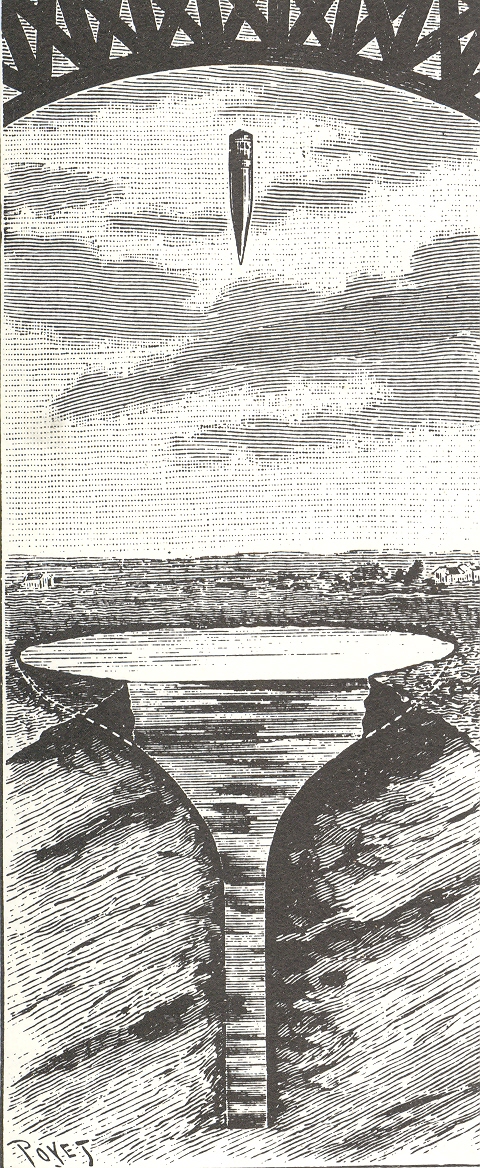
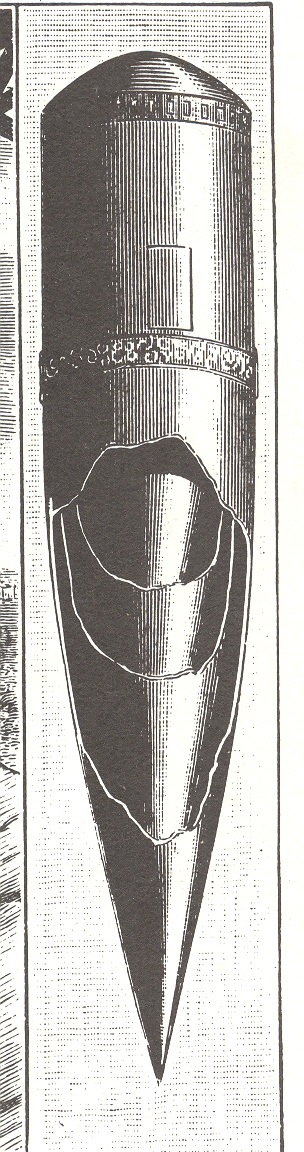
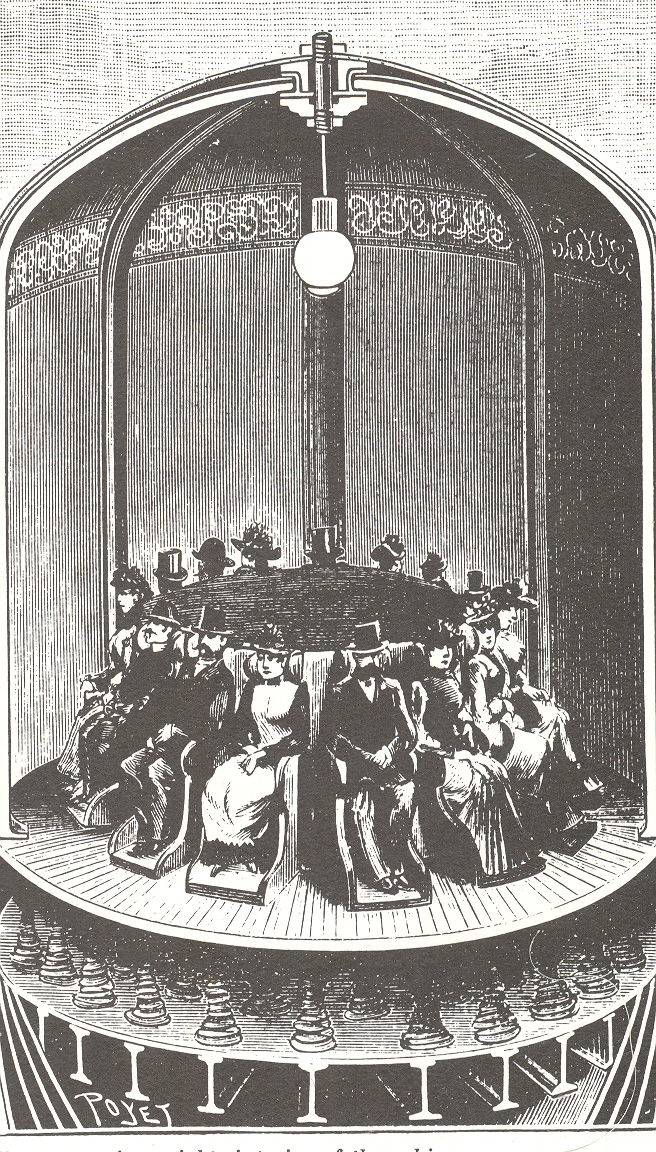
    The Eiffel Tower has had its own way with the visions of people, from it representing the birth of The Modern, to an icon of passion, to architecture and engineering innovation, and to general  adventure and the call of possibility.  It has moved other people to think “special” thoughts:  like, for example, what a lovely canvas it would be to place a 700’-tall electrified sign.  And to M. Carron of Grenoble, who may have the most unusual inspirations from M. Eiffel, the tower was the perfect place to drop a 40-foot tall, 20,000-pound bullet filled with 20 people in leather armchairs into a 200-foot deep champagne-glass pool.

    ===blog==aug 30--eiffelbullet

    This is certainly a singular insight.  But in 1891 it represented something a little more than just giving people a thrill ride.  Physics of impact aside for the moment, M.Carron’s bullet capsule would be released from the top of the interior of the Tower, about 900 feet above the ground, and released to fall into an excavated pool 150’ across and 200’ deep.  The idea was that in addition to the springs inside the capsule, the water would act as a “shock absorber”, and so “the shock felt by the occupants on landing will be in no way unpleasant”.  

    [Okay, so the thing would hit at 138mph or so, and, assuming that the whole thing wasn’t compromised on impact, I’m not so sure that 200’ of depth is very much wiggle room for the thing to come to a halt (if it didn’t deform).   Also it would have to not have any wind deflection so as to not veer off its perfect entry into the water.  And so on.]

    ===blog==aug 30--eiffelinside

    The thing is, though, the thing that made this so appealing, is that for the 20-francs that get a person a seat in the bullet, that they would each get to go twice as fast as any human had ever traveled before in a conveyance ( 65 miles per hour was about the speed of the fastest train constructed).  So it was an extraordinary claim, an done that doesn’t get made all that often in the history of locomotion.

    And so this wasn’t a practicable or workable idea; but, well, so what?  It was an unusual idea, inspired by some sort of different thinking, which are both good places to be in according to the Gazetteer & Atlas of Ideas.  Sometimes thinking like this is just prelude to something else, thought avenues that had to be explored before the real thinking could get done, introducing you to a new geography of thought.  That’s what M. Carron had going for him; the newness of his thinking was much more important than the wrongness of it.

    *This story comes at the end of a post called Bad Ideas Department:  the First Image of a Hypnotized Chicken, so in spite of the title you’ll wind up in Paris.

    ·Posted by :

    ·in:

    —

  • Gigantic and Unbuildable Buildings, Part 2: Eiffel Out-Eiffled

    JF Ptak Science Books   Quick Post


    Big_archout_eiffeled140
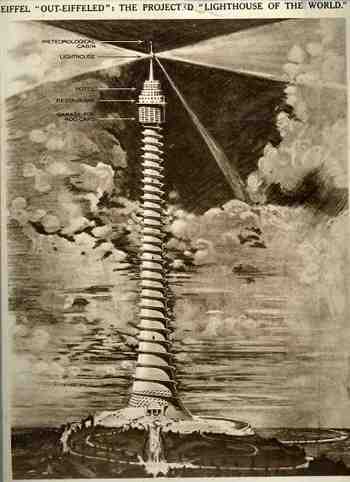
    This was the handiwork—that is really too demeaning—the inspiration, the dream, of Eugene Freyssinet (1879-1962), an accomplished French engineer turned architect, and widely viewed as the “father of reinforced concrete”.  Freyssinet graduated from two of the most prestigious French engineering institutions (the Ecole Polytechnique  and the Ecole Nationale des Ponts et Chaussees in Paris) and was really quite an innovative engineer—beautiful even.  His airship hangers at Orly airport are instantly recognizable as elemental design features of concrete—elegant, useful, practical, and huge. 

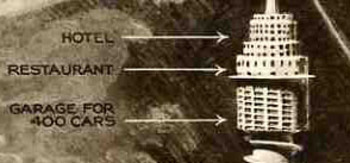
    I don’t know what happened exactly with his design for the Paris International Exposition of 1937.  The building just isn’t right—even the timing of its underlying deification of the automobile is off by decade, at least*.   His effort to construct a half-mile high reinforced concrete tower with an exterior corkscrewing road for autos climbing up the building to a parking lot is just, well, off.  Setting aside the difficulties in using this building material for a structure of this magnitude, there would’ve been an astonishing amount of vibration problems from the grueling efforts of the cars on the (probably) two miles of road to the top.  (The image comes from the Illustrated London News for 1 June, 1933.)

    And all of this effort for what was effectively the world’s most gigantic restaurant, because outside of the parking garage, that’s all this building was meant to be.  The eatery would’ve begun where the Eiffel Tower stacked on top of the Empire State building would end.   The room was big enough to accommodate 2000, who after eating could repair to the hotel upstairs, or who could’ve gone upstairs from there to take the rays in the solarium.

    Somehow this was all supposed to cost 500,000 pounds (about $75,000,000 in today’s currency, which might by you one or maybe two ultra-swanky pre-war condos in NYC…500k pounds was only about 2 million 1937 dollars, which would’ve paid for 5% of the Empire State Building), Freyssinet noting that it would cost less to build than the Eiffel Tower (which would’ve been true if you didn’t take inflation from 1889 into account). I have no idea how that would’ve worked out, given that the Eiffel was a steel skeleton and this would’ve been concrete.  All told, however, none of it made very much sense, and the structure wasn’t even very pretty. 
    Big_archout_eiffeled140_detail_

    *(Cars traveling up the outside of a building so that you can park your car in a lot 2000 feet in the air…certainly the car was king (and queen too for that matter) and that fact become new and abundantly clear, but it happened earlier, in the early 1920’s.  The need to drive a car into Jove’s lap just wasn’t necessary as the world nudged its way to war in 1937.) 


  • Blank, Empty & Missing Things Series: Stairs

    JF Ptak Science Books     Post 1637  (From the series on the History of Blank, Empty and Missing Things.)

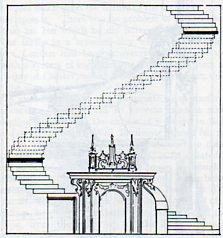
    Spiral staircase st paul950
    This doesn’t quite fit this category, not really, but sometimes close enough is good enough, especially if there’s a really good image that doesn’t seem to fit anywhere else.

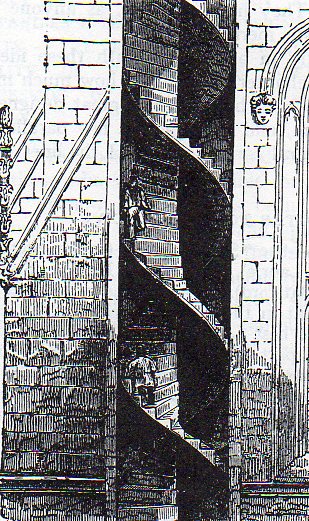
    Such is the case with this great drawing by Theo. G. Scott in the Architectural Record (July 1910) of Christopher Wren’s “Geometrical Staircase” in the southern tower of St. Paul’s Cathedral.  The stairs of course are not missing, they’re just not visible from the standard I’m-looking-at-stairs viewing scenario, as we can see in another classic view, this one found Theodore Cook’s The Curves of Life (1914): Spiral staircase double951

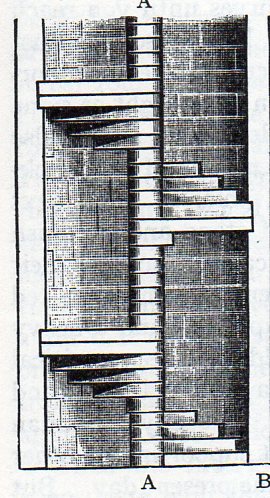
    [The double staircase as described in Cook’s book as the “Tamworth Church Tower”, which is actually St. Editha, in Staffordshire.  The church is Medieval, and building dates from 1369, though it is the fourth iteration of a structure there, the first of which (begun in the 9th century) was destroyed by the Danes soon after its completion. The staircase is remarkable because it allows one person to ascend and another to descend without either ever having to see the other.]

    Spiral staircase double952Engineers and architects had confronted the idea of spiral stairs for many centuries before Wren–perhaps as many as 40 generations, perhaps more.  The “invention” of the  spiral staircase, or its discovery in the places in which it sort of exists in nature (like in the shells terebra dimidiata  and voluta scalaris), seems like a very interesting thing, though I am not sure where it stands in the history of importance in architectural development.  Perhaps Pisa wouldn’t have nearly so many narrow towers without the spiral staircase, and I know for a fact that it is far  easier to deflect marauders from ascending a castle’s spiral staircase than any other (the defenders getting at least an order of magnitude (and maybe more) bump from that design than any other staircase. I doubt in comes anywhere close to the indoor fireplace/chimney, or downspout, and a lot of other stuff.  But it is definitely much prettier to look at in perspective and plan than just about anything else in architecture. 


  • The Computer Cyborg of 1867–the Typewriter

    JF Ptak Science Books   Post 1635

    “The most ignorant person at a reasonable charge, and with little bodily labor, may write books in philosophy, poetry, law, mathematics, and theology, without the least assistance from genius or study.”   Jonathan Swift, in Gulliver’s Travels (actually called Travels into Several Remote Nations of the World, in Four Parts. By Lemuel Gulliver, First a Surgeon, and then a Captain of Several Ships, printed 1726).


    https://historyofideasblog.com/a/6a00d83542d51e69e20133f2973d9a970b-pi

    Every age, every generation has a calling to the future that once that particular future arrives looks sometimes strangely like a past that was much further away than it was. Such is the case here, in September, 1867. in the pages of London’s Punch Magazine, when Mr. Punch rhapsodized on the future possibilities of the new invention, the typewriter. [Related items are available at our blog bookstore, here.]

    “Good News for Bad Writers” announced to the readership:

    “Writing Superseded.—Mr. Pratt, of Alabama, is the inventor of a typewriting machine, lately exhibited to tho London Society of Arts, which is said to print a man’s thoughts twice as fast as he can write them with the present process. By a sort of piano arrangement the letters are brought in contact with carbonised paper, which is moved by tho same manipulation,”

    The editor of Punch sniffed out a deeper deal in the typewriter than simple legibility:

    “Every author his own printer! What a happy state of things! No more struggles to write legibly with nibless tavern-pens: no more labour in deciphering the hieroglyphs of hasty writers. Literary work will be in future merely play—on the piano. The future Locke may write his essays by a touch upon the keys.”

    But the disappointments of the possible future wouldn’t stop there, and would or could or should go screaming into the dark night, the invention marking time in the brain of the writer, making able for him or her to compose without thinking, pillows taking over for the mind:
    “In this inventive age there really is no saying where discovery will stop. Now that authors are to put their thoughts in print with twice the pace that they can write them, perhaps ere long they will be able to put their works in type without so much as taking the trouble to compose them. A thought-hatching easy chair may very likely be invented, by the help of which an author may sit down at his ease before his thought-printing piano, and play away ad libitum whatever may occur to him. Different cushions may be used for different kinds of composition, some stuffed with serious thoughts, fit for sermons or reviews, and others with light fancies, fit for works of fiction, poetry, or fun. By a judicious choice of cushions an author will be able to sit down to his piano, and play a novel in three volumes twice or thrice a week, besides knocking off a leader every morning for a newspaper, anil issuing every fortnight a bulky epic poem, or a whole encyclopaedia complete within a month.”
    https://historyofideasblog.com/a/6a00d83542d51e69e20133ed533188970b-pi
    This is not too terribly off the mark from the conversation/writing machine from Swift’s Gulliver in Laputa, except of course that this device (that I wrote about here) came 161 years ealrier.  But then again even the framework for this machine didn’t exist; the typewriter did, which at least got the science fiction aspect of its prospective powers going in the right direction in the real, three-dimensional very mentally High Victorian world.
    The typewriter was just another in a series of “robots” from antiquity, of the creation of moveable type printing taking over the job of scribes and scribes over the jobs of story tellers, of fabrications of automata, of rudimentary calculating machines of the 17th century, of the creation of the lighted semaphore, of the electric telegraph, of the telephone, of the wireless, of the radio, television, computer, internet.  Each offered a similar challenge to the people of their day and a similar challenge to their future–some of which came true, some didn’t. I know that Punch was kidding–mostly. 

    Photo

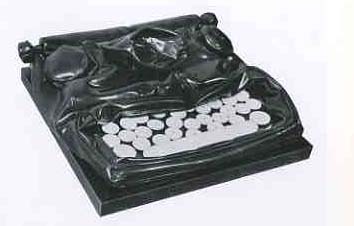
    [Claes Oldenburg’s “Soft Typeewriter, 1963.]


  • Building On Beyond Big–the Great Pyramid in Detroit, 1908

    JF Ptak Science Books   Post 1633

    “My alphabet starts with this letter called yuzz.  It’s the letter I use to spell yuzz-a-ma-tuzz.  You’ll be sort of surprised what there is to be found once you go beyond ‘Z’ and start poking around!” ~Dr. Seuss

    “The lunatic, the lover, and the poet, are of imagination all compact.”  ~William Shakespeare, Mid-Summer Night’s Dream, 1595

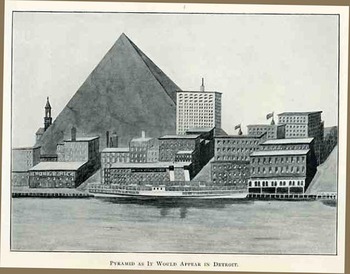
    Blogprymmidelevtion216 

    And so it came, somehow, to be that E.S. Wheeler, president of the austere and august Association of Engineering Societies, presented a paper at its annual meeting in June 1908, on building an exact replica of the great pyramid of Gizeh.  I suspected that because of the intentionally fantastoid title that Mr. Wheeler intended the paper as a show, exhibition, to the younger engineers in the audience about how one might approach an unusual engineering problem, as an imaginative course of instruction.  That would be quite nice. 

    Except though that Wheeler presented the paper as though he was serious.  He delivered  it evidently with a high dryness, and people took him seriously.
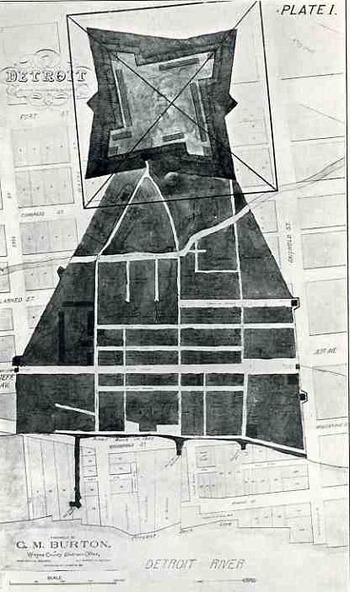
    Blogprymmidpln215
    The pyramid was to be built on the site of the village of Cadillac (of 1701), in central Detroit, occupying that site and then some, covering it with 13 square acres of stone.  Oh, yes, and it was also to be excavated, scooped first into a shockingly cavernous prism 759’ on each side and 120’ deep, or about 2.6 million cubic yards of stuff.

    The pyramid itself was to be built almost entirely of limestone, 760’ on each side, and 485’ high, set on the 13 acre base—where those 13 acres in the center of Detroit was left open to debate. Wheeler also intended to reproduce the interior of the pyramid as well (so far as it was known in 1908), and had a set of plans to accomplish that goal. 

    Wheeler figured that the material cost (exclusive of the base), would be $36,000,000 1908 dollars, which he considered a fair price.  The conclusion of his paper was a superb slash of logic and possibilities—he calculated that if each person in the United States contributed the equivalent of a day’s labor on the building of the pyramid, that the great structure could be built in a day and a half.  Wheeler closes with this superior gem, a sentence unlikely to be repeated in any subsequent technical journal”  “If the United States should stop all other work and devote itself entirely to building pyramids, as was probably the case in Egypt, it would, after it got fairly running, be able to turn out two every three days.