A Daily History of Holes, Dots, Lines, Science, History, Math, Physics, Art, the Unintentional Absurd, Architecture, Maps, Data Visualization, Blank and Missing Things, and so on. |1.6 million words, 7500 images, 4.9 million hits| Press & appearances in The Times, Le Figaro, Mensa, The Economist, The Guardian, Discovery News, Slate, Le Monde, Sci American Blogs, Le Pont, and many other places… 5000+ total posts since 2008.

Category: Technology, History of

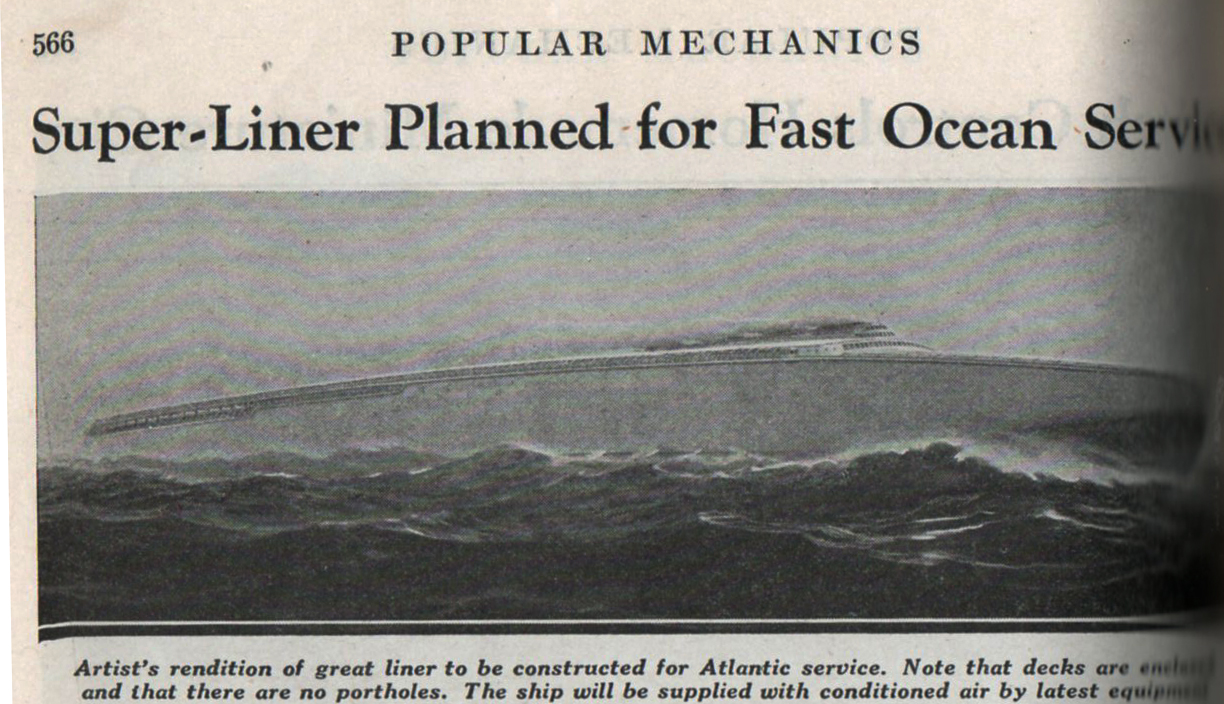
  • History of the Future: Super-sleek Tubular Ark, 1936

    JF Ptak Science Books    Quick Post

    There’s very little to go along with this image that I found in the April 1936 issue of Popular Mechanics, save that the massive ship will have no portholes, it will carry 7,000 and that the decks are enclosed (“sealed and air-conditioned”).  So, basically, the ships is a tube with a few above-deck exposures and not much else. 

    It looks a little bit like an ark.

    Future ocean liner080
    With coming events of the next few years, this ark would have been very busy had it ever been constructed.


  • The Department of “What is It?” (#7): What are the Ultra Famous Holes that this Hole Puncher Punched?

    JF Ptak Science Books Quick Post

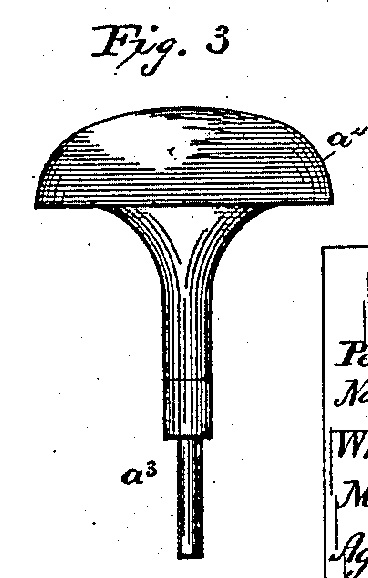
    This is one of the most important hole punchers in the history of holes, and also in the history of counting and figuring out what to do with counted things.  Do you know who filed this drawing as part of their patent report, and what famous contribution this thing made? 

    What is Itt ollerith hole puncher detail


  • History of Punching Things: George Foreman, I.B.M., and Batman

    JF Ptak Science Books   Post 1674

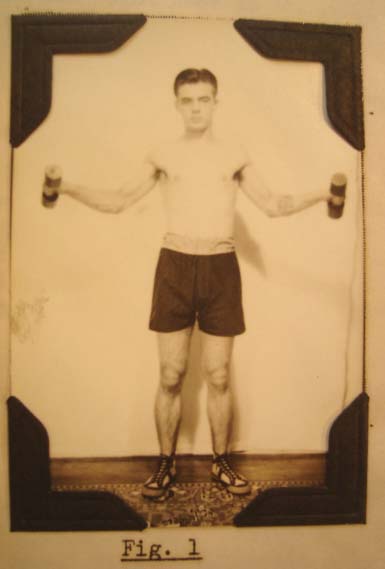
    Ballistics 305Burbling to the top of the massive (organized) heap of material that came my way from the Library of Congress was this beautiful, six-page introduction to punching people, complete with original photographs of the author performing the sweaty necessaries of readying for the punching adventure.  (My guess is that it was never mass produced,m and sent to the Library to protect a copyright application, as is the case of thousands of these LC items that I have.)

    But not being a boxer a punch looks pretty much like a punch to me (unless it is George Foreman crushing the formerly indestructible Joe Frazier with an insane shot to the top of the former champion’s head, a shot so devastating that Joe’s nervous system did not know exactly what to do with all that speedy data*) and, frankly, other things come to mind with the word “punch” quicker than a fist. 

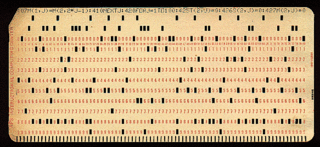
    First is the “punch card”
    which used to be an information-transference

    Blog--punch card

     for programming computers, instructions being the little holes that were removed from the programming card and read as instructions by a little tiny set of people inside the large box that others referred to as “computers”.  (The original “computer”, by the way, were people who did data entry and crunched same; they were carbon-based biounits.  Karl Pearson’s Tracts for Computers of 1911 was a work for exactly those people.)  The punch card was a programming tool used by Jacquard to guide the operation of his loom in the late 18th century and employed widely in this trade after that. It uses as a computation instrument came later to the mind of Herman Hollerith, whose earliest crowning achievement was to put it to use in the tabulation of the American 1890 census. (The government balked with meeting his demands for the use of his invention, or were hesitant primarily so, and Herman took his good work overseas.  A similar path would be followed by the Wright Brothers in about 15 years, as had happened earlier with Thomas McKenney and his going-begging collection of Indian portraits.  National intellectual and monumental treasures like these sometimes had a terrifically terribly go of  being accepted and compensated by our government.) 

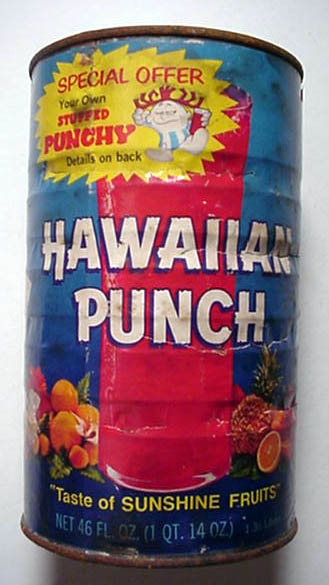
    Blog--punch haiwaiian Maybe the most popular “punch” was the so-called “Hawaiian” one, which was a sugar drink given to children made by a company which was a holding company of  the American Dental Association.  Just kidding about the dental part.  But the “energy drink” was like many others during this period–pure badness that kids loved. It was originally designed as an ice cream topping when it appeared in the early 1930’s, but when folks discovered, somehow, that the topping made a great drink when mixed with water, a new 2% or whatever fruit drink was born.   The “punch” in it came from the wallop of sugar infused directly into the circulatory system.  I don’t know where the “Hawaiian” part comes from. 


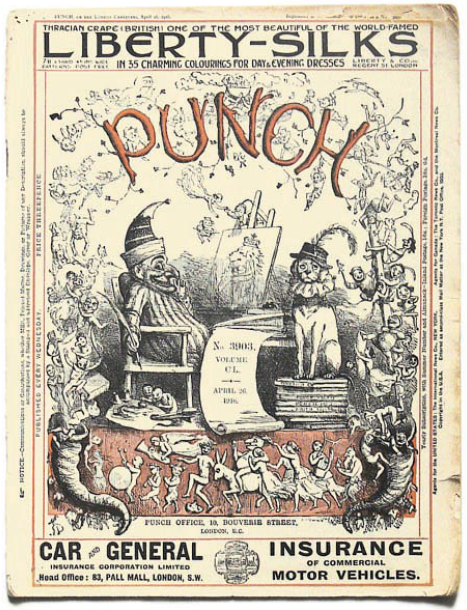
    The most literary “Punch” comes in the form of the British magazine of that name, (Punch, or the London Charivari), a witty and dripping humor and satire magazine which appeared in 1842 and last until 1992. (Punches’ longevity surpasses that of supposed brawler Ernest Hemingway and the tiny-fisted fury of the problematic (did anyone read that last bilge-piece thing he did of the imaginary early life of Hitler?)Norman Mailer.) I think that, like Harper’s Weekly and other such political commentary journals of that time, if you can understand a tenth of the complex  and complicated caricatures and commentary, then you really *do* know your history.

    Blog--punch

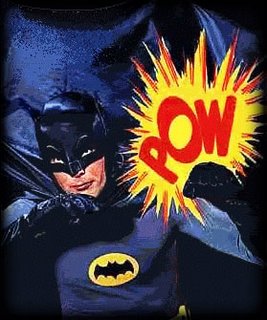
    Probably the most-often referenced literary aspects  though to the punch is found elsewhere, in countless magazines and comics destined for little hands, published by Dell and DC Comics and Marvel.  Only the punch really doesn’t appear so without the reference to the noise it sort of makes,  “POW” (as my daughter Emma has reminded me. “Honey”, I asked her, “what comes to your mind when I say the word ‘punch’?  “Pow” she answered immediately.) And who better to illustrate this point than the immortal Adam West?  (And this of course is not a comic, but a TV show that was made from a comic book that used comic book word balloons[for the first time?] in a video format.) Maybe it is Batman who is the most famous literary puncher, and maybe not:  there’s Popeye, a man of exceptional prowess in the Department of Making Things Unconscious; and the Justice League Superman; the Hulk, who evidently did nothing but punch; and of course, my wife Patti Digh reminds me of “Punchious Pilate”. There’s also Sigmund Freud, a man who delivered a painful and boring punch to the unconscious and whose horrible thinking has been felt right down to this very day, the world suffering his made-up junk  since his own annus mirablis of 1905.


    Blog--punch--POW-Batman Perhaps the greatest knock-out punch of all time (literally) was not the result of George Foreman or Jake Lamotta, but I.B.M.  The I’ll Be Moved Company is the endish result of the work of Willard and Harlow Bundy, the brothers who created the first time, or punch, clocks.  Their company consolidated into the International Time Recording Company and then in 1911 reformulated as the Computing Tabulating Recording Company (CTR) and then again into International Business Machines.  The punch clock kept up to (or down to) the minute surveillance on the comings and goings of business employees (among other many other things), and was perhaps the most influential disruptor and capturing device of time since the invention of the mechanized clock.  It delivered a true knock-out to the cushion of independently recorded renderings of when things “got done”.  

    Lastly, I cannot leave the subject of punching without remarking that I cannot mention Rocky, and that I must simply end the whole thing with two words:  Muhammad Ali.  

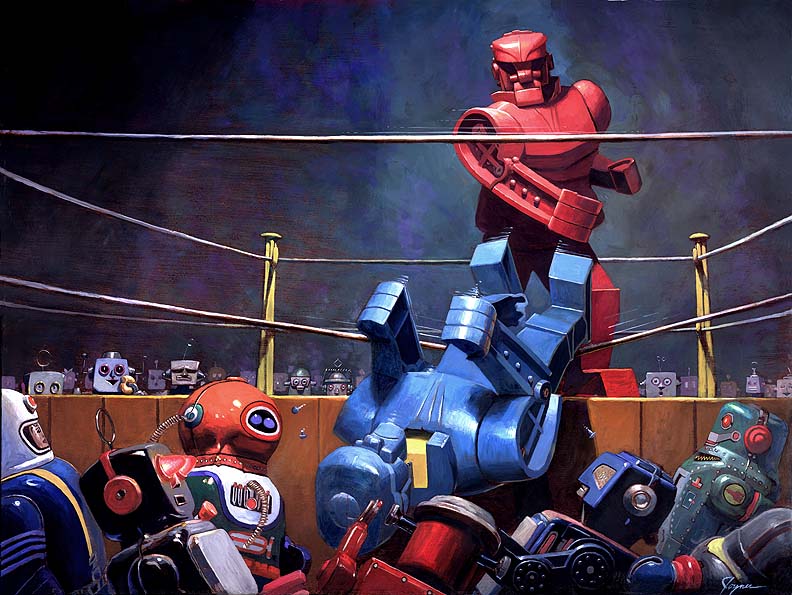
    Blog--punch rock (Image from jeffbots.com )

    A note on the 1973 Foreman/Frazier fight clip:  its actually pretty tough to watch.  If you don’t care for combat like this, I’d stay away.

    *Frazier was by far the superior boxer, but Foreman’s punch was unbelievably devastating. In the 1973 fight between the two men, Foreman knocks Frazier down six times.  Frazier looks pretty scary for the first 2 minutes and 17 seconds of this video,  but at 2:18 foreman hits him with a left that basically ended the fight–Frazier probably didn’t know where he was.  At 3:16 in the comes the second knockdown, and then at 3:36 the third, at the bell ending the first round.  At the opening of the second round Foreman just about lifts Frazier out of the ring, and then crushes his head at 5:10.  Frazier was ready for the fight and he was probably about the best boxer in the world outside of Ali; but he couldn’t hurt Foreman, and then was completely and totally dispatched.


  • A History of Lines: The Hands of Brooklyn

    JF Ptak Science Books    Quick Post

     This is an editor’s conception of explaining the operating principle of how the soon-to-be-built Brooklyn Bridge (finished in 1883) would support itself to the readers of the Scientific American in 1878:

    These “strands” of cable would be fixed to the superstructure with these devices:


    A simple explanation of an enormous undertaking.

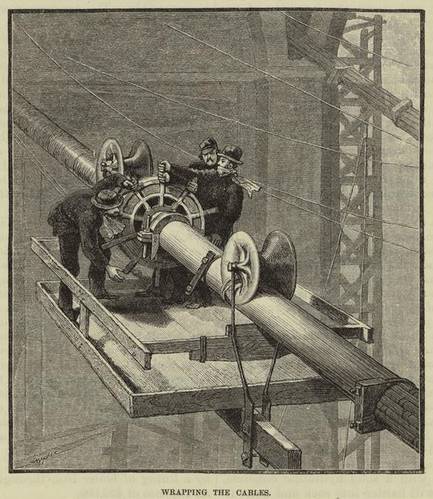
    And I just need to include this image of the wrapping of Roebling’s cables, which was an enormously dangerous job, not helped by the height of the short fence that was supposed to keep these men from falling to their death in the river:

    Brooklyn birdge cable wrapping


  • TechQuiz 2: What Monster-Mega Thing Did This Become?

    JF Ptak Science Books   Quick Post

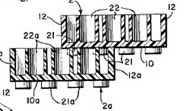
    The original patent for this tube-and-rod design was made at the Danish Patent and Trademark Office in Copenhagen on 28 Jaunary 1958 at 1:58 p.m.  The design could be for an associated cooling system for a steam turbine; or for a high-pressure/reactive clutch of passes and cylinders for a water turbine hydroelectric facility; or perhaps it was for a modern prison system utilizing water-filled bars for prison cells that could indicate a possible jail break if any leaking water was discovered, making tampering with the bars an impossibility.

    Patent lego detail

    What’s your best guess? (Answer below.)

    ·Posted by :

    ·in:

    — —

  • On the Cost-Effectiveness of Killing: Poison Gas (1921) and Atomic Bombs (1945)

    JF Ptak Science Books   Post 1678
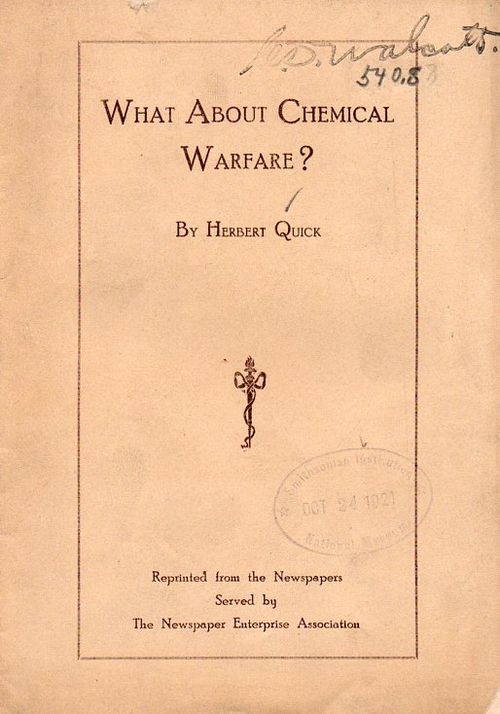
    Chemical warfare

    Atomic bomb eco detil

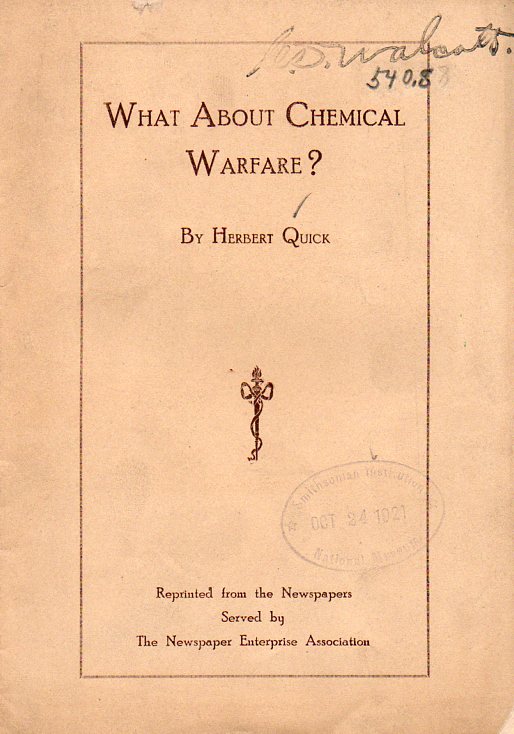
    Herbert Quick did a fair amount of thinking about the military use of poison gas, and it winds up, in the final analysis, thinking that it was tolerable.  What About Chemical Warfare? (published by the Newspaper Enterprises Association in 1921) is certainly a possible title for a Duck-and-Cover A-Bomb or You and Your Hormones kind-of-film–it has that certain stripe to it, bearing the certainty of wrongness that becomes more visible with each passing month.  (The pamphlet is available for purchase from our blog bookstore, here.)  But Mr. Quick took the slow boat around his issue, thinking about it a little long and out loud, before coming to his final conclusion in the chapter titled “Gas Warfare Cheapest and Most Effective Arm of Defense”.

    {See here for my post on Willis R. Whitney’s letter/proposal for establishing the American chemical warfare capacity, 1917.]

    He points out the enormous impact in the war effort that relatively small chemical corps played in WWI–something on the order of hundreths of one percent of all serving soldiers were employed in the combined chemical corps, saying “how small a body to produce such great results!” Which is true, assuming that by “great” he meant ‘widespread’, though it is unclear exactly what he was talking about.

    Mr. Quick (born in the first year of the American Civil War and dead four years after the publication of this pamphlet, writing evidently from the cushion of old age) does make a case for poison gas being not so inhuman as presented by most civilized people, pointing out both its high quick-death rate and survivability/recovery rates, which seems to be giving/taking at the same time. No matter:  “But woe to the army or nation that does not keep up with the times.  The Angel of Death will breathe in their faces” he writes. 

    The author alsoAir raid885 warns that though Germany was “stripped” of her war-making capacities, he thought it was not so of the industries necessary to produce poison gas. He points out that Germany can produce these munitions in secret, and that if any “militaristic nation conquers the world in the future”, it will be through the use of the poison gas it developed in secret. 
    Defense was also important:  “in the absence of efficient defense worked out beforehand, our great cities might be wiped out with gas bombs dropped from aircraft”.  Mr. Quick believes that protecting cities is possible, writing simply “preparation will prevent such a crisis”.  Indeed.  Unfortunately no ideas about this defensive posture were forthcoming, though he did bring himself around to writing about gas as a defensive tool.  Against looters. And rioters. And snipers.  “Gas puts the sniper in the power of his enemy” Quick writes, using the Marine action in Vera Cruz, Mexico, as a good example of where gas (“gas grenades”) would have come in handy.

    The bottom line is of course the bottom line, practically stating that poison gas as a weapon was indisputably more cost-conscious than anything else, by far, each dollar spent on chemical warfare being worth “from three to five hundred for the army”.  Poison gas services Quick says should be pursued, because “gas warfare cannot be stopped until all war is stopped”.

    Gas warfare “gives the educated, intelligent nations the advantages over the people of lower civilizations”.

    “When both sides are prepared it is much less inhumane than war with bullets and high explosives; but it means horrible annihilation to the army which is unprepared.”

    It is an interesting exercise to replace “poison gas” with other types of weapons, just to see how it reads.

    Mr. Quick was up and down in his treatment of poison gas and war, though almost entirely down.  One thing he didn’t see, that no one saw, really, was the use of a particular gas that was used to destroy millions of people, and which was developed quite in the open in Germany for many years, used for killing rats.  The Nazis simply used it instead on people.  No one saw Zyklon-B coming, and no one could have, even when they did.

    See also my post here on Hermann Goering and Zyklon-B.

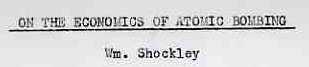
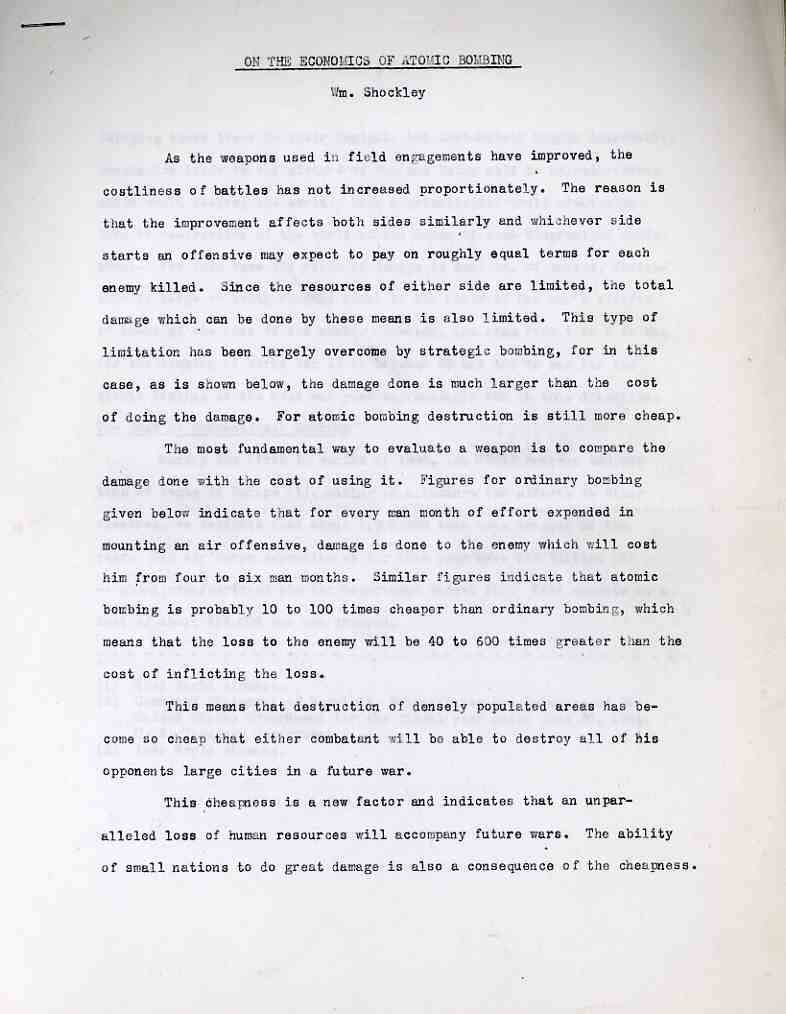
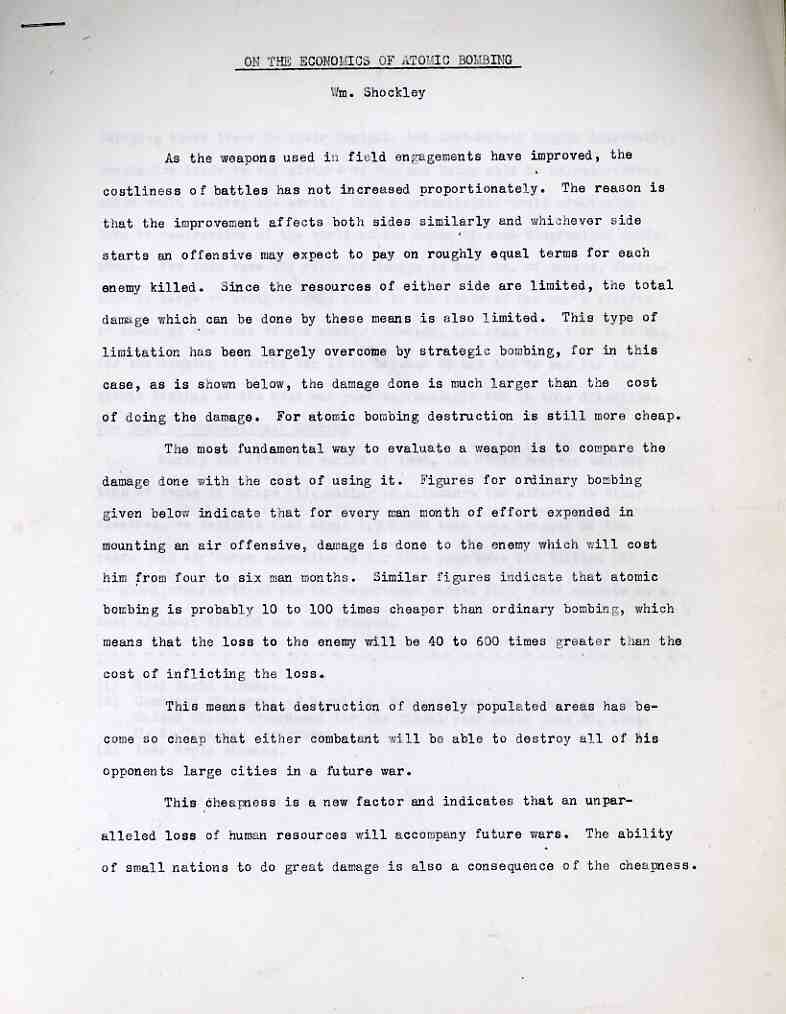
    William Shockley–a future Nobelist and probable weak member of a Nobel-team that invented the transistor and which included John Bardeen and Walter Brattain, or I should say rather a team of Walter Brattain and John Bardeen including William Shockley–sent forth a memo on the mathematics of destruction and the use of the atomic bomb.  He was part of a largish team working on what to do with the new technology once the bomb had been used and the war won.  (I’ve written more on this paper here.)
    Shockley atomic


    This paper was written towards the end of 1945 and is on five pages and runs about 1500 words, and is an extension of work he had already been doing for Henry Stimson with Quincy Wright on evaluating the combinations of casualties that would lead the Japanese to surrender.  He begins this paper with a logical statement of the issue of the economics of conventional and atomic bombing, ending with the sentence “For atomic bombing destruction is still more cheap”.  What Shockley is getting to is the overall cost of the amount of destruction caused per square mile, and the conclusion that he draws over these five pages is the destruction caused by the atomic bomb is 1/100th the cost of conventional bombing per square mile destroyed (“atomic bombing is probably 10 to 100 times cheaper than ordinary bombing”).

    Shockley also recognizes that the problem in the near future will be the increasing cheapness of producing atomic (and greater) weapons, and their developing accessibility to small nations.  “This cheapness is a new factor and indicates that an unparalleled loss of human resources will accompany future wars.  The ability of small nations to do great damage is also a consequence of the cheapness.”  He writes further that taking this thinking to its “logical conclusion”, that at some point in the future a single individual will be able to use this new technology to destroy the world.  The main point though that he was making in this line of thinking was the dispersion and proliferation of the new technology–that an arms race would occur, and that it would be dangerous, and that it could be very very bad.  Shockley has of course nothing to say about any of that or the implications of his finds as that was not his charge. 

    After figuring that the cost of destruction by the atomic bomb was about $600,000 per square mile (compared to $6,500,000 per square mile for conventional bombing), Shockley concludes that “since the atomic bomb art is in its infancy, we may well expect future economies of a factor of 10 in cost per square mile destroyed…”
  • Tech-Quiz What is It? Can You Identify What Made this Patent Mega-Famous?

    JF Ptak Science Books    Quick Post

    I would not have made the intuitive leap to what this “game apparatus” would become from the simple reading of the opening two paragraphs of the patent description for it by its creator, J. Brunot:

    “This invention relates to apparatus for playing board games and more particularly to apparatus designed to facilitate scoring procedures in connection with the playing of such games. In many board games playing pieces are placed on certain contiguous or successive areas marked out on the board and the placing of the playing piece on certain predetermined areas results in an adjustment of the score of a player either by adding a bonus to the score or subtracting a penalty therefrom.”

    “Usually the predetermined areas which result in adjustment of the score are marked in a characteristic way in order to show how the score is to be adjusted.  However when a playing piece is placed on one of the predetermined areas it covers this marking and it has been found that frequently the playing piece has subsequently to be lifted in order to discover how the score should be adjusted. The object of the present invention is to provide board game apparatus in which the occasions for such subsequent lifting of a playing piece are eliminated or substantially reduced…”

    [Patent 2,752,158 GAME APPARATUS James Brunet and Helen Brunot Newtown Conn Application October 28 1954 Serial No 465,222 priority application Great Britain June 11 H54 5 Claims Cl 273 135]

    The patent drawing offers a much better visual clue, but it still really doesn’t bear a great witness to what the apparatus would become:


    And the story on the answer to what this is can be found at the SCRABBLE Association history section.


  • A Heavy, Round, Wooden 17th Century Interweb–Two, Actually.

    JF Ptak Science Books    Quick Post

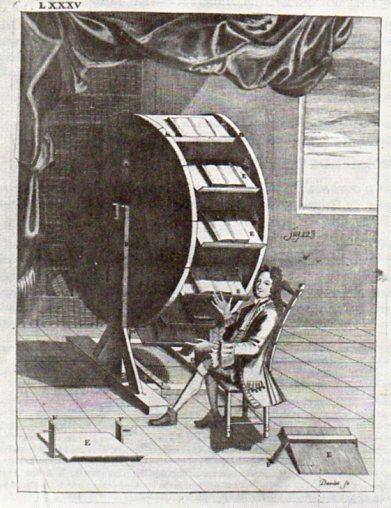
    booksnbuildings: kunstwissenschaftlerin:   ook wheel illustration in Agostini Ramelli’s Le diverse et artificiose machine del Capitano Agostino Ramelli (Paris, 1588). 

    Since there was no controllable source of electricity in the 17th century, there would need to be an alternative to delivering multiple sources of data to a seated recipient or researcher.  In these two instances, this issue was solved with wood–big wood.  And as we can see, the reader could choose from 12 different data sources–books–while not having to rise from the chair. 

    [Image source:  Agostino Ramelli, Schutzkammer Mechanischer Kunste, Leipzig, Georg Liger, 1620–a tall, thick book with 195 full page illustrations like this for all manner of invention and convenience.]

    Interweb 18th c045

    [Image sourceNicolas Grollier de Serviere, Recueil d’Ouvrages Curieux de Mathematique et de Mechanique...printed in Lyon by David Forey in 1719–another good-sized book with 85 full-page (Copperplate) engravings.]

    It also seems to me that there could be some doubling up on the placement of the books, allowing 24 of them to be displayed; there might also be something that could be done with a sliding shelf so that those two could be doubled, allowing 48 books to travel ’round at a time. This would be a huge boon to the reader here in  1620 and 1719, if that’s the way you were measuring “boons”.  It would be nice to have all of those sources open and available and neat, but one longish table would be good enough for that.  and certainly more furniture would be available to people contemplating having one of these monsters built for them because in almost all cases only the wealthy of the religious orders could possibly own 12 or 24 or 48 books at this point in history, so space would not have been a problem, necessarily. 

    The one thing that this interweb had going for it over the existing version–all of the sources used were vetted.


  • Medieval Chair-Shoveling and a Few Later-Day Shovelers of Note

    JF Ptak Science Books  Post 1672


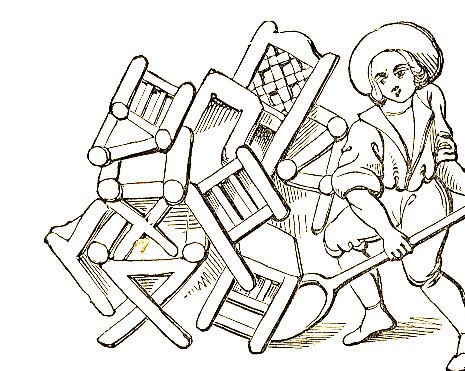
    + chair shovel

    Seeing this extraordinary woodcut of a sculpted feature on the Medieval section of the beautiful town hall of Brussels reminded me of famous shoveling, in general.  To begin with, though, I can’t fathom the meaning of this sculpture, shoveling chairs.  Perhaps it is a metaphor for the leaders not recognizing relaxation?  Or the (presumed) fact that there was no seating inside for the people doing business there?  Or that you were expected to seek your business and not loiter at town hall?  I really don’t know.  But images of other shovelers did pop into my mind. 

    The most instant shoveling comes from the song Big Rock Candy Mountain (which I’ve written about earlier here) and the very simple plea from a down-but-not-out man for not having to work with “short handled shovels1”.

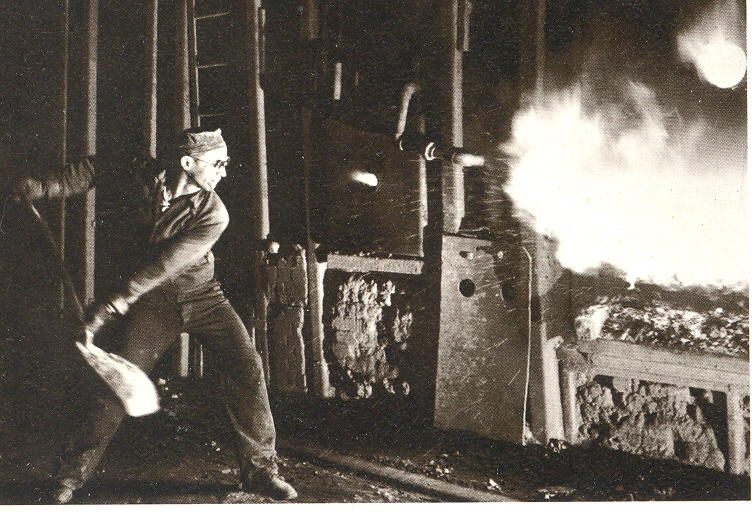
    Next in mind was Frederick Winslow Taylor, who was seen as an iconic leader in establishing human motion studies for efficient factory

    + chair shovelsteel shovel

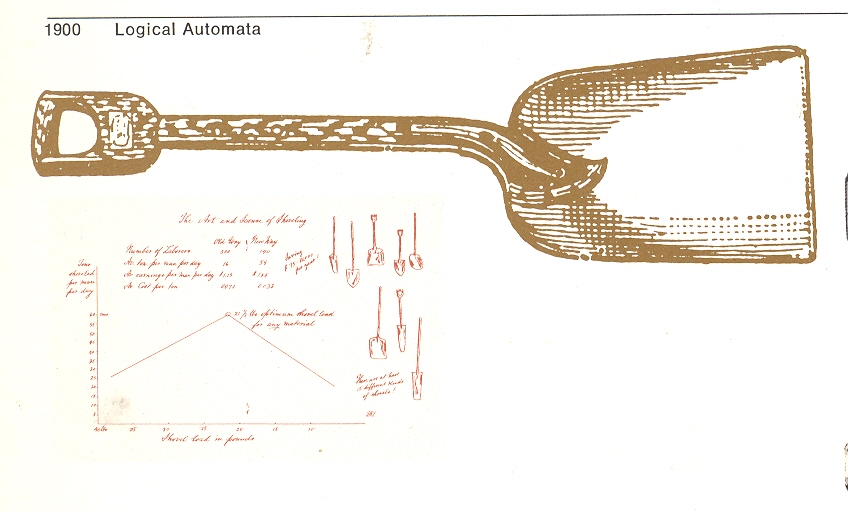
    (and etc.) operations in early 20th century America.  He did very detailed motion studies of people working—say, in this case of a man shoveling coal into a furnace at Bethlehem Steel in 1907—to determine that best sort of arrangement/placement of tools and supplies.  It was very influential work, for sure, and Taylor, who loaned his name to the movement of this sort of effective watchmanship, (“Taylorism” and “Taylorization” and also “scientific management”) and took a huge step forward in establishing efficient factory and business operations and also automatizing the human working cogs in the workplace.  According to the wonderful Eames’ brothers book, A Computer Perspectives (1973), “Taylor established the scientific fact that…a first-class shoveler will do his largest day’s work when he had a shovel load of 21 1/2 pounds.  Then as a matter of common sense…it was necessary to furnish each worker with a shovel which woul dhold exactly 21 1/2 pounds of the particular material which he was called upont to shovel” (page 52).  This, by the way, is also a short handled shovel.+ chair shovelsteel shovel daig

    I then thought about the Seven Dwarfs from Snow White (incidentally Tom Waits covers the “Hi Ho, Hi Ho” song like no one ever did or will) but they all carried picks, not a shovel (so far as I can see) among them. 

    There are undoubtedly many great shovelers—they’re just not people I know about.  I can imagine that Casey Jones must’ve had help to feed his locomotive’s fires; the gold rushes around the world produced some very wealthy shovelers whose numbers were titanicly dwarfed by those who shoveled and lost; soldiers have shoveled themselves into the earth for protection for at least 170 years (actually I don’t know when before the U.S. Civil War that soldiers found protection in their own burrows); and so on, but I just don’t know anyone by name.  And so my rumination ends—I did say that it was wispy.


  • Bartleby the Computer, 1853-1957

    JF Ptak Science Books  Quick Post

    I was reading Computers and Automation tonight and found this lovely short story in the July 1956 (volume 5, no. 7) issue.  It is a short story written by Jackson W. Granholm (a biographical note on Granholm appears in the ACM notices  here) on the application of a supercomputer put to solving a very particular–and peculiar–problem.

    The story is called “Day of Reckoning”, and tells the tale of the ever-working, highly-dependable-indispensible SUPERVAC being readied to accept the end-all program, readied like the countdown to the launch of Apollo 11 to receive the question, hauling on board into his storyline the other professionals who read the journal for tech reports and info, trying to keep them in his boat with a sci-fi tale based on his own work experience on some big machine at Boeing.

    Finally, we see the question:  “Describe the detailed design of your superior successor!”

    Well of course the SUPERVAC had been working perfectly right up until this time, though with the problem submitted the computer began to behave erratically.  It works for 12 hours or so, blinking and flashing away, until at 10:35 pm the MULL light went out, the solution reached.

    “12 October 1957, 2230 PM PST, 0130 am GCT–PROBLEM 198BC12-XA–RECKON HAVE EXCELLENT POSITION HERE. NOT 2ISH RELINQUISH IT AT THIS TIME. THANKX. ROGER  — PDA**EM –OUT.”

    Overall, SUPERVAC “would prefer not to”.

    [The Melville short story can be found here.]