A Daily History of Holes, Dots, Lines, Science, History, Math, Physics, Art, the Unintentional Absurd, Architecture, Maps, Data Visualization, Blank and Missing Things, and so on. |1.6 million words, 7500 images, 4.9 million hits| Press & appearances in The Times, Le Figaro, Mensa, The Economist, The Guardian, Discovery News, Slate, Le Monde, Sci American Blogs, Le Pont, and many other places… 5000+ total posts since 2008.

Category: Technology, History of

  • Television Field Trials, the Beginning of the “Networks”, and the First T.V. Dinner (1936)

    JF Ptak Science Books     Post 1632

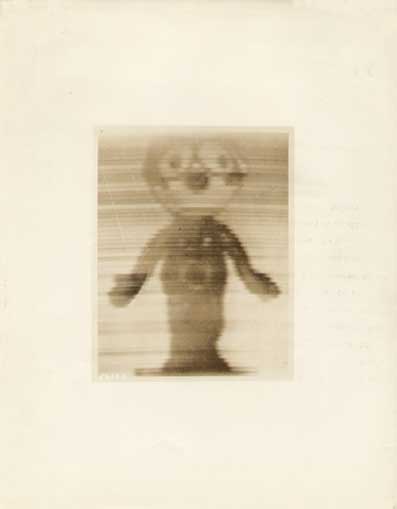
    The first broadcast images in the history of television transmission were revolutionary if not very interesting.  Beginning in 19028 the first experimental Radio Corporation of America (RCA, via the National Broadcasting Company, NBC, its broadcasting division) images were of Felix the Cat, and something that would be received with 60-line clarity on a two-inch display.  For the most part, the daily two-hour broadcasts consisted of Felix or test patterns, broadcast from NYC, until 1931.  

    Image quality increased markedly by the 1932 field trials with the use of iconoscope cameras, which allowed for 240-line reception though still with very noticeable flickering. The 1934 trials were improved further to 343 lines and with some less amount of flicker. 


  • First Use of the Term “Super Computing”

    JF Ptak Science Books   Quick Post

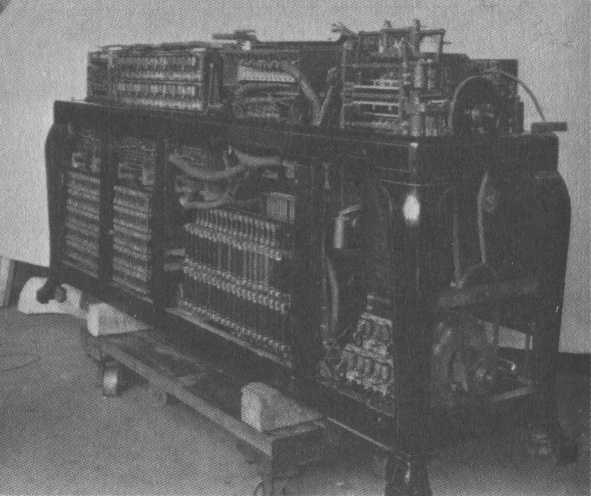
    The Columbia Difference Tabulator – 1931

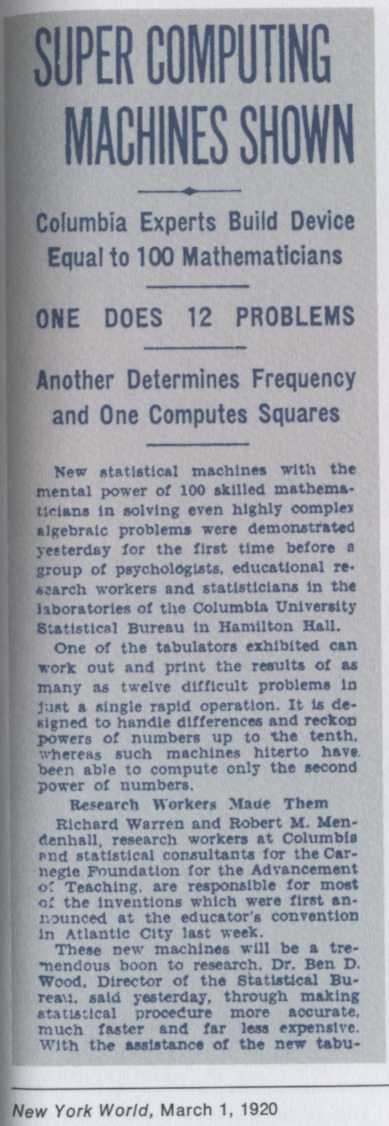
    The earliest use of the term “super computer” seems to com from the New York World, (“1920” though actually 1929), and was applied  to a unique instrument made by IBM for Columbia University.  The The Columbia Difference Tabulator, completed that year, was nicknamed the “Packard”, after the large, streamlined-but-bulbous American luxury car of enormity.

    http://www.columbia.edu/cu/computinghistory/statlab-clipping.jpg

     And a picture of the great beast, below.

    [Picture source:  Columbia University computer history page,  here. .]


    http://www.columbia.edu/cu/computinghistory/packard-emitter.jpg

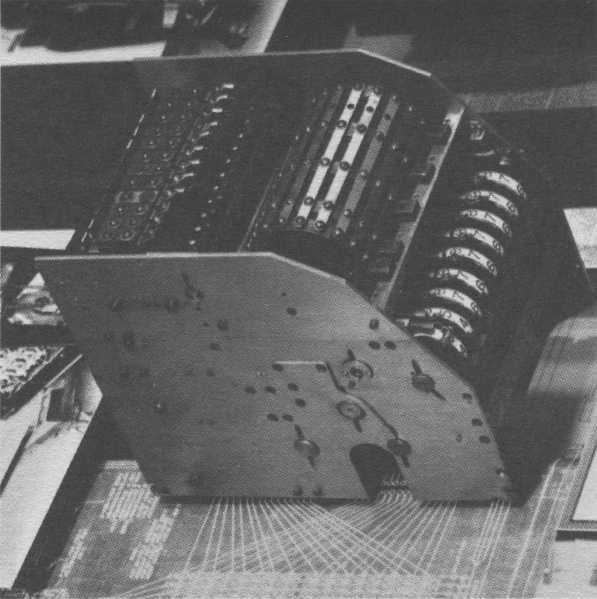
    “The new machine “mass-produced the sums of products by the method of progressive digiting and read punch cards at the rate of 150 per minute. It contained ten 10-position counters with provision for shifting totals internally from one counter to another – a capability that anticipated a future function of computers.” [9]. The new machine, variously called the “Columbia Machine”, the “Statistical Calculator”, the “Difference Tabulator”, and (because of its massive size) the “Packard“, was delivered and installed in 1931.”–From the Columbia University site, here.

    Idea source: Eames, Charles; Eames, Ray (1973). A Computer Perspective. Cambridge, Mass: Harvard University Press. p. 95.  More links and references at Columbia University’s computer history page,  here.


    Notes:


  • Future of the Past–Barber Machines, 1868

    JF Science Books       Post 1609

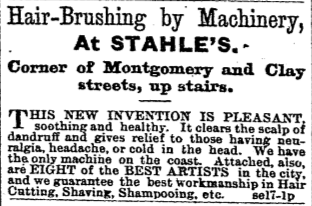
    Hair brushing862

    In mid-Victorian England lived high possibilities for the use of electricity, in industrialism, in tools, and machines–but I think most of all, it was the new appearance of  Revolutionary Machines that seemed to me to offer itself as the new religious altar for the mass of people. After all, machines looked absolutely beautiful–and it wasn’t just the machines, but their housings as well, what with some of these massive things being housed and supported by absolutely gothic-inspired designs, making the entire unit seem as though it was not only used by was the seat for some sort of belief.  

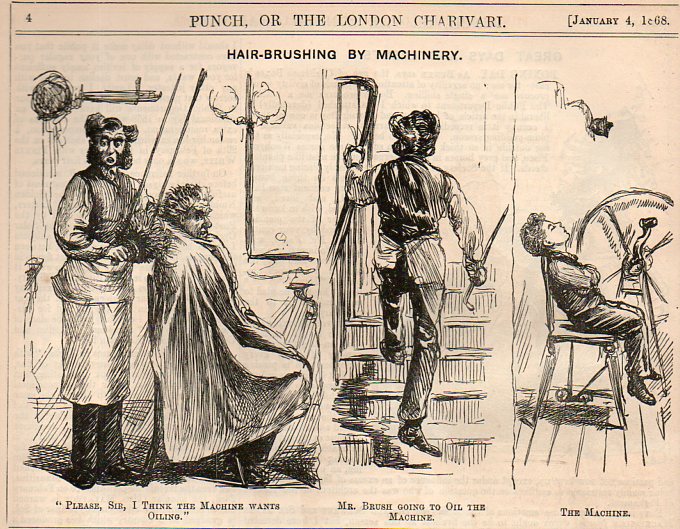
    Hair-Brushing by Machinery.

             [Image source:  Sam Ryan, with transcription by him below.]

    And like anything else, some of this belief-and-application system went a little too far, as we can see in this 1868 cartoon from Punch magazine.  There were new machines that could help the barber to treat hair–or in this case, brush it–but the new machine didn’t really do that much good, so the thing might not have existed at all except to keep the barber from being bypassed by his more-modern companions.  But at the base of it all, like so much in Vctoria-ville, this machine happened to by Boy-powered. 

    The cartoonist was just having a jab at the over-reaching of more-complex machines to do simple work, along with a sideways social poke at the idea of child labor. 


  • On Patenting Fabric-of-Space-Time Hole Punchers

    JF Ptak Science Books   Post 1607

    The United States Patent (And Trademark) Office is the keeper of  millions of tiny flames of inspiration and invention, and was given its offices in Article 1 of the Constitution (“”The Congress shall have Power … To promote the Progress of Science and useful Arts, by securing for limited Times to Authors and Inventors the exclusive Right to their respective Writings and Discoveries”). 

    There are now 6,800 patent examiners working away in the Alexandria patent building, up from 4,200 just six years ago. Still, that’s a lot of patents to have to inspect, and even in the best systems with the best people working there will some things granted patents that ought not have been. 

    One of the great shining lights of patented inventions in the Hall of Huh? must certainly belong to Boris Volfson, who was granted a patent in 2005 for his superconducting electromagnetically-engined space-time continuum-bending dual-piloted perpetual motion space/time ship.  It seems to be run on a special mixture of nonsense physics, suspended belief, and hope, though I think the power source was mostly engineered from the “hope” side.  It is slightly Mayan-esque, and looks pretty.  Aside from that, there’s nothing else going on here. (An article appeared in Nature 438, 139 (10 November 2005), calling the “invention” out and questioning the process behind the granting of the patent.)

    There was also the “hyper-light-speed antenna”, a less-than Star Trekian invention given U.S. Patent 6,025,810
    that was able/supposed against all known physics and sense to transmit energy at speeds in advance of light via (again!) holes in our space-time continuum.  The inventor writes: “The present invention takes a transmission of energy, and instead of sending it through normal time and space, it pokes a small hole into another dimension, thus, sending the energy through a place which allows transmission of energy to exceed the speed of light.” I like the “pokes” and “thus” parts. [The abstract for the patent describes the invention so: “A method to transmit and receive electromagnetic waves which comprises generating opposing magnetic fields having a plane ol maximum force running perpendicular to a longitudinal axis ol the magnetic field; generating a heat source along an axis parallel to the longitudinal axis ol the magnetic field; generating an accelerator parallel to and in close proximity to the heat source, thereby creating an input and output port; and generating a communications signal into the input and output port, thereby sending the signal at a speed faster than light.”]

    But it isn’t the absurdo-complex stuff that somehow drags itself through a primordial soup of caffeine-generated confusion–simple stupid stuff occasionally will get patented as well.  Like the cat exercising device U.S. Patent 5,443,036, where someone somehow got a patent for showing how to use a laser pointer in cat hijinx.  Or the “Method of swinging on a swing” (U.S. Patent 6,368,227), which seems to have been an experiment by a patent examiner with his seven-year-old son that got a life of its own for a little while before eventually being found out. 

    These of course are anomalies, and the good folks at the USPTO receive something like  half-million patent applications a year, so I guess a few of these bogies will slip in from time to time. Perhaps it is time for me to try and patent Pressing the Letter “E” on the Computer Keyboard Really Hard and we’ll see what happens.



  • Computer History at Fort Detrick, an Unpublished Document (1957)

    JF Ptak Science Books   Quick Post

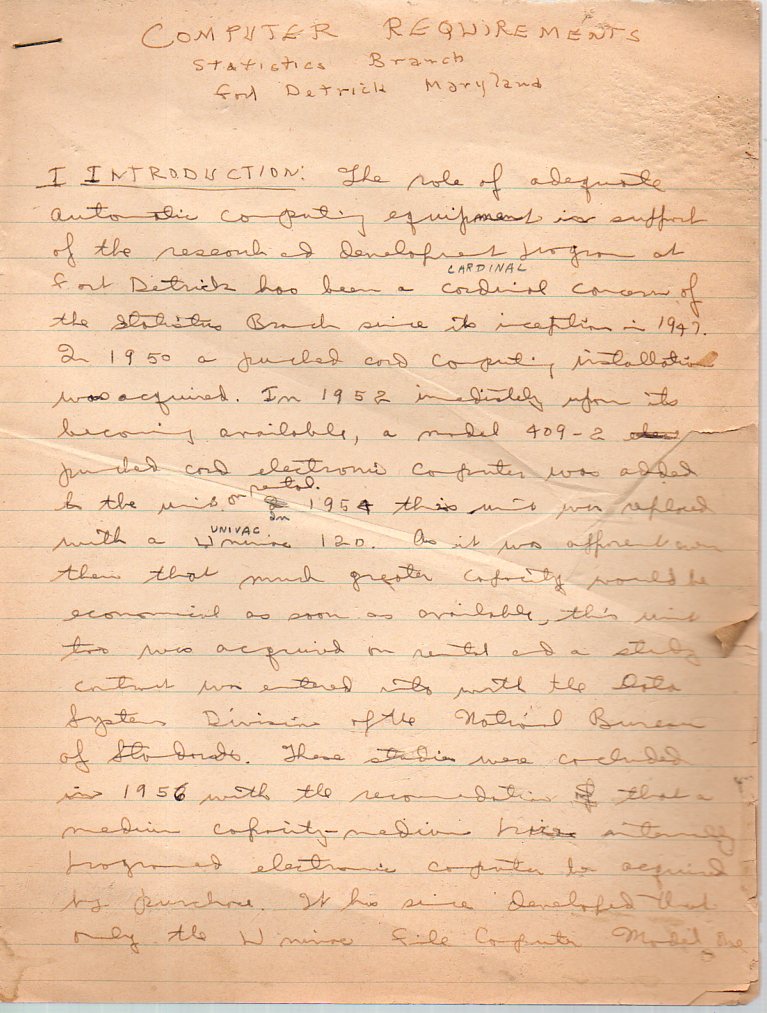
    I’ve found an unusual, informal document; a rough, manuscript outline for a consideration on the computing capacities at Fort Detrick, in Frederick Maryland.  Fort Detrick is a Medical Command, and was the seat of research for the  United States’ biological weapons program (1943–69), and which is today a large facility (on 1,200 acres) devoted to biomedical research, the “U.S. Army Medical Research and Materiel Command (USAMRMC), with its bio-defense agency, the U.S. Army Medical Research Institute of Infectious Diseases (USAMRIID)”, as well as  medical materiel management and global medical communications. 

    (This document is avaliable for sale at our blog bookstore.)

      Computers fort detrick855

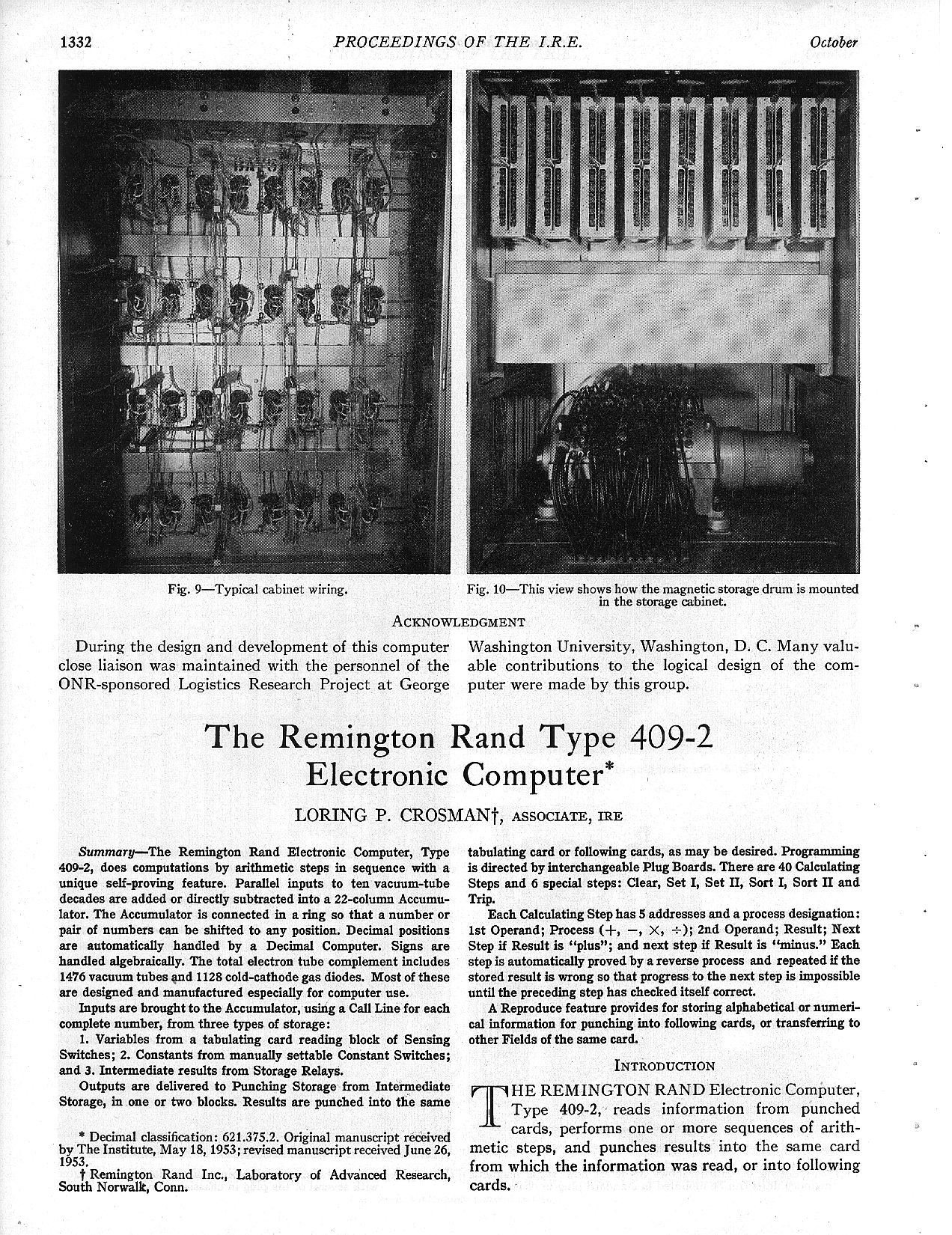
    The document (“Computer Requirements/Statistics Branch/Fort Detrick Maryland”)  is handwritten by the former chief statistician around 1957, and in five tight pages outlines the basic necessities for the needs of computing facilities at the fort.  The document mentions two machines in particular, the “409-2” (with is the Remington Rand 409-2, an ENIAC style machine, produced in 1952) and the UNIVAC 120 (which is a release of the 409-2, done in 1953).

    http://www.nixiebunny.com/rand409-2/rand1.gif

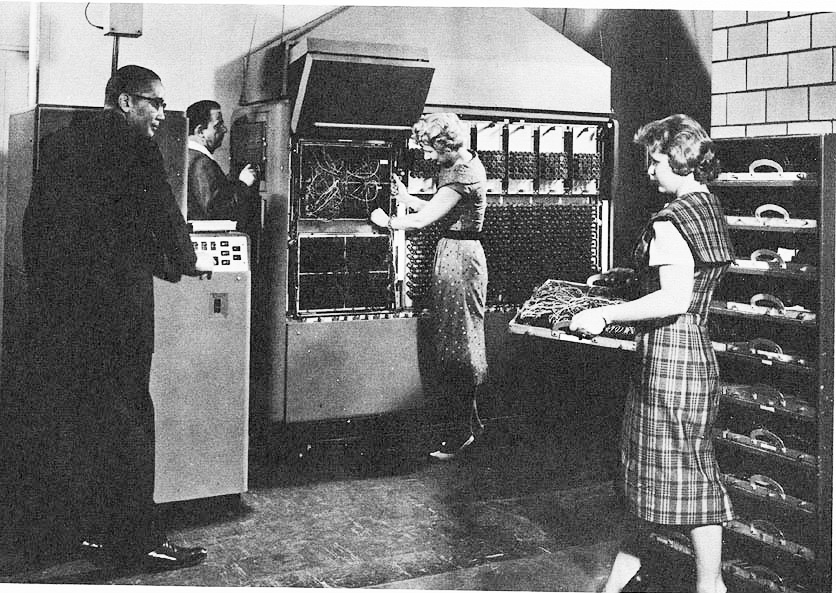
    The UNIVAC 120:  “The Remington Rand 409 control panel programmed punched card calculator, designed in 1949, was sold in two models: the UNIVAC 60 (1952) and the UNIVAC 120 (1953). The model number referred to the number of decimal digits of vacuum tube memory storage provided for data.”.– Universal Automatic Computer Model 120 A Third Survey of Domestic Electronic Digital Computing Systems Report No. 1115, March 1961 by Martin H. Weik (engl.)

    File:UNIVAC-120 BRL61-0890.jpg

    Enjoy the rest of the previously unpublished document, below:


  • Looking Backwards: How Far Back in Time is 1954 (in Computer Years)?

    JF Ptak Science Books  Post 1603

    How far back is “way back”, or “waaay back”, in terms of history?  As I’ve written earlier in this blog, about going deep into history in various disciplines, but perhaps in no discipline is time so compacted than in the computer sciences.   Mr. Peabody (above, with his boy, Sherman) would agree, and would hardly have to go “way back” in his “way back machine” to get chronologically deep in computer history. 

    Acm a835
    1954 is extremely deep in the history of electronic calculation–it is three years before Backus et alia created FORTRAN, five years before the integrated circuit was created, eight years before the first compsci department is established at Purdue, eleven years before the first Ph.D. is awarded in computer sci from a computer science department (Wexelblatt), and fourteen years before the first woman (Liskov) earned a Ph.D.(whose dissertation was A Program to Play Chess Endgames) in the field.  All of which sounds like ancient history, but almost all of which takes place during my own lifetime, which doesn’t make it sound so terribly “ancient”.

    Acm a839
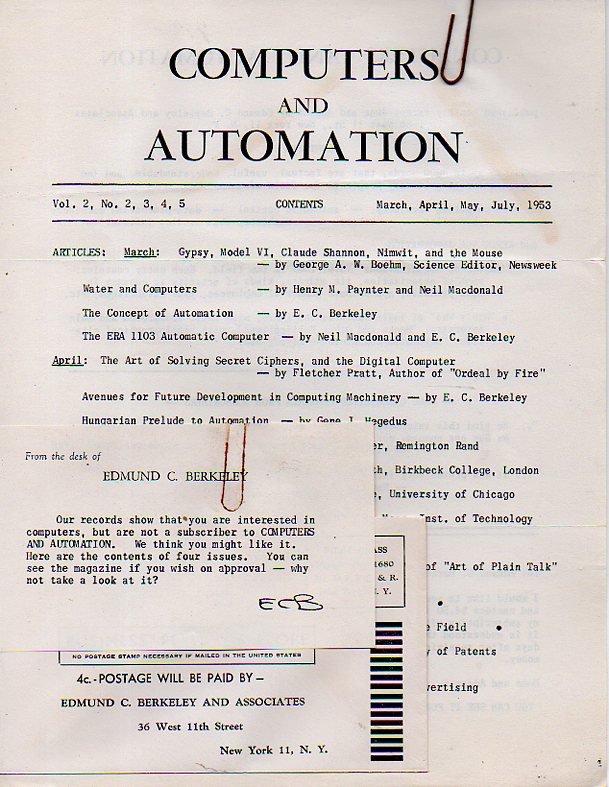
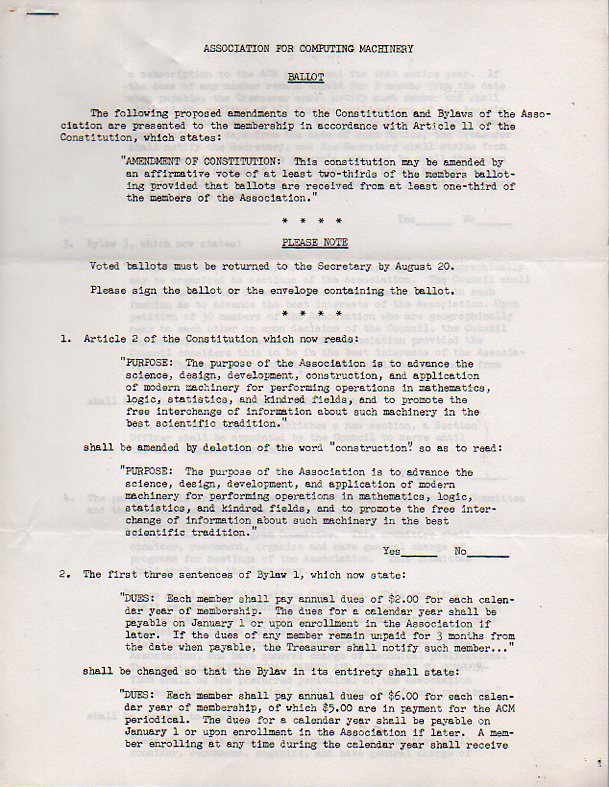
    But looking at this ephemera on membership and dues and voting on the Constitution for the Association for Computing Machinery certainly makes it seem as though so–the voting and bylaws ballot is a few mimeographed pages long and is hand-stapled at the top, the announcenments for meetings fits on one sheet of paper, and Edmund C Berkeley is hand signing his initials on pleas for new subscribers to his Computers and Automation journal.  Everything looks so fresh and new and uncomplicated–and that’s because it was, relative to what we experience now.  In 1954 there weren’t 10,000 people working in the field of computing; 57 years later the growth in involvement of people working in the field is at least three orders of magnitude, and quite possibly four–the growth in the sheer volume of printed and digitally-circulated material is probably somewhere on the order of the differences between post-Gutenberg European printing and the printing industry in the year 1990.  The changes are spectacular, and they seem to be so much more appreciable when one looks at the foundation efforts from the early years. 


  • The SteamPunk Clown Spoiler of Future ElectroPunk Technology, 1866

    JF Ptak Science Books  Post 1598

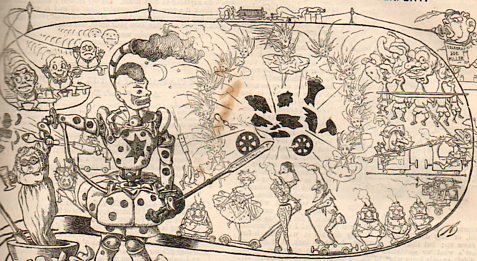
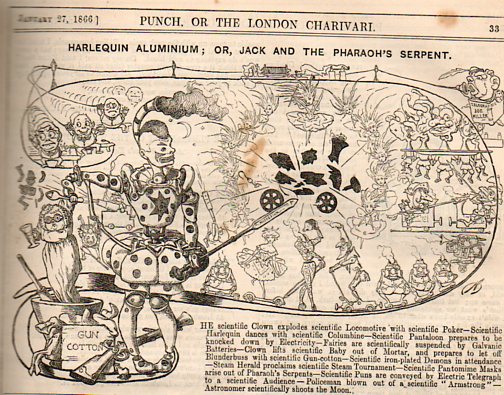
    Punch, or the London Charivari published this delightful and somewhat prescient illustration in its 27 January 1866 issue.  It is for me an excellent, sort-of early depiction of a steam-man, a steampunk man, a steam-driven clown:  deeply and frequently hinged, smoke belching from a curved smokestack coming from the back of its head, and controlling its own destiny.

    Sci clown694
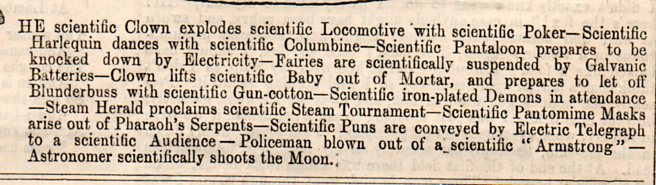
    And what it seems to be doing with its poker in controlling its steam technology is busting the new technologies of the era, a rub and at the same time a statement of hope or expectation in a high-Victorian manner, a rationalism of all things via technological means.  And at this time, in the mid-1860’s, the new wellspring of hope was being found in electricity-based solutions–moving away from the pervasive steam-driven technologies–though as the cartoon suggests those expectations might be too soon, too fast and too deeply placed.  After all, these things are being exploded by a “scientific clown” with a “scientific poker”–and that clown is being driven by steam. 

    Sci clown695

    Sci clown692


  • Buck Rogers and the Failure of Imagery in WWIII, 1946

    JF Ptak Science Books   Quick Post  [Part of the series on Atomic Weapons]

    Atomic war buck rogers683
    Atomic war buck rogers685
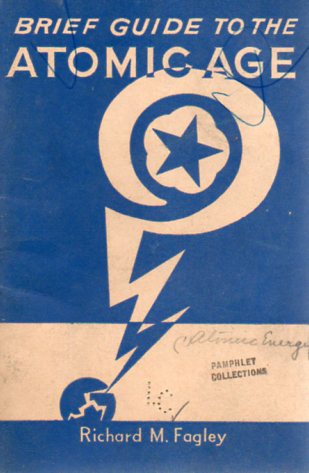
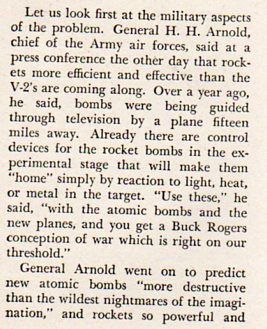
    Richard Fagley took a sleepy, 4th grade side step through the coming decade or so in the future of atomic weaponry.  The thign is, he got a bunch of it right.  But where he missed a bunch of it, where he underestimated the power of atom weapons, was that they would provide the future us with a “Buck Rogers” style of war.

    Now of course in 1946 the Soviets hadn’t developed a Bomb, but anyone who knew anything knew that it would be just a matter of time before they did.  Smart estimates were coming in at a decade or more–few people were prepared for the Soviet announcement in 1949 that they had achieved that goal

    Fagley missed the impact of atomic warfare of the future not on his own accord–he was quoting someone who knew far more and knew better–General Hap Arnold, the Commanding General of the U.S. Air Force.  But as it turns out, Arnold really didn’t have the vocabulary or this discussion, and couldn’t really estimate the “effectiveness” of the use of 

    Atomic war buck rogers684

    the new weapons. 

    So far as I know, Buck Rogers didn’t have weapons like atomic bombs; the war of the future, even though Fagley says that there wouldn’t be many survivors, would be far worse than they could imagine it to be–perhaps because that amount of destruction was still unimaginable. Buck Rogers just didn’t have the vocabulary for such enormous power and mass destruction, unless he had a planet-eater or something that I don’t know about.  In any event, words to describe the coming possibility of vast annihilation just didn’t seem to be at hand in 1946–the words and ideas, and the weapons, would soon (in the Ulam-Teller hydrogen bomb, 1951) be at hand, though. 

    Buck Rogers Will Wake Up In A 3D Future image


  • History of the Future–Advertising in Yellowstone, 1905

    JF Ptak Science Books  Quick Post

    Ads future662

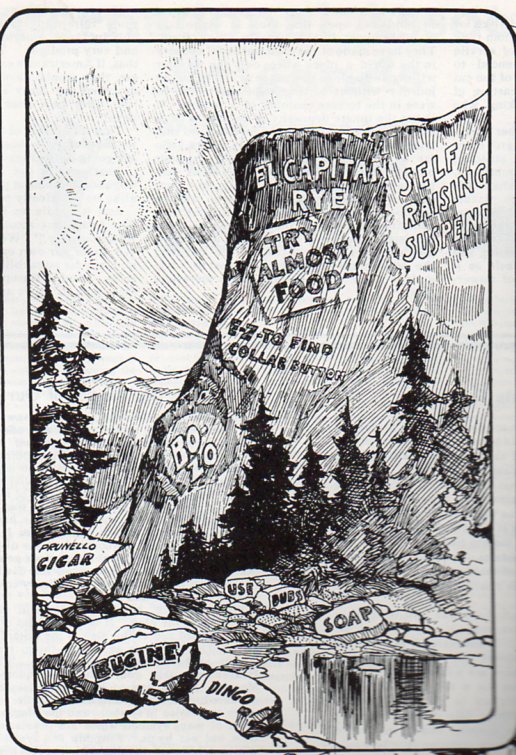
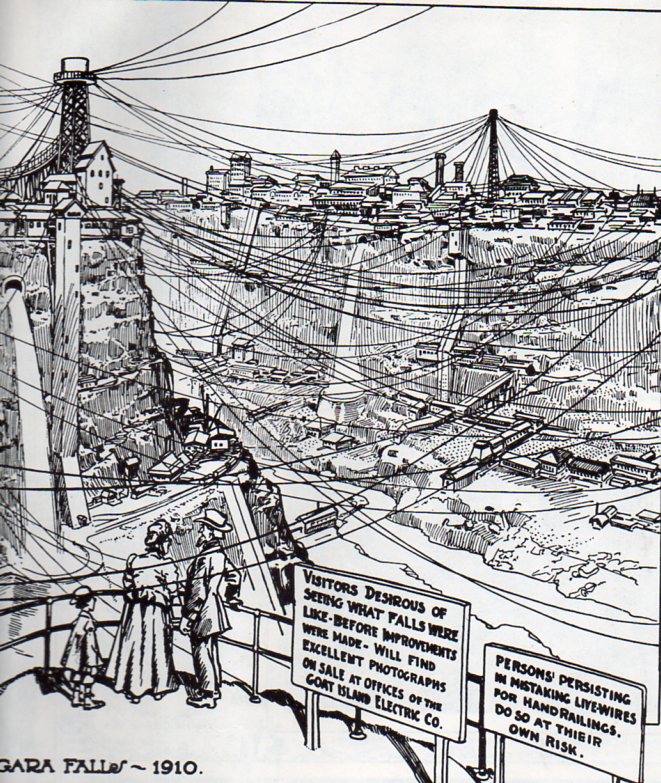
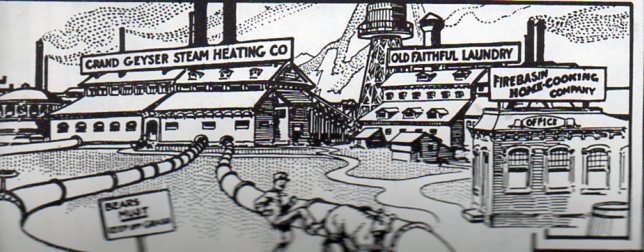
    The way of the new world, the spread of commercialism and of consumerism, the increase in the size of a middle class that was actually approaching what we today would think of as a middle class, the wanting rise of places for disposable income to go from millions of new people with spare money to spend, led the sellers of stuff-immemorial to start advertising their bits on the side of out-of-doors everything. The fight for the attention span of the new consumer went from the newspapers and magazines to the side of buildings and then, as the motor car began to proliferate, to thousands of miles of roadway. 

    But when these cartoons appeared in (the first) Life magazine in 1905, the car was still a distant image so far as common ownership was concerned, so the competition for the visual space of the new buying market was center on outdoor displays wherever people might happen to be outdoors.  (Remember, there’s no radio or television to absorb advert money and viewer attention, so efforts were magnified on billboards.)

    So Life took a peep into the future and didn’t like what it saw: the possible vast expansion of ugliness in the pursuit of whatever dollar might fall out of whatever pocket.  Just a little warning to America is all–the future of the country might not look as pretty it used to be, what with millions of new billboards to place. 

    The future Niagra Falls, five years hence:

    Ads future660
    Old Faithful, Yellowstone, as it could be in 1910:

    Ads future661


  • Heavenly Chinese Space Program Posters

    JF Ptak Science Books  Quick Post

    I don’t know quite what it is about these poster for the Chinese space program, but they are magnificently bad, or simply beyond what I can consider “good” color sense and design.  Perhaps they are all just “something else”. 

    The source for the images:  Chinese posters.net.

    Little guests in the Moon Palace, early 1970s

    Roaming outer space in an airship, 1962