A Daily History of Holes, Dots, Lines, Science, History, Math, Physics, Art, the Unintentional Absurd, Architecture, Maps, Data Visualization, Blank and Missing Things, and so on. |1.6 million words, 7500 images, 4.9 million hits| Press & appearances in The Times, Le Figaro, Mensa, The Economist, The Guardian, Discovery News, Slate, Le Monde, Sci American Blogs, Le Pont, and many other places… 5000+ total posts since 2008.

Category: Technology, History of

  • Land Mines in the Sky, 1913-1919

    JF Ptak Science Books   Quick Post

    With the beginning of the aviation age in warfare came the anti-aircraft era.  In the first years of WWI opposing forces knew that aircraft would be coming but didn’t quite yet know how to deal with them. Some of the results of thinking about how to stop marauding aircraft can be seen below in a few examples of patents taken from the U.S. Patent and Trademark Office.  All of the following examples employed balloons–balloons that stationary and rigged in one way or another so that a passing plane that snagged this line would cause the explosive device that moored the balloon to swing up and detonate on or near the aircraft.  That means that a great many of these devices were needed to be an effective deterrent against aircraft. (I had written earlier in this blog about barrage balloons proposed for use in/around London in 1938, here.  This mode of anti-aircraft balloon was static, though, and at least in this circumstance the balloons were meant to snag and not necessarily try to blow up anything caught in its cable.)


  • Questionable Quidity: on Rowing Flying Boats, 1889

    JF Ptak Science Books  Quick Post

      This remarkable flying machine was patented by N.H. Borgfeldt (of Brooklyn, NYC) on 1 October 1889.  It really seems to be not that much more than the rowing-section part of a Roman galleon, except that it is in the air;  there are five “rowers” int his aircraft, plus someone to operate the rudder. And a flag.

    This certainly is not the most effective way of using human muscle, even in an odd application like this one:


  • Steampunk InnerNaughts of the 19th Century

    JF Ptak Science Books   Post 1743

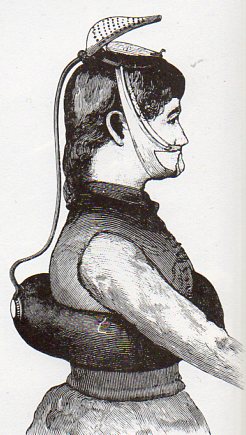
     These creations weren’t so much about exploring the innerEarth than they were about surviving in the outermost, shallowest bits of its depth.  Survival gear for The Great Unpleasantness in disastrous adventures at sea was relatively scant for hundreds of years, although the nineteenth century did offer a number of new, Victorian technolust attempts for survival-at-sea.  

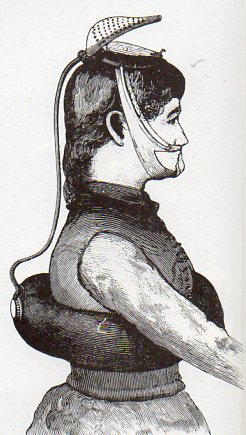
    I know that this first contrivance in some of its particular parts looks enormously compromised, but really the stuff attached to the woman’s head just allowed her to breathe about 10 inches higher than her mouth, though it seems to me that this air-catcher might catch more water than anything else.  Still, it was an interesting attempt at keeping people floating above the water when in peril.
    Innernaughts340In general though it seems to me that most of the big adventures in wearable life saving devices were big indeed, big and heavy–if there was just a little more room for a small engine, wed’ be in the Steampunk realm, as can be seen in this magnificent attempt by T. Beck in his 14 March 1876 patent:

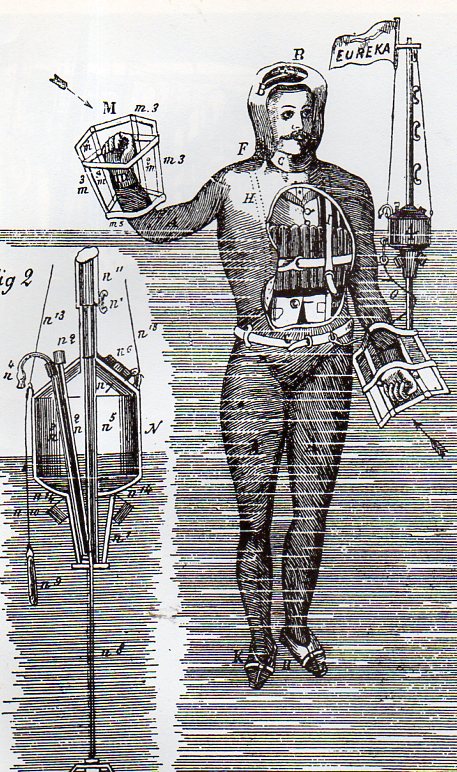
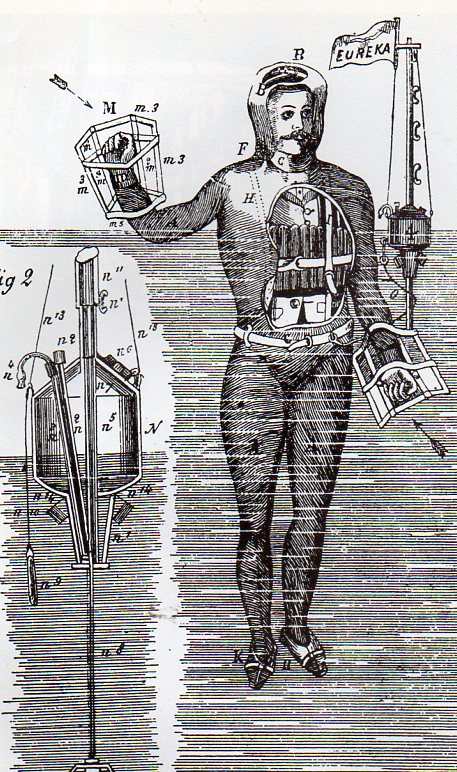
    This was somehow an improvement over a more complicated but still more sensible device that appeared earlier in 1869, the work of Captain John  Stoner.  He exhibited his creation in NYC off the piers in the East River as demonstration of the suit’s effectiveness, the whole of which was big news, appearing in the July 17, 1869 issue of Scientific American.  The suit was made of rubber, and was insulated and was equipped with a personal buoy which carried a “Eureka” flag and had a compartment filled with food, water, lighting materials, cigars, and of course reading material to help pass the time.  The hand-flippers on the other hand look like a very good idea. 
    Innernaughts339

    A more streamlined idea of the Stoner suit appeared in F. Weck’s patent application of 24 October 1876, again using a rubber suit, but this time the safety device was far less cumbersome, and equipped with little more than an interesting-looking breathing apparatus connected to a towed buoy which of course flew the American flag.

    Since I mentioned the possibility of cigars in the above-mentioned case, I should also point out that it took several decades for someone to patent a waterproof case for swimming with cigarettes, “in case the swimmer wanted to swim out to some rocks and then relax with a cigarette”.

    G. & C. Palmer came forward with another unusual idea in their 11 November 1873 patent, using chess-like figures to pus their idea of an expanding/collapsing life preserver vest, which would move in rhythm with ocean waves and theoretically protect the wearer from being overcome by bad swells.  I have my extended doubts about this one.

    Most of the patent applications that I’ve looked at tonight seem to lake one critical element–locomotion. Of course they’re assuming that the life vest is doing little more than keeping the wearer from drowning (though sometimes comforted with cigars and flags). A. McDonald went a little further with his invention (patented 17 January 1882) by putting a screw propeller on the belly of his life vest. It all looks very heavy and sinkable.

    F. Vaughan continued on the idea of a big, heavy wetsuit preserver by making his even bigger and heavier.  This 1879 creation looks to have about 10 inches (or more) or rubber in the suit, which means that if the thing wasn’t water-tight, and that if even a very slight leak developed, the wearer would no doubt sink like a stone. 

    A. Traub (in 1875) created something that was much less bulky and more accessible, a sort of unfolding life vest, that seems really not to do much of anything, but which was at least light:

    E.H. Brown (in 1884) had a somewhat different approach to the “life-saving” idea, turning the survival bit into a bucolic if ungainly adventure/romp device for the vacationer on the coast–the “hammock canoe”:

    \

    Though as cumbersome as this device seems it is quite in step with its contemporaries, at least so far as in being not-very-usable goes:

    And somewhere in all of this was the occasional good-looking idea that evidently got caught in the undertow of the heavier/punkier outfits–but in them you can see the beginning of the idea that would eventually work:



  • Blank, Empty and Missing Things: Stone and Wood

    JF Ptak Science Books   Post 1742  [Part of the series on Blank, Empty and Missing Things.]

    Ogardus335
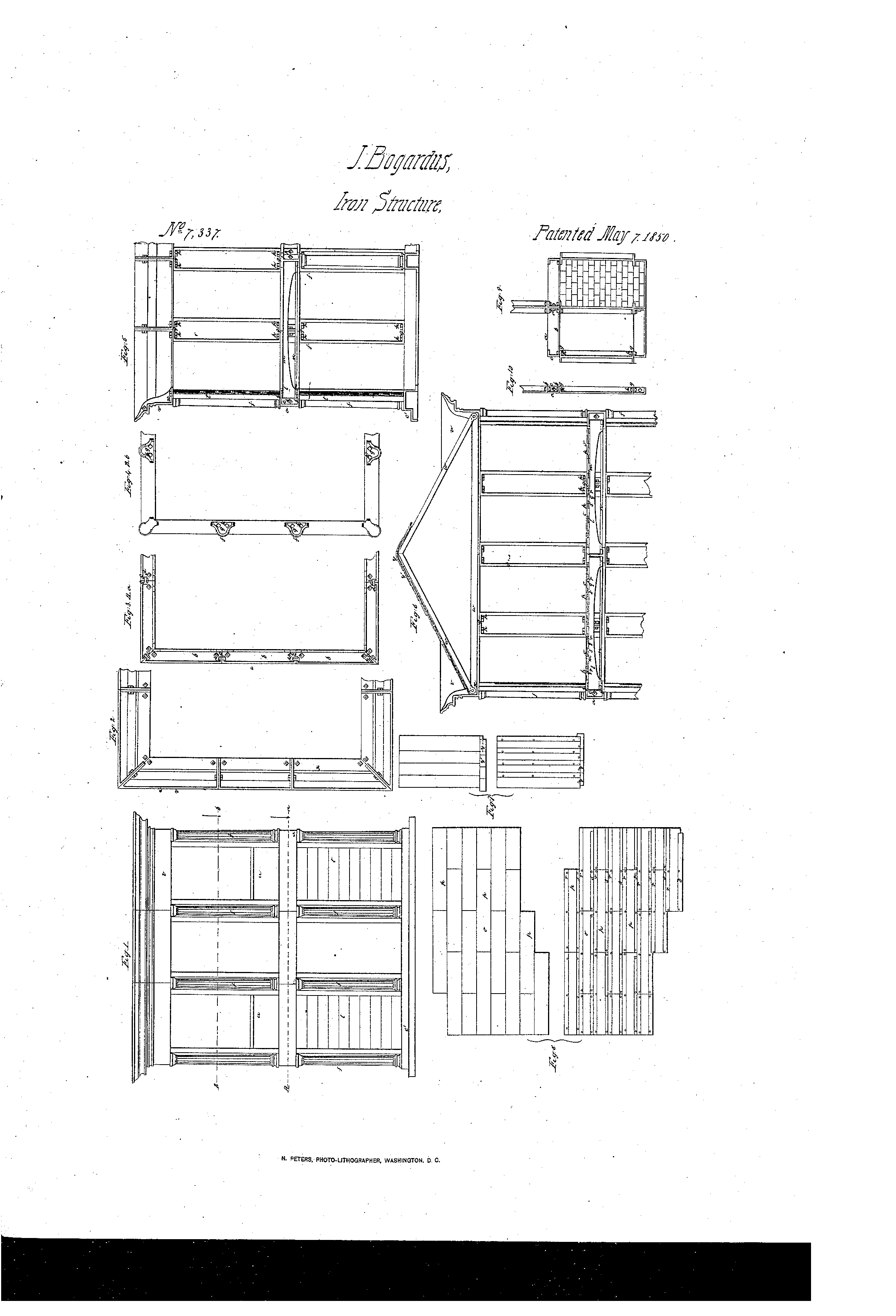
    This short post is about this remarkable illustration from a 16-page pamphlet by the inventor, architect and cast tion pioneer James Bogardus (1800-1874, Cast Iron Buildings, their Construction and Advantages, 1856 and 1858 second edition). 

    But before I get to that, I started to wonder about why it was that NYC developed up rather than out, vertically rather than horizontally? There was plenty of room for outward growth–and in mid-1850’s, the period that this post addresses, most of the city had already been laid out, or at least up to 96th street.  But in the city of about 900,000 people, there were few people living that far north (and not that many structure), with half of the population living below 42nd street.  So, the largely flat, largely unoccupied island could well have been developed northward rather than skyward.  My feeling is that the reason for vertical development was “running”.  That in the pre-telephone days and the earliest days of electrical telegraphy, that in order to conduct business rapidly messengers were used to take documents and communication back and forth. And so for the sake of speed of business, rather than have messengers traveling for 20 or 40  or 80 minutes to a more-removed uptown location, that it made more business sense to keep businesses together; and to do that on limited land, one needed to go up.  Not out.  I’ve never thought about this, ever, but this seems to make sense to me…

    Now, getting back to the Bogardus illustration: what was missing was the building, or the pieces of the building that had previously been thought of as being absolutely essential for a structure of this size to maintain itself.  But what Bogardus had done was to figure out a way of using cast iron rather than other building materials–a building tool that was stronger and with greater engineering chops than anything else that had been previously seen, which meant that there were different forces at play in structures using it, and which meant therefore that even though there were large pieces of the building’s shell that were “missing”, that this structure could and would still stand.  It was a fabulous way of communicating a new idea. 

    What happened with the Boagardus idea is that it developed into the use of steel-framed buildings, which made for very light, very strong structures, which led to skyscrapers, which led to modernity.

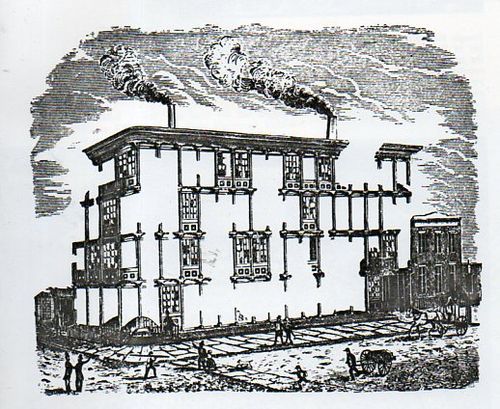
    The Harper Brothers building (built in 1854 at 331 Pearl Street) was an iron-facade building that was engineered by Bogardus (with the architect John B. Corlies) and was built in response–and partially as a safe, fire-proof building–following the devastating fire (and enormous liability payout) in the previous Harper building.  One thing that was certainly different in the face of this building–owing to the efficiency of the cast iron, there could be plenty of windows in place of where there used to be building materials.  And there was certainly plenty of glass in the Harper building.

    Bogardus patent

    [Patent source: the very easily usable Google Patents, much more nimble than the UST&PO, somehow.]

    The trip to modernity didn’t necessarily start here with Bogardus of course, but he was a considerable and significant chunk in the engineering developments necessary for the construction of tall buildings…and here it is interesting to note that another big piece of that development that came into being at nearly the same time (1854) as the publication of Bogardus’ pamphlet and the construction of the Harper building was the installation of Otis’ safety elevator int eh Haughtwout (five storey) store. And of course the elevator was necessary for the creation of tall buildings, just as the invention of the braking systems was essential for the creation of the elevator. And on the story goes. 

    The Bogardus achievement (patented May 7, 1850) was certainly an important step–it was pragmatic, efficient, and strong, and also led to the possibility of mass production and pre-fabricated structural elements.  And for the mid-1850’s, this was certainly a big deal.

    One of the few remaining Bogardus structures, at 254 Canal Street, today:

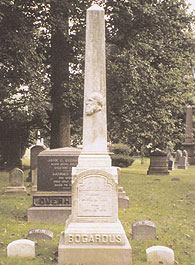
    And the Bogardus monument in the famous Green-Wood Cemetery, in Brooklyn:


  • Travel Time in the Young Republic, 1800-1857

    JF Ptak Science Books   Post 1738    [Part of a series on the Display of Quantitative Information]

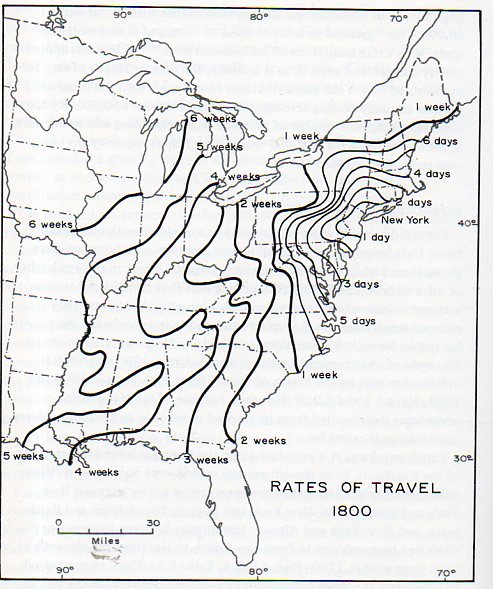
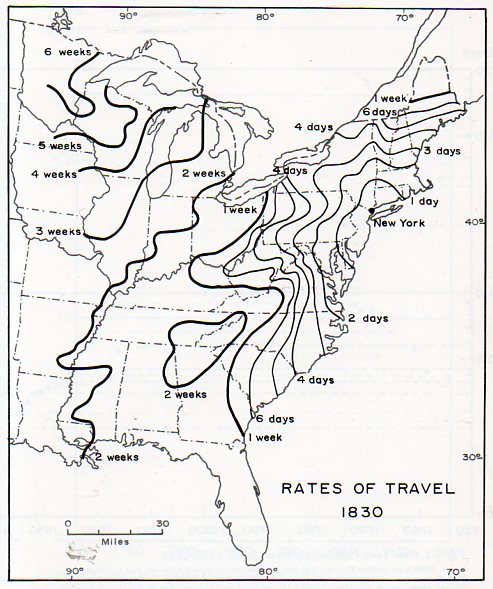
    I wanted to pass along these very interesting maps that appear in Allan R. Pred Urban Growth and the Circulation of Information, 1790-1840 (Harvard, 1973) because they give a quick and elegant view of how long it took to get to various parts of the country in the first part of the 19th century. 

    First, Rates of Travel, 1800:

    Travel time 1317
    and its complement, Rates of Travel 1830:

    Travel time 2316[Note:  all travel time based on starting  point in New York City.]

    Its interesting to see with just improvements in travel excluding the introduction of railroads and (for the most part) canals that travel time was basically cut in half in about thirty years’ time.  For example, in 1800 it would take roughly four weeks to get to New Orleans, and then six weeks to arrive in Iowa and the Upper Peninsula.  By 1830, that time was two weeks to NO, and three for the other two locations.  In 1800, it was a five day trip to the northern Outer Banks in North Carolina; that would be cut to two days by 1830.  The trip in 1800 to the vicinity of Savannah and the northern part of Florida was a two week ordeal; by 1830, that time had fallen to 6/7 days.  The Mississippi was reachable in five weeks in 1800; in 1830, that time was cut to two weeks.  This as I said would all change drastically over the next three decades, once the railroad system became slightly mature.

    And here, expanded to 1857:

    By 1857 one day’s travel time has been blasted to a ring encompassing the southern half of Maine, partially into Ohio and south into the northern part of North Carolina.  Two days of travel will get the traveller deep into Michigan and parts of Wisconsin, and half-way through North Carolina and South Carolina (excluding the mountain region in Western NC).  Three days will now get us to northern Florida, halfway through Georgia and Tennessee, and into the Midwest, past the Mississippi River. Beyond the basic reach of the railroad at this point is the rest of the country, and harder going, though one week of travel will get you deep into the central part of the country, where with some difficulty you would be able to find your way to southern California in three weeks, and the Pacific regions of Washington Territory in six weeks–basically, an entirely new world of travel and the spread of goods, service and information, not the least of which was aided by the spread of the railroads, which increased from 3,000 miles of track in 1840 to more than 30,000 in 1860.

    Again, I really just wanted to share this display of information because I have found them to be useful in the past, and the info doesn’t seem to be all that wide-spread. 

     My source for the maps has been varied from web sources, but the original work seems to have been published in Charles O. Paullin and John Wright, Atlas of the Historical Geography of the U.S., published by the Carnegie Institute of Washington, D.C. (1932), pages 138a, 138b, 138c, 138d.


  • History of Holes series: Holes in Airships (1919 and 1937)

    JF Ptak Science Books   Post 1736 [History of Holes series.]

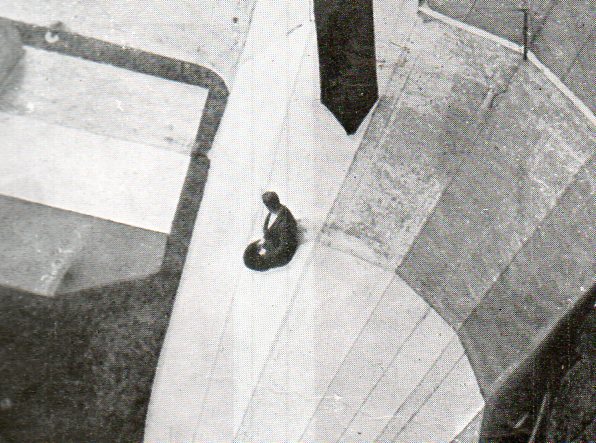
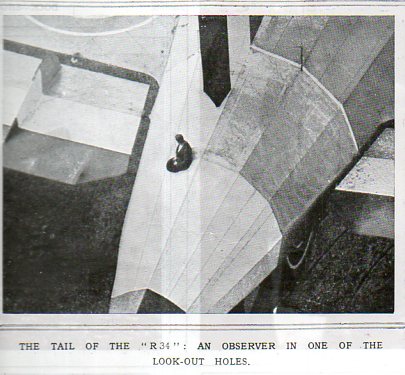
    Holes are of course everywhere–it just depends on how hard you look.  This image, though, struck me very quickly as an unexpected hole (though of course once you allow yourself a moment to think about ti the whole thing makes sense).  It is a very plain “observer’s perch” in the tail of the great British airship, the “R 34”, and appeared in the Illustrated London News in April, 1919, just before its first flight.  The aircraft was massive–643 feet long1–and on one superficial level its hard to imagine holes in its structure of any sort, let alone an unprotected observation post.  But there it is.
    Airship 297

    And this

    Airship 296

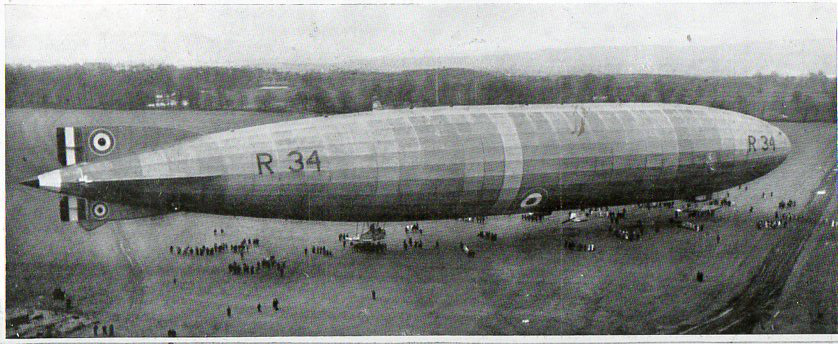
    Here’s a full view of the “R34”, successor to the “R33”:

    Airship 295
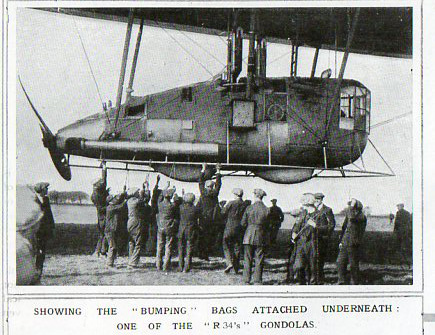
    This is an image of the (forward?) gondola of the airship, looking like it has come in for a landing, or touchdown, or whatever–there is something so very primal about this relatively small group of men reaching up for the railing on the gondola…a railing placed there specifically for that reason.  Its hard to imagine that such a seemingly small effort would be enough to control any part of the airship’s motion, though perhaps it was. 

    Airship 293And the detail, showing the man in the middle clearly off the ground–clearly he must be weighing his options:

    Airship 293_edited-1At least he seems to be wearing one glove, anyway

    Then there’s the image of the “bad” hole, the iconic image (photographic and motion picture) of the conflagration and crash of the Hindenburg, a result of a very quickly-spreading “hole” in the skin of the aircraft as it was coming in for a landing/mooring in Lakehurst, New Jersey, 1937.

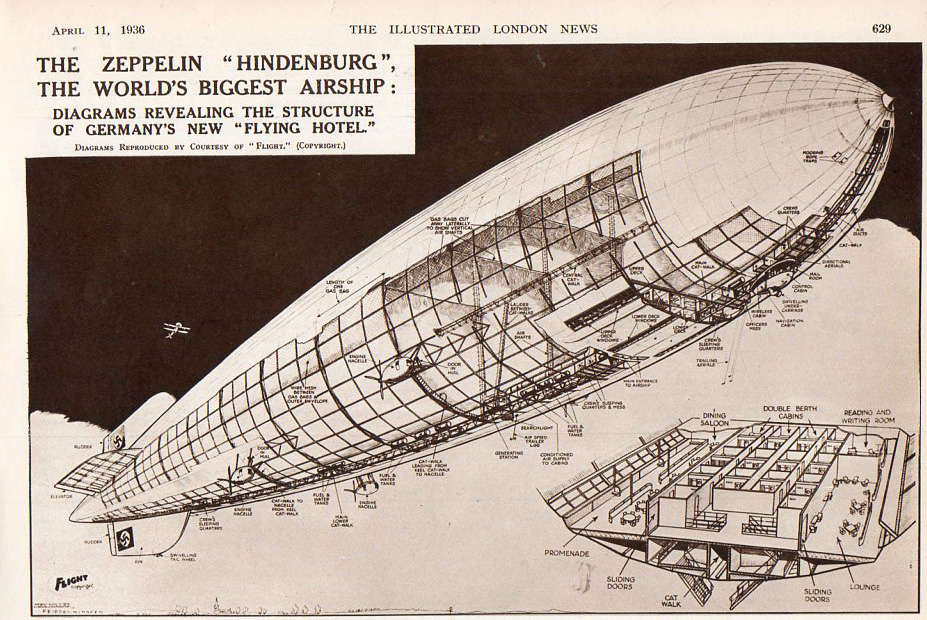
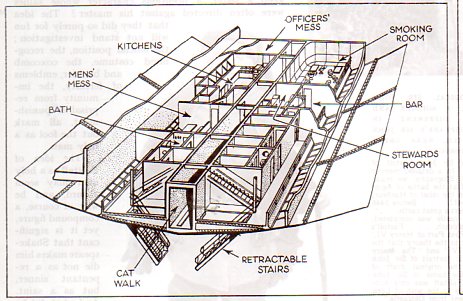
    Here’s a cross-section of the Hindenburg as it appeared in the Illustrated London News in 1936:

    Airship 289

    Airship 292

    Notes:

    Specs on the “R34”:

    • Length: 643 ft 0 in (196 m)
    • Diameter: 79 ft 0 in (24 m)
    • Volume: 1,950,000 ft3 (55,000 m3)
    • Useful lift: 58,240 lb (26,470 kg)
    • Powerplant: 5 × Sunbeam Maori, 275 hp (205 kW) each

    The Hindenburg was quite a bit larger than the R34–in fact, it was the largest thing ever to fly, at 803 feet long and 135 feet in diameter…and 200,000 m3, almost 200% larger than the mammoth R34.


  • A Note on the Vast Wealth Possibilities of the Refill Business: Ink and Paper

    JF Ptak Science Books   Post 1735

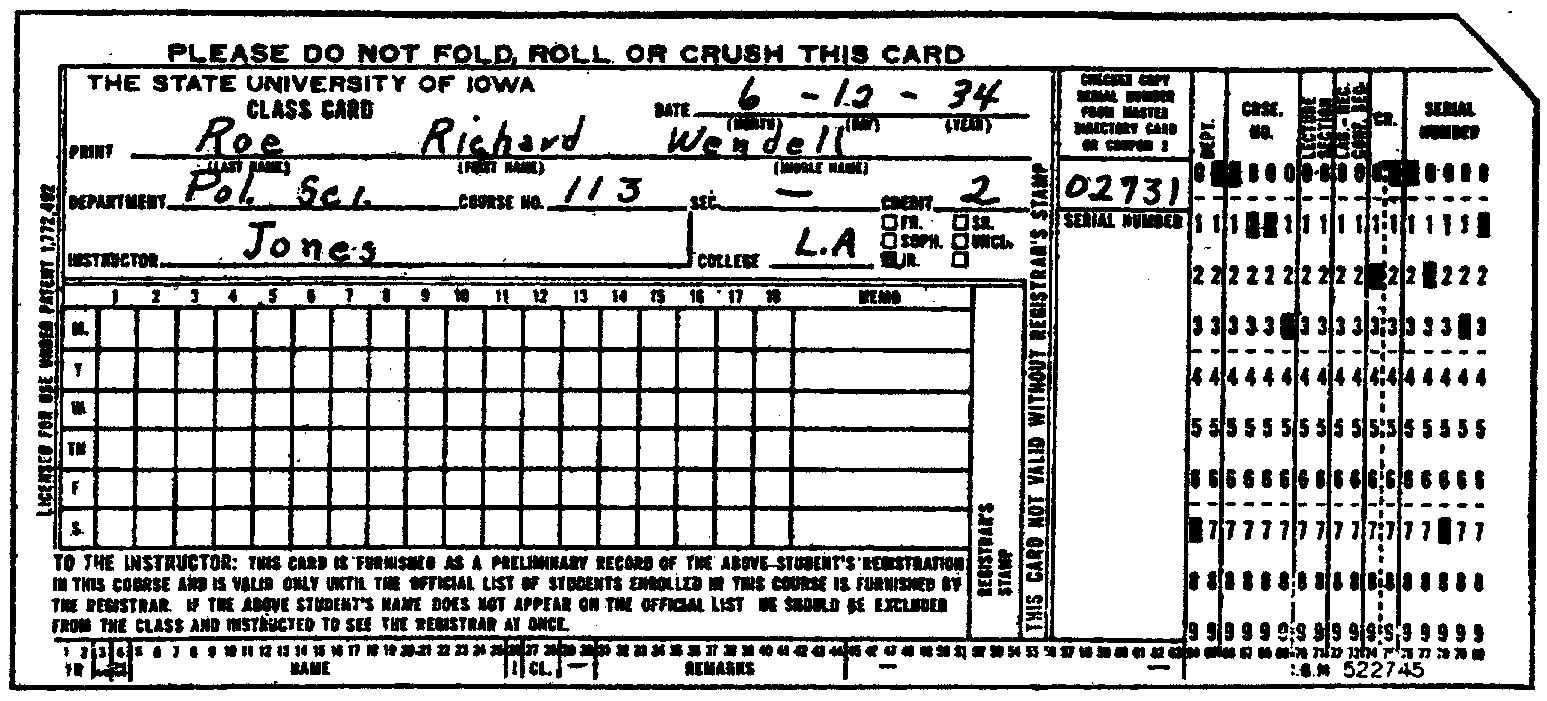
    http://www.columbia.edu/cu/computinghistory/reg-card-80.gif

    [Source: Columbia University computing history site, here.]

    I guess that the only reason why HP charges for their printers is that they can.  When you buy one of these products you’re basically purchasing the need to keep the things fed with semi-proprietary HP ink–and as everyone knows, printers are notoriously thirsty creatures, and one can easily spend multiples of the cost of the printer on ink in the first year alone. 

    This is a great idea so far as the manufacturer goes, but it is hardly a new one–International Business Machines counted on this sort of income for several decades, partially getting the company through the Great Depression. 

    And what was the IBM necessary-suppliable that their customers had to keep buying over and over?  It was the business machines themselves, because it was IBM practice to rent their machines out (which would pay for the initial investment and production in the machine in about two years, and most customers seemed to keep their rented mater1al for 5 or 7 or 10 years.  What IBM kept supplying their customers with was the stuff that they sent through the machines–the IBM cards.  The customer needed the cards from IBM itself, mainly because it was part of the contractual agreement for the lease of the machine, and also because the IBM product was superior to other mass-produced cards.  In the 1930’s the card business for IBM accounted to something like a few billion cards per year, which evidently would account for 30-40% of IBM’s yearly profit.  And that’s quite something. 

    The idea of the necessary refill is not IBM’s to claim for themselves–years earlier, Eastman Kodak accomplished the same deal with film for their cameras; and razor blades were supplied by Gillette to users of their razors.  And although you don’t need Ford gasoline to run a Ford automobile, in the 1930’s you did need a General-Motors spark plug to run a G-M vehicle.  Radio Corporation of America sold radios and also the necessary tubes to replace the ones in the stock radio; Thomas Edison too had a vastly controlling interest on how his light bulbs would be installed and replaced. 

    So as annoying as it might be to have to pay a fair amount of money for a small amount of ink to make your printer function, the printer-producing companies are just following an old (and highly profitable) business practice. 


  • Lunar “Firsts”–the First Image of the Moon using the Telephone?

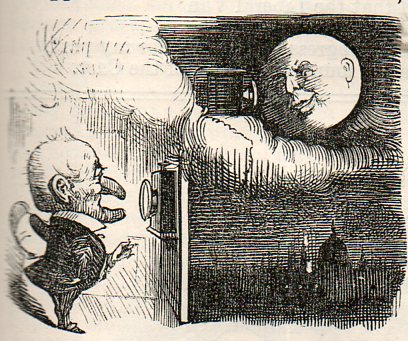
    Perhaps, or perhaps not, but what this image does seem to show is a conversation between the Moon and Mr. Punch.  It appears as a small text woodcut in a long series of short stories in Punch, or the London Charivari, called “What Mr. Punch’s Moon Saw”, 14 September 1889.

    Moon281
    Mr. Bell just barely beat a host of competitor’s for his telephone patent 13 years earlier, and the telephone didn’t really get semi-“widespread” use in London until at least the mid-1880’s, so it is really quite possible that this is the first time that the Moon is shown engaged on the ‘phone. 


  • An Early English-Language Image Diplay from a Computer, 1957

    JF Ptak Science Books   Quick Post

    Computer display225
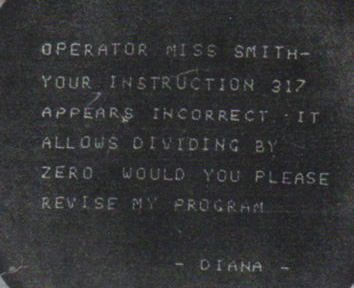
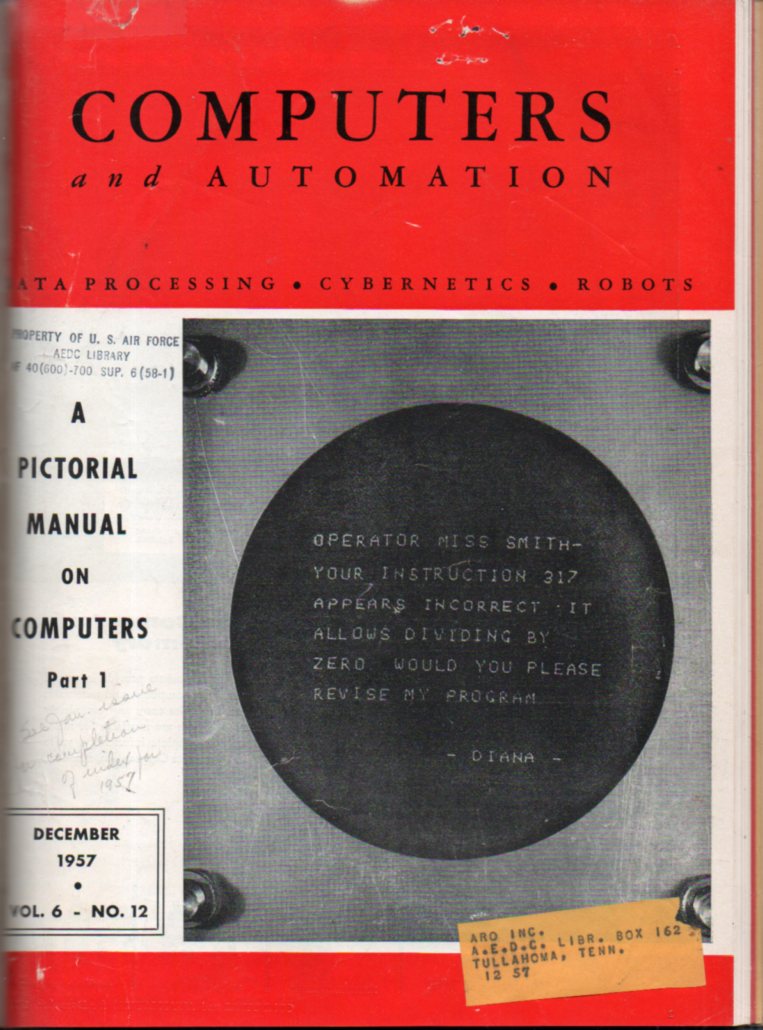
    The cover of this magazine–Computers and Automation, one of the earliest popularly-based journals dealing with electronic computation–features a rather remarkable image, an English message, a response to a problem, from a computer.  The editor, Edmund C. Berkeley, wrote a short appreciation of this “output device for an automatic computer”, a “symbol generator and viewer”. 

    “The screen of the picture tube shown will present as many as 10,000 characters per second. Each character is formed by an array of bright spots, a selection from a rectangular array of a total of 35 spots, five wide and seven deep.  For a capital letter T, for example, the selection is five spots across the top and six more spots down through the middle…

    For 1957, it would have been a remarkable thing to see messages displayed in such a fashion, in a revolutionary new way.

    Computer display225


  • A History of Holes: Electric “Holes”

    JF Ptak Science Books  Quick Post   [Part of a series on the History of Holes.]

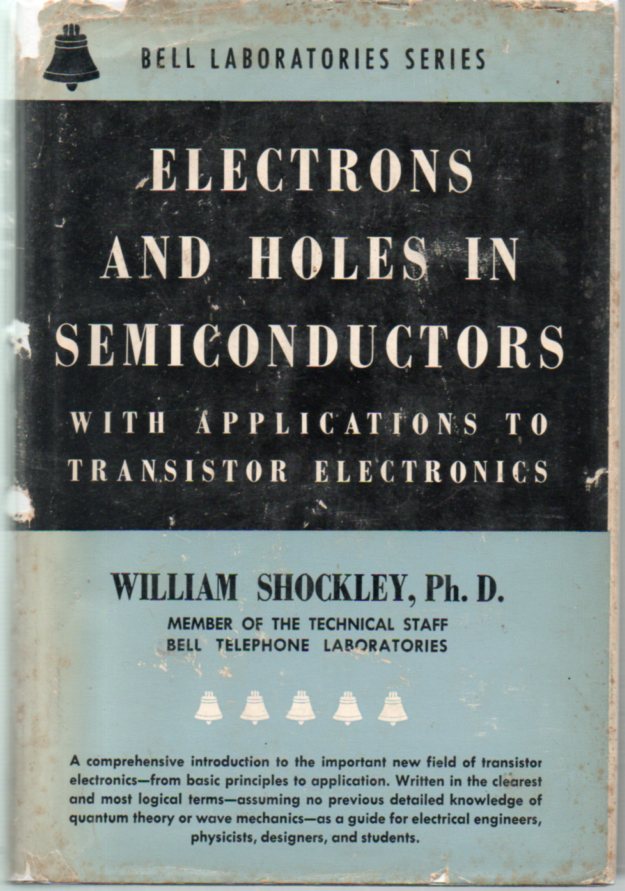
    Well, this really isn’t a “hole” per se, but it, the “hole”, certainly behaves like one, at least metaphorically.  The concept occurs in the title of this famous work by the problematic William Shockley (below)–it was the bible, really, of all early things relating to the semiconductor–the electron hole being the mathematical opposite of an electron  (e– ).  (The electron is a subatomic particle with a negative charge, explained very early on in its first format as “radiant energy” by William Crookes in 1879, who built on the earlier work of Hittorf and then on Goldstein, with the name “electron” finally coming to the particle by George F. Fitzgerald.)

    Shockley208The “hole” is a metaphor, a useful use of a word to explain the absence of an electron from a full outer shell.  In a semiconductor, an electric current is carried not only by the flow of electrons but also by the flow of positively charged holes where the electron absence occurs–the hole is an electronic absence charge carrier, and it the basis for modern electronics.

    [This book may be purchased by the person who cannot live without it on our blog bookstore site.]