A Daily History of Holes, Dots, Lines, Science, History, Math, Physics, Art, the Unintentional Absurd, Architecture, Maps, Data Visualization, Blank and Missing Things, and so on. |1.6 million words, 7500 images, 4.9 million hits| Press & appearances in The Times, Le Figaro, Mensa, The Economist, The Guardian, Discovery News, Slate, Le Monde, Sci American Blogs, Le Pont, and many other places… 5000+ total posts since 2008.

Category: Technology, History of

  • Cross Section of the Comstock Lode

    JF Ptak Science Books   Quick Pos

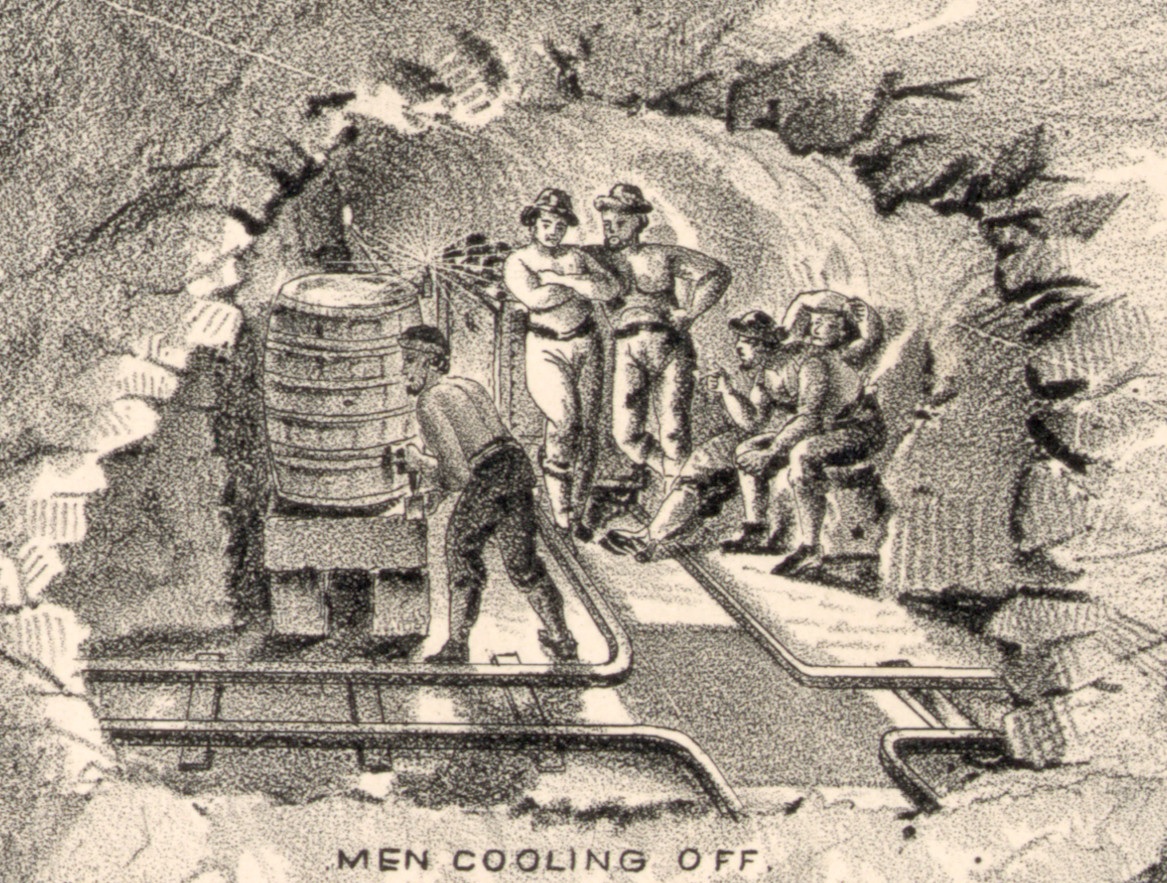
    I’m not that convinced that a lot of “cooling off” was being done down in the tunnels of the Comstock Lode, though I guess it is all relative, and so perhaps these guys were able to enjoy themselves a little compared to swinging a pick axe or shoveling with a shovel in a cramped, damp, loud, dark place, underground.  

    Comstock cross section men cooling off

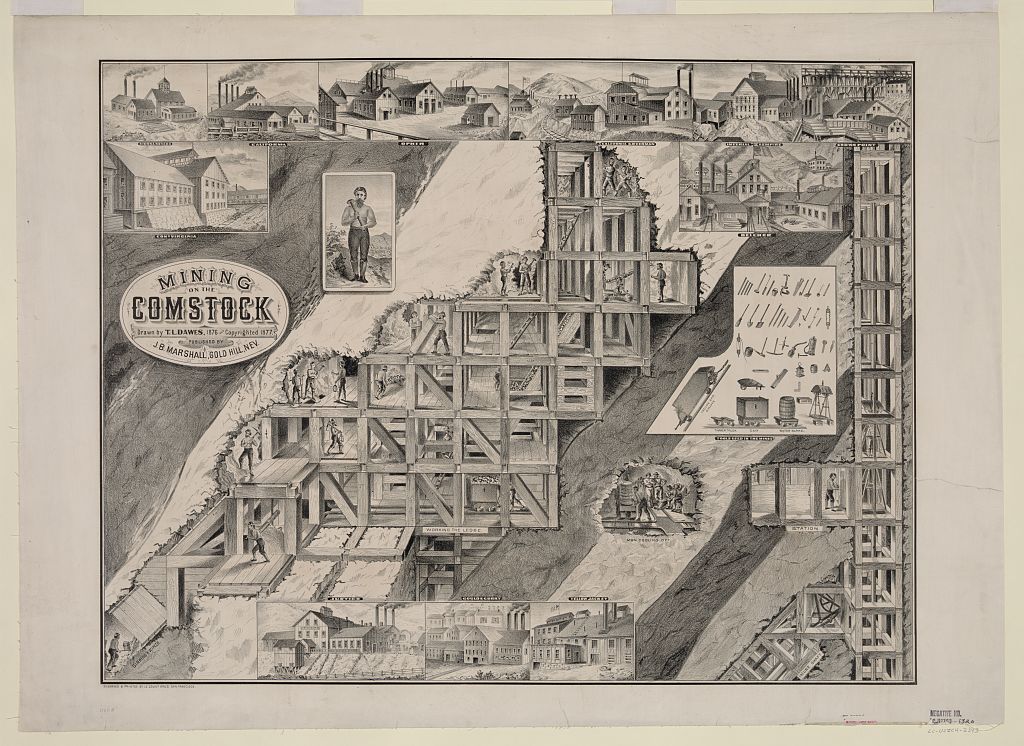
    I found this in the detail of a great cross section image on the Library of Congress site http://www.loc.gov/pictures/resource/pga.01999/:

    • “Mining on the Comstock / drawn by T.L. Dawes ; engraved and printed by Le Count Bro’s., San Francisco” 

    which was printed by lithography by Le Count Brothers in San Francisco in 1877.

    The cross section shows how life and business was being conducted underground, and gives a sense of the claustrophobia-making closeness of it all:

    Comstock cross section

    In any event, it was very difficult work in a difficult spot, using difficult tools, breathing difficult air, and this cross section gives a pretty good idea of what that could have been like.  


  • The Majesty of Gears and Bolts–the Poe Locks, 1896

    JF Ptak Science Books   Quick Post

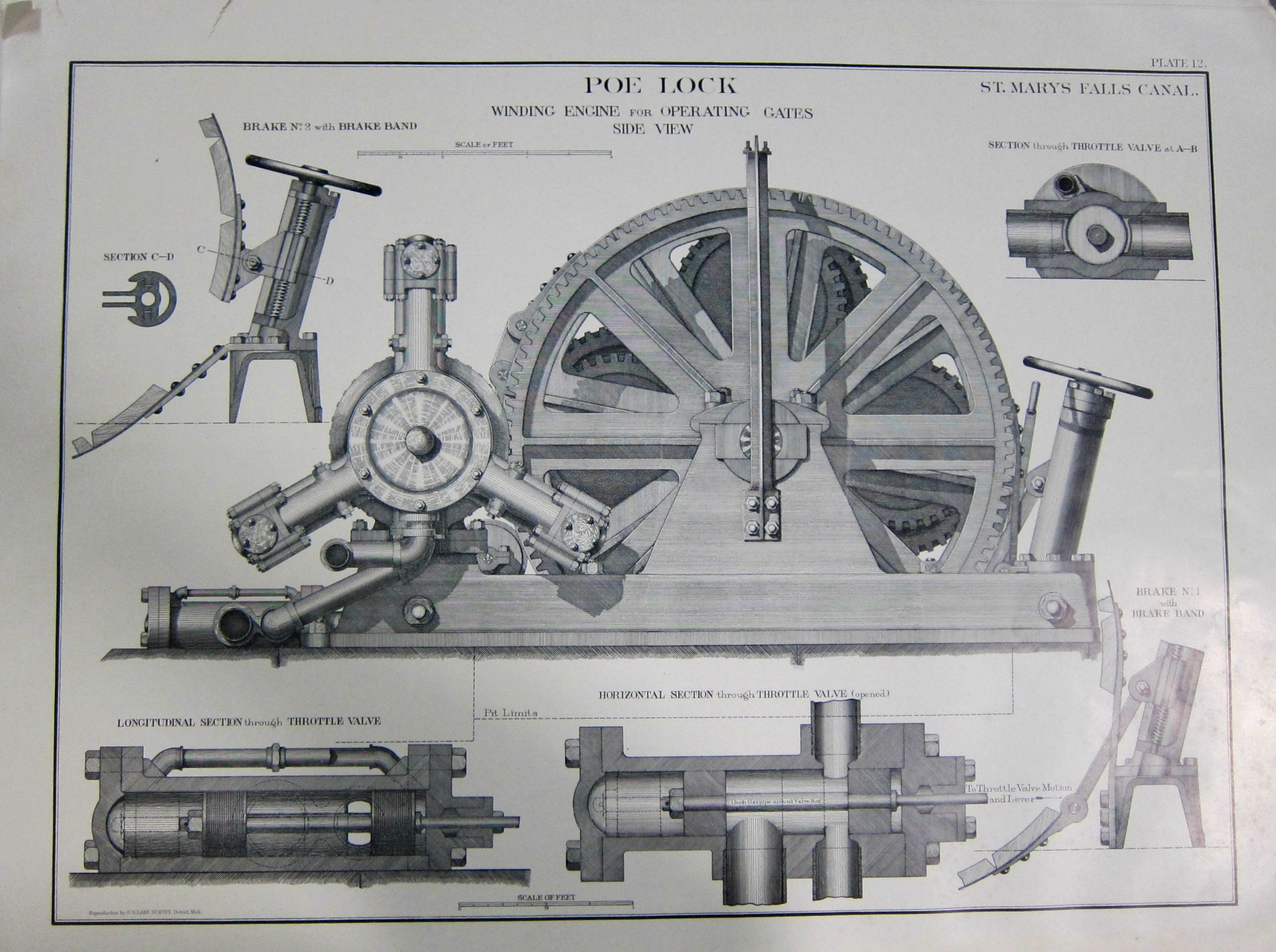
    The Soo Locks at Sault (the “soo” of “Soo”) Ste. Marie are the four parallel locks that connect Lake Superior with Lake Huron and thus the rest of the Great Lakes–the Poe Locks, designed by O.M. Poe, are on of the four, and when it was completed in 1896 it was the world’s largest. At 800’x100′ they were enormous, and controlled the displacement of a lot of water, and the illustrations below show some examples of the meat of the engineering that controlled that process.   I have these loose engravings from an unfortunately unidentified source (though they are from a U.S. Lake Survey,between 1898-1909) and decided to share them because of their deep engineering beauty.  They are fantastically-rendered objects, filled with steam and grease and huge amounts of The Heavy Stuff, all of which display a remarkable feat of engineering.  

    The images are clearer when you click and expand….

    Poe Lock Winding Engine


  • A Flying Mega-Brick and a Postal Torpedo Metallic Email–the Future, 1928

    JF Ptak Science Books  Quick Post

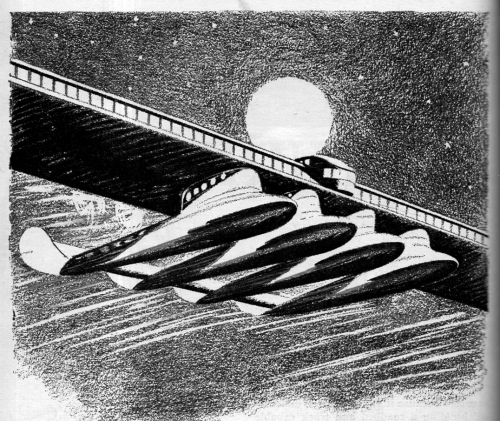
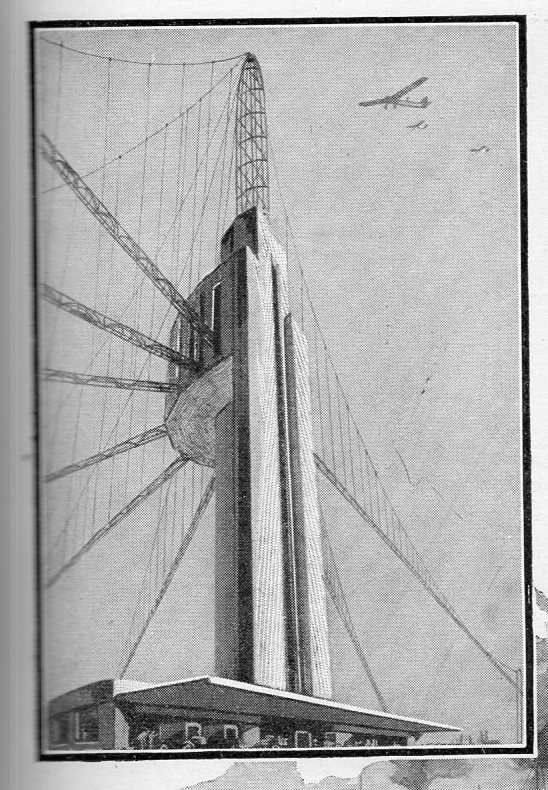
    In the midst of a short article on bits of transportation advances of the future are these two wonderful futuro-peeps, selected here because of their appearance more so than anything else, as there isn’t really anything else to go on. The article has 13 illustrations over four pages and perhaps is 750 words long, so the narrative is heavily dependent upon the images and imagination. That said, the two I’m interested in here have almost no text accompanying them. So be it.  

    The first is a mammoth transatlantic seaplane, “proposed by a German inventor”–and that’s it. I can’t tell how “giant” it is supposed to be, nor how many engines, or if there’s anything going on inside the wings, and so on. But it does look streamlined and tubular and blocky, which is a hard thing to do at the same time, in a loud-stealthy way.

    Pop mech future 1928679

    [Source, Popular Mechanics, August, 1928.]

    The other image is that of one tower in a series of untold numbers of such towers popping up throughout France, much like Rommel’s asparagus in Normandy, I guess, except more numerous, and far taller. Iterating the height of the structure by the cars at its base, I take this one to be about 150-175′ high, from which there are many suspended tubular cages within which travels a 10′ long torpedo-like tube that would speed mail from station to station across France at 200 mph.  The engineers were Hirschauer and Talon, and from another source1 I see the invention described as “la torpille postale”, which is what the mail carriers looked like, except sitting on four wheels, and going really fast on a skinny track suspended a hundred feet off the ground.  

    I can’t but help to think about this arrangement of wire and cable and flowing mail as a kind of non-computer email–it has seemed odd to me for a long time that the one of the backbones of our communication existence is strung up above the ground on wires that are for the most part hung on dead recycled trees.  Granted the mail would travel a lot faster in France in 1928 at 200 mph, but completely unforeseen and not-knowable is that email would be a little faster, cruising along at a big chunk of the speed of light.  Seems as though there would have to be thousands of these lighthouse-like structures built to accommodate the French mail demand–no doubt they would have been pesky reminders of a past’s attempt at the future, though perhaps being France and all the mail carriers might have blown them up.  

      Pop mech future 1928 cable mail680

    [Source, Popular Mechanics, August, 1928.]

    Notes:

    1. http://www.luxemburgensia.bnl.lu/cgi/getPdf1_2.pl?mode=page&id=1386&option=


  • Benjamin Franklin, in Love with the Sea, 1786/7

    JF Ptak Science Books   Post 2632
    Franlin b631

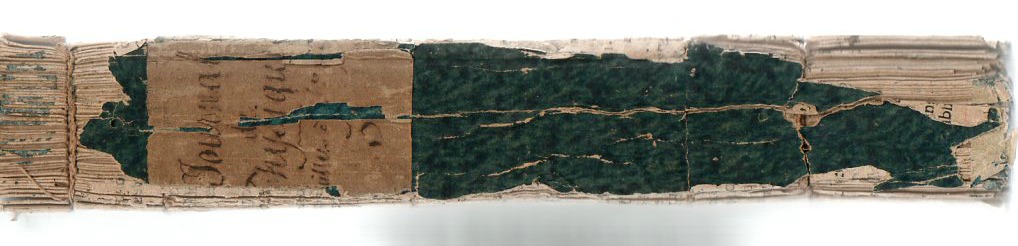
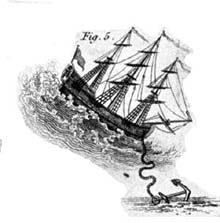
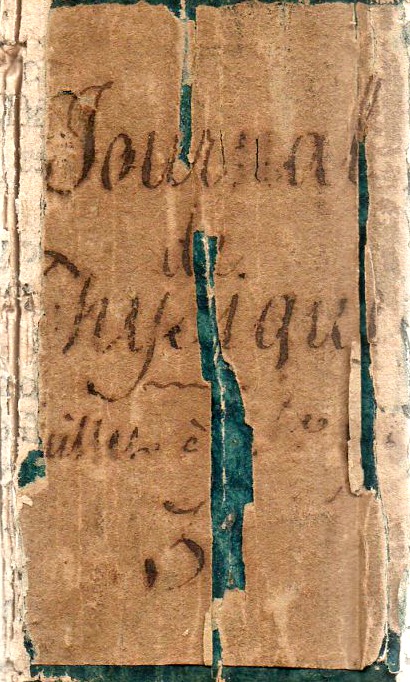
    Franklin, Benjamin. Suite de la Lettre de M. Benjamin Franklin, a M. David le Roy, Membre de pluisseurs Academies, Contenant Differenres Observations sur la Marine, a three-part series printed in Observations sur la Physique sur l’Histoire Naturelle et sur les Arts, avec des Planches en Taille-Douce.…dedicated to M. Le Comte d’Artois, and edited by l’Abbe Rozier, J.A. Mongez, and M. de la Metherie, in the issue for July-December 1787, volume 31, and Printed in Paris at the Bureau of the Journal de Phyique, 1787. (he title of the Franklin, translated: (A) Letter(s) from Dr. Benjamin Franklin, to Mr. Alphonsus le Roy, member of several academies, at Paris. Containing sundry Maritime Observations.) The papers appeared in  September  pp 224-231; October, pp 254-264;December pp 456-468.
    Franklin

    By the time Benjamin Franklin published these three pieces—letters he had written at sea— he already had a lot of experience with the voyage, having made numerous trips oversea since 1754. At this point he was the American envoy to France, and had been (very successfully!) busy at securing arms and agreements from France, and put his time during the crossing to some concentrated use.

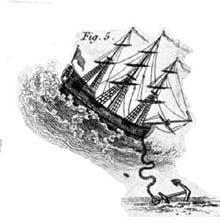
    These three letters by Franklin to le Roy are remarkable for their insight and invention, describing new types of ship sails and anchors, propulsion systems, hull and planking designs—and of course the first description in a scientific publication of the Gulf Stream. And in all of this Franklin as shipboard, biding his time at sea, thinking and experimenting, coming up with ideas that were of high interest though not necessarily workable, and some just frankly beyond his big grasp.
    Franlin c632

    I was really shocked when I started piecing my way through this volume, and finding the Franklin. Honestly, I didn’t know the significance of the Franklin starting into it, the thing only dawning on me as I got half-way through the second letter, and with a squint recognizing that what he was talking about in the waters off of the coast of “Floride” was in fact the Gulf Stream. “Oh” is what I said to myself. This is that paper. At least it wasn’t a terribly obvious overmiss—this version of the famous description of the Gulf Stream didn’t come with a map, and the illustrations were little bits showing flouncy sails (of dubious application, sorry) and sea brakes. Even when I realized that this was the Gulf Stream Paper, its significance still wasn’t significant, as the great report occupies just a small portion of one of three letters. So it goes.

    The first publication of these letters appeared in the Transactions of the American Philosophical Society of Philadelphia (the society founded by Franlin in 1743) about a year earlier, and which contained the famous map (15×8” or so,  A Chart of the Gulf Stream with Remarks Upon the Navigation from Newfoundland to New-York In order to avoid the Gulf Stream . . . and nor included here) which he completed with the help of his first cousin Thomas Folger. Actually the two had printed an earlier version, in 1769/70, though the map received basically no circulation and was famously disappeared for 200 years before being unearthed.

    There were earlier references to the Gulf Stream—as with the ignored Walter Haxton chart of 1735—though nothing nearly so complete and accurate as the Franklin map.

    This is the first French version of the letters, and so the first French translation of the description of the Gulf Stream; it was also the first appearance of the article in Europe.

    It has been said that the work by Franklin was ignored and associated with inferiority by the Brits because of the adolescent nature of the American Republic and the inexperience of its navy, especially in regard to the Royal Navy. The Gulf Stream simply couldn’t be a discovery of a “river in the ocean” as described by a bunch of fisherman in a colony far from the birthright of a proper navy and scientific inheritance. But of course the Brits were wrong.

    Here’s a bit from the letters on the Gulf Stream, appearing in my journal on page 460-1, translated:

    “This stream is probably generated by the great accumulation of water on the eastern coast of America between the tropics, by the trade winds which constantly blow there. It is known that a large piece of water ten miles broad and generally only three feet deep, has by a strong wind had its waters driven to one side and sustained so as to become six feet deep, while the windward side was laid dry. This may give some idea of the quantity heaped up on the American coast, and the reason of its running down in a strong current through the islands into the Bay of Mexico, and from thence issuing through the gulph [gulf] of Florida, and proceeding along the coast to the banks of Newfoundland, where it turns off towards and runs down through the western islands. “

    Well, sheesh. There was a lot of thinking going on in this letters—not bad for a guy with other things going on in his head regarding the founding of a new nation.


  • Beautiful Oil Rigging Supplies, 1899

    JF Ptak Science Books   Quick Post

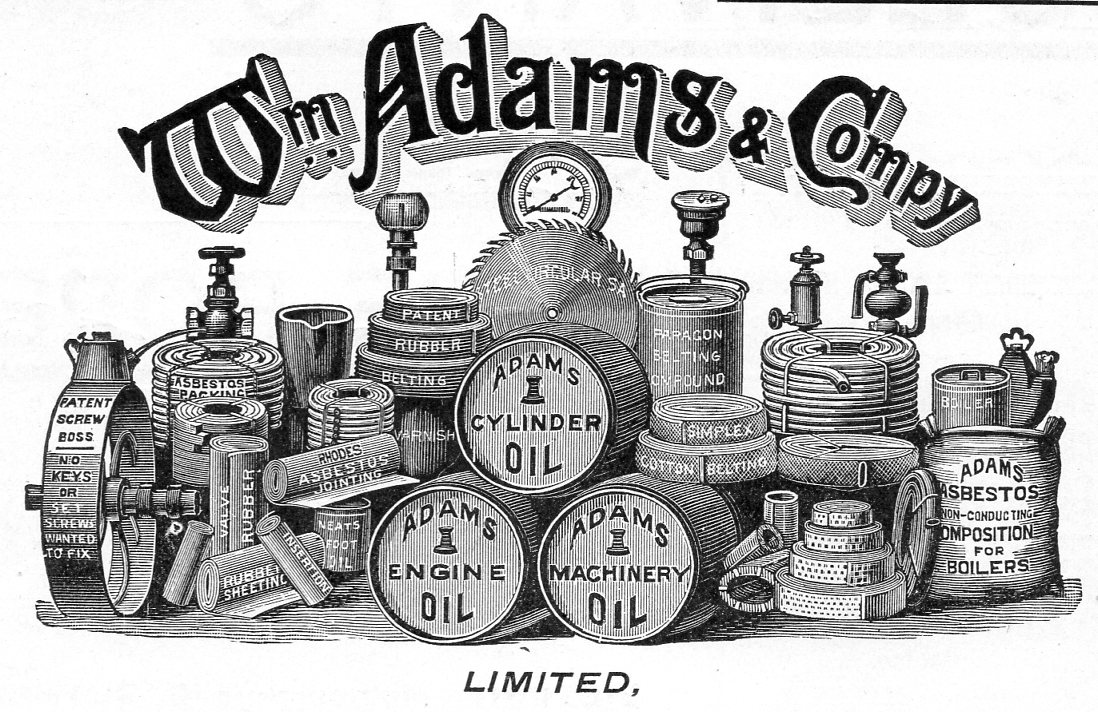
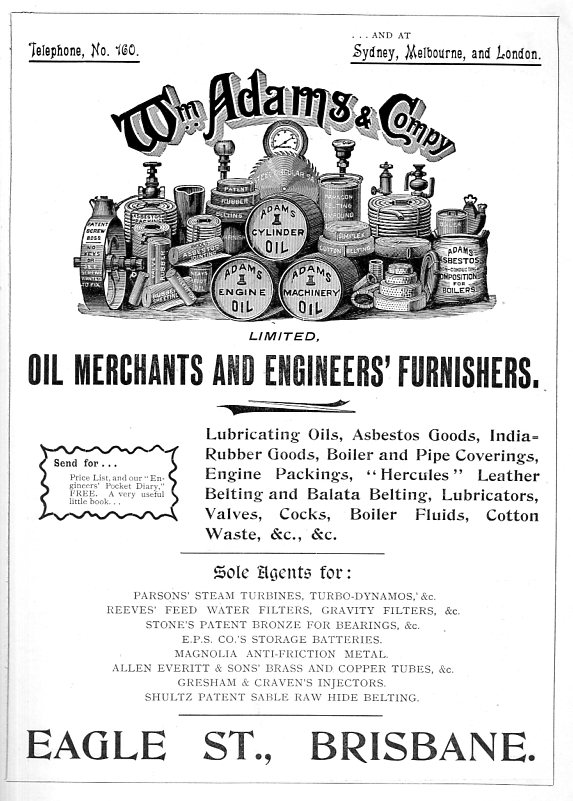
    I couldn’t resist this display found in a short work on the gold fields in Queensland, Australia. William Adams & Company furnished the necessaries for running oil rigs and various mining instruments. The gear is just nicely displayed and presented:

    Simoil merchant611

    Source: The Goldfields of Queensland. Charters Towers Goldfield, by William Lees. Queensland, Outridge Printing Company, 1899. 24.5x18cm, (xii), 34pp. Numerous small inset throughout, including larger images of works, as well as birds-eye views of Charters Towers, Queensland, and four other full-page photo images, plus a full-page plan of the works. (The title page calls for “With Plan” and I’m pretty sure that the full-page plan is it; I can find no evidence of a folding plan or any such thing in the table of contents. The publication is also filled with many advertisements. 


    Simoil merchant610

    ·Posted by :

    ·in:


  • Blade Runner Retinal ID, 1936

    JF Ptak Science Books   Quick Post

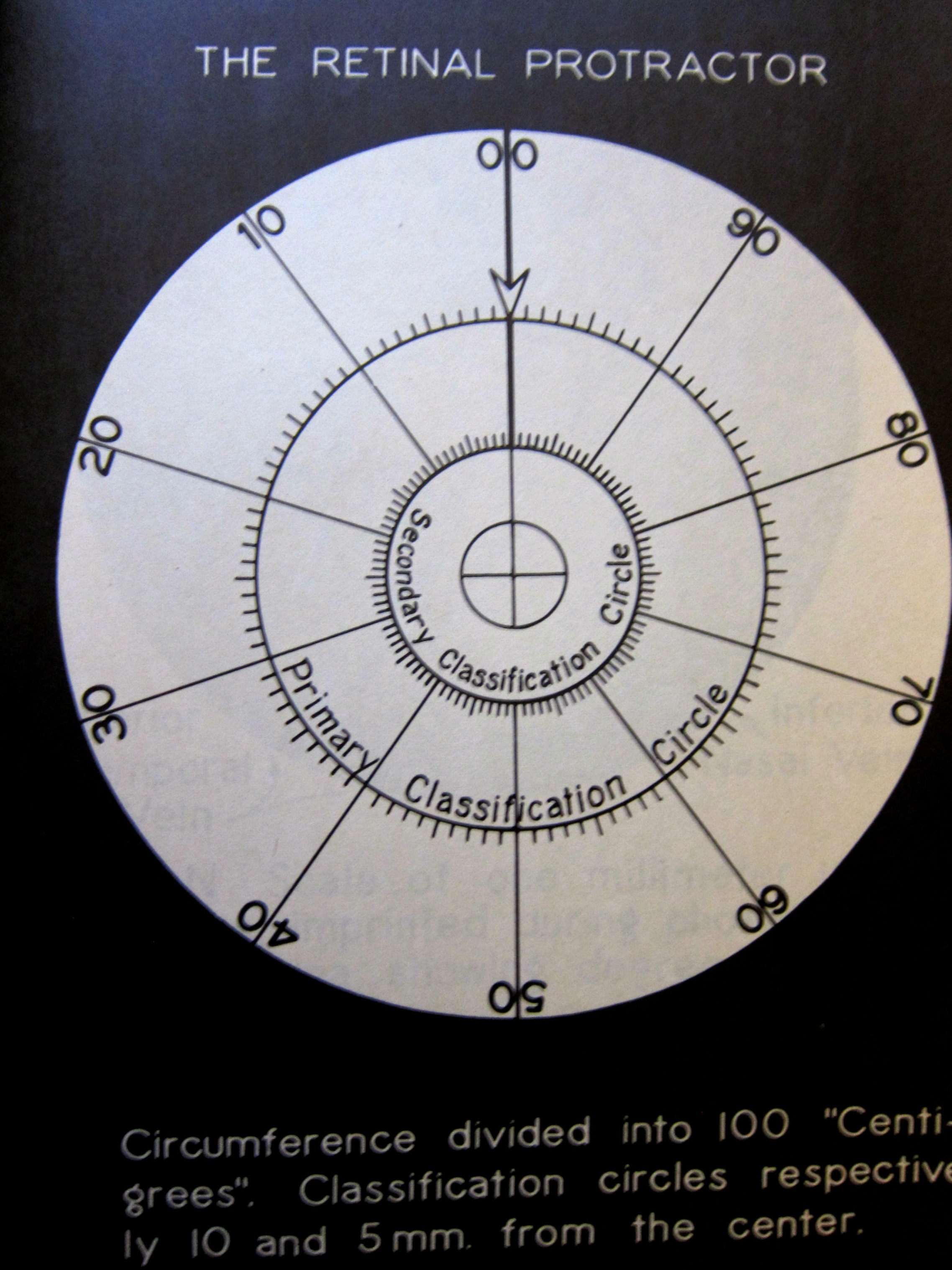
    Retinal identification is here, and it is in the future; it was in the past’s version of the future in the P.K. Dick Do Androids Dream of Electric Sheep? in 1968 which was turned into the film Blade Runner in 1982. But long before any of this was Carleton Simon and Isidore Goldstein, who figured out that everyone has a unique display of veins in their retina. Of course this is not exactly as obvious as fingerprints, but evidently it was a whole new thing in 1936–highly interesting. ANd what struck me was the “retinal protractor” which was like a grid placed on the photograph of the retina onto which the veins would be plotted, from there it went to another step to assign numerical values. 

    Retina id protractor

    Source:  Carleton Simon. The retinal method of identification; a new system of classifying retinal patterns. Presented at the annual convention of the International Association of Chiefs of Police at Kansas City,Mo.,September 21st to 24th, 1936.  11×8.5″ cover/title, followed by 4 leaves of photographs showing the sections of the retina, examples of the veinous patterns, and a retina protractor explaining the sections of the retina in a common language for placement.  
     
    Dr. Simon–“Criminologist of the International Association of Chiefs of Police, New York Association of Chiefs of Police…” is the Simon of Simon & (Dr. Isidore) Goldstein, whose groundbreaking paper1 introducing the uniqueness of the patterns of retinal blood vessels and their use in identification, was published on September 15, just a week before this address.  This publication may have been a handout for the address–it consists of one page of cover text and a separate four leaves of retinal pattern photographs with a cover sheet.  
     
    Notes:
    1. “One of the most accurate techniques for human identification is based on the uniqueness of the retina blood vessels pattern. The unique structure of the blood vessels in the retina pattern was first introduced in 1936 by Simon and Goldestein” . Simon C,,  Goldstein, I., “Retinal Method of Identification”, New York State J Med. 1936 Sep; 15– noted in “Retinal Identification System using Fourier-Mellin Transform and Fuzzy Clustering” Hadi Jafariani and Hamid Tabatabaee, Indian Journal of Science and Technology, Vol 7(9), 1289–1296, September 2014.

    ·Posted by :

    ·in:


  • Pistol- and Rifle-Cameras, 1884

    JF Ptak 

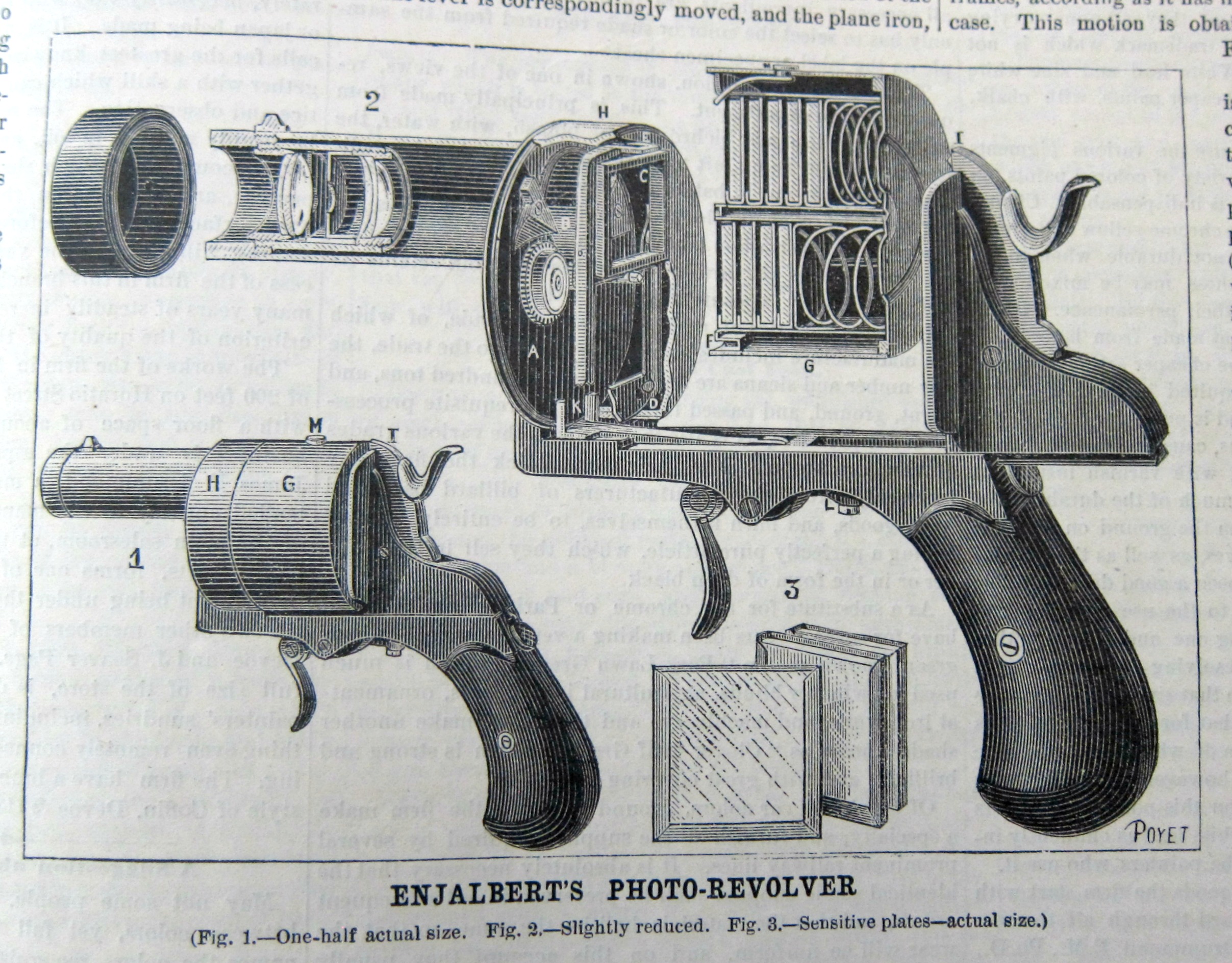
    There is an origin certainly for the reference to “shooting” fil or “shooting” a movie and such, and I think that it is fair to say that the following two illustrations of photographic innovations will explain that origin.  The first is E. Enjalbert’s “photo-revolver”, a woodcut and explanation of which appeared in Scientific American (“”A Photographic Revolver for Amateurs” ) May 17, 1884.  It really is an ingenious thing:  the lens of the camera was located in the barrel (#2) with the camera apparatus in section “H”; the photo-sensitive plates (life sized at #3), are both pushed forward and down with the action of the trigger/hammer.  It is a snappy design. On the other hand I don’t think I’d want to actually use the thing in an urban environment, as there might not be time for an explanation that “this is a ….”. 


    Inventions revolver camera

    (From the signature at bottom right of teh wood engraver this was no doubt published earlier in La Nature.)


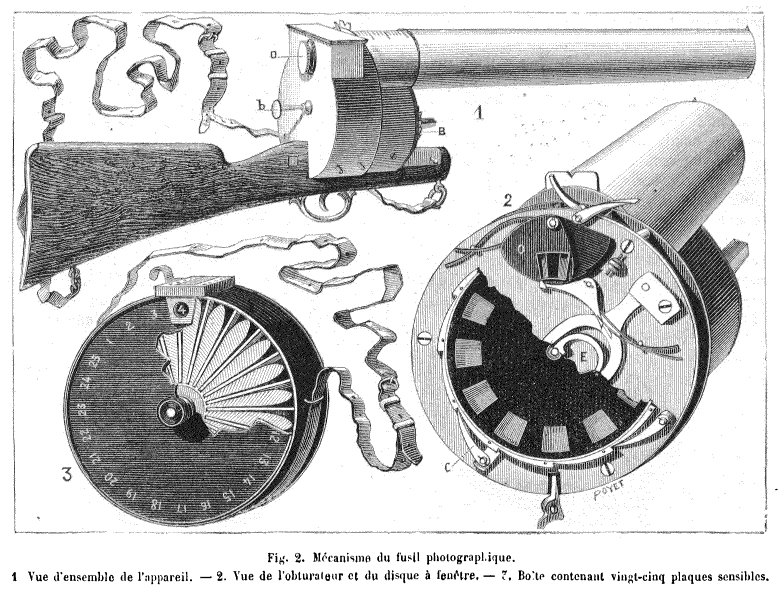
    And then there’s the great Etienne Marey’s “Fusil Photographique”, as it appeared in La Nature in 1882, which was an early and significant step in the development of cinematography, though again a highly problematic and time-invasive explanation out in public might escape the user:

    Invnetions camera rifle

    If there was any debate on the origin of the above-mentioned phrase, this might sway it.  


  • “A Most Delicate Monster”–the “Alpha” Robot of 1932

    JF Ptak Science Books  Quick Post

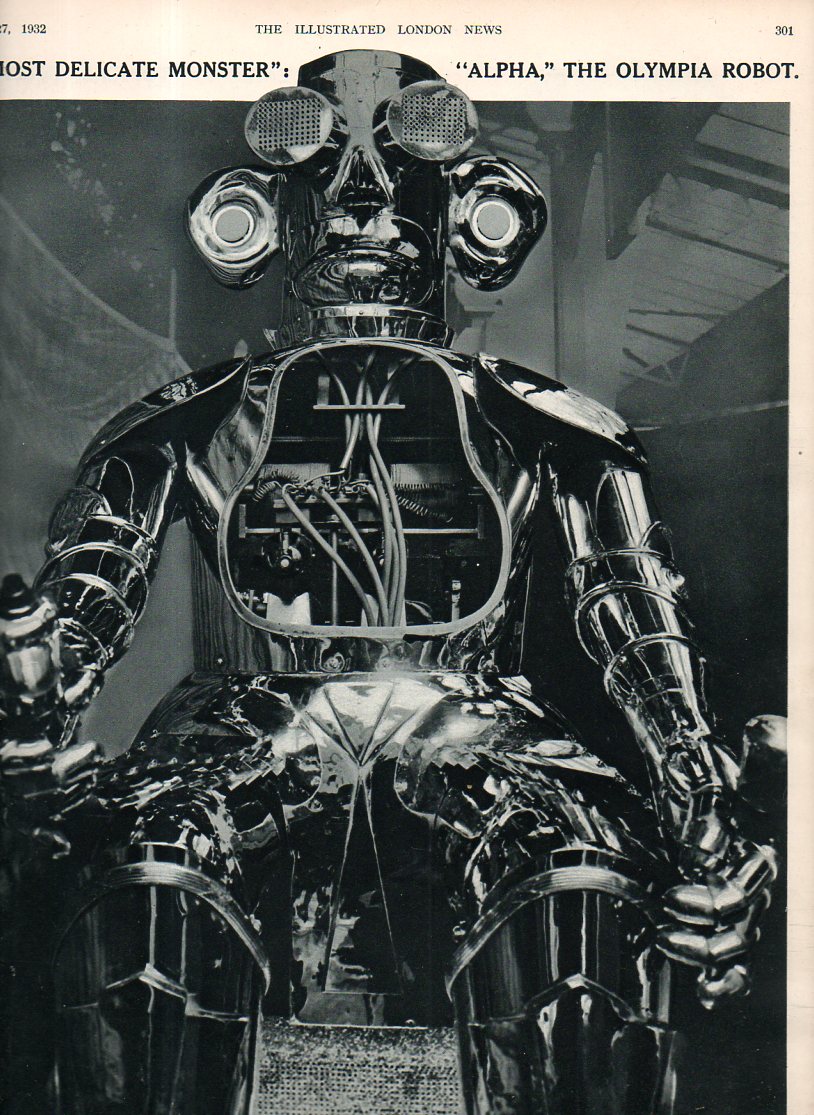
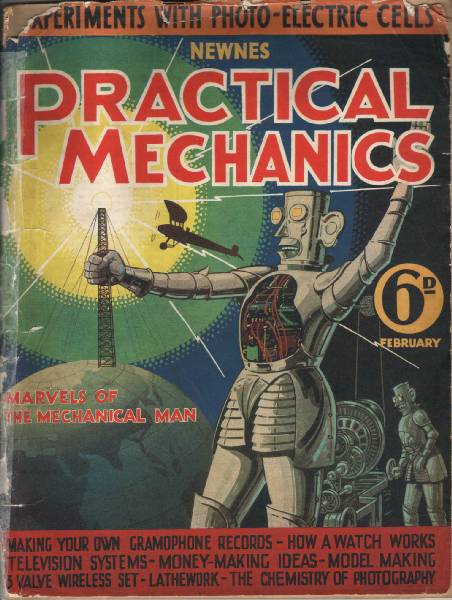
    I bumped into this robot in the pages of Illustrated London News for August 27, 1932. The idea of mechanical people had been around at least since the early 19th century, and by the time this one appeared i its gleaming glory in 1932, the word “robot” was around for a dozen years, invented in 1920 by Karel Capek for his book on the future called R.U.R.  Actually the human-like forms created by Capek in this early scifi work were biotech, and not fully mechanized.) The form of the robot stretches back hundreds of years, in a way–if not the exactly the idea of a robot, but at least with the appearance of one. “Alpha” was anthropomorphic, but hardly what you’d call bio-mechanical, or even pretending to be so. It was created by Harry May of London, and was evidently 6’4″ tall and weighed a ton (or two, perhaps), and was supposed to entertain and answer questions from the crowd when unveiled at the London Radio Exhibition of 1932.  Mr. May kept the details of his creation secret, though no doubt the robot was operated offstage by confederates, the voice supplied by wireless. Still, Alpha was a major attraction, and kept people entertained, if not confused.  In any event, it looked frightening as a vision of a possible 1930’s future-vision.  


    Alpha robot494


    Alpha robot practical mechanics

    [Source: http://davidbuckley.net/DB/HistoryMakers/Alpha1932.htm  This is a very interesting blog by David Buckley, including a long chronological section on the developments of robots–Alpha appears on this list, which includes six or so good links for contemporary stories about the robot’s appearance.]


  • Details in Electricity, 1814

    JF Ptak Science Books   Quick Post

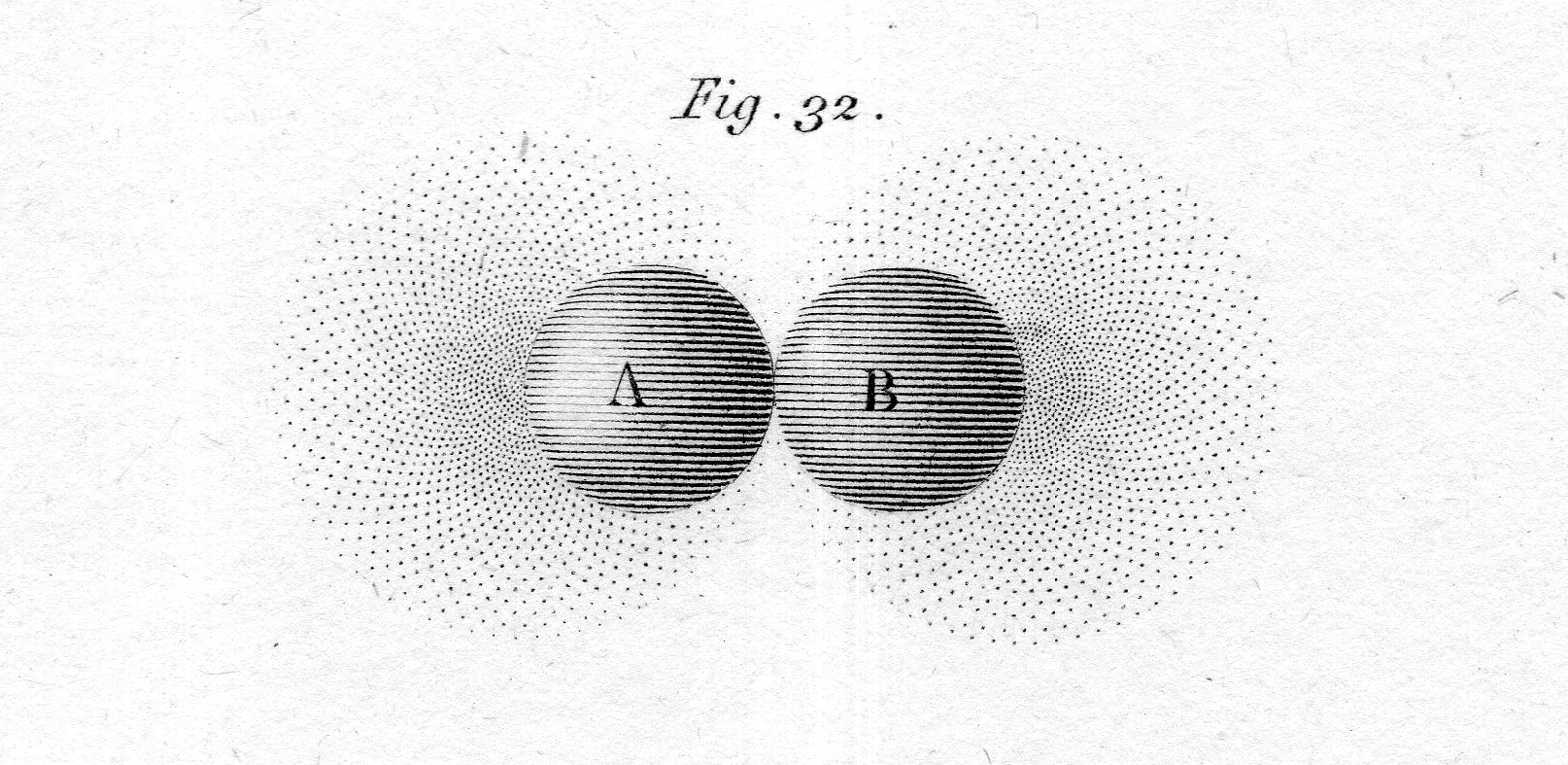
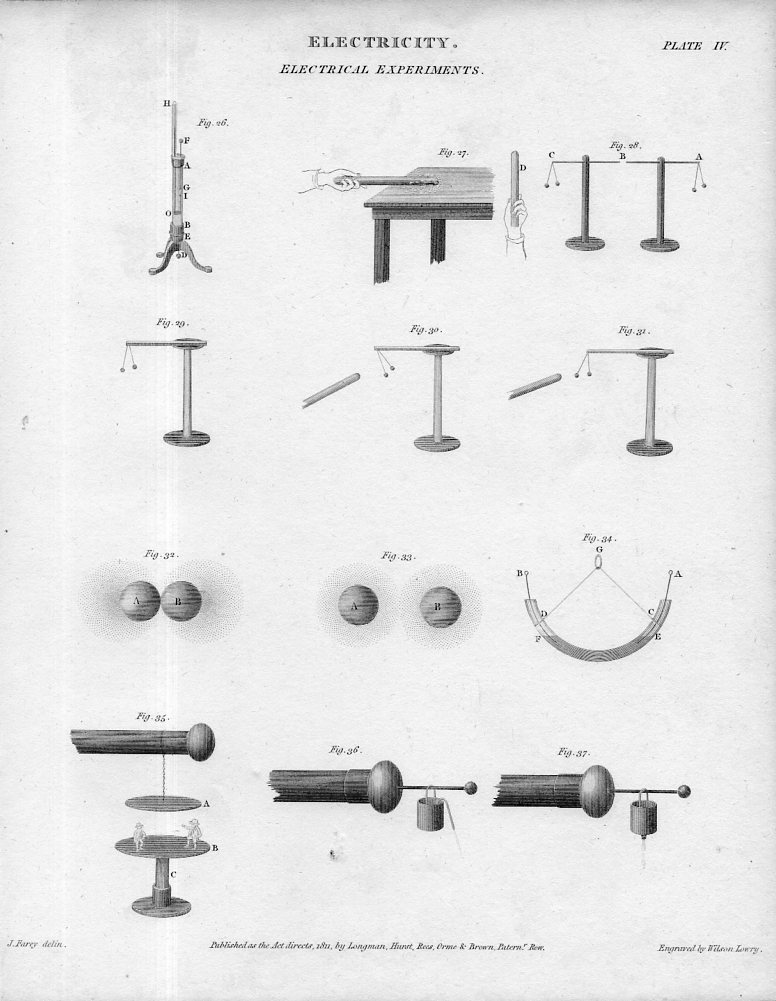
    The following images relating to chemistry were found in the illustration volumes of Abraham Rees’ (1743-1825) great work, Cyclopædia; or, Universal Dictionary of Arts, Sciences, and Literature. This was a massive undertaking for Rees, but his leadership and editorial skills were up to the task–in the end, 39 volumes were published containing nearly 40 million words, plus another six thick volumes contained the engraved illustrations to the monograph-length articles.  They are marvelous images, full of detail, and beautifully designed. This fine example on electricity contains several gorgeous tiny details, including the following:

    Electricity attraction489

    Which is a detail from:

    Electricity attraction488


  • The Dawn of the Robots

    JF Ptak Science Books   Quick Post 

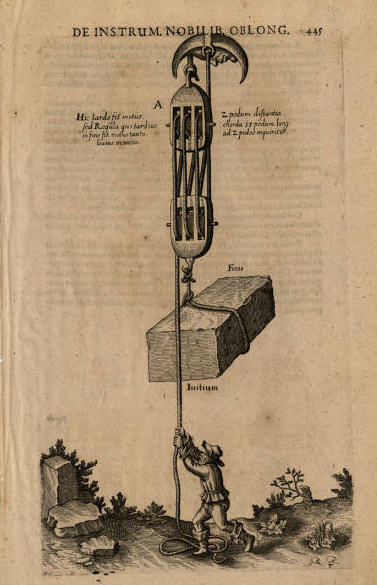
    Well, this is not anywhere near the first image of a pulley, not anywhere close–I don’t even know when that might have appeared in a manuscript in the 9th century or whatever–but it is certainly a very attractive gang of pulleys.  It occurs in Robert Fludd’s (1574-1637), Utriusque Cosmi . . . Historia (1617), and in it I see Hero/Heron of Alexandria (10-70 ACE), who I always associate with the pulley, and of course with his famous inventions, which in some respect are early forms of ‘robots”. In this image, the pulley-robot of some complex means is operating the “drive element” and producing (still) the necessary energy to produce change. And–this is a fine image.

    Fludd pulley

    [Source:  University of Utah,http://content.lib.utah.edu/cdm/compoundobject/collection/naturae/id/1587/show/1265/rec/1]