A Daily History of Holes, Dots, Lines, Science, History, Math, Physics, Art, the Unintentional Absurd, Architecture, Maps, Data Visualization, Blank and Missing Things, and so on. |1.6 million words, 7500 images, 4.9 million hits| Press & appearances in The Times, Le Figaro, Mensa, The Economist, The Guardian, Discovery News, Slate, Le Monde, Sci American Blogs, Le Pont, and many other places… 5000+ total posts since 2008.

Category: Technology, History of

  • A High-Renaissance “Tank”, 1623

    JF Ptak Science Books   Post 2623

    A Possible-reality from the visionary Robert Fludd
    Fludd tank e

    [Source:  University of Utah, http://content.lib.utah.edu/cdm/compoundobject/collection/naturae/id/1587/show/1265/rec/1]

     

    Fludd
    Robert Fludd’s (1574-1637), title page for his  Utriusque Cosmi . . . Historia (1617) features this complicated astrological wheel with a Vitruvian-man-like image at the vortex of the imaged pulls and pushes of the cosmos.  In addition to everything else, real and imagined, Rosicrucianism and astrology and puffy-birds, Fludd, who was  an English physician, delved deeply into the real stuff of the world in this book in addition to all of the other make-believe–optics, the musical intervals, perspective drawing, hydraulic engineering, construction of lifting machines, military engineering and many other interesting, physical science topics.  But this drawing, right there on the title page, reveals Fludd’s real interests and shows what governs what he does.  Everything else, the math and and the physics, services this need.  Of course the image is beautiful, which is why it is here, but it is also a deeply personal, exploitative, cover-all for the things that Fludd wanted to find. 

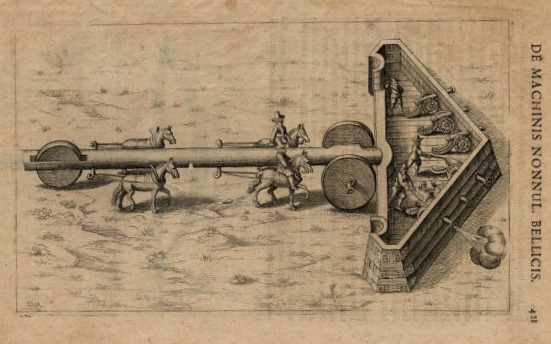
    But there is a lot of other interesting, and potentially-applicable, real-world stuff and proposals in the book as we can see in the exotic and wonder-full image of the high-Renaissance “tank” that leads this short post.  I’m not so sure that this thing would actually move–I assume that it has wheels or something in the front part to help it move along, otherwise that weapon would go nowhere.  Even if it was assumed to be mobile, I wonder about whether four horses is enough to move along something that size plus six canon and at least three men.  Even with 5’/6′ wheels, it seems not so likely that this would roll across a battlefield.  All that said, this did exist in the realm of possibility, and Fludd had much else.  Since I’ve been doing research on the first battlefield appearances of tanks, this one particular image caught my attention.  


  • The Italian “Flying Cucumber”, 1915

    JF Ptak Science Books   Quick Post

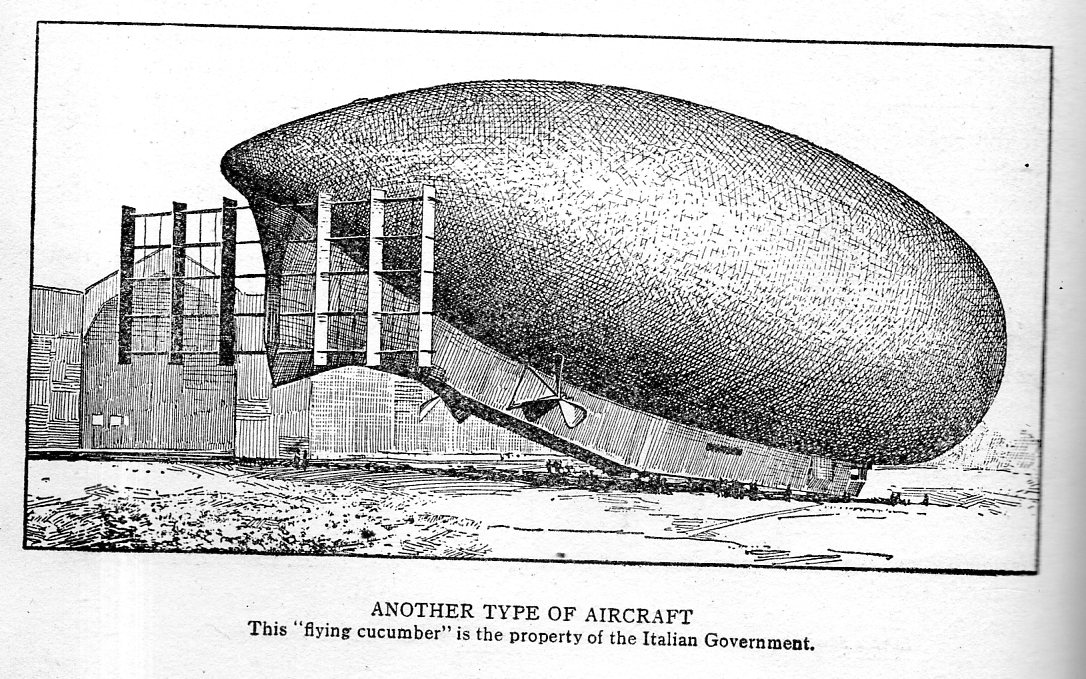
    Here’s an unusual (semi-rigid) airship designed by Enrico Forlanini (13 December 1848 – 9 October 1930, an Italian engineer, inventor and aeronautical pioneer), appearing in Technical World Magazine for May, 1915, and bearing the fetching caption “Another Type of Aircraft”.  It certainly was different, referred to here as the “flying cucumber”, though I doubt the Italians thought that.  In any even the airship went down in 1914 and was not a factor in the war.  

    Wwi aviati cucumber452


  • DIY Tank Model, 1917 (Full Text)

    JF Ptak Science Books   Quick Post

     In the last day or so I’ve been checking through some of my popular journals looking for references of the first usage of a tank in combat in WWI (which occurred in April, 1917). Popular Mechanics had a quick reference in their monthly issue for Map 1917, though now that I am into September 1917 for Scientific American I haven’t found anything on the tank in its pages. (Still to come is the Illustrated London News which I do recall having a large piece on the tank in April, 1917; and also the Illustrirte Zeitung, which I also recall having something on the tank in their place quite quickly following the tank’s appearance, which was an introduction to a new form of warfare that caught Germany very much by surprise.  

    Tank model 1917444

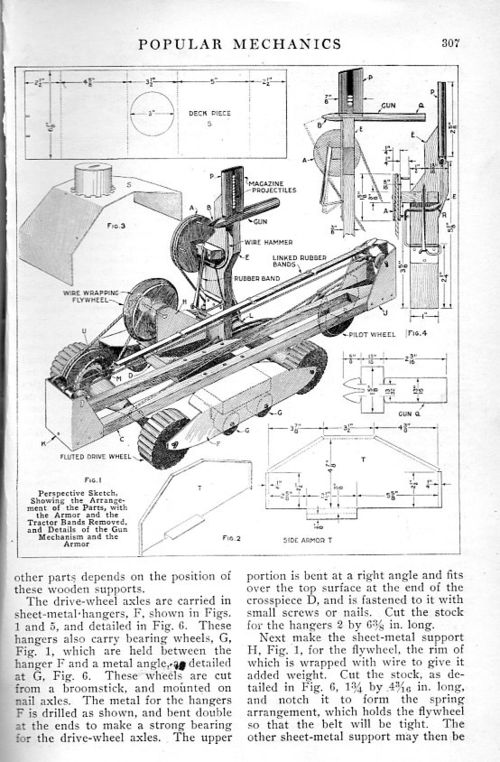
    [Popular Mechanics, August, 1917, pg 307]

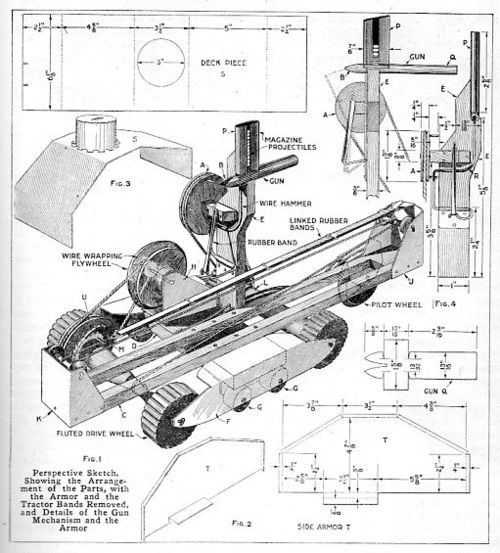
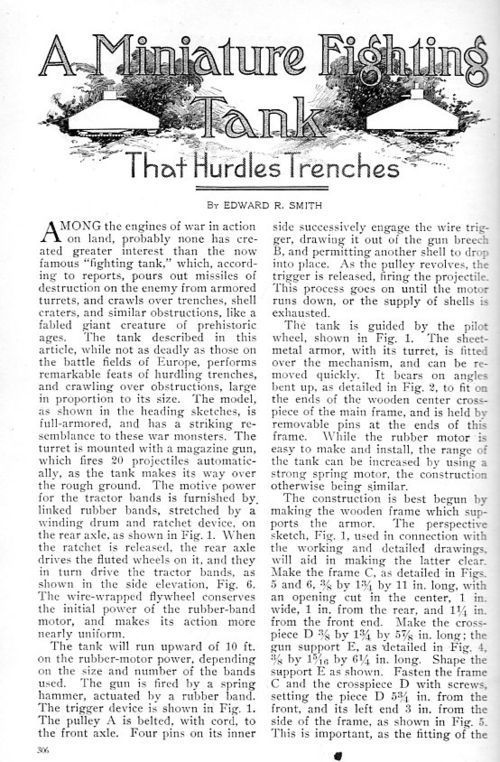
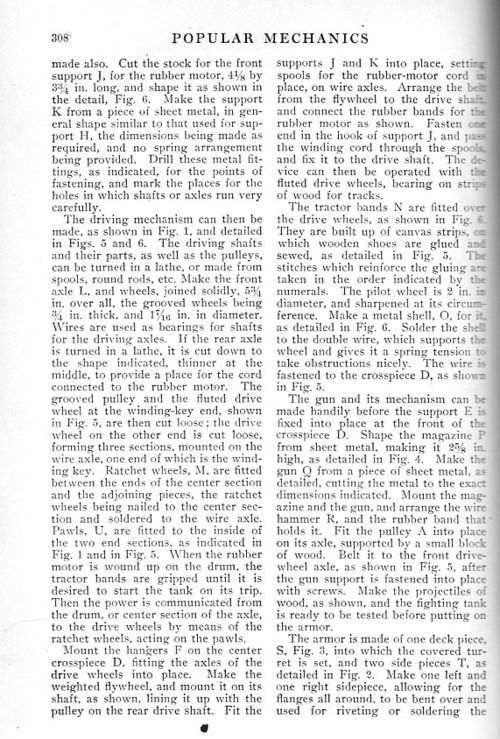
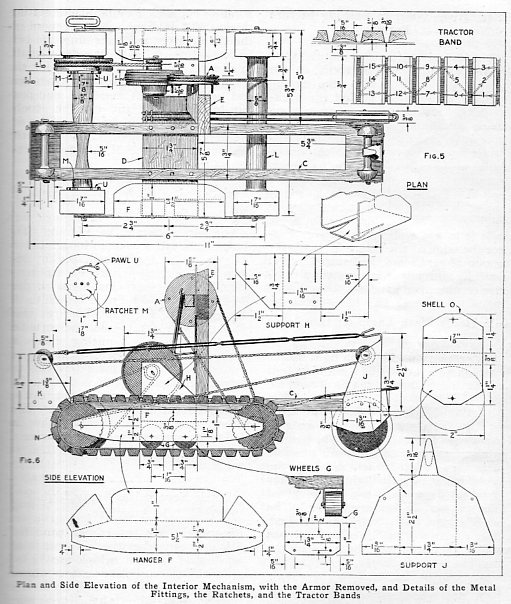
    It will no doubt be of interest to many that in August 1917, just four months after the first use of the tank that Popular Mechanics had a fairly detailed article for children of all ages on constructing a toy tank. Almost as quickly as a monthly magazine can report on an event, Popular Mechanics did so and then very quickly thereafter had a DIY project in its pages of the new innovation. I reprint the four-page article in full:

    “A Miniature Fighting Tank that Hurdles Trenches”

    Tank model 1917447


    Tank model 1917448

    Tank model 1917446

    Tank model 1917445


  • Interesting Graphical Details in a 1936 Radio Marketing Pamphlet

    JF Ptak Science Books  Quick Post

    Radio graphics NBC detail 436

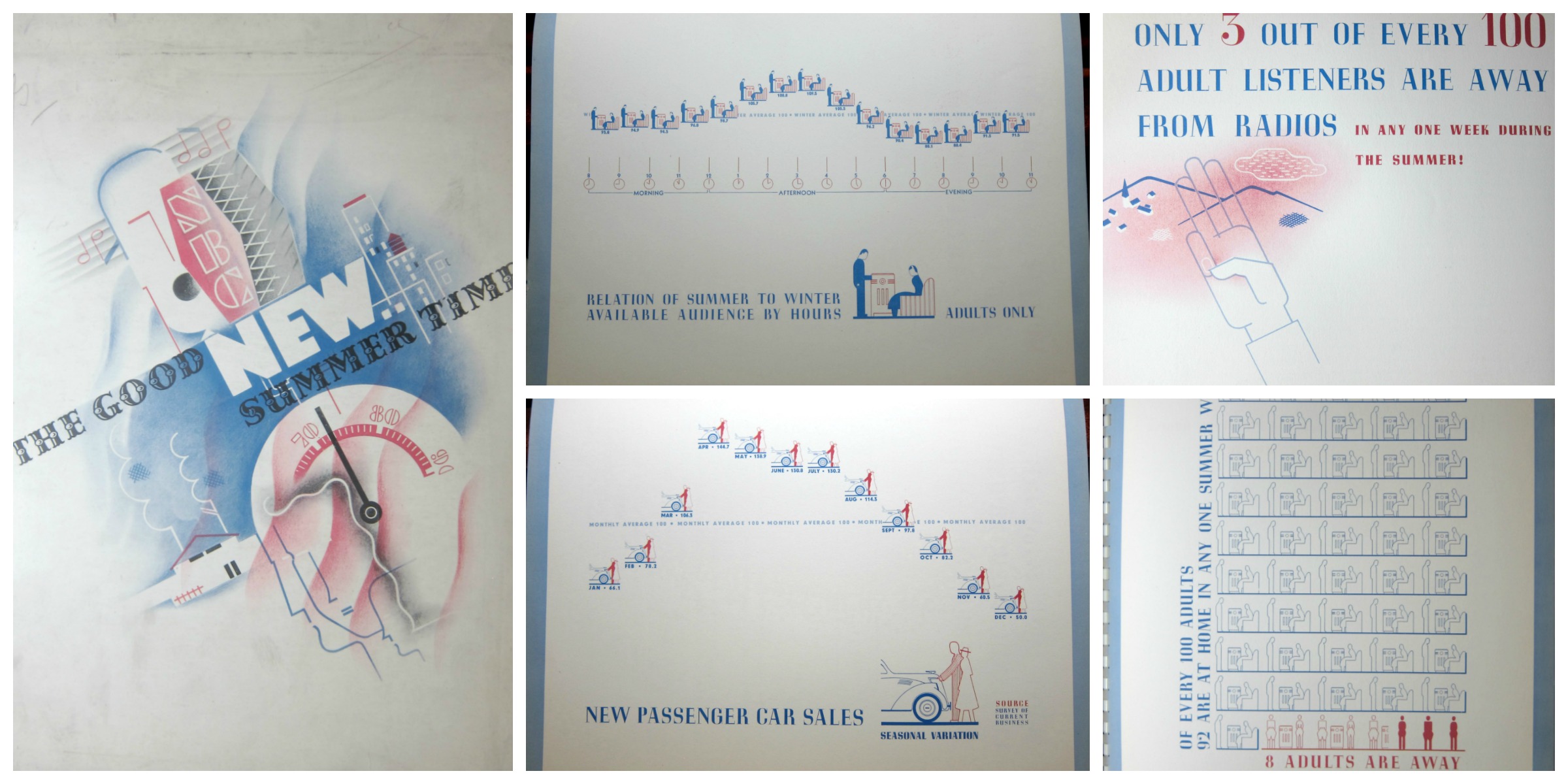
    No doubt there exist many opportunities to mine the radio broadcasting past with the statistics in this publication, though for my purposes now, I’m just reproducing a few of its very engaging graphic displays of information.  The document, The Good New Summer Time, a Probe of the Summertime Listening Audience of Today, published by the National Broadcasting Company, and printed in 1936, contains useful information regarding programming and advertising for the relatively new medium of radio.  The standards for the graphics are both light and a little complex–for example, in the display immediately below/center in the montage, we see a comparison between summer and winter adult audiences, the data points plotted in units of a standing man and seated woman listening to the radio.  

    Radio graphics NBC detail  auto437

    There really wasn’t that much data to be displayed, though the designers managed to fill the page in a pleasing way. It seems, overall, that this was an uncommon effort to display a small amount of highly useful limited-distribution data in an engaging manner.  

    Dataviz radio montage


  • Data Visualization and Enormity (1917)

    JF Ptak Science Books Quick Post

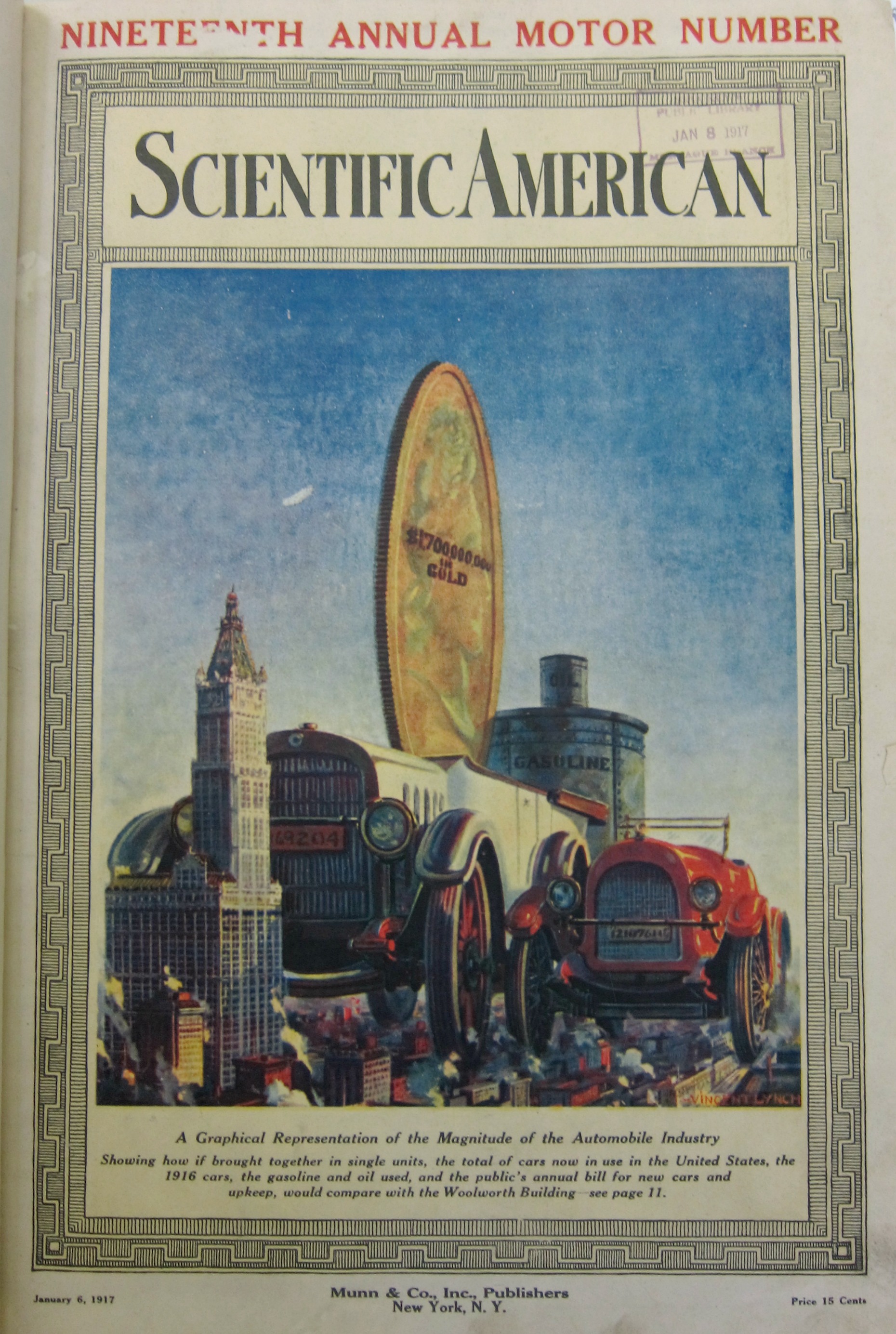
    Continuing what has become a series of posts from 1917 (all this prompted by looking for early mentions of the first use of a tank in battle during WWI) we come to The Enormity section. There are others to come, but there is something extra here in measuring production in terms of tall buildings–in this case, the Woolworth Building. In 1917 this was the world’s tallest building, and was so from 1911-1930, with 53 floors and 792′ high, its neo-Gothic greatness replaced by the Bank of Manhattan (928′) and then by the Chrysler Building, followed by the Empire State Building, and then the World Trade Center, and so on, which I mention just to put the Woolworth into perspective as a famous building capable of being used as a standard of measure.  What our graphic from the Scientific American (January 6, 1917) as to show is the enormity of the newish American automobile industry. The large car is supposed to represent the amalgamation of all cars built in the U.S.–the striking thing about the graphic for me is the second car, which is the production for only the year 1916.  In the background we see an enormous gold coin for the annual expenses of the car industry, and further back still the enormous cans of gas and oil used annually (which I guess were configured in terms of volume of the Woolworth Building). All-in-all, the visualization got its point across pretty effectively.  

    Dataviz automobiles 1917


  • Forty Trips to the Moon and Back (in Wire), 1917

    JF Ptak Science Books   Quick Post

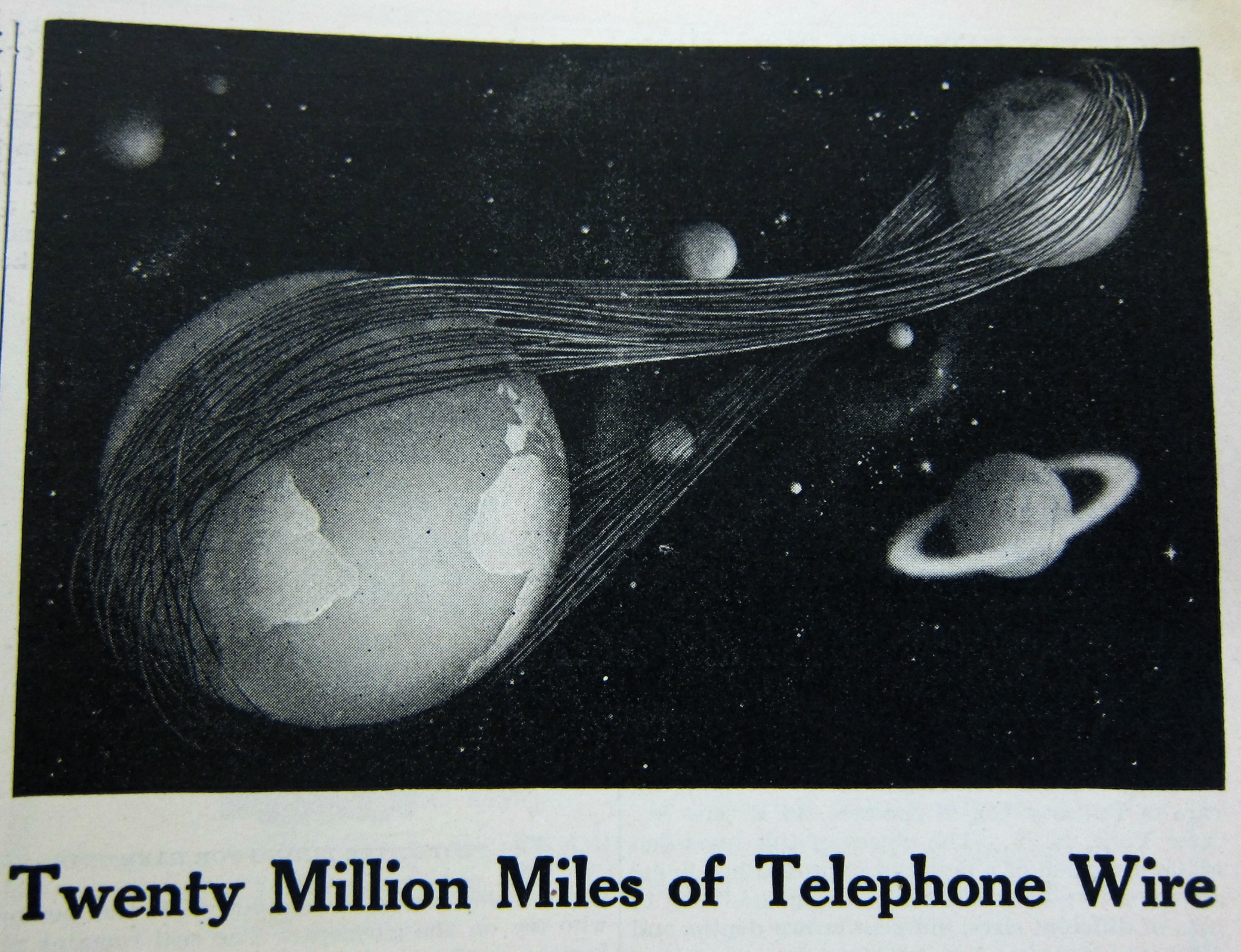
    While looking through a volume of Scientific American (January-July 1917) for a technical reference on the newly battlefield-introduced tank ( I could find none) I stumbled upon this intriguing info-graphic for American Telephone and Telegraph.  This of course is from at least seven decades before the concept of “wire” started to lose its shine in communications, and decades after the second “T”–for “telegraph”– in “A.T.&T.” lost most if not all of its meaning.  This interesting half-page ad displays the total amount of telephone and telegraph wire and cable in the A.T.&T. system–enough to reach from the Earth to the Moon and back again, 40 times (which is about correct calculating from the perigee). 

    Dataviz  telephone cables


    [Source: Scientific American, June 23 weekly issue.]


  • The Appearance of the Landship in WWI–Welcome the “Tank”, May 1917

    JF Ptak Science Books  Post 2623

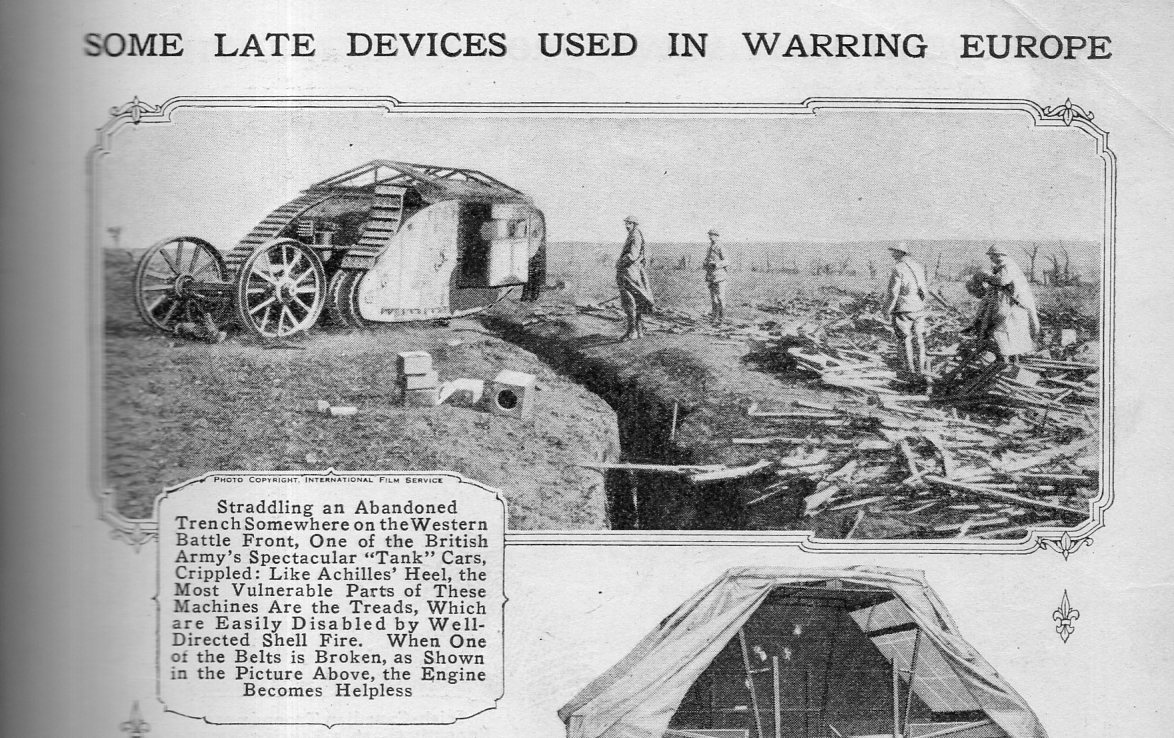
    I wasn’t looking for this–or anything else in particular–while browsing the year 1917 in Popular Mechanics, though when I came across it  and noticed that tank was in parenthesis, it occurred to me that there was good reason for that. The “tank” was brand new on the battlefield when this issue of the magazine came out in May, 1917.  The tank had made its first showing just weeks earlier in April, and had really only just come into its abbreviated name.  The committee formed in February 1915 to spearhead the development of a new armored fighting vehicle was called the Landships Committee, and as one story goes, the vehicle was called a “tank” because of its resemblance to a water tank–also, it was intended to misdirect any information going the wrong way by not referring to it as a “landship”, which would give away some of the secrecy. It should be noted too that it was the First Lord of the Admiralty, Winston Churchill, who established the committee.  So what we see here on page 683 of the May 1917 issue of Popular Mechanics is a very early photograph of the tank in a mass distribution magazine.


    Wwi project  tanks may 1917434

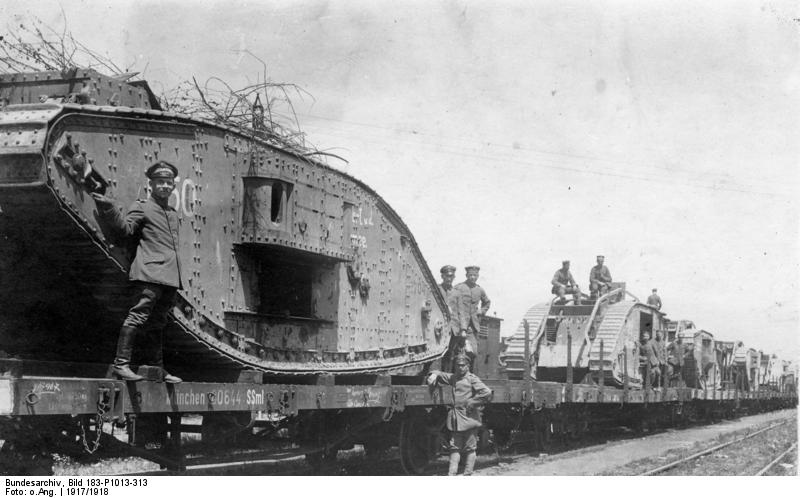
    The tank hit the battlefield pretty hard, and it evidently took the Germans by surprise–they certainly captured many more tanks than they produced, by far. During the war, from 1916-18, Germany produced only 20 tanks.  In that same period, the U.S. produced 84, while the French constructed nearly 5,000 and Great Britain 3,800 or so.  Germany was completely unprepared for heavy armored mobile combat–that would be a completely different story by 1939.  

    I’ve attached a photo of German soldiers with captured British tanks being hauled away on railroad flatbeds–no doubt these were photographic postcards.  Seems to me highly plausible that Germany would employ more captured British tanks on the battlefield than they would German-made tanks. 

    Wwi project tanks captured
    [Source: wiki source– https://en.wikipedia.org/wiki/Tanks_in_World_War_I#/media/File:Bundesarchiv_Bild_183-P1013-313,_Westfront,_erbeutete_englische_Tanks.jpg]
     
    Notes
     
    See this interesting table on tank production for WWI: http://landships.activeboard.com/t35439129/total-number-of-tanks-usedproduced-per-nation-1916-1918/

    ·Posted by :

    ·in:

    —

  • Finger-tip Lights for Theater Ushers, 1917

    JF Ptak Science Books  Quick Post

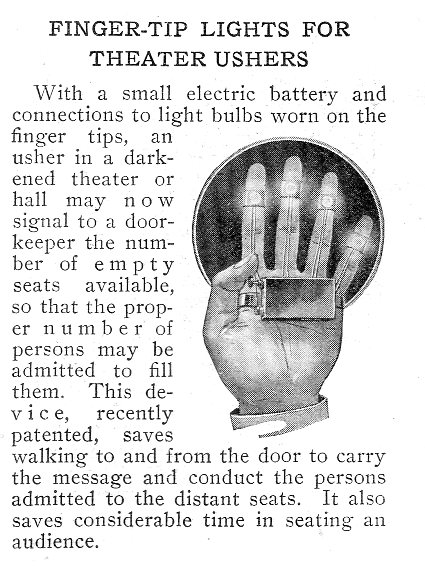
    This invention/innovation looks coy and sweet today, but it actually addressed an issue in 1917.  This was the year that “Hollywood production” in movies really begins, though there was already an explosion of movie houses in the U.S., “Hollywood” or not. Cinemas were plentiful and packed, and from the numbers I’ve seen already in 1917 50% of Americans were going to the movies several times a month–this number would top out in the 30’s when it approach nearly 70%.  So ushers standing at points throughout a movie house finding stray seats for people being held back by the doorman could have signaled the number of available seats with his lighted fingers, and moved the waiting line along more quickly than a lot of whispered back-and-forth strolls around the house. 

    Inventions finger tip431

    Popular Mechanics, April, 1917, p. 525, 

    ·Posted by :

    ·in:

    —

  • Fancy Walking Sticks and their Fancier Interior Lives (1892)

    JF Ptak Science Books   Quick Post

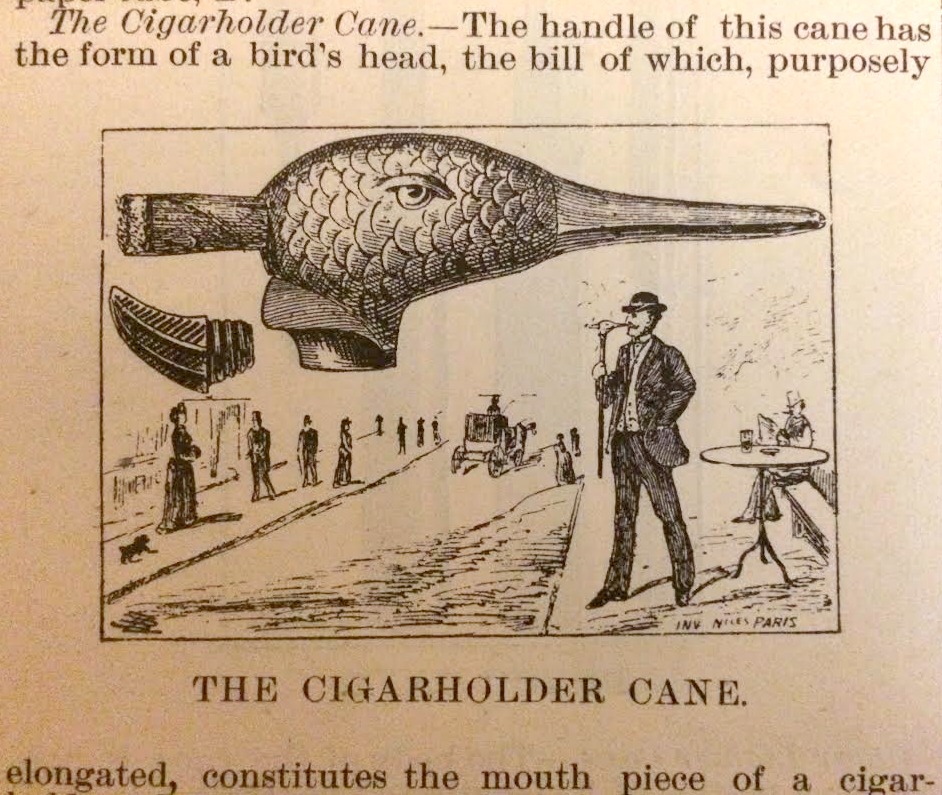
    The walking stick continued to be a “thing”–a gentleman’s pursuit of gentlemanliness, of refinement, or culture, or style, and so on–deep into the 19th century. And as we can see in this sample from the Scientific American Supplement for November 26, 1892, people were interested not only in sticks but also in what other things the cane could do for them while perhaps aiding them in walking.  Some ideas are sort of good, while others, not so.  An example of the later might be the following–using your cane head as a cigar holder allowing you to smoke your stogie through the beak of a duck:

    Cane specialists detail


    Other hidden additions to the cane were not such bad ideas, like the emergency supplies for a physician; and I guess if you going to carrying a cane for show or if you actually needed a cane to help your walk, having the cane serve another purpose was probably a good idea, or at the very least gave a cane-maker something to do beyond making a simple cane.  

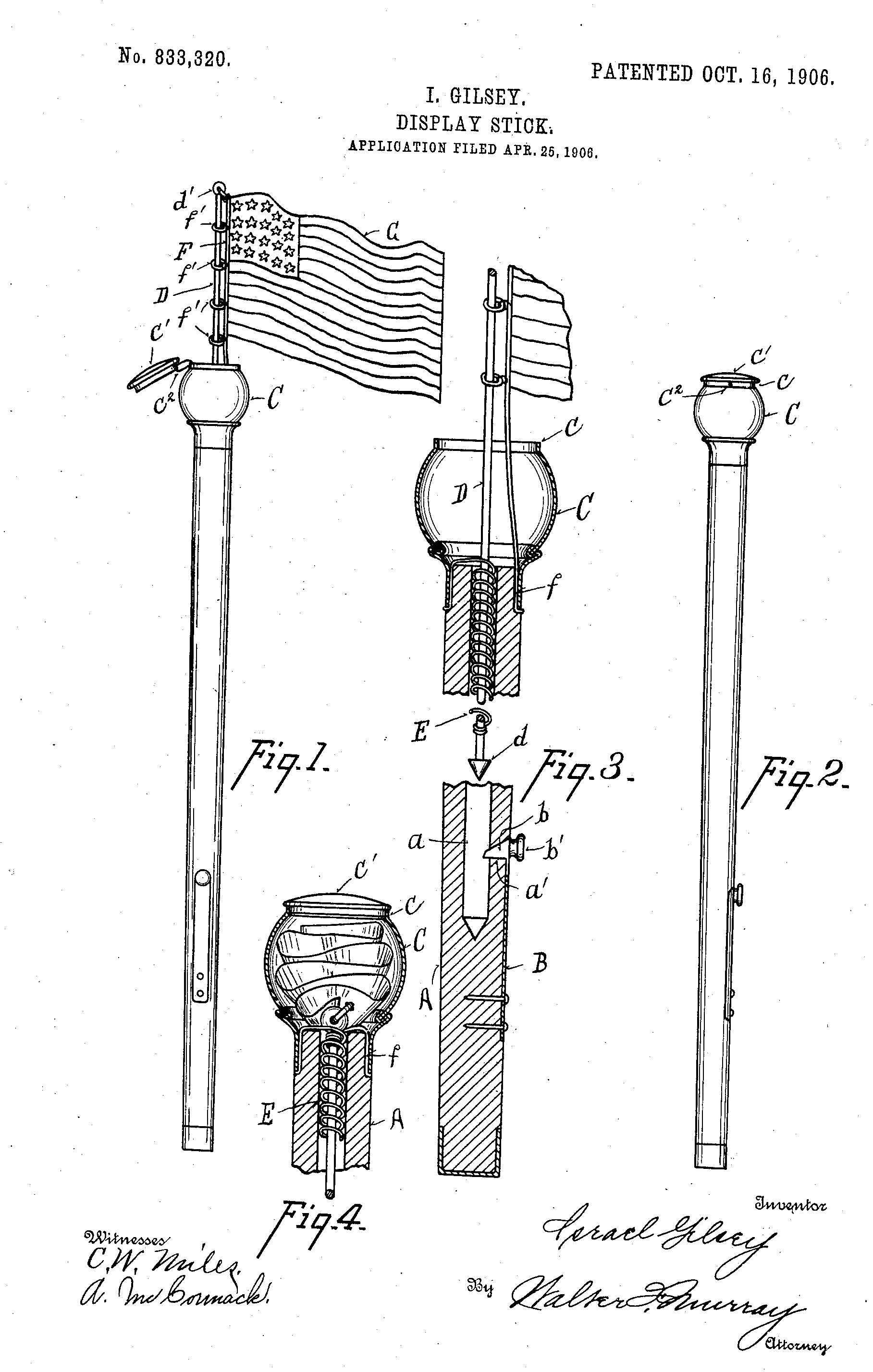
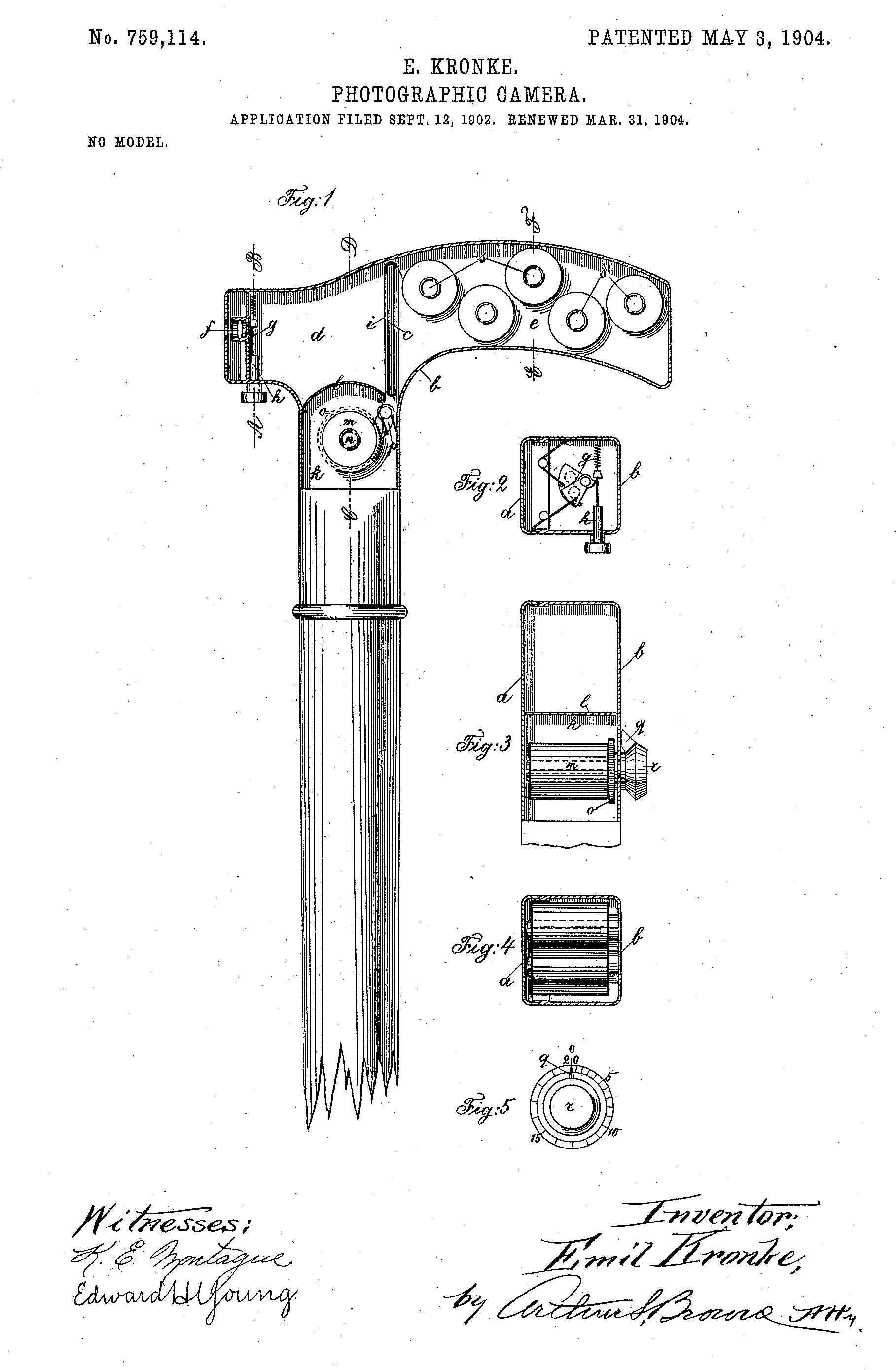
    I did have a quick look at patents for walking sticks for 1875-1925 and found that there were a number of varied patents for walking sticks with umbrellas and stools lodged inside them, which makes sense. There were a number of stick-additions that you’d expect–like that for guns, booze holders, and rulers–and then a number of unexpected contrivances, like music stands, pool cues, fishing rods, soil testers, musical instruments, cameras, lamps, a combo gun-umbrella-fishing rod, and one of my favorites, the flag pole:

    Walking stick flag

    [Source, Google Patents: https://www.google.com/patents/US833320?dq=walking+stick&hl=en&sa=X&ved=0ahUKEwj3xb3BlpvNAhUGTSYKHeJ6ADMQ6wEINDAD]

    And the walking stick camera:

    Walking stick camera

    https://www.google.com/patents/US759114?dq=walking+stick&hl=en&sa=X&ved=0ahUKEwiJtunTmJvNAhWEOCYKHT3SBBAQ6wEIUDAH

    ·Posted by :

    ·in:


  • The pre-Google pre-Car ~Google ~Car (1892)

    JF Ptak Science Books  Quick Post 

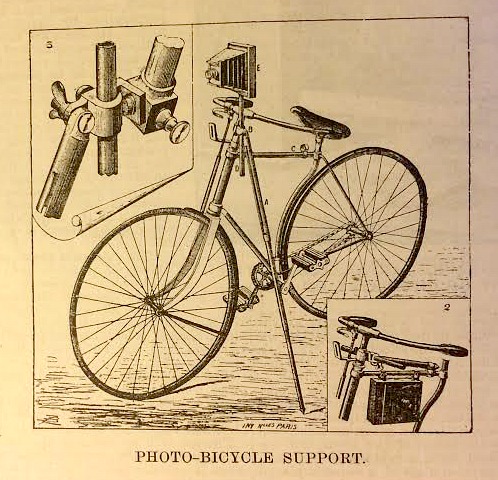
    In the four hundreds years since Columbus’ first voyage we find in the pages of Scientific American Supplement (July 23, 1892) a new mode of transport/exploration/recorder–the bike camera. Or, well, a bike with a camera-holding capacity.  Or a bike with a tripod on which a camera could be placed. I know this is a lot less glamorous than a pre-Google pre-car, but in a sense, it is.  

    Google bike


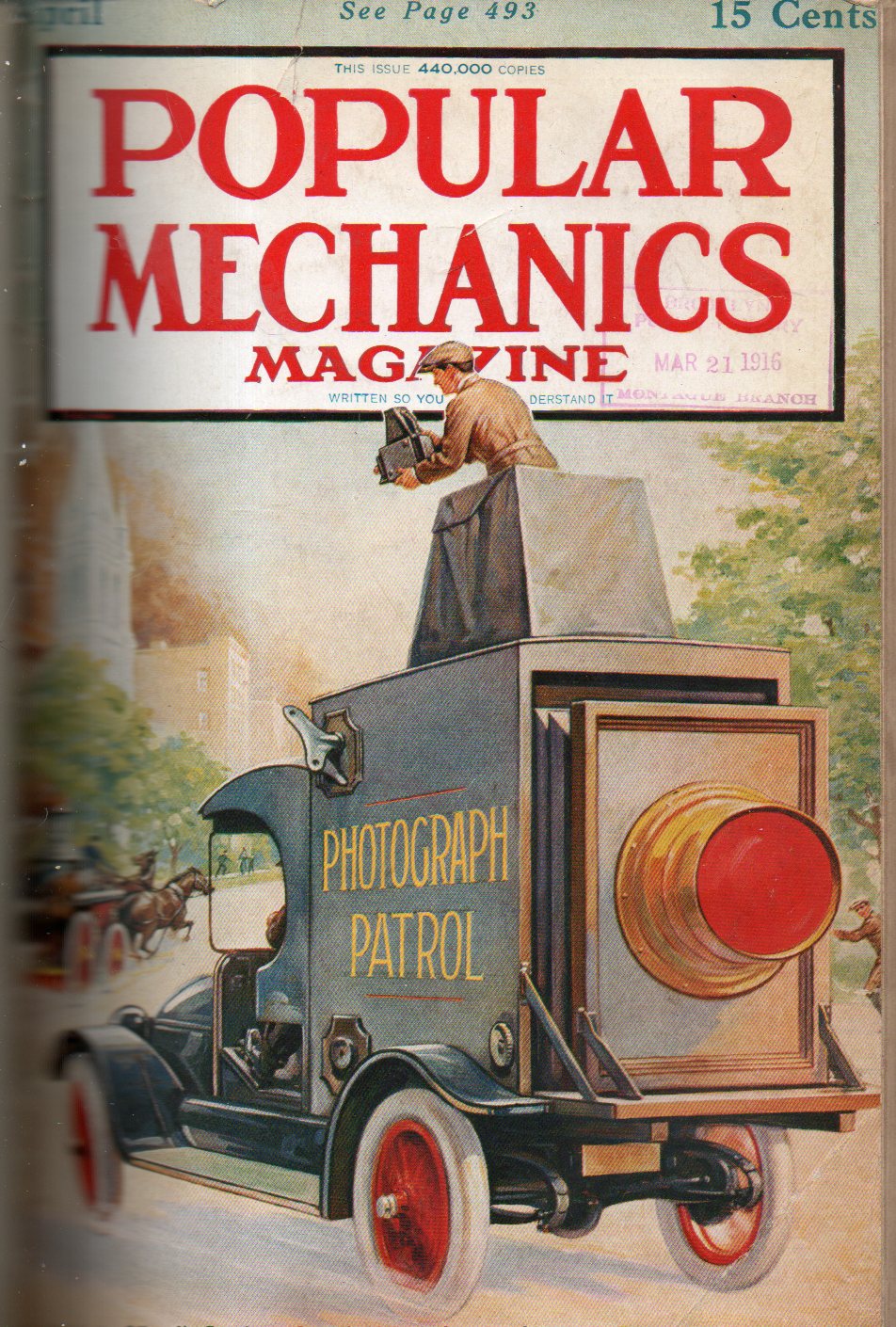
    Which reminds me of an earlier post:


    Google car772

    [Popular Mechanics for April, 1916.]


    And this:

    Google radio781

    [Image source: Popular Mechanics, volume 44, October 1925]

    ·Posted by :

    ·in: