A Daily History of Holes, Dots, Lines, Science, History, Math, Physics, Art, the Unintentional Absurd, Architecture, Maps, Data Visualization, Blank and Missing Things, and so on. |1.6 million words, 7500 images, 4.9 million hits| Press & appearances in The Times, Le Figaro, Mensa, The Economist, The Guardian, Discovery News, Slate, Le Monde, Sci American Blogs, Le Pont, and many other places… 5000+ total posts since 2008.

Category: Technology, History of

  • Maps of Ancient Cities and Colliery Cross Sections (1877)

    JF Ptak Science Books   Quick Post

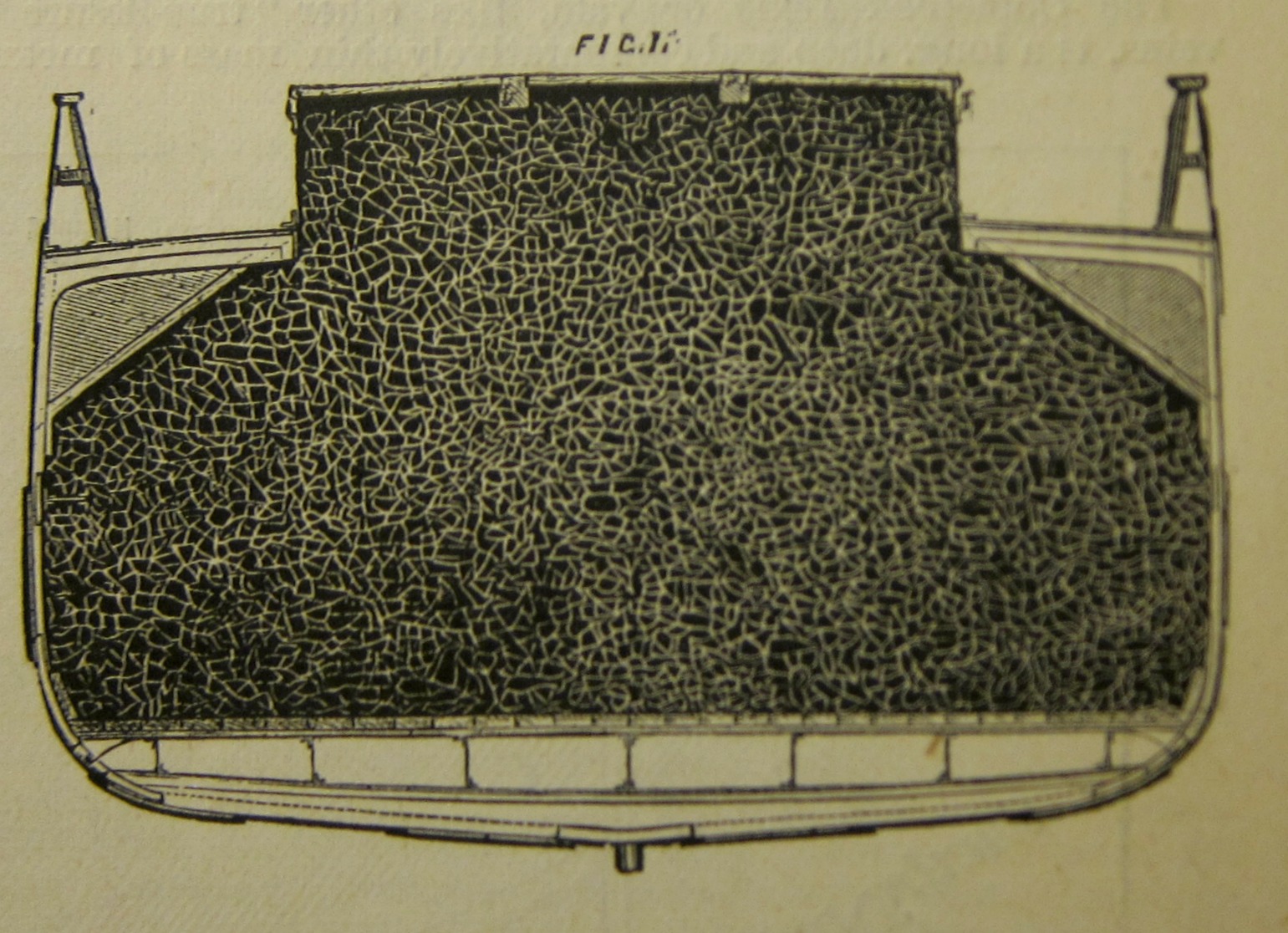
    One in a long list of tough jobs of the 19th century was that of the “trimmer”. These guys would be in the holds of coal transport ships, in the recesses and odd spots, whose job it was to shovel the coal into those far regions that would be missed in the loading process to ensure that as much coal is hauled as possible and to secure a stable cargo. They would be in a tough position, probably not well lighted, doing heavy work, and breathing a lot of coal dust. It was far from “easy” work, though it was pretty important that this work was done.  

    But as I saw in a Scientific American Supplement article for May 26, 1877, even these jobs were being released to a higher technology. In this case, that tech-boundary wasn’t so high. The solution in at least two cases of improved colliery loading was to make the hatches of the hold much larger so that coal could be distributed more evenly and reach all of those hard-to-reach spots.  And so the trimmer would lose his job to gravity.

    What I found most appealing though (as I slightly scared myself thinking about doing the actual work of a trimmer) was the cross section illustration for the article.  On close examination it may well be the skin of a large mammal in a dry place, or a road map of some ancient place with no legends, or any number of other things. The big brace of black is simply a cross section of the coal in the hold, but it does have a certain Found-Outsider Art quality to it.  

    Sci Am Supp 1877 Colliery gravi ty


  • A Beautiful Nighttime Cross Section of a Burning Building, 1690

    JF Ptak Science Books   Post 2572

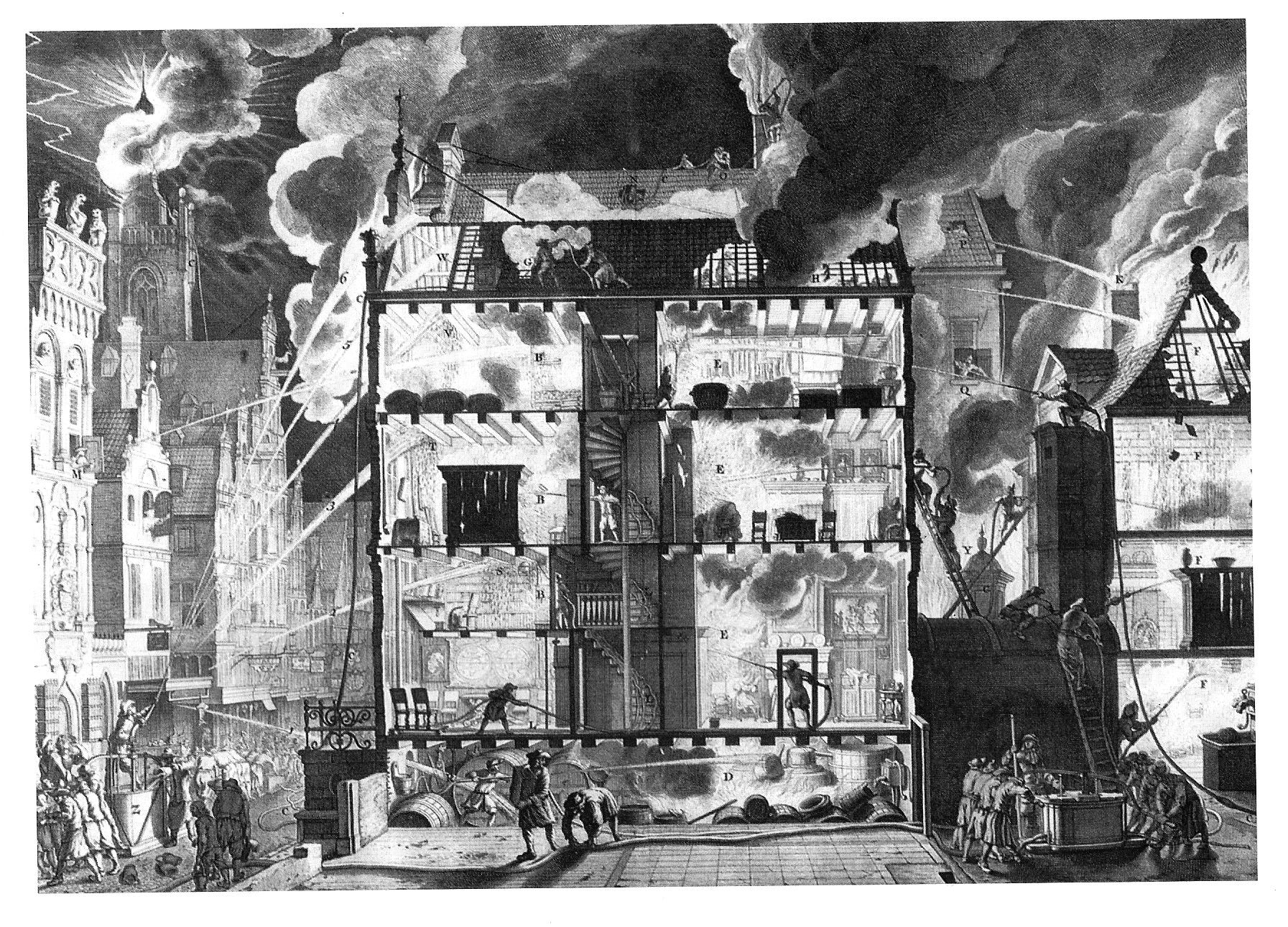
    Jan van der Heyden, a 17th century Dutch inventor, engineer, and artist, shared in his sensibilities in illustration a certain profound sense of color and depth of the Golden Age, even though he was working in just black and white in this capacity. He was the inventor of the fire hose, and was in charge of firefighting acting at the pleasure of the governors of Amsterdam, employing innumerable new technical benefits in the art of fighting fires as well as a “radical” new approach to dealing with fires.  (Which was a fine and very important thing, given the compactness of Amsterdam and all). In 1690 van der Heyden and his son published a revolutionary work1 on firefighting that explained the apparatus (the best of which he manufactured and patented), which is seen by experts as being perhaps the greatest book on firefighting ever published.  My interest was drawn to it by the illustrations, which really are quite spectacular (a number of them were engraved by van der Heyden himself). There are numerous nighttime scenes of firefighting, as well as some forensic images of post-fire situations, and of course images of the apparatus. (The content of the book were thoughtful and quite modern in presentation, with chapters dedicated to the old fire fighting equipment and then the new, a history of 40 years or so fires in Amsterdam, plus sections on buckets, ladders, hooks, tarpauline, the arrangement of the fire house, and of course the fighting of fires. It is an impressive work of a high order.)

    Perhaps the most interesting image for me is the cross section of a burning house at night–offhand I cannot recall an earlier, architectural image of such a thing.


    Firefighting cross section

    [Image source: Van der Heyden, Fire Fighting with Water Hoses and the Method of Fighting Fires now used in Amsterdam, translated by Lettie Stibbe Multhauf, and published by Science History Publications, 1996, opposite the header for chapter one, page 12.]

    For other images, please see  “Jan van der Heyden and his firefighting book” at Princeton University Library, Firestone Collection  https://graphicarts.princeton.edu/2015/01/30/jan-van-der-heyden-and-his-firefighting-book/

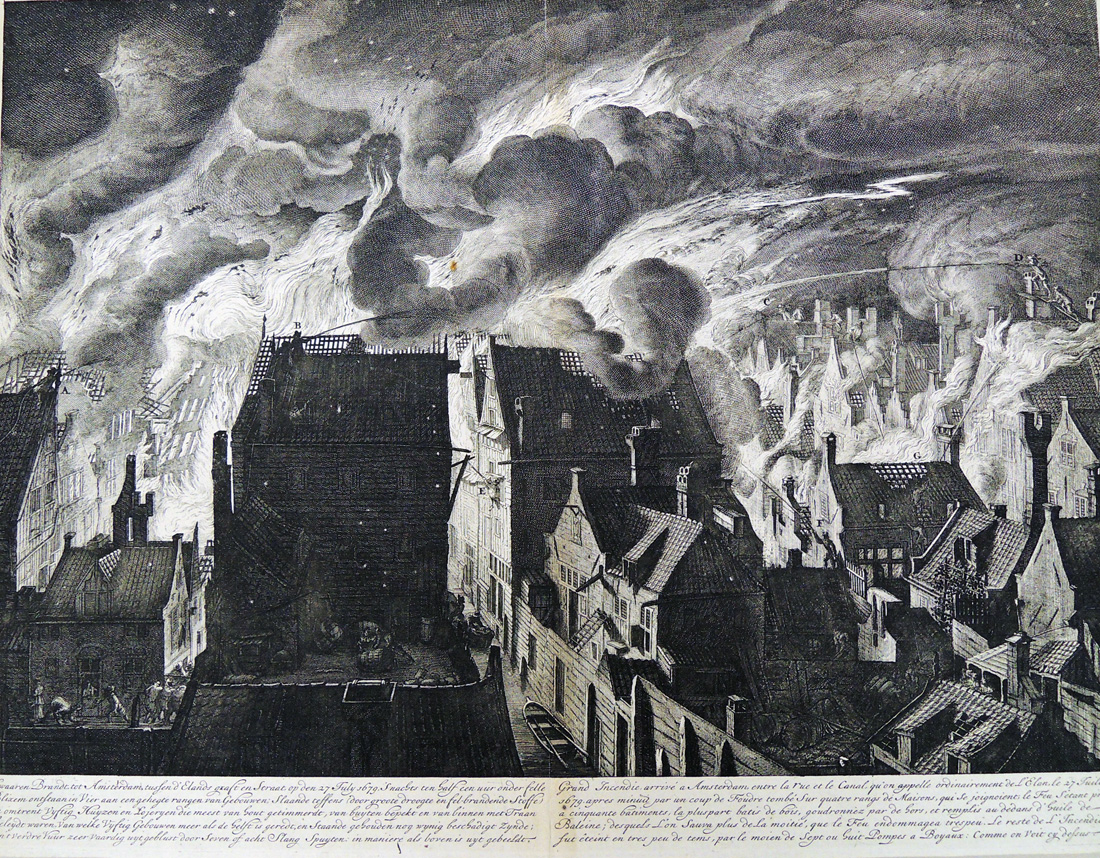
    One of the spectacular images of the book:

    Fire fighting Heyden

    Source,  Princeton University Library, Firestone Collection  https://graphicarts.princeton.edu/2015/01/30/jan-van-der-heyden-and-his-firefighting-book/

    Notes:

    1. Jan van der Heyden (1637-1712), Beschryving der nieuwlyks uitgevonden en geoctrojeerde slang-brand-spuiten en haare wyze van brand-blussen (Description of the Newly Discovered and Patented Hose Fire Engine and Its Way of Extinguishing Fires) (Amsterdam: Jan Rieuwertsz, 1690).

    ·Posted by :

    ·in:


  • Nerves of Steel–Human-centric Target Practice from 1934

    JF Ptak Science Books  Quick Post

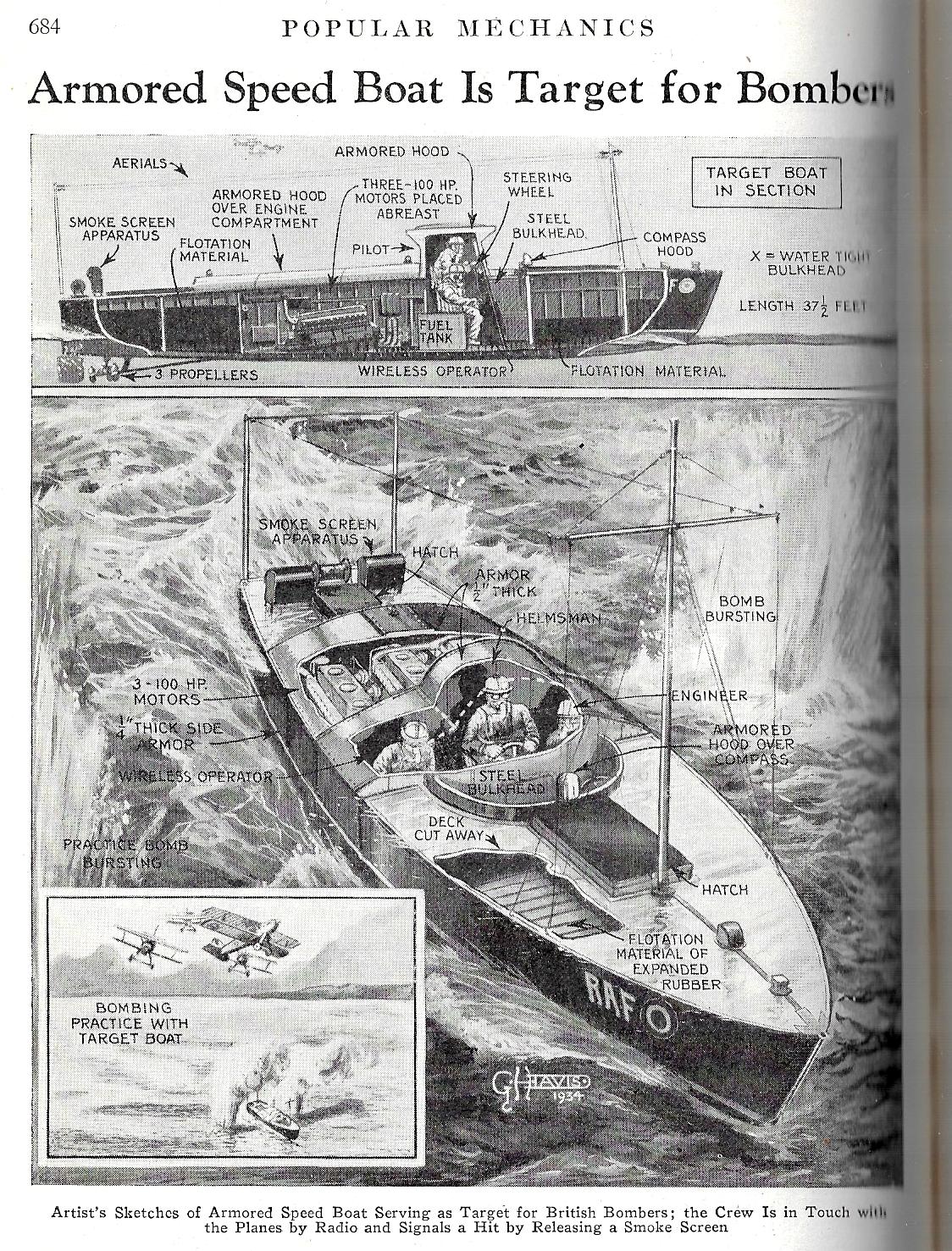
    This illustrated story from Popular Mechanics for May 1934 seems almost nominal–“Armored Speed Boat is Target for Bombers”–until you realize that it is piloted, and has an engineer and a wireless operator on board. This British crew of three would run around, powered by three 100-hp engines and serve as target/bait for bombers, trolling around, waiting for the aircraft to attack and strike.  Evidently the boat was screamingly fast at 30 knots, and was constructed to both protect and fail: the crew and engine compartments were shielded by half-inch iron plate and shock absorbers, while most of the rest of the 37′ boat was made of lighter material encasing rubber flotation devices. The boat was actually made to be hit by a bomb from the aircraft–if so, the bomb was supposed to pass cleanly through the fore and aft sections, with the rubber parts supposedly keeping the boat afloat. In the event of strike, the wireless engineer would both radio the plane pilots of their success as well as release a smoke screen.  Quite right.  Seems that you’d need steel fibers for nerves in this operation.

    Pop Mech 1934 speedboat target

    The drawing and cutaway were made by George Davis, a highly prolific and skilled artist who made hundreds of these drawings over the decades.  

    ·Posted by :

    ·in:

    —

  • Rocket Mail Delivery, 1934

    JF Ptak Science Books  Quick Post

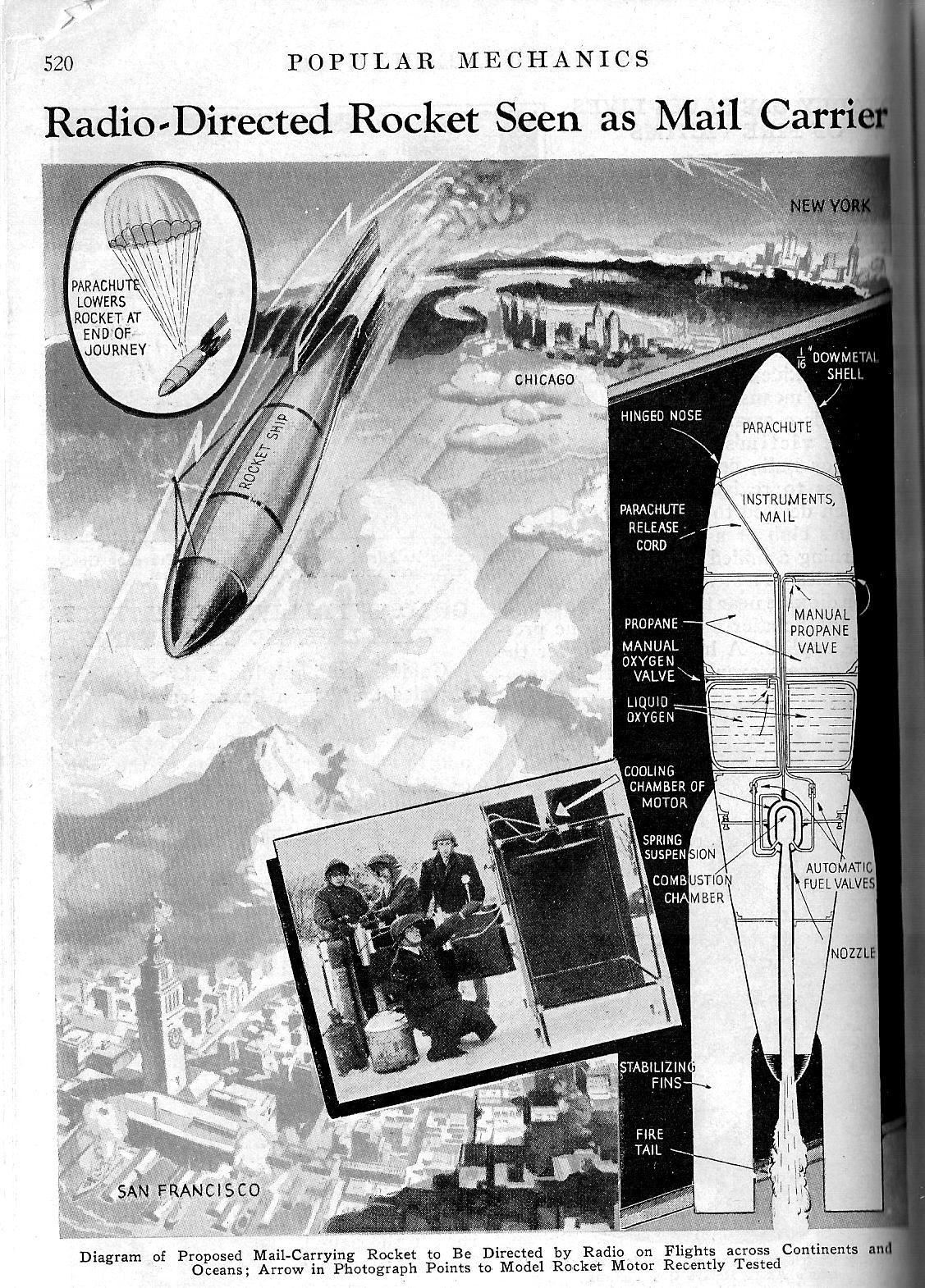
    This seems as though it was an interesting idea back in 1934–but no doubt there were others thinking that instead of dropping mail on a city by a rocket that another payload could be substituted…better yet, just use the entire rocket for this delivery-of-something-else item and dispense with the parachute altogether. In any event, the idea never caught on (though megastars of rocket flight Hermann Oberth and Eugene Sanger discussed its possibilities in a positive light), and it seems as though there was only one instance of USPS rocket mail delivery–a converted nuclear-warheadless SSM-N-8 cruise missile was used to do so in 1959, and that seems about it. 


    Pop MEch 1934 Rocket Mail

    {Source:  Popular Mechanics, April 1934]


  • Electricity in Prometheus, 1879

    JF Ptak Science Books    Post 2570

    The first twenty pages or so of Punch, or the London Charivari, for the year 1879 are far and away my favorites of that periodical. They are absolutely loaded with visions of the past and future technologies, and most of that centered on the newest electrical inventions–and this of course is one of the greatest periods for electrical developments, seeing (all in a couple of years) electric lighting, the telephone, the phonograph, and more. In those few pages (of two issues, the first and bound first is the “Punch Almanack” for 1879 and published December 11, 1878, and then followed by the first issue for 1879, published January 11, 1879) there is a three-illustration on Thomas Edison’s anti-gravity underwear (!), a full-page “Museum of Modern Antiques”, “Edison’s Telephonoscope…”, and then the two-page “Prometheus Unbound, or Science in Olympus”, while in the second issue is “The Electric Light, Pro and Con”.  I’ve written about all of these save for the cover of the “Almanack” and the “Prometheus Unbound”–the posts for the three images of Edison’s Anti-Gravity Underwear have been very popular over the years. 

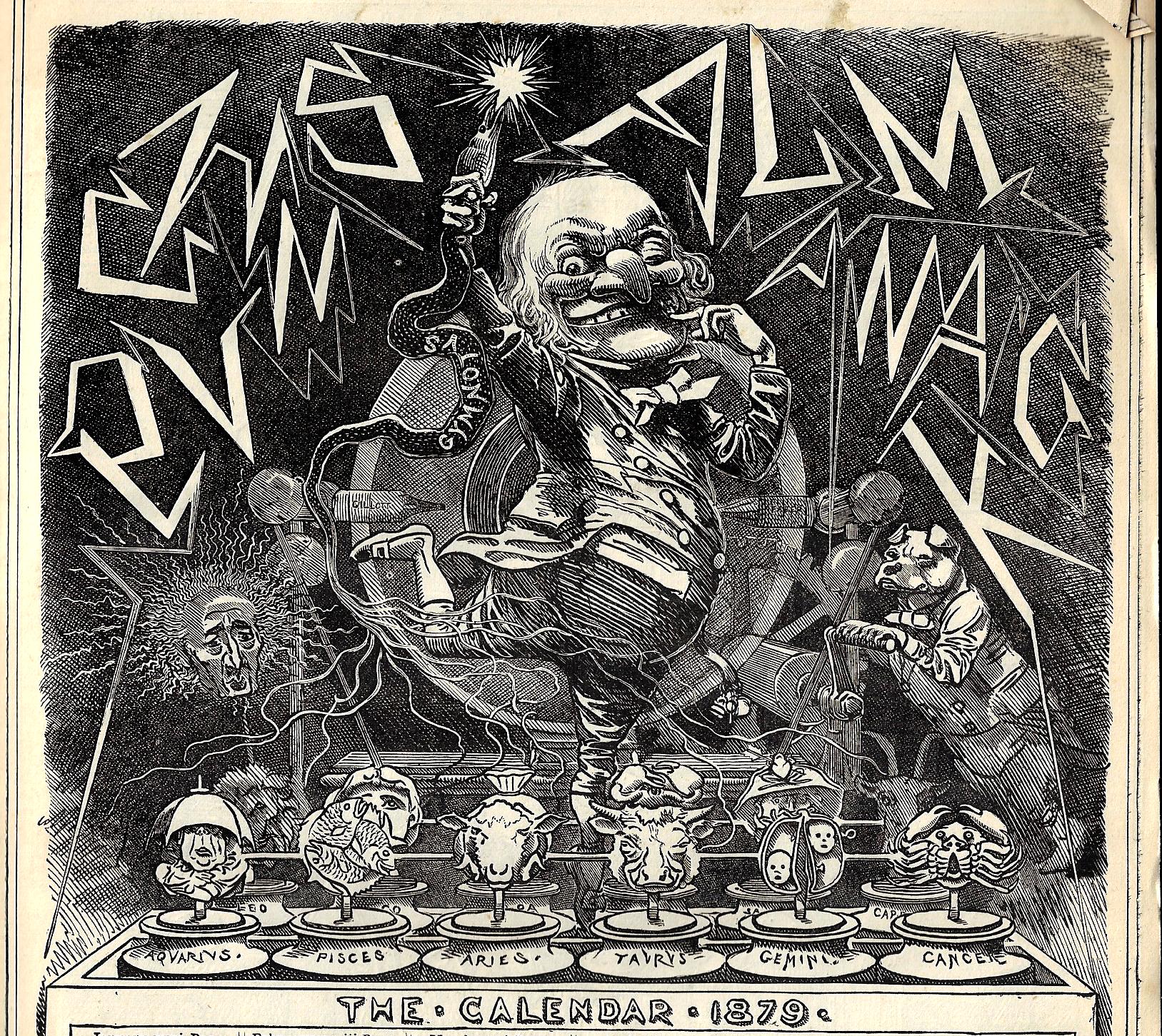
    The image on the cover of the “Almanack” features Mr. Punch introducing the shocking bit of techy newness in electricity–here though he is dancing on the cells of a Wimshurst machine, which for some reason is being operated by a dog: 

    Punch 1879 electrical


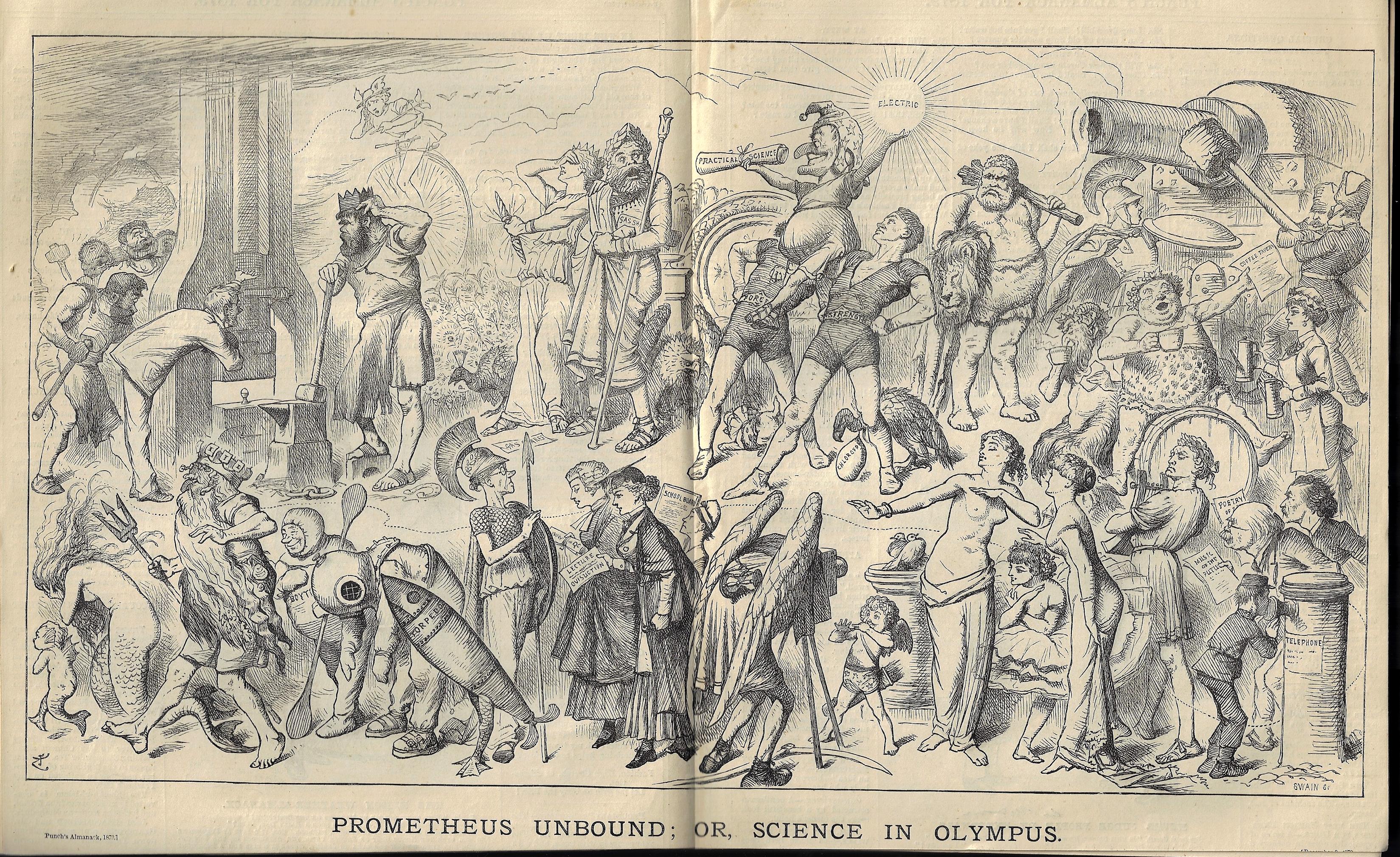
    And the big two-pager for science in Olympus:

    Punch electrical double page 1879

    Lording over the scene is Mr. Punch, resting on the shoulders of “strength” and “force”, holding a scroll (“practical science”) in one hand and in the other, high above, is an orb of “electricity”. To Punch’s left is an astonished Zeus, who holds under his a scroll labeled (“Gas Shares”), representing no doubt gas technologies that was being replaced by electricity. There’s a lot going in in this print: Vulcan wondering about the steam hammer being brought to bear on an egg; Neptune being shoved away by the naval developments of deep-sea diving equipment and a torpedo (as a Mermaid retreats in tears); a boy at a telephone (in the bottom-right corner);Time as an old man under the hood of a camera, and then a few others.  The obvious message here is that the previous and Olympian technologies were being overtaken by the new and electrically-based technologies of the modern age.  


  • The Phonograph as a “Philosophical Toy” in April 1878, and then not so in May.

    JF Ptak Science Books    Post 2568

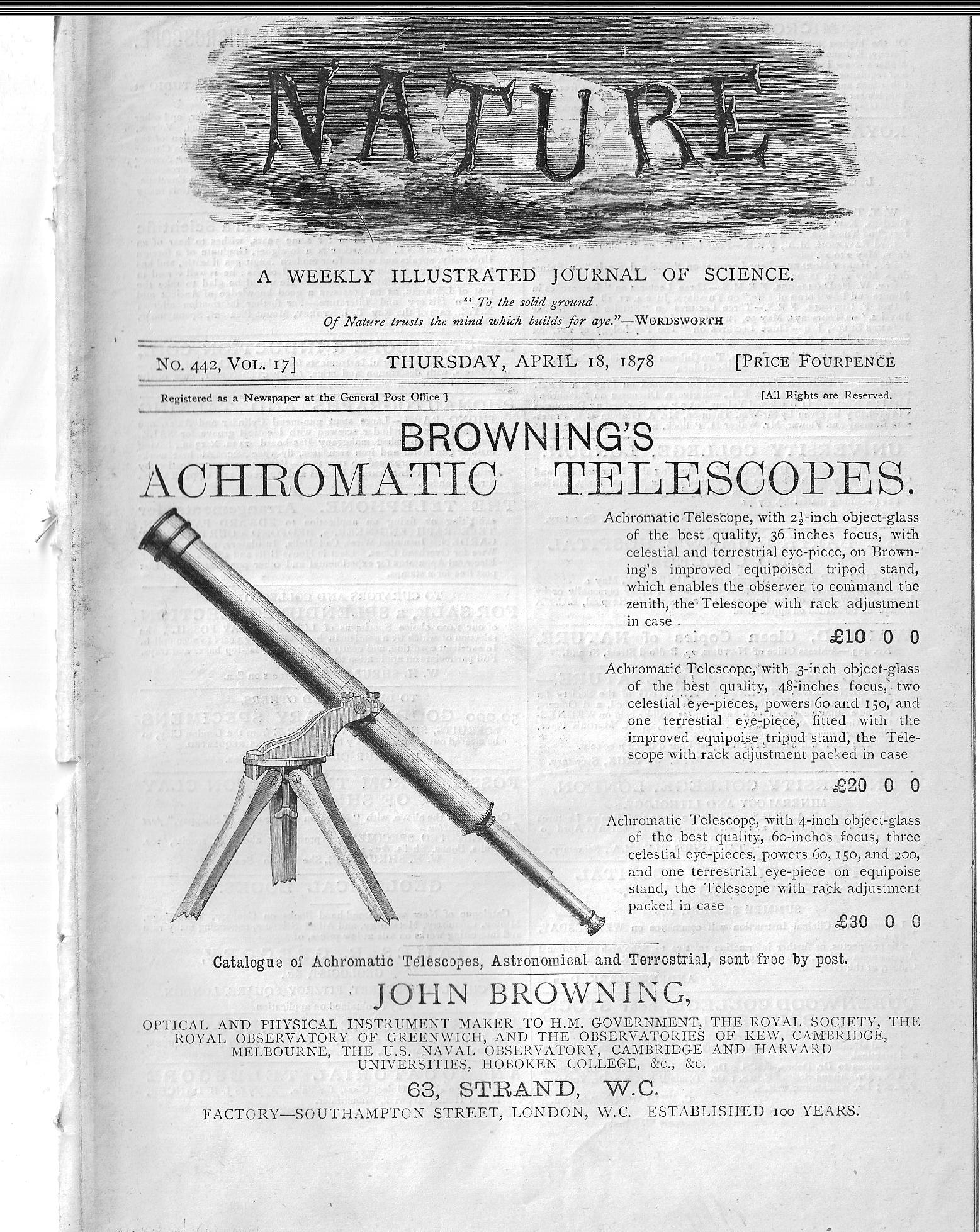
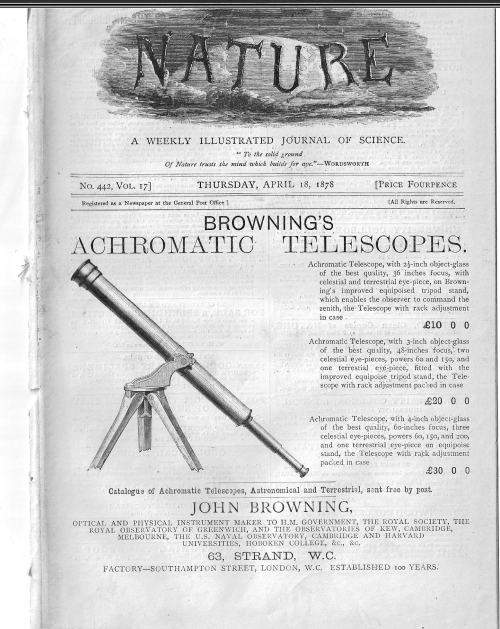
    Only months into the invention of the phonograph by Thomas Edison (at Menlo Park in December of 1877 and patented in January 1878) Alexander J. Ellis reviewed a version of it constructed in London by Mr. Stroh, and found it, well, wanting.  Ellis (1814-1890) was a product of Eton, Cambridge, Trinity, and was a gifted mathematician, philologist, and a groundbreaking ethnomusicologist, and did see some limited utility of the machine to restricted areas of his research. In the short note he wrote for Nature in their April 18, 1878 issue1, he mostly found that the phonograph was generally flawed in its reproductive capacity, and did not venture far from this interpretation so far as the possible applications of the machine was concerned, which seems iconically short-sighted from my perch here in the future. Even though Ellis recognized that “the effects produced are sometimes startling (as in cries, coughs, laughter, music), the philosophy of the process (making a permanent impression of a very complex compound vibration, and using it as a mould to reproduce that vibration is exceedingly attractive, but at present the instrument–at least the one that I saw…” he concludes that the status of the invention “…has not risen beyond a lecture illustration or a philosophical toy”.  
    Nature 1878 phonograph _good_

    That said, Mr. Bell himself didn’t see that much utility in the invention at the time, although with time it became his favorite invention, his “baby” so to speak.  In 1878, though, the the use of the phonograph was pictured in exceptionally narrow terms.

    Mr. Ellis was cautious enough though to qualify his statements in the April Nature issue by restricting his phonograph experience to the one constructed by Mr. Stroh.  And then, a month later, Ellis returns to Nature with a new appreciation of the phonograph–this one constructed by the beautifully-named Fleeming Jenkin, which evidently was superior to the Stroh machine, as Ellis has a newer appreciation for the invention, though its future still seems limited to the study of phonetics and speech. 

    • “The phonograph as I have said resembles rather a worn print than a proof of the human voice. This means of course that the delicate upper partial on which all brilliancy depends are absent In some respects this is advantageous for the very elaborate inquiry which Prof Fleeming Jenkin has instituted for it enables him to catch the bold outlines en which genera depend without being at first bewildered by the delicate details which give specific differences. Our speech sounds are of course individual and what is recognised as the same speech sound varies in the same speaker within the limits of its genus almost every time it is used. We shall do much if we establish the genus. The extent of Prof Jenkin’s researches as he contemplates them end the ease with which his initial experiments tracings and analyses have been conducted lead us to hope that we have at least got an instrument which will enable us to solve the elementary problems of phonetics that have hitherto almost baffled us although it is not suited as yet to fix those delicacies of utterance which were my own special object of investigation.” (Nature, May 9, 1878.)

    Mr. Ellis does rescind many of the negative things he had found in the phonograph in this new May letter, though he still seems not so happy with it, and can see thus far in two letters that see only a very limited history for the invention.  At the very least though Mr. Ellis did say that the new machine constructed by Jenkin was definitely no longer merely a philosophical toy.  

    Notes:

    1. “The Phonograph”, being an article in the April 18, 1878 issue of Nature, volume 17, No 442, pp 485-6 in the weekly issue of pp 481-500. This issue comes complete with the scarce outer wrappers and ads, comprising another 7pp.  The issue has been removed from a larger bound volume, and shows that effect on the spine; that said the weekly is in crisp and bright condition. 

  • Mechanization Taking Command in a Robotic Carpark (1921)

    JF Ptak Science Books   Post 2656

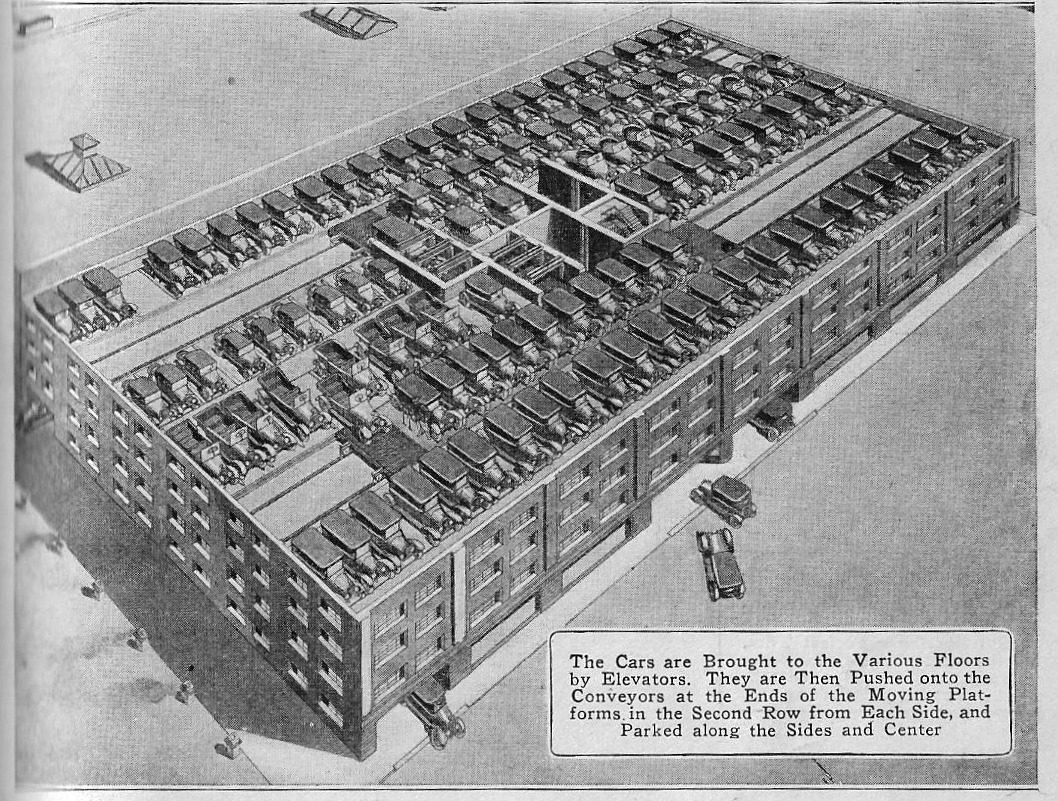
    There are many instances of assembly-line manufacturing before Henry Ford, but none were nearly as complete and extensive and done on such a large scale as the principle and practice he established in 1913.  The idea became generalized and (to a degree) fashionable, and the practice started being implemented in many other business wide and narrow.  To a certain extent that applies to this parking garage proposal that appeared in Popular Mechanics in December 1921. the effect of this idea here is the introduction of the building-as-robot, though the idea in this form didn’t yet exist, nor did the term “robot”. In any event the building took care of the customer’s car once the car had been driven in–attendants would drive the car to an access point for a conveyor and perhaps an elevator, and deliver the car to its designated slot, much in the same ways some libraries operate in storing some of their more obscure books.  

    I guess that “Taylorism” works its way in there, too. Frederick Winslow Taylor (born in 1856 but dead already at this point by six years) introduced a study of business in his Principles of Scientific Management, and that was a synthesis of humans with their environment and tasks to produce a more business-harmonious utilization by increasing the workers’ productivity  via time/use studies, making the worker more a part of the business machine, and in a sense a Borg-like part of a techno-human robotic industry.  Among other things Taylor discovered to the hatred of hundreds of thousands of laborers that the short-handled shovel (villainized in the Song “Big Rock Candy Mountain”) was the better tool to use in many shoveling tasks even though the thing itself is a back-breaker that no worker would choose to use.  Anyway, int eh history of robots, both of these bits deserve some attention. 

    Pop mech carpark 1921

    [Source, Popular Mechanics, December 1921, vol 36, p 751.]


  • The Mother of All Mothers of Massive Airlanes (1934)

    JF Ptak Science Books  Quick Post

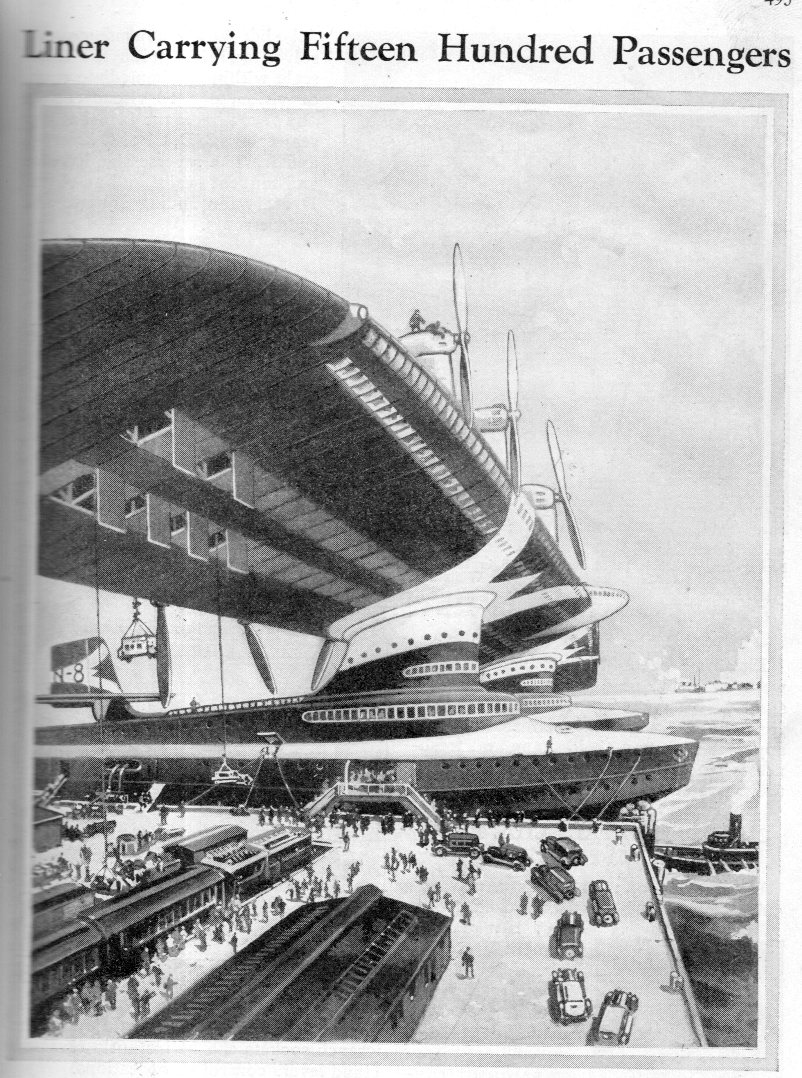
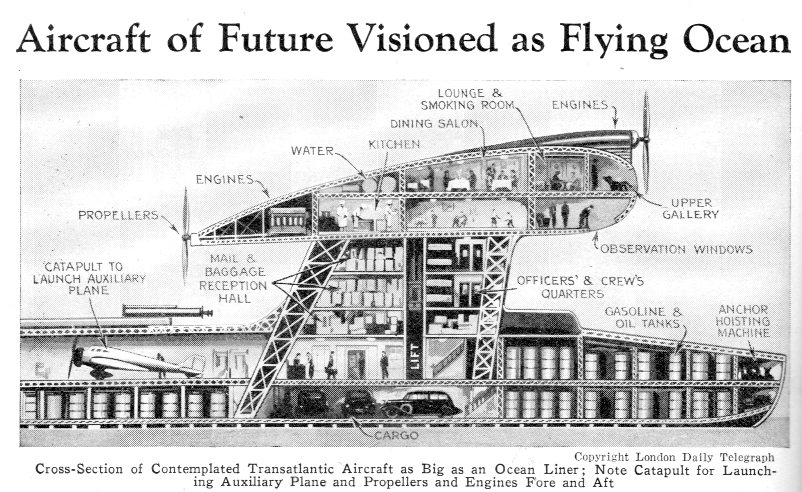
    It is a little difficult to get a realistic idea of how big this plane is–beyond it being really big–but by using the height of people and the stairs used to gain access to the aircraft it seems as though the height from the street/wharf to the bottom of the massive wing is at least 80′.  Since this is a seaplane and there is still plane-enough below the wharf level, level, so it may well be that from the top of the wing to the water may be closer to 100′.  That’s a tall plane.  The wingspan is more difficult to guess, but it seems as though there’s room enough for a loose line of 75 people  to fit under it comfortably with ample personal space, meaning that this section of the wing–probably 40% of the entire wingspan–may be on the order of 200′, meaning the overall width would be in the neighborhood of 500′.  

    Aircraft giant 1934_826

    According to the technically-light description of the aircraft (found in Popular Mechanics, April 1934) this beast was meant to carry 1500 people and several hundred tons of cargo on a Transatlantic flight that would go from Southampton to New York “at a speed of 200 miles an Hour” in “less than fifteen hours”.

    The odd thing about this is that the imaginateers (“visioned by British Aeronautical Engineers”) didn’t see more powerful engines for their gigantic aircraft that could push the envelope at 350 mph.  Why not?  If you could give an aircraft an acre or two of thick wings, why not press the imagination a little further and assume that there would be unseen developments in powering the thing?  

    In any event, the artwork has a certain “Wow!” factor to it, and that someone, somewhere, was coming up with a mostly-big idea. 

    Aircraft giant 1934_827


  • A Submarine Research Platform, 1873

    JF Ptak Science Books  Quick Post

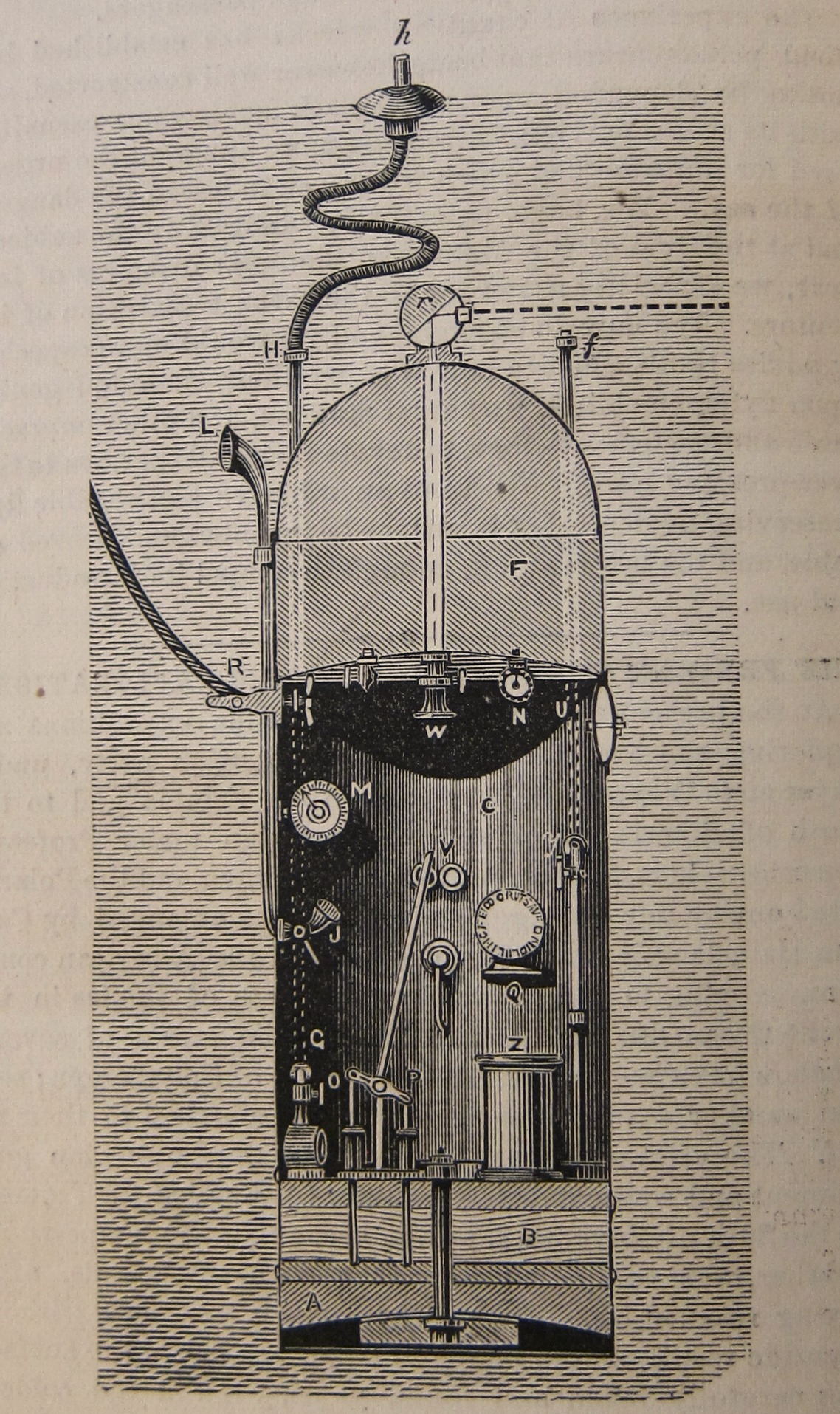
    In the same year as the British and American first appearances of Jules Verne’s Twenty Thousand Leagues Under the Sea there appeared in the pages of Scientific American this short article on a not-very-Victorian submarine exploring platform. Published in the April 19, 1873 issue was an illustrated (by cross-section) note on a  type of diving bell created by M. de Toselli:

    Sci Am 1873 diving bell. 

    It is explained to us that the living compartment (C) holds a number of instruments and machines: there is a pump (P) for drawing and evacuating water (in compartment B) for the raising and lowering of the craft (there is also a layer of lead in compartment A for weighing down the vehicle); there are also two manometers (M and N), a telegraph (Q), and of course, a seat (Z); the top section (F) is for storing breathable air; (U) is a hatch for entering and exiting; and (R) is a rope/cable that connects the thing to a ship, and which also contains the telegraph cable. The text said that there are “small windows” but I can’t find them.  In any event this was intended as a scientific platform for research, including photography.  


  • An Ingenious Field Shower at the Front, 1915

    JF Ptak Science Books   Post 2466

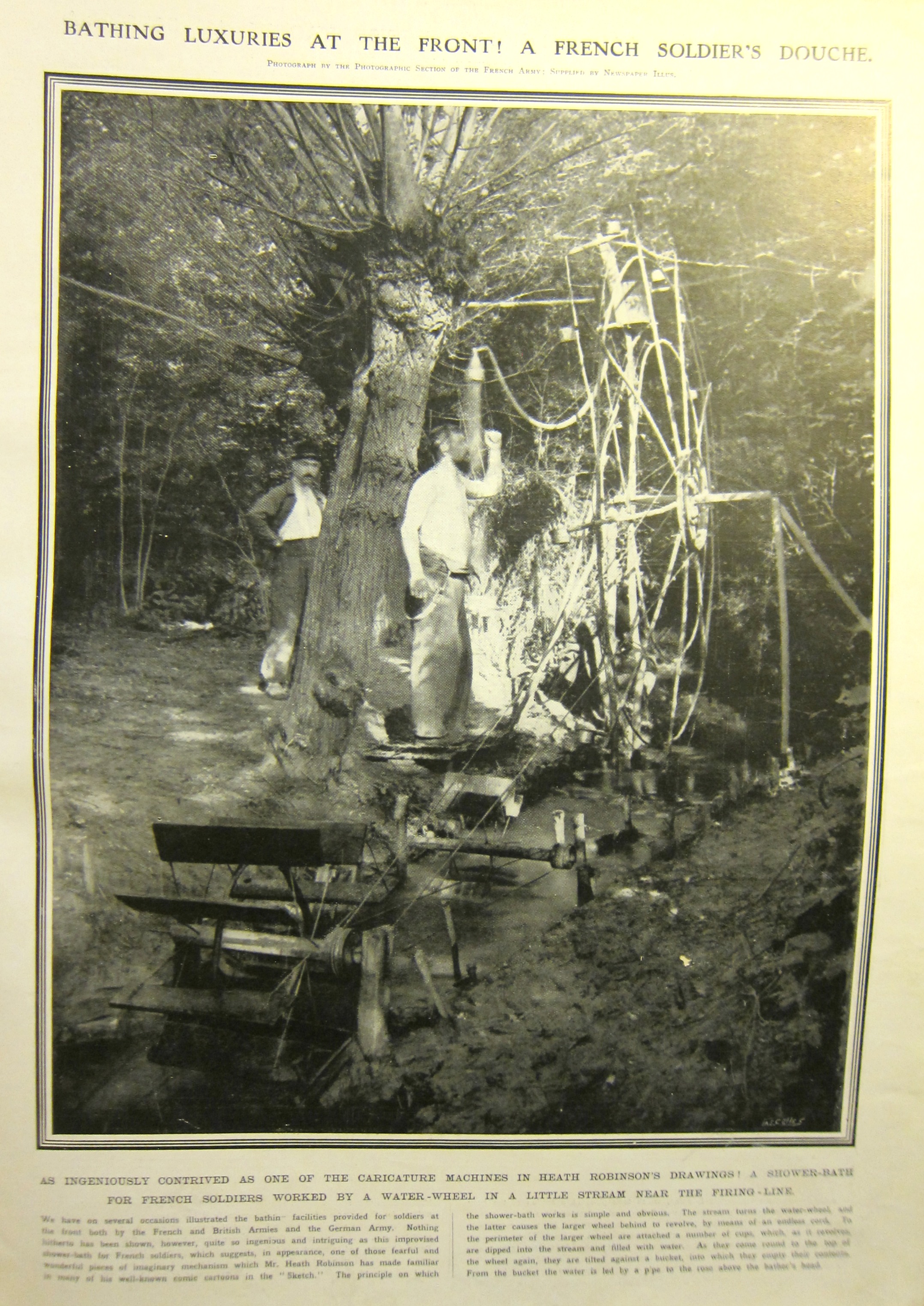
    There is almost nothing so spirited and heartbreaking and proud than people who find themselves in very difficult situations and who try to provide for themselves some comfort of a peaceful time, something far away from what they are experiencing, something that calls to some sort of peace and normalcy. An this is what we have here, for me, in this picture of a French soldier and his unit’s jury-rigged automatic shower. From the looks of the engineering, I’m assuming that the ting worked just fine, and I am certain that it provided no end of relief for those able to use the machine.  You’ll notice that teh soldier is also standing on a very small piece of wood elevated above the ground, so that the bather’s feet don’t become muddy. 

    WWI Project FrenchSHower 1915

    [Source: Illustrated London News, November 13, 1915–there would be nearly three more years of war to go. This image is very expandable.]

    The caption makes note of the drawings of Mr. Heath Robinson (1872-1944) who was a lovely, quirky, charming, skewed, dark, stiff-bouncing and creative illustrator capable of considerable whimsy (light and complex) and deep skepticism. It really does a small disservice to the battlefield engineers who built the shower–the thing is really pretty elegant, and seems to be quite light in spite of its size. Those guys did a good job.

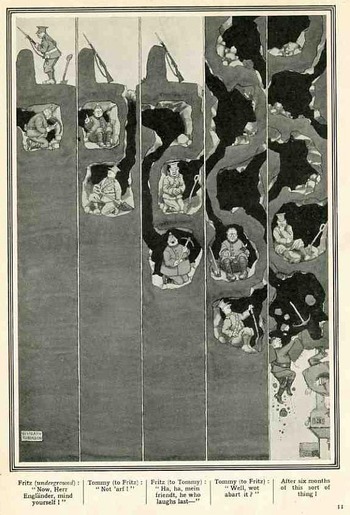
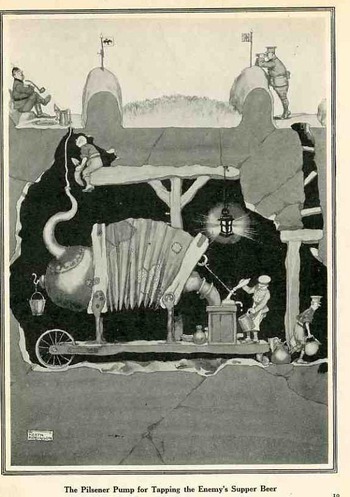
    The two following images  are from one of his three WWI books, Hunlikely, published in 1916 (Some “Frightful” War Pictures (1915), and Flypapers (1919), were the other two) and depict scenes from the intra-trench tunnel wars, which were battles fought in the midst (or, actually, beneath) other battles.  This was a savage, grueling, post-adjectival affair—exceedingly dangerous, difficult, awful.  And it happened a lot during the war, given the experience of stalemates between vast armies sunk into mole city trenches, with no one going anywhere for long periods because there was nothing in between the two impervious lines but a death vacuum. 

    Blogjuly_18_mining_robinson338

    So one of the solutions was to try and tunnel underneath the opposing army’s defenses, fill the far end with high explosives, and blow them up.  The other side was doing it too, and in the middle of it all was the incorporation of newer/better listening devices to detect forces rummaging around underneath your position dozens of feet into the ground.  It was a bad business. (One of the other means of breaching the trench lines was aerial combat, but bombers carrying tons of HE were still yet to be invented; poison gas was another.  Most of the time the armies would just meet in the middle  in wide plains of nothingness in a sea of hot, expanding metal,  where to this day in many of those places nothing can live).

    Robinson’s illustrations are odd, and oddly funny, the dark humor coming at the expense of both sides of the conflict, piercing each.   This one is more in line with the French battlefield shower, and shows Robinson’s over-the-top (so to speak) apparatus for stealing German beer:

    Blogjuly_18_tunnel_2_robinson340


    ·Posted by :

    ·in:

    —