A Daily History of Holes, Dots, Lines, Science, History, Math, Physics, Art, the Unintentional Absurd, Architecture, Maps, Data Visualization, Blank and Missing Things, and so on. |1.6 million words, 7500 images, 4.9 million hits| Press & appearances in The Times, Le Figaro, Mensa, The Economist, The Guardian, Discovery News, Slate, Le Monde, Sci American Blogs, Le Pont, and many other places… 5000+ total posts since 2008.

Category: Technology, History of

  • (Unpublished?) Manuscript on the Reconstruction of Manila Harbor, August 1945

    JF Ptak Science Books  Post 2678
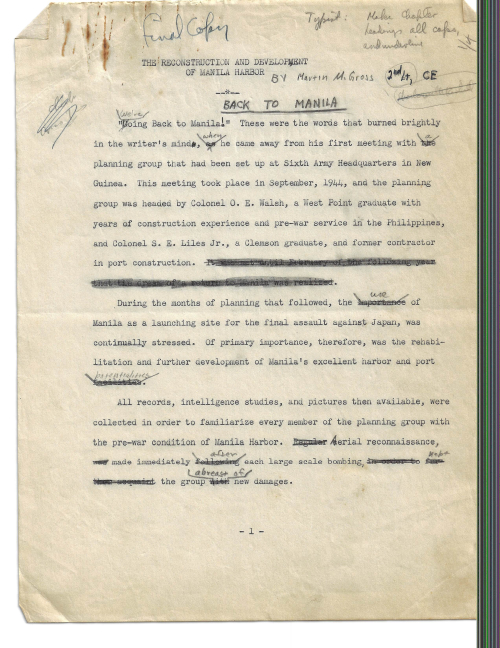
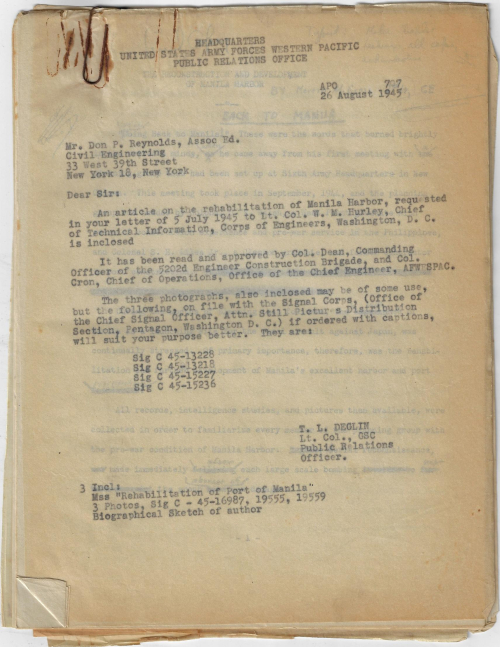
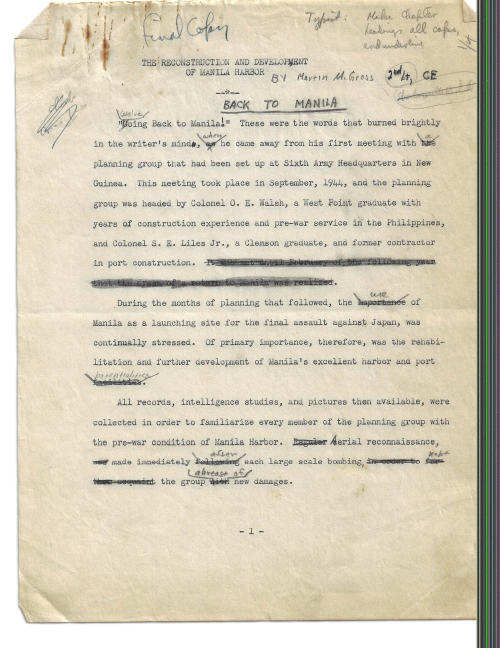
    Manila harbor 2This is a compact, concise, and detailed evaluation and history of the reconstruction of the harbor following the tremendous destruction and decimation of the population following the Battle of Manila (February 3-March 3 1945). According to the cover letter a request was sent by Civil Engineering for an article on the harbor on 5 July 1945 and Lt. Gross produced the response about five weeks later. 

    I can’t speak at all to the accuracy of the article, but it seems to me to have the bones and muscle of a good report.  Also, I cannot determine if this article was published (checking about 15 sources) though I am not finding any paper trail. I’m reproducing it here as it may be of some interest to a few people.  

    “Reconstruction and Development of Manila Harbor”, by 2nd Lt. Martin M. Gross, Corps of Engineers. The manuscript cover is dated 26 August 1945, and sent from the “Headquarters, United States Army Forces Western Pacific, Public Relations Office” and was sent to the associate editor Don P. Reynold (ASCE, 1915-2002) of the journal Civil Engineering.  This is an original typescript with manuscript corrections throughout the document: 11×8.5″, 19 leaves, cover letter, plus one original spec drawing, one original map of Manila harbor (in pencil), and a photograph of the rendered version of the map. The cover letter calls for three photographs, though just the one is present (that said there is no mention of the other two drawings…)   Provenance:  David Katcher (1913-2002), editor at the Naval Ordnance Laboratory before World War II and later executive secretary of a theoretical physics division of the Institute for Defense Analysis, founding editor (in 1947) of the journal Physics Today,  and a senior policy analyst in the White House Office of Science and Technology policy during the Carter administration. During WWII David Katcher was Lt. Katcher, serving as a correspondent/writer in the public relations office of the U.S. Army Headquarters of the Western Pacific (GHQ USAFPAC),  and served as Public Relations Assistant to High Commissioner Paul McNutt in Manila.

    There is of course legions of background material on the (second major) battle for Manila, so I don’t need to go into it here. One good, quick source on the  reconstruction in the harbor facilities there is:  “Engineers of the Southwest Pacific, 1941-1945, Volume 6: Reports of Airfield and Base Development …,1951, pp 350-360.
     

    Manilla harbor _1_

    Manika2


    ·Posted by :

    ·in:


  • Early Data Visualization (1817)


    JF Ptak Science Books   Post 2677

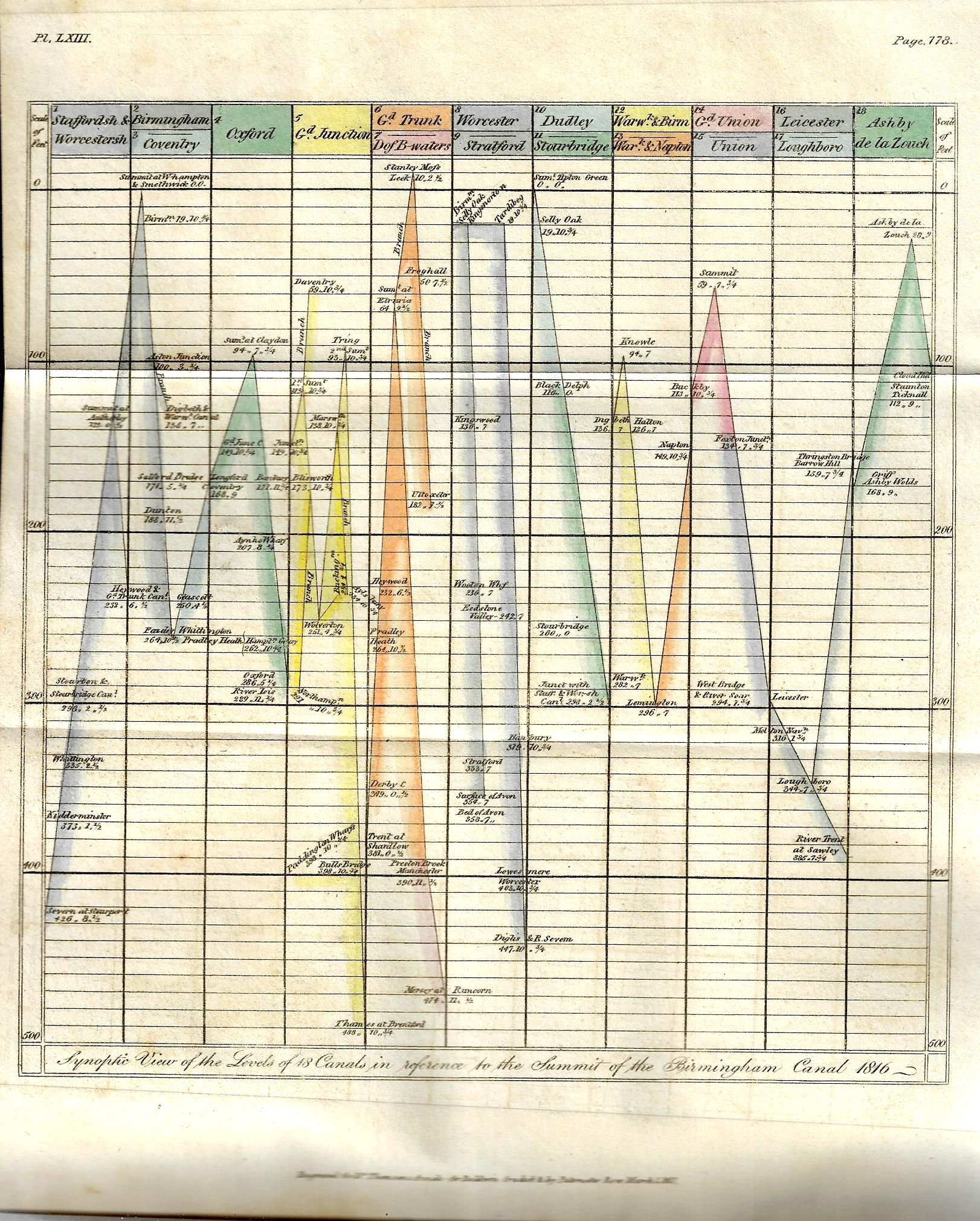
    There have been perhaps 150 posts on this blog relating to data visualization and the elegant display of information–this one, found by chance yesterday while browsing, is really pretty early for its type of accomplishment. The image relates heights of canals in the Midlands, and is one of three illustrations for Samuel Galton’s “On Canal Levels” which appeared in Thomas Thomson’s Annals of Philosophy; or, Magazine of Chemistry, Mineralogy, Mechanics, Natural History, Agriculture, and the Arts1 in the first half of 1817.  The article is illustrated with three plates, including a curiously interesting graph of canal lengths, a cross section of “the line of canal from the river Mersey at Runcorn Gap  to the River Thames at Brenford, with the Branch to Paddington Wharfs”, and finally a glorious hand-colored plate (“Synoptic View of 18 Canals in reference to the summit of the Birmingham Canal, 1816”).

    Galton (1753-1832, of Birmingham) was Quaker arms manufacturer (a not-uncommon occurrence in my experience) and the grandfather of the polymath Francis Galton, a successful industrial who was active in the Lunar Society. This short paper is basically a collection of data, and he presents it in an interesting and provocative way–this in relation to the cross section and graph, which are early means for the time in expressing quantitative data in a more easily-managed and comparable form.  (Galton wrote: “It occurred to me several years ago that the lockage of canals and their plans and sections would afford the means of ascertaining with a considerable degree of comparative precision the relative height or level of all the places immediately situated upon those canals which communicate with one another and that in consequence a number of fixed points would be obtained from which the relative level of any objects in the vicinity of those canals might be more conveniently measured…”)

    • (Apologies for the unevenness in clarity of the sans–the book in which they appear is tightly bound, and I didn’t risk opening the book beyond necessary for fear of damaging it. That said, if you click and expand the images are a lot sharper….)


    Dataviz Canal heights 1817


  • The Heavy Stuff, #16–the Big Boom (1872)

    JF Ptak Science Books   Quick Post

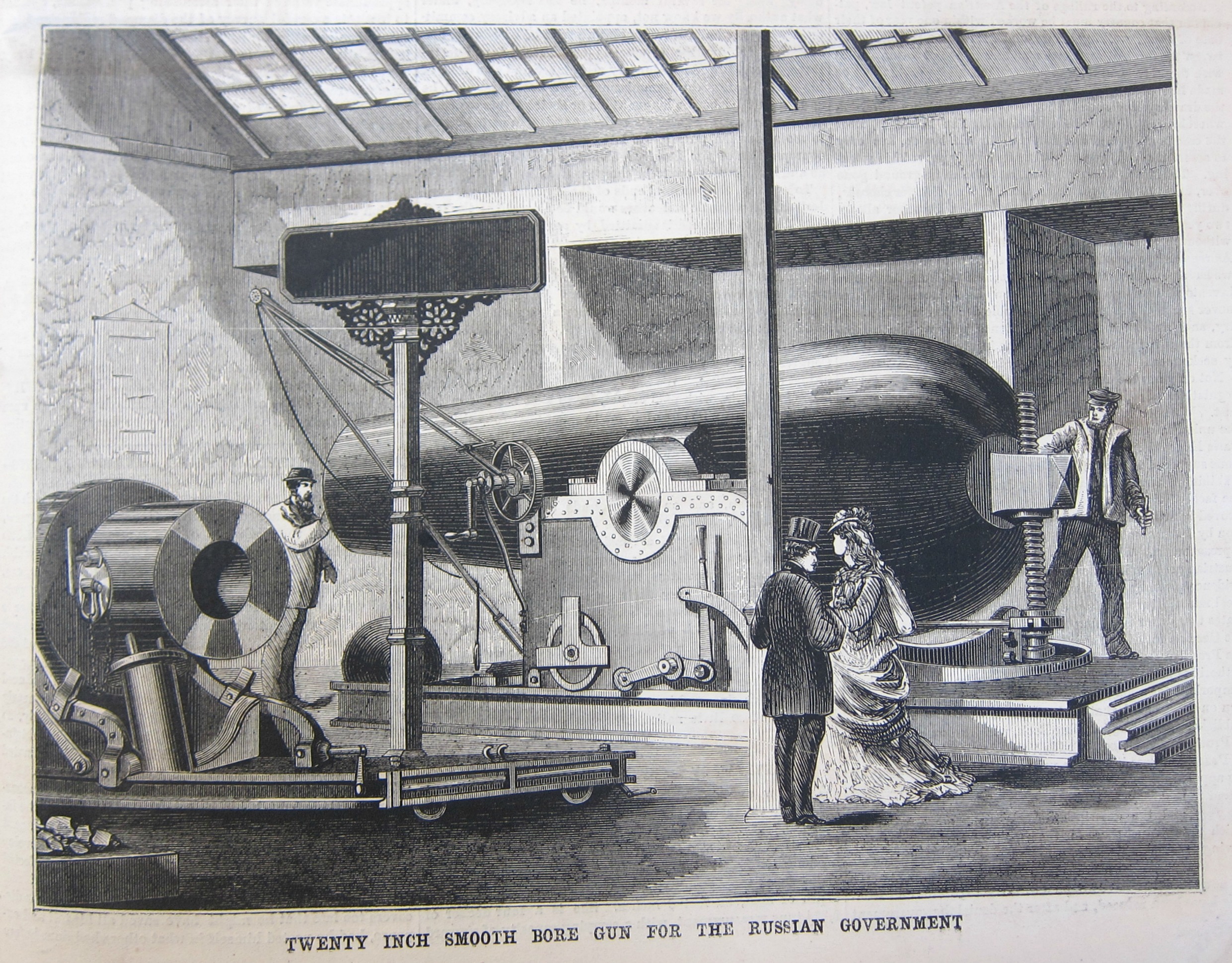
    This Russian 20″ smooth ore cannon weighed 44.5 tons and shot a 900-pound projectile and used 117 pounds of explosive charge to do that. The concussion wave from the firing of this beast was said to be felt 1/3 of a mile away where it would topple bad chimneys.  

    Source: Scientific American, December 14, 1872.  

    Sci Am 1872 Big Cannon

    ·Posted by :

    ·in:

    —

  • The Heavy Stuff, #15–Big Pistons (1872)

    JF Ptak Science Books  Quick Post

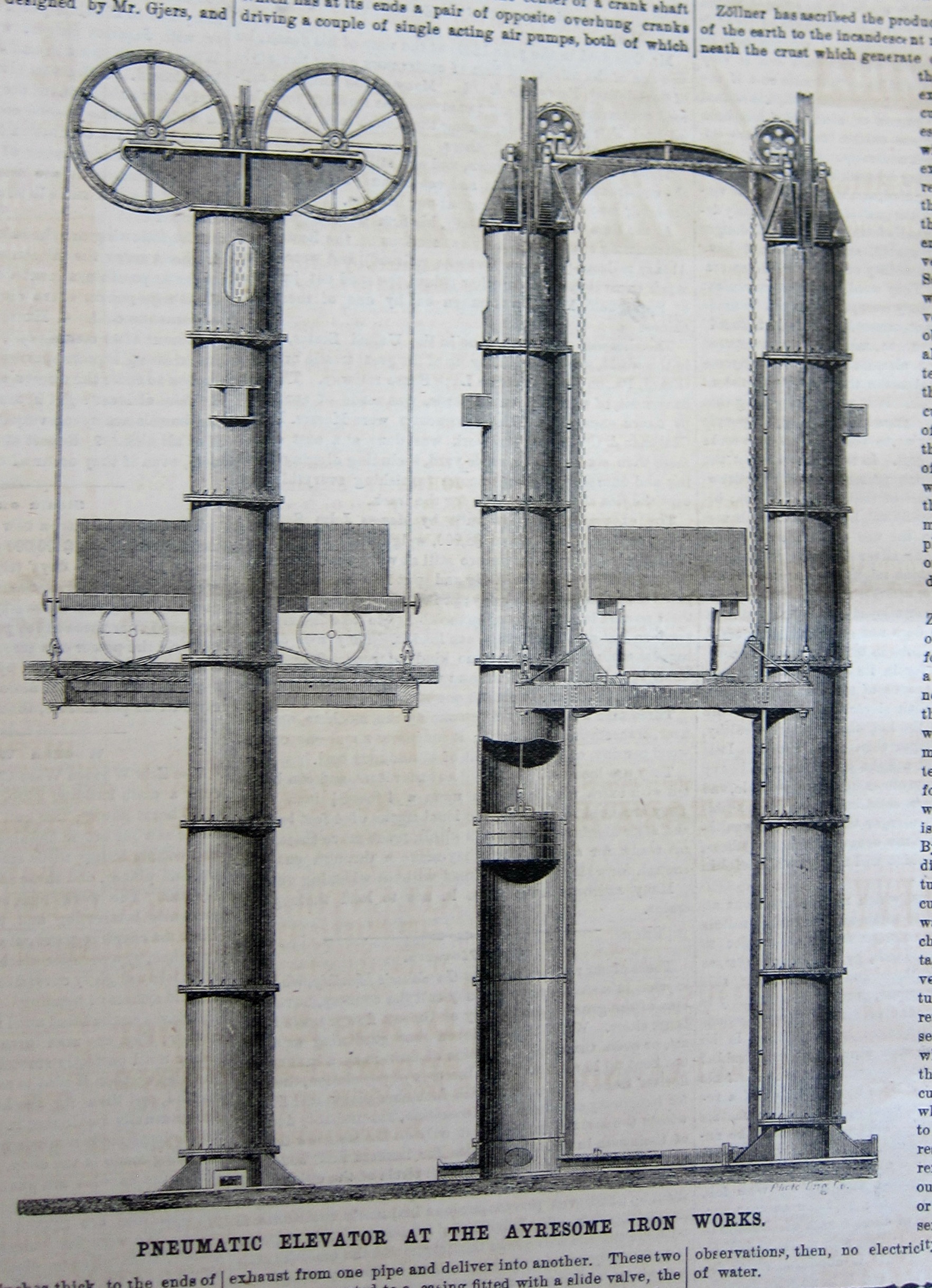
    And from the Scientific American, 18 days before Christmas in 1872, comes this magnificent monster of an elevator that would raise and lower large carts from “the bunkers to the calcinating kilns” (which is almost the title for something). The lifting mechanism were a pair of giant cast iron cylinders 48″ in diameter constructed in 8′ lengths placed 14′ apart, designed to lift 15 tons per lift (6,000 tons per week), raised on a 15′ wooden platform with 14″ thick flooring.  It was a beast. 

    Sci Am 1872 massive elevator


    ·Posted by :

    ·in:


  • Objects as their Own Context (1872)

    JF Ptak Science Books   Quick Post

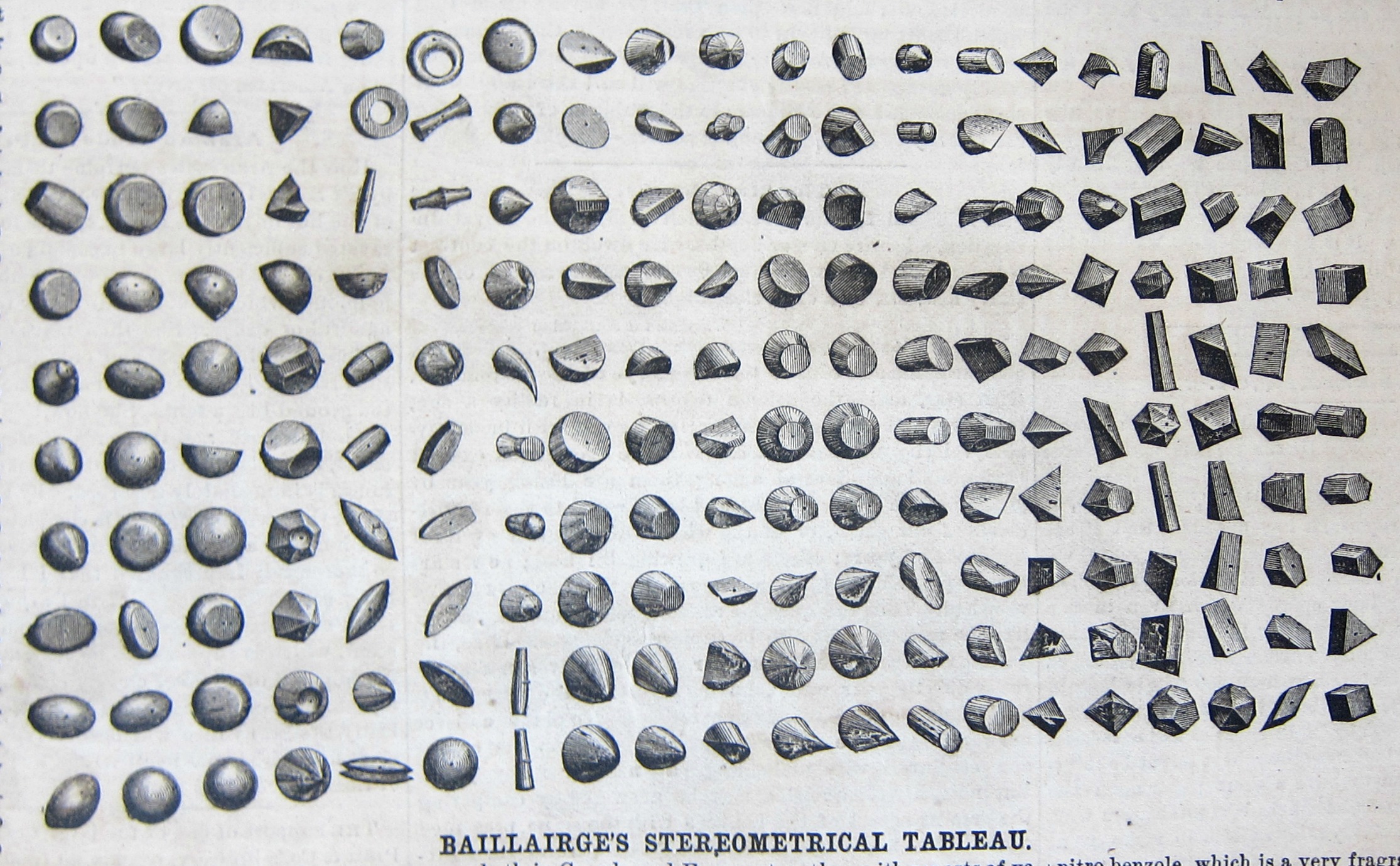
    That snarky little title simply references this fine collection of shapes for the schoolroom, objects for their own sake, to help kids understand form and its relationships.  The were actually 200 wooden of them in a 6’x4′ display case sold as a teacher’s aid by the Canadian Charles Baillairges:

    Sci American 1872 Baillairge Stereometrical

    We read in the promotional/instructional that comes with the blocks: 

    “In a large number of schools in Germany the pupils are taught from the time they commence the alphabet to judge of color and geometrical form by the regular use and comparison of colored slips and small blocks of wood representing the elementary principles which will in after years be called into study. The advantages of this early manifest all of the superiority of this…” The blocks “comprising so to say all the elementary forms their segments and sections and numerous other solids both simple and compound” and that  “the instruction conveyed by this tableau appealing as it does to the uneducated eye and mind is the inventor thinks destined to be of great use in developing the intelligence of the beginner and the untaught masses of mankind.”

    I found this image and nearly-identical text (without attribution) in the Scientific American for June 7, 1872.  


  • Robot/Computer Anthropomorphic Brains

    JF Ptak Science Books  Post 2570 (continued)

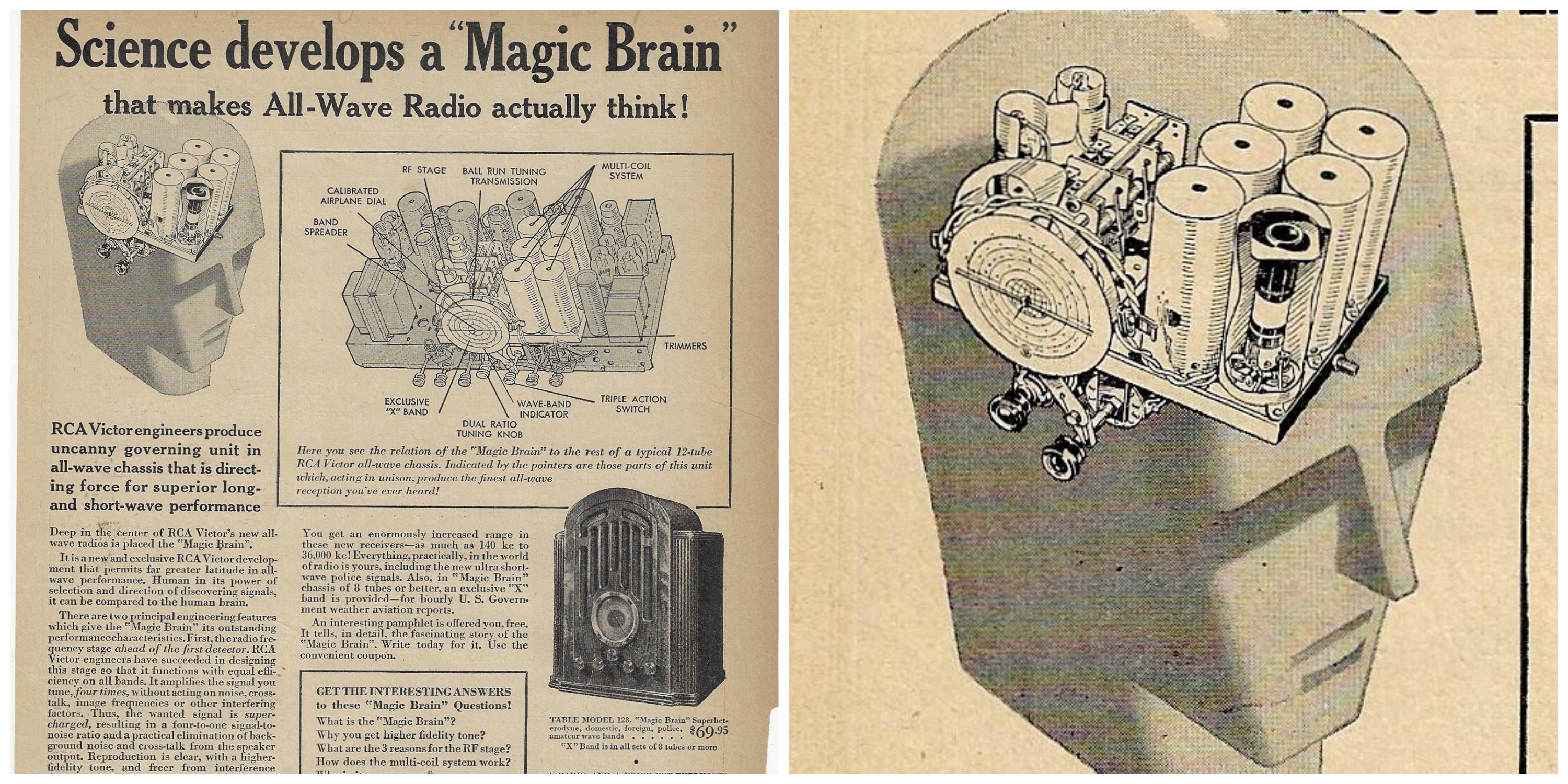
    There seems to be a developing thread in the stuff I’ve been saving on the history of anthropomorphic robots pre-1955 or so–and that is, the robotic or computer brain.  These are not nearly as plentiful as the robot-entire, or at least that is the way it seems from a general impression of long and sloppy reading in the area. I bumped into another brain post, this one still on the early-ish side, coming from Popular Science Monthly for 1930. It really is a stand alone, and an illustration for an advertisement for radios, but it still sent a message to the reader, and it seems that it probably was still very uncommon territory in the application of images like this:

    Robot magic brain montage

    That really is beginning to put the hot tube-scented “logic” into biological.  

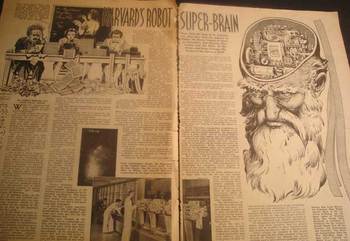
    Here’s another, one that I wrote about some time ago, though this one has more the makings of a computer in place of some tubes and a dial.

    Robot brain harvard
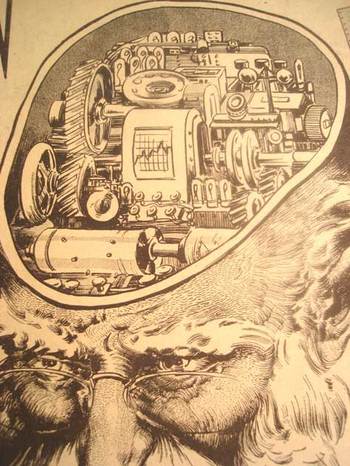
    This may well be the first public, popular, report on the Harvard Automatic Sequence Controlled Calculator (ASCC) (appearing in the American Weekly, 15 October 1944), the first automatic, general-purpose, digital calculator.  Known as the MARK 1, it was the brainchild of Howard Aiken (1900-1973), a graduate student at Harvard, who started it all in 1937 by proposing a series of coordinated Monroe calculators to function as a unified whole  that would cross the threshold of the physically-impossible calculation (though theoretically possible) to the eminently doable. Here’s a detail of the inset:

    Robot brain harvard detail

    There are some others in the category, including this fine image from the Burroughs people:

    Robot brain wheel burroughs

    The Burroughs Adding Machine company did about as much as anyone to objectify the worker in America during the 1880-1915 period, making the worker a part of a machine within the machine. In a way it was like creating the Ford assembly line for people sitting down. 

    The company was founded on the work of William S. Burroughs’ grandfather, William Seward Burroughs (1857-1898 and native son of Rochester, NY), who created a mechanical calculator to help him add long columns of numbers in his job as a bank clerk. American Arithmometer Company was founded by him and others in 1886, later evolving into Burroughs Adding Machine Company (1904), Burroughs Corporation (1953), and then into Unisys (combining with Sperry Univac in 1986) before sliding away.

    In any event the adding machine connected millions of people to a mechanizing process of what had previously been a mental operation–the flywheel in the side of the head of the clerk/accountant in this add for Technical World (More Fascinating than Fiction) for August 1915 wasn’t too terribly far from the truth. Interesting that on the other side of the head of this fellow, behind the other ear, is a pencil. 

    Another in this line of depicting human brains as sort-of machines is this very entry-level bit of gearing in an advert for a tech correspondence school for folks to “modernize make more money”, and found in  Popular Mechanics, August 1936. As these things go, it would be difficult to imagine a less complex depiction of a mechanical brain:

    Robot brain few gears Pop Mech 1936

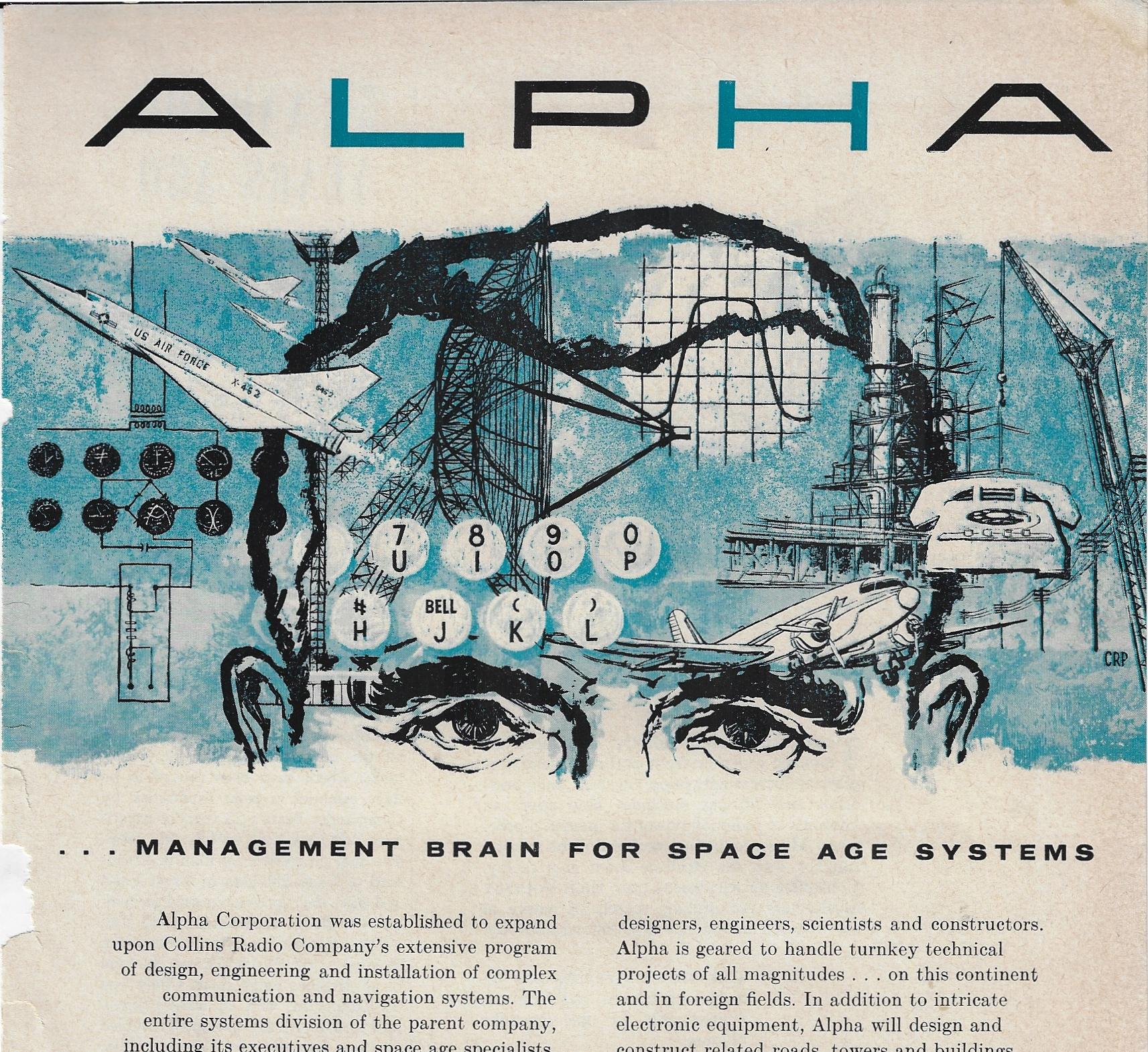
    And another–again, this is not much of an electronic brain, but it does get across the point of the ad for the Alpha Corporation (“A subsidiary of Collins Radio Company”) for 1958:

    Robot brain alpha 1958_0001


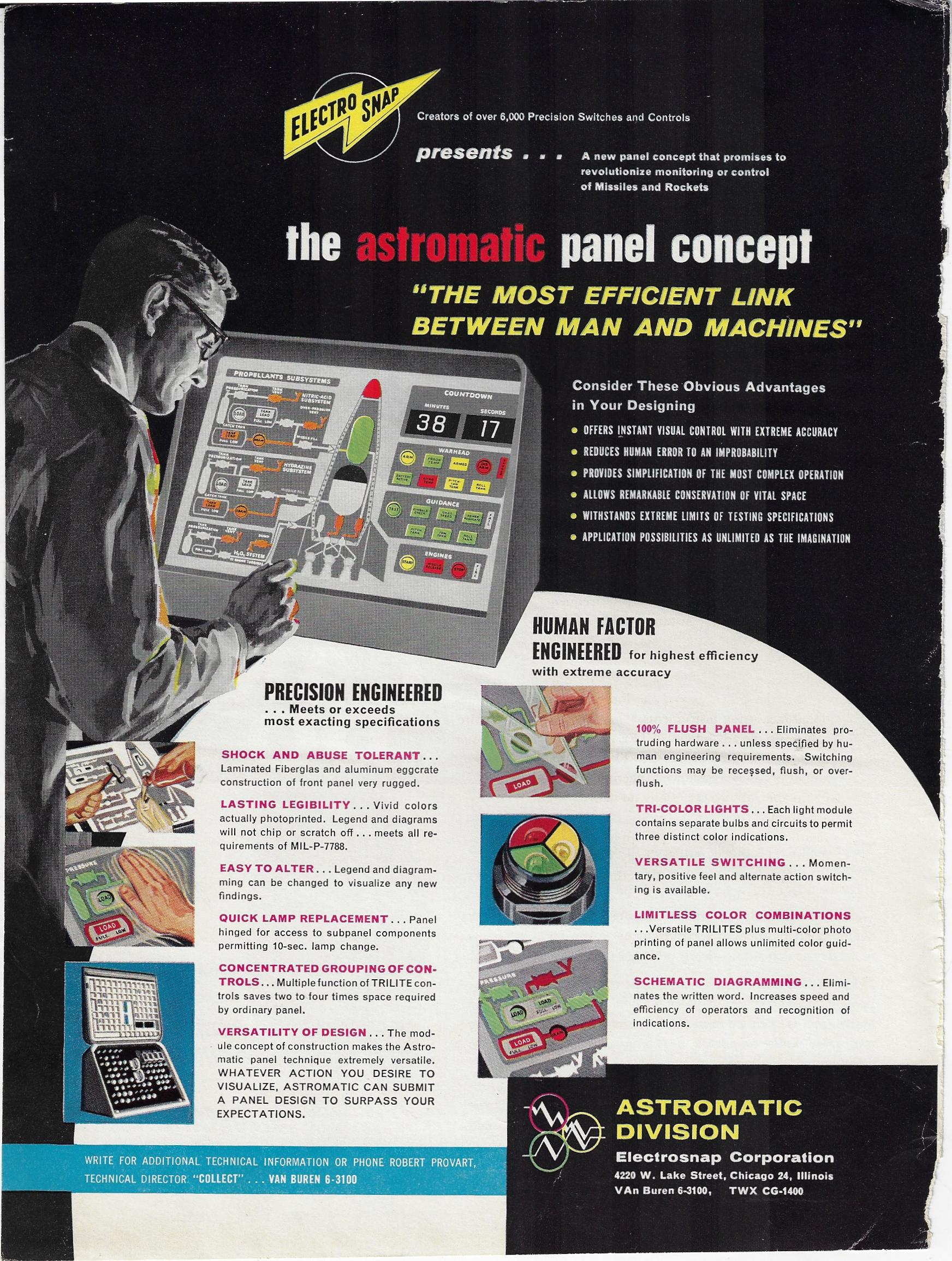
    And yet another boundary is threatened with the astromatic panel concept of the Electrosnap corp (of Chicago), showing the interaction of biological and electronic systems, as shown in this advertisement in Missile and Rockets in 1959:

    Robot brain link machine human

    In any event, these are three of this developing collection of metalizing/electrifying the brain for its robot-y future.  


  • Very Early “Cinematography” (1882)

    JF Ptak Science Books  Quick Post

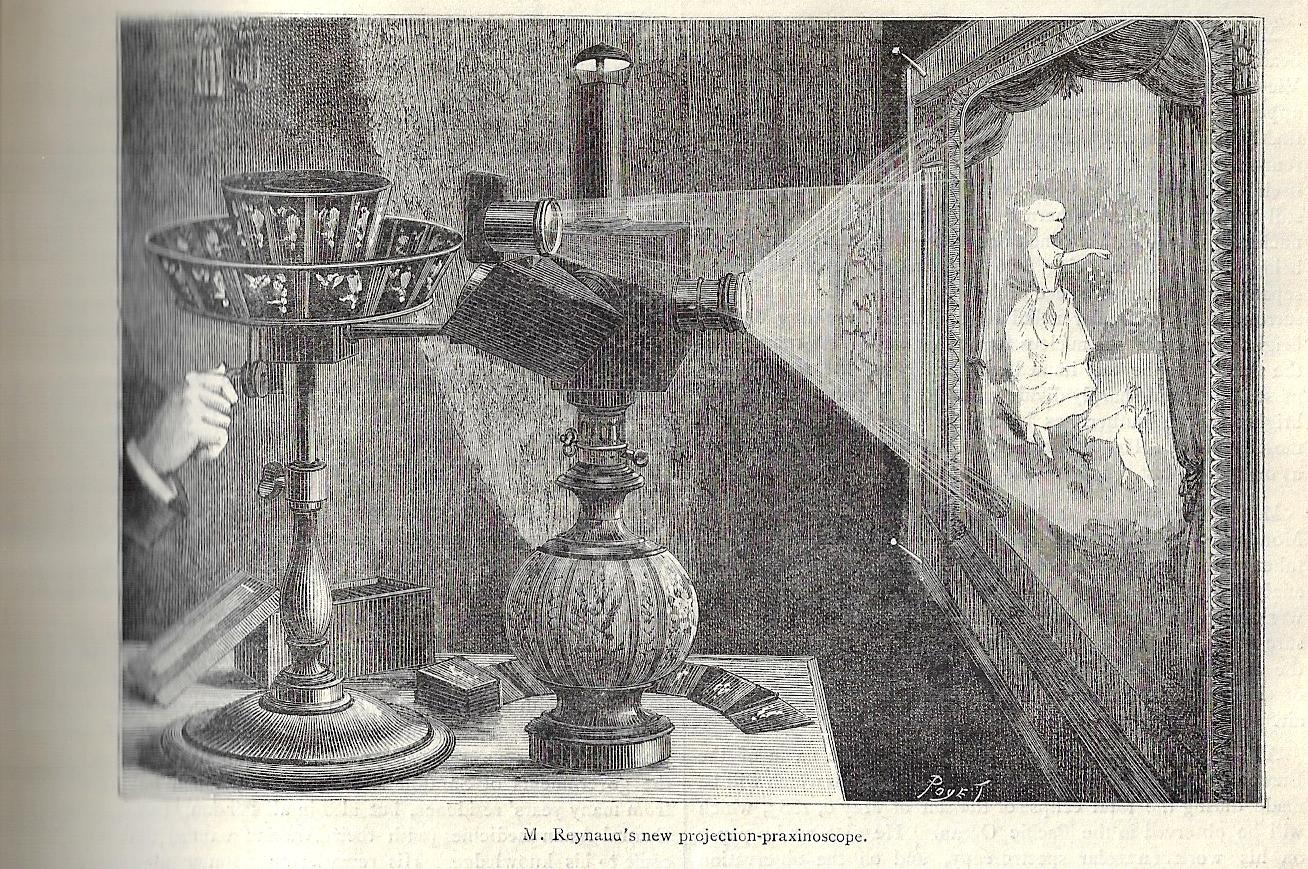
    This short article in the November 16, 1882 issue of Nature reports on the invention of the “lampascope” by Emile  Reynaud. Reynaud (1844-1918) builds on his own invention of the praxinoscope (1878) which in turn had continued earlier ideas of the zoetrope and phenakistiscope–all of which are very early animation devices and considered a part of prehistoric film history–allowing a projection of the moving images, and turning the personal viewing experience into a shared one. Reynaud worked on the invention through the decade, making adjustments and improvements, leading to his first public demonstration of the device in his Theatre Optique in 1892, which is just at the beginning of the filmed motion picture history. It was an elegant idea, and certainly for the time it would have been a major attraction and popular “philosophical toy”.  

    Nature 1882 lampascope

    ·Posted by :

    ·in:


  • Killing Whales with Exploding Rockets (1822)

    JF Ptak Science Books   Quick Post


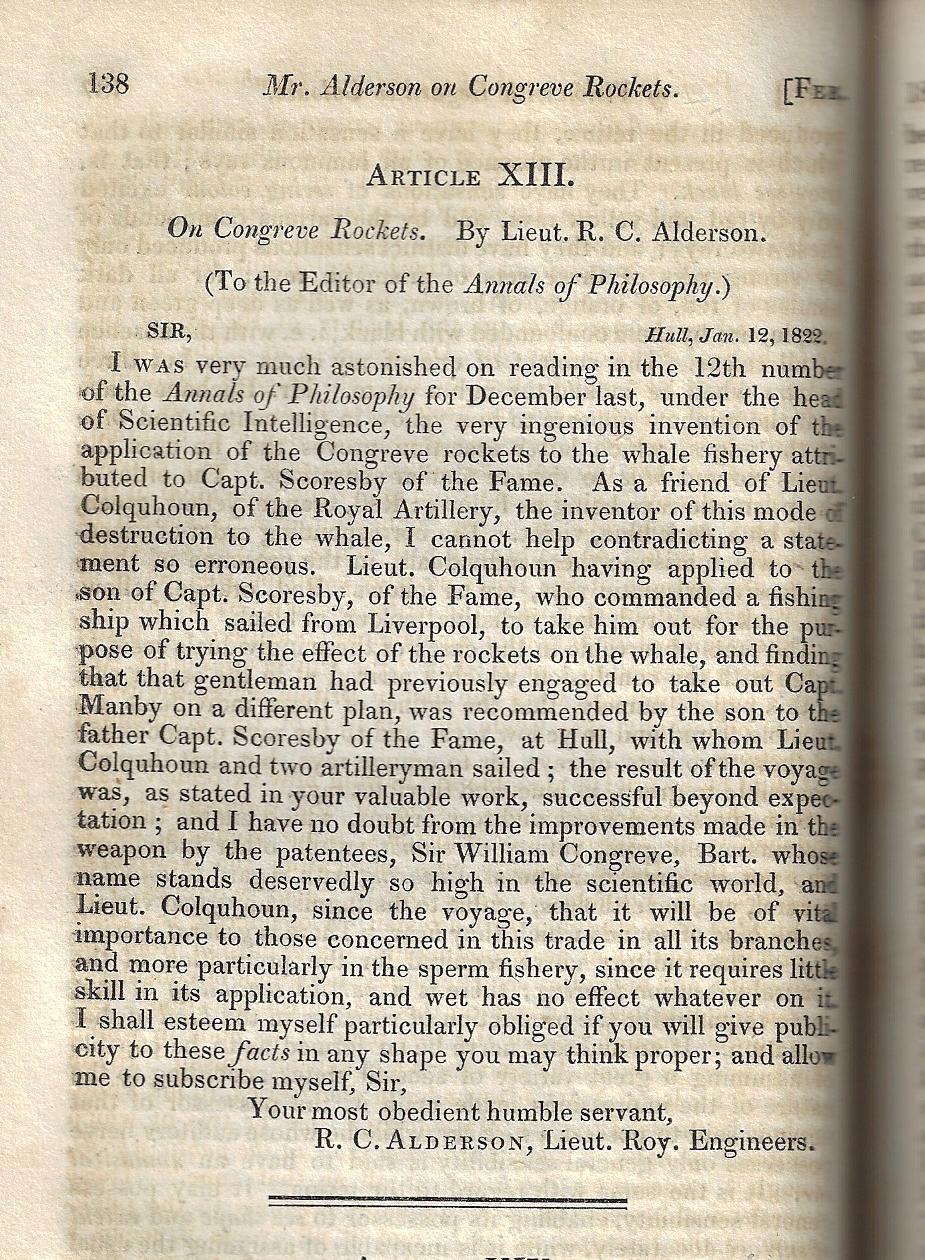
    Congreve rockets

    Well, this is the detached and blatant title on Willliam Congreve’s rockets hides its purpose, unlike the original article written a year earlier by Congreve which lays out the intent of the rockets straight away: “Application of Rockets to the Destruction and Capture of Whales” (1821). William Congreve and James N. Colquhoun developed this idea of a rocket and twisted it into an exploding harpoon, something that could be fired at a whale, embed itself, and then explode, all to maim or kill the whale.  (The idea for this application seems to have lived through the entire century, evidently reaching its zenith/nadir with the work of Capt. Thomas Roys in  his bomb-harpoon (1861).  

    See: Mike Gruntman, Blazing the Trail: The Early History of Spacecraft and Rocketry, pp 85-6.

    Article source:  Thomas Thomson. Annals of Philosophy; or, Magazine of Chemistry, Mineralogy, Mechanics, Natural History, Agriculture, and the Arts. Volume III (and the 19th since the start of the series), January to June, 1822. Printed in London, for Baldwin, Craddock, and Joy; v, 480pp,

    ·Posted by :

    ·in:


  • Maps of Ancient Cities and Colliery Cross Sections (1877)

    JF Ptak Science Books   Quick Post

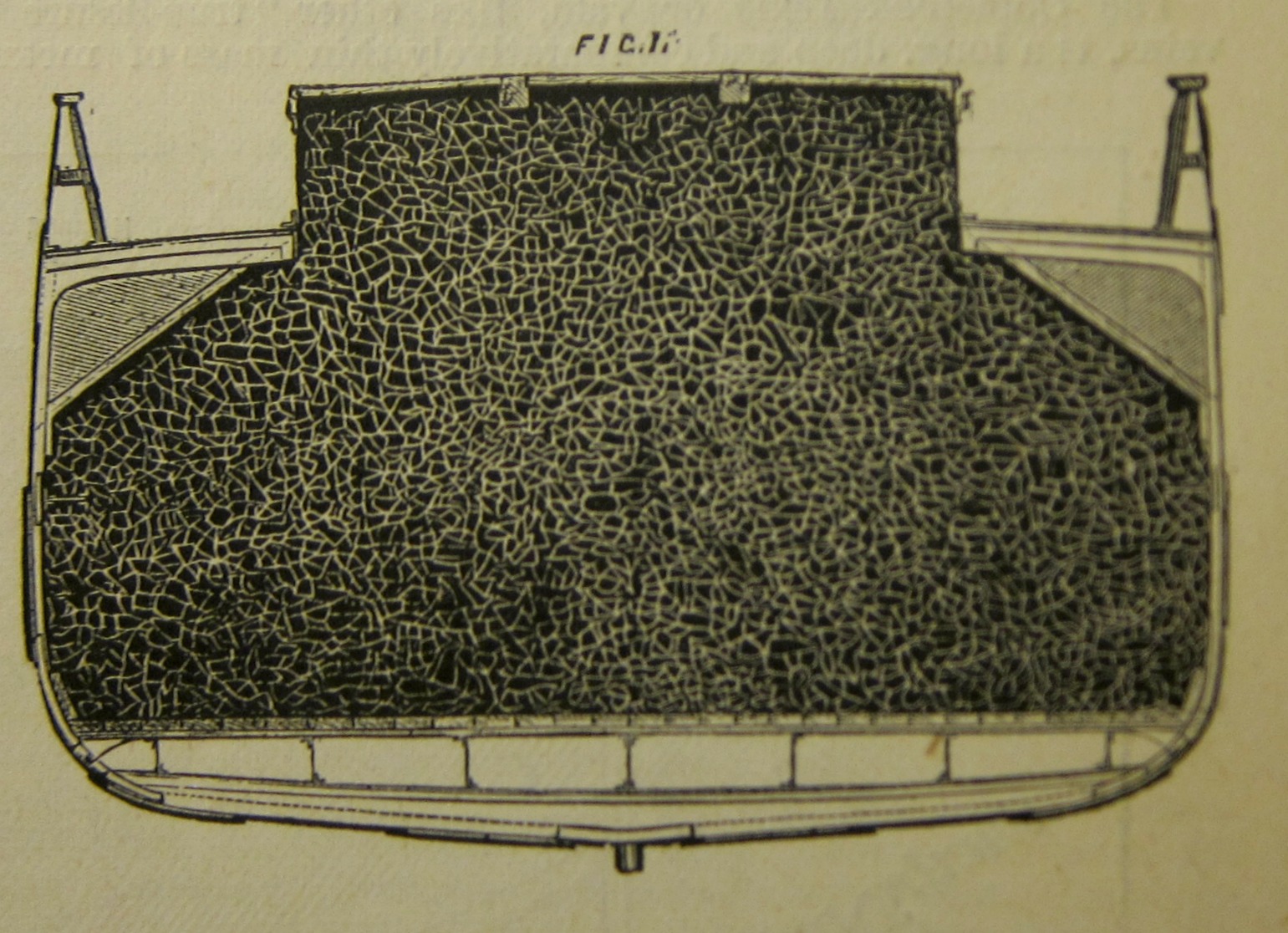
    One in a long list of tough jobs of the 19th century was that of the “trimmer”. These guys would be in the holds of coal transport ships, in the recesses and odd spots, whose job it was to shovel the coal into those far regions that would be missed in the loading process to ensure that as much coal is hauled as possible and to secure a stable cargo. They would be in a tough position, probably not well lighted, doing heavy work, and breathing a lot of coal dust. It was far from “easy” work, though it was pretty important that this work was done.  

    But as I saw in a Scientific American Supplement article for May 26, 1877, even these jobs were being released to a higher technology. In this case, that tech-boundary wasn’t so high. The solution in at least two cases of improved colliery loading was to make the hatches of the hold much larger so that coal could be distributed more evenly and reach all of those hard-to-reach spots.  And so the trimmer would lose his job to gravity.

    What I found most appealing though (as I slightly scared myself thinking about doing the actual work of a trimmer) was the cross section illustration for the article.  On close examination it may well be the skin of a large mammal in a dry place, or a road map of some ancient place with no legends, or any number of other things. The big brace of black is simply a cross section of the coal in the hold, but it does have a certain Found-Outsider Art quality to it.  

    Sci Am Supp 1877 Colliery gravi ty


  • A Beautiful Nighttime Cross Section of a Burning Building, 1690

    JF Ptak Science Books   Post 2572

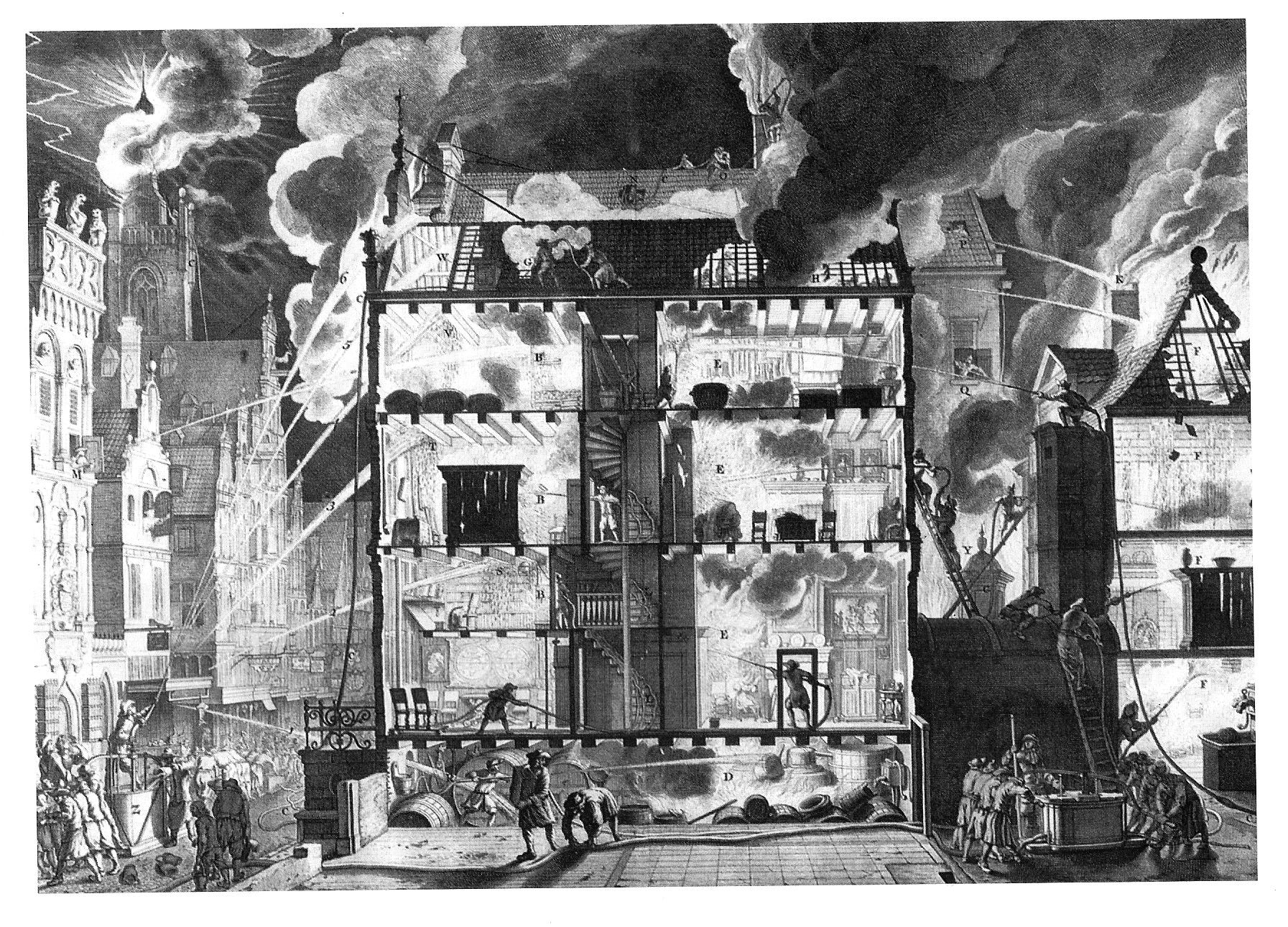
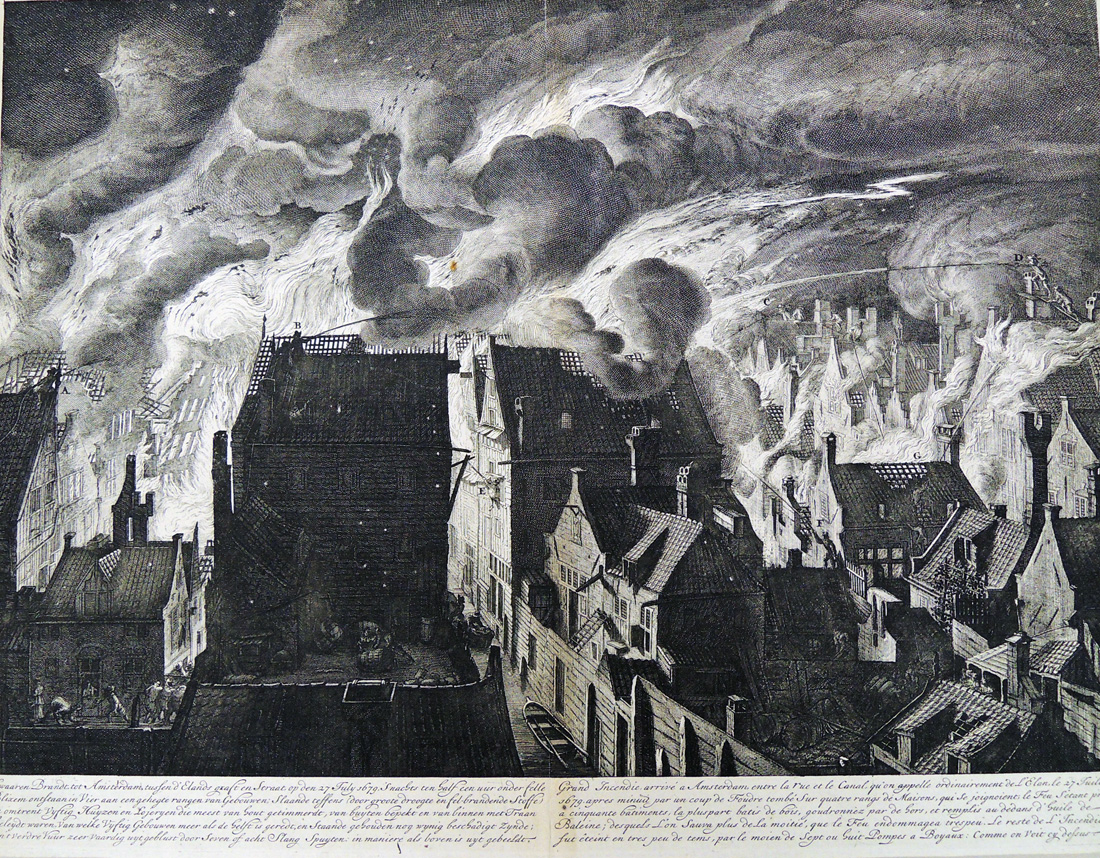
    Jan van der Heyden, a 17th century Dutch inventor, engineer, and artist, shared in his sensibilities in illustration a certain profound sense of color and depth of the Golden Age, even though he was working in just black and white in this capacity. He was the inventor of the fire hose, and was in charge of firefighting acting at the pleasure of the governors of Amsterdam, employing innumerable new technical benefits in the art of fighting fires as well as a “radical” new approach to dealing with fires.  (Which was a fine and very important thing, given the compactness of Amsterdam and all). In 1690 van der Heyden and his son published a revolutionary work1 on firefighting that explained the apparatus (the best of which he manufactured and patented), which is seen by experts as being perhaps the greatest book on firefighting ever published.  My interest was drawn to it by the illustrations, which really are quite spectacular (a number of them were engraved by van der Heyden himself). There are numerous nighttime scenes of firefighting, as well as some forensic images of post-fire situations, and of course images of the apparatus. (The content of the book were thoughtful and quite modern in presentation, with chapters dedicated to the old fire fighting equipment and then the new, a history of 40 years or so fires in Amsterdam, plus sections on buckets, ladders, hooks, tarpauline, the arrangement of the fire house, and of course the fighting of fires. It is an impressive work of a high order.)

    Perhaps the most interesting image for me is the cross section of a burning house at night–offhand I cannot recall an earlier, architectural image of such a thing.


    Firefighting cross section

    [Image source: Van der Heyden, Fire Fighting with Water Hoses and the Method of Fighting Fires now used in Amsterdam, translated by Lettie Stibbe Multhauf, and published by Science History Publications, 1996, opposite the header for chapter one, page 12.]

    For other images, please see  “Jan van der Heyden and his firefighting book” at Princeton University Library, Firestone Collection  https://graphicarts.princeton.edu/2015/01/30/jan-van-der-heyden-and-his-firefighting-book/

    One of the spectacular images of the book:

    Fire fighting Heyden

    Source,  Princeton University Library, Firestone Collection  https://graphicarts.princeton.edu/2015/01/30/jan-van-der-heyden-and-his-firefighting-book/

    Notes:

    1. Jan van der Heyden (1637-1712), Beschryving der nieuwlyks uitgevonden en geoctrojeerde slang-brand-spuiten en haare wyze van brand-blussen (Description of the Newly Discovered and Patented Hose Fire Engine and Its Way of Extinguishing Fires) (Amsterdam: Jan Rieuwertsz, 1690).

    ·Posted by :

    ·in: