A Daily History of Holes, Dots, Lines, Science, History, Math, Physics, Art, the Unintentional Absurd, Architecture, Maps, Data Visualization, Blank and Missing Things, and so on. |1.6 million words, 7500 images, 4.9 million hits| Press & appearances in The Times, Le Figaro, Mensa, The Economist, The Guardian, Discovery News, Slate, Le Monde, Sci American Blogs, Le Pont, and many other places… 5000+ total posts since 2008.

Category: Technology, History of

  • A Rare Set of Specs for the RCA Photophone (Full Text Posted)

    JF Ptak Science Books

    The New RCA Victor Photophone Recording System.  11×8.5″, 44 typed mimeo leaves, with 24 leaves of blue-line photographs and schematics of the  equipment.  Punch-bound at one time, though metallic binding element is not present. Printed on the stationery of  “R.C.A. Victor Company, Inc.,  Engineering Department”.  Very good condition. Document pp 1-44, lacking 26 and 27 (which seems to be a two-page section); images/blueprints 1-28, lacks 17,18, and 22.

    The text includes: General introduction (1-7, 4 illustrations), the Ribbon Microphone (8-12, 3 illustrations); Microphone Distribution Panel, (13-14pp, 2 illustrations); Microphone Mixing Panel (15-17, 2 illustrations); Compensator Panel (18-21, 2 illustrations); Recording Amplifier (22-25pp, 2 illustrations); Ground Noise reduction Amplifier (28-30, 2 illustrations); 35mm Film Recorder (31-34, 2 illustrations); 16mm Film recorder (page 35, 2 illustrations); Film Phonograph Reproducing Equipment (36-39 pages, 2 illustrations); Phototube Amplifier (40-41pp, 1 illustration); 35mm to 16mm Film Re-recorder, 42-44pp, 2 illustrations). 

    This a sound-on-film incunable. This means the pamphlet was printed within the first few years of the first “talking”  (synchronized sound, or sound technologically coupled to image) motion picture. The first feature length film using sound throughout1 the length of the movie was The Jazz Singer, which was released in 1927 and used a sound-on-disc2system of recording. That means that the audio portion of the film was recorded onto records, and then synchronized in playback with the film to match up the audio and video–this technology was obviously not the future.

    The technology of sound-on-film would take the day, and in very short order, leading to four different systems, of which the Photophone was one.  Photophone’s share of the prospective studio users was pretty good: the earliest major producers/licensees included Walt Disney Productions (after 1932), RKO Radio Pictures, republic Pictures, Warner Borthers, and Pathe.

    And on the Film Phonograph Reproducing Equipment:  “the need for combining two or more sound tracks, the adding of sound effects to an original recording, or matching around levels of scenes in the final editing of a picture has brought re-recording into an increasingly important position in sound picture production”.

    The work is in general a technical report and sales pitch for the new system.  It includes the following sections:

    Notes:

    1.  Earlier on in the mid-1920’s there were efforts of using sound in film but limited to music or very specific areas of the film, most of which in the end was silent. 

    2. The  movie was made with the Vitaphone system, which was not long for this world, soon to be replaced by the more sophisticated sound-on-film systems.

    “In 1925 GE started a program to develop commercial sound-on-film equipment based on Hoxie’s work. Unlike the Phonofilm and Movietone systems in which the audio modulated the intensity of a recording lamp which exposed the soundtrack, thus creating a variable-density track, the GE system employed a fast-acting mirror galvanoemter to create a variable-area soundtrack. A number of demonstrations of this system, now known as Photophone, were given in 1926 and 1927. The first public screenings with this system were of a sound version (music plus sound effects only) of the silent film Wings which was exhibited as a road-show in around a dozen specially equipped theatres during 1927.”–Wiki

     First page of the document, followed by the remained (44pp+26pp):
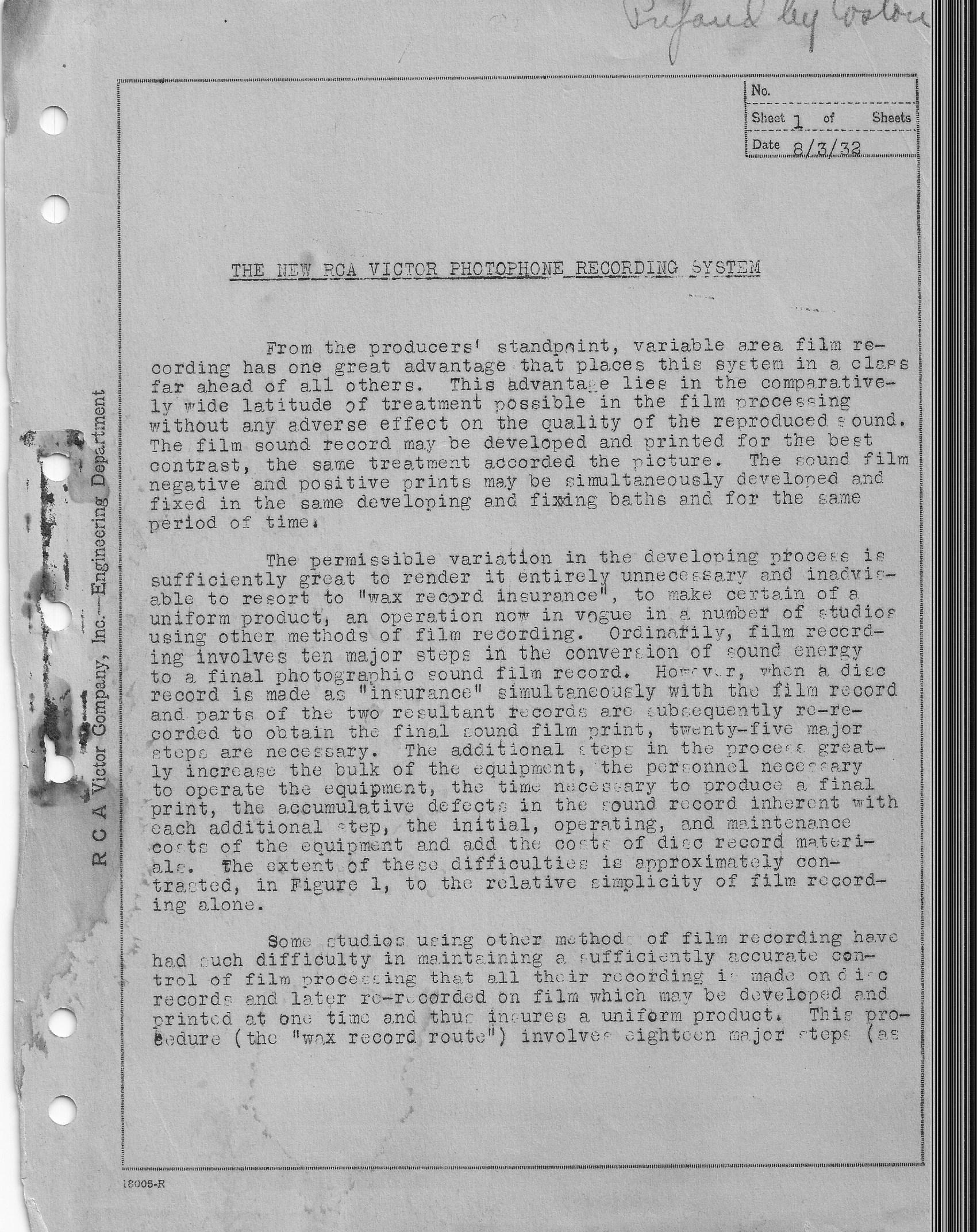
     

    RCA Photophone Recording Sysytem 1932 _1__0001


    ·Posted by :

    ·in:


  • High Above Brooklyn, Looking at Manhattan (1938)

    JF Ptak Science Books   Quick Post

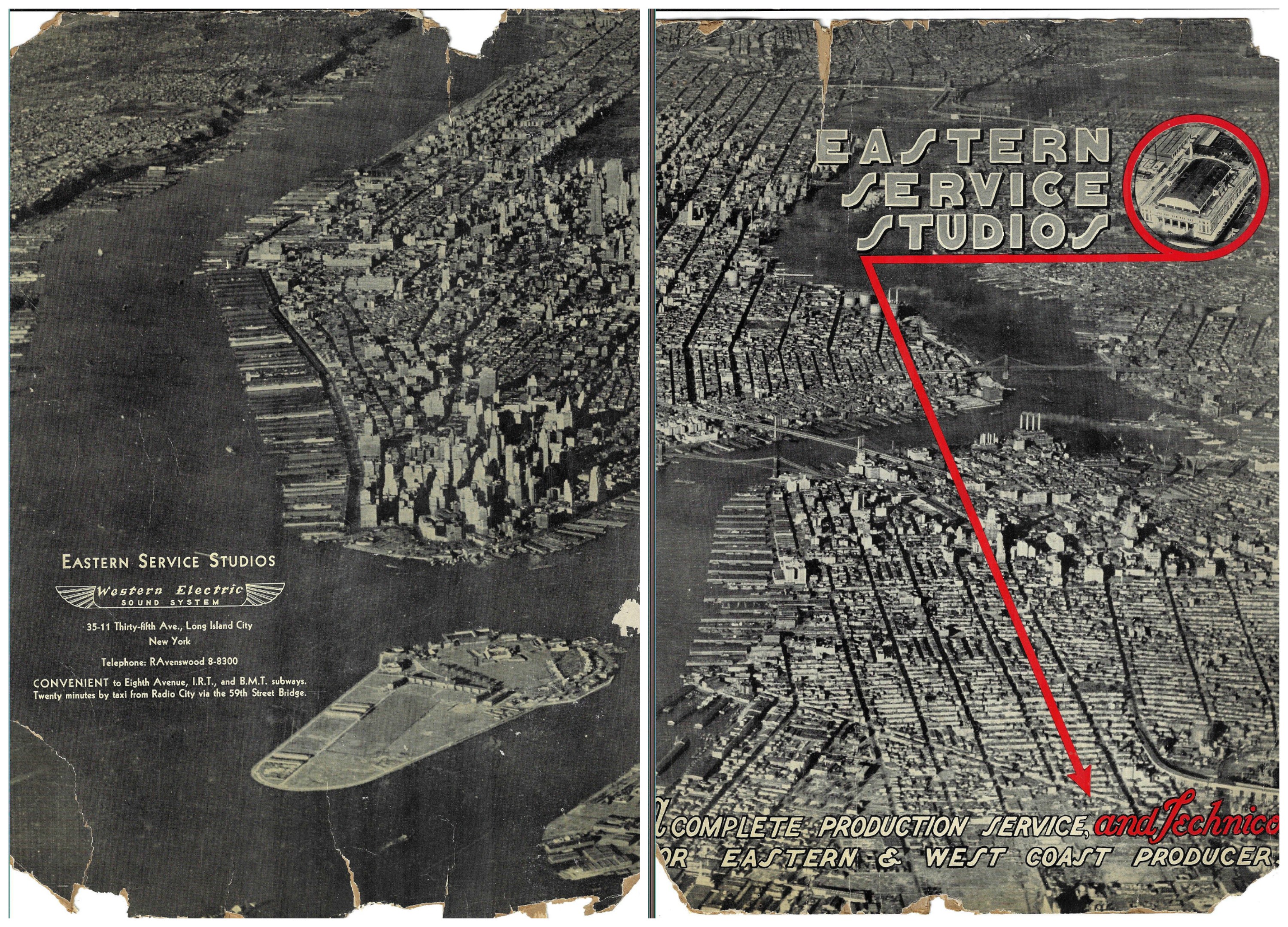
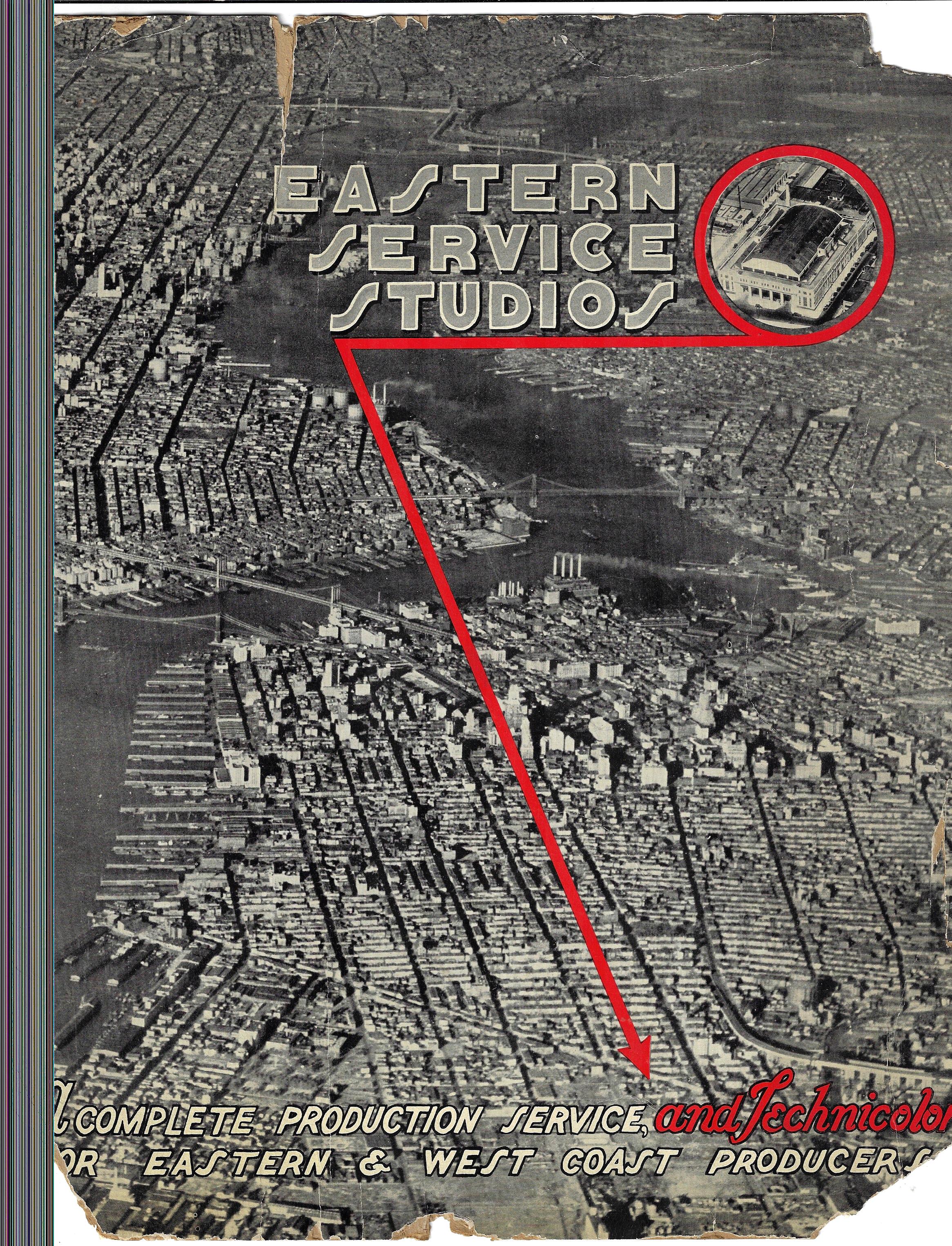
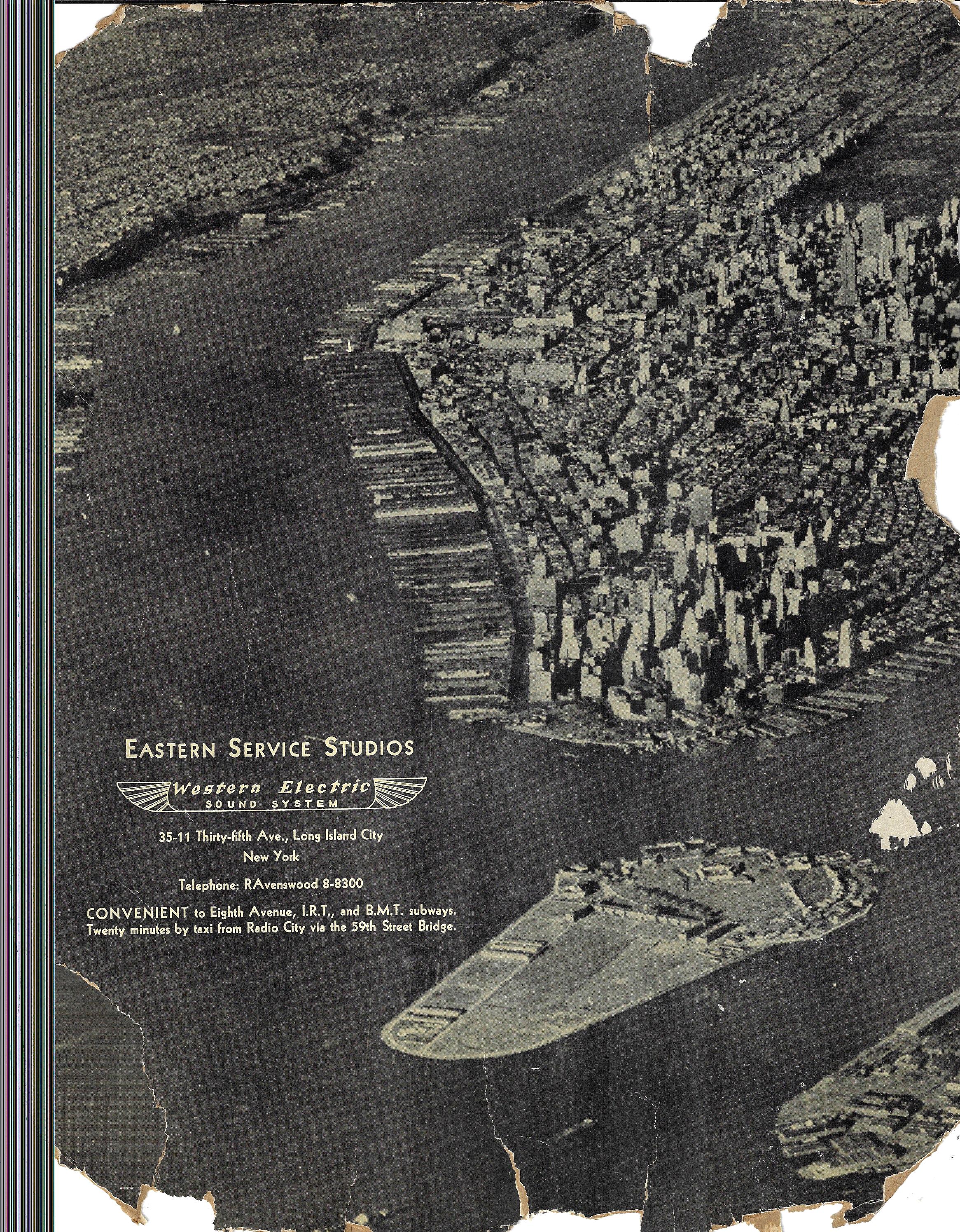
    As much as I like the history of the film industry in NYC in the early days (and then of television in the 1940s and 1950s) this post will not address that–I’m simply interested here in the cover art of NYC on this 1938 pamphlet about Eastern Service Studios. The place has a long and fine history–built by Paramount in 1920, it is still in service today as Kaufman Studios, in Long Island City…there’s plenty on the place online, detailing the history of production there from the first two Marx Brothers  movies through Law & Order.  But as I said, it is the cover that really interest me, as they’re almost an artwork on their own. The pamphlet is huge, 15×10″, making the photograph of the city front and back about 20″ long–it is a large piece.

    What we see is a view of New York City from about the Brooklyn Navy Yard and Brooklyn Heights,  at bottom and just north of Green-Wood and west of Prospect Park/Grand Army Plaza; in the East River we see the Brooklyn, Manhattan, and Williamsburg Bridges, and as we move a little to the west, we see all of Manhattan, all the way up to east Harlem and Randall’s Island, and then some. It is a marvelous photo. Unfortunately, the covers of the pamphlet are big/thick cardboard, making them very crumbly, and so the chips and missing pieces. Still, it is an aggressively interesting work.  

    Eastern Service montage


    The images in detail:

    Eastern Service Stuido _1_

    Eastern Service Studio _2_

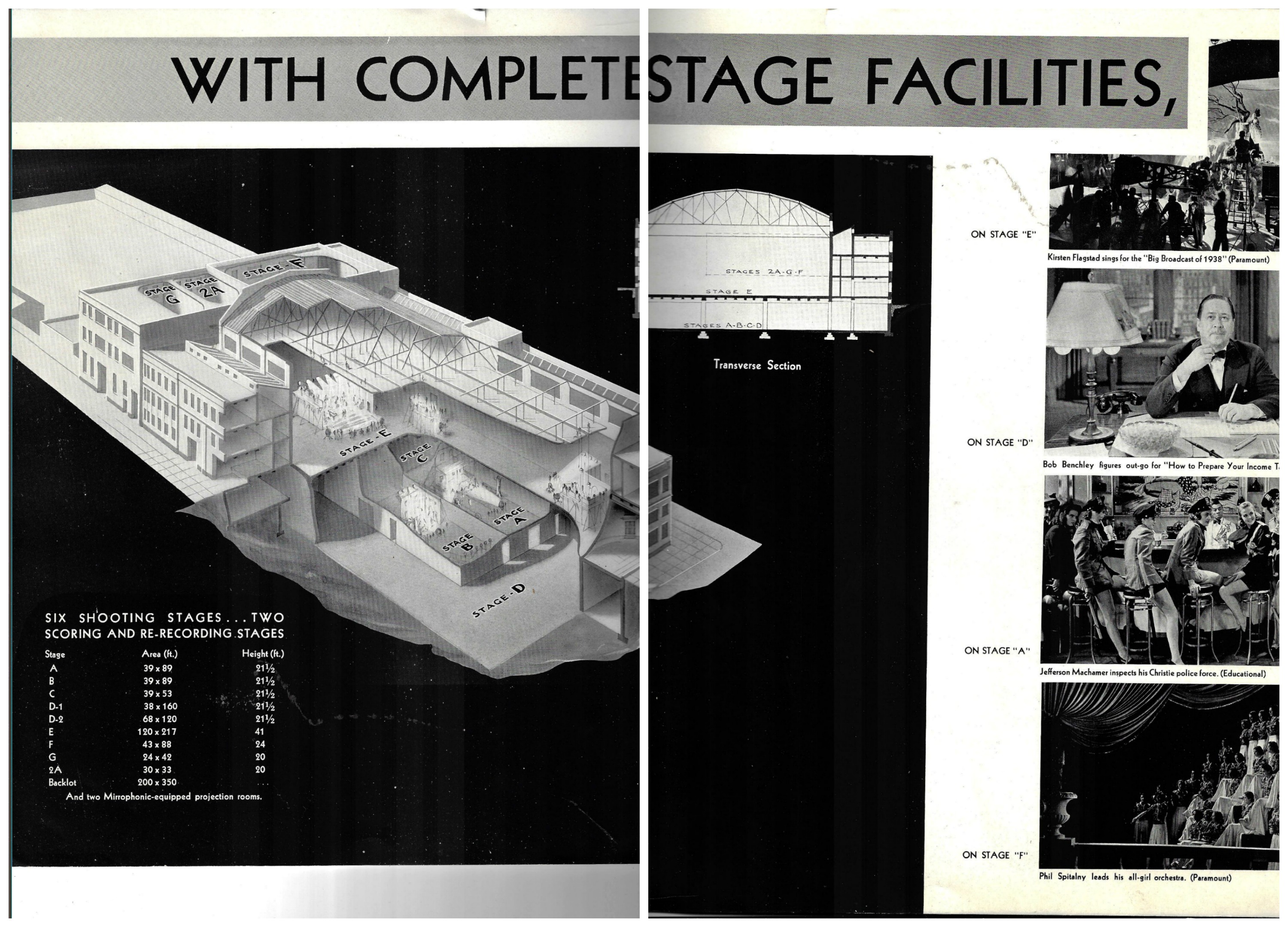
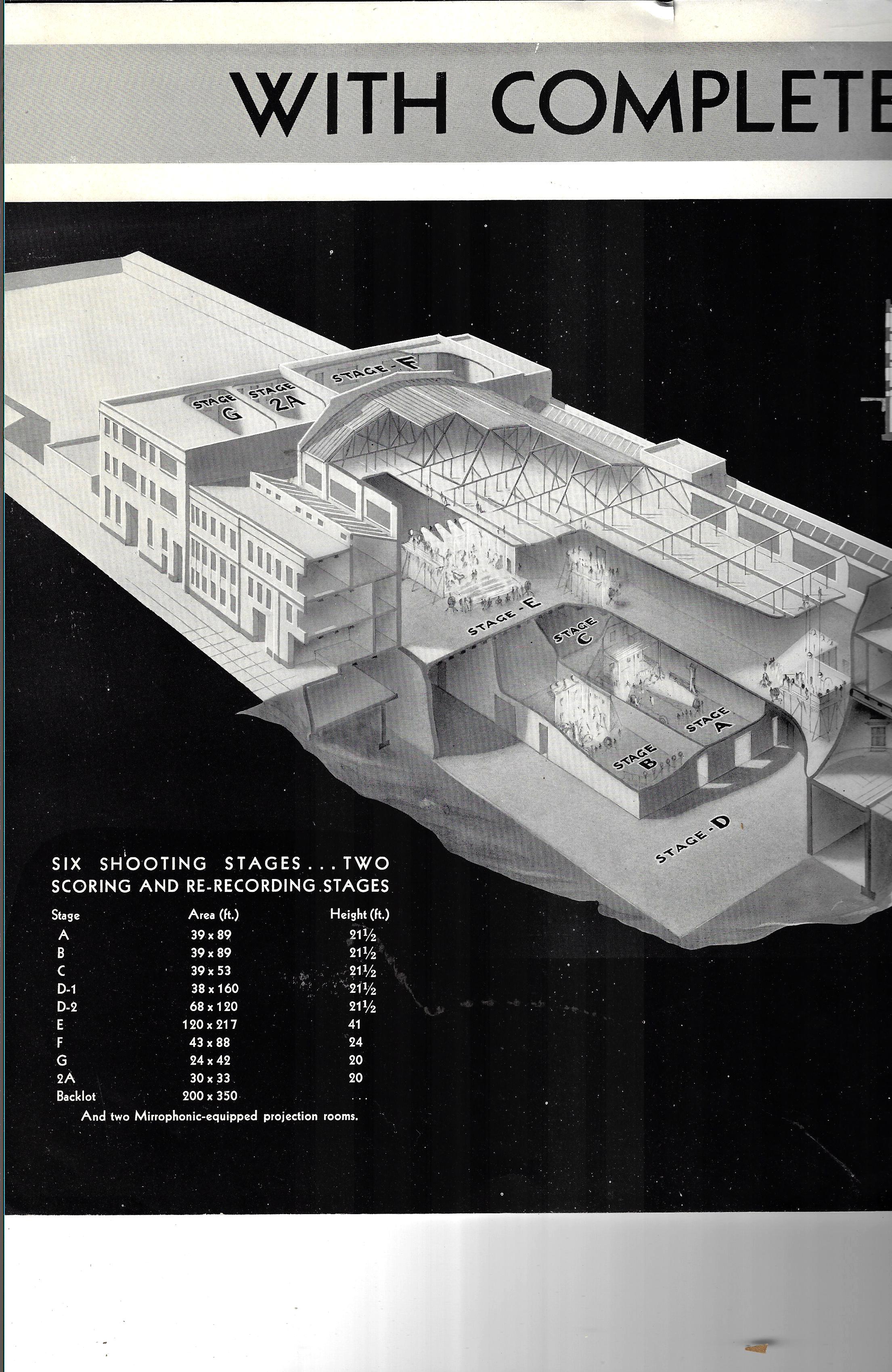
    And the stages at the studio:

    Eastern service studio stage montage

    Eastern service studios _3_


  • A Technical Report on the V-1, January 1945

    JF Ptak Science Books    Quick Post

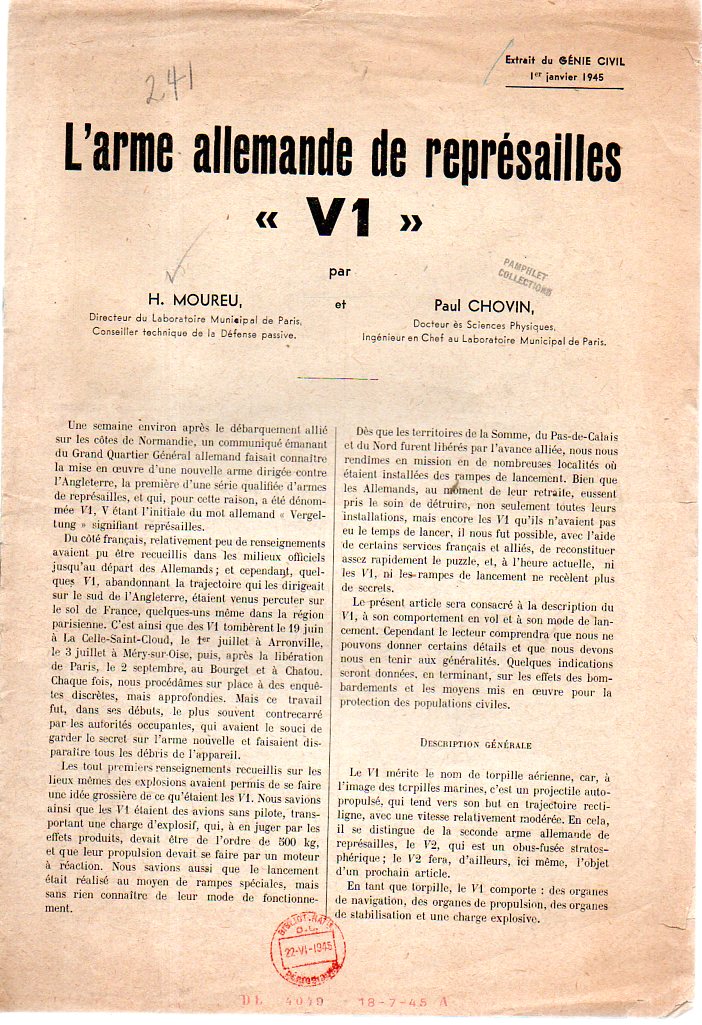
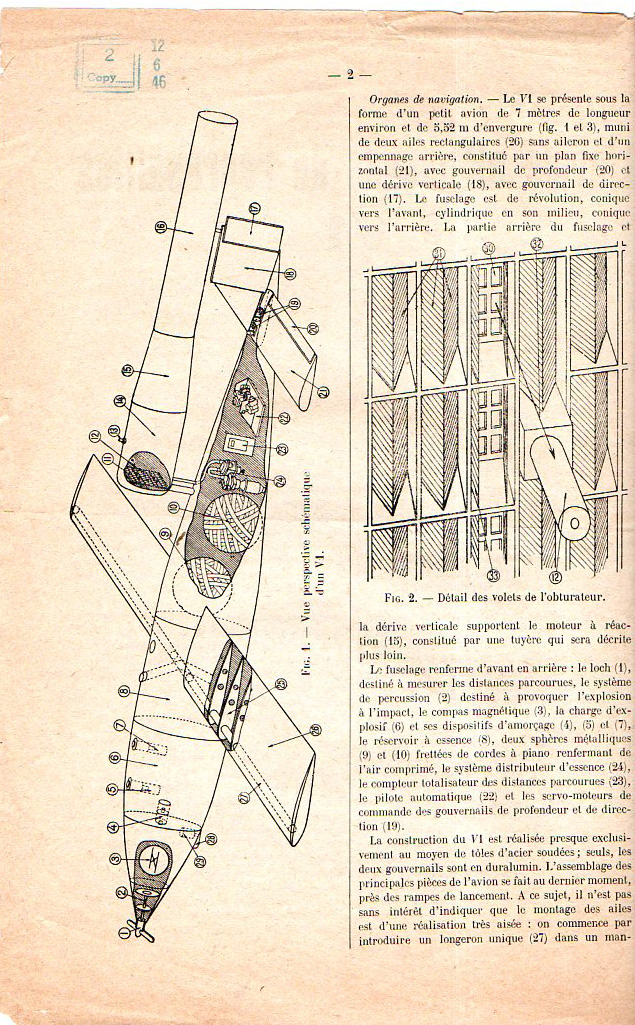
    I was  surprised to find this fairly-well documented piece on the V-1 published during the war, so I decided to reprint the report in its entirety. Some of the text runs off the side of the scanner, but that is the best I can do in scanning the pamphlet without taking it completely apart. 

    The document: Moreau, Henri (1893-1978) and Paul Chovin.  “L’arme allemande de represailles V1”, offprint from Genie Civil, 1 January 1945.  9×6 inches, 8pp, printed in Paris (newly liberated from the German army 25 August 1944) in early 1945. Very good condition, printed on a decent paper stock. It is rare as an offprint, at least, with no copies located in the WorldCat/OCLC. 


    V1519
    V1521

    ·Posted by :

    ·in:

    —

  • Moving Stationary People on a Moving Sidewalk and Not Moving People on a Stationary Sidewalk (1903)

    JF Ptak Science Books   Post 2684

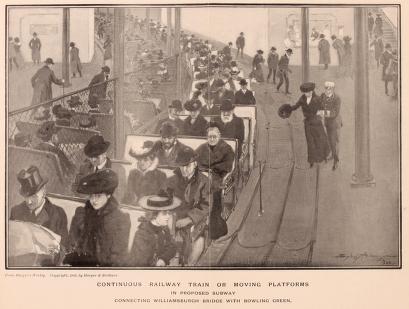
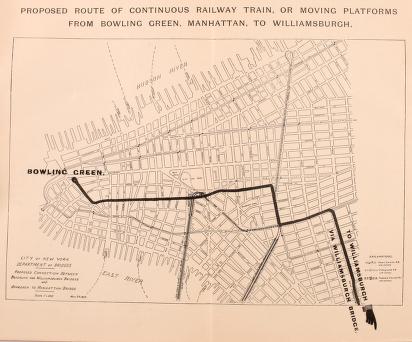
    I came upon this interesting pamphlet and thought to share it: Transportation of Passengers in Greater New York by Continuous Railway Train, or Moving Platforms.  Argument in favor of equipping the East River Bridges, and connecting subway to Bowling Green, Manhattan, with a continuous railway train or Moving Platforms. It was prepared by Schmidt & Gallatin, of New York, and printed in 1903. (Oddly it is the pamphlet that I started working on directly after working through a 1903 double-brick volume of the Journal of the American Chemical Society.) It is only 20 pages long, but decorated with four folding plates, including two maps, and two drawings of the envisioned walkways. 

    Sidewalks 3

    This seems a wonderful example of future thinking and city planning–but just not a very good idea.  It is hard to imagine a continuously moving sidewalk functioning in lower Manhattan. 

    From the pamphlet: 

    “Moving Platforms for the conveyance of passengers were recommended by Mr. Horace Greeley thirty years ago. They were successfully operated, first, at the World’s Columbian Exposition of 1893, where 2,700,000 people were transported. In 1896 they were installed at the Berlin Exposition, and again at the Paris Exposition of 1900, where they carried over eight million passengers. Few persons know what Moving Platforms are. From the face that sometimes they are called ” Moving Side- walks,” it is believed that they must be some sort of a pavement on rollers, on which it is difficult to step with safety and maintain equilibrium. The Moving Platforms are to all intents a railway, operated like other railways, propelled by electricity, with cars, seats, motors, passenger stations, ticket booths, guards, electric lights — in fact, everything belonging to a first-class railway.” 

    Sidewalks map

    “Where it differs from the ordinary railway is that the cars, or trains, are not running at intervals, but are coupled up continuously, so that there is no interruption of traffic at any time, but a large seating capacity at all times. It differs also in the construction of the cars, which are mere flat cars, provided with seats placed crosswise, and so arranged that all passengers face in the direction of motion. Each of these seats may be made wide enough to accommodate one, two or more persons. The most approved plan is to provide seats on one side of the cars only and leave the other for passengers to walk, thus giving them an opportunity to further accelerate their speed if they so desire…”


  • Delight is Where You Find It: Wagon Axle Catalog for 1905

    JF Ptak Science Books   Post 2682

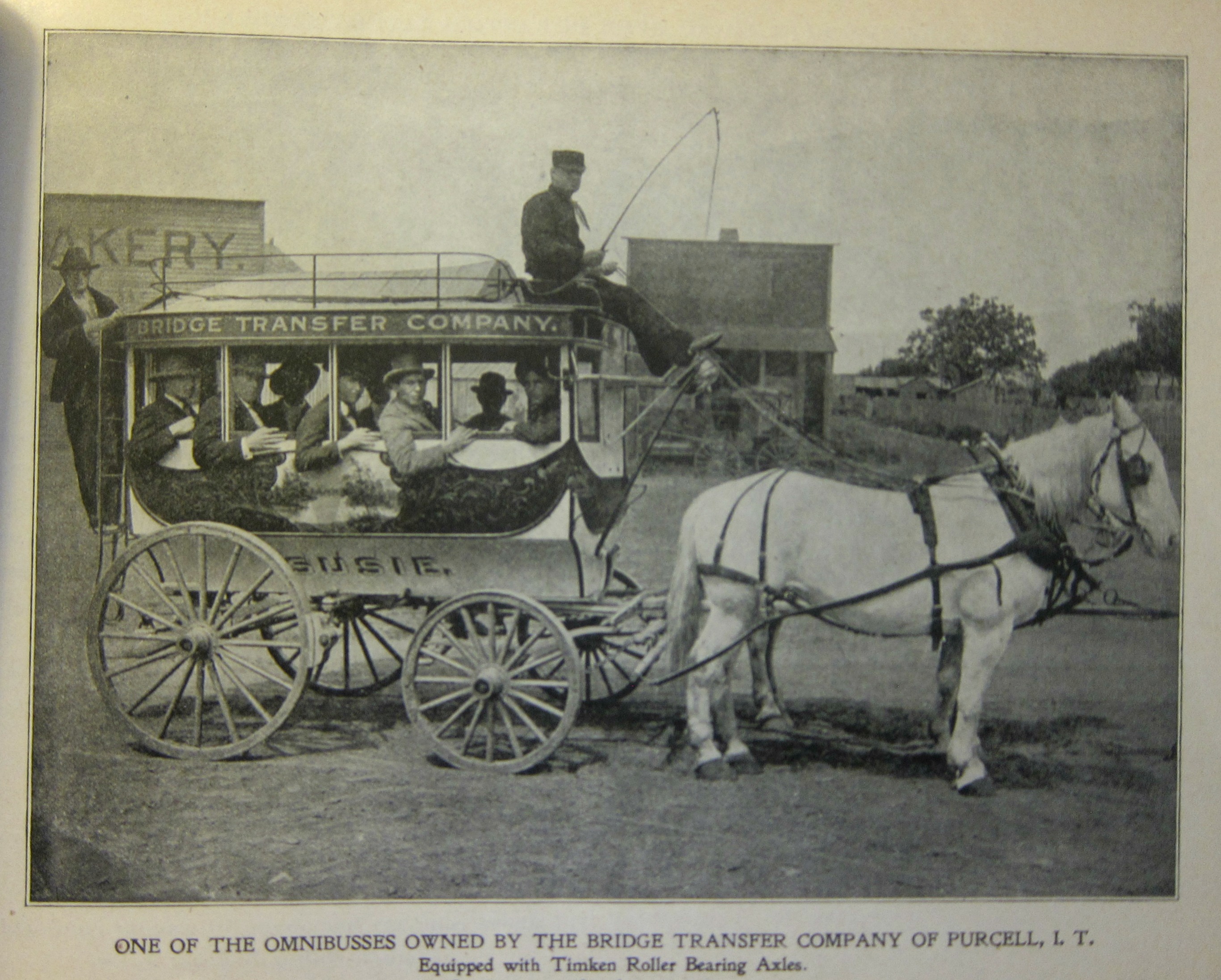
    The short story here is that less friction makes for happier conveyance and easier hauling. And evidently the founder of the Timken Roller Bearing Axle Company, Henry Timken, figured that out in the early 1890’s1, rolling his engineering insights and acumen and successful experimentation and founding his eponymous company in 1899 (and which exists as an international entity today). There’s great beauty in a fine idea, and in well-engineered parts and machinery, and no doubt the Timken axle is one of these–but what drew my attention to this catalog were the wagons and carts that benefited from the engineering. There is a superior sense of place in some of these images, an unexpected and quiet beauty found in the pages of a manufacturer’s catalog:

    Timken coaches _1_

    [Image source: Timken Roller Bearing Axle Company, Catalogue No. 5, published in Canton, Ohio, ca. 1902 (not later than January 1905).  7×9.5″,  unpaginated though 42pp long, including 9 plates of photos (some of which are above), plus 3 plates of drawings. Printed wrappers.  Provenance: Library of Congress, with their surplus stamp on the back. There are no copies of this title located in WorldCat/OCLC; there is another version, entitled “Carriage and wagon axle department, Timken Roller Bearing Axle Co., manufacturers of Timken roller bearing axles for all kinds of carriages and wagons …” ca. 1908, that is located in two locations: the Hagley Museum, and the Henry Ford Museum. I can find no other library of museum holdings.]


  • A Fine Diagram Controlling Time: Rail Schedules, 1874.

    JF Ptak Science Books  Quick Post

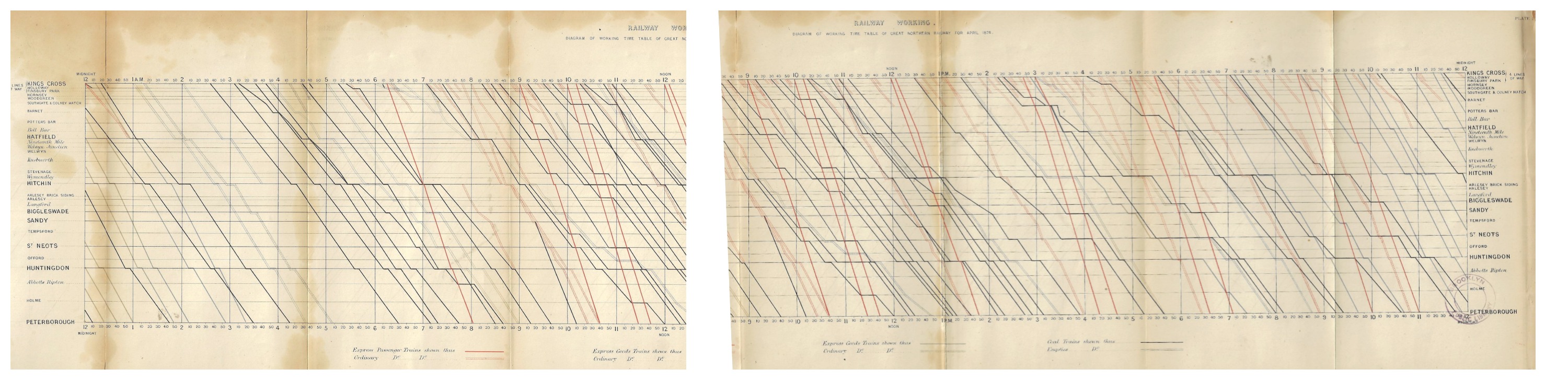
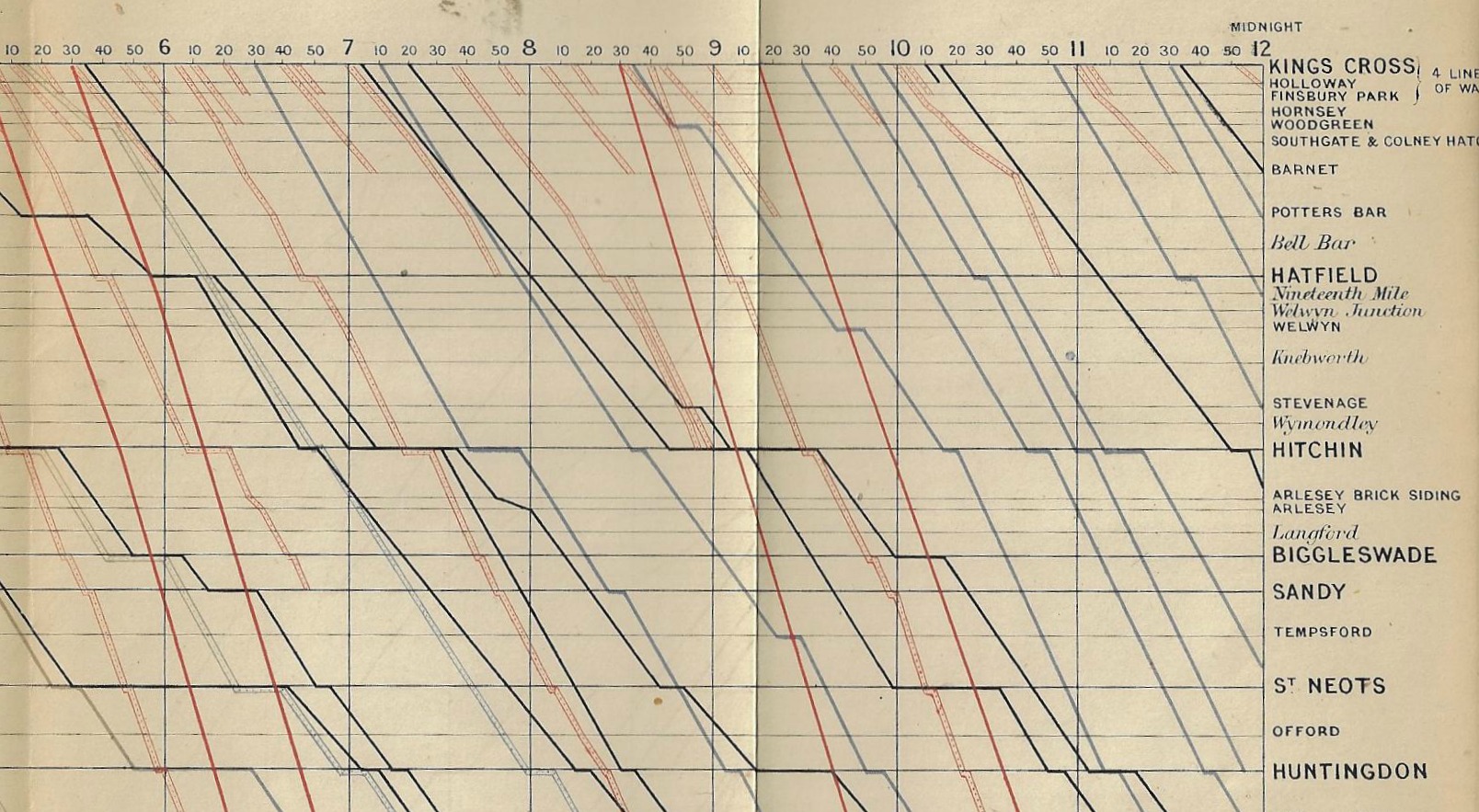
    Railway Working, Diagram of Working Time Table of Great Northern Railway from April 1874, drawn by R. Price Williams and printed by lithography by Thomas Keith, 400 King street, Covent Garden. There is a 24-hour table at top and bottom (each hour divided into 10-minute units), and a division of express and ordinary passenger and freight trains in the legend at bottom.  This lovely image of time and lines measures 7×30″, and is an illustrative chart in Minutes of Proceedings of the Institution of Civil Engineers...volume XXXVIII, Session 1873-4, part II, edited by James Forrest, and printed in London by the Institution in 1874.  Such was the way a country was run. 

    Maps subway _1_ and _2_ together

    And a detail:

    Maps subway 1874 detail

    I found an explanation of this diagram in Engineering, September 24, 1875, page 249:

    “This represents a portion namely between the hours 9 am and 2 pm of a diagrammatic time table for April 1874 of that part of the Great Northern Railway lies between King’s Cross and Peterborough the between the vertical lines indicate time, those between horizontal lines the distance between the stations while diagonal lines show the passage of the trains and by different colours the nature the trains. At 9 o clock will be seen a train leaves King’s Cross and arrives Peterborough at 10.40. The diagonal representing train is not quite continuous there is a small part drawn upon the Hitchin station line this shows the 9 o clock train reaches Hitchin at 9.45 and that it there for about three minutes. At 9.5 an train leaves King’s Cross but goes no further than Green while at 9.8 another train leaves Cross and proceeds as far as Hatfield. At 9 10 a coal leaves King’s Cross and reaches Peterborough at 1.20.  10 o clock an express train leaves King’s Cross Peterborough at 11.30 and at 10.10 another express King’s Cross reaching Peterborough at 11.45.

    And larger, for effect, but vertical:


  • The Wright Stuff–Pushing the Edge of the Envelope in Berlin, 1912

    JF Ptak Science Books   Quick Post

    There are many posts on this site about looking at images straight-on, and on looking straight down from a height, and looking through the perspective of someone else’s eyeballs to make it seem as though you were the machine gunner/engineer/pilot and so on.  With this in mind I think that there is not one image among the (probably) 7500 antique images on this blog showing that shows people in the act of looking straight up…until today.  And in comes via a fine example, a poster made to celebrate an aeroplane/air show at the Johannistal field in Berlin in 1912. It was the largest field in Berlin until the late 1920’s, and it hosted many pioneer aviation efforts and events, and at this one in May there would be an appearance of a Wright flier.  

    Aviation 1912_0002

    It is just a very interesting graphic–more so given that at this point (and probably another decade or so to come) that if anyone heard an airplane flying overhead, it was still an event enough for just about everyone to look up.  

    [Image source: Exlibris Buchkunst und Angewandtegraphik, 22/1, 1912.]


  • The Department of “What is It?” #5 (1923)

    JF Ptak Science Books      

    So, this is clearly film of some sort, and seems to be a picture of something, but a picture of what? This is a positive of a negative, and the major hint here is that the year it was made was 1923. 

    Talkie detail


    Answer below:


  • Rocket to the Moon, 1930

    JF Ptak Science Books  Post 2683

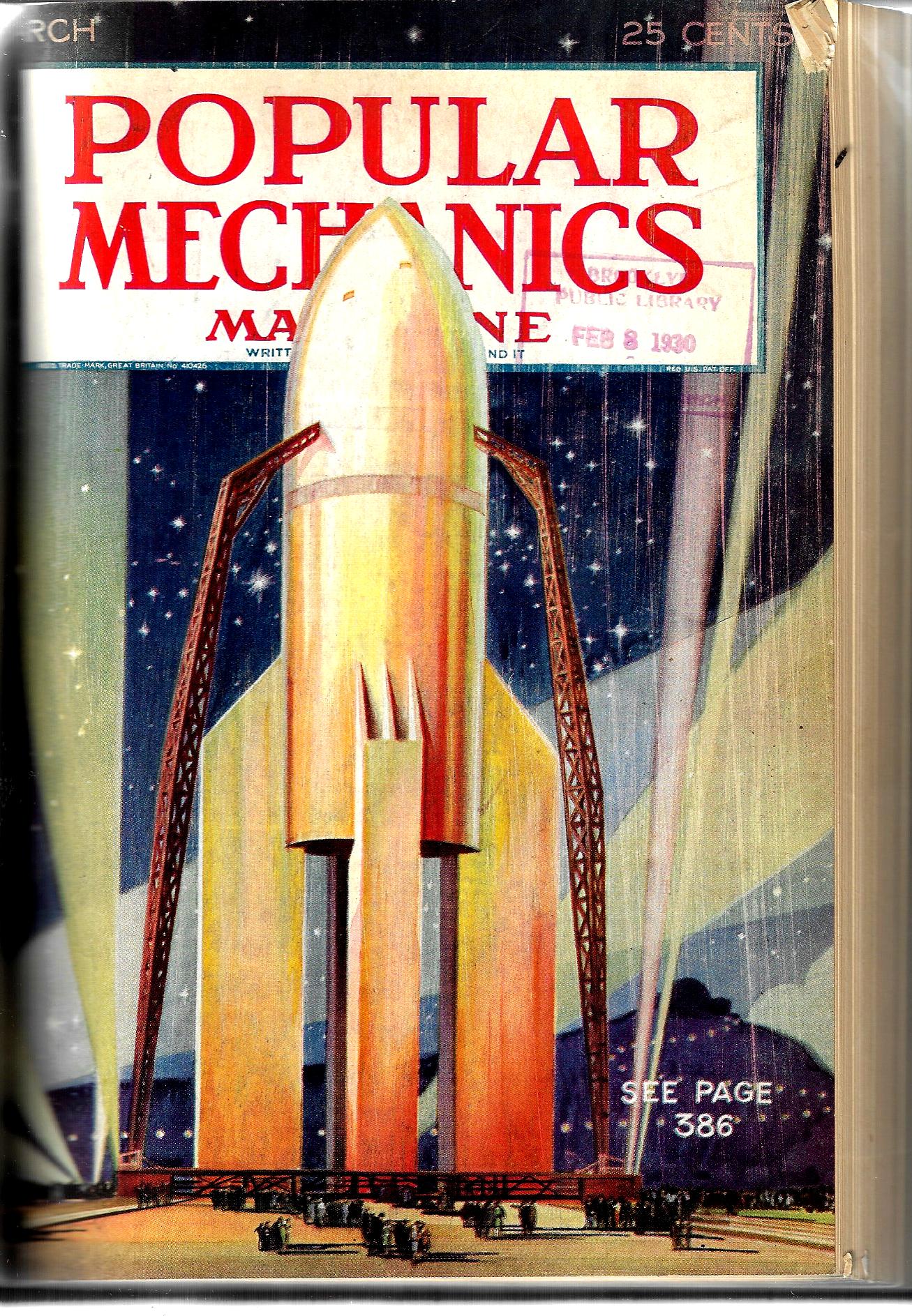
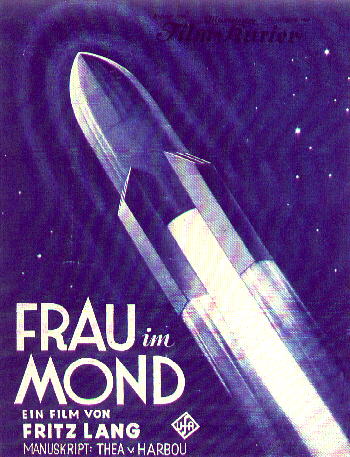
    This is a king-hell cover for Popular Mechanics, appearing in March, 1930, and I was about to say it reminded me of other rocket ship designs from that era except that this one is actually earlier than those I was thinking of, which were generally technical and tech-pop.  When I read the article it turns out that this was a riff on the rocket that had just recently appeared in the Fritz Lang movie, Die Frau im Mond (“Woman in the Moon”, October 15, 1929). The article was about the “realistic” nature of the film and the possibilities it displayed for actual space flight–as it turns out folks who know something about this genre contend that the Lang film may be the first serious sci-fi movie about sending people to the Moon.  

    Rocket Pop Mech 1930

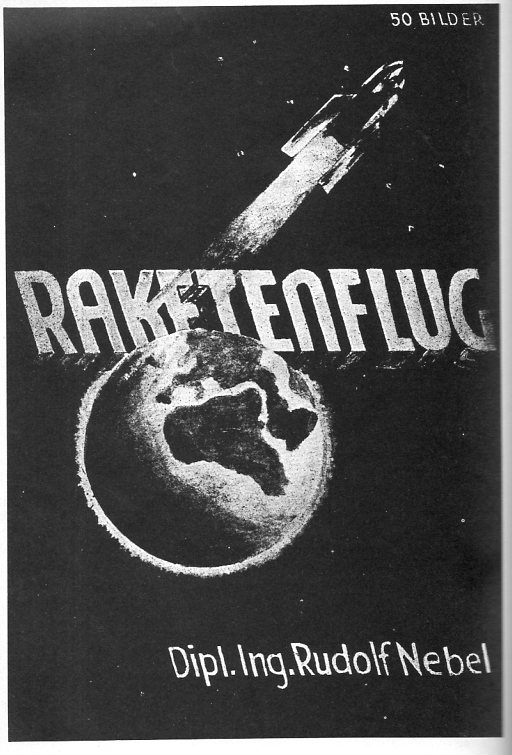
    This looks somewhat like the design of a ship on the front cover of Raketenflug, by Rudolf Nebel . (Nebel. 1894-1978, was a very early member of the Raketenflugplatz, assistant to Hermann Oberth and very nearly the first to successfully conduct an experiment with a liquid-fueled rocket, beaten to the finish line by a man whose work he was not familiar with, Robert Goddard.  He defined right-wing in the Weimar era, and was part of a paramilitary organization called Stralheim; Wernher von Braun seems to have succeeded in the avenue that Nebel tried to travel along.  Nebel published this work in 1932, a year before the Nazi party came into power, and before his crotchety problems with the SA began.

    Rocket nebel

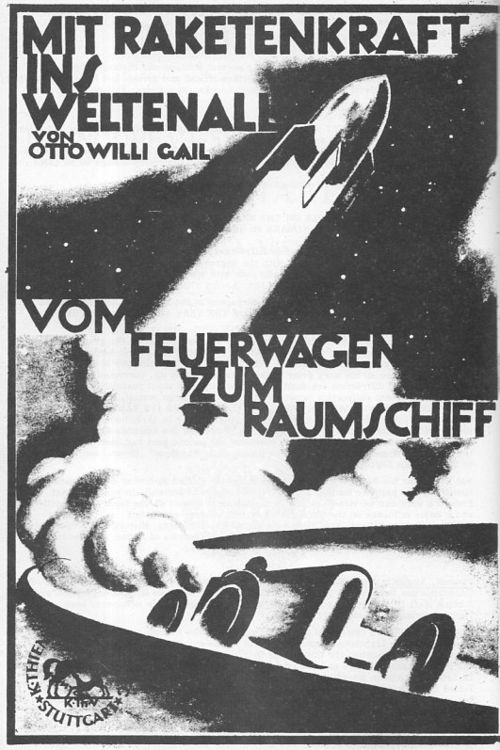
    And also like Otto Gail’s ship: 

    Rocket Gail

    Gail (1896-1956)  was more a science journalist, popularizer, science fiction and fantasy writer than anything else, though his descriptions of preparations for launching a spacecraft to the Moon as well as the experiences of the crew were fairly lifelike.

    And the original culprit (via Wiki):

    Rocket frau im Mond


  • Early Data Visualization (1817)


    JF Ptak Science Books   Post 2677

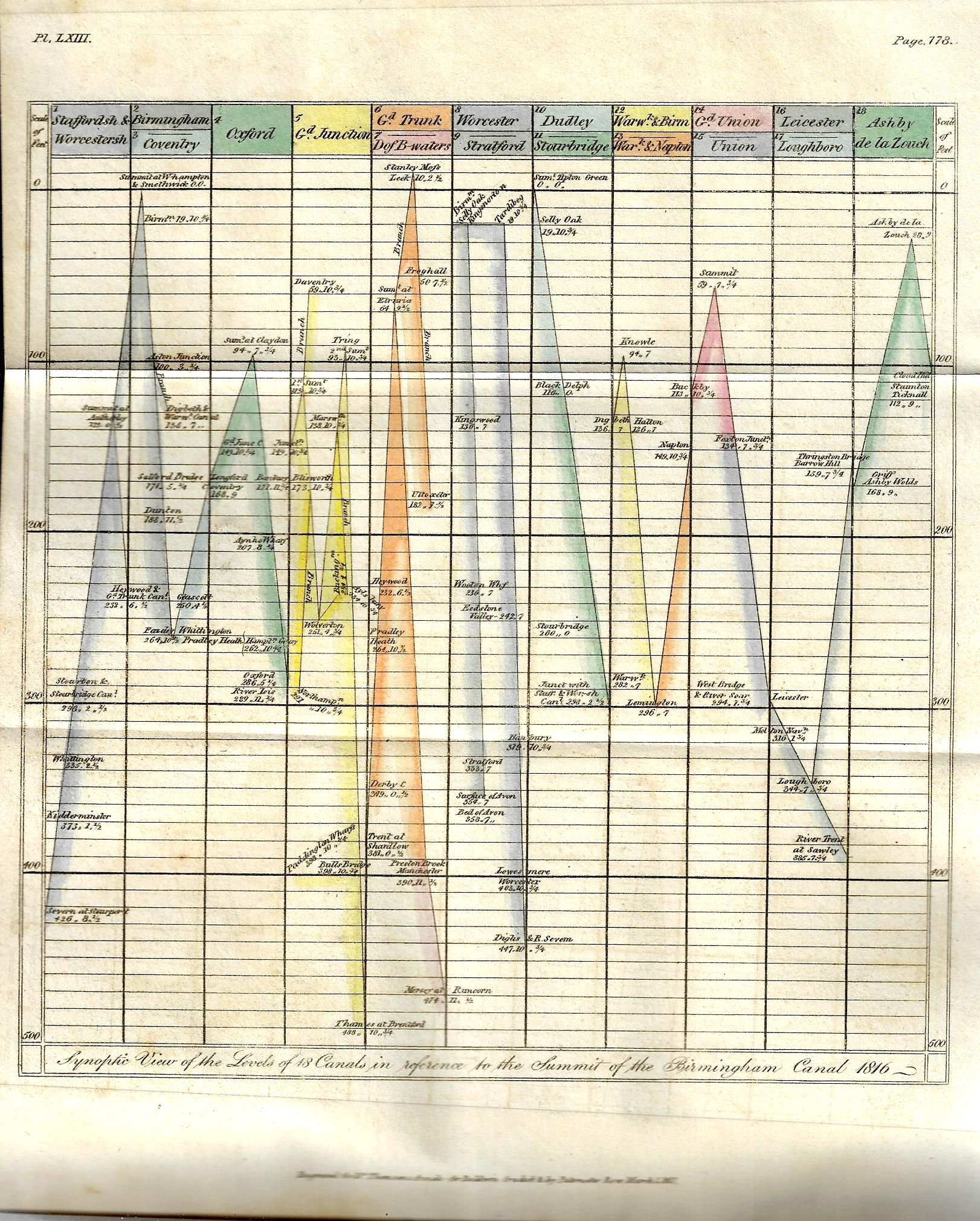
    There have been perhaps 150 posts on this blog relating to data visualization and the elegant display of information–this one, found by chance yesterday while browsing, is really pretty early for its type of accomplishment. The image relates heights of canals in the Midlands, and is one of three illustrations for Samuel Galton’s “On Canal Levels” which appeared in Thomas Thomson’s Annals of Philosophy; or, Magazine of Chemistry, Mineralogy, Mechanics, Natural History, Agriculture, and the Arts1 in the first half of 1817.  The article is illustrated with three plates, including a curiously interesting graph of canal lengths, a cross section of “the line of canal from the river Mersey at Runcorn Gap  to the River Thames at Brenford, with the Branch to Paddington Wharfs”, and finally a glorious hand-colored plate (“Synoptic View of 18 Canals in reference to the summit of the Birmingham Canal, 1816”).

    Galton (1753-1832, of Birmingham) was Quaker arms manufacturer (a not-uncommon occurrence in my experience) and the grandfather of the polymath Francis Galton, a successful industrial who was active in the Lunar Society. This short paper is basically a collection of data, and he presents it in an interesting and provocative way–this in relation to the cross section and graph, which are early means for the time in expressing quantitative data in a more easily-managed and comparable form.  (Galton wrote: “It occurred to me several years ago that the lockage of canals and their plans and sections would afford the means of ascertaining with a considerable degree of comparative precision the relative height or level of all the places immediately situated upon those canals which communicate with one another and that in consequence a number of fixed points would be obtained from which the relative level of any objects in the vicinity of those canals might be more conveniently measured…”)

    • (Apologies for the unevenness in clarity of the sans–the book in which they appear is tightly bound, and I didn’t risk opening the book beyond necessary for fear of damaging it. That said, if you click and expand the images are a lot sharper….)


    Dataviz Canal heights 1817