A Daily History of Holes, Dots, Lines, Science, History, Math, Physics, Art, the Unintentional Absurd, Architecture, Maps, Data Visualization, Blank and Missing Things, and so on. |1.6 million words, 7500 images, 4.9 million hits| Press & appearances in The Times, Le Figaro, Mensa, The Economist, The Guardian, Discovery News, Slate, Le Monde, Sci American Blogs, Le Pont, and many other places… 5000+ total posts since 2008.

Category: Militaria

  • You Are There: Dive-Bombing Pilot, 1935

    JF Ptak Science Books 

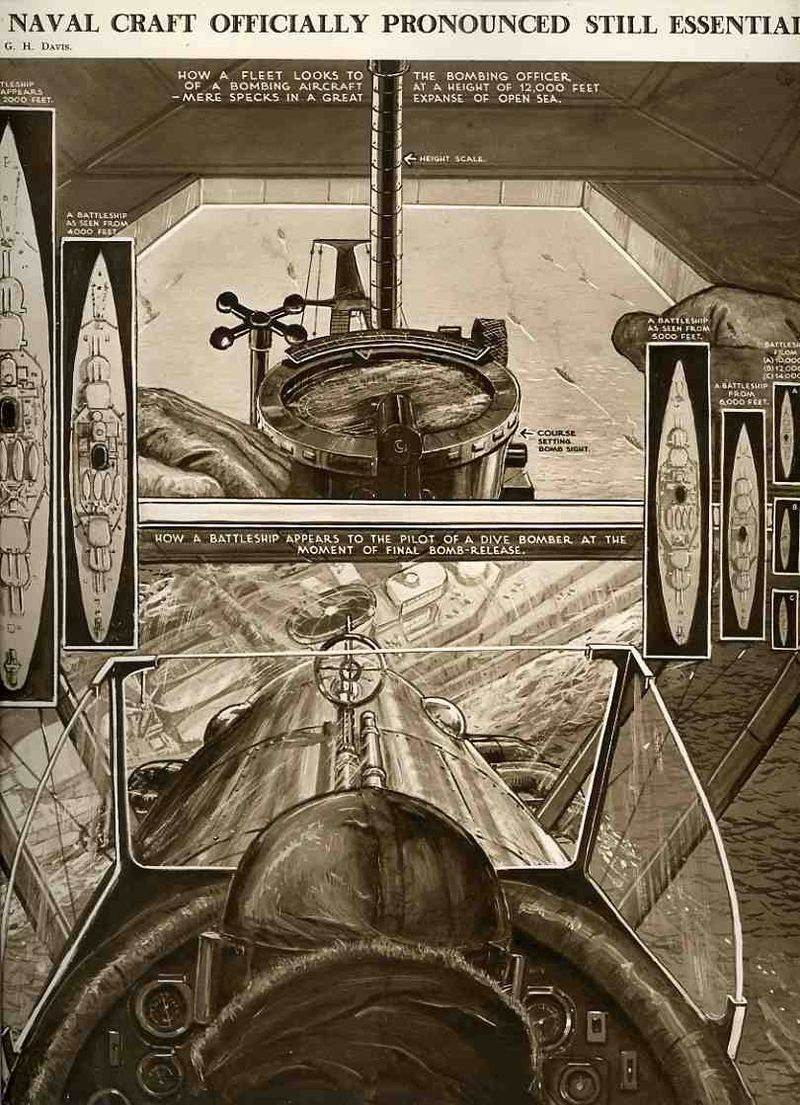
    In my experience popular images prior to WWII that put the reader inside of the picture– giving them the same view as the observing, principle member of the picture–are very uncommon.  Honestly, they just don’t happen very often, and I wish that I had paid more attention to them over the years before I realized they were as rare as they were. Such is the case with this extraordinary and action-packed picture in which the reader is hosted just behind and slightly above the head of the pilot of the aircraft dive-bombing the battleship.  It appears in The Illustrated London News for 7 November 1935, and it must have been captivating for the readers, being given the sense of closing in at great speed on the ship.  There are actually eight other smaller perspective images embedded in the image as well. The largest of these (at top) places the viewer directly inside the subject, giving them the feeling of how it looks like to the bombing officer of the aircraft as it approached the fleet. The other five images shows what the battleship looks like from different height from the inside of the aircraft.  Perhaps this doesn’t look like much to us today, but at the time, I can assure you, these images were exceptionally uncommon offerings of a personal perspective that few readers had ever experienced.
    00-blog-Oct 21--aircarft attack892


  • Hearing D-Day: the Earliest Radio Broadcasts

    JF Ptak Science Books  Quick Post

    I’ve just listened to this series of radio broadcasts and found them absolutely fascinating. In the first broadcast we find that the earliest information was based on a 12:30 Berlin broadcast, followed by a 1:00 am news headline which stated “the long waited British American invasion has begun…”–thus the unlikely scenario in which the first announcements of the invasion were made by Germany. This first recording–the first CBS report–aired at about 3:00 am and recounted the events, the radio host Bob Trout doing a superb job in keeping the story straight and the listeners informed.  At the earliest stages the reports from Germany were not believed as they could well have been the expected diversionary feints, done so to draw out Partisan fighters who were in hiding.  They weren’t.

    3am is just about the time that Franklin Roosevelt was woken up–at that point, the president sprang into action, as did the rest of the White House, with the Map Room instantly abuzz. 

    All broadcasts are from youtube.  


    ·Posted by :

    ·in:


  • The Swastika as a Rising Sun–Linz, ca. 1935

    JF Ptak Science Books   Quick Post

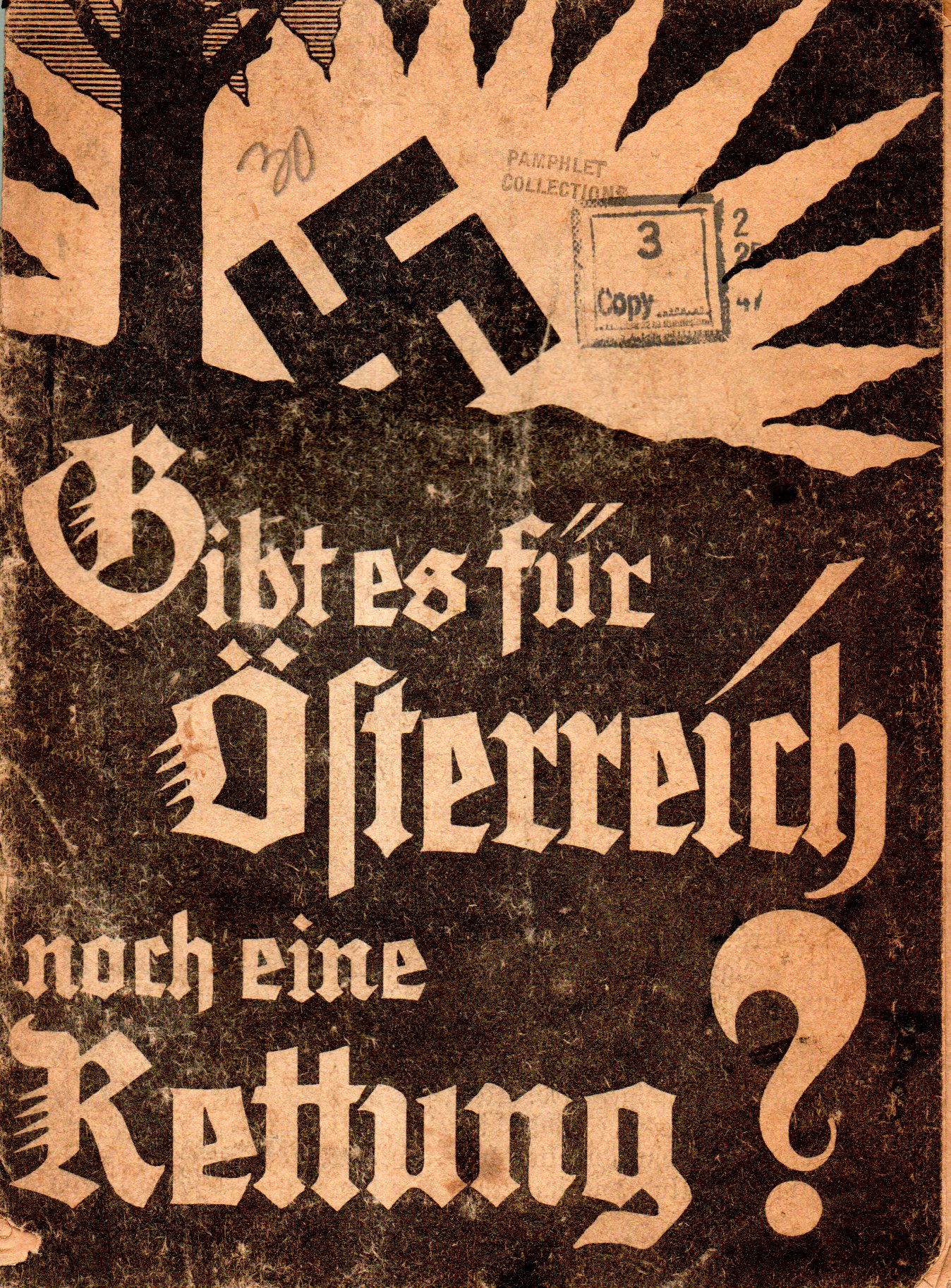
    Judging from the cover art it is not necessarily clear what is going on with that swastika. But given the question in the title (“Can Austria Still Be Saved?”) and the publisher, the NSDAP’s Volkstimme (Linz) leaves little doubt that the swastika is a rising sun rather than setting.  I can’t find another title in the OCLC/WorldCat–which makes this piece of propaganda rare–and which means that I can’t date it precisely, though I would say it was printed prior to the annexation in 1938 (though the design definitely has an earlier touch to it…)  There is a mention of the Gauleitung der N.S.D.A.P. and the Hitlerbewegung located at Goethestrasse 7 in Linz–and since the Nazis were suppressed under Dollfuss from 1932-1934, which means this document may have been printed in the mid/late 1930’s.  

    German design salvation Austria032


  • What They Carried, Part V (1917)

    JF Ptak Science Books  Quick Post

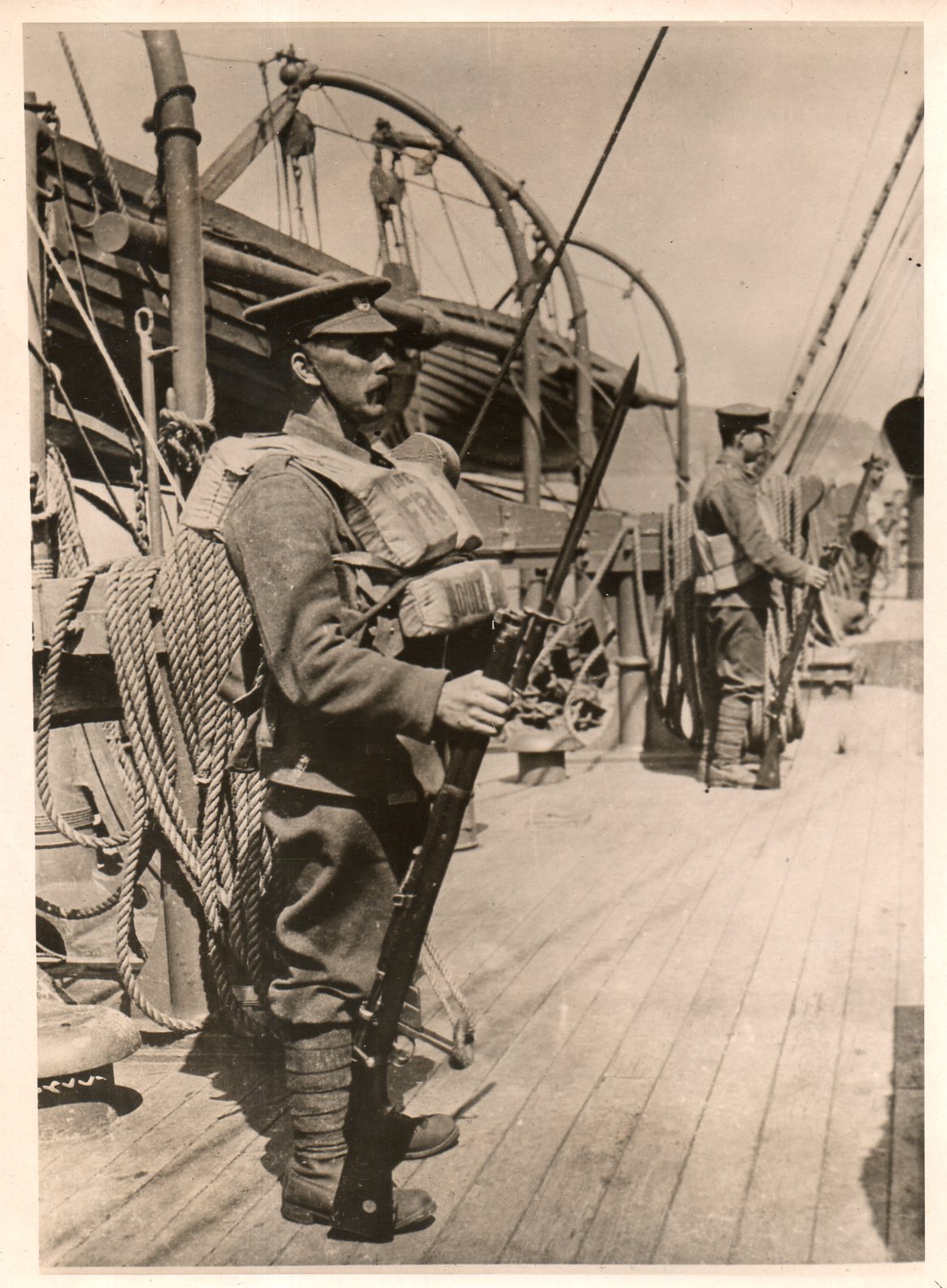
    WWI Havily Laden Soldier268

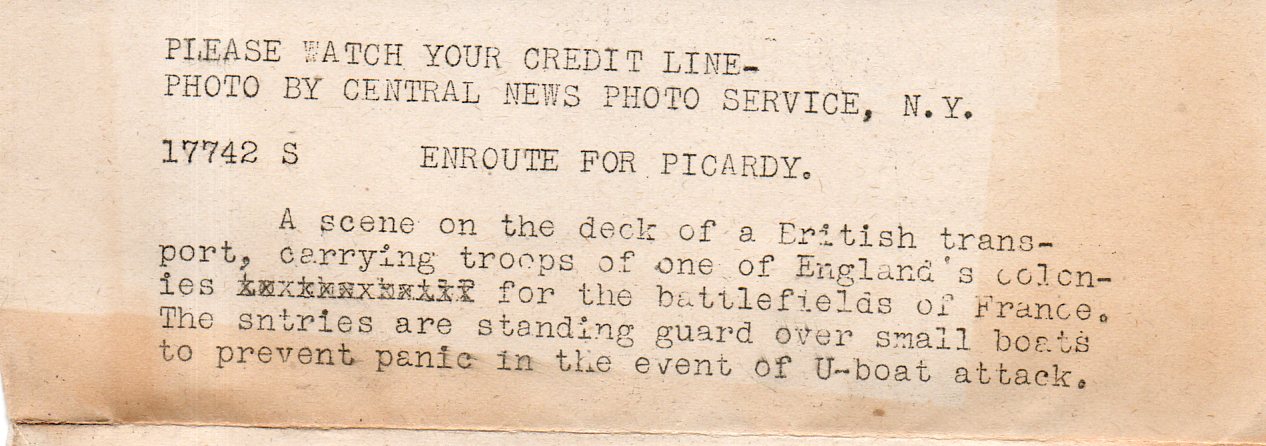
    This is an example from my WWI news photo service collection–this one showing a newly-minted soldier, very heavily laden and off to France, where no doubt he would quickly lose a lot of that clanging, heavy, cumbersome, and probably-useless stuff.  The description (below) accompanied the photo and was the suggested caption to be used with the image when published.  

    See this link https://historyofideasblog.com/thesciencebookstore/2015/10/what-they-carried-part-iv-us-soldier-1917.html for four other posts I made here on this blog on “What They Carried” into battle. 

    WWI Havily Laden Soldier269

    If you’d like the original, see this link in our books for sale section: https://historyofideasblog.com/world_war_i_photography/2014/09/heavily-laden-soldier-ca-1918.html

    For a general explanation of the WWI press photo archive, see https://historyofideasblog.com/world_war_i_photography/


    ·Posted by :

    ·in:

    —

  • A Rare Document on the Jinan Massacre, May 1928

    JF Ptak Science Books   Quick Post

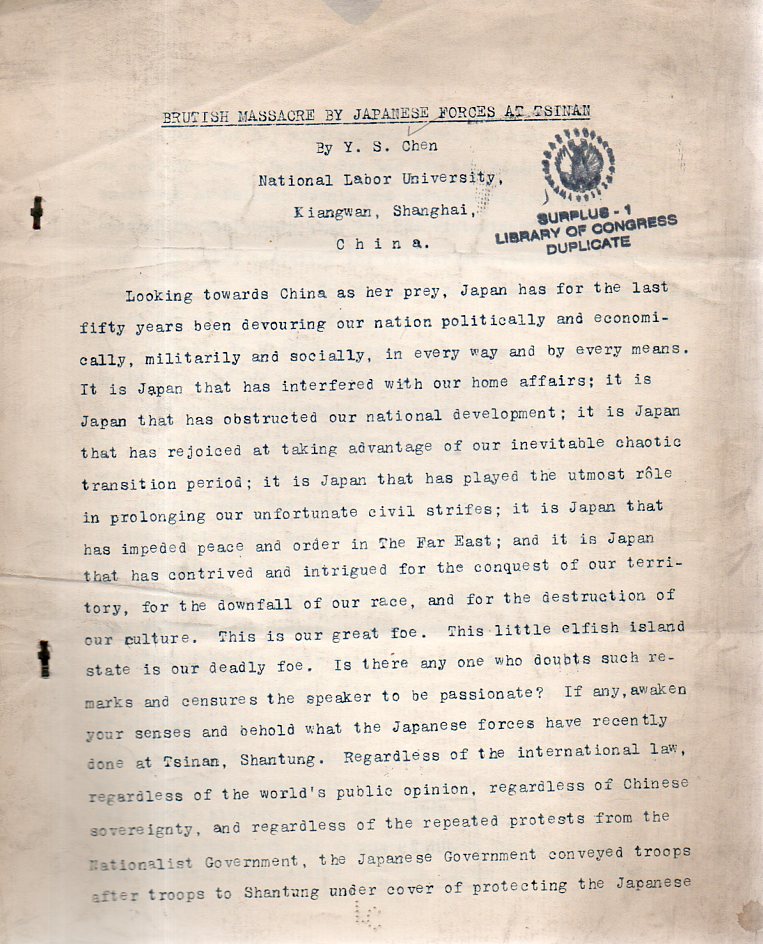
    I just located a rare and emotional document on the Japanese massacre of Chinese soldiers and civilians at Jinan (“Tsinan”), Shandong (“Shantung”), China. It forms part of the long pre-Sino-Japanese War (of 1937-1945), and though it is often described as an “incident” it was far more than that, as more than 6,000 soldiers of the National Revolutionary Army of China and civilians were killed, with many thousands more wounded, done in by the Imperial Army of Japan, which suffered only 200 casualties (most of these being wounded).

    I’ve scanned as much of this document as I could without damaging the pamphlet and reproduced those three pages below–it isn’t quite half of the document, but it does give the main thrust of it, and certainly displays the writer’s outrage and frustration.  Brutish Massacre by Japanese Forces at Tsinan was written by Y.S. Chen of the National Labor University, Kiangwan, Shanghai, China, and was printed from typed sheets via an offset process of some sort and published not later than June 28, 1928.  My copy is deaccessioned from the Library of Congress, where the documents division received it on June 28, 1928, which means it was probably printed within weeks of the massacre. There is only one copy of this document located in WorldCat (at Northwestern University), and there are no hits on the title in various online searches.  

    CHina Jinan Massacre022

    ·Posted by :

    ·in:


  • Two Dimensions to Three and Back Again (1588)–a Bit of an Optical Illusion

    JF Ptak Science Books  Quick Post

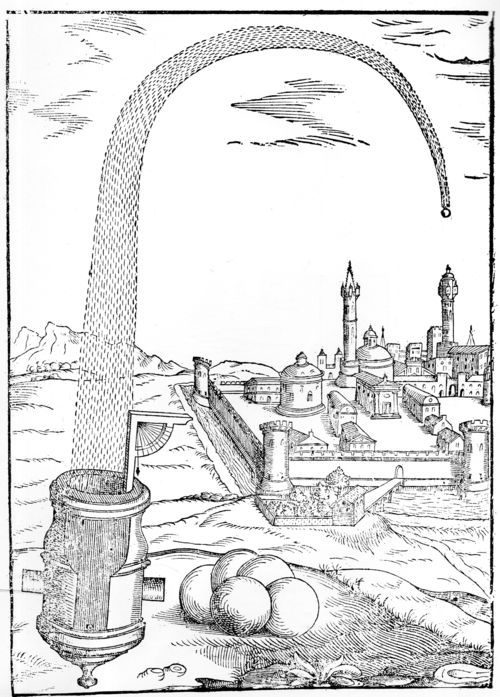
    Luis Collado de Lebrija, the Royal Engineer of the Army of Lombardy and Piedmont, wrote his superior artillery manual Practica Manuale di Artegliteria and published it in 1588–he was one of the five leading military engineers of the late 16th century. The image below is an interesting one from that book, showing a large cannon bombarding what possibly might be a Turkish city. In any event, the trajectory of the very large shell seems to me to be a little odd at first, looking as though it was shot high and straight up, coming down to the right; but looking at it again, the trajectory is back on track going forward 1000 meters than going up and down. And then, again, another look, and the perspective seems flat again, and back and forth it seems to go if you let it.   

    Collado cannon018


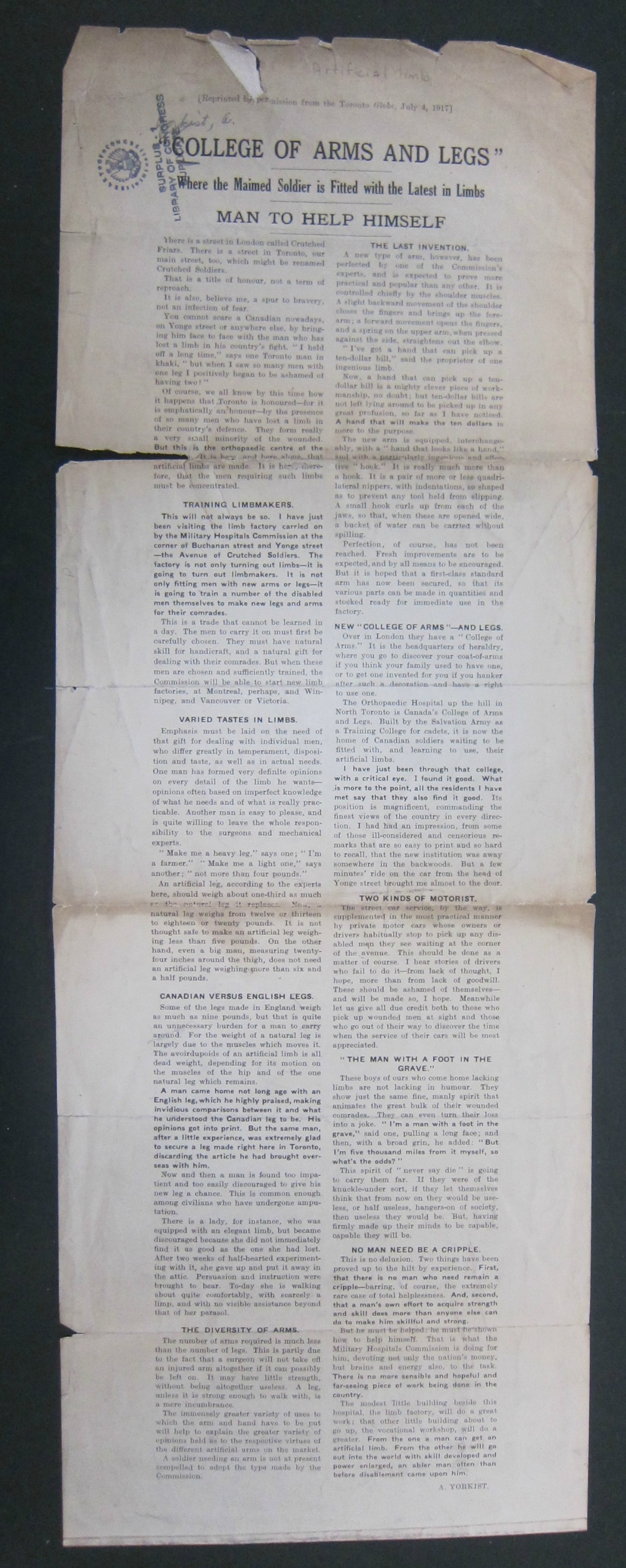
  • The Canadian “College of Arms and Legs” for the Maimed Soldier (1917)

    JF Ptak Science Books  Quick Post

    I’m reprinting this rare broadside in the interest of the medical history of WWI.  It seems not to be anywhere (I can only find one copy in WorldCat, at the Countway Library at Harvard University) and I’m not finding any references to it, offhand.  It is interesting and appealing, a no-nonsense approach to provoking necessary attention to creating and securing artificial limbs for wounded Canadian solders.

    Canada of course joined the war effort against Germany on the same day as Great Britain, about two and a half years before the U.S. declared war. In all more than 61,000 Canadian soldiers were killed during the war, as well as 172,000 wounded–the U.S. in contrast lost 126,000 killed and 204,000 wounded.  Similar numbers, in a way, except that the U.S. had more than ten times the population, 92 million versus 7.2 mullion in Canada.  The 172k wounded coming home in Canada would’ve been like 2.3 million returning to the U.S. (a number larger than the 2.09 million returning wounded in all of the British Empire). All that said: 230,000 killed and wounded in a population of 7/2 million is considerable. 

    This broadside discusses the Military Hospital Commission and the Orthopedic Hospital, and how its address (Yonge Street) could be renamed “Crutched Soldiers”, and that “was a title of honor, not reproach” and a “spur to bravery”. There is a discussion of Canadian legs versus English legs, leg weights, and such. Of high interest for me, though was the discussion of “two kinds of motorist”–one who always stops and gives a ride to a wounded soldier in the vicinity of the hospital, and the other, who doesn’t. The writer of the broadside clearly has no use for the later.

    The report, in full (it is more legible expanded):

    College Arms and Legs c full


    ·Posted by :

    ·in:

    —

  • St. Peter Judges the Loyalty and Eternal Possibilities of the Confederate Soldier (?)

    JF Ptak Science Books   Quick Post

    Confederate st. peter

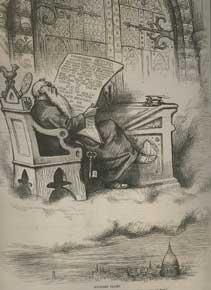
     This provocative image by the redoubtable Thomas Nast (Harper’s Weekly, 15 February 1879) shows St. Peter (with his keys to Heaven’s fortress gates dangling at his side) reading the Congressional Record’s report of Louisiana Congressman (Ezekiel John) Ellis. Ellis, a New Orleans native who served in the Confederate Army and was Congressman from 1875-1885, wrote that the Confederate soldier served in loyalty to his country and to his God. The Northern (and German-born) Nast seems to have taken exception to that, giving St. Peter the inclination to judge these soldiers for himself once their ultimate calling came.


    ·Posted by :

    ·in:

    —

  • The Coming Threat from the Air: Austria, 1935

    JF Ptak Science Books  Post 2582

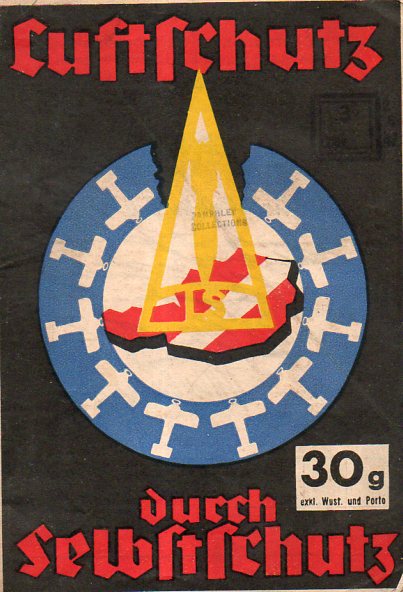
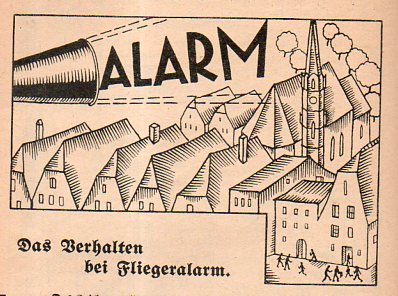
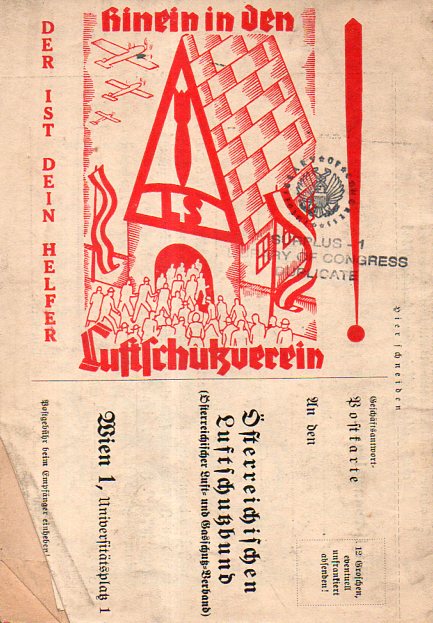
    1935 was not a particularly good year for Austria.  The country was fighting off the threat of Anschluss–the occupation of Austria by Nazi Germany–for several years, the cause hurt by the infamous assassination of the federal chancellor Englebert Dollfus in July 1934.  When this pamphlet was printed in 1935, the threat to Austria from Germany was real and advanced.  This publication, Luftschutz durch Selbstschutz (“Self Protection by Anti-Aircraft Defense” or so) addressed part of this issue. It sounds more militarily-based than it is; the story though is that the pamphlet was intended as a sort of civilian defense piece, for example, asking people to join an air defense club (“hinein in dem Luftschutverein”) for the protection of all (“Schutz fuer jedermann”) and to be general aware and prepared for the possibility of air raids.

    Austria air defenses cvr map001

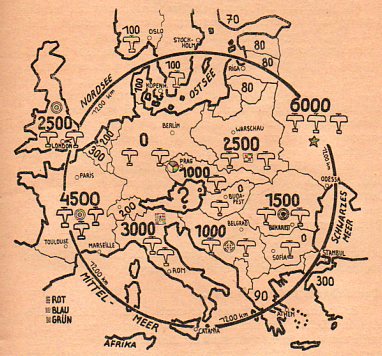
    What attracted me from the outset was the cover design which at first doesn’t actually appear to be a map, though it is–and an effective one at that.  In the middle of the circle is a red Austria with a white bar; on top of that, in yellow, is a bomb in a triangle; and surrounding Austria in a blue circle are the possible approaching/attacking/threatening air forces of its neighbors. Inside the pamphlet is another, more detailed map (below) showing the disposition of opposing air forces. It is interesting to note here that Germany is shown as having zero aircraft as dictated by the Treaty of Versailles, though it was in February of this year (1935) that the Luftwaffe was organized thus disbanding part of the treaty–at this point in 1935 the threat from Germany was not presently from the air.

    The pamphlet runs 64 pages and contains information for Austrians in preparing for aerial assault, in general: what to do when the bombs fall, how to prepare, what sort of supplies are needed to survive a sustained attack, and the like–plus ads for gas masks, survival goods, and such.  

    In the end, Germany did not bomb Austria–it disappeared as part of the Reich in March 1938 as a result of intimidation, embargo, political subterfuge, and finally the threat of war.  

    Austria air defenses cvr map003


    Austria air defenses cvr map004


    Austria air defenses cvr map002


  • The British Bicycle Airborne, 1944

    JF Ptak Science Books   Quick Posts 

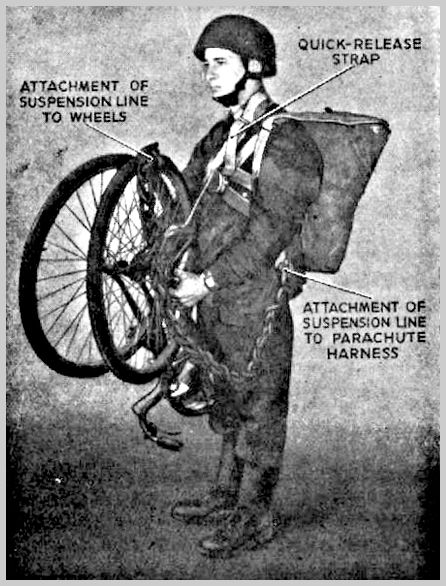
    I’ve posted a number of times in this blog on military uniforms/what-they-carried for WWI and WWII and thought to add this top that small collection. It is difficult to imagine climbing into a plane and dropping down behind enemy lines in the middle of the night by parachute carrying a bicycle. Equally difficult to imagine is the thought of actually being able to use it, that you would be delivered to an area where there was a possibility for you to survive the drop and with the rest of your stick expect to find a usable Nazi-free road to peddler your way someplace on your 23-pound bike. Man. My hat is off to these men for trying this. 

    What they carried brit paratrooper

    “British WWII Airborne BSA folding bicycle was used from 1939-1945 in WWII by British paratroopers. A folding bicycle was developed as a small size was needed to enable it to be taken on parachute jumps from aircraft. The War Office called for bike weighing less than 23lb + which would withstand being dropped without protection by parachute so BSA abandoned the traditional diamond design. The frame weighed 4¾lb. The bicycle was used by British paratroopers on  D-Day landings and at the Battle of Arnhem.”

    ·Posted by :

    ·in: