A Daily History of Holes, Dots, Lines, Science, History, Math, Physics, Art, the Unintentional Absurd, Architecture, Maps, Data Visualization, Blank and Missing Things, and so on. |1.6 million words, 7500 images, 4.9 million hits| Press & appearances in The Times, Le Figaro, Mensa, The Economist, The Guardian, Discovery News, Slate, Le Monde, Sci American Blogs, Le Pont, and many other places… 5000+ total posts since 2008.

Category: Militaria

  • Rare Work on Jews as Soldiers in WWII (1944)

    JF Ptak Science Books   Quick Post

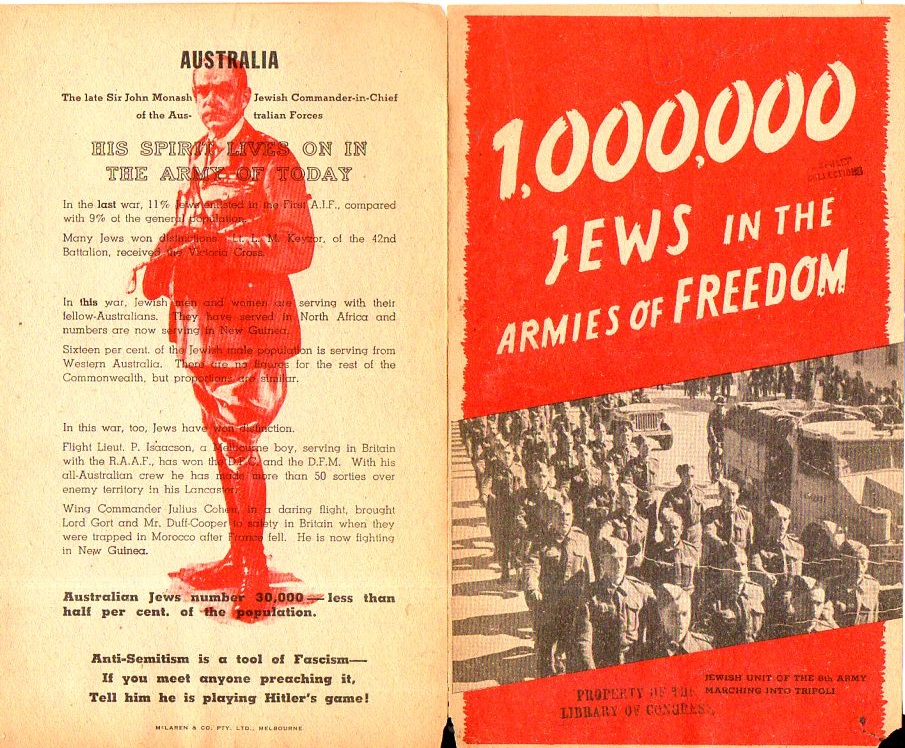
    I haven’t seen very many pro-Jewish soldiers printed during the war–especially one in which states that “Hitler’s armies murdered five million civilians in Europe. They killed two million Jews”, which is also unusual, especially in 1944.  It seemed to me that since there are only six copies located in libraries worldwide (this via WorldCat/OCLC, with only two of those copies in the U.S.) I thought it might be useful to surface the pamphlet.  

    • 1,000,000 Jews in the Armies of Freedom. Printed in Melbourne, McLaren, Jewish Council to Combat Fascism and Anti-Semitism ca. 1944, my copy received by the Library of Congress in January 1945)  8×4”, 6pp, (tri-folded sheet of paper).


    WWII 1,000,000373

    ·Posted by :

    ·in:


  • Data Visualization in WWII Posters (1942)

    JF Ptak Science Books  Quick Post

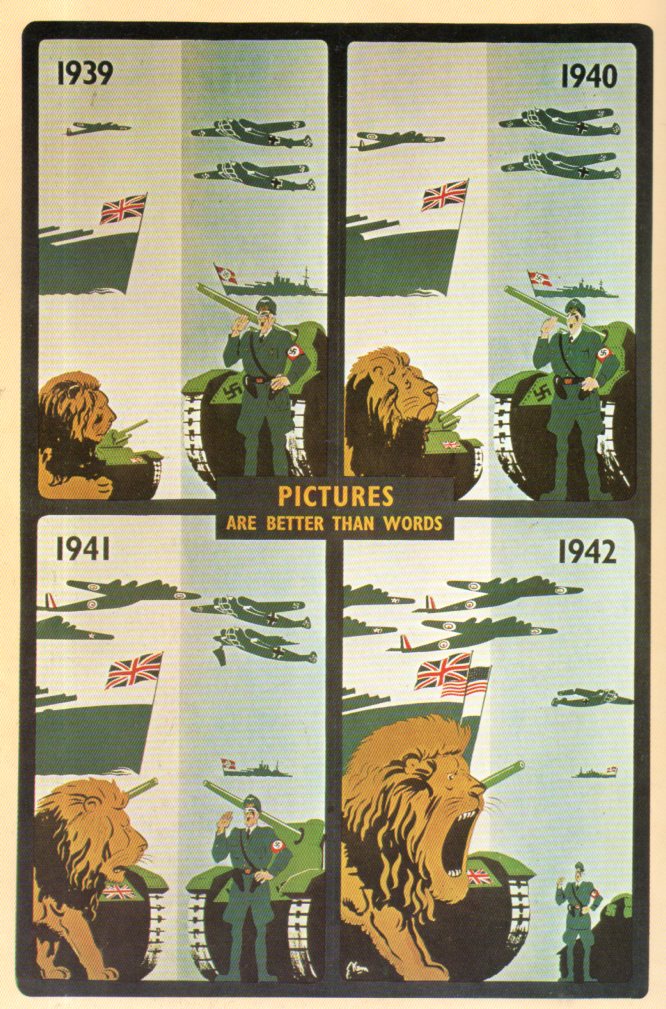
    Here’s a wonderful British-stiff-upper-lip poster, a play on the Alec Guinness The Mouse that Roared, replacing the “mouse ” part, and winding up with The Lion That Roared. The poster comes from 1942 and for all intents and purposes is correct, except that the lion was roaring at least since 1940–the difference is that the lion got bigger and roar-ier.  The British navy was always far and away more powerful than Germany’s, and although out-numbered in aircraft for the first  year and a half or so of the war, Germany was pretty much hopelessly behind by late 1941 and certainly 1942. In any event the poster tells a good and fairly accurate story to the passersby in London in 1942. 


    Poster dataviz251

    [Source: Z. Zeman, Selling the War, Art and Propaganda in World War II (1978).]

    ·Posted by :

    ·in:

    —

  • The King and the Swastika (1941)

    JF Ptak Science Books  Post 2607
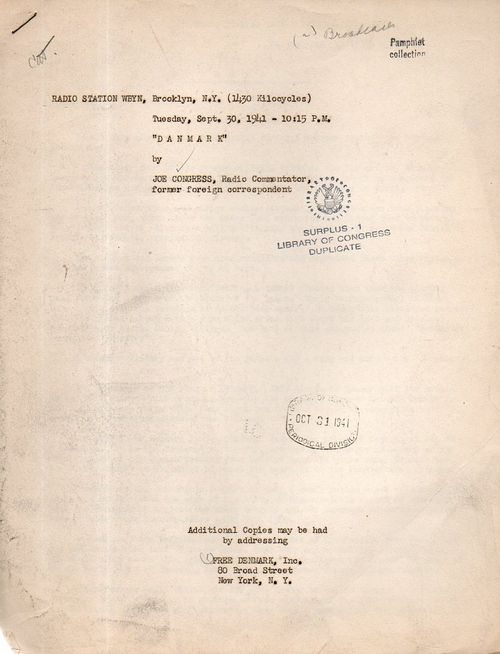
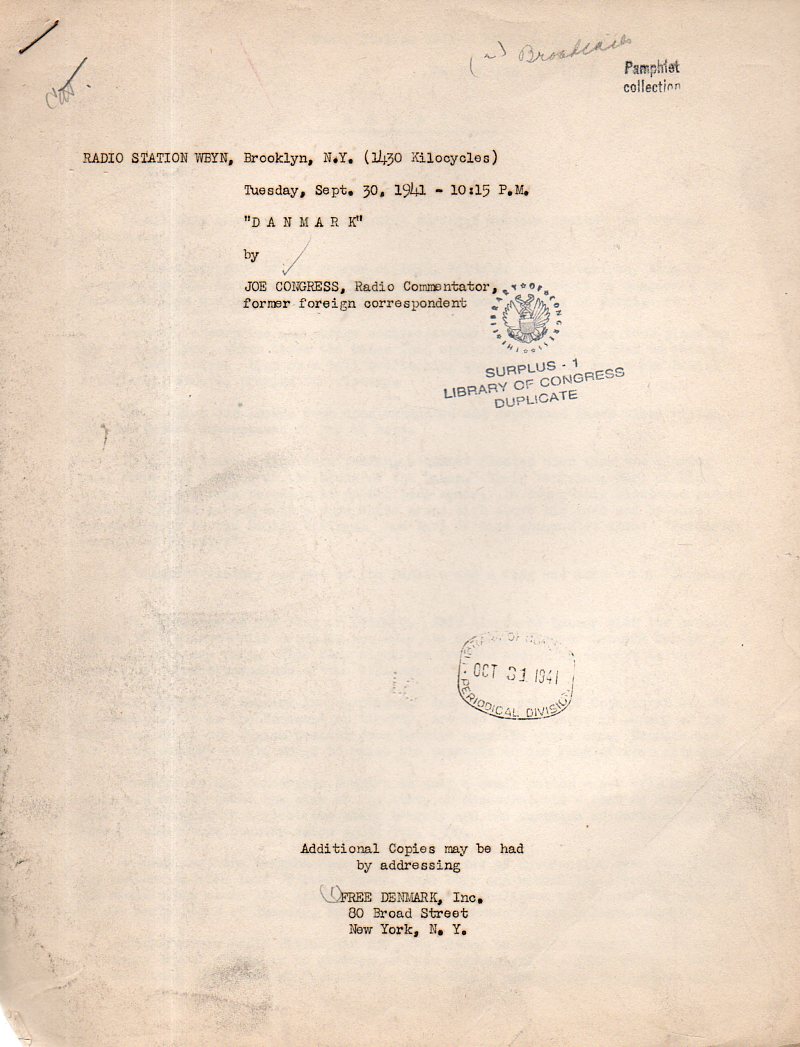
    Denmark 1941 164This is certainly an early telling of this story, now so often repeated–it occurs in the address “Danmark”, given by Joe Congress on the radio station WBYN (1430), Brooklyn, on September 30, 1941, at 10:15 p.m. The address came about a year and a half after the occupation of Denmark by Germany (April 9, 1940)–there was an mortifying existence between the Nazis and the Danes from that point out to the end of the war.  It is in this broadcast where Congress tells the story of the King of Denmark and the Nazi flag.

    The king, Christian X (1870-1947), observed a Nazi flag flying from a public building in Copenhagen, which was “a rank violation of the terms which Adolf Hitler imposed on Denmark”. The King, riding on a horse, reigned it in, and addressed a German officer standing by the building with the flag:


    “Take it down !” the King ordered a German officer in front of the building.

    “Orders from Berlin,” replied the officer.

    “The flag must be removed before 12 o’clock; otherwise I will send a soldier to do it,” the monarch declared.

    “The soldier will be shot,” warned the Nazi officer.

    “I am the soldier!” said the King.

    The Swastika came down.

    It is  a terrific story, and Congress heaps the praise on the king and on the Danes in general–but, on the other hand, he laments that there’s little of this behavior going on presently in Denmark, and talks about the neutering of the police and branches of government.  He does however talk about the growth of patriotic songs and poetry, which has become a new resistance weapon for the Danes.  

    Congress asks, “do not the Danes sing today, as they did years ago:

    Fill up holes of ignorance, and bury

    narrow selfishness beneath the sod. 

    Of the meek and soft evoke a people

    That will bend its will alone to God.”

    Evidently they did, because Congress reports that in the growing community sings of Copenhagen that hundreds of thousands of people were turning out to sing in the squares and parks–10,000 stood in Faelldepark. It is a patriotic weapon “that the Nazis cannot match”. 

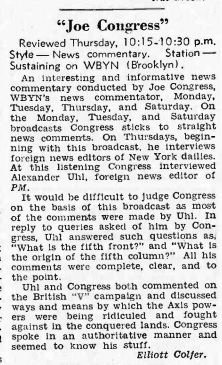
    I looked up Mr. Congress and found this review of his broadcast, in Radio-News, for Auguast 9, 1941. It is remarkable in the small-world category because in this shrt review there is mentioned an interview with Alexander Uhl, foreign editor for PM newspaper, and someone who works and papers are here in  my store.  
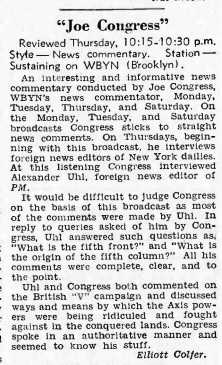
    Denmark Joe Congress Radio News

    Source: Radio Station WBYN, Brooklyn, NY (1430 Kilocycles). “Danmark”, by Joe Congress, September 30, 1941. Transcript printed by Free Denmark, Inc., 80 Broad Street, NYC.  My copy was received by the Library of Congress less than a month later. 
    ·Posted by :

    ·in:

    —

  • “Finally the Head Flies Through Space”–the Berlin Rocket Field, 1932

    JF Ptak Science Books   Post 2605

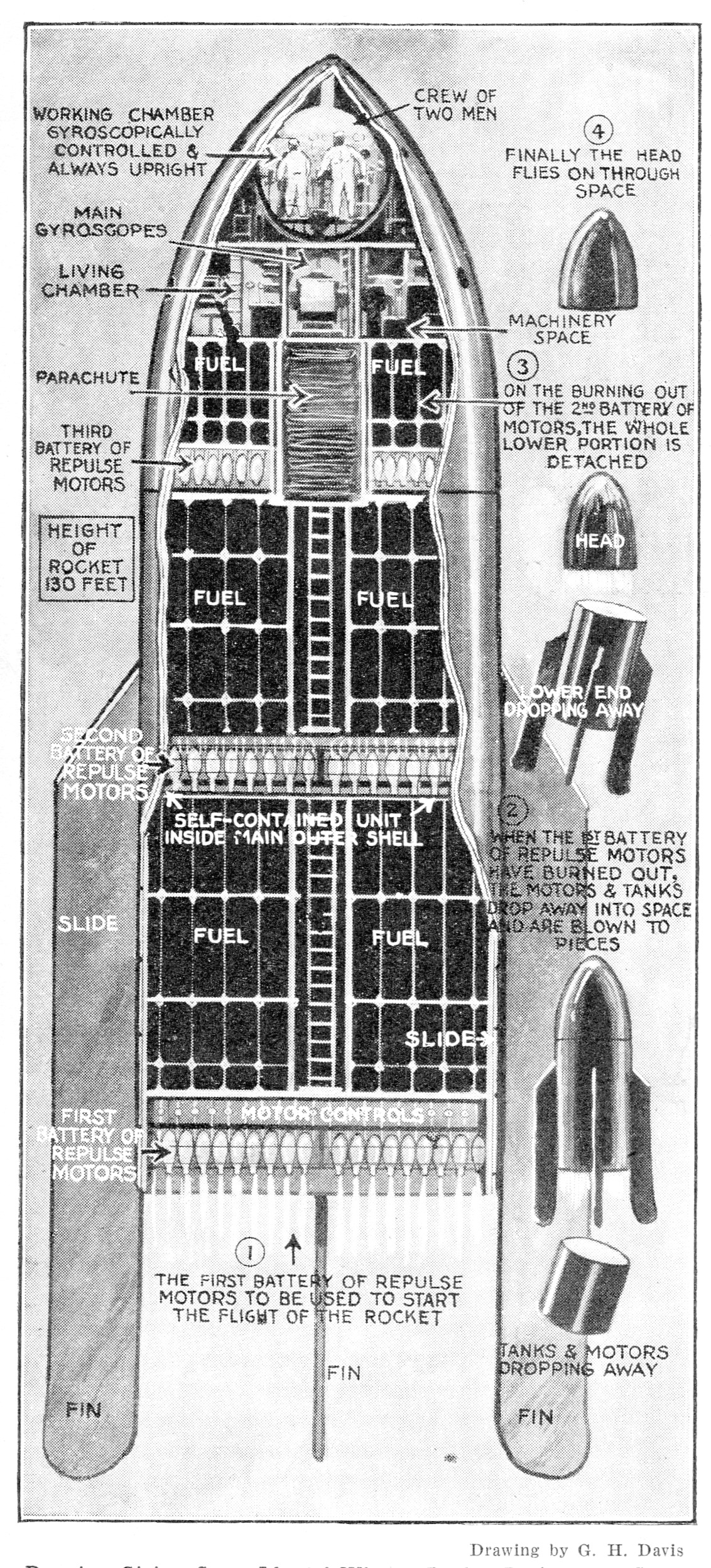
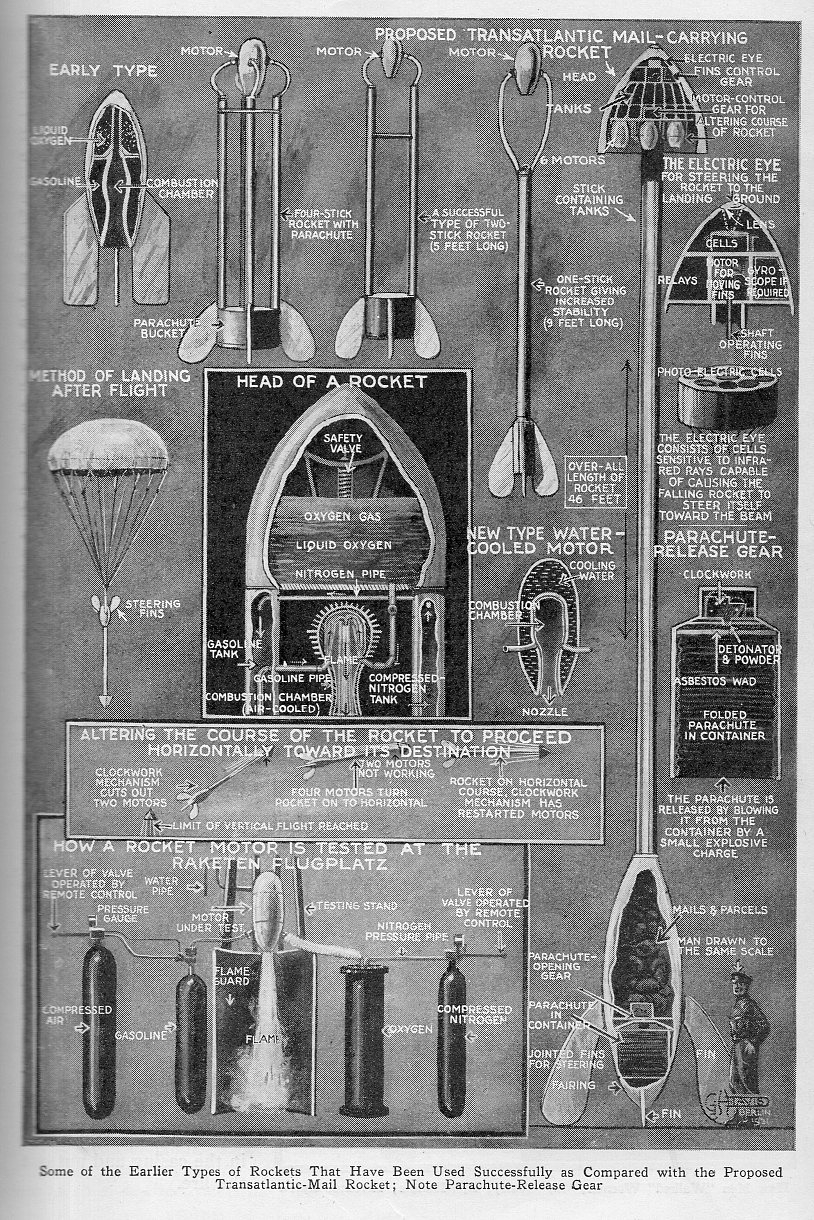
    This interesting schematic was drawn by one of my favorite technical artists, G.H. Davis, who generally worked for the Illustrated London News, though he appears in this article in the March 1932 issue of Popular Mechanics.  Davis was exceptional and prolific and produced (I guess) hundreds of drawings like this one, below.  “From Europe to New York by Rocket?” is mostly about delivering trans-Atlantic mail in twenty-five minutes rather than people, though that is mentioned somewhat, along with a scant reference to the possibility of interplanetary travel.  Mostly the article is based on Davis’ trip to the Raketen Flugplatz–the Rocket Airfield–a 300 acre former munitions/weapons site pockmarked with highly-useful bunkers in the Reinickendorf suburb in northeast Berlin, which is today very nearby the Berlin airport.  This was the world’s first such aerodrome, and it was staffed by the amateur rocket club of Germany which composed of such names as Nebel (who named the Raketen Flugplatz), Ritter, von Braun, Riedel, Heinish, and Oberth, among many others.  The place was opened in 1931 and saw the development of the liquid fueled rocket in Germany.  The place was short-lived though its influence was long-felt, the facility closed down over an unpaid water bill in 1933–it was at that time, anyway, where the Wehrmacht assumed control of rocket development in Germany and amateur exploits/testing was forbidden.  Six years later the Nazis went to war, and shortly after that appeared the V-weapons that so terrorized Europe and Great Britain, killing tens of thousands and leaving hundreds of thousands homeless, not to mention the thousands of slave workers who were killed in the process of production. 

    Rocket 1932 147

    But for 1932, when this article appeared and when Davis happily toured this facility, liquid-fueled rockets (introduced by Robert Goddard in 1929) seemed to hold the key to the future of rocket/space travel.

    Here’s Davis’ cutaway of a proposed rocket–it is not named nor is its purpose described, though it is not a rocket built for mail delivery, which was the discussion on this page of the  article–this is clearly far too massive (seemingly 100+ feet tall) for that, and also has sleeping quarters for the (standing) crew in the nose.  

    There are a few photographs of the team at the team at the Raketen Flugplatz, though no one is actually named–there is this photo which I’ve seen before and recognize, and I’d like to point out that aside from depicting Kurt Heinish (1910-1991) and Klaus Riedel (1909-1944) it also shows Heinish handling what I think is liquid nitrogen with basically no protective gear at all, save for some gloves.  

    Rocket 1932 148


  • A Small Picture of a Big Number: Imagining the Casualties of WWI (1918)

    JF Ptak Science Books  

    .003% 

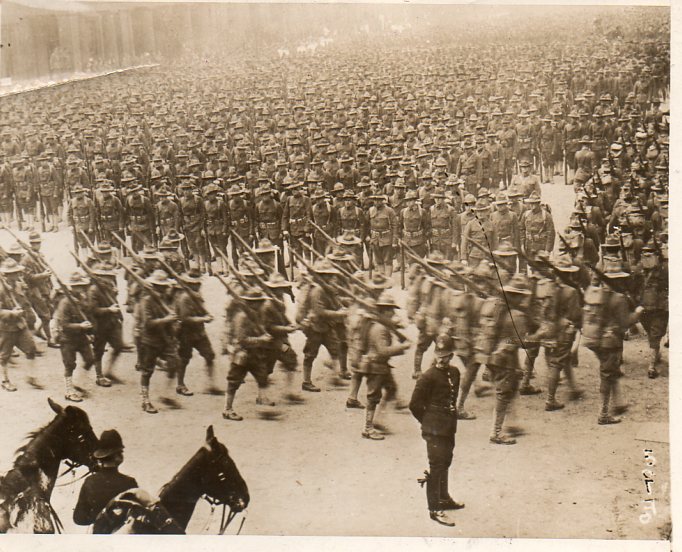
    That’s what I reckon this column of soldiers would represent of the total casualties of WWI.

    Generally images like this are a virtual image-host for me, a bucket of ice cold water thrown onto a sizzling summer sidewalk, all sorts of ideas steaming from it.  But for photographs of Doughboys1 marching, especially assembling for parade, this one struck me a little more oddly than most, giving instant pause, making me concentrate on the haze, or dust, that allowed the columns of soldiers to blend into one another and fade, losing their boundaries with their mass receding into a dull blur. 

    Marching london 350

    The Western Newspaper Union was selling this image for insertion in newspaper or journal stories about the war, for a small use fee.  There were a few American organizations like Western Newspaper that were created to photographically cover the war, using pools of photographers who would distribute their work anonymously and which was available for common, general use for a small charge.  The photographs allowed out were certainly restricted and censored, though in my stash of these of objects (numbering about a thousand) I’d say that 10% of them look pretty edgy to my eyes.  Most of the action of war was not covered, but then again this aspect was still fairly technically difficult in 1918.  Images of pain were almost never allowed, and certainly not pain of Allied troops.  Aid stations were almost never covered as well, as were dead bodies, or at least those again of Americans or Brits or French or Canadian.  The imaging of the war was certainly under a fair amount of supervision and control. (The original is available for purchase through our blog bookstore. here.)

    Marching london det352

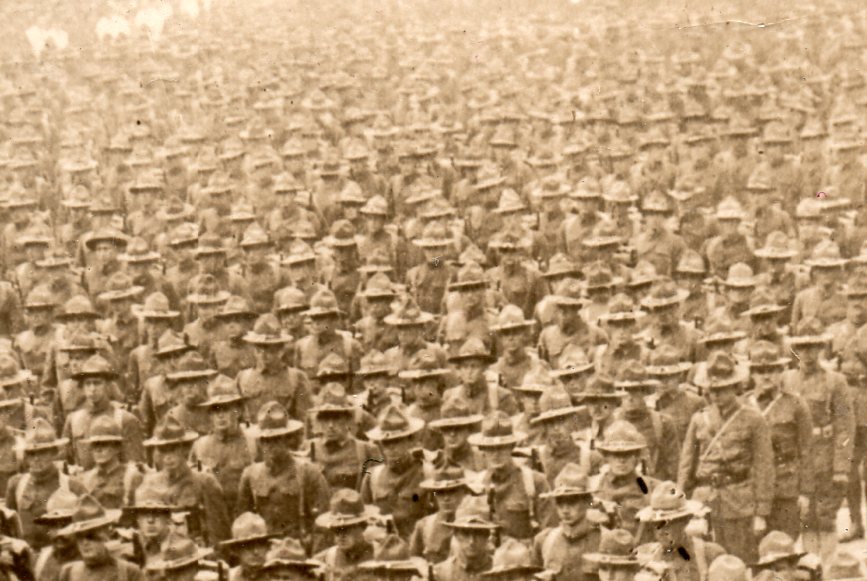
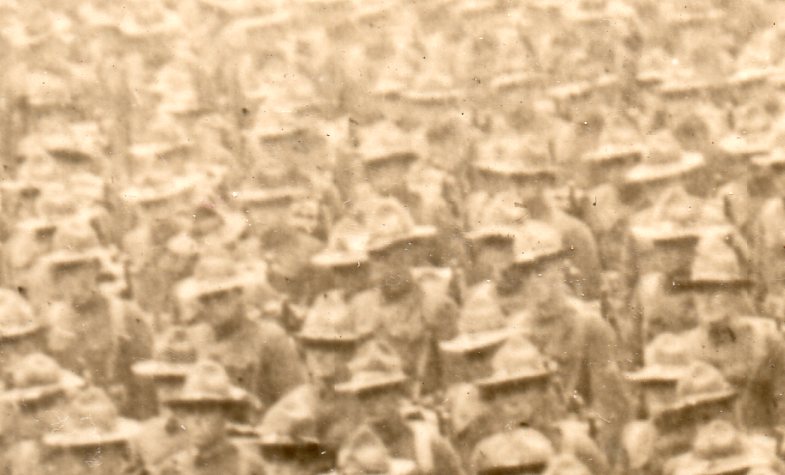
    The image shows American troops assembling for a parade through the streets of London before being deployed.  The mistiness of the composition looks like a statistic to me, these men standing for those who had come before and fallen.

    Marching london det353

     The U.S. lost .13%  of its population to casualties (125,000 killed and 205,000 wounded) during the war–a war which by the time America got here had already been visciously fought for three years, costing dozens of millions of lives.  The figures for everyone else weren’t nearly so “fortunate” as the U.S.:  New Zealand’s 18,000/41,312 killed/wounded amounted to 1.6% of its population.  The U.K. lost 2.19% (964,000/1,663,000), Italy was 3.48% (650,000/953,000 plus 650,000 civilian casualties), while France suffered a 4.29% (1.4 million/4.27 mil) blow of its total population to war.  Things were worse on the other side:  Germany 3.82% (2 mil/2.4 mil plus 426,000 civilian deaths, and the Ottoman Empire 12% (400,000/771,000 plus 2.1 million civilian deaths.   Worst of all was the Ally  Serbia, suffering a catastrophic 16% loss of its population to war, including 275,000/725,000 plus 426,000 civilian casualties.  As gruesome as the numbers were, the Americans felt only a small percentage of the total sting of war–by 11 November, more than 21 million soldiers would have been wounded, with 9.7 million soldiers and 6.8 million civilians killed.  It was an enormous price.

    And that’s what I see in the mist of what may be something like 10,000 soldiers on display in this photograph.  .003%  That’s two of these columns every day, twice a day, for the entire 1550 or so days of the war.   

    Notes:

    1.  The origin of the term “Doughboy” is unclear, or varied, or rich, but it is at least pretty oldm beginning around the time of the Mexican American War in 1846-1848–evidently when the soldiers marched through dry, tough terrain they wound up being covered by earth with the color of dough.  Doughboy.

    • This item is actually for sale from the blog’s bookstore:  Western Newspaper Union original photograph.  5/25 x 7 inches.  Includes the attached printed description on a separate piece of paper, affixed at image bottom.  Fine copy.  $300.00


  • A WWI “NORAD”: The Air Defenses of Paris, 1918

    JF Ptak Science Books    Quick Post

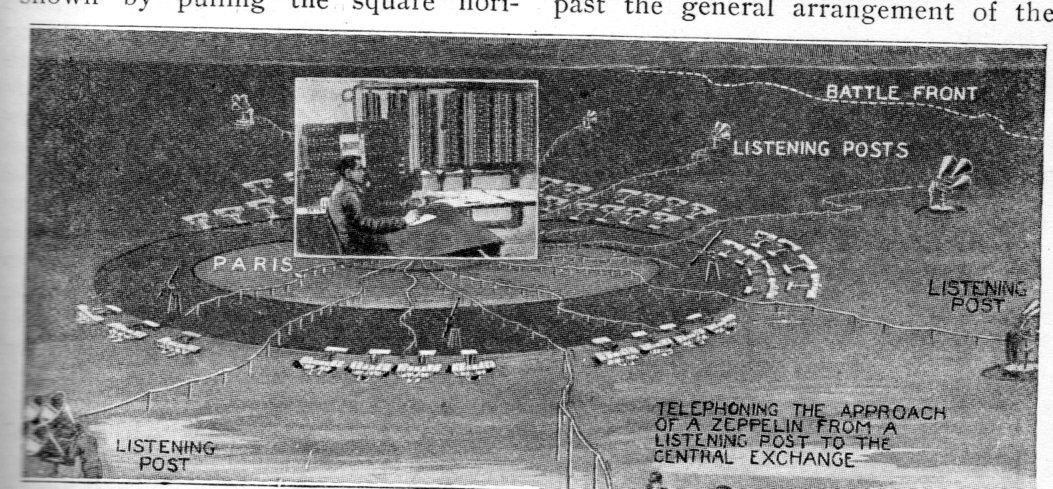
    The use of aircraft in bombing was relatively new in WWI, and not terribly effective. And then, so was the defense against raiding aircraft–anti-aircraft, massed riflemen, searchlights, listening devices, all very new to the conduct of warfare, as were the airplanes and airships that ground forces were protecting themselves against.  I was thinking about this just now after having seen the (following) short notice in the April 1918 issue of Popular Mechanics (with the text following the images, below).   The diagram shows a version of an early warning system against incoming aerial assault, which was quite a good idea, complete with a central directorate to coordinate a response to the attack.  

    Paris air defence117

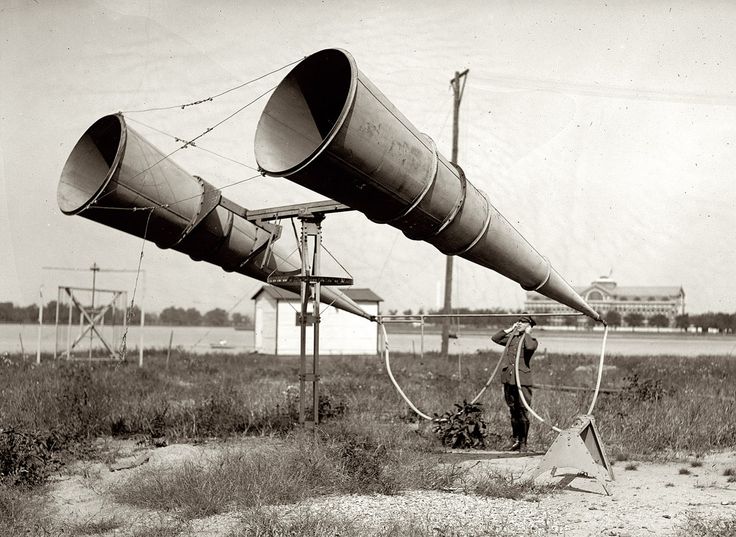
    The “listening posts” were exactly that, a sort of biological-analog to RADAR–large bellow-like acoustic imaging objects that would collect distant sound and “download” themselves into the ear of the listener:

    Anti aircraft

    ·Posted by :

    ·in:

    —

  • Guinness (the Grace of the Gods) and the Battle of Britain (1941)

    JF Ptak Science Books  Quick Post

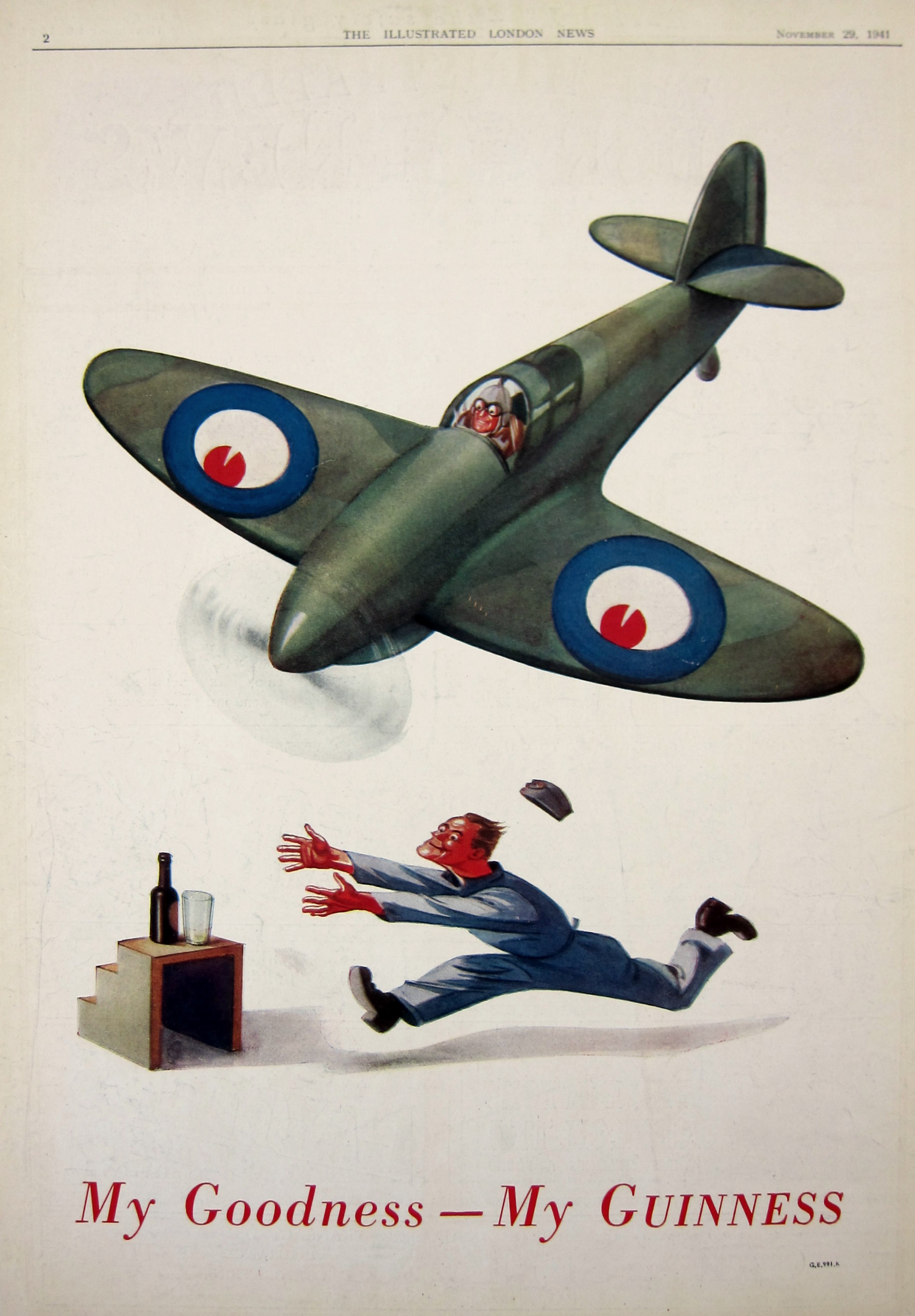
    It is interesting to see this ad for the beverage that is the grace of the gods, using the Spitfire as a comedic backdrop to the stout. The ad appeared in the Illustrated London News on November 29, 1941,  a year and a month past what is recognized as the end of the Battle of Britain (July 10, 1940-October 31, 1940).  The facts and figures on the battle read less than the actual scope of the victory by the Brits in their defense of the U.K. by the R.A.F. On the British side there were 1542 RAF killed (Fighter/Bomber/Coastal Commands) with 1547 aircraft destroyed; the Germans lost 2698 killed, 967 captured , 638 missing, with a loss of 1887 aircraft.  The civilian deaths and wounded was high: 90,000 casualties including 40,000 killed.  It was a decisive victory for the U.K. and a costly loss for the Nazis.  

    This is what Winston Churchill famous said at the beginning of the great trial:

    “What General Weygand has called The Battle of France is over. The battle of Britain is about to begin. Upon this battle depends the survival of Christian civilization. Upon it depends our own British life and the long continuity of our institutions and our Empire. The whole fury and might of the enemy must very soon be turned on us. Hitler knows that he will have to break us in this island or lose the war. If we can stand up to him, all Europe may be free and the life of the world may move forward into broad, sunlit uplands. But if we fail, then the whole world, including the United States, including all that we have known and cared for, will sink into the abyss of a new Dark Age made more sinister, and perhaps more protracted, by the lights of a perverted science. Let us therefore brace ourselves to our duties, and so bear ourselves that, if the British Empire and its Commonwealth last for a thousand years, men will still say, “This was their finest hour”.  — Winston Churchill, June 18, 1940   For the full text see: http://www.winstonchurchill.org/resources/speeches/233-1940-the-finest-hour/122-their-finest-hour

    In any event, the comfort level was high enough for the Guinness folks to use a Spitfire in their ad:

    Guinness SPitfire

    Here’s the entire (30 minute) speech–the part I quote above is the last paragraph of the speech:


    ·Posted by :

    ·in:

    —

  • “Bring Rome in Your Home”–Fascist Women of Italy Radio Broadcasts, 1937

    JF Ptak Science Books   Post 2603

    Women of facism103

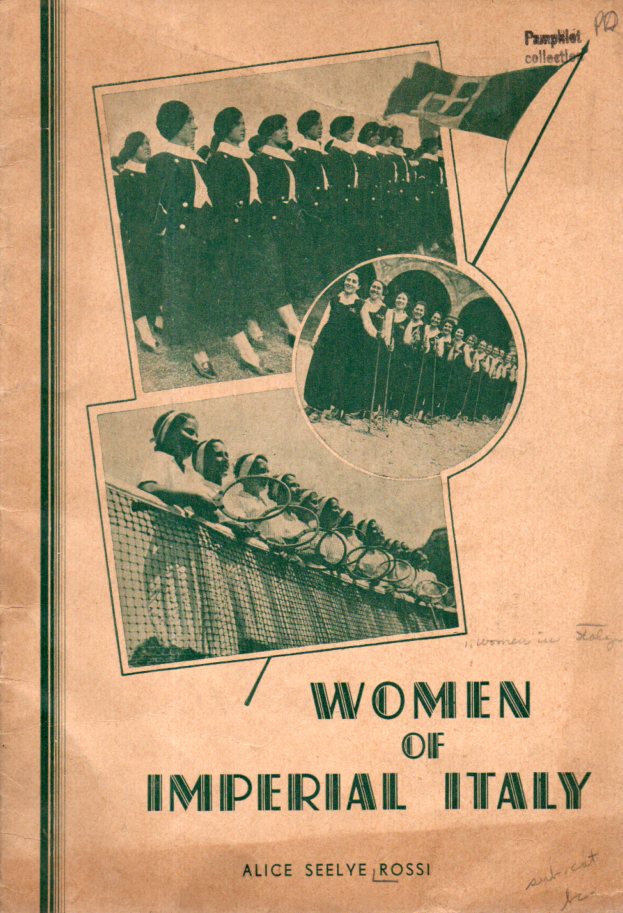
    [Source: Women of Imperial Italy, by Alice Seelye Rossi; printed in Rome, 1937.]

    Not anymore. Probably not so much in 1937, though I am sure that the picture of the “fascist” in the “fascist Woman” was prettier and rosier than what people would come to know by 1942.  In 1937, when this pamphlet was published, the “women” were broadcasting far and wide–one aspect of radio propaganda from the Fascists in Italy, a hearts-and-minds attempt at a part of the coercion of Italia imperiale that occupied the years 1935 until the end of the war. By 1937 Mussolini’s National Fascist Party (in power since 1922) had extended itself by occupying Libya and by invading Ethiopia; Albania, Greece, and Yugoslavia would come between 1939-1941, as would France, when Italy entered the war in 1940 and entered into the country at the tail-end of the German invasion. So the broadcast heard here in 1937 was the beginning of Italy looking for the “Fourth Shore”, and deep into Mussolini’s Fascist state. (Ezra Pound would also do his level best to look the part of traitor that he was, lobbying the Italians for years before being allowed to get on the air to broadcast to the Allies on his misunderstood and inscrutable economics, vicious and virulent anti-Semitism (offhandedly addressing the U.S. president as “Franklin Delano Jewfeld/Jewsevelt”), and general attempts to tell the U.S. population to not support the war effort against the Fascists and that instead they should be down on their knees praising Mussolini, who he saw as another Thomas Jefferson. And so on.)  

    I’ve shared the few pages in this brief pamphlet on the Fascist Woman as it appears in the pamphlet. For the great majority of people living in the U.S., Europe, Great Britain,  Australia, New Zealand, Canada, and many other places, the idea of the “fascist” would change dramatically in about a year, and then spin its grinding way downward until the start of the war in 1939. 


    Women of facism102


    Women of facism101


    ·Posted by :

    ·in:

    — —

  • 1000-Year Panorama of British Naval History (1942)

    JF Ptak Science Books   Quick Post

    “Keep then the sea which is the wall of England, and then is England kept in Gode’s Hand, so that fore anything that is without, England were at peace withouten doubt.”

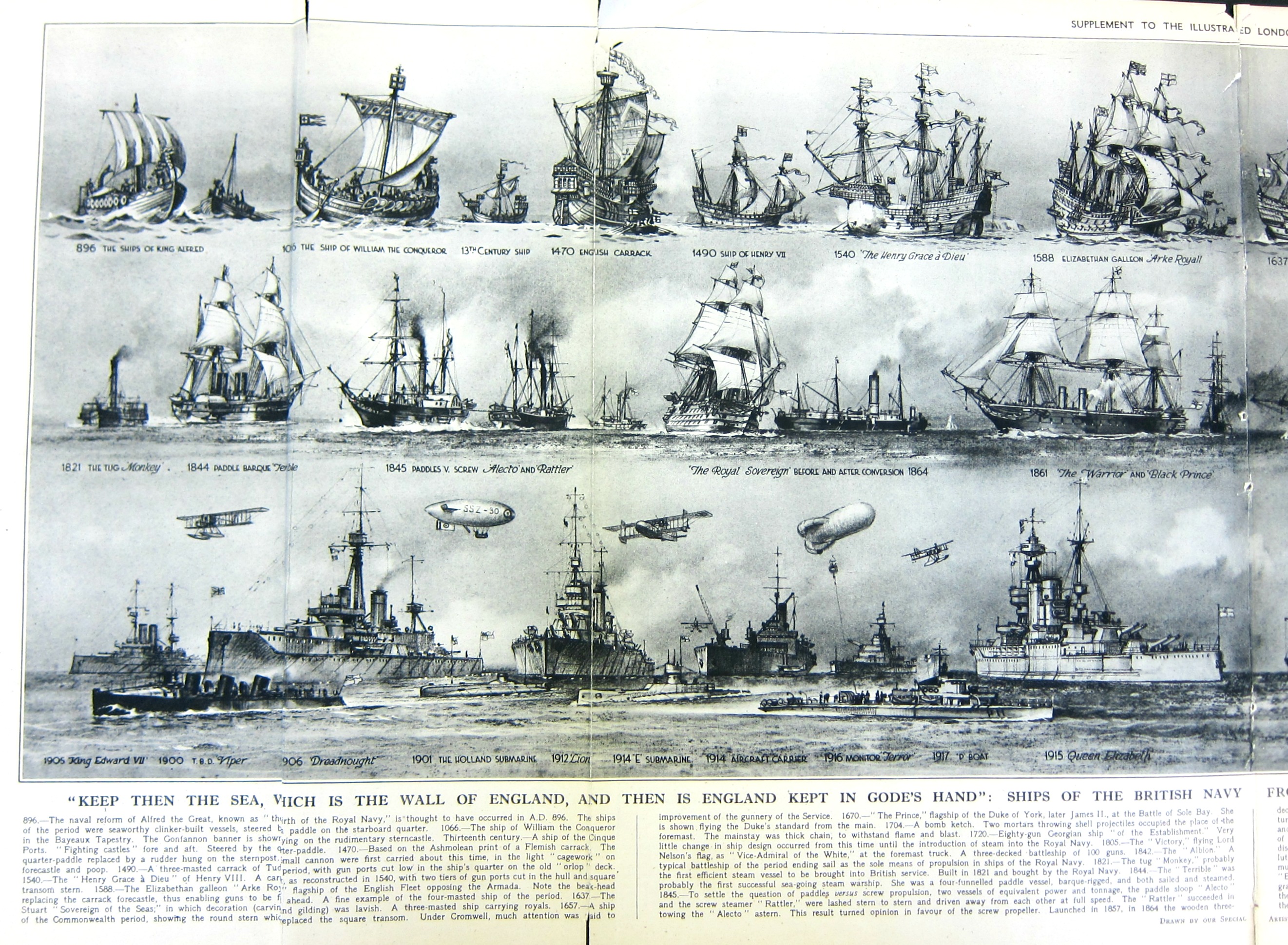
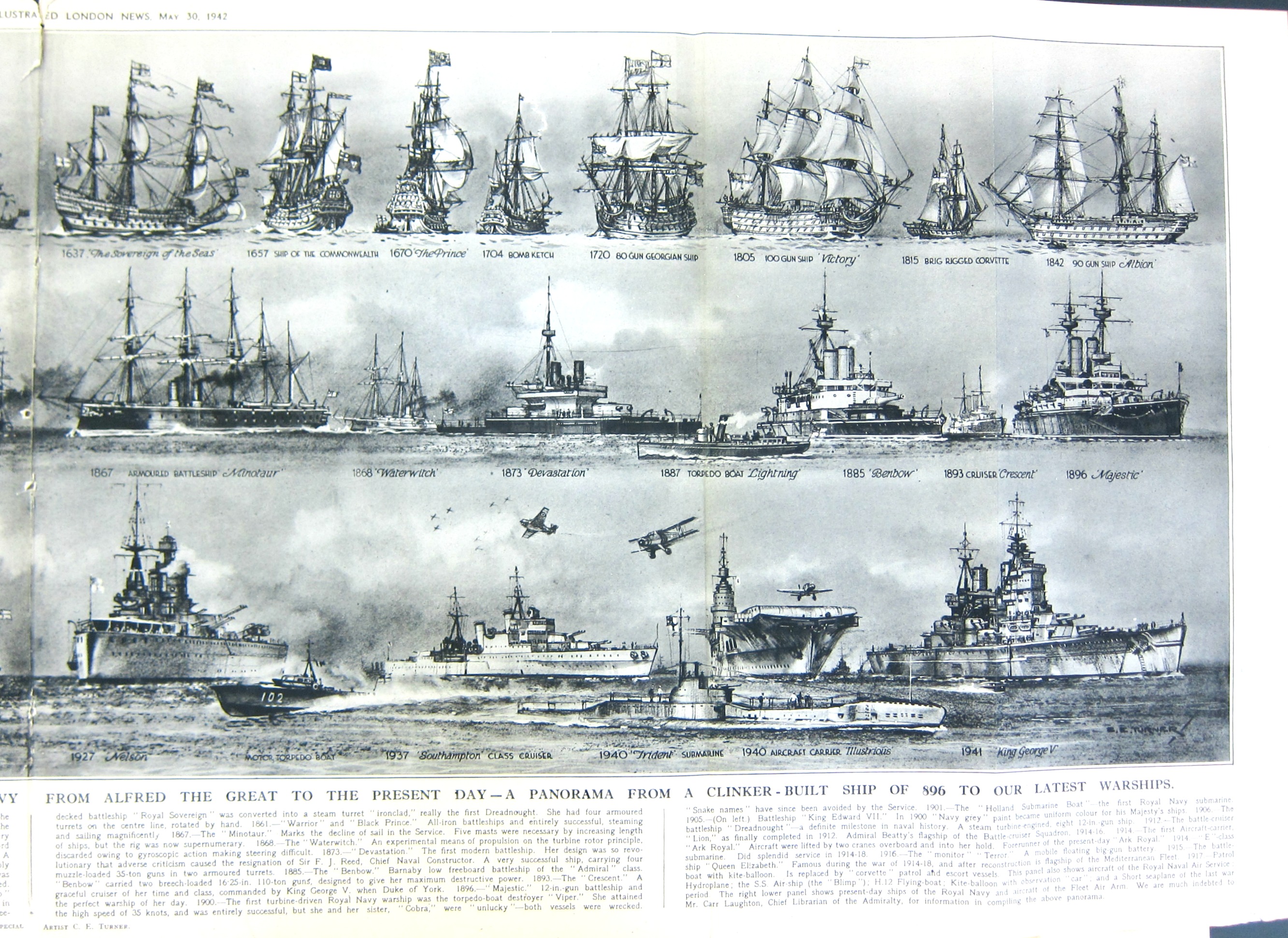
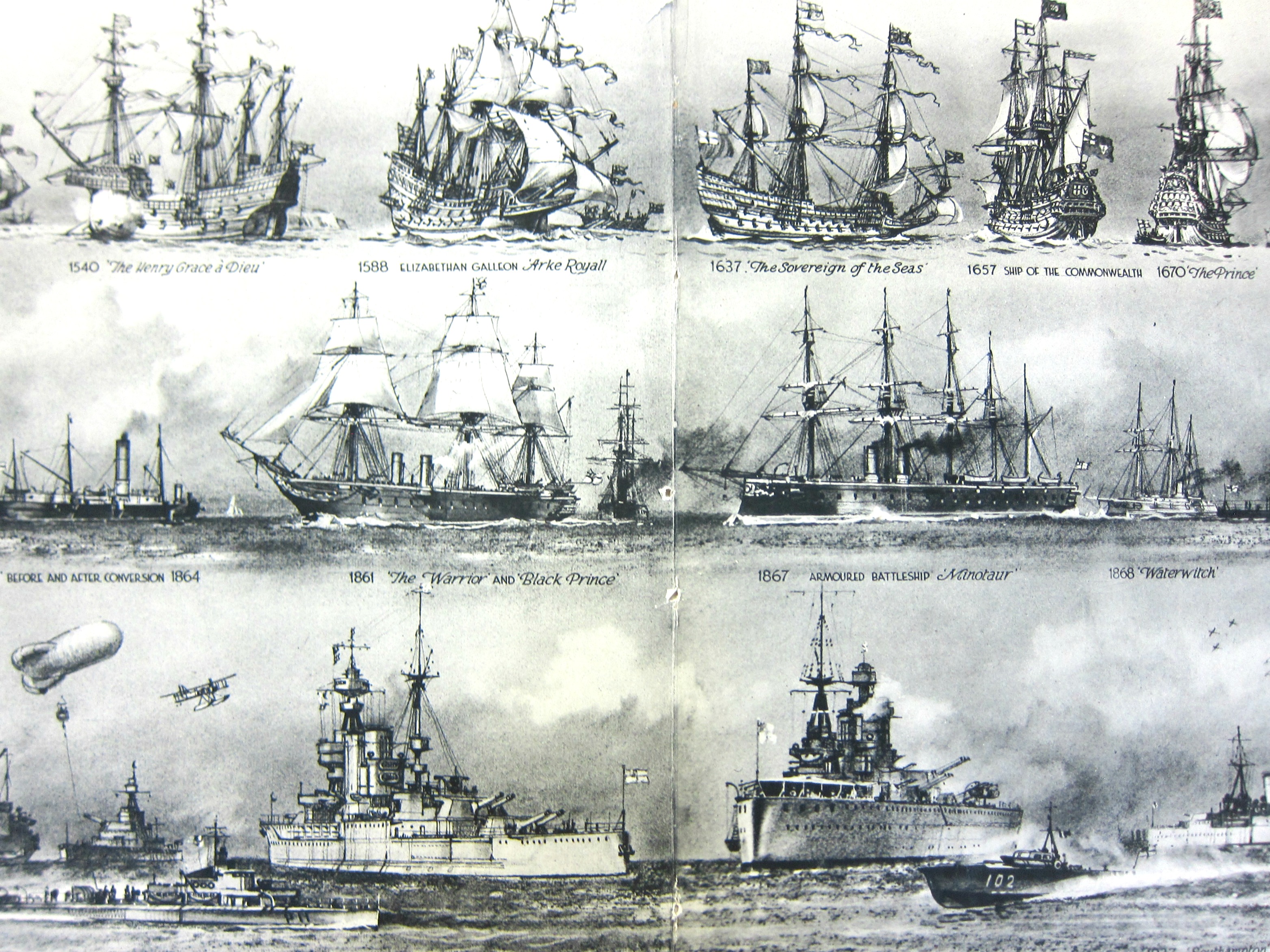
    This fantastic three-foot-long panorama was published as a folding centerfold for the Illustrated London News Supplement of May 30, 1942.  By the middle of 1942 I think it was pretty clear that Germany could not hope to compete with the U.K. in the production of ships, and especially in the area of submarines, where the Luftwaffe demanded and received the lion’s share of resources necessary for construction. The Battle of the Atlantic was being won, the blockade was working and intact, and the U.S. had entered the war militarily. No doubt it was a good thing for the reader’s of this popular magazine to be reminded of their stellar naval history at this point of the war. There are 45 ships and boats on this panorama, ranging from the times of Alfred the Great to the King George V.

    The following images are very expandable:

    ILN HMS History left panel

    ILN HMS history right panel


    The center section:


    ILN long chart HMS


  • Surrendered U-Boats in England and France, 1918 and 1919

    JF Ptak Science Books   Quick Post

    According to the armistice signed on November 11, 1918 (and prior to the Treaty of Versailles which was signed 28 June 1919) in addition to much else Germany agreed to the internment of their High Seas Fleet, surrender 5,000 cannons and 25,000 machine guns and 1,700 aircraft, release all POWs, and deliver all remaining U-Boats, which is the subject of this post.

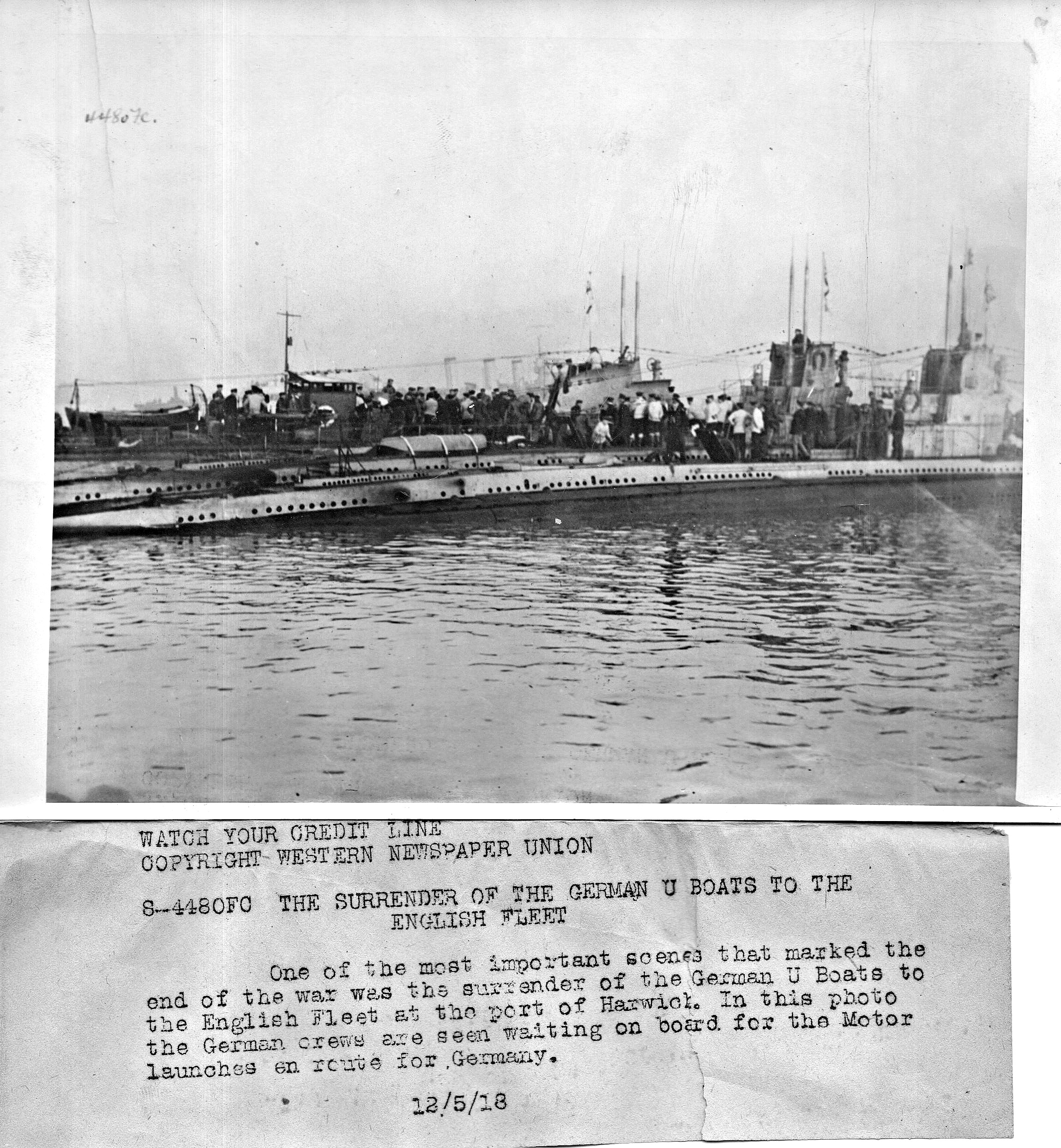
    The subs made their way across the North Sea to the coast of England, near Essex, and were met there by a British force, which then took command of the ships, delivering them to the Port of Harwich.  This began on 21 November and continued for a few weeks, resulting in the surrender of 122 subs and associated craft.  The image below (from a photo pool, this one associated with the Western Newspaper Union) was made during that time and released on 2 December 1918. It looks as though the German crews were still on board at this point, their own flags still flying prior to being replaced by a white ensign.  

    WWI Sub surrender085

    Similar scenes took place in France–here is another News Photo Service photograph showing surrendered German subs being taken in France, together with the paper slip that newspapers and other publishers were supposed to use with the image upon publication.   

    ·Posted by :

    ·in:

    — —