A Daily History of Holes, Dots, Lines, Science, History, Math, Physics, Art, the Unintentional Absurd, Architecture, Maps, Data Visualization, Blank and Missing Things, and so on. |1.6 million words, 7500 images, 4.9 million hits| Press & appearances in The Times, Le Figaro, Mensa, The Economist, The Guardian, Discovery News, Slate, Le Monde, Sci American Blogs, Le Pont, and many other places… 5000+ total posts since 2008.

Category: Militaria

  • Secret Art in a S-E-C-R-E-T Document (1945)

    JF Ptak Science Books   Post 2610

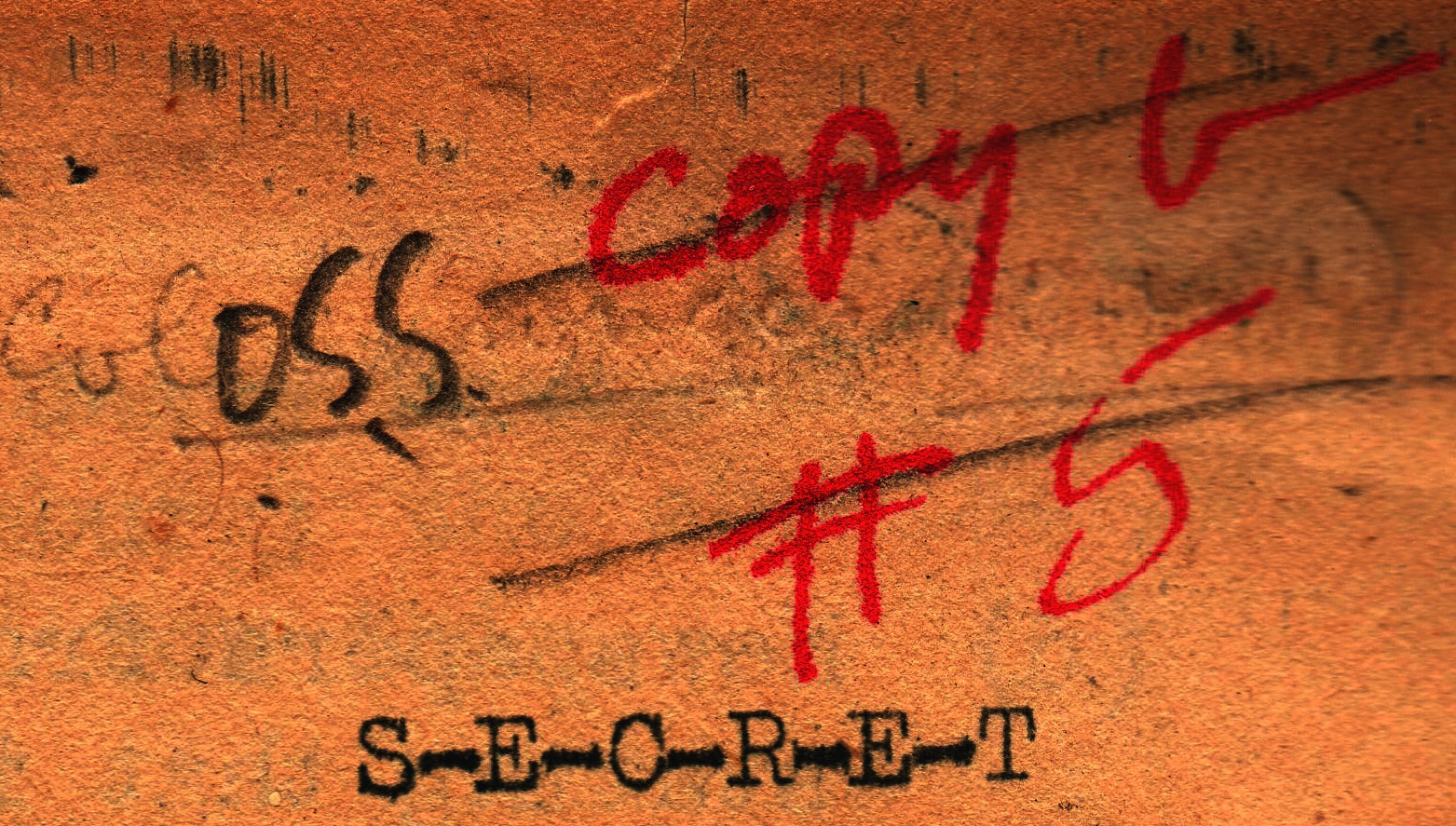
    OSS Netherlands219 detail

    This is a detail of 10% or so of a document here, something that was printed regarding the socio-political temper of the liberated Netherlands in February 1945. 

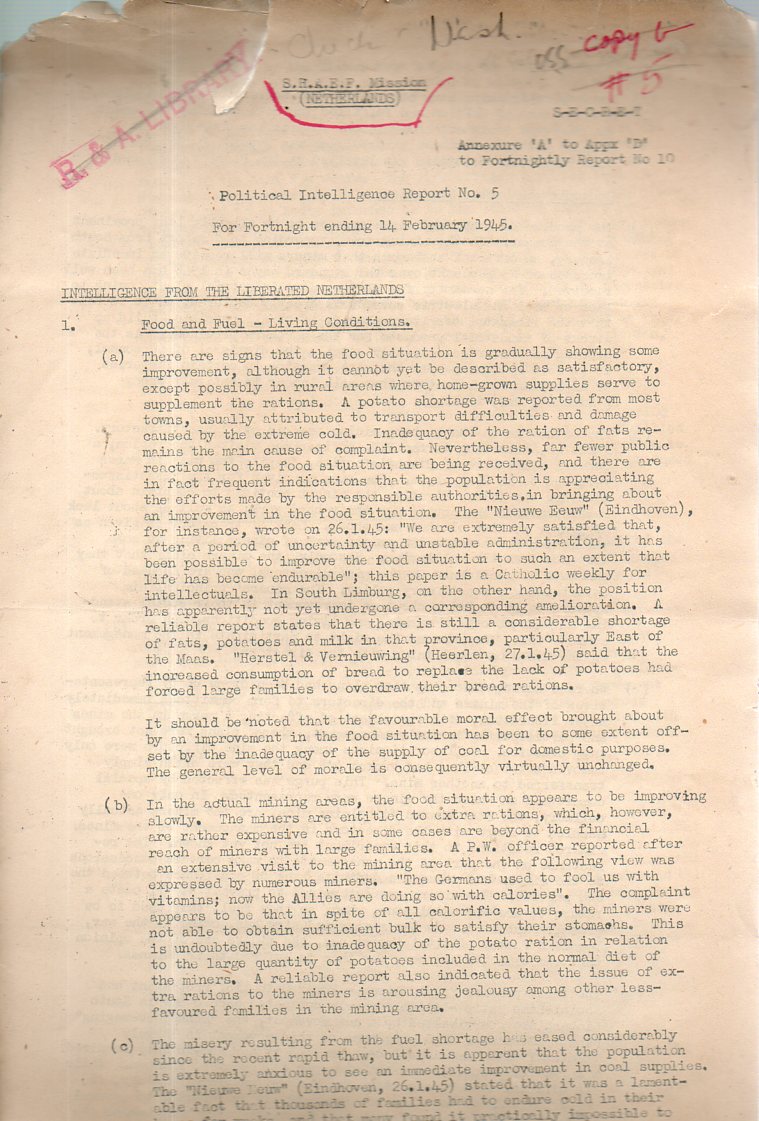
    And so:  “S.H.A.E.F. Mission (Netherlands) Political Intelligence Report No. 5. (For Fortnight ending 14 February 1945)  Intelligence from the Liberated Netherlands” are the running headers. And of course there’s the “S-E-C-R-E-T” part of it, no doubt necessary then but hardly now. The paper includes a report on food and fuel and living conditions, labour and employment, attitude of the population to the Netherlands government, attitude of the population to Allied troops, and so on.  What I found very interesting besides the report are the trails of where the document has been.  

    First, here’s the front page of the document in full:  

    OSS Netherlands217

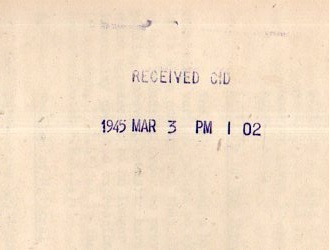
    To interpret, SHAEF was “Supreme Headquarters Allied Expeditionary Forces”–the hand annotations and stamps do say where the document has been. First off, we’ll start with the stamp on the back, which may have been the first stamp overall:

    OSS Netherlands218

    The paper was received by the CID on 1945 Mar 3–now the CID could have been a number of things but when placed in context with the notes on the front, the CID becomes the “Central Information Division”, which was the O.S.S. (Office of Strategic Services, and the precursor to the C.I.A.) and the R & D (“Research and Analysis Branch”). Underneath the hand-written “O.S.S” is a most-erased name, a Lt. Col. ________.  This is where the Found-Art comes in, because here I tried my trickery and foolery to pull out the name, but I failed, only being able to grab a couple of letters.  The result though was interesting in itself, if not for who Lt. Col. ______ was.  And so, there you have it, a little exercise that went off into the rabbit hole, producing something interesting but not useful. That happens a lot.  


  • Warsaw Uprising(s), 1943. And 1944.

    JF Ptak Science Books

    This is bound to be a great smoothing-out of a complex issue, but, well, that’s okay: I think that in spite of the simplification the result is the same. The bottom line of the Second Warsaw Uprising (August/September 1944) is that the Soviet Union allowed the Polish Home Army to fail, watching from its position across the Vistula as the Nazis and Poles slugged it out, both exhausting themselves, the Nazis ultimately defeating the Poles, eliminating most of the Soviet concern for the Polish military and government, allowing the Soviet Union to take the country over more completely when the time came a few months earlier.  It was the Soviet’s choice to see two enemies annihilate themselves to have more control over Poland and immediately turn it into a vassal state when it rolled into Warsaw in January, with 85% of the city destroyed and 600,000 of the city’s population  dead.
     Warsaw774

    With this in mind,  where was the Polish Home Army or the Americans or the Brits-or anyone–when the first Warsaw Uprising occurred? Absent.1 This battle–generally known as the Warsaw Ghetto Uprising–took place about three years after the Nazis established it as a means of control for the city’s 400,000 or so Jews. In the intermediary years hundreds of thousands of Jews had been “deported” (that is, sent to the concentration camps to be exterminated or worked to death), so that by the time of the Uprising only 60,000 people remained in the Ghetto.  And by this time there was no doubt in anyone’s mind who lived there (and perhaps too in Warsaw as a whole) what the euphemism of “deportation” actually meant.  The battle started off well for the home defence (the ZOB2) but, ultimately, with little access to resource and with nowhere to actually retreat or regroup in the few acres that remained of the original Ghetto, whoever was left in the Ghetto were either killed or captured by 16 May.  The German commander, SS Brigadefuhrer Jurgen Stroop reported on that day that “the former Jewish quarter in Warsaw is no longer in existence”:

       “Progress of large-scale operation on 16 May 1943, start 1000 hours.
       “ 180 Jews, bandits, and subhumans were destroyed. The former Jewish quarter of Warsaw is no longer in existence. The large-scale action was terminated at 2015 hours by blowing up the Warsaw Synagogue.
        Total number of Jews dealt with 56,065, including both Jews caught and Jews whose extermination can be proved. “

    Stroop was arrested and hanged in Poland, in Warsaw, in 1952.
    Warsaw775

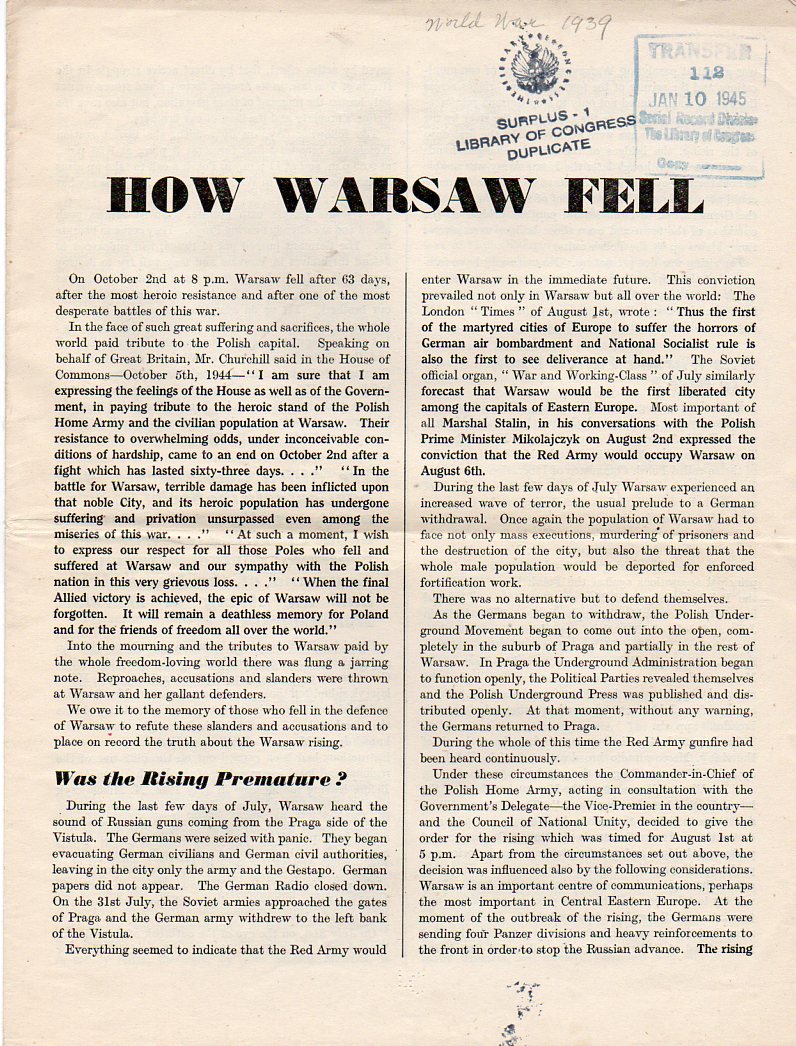
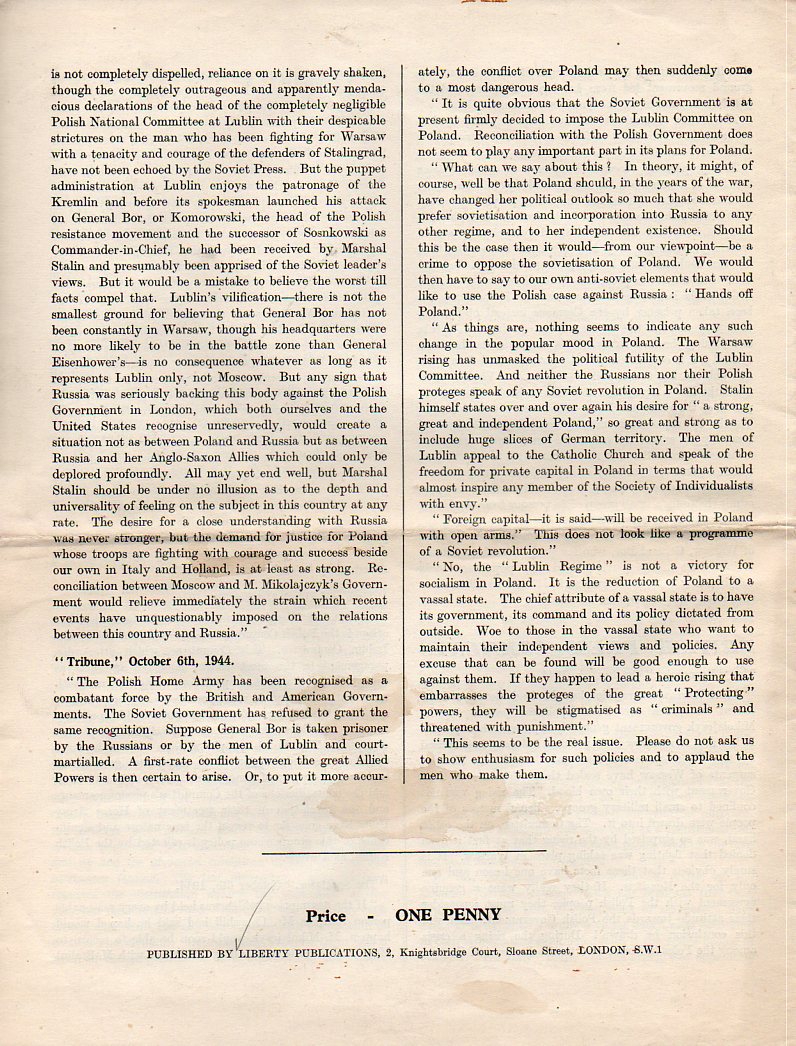
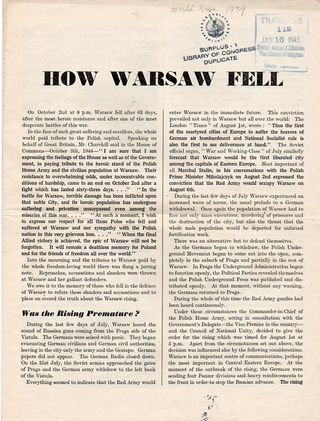
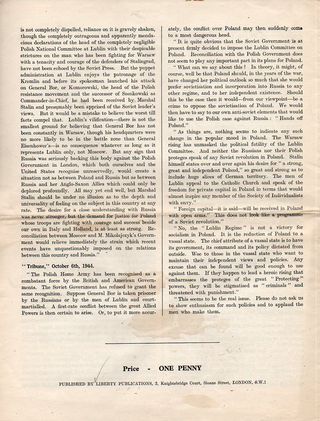
    So, this 6-page pamphlet, published by Liberty Publications in London at the end of 1944 (and received by the Library of Congress on 10 January 1945), detailed the misery of the non-recognition of the second Warsaw Uprising and the reason(s) for it. It details the travesty, the disinterest, and the political accomplishment of the Soviet Union gained by its criminal inaction. There is of course no mention whatsoever of the first Warsaw Uprising.  Selfish inaction breeds itself, consumes others and then–like yeast–consumes itself.

    Notes

    1. “WHEN THE revolt in the ghetto broke out in April 1943, all of Warsaw was aware of the fighting. The news of the revolt was transmitted to the Allied capitals by the Polish underground, but no help came for the Jewish fighters – not from the US or England, nor from the Soviet Union; not even a sign of recognition or an acknowledgement by the Allies of the battle raging in the ghetto. The Jewish fighters in the Warsaw Ghetto were unknown soldiers, isolated from the world. Only two years later, after the end of the war, did their valiant battle receive universal recognition.”–“Who Defended The Warsaw Ghetto?”, by Moshe Arens, in the Jerusalem Post, 29 April, 2003.

    2.  The ZOB  was the Zydowska Organizacja Bojowa, led by Mordechai Anielewicz, and ZZW (Zidowski Zwiazek Woskowy) led by Pawel Frenkel.
    ·Posted by :

    ·in:

    —

  • Hope for POWs, 1944

    JF Ptak Science Books  Quick Post

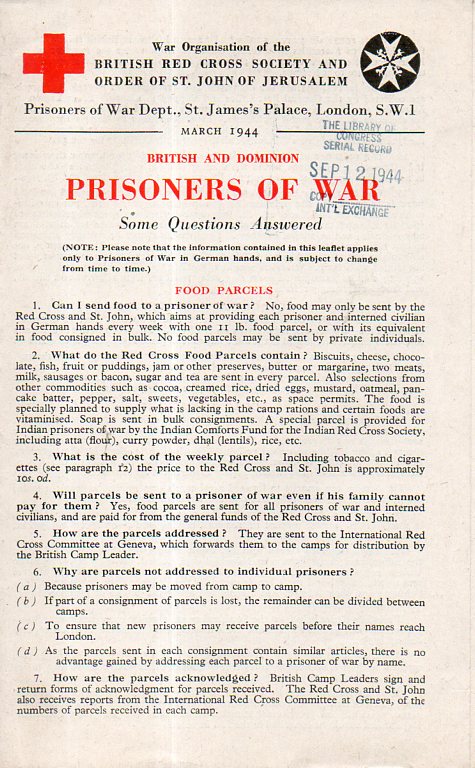
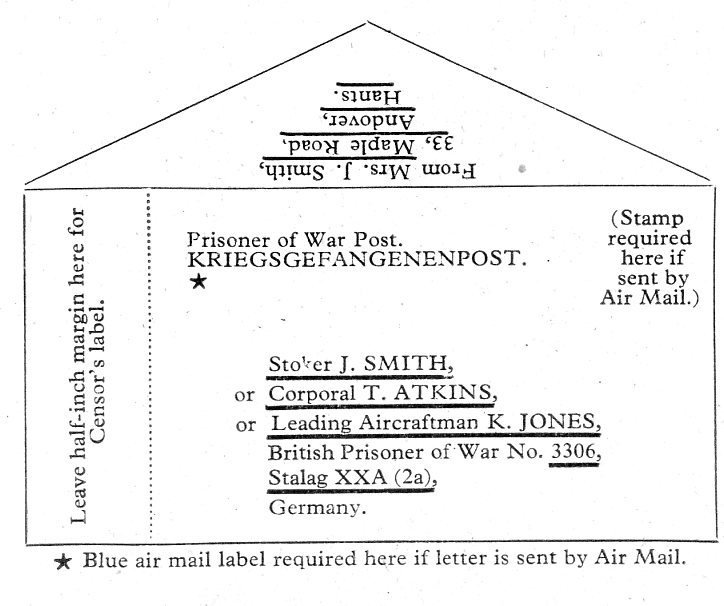
    Even when this leaflet was issued in March 1944, so very deep in the war and so very close to the end of the war, there was an enlisted hope for humane treatment for Allied POWs–at least that is what the job of the Red Cross was at the time, to sustain that belief and enforce it wherever they could.  (I’ve reproduced the entire pamphlet, below.)


    POW RC 1193


    The leaflet provided this hopeful template for addressing an envelope to your POW: 

    POW RC 5 envelope199

    ·Posted by :

    ·in:

    —

  • “Swept Away”: Propaganda of the Beautiful Life of German Workers, 1942

    JF Ptak Science Books  Quick Post

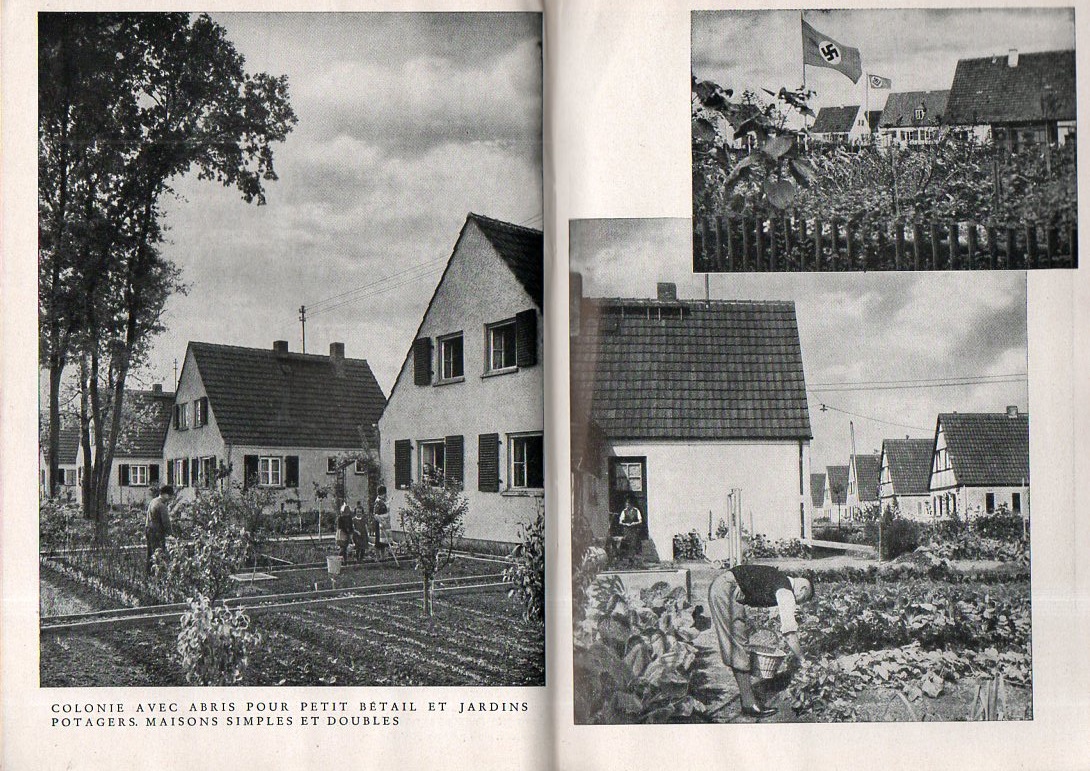
    La Vie en Allemagne, l’Habitation Allemande is a soft, no-edge piece of propaganda produced in Nazi Germany and meant for distribution in France.  (The pamphlet has no place or date of publication, though WorldCat guesses 1941/2, which I’m inclined to agree with–in any event it is appropriate for it to not have identifiers like that as it is, after all, all made up.)  I am pretty sure that pictures such as these printed during wartime for the population of an occupied country could not get any more vaseline-lens-coated or syrupy than these images. They are in the best tradition of a Lena Wertmueller movie, where the working class is perfect as are their homes and children. And if Ms. Wertmueller used for a background artist someone like Maxfield Parrish working in black & white, these images would no doubt seem familiar to him. That said, this is a propaganda vehicle showing the working and living condition of worker “colonists” in Germany and their supposed standard of  living, which as good National Socialists would have been far away above that of blue collar worker in France.  Anyway it was a dreadful piece of dangerous fluff to dangle in front of a captured population–no doubt this little publication found itself replacing paper conveniences in the toilet, and used as fire-starter, but no doubt some poor soul somewhere in France was confused by it, and wondered.

    La Vie Allemagne192

    WorldCat/OCLC locates only five copies (three in France and two in Germany), and no copies in the U.S.

    ·Posted by :

    ·in:

    —

  • Maps of the Progress of the Nazi Occupation, 1936-1943

    JF Ptak Science Books  Quick Post

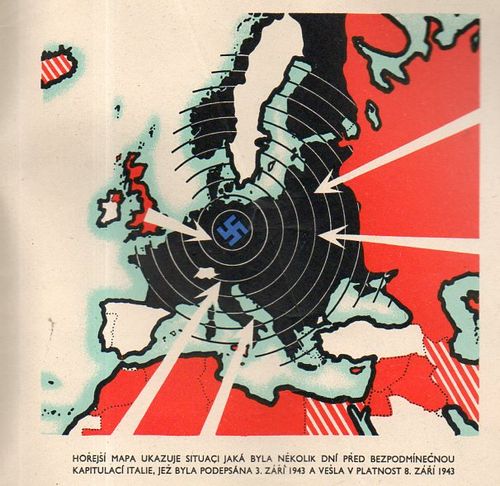
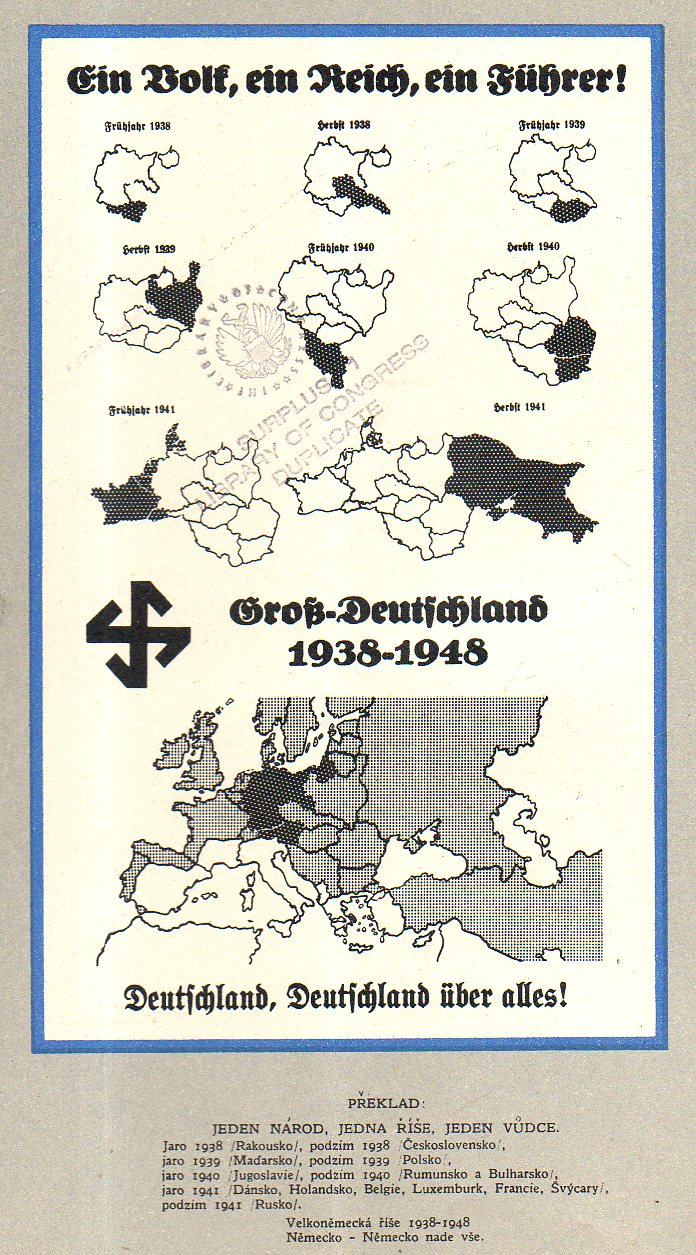
    Čtyři léta války v mapách (“Four Years of War…in Maps”), published in London, ca. 1943, is a Czech-exile publication showing the development of the war in a number of very striking maps. The maps end at the publication of the pamphlet–except of course, for the 1948 map. The culminating interest though shows the Nazis surrounded, and put to the final test–it is the first map I list, below, even though it was about the last map in the pamphlet.  It is a rare thing, this pamphlet, and it does not show up in the usual places. There are only seven copies located in the WorldCat/OCLC, all in top-notch libraries: NYPL, Yale, Harvard, Harvard Law, UC Berkeley, Oxford, and Nanterre. 

    Maps Germany 1942183


    An overall view of the progress of German war conquests:

    Maps Germany 1938-1948175


  • Office of War Information–Hitler’s Lies (1942, With Full Text)

    JF Ptak Science Books    Post 2609

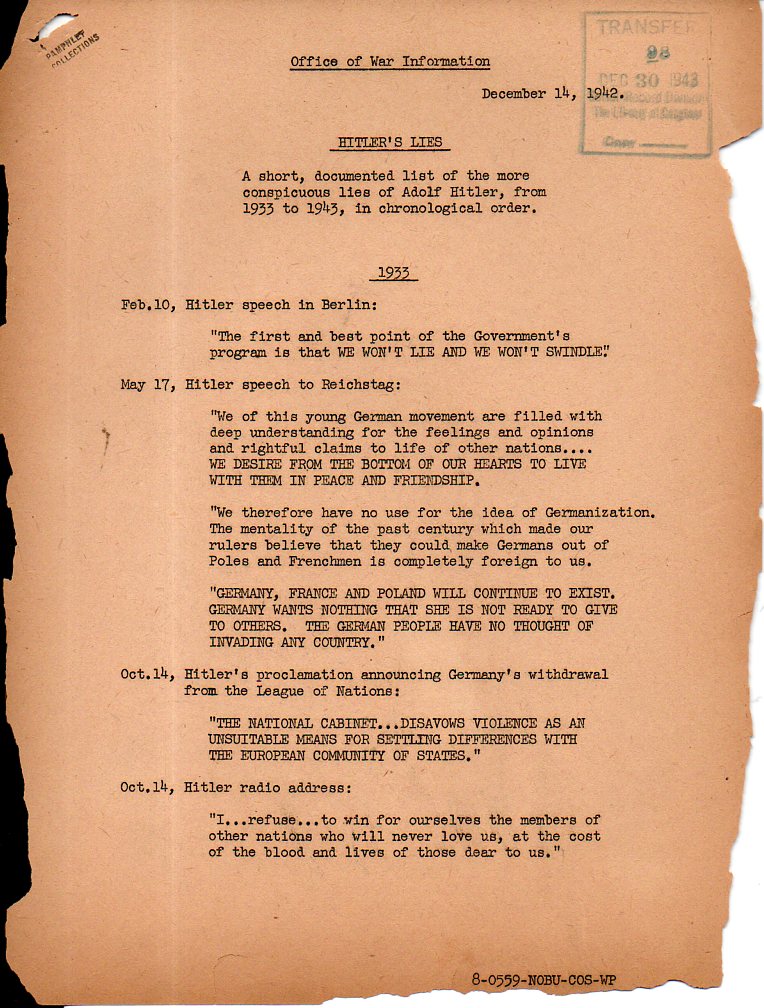
    Here we go–after Hitler had been in power for 11 years of many highly-veneers layers of lies great and small the U.S. Office of War Information produced a short and truncated scorecard of the most “conspicuous” of them.  The paper, Hitler’s Lies. A short, documented list of the more conspicuous lies of Adolf Hitler, from 1935 to 1942, in chronological order was an 11-page chronological abbreviation of some of Hitler’s most notorious lies. Oddly enough there seems to be hardly anything printed as a book or pamphlet in the 1933-1945 period with “Hitler” and “Lies” in the title (though there is Lies as Allies, or, Hitler at War, by Frederic Maugham, 1941)–there are a few more if you use “Nazi” and Lies” in the search, and o revealing Nazi Lies (1940), 1001 Nazi Lies (1940), and  Here Lies Goebbels (1940). In any event the OWI copy seems to not be around in libraries–there seem to be no copies of this edition located in the WorldCat/OCLC, though there is one other very similar version of this (in four pages, double columns) at the Denver Public Library. With this in mind I decided to share the entire document, which is now reprinted below. It is well worth readign to see how an official hearst/minds information arm of the U.S. government was dealing at a popular/informed level with Hitler.  

    (The following quotes come from a review by Martin Melosi of Allan M. Winkler,  The Politics of Propaganda: The Office of War Information, 1942-1945 , published by Yale in 1978):

    • The Office of War Information (OWI, created in 1942)  was “dominated by liberal interventionists, such as Archibald MacLeish and Robert Sherwood, the OWI sought to play an activist role in winning the war by affirming the value of democracy over any totalitarian threat”. “The leadership of OWI were sure that if they could simply repeat it loudly enough and often enough, it would win the hearts and minds of all who heard  (p. 150).”  “But alas, the grandiose dreams and high expectations of the major OWI figures were dashed by several forces, including a hesitant, almost indifferent president; a suspicious Congress and State Department with little faith in the plans of OWI; a variety of internal squabbles over attempts to define what American policy was and how best to present it; and, most significantly, the more pragmatic requirements of war.”
    • And so “the home front was short-lived; how Congress dismantled the domestic branch which had tried to the American people about the war effort” and the OWI shifted its interests and direction to the theaters of war, “intense efforts to support the military effort via psychological warfare against the enemy…The propaganda of war had finally come to represent the war being fought.”


    Hitler's lies 1153

    ·Posted by :

    ·in:

    —

  • Rare Eyewitness Holocaust Account, 1944–The Only Reproduction of the Full Document

    JF Ptak Science Books  Post 2608

    Witness from the netherlands detail g171

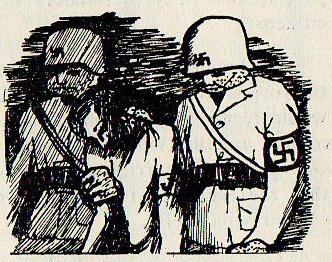
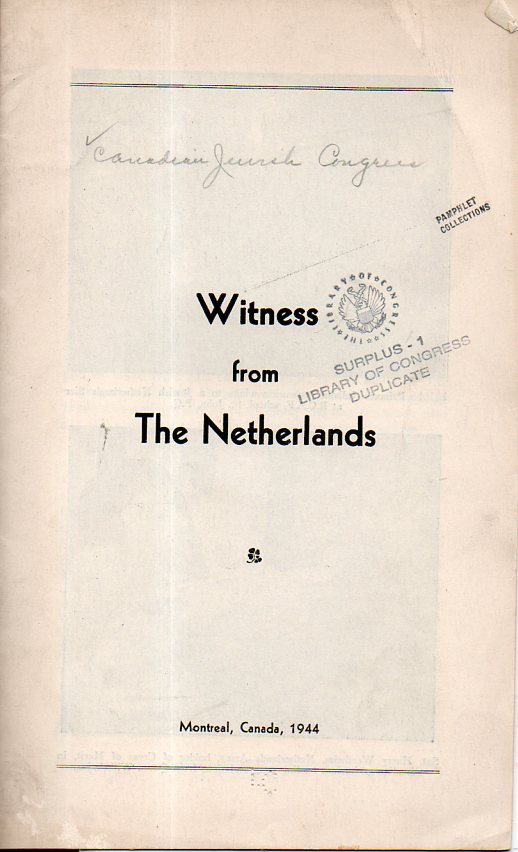
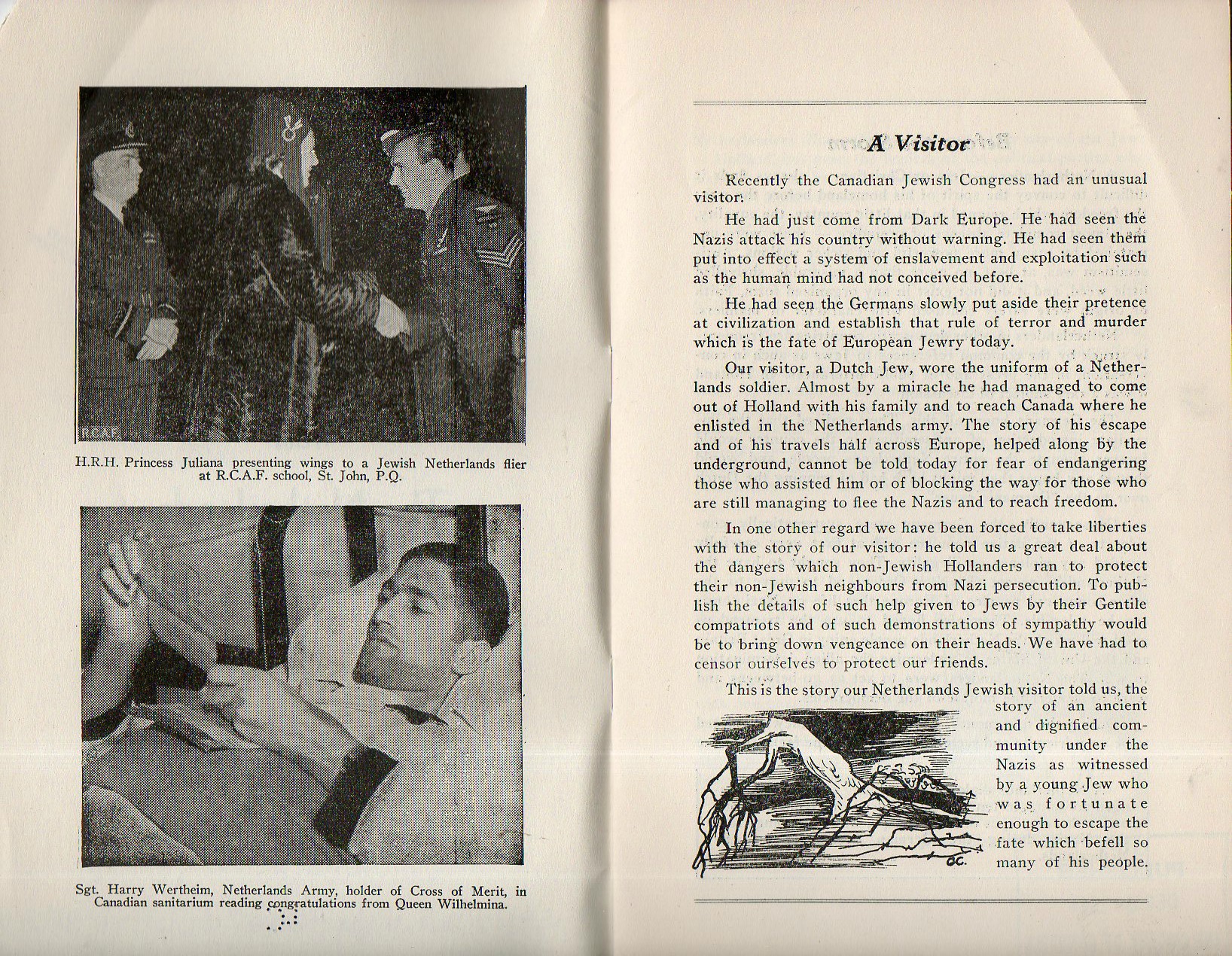
    Witness from the Netherlands is a frank and concise eyewitness account from a Dutch Jew escaped to Canada, his account being published by the Canadian Jewish Congress in Montreal in 1944. He tells of a calm period at the beginning of the occupation by the Nazis and their efforts to ingratiate themselves with the Dutch–one of those methods was to ostensibly form an emigration policy for the Jews and having them register with the “Central Committee for Jewish Emigration”. The facade did not last long, and the rest of the pamphlet is devoted to the violence after January 1941.  The rest of the story is left to the reader–the pamphlet is only about 4000 words, and it is a recommended read.

    The account necessarily leaves out his escape routes and the people who helped him to escape; the same is said for the “non-Jewish Hollanders” who protected him and others “from Nazi persecution”. 

    I’ve scanned the document and made it available below. There looks to be no copyright restriction on the 1944 original, and I won’t add one.  I could not find records of the pamphlet for sale, and an internet search reveals only seven hits (somehow) for the title phrase, with only two of those being for the actual pamphlet, and both of them being library records.  (I don’t have the time or resources to check textual references for the work in the standard histories of the Holocaust, unfortunately.)

    WorldCat/OCLC find 10 copies located in high pedigree, with only copy copy in the U.S. and only three in North America: British Library,  Royal Library (Copenhagen), Konniklijke Bibliotheek,  NIOD Institute for War, Genocide Studies (Amsterdam), Harvard, University of Ottawa, University of Toronto, Tel Aviv University, National Library of Israel, and the Danish National Library. 

    The original is for sale in the blog bookstore:  https://historyofideasblog.com/books/2016/05/rare.html

    Witness from the netherlands a166


    Witness from the netherlands b167

    ·Posted by :

    ·in:

    —

  • German Aircraft Losses During WWII

    JF Ptak Science Books  Quick Post1000 Nazi aircraft

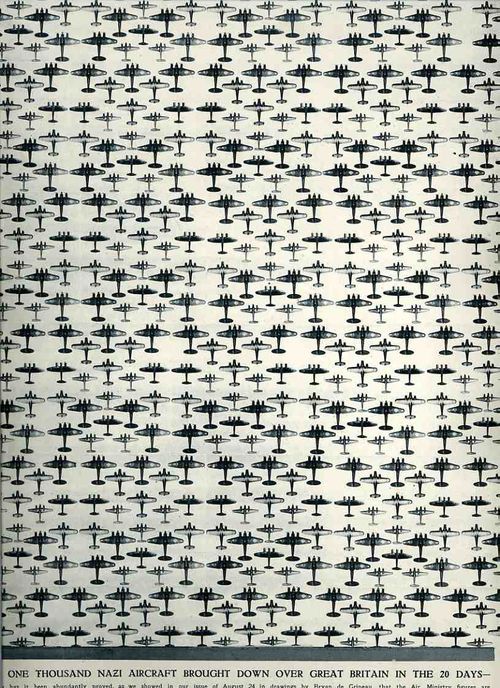
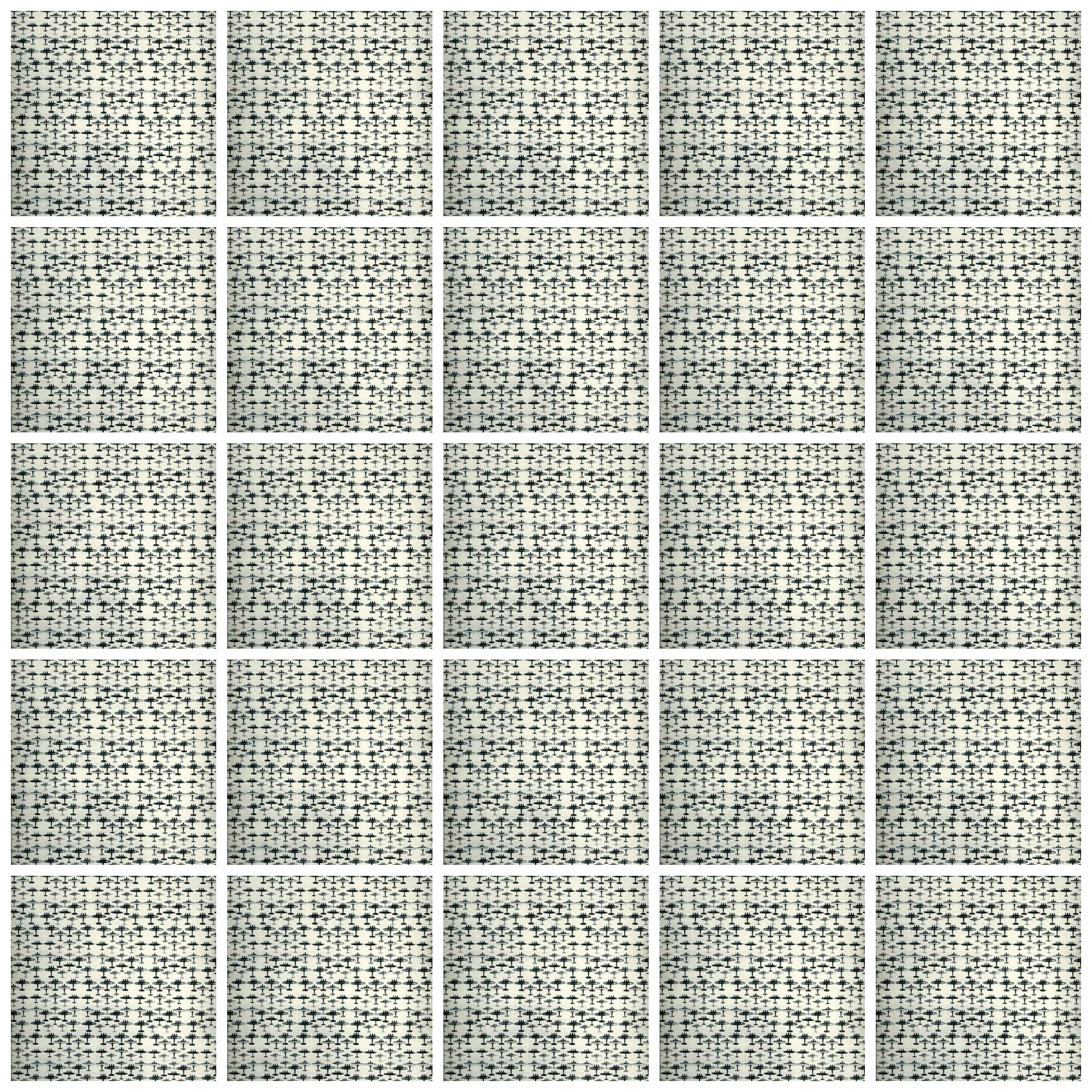
    The marks in each of the squares below represents one aircraft–and as a matter of fact if you click on one of the 25-square squares you will be able to zoom in and see the detail, which is basically missing at this level.   Germany lost (meaning destroyed or damaged beyond repair) “76,875 aircraft, of which 40,000 were total losses and the remainder significantly damaged. By type, losses totaled 21,452 fighters, 12,037 bombers, 15,428 trainers, 10,221 twin-engine fighters, 5,548 ground attack, 6,733 reconnaissance, and 6,141 transports” (According to the “Equipment Losses” for WWII on Wiki.)  The aircraft graphic uses images of German aircraft–I would much rather have display U.S. and/or U.K. aircraft losses, but that could not be done using the German plane images. (The U.K. lost more than 42,000 planes, and the U.S. 95,000.) So for right now, we’ll just have the German graphic, the source of which is the 7 September 1940 issue of the Illustrated London News, which displayed one thousand destroyed German aircraft brought down over Great Britain in 28 days (see here):


    25,000 planes

    25,000 planes

    25,000 planes


  • The Fall of the Bolsheviks “In a Matter of Weeks”–Petrograd, 1918

    JF Ptak Science Books  (Expanded version of Post 485 from 2008) 

    WWI Petrograd390

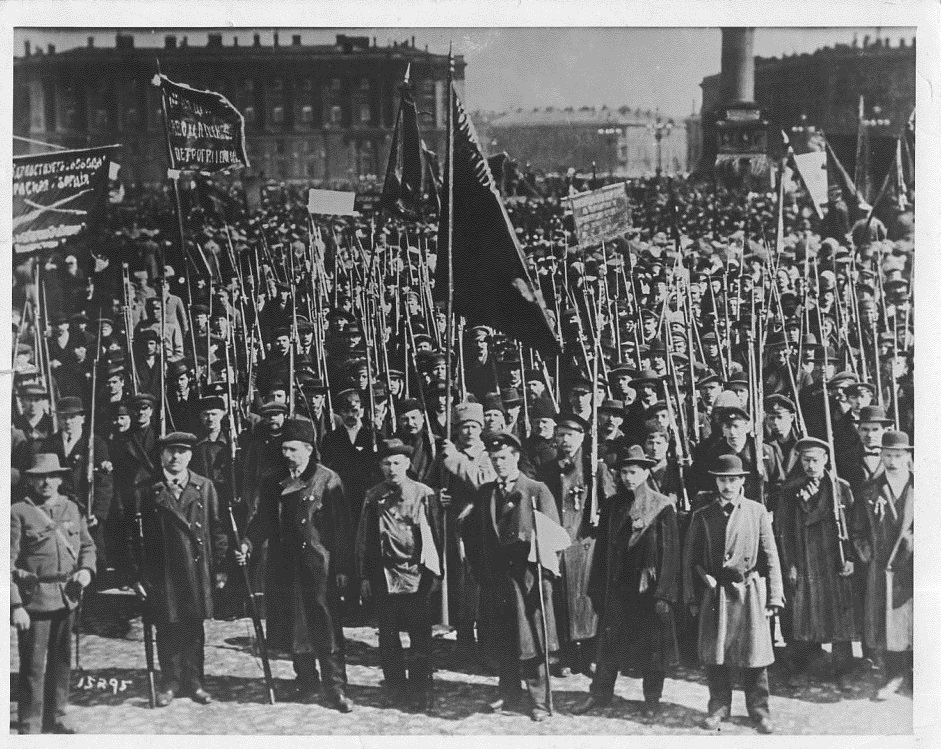
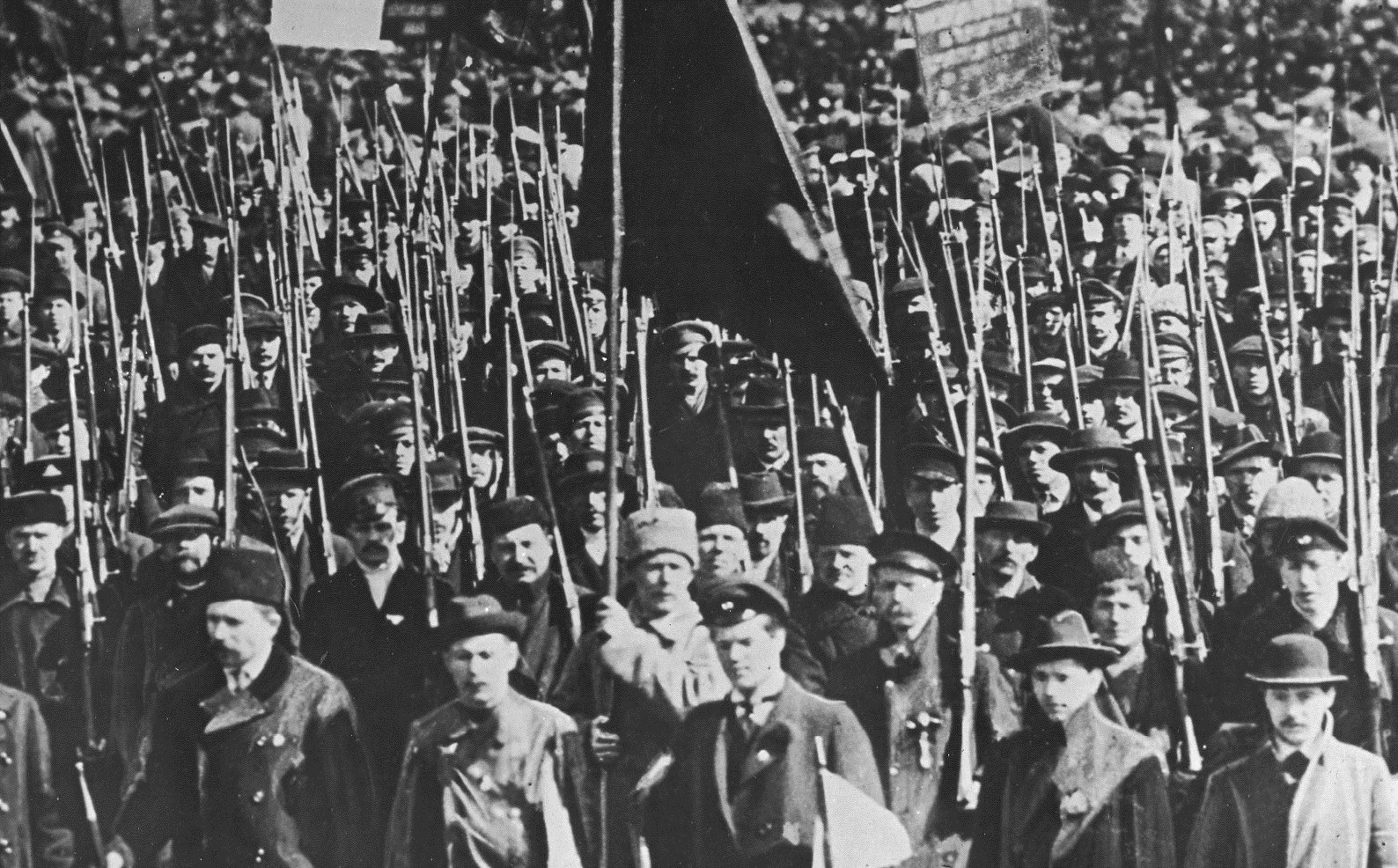
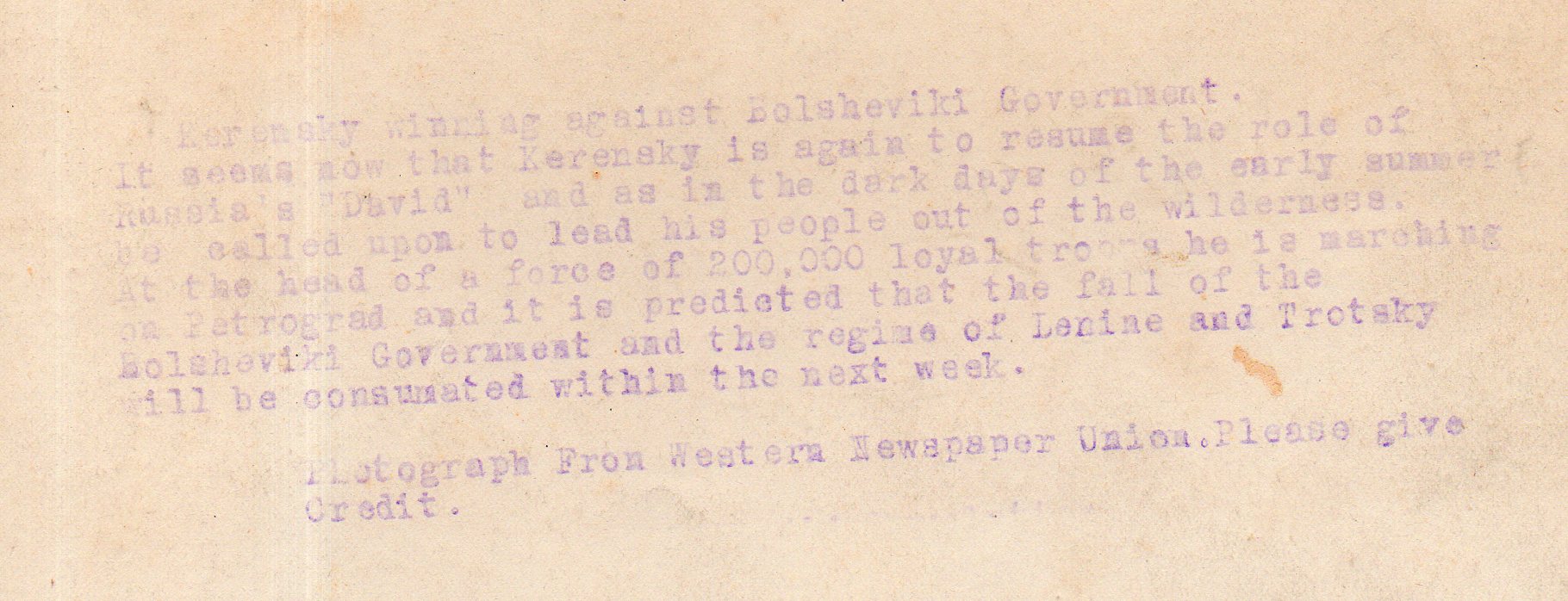
    This photograph–a picture of hope soon dissipated–shows the 1918 portion of the Russian Revolutions of 1917 at just about the time of its, well, “completion”, beginning the period of the Russian Civil War, which would last until the creation of the USSR in 1922.  (The photo is also part of a News Photo Service archive I purchased some years ago in, and was originally released by the Western Newspaper Union.) Alexander Kerensky, who according to the stamped caption of this photograph, was leading an army of “200,000 marching on Petrograd” in order to overthrow “Lenine [sic] and Trotsky” and the “Bolsheiki Revolution”.  Kerensky (1881-1970) was elected second Prime Minister of the Russian Provisional Government under Lenin following the February (1917) Revolution.  A complex of war (WWI) and domestic/social/political directed chaos led Kerensky and Lenin to opposing paths, and, following the October 1917 revolution, the winner was clear.  Kerensky, according to the data on the photo, was a “David” leading an army in opposition deposed to toppling  the Bolsheviks “next week”.  Things did not go as planned, or almost nothing did, and Kerensky’s army drifted, walked and ran, via indifference, fear and belief to the side of the Bolsheviks.  About the only soldiers who stayed loyal to Kerensky was the 1st Petrograd Women’s Battalion, a unit of the 1st Russian Women’s Battalion of Death. (This was the first all-female combat unit in Russia, and although starting out with about a force of 2,000, quickly wasted away under the rigorous and harsh command of its commander, Maria Bochkareva*, down to about a fighting group of 300.)  Kerensky fled the country and began a long series of travels, though ultimately settling in the United States, dying in NYC in 1970 (making him one of the longest surviving principal participants of the Revolutions).

    WWI Petrograd391

    St. Petersburg/Petrograd has a long and important history in the formation of the Russian nation—established in 1703 as the capital of the Russian Empire and remaining so for more than 200 years, it was also the seat of the 1905 Revolution as well as the February and October revolutions of 1917.  Another bit of full-circle was that Kerensky and Vladimir Ilyich Ulyanov (Lenin) were both born in the not-large town of Simbirsk (now called Ulyanovsk).  Kerensky’s father, as it turned out, taught Lenin at the Kazan State University, a great institution of higher learning featuring non-other than the principal founder of non-Euclidean geometry, Nikolai Lobachevsky, as its rector for almost twenty years (1827-1846). 

      WWI Petrograd392

    [The text for the photo stamped on its back]

    *This interesting, severe, passionate woman through intrigue and loss wound up fleeing the Soviet Union in 1918, winding up in NYC and ultimately meeting with Woodrow Wilson, appealing for American support and intervention to halt the Bolsheviks.  She made the same appeal directly to George V, before winding up back in the Soviet Union, where, in 1918, she was captured.  She was ultimately tried and convicted of being an enemy of the people, sentence to death, and then killed by the precursor to the KGB, the Chaka. 

    ·Posted by :

    ·in:

    —

  • The Cascade of Governments and a Warning About Hitler (1934)

    JF Ptak Science Books   Quick Post

    A La Porte, les Deputes!..

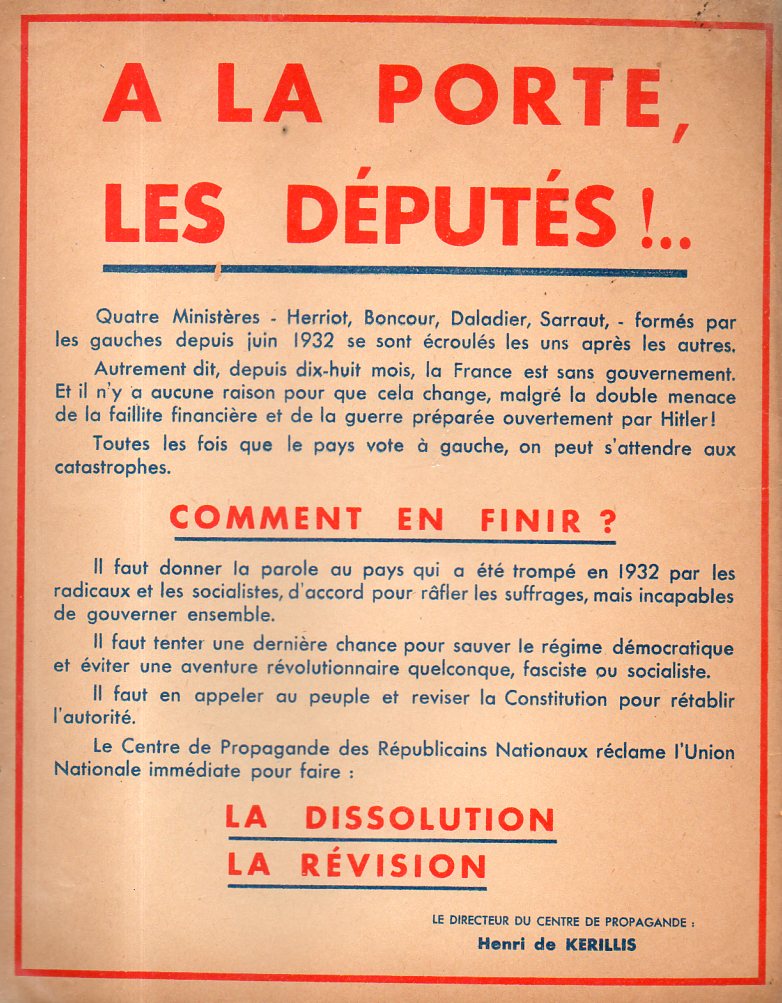
    Henri de Kerillis, a French WWI hero and right-wing/nationalist politician, published this short screed on the failure of the four left-wing/radical/socialist governments that came and went in France over 18 months, beginning in June 1932. (That would be the failed governments of Herriot, Boncour, Daladier, and Sarrault.) de Kerillis states that there has been no government in France over the last 18 months and doesn’t see that there will be any change to that, and given that (as he says) there is a possibility of financial collapse and the open preparations for war by Hitler, that the time was ripe for a different political direction. When the country votes left, he says, you can expect a disaster.

    Kerillis was an ardent and vocal anti-Fascist, opposed to the Munich Agreement and always opposed to Hitler. He was forced to leave France in 1940, and was sentenced to death in abstentia by the Vichy government, which I take is a mark of high honor.

    WWII kerillis383


    ·Posted by :

    ·in: