A Daily History of Holes, Dots, Lines, Science, History, Math, Physics, Art, the Unintentional Absurd, Architecture, Maps, Data Visualization, Blank and Missing Things, and so on. |1.6 million words, 7500 images, 4.9 million hits| Press & appearances in The Times, Le Figaro, Mensa, The Economist, The Guardian, Discovery News, Slate, Le Monde, Sci American Blogs, Le Pont, and many other places… 5000+ total posts since 2008.

Category: History of the Future

  • A Really Big Idea: the 5,000 Ton Tank (1916)

    JF Ptak Science Books   Post 2389

    These spectacular images of monumental monumentality appeared in the December 1916 issue of Popular Science Monthly.  The author Frank Shuman (1862-1918) had some major inventing chops, not the least of which was some very forward-thinking work (in theory and practice) on solar power (one of which was a solar powered steam engine and another a liquid O2 propulsion system for submarines), so these suggestions for gigantic land battleships came with a fair amount of gravitas. This is some grand thinking, and as Shuman tells us, the beast below would weigh about 5,000 tons (the weight of several hundred Sherman tanks1) and would roll along on 200′ diameter wheels.  Unfortunately, outside of  seeing some sort of (steam) power plant, there is no mention of how those wheels would be turned–I’d’ve liked to read about that.  There is a mention of shock absorbers, but only so, jsut a bare hint.  

    [Image source is Google Books–I have this volume in a 40 year run of this periodical down in the warehouse, but the book was really too thick to lay flat ont he scanner, and so the Google Books scan was used..]

     And for whatever reason there is no heavy artillery on this thing. The damage to the enemy would be done via the three wheels, and also by the enormous chains that hang from the front of the enormity, like a flailing slow-moving monster from a 1950’s B-movie. 

    My guess is that this wouldn’t do so well in the rain.  


  • The Coming of Broadcast Television (1929)

    JF Ptak Science Books   Post 2388

    I found a news item in the April 6, 1929 issue of Nature that gives a real sense of the coming of the future, of the future-at-hand–and they seemed to have a sense of what was coming, though probably not as big as that future would be. In this case, it was the beginning of the passive visual assumption of the collective culture–the very quick and potentially immediate assimilation of pop culture, this by the invention of television and popular broadcasting.  

    Baird_tv_caption

    The unidentified author was reporting on the recent activities of the Baird Television Development Company, which the author was interested in, and although it was “not presently practicable ” it did “represent(s) a noteworthy scientific achievement”, which I am sure was the writer’s way of downplaying a very significant event.


  • Millions of Miles of Hole-Filled Paper–Dystopia, Entertainment, Vonnegut and Prison

    JF Ptak Science Books 

    {Part of this blog’s History of Holes and History of the Future series.]

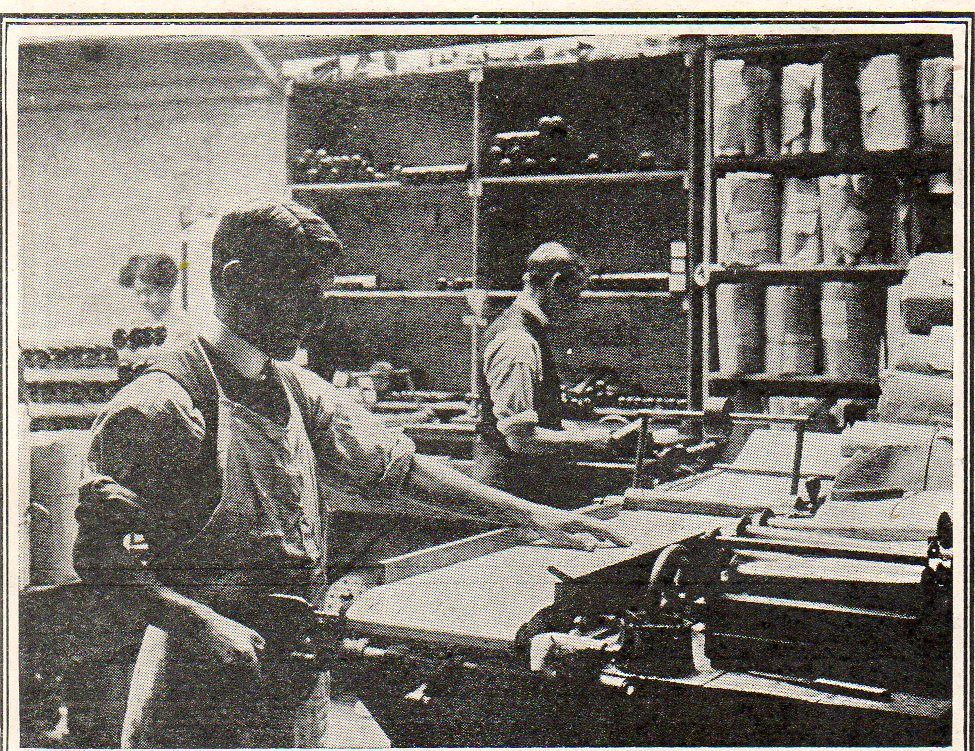
      Music role making--1871 There is a certain layered, geological dystopic quality to the  images of these men laboring at producing piano rolls for player pianos (and found in The Illustrated London News for 18 December 1909). This is true especially for the details, the small boxes in the background to where the rolls are being “processed”–music pounded out with metal points on a hard surface, as though produced by whatever it was that was in those little labeled wooden containers, far removed from the artistry of melody. These are images of a culture being made into hundreds of thousands of miles of hole-filled paper.

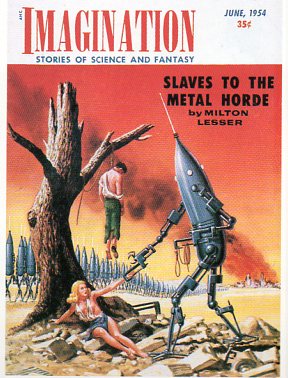
    The piano roles remind me of automatons replacing humans in entertainment, and then replacing the humans making the piano roles; of machines taking over the jobs of people writ large.  There’s a long and rich literary history of this idea, not the least (or first) of which is the appropriately-named Player Piano, Kurt Vonnegut’s first novel, written in 1952.  Like a tiny idea-machine, Vonnegut manufactured part of his tale from Brave New World, with Huxley having taken his bit from an earlier novel, We, written by Yevgeny Zamyatin in 1921–they’re all bleak images of a future dominated by machines, the humans acquiring numbers for names, like the replaceable and expendable units they became. 
    (Artwork by Malcolm Smith for Imagination, June 1954.)

    Robots in ocntrol--hanging human879

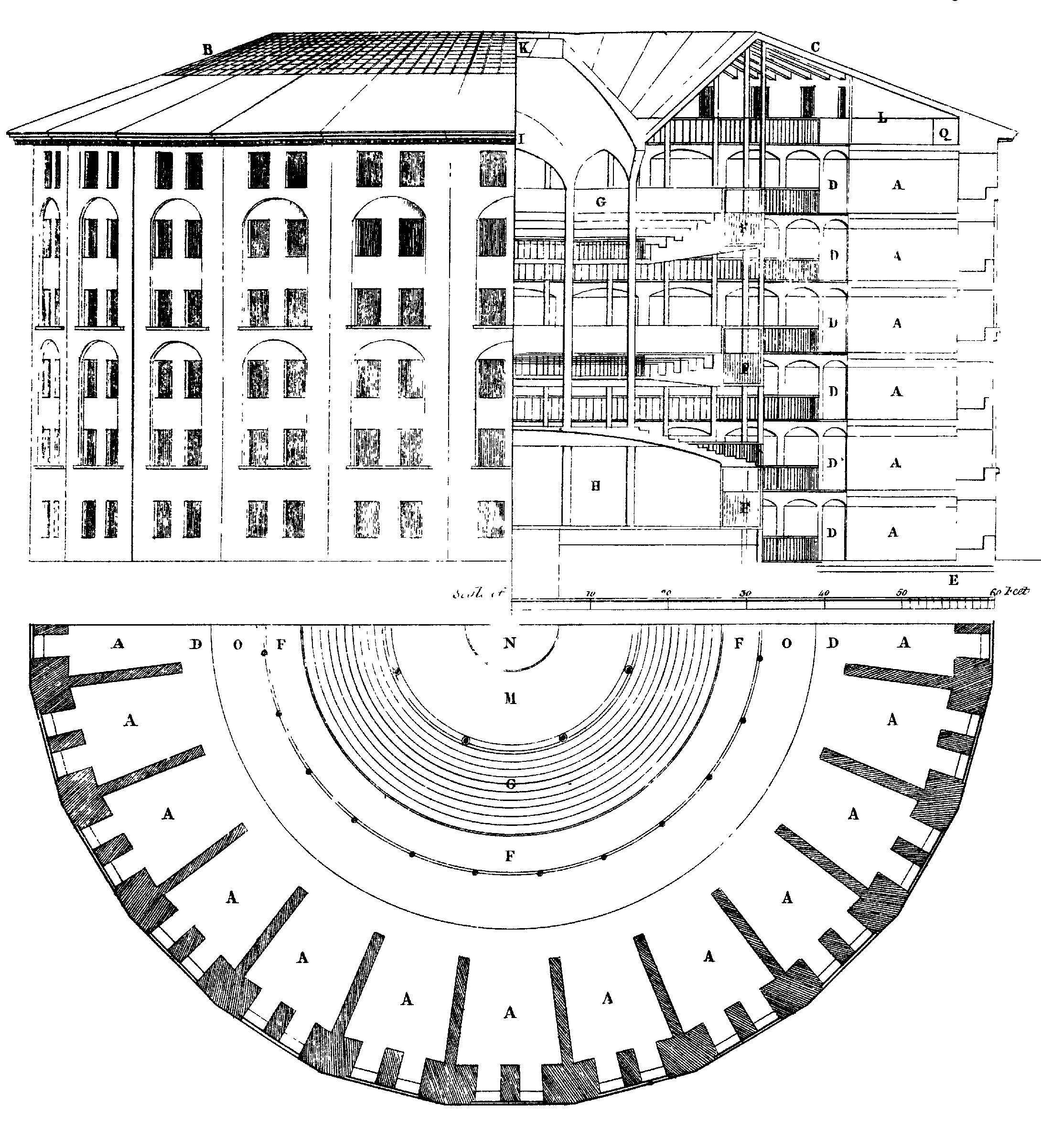
    The devices for producing the roles remind me of Jeremy Bentham’s panopticon, a functional prison designed so that all of the prisoners could be viewed from one central point.  The profile of the place reminds me of the geared punch machine for the piano roles; I’m not at all sure about what the function of the prison reminds me of.  But in the history of holes, I guess all it foes it fill u its empty holes with people, keeping them there for months or years or decades, and then replacing them with other people, part of a long and continuing series.

    File:Panopticon.jpg

    Here’s the panopticonal prison at Presidio Modelo, Isla De la Juventud, Cuba–with the walls laid flat, and some cells filled-up, and reduced, you may be able to make a certain music with it, like reading the scores made by pigeons roosting on a five-wire-strung staff of utility poles. My daughter Emma just suggested that there could be a Morse Code crossover as well!)

    File:Presidio-modelo2.JPG

    The plan and elevation of these prisons relate to the player paino paper, like the early dots and dashes of communication, like the punched cards that Vonnegut had in mind when he was writing his early classic. 

    Now, the rest of the Illustrated London News story:


  • 1 Over 1 & the “Rule for All Time Past and Future”

    JF Ptak Science Books  Post 2353

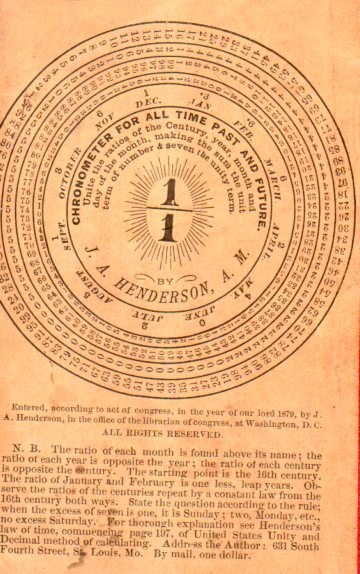
    That is a provocative title, or chapter heading, but that’s how it appears in a pamphlet I’m reading right now, a juicy thing that can lead to a memory palace of ideas…until you start reading the para below the head, when things get both more crystalline and fuzzy.

    John Alexander Henderson, a lightning calculator and professor of math at Delaware College in New York, produced this sprightly pamphlet eponymously titled Henderson’s United States Intellectual and Practical Lightning Calculator, the Unity and Decimal Method, which he published in St. Louis in 1879. (It is followed a few years later in another edition with a hundred new pages.) 

    What Mr. Henderson is getting at is a calculator for reducing a date to find out the day of the week a particular date falls on, from the 1st century to the 99th.  On the back cover of this pamphlet he provides a tickler for this enumerating device, which is explained in another publication (Henderson’s United States Unity and Decimal Method of Calculating). 

    Calculatort mental425

    And so in order to calculate the day of the week on which, say, November 26, 2014, occurs you would you the dial above as follows, but first an explanation of what is on the dial face:


  • The CowBot, 1888

    JF Ptak Science Books  Quick Post

    Robot Cow


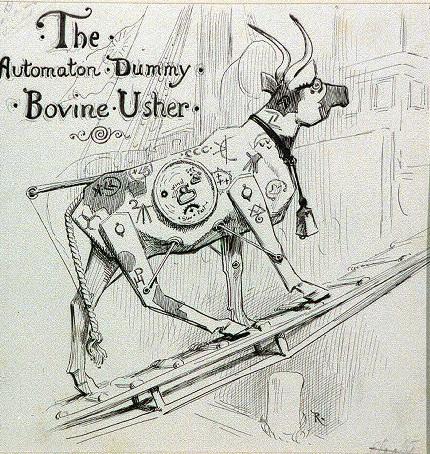
    I’ve been collecting images of 19th century robots and automatons and came across another–a very uncommon cowbot. “The Automaton Dummy : Bovine Usher” was drawn for Wallace Peck, created by William Allen Rogers (1854-1931)  and published in volume 8 of Life (July 8, 1886) and also in Peck’s The Golden Age of Patents (Frederick Stokes, 1888). [Image source: the Library of Congress, here, and for the Peck book, here.)  This is the only robot featured in the book, though there are many other fine illustrations of future techno whatzit bits.  The automaton beef was supposed to lead the other cows aboard a ship for shipment, the philosophy being that if one led the way that the others would follow.) The cowbot is also covered with brands, including a H.A.Rey-like Curious George techno bit in the midsection, the knobs and so forth forming an anthropologic face.  


  • The Future: Floating, Shining Soot and a SteampunkGod (1834)

     JF Ptak Science Books   Post 2340

    [This is a version of an article recently published in the Mensa Bulletin.]

    The world of possibility is limitless when there are no limits and almost no impossibilities. The history of seeing possibilities in the future, the history of looking into the future, is vast (with exponential growth in publication for each of the last three generations), and organizing it for a limited discussion difficult—there is a general temptation to simply classify all of it according to an alphabet of “ramas” of all possible Futuramas.

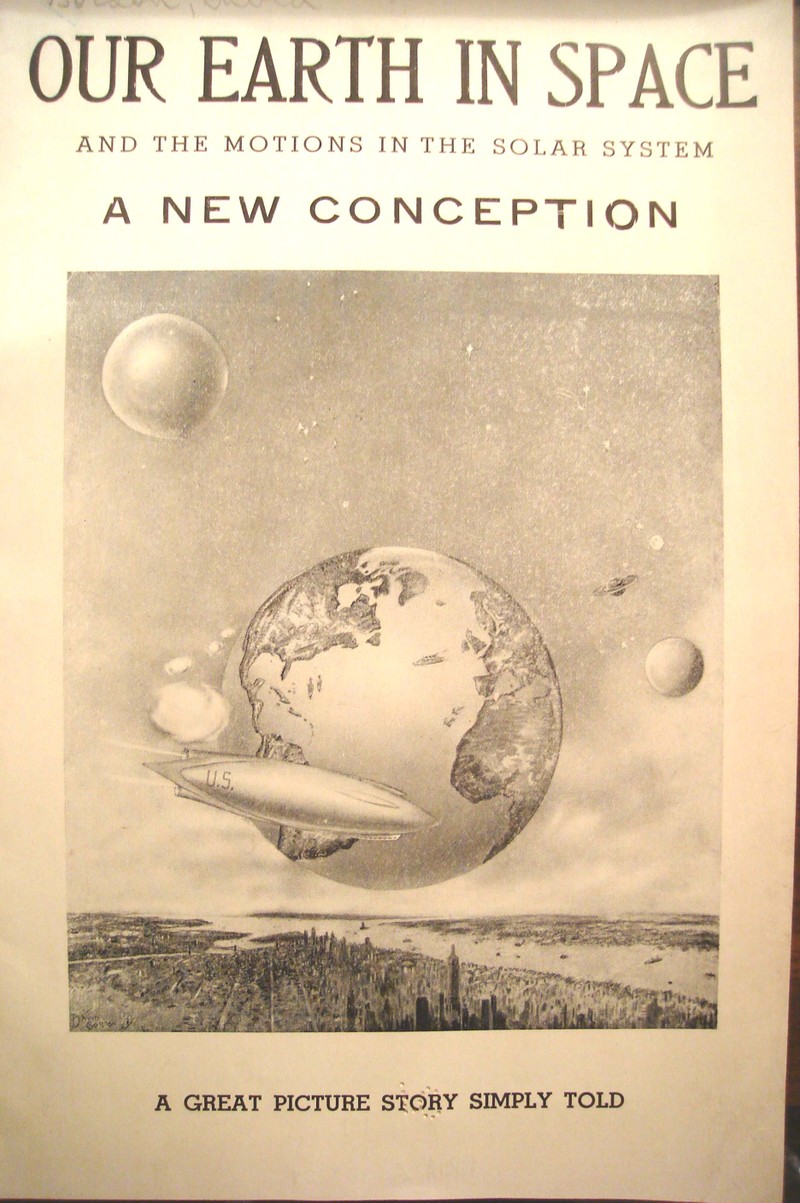
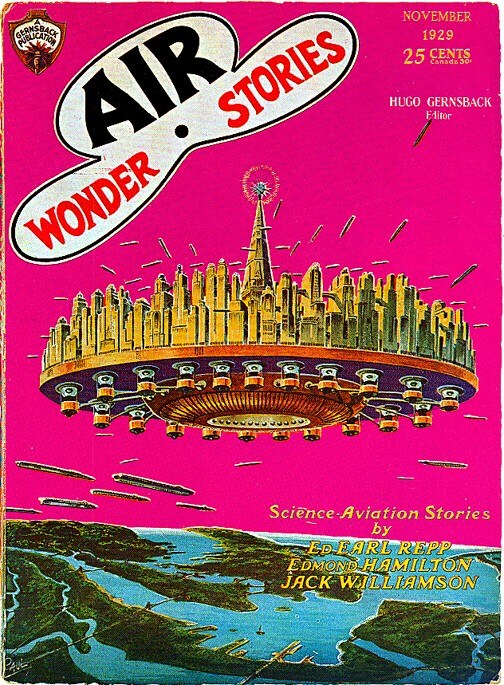
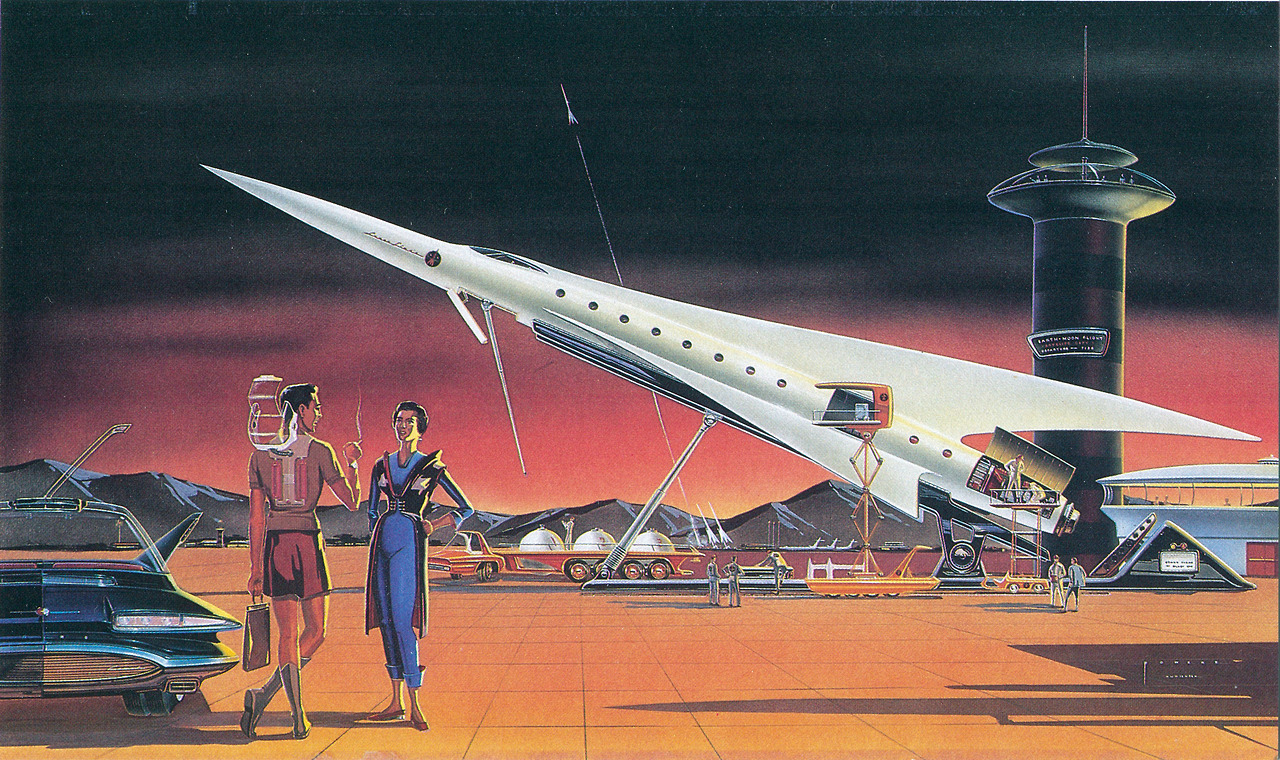
    How do we sort thousands of people writing about hundreds of thousands of future sightings in human development? Flying cars and people and cities and retrievable/liveable subconscious bits and dream, atomic blast guns, two-way wrist tv/radios, perfect places of nothing but intellect and floating intelligence, horseless cities, Soylent Green, personal computers small enough to fit into the trunk of your car, Edison’s anti-grav underwear, buffalo herding from nuclear-powered sports cars, Maginot Line-sized mobile tank-ships, rockets to the Moon, rockets to the Sun, and rockets to tomorrow and to yesterday. We have futures where Manhattan is completely covered by thirty-story skyscrapers by the social warrior Thomas Nast; where George Holmes kills off cities with airplane-filled suburbs in 1912; where electric titan tank monsters with canons instead of cigarettes crushed hopeless opponents in 1918; where atomic-powered dirigible airports free up land in 1946; where a floating NYC is moored above the hole-in-the-ground where it once stood. Where spacecraft of mega-sharp ultra-fins await their cigarette-smoking pilots in 1953 and out-Eiffeled mile-high vertical airport towers, and where an identical duplicate Earth floats serenely in place above a bird’s-eye view of Manhattan.
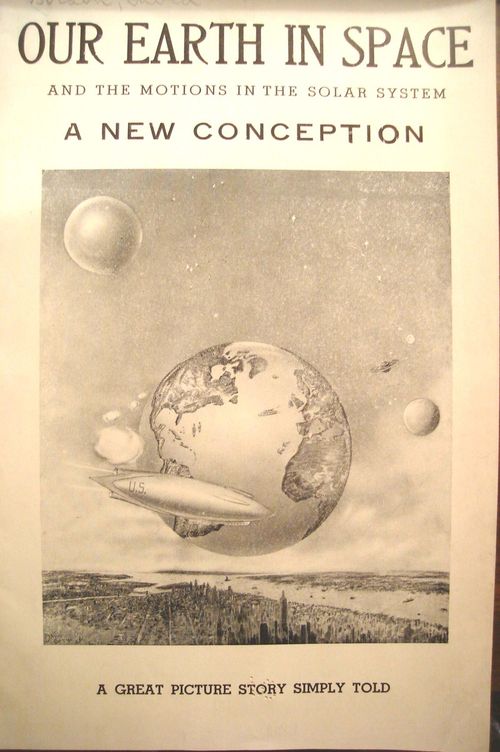
      Mensa extra earth

    Much of the early technical thinking on the future seems neither utopian (in the traditions of Thomas More, Francis Bacon, Plato, Robert Owen, and such) nor what we would consider today to be dystopian (as with visions of Capek, Bradbury, Orwell, Burgess)–it seems to tend more towards a neutropia. And this does not include the earlier attempts at predicting the near future by looking at frothy bits of entrails or the shades of urine, or the oracles of thrown dice bones or draw of playing cards, or following the implications of human mole maps or seeking guidance in the alignment of stars in the sky.

    And at the top and bottom of it all are the religious futures of endless pain and comfort and nothingness and repetitive existences—but that doesn’t feed into this topic, though the way time ticks through the reckoning of Brahma is very nicely suited to calculating versions of pieces of infinity.
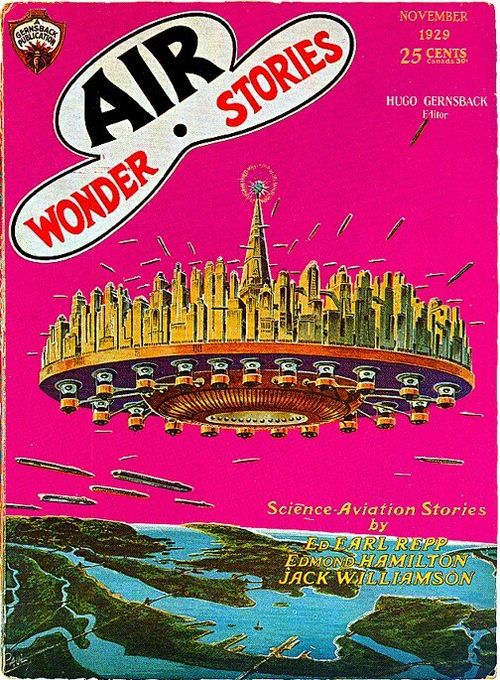
      Mensa floating NYC

    This effort of looking at the history of the future is easier when there are bookends, and there’s no more a convenient end to the future as when it has a date. And in the past that date has often been the year 2000.

    Let’s look at two very unusual examples of future thought experiments—one of which visualizes life in the year 2000—and both of which entertain what may be one of the ultimate considerations for the evolution of humans.

    One aspect of thinking about the future is the opposite of trying to include a sense of the future in the present—instead, it can be about removal. Removal of the present, distancing it from the present and the past. Removal of practices, though not necessarily principles.

    And perhaps one of the greatest of these removals is that of the human aspect of humanity: people replaced by created entities. In a way, a sort of 19th century singularity.
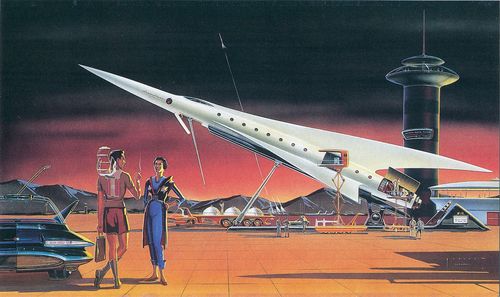
    Mensa cigarette space jock

    A curious example of this can be found in the third edition of Jonathan Swift’s tales of Lemuel Gulliver, where we see a Jorge Borgesian library-producing machine, a 20′ square instrument made of cranks and cubes and turned by scribes producing an endless stream of knowledge. A wooden miracle replacing the human mind, an intelligent primum mobile with splinters.

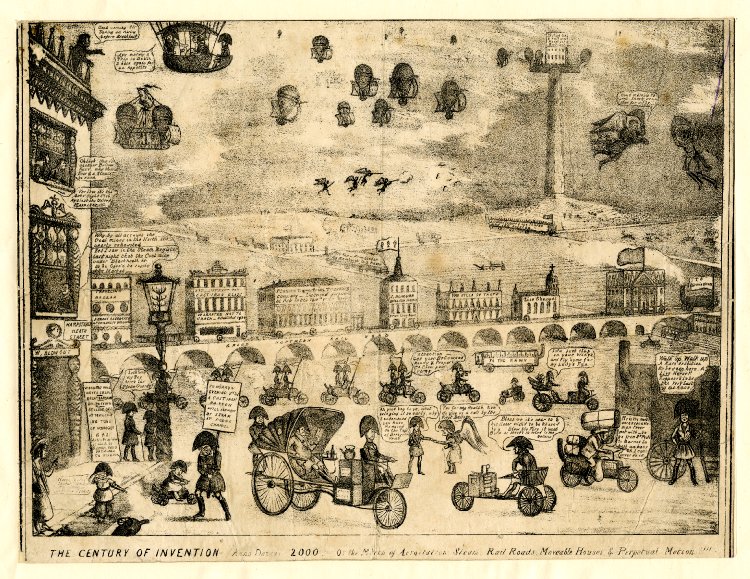
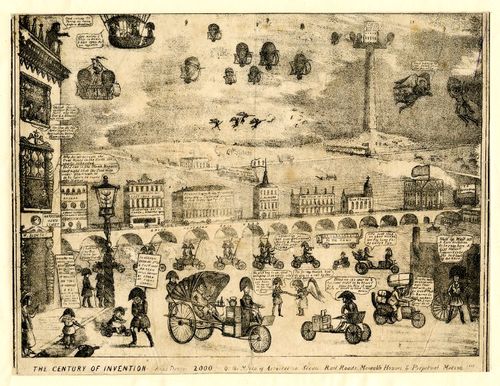
    A great example of this high removal is found in “The century of invention Anno Domini 2000 or the march of aerostation, steam, rail roads, movable houses & perpetual motion,” a terrific lithograph, made ca. 1834, the handiwork and imagination of Charles Jameson Grant, a satirist and observer of high order. He tried looking into the future 165 years hence, and in some practicable ways he got a lot of it right–the imagery wasn’t there, but the iconic sense of what may come to be was.
    Mensa Steam-powered pastor[British Museum, here.]


    We see small and large individual steam-powered four-wheeled vehicles, as well as plenty of balloons (in the spirit of aviation, at this point in its fourth decade and entering a great heyday) passing each other in every which way, off on adventures, or work, or in a race (as with the “out of Sight Club”). There are also numerous people flapping around in the sky (“winging it so early”) with their (something)-powered wings, some of whom are ironically hunting birds.

    The main sensation here is speed, though I would not say it was democratic–the means to go to Dublin in your balloon “for an appetite” and return later in the day would have been fantastic to the 1834 reader trying to imagine doing such a thing on such a whim, with a newspaper in your lap, but certainly it would be available to the leisurely class.

    There was also an idea for balloonic communication, as one man in a balloon shouts to another to “give me a call by the first balloon,” meaning perhaps a communication device, or a balloon-delivered letter.  

    The dialog certainly portrays an attitude of unremarkable observation, conveying how commonplace flight and mobile towns and steam cars would be in the year 2000. That’s where one of Grant’s the great insights comes into play–at lower left there is a person excitedly remarking about a race, and particularly on the great rarity of the exhibition of a live horse. That Grant would make this an issue is interesting, as it would certainly rub the 1830s consciousness the opposite way of what the brain expected to see in the street, and that was horses. Horses powered almost all transportation at this time—save for the invention of the railroad, some of which were horse-powered—and to imagine a world in which the horse would be gone would’ve been, well, unimaginable.

    Also, too, the great and extensive coal mines fueling the Industrial Revolution going dry, the coal consumed.
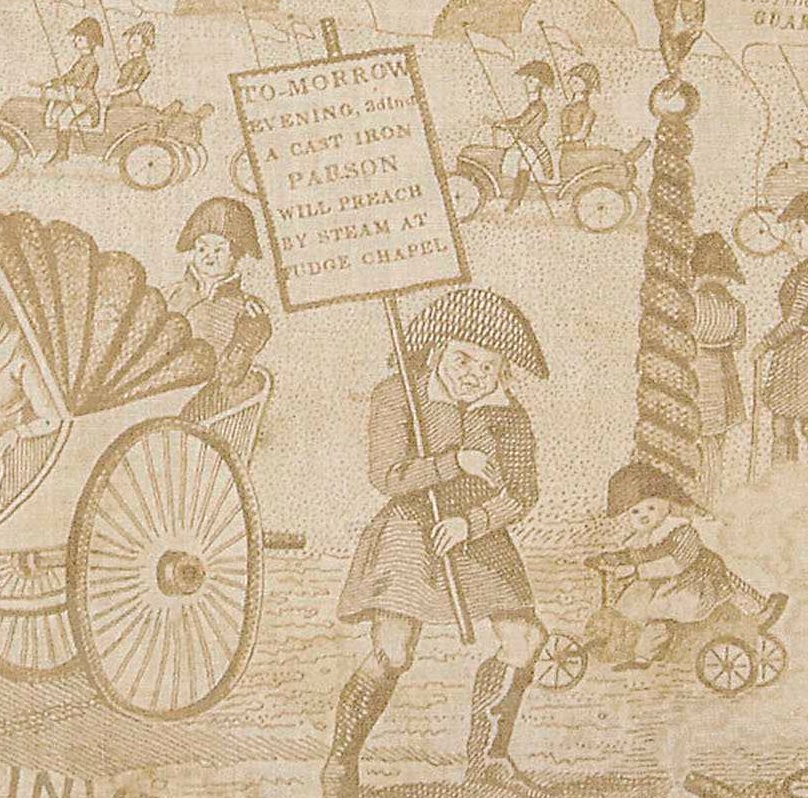
    MEnsa cast iron preacher[From Christie’s auction site, here.]

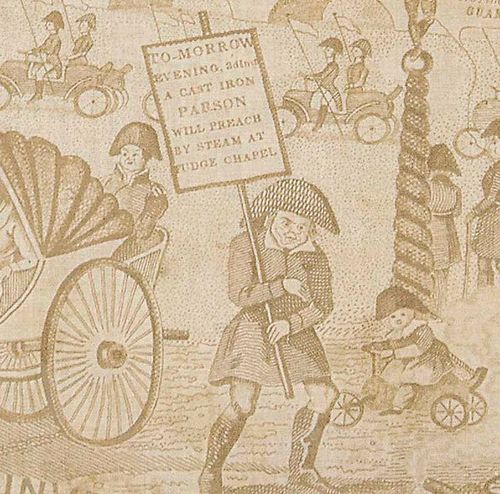
    At the bottom of the print is the prize, a very unusual placard concerning robotics: “a cast iron Parson will preach by steam at Fudge Church.” This is doubly intriguing because it not only invokes a steam-powered person—still fairly rare in the literature in the first third of the 19th century—but also a thinking one, a parson, a mechanical object trusted with the preaching and interpretation of a basic human belief system. This seems a bit on the primitive side in its display, but the intellectual imagery is pretty powerful stuff. I assume that the power of this would’ve been less so at the time of publication, guessing that Grant was making more of a not-so-subtle satire on the steam-driven puffery of some preachers with the creativity of kettles, and that in the future this would be magnified to the point of steam and smoke. But still the idea of placing the deeply emotional stuff of belief systems in the control of a machine is extraordinary for the time.
    Mensa article Heath March Intellect Robot (1)

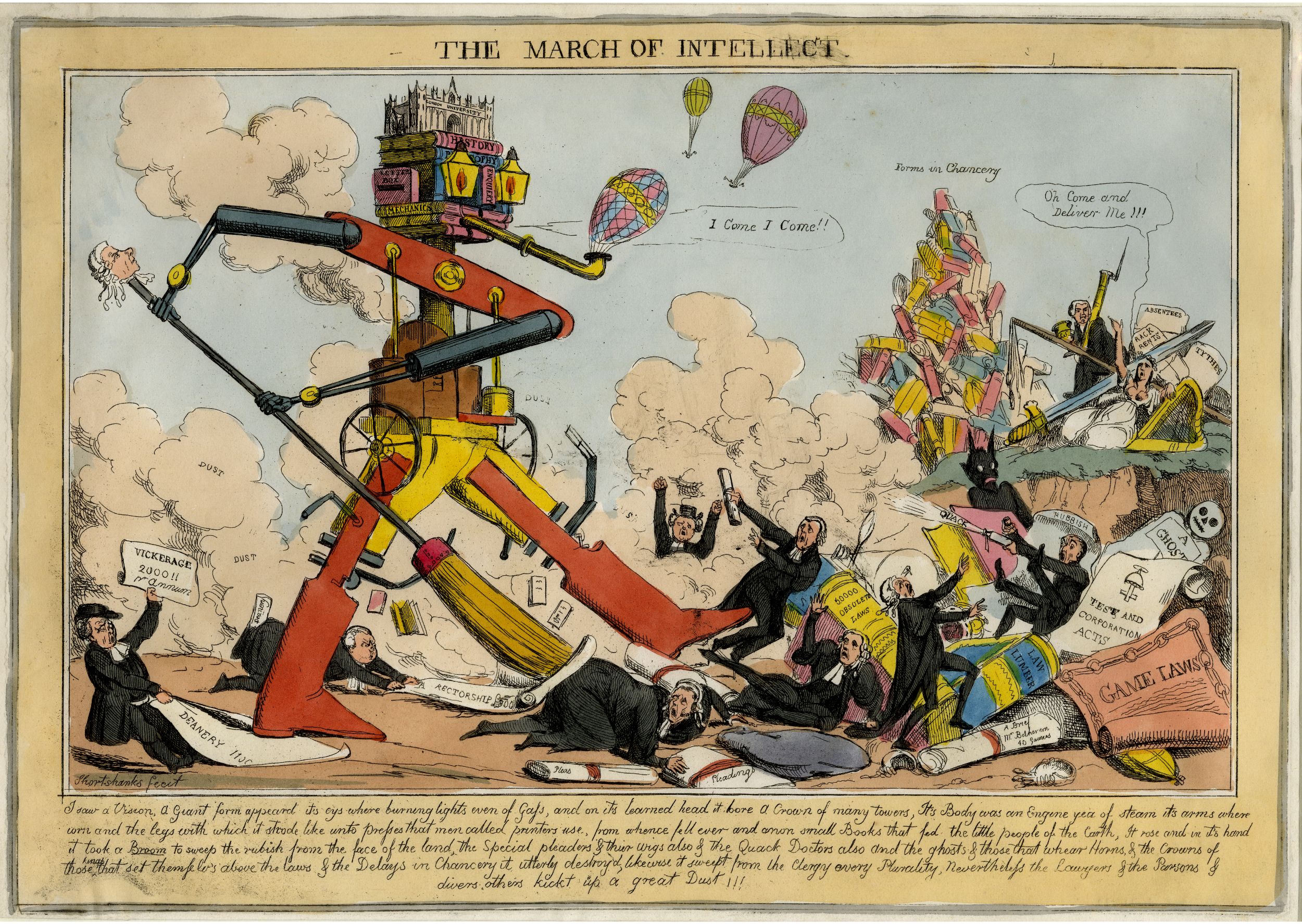
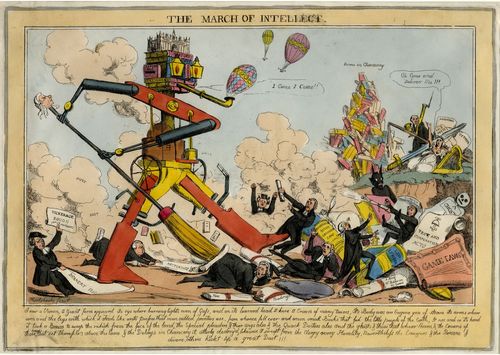
    A few years earlier William Heath’s March of the Intellect series (1825-1829) displayed another robotic entity witha book-driven intellect in its “crown of many towers” (London University) that swept up the great “rubbish” and “dust” of society. The robot was thinking in its way, distilling the promise of data and intelligence in its book-laden head, firing its set of gas-light eyes, iron arms, and legs made of printer’s tools, sweeping away useless and insulting lawyers and jurists and their legal wigs and obsolete and repetitive rules, medical quacks, and the dust of other official abuses, “sweeping rubbish from the land.” It was making decisions and acting on them, trumping the humans in its path.

    It is a remarkable leap, the consequences of which are difficult to put into perspective. I can think of an example from the novel Flatland, by Edwin Abbott, when its two dimensional characters first encounter a three dimensional figure—superbly incomprehensible at first, understanding following with some difficulty.

    Visualizing the assumption of a created intelligence developed enough to supplant or supervise human thought and activity was probably beyond the 19th century sensibility—just as its technical aspects are to us now.
  • Steampunk Air Travel, 1843

    JF Ptak Science Books   Quick Post

    “Let no man seek / Henceforth to be foretold what shall befall / Him or his children.Milton,” Paradise Lost XI, 770-72

    George Cruikshank–the gifted English cartoonist/satirist/caricaturist and social commentator–was readying his viewers to some hyperspeculative dreams on the possibilities of near-in-time powered flight.  Steampunk air travel is so commonplace in the near future that there are departure stations on building-tops   

    The etching in question, illustrating “Air-um Scare-um Travelling” appeared in the Comic Almanack (1843), and outlines a clear and hopeful image of future travel.  The ads show that there are frequent flights to far-away places, including Mont Blanc and Beijing.  

    It is interesting that the future is tempered somewhat by including an exploding airship at bottom left–so the future may be wondrous and exciting, though not without its dangers.  


  • Anti-Gravity Anti-Gravitas

    JF Ptak Science Books   Post 2319

    “Similitude of Substance will cause Attraction, where the Body is wholly freed from the Motion of Grauity.”– Bacon, Sylua Syluarum, 1626 

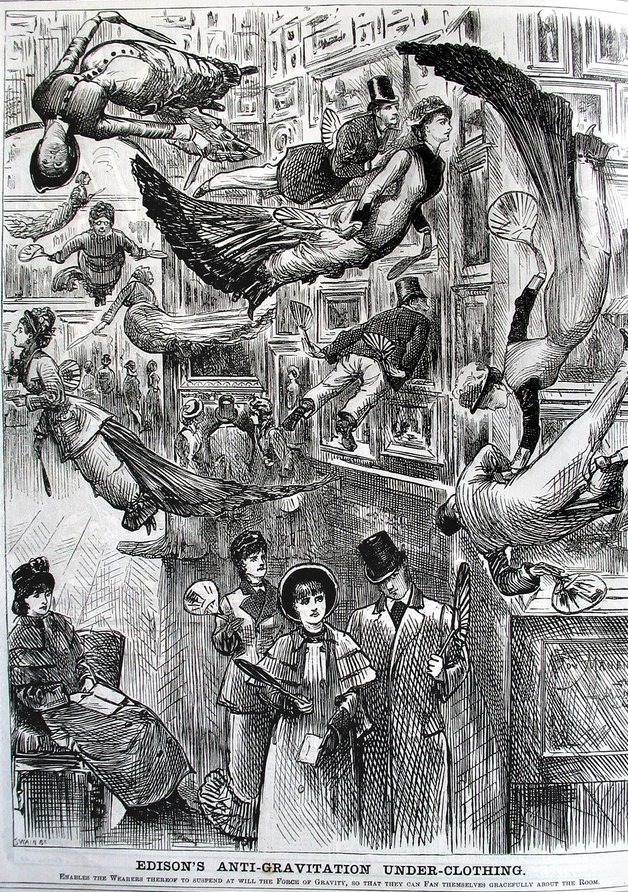
    It seems that in variations of the future that I have read that the concept of anti-gravity-something wasn’t taken so much seriously as it was a half-prank.  For example earlier in this blog I wrote about one of Edison’s least-known and most-nonexistent inventions, antigravity underpants. There was a time in the late 19th century when it was seen that Thomas Edison could do just about anything–so much so that the Brits in The London Punch gave him tongue-in-cheek credit for inventing (flying, so to speak), anti-gravity underwear.  The funny thing about this though is that the best thing that people could do with this new invention would be to go to a super-sized art gallery to look at paintings close to the ceiling. 

    Edison anti gravity b

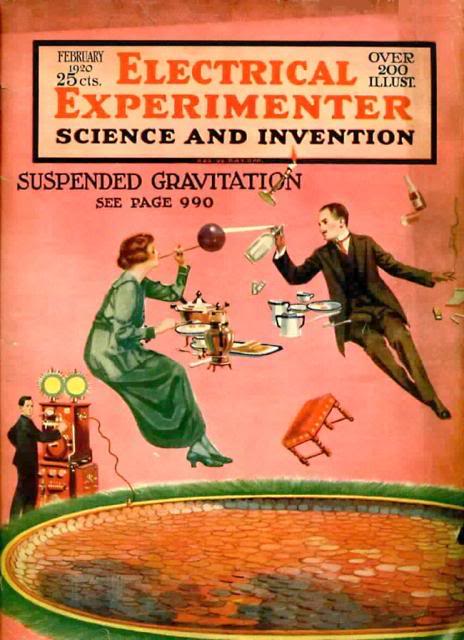
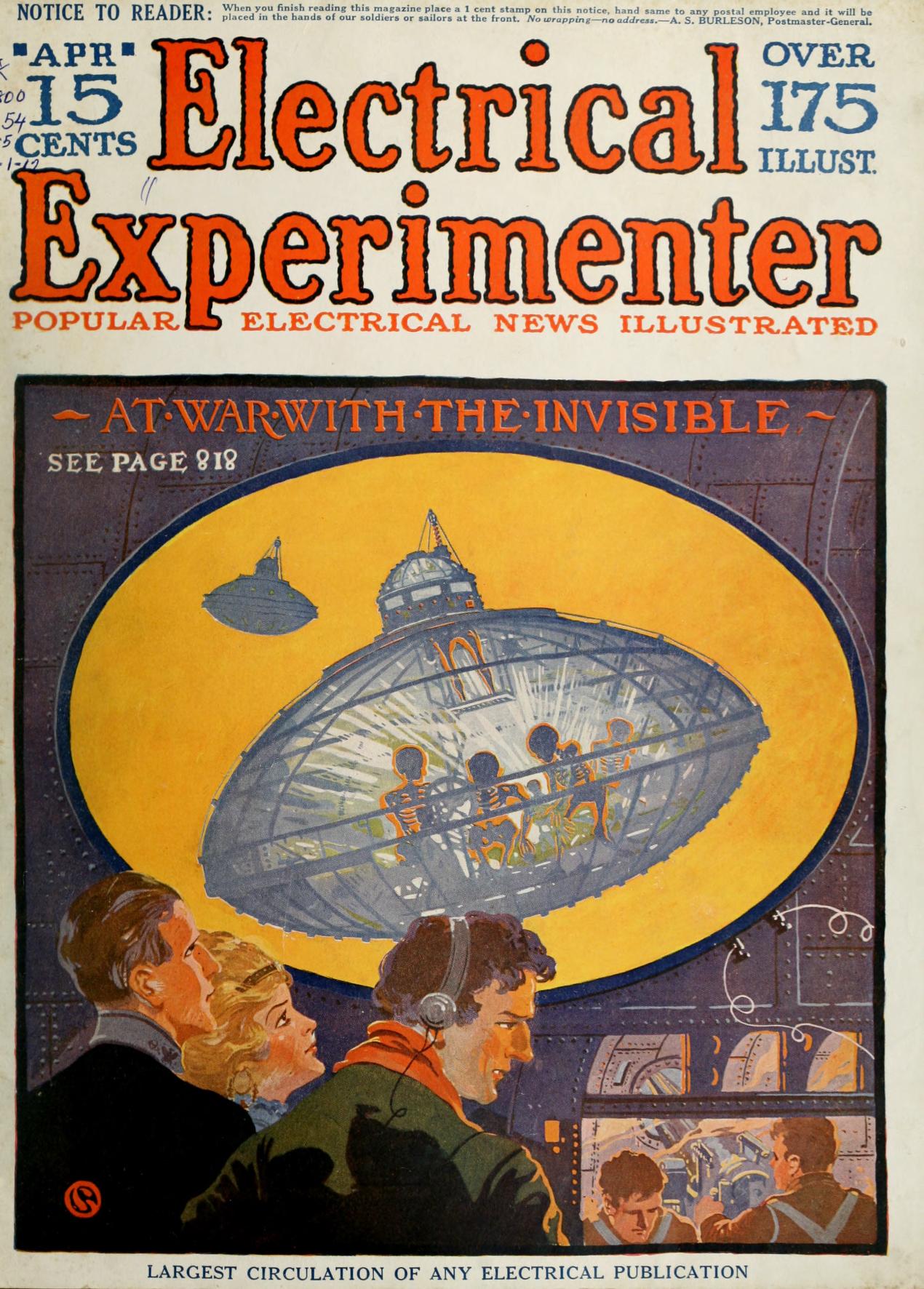
    Another example of gravity taken not-so-heavily is the scientific publication, Electrical Experimenter, where a seated couple is no longer so in the clutches of “suspended gravitation”, and again what the floating people engage in is play, the oman blowing a balloon and the man spraying selzter at it.  

    Anti-Gravity

    [Image source:  My Ear Trumpet, here.]

    The odd bit here is that “gravity” is found early on in the Oxford English Dictionary back to 1622 with G. de Malynes and N. Carpenter in 1625, and then of course with Roger Bacon a year later), though “anti-gravity” does not occur in use until 1945; and clearly the concept is on display in these three quick examples, though the phrase is not. “Anti-gravitation” however is used, though for some reason it is not included in the OED.  

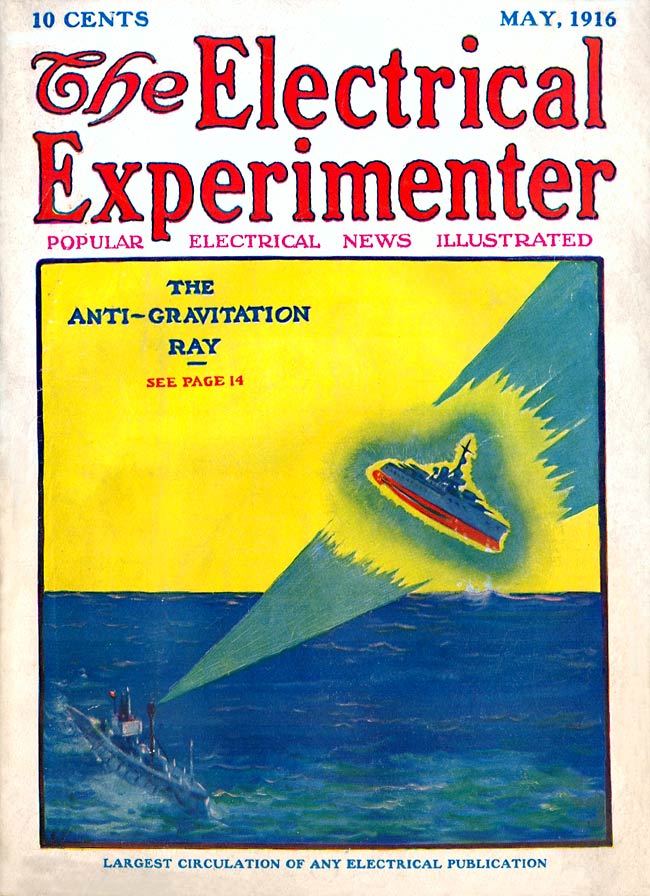
    The article, “Overoming Gravitation” by George Piggott, really did take the matter seriously, in spite of the cover illustration, as a quick read will verify.  More serious than that, though was an earlier and perhaps war-infested thinking mode was the militarily enhanceable anti-gravity ray (May, 1916).  

    Electricalexperimenter anti-gravity

     [Image source: Airminded, in a post about future weapons of the past, here.]

    Better yet (?) is this appearance in 1918 of an anti-gravity craft with invisibility options: 

    Antigravity and invisible

    [Image source: Inernet Archive, here.]

    And then of course there are examples like this, found in another early post on this blog, “Anti-gravity Atomic-powered Sun-fed Underground Woman of the Year 5000!”, here.

    In any event, these are a few example of the anti-gravity idea in the 1880-1920 period. No doubt there is a rich and full literature on this very thing–mainly what I wanted to do here was captued Airmnded‘s image to use for another day.  


  • The Tall in the Short of It–the Giants of Microworlds

    JF Ptak Science Books     Post 2318

    I’ve posted a number of bits in this blog about stupendously large and enormously small things, but it is infrequent to find the story of something made exceptionally large in a reduced world.  Perhaps it is normal fare in the science fiction world, but I found the not-obvious but still-obvious making of a giant in microland to be, well, less than obvious.  

    There have been countless stories told of shrinking people, or the discovery of vastly small communities living withing a larger host community, and so on, like the following:

    http://static.flickr.com/67/202348136_833ca3249d_o.jpg

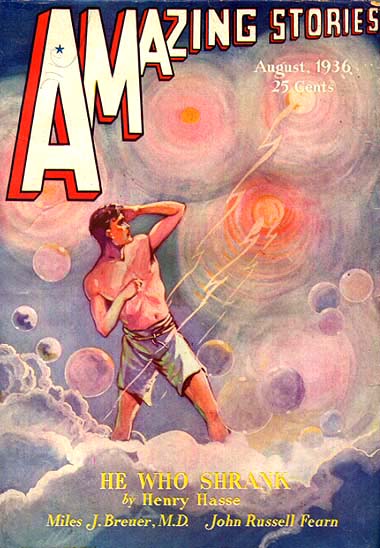
    This is a story by Henry Hasse and it involves a great scientist and the his elixir called “Shrinx” which after it has been injected into his assistant shrinks the man immeasurably, so science-fictionally small, that he has passed through the microscomos and “subuniverses” to the point where he emerges on a primitive place called Earth.  The assistant has traveled from a planet in a solar system revolving around a sun in a solar system in a galaxy in a universe to something small, something sub-atomic, landing in an electron holding within it its own universe. 

    That’s small. 

    And then there is this piece of magnificent ne plus ultra, where we remain in the microworld but where there are also micro-giants.

    The cover of Fantastic Novels (1921?) seems to tell a straightforward story, but as it turns out the giant is giant but one living within a world in an atom of a gold wedding ring.

    Man throwing

    Author Ray Cummings (1887-1957) found a nice writing niche for himself in his fictional discovery of a drug that could make people as small as atoms and then, once inside the microworld, could be made as immense as micro-mountains.  The Girl in the Golden Atom was one of a five-part trilogy(?)1 and so far as I can tell, Cummings used the hell out of his original idea.  The prose reads like it is punctuated with invisible periods every fifth word–evidently Cummings was so very busy writing 750 books and short stories that it  left him little time to edit or, maybe, think.

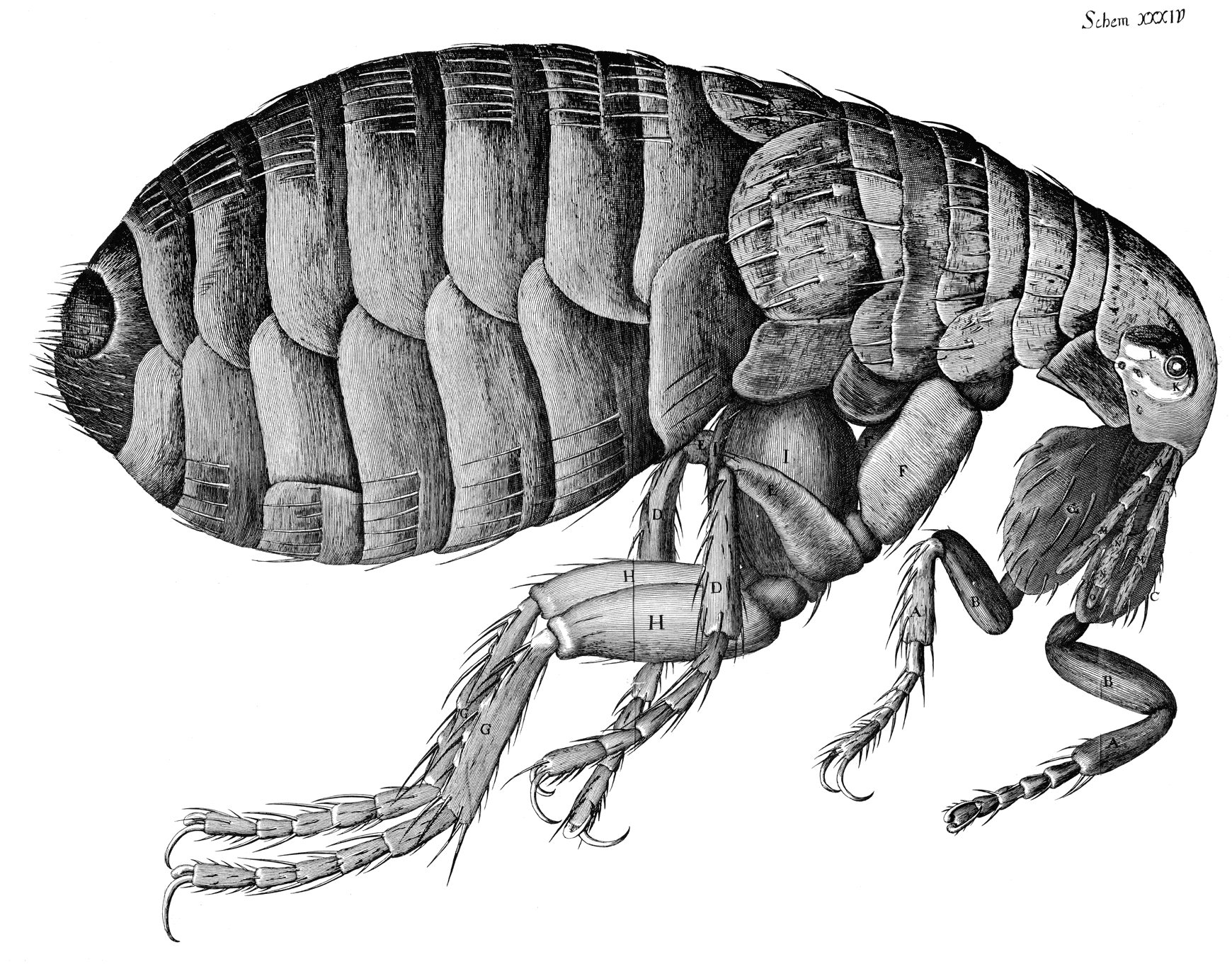
    It was a very nice surprise for me. That said, I can only imagine the giddiness and suspension of (dis-)belief when the mass market readership of Robert Hooke’s Micrographia got a look for the first time on what the small creepy crawlies that lived around them looked like under magnification.  Suddenly the blots and blotches took on real–and sometomes terrifying–forms.  These were basically unseen during their long interactions with human beings, until, suddenly, Mr., Hooke made his investigations and put a face on the unseen microworld and shared it with the General Public. 

    “It is my hope, as well as belief, that these my Labours will be no more comparable to the Productions of many other Natural Philosophers, who are now every where busie about greater things; then my little Objects are to be compar’d to the greater and more beautiful Works of Nature, A Flea, a Mite, a Gnat, to an Horse, an Elephant, or a Lyon” said Mr. Hooke at the end of his 28-page preface to Micrographia in 1665.

    https://historyofideasblog.com/a/6a00d83542d51e69e20120a5ec29c4970c-pi

    [Mr. Hooke’s drawing of his flea, in full and unexpected glory, with as much detail and armor as anything that had ever been imagined–only this thing was real, and common, and lived on you.]

    It may have been a similar shock to those seeing these images for the first time as it was for people to see Galileo’s images of the Moon, or to read him announcing that the perfect sky of Creation was actually not so, and that his telescope revealed ten-fold the number of stars that people could see with only their eyes, and which faith alone could not elaborate. 

    Yes, the incredible shrinking giant woman was a surprise but not on this order, not by a stretch–though it seems to be the world of science rather than scifi that has delivered the most shocking stories of the big and the small. 


  • Early Robots as Explosive Anthropomorphs

    JF Ptak Science Books   Quick Post

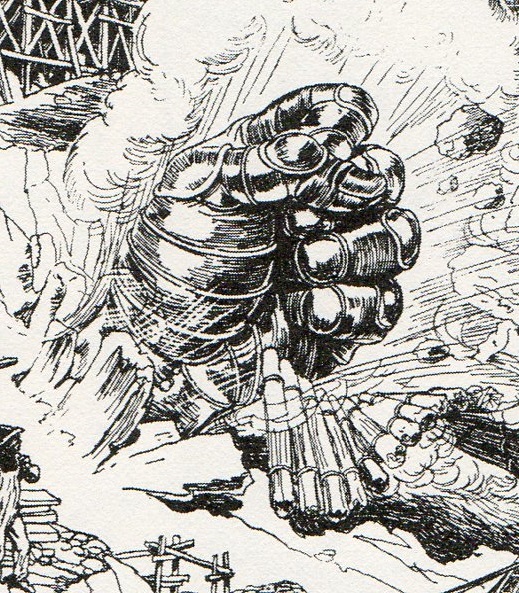
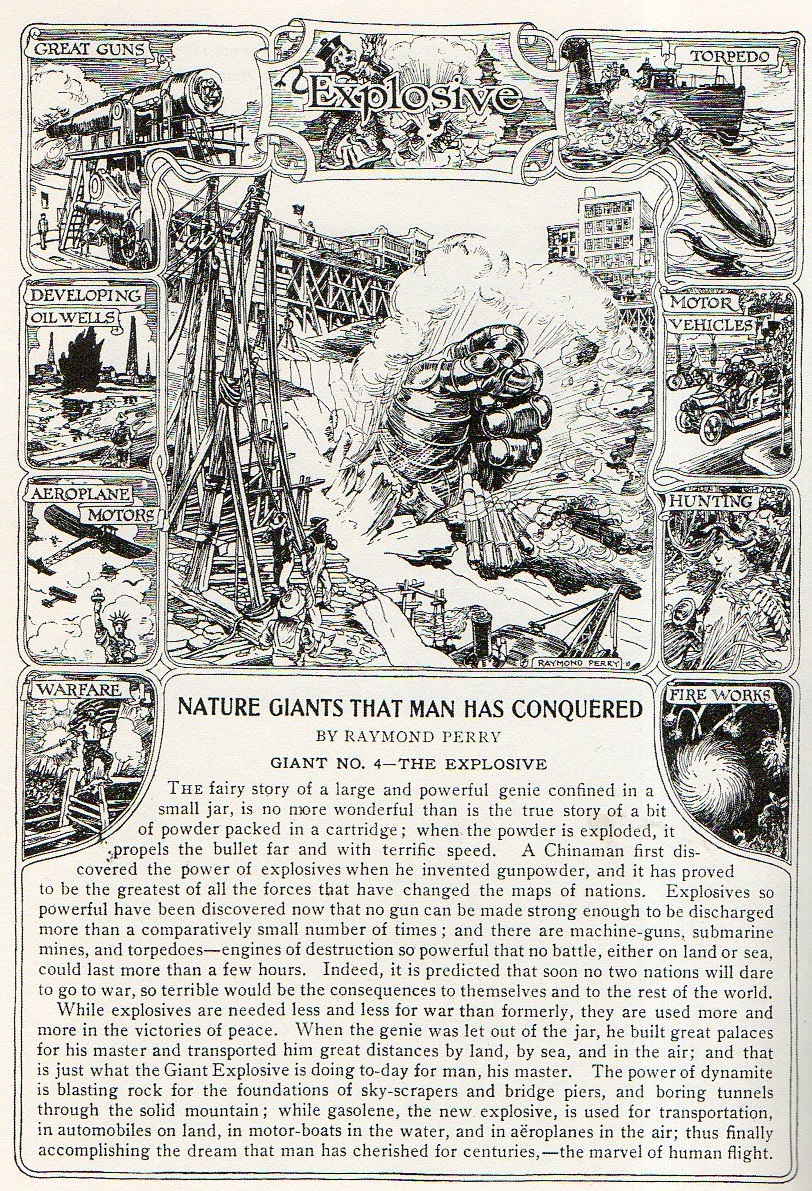
    I have been collecting images of mechanical men/robots pre-singularity antiquarian-quaint displays of advanced technical humans.  This is an unusual one that may or may not fit this, though there is a suggestion of MassiveMan in the gigantic metallic fist, which is supposed to show a successful combat of people over nature via the advancing bliss of explosives.  I’d just like to post this here before I lose it…

    Nature giants262

    Which is a detail from St. Nicholas magazine, 1911:

    Nature giants261