A Daily History of Holes, Dots, Lines, Science, History, Math, Physics, Art, the Unintentional Absurd, Architecture, Maps, Data Visualization, Blank and Missing Things, and so on. |1.6 million words, 7500 images, 4.9 million hits| Press & appearances in The Times, Le Figaro, Mensa, The Economist, The Guardian, Discovery News, Slate, Le Monde, Sci American Blogs, Le Pont, and many other places… 5000+ total posts since 2008.

Category: History of the Future

  • Big Sparks: an Early Electric Piano & Sorta-Telegraph, 1767

    JF Ptak Science Books   Post 2230

    The description of one of the electric piano-like instruments1 occurs early on in the history of electricity, and in the case of the Jesuit Giuseppe Marie Mazzolari, it is a narrative that found its way into print in 1767. Mazzolari was actually a contributing editor of this work which was a compendium of  state-of-the-art/science tour of mid-18th century thinking and accomplishment, making his Electricorum Libri VI2 is a semi-encyclopedic testament to the period of scientific achievement and progress. Another outstanding and unexpected contribution in this book though was made by Joseph Bozzoli (1724-1783) who made the suggestion of using electricity to transmit information–that would have been a sort of electric telegraph, using encoded sparks in a Leyden jar to transmit info from one end of the electric circuit to another, which is very cool stuff 70 years before the first certified electrical transmission of data, and nine years before Tiberius Cavallo, who is generally considered to be the first to make this suggestion.  

    Oddly the book–or references to it–do not seem to show up very often in the standard histories of electricity.

    Notes 

    1.  This is actually an electric cymbalo (“Cymbalum Electricum” as it is called in the illustration in the book), but the issue is the same, being a description of the first electric keyboard instrument.  It is called a cimbalom, cymbalom, cymbalum, ţambal, tsymbaly, tsimbl, santouri, sandouri, and so on, and is a type of hammered dulcimer. A slightly earlier description occurs in Jean-Baptiste Thillais Delaborde’s  Le Clavessin électrique avec une nouvelle théorie du méchanisme et des phénomènes de l’électricité (Paris, 1761)  “Delaborde built a working model of his innovative instrument and organized performances, however, even though the press was sympathetic to the clavecin électrique, it was never developed further and was soon forgotten.”–Wiki

    2.  Mazzolari’s book isn’t in six volumes–“Libri VI” or “Libri sex” is simply the notation for the book being divided into six major sections, or books in Old School antiquarian parlance.  

  • An Old Fear Updated

    JF Ptak Science Books  Quick Post    

    Destroyer045

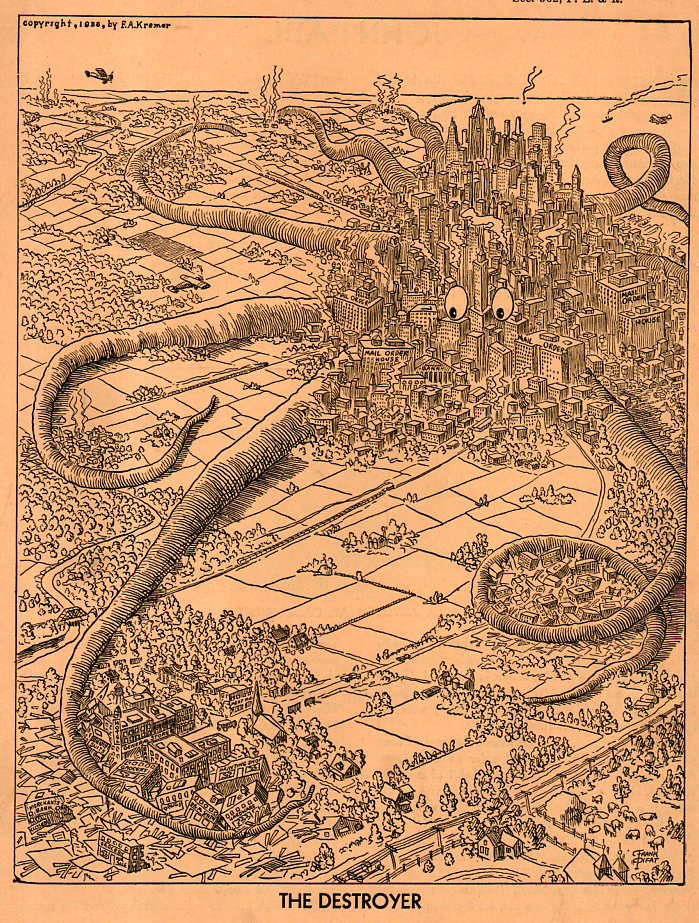
    The cover for this 1939 pamphlet I just found is pretty remarkable–very striking, strong, and capable of some sort of message which could’ve been helped along by another identifying agent.  Thomas Nast it isn’t, because it really doesn’t send the intended message by just visual means–you have to read the pamphlet to find out its meaning.  

    And as it turns out the octopus represents mail order companies.  Located in cities far-ish removed from small communities, the author (F.A. Kremer?, the man who at least copyrighted the thing) maintains in his morality tale that by ordering from far-away places a person causes the failure of local business. 

    He’s not far from the truth, especially if you update the language a bit and label the octopus “Amazon” or some such thing–even a megastore like “WalMart” would do. Or any large chain that has spelled the doom of a smaller/local business.  

    In any event I like the graphic, and I sincerely doubt that it has been published before, as there are no copies discernible on WorldCat/OCLC, and my copy (from the Library of Congress Pamphlet Collection) is also a copyright deposit copy.  So I suspect that Kremer’s effort didn’t make it out too far into the world.  


  • Computer Art, 1949

    JF Ptak Science Books   Quick Post

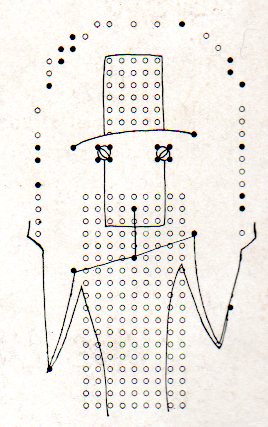
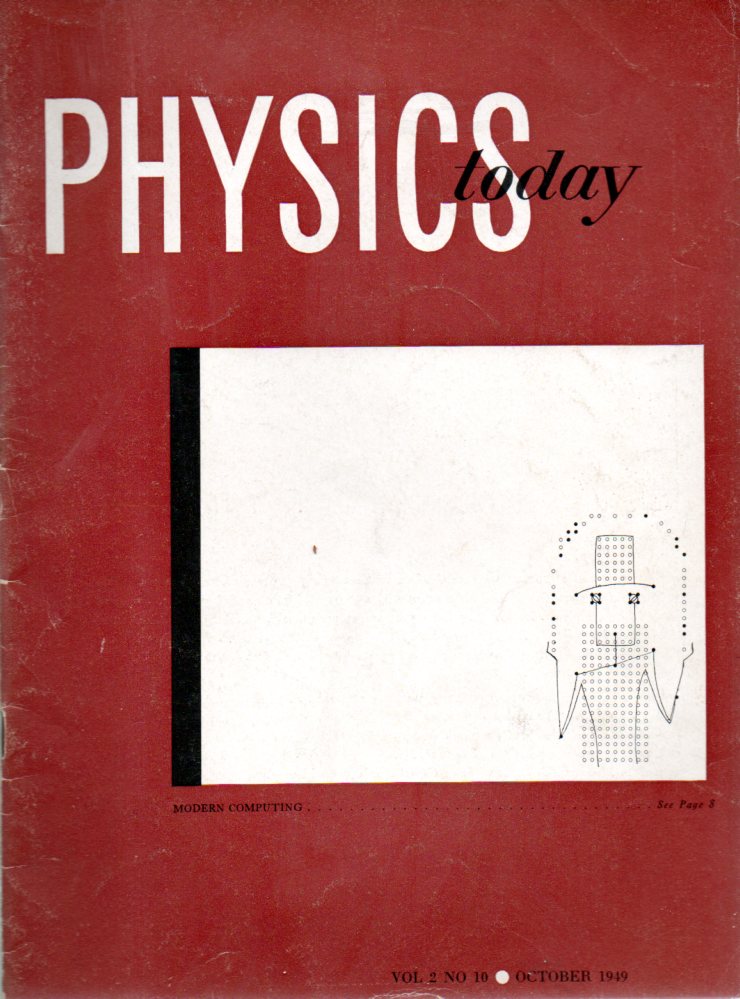
    Computer art154I’m not sure how to investigate this right off-hand, but I think that there is a special category in the history of art, subcat history of art and technology, subcat history of computer art, subcat using the image of the computer in art.  The image above comes from the front cover of one of the early issues of the “new” Physics Today magazine (volume 2, number 10), in October 1949–it is the artwork of Paul Bond, who created this portrait of a juggler “on a matrix sheet used for plotting computor [sic] plug board diagrams”, and is one of 11 such images. It illustrates an interesting article by pioneers R.D. Richtmyer and N.C. Metropolis (“Modern Computing”). Richtmyer/Metropolis have a very sober approach to the computer–mostly speaking about the ENIAC–and address its romance, possibilities, but seemingly (to me) most of all “a need for defining the limits of computing machine operation, as well as its promise”. In effect, then, the authors really only address the known quantities of computing capacity in 1949, and even though tempted by looking into the future, they really do not. Their vision of the future is very pragmatic: when speaking to future applications, they conclude “by their very nature, these applications are not easy to foresee, and perhaps, therefore, this is the point at which this discussion should close”. 

    Certainly there have been much earlier images of automated steam-driven robots with some sort of calculating brain, and images of imaginative computer-like objects…but art made by the computer seems to come a fair bit later than this issue, later still than what might be considered the first art generated via the computer (which were images made from manipulating an oscilloscope) in 1952. In any event, I think at the very least that the Bond artwork is very curious, interesting, and probably very early for what it is.

    Computer art153


  • An Early Steam-Driven Robotic Society-Scrubber (1829)

    JF Ptak Science Books  Post 2183           History of the Future series

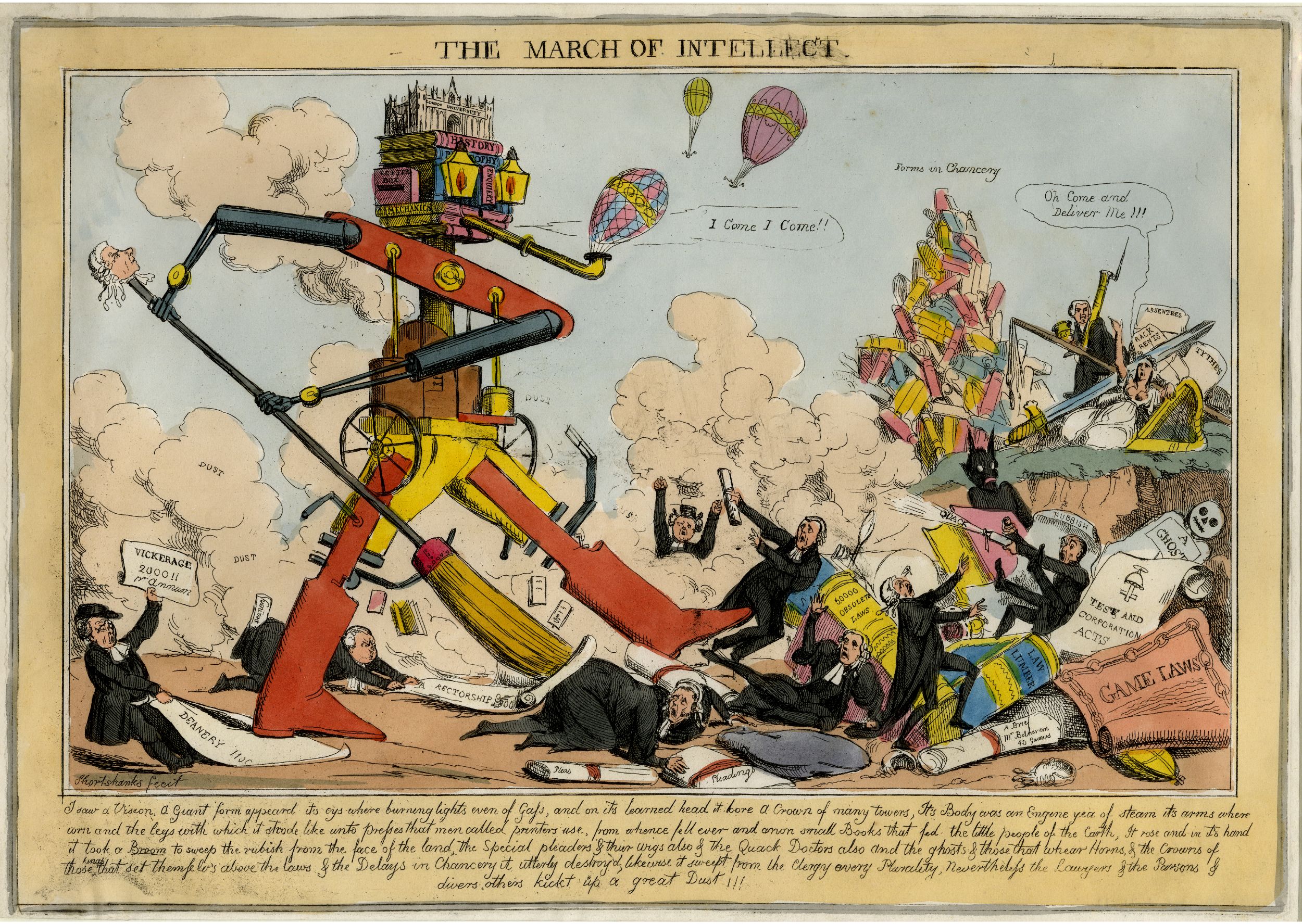
    I’ve addressed the ideas of early mechanical men elsewhere in this blog (just enter “robot” in the site search box at left and you’ll find two or three dozen related posts on the subject), but failed to include this very fine and early example by William Heath in his March of Intellect series (printed from 1825-1829).  

    Steam man heath

    He was particularly bitter about what he saw as an aristocracy of official ruination, and created an unusual steam-driven mechanical man with a book-driven intellect that swept up the great “rubbish” and “dust” of society.  At the top of this early robot (preceding the invention of the term by about 100 years) was a pile of books with a “crown of many towers”, which was London University, beneath which was a set of gas-light eyes, iron arms, and legs made of printer’s tools, sweeping away useless and insulting lawyers and jurists and their legal wigs and obsolete and repetitive rules, medical quacks, and the dust of other official abuses, “sweeping rubbish from the land”. 

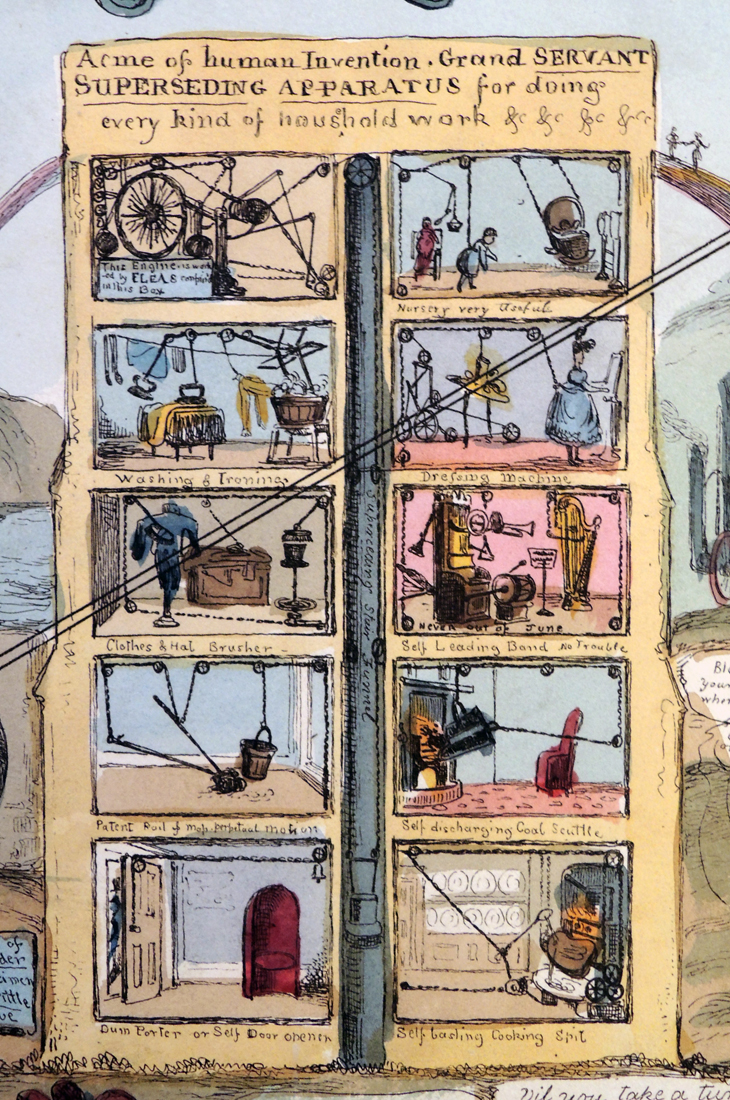
    Another near-robotic image by Heath is his pre-Rube Goldberg automatic house, a central feature in the March of the Intellect No.2 (1829) which features fantastic flying machines hovering and screaming past the house. 

    Heath march of intellect 3

    [Source:  Graphic Arts Collection, Princeton University libraries, here]

    It isn’t a robot unless you consider the entire house as a host for all of the things going on inside itself, and then you have something else entirely.  


  • The Future of the Library, 1883–or, Paradise without Heaven

    JF Ptak Science Books   Quick Post
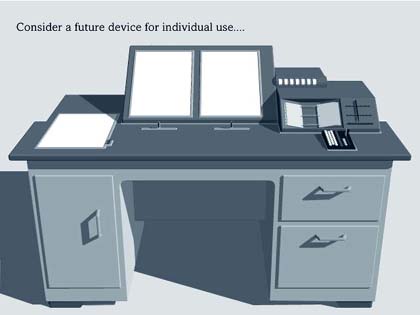
    Bush memex
    [Image: work station for Vannevar Bush’s visionary Memex machine, the grandfather of the intertubeweba nd hypertext. Source: http://etec.ctlt.ubc.ca/510wiki/Hypertext]

    Many have considered books and paradise and the ways to a great library and the correct books to read (and not read).  Seneca was convinced of the efficacy of book on a shelf and their being much like a family, and Erasmus and others believing in books as libraries within themselves but without walls, and of course Borges and the infinity of books exceeding the size of the universe, perhaps having him come to the conclusion that hi sheaven would be a book.  Thee are jusst a few examples of many–very few of all o fthese writers looked into the future at the book and the library.  There was Kurt Lasswitz’s 1901 novel The Universal Library (a source of inspiration for Borges’ later work, The Library of Babel which was written in 1941); there was H.G. Wells’ The Idea of a Permanent World Encyclopaedia and then the great Memex idea by the grandfather of the internet, Vannevar Bush, in As We May Think  which was published in The Atlantic in 1945. And of course Ray Bradbury’s Fahrenheit 451 and  Libraries of the Future by J.C.R. Licklider (1965) are also standouts.  Perhaps though the tandout in the practical and possible vision of teh future library was painted by Charles Cutter in 1883.


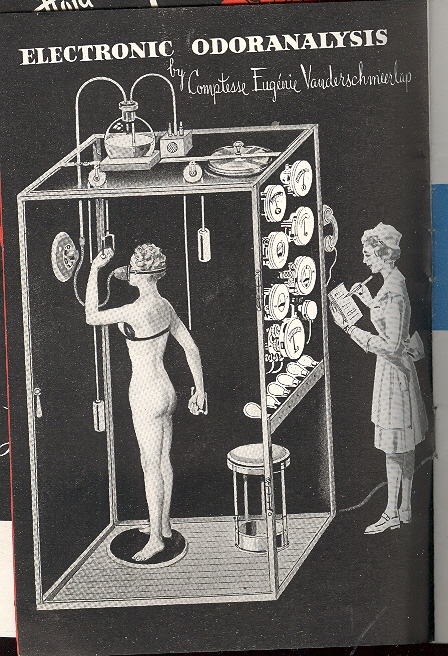
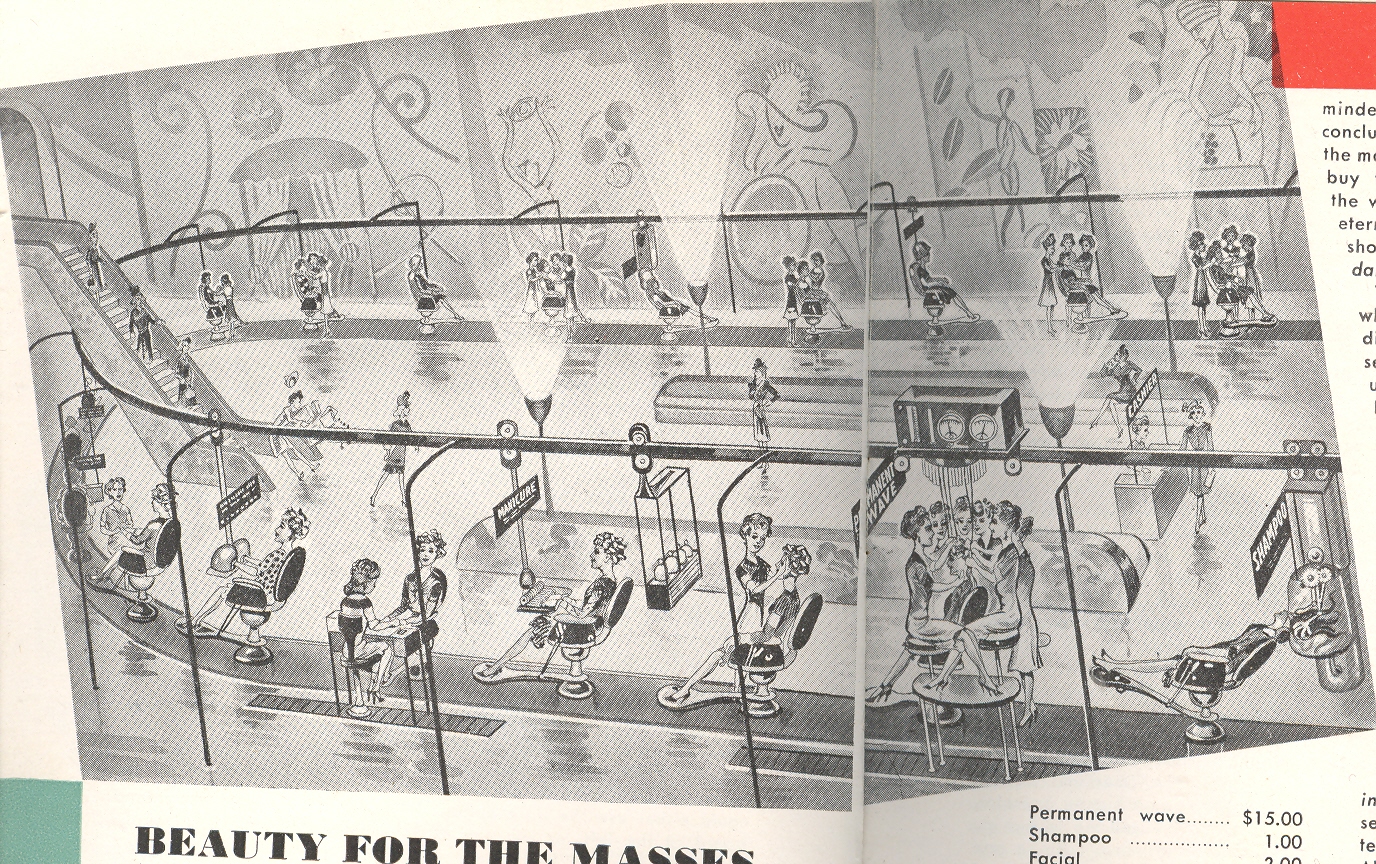
  • Electronic Beds, Odors, and Other Futuristic Grotesques, 1945

    JF Ptak Science Books   (Expanding an ealier post #610 from 2010)

    I am very attracted to the innocence and softly bizarre category of my store’s Naïve Surreal Collection, like this little pamphlet that came out New York in 1945.   The titles in this category are odd but still understandable, and the “what the ____!” response to the subtle ones isn’t quite so high and the exclamation points not so many as in the cases of the Naive Surreal titles. 

    Blog--may 11--odd 005

    Bizarre is just that, certainly not hiding behind any lesser or ambiguous title–it seems to be a parody of  small magazines and their advertising sponsors,  and copyrighted by the very far-reaching Hugo Gernsback, who in 1926 started the first magazine dedicated to the genre of science fiction (Amazing Stories) and for whom the World Science Fiction Society’s annual award for Science Fiction Achievement is named (the “Hugo”).  Gernsback evidently had a taste for cheeky parody, producing similar magazines to this called Quip, Forecast, Jolliers, Tame and Newspeep.

    I guess that this was deeply weird for mass-production publication, and it was probably funny–now it is just weird, odd, and somewhat discomforting–a successful and intentional reach for being part of the Naive Surreal right from the start.


    Blog--may 11--odd 008


  • Experimental Visual License

    JF Ptak Science Books   Quick Post

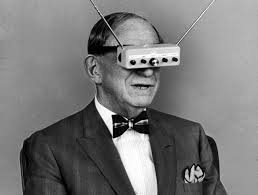
    Gernsback[Hugo Gernsback with his TV glasses, 1963]

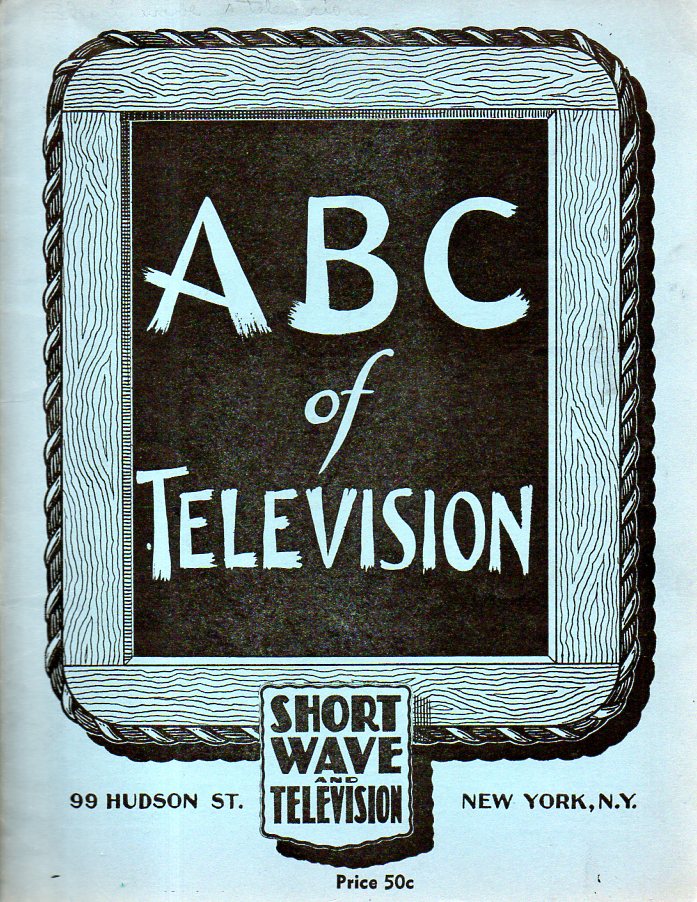
    The “Experimental Visual License” is a very nice turn-of-phrase, and it occurs in a technical and less poetic sense in this nteresting and nicely designed pamphlet from the earliest days of popular commentary on the new medium of television.  The ABC of Television was published in 1937 by the exceptional and extremely busy Hugo Gernsback (1884-1967, basically the inventor of the SciFi magazine) in his Short Wave & Television journal.

    Television abc477

    The pamphlet includes technical basics (“fundamentals of scanning”, “mechanical systems”, “Cathode ray emission”, transmitter operation”) as well as some popular and necessary information, like “when will we have television” and a list of television stations.  

    Just for the record, this publication lists 25 active stations, including low wattage stations like W2XAX, the Atlantic Broadcasting Company, in NYC at 50 Watts–there were 9 broadcasters with 150 Watts or less of the 25 listed. There’s also a list of nine other “discontinued” television stations (“experimental visual licenses and permits discontinued or expired”), which is where that phrase crackles into life.  


  • Tik-Tok of the Intertube // How Many Triangles are in the Web?

    JF Ptak Science Books   Quick Post

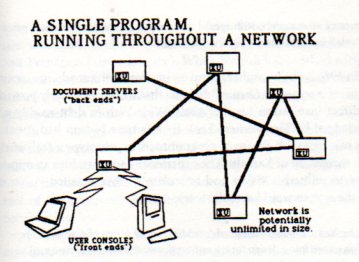
    Ted Nelson had a lot of ideas about computers, though not that many are remembered today, in spite of a bunch of them being pretty smart. (He coined the words “hypertext” and maybe “hyperlink”, for example.)  In any event there’s this little diagram of the possibilities of his “world wide network”, which I think no doubt is one of the earliest “maps” of the yet-to-exist internet. 

    Nelson dreams065

    [Picture source:  Ted Nelson, Dream Machines (1974) via Alex Wright, Glut, Mastering Information Through the Ages (2007), p 215.] 

    It is also interesting to see that the frontis illustration for his book uses Tik-tok, a metal/machine character from a series of books by (Oz) L. Frank Baum, this one Tik-tok of Oz (1914).


  • The Pulpy Flying TubePunk of TomorrowLand

    JF Ptak Science Books   Post 2166

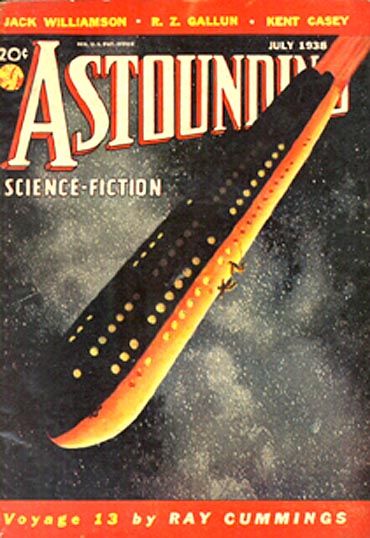
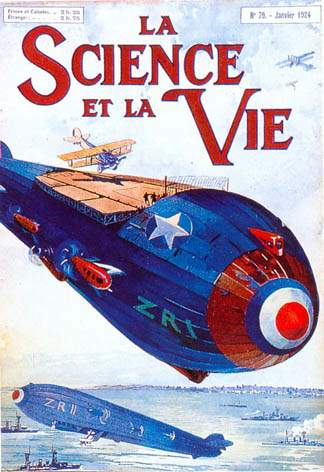
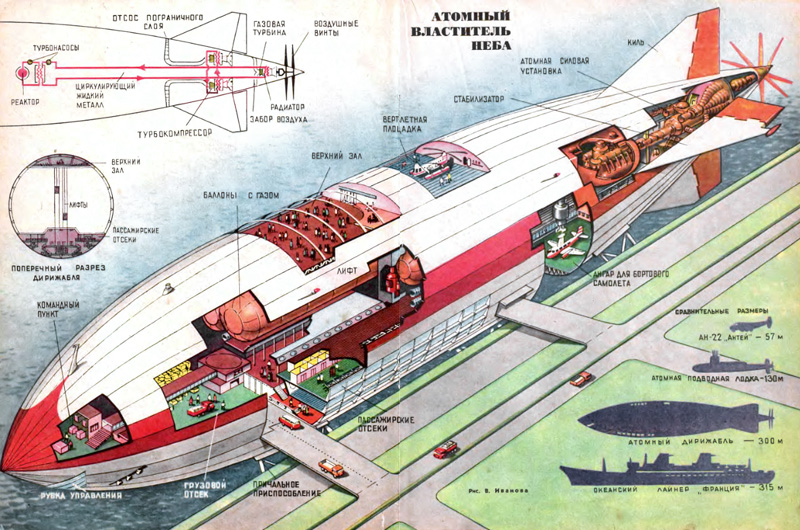
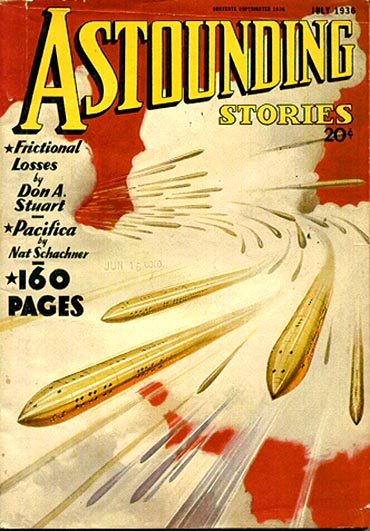
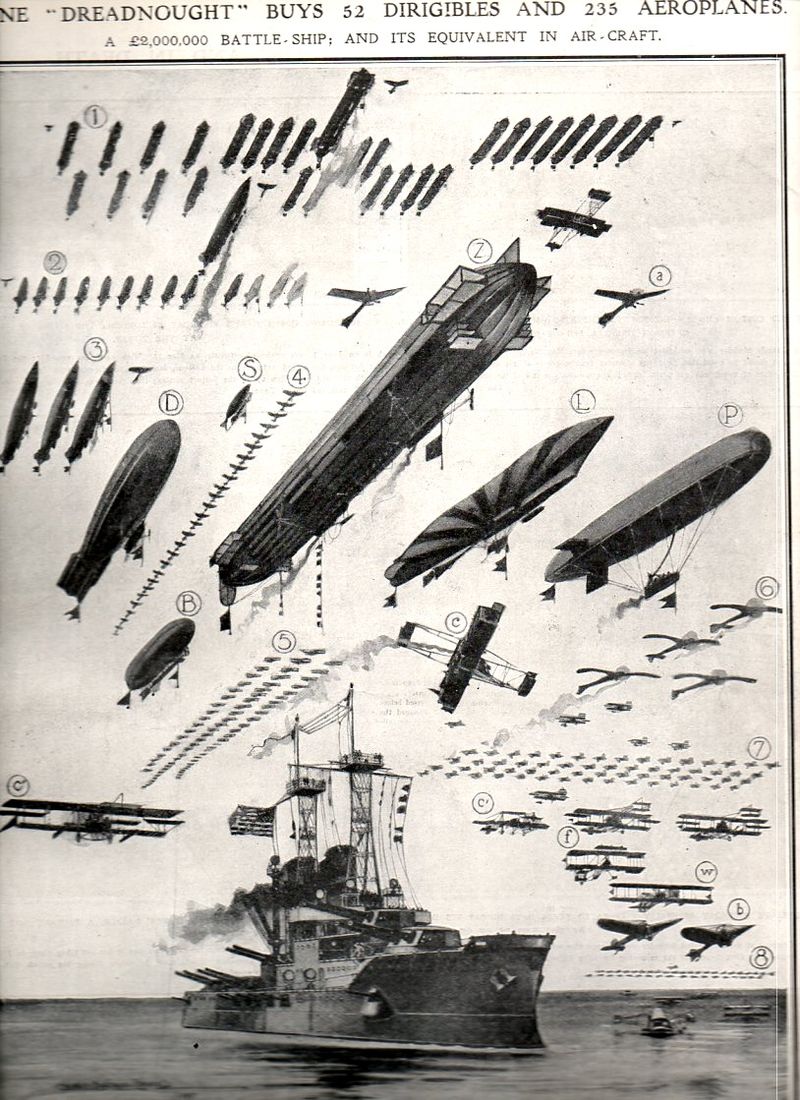
    Following this blog’s series on the History of Holes and the History of Dots will be a new series:  the History of Tubes, the first note of which is on the flying tubes of TomorrowWorld. Today’s installment is a simple picture post:

    http://www.dailygalaxy.com/photos/uncategorized/2007/07/17/science_fiction_science_fact.jpg
    [Source: http://www.dailygalaxy.com/photos/uncategorized/2007/07/17/science_fiction_science_fact.jpg] 

    [34754tutfgjdgdf.jpg]
     
    [Source: http://lh6.ggpht.com/_hVOW2U7K4-M/ST2rP9fpFfI/AAAAAAAAugY/u95RIMSHH9g/s1600/34754tutfgjdgdf.jpg] 
     

    http://androvillans.files.wordpress.com/2011/04/b2-astounding_science_fiction_1938071.jpg

    [Source:”http://androvillans.files.wordpress.com/2011/ 4/b2-astounding_science_fiction_1938071.jpg]

     
    https://historyofideasblog.com/a/6a00d83542d51e69e2012875ea3636970c-pi
     
     
    https://historyofideasblog.com/a/6a00d83542d51e69e2014e8870b10b970d-800wi

    [Source: http://static.flickr.com/100/258214584_3ce3697ab2.jpg] 


    [Source:http://static.flickr.com/59/188844208_60a18e94d7.jpg]

    [tow_1940summer.jpg]

    [Source:http://lh5.ggpht.com/abramsv/R4fcwUKUlTI/AAAAAAAADBI/Xu7s8ESZMyM/s1600/tow_1940summer.jpg]


    https://historyofideasblog.com/a/6a00d83542d51e69e20147e33be223970b-800wi


  • A View of the Future in the Depression–the Movies, 1932

    JF Ptak Science Books   Quick Post

    It is interesting that  a reporting agency like Poor’s Industry Service would have such a provocative cover illustration when reporting on the not-so-good economic news of 1932.

    Poors025Poor’s presented the city of the future as the standard banner for their report on the motion picture industry.  The city is massive, a portrait of concrete masses, especially seen in the dam or terminal in the immediate background, and also in the assembly of conical buildings at rear right.  Very impressive, especially considering it was the fourth year of the Depression. 

    Their report on the film industry was crisp and fairly bitter, carrying on about risky behavior and out-and-out mismanagement, leading most of the studios into loses and the industry in general to a plunge in composite net earnings and common dividends–a poor year.  In any even I was interested in the illustration, which seems an unlikely place to find such a severely International Style vision of the future.

    And the full cover: