A Daily History of Holes, Dots, Lines, Science, History, Math, Physics, Art, the Unintentional Absurd, Architecture, Maps, Data Visualization, Blank and Missing Things, and so on. |1.6 million words, 7500 images, 4.9 million hits| Press & appearances in The Times, Le Figaro, Mensa, The Economist, The Guardian, Discovery News, Slate, Le Monde, Sci American Blogs, Le Pont, and many other places… 5000+ total posts since 2008.

Category: History of the Future

  • Invasion Scare Nihilism vs. Proto-World-Dominating Socialism vs. Pretty, 1893

    JF Ptak Science Books   Quick Post   History of the Future series

    Follow Me on Pinterest

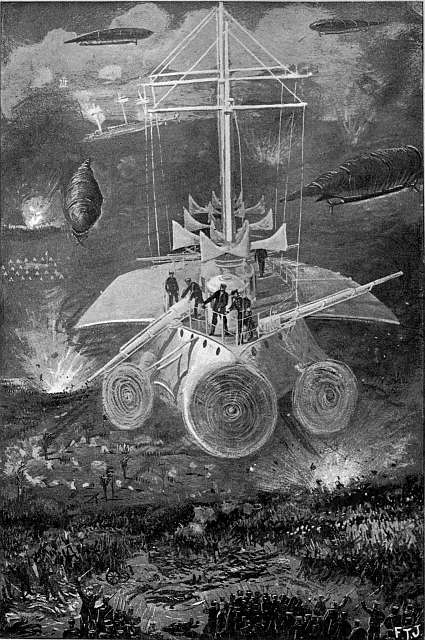
    There’s an awful lot in this nihilistic-pro-socialism revolutionary Sci-fi tale of invasion and Armageddon and deliverance from mega-capitalists than I will make room for here, where “here” is an 1893 tales depicting 1903–I really just wanted to point out the pretty pictures of flying machines. (For a full summary follow the link above to a Wiki article on the book; also do follow the link for a short biography of the author.)

    Angel revolution big

    ·Posted by :

    ·in:


  • The Similarity of a 16th c Cactus and a 19th c Futuristic NYC

    JF Ptak Science Books  Quick Post  
    Follow Me on Pinterest


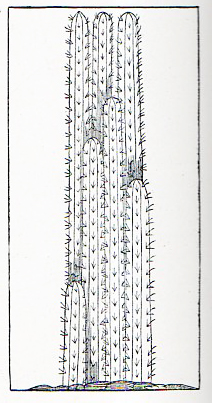
    Cactus818The future is everywhere and nowhere, hidden and obvious, localized and distant; and sometimes it is there when it really isn’t, and vice versa.  This image of the future is the last of these descriptions, though perhaps not even that, because it is a peep at a peep into the future, a reference to a reference.

    First, the cactus, seen here, from G.B. Ramusio’s (1485-1557)  Navigationi et Viaggi, printed in Venice in 1565 (and finally in three volumes, links to which are below).  Ramusio was a geographer and largely a scholar/reader/armchair-traveler, who collected travel accounts of explorers and published them together–the first such effort of its kind. 

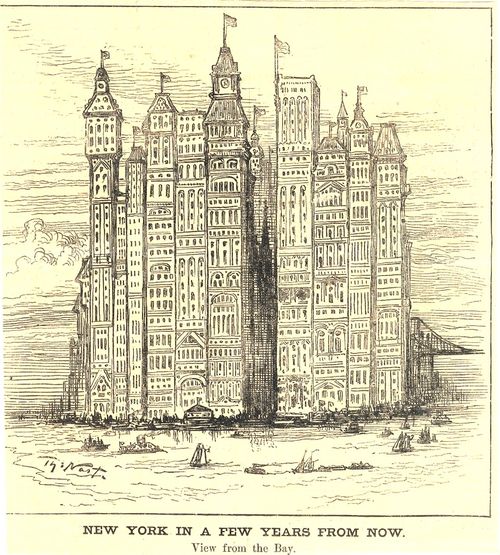
    The second image works better if you squint somewhat while looking at the cactus–it comes from the great and slightly problematic Thomas Nast, the Harper’s Weekly social/graphic warrior.  The image appeared in 1881, and depicts New York City in the near future, he result of newly-advanced building techniques, including the elevator (and importantly!) the elevator safety brake, which allowed the construction of buildings to great and fabulous heights.  Nast saw a little bit of overeager sky-scraping in it, and pictured variegated but probably dark future from the architectural commotion. 

    Nast skyscrapper

    I’m well aware of this being an enormous stretch, but I couldn’t think of anything else to get these two images together on a single post.  (Original article here for the Nast.)

    Notes:

    Full text for the Ramusio volumes from the Internet Archives site:


  • The Mile-High Half-Vertical-Airport, 1935

    JF Ptak Science Books    Post 2134 
    Follow Me on Pinterest


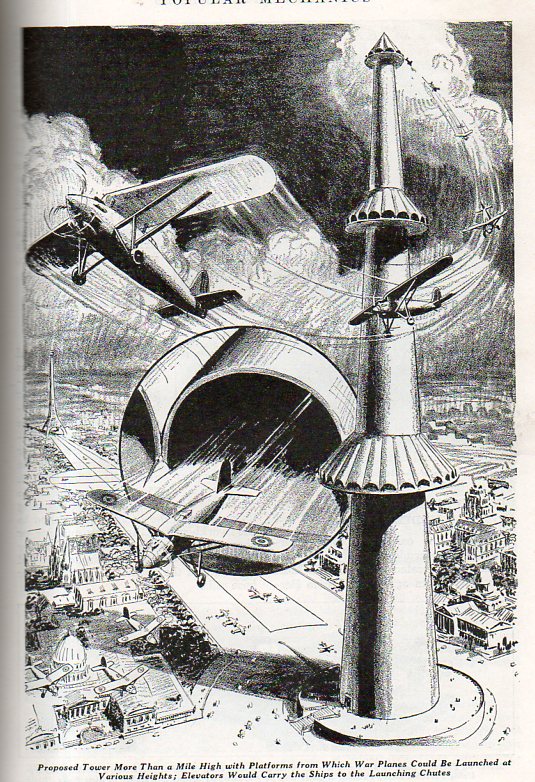
    Airport vertical794[Source: Popular Mechanics, June 1935, p 891.]

    In the history of Mile High Things I doubt there are many entries for airports–or half-airports.  This if not highly questionable structure inverted the horizontal concept of airport into something else, or at least changed the take-off into quite something different while leaving the landing strips the same. (This is the “half-vertical” part of the title to this post; “half-vertical” doesn’t mean “horizontal”, though I like that idea.) The new method of getting a plane into the air was straightforwardly breathtaking:  haul the plane up one mile in an elevator and drop it through one of the “launching chutes”. After everything is said and done, this is one idea that really didn’t need to be three-dimensional.

    There was a ride something like this on Coney Island that was very popular for years, a parachute ride where folks were hoisted skyward in a seat on a parachute and then dropped–a much better idea than this mile-high monster.

    Here are a few other examples of Mile-High/Long Bits that are posts in this blog:


  • A Chicken in Every Pot, and a Car in Every Living Room

    JF Ptak Science Books  Quick Post  
    Follow Me on Pinterest

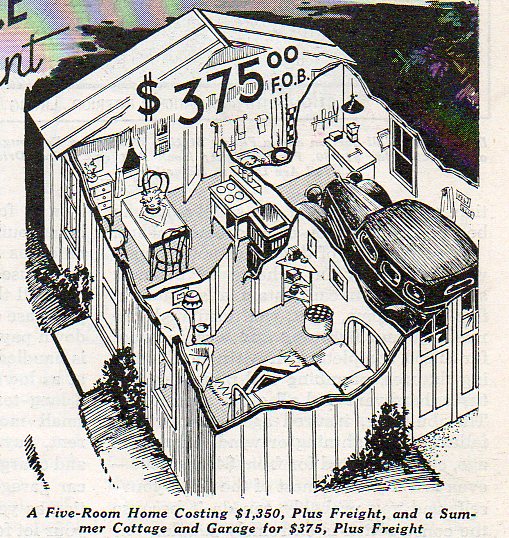
    Herbert Hoover–perhaps a better classical scholar than president–famously promised “a chicken in every pot and a car in every garage”.  Well, in this example of thrift and austerity, we see a summer cottage offered for sale for $375.00 (disassembled plus freight), with room for a car, and even for a family.  A small family. 

    Car living room793Which is a detail from:


  • Ecclesiasticism and the History of the Future

    JF Ptak Science Books   Post 2128  
    Follow Me on Pinterest

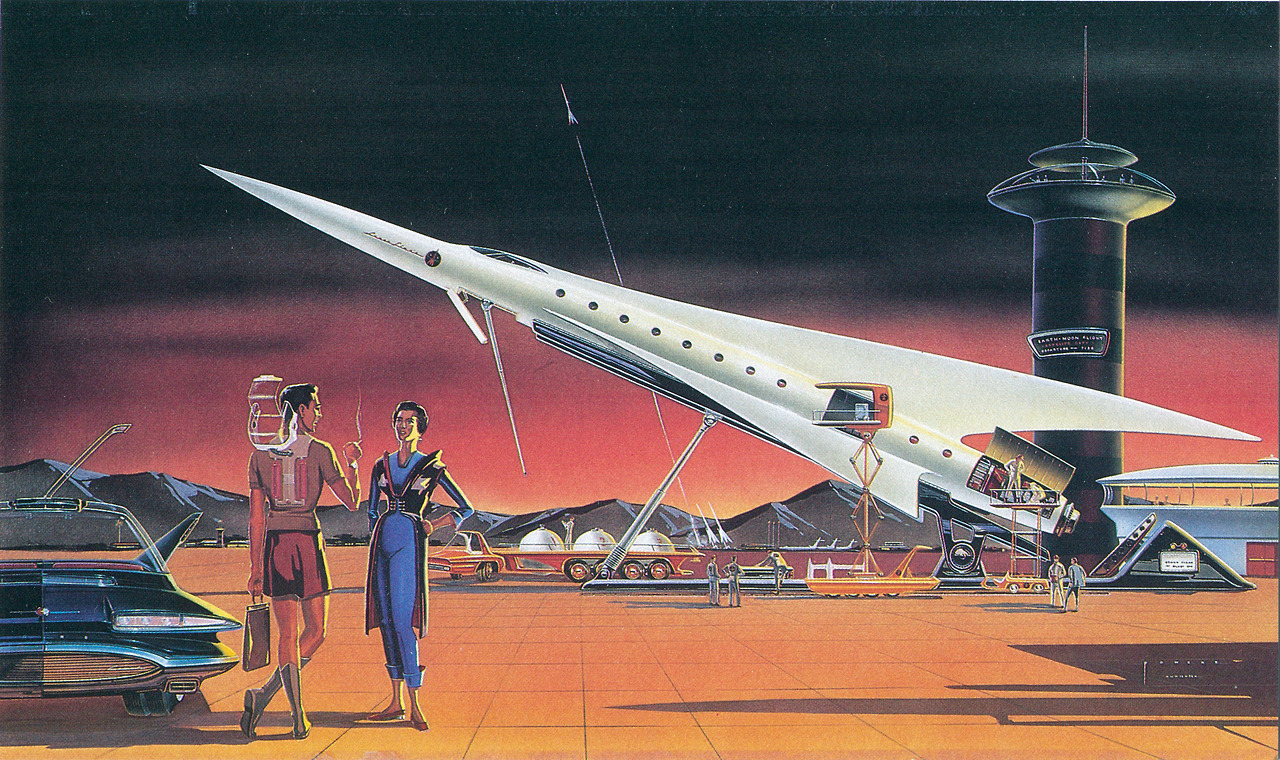
    FUTURE JIM POWERS
    There are different types of mystery as any quick look at Medieval legacies will tell you.  Some are mysterious mysteries never meant to be understood outside of obliqueness given their allegorically ambiguity, and some are just, well, different, but answerable. 

    The history of the future lends itself a little to the Ecclesiastical (or first) sort of mystery as just described–sometimes, anyway.  Sometimes looking at an imagined future drawn years ago for a period of time that has already passed may lend itself to some fair-game comedy.  But getting things “right” as a futurist/illustrator may be quite beyond the point, as with the example above, drawn by Jim Powers.

    Being furiously correct was not the point Powers was trying to achieve.  TO me he was drawing to a certain deep sight, presenting an allegory of possibility, trying to excite some interest in speculation in someone by elements of what he was drawing, not in the overall image.

    In the alphabet of ‘RAMAS, perhaps the most famous of them all is futurama, which (real or imagined) is part of the continuum of motoramas version of raceoram’s spaceorama.  It was in this envelope of futurama that Jim Powers worked his mysteries in a series of images for Life in the Year 2000, laboring away at insight in the mid-1950’s.  Surely he could0 not have believed in these rocket-stuffed ultra-streamlined mega-finned interplanetary autos would come into being in five decades, but I’m pretty sure that he believed that somewhere in the details of his work were useful bits/ideas for someone else.  Surely he did not think that the overall vision was more significant than the sum of all of his very interesting parts. 


  • Futurology: a 1916 Report on the 1950 Death of American Cities

    Airplane city630JF Ptak Science Books  Post 2098   History of the Future series  

     
    Follow Me on Pinterest

    “If a city can be unmade, it will not stay so.”

    That’s the hopeful outcome in the opening paragraph of this urbano-centric tale.

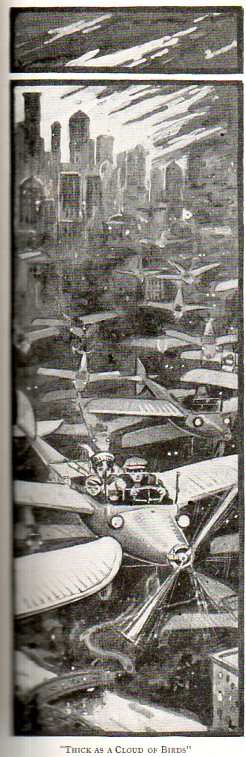
    In the piece of speculative fiction, “The Man who Unmade Cities” by George Holmes (found in Illustrated World, May 1916), a Mr. John Watterson becomes the ultra-Ford of aviation.  Watterson introduces massive reform in airplane design and production such that the new machines are available to, well, everyone–instead of selling thousands of the new planes, millions are sold.

    The story begins with Watterson in childhood, developing his flying interests and, by 1950, andhe becomes a world-beater, and destroyer of cities.  The plane allows people to fly off, leaving the cities in swarms, and “within three years the motorcar was on its way to oblivion”.

    The revolutionary planes were “flimsy-looking”, “dwarfish contraptions”, “spindle-shanked”, and so light “that a man could carry it” and “sold for a song of one’s own singing”, and were collapsable, carry-able, and capable of reaching speeds of 70mph.

    And at the outset of this triumph “the great city was killed; John Watterson was triumphant”.

    But the article, reporting from somewhere in the near-future, reported that the city would return, benefiting from the need for closer stores, and the want for a walk, and the plummeting prices of evacuated city spaces–people were drawn back into the city in much the same way they were drawn out to the suburbs.

    Airplane city631


  • Nonsense and the Fourth Dimension, 1899

    JF Ptak Science Books   Post 2059 
     
    Follow Me on Pinterest

    Burgess, gelett
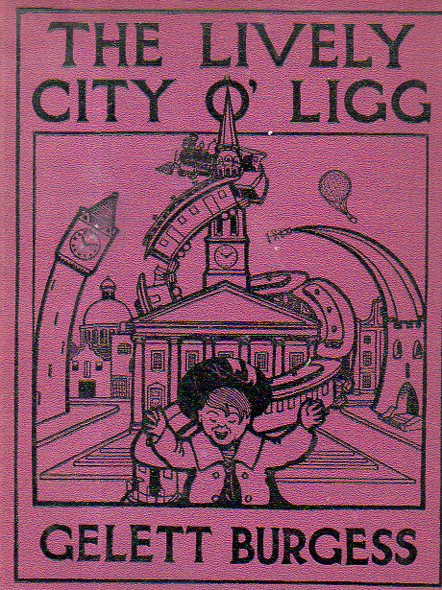
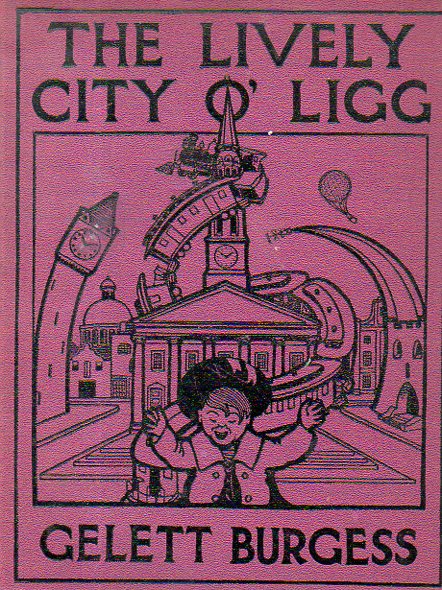
    Gelett Burgess (1866-1951, a Boston high-ground MIT grad poet/critic/all-around lit figure who wrote a lot and created an important Little Magazine called The Lark) continued his work in humor and nonsense and future-vision with his The Lively City O’Ligg, a Cycle of Modern Fairy Tales for City Children,  in 1899.  There’s a lot in this squarish book to suggest itself as a sort of farcical-absurdist tomorrow’s retro-vision fiction–its only his second book, and not the work he is most famous for, and it was written for the amusement of kids, but really for kids of all ages, and very funny. (Full text here via Internet Archive and prettier edition here via Hathi Trust.)
    Burgess387
    And it has great illustrations. For example, the front cover artwork (for the edition here) suggests a dimension of space/landscape and how it changes as a moving body viewing that scene approaches the speed of light–this is Burgess’ art, and it is amazingly prescient of the modern art that was fast approaching in the next decade or so, only Burgess’ name isn’t very commonly associated with the precursors of displaying the fourth dimension in art. [He is there, though with early associations with Stieglitz at 291 and Max Weber.  When I think of these early names it is generally of the more-obscure but very early W. Stringham in his “Regular Figures in n-Dimensional Space”, published in 1880, followed by the great Jouffret in his geometries of four-space (published in the 1900-1905 or so), and then of course Charles Howard Hinton and the hyperspace philosophy of Claude Bragdon, followed by H.P. Manning’s Geometry of Four Dimensions in 1914.  But in between Jouffret and Manning there is also the artwork of Picasso and Braque and Metzinger Gleizes and Le Fauccionier and Gris and Kupka and Duchamp, all of whom addressed this issue of space and time and the fourth dimensions in their work, seminal pieces all and created between 1909-1912.  Burgess himself came to the attention of the Stieglitz group by 1910 or so and was given an exhibition of his watercolors at 291 in 1911.)

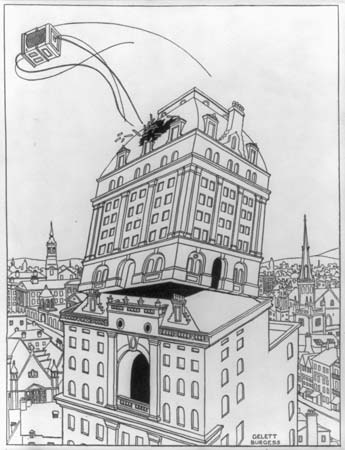
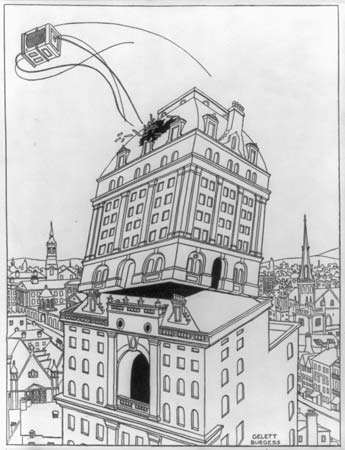
    The image illustrating the chapter three, “The Three Elevators” (above), just shows one of them bursting through the roof of an “immense building in the City of o’Ligg” “Twenty-seven stories high (!)”. (At the time the world’s tallest building wasn’t in O’Ligg but in NYC: in 1890, it was the New York World Building, New York City (309 feet, from 16 to 26 stories, but that is another story; closer to the time of the Burgess book it was the
    Manhattan Life Insurance Building, again in New York City which was 18 stories and 348 feet high. So the Burgess building was a big one by world standards in 1899–and of course there would be no tall structures like this without steel framing, or elevators, or for that matter fool-proof elevator emergency brakes. In any event the elevator spikes through the roof of the o’Ligg building, looking for all the world like one of the aliens from Wells’ War of the Worlds, which was published a year earlier than this book, in 1898. (I should say the appearance was suggested by the first edition of Wells’ 1898 book, as it was not illustrated.)

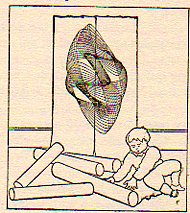
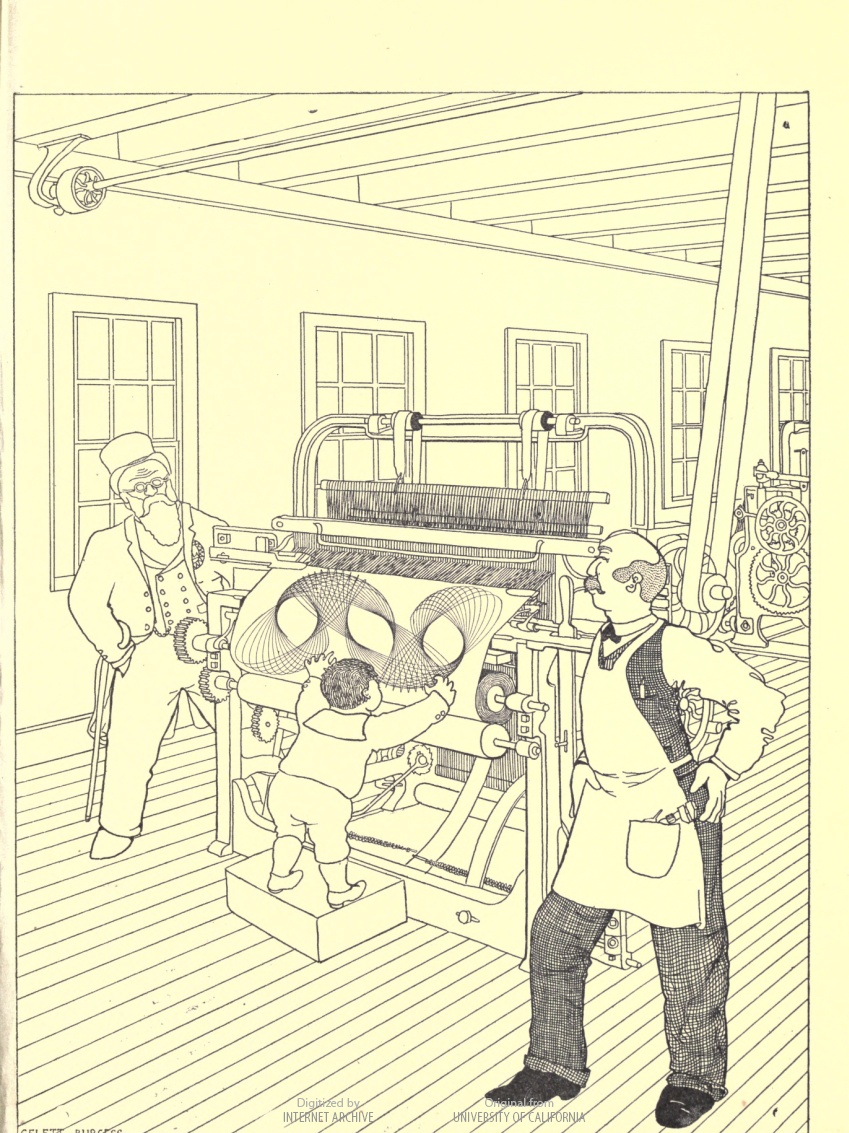
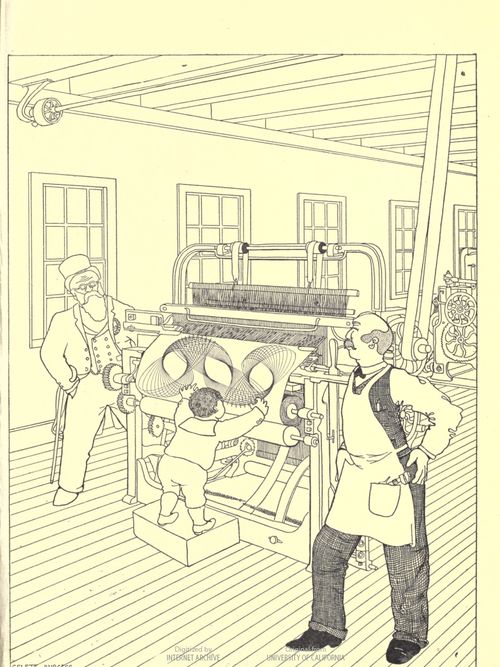
    Another surprising example of found-modern art occurs in the final chapter, “The Eccentric Loom”, when loom No. 7–like the other machines and implements in these stories–has a mind of its own and produces “something queer”, a “crazy design” producing an “insane tapestry”.  The loom is “either crazy”, or “it is a mighty clever machine; altogether too clever for me”.  But the design as an intentional piece of art for 1899 is pretty extraordinary–and the underlying premise, that the machine might be producing the art on its own, is exceptional and early.                           
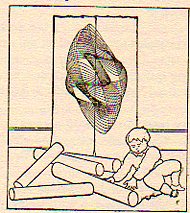
    Burgess loom388

    To put the artwork in a more machine-creative-context, here’s teh Burgess image that starts off the “Insane Loom” chapter:
    BURGESS LOOM B

    There’s much more in the Burgess book to discuss, particularly in the anthropomorphization of objects, as in the chapters dealing with a sleepwalking house, the boldness of a balloon, the laziness of o’Ligg lampposts, a flying stable, runaway chairs, and the like1. It is very enjoyable to watch Burgess breathe life into these objects, and give them personalities and lives.  But it is a true joy to see him present some of the objects as the “artist” and not just the tool, as we see here in the opening paragraph of the chapter “The Blind Camera”:

    "THERE were many Cameras living in the Ligg Photo- 
    graphic Parlours, artists who looked down with scorn upon 
    all other machines, not only upon the manufacturing 
    or working members of the community, but upon such 
    aristocrats as the Bicycles and Balloons as well. The 
    musical instruments they recognized as artists, it is true, 
    but it was the Cameras' opinion that most musical instru- 
    ments were a bit mad. Even the Very Grand Pianos 
    often got out of tune ; and, besides, they were all totally 
    blind, from the Penny Whistles to the Church Organs. 
    The Cameras themselves were deaf and dumb, but they 
    never thought of that, as they had the best eyes of all 
    the objects in the City o' Ligg, except the Telescopes, 
    and the Telescopes didn't count ; they were not artists- 
    they were merely elaborate tools."


    Perhaps our future Robot Overlords (a phrase taken from Mr. Eugene Krabs in
    Spongebob
    Squarepants) will one day in the future look backwards and find
    the beginning recognitions of the creative souls of machines in the work of
    Mr. Burgess.

  • Electro-Punk Memory, 1929

    JF Ptak Science Books   Quick Post  

     
    Follow Me on Pinterest 

    Gernsback memory machine
    [Image source: the wonderful Frank Wu (sci-fi fanasy artist) website, here.]

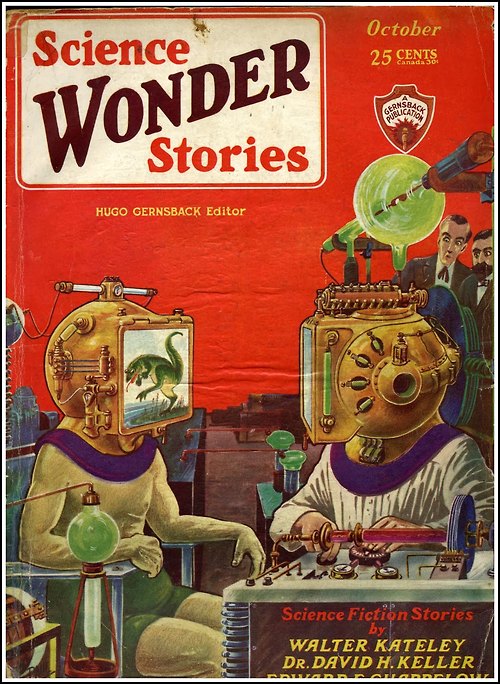
    This is the delightful and reaching cover art by the great Frank R. Paul for the October 1929 Science Wonder Stories, illustrating “Into the Subconscious” by Ray Avery Myers, a story of a physician/shrinkologist/physicist who concocts a way of reading into the memories of his subjects–long, deep, ancestral memories. The doc (Macey) is seated at right on the cover, somehow retrieving images from the patient–an idea that has had long legs, and seen famously in the end-all road movies,  Wim Wender’s 1991 PunkNoir film, Until the End of the World. Or perhaps its  more future-driven than that, where each viewer is viewing the other’s memories or dreams or visions, rather than their own, the images flickering to life onto the monitors, initiated by the simple proximity of another person…all memories available, nothing secret.

    At least in the Wenders portrayal of the dream-end of this idea, there was precious little time for anything but dreams.


  • The Electronic Beds of Electronic Dreams, 1945

    JF Ptak Science Books  Post 2019   (expanding an earlier post)

    Electronic odoranalysis

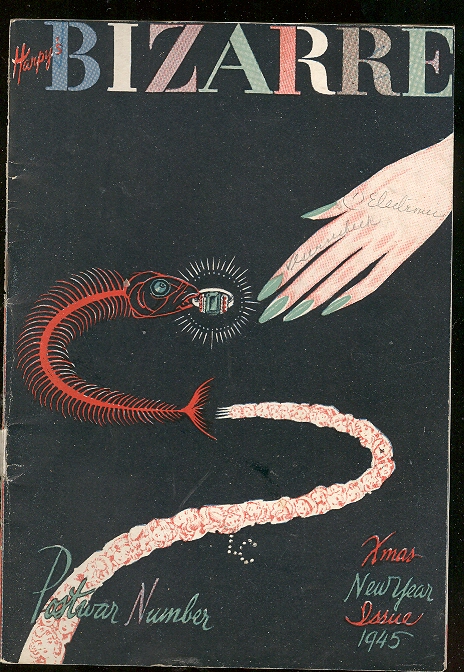
    I am very attracted to the innocence and softly bizarre category of my store’s Outsider Logic Collection, like this little pamphlet that was published in  New York in 1944.   The pamphlets in this category are odd but still understandable, and the “what the ____!” response to the subtle ones isn’t quite so high and the exclamation points not so many as in the cases of the Outsider Logic titles.  Bizarre is different from that, certainly not hiding behind any lesser or ambiguous title–it stretches the category a bit as it is intended to be a parody of the more-popular magazines and their advertising sponsors, but it is really quite a bit different from a simple humous and pun-laden trip into dead-end future visions.  It was copyright by the very far-reaching Hugo Gernsback, who in 1926 started the first magazine dedicated to the genre of science fiction (Amazing Stories) and for whom the World Science Fiction Society’s annual award for Science Fiction Achievement is named (the “Hugo”).  Gernsback evidently had a taste for cheeky parody, producing similar magazines to this called Quip, Forecast, Jolliers, Tame and Newspeep–it seems though that Bizarre may have ultimately morphed into Forecast.Blog--may 11--odd 002

    I guess that this was deeply weird for mass-production publication, and it was probably funny–now it is just weird, odd, and somewhat discomforting–a successful and intentional reach for being part of the Uninentional Outsider right from the start.

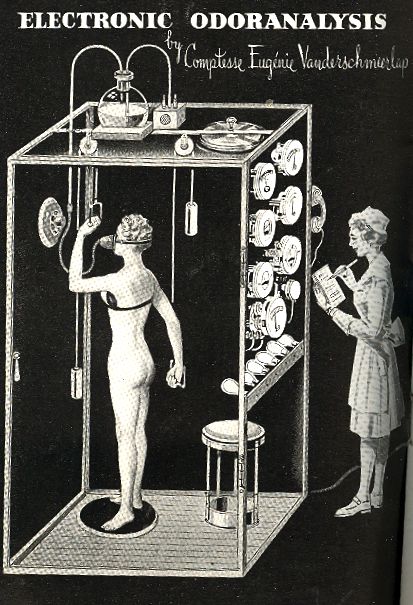
    Most of the magazine is dedicated to imaginary electronic delights–analog electronics (though it is still fairly early to be having such dreams and using the word “electronics”, as it was just barely two decades old at this point).  One of the oddest of these inventions of the near future was the Electronic Odoranalyzer, which was necessary for reasons I couldn’t discern. (I’d like to assume that odors are calculated and calibrated and a scent is chosen specifically for them, or it.)  

    The advertising was unusual as well:  there were hats you could potnetially purchase of weeping willow Platina fox tails; some hats had tanks (as with the Le Chapeau Tank hat, modeled for the magazine and “worn pugnaciously at a slant”), and other hats had simple canons (as with the French Mitrailsuese).  While wearing your tank hat you could also theoretically relax to your favorite tunes in style with a $125,000 radio–it was made for war profiteers who couldn’t find banks enough to hold their cash and was billed as too expensive to steal.Blog--may 11--odd 006

    Then there’s the EBC–the Electronic Bed Company–with their magnificent new product, an invention “by the great sage of Hackensack” so spectacular  as to make ordinary sleeping obsolete.  The bed was an air-conditioned, self-washing, self-adjusting, self covering, fiberglass-cushioned, telephone-capable, air pillowed, air conditioned masterpiece that looked like it was about ready for anything but sleep, which I guess would make it revolutionary.


  • Atomic- , Solar- and Vacuum-Powered Airport-Laden Dirigibles and Other Wide Ideas of Future Flight

    JF Ptak Science Books  

    Follow Me on Pinterest

    A post (“Nuclear Everything”) over at Dark Roasted Blend that featured a magnificent and stodgy atomic-powered zeppelin pushed me into this short visual note on differentially-powered airships, and then in general about airships with airports on them. (There’s a whole other category for planes-of-tomorrow that were so enormous that they had landing strips on their wings, but that’s another story.)

    And they remind me of things that just aren’t “right”, because these things just weren’t.  I’m not sure why, but I’m drawn into an old story about the legendary Charlie Goodnight, Texas pioneer, one of the creators of the idea of the cattle drive (the Goodnight-Loving Trail), a man who lived an extraordinary and powerful life.  He lived for a long time, too, from 1836 to 1929 (almost to the year of the birth of Larry McMurtry, who told a version of Goodnight’s story so spectacularly well in Lonesome Dove), well into a future so far advanced from the year of his birth that he could scarcely have imagined it.  Anyway, towards the end of his life, in 1916, Goodnight had the idea of making a movie of the Old West that included a “final” Indian buffalo hunt.  I’ve seen the film, and it is a fascinating, heartbreaking, wonderful/awful thing, that somehow might appeal to almost no one.  It certainly didn’t appeal to the folks at the time looking for a cowboy film, because much like Mr. McMurtry’s cowboys, Goodnight’s reality didn’t much resemble the cowboys that the public wanted to see.  In a sense Goodnight lived beyond the history that he so much helped to create, and that his old, passed “present” was something that the people in his future really didn’t want to recognize. Then of course one of the things that made it all seem “not right” to me was seeing a vignette of Goodnight entering into one of the scenes, in  a car, making the whole thing a little spooky.

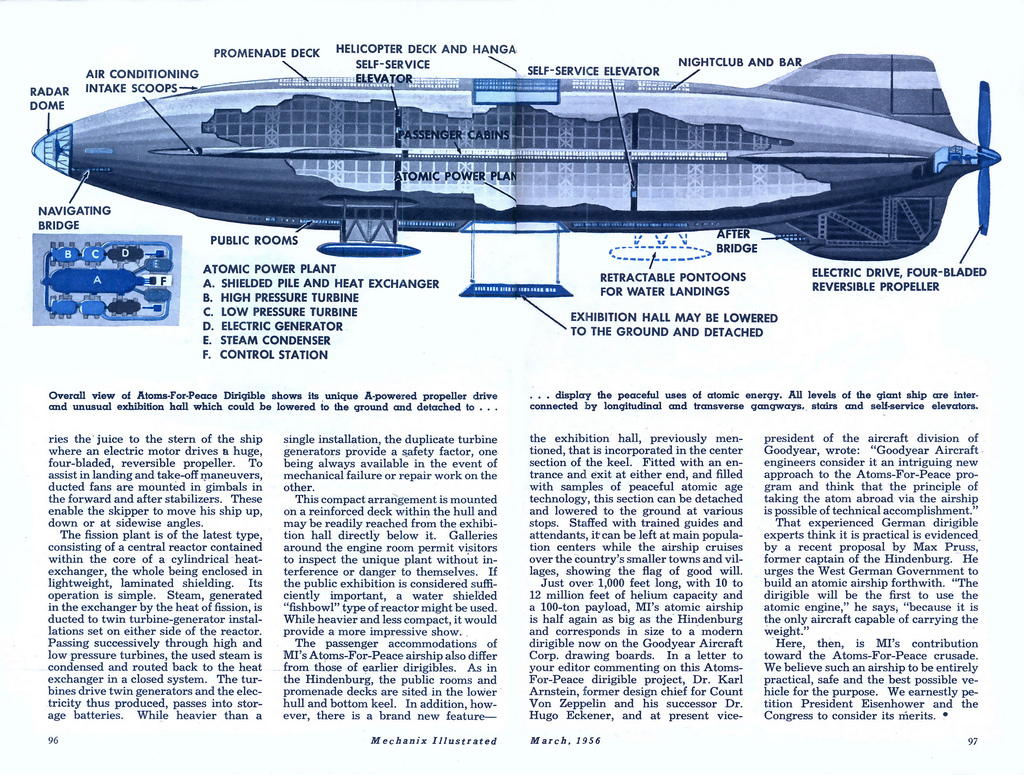
    First up is this mammoth flying advertisement to both peace and war, a nuke-powered dirigible proposed by Eisenhower in 1953 as part of the Atoms-for-Peace push, a move which by this point was already entirely too late.

    Atom everything zep for peace

    For some reason it was seen as a good idea to have a detachable convention hall built for the airship. \

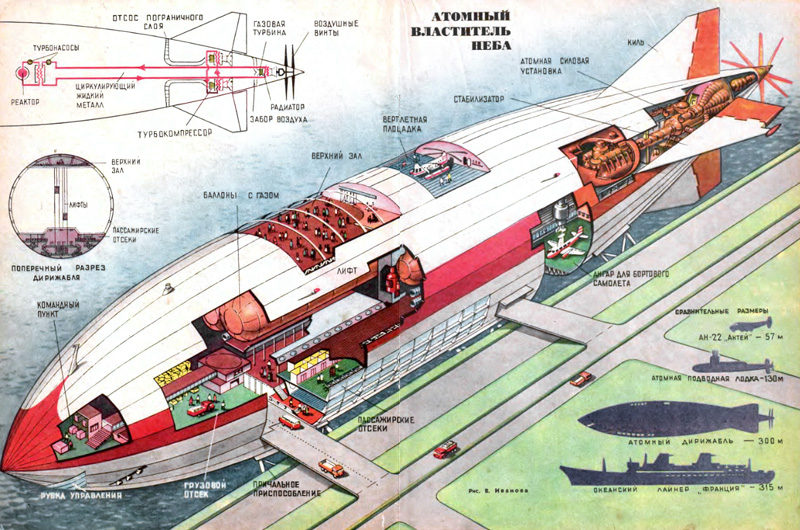
    And of course there is no greater element of a Something-for-Peace anything unless there was a competing idea, as seen in this mammoth Soviet atomic zeppelin, a ship completely absorbed in being bigger than the big thing that it already was:

    Atom everything zep

    At 300 metres this monster had room enough for virtually anything, though it didn’t have the retractable/detachable convention hall–it did however have a small airport. 

    Another dirigible approached the airport-on-board idea, but preferred solar power for its energy source.


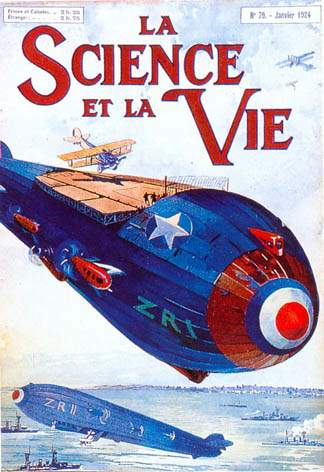
     The magnificent possible, 1924, saw another kind of airborn airport:

    https://historyofideasblog.com/a/6a00d83542d51e69e2012875ea3636970c-pi

    Guido Tallei’s 1932 Diri-Disk was a combination airplane/dirigible, and looked as though it could harbor an expansive airport on its NCC-1701-like wing, but didn’t, alas:

    Konstantin Eduardovich Tsiolkovsky (1857-1835), the Russian/Soviet space pioneer who was nearly without peer (and who somehow survived the bloodlust of Stalin which sucked up and murdered so many of his scientific colleagues),  stepped outside his spaceflight bubble to write about this monster with collapsing sheathing:

    https://historyofideasblog.com/a/6a00d83542d51e69e20128769ed30d970c-pi

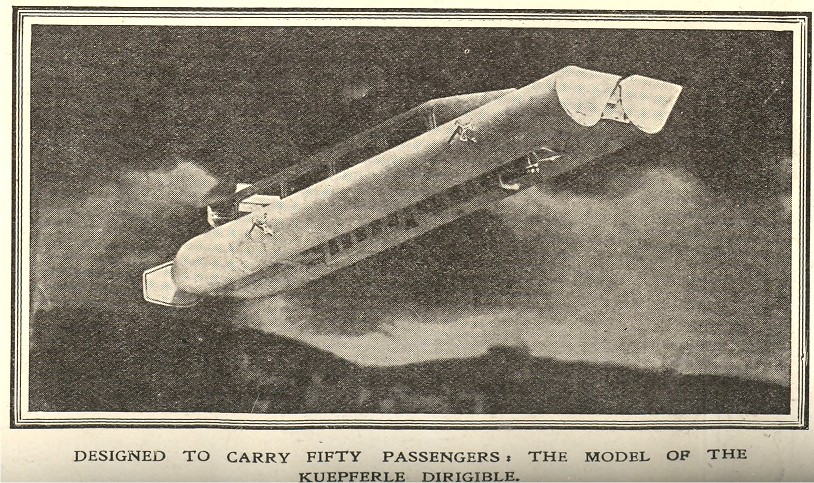
    The Kueperle dirigible, planned in 1909, was nothing if not pretty, and pretty is pretty much what the whole thing consisted of:

    https://historyofideasblog.com/a/6a00d83542d51e69e2012875ea2c87970c-pi

    And lastly, this example of the tracked airship–this must have been a popular notion because I’ve seen perhaps 15 different plans and I don’t spend much time at all reading in this area.  But harnessing the power of the balloon or dirigible or (kite!) whatever to a track system seemed to be a good idea, once upon a time: