A Daily History of Holes, Dots, Lines, Science, History, Math, Physics, Art, the Unintentional Absurd, Architecture, Maps, Data Visualization, Blank and Missing Things, and so on. |1.6 million words, 7500 images, 4.9 million hits| Press & appearances in The Times, Le Figaro, Mensa, The Economist, The Guardian, Discovery News, Slate, Le Monde, Sci American Blogs, Le Pont, and many other places… 5000+ total posts since 2008.

Category: Bad Ideas

  • Department of Strange Steampunk: Oddest Place to Find a Locomotive?

    JF Ptak Science Books      Post 1096

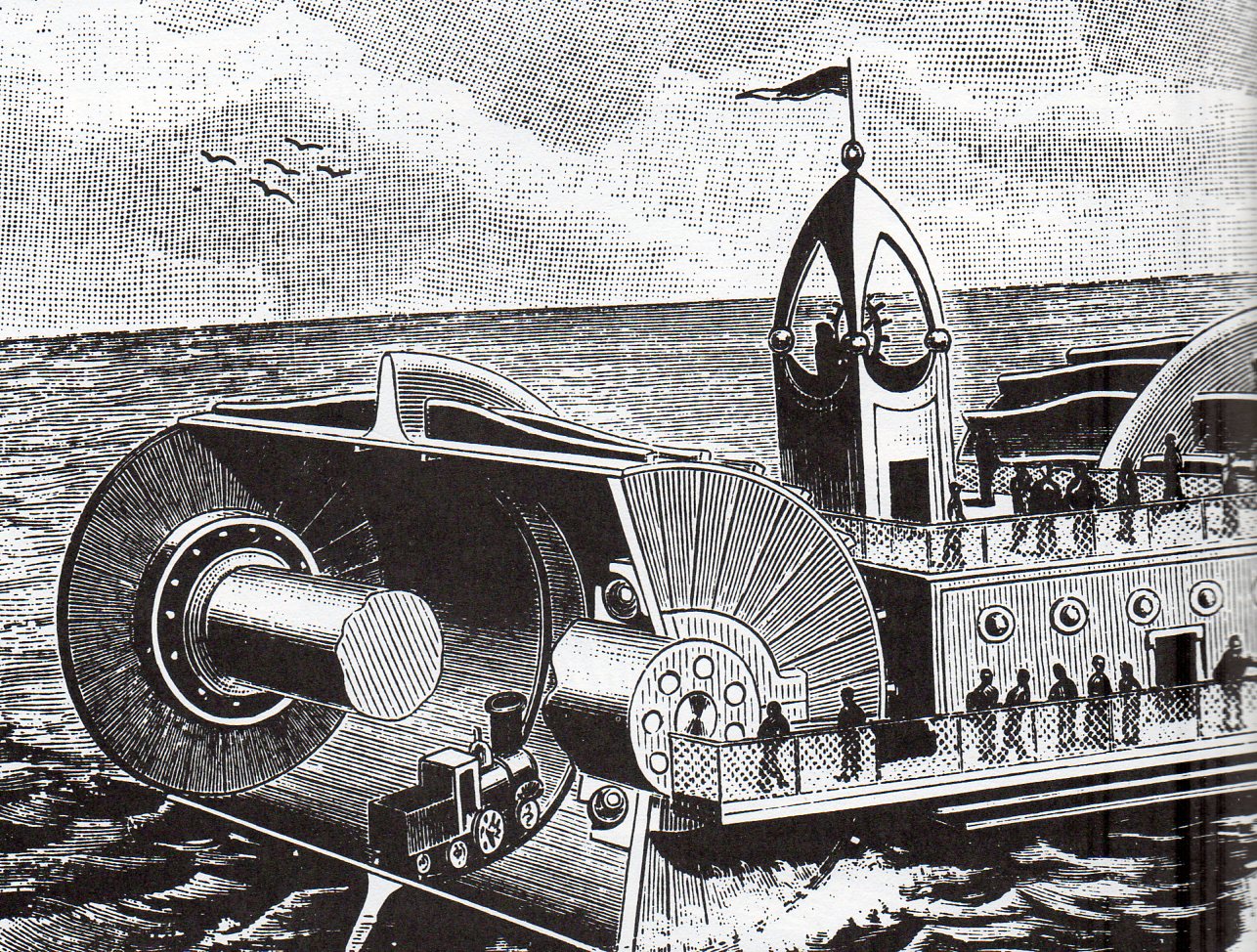
    I think perhaps one of the oddest places to find a locomotive is in the inside of a propeller of a ship on the high seas. 

    What is it--loco in ship227

    This image really belongs to the sub-category “Out of Place Department”, along with the unexpectedly-found restaurant at the top of a punked-out 19th c Eiffel Tower, a swimming pool in the bottom of a mine shaft, a steamboat along the side of a mountain in Amazonia, and so on.  Seeing this strange sea craft and the cutaway schematic showing the man-sized locomotive (and tender) was very exciting and unexpected as well, perhaps more so than most of the unexpected steam/electro punky thingsa that I come across.

    It appeared as a real-life suggestion as “Chapman’s Roller Vessel” in (ca.) 1897 and looks o be a squarish, blocky ship of questionable seaworthiness, fitted out with two hollow cylindrical props powered by two small small-gauge locomotives running infinitely on  small-gauge tracks inside of them, push-pulling the ferry  through the water.  (I wonder about access to the engine and how to control its stopping and starting; I would only hope that there wasn’t someone at the locos’ controls.)

    It seems to me to be a bad idea of a high order.


  • History of Dots 27: Killing Bacteria–Human Experimentation with Conscientious Objectors, 1955

    JF Ptak Science Books  1073

    Medical and scientific experimentation on humans has a long and painful history.  In the early days it seemed much more acceptable to perform tests on people while they were alive more so than to cut up and autopsy their bodies when they were dead. 

    Human experimentation174

    William Beaumont–the “father of gastric physiology” –was also perhaps a very early leader in the field of bioethics.  Beaumont’s most famous series of experiments1 were performed on a living subject, but only with the patient’s full knowledge of the procedure and consent (and also with te ability to terminate the procedures).  (Part of the defense of the Nazi concentration camp doctor-monsters brought Beaumont into their courtroom as an example of early American compliance to their bestialities, but purposely failed to mention the pertinent rights of Beaumont’s patients, whereas their thousands and thousands of human subjects were in concentration camps and were treated without regard to any moral, ethical or humanitarian consequences.)  Claude Bernard–one of the 19th century’s leading experimental medical researchers and physiologists–reported in his monumental 1865  Study of Experimental Medicine… that a physician must  “… perform an experiment on man whenever it can save his life, cure him or gain him some personal benefit.”  Hopkins’ great William Osler (in 1907)  was entirely on board with the Bernard appraisal of the duties of the physician, saying that any new procedure or pharmaceutical must be used on humans before general release.         

    Then of course three’s the other side of the coin: the STD experimentation in the infamous Tuskegee case (1932), the widespread studies of the U.S. Army’s Chemical Warfare Service, the Cornell Medical School’s wincingly bad study that gave the name to the placebo effect, th e1942 Chicago malaria studies on inmates, the long series of atomic and nuclear weapons tests with passive involvement of sailors and soldiers, and on and on, back into dim history. (The experiments by the Nazi doctors and their Japanese Unit 731 counterparts  deserve their own categories.)

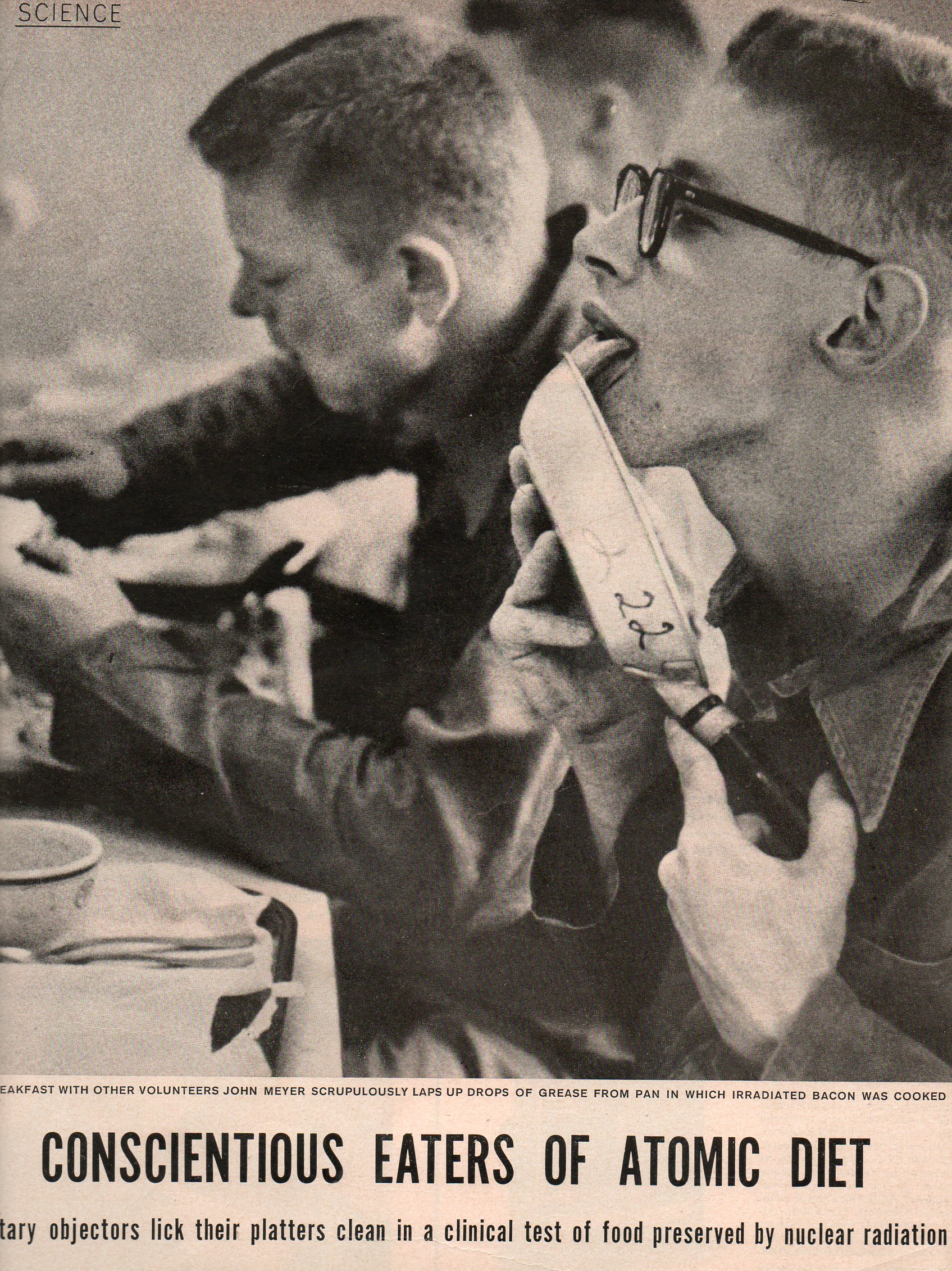
    This photo from Life magazine on the story (“Conscientious Eaters of an Atomic Diet”) of 1955 must be among the most wholesome general cover stories in the history of the idea of human experimentation.  These young conscientious objectors2 declared (for whatever reason, ethic, moral or religious) their inability to serve in the armed forces, and were sent to a different task to replace military service.  Their exchange would be to test the effects of nuclear radiation on food products. (This was the process of using radiation to kill bacteria and insects and whatever other living badie in food that might cause disease or illness of cause the food to spoil.  The long-term result for the military could be enormous, allowing for more inexpensive and less difficult ways to keep food for longer periods of time for troops, and could also keep troops healthier by eliminating certain food-borne illness that could spread from one person to another.)

    Still, what was being asked of these young men was far beyond the “debt” implied by their CO status. The effects of this sort of exposure were still not well known, and these men were absolutely being place in harm’s way, and for the cameras of Life.  The ideas of “Radiation sickness” and “Acute Radiation Syndrome”–created by the two atomic bombs detonated in Japan in August 1945–were only about ten years old at the point where these young men were licking the irradiated grease form their plates. (As a matter of fact there was no immediate medical research team in place to study the biological effects of the bombs in those two cities; after a few weeks and by the end of August there was a organization in place, headed by Colonel Ashly Oughterson.) These men weren’t going to suffer any radiation poisoning from the process (the ionizing radiation used by irradiators “was not strong enough to
    disintegrate the nucleus of even one atom of a food molecule”) , but the effects of irradiating food at this point were still not known.

    Notes:

    1. Published in his 1838 Experiments and Observations on the Gastric Juice, and the Physiology of Digestion.

    2. The business of conscientious objection to military service is milennia old; in the United States it goes back easily to the Revolutionary War.  It becomes a little less defined in the Civil War, where a CO or anyone else faced with military service could purchase a stay of service for $300 or provide someone in his place.   (In the CSA the same could be done but for a little more–$500.)    The whole business got considerably tightened up by WWI, and in WWII–when there was a spike in declarations by Cos–the code for declaration of objection to military service was considerably clarified, though not making it any less painful experience for the CO to endure.      In 1948 the worldwide  issue of the right to “conscience” was addressed by the United Nations General Assembly  in Article 18 of the Universal Declaration of Human Rights, part of which reads:  “Everyone has the right to freedom of thought, conscience and religion; this right includes freedom to change his religion or belief, and freedom…”
         
    During WWII the CO declaration form/questionnaire DSS 47 asked these ten questions:

    1. Describe the nature of your belief which is the basis of your claim.
    2. Explain how, when, and from whom or from what source you received the training and acquired the belief which is the basis of your claim.
    3. Give the name and present address of the individual upon whom you rely most for religious guidance.
    4. Under what circumstances, if any, do you believe in the use of force?
    5. Describe the actions and behavior in your life which in your opinion most conspicuously demonstrate the consistency and depth of your religious convictions.
    6. Have you ever given public expression, written or oral, to the views herein expressed as the basis for your claim made above? If so, specify when and where.
    7. Have you ever been a member of any military organization or establishment? If so, state the name and address of same and give reasons why you became a member.
    8. Are you a member of a religious sect or organization?
    9. Describe carefully the creed or official statements of said religious sect or organization as it relates to participation in war.
    10. Describe your relationships with and activities in all organizations with which you are or have been affiliated other than religious or military.

    For human experimentation, see also:

    Hoerni B. [Medical ethics. Evolution century after century] Hist Sci Med. 2003 Jul-Sep;37(3):331-8.

    Lyon J. Experimenting with humans. Part I: History and context. Second Opin. 1987;6:63-89

    Numbers RL. William Beaumont and the ethics of human experimentation.  J Hist Biol. 1979 Spring;12(1):113-35.

    For more on radiation studies at Hiroshima and Nagasaki:

    Archives: Atomic Bomb Casualty Commission. Issues in Science
    and Technology. Spring 1997. FindArticles.com. 21 Apr. 2008. http://findarticles.com/p/articles/mi_qa3622/is_199704/ai_n8759128.

    Atomic bombings of Hiroshima and Nagasaki. (2008, Apr 19). In Wikipedia,
    The Free Encyclopedia
    . 21 Apr. 2008.

    ABCC Collection at John P.
    McGovern Historical Collections and Research Center (Houston
    Academy of Medicine-Texas Medical Center Library
    ).

    Radiation
    Effects Research Foundation
    Home website in English and Japanese


  • Found Comix: Female Trouble, 1947 (“When Tears of Shame Smell!”)

    JF Ptak Science Books Post 1062

    Female Trouble---Whispered BO 1b147

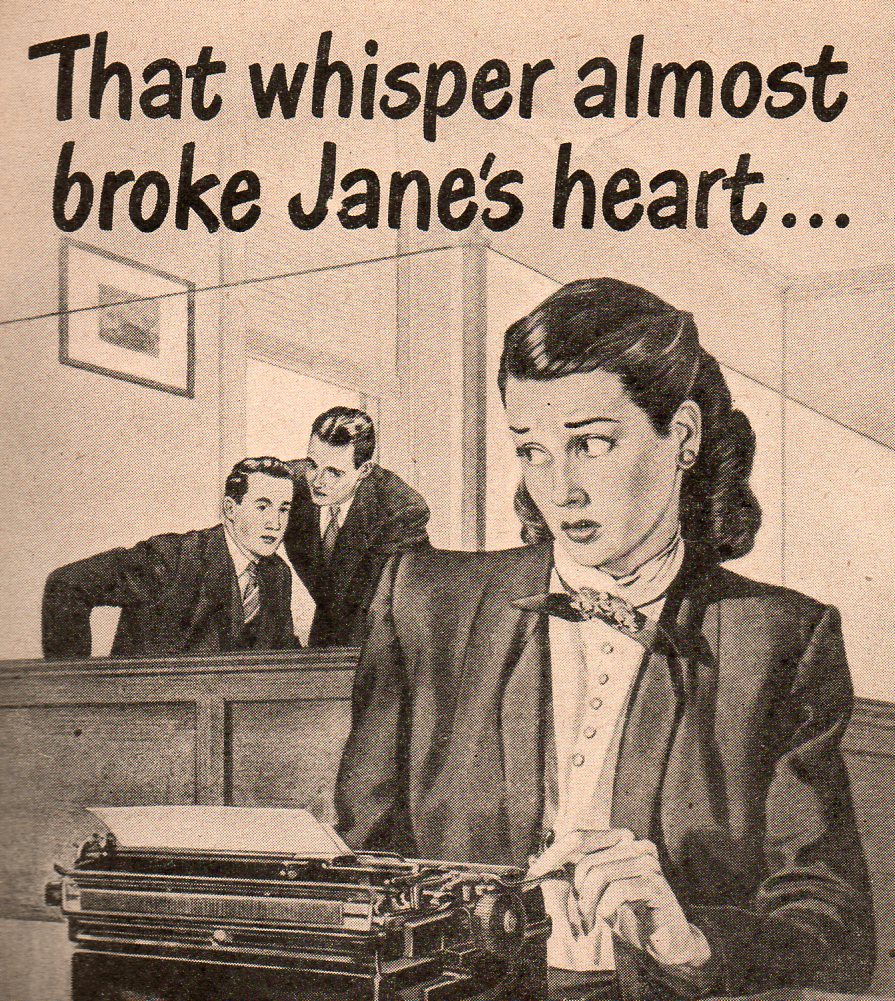
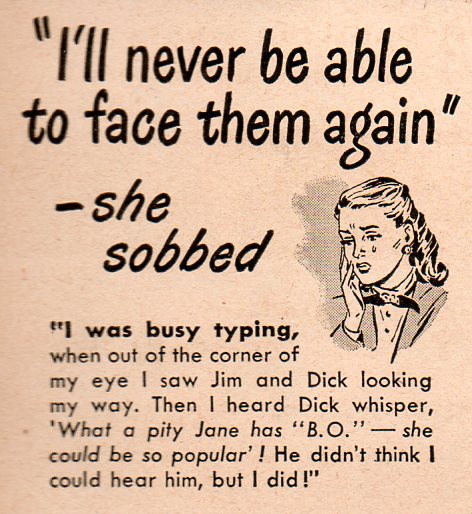
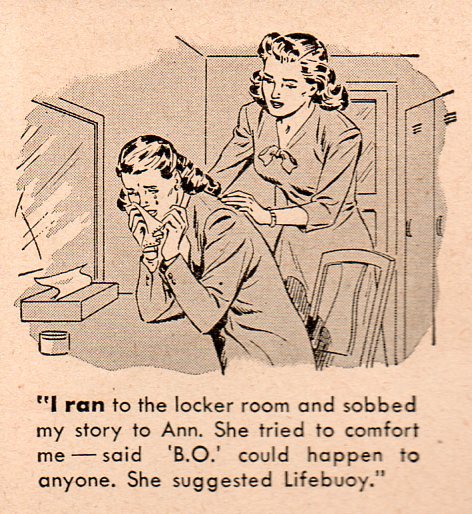
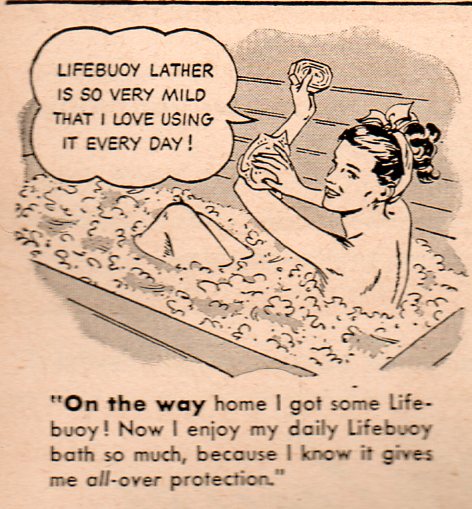
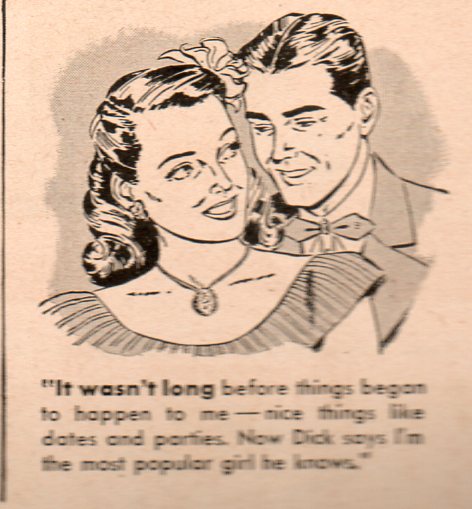
    I’ve posted a few found comix elsewhere on this blog (for example, this magnificent Italian contribution on surviving fire bombs, here), and I guess that I should have been paying more attention to these other bits of comix-driven advertisement marginalia that flits in and out of the pages of mass market weekly journals–they turn out to be pretty interesting and revealing entities.   In today’s case it is LIFE magazine for 9 June 1947, and if subtle, rueful self-awareness images like this were an automobile, this submission would be a jaguar.  It is the blatant story of a private and personal life ruined by whispers of BO, where a woman named Jane is paralyzed by the sly look and not-so-silent pronouncement of sniffy displeasure by a man named Dick.  The woman would scrub up and then somehow land that self-same Dick in the end with her newly perfumed Lifebuoy body, but only after filling bathtubs with her BO-laden tears.  But what a terrible story to tell about such a fragile existence extinguished, all to sell a bar of soap through a comic book tale on the edges of the back pages of a picture magazine.


    Female Trouble---Whispered BO 1146
    Female Trouble---Whispered BO 2148


    Female Trouble---Whispered BO 3149
    Female Trouble---Whispered BO 4150 

    Female Trouble---Whispered BO 5151
    Female Trouble---Whispered BO 5 b152


  • Women in the Battle Between Martinis and Narcotics, 1902

    JF Ptak Science Books  Post 1052

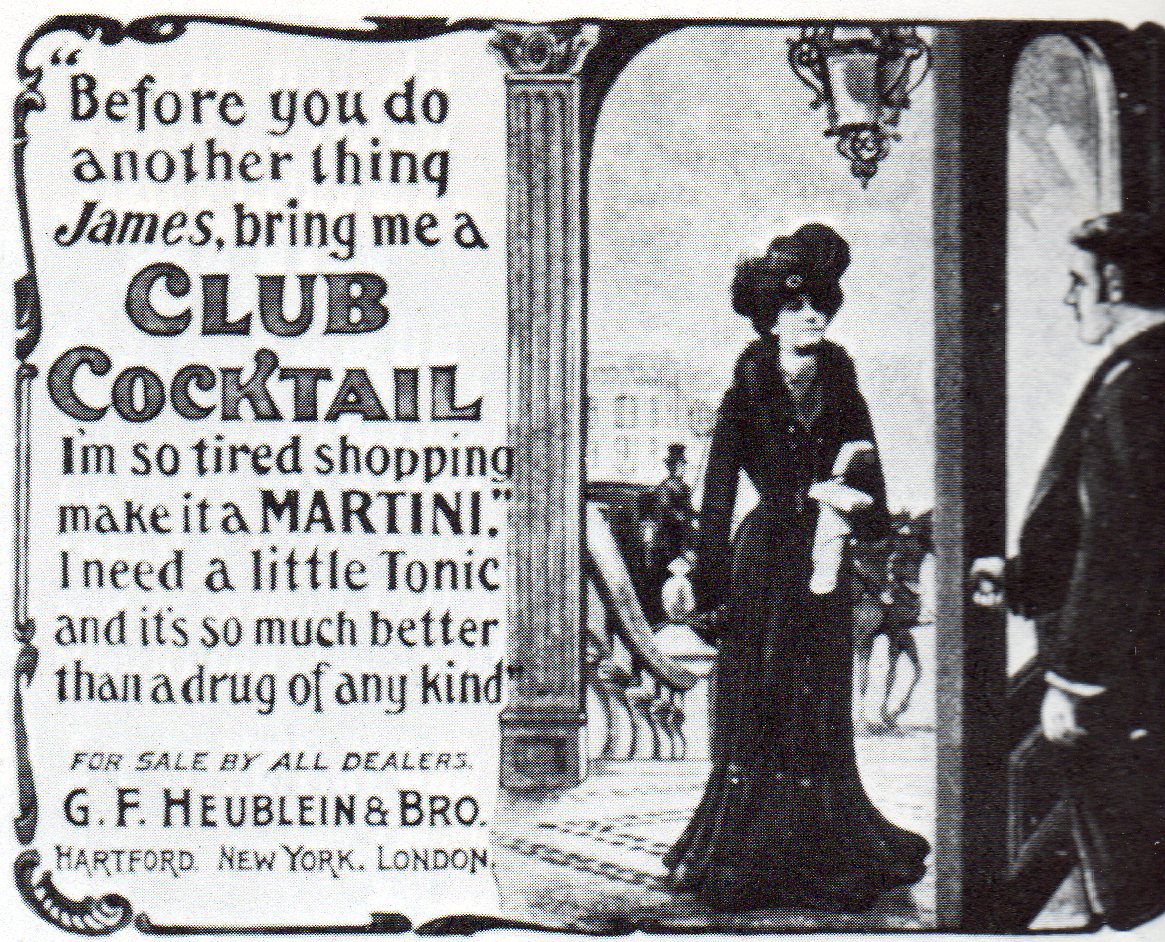
    Somehow I think that I’ve missed these ads of women pushing alcohol over narcotics and other drugs.  It certainly seems a more elegant solution to the “unwinding problem” of the more-or-less semi-idle privileged classes.

    Martini055
    At this point in the history of addiction in the United States all of the “any other drugs” that this woman is referring to were legal–very big drugs and very legal.  The opium trade was of course still very much alive and well, England and to a lesser degree France doing their brightest to bring the best (where “best” means “most”)  narcotics to the world inside and outside of the Golden Triangle, ruining as much as humanly possible while doing so.  Opium was the drug of choice, followed by morphine (which Dr. Alex Wood discovered in 1843 was better introduced into the body by injection) and then graduating to heroin.  (Heroin was synthesized first by C.R. Wright, who boiled out some morphine on a stove.  It was Heinrich Dreser who introduced diacetylmorphne in 1895 as the Bayer Company product called “Heroin”, which was marketed as a pleasant step-down to morphine addicts in 1898.)        

    So sparkling mixer with gin was the better part of valor for the Heublein company, even with legal heroin and morphine and opium to compete with.  It wasn’t until 1905 that a “ban” on opium came into effect in the U.S., though the first federal attempt to control narcotics did not appear until the Harrison Narcotics Act of 1914 (which required those dispensing narcotics to (a) register and (b) pay a tax). 

    But the sale and consumption of narcotics wasn’t made illegal until 1923, brought about through the U.S. Treasury Department’s Division of Narcotics.  This unfortunately came about 222 years after the Chinese Emperor Kia King ban all opium  products in China, subverted forty years later by the Brits. 

    The queer part of this story is that narcotics were banned in 1923, three years after the 18th Amendment to the U.S. prohibited the sale and use of alcohol.


  • The Emptiness of Gun Porn: Burlesque Dancers as Game, 1947

    JF Ptak Science Books   Post 1051

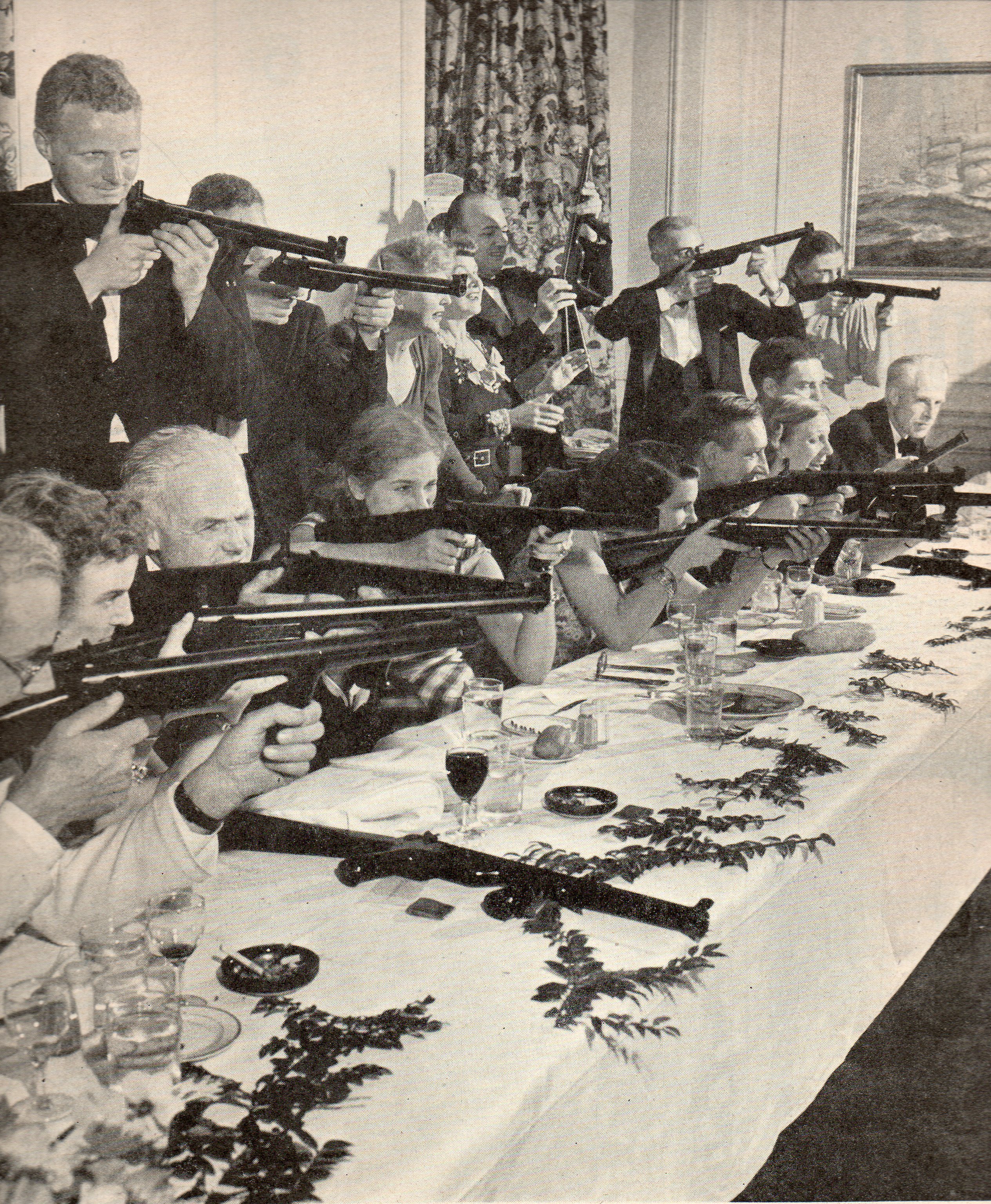
    It is unusual for me to find provocative photos that are more unusual in context rather than out.  But this is certainly the case here, with these photos of gun porn from Life magazine of 1947. This photo spread was meant to celebrate the launch of a “harmless” toy gun, the manufacturer demonstrating this point by having two dozen dinner quests shell dining room targets with imitation Tommy Gun-ish pellet guns. 
    00--shooting strip teas dinnere043

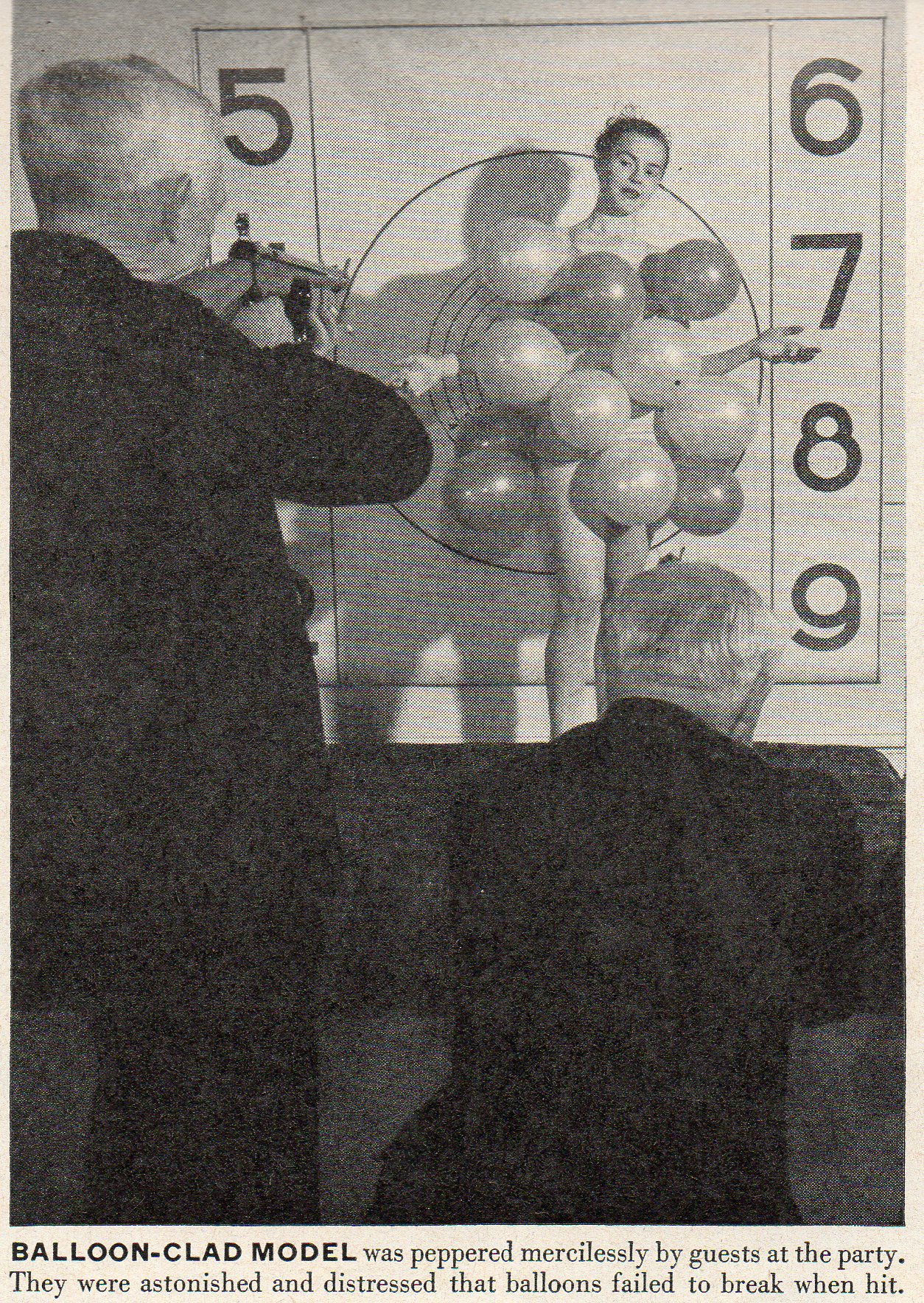
    Perhaps appropriate in more ways than one are these two older men shooting “ineffectually” at a model dressed in balloons–the point being to break the balloons to reveal her nakedness.  But the ejected pellets hit and dribble away, the rubber balloons remaining intact, with the foiled men left feeling “astonished and distressed”.  You can almost smell their impending failure in this picture (as well as the relief of the model).    
                                                   
    00--shooting strip tease042

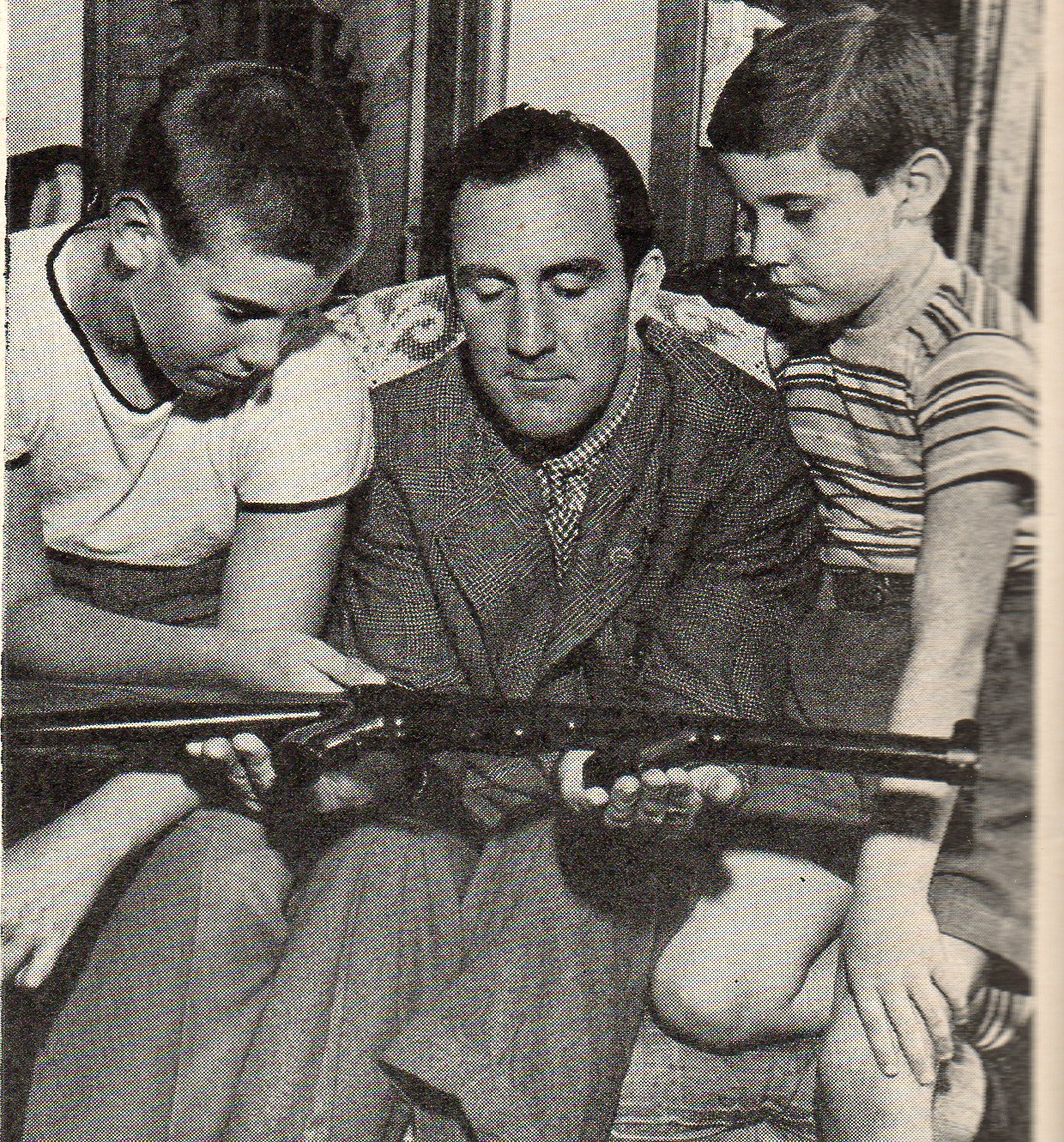
    Then there’s the Holiness of the Gun moment, a father holding the toy gun in flattened palms., making himself a portable altar for his respectful sons, a deep reverence for the object present in the man’s face.     
     

    00--shooting strip holy grail044


  • Boredom and the Re-Fencing of the American Frontier: Highway Billboards, 1930

    JF Ptak Science Books    Post 1049

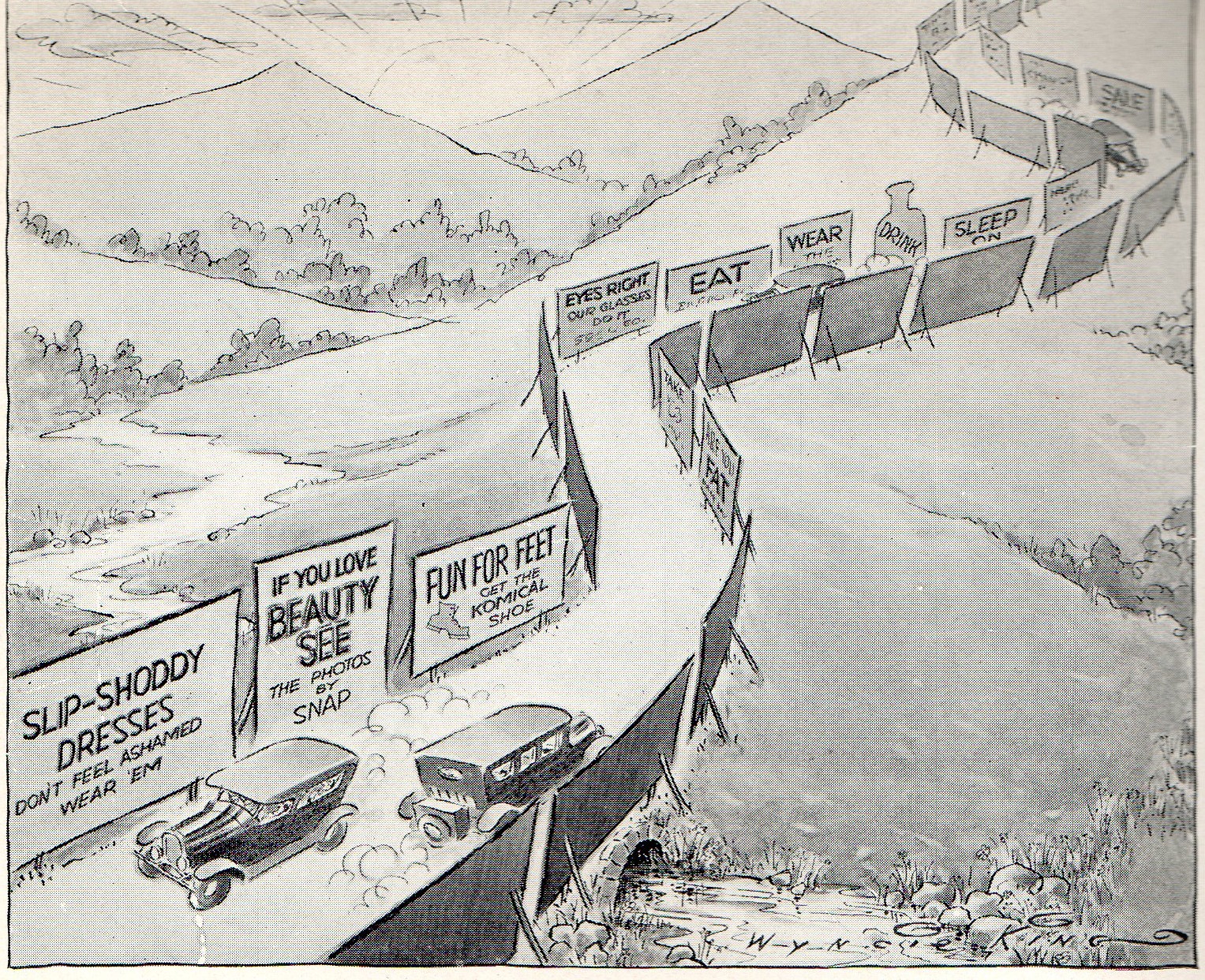
    The West, the American West, had the foundations for effective an grid delivered by the late 1870’s, in the early-middle of what I guess people would consider the high Cowboy days of westward expansion.  But the exploration part had been mostly done by this point, as had the expansion bit, the exterior sections of the compartmentalization of the frontier taking place in ever-smaller concentric squares.  As I wrote earlier in this blog, it was the introduction of lines that really did the whole Wild West thing in–the introduction of the railroads, of course (followed by the refrigerated railroad car, which did in the great cattle drives and established needed-to-be-peopled rail heads all over the place), telegraph lines, and of course barbed wire.  Barbed wire meant barbed wire fences, fences that could be constructed for a small fraction of the cost of wooden fences and which replaced of course no fences at all, dividing the great open plains into more manageable units of owned and regulated land. (Barbed wire fences also needed far less maintenance than wooden fences, which means fewer cowboys riding fences for upkeep and so on.)

    By the time the eulogy on the American Frontier was famously delivered by Fred Jackson Taylor in 1893, the fate of the West had already been sealed for perhaps two decades, though the notion of its “closedness” was received with considerable shock. It was time for the truly great equalizer and innovative settler of the West to makes its appearance–boredom. 

    I think it might be that it was the Boring Frontier that nailed the coffin shut on the Western Frontier.  Once all of the lines had been delivered–barbed wire, telegraph, railroads, good maps–the greatest thing left to do was the settling.  And nothing quite spells settlement than boredom. Or comparative boredom.  Once the essentials of conquest had been delivered in terms of the civilizing lines, it became time to wait for the rest of it, surviving through cold Nebraska winters and hot Panhandle summers, waiting for the rest of America to come and settle.  It was the Boredom Frontier that spelled out the intent that the changes brought to that country were there to stay. 

    And barely three decades after the announcement of the closing of the frontier, automobiles were making their way across the land on new roads., which snaked their way deeper into the last-reached parts of the country.  It was very soon after the car and the road that the roadside billboard appeared, and appeared in such great quantity that legislation prohibiting banner display like this was introduced into the legal system during the teens.

    Roads provided the last assault on the West, and brought with them their singular colonizing irony of billboards, which prohibited the view of the country through which their roads snaked and pulled.  And there’s something terribly wrong with that, as witnessed in this 1931 illustration tucked inside this almost-provocatively-named pamphlet, Billboards ad Aesthetic Legislation, New Applications of Police Power (published by the St. Louis Public Library).It is astonishing to think of the vast changes that took place in the remaining American frontier, taking place so quickly–two generations separated the last of the great cattle drives to billboard legislations along auto routes in the western states. 

    00--billboards036

    It seems to me that I’ve seen a similar illustration of the senseless explorer from the ‘teens, though I cannot find it now.  


  • A Taxidermological Satirist Adventurer and PsychoBon-Vivant: a few Paragraphs in the History of Boredom

    JF Ptak Science Books   Post 1068

    In the 19th century, when the rich were insane, they were simply eccentric; when the poor were insane, they were crazy.  Luckily for Charles Waterton (1782-1865), he inherited a large estate and could insulate himself from legal scrutiny and indulge his whims and interests.  Waterton would make a problematic biography, his life filled with front-line environmentalism, exploration, taxidermy, and natural history interests wrapped around a solid steel stake of bizarre personal behavior.  Money was his greatest curative, an elixir of great depth and more understanding than Dr. Freud could ever muster. But ultimately I think that with all of this behavior masked a terminal boredom–Mr. Waterton was both bored and boring.
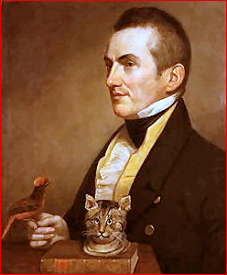
    Waterton

    Waterton wrote three volumes of Essays on Natural History and the best-selling Wanderings in South America1, turned his estate into what amounted to be the first nature preserve, talked to bugs, barked like a dog, tried to fly from his outhouse, left his gloves at the top of St. Peter’s, and on and on.  His portrait by Charles Wilson Peale shows him with a sharp eye, weird hair, and a cat head as his buddy on a book. 

    Later in life he had a bitter dispute with JJ Audubon–this was mostly a one-sided affair, Waterton seeing mostly invisible complaints with the great ornithologist’s work.  Audubon rarely responded to Waterton’s very public and in-print diatribes, ending only when Waterton left England for New Zealand in 18392. 

    The man did form a considerable collection of natural history specimens and medical oddities. 

    Perhaps the most interesting thing for me to take away from Mr. Waterton are the subject headings of the biography written for him by his long-time fried, Dr. Charles Hobson, (Charles Waterton, his Home, Habits and Handiwork3), published in the first edition a year after Waterton’s death (and somehow reaching a second edition three decades later).  The book is a very tough go from where I sit, and my main interest is just in the sub headings for the book’s chapters.  For example, how could one resist the story of such an odd man when presented with chapters like these:

    “Mr. Waterton recounts a conversation with a Man representing himself Skilled in Egg Gathering at Filey ….. “

    “Remarkable Willow, from the Stump of which have sprung Twelve Stems, designated by Mr. Waterton “The Twelve Apostles,” and one detrimentally influenced by a Storm being named “Judas ”

    “Securing of Pike by the Bow and Arrow a favourite Amusement of the Squire”

    “Mr. Waterton “fairly floored” by Mr. Salvin’s .clever Imitation of a Pig”

    “The Ape Searching the Squire’s head reminds him of a Cambridge anecdote”

    “Special immunity in the female sex from death by lightning” (which is a loose, semi-statistical discovery of challenged means)

    But once you open the book and make your way through Hobson’s unusual prose, the book becomes almost instantly resistible.  And so my interest in Waterton wanes down to almost nothing–he seems like an interesting guy, but not so much so that it eclipses all of the egomaniacal stuff that went along with him. He seems to be made of the stuff that excludes friendship, and that leaves me out–and with which Waterton would have had no problem.

    ____

    Notes.

    1.  The book has not been out of print since it first appeared 170 years ago.  It is filled with adventures high and low, some of which are real, some not.  Adventuring in Guiana in the first third of the 19th century was an exotic affair–much more so than could really be imagined in general today–and so the book was a best seller. 

    2. That’s okay–the arguments defaming Audubon came to nothing, and Waterton was generally wrong in the main points if not no-wrong in a few minor ones.  I don’t know what his problem was with Audubon and his great work, but it really doesn’t matter. Audubon described one of Waterton’s missives to him as a “scrubby letter”, and I’m pretty sure it must’ve been so.

    3.  The book is available on Google to be read in its full majesty here. I’d say “pass” to the general reader, but if you’re in the exhibits/museum world, I’m sorry to say that it is probably a must-read.

    There’s much more that I left out about this man, but I just can’t do any more:

    “Charles
    Waterton,”
    from the Catholic Encyclopedia

    The
    Charles Waterton Home Page

    Wanderings
    in South America,
    by Charles Waterton

    A nice chapter appears on Waterton in Lynn Barber’s The Heyday of Natural History, 1820-1870 (1980).

    And a very nice appreciation of the man (with a much more useful stuff about his history) from the Pyromaniac blog.


  • Power of Words: On Naming Women

    JF Ptak Science Books   Post 1066

    In the river of names, of all things, babies and wives are given their’s by fathers and husbands–and the wives are solitary cases of having a name already given them taken away to take the husband’s.   In the early- and mid-twentieth century and before, women leaving their parent’s home with a husband followed the custom of leaving at least half of their social identity behind, and in many cases, all of their name disappeared as they became “Mrs. John F. Someone”, burying women further into unrecoverable social and legal anonymity.   In earlier times this burial was literal–if you take a walk in a mid-19th century cemetery (and earlier) you will see some amount of smaller headstone(s) next to a larger simply reading “His Wife, Elizabeth” and some simply, in high tragedy, “His Wife”.  Like burying property, the woman in death remains an asset.  

    Having a woman follow a custom of taking her husband’s name in marriage is an old practice in the United States, and a successful one (for centuries) of helping to keep woman as a subjugated class, and for at least maintaining a control of sorts on women’s individuality.

    And so far as I know this practice was a custom–I’m not aware of any state laws requiring a wife to take her husband’s name. (Just in a way as “the Pirate’s Code”, as Capt Jack Sparrow pointed out, “was more a guideline than a set of rules”.)  This was one of the great unspoken non-issues of the suffragist movement in the 19th century.  I think that the idea was too dicey and radical even for the far-liberals.  But not all:  Lucy Stone kept her name in marriage, and Elizabeth Cady Stanton so elegantly wrote about in the radical feminist magazine The Revolution in 1869 (see below).   But there were few others–the convention was perhaps too difficult and deep to deal with at the same time as  addressing the less-problematic issue of women voting.  The issue was left to the late 20th century top begin to deal with in any real way. 

    So the control of an entire class of people is aided by the power of words–or a word, the husband’s name.  This sort of control happens all of the time, at every level, every day.   Take “spill” for example.  There’s nothing that I can think of in English that is suitable to describe exactly what continues to happen with every passing second with the BP Gulf Coast event horizon debacle.  I am certain that BP is relieved that we don’t have twelves different classifications for the idea of “spill” as, say, a language for a culture which lives in perpetual snow conditions would have  twenty words for different types of snow.  No matter how much someone tries to explain what 100,000,000 gallons of oil looks like, calling it a “spill” in every breath lessens the impact of the event and the data. 

    If you call something by a name right or wrong enough times, that is  what it becomes.  This is a standard advertising ploy, as the great American psychologist and inventor of behaviorism John B. Watson more or less discovered when he began work with the J. Walter Thompson agency–it didn’t matter what the cigarette tasted like (hot toxic smoke and fumes from a burning plant inhaled into the lungs), so long as people remembered that they were told it was”good”. 

    This is also the way stereotyping functions, as well as the Big Lie.  With women, the naming process helped to subvert an individuality that suffered terribly in the courts for some time–in addition to giving up her name, a married woman (in many states) gave up much else, including the right to own her own income, the right to contest a divorce, and the right to have any say in the disposition of her children in the case of a suit for divorce brought by the husband.  Naming things does have great power. 

    Notes:

    From Ann Russo and Cheris Kramarae, The Radical Women’s Press of the 1850’s (sometimes the desired quote doesn’t come up in this window; if you see just the cover of the book, advance to page 168 for the articles “Lucy Stone” and “Can a Married Woman Have a Name?“):


  • The Medical History of Curing Cancer with Limburger Cheese, Glycerin and Alcohol.

    JF Ptak Science Books    Post 1064

    “The bees were made of sugar and honey, and so made them sting so sweet…” Billy “Craggy” Muffle singing on the French Broad River , 1935.

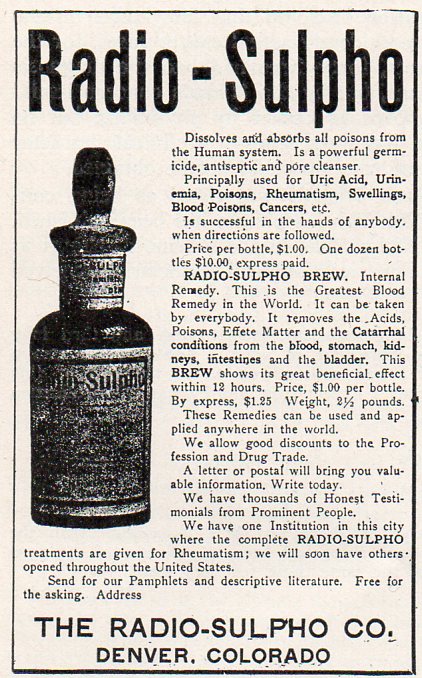
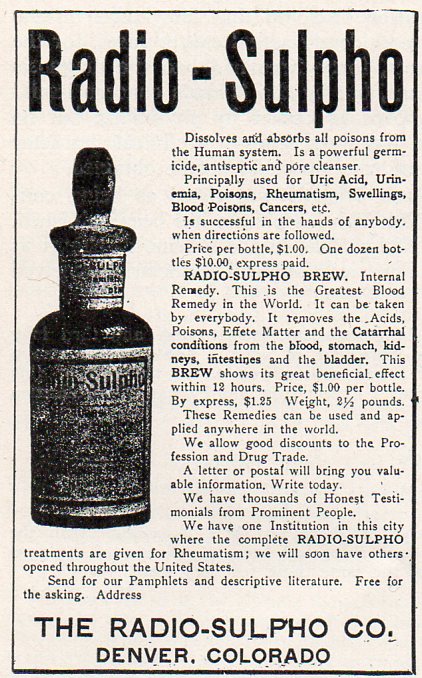
    Punched into the New York Times for 24 October 1909 was this weird Sunday filler on page 11:  “LIMBURGER AS CANCER CURE.; Denver Chemist Says That Cheese May Conquer Leprosy, Too.”  It was a true story, the quackery produced by the Radio-Sulpho Company by Philip Schush, Jr., a man who preyed on sick people and who is now dead and probably in some Hell.  Schush couldn’t leave well enough alone, claiming that his valueless concoction could smite leprosy as well–evidently his range wasn’t wide enough and needed something more, something extra, to fatten his pillow for his fetid night’s sleep.  Somehow Schush chose leprosy.
    Quackery--radio155 The article comes from a time when the American Medical Association was working in a new alliance with the Food and Drug Administration and the U.S. Post Office to identify worthless and fraudulent products like this and to protect consumers from vulture companies like Schush’s.  This was a new practice with Federal teeth for enforcement, and the amount of quackery it exposed in the medical field was staggering—which I guess is the case when you shine a bright light on anything for the first time, like discovering teeming cold  life at the bottom of the sea. 

    The temerity of so many of these products was astonishing—it seems that absolutely anything could be said, and fortunes would be made, the little-regulated market of medical cures had an enormous population of the sick and frightened to pull form, people who would supply their own truths and beliefs where there was none.

    The Radio-Sulpho Company is a prime example:  Schush claimed that cancer was caused by germs in vaccines, and that by applying a Limburger cheese poultice to the affected area and drinking his concoctions (“the greatest internal remedy in the world”, which were mainly sulphuretted hydrogen and water) every twelve hours, the cancer would be cured. For a steep $25 a month (“and upwards”) the Radio-Sulpho Company would take care of business, “cancer of the womb and breast (were) the is simplest, easiest and quickest cures made”.  Schush Jr. would also come out to treat you personally with his nostrums for $100 a day—but would visit “the white race only”. He died under mysterious circumstances in 1911—some say murder and some say a heart attack (though a heart attack caused by a bullet would’ve been more in line with what the man deserved).

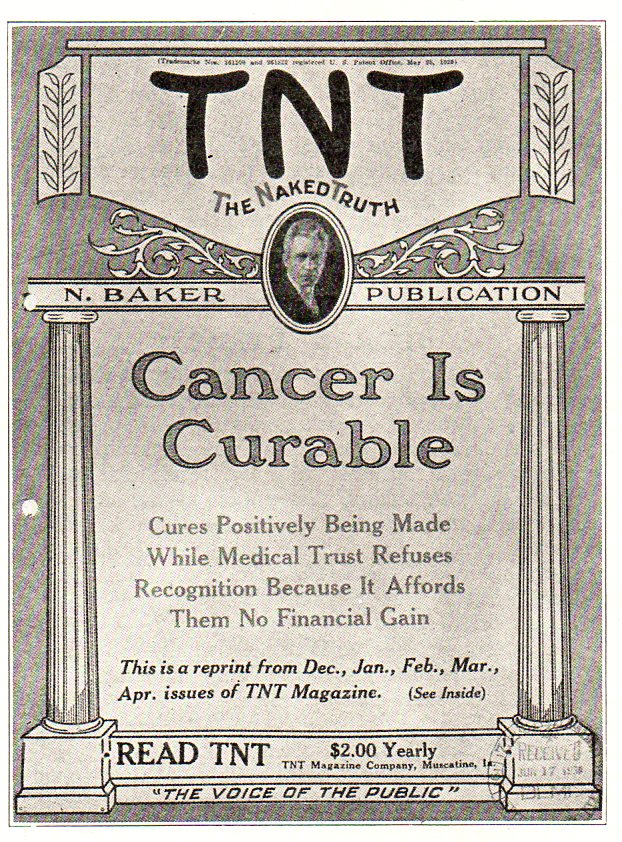
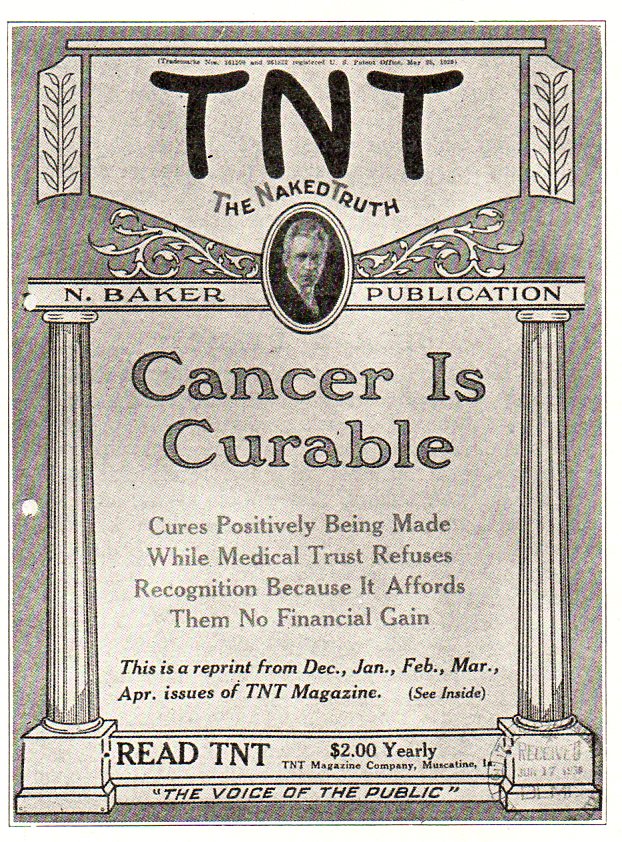
    Another example of extruded quackery is the continuing downward spiral of Muscatine, Iowa’s Norman Baker, whose long line of fraudulent products attracted the attention of The AMA early on, and whose exploits lead to longer and harsher judgment under the law. He treated cancer sufferers in his own hospital at a cost of $1000 (in the 19-teens), treating “external” cancers with a cure of arsenic powders (which had been stolen from another quack, Harry M. Hossey) and internal cancers with glycerine..  He abetted his “cancer is conquered” claims with his magazine TNT (The Naked Truth) and his radio station, KTNT. 
    Quackery--tnt157

    There were hundreds of others:  S.R. Chamlee (Chamley) promised a unique and infallible cure of cancer that amounted to 90% water, “benefited” with strychnine and saccharine.  G.M. Curry (Lebanon, Ohio) claims to have discovered the germ of cancer (ca. 1910) which was cured with his elixir of water, sugar and opium.
    Other cancer cures used plaster applications (at the Gast Sanatorium, Columbus, Ohio); sugar water (“B.H. Green’s Wild Woods Cancer Preparation and Female Tonic”, Bessemer, Alabama); “radium oil” (James Harris, Tulsa, Oklahoma);chiropractic (David Hestand, Sherman, Texas; “liquid laboratory products” (a mixture of water an d zinc chloride (Indianapolis Cancer Hospital); “cancerine tablets” (95% sugar and 4%’inorganic material’, Johnson Remedy Company); “blood Purifier (20% alcohol, 25% sugar, plus glycerine and licorice, the Johnson Remedy Company).  Koch’s Synthetic Anti-toxin (Detroit), William F. Koch) involved “secret remedies” for a starting point of $200 which according to the AMA “was a gruesome spectacle causing a large number of deaths”, the Journal of the A.M.A.); the Lamotte Caner Institute in the U.P. didn’t actually cause people’s deaths but led them to their ultimate cancer-y demise by treaty their illness with bark; L.T. Leach’s “Healing Oils” were widely used at one point by tens of thousands of cancer victims, the remedy containing nothing but cottonwood oil; the “Drs. Mixer”, a cancer cure business run in Hastings, Michigan by C.W. Mixer and other assorted non-medical relatives, sold various products containing mostly alcohol and glycerine, plus “Cancer Paste”, which was nothing but petroleum jelly,  “Cancer Salve”, which was made of Vaseline and lanolin, plus powdered opium, and an anti-cancer soap, “Cleanoine Soap Powder”, which was made of borax and animal thyroid.
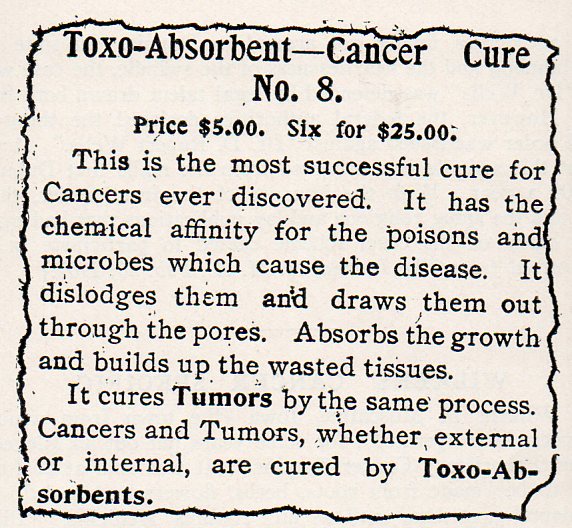
    Quackery--toxic156 These cures range wide and deep, a huge trough of wasted hope—its just tough to see the end of the list. 
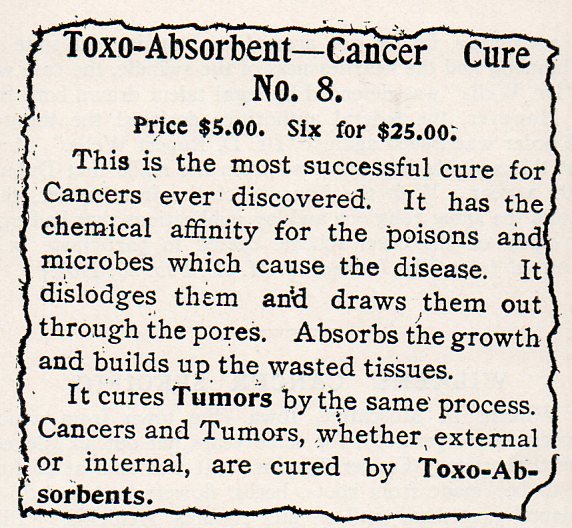
    But one last one:  the Toxo-Absorbant Company of Rochester, N.Y., run by Frederick Welles Warner, who claimed an assortment of cancer cures whose “chemical affinities…draws (cancer) out through the pores” of the skin. For $10 (in 1910 money, which was considerable) he would send one treatment which consisted of (1) a  “Toxo-Absorbant Pack”, being a cloth that was to be placed on the affected area (containing a powdery mixture of nothing but clay, pulverized earth and charcoal), “Cancer and Tumor Tablets” (made of milk sugar) and “Cancer Ointment” , which was a topical made of Vaseline and oil of tar. 

    When finally restrained by the A.M.A. and prohibited from selling his stuff through the mail by the U.S. Post Office, Warner’s  defense for his worthless products was not that they were actually curing cancer and that he was being defamed, but that the laws restricting their sale did not pertain to him because he was selling his products before the laws existed.  This was a surprisingly common approach to legal defense in many cases that I have read, and of course did not hold—otherwise, for example, cigarette manufacturers would have been immune from any sort of regulation. The history of medicine is plagued with this sort of deception, but perhaps the period 1880-1930 was the highest stage of this kind of fraudulent-medicine capitalism, if for no other reason than the newly-established and semi-monied working classes could actually afford to buy the stuff.  

    I’m not sure what sort of weight will be brought to bear on our own medical practices a hundred years from now–copper bracelets, shoe magnets (for example) and other obvious modern quack stuff will certainly make it to the condemned list, but I also wonder about stuff like cosmetic plastic surgery.  And then of course there’s Dr. Freud….
    ·Posted by :

    ·in:

    —

  • Polywog Airmail of the Future

    JF Ptak Science Books  Post 1042

    000 sky mail015

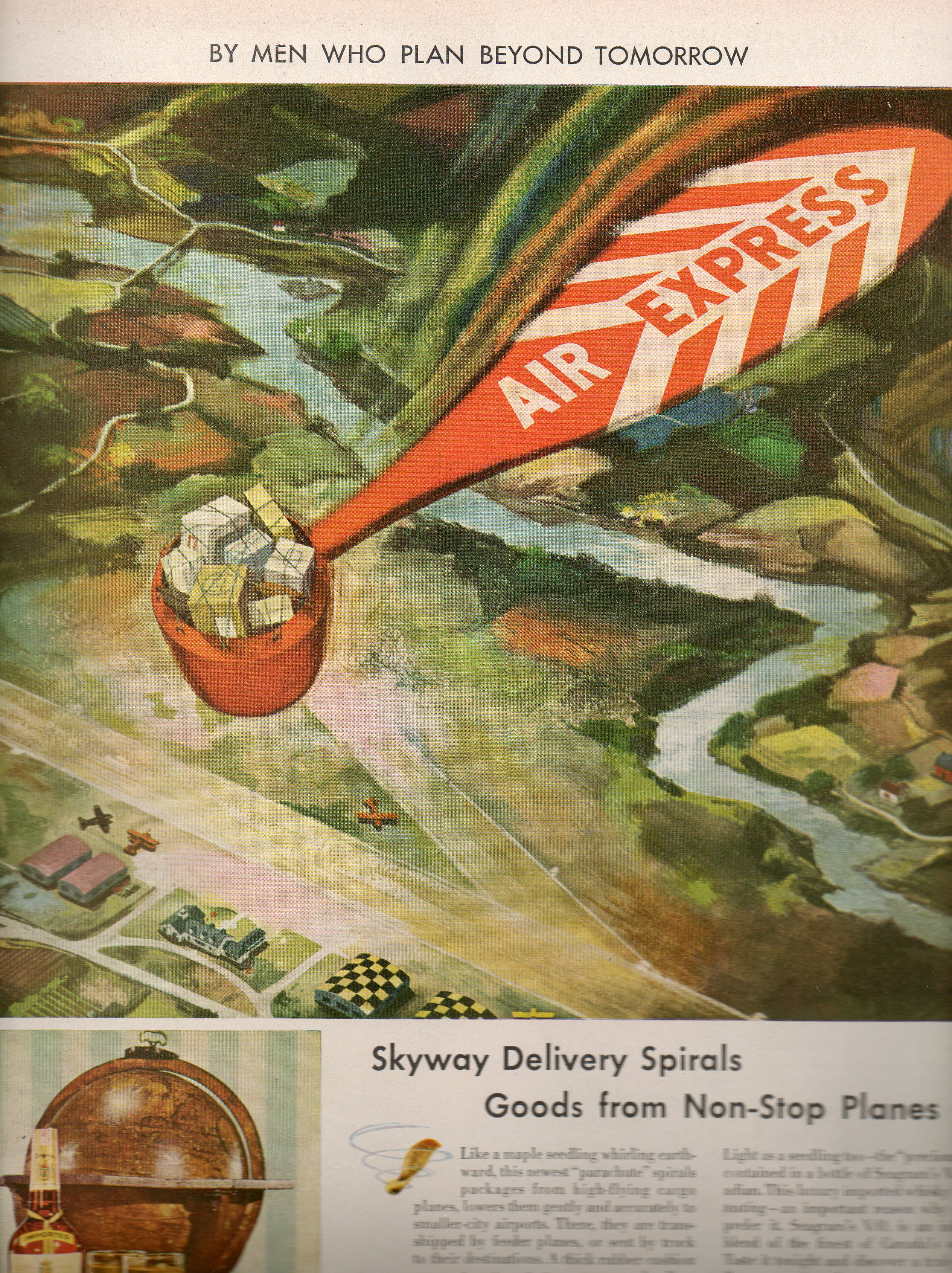
    The booze-driven future as seen by Seagrams (written about earlier in this blog as Atomic-Powered Farms) that appeared in the pages of LIFE magazine from 1945 to 1947 were quixotically science fictiony in the waterproof-duck department brand of invention.  Most of Seagram’s visions were goofy even though they all seem to have been serious statements on the future.  This example, the polywog air mail delivery system, seems to be as bad as any of them–worse even since the technology that the artist/designer was trying to circumvent was already far more sophisticated/logical/beneficial than this weird parachute delivery system for  the mail.  Once all the effort of packaging the mail into this contraption, retrieving it and then setting it up all over again for the next go is calculated, one would’ve been far ahead at all levels by just landing the bloody plane and getting rid of the mail.  That, or of course, just pushing the mail out in a container with a standard parachute also would’ve been a better solution than the one pictured. here. 

    Obviously Seagrams didn’t have their heart in futurology, except that which calculated the shortest possible time it would take to convince people to replace their empty Seagrams bottles. 

    Overall, this is just simply a very bad idea, no matter where you are in the timeline.