A Daily History of Holes, Dots, Lines, Science, History, Math, Physics, Art, the Unintentional Absurd, Architecture, Maps, Data Visualization, Blank and Missing Things, and so on. |1.6 million words, 7500 images, 4.9 million hits| Press & appearances in The Times, Le Figaro, Mensa, The Economist, The Guardian, Discovery News, Slate, Le Monde, Sci American Blogs, Le Pont, and many other places… 5000+ total posts since 2008.

Category: Art History

  • Bits Towards an Alphabet of the Language of Flowers–Some Definitions of Flower Symbols

    JF Ptak Science Books   Quick Post
    photo

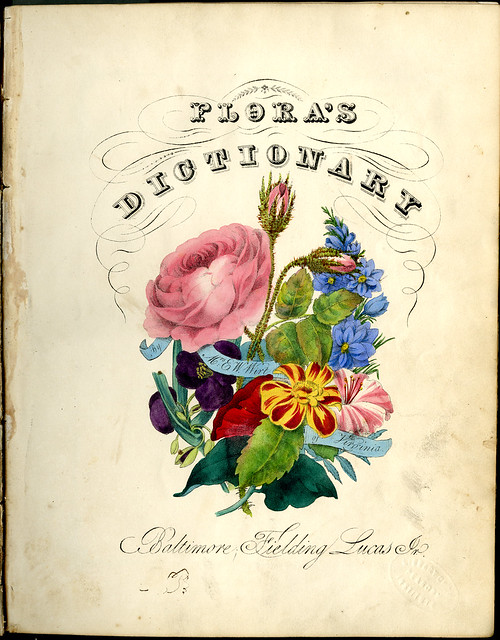
    I’ve put together a quick-and-dirty list of some interpretations of what the appearance of flowers may “mean”–-say in the hands of the subject of a painting, or as a gift, or a reference in a poem or piece of literature.  This in some ways reminds me of an earlier post on this blog, “An Unkindness of Ravens and a Murder of Crows”, here.

    Here’s a short list for further reading on the language of flowers:

    • Connolly, Shane. The Secret Language of Flowers, New York: Rizzoli International, 2004.
    • Edgarton, Miss S. C. The Flower Vase: Containing The Language of Flowers and Their Poetic Sentiments, Boston: Samual M. Dickinson, 1843
    • Greenaway, Kate. Language of Flowers, London: George Routledge and Sons, 1864.
    • Hale, Sarah. Flora’s Interpreter, and Fortuna Flora, Boston: Benjamin B. Mussey and Company, 1850.
    • Latour, Charlotte de.  Le langage des fleurs, 1830.
    • Lehner, Ernst. Folklore and symbolism of flowers, plants and trees, New York: Tudor Publishing Co. 1960.
    • Miller, Thomas. The Romance of Nature; or the Poetical Language of Flowers, New York: J.C. Riker, 1860
    • Powell, Claire. The Meaning of Flowers, Boulder, Colorado: Shambhala Publications, 1979.
    • Shoberl, Frderic. The Language of Flowers: With Illustrative Poetry; to which is Now First Added, the Calendar of Flowers  1830
    • Phillips, Henry. Floral Emblems, 1825.
    • Waterman, Catherine H. Flora’s lexicon: an interpretation of the language and sentiment of flowers : with an outline of botany, and a poetical introduction. 1855
    • Wirt, E.W. Flora’s Dictionary, Baltimore, 1855.

    and an overall history

    • Beverly Smeaton, The Language of Flowers–a very interesting book where Smeaton compares the various meanings for flowers among the five early and integral 19th century flower-symbolism folks, beginning on pp 167.  A link to a free read is here.

    Some samples of the very rich descriptions of the meaning of flowers:

    Almond, flowering – Concealed love.
    Althea, Frutex – I am deeply in love.
    Amaranth – Immortality, or piety.
    Anemone – Fading hope.
    Arbor-Vitae – Unchanging friendship.
    Auricula, Scarlet – Pride. You are proud.

    ·Posted by :

    ·in:

    — —

  • 36 Great Anatomies, 1390-1899: Great Image Base from the NLM

    JF Ptak Science Books   Post 1835

    This table is pulled directly from the National Library of Medicine pages for anatomies on the web–all I did was place the records in a table so that they could be listed chronologically.  The references in the first left-hand column are clickable and will take you directly to the images of the work at the NLM site.  This is just a sampling of anatomies, though it may prove to be highly useful for folks in the science and the arts.  Enjoy. 

    Medical gersdorff_p21v[Image: Hans Gersdorff, Feldtbůch der Wundartzney : newlich getruckt und gebessert, published in 1528.]

    Chronological list.


  • A Short Note on Anonymous Art in the Renaissance

    JF Ptak Science Books    Quick Post  [Part of the series on Blank, Empty and Missing Things]

    There was an anonymous painter,

    in an anonymous room,

    painting an anonymous woman,

    in an anonymous gloom…--By Anonymous

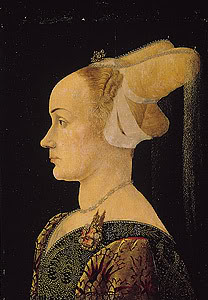
    I wondered about when it was that anonymous portraits appeared.  Not just depictions of people in large battle scenes, or some unidentified spectator of some miraculous something, or wardens of the unknown in some sort of religious icon,  but single subjects seated for a singular purpose of having their likeness rendered.  And at the end of that process, the sitter would be anonymous–not their names-lost-to-history-anonymous after having the title of the painting lost to time, but always-and-forever anonymous.  It seemed to me a luxury for a painter to paint for the sake of painting, that they would paint perhaps for pleasure or for practice, as the practice of purchasing anonymous portraits was not one of high popularity.

    File:Florentine 1475 NG of Victoria.jpg Anonymous portrait of an anonymous woman, ca. 1475


  • Daily Dose of Dr. Odd: Proto-Surrealist and/or Absurdist Images of Artists by J.J. Grandville, 1844

    JF Ptak Science Books   Quick Post

    I’ve remarked on this blog several times on the work of the fabulist proto-surrealist (etc.) J.J. Grandville (for example, here), and today I’d like to return again to his soaring Un Autre Monde (published in 1844) for the work he did in satirizing conventions by reversing their orders, presenting common entities in their “opposite”position. (Perhaps “opposite” is a too far-reaching word, perhaps “contrary” is more appropriate in these cases–for now, either will do.)

    photo


  • Imaging Aliens, Part II: Baseball Cards as Though They Were Drawn by Aliens

    JF Ptak Science Books   Post 1833  (Continuing “Imaging Aliens, Part I:  American Traders in Yokohama Bay, 1859“)


    BLOG==july 9--baseball 1 These images—American baseball cards from the 1950’s and early 1960’s—seem to come from an removed, unknown source, at least to me.  The odd thing is that I have a recollection for some of these designs, seen in my tender years, and seeing them now is an odd assault on my memory.  I do remember the dark reds and the severe cut-outs, but now they look so unusual, so unnatural,  BLOG==july 9--baseball 2 bizarre, as though the artist who rendered the design had never seen baseball players—or men—before.  They might as well have been aliens pouring themselves from their space ship (why do those spaceships have landing lights?), or Americans disembarking from their tall ships in Yokohama harbor in 1859.

      I must point out that these images come from what I think may be a fantastic baseball book:  Brendan Boyd & Fred Harris The Great American Baseball Card Flipping, Trading and Bubble Gum Book (1973).  It is solidly funny, witty, and insightful, and the book covers things far beyond baseball cards, even in its remarkable and scant 150 pages.  Oh, and they know their baseball cold cold cold, and they know it far and away beyond just the numbers.

    The only weird thing about Mr. Gino Cimoli (1923-2011) was his baseball card when he was with the Dodgers. He was actually the first California-born hitter to play for the newish Dodger California club, and was a decent fielder and batter though not often gifted, and managed to be the fourth outfielder in difficult-to-break outfields, like the 1960 Pirates (having Bob Skinner, Bill Virdon and Roberto Clemente)  and the 1961 Milwaukee Braves (where he found himself behind two other good players and Hank Aaron). He did play an important role in filling up the holes in the 1960 club, and conbtributed to their pennant, but found himself traded the next year, anyway. He was with his third team in three years in 1962 when he managed 15 triples (!) for the KC Athletics, following with 11 triples the next year–a pretty good feat, epecially when you’re 6’2 and 200+ pounds. 

    But his basebal card is onbe of the oddest bits I’ve ever seen.

    BLOG==july 9--baseball 3

    Little or nothing needs to be said about Mr. John Sain or that day of rain. I’ve included this card because of the bizarro choice of graphic backdrop, which means nothing.

    Lastly, I could not help but publish this card for Billy Loes in large format.  I have no idea what anyone–the designer, the photographer, or Billy–was thinking when his card was put together.  In the annals of Surreal Baseball Art, Billy Loes’ card is a post-anticipatory (?) early Kandinsky. 

    I should also point out that Billy Loes was a good pitcher: he had four very good years for Brooklyn 1952-1955, but things went badly for him in 1956.  He managed to stay on for another five seasons, which means that folks thought he might come back.  He didn’t.  


  • Imaging Aliens 1859-1959, Part I: American Traders in Yokohama Bay, 1859

    JF Ptak Science Books    Post 1832

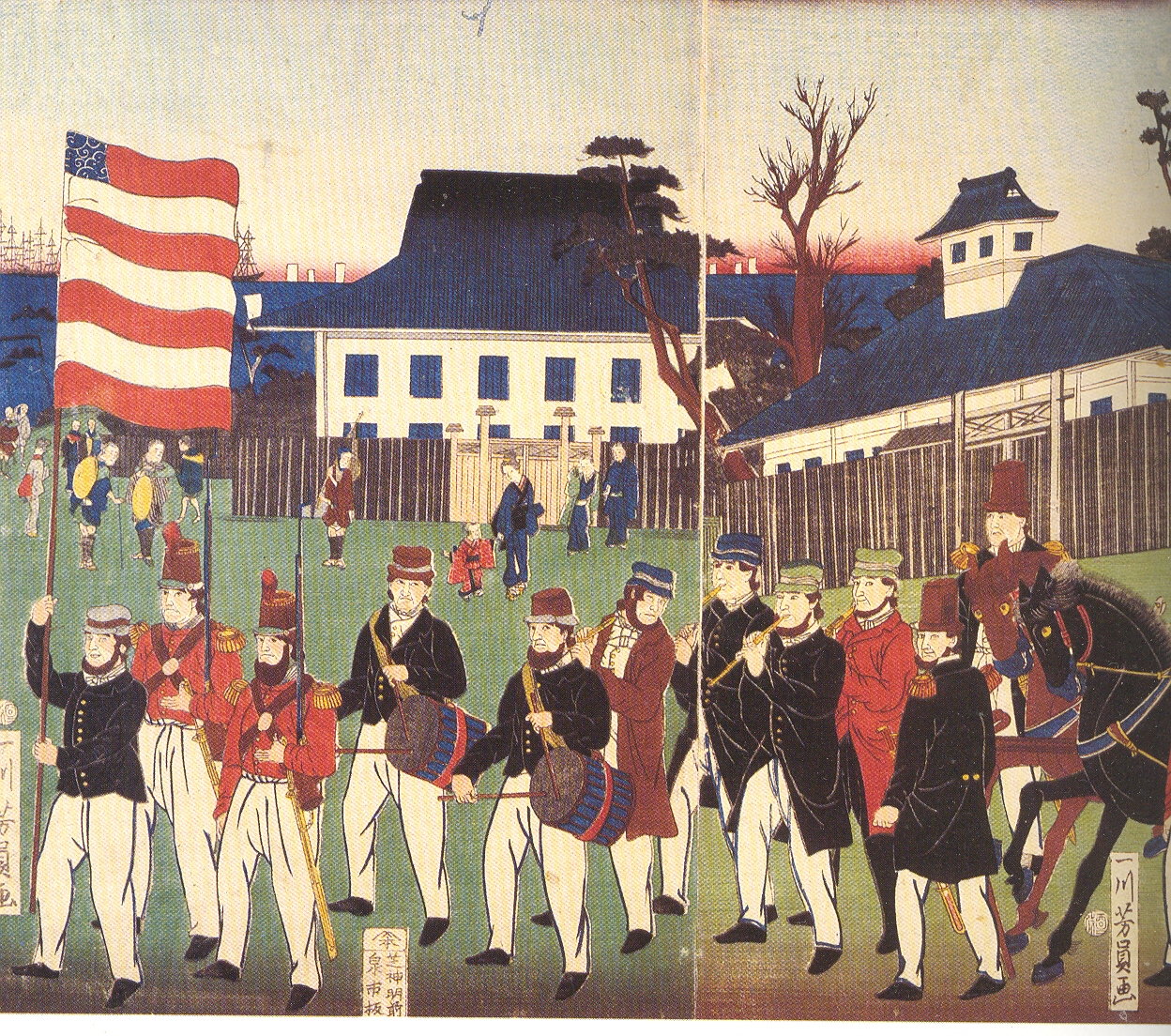
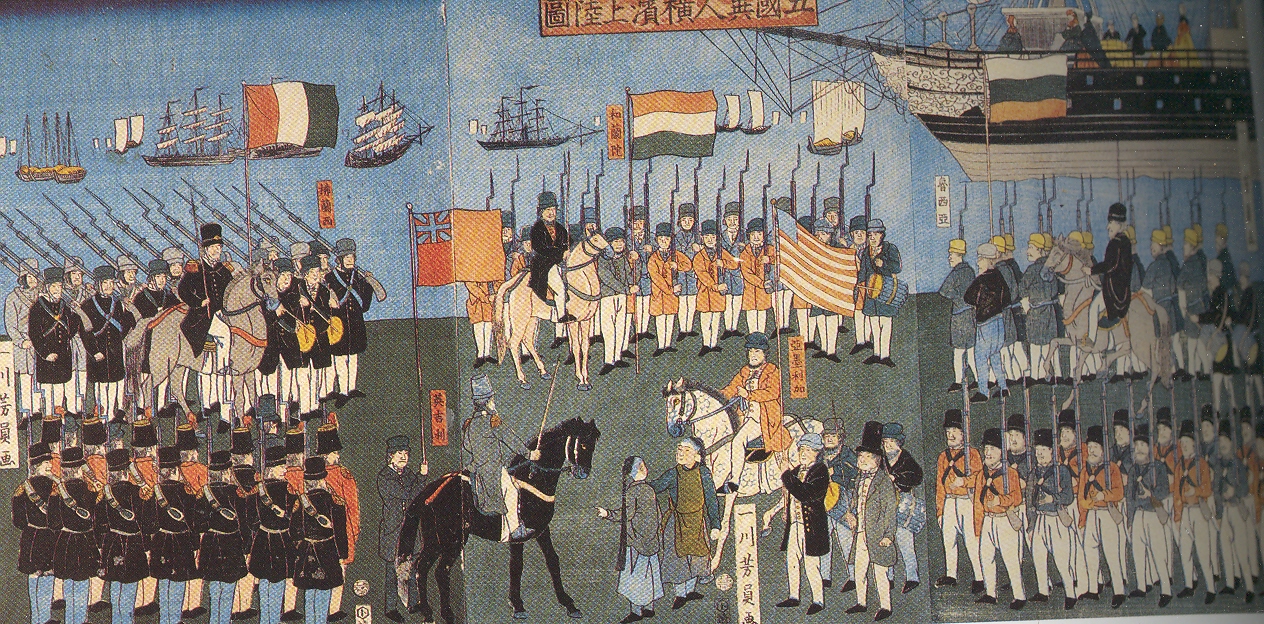
    Following hundreds of years of intrigue and shadowy majesty, of imagined life and legend, the Japanese finally allowed its transformation to take place, opening itself to trade and other permissibles with the rest of the world.  It was the beginning of massive cultural, industrial and scientific cross-fertilization, ending centuries of isolation and self-sustained empire–and which basically took six years to occur.  The change started with the efforts of the U.S. government and its liaison in Commodore Matthew Perry, establishing diplomatic and trade relations with Japan via Perry’s expedition there in 1853. By 1859* the transformation was very well underway, with Yokohama—as one of the major trading ports in Japan—being what former US

    Blog==July 5=flag

    Ambassador to Japan William Leonhart called “the microcosm of Japanese modernization”, and the port opened for trader with the foreigners.  Japanese artists responded to this influx of exceptionally different people with the Yokohama-e school of woodblock illustration—these artists were primarily from the Utagawa school, and worked illustrating the controlled invasion of their country for three decades, producing some 800 prints. Blog==July 5=flag4


    I like the idea of microcosms. Actually I like the detail within microcosms—sometimes, admittedly, the microcosms just don’t work, though their elements sometimes do. 


    The Yokohama-e school of  Japanese illustration was the pollination zone for the distribution of Japanese interpretations of these new cultures coming to their country.  They are a beautiful mix of the old (the very old) and the forces that were rubbing up against that antiquity, the old reacting to something brand new, images never seen before. 


    And in all of this beauty of newness, and all of the observations of never-before-seen rituals, and uniforms, and ships, and people, the thing that I have latched onto like a bad cold from a kindergartener is the American flag—and actually, the field of blue and the stars of the American flag.  For some reason the blue field is almost, always, tiny; and I’ve no idea why.  But I just love it—the flag looks big and billowy and alive, and it has that tiny blue space.   Blog==July 5=flag2


    *1859 was a very big year in the history of science:  it saw the publication of Darwin’s On the Origin of Species, and also the creation of Bunsen and Kirchhoff’s spectrum analysis.  A monumental year for the development of insight and vision.  


  • History of Holes: Making 1=2 or 3, or More (ca. 1700)

    JF Ptak Science Books   Post 1830  Part of the series on the History of Holes. (Apologies for no-para spacing–Typepad is buggy again.)

    A beautiful and inventive way of addressing issues of perspective and un-reality in the centuries before the introduction of electricity was more able to suspend belief in the existing/obvious was via the catopticum1. This object (an example of which is pictured below, taken from the oddball/genius/problematic polymath Athanasius Kircher in his book Ars Magna Lucis et Umbrae…2 printed in 1676), and the name of which is taken from the Greek katoptron, mirror) was an advanced parlor toy and artwork, a sort-of primitive free-standing theatre of multiplied objects, a box that contained things that were seemingly larger than their container. 

    The catoptric theater. From Ars Magna Lucis et Umbrae (1671 ed.), p. 776

    Source:  Kircher at Stanford University, here.

    This image makes the “image engine” a little clearer:

    Primeira PáginaPágina AnteriorDiminuir imagemImagem a 100%Aumentar imagemPróxima PáginaÚltima Página
    desd [757 KB]
    Source:  Tratado da Catoptrica, (manuscript, 1716);  from the Biblioteca Nacional Digital, here.
    It’s a romance of images machine,  a box of antique wonder, a peepshow of centuries before, putting more things into a space than could exist.  It was a relatively simple machine of great ingenuity:  the interior of the free-standing box with rows of holes along its top edge perpendicular to the ground, and was lined with mirrors (as shown above in the Spanish document), with some mirrors set of at 45% angles; when objects were placed within the imaging-area of the angled mirrors, the object was multiplied, and then multiplied over and over as a result of the surrounding mirrors, creating in effect a “hall of mirrors”, leaving the observer with a sense impression of many dozens of objects that were contained within a container that was impossibly too small for what was being seen. 
    This of course is a property of some holes–they tend to make things larger than they could previously possibly “be”. 
    In this case, the viewer would look through a hole into a Borgesian box which would contain a multitude of its possible interiors.  Looking through a hole in the end of a glass and mirror-ended tube and pointing it at the sky at night would reveal an enormous multiplication of a small part of that sky.  In the early case of Galileo, what  was first seen with the telescope was the multiplication of what was believed to be a finite and god-granted sky of perfection–he was seeing into some other sky, into a new vault of heaven, something never before seen, above-and-beyond what was known to exist.  Hooke and Louwenhoeck had a similar experience with their (second generation) microscopes, seeing details and life never before encountered, entire worlds in a place no bigger than the head of a pin. 
    Sometimes a hole is just a dark thing; but more often than not, it isn’t. 
    Notes:

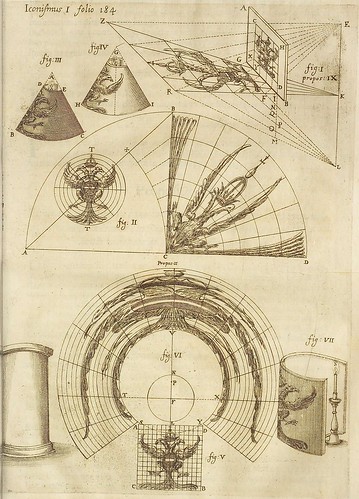
    1.  From the Greek, katoptron, mirror  or pertaining to a reflected image or reflected light, such as from a mirror.  There is another sort of catoptric that has been sort of widely used in antiquarian painting and parlor entertainments, which involves a canonical mirror reflecting a wide-field and distorted image into its proper perspective, which is known as catoptric anamorphosis.  Another version of this sort of optic imaging is optical anamorphosis, which requires the viewer to stand at a particular (usually sharp) angle to a painting containing a semi-hidden image whose proper perspective is revealed only at a particular angle of viewing.

    An example of catoptric anamorphosis, from the Kircher mentioned above:
    anamorphosis - eagle

    See here:  http://hyperphysics.phy-astr.gsu.edu/hbase/geoopt/catoptric.html
    2.  Ars Magna Lucis Et Umbrae In X. Libros digesta. Quibus Admirandae Lucis & Umbrae in mundo, atque adeo universa natura, vires effectusque uti nova, ita varia novorum reconditiorumque speciminum exhibitione, ad varios mortalium usus, panduntur. Editio altera priori multo auctior. The work is presented at Bibliodyssey, here.
    Mr. P.K.hauls out a great quote and summarization of the work of Kircher by Robert Moray in his letter to the great guiding post of the Royal Society, Henry Cavendish, which really captures the spirit of the very busy/very curious and curious old man:
    “Whatsoever Mr. Huygens & others say of Kircher, I assure you I am one of those that think the Commonwealth of learning is much beholding to him, though there wants not chaff in his heap of stuff composted in his severall peaces, yet there is wheat to be found almost every where in them. And though he doth not handle most things fully, nor accurately, yet yt furnishes matter to others to do it. I reckon him as usefull Quarries in philosophy and good literature. Curious workmen may finish what hee but blocks and rough hewes. Hee meddles with too many things to do any exquisitely, yet in some that I can name I know none goes beyond him, at least as to grasping of variety: and even that is not onely often pleasure but usefull.”  (My bold.)
    [Sir Robert Moray in a letter to Henry Oldenburg, 1665]  

  • Images of the Quick and the “Still”: Trouvelot’s Sparks and Stars, ca. 1890

    JF Ptak Science Books     Post 1827

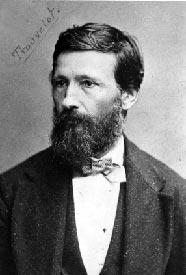
    Etienne Leopold Trouvelot. Trouvelot Figure. Photographic print, c. 1888.

    Etienne Leopold Trouvelot (1823-1895) was an ex-pat Frenchmen who settled in Medford (“Don’t Pronounce the First D”) Massachusetts, and who became a very highly accomplished and deeply skilled astronomical observer and astro-illustrator.  (I’ve included a suite of fifteen of his most accomplished works below, all found in greater detail via their links from their source at  the NY Public Library Digital Collections.)

    Trouvelot covered the spectrum in his art and photography–in addition to making photographs of the deeply settled but still open-to-mystery astronomical objects, he also was the photographer of extremely intransient things.  Among the later are some fantastic images that he made of high-voltage electrical discharges (images of which I found initially at the blog  Translinguisitic Order). 

    The image above is an example of that work, despite it looking like something rather deep-space-y, it is decidedly terrestrial–it is an image that he made of a discharge from either a Ruhmkorff coil or Wimshurst machine, and was produced ca, 1888/9.  It was a signature accomplishment, like photographing lightning or making an atlas of clouds, a watermark of sorts in a decade of photographic highpoint contributions in the sciences. (Some of these accomplishments were found in the work of Etienne Marey, who was able to isolate action in a continuous series of photographic still images, which for its time revealed shocking results.  Not only did the Marey work display the magnificence of motion, it also provided just about the first opportunity in the history of people to show the action in reverse.)

    File:Trouvelot.jpg

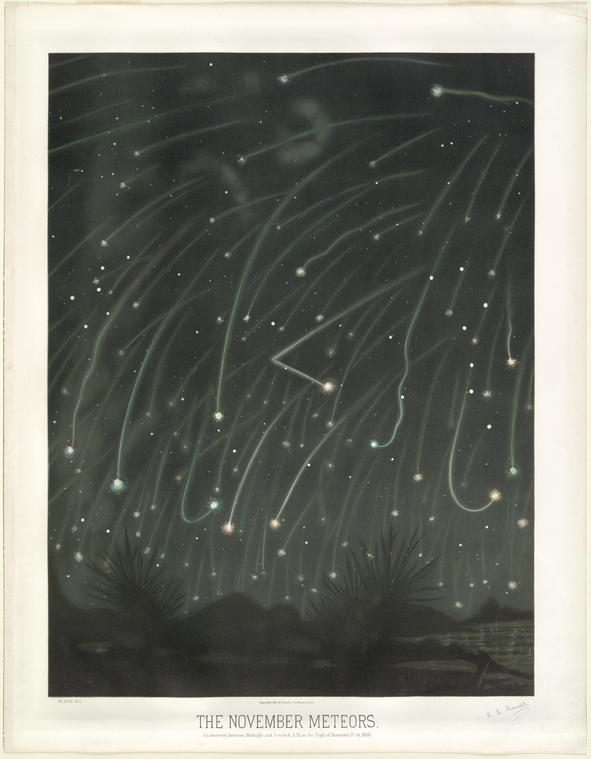
    Trouvelot’s drawing of a meteor shower, which I know has a very certain biological feel to it:

    The November meteors. As observed between midnight and 5 o'clock A.M. on the night of November 13-14 1868.

    Caption from NYPL: “Image ID: trouvelot_012. The November meteors. As observed between midnight and 5 o’clock A.M. on the night of November 13-14 1868. (1881-1882)

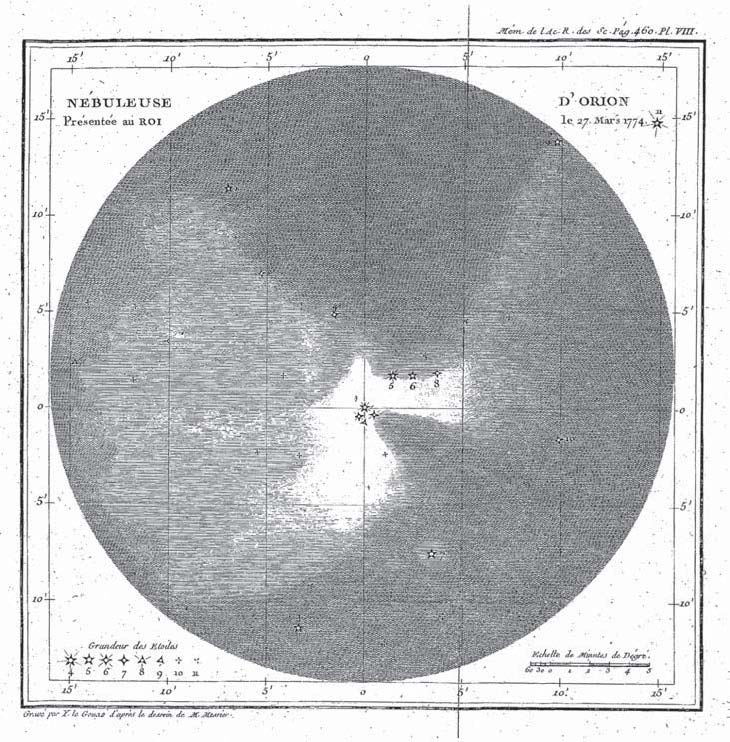
    And this spectacular image of the “Great Nebula in Orion” as it used to be called in some textbooks, now better known as Messier 42 or M42 or NCG 1976, which was and probably still may be one of the closest scrutinized things in the sky. It was recognized first perhaps by Niclas Claude F de Peirsec in 1610, with the first published account following in 1618 by Cysatus of Lucerne, though it didn’t get any real traction until it fell into the hands of Christian Huygens (1656) who also published the first image of the big bright spot in the middle of the sword of Orion in 1659.  (This is a little off-target but I like the historical end of the story.)

    The great nebula in Orion. From a study made in the years 1875-76.
    And just for the sake of it, the Messier drawing:
    File:M42m.jpg
    And Andrew Commons’ photograph of the nebula in 1883 was a great improvement over our old friend Henry Draper’s 1880 groundbreaking attempt:

    File:Orion-Nebula A A Common.jpg

    It is still a little bit of a mystery to me that it took another two decades or so for people to consider that first photo (above) as “art”–perhaps it was the classification of the work as “scientific” and therefore not-necessarily-art, but folks surely made use of this and the Marey and other scientific photography of the 1880’s in their art of the 19-teens.  Trouvelot never lived to see it, though; and perhaps it wouldn’t’ve made sense to him.  I just don’t know. 
    It is also amusing that for this great “finder” the root of the first half of his name in French is “find”.
    The full suite of fifteen images by Trouvelot, below, all thumbnails from NYPL:

  • Imaging Science: Very Populated but not-Crowded Images, 1728

    JF Ptak Science Books      Post 1821

    Image at museum

    Rene Magritte says that this is not a pipe.  And of course he is correct–it isn’t a pipe; it is a painting of a pipe.  And so the Surrealist (or the man who was a painter who painted in a style known as Surrealisme) establishes a bit of character in the history of images in a painting known as The Treachery of Images. 

    [page image]

    I am very attracted to non-treacherous displays of scientific evidence and thinking, particularly those illustrations for encyclopediae and large works on large things, universal assemblies of the state of knowledge in some past century, the engraved page holding dozens of pieces of data.  It is a beautiful thing when the page gets very populated but not crowded, when there is room enough for not one more image but plenty of room for what is there.  There is a great elegance to this sort of display, and it is one that escapes me almost completely.

    I recently found that the great encyclopedia established by Ephraim Chambers (and associates and related contributors and many others) called, at great-but-acceptable length, Cyclopædia, or, An universal dictionary of arts and sciences : containing the definitions of the terms, and accounts of the things signify’d thereby, in the several arts, both liberal and mechanical, and the several sciences, human and divine : the figures, kinds, properties, productions, preparations, and uses, of things natural and artificial : the rise, progress, and state of things ecclesiastical, civil, military, and commercial : with the several systems, sects, opinions, &c : among philosophers, divines, mathematicians, physicians, antiquaries, criticks, &c : the whole intended as a course of antient and modern learning, and printed in 1728, was available online in searchable form.  (Source, here.) It is a wonderful and magnificent thing, this book, which was a collection of virtually everything that needed to be known in the early 18th century and included in two tall (41 cm) volumes. 

    It was pretty popular, too, going into a second edition in 1738, and then five more between 1739-1751/2.  It went into a final edition, expanded by five more volumes, after the death of Chambers, and continued to reach and educate people in a new fashion long after his death. 

    The Chambers work is one of those whose illustrations are very full and uncrowded, a fine display of sense-of-place and placement and of good design.  Here’s a selection of the images, including the following outlines of nature (A general table of fossils; Botany tab 1 Herbs and trees; Botany tab 2 Distinctions of the leaves, flowers, and cups of plants; Botany tab 3 The genera of mosses; Quadrupeds and serpents; The more scarce and curious birds; The most scarce and remarkable fishes; Insects; Testaceous and crustaceous animals; A general table of shells; Microscopical objects and discoveries):


    [page image]

  • The Lincoln Memorial Pentimenti

    JF Ptak Science Books     Quick Post

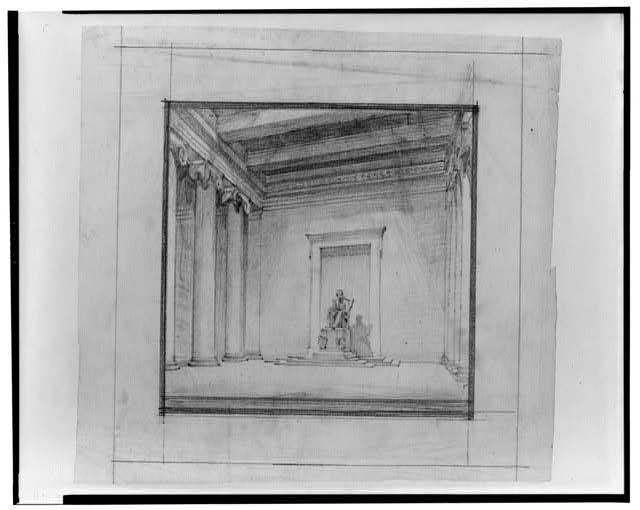
    Henry Bacon  (1866-1924) was the architect of the Lincoln Memorial–it was his last major assignment and I should say his greatest.  I found in the Library of Congress some of the drawings  he made (completed 1910-1917) envisioning the space, and they included what might very loosely be called pentimenti of the statue of Lincoln that was to be provided by Daniel Chester Smith (1850-1931). They are really just placeholders, models, of how the finished statue would occupy the space.  When I saw these drawings I realized how perfectly the finished works lived together. 

    Lincoln