A Daily History of Holes, Dots, Lines, Science, History, Math, Physics, Art, the Unintentional Absurd, Architecture, Maps, Data Visualization, Blank and Missing Things, and so on. |1.6 million words, 7500 images, 4.9 million hits| Press & appearances in The Times, Le Figaro, Mensa, The Economist, The Guardian, Discovery News, Slate, Le Monde, Sci American Blogs, Le Pont, and many other places… 5000+ total posts since 2008.

Category: Anticipation, History of

  • The Tall in the Short of It–the Giants of Microworlds & the Microscope

    JF Ptak Science Books  Post 2127 

    Follow Me on Pinterest

    I’ve posted a number of bits in this blog about stupendously large and enormously small things, but it is infrequent to find the story of something made exceptionally large in a reduced world.  Perhaps it is normal fare in the science fiction world, but I found the not-obvious but still-obvious making of a giant in microland to be, well, less than obvious.  

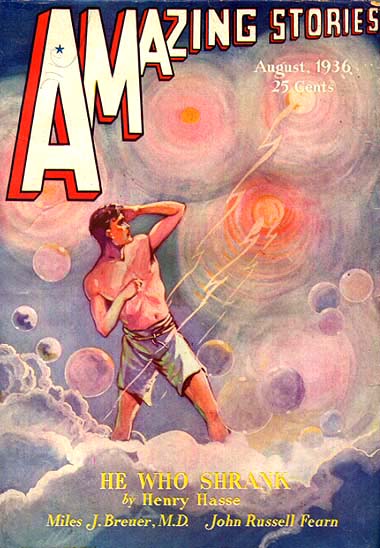
    There have been countless stories told of shrinking people, or the discovery of vastly small communities living withing a larger host community, and so on, like the following:
    http://static.flickr.com/67/202348136_833ca3249d_o.jpg

    This is a story by Henry Hasse and it involves a great scientist and the his elixir called “Shrinx” which after it has been injected into his assistant shrinks the man immeasurably, so science-fictionally small, that he has passed through the microscomos and “subuniverses” to the point where he emerges on a primitive place called Earth.  The assistant has traveled from a planet in a solar system revolving around a sun in a solar system in a galaxy in a universe to something small, something sub-atomic, landing in an electron holding within it its own universe. 

    that’s small. 

    And then there is this piece of magnificent ne plus ultra, where we remain in the microworld but where there are also micro-giants.

    The cover
    of Fantastic Novels (1921?) seems to tell a straightforward story, but as it turns out the giant is giant but one living within a world in an atom of a gold wedding ring.
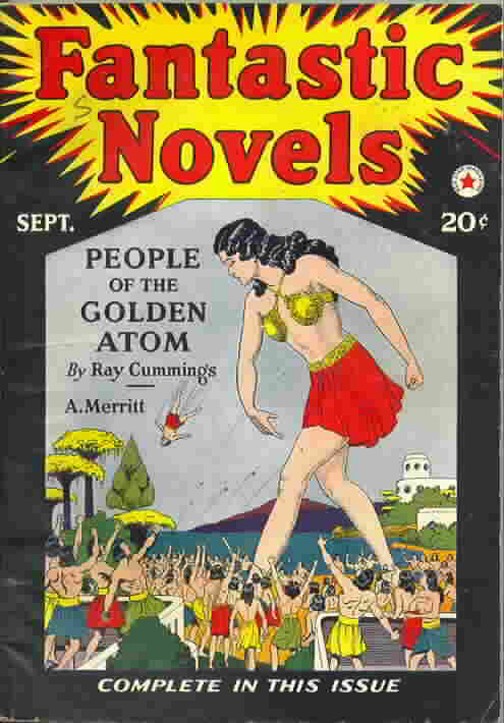
    Man throwing

    Author
    Ray Cummings (1887-1957) found a nice writing niche for himself in his
    fictional discovery of a drug that could make people as small as atoms
    and then, once inside the microworld, could be made as immense as
    micro-mountains.  The Girl in the Golden Atom was one of a five-part trilogy(?)1 and
    so far as I can tell, Cummings used the hell out of his original idea. 
    The prose reads like it is punctuated with invisible periods every
    fifth word–evidently Cummings was so very busy writing 750
    books and short stories that it  left him little time to edit or, maybe,
    think.

    It was a very nice surprise for me. That said, I can only imagine the giddiness and suspension of (dis-)belief when the mass market readership of Robert Hooke’s Micrographia got a look for the first time on what the small creepy crawlies that lived around them looked like under magnification.  Suddenly the blots and blotches took on real–and sometimes terrifying–forms.  These were basically unseen during their long interactions with human beings, until, suddenly, Mr., Hooke made his investigations and put a face on the unseen microworld and shared it with the General Public. 

    “It is my hope, as well as belief, that
    these my
    Labours will be no more comparable to the Productions of
    many other
    Natural Philosophers, who are now every where busie about greater
    things; then my
    little Objects are to be compar’d to the greater and
    more beautiful
    Works of Nature, A Flea, a Mite, a Gnat, to an Horse, an
    Elephant, or a Lyon”
    said Mr. Hooke
    at the end of his 28-page preface to Micrographia in 1665.

    https://historyofideasblog.com/a/6a00d83542d51e69e20120a5ec29c4970c-pi

    [Mr. Hooke’s drawing of his flea, in full and unexpected glory, with as much detail and armor as anything that had ever been imagined–only this thing was real, and common, and lived on you.]

    It may have been a similar shock to those seeing these images for the first time as it was for people to see Galileo’s images of the Moon, or to read him announcing that the perfect sky of Creation was actually not so, and that his telescope revealed ten-fold the number of stars that people could see with only their eyes, and which faith alone could not elaborate. 

    Yes, the incredible shrinking giant woman was a surprise but not on this order, not by a stretch–though it seems to be the world of science rather than scifi that has delivered the most shocking stories of the big and the small. 
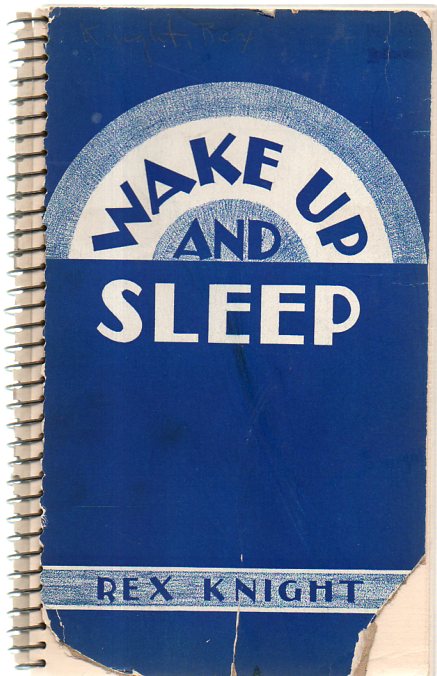

  • Wake Up and Sleep! Riding Ether Waves to Bigger Brains, 1938

    JF Ptak Science Books   Daily Dose from Dr. Odd

    Wake up and sleep679

    Q: What is the one sure thing that is very impressive about this publication by Mr. Rex Knight?

    A:  The 35-ring wire binding on a six-inch tall publication. There’s not much to recommend itself to recommendation and memory. 

    Wake up and sleep681
    [Perfection had better hurry up and get here given my own fast-short-sleep habits]

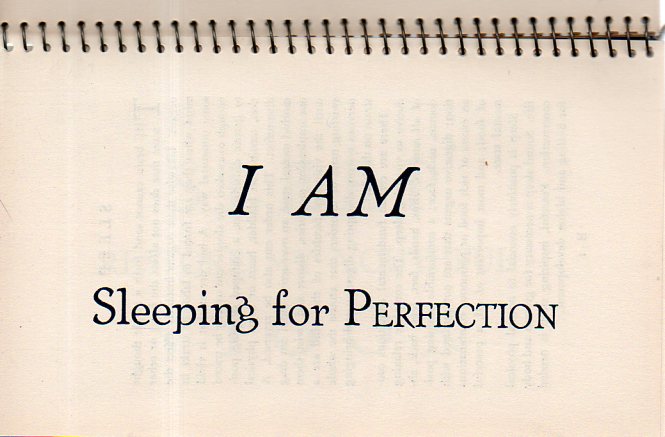
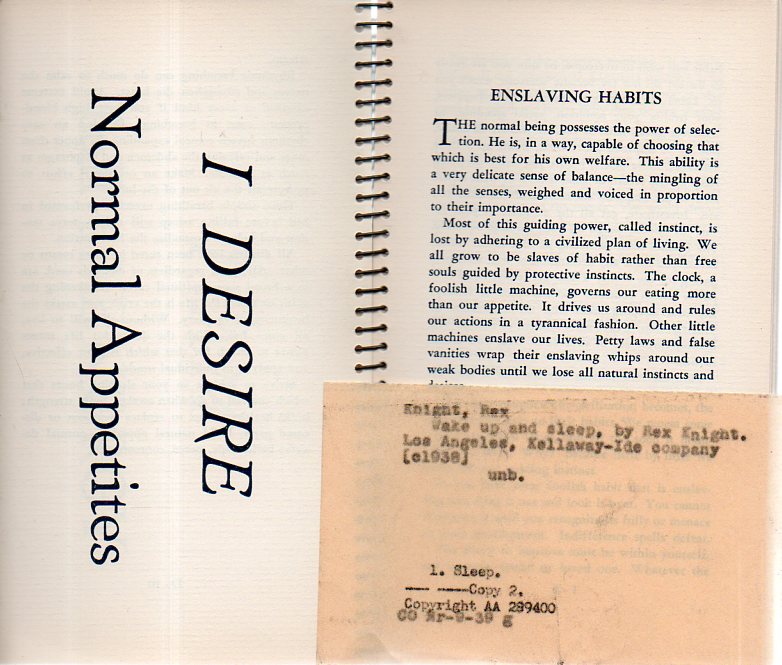
    Mr. Knight had some ideas about sleep and well-being and achieving various states of normalcy and perfection, most of which had to do with waking up during hte night and staring at one of the many full-page neuro-demands which evidently were in direct confrontation with whatever it was in your head that was keeping you from success and strength and wealth and inspiration and self, combating “enslaving habits” and “lesser habits” by telling the brain what to do with the mind.  Or something along those lines.

    Wake up and sleep680
    In any event, Mr. Knight tried something out and used a lot of wire to bind the really rather nice paper his effort was printed on, so Wake Up and Sleep had at least that going for it.  Aside from that, his suggestions seem more disruptive and potentially rheumy-eyed more than anything else, waking you through the night to hand deliver messages to your sleeping and semi-enslaved brain to find its own appropriate “wave” to enrich your life.  “The prize idea that you seek is in the air all around you”, he writes.  “Ether waves, mental waves, cosmic or whatever you choose to call them, are everywhere.  All you are trying to do is to get tuned in on the right wave”. 

    “Expect more and more of sleep” says Mr. Knight–at least that is one remedy that would sound good to almost everyone. 

    It is interesting to note that “Rex Knight” is very close to being “Rx Night”.  And “King of the Night”.

    Lastly, according to WorldCat, there is only one copy located in libraries worldwide–that at NYPL.  My copy was from the copyright office/collection at the Library of Congress when it came to me in a Very Large Grouping (called with little imagination “The Pamphlet Collection”) many years ago.  It never was a hit for the libraries.


  • Imaginary New York City Landscapes from CON-ED, 1938

    JF Ptak Science Books  Quick Post  

    Follow Me on Pinterest

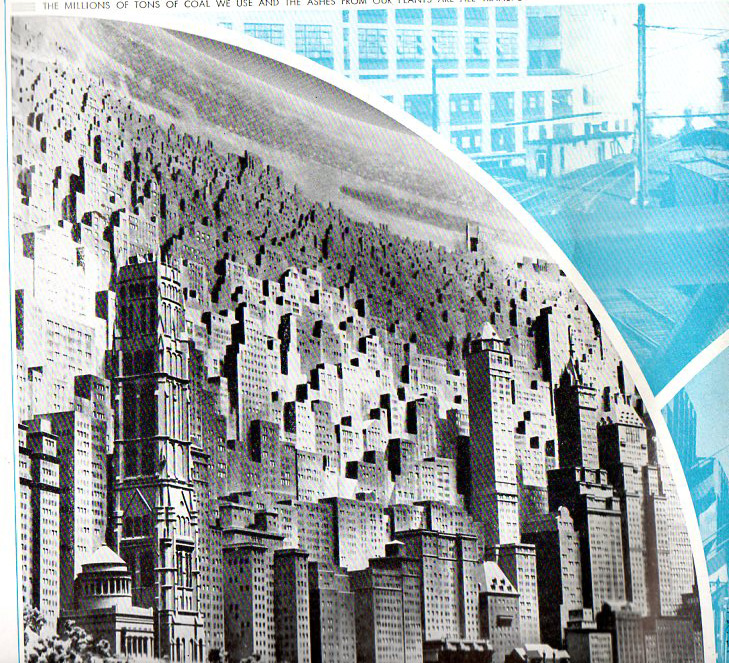
    These lovely images are found in a long, shining and slightly darkroom-smelling The City of Light, which was a pamphlet made for the Consolidated Edison exhibition at the New York City World’s Fair of 1939.  Con Ed I think just wanted to get the point across that they saw into the future and were getting ready for it, NYC being stuffed to the gills with buildings and each window stuffed and outlined in Con Ed-supplied electric light.  The vision is vaguely threatening to me, though, the buildings in a stadium-seating arrangement that is unsettling, like they’re part of our robot-overlord future–someone or something must be living in those room filled with Con Ed light, though…

    Nyc544


  • The Endless Immensity and Finite View of the Infinite of Thomas Wright, 1754

    JF Ptak Science Books   Post 2064
    Follow Me on Pinterest

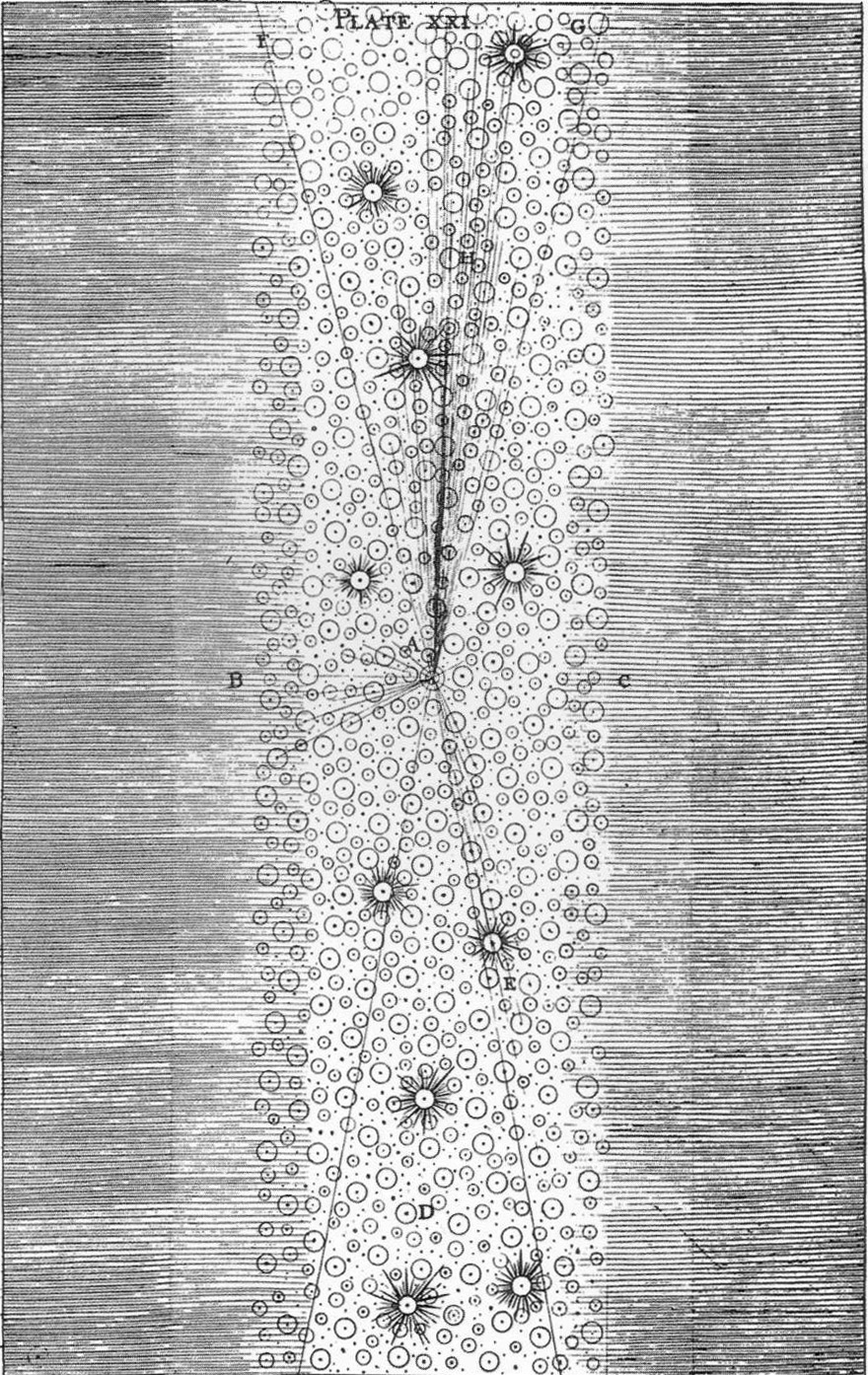
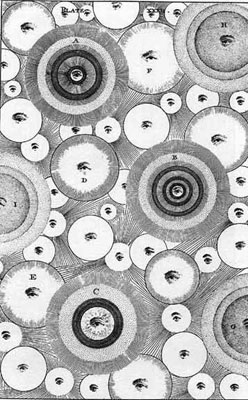
    Thomas Wright (1711-1786) saw about as deeply into the deep as just about anyone else–he looked into the night sky and pretty much saw all of it. In his book, An Original Theory or New Hypothesis of the Universe, Founded upon the Laws of Nature1, he described a version of the universe that was influential in the thinking of Kant and Herschel, finding a rectangular/squashed “finite infinity” of stars, “a vast infinite Gulph, or
    Medium, every Way extended like a Plane,
    and inclosed between two Surfaces”.

     
    Wright thomas [plate 23

    Our Milky Way, which at the time was thought to be the entire universe rather than a galaxy as it was later discovered to be–one galaxy in a seemingly endless sea of galaxies–was presciently seen by Wilkins as being but one assembly of stars in an “endless immensity” of stars:

    “And farther since without any impiety; since
    as the creation is, so is the Creator also magni-
    fied, we may conclude in consequence of an in-
    finity, and an infinite all-active power; that is
    the visible creation is supposed to be full of si-
    derial systems and planetay worlds, so on, in
    like similar manner, the endless immensity is an
    unlimited plenum of creations not unlike the
    known Universe.”–page 143. (Again, the “Universe” eferred to here is the Milky Way galaxy.)

    Wright’s vision of this plethora of Universes, in which each creation is one like the Milky Way–a radical thought in 1750:


    Wright 32

    [Part of me wants to include the first Wright engraving in this blog’s series on the History of Lines, seeing as how they represent the great Something that seem to be infinitely binding the infinity of universes…]

    Wright also writes on the minuteness of the human condition, of the perfect sense of nothingness that is the Earth in a sea of infinite possibilities of other earths and earthy creations, which was definitely an outpost of thinking in 1750:

    “In this great celestial creation, the catastro-
    phe of a world, such as ours, or even the to-
    tal dissolution of a system of Worlds, may pos-
    sibly be no more to the great author of nature,
    than the most common accident in life with us,
    and in all probability such final and general
    doom-days may be as frequent there, as even
    birth-days, or mortality with us upon the Earth.
    This idea has something so cheerful in it, that
    I own I can never look upon the Stars without
    wondering why the whole world does not be-
    come Astronomers; and that men endowed with
    sense and reason, should neglect a science they
    are naturally so much interested in, and so ca-
    pable of enlarging the understanding, as next to
    a demonstration, must convince them of their
    immortality, and reconcile them to all those lit-
    tle difficulties incident to human nature, with-
    out the least anxiety.”–page 132


    Notes

    1.  The full title:  An Original Theory or New Hypothesis of the Universe, Founded upon the Laws of Nature, and solving by Mathematical Principles the General Phenomena of the Visible Creation ; and particularly the Via Lactea. Comprised in Nine Familiar Letters from the Author to his Friend. And illustrated with upwards of thirty graven and mezzo-tinted Plates by the best Masters. London, MDCCL.” Full test, here.

     2. An odd note about Thomas Wright’s personal history, from Science, 1902: “A word, in passing, about Wright. Like many another, so unfortunate as to live ere the
    times were ripe, he has been consigned to unmerited oblivion. Even the writer of the entry upon him in the ‘ Dictionary of National Biography ‘—a work so uniformly accurate — is unaware of the sources from which information could have been obtained, and so has nothing to tell, — does not even know the dates of his birth and death, or why he was called ‘of Durham.”–[Science, N. S. Vol. XIII. No. 321. 2-22-1902

    An interesting poem by Rafinesque to start of his edition of Wilkins:

    “Where ends the range and limits have been set
    To mortal eyes, there mental sight begins
    To fathom space, and worlds invisible
    Surveys, admires
    The mind must feel that space can have no bound*,
    Whatever number be of things or thoughts
    Others may be beyond—and thus behind
    The Nebulas and Belts, our Galaxies
    Of stormy clouds and oceans
    There stands the central land and throne
    Of our wide Universe, the home of Angels,
    The seat of Love Divine”
    Rafinesque, Poem on Instability, found at the beginning of Rafinesque’s 1837 American edition of Wright’s 1750 work. 


  • History of Lines–Atomospheric Electricity

    JF Ptak Science Books   Quick  Post    
    Follow Me on PinterestPart of the History of Lines series

    Hermann Plauson, a German engineer and director Fischer-Tropsch Otto Traun Research Laboratories of Hamburg, Germany (in the 1920’s)  built on an idea of N. Tesla to “convert alternating radiant static electricity into rectified continuous current pulses”. It was an expansive idea of at least artistic merit, as seen in his patent application (below) and visualization of the completed installation. 

    “For many years electrical engineers have endeavored to devise some means  whereby it would become possible to utilize the free electrical energy ever  present in the atmosphere, but they were not successful, as every now and then an extra heavy surge of static current would rush down the elevated conductor and endanger the lives of the experimenters, or else destroy the apparatus  connected with it. A German engineer has, however, devised the somewhat  elaborate scheme here shown in brief, and he has succeeded, at least so his  report states, in safely extracting several kilowatts of electrical power from  the atmosphere with metallic surfaced balloons, elevated to a height of only 1000 feet.”–Hugo Gernsback, “Power from the Air (II)”, in Science & Invention, March 1922.


  • The Concentration Camp in the Soviet Union, 1938

    JF Ptak Science Books  Post 2052

    Adolf Ehrt (1902-1973) was a twice-born Nazi who in 1935 let
    his 3-year membership in the party lapse so that he could do better work for
    Hitler from the “outside”.  In short, and
    to skirt some very interesting detail (over which I really don’t have much
    expertise), Ehrt felt that there was too much influence from the Church and government
    sources to fuel his unrequited need for purity in the party. 

    Ehrt wrote this anti-Communist propaganda (Der Weltbolschewismus ein internationales
    Gemeinschaftswerk über die bolschewistische Wühlarbeit und die Umsturtzversuche
    der Komitern in allen Ländern
    ) from an imaginary perch in something called
    the Anti-Kominetern, but was really nothing more than an arm of the Nazi party.  Appearing in Leipzig
    in 1936, this book savaged communism, communists and the Soviet
    Union to no end.  I own a copy of the book because it is an interesting document and speaks to its period, and also has
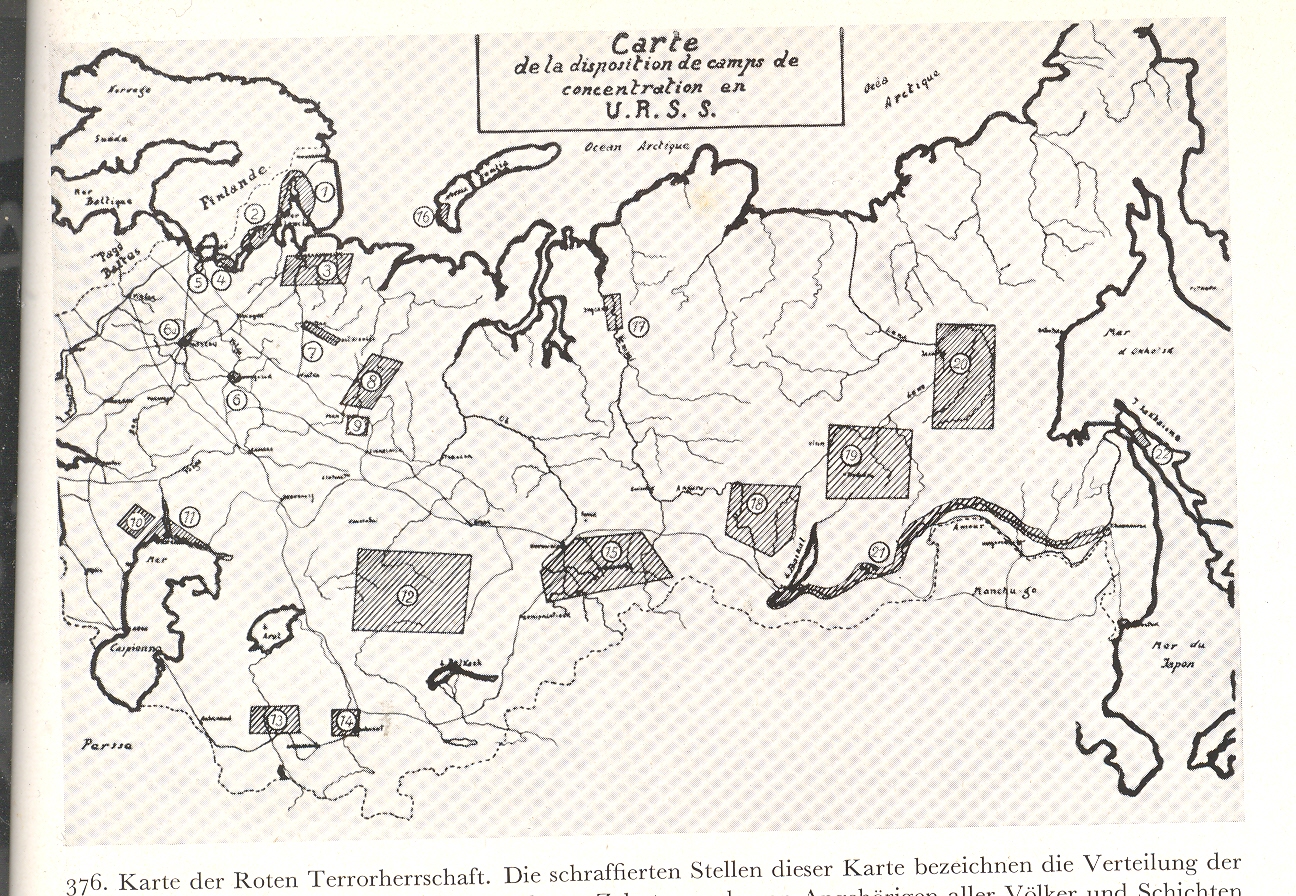
    hundreds of unusual photos, giving it a documentary appeal.  What I noticed just recently though was a map
    on part of page 481 in the weirdly skimpy section on the Soviet Union—a reproduction
    of a French map showing the distribution of concentration camps in the USSR.  I cannot remember seeing such a map in
    English during this time period.  (The forced labor camps are referenced in the map as “concentration camps”, though in th eSoviet Union they were known by the acronym “Gulag”, which stood for Glavnoe Upravlenie ispravitel’no-trudovykh LAGerei, or “Main Administration of Corrective Labor Camps”.)

    + USSR concentration 002


    + USSR concentration 001 


    (Clickable/expandable image)
     

    + USSR concentration b


    A more modern mapping of the Gulag system (for the period  1923-1961):

    Gulag_Location_Map.svg
    [Source: http://en.wikipedia.org/wiki/File:Gulag_Location_Map.svg]

    Ehrt was a Nazi painting with broad historical/Nazi strokes
    across a Communist canvas, and did get a lot of stuff right in his attacks; but
    considering the source his book is useless except for its pictures.   The USSR was a wicked place to be at this time for millions and millions of people, the
    bestial Joseph Stalin busy killing hundreds of thousands, imprisoning more—but
    this was in general not the story reaching folks in the United States.
    That this French map (source not given) showed two dozen or so concentration
    camps (Gulags, work camps) is remarkable; and of course it is just the tip of
    the Gulag system iceberg.  It was at
    least a start. It was also just the beginning of a particularly nasty period
    for the Russian people, who staggered under the weight of an edict called Article
    581 that sent millions of people to their doom. 
    This map was also published just before the Great Terror2, a
    spectacularly bad war of internal doom that tore millions from their homes and
    hundreds of thousands  from the
    earth. 

    The map, rare as it is in appearance and sentiment,
    seriously underestimated the extent of the barbaric Soviet existence of the
    time. 

    1. “One can find more epithets in praise of this
    article than Turgenev once
    assembled to praise the Russian language,
    or Nekrasov to
    praise Mother Russia: great, powerful, abundant, highly ramified, multiform,
    wide sweeping 58, which summed up the world not so much through the exact terms
    of its sections as in their extended diacritical interpretation.  Who among us has not experienced its
    all-encompassing embrace? In all Truth, there is no step, thought, action, or
    lack of action under the heavens which could not be punished by the heavy hand
    of Article 58” Aleksandr Solzhenitsyn,
    The Gulag Archipelago    See “Article 58″  http://en.wikipedia.org/wiki/Article_58

    2. NKVD Order no. 00447, 1937, directed against
    “ex-kulaks”
    and other “anti-Soviet elements” (such as former officials of the Tsarist regime,
    former members of political parties other than the communist party, etc.)  See http://en.wikipedia.org/wiki/Great_Purge  Generally, any unfriendly could be uprooted and shot or sent off to Siberia. .  The operative made it easy for local justice
    units to identify trouble makers and shoot them.

    ·Posted by :

    ·in:


  • History of Blank, Missing and Empty Things, Part 66: The Response to Hope

    JF Ptak Science Books  Post 2045  Part of the series, a History of Blank, Empty and Missing Things

     
    Follow Me on Pinterest

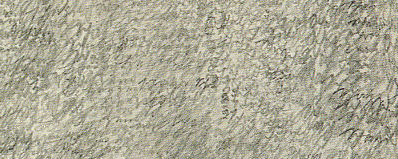
    Outsider Hauck DETAIL

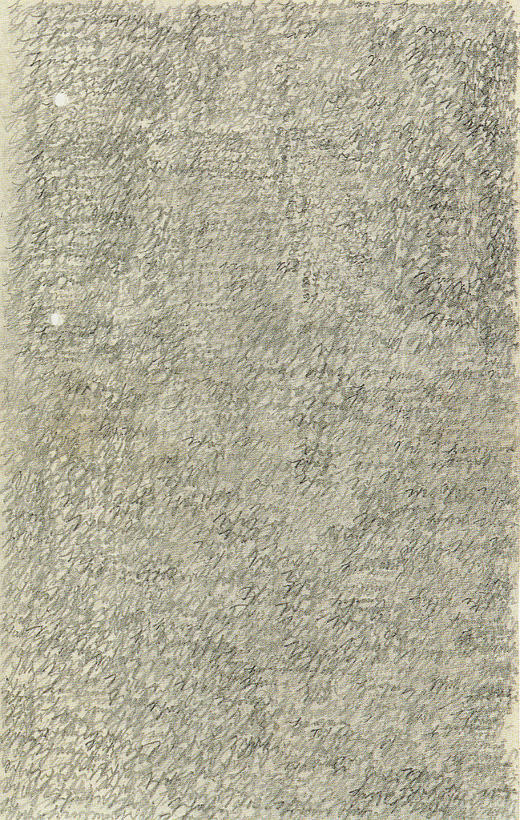
    This is a detail from an image of great hope lost.  Here’s the full picture, one of many, one of hundreds similar to it:

    Outsider HauckThis
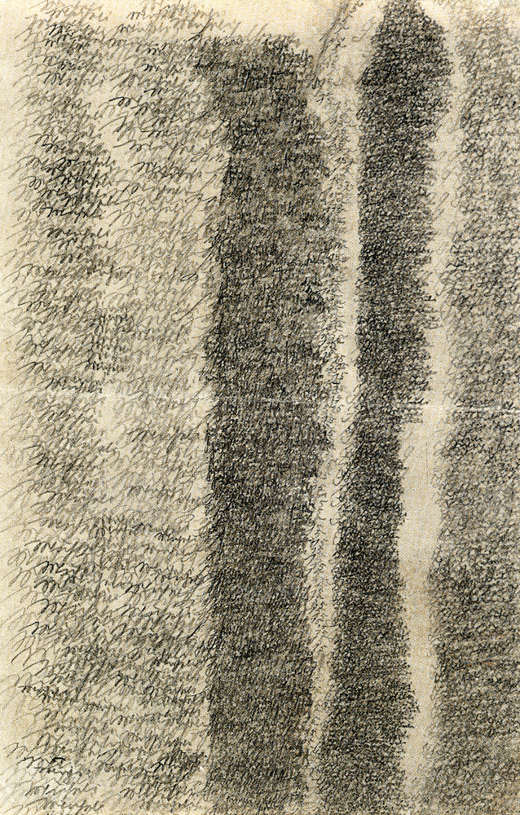
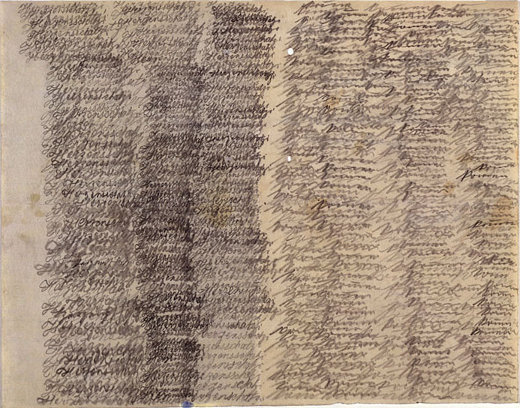
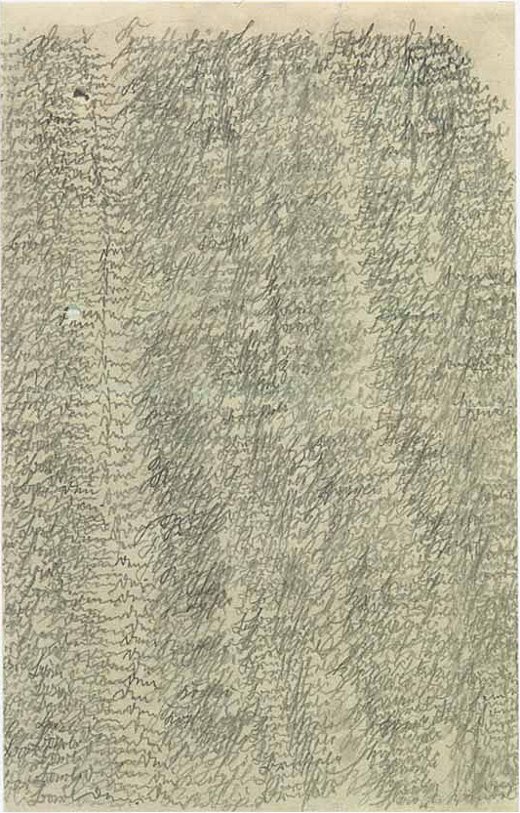
    is a letter from a woman named Emma Hauck (1878-1920), a “pateint”, a committed
    person, in an asylum for the “fatally” insane; a schizophrenic, an
    incurable who simply wanted to go home. She was not insane enough to not 
    know where she was, not insane enough to not want to get out, not insane
    enough to know that she was in desperate straights, not insane enough
    to try to get some help.  Emma Hauck wrote letters to her husband,
    Michael (father of her two children) after her second and last commitment, beginning in 1909.  Mostly the letters were composed of single words (like “kommen,
    kommen”, “come/come”) or simple phrases (“Herzensschatzi komm” or “sweetheart/come”)
    written concisely and tightly, over and over again, layers of
    kommen/kommen, so many that there is a geology of letters, though there
    is no geologist.

    Outsider hauck 2
    The images appear in the book and collection of psychiatrist and art historian Hans Prinzhorn (1886-1933), in his Bildnerei der Geisteskranken: ein Beitrag zur Psychologie und Psychopathologie der Gestaltung1,
    which was published in Berlin in 1922.  Prinzhorn was among the first
    in his profession to study the art of the insane, and to use it in
    diagnosis.  In the meantime, over dozens of years, he accummulated a
    collection of thousands of works of art (many coming when he was an
    assistant to Karl Wilmanns at the psychiatric hospital of the University of Heidelberg), most of which are housed today in the Sammlung Prnzhorn (UniversitätsKlinikum Heidelberg, here).

    Emma Hauck’s letters were never sent. I think it is unclear whether they were not sent because the institution in which she was confined did not mail them, or if she simply did not actually try to send them.

    A very distrubing short experimental film was made by the Brothers Quay in the U.K. featuring Hauk’s letters (complicated and viscerakized by a very grating Stockhausen soundtrack), which is located here.

    Notes:

    1.  The English translation of this work:  Hans Prinzhorn, Artistry of the mentally ill: a contribution to the psychology and psychopathology of configuration,
    translated by Eric von Brockdorff from the second German edition, with
    an introduction by James L. Foy, (Wien, New York: Springer-Verlag),
    1995. 

    Outsider hauck 3

    Outsider hauck 4


  • Engraving Slow Motion–a Paper Filmstrip from 1844

    JF Ptak Science Books  Post 2036 

    Follow Me on Pinterest


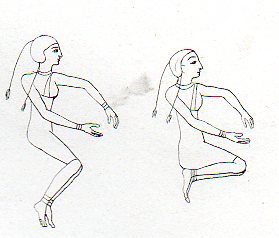
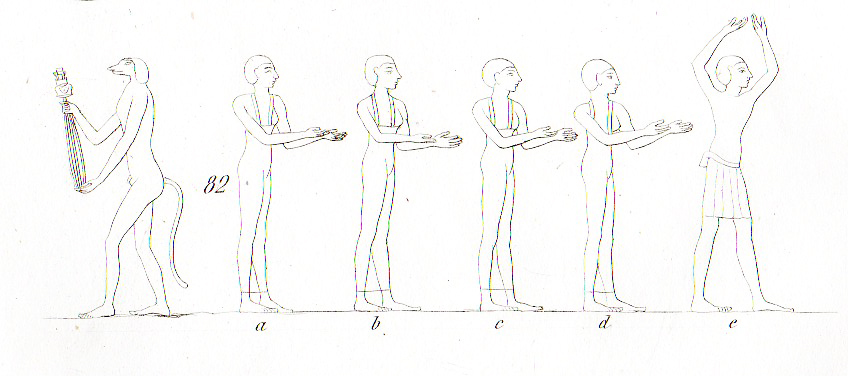
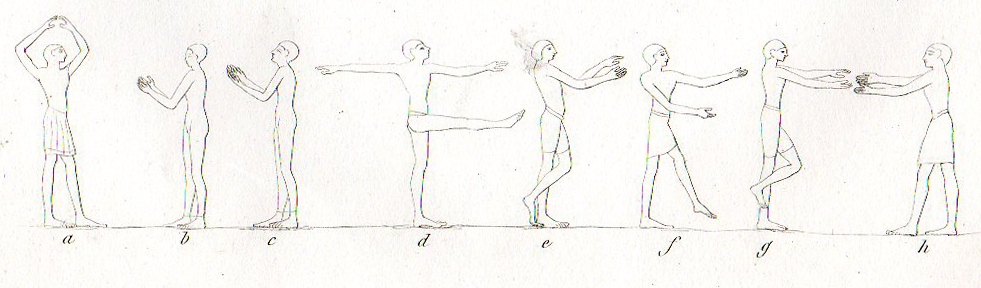
    It was a curious thing to find, these engraved images of Egyptian dance and movement, seeming for all the world like motion shorthand, a sort of antiquarian Labanotation or kinetography.  They appear in the stray atlas volume here by Juste Adrien Lenoir de La Fage (1801-1862), Histoire Generale de la Musique et de la Danse, which was published in Paris in 1844. I imagine that this is a surprise mostly to me–the Egyptians certainly knew that tey danced, and from the looks of it, they danced with athleticism. 

    Egyptian d347[Text can be found at the Haiti trust.]

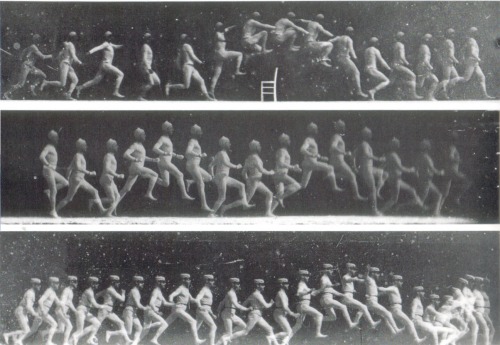
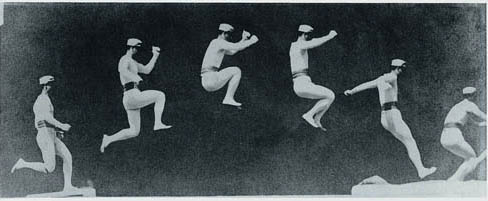
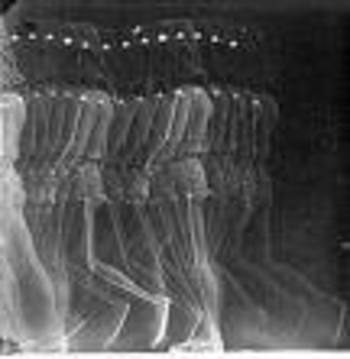
    Most of the surprise part of this–the opening the book and having a sense of the “aha!” and deja vue— were these images’ association in my head with the work of the motion picture pioneer and all-around smart guy, Etienne Marey, who in the 1870’s created what was essentially the
    world’s first “slow motion” device. One iteration of Marey’s apparatus
    was basically a long series of ganged cameras recording a motion for a Marey12
    simple task at a given time frame and presented on a continuous strip
    of photographic paper, sort of like a motion picture with the camera
    speed set at three frames per second. The resulting images were
    phenomenal and showed people for the first time the exactness of all
    manners of simple motions–motions that no longer looked so “simple”
    once all of its aspects could be studied from captured photographic
    evidence.  Even the act of hopping over a small stool or bending to pick
    up a bucket of water were enormously revealing in a way like Robert
    Hooke’s Micrographia displayed the great detail and complexity
    of the seemingly simple fly.  Perhaps the most famous of Marey’s series
    of images was that of a galloping horse, which also for the first time
    revealed what exactly the horse’s legs were doing and proving that
    almost every painter in the history of art represented the galloping
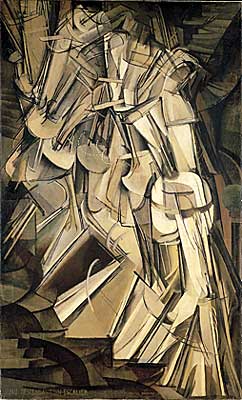
    horse incorrectly.  His series of photographs (as in the samples above and below)
    show a fairly close fit to the work of the futurists (like for example
    Duchamp) who would come into being after another four decades.

    Egyptian a343But the la Fage comes earlier still–granted, they are engravings, and they don’t necessarily all show a progression of movement, though some of them do–but it makes them very interesting in a capturing-the-moment way like few people had done before.

    Marey sequence
    La Fage, 1844:

    Egyptian b344

    Etienne Marey, ca. 1875:

    . 

    Marey 

    And Marcel Duchamp’s Nude Descending (1912):

    Duchamp


  • The Solar, Pre-Fab House–1944

    JF Ptak Science Books  

    Follow Me on Pinterest


    ++blog++solar houseThis
    interestin
    g and somewhat futuro-paleo 1944 pamphlet combines two modern interests in one package:  Green’s Ready-Built Homes Present the Solar Home
    presented both a prefabricated, well-designed house that was also passive solar
    friendly. The former is a long-established architectural state of achievement; the later, not so–at least on a popular, let’s-have-everyone-own-one level.  The architect and engineer was
    George Fred Keck
    (1895-1980) , a true modernist, and designer of one of
    the twelve “Homes of the Future” for the Chicago “Century of Progress” World’s Fair in 1933–this effort (which is also the copyright deposit copy) was published in 1944.

     Soalr panels such as we have known them over the last few decades were not available back in 1944. The “solar home” that he offered here used seasonal variations and house
    location to regulate heating/cooling, glazing and siding, air movement, and the
    storage of thermal energy in building materials—mostly, there were lots and
    lots of transfer-friend++blog++solar house 001ly double-paned windows, all of which were
    forward-thinking ideas for 1944.  In
    addition the house was prefabricated, making construction easier, simpler, and
    quicker than any of the stick-built houses being constructed at that time.  There was also an impetus for quick, good
    construction given the housing shortage caused by the returning WWII veterans.
    The prefab idea was also a relatively new one in architecture—though there are
    instances of bits and pieces of prefab architecture reaching back hundreds of
    years, the first earnest attempts at providing such housing on a mass scale
    dates only to the 1920’s. In any event, the double-effort here was a fairly early effort at combining these two ideas–and certainly something that seems to have been about 60 years too early.    


  • Recognizing the Agony of the Absurd–Aircraft, 1912

    JF Ptak Science Books   Post 2035  

    Follow Me on Pinterest


    Airplane futuro335
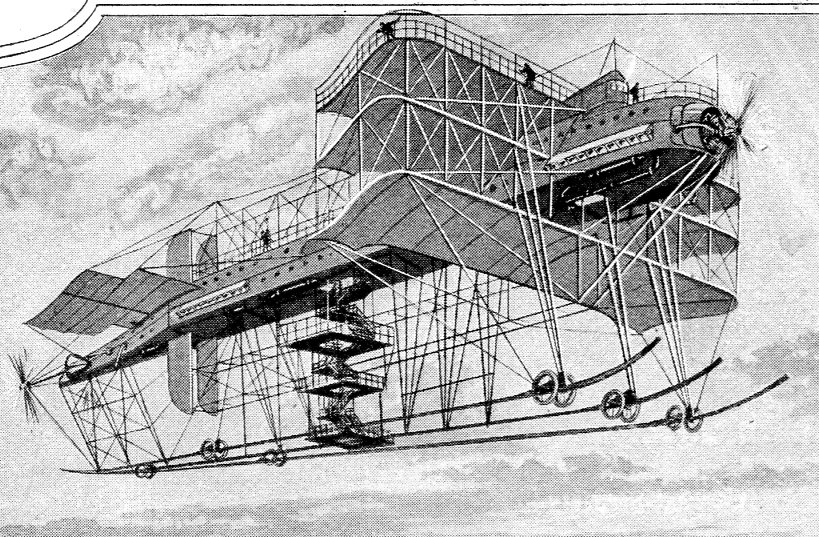
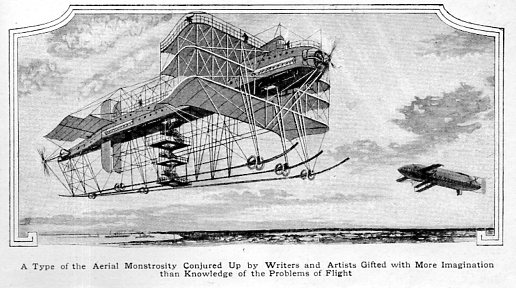
    Nothing exceeds like excess, and the excessful is not often successful.  Victor Lougheed saw this in the first decade of powered heavier-than-air flight in a homey and sensible article in Popular Mechanics in 1912.  He had a nice touch in trying to reign-in the impossible stuff that was happening in imagining flight, saying “it is safe to give to fancy only when fact is far away”–and that imagination is perfectly fine, but now that “human flight is a thing accomplished” that the issue of future aircraft should be one of engineering. Thinking big is fine just so long as you have those tools in the box.

    Lougheed offers the above illustration as an example of big-and-bad thinking, though he unfortunately does not credit the thinker or the artist.  Too bad–it would have made a nice follow-up.  That said, as a casual reader in early flight I have rarely seen someone taking on what are clear excesses of expectation–Lougheed is an interesting exception. 

    Airplane futuro336

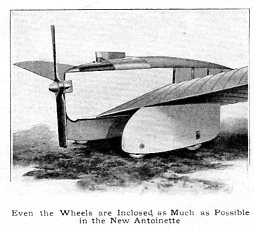
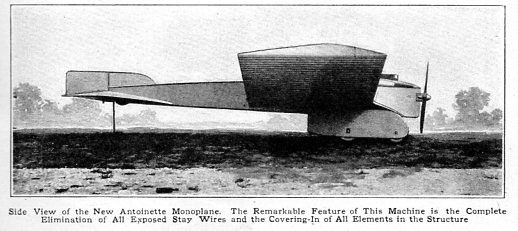
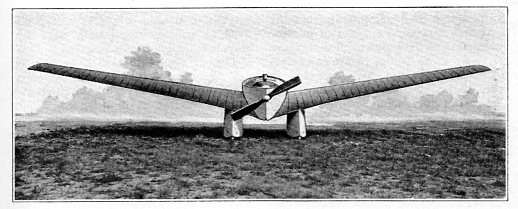
    He does go on to give an example of possibly-flyable future aircraft and presents the remarkable New Antoinette–a fantastic and prescient design for a plane only nine years removed from the Wrights’ flight, a streamlined monoplane that seems to come from reasonable future, which it sort-of does.  This plane evidently was too heavy for the 100-h.p.engine, but the engineering was at least definitely “there”.

    The Antoinette:

    Antoinette342
    Antoinette341
    Antoinette340
    Here’s a very long and very illustrated thumbnail site for French pre-WWI aircraft: http://flyingmachines.ru/Site2/Arts/Art4743.htm