A Daily History of Holes, Dots, Lines, Science, History, Math, Physics, Art, the Unintentional Absurd, Architecture, Maps, Data Visualization, Blank and Missing Things, and so on. |1.6 million words, 7500 images, 4.9 million hits| Press & appearances in The Times, Le Figaro, Mensa, The Economist, The Guardian, Discovery News, Slate, Le Monde, Sci American Blogs, Le Pont, and many other places… 5000+ total posts since 2008.

Category: Anticipation, History of

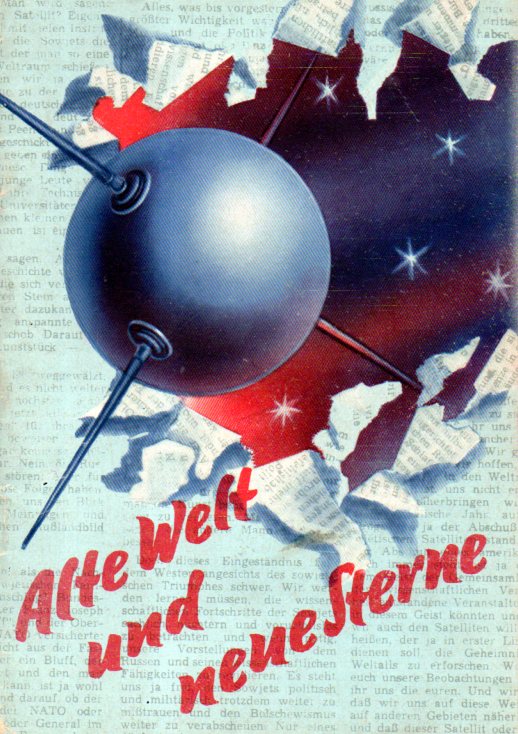
  • An Aggressive Cover Illustration for Sputnik (1957)

    JF Ptak Science Books  Quick Post

    Sputnik063

    This cover illustration for Alte Welt und Neue Sterne (“Old World / New Star”) really does break through the headlines and into its own space.  It is a DDR publication and although my copy has two outer wrappers for decoration and title it has no title page–the celebration skips the necessaries and gets right into the forward and then the crux of the matter, most of which was a high-principled statement of accomplishment and a low-dark anti-American humor in having “lost” the space race.  (While Eisenhower golfs, the Soviet Union has launches a new moon, losing not only the apce race but prestige as well–one cartoon places a joyous Khrushchev successfully courting a young woman labelled “Lesser Countries” with a beaming gesture to an orbiting Sputnik as Uncle Sam reels on his heels and drops his going-courtin’ flowers in the process. “Wer sonst koennte dir einen Mond schenken” (“Who else can give you a moon?”), proudly offered as commentary that had appeared in the New York Times.

    In any event, I just wanted to share the design, which is pretty strong. (The pamphlet is undated but I suspect it was in print immedaitely following the 4 October 1957 launch.)


  • The Speed of Stuff, 1: the Speed of Bad Ideas

    JF Ptak Science Books    Post 2164

    Johannes Mueller (1801-1858), a heavyweight physiologist/anatomist and idea-adventuring-synthesizer, had the idea that the speed of nerve impulses in humans was about 11,000,000 mps—that’s somewhat like the Enterprise’s Warp 2, almost two orders of magnitude faster than the speed of light. At about the same time the remarkable and thorough Hermann von Helmholtz (1821-1894), a universal knowledge guy who knew pretty much everything, a polymath’s polymath, had a different idea about this speed, performing a series of elegant experiments and showing the speed to be about 150-300mph.
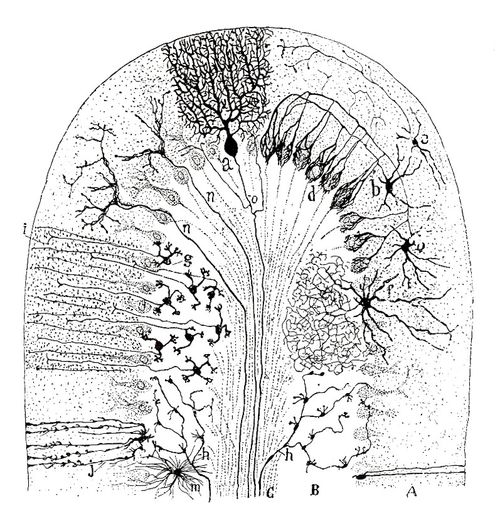
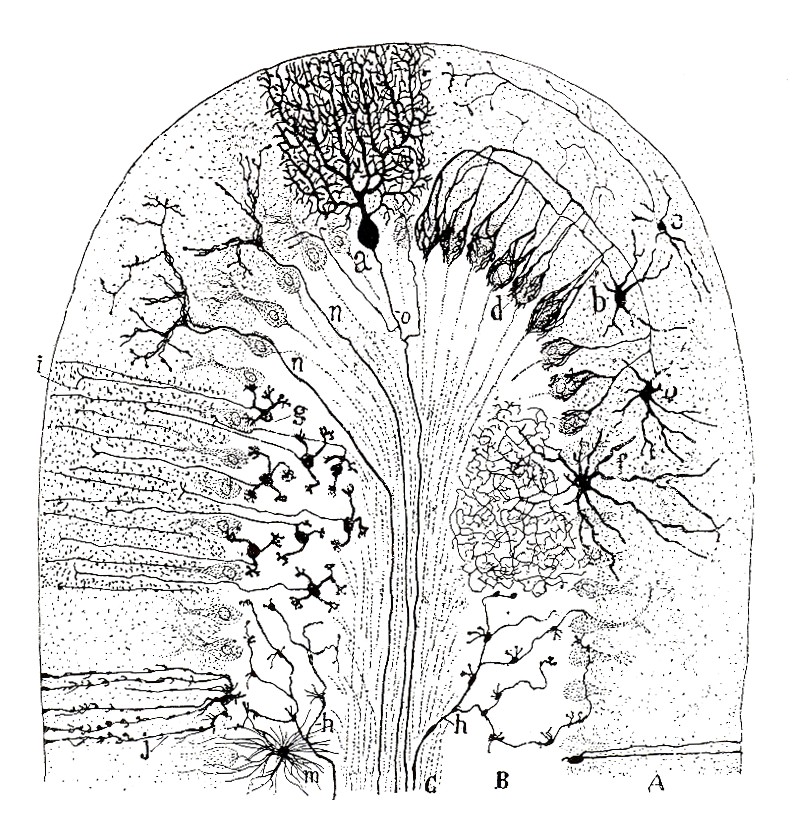
    March 6 sperm cajal[This is a detail from an image by the great Santiago Ramon y Cajal ( 1852-1934), who drew the first accurate picture of nerve cells in the cerebellum (found in one convolution of a mammalian cerebellum), which helped formulate his theory that the basic structural unit of the nervous system as the neuron.] 

    At the time of Mueller’s appraisal the speed of the nerve impulse seemed an unknowable entity. I wonder about other unknowables like this and what their estimated speeds might be that might put us more in touch with the major domo Mueller’s imaging the impossibility of knowing this reclusive and invisible speed?

    What is the speed of attribution? The speed of recognition? Of growth? Of absent love resuscitated? The speed of caring and not so? The speed of being in a space that you want to be in? The speed of imagined motion, of a bending cane, of finding the perfect broken seashell?

     Perhaps though the most interesting thing about the idea of speed is the speed of ideas.

    An Alphabet of the Suggested Speed of Various Types of Ideas

     Abstract idea: 35 mph

    Bad ideas: 375 mph

    Cryptic ideas: 50 mph

    Dangerous ideas: 250 mph

    Envious ideas: 350 mph

    Fanciful and farcical ideas: 100 mph

    Great ideas that are not Your’s: 28 mph

    Half-an-idea: 150 mph and a buck-two-eighty

    Ideas that are not ideas: 200 mph

    Jokingly-said ideas that are taken for real ideas: 200 mph

    Knowledgeable but sniffily restrictive ideas: 30 mph

    Lyrical ideas told in a non-lyrical way: 31.23 mph

    Mincing, broken tea-cup weak-tea ideas: 4 mph

    Nonsensical ideas: 150 mph

    Overheard-from-someone-else’s-cellphone idea: 300 mph

    Practical ideas that have no direct application: 45 mph

    Quixotic, queenly-quizzical, and not understandable ideas: 125 mph

    Random idea: 125 mph

    Salacious ideas: 450 mph

    Tiresome ideas that are really notions: 20 mph

    Underthought and underwhelming ideas: 55 mph

    Vexating, poorly-ventilated, porous ideas of multiple misunderstandings: 44 mph

    Wonderful ideas that belong to someone else: 4 mph

    Zealous and impudent ideas: 75mph

    Of course I’ve had some fun with this idea—but it came to me in a flash (at 250 mph) so I went ahead with it. And possibly it delivers some sense of the impossibility of knowing something that even the leading lights of those fields sensed as being unknowable.
    ·Posted by :

    ·in:


  • The Archaeology of Comfort, 1945

    JF Ptak Science Books  Post 2148

    Architect--50,000 womenb759

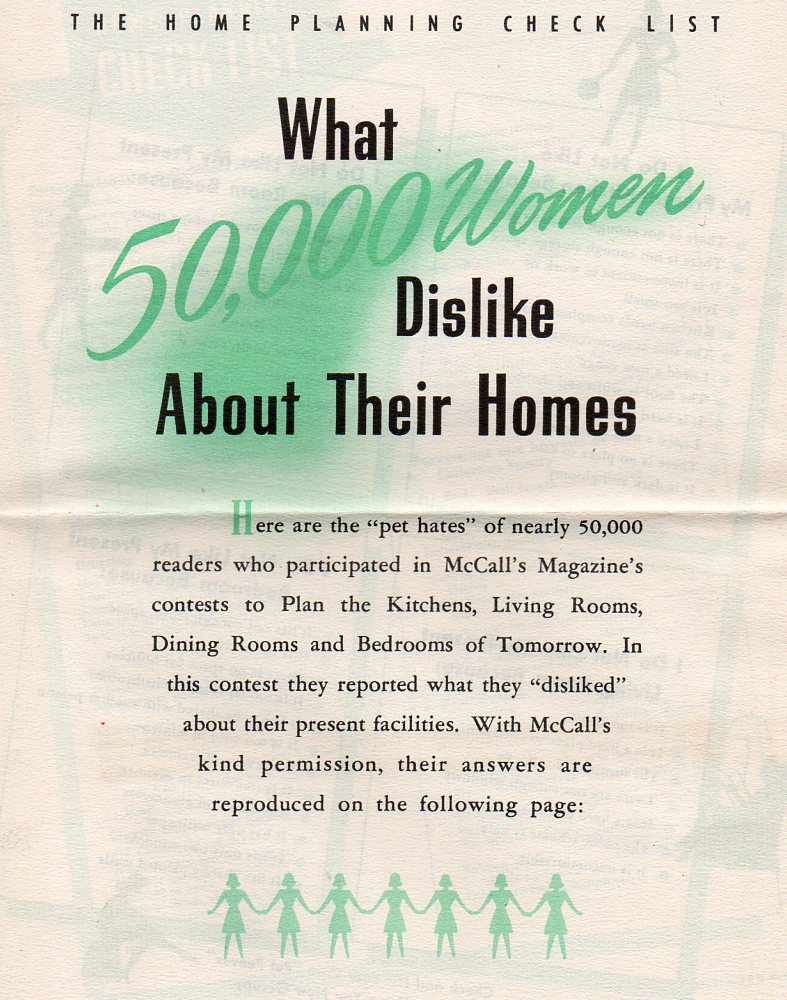
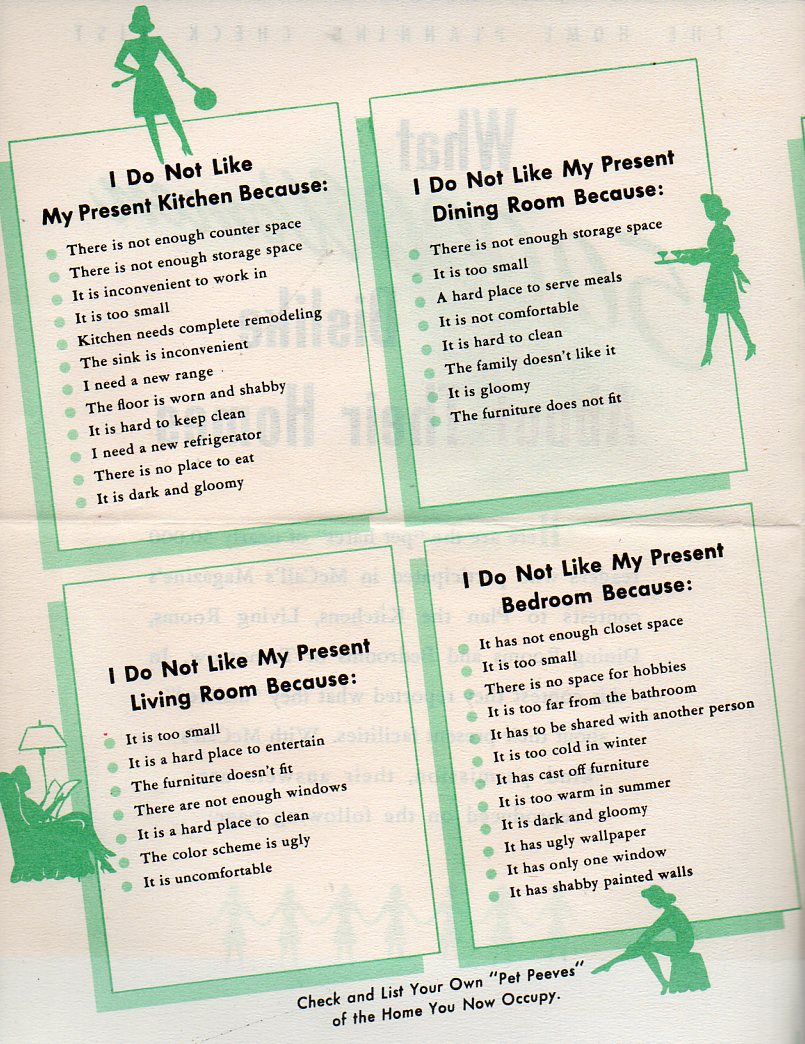
    Architect--50,000 women758 Let’s Plan a  “Peacetime” Home was published in 1945 by a home gas heating company to try to answer and capitalize on a severe housing shortage being accentuated by returning WWII vets–I’m not sure why “Peacetime” is placed in quotation marks in the cover copy; perhaps it was just sloppy editing.  But the planning was real, and the ideas were sort of fresh for the time, including a number of new and innovative ideas regarding heating/heat retention and cooling services.  It is a slick, bright, shining publication filled with simple luxuries for the middle class–roomy kitchens, playrooms in the basement, extra bathrooms, storage for baby carriages in the garage, and other pieces of happiness that were still relatively new to the Depression-recovering working folks of the United States.

    Architect--50,000 womenb760

    I can see a lot of interest in the archaeology of comfort in the many plans and pictures in this brochure, but that’s not why I’m presenting it here today.  There’s more than a heavy helping of bulbous Bauhaus design, and lots of small rooms surrounding large big main rooms with enormous windows.  But the thing that seems to bookend all of this development are women-in-aprons.  There are men sitting and leaning around plans, smoking pipes, sleeves rolled up, and looking very earnest; at their elbow or across the table is the woman, usually in an apron, looking on in appreciation.

    [This item may be purchased at our blog bookstore.]

    ·Posted by :

    ·in:


  • A Note on the Finite Infinite Library: McBorges’ and Influenced Forgetting

    JF Ptak Science Books   Post 2163

    Jorge Borges wrote a powerful and wonderful short story called The Library of Babel, where the universe is basically composed of books the center of which is an anti-black-book-hole. I was thinking about this in a waiting room a few hours ago, and thinking of the Infinite in general, all of which somehow led me to the Finite Library and Forgetting. 

    Archibaldo books[“The Librarian”, is a 1566 work by Giueseppe Archimbaldo, 1526-1593, who painted incredible portraits such as this at a time when expressioin in this form would have been extremely uncommon–his semi-Boschian sense and image palette makes him the Vermeer of constructed object painting, I think.]

    In a country set into thin mists, compulsive and repetitive feeding instruments were replaced with Ideaoterias. Rather than an endless maps of interwoven McDonald’s restaurants set at predictable intervals, there are libraries.

    1. Each library contains 10,000 books.

    2. All 10,000 books are the same from library to library.

    3. Each location must organize their 10,000 volumes differently, each grouping identifying ideas inherent in the contents of each volume, in support or negation of one another, arranged with other books that were complimentary, or supplementary, or antagonistic, or worse, or better.

        4. The organization of thought contained in those 10,000 volumes would be different from location to location, the librarian-explorers having organized the library so that the books were freed into new spaces.

        5. The number of books is finite; the infinite aspect is the continuous shifting of material and the expanding structure for the display of ideas. The simplest aspect of this arrangement makes it possible for every book to actually be seen. (Even in cursory browsing the mind has certain expectations of what-come-next when browsing a shelf, sweeping past things that have been swept-past before, rejected or unneeded for whatever reason. The deeper aspect is for the association of ideas by the placement of book, the arrangements suggesting themselves for the reader to have a new experience witn an old idea or book or set of books.

        6. The McBorges’ Library is a learning, memory, and forgetting experience.

        7. Forgetting may be a key to making these libraries an infinite experience: re-re-re-etc.-learning does not imply necessarily that the learned bits will be cumulative, and useful. Maybe the best we can do is have learned and re-learned bits in a new context, making it possible to have more ideas; this means that a certain amount of forgetting is necessary, where that forgetting unleashes existing associations of ideas.

        8. At McBorges’, forgetting is an important aspect of learning, but really only in regard to what it would take to open the possibilities for new ideas by rearrangement of old relationships. The palaces of memory work hand-in-hand with the Palaces of Forgetting.

    ·Posted by :

    ·in:


  • An Early Camel-Driven Solo Internet from the 10th Century

    JF Ptak Science Books   Quick Post

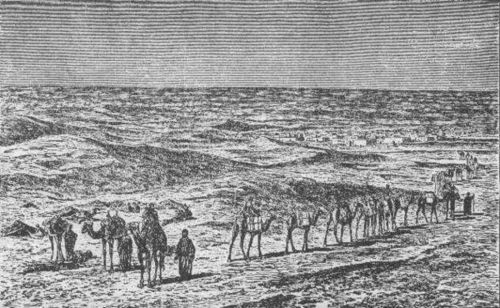
    If you defined the internet as a transporting device for vast amounts of information and data then perhaps Abdul Kassem Ismael (938-995), the Grand Vizier of Persia, produced such a thing over one thousand years ago. I found the story in Albert Manguel’s A History of Reading (a fabulous book published in 1996), who relates that when the Vizier traveled he did so with his library.  That was an enormous effort, as ther were 117,000 volumes in the library, all of which were packed up onto 400 camels, and sent on their way.

      Camels[Source, here]

    That camel train–which I imagine must’ve been 1.5 miles long–was piloted by 400 drivers, and then attended to by an entirely different camel train of support of food and water for the perhaps other 400 people traveling in support, making the whole enterprise 2 miles long or more.  The books were all arranged alphabetically, so the drovers maneuvered their camels in a certain way, making them mobile librarians in their way.  

    In any event, the whole movement of that vast library 1000 years ago can romantically be seen as a sort of internet–for one man.  

    It seems that this is a mostly not-true story/interpretation of a near-event, but I’m running with the interpretation.  

    ·Posted by :

    ·in:


  • Marches of Women and Children, the Great Passaic Textile Strike (1926)

    JF Ptak Science Books   Post 2154

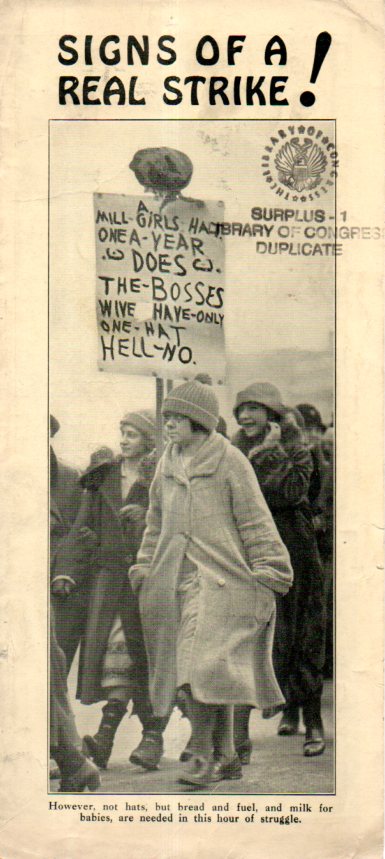
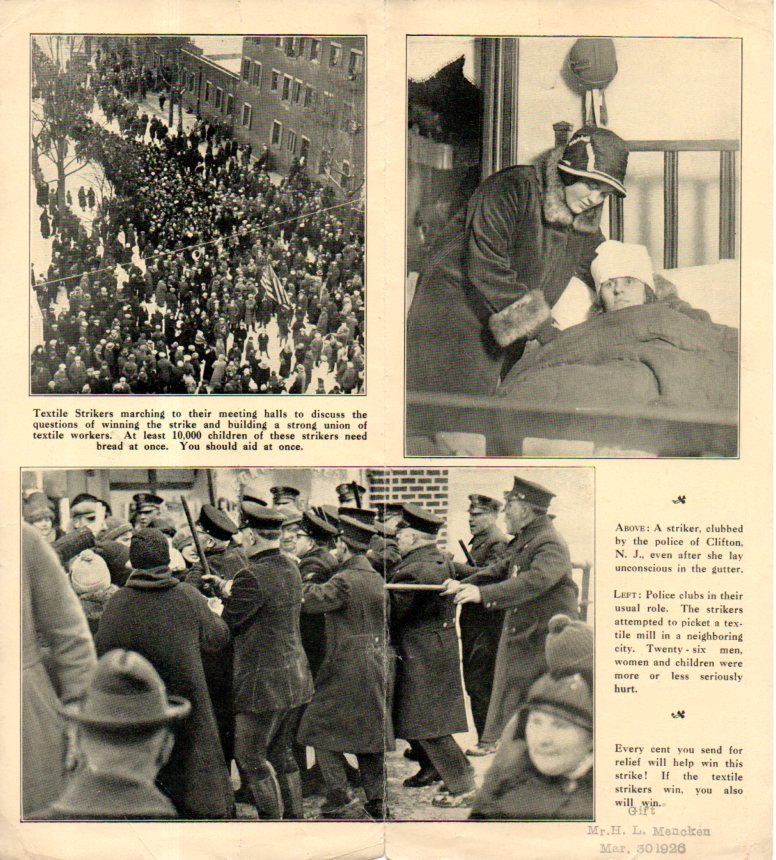
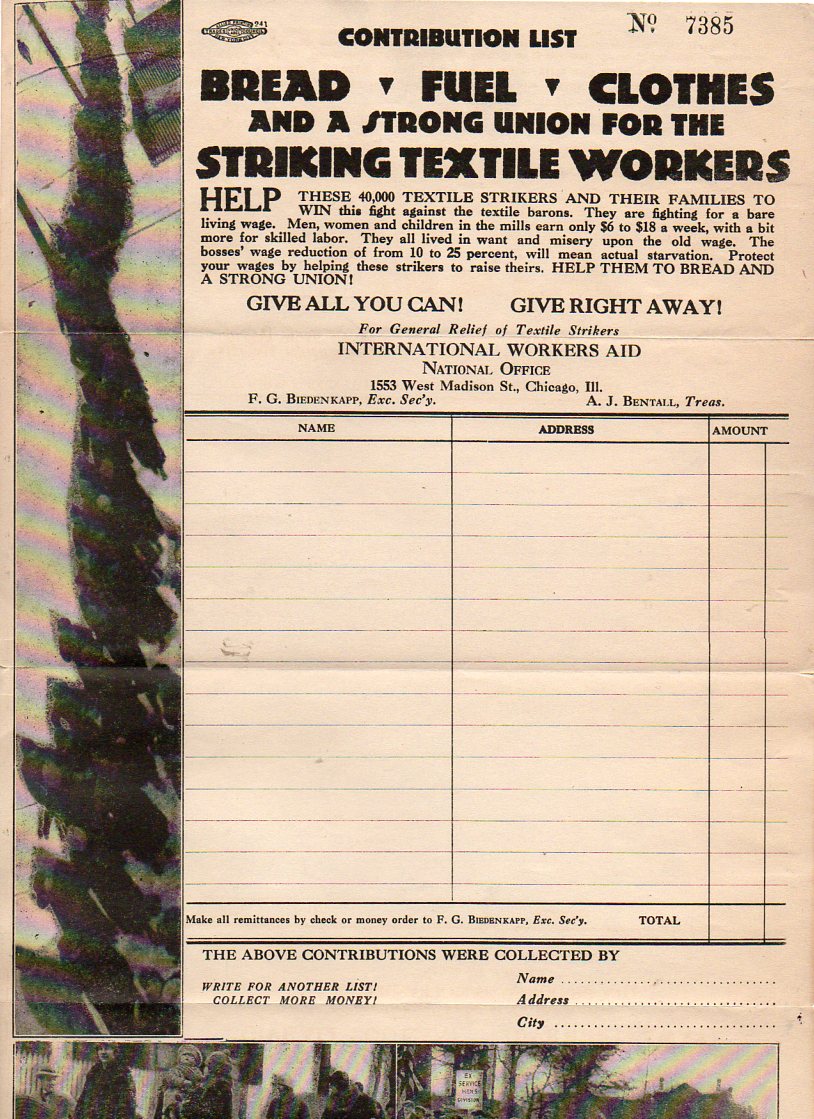
    I’ve come across two telling pieces of ephemera on the history of work, of women and working, and of labor unions, and they both address the textile strike in Passaic, New Jersey, in 1926.

    Strikers cvr011

    The pamphlet was an appeal to like-minded people to contribute to a fund to help relieve the dire conditions of the textile worker strikers.  There were more than 16,000 people involved in this sometimes-brutal strike, people who were trying to stay even in their lives, looking for a little more money and a little better working conditions than what they had.  The Passiac (a working city just south of Patterson in an industrial triangle section of the state) strikers were moving against a number of textile (wool and silk) mills there, trying to force management to pay them something closer to the $1400 annual income for a family of four to survive. 

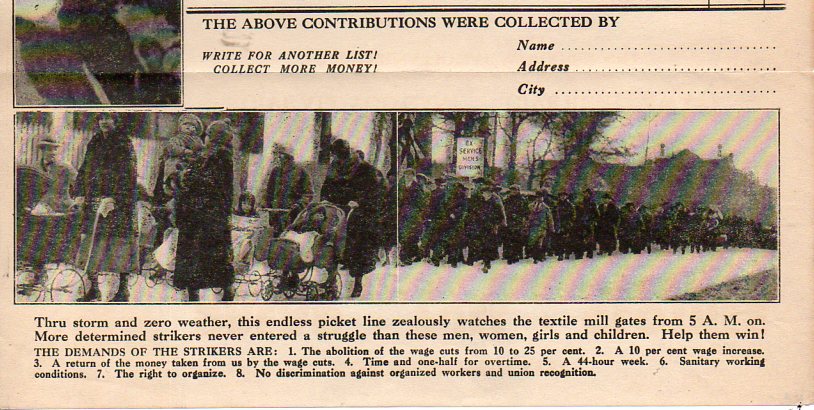
    Most workers there were making $1,000-$1,200 a year ($800-$1,000 if the worker was a woman, and about half of them were) for 50+ hours of labor per week.  The result was that the workers could not afford good housing and food, and those disadvantages paid off in high rates of tuberculosis, very high incidence of child mortality, and a low average life expectancy.  The strike began slowly in January 1926, with the mills responding with vicious attacks by paid thugs and by police.  It was a long and involved process for the strikers, with the strike lasting its way for another 14 months, finally getting choked out in March 1927.  It looks like there were some victories, but those seem mainly pyrrhic to me–at the end of the process many of the strikers were hired back but soon terminated, replaced by other workers who agreed to work for less.


    Strikers cvr012

    The second item is a broadside–it was the communal effort involved with keeping the strikers (and the strike) going in the face of hunger and goons and police.  The strikers needed money to live, as there was certainly no money coming in, and since there was obviously no union, there was no general fund from which any of these families could draw food money from). they needed money just to buy food and pay for housing.  So the call for “Give all you can!” and “Give right away!” were as desperate as they sounded.  My guess is that there would be a representative of the International Workers Aid society national office going from factory to factory, or door-to-door, soliciting for money for the Passaic workers’ relief.  The strike was no doubt a very nasty business, with a victory only a victory once there was more food on the table, less illness, and far fewer babies dying from preventable causes. Probably this looked like a victory to others so far as the future of fair labor/pay was concerned, but not so much for the strikers who brought this about.

    Passaic strike277

    Passaic strike278
    There’s quite  a bit written on this strike, and most seem to say that it was an important event in the history of “labor relations”, and that it was the first time that a Communist-led strike succeeded in the United States, (There is a complex legacy as to who the leadership was for this strike, but the end result is that, at the end, the Communists were in charge.)

     It is also interesting to note that both of these items were given at some point to H.L. Mencken, who gave it right away to the Library of Congress, where it wound up in a forgotten “Pamphlet Collection”, and then sold to me (years afterwards).

    Passaic strike279


  • Germany Prepares for World War III–in 1944

    JF Ptak Science Books   Post 2152

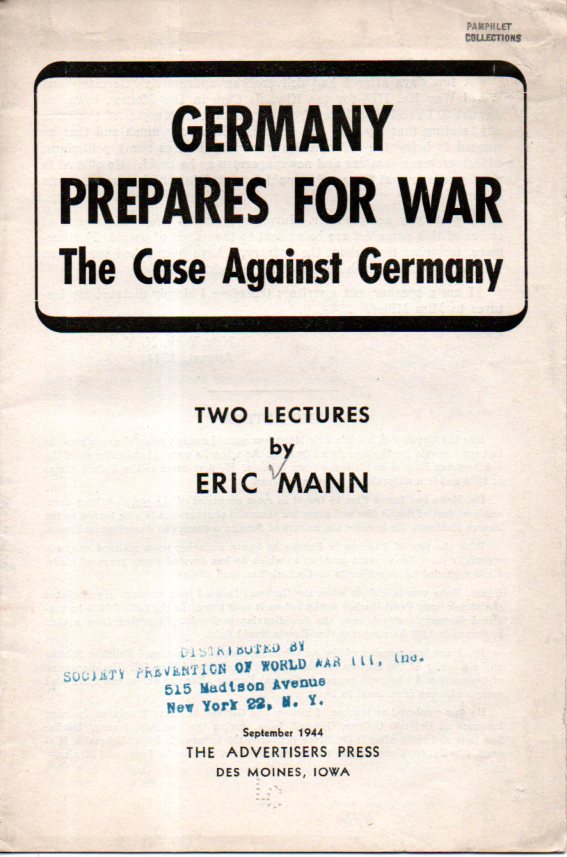
    WWIII008Eric Mann, a professor at NYU, wrote this unusual pamphlet towards the end of WWII, in the summer of 1944–the end was near but still there was the Ardennes to come and much more fighting, much more bombing, much more of everything.  He wrote for the Society for the Prevention of World War III–which caused me to think of when it was that I first remember seeing a reference to “World War III/WWIII”, and then the first use of World War II/Second World War, and World War I.

    The first mention of the term “World War II” in non-fiction literature/reporting appeared not much earlier than this WWIII term, really–according to Scott Kaufman in The Chronicle,“World War II” appeared in the 31 December 1939 issue of the  L.A. Times–just four years before this mention of the third world war. The Oxford English Dictionary locates another source that is slightly earlier; the first use in general is found in the sci-fi novel City of Endless Night in 1920.  The term “First World War” predates the conflict itself (OED as 1909) but World War I seems to come into existence about half-way through the war.  (The histories of these terms is a little complicated and deserving of their won post, but I think this gets the point across for now.)

    This may be an extremely early use of the term “World War III”.  The term evidently comes up in the British contingency plans for the U.K. and U.S.A. to overtake the Soviet Union at the end of WWII in its Operation Unthinkable, but as that was a, well, secret plan, the WWIII stuff didn’t seep out into public very much.  “The Society for the Prevention of World War III” began in 1944, and launched its magazine in May of that year, so the seat if the term may actually come about at about that point.

    The odd bit about WWIII in this case is that it is in context to the devastated Germany, and not with regard to the Soviet Union, the usual culprit for the initiator of the next Great War.  The Society was voraciously opposed to very much leniency in the treatment of Germany post-war, wanting to dismantle the country stick-by-stick, so that it would be impossible for the Germans to launch any wars in the future.

    Of course people would have had a difficult time seeing Germany in a Second World War just following the end of the First, that country badly tottering and chained out with reparations and stripped of major industries.  But here we are with Mr. Mann foretelling a future war–another World War–begun by Germany while Germany was still very busily involved in destroying itself and millions of others in dragging out the war it was fighting in 1944. 

    There are reasons many and few and large and small supplied by Mr. Mann in support of his theory–one set of which, though, deserves some special attention.  It was his contention that Hitler was seeding “German concentration camps” with “thousands of his most ardent followers” to infiltrate the Allied ranks with Sub Rosa agents taken in with camp survivors.  HE maintained that there were dozens of thousands of young women being sexually trained for underground warfare; 60,000 young men being trained for underground warfare based largely on what occupied Allied countries were doing. And so on.  These small bits–true or not–were certainly worth thinking about in terms of securing a lasting peace, but the Society’s plans were overtaken nearly from the beginning of the end of the war, and then mostly abandoned following the introduction of the Marshall Plan in 1948.

    I guess it would be worthwhile to look at the origin of “the war to end all wars”, though I expect it to be of great antiquity–the idea if not the actual phrase.


    ·Posted by :

    ·in:


  • Bizarro-World and the Scourge of Extra-Earths

    JF Ptak Science Books   Post 2143


    Bizarroworld2

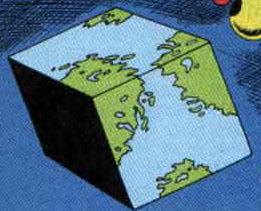
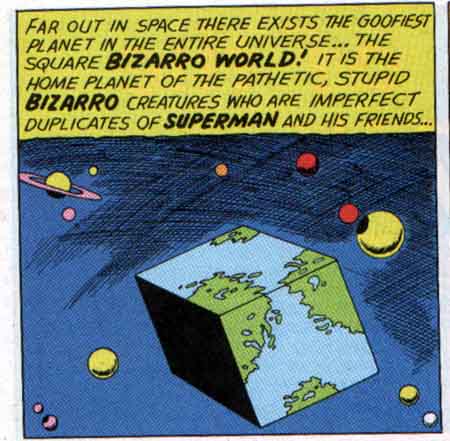
    Nothing quite says “bizarro” like the bizarre1–and there has been plenty of that on this blog.  There have been a number of places that I have identified as Bizarro Worlds, but so far it seems that the only self-proclaimed Bizarro World is this one, from the Superman2 comic book–a place that was the opposite of the Superman-y traits that made Superman Superman.  Somehow to equate bizarreness on this world everything appeared as geometrical shapes with basically no sphere or rounded edges.  (How Braque or Picasso and company would have reacted to this is unclear.) 

    Bizarroworld

    It is evident that Bizarro World inhabits a place in the universe that allows for bizarre things to happen, a sort of bizarrograviation, that also allows for shadow to be cast in space without regard to light source. 

    It is a lovely to addition–if only by this brief note, to a continuing series on Extra-Earths.  This is an Earth, and it is Extra, hence:  Extra Earth.   Some of the other Extra-Earth posts include:

    —Extra-Earth Humano-Alien Souls From Outer Space Repopulate Earth-Hell!!(??),

    —Mondo Bizarro, Science Afflictions and the Dubious Mind—Bad Science, Part 1. NYC in Space (?!)

    —The Battle of the Extra Earths: Mini-Extra-Earth Vs. Full-Sized-Standard-Earth (?)

    and some others, all quite findable on this blog via the Google search at left. 

    I’ve just noticed that these Extra-Earth posts share something else that few of the other 2500+ posts on this site do not:  extra exclamation points!

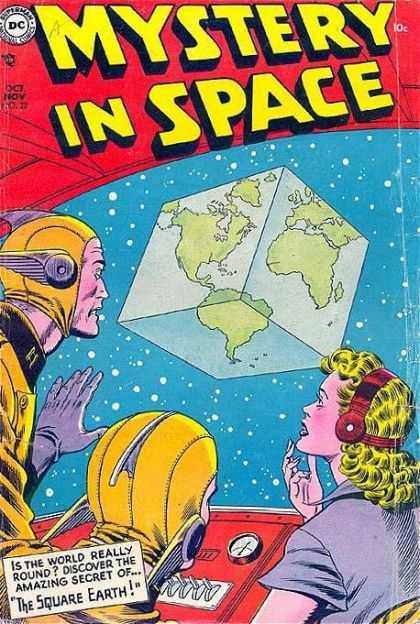
    And to end, I should point out that this is not the first time I’ve encountered a square Earth, bizarro or not:

    Earth strnage cubed earth


    Notes

    1.  “Bizarre”, via the OED: At variance with recognized ideas of taste, departing from ordinary style or usage; eccentric, extravagant, whimsical, strange, odd, fantastic

    • a1648   Ld. Herbert Life,   Her attire seemed as bizare as her person.
    • 1668   Dryden Secret-love Pref. sig. a1,   The ornament of Writing, which is greater, more various and bizarre in Poesie than in any other kind.

    Bizarre quality

    • 1741–70   Lett. Mrs. Carter (1808) 207   The bizarreries which arise from the mixture of good and bad which makes up the composition of most folks.
    • 1828   Scott Tapestr. Chamb.,   Rich in all the bizarrerie of the Elizabethan school.
    • 1844   Foreign Q. Rev. 33 60   Bizarreries.
    • 1858   W. Bagehot Lit. Stud. II. 194   The bizarrerie of Mr. Dickens’s genius.

    2.  “Superman” in the OED:

    A. “In Nietzschean thought (also with capital initial): an ideal superior man of the future who transcends conventional Christian morality to create and impose his own values; = Übermensch n.   More generally: a man of extraordinary power or ability; a superior being. Cf. superwoman n.In later use sometimes influenced by sense 2”

    • 1894   Forum May 302   The ‘cosmic, super-man’ of the future.
    • 1903   G. B. Shaw Man & Superman 196   We have been driven to Proletarian Democracy by the failure of all the alternative systems; for these depended on the existence of Supermen acting as despots or oligarchs.
    • 1909   T. Common tr. F. Nietzsche Thus spake Zarathustra ii. xxvi. 108   Never yet hath there been a Superman. Naked have I seen both of them, the greatest man and the smallest man… Verily, even the greatest found I—all-too-human!
    • 1925   H. V. Morton Heart of London 110   Above the kneeling priests is the Pharaoh, that ancient superman.
    • 1969   G. Jackson Let. 28 Dec. in Soledad Brother (1971) 179   How could there be a benevolent superman controlling a world like this.
    • 2008   K. Hawkins Talk of Town 241   Poor Nick. He’s determined to be a superman and resist emotional entanglements that could cloud his judgment.
    • 2010   M. G. Kendrick Heroic Ideal ix. 161   The Zarathustrian vision of a post-Christian faith rooted in the real world and dedicated to the creation of the superman, inspired a whole generation of radical Russian artists and Marxists.

    B. “With capital initial. (The name of) an almost invincible superhero having the power to fly and typically depicted wearing a tight blue suit with a red cape; a person likened to this superhero.The character first appeared in 1938 in a U.S. comic strip by writer Jerry Siegel (1914–96) and artist Joe Shuster (1914–92) and has since been the subject of radio and television series, as well as numerous films.”

    • 1938   Action Comics June 1   So was created..Superman! champion of the oppressed, the physical marvel who had sworn to devote his existence to helping those in need!
    • 1940   Time 26 Feb. 44/3   Last week Superman took to the air in earnest, as a three-a-week serial.
    • 1958   Times Lit. Suppl. 1 Apr. p. xx/4   The impression remains of a sense of values associated with ‘Superman’ and American comics.
    • 1968   S. Ellin Valentine Estate iii. iv. 142   ‘How the hell did he come to miss me?’.. ‘You’re Superman,’ the first man answered. ‘Bullets bounce off you.’
    • 1980   F. Weldon Puffball 77   ‘Now it’s our turn.’ ‘I don’t want it to be,’ she said, as if he, like Superman, could turn the world the other way.
    • 1995   FourFourTwo Oct. 135/1   Presenting Shearer as a goalscoring Superman seems a bit OTT.
     

  • A Mini-Monumental Incidental Image, 1889

    JF Ptak Science Books   Quick Post 
    Follow Me on Pinterest


    Women flaGS762[Source: the author]

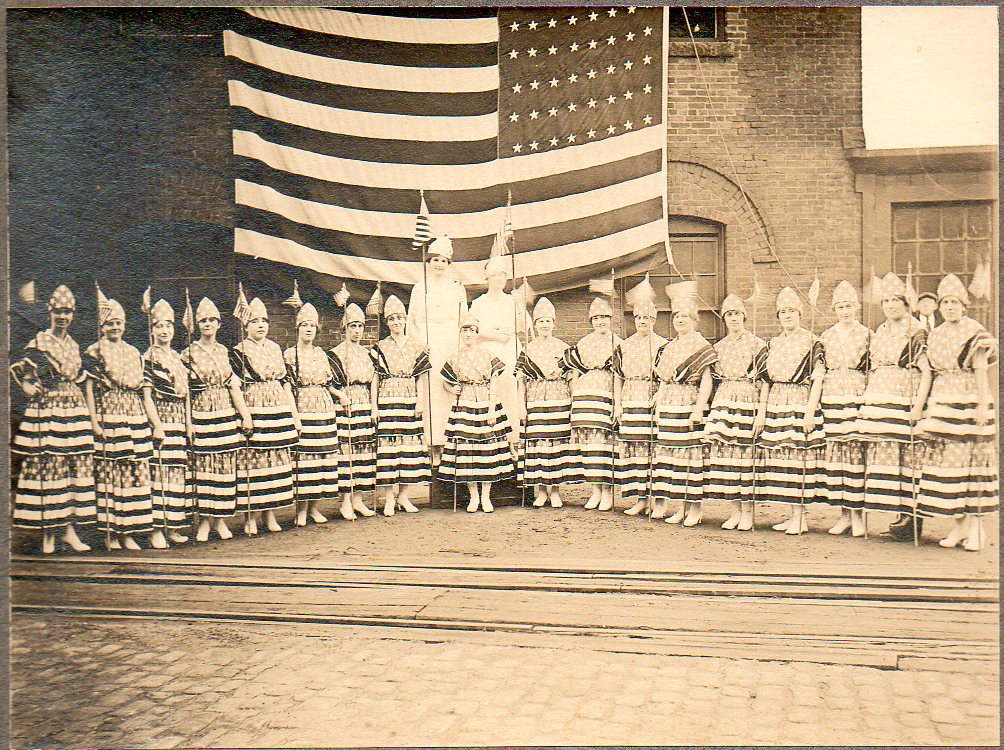
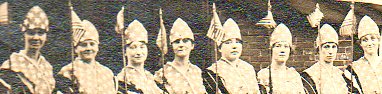
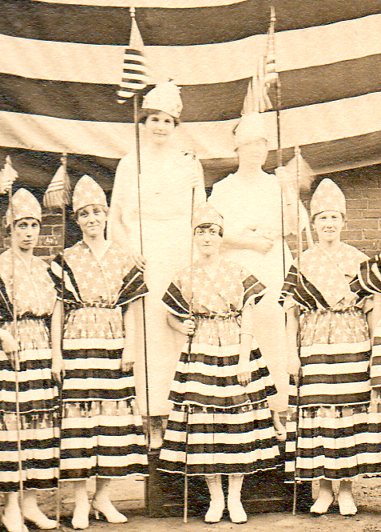
    This glorious and anonymous photograph features 22 women, 20 of whom appear in U.S. flag dresses in front of a 40-star American flag.  The 40-star appeared in 1889 with the entrance of South Dakota into the Union, one of the four new states in that single year. 

    When I looked though the original, looking for the image-within-the-image, I was surprised by a photobomb by the fellow in the tie and cap.

    Women flaGS764

    Here he is:

    Women flaGS769

    The outfits/costumes are nothing but stars and stripes, and each woman holds a staff with a small flag. 

    Women flaGS763

    There is a great experience in this not-so-incidental image.

    Women flaGS765


  • An Acrobatic Non-Semi-Robot, 1876

    JFPtak Science Books   Quick Post    

    Toy749
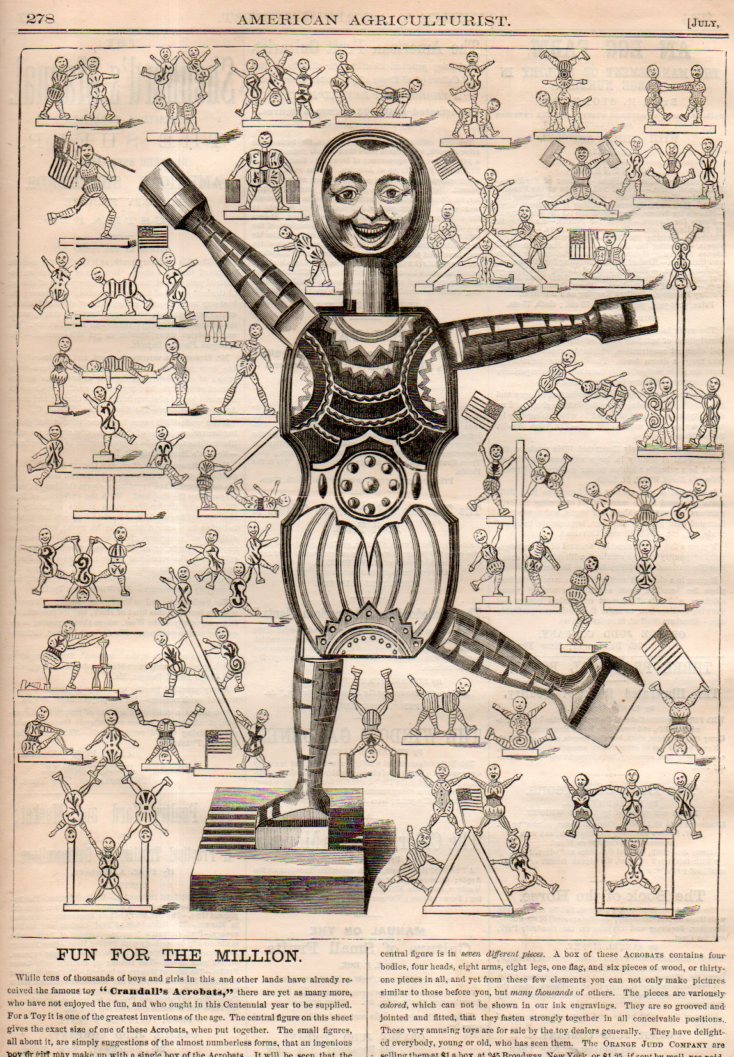
    This is emphatically not a robot-type contraption, not by a long shot–it just happens (if you look at it in a certain way) to look like one.  The automatic man was still a bit away, though Steam People and the like had certainly made appearances decades before this one. 

    The toys–Crandall’s Acrobats, patented in 1867–came in boxes, a number of “acrobats” per box, as seen in the following post from Tracy’s Toys blog:

    ·Posted by :

    ·in: