A Daily History of Holes, Dots, Lines, Science, History, Math, Physics, Art, the Unintentional Absurd, Architecture, Maps, Data Visualization, Blank and Missing Things, and so on. |1.6 million words, 7500 images, 4.9 million hits| Press & appearances in The Times, Le Figaro, Mensa, The Economist, The Guardian, Discovery News, Slate, Le Monde, Sci American Blogs, Le Pont, and many other places… 5000+ total posts since 2008.

Author: JF Ptak

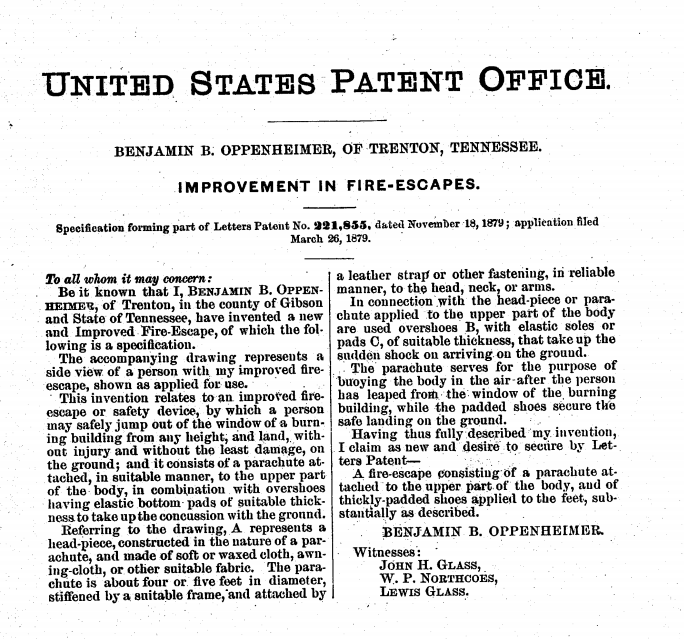
  • Questionable Quidity: the Fire Escape Head Parachute, 1879

    JF Ptak Science Books   Quick Post

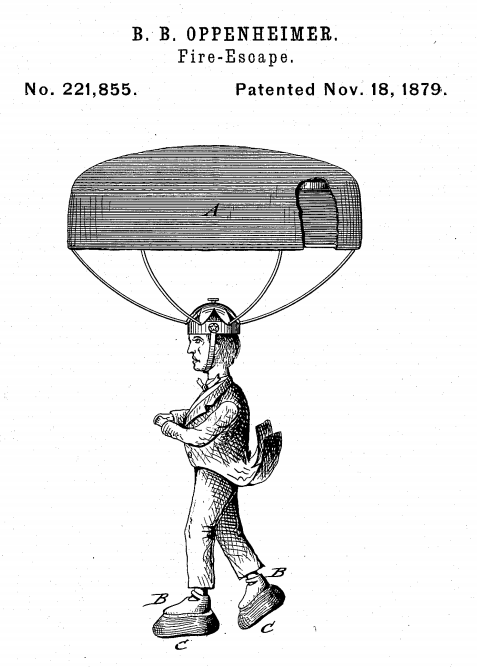
    When I first saw this image I thought, naturally, that it was an unreal real patent; it turns out that Mr. Oppenheimer was a real person and that this patent was a real patent. I doubt that someone would have their necks broken by this device when deployed thinking that it would just pop off–then again, if fastened very securely, it becomes a very cringeworthy thing to think about. The shoes don’t help much.  

    Patent parachute fire escpae _2_

    And the report:

    Patent parachute fires escape

    ·Posted by :

    ·in:

    — —

  • Cross Section of the Comstock Lode

    JF Ptak Science Books   Quick Pos

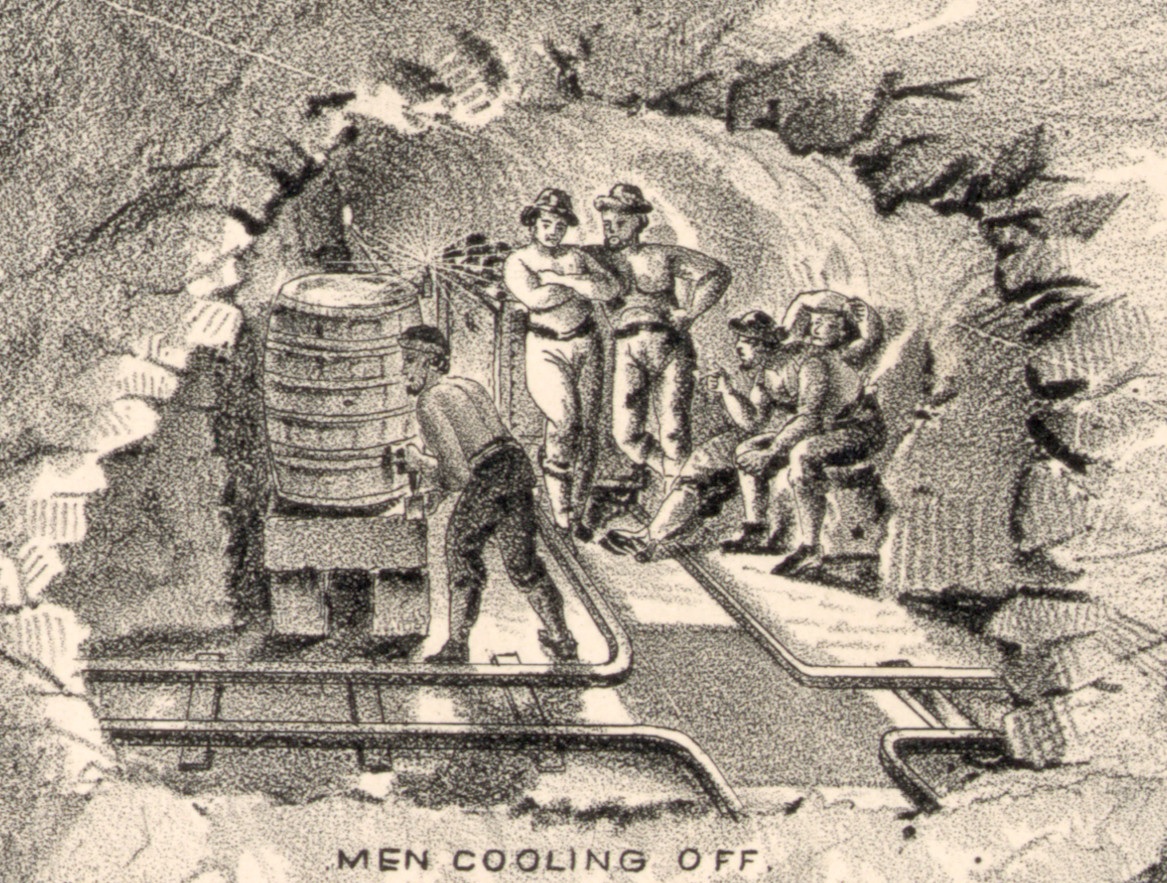
    I’m not that convinced that a lot of “cooling off” was being done down in the tunnels of the Comstock Lode, though I guess it is all relative, and so perhaps these guys were able to enjoy themselves a little compared to swinging a pick axe or shoveling with a shovel in a cramped, damp, loud, dark place, underground.  

    Comstock cross section men cooling off

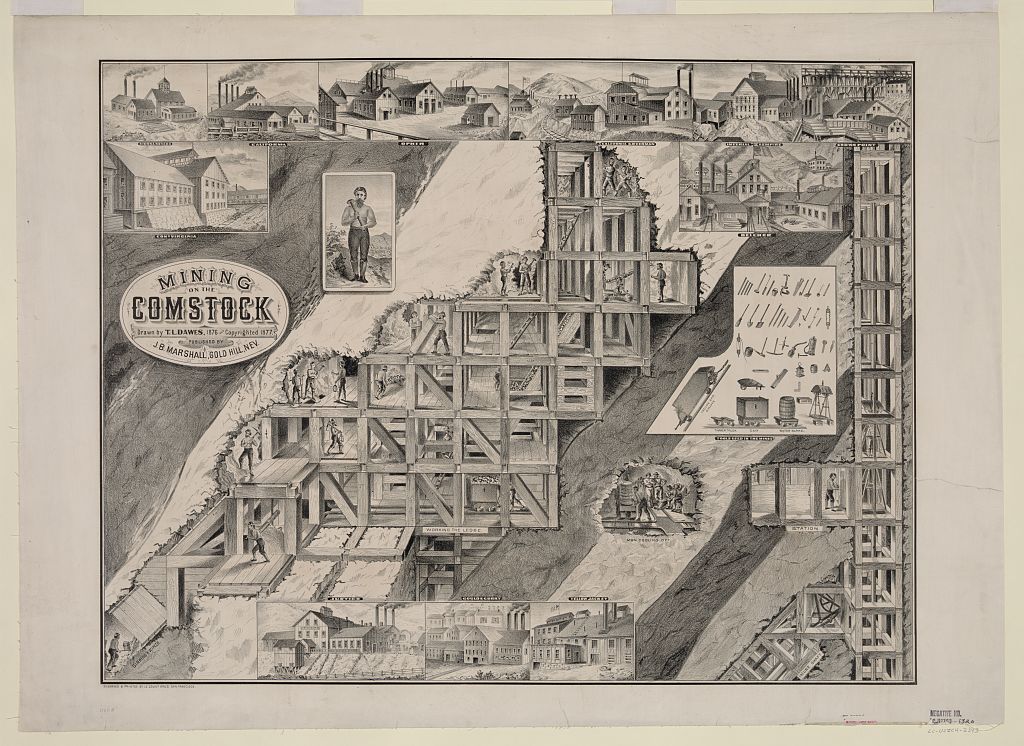
    I found this in the detail of a great cross section image on the Library of Congress site http://www.loc.gov/pictures/resource/pga.01999/:

    • “Mining on the Comstock / drawn by T.L. Dawes ; engraved and printed by Le Count Bro’s., San Francisco” 

    which was printed by lithography by Le Count Brothers in San Francisco in 1877.

    The cross section shows how life and business was being conducted underground, and gives a sense of the claustrophobia-making closeness of it all:

    Comstock cross section

    In any event, it was very difficult work in a difficult spot, using difficult tools, breathing difficult air, and this cross section gives a pretty good idea of what that could have been like.  


  • Another Piece of Found Book Knot Art, from Another Dorothy Dix Pamphlet (1850)

    JF Ptak Science Books  

    This is a quick follow-up to an earlier Found Book Art found in another pamphlet by Dorothy Dix. (Dorothea L(ynde) Dix (1802-1887) was an nurse and ultratrian, a very-much-practiced humanitarian who for years fought for the stabilized and just treatment of people with disabilities, mainly and for extended periods of time and travel for those suffering from mental diseases and development. Read more here https://historyofideasblog.com/thesciencebookstore/2014/07/dorothea-dixs-report-on-the-state-of-the-indigent-insane-in-the-us-1848.html) 

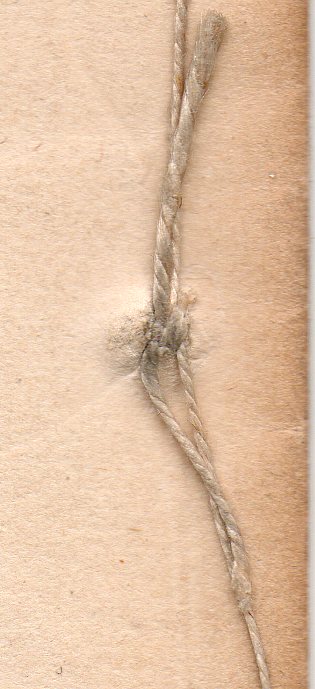
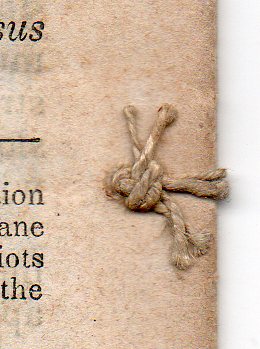
    The present Dix pamphlet has another perfect little in the string used to bind the pamphlet together tie:

    :Dix _2_ 530

     [Source: DIX, Dorothy L.Fifth Letter to Convicts in State Prisons and Houses of Correction, or County Penitentiaries. “Printed but not published”, November 1950. 18.5×12 cm, 24pp. Provenance: Smithsonian Institution (with their small oval rubberstamp), and the Library of Congress (with their surplus duplicate stamp on back page).]


    DIx130


  • Communism Questions, Asked and Answered (1937-9) Concerning the Commie New Deal, Commie FDR, and Frank Zappa

    JF Ptak Science Books  Quick Post

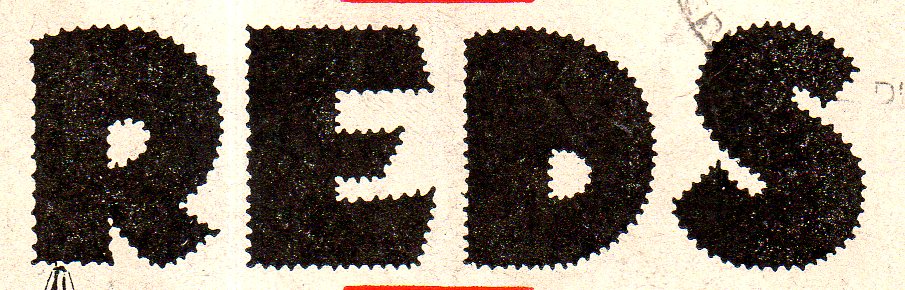
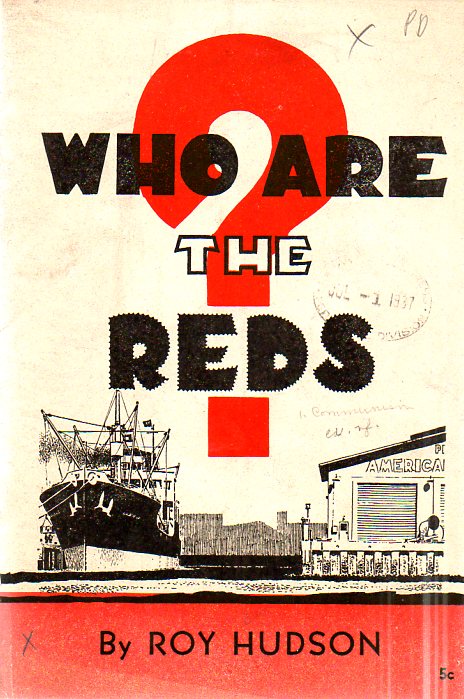
    The question asked by Roy Hudson in 1937 (with the striking red-question-marked cover and the germ-y, bacterial typeface for “Reds”:

    It has happened here695


    Who are the reds692

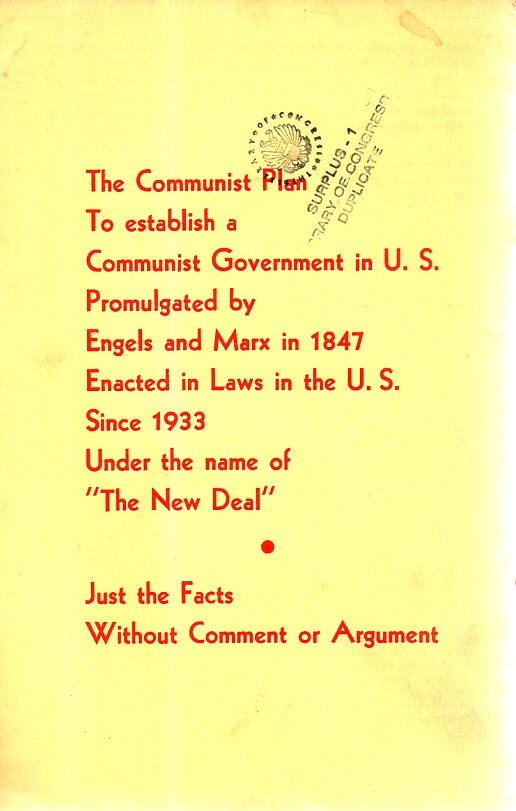
    And the answer–the Reds are us, the U.S. turned inside out by none other than Franklin Roosevelt by using The New Deal to incorporate Marx/Engels Communism and scuttle Capitalism and Democracy:

    It has happened here693

    And the rear cover:

    It has happened here694


    It Can Happen Here is an early version of a title of numerous variants, including the pre-trumpian 1935 Sinclair Lewis novel It Can’t Happen Here, the 1964 movie It Happened Here (where Hitler has taken over England, and includes machine-gunning murders of children), and of course Frank Zappa’s “It Can’t Happen Here” (which has nothing to do with the previous bits or anything else, except “Suzy”) to name a few.  It Can Happen Here is a bit of a lie, as the case is made that Can=Did.


  • What Does Manhattan Look Like With 63 Great Pyramids Filled With Panama Canal Dirt? (1912)

    JF Ptak Science Books   Post 2641

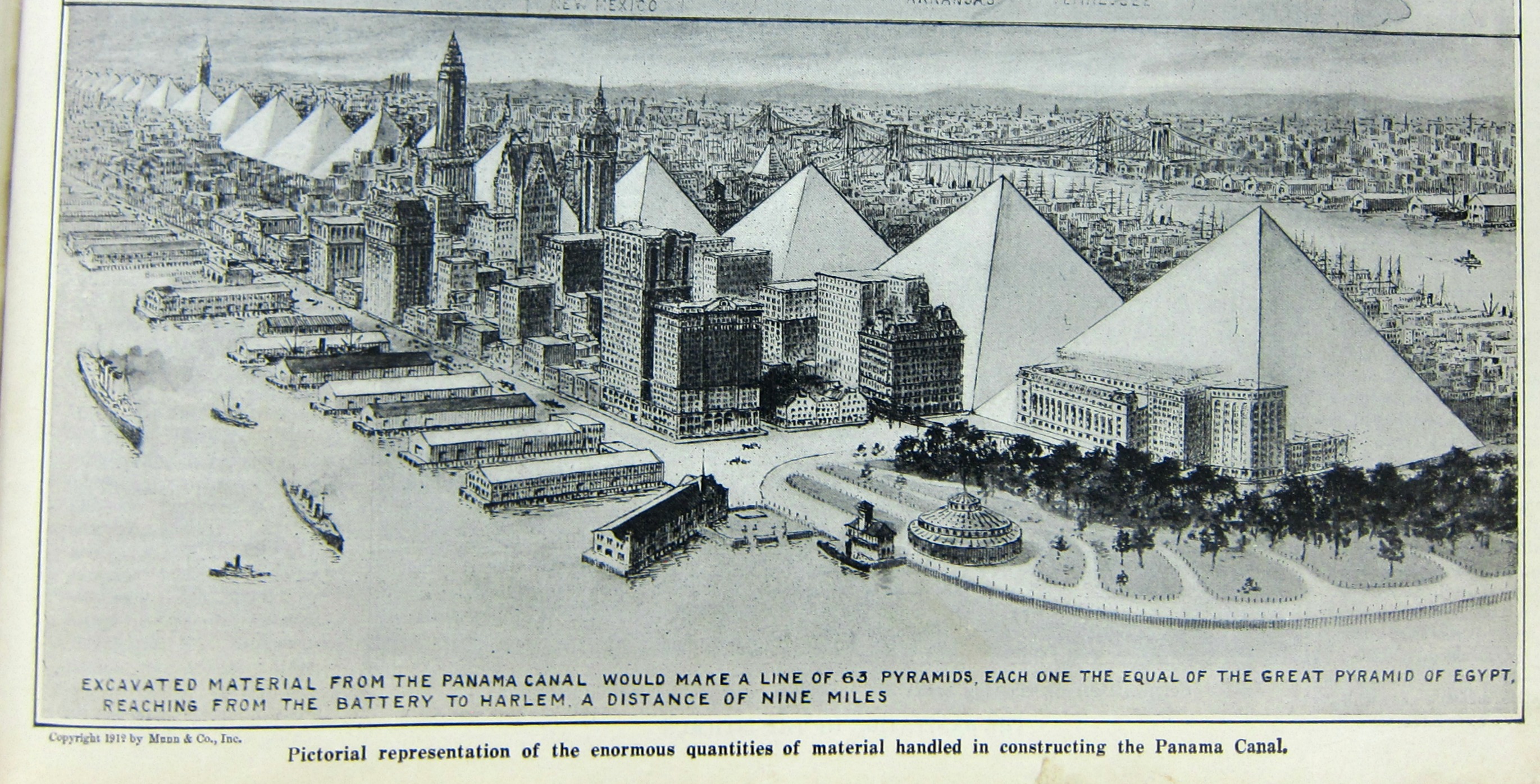
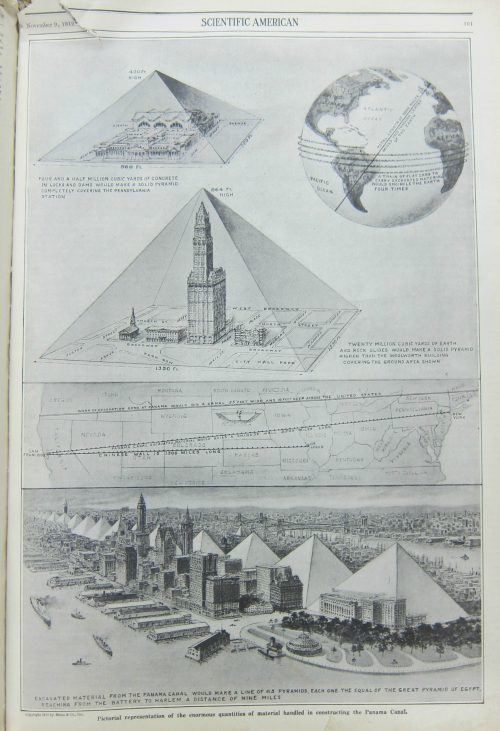
    There are many posts on this blog about comparisons–the height of buildings in terms of units of the Titanic, the depths of oceans in terms of Eiffel Towers, and many others, all findable in the Display of Information series (located in the column of categories at right).  Today’s episode is an unusual double-display, as it depicts the amount of earth moved in constructing the Panama Canal in terms of how many Great Pyramids of Eygpt the earth would fill and how those pyramids would look if displayed in Manhattan.  This wonderful insight comes to us via the Scientific American for September 12, 1912, and shows the beginning of the line of 63 pyramids’ worth of excavated Panama Canal soil reaching from The Battery to Harlem. Bravo! (Just so you know that amount of dirt would also fill up about 1.1. billion donald trumps. And: if workers removed the Panama Canal dirt the way that the prisoners removed dirt from their escape tunnel in The Great Escape that it would take approximately 5 billion trips from the site to somewhere else to dump the dirt; even if you have 100,000 people working at the project a la John Sturges’ actors, it would still take 60,000 trips each.)

    NYC pyramids Sci American detail

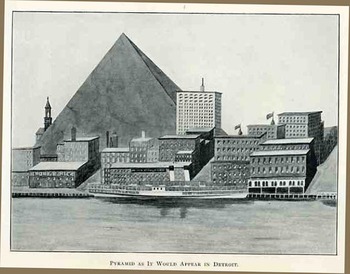
     I should point out that this is not the first time that a Great-Pyramid-in-a-U.S.-city image has appeared in this blog, this one being an illustration for building the structure in Detroit in 1908

    Pyramid in Detroit

    And the rest of the delightful put-it-into-perspective-with-an-uncommon-object:

    NYC pyramids Sci American


  • Collecting Last Words for a Poem Using Nothing But Them

    JF Ptak Science Books    Post 2640

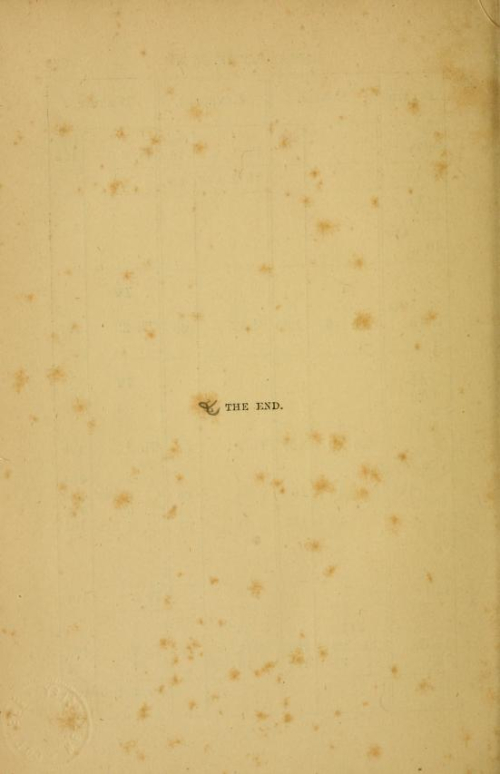
    No, not my last words, and not the last words of a dying person that hangs like concrete in a cloud-like word-balloon above the speaker’s head, and not an obituary, but the last words of a great (or any) book. Not the last line, mind you, but the last word, or two.The plural is mainly added to accommodate the one entry in particular (the last page of Lewis Carroll’s Euclid and his Modern Rivals, a find made by Jeff Donlan out at high altitude in Salida, Colorado)–in this wonderful book, the last page is occupied by the very lonely but definitive “The End”, and it would be a little uneven to display he page with the two words in a post about single words.  In any event, I’m going to try two examples out today and then add some others over time, and see if there is enough material of last words to use as the available tools for a poem about last words.  

    [By the way I did a post related to this, in a way: “An Alphabet of Opening Lines of Charles Dickens’ Works”, here: https://historyofideasblog.com/thesciencebookstore/2015/10/an-alphabet-of-the-opening-lines-of-charles-dickens-works.html]

    Lewis Carroll, Euclid and his Modern Rivals:
    Carroll Euclid Modern Rivals last


    Neither Jeff or I could tell what the little figure/anagram is before “the”, but under magnification it looks to me a little like a running figure.  

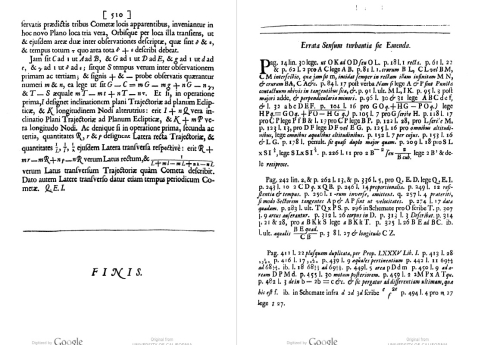
    I might have to manipulate the findings a little with a few rules, like eliminating FINIS or THE END as necessarily last words, and ignoring errata pages, and perhaps indexes–I guess that would mean staying with the last word of the text of a book. For example, Isaac Newton’s Philosophiae naturalis principia mathematica… (1687):
    Last words newton principia

    [Image source: https://babel.hathitrust.org/cgi/pt?id=uc1.31822005223383;view=2up;seq=510]

    Here we have the last “words” being “Q.E.I.” as in 

    QEI: quod erat inveniendum (latin), which was to be found (or what had to be discovered);
    QEF: quod erat faciendum (latin), which was to be done;
    QED: quod erat demonstrandum (latin), which was to be demonstrated.

    which of course is something that can really be worked with, and something of high potential poetical application (HPPA). Perhaps it will wind up being the last three words (used together as a word unit), as there would be more of a possibility of cadence and proto-beauty.

    Here are a few examples, heavy on the books near me:

    • William H. Gaddis, The Recognitions (1955): “…with high regard, though seldom played”. 
    • Charles Dickens, Great Expectations:  “…parting from her”.
    • Ernest Hemingway, The Sun Also Rises (1926: “Isn’t it pretty to think so?” 
    • Herman Melville, Moby-Dick (1851): “…only found another orphan.”
    • Herman Melville, Bartleby the Scrivener (1853): “Ah Bartleby! Ah humanity!”
    • Not that there is a beginning or end to this one, but– James Joyce, Finnegans Wake (1939):  “…a lone a last a loved a long the”
    • Popular Mechanics, volume 50, July-December 1928: “…simplicity of the walls”. [Unexpected!]
    • William Cobbett’s Political Register, February, 1831,: “…up in his house”. 
    • Institution of Civil Engineers, Proceedings, volume 4, 1845,  “American Excavations”: “…portable five feet staff”. 
    • George Orwell, 1984 (1949): “…He loved Big Brother”.
    • A. A. Milne, The House at Pooh Corner (1928):  “…a little boy and his Bear will always be playing”.

     No doubt it will take dozens of these Last Words to have enough material for something that looks like a poem–we’ll see what happens. Stay tuned.


    ·Posted by :

    ·in:


  • The Looking-Straight-Down Department: Smokestack Diners (1927)

    JF Ptak Science Books   Quick Post

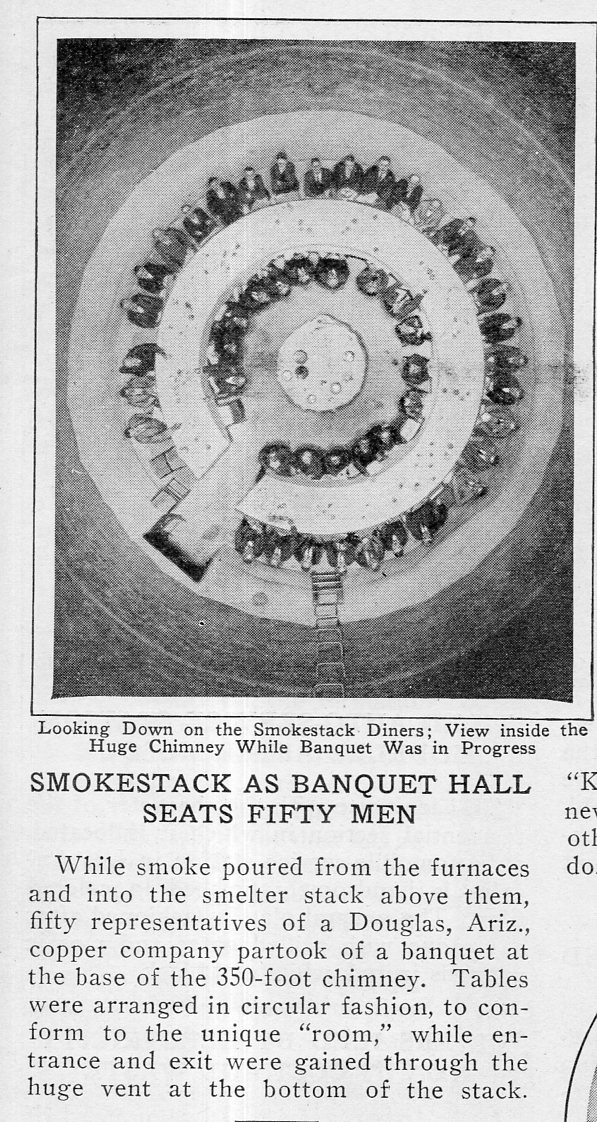
    Over the last eight years I’ve posted a number of articles spotlighting unusual points of perspective, though the fact of the matter is that I never made a category for it, so they’re out there, floating around by themselves, though you can find them by entering “looking straight down” in the google search box at right. This one is particularly good, and displays a fine sense of humor and place (or “humace”).  


    Looking straight down smokestack658

    ·Posted by :

    ·in:


  • The Majesty of Gears and Bolts–the Poe Locks, 1896

    JF Ptak Science Books   Quick Post

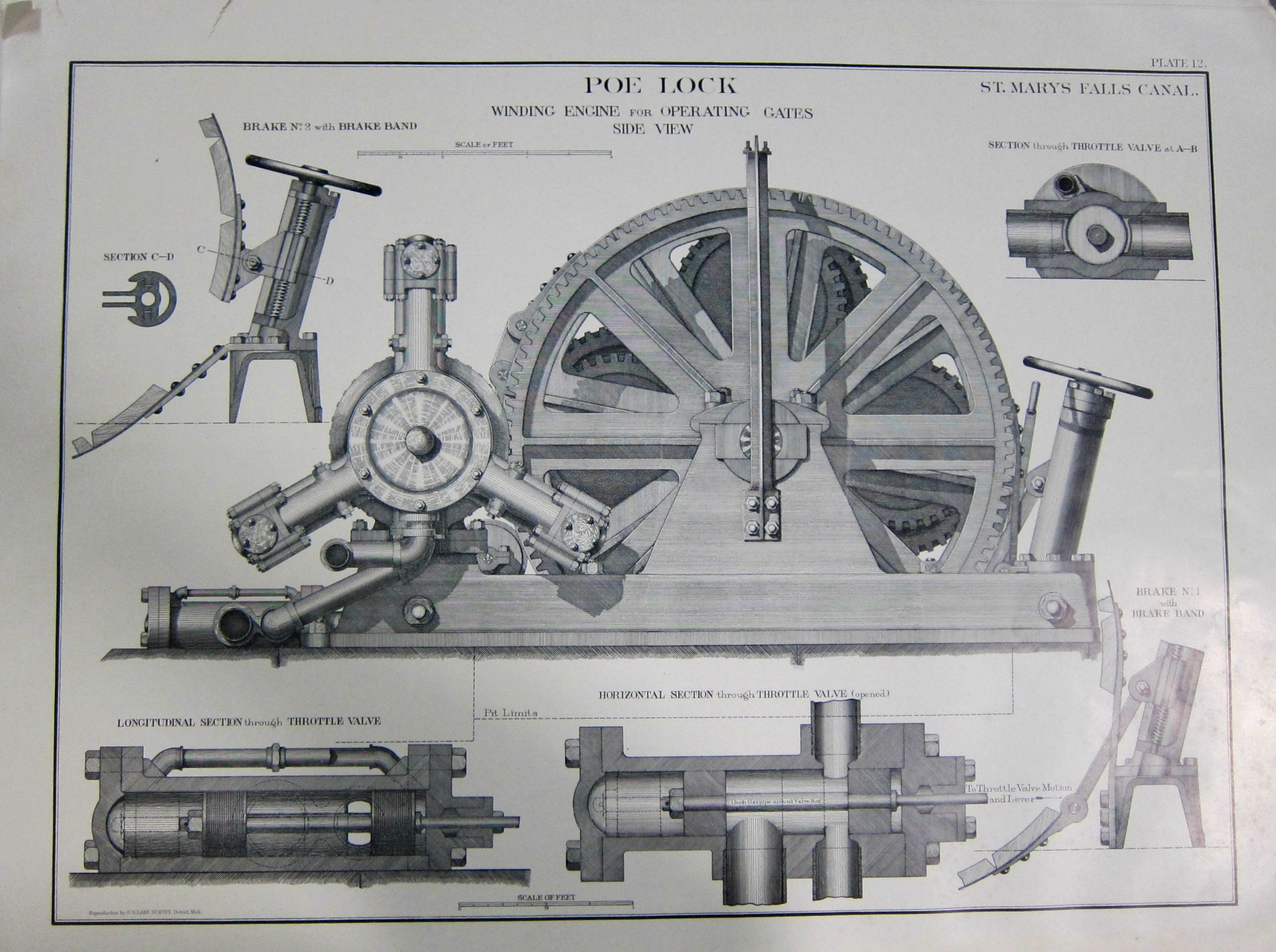
    The Soo Locks at Sault (the “soo” of “Soo”) Ste. Marie are the four parallel locks that connect Lake Superior with Lake Huron and thus the rest of the Great Lakes–the Poe Locks, designed by O.M. Poe, are on of the four, and when it was completed in 1896 it was the world’s largest. At 800’x100′ they were enormous, and controlled the displacement of a lot of water, and the illustrations below show some examples of the meat of the engineering that controlled that process.   I have these loose engravings from an unfortunately unidentified source (though they are from a U.S. Lake Survey,between 1898-1909) and decided to share them because of their deep engineering beauty.  They are fantastically-rendered objects, filled with steam and grease and huge amounts of The Heavy Stuff, all of which display a remarkable feat of engineering.  

    The images are clearer when you click and expand….

    Poe Lock Winding Engine


  • Spherical Home for the Cosmopolitan, 1785

    JF Ptak Science Books   Quick Post

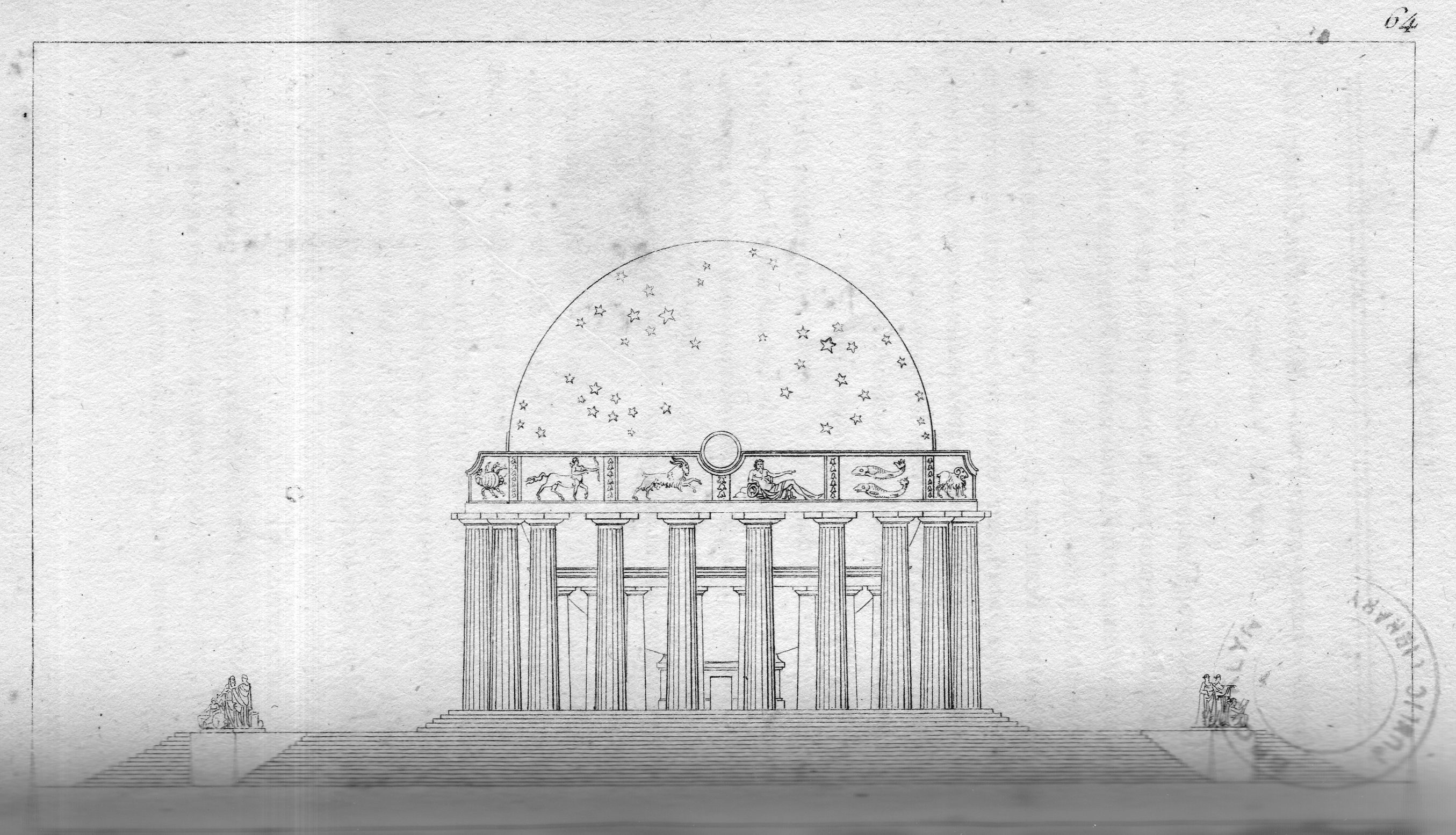
    Vaudoyer _1_684

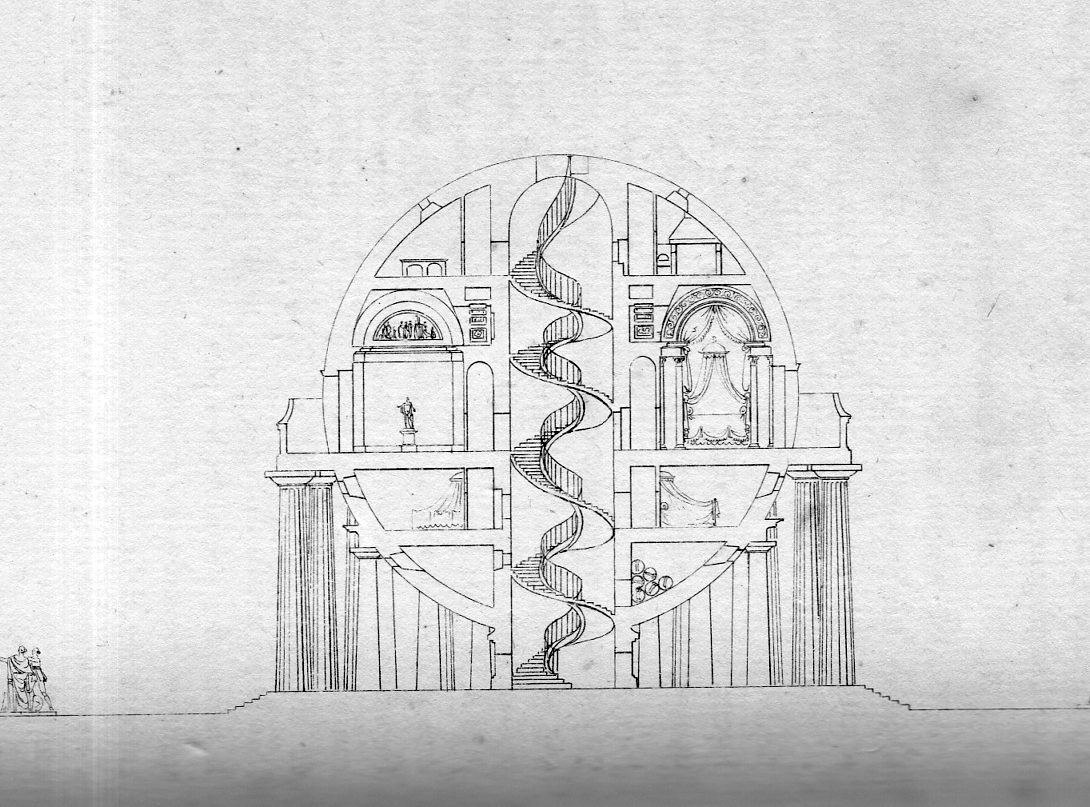
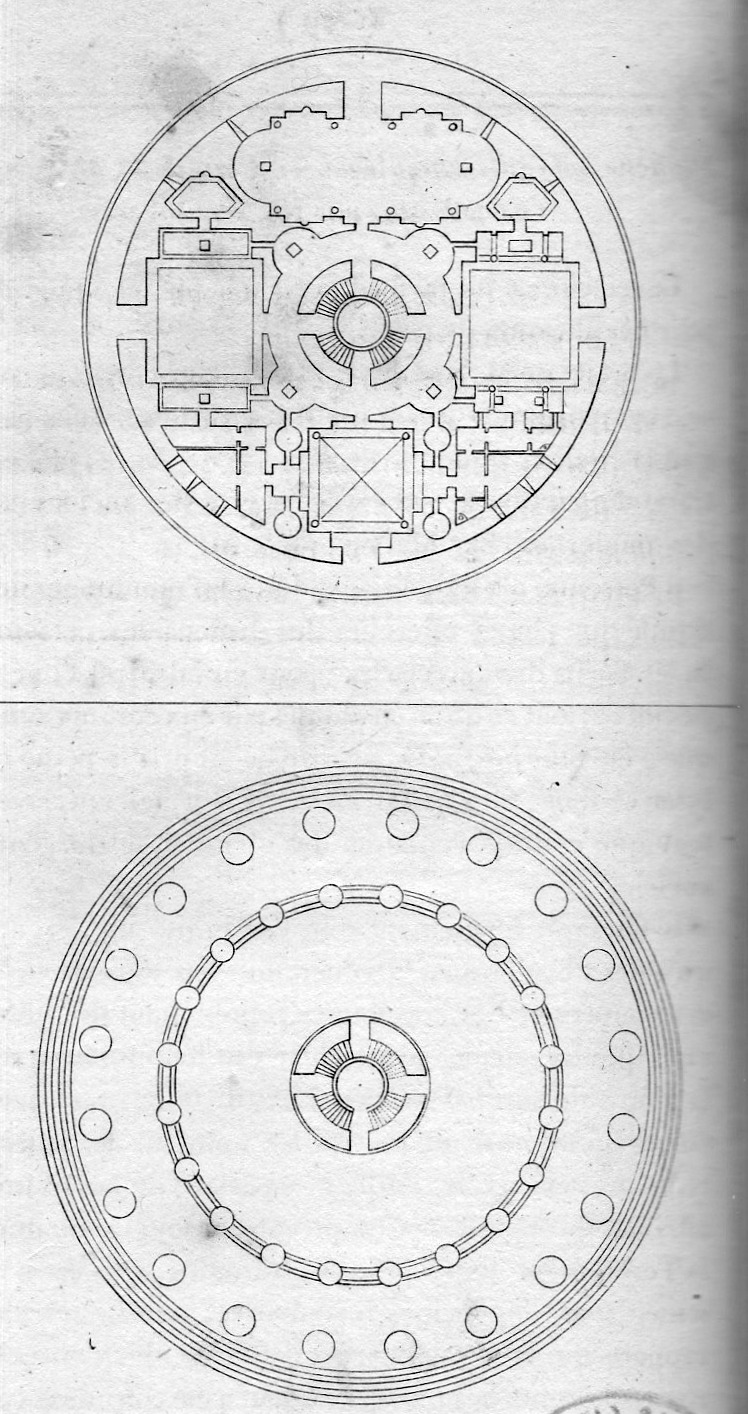
    Evidently M. Vaudoyer was a very early proponent of the spherical house, though (at least outside of architectural circles) his name is not nearly well known as Etienne Boulle, though perhaps if there was a movie1 constantly invoking a godlike reverence to his name he might be better known. The images below come from his time in  Rome at the French Academy, and are his designs for a “maison d’un cosmopolite”–it was a grand home and a temple it seems rolled into one unit, a celebration of design and universal knowledge displayed in the sense of the world, the building itself a globe with a girdle of constellations.  Boullee was very slightly earlier it seems (1784 compared to Vaudoyer’s not-yet-published pen-and-ink drawings of 1785), and bigger, and in general just far more grand, with his Cenotaph for Newton, which was an impressive (and massive at 500′ tall) and spectacular designs. In any event Vaudoyer was certainly encompassing a real visionary sense of architecture, which was an impressive thing to see here at the end of the 18th century.

    Vaudoyer _3_686

    [Vaudoyer engravings all from C.P. Landon, Annales du Musee, volume 2, 1815.]

    Here’s a bit on Vaudoyer from The Oxford Dictionary of Architecture (2015):

    “Vaudoyer, Antoine-Laurent-Thomas (1756–1846) French architect, pupil of A.-F.Peyre, his early unexecuted designs demonstrated a concern for stereometrical purity that was a feature of late-C18 French Neo-Classicism, perhaps influenced by Boullée and anticipating works by Ledoux. With L.-P.Baltard and J.-D.Leroy he founded (1793) a School of Architecture that became the École des Beaux-Arts. He was an influential teacher, and began (1838) the conversion of the Priory of St-Martin-des-Champs, Paris, into theConservatoire des Arts et Métiers. With Baltard et al. he published designs for the Grands Prix (1806–34), and he himself published much.”–The Oxford Dictionary of Architecture, 3rd edition, edited by James Curl and Susan Wilson.

    Vaudoyer _2_685

     Notes:

    1. Peter Greenaway’s very pretty if not occasionally trying Belly of an Architect, with music by Wim Mertens, which is worth the price of admission all on its own.  

    A small sketch study in pencil, ink and wash, dating from the elder Vaudoyer’s time at the French Academy in Rome, for his ‘maison d’un cosmopolite’: a vision of a domestic temple to universal knowledge that began to circolate widely in print and drawn form from 1785 and was ingrained in the architectural discourse for much of the early 19th century.

    Tandoyer’s was the best known and perhaps earliest of many late Enlightenment speculations on spherical dwellings and memorials that might capture an entire cosmos of natural BCience. Vaudoyer lays astronomical and astrological features on its outer surfaces, and organises the interior spaces to capture not just the range of human knowledge, but the varieties of mood, sense and feeling that mark our universal condition.


    ·Posted by :

    ·in:


  • A Flying Mega-Brick and a Postal Torpedo Metallic Email–the Future, 1928

    JF Ptak Science Books  Quick Post

    In the midst of a short article on bits of transportation advances of the future are these two wonderful futuro-peeps, selected here because of their appearance more so than anything else, as there isn’t really anything else to go on. The article has 13 illustrations over four pages and perhaps is 750 words long, so the narrative is heavily dependent upon the images and imagination. That said, the two I’m interested in here have almost no text accompanying them. So be it.  

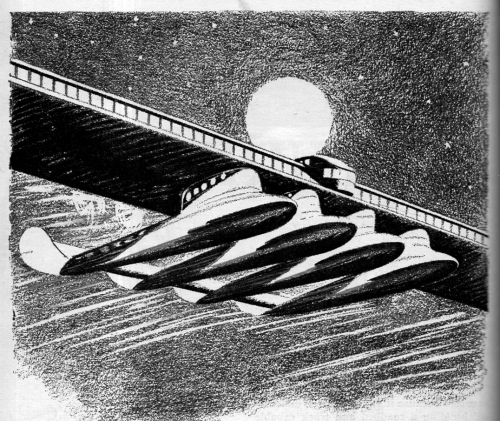
    The first is a mammoth transatlantic seaplane, “proposed by a German inventor”–and that’s it. I can’t tell how “giant” it is supposed to be, nor how many engines, or if there’s anything going on inside the wings, and so on. But it does look streamlined and tubular and blocky, which is a hard thing to do at the same time, in a loud-stealthy way.

    Pop mech future 1928679

    [Source, Popular Mechanics, August, 1928.]

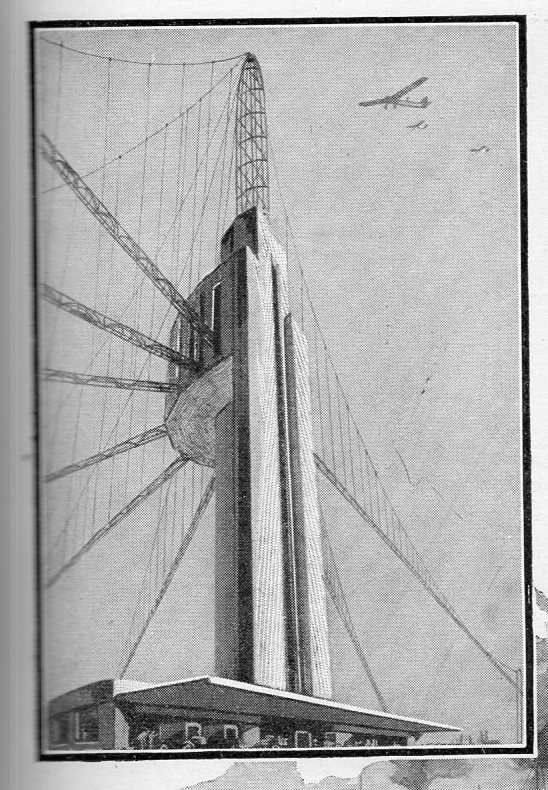
    The other image is that of one tower in a series of untold numbers of such towers popping up throughout France, much like Rommel’s asparagus in Normandy, I guess, except more numerous, and far taller. Iterating the height of the structure by the cars at its base, I take this one to be about 150-175′ high, from which there are many suspended tubular cages within which travels a 10′ long torpedo-like tube that would speed mail from station to station across France at 200 mph.  The engineers were Hirschauer and Talon, and from another source1 I see the invention described as “la torpille postale”, which is what the mail carriers looked like, except sitting on four wheels, and going really fast on a skinny track suspended a hundred feet off the ground.  

    I can’t but help to think about this arrangement of wire and cable and flowing mail as a kind of non-computer email–it has seemed odd to me for a long time that the one of the backbones of our communication existence is strung up above the ground on wires that are for the most part hung on dead recycled trees.  Granted the mail would travel a lot faster in France in 1928 at 200 mph, but completely unforeseen and not-knowable is that email would be a little faster, cruising along at a big chunk of the speed of light.  Seems as though there would have to be thousands of these lighthouse-like structures built to accommodate the French mail demand–no doubt they would have been pesky reminders of a past’s attempt at the future, though perhaps being France and all the mail carriers might have blown them up.  

      Pop mech future 1928 cable mail680

    [Source, Popular Mechanics, August, 1928.]

    Notes:

    1. http://www.luxemburgensia.bnl.lu/cgi/getPdf1_2.pl?mode=page&id=1386&option=