A Daily History of Holes, Dots, Lines, Science, History, Math, Physics, Art, the Unintentional Absurd, Architecture, Maps, Data Visualization, Blank and Missing Things, and so on. |1.6 million words, 7500 images, 4.9 million hits| Press & appearances in The Times, Le Figaro, Mensa, The Economist, The Guardian, Discovery News, Slate, Le Monde, Sci American Blogs, Le Pont, and many other places… 5000+ total posts since 2008.

Author: JF Ptak

  • Musical Realism and Ethnology, 1891

    JF Ptak Science Books   Post 3636

    I first came upon Jesse Walter Fewkes for his work on the U.S. Southwest pottery, and knew of some of his work casually–I did not know about his work with the phonograph until I bumped into this article in Nature for 1890. Evidently, Fewkes’  work, “On the Use if the Edison Phonograph in the Preservation of the Languages of the American Indians”, (in Nature, April 17, 1890, volume 41, #1068, p 560), was among the earliest (if not the earliest) reports on using a phonograph to record Native American songs and rituals. He reports on his use of the relatively new phonograph (14 years old now) to record music, folk tales, language and other aspects of the expressive culture of the Passamaquoddy Indians of Maine–this before heading to the Southwest to make recordings of the Zuni (in 1890) and Zuni (in 1891). 

    This is interesting no doubt because Fewkes offered the world proof of these societal sounds, an imprimatur on authenticity. This must have exploded or leaked into the rest of teh world like the involvement of photography in reporting the news. It was shown early on, during the U.S. Civil War, that engravings made after photographic images and identified so were believed more so in terms of authenticity than the artists rendering a scene “on the spot”. Then of course when Stephen Horgan’s halftone process was introduced and began to be widely-employed–at about the same time as this article, in fact–and would begin to replace hand-drawn images in newspapers and journals, and offer a new version of what was deemed “trustworthy” and “authentic”…until of course this new process came into question via photo manipulation and fraud. But for the time being, here in 1890, there was a new sense of the concept of “realism”, and I think that this doesn’t happen very often. 

    On the Use of the Edison Phonograph in the Preservation of the Languages of the American Indians.

    “THE present state of perfection of the Edison phonograph led me to attempt some experiments with it on our New England Indians as a means of preserving languages which are rapidly becoming extinct I accordingly made a visit to Calais Maine and was able through the kindness of Mrs W Wallace Brown to take upon the phonograph a collection of records illustrating the language folk lore songs and counting out rhymes of the Passamaquoddy Indians. My experiments met with complete success and I was able not only to take the records but also to take them so well that the Indians themselves recognized the voices of other members of the tribe who had spoken the day before. One of the most interesting records which was made was the song of the snake dance sung by Noel Josephs who is recognized by the Passamaquoddies as the best acquainted of all with this song of old time. He is always the leader in the dance and sang it in the same way as at its last celebration I also took upon the same wax cylinder on which the impressions are made his account of the dance including the invitation which precedes the ceremony. In addition to the song of the snake dance I obtained on the phonograph an interesting trade song and a Mohawk war song which is very old. Several other songs were recorded. Many very interesting old folk tales were also taken In some of these there occur ancient songs with archaic words imitation of the voices of animals old and young. An ordinary conversation between two Indians and a counting out rhyme are among the records made I found the schedules of the United States Bureau of Ethnology of great value in my work and adopted the method of giving Passamaquoddy and English words consecutively on the cylinders. The records were all numbered and the announcement of the subject made on each in English Some of the stories filled several cylinders but there was little difficulty in making the changes necessary to pass from one to the other and the Indians after some practice were able to make good records in the instrument. Thirty six cylinders were taken in all. One apiece is sufficient for most of the songs and for many of the short stories. The longest story taken was a folk tale which occupies nine cylinders about Podump and Pook jin Squiss the Black Cat and the Toad Woman which has never been published. In a detailed report of my work with the phonograph in preserving the Passamaquoddy language I hope to give a translation of this interesting story.”  [Source:  Google Books. I do own the original of this paper, should anyone want to purchase it…]
     

    ·Posted by :

    ·in:

    —

  • 115-Pages of Directions on How to (Possibly) Leave Manzanar (1944)

    JF Ptak Science Books   Post 2635
    WRA_1_732
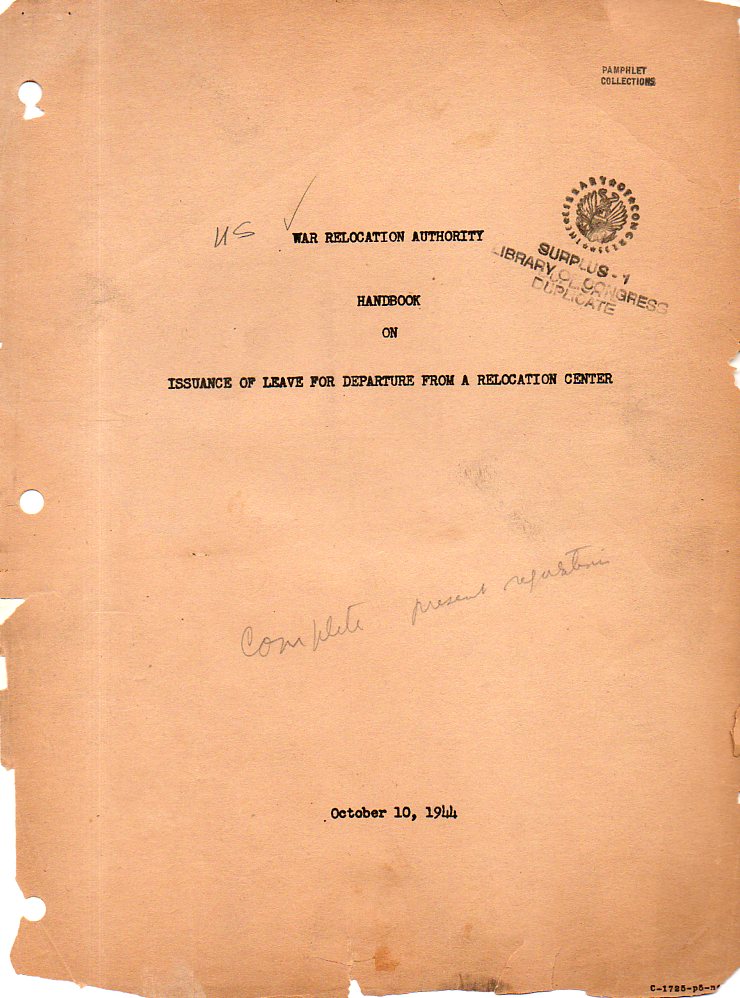
    Just this morning I unearthed this interesting document: War Relocation Authority Handbook on Issuance of Leave for Departure from a Relocation Area October 10, 1944, which was basically a set of rules and regs on how an a Japanese person/”evacuee” could apply for dispensation for leaving the relocation center /internment camp. The language and organization of the document is dense, misleading, and labyrinthine, and spread wide and thin over 115 pages. It is in fact difficult to go from page one to the final page, as there is no real pagination that one can distinctly follow to get through the document in order–if you were to take the thing and toss it into the air and then try to put it back together again, it would not be a straightforward task. It is a confusing and seemingly-contradictory work bibliographically, at least if you were try to define it by its structure. Perhaps this speaks to the administration of the places that this document was trying to describe: there are numerous versions of the document issued over several years, some replacing parts of sections and other replacing entire sections though leaving in place sections contiguous to and within the new sections; the tiny sub-pagination at the bottom right of each sheet doesn’t necessarily follow from one page to another although the text does (for example, there is a page “C-109 2 p1 of 11 nubu-cos-pun-wp”; further, the pagination which is the most useful is the section/page designation at top right, however the numeration of sections and paragraphs in the actual text seems a little thick, starting sections as “.1” rather than “1” and the “.1 A.” rather than 1A or some such. In the end,  when I figured out that the document was actually complete, I was very surprised, because it hardly looked so while trying to follow pagination alone. 

    The War Relocation Authority was formed on March 18, 1942 via Executive Order 9102, following the Japanese attack on Pearl Harbor and the U.S. Entry into WWII, with Milton S. Eisenhower as the director. This was the action taken in the interests of national security resulting in rounding up and deporting to remote internal U.S. Destinations more than 125,000 people—mostly U.S. citizens—of Japanese heritage. The WRA was the consequence of the larger initiative, the Roosevelt administration’s Executive Order 9066 (19 February 1942), which was the legal bombshell that gave the War Department the authority to authorize the removal of the Japanese and theoretically prevent those people from engaging in sub rosa and fifth column activities as wartime terrorists fighting for Imperial Japan within the United States—and this effort concentrated mainly on the Pacific coast and West. For the greatest majority these people stayed in the “Relocation Centers” (routinely referred to as “internment centers” and “U.S. Concentration Camps” for the remainder of the war, and then some. The Japanese/internees were bused away from their homes and lives and businesses with extremely limited notice, and were forced to sell nearly all possessions (including lands and businesses) at what were less than fire-sale prices.  They were made to board buses and trains and were shipped to locations (mainly in California) where they were processed and sent further and deeper into the trying hinterlands of the West for their final destinations until the war was won.  (One of the processing centers was the Santa Anita racetrack, where thousands of Japanese were sent to live for periods in converted, just-painted horse stalls.)  After 3+ years and WWII won, the relocation centers were closed, with Tule Lake was the last (that once included Gila River, Granada, Heart Mountain, Jerome, Manzanar, Minidoka, Poston, Topaz,and the Rohwer War Relocation Centers) to close, though that didn’t take place until March 20, 1946, via Executive Order 9742, signed by President Harry S. Truman on June 26, 1946.

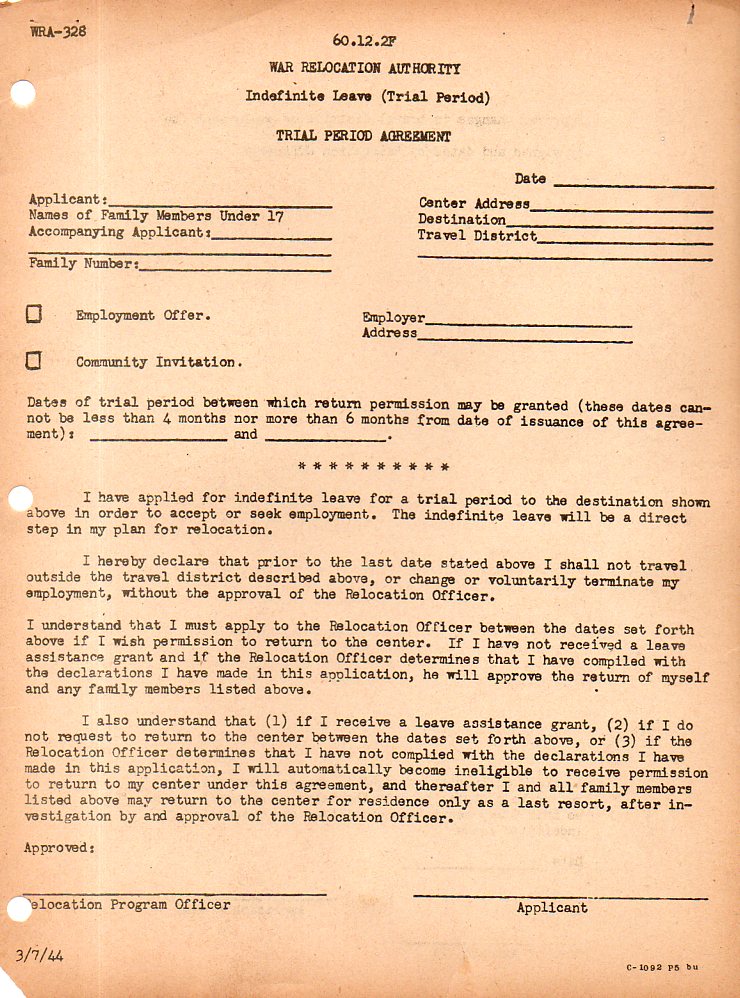
    Here is what seems to be a sample of what the interned Japanese would fill out and submit for leaving the internment camp:

    WRA_3_734

    The overall introduction to the document is signed (in the original, and then reproduced) by Dillon S. Myer, who was the Director and oversaw the WRA from 1942 until 1946; other sectional introductions in the document are signed similarly by Duncan Miller (who in 1945 was at the Colorado River Relocation Center at Poston, AZ), Malcolm Pitts (who was an executive administrator and who wrote Administrative Highlights of the WRA in 1945), E(?)D. Brooks, and Leland Barrows—all but Brooks are located as being “Executive Officers” of the WRA.

     From my reading this series of rules and regulations for the possibility of an “evacuee” to leave the relocation center is a Menkenian example of using 10 words where one word will do. The introduction is sufficient enough for a general reader to be able to guess at what is to come over the next 100+ pages:

    ·Posted by :

    ·in:

    — —

  • Some Blank and Empty Baroque Design Bits, ca. 1700

    JF Ptak Science Books   Quick Post

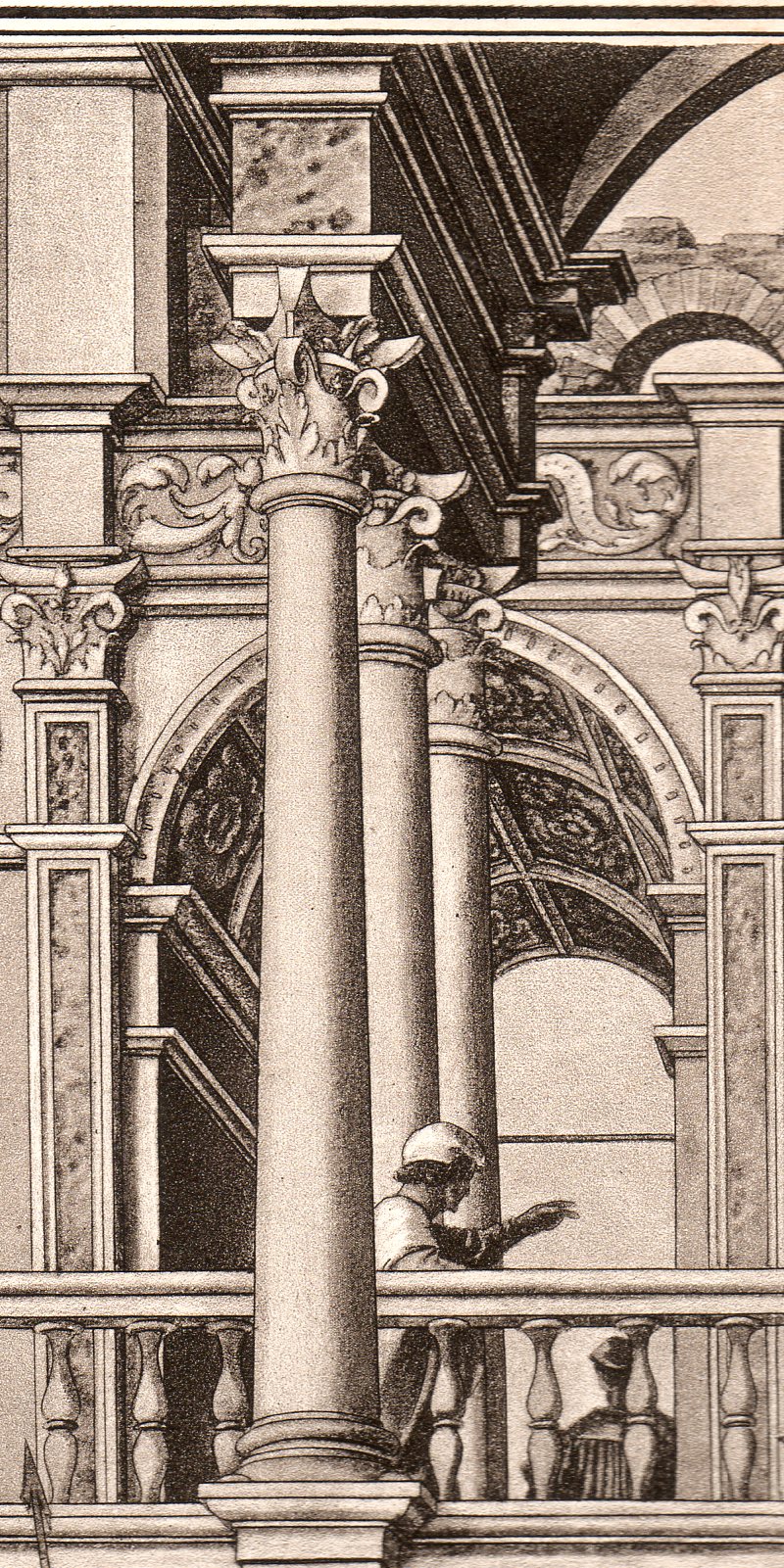
    I saved this image many years ago, and unfortunately I do not have a year/location/maker, nothing at all, just the print. I reckon that the print is in a Baroque style, I think, highly manner and ornate and detailed, and quite empty where there should be obvious detail, as these are the spaces that the eye is directed to by the other elements of the design, except that there is nothing there.  No doubt this was designed for an identifying purpose, though that perhaps had not yet been determined. 

    It is a little curious that the frieze shows a merry peasant party; curiouser still are the three people and a dog on the upper balcony–the middle person seems otherwise engaged in who-knows-what. 

    As it stands, this is a good candidate for the Blank, Empty, and Missing Things series.  


    Empty spaces baroque731

    [Detail from the full image, below.]


  • Lonely Lights of France, 1860

    JF Ptak Science Books   Quick Post

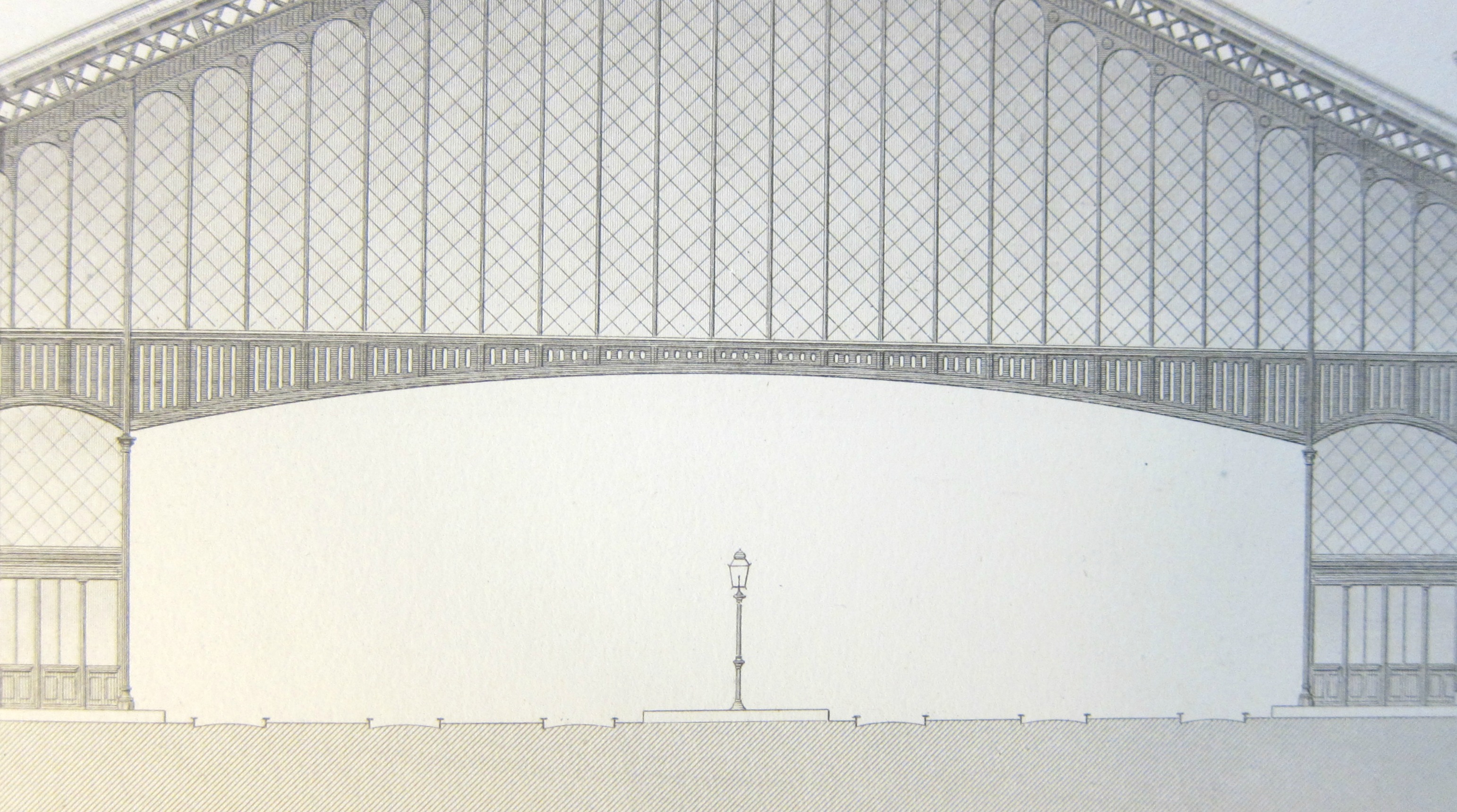
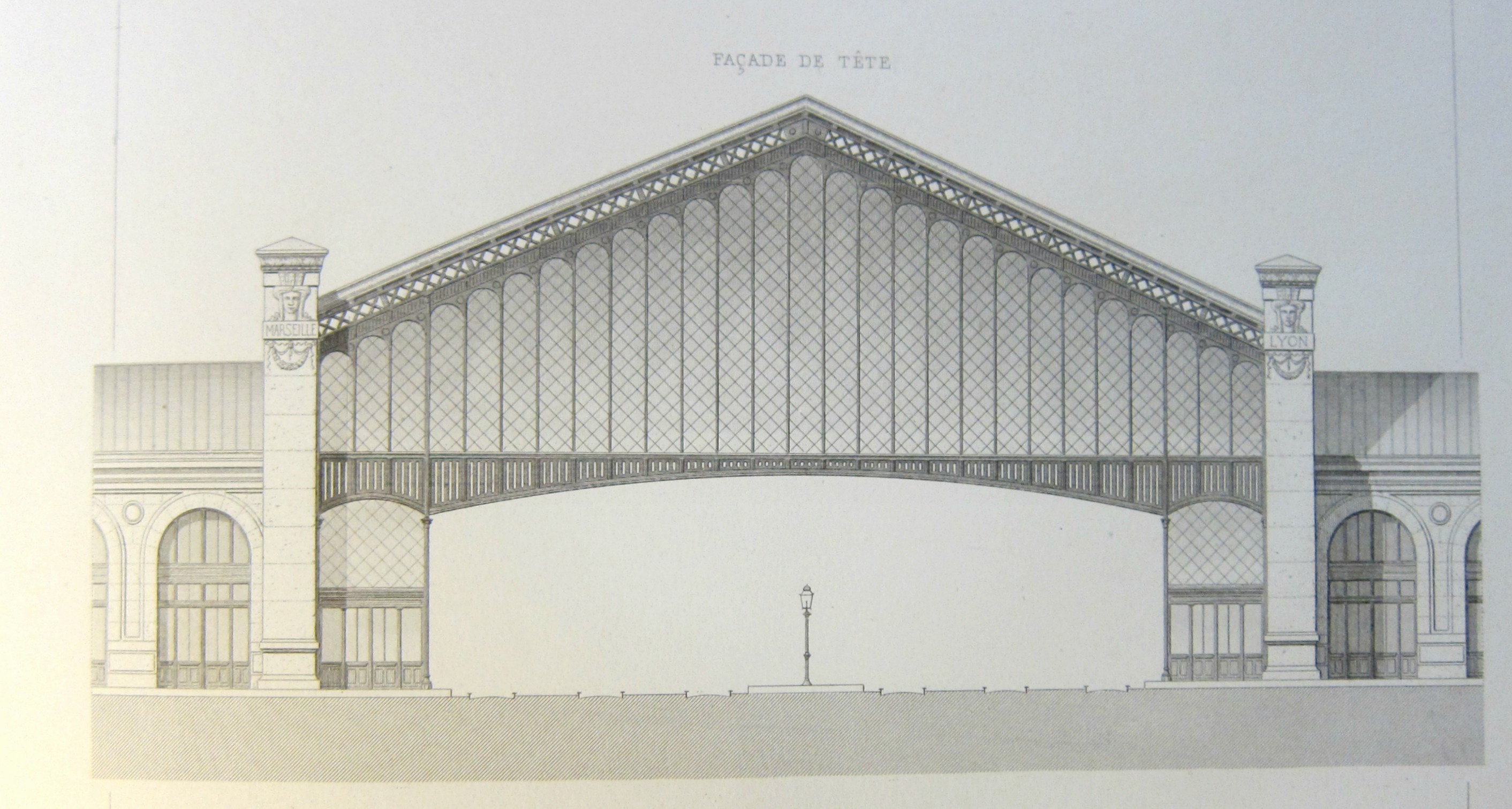
    I have written some posts here on Lonely Things–telegraph poles, electric cable structures, houses, cows, horses, and such–but I think nothing regarding The Lonely Light. And not Light-Lonely-I’m-So-Exposed-and-Vulnerable Lonely, but Lonely in a very public or crowded space. And that I think is just what we have here, found in an architecture journal edited buy Caesar Daly, who I have written about in a contiguous post. (The engraving is the work of the prodigiously talented and very busy Caesar Daly, who in addition to writing and editing books also edited the journal Revue Generale de l’Architecture et des Travaux Publics, des architects des ingenieurs des archeologues des Industriels et de Proprietaure, these images coming from volume XVIII, printed in 1860, in the section “Chemin de Fer de Paris a Lyon”, which turns out to have been a very busy railway hub in teh early expansion period of railroads in France.) Anyway, I have no doubt that there was a row of these gas light fixtures along the concourse, this being a view of the interior of the station looking down/longitudinally along the tracks so you see their cross-section–and frankly I can’t tell if this shows two sets of tracks on either side of the central platform, or three (narrow gauge) lines.  As they say over there, “Ça ne fait rien”/”Machts nichts”–I’m just focused here on the lonely light. 

    Lonely light


    Lonely light big

    ·Posted by :

    ·in:


  • Dreams of Chalkboards Past: French Schoolroom Tools, 1860

    JF Ptak Science Books   Quick Post


    Schoolroom France _2_


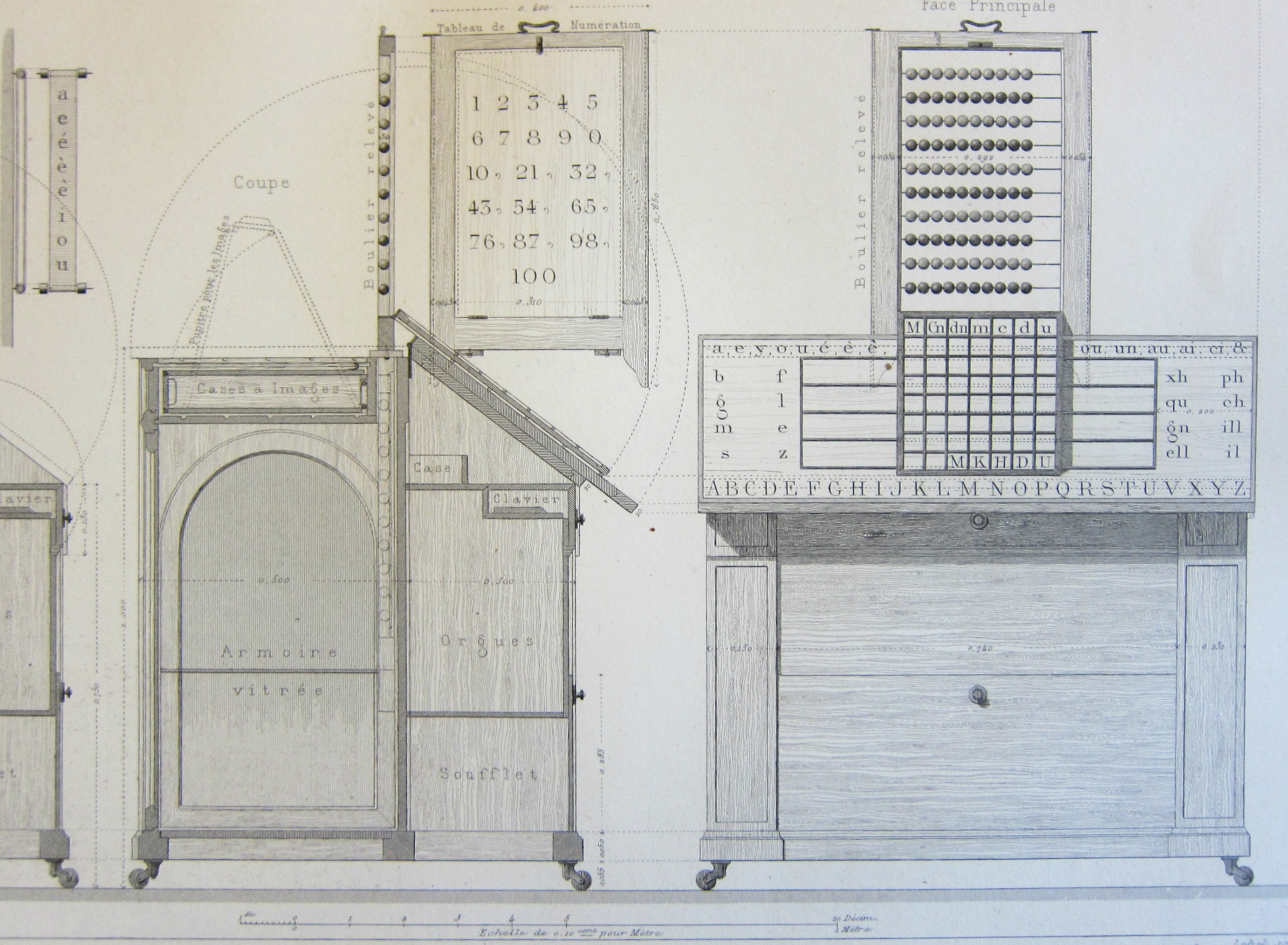
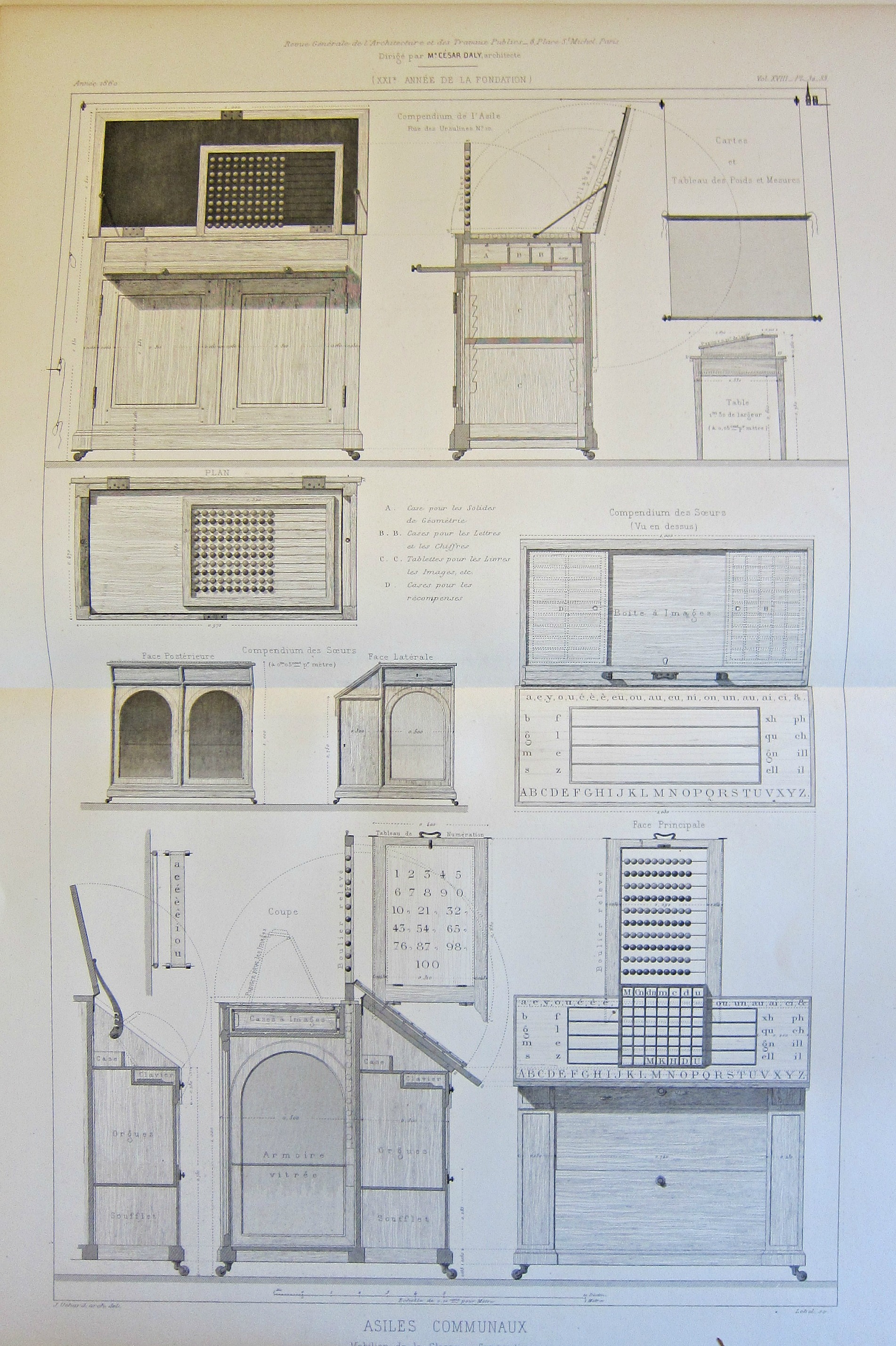
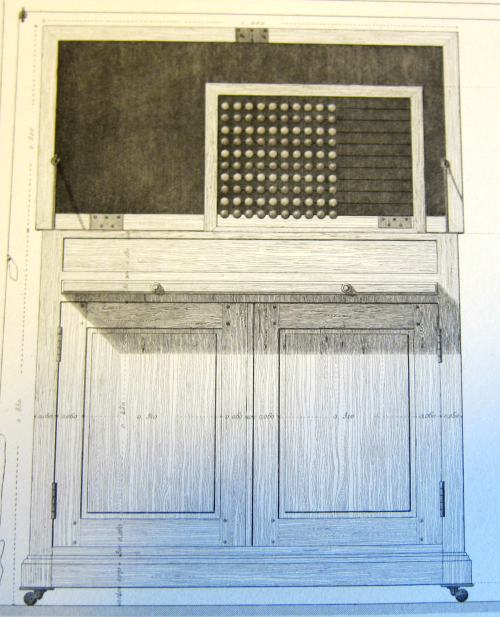
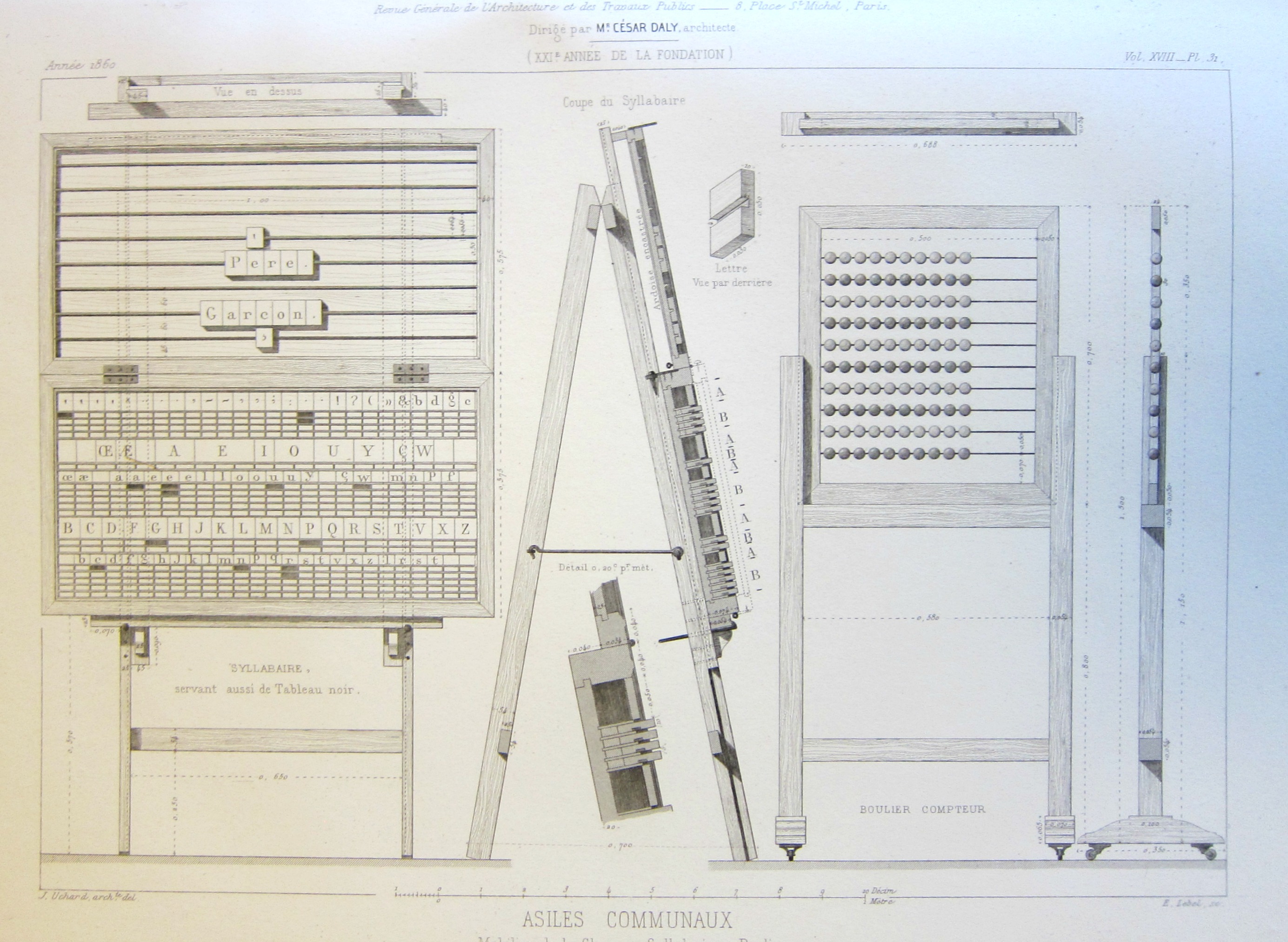
    I think it would be lovely if–in addition to tablets and laptops–kids in school would be doing work generating chalk dust, and physically moving wooden disks with letters/words on them, and producing that wood-over-metal sound manipulating counting beads on metallic rods. There’s just something that goes on in the brain, I think, when you are able to touch something while learning—chalk on a board, fingers on a wooden peg or on pencil to paper, and so on. The pre-nostaligia for that memory is found for me in images like those that follow–beautiful engravings of teaching instruments and tools for elementary schools in France in 1860.

    The engravings are the work of the prodigiously talented and very busy Caesar Daly, who in addition to writing and editing books also edited the journal Revue Generale de l’Architecture et des Travaux Publics, des architects des ingenieurs des archeologues des Industriels et de Proprietaure, these images coming from volume XVIII, printed in 1860, in the section “etablissements d’instruction primaire”.


    Here’s a big double-page plate, about 13×20″ in real life: 

    Schoolroom france _3_

     And a detail of the counting beads in the upper left:

    School room France

     And a spelling board, with another larger counting board (the letters are stored horizontally in the bottom half of the large wooden board):


    Schoolroom France _5_


  • North Pole Airport of the Future (1945)

    JF Ptak Science Books  Quick Post

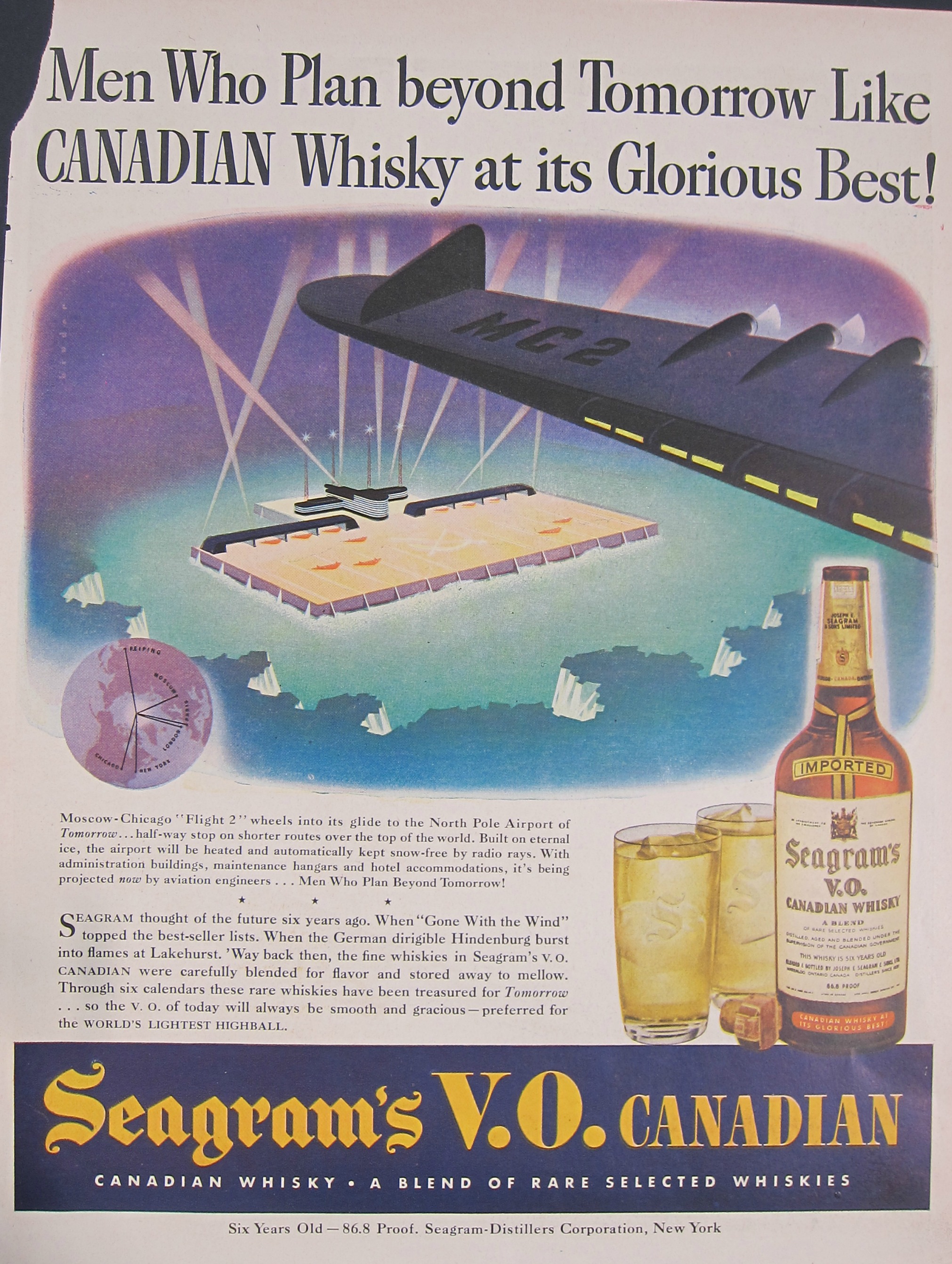
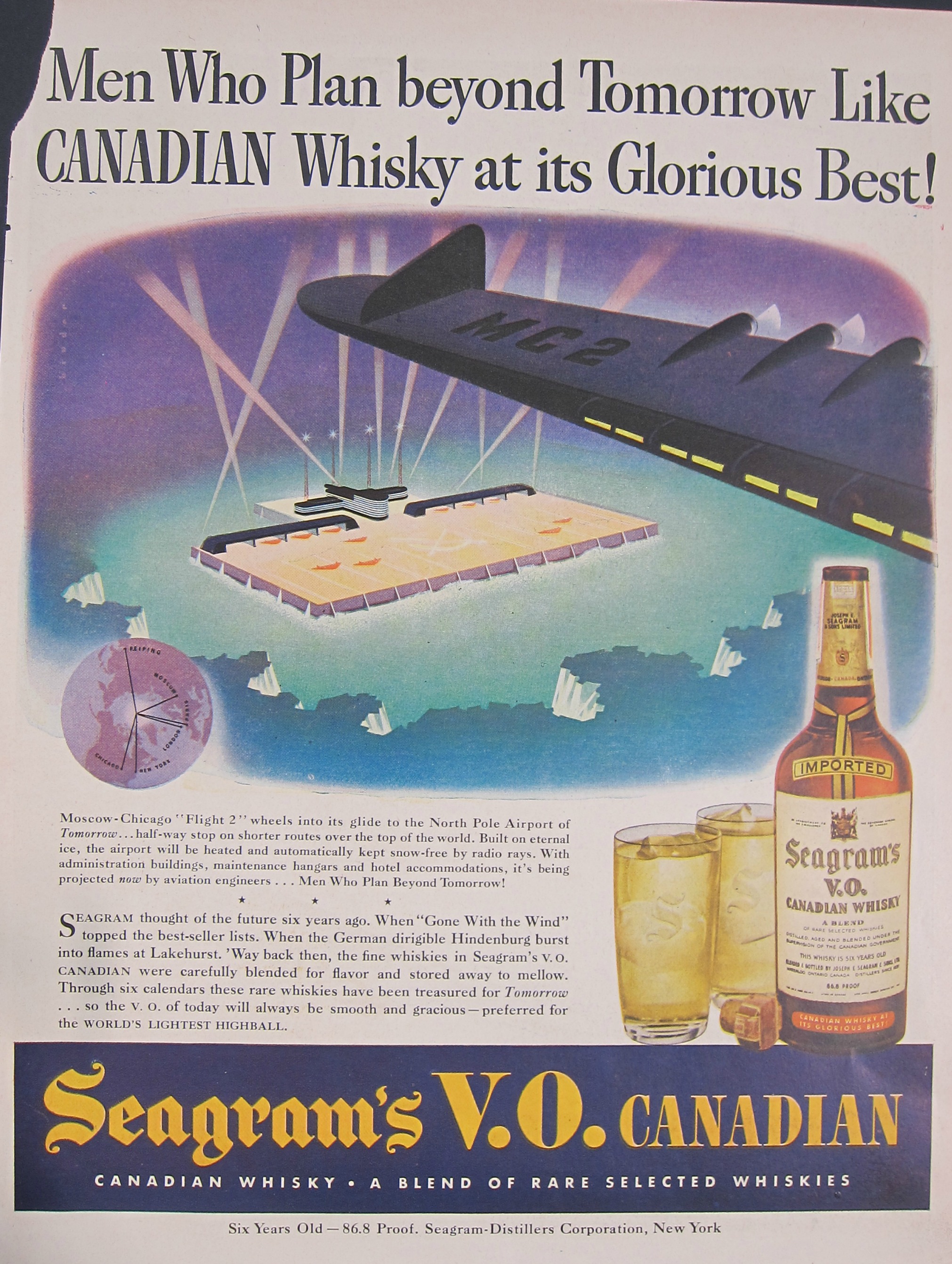
    Future seagrams flightThis gives a new and heavier, colder (?) meaning to the phrase “on the rocks”–a envisionaryiztion or some such thing of air travel in the future, the image fueled or at least paid by Seagram’s Canadian Whisky. At the time when this ad appeared (in LIFE magazine, ca. 1945/6?) it was evidently okay to articulate distilling interests with air flight, which isn’t done so much anymore–that and of course smoking in-flight, though admittedly people were firing up their cancer sticks with a lot more legroom than one has nowadays, but, still, I’d have to go with cramming my body into a too-small seat than sit in a smoke-filled tube with little tiny flames in a combustible environment.

    So this particular piece of the future foresees long-distance flights but not necessarily long distance planes, with the flights accommodated by a large airport at the North Pole that would serves as a nexus for international connections. The airport there “would be heated” and the runways kept clear of snow and ice via ‘radio waves’, adn that’s about it.  No matter about the details or the ideas, so long as you start your own flight of fancy with Seagram’s.  


  • One of Earliest Looking-Down-Between-the-Legs Views of the Eiffel Tower, from an Aeroplane, 1909

    JF Ptak Science Books  Quick Post

    Flight eiffel tower

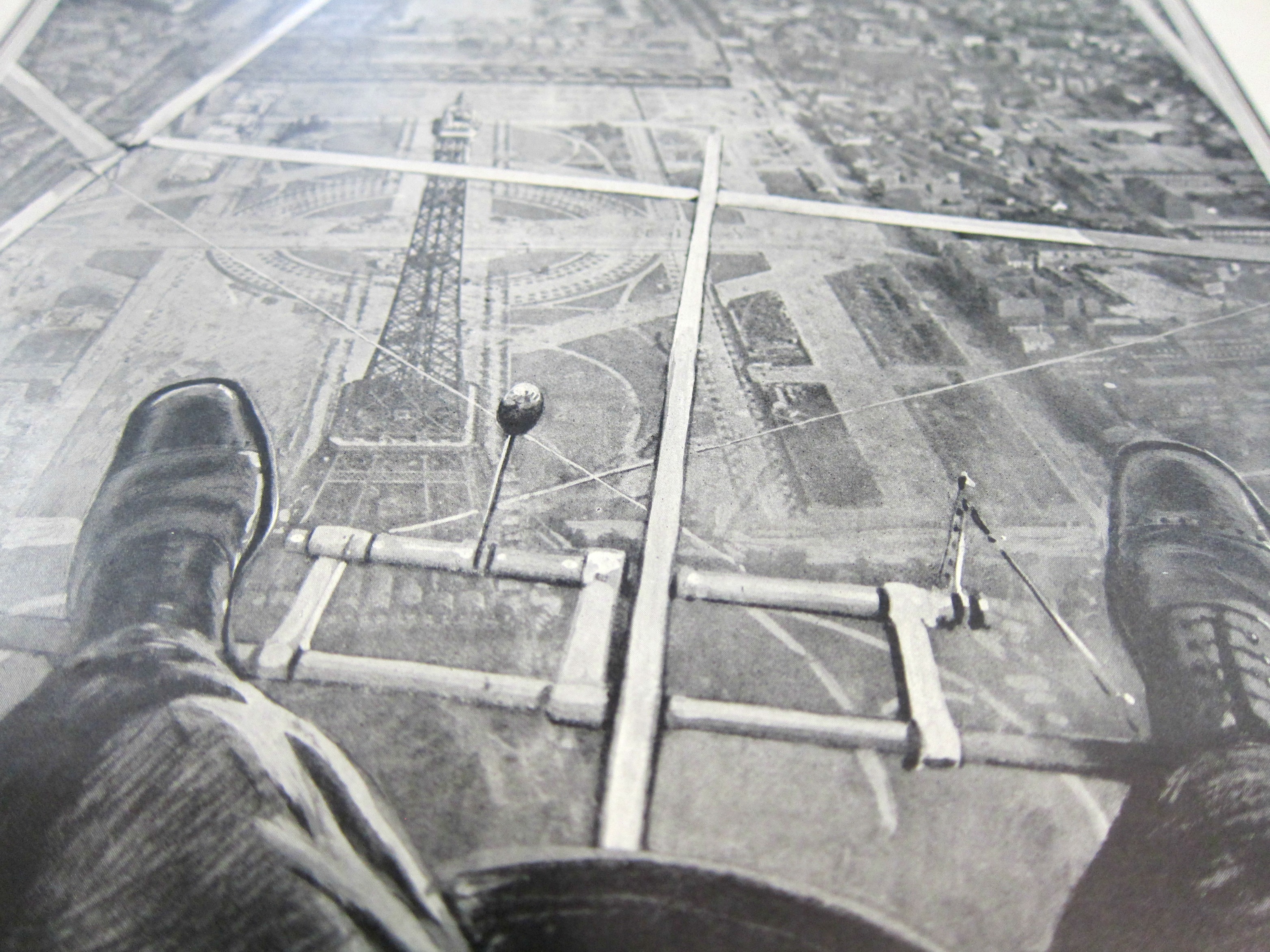
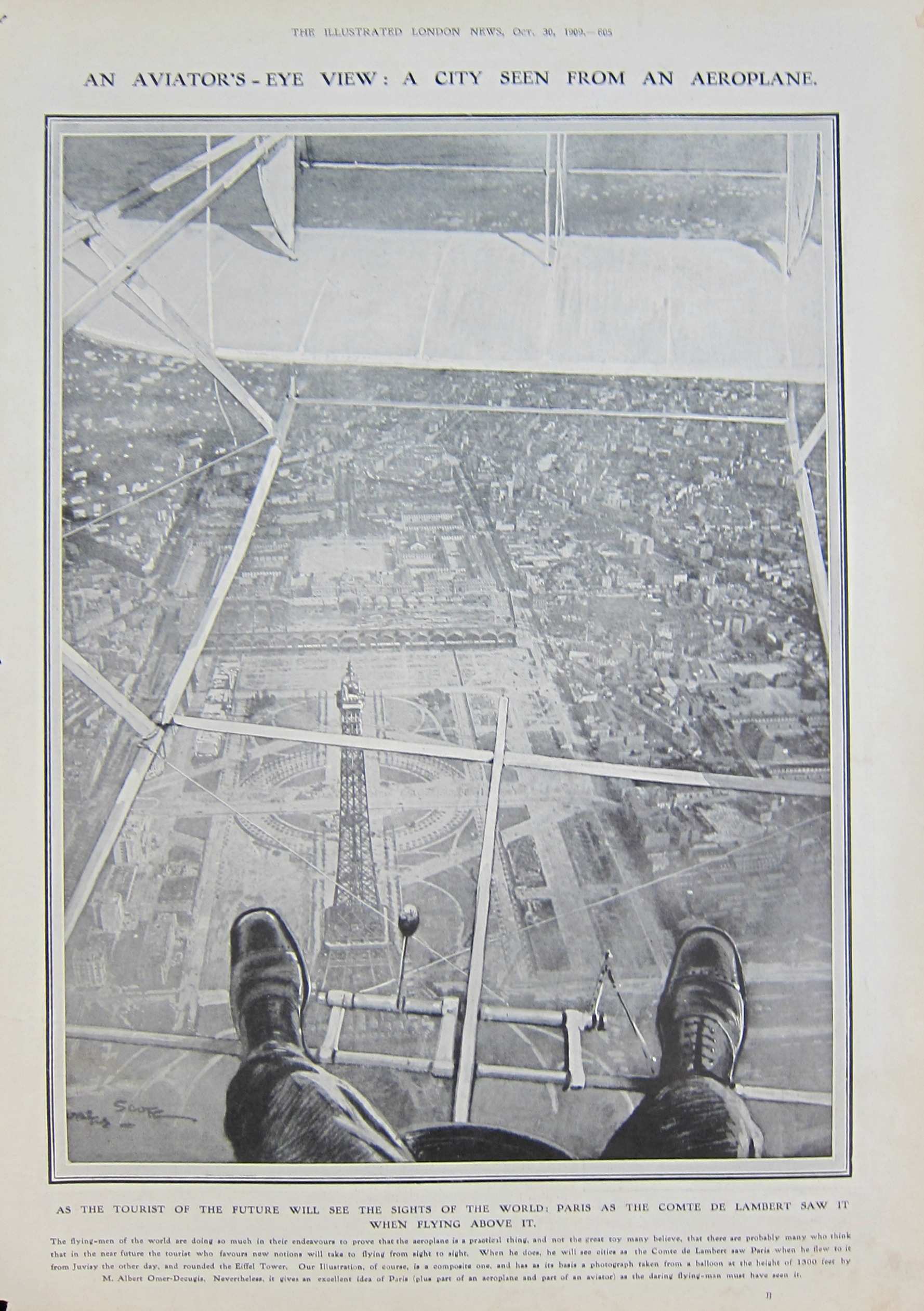
    “An Aviator’s-Eye View: a City Seen from an Aeroplane” is a wonderful composite image published in the Illustrated London News on October 30, 1909.  It represents the city from the point of view of the observer–in this case, the Comte de Lambert, who was the first person in France to receive flight instruction from Wilbur Wright, and who made what the New York Times referred to as “the most remarkable cross-country flight ever accomplished in an aeroplane1“. This was reported in the Times on October 19, 1909, when de Lambert  “left the Juvisy Aerodrome at 4:36 o’clock in a Wright machine, flew across Paris to the Eiffel Tower, circled it, and returned to his starting point, arriving safely at 5:25”, during which he reached a height of about 1300 feet. The you-are-there perspective is a very uncommon one in my experience, and now doubt this one must have given the readers of the ILN a queasy feeling of what flying looked like.  

    Notes:

    1. New York Times, October 19, 1909: “PARIS, Oct. 18. — The most remarkable cross-country flight ever accomplished in an aeroplane was made this afternoon by Count de Lambert. He left the Juvisy Aerodrome at 4:36 o’clock in a Wright machine, flew across Paris to the Eiffel Tower, circled it, and returned to his starting point, arriving safely at 5:25…”
    2. Fkight eiffel tower 1909

  • Ghost Vision and the Coming of T.V.

    JF Ptak Quick Post

    Joseph Plateau, “On a New and Curious Application of the Permanence of Impressions on the Retina”, in Philosophical Magazine, volume 36, January-June 1850, pp 434-436; followed immediately in a much longer paper, “Second Paper on a New and Curious Application of the Permanence of Impressions on the Retina”, pp 436-452, with two plates.

    Plateau

    From: An Annotated Bibliography of Flicker Fusion Phenomena…1740-1952, by Carney Landis, p. 

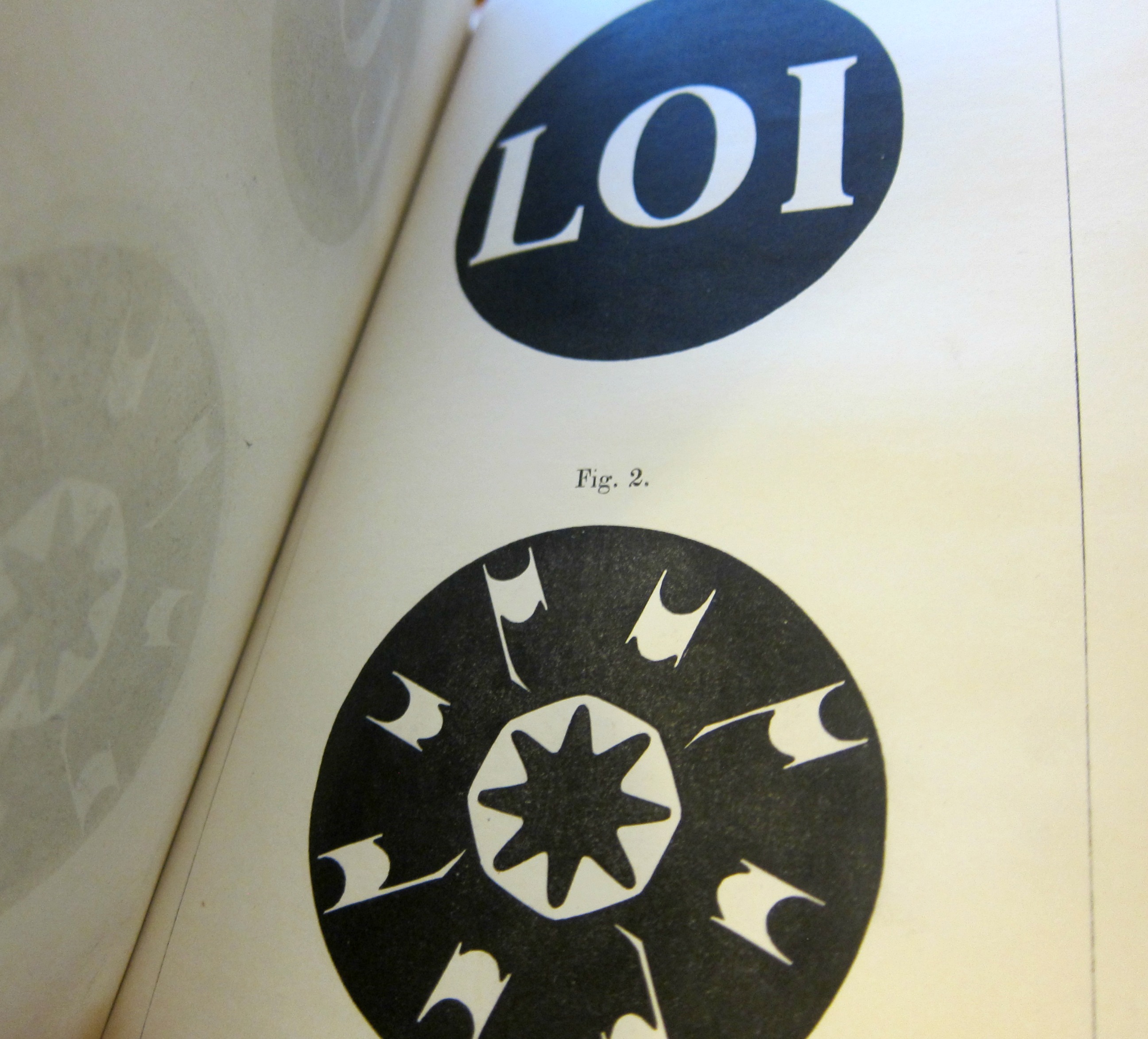
    PlateauPlateaun (1801-1883) was the inventor of the Phenakistoscope in 1829, and contributed often (especially with considerable papers in 1835 and 1836) on the issue of persistence of vision. Here he writes of that and the flicker effect, which is the optical illusion in which individual sequential units of images are viewed as a continuous motion of images, which is a trick of the visual system and makes such this as the movies and cartoons and animated shows possible.  It is a terrible irony that this great writer on physiological optics would be blind or nearly so by the 1840’s, this a result of an experiment conducted requiring him to stare at the sun for nearly half a minute.

    “Plateau studied in great detail the phenomena of accidental colors and irradiation, both of which he considered as arising from a similar cause related to the persistence of the image on the retina. Accidental colors are those that appear after staring for some time at a colored object and then at a black surface, or closing one’s eyes and pressing one’s hands over them. An image of the object appears, usually in complementary color and slightly diminished in size. Plateau’s results include his discovery that accidental colors combine both with each other and with real colors according to the usual laws of color mixture. In irradiation luminous objects on a dark background appear enlarged, a factor clearly of interest to astronomers, among whom the question of the extent of the enlargement was causing controversy. Plateau showed that enlargement occurs regardless of the distance from the object and—explaining the varied experiences of the controversialists—that the mean amount of enlargement from the same source varied considerably from one individual to another.”–Dictionary of Scientific Biography

    Also in this volume: J. Locke, “On the Phatascope”, pp 453-457, “instrument for giving single vision with two eyes” (–Living pictures; their history, photoproduction and practical working. With a digest of British patents and annotated bibliography, Henry Hopwood, 1899.)

    Among the many other articles in this volume is William Fishburn Donkin’s “On the Geometrical Interpretation of Quaternions”, pp 489-502. (See Alexander MacFarlane’s Bibliography of Quaternions..., 1904, full text here: http://ow.ly/kFRy304gfVD

    Notes:

    • See The History of Discovery of Cinematography timeline, which is especially interesting for the pre-1850 entries http://precinemahistory.net/1850.htm


  • Hollow Plans for the Sleeper–Protection from Bombs and Poison Gas (1927)

    JF Ptak Science Books  Post 2642

    Anti-aircraft moscow bomb falling

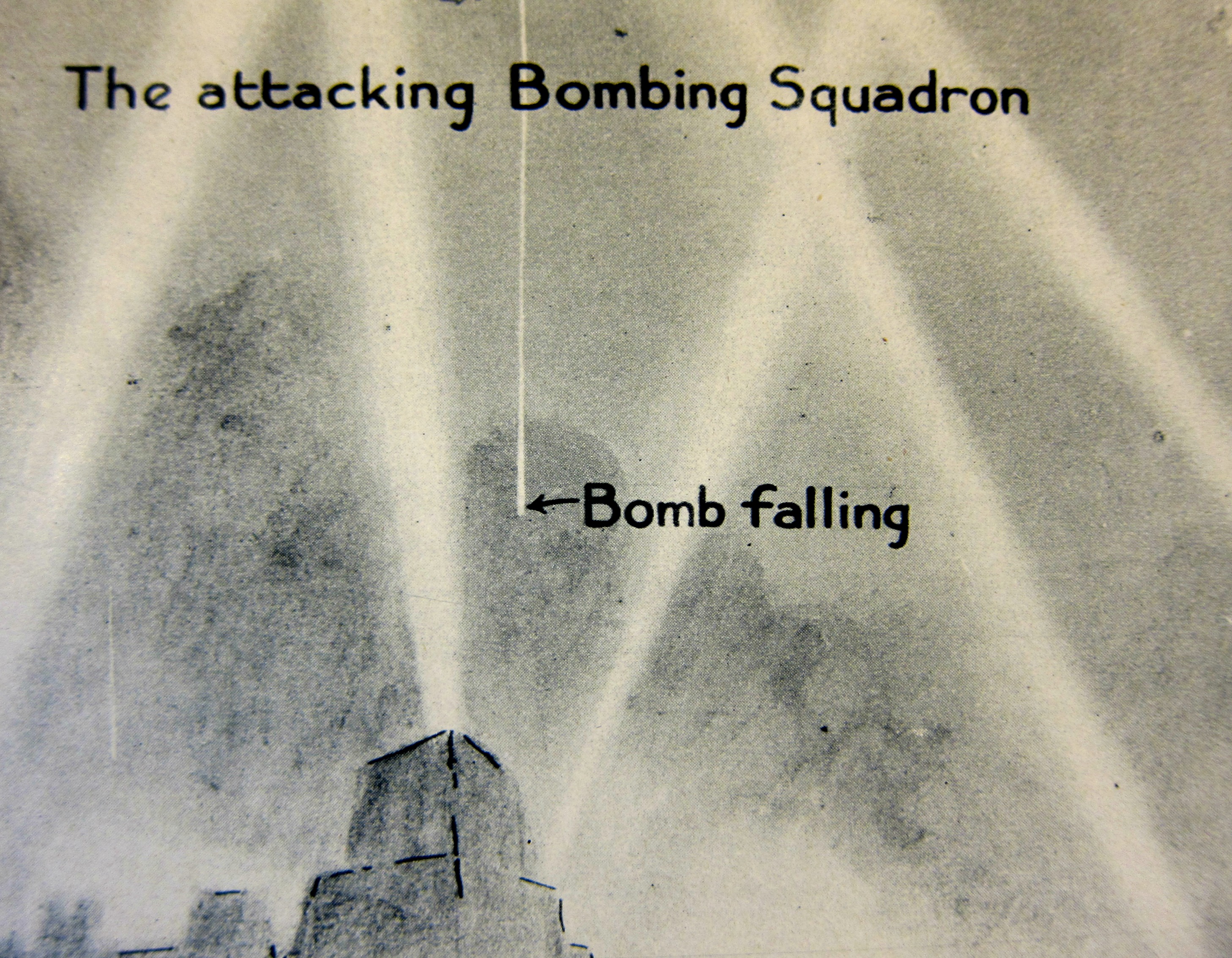
    The OED identifies the first usage of “anti-aircraft” 1914, which to me sounds about right–and pre-war, of course.  That said there were many opportunities to talk about something like anti-aircraft, as bombs had been dropped from balloons by 1849, and airplanes had been dropping grenades/bombs on soldiers and civilians since at least 1911–so the need for combating aircraft was there even though it took the English language a few years to catch up to expressing this idea in a hyphenated term.  By (July 23) 1927, when this short picture-article appeared in the Illustrated London News, there was enormous evidence and experience in anti-aircraft weaponry, and it seems that the Soviet Union was in a full-bore status to acquire a competent system, or at least they were talking about some aspects of it.  

    Anti-aircraft Moscow city street

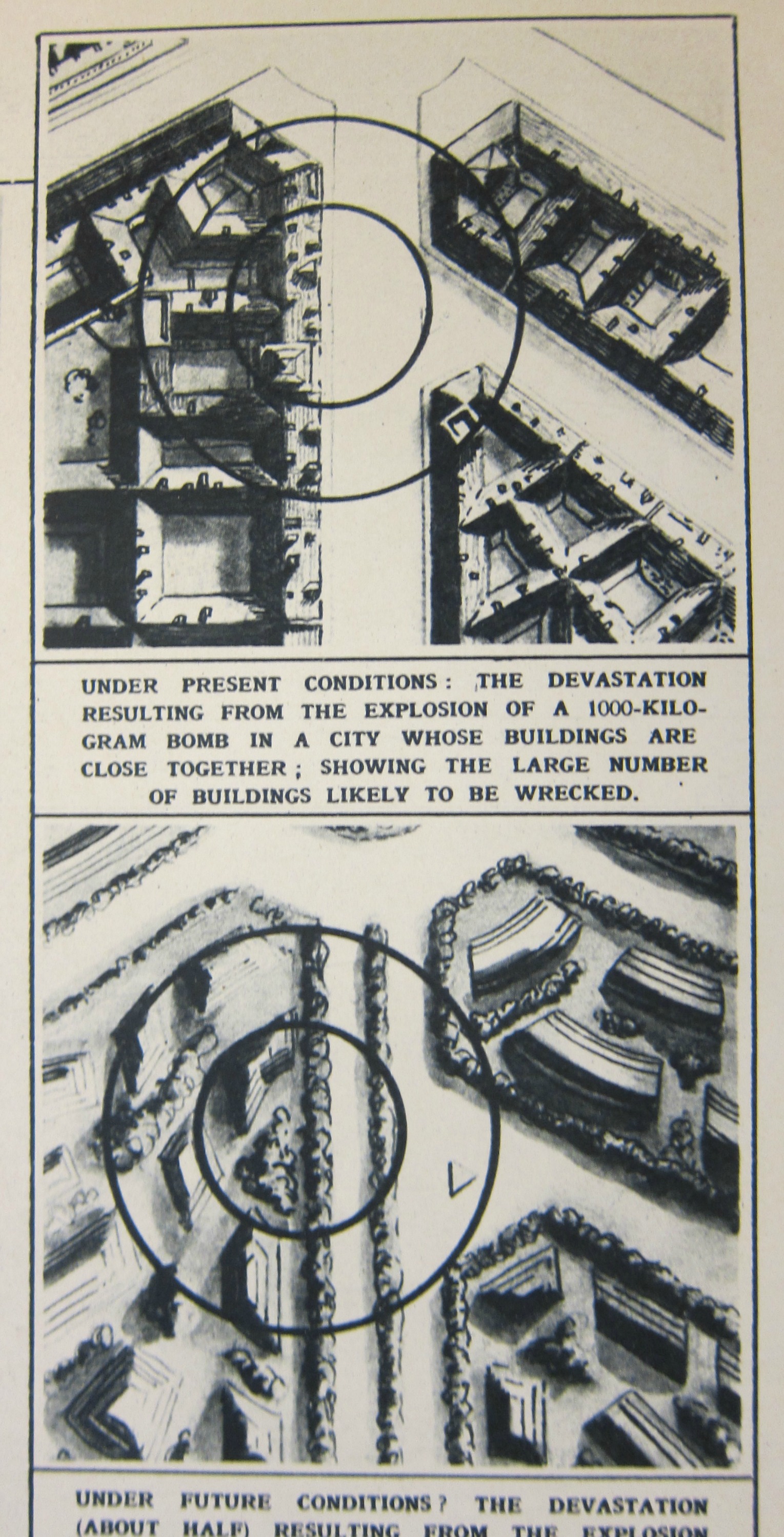
    And thank goodness for the artist who provided us with the right stuff to discern the “bomb falling”, dropped from one of the “attacking Bomber Squadron” able to elude the anti-aircraft defenses. The changes proposed were somewhat large in regards to the AA emplacements–on the other hand, the reassignment of space in a city, spreading stuff out so that dropped and exploded bombs would destroy less given the proximity of structures to one another, is an absolutely monumental undertaking. The city rebuilding is also predicated on a problem, as the bomb used in the scenario is only 1000-kilograms. This sort of thinking extends into the nuclear age when think tanks proposed Atomurbias, spreading out the population of the U.S. to basically everywhere, as well as evenly distributing industrial centers throughout the country (sometimes underground). There are problems enough relieving Flint of its water supply problems–it would be terrifying to think of redistributing the majority of the population of the U.S. and providing entirely new urban-ish areas for everyone to move into.  Of course there wouldn’t be enough material to do this, or workers, or more, or will, but that didn’t stop people from undertaking some federally-funded planning for it.  

    Anti-aircraft moscow gas scrubber

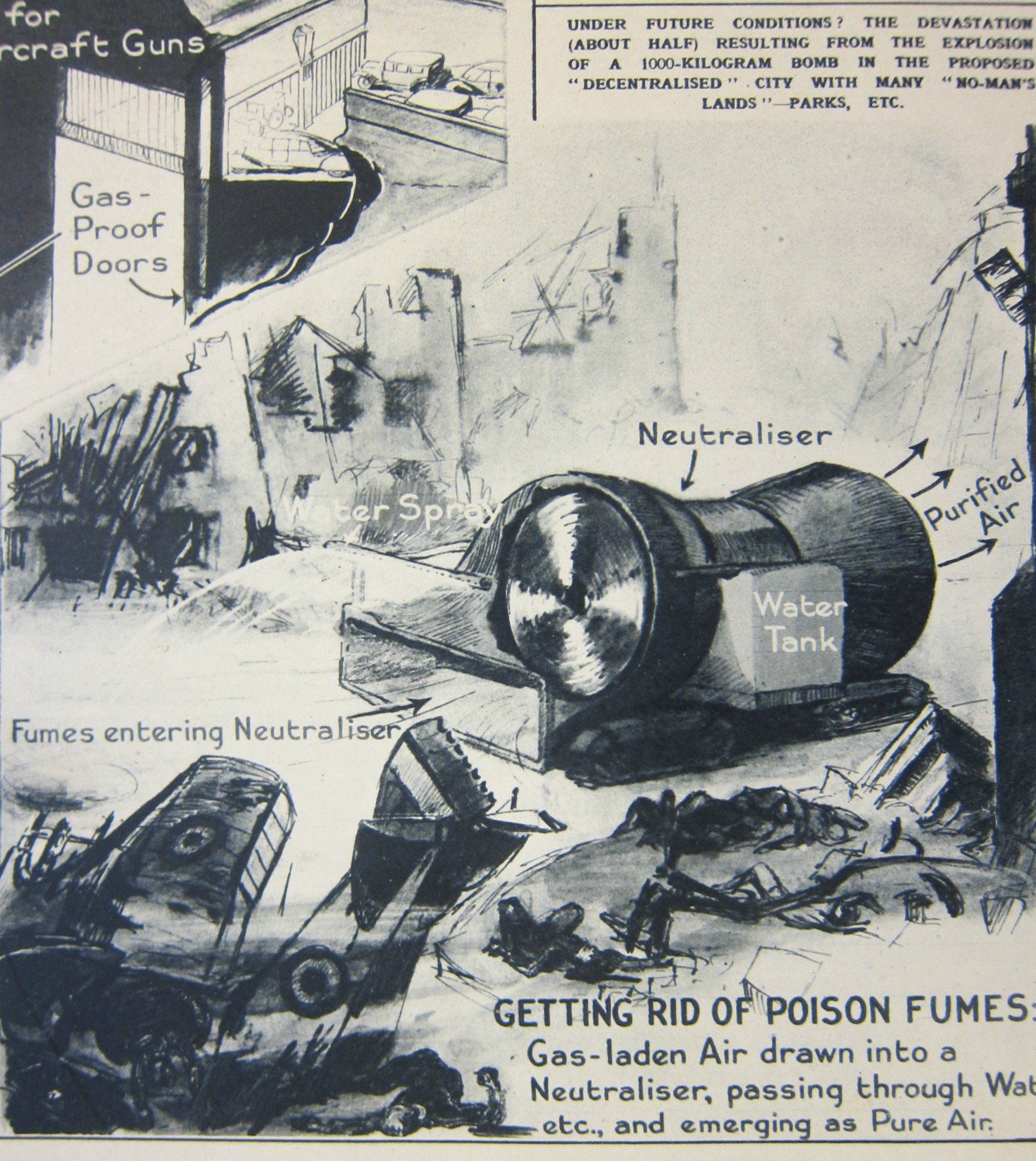
    The other part of this scenario is the protection from poison gas. And I guess we can just stop right there, with that small tank “neutralizer” that is supposed to absorb poison fumes and release “purified air”, because that sort of protection just will not happen…especially back in 1927.  

    ·Posted by :

    ·in:

    —

  • An Elegant-Looking Torpedo Boat, 1887

    JF Ptak Science Books

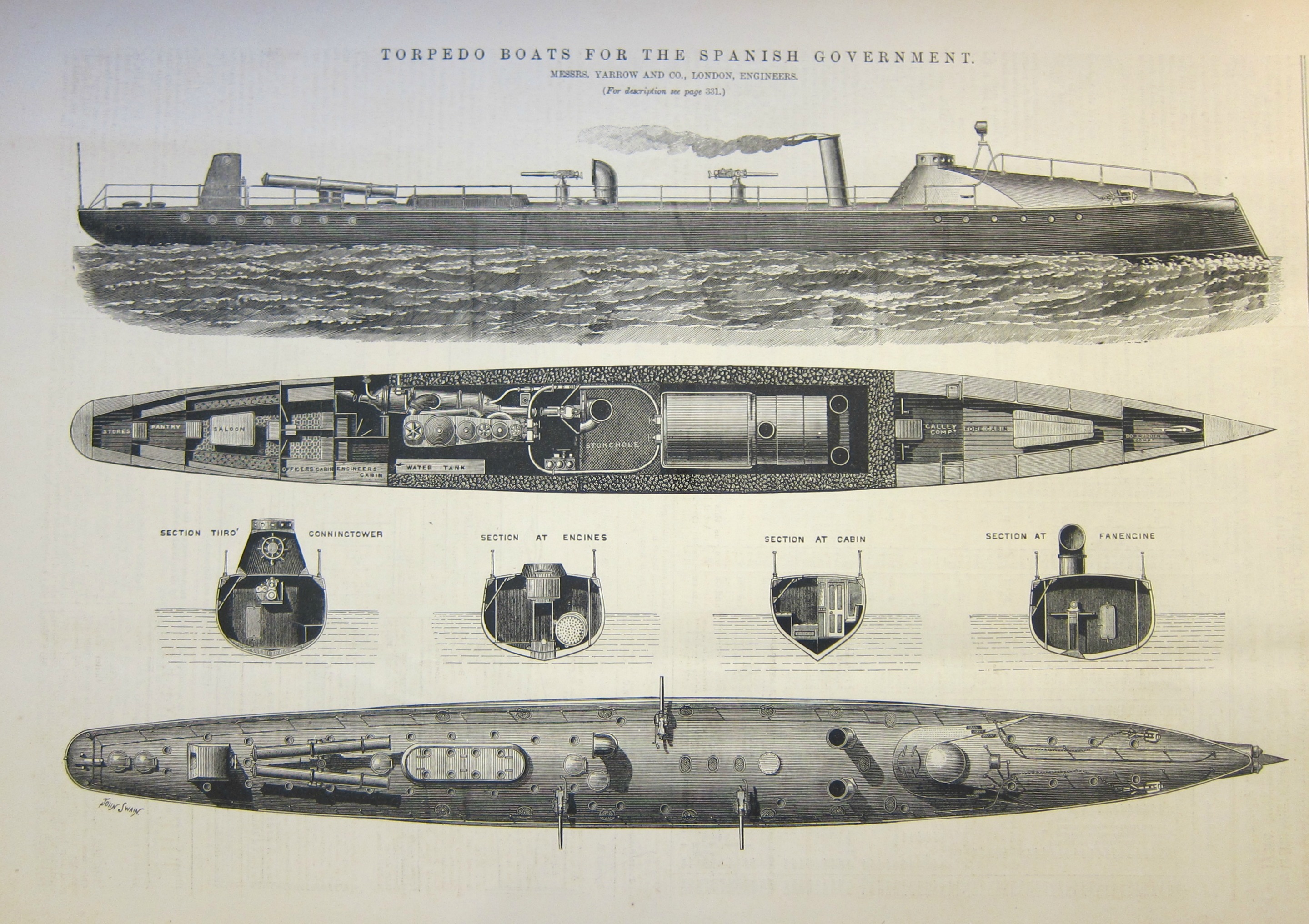
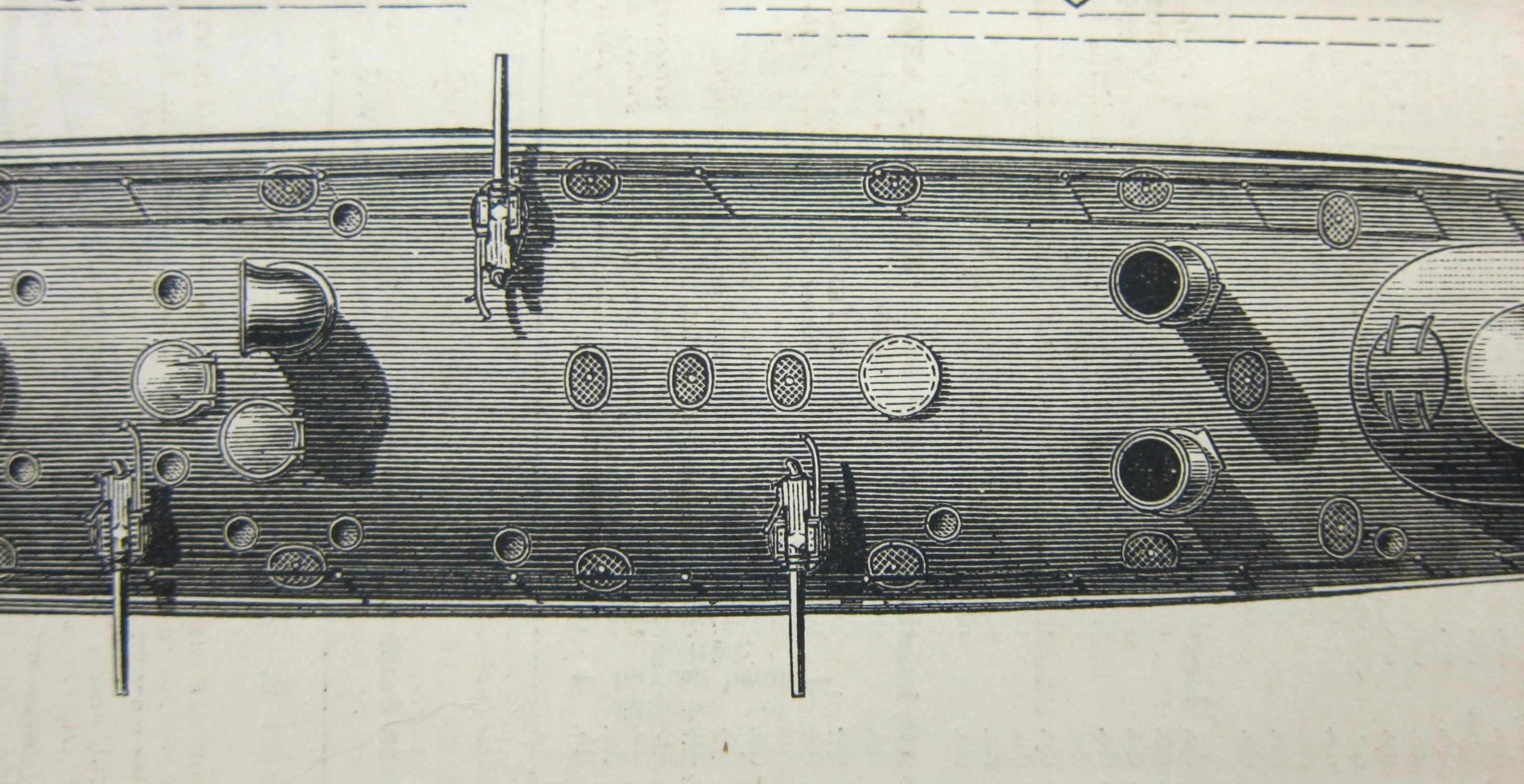
    This is the design for two sister torpedo boats, created by Yarrow & Co. (Poplar, East London) in 1887 for the Spanish government. The torpedo boat was not a terribly-new idea by this point, the first “modern” version of the craft built in 1875 (HMS Lightning), with earlier versions launched during the U.S. Civil War (like the CSS David). The designs shown here are for the Azor and the Halcon,135′ of attack-capacity (with 1600 hp), certainly making them high consideration for the folks on the receiving end, leading to the development of the torpedo boast destroyers to protect the big battleships and hunt the torpedo boats, and idea that would lead to “destroyers”. In any event, I found the image attractive and interesting, and thought I’d share it:

    Engineer 1887 torpedo boat

    [Image will become clearer when expanded/Source: The Engineer, October 21, 1887.]

    Engineer 1887 torpedo boat detail