A Daily History of Holes, Dots, Lines, Science, History, Math, Physics, Art, the Unintentional Absurd, Architecture, Maps, Data Visualization, Blank and Missing Things, and so on. |1.6 million words, 7500 images, 4.9 million hits| Press & appearances in The Times, Le Figaro, Mensa, The Economist, The Guardian, Discovery News, Slate, Le Monde, Sci American Blogs, Le Pont, and many other places… 5000+ total posts since 2008.

Author: JF Ptak

  • East St. Louis Massacre and the Silent Parade, July 1917

    JF Ptak Science Books  Post 2752

    The Crisis, a journal of the NAACP, called for attention and action in response to the terrible 2 July East St. Louis Riot and massacre in their issue of September 1917. The leadership published a long article detailing the background and the horrors of the event, which you can read if you follow the link. The back of the cover of the journal featured a plea for membership (actually calling for people to “enlist”, much like the people doing so during WWI which the U.S. finally entered 6 April 1917 after nearly three years of European warfare) which was followed in a few pages by the details of the event. 

    Long story short, racial tensions in East St. Louis were increased due to northerly African American migration from the Southern states, causing anxiety among the whites on purely racial reasons as well as the belief that there would be stiffer competition for work. The main catalyst though seems to have been a strike at American Steel, the management hiring hundreds of Black workers to replace the White strikers. Tensions high, a carload of Whites drove into the segregated Black side of town and opened fire on a group of Black men. Shortly afterwards another car of Whites–this time including two policemen–made a similar tour of the area, the Blacks responding with gunfire thinking that it was another drive-by. The two policemen were killed, and then things escalated quickly and brutally, with tens of thousands of Whites turning out to ESL and rioting, beating, clubbing, shooting, and setting fire to buildings (while cutting the hoses of the fire department to ensure that the arson burned the buildings to the ground. Impartial eyewitnesses to the event reported that the National Guard and the police were in very large part unresponsive to the threatened population, and in many cases aided and abetted the rioting. In the end estimates ranged stating that 50-200 African Americans were killed and 6,000 made homeless, while later on a Congressional investigation reported that an accurate estimate of the murdered could not be made. 

    Crisis East St Louis ENLIST

    • Source: The Crisis, September  1917, vol 14/5, pp 218-238,  via Marxists.org: https://www.marxists.org/history/usa/workers/civil-rights/crisis/0900-crisis-v14n05-w083.pdf


    ·Posted by :

    ·in:


  • “We are, then, gas engines.” Turing and Some of his Childhood Reading.

    JF Ptak Science Books  Quick Post

    The enduring intellectual legacy of Alan Turing’s childhood reading in the delightful (and deeply insightful) book Natural wonders every child should know (1912, 1939), by Edwin Tenney Brewster (1866-1960) can clearly be seen throughout the book, given its absorbing and penetrating curiosity. It is a very disarming book, and I think could be easily under-read, even though it has some semi-lofty writing given its audience, but if you give it a chance, there is a LOT going on in it.  The possible influence of the book, for example, in relation to Turing’s relationship with thinking machines, can be seen in chapter 35, “The Living Automobile”, on pp 238-240, something that must have given the young Turing some considerable stuff to think about: 

    “If you will think back over what you have already learned in this book, you will see that we began by finding out something about how we men, the animals, and the plants come to have any such things as bodies at all…. We found about something of what animals cannot do, and what they can do, and how they do…We learned how animals of various sorts, and plants as well, see and feel and act; and we learned also something about how we ourselves do our thinking, which is so very different, and so very-much better done, than that of any animal or plant.

    “Now we turn to a different matter. We have taken up being, and doing, and thinking. Now we shall consider living. We shall learn about how the body of the plant or animal feeds itself and keeps alive, and how the different parts of it, the bones and skin and leaves and bark, manage to get on with one another, and work together like a well-made machine.”

    “For, of course, the body is a machine. It is a vastly complex machine, many, many times more
    complicated than any machine ever made by hands; but still after all a machine. It has been likened to a steam engine. But that was before we knew as much about the way it works as we know now. It really is a gas engine; like the engine of an automobile, a motorboat, or an airplane.”

    “We are, then, gas engines.”

    Full text of the 1939 edition is found here: https://babel.hathitrust.org/cgi/pt?id=coo.31924001126055;view=2up;seq=8

    ·Posted by :

    ·in:


  • Transatlantic Floating Airports, 1936

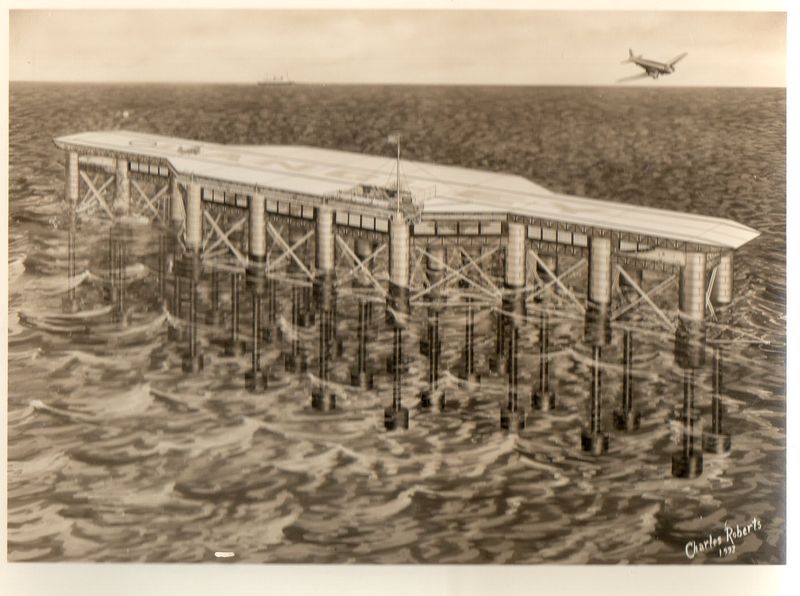
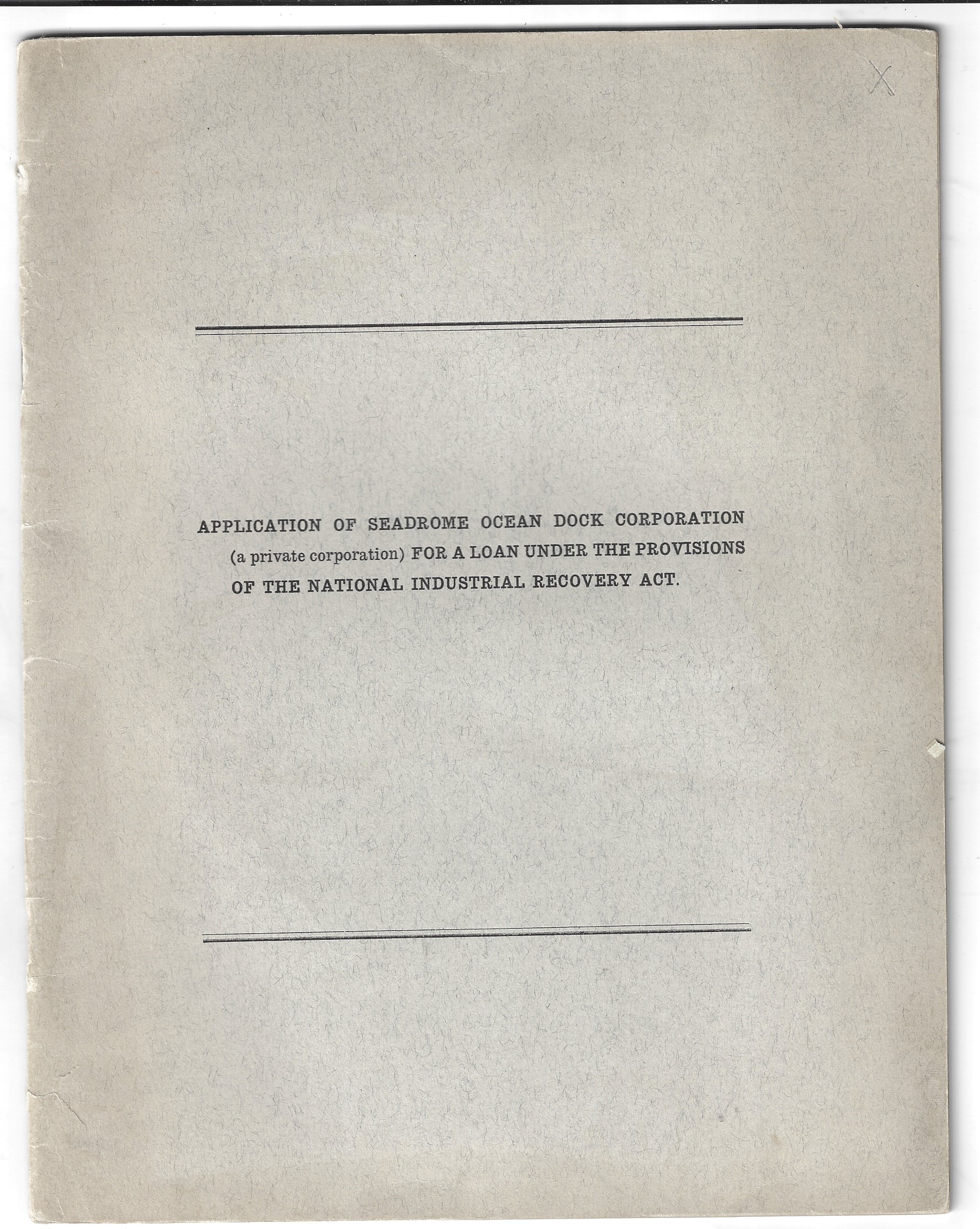
    DocFile (5)This interesting and exploratory pamphlet,  Application of Seadrome Ocean Dock Corporation (a private corporation) for a Loan Under the Provisions of the National Industrial Recovery (1933) was the result of the work of Edward R. Armstrong (1880-1955), and proposed a series of floating airports to facilitate transatlantic flights.

    The outline for this plan asks the federal government for a loan of $30 million (Depression) dollars to undertake the construction of a five floating airports transoceanic network.  “It will require the work of approximately 10,000 men per month for a period of twenty-four to thirty months”.  The labor figures did not include was what necessary to produce all of the material necessary for the project ( for reasons unknown).  Once finished the network would enable aircraft  to make it across the ocean in 18 to 36 hours.

    The members of the Seadrome Corporation estimated that the entire 30 million would be paid back by 1945,  and that the corporation would be completely debt-free.  Perhaps all of  this made sense when Armstrong first developed the plan in 1913, just ten years after the Wright brothers’ successful first in North Carolina. The idea of the floating airport girding the Atlantic was a pretty interesting idea, seeing as how the world record for sustained non-stop flight in 1913 was 11 hours (in a Maurice Farman MF-2), and that was under more-or-less optimal conditions; the speed record was 120mph, and again, optimal conditions and not sustained for hours on end.  By 1933 it seems to me that it had become obvious that non-stop transoceanic flight was coming, and coming soon.  That would of course make an investment in the Seadrome project superfluous, like building an antique, though an unnecessary one. The first transatlantic non-stop flight was made by John Alcock and Arthur W. Brown in 1919, averaging about 100mph; Lindbergh would come later to accomplish the first solo non-stop in 1927–by the early 1950’s jet aircraft would be making the trip with regularity, which means that  for most of the life of the completed Seadrome it would have been unnecessary.  I feel certain that the Seadrome–which was supposed to be paid off by 1945, though in 1933 there was no inkling on the part of the Corporation members who wrote the request for the money that a war was looming and that there would have been almost no way for them to have been made at any time between 1939 and 1945–would never have been paid for.Armstrong’s idea would get major play in the popular press from time-to-time, and discussed as a series of floating islands.  Armstrong himself would organize the Seadrome Ocean Dock Corp. in the late 1930’s, his pretty but  impractical idea (reported by Time Magazine1 in 1933 as little more than “a perennial gift to Sunday feature editors”)  finally grinding to a salty end with greater fuel capacity and efficiency in transatlantic aircraft. 

    As I said, this idea seemed pretty good when it was shiny and new, but less so as time went on and aircraft became larger, more powerful, and more efficient, capable of making the trip on their own. 
    Seadrome152

    Notes:
     

  • The Truck-Train of Short Future of 1935

    JF Ptak Science Books   Quick Post 

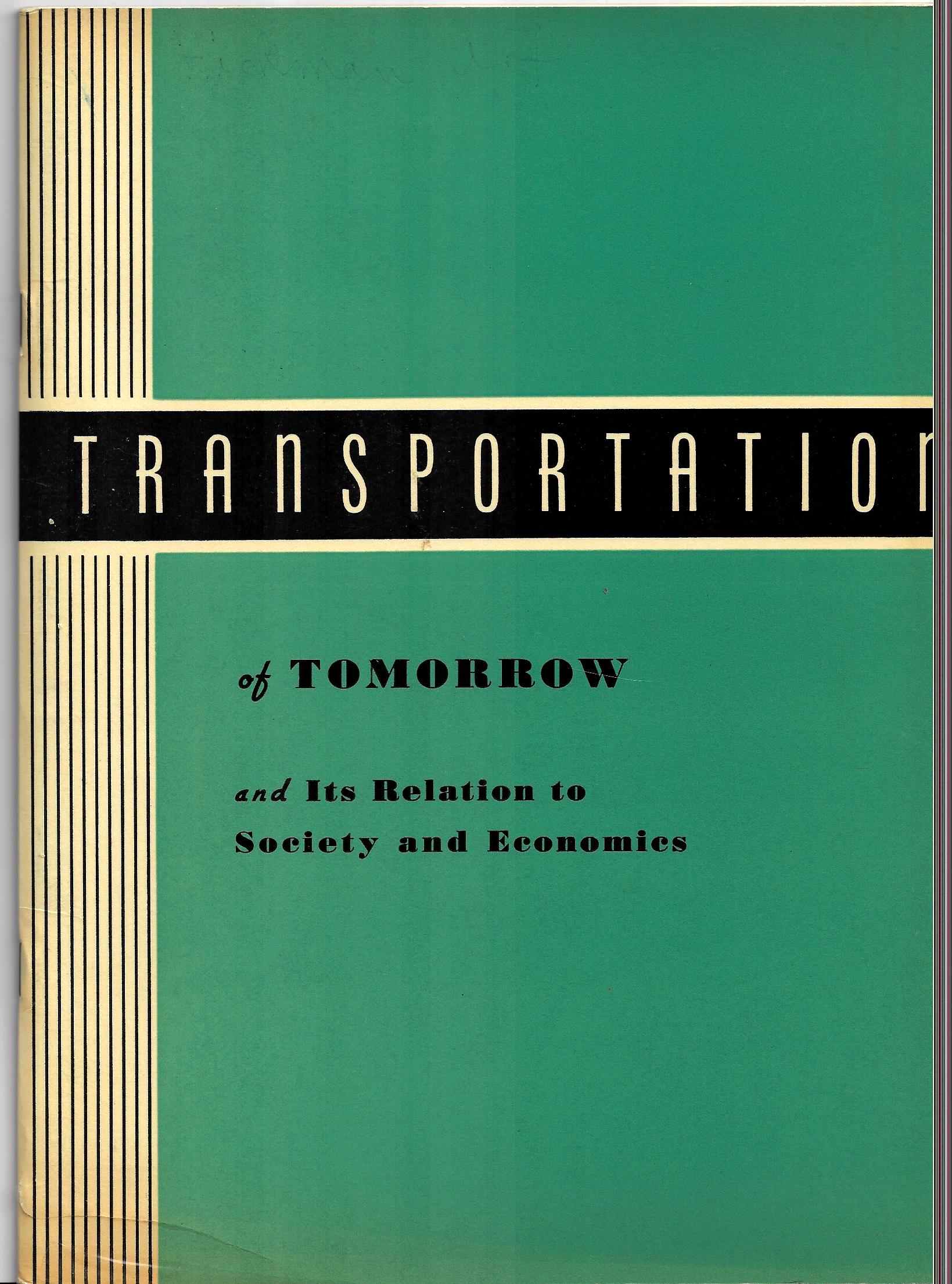
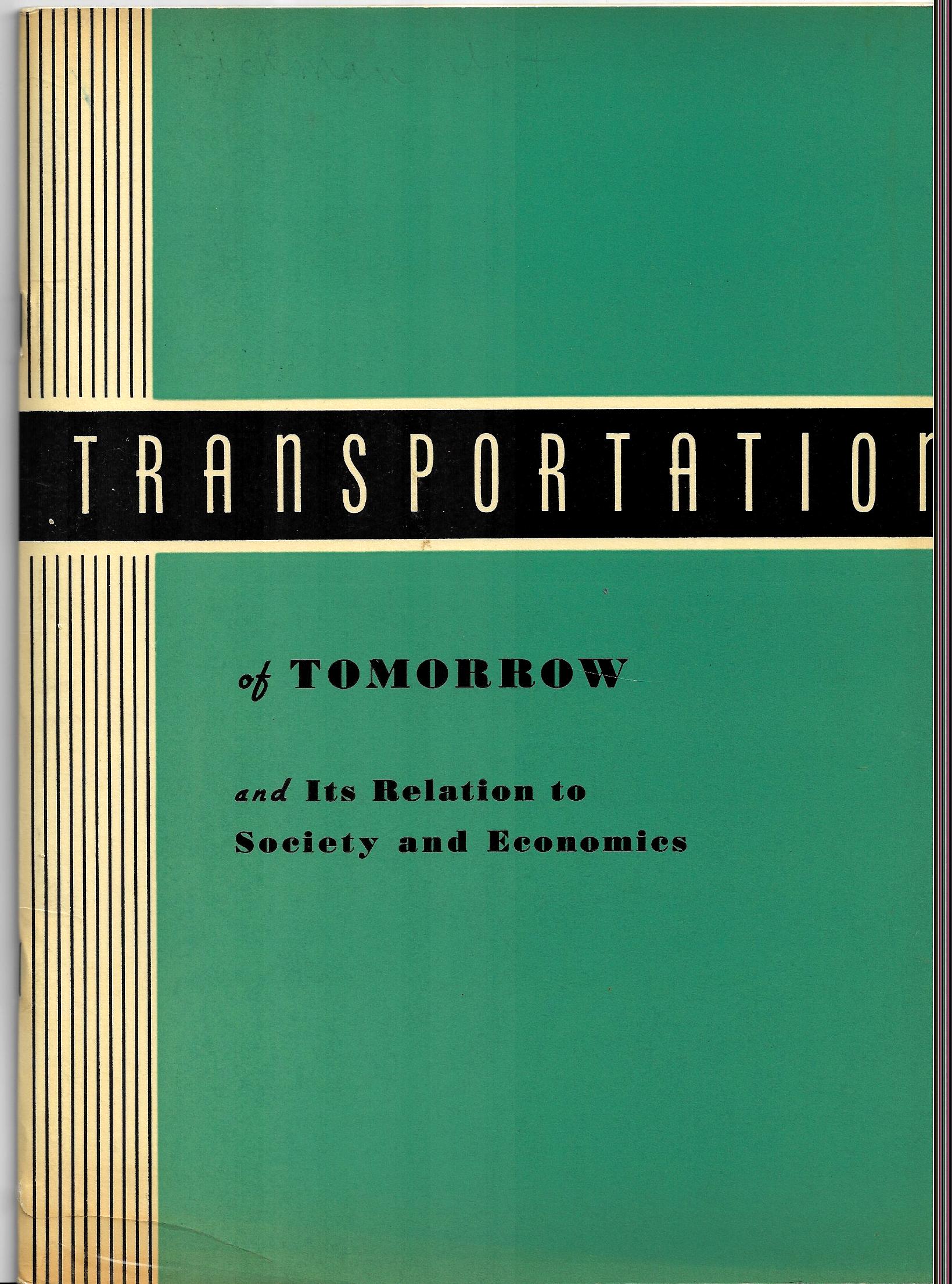
    Future train truckHere’s an interesting and pretty vision of the near-future of transportation–the truck-train. It was presented in the pamphlet Transportation of Tomorrow and its Relation to Society and Economics from 1935 (with drawings by J.F. Hickman) and presents us with smaller-version trains short-profile locomotives that hauled truck trailers where the “rail cars” could be immediately dispatched to a waiting truck at a rail head. On the one hand it seems to make a certain amount of sense if you figure the amount of time that rails throughout the country are employed, and that you could have a lot more rail traffic moving along them. On the other hand, you’d have a lot more traffic on the rails, which could lead to a of scheduling problems and delays. Also, once you got to the railhead, how exactly would trucks access the trailers in a way that was sensical and timely?  Anyway the convertible highway railroad train looks as though it would cause more problems than it would solve by re-inventing the U.S. railroad system on a smaller scale. 

    Future transportation truck train


    Future train truck


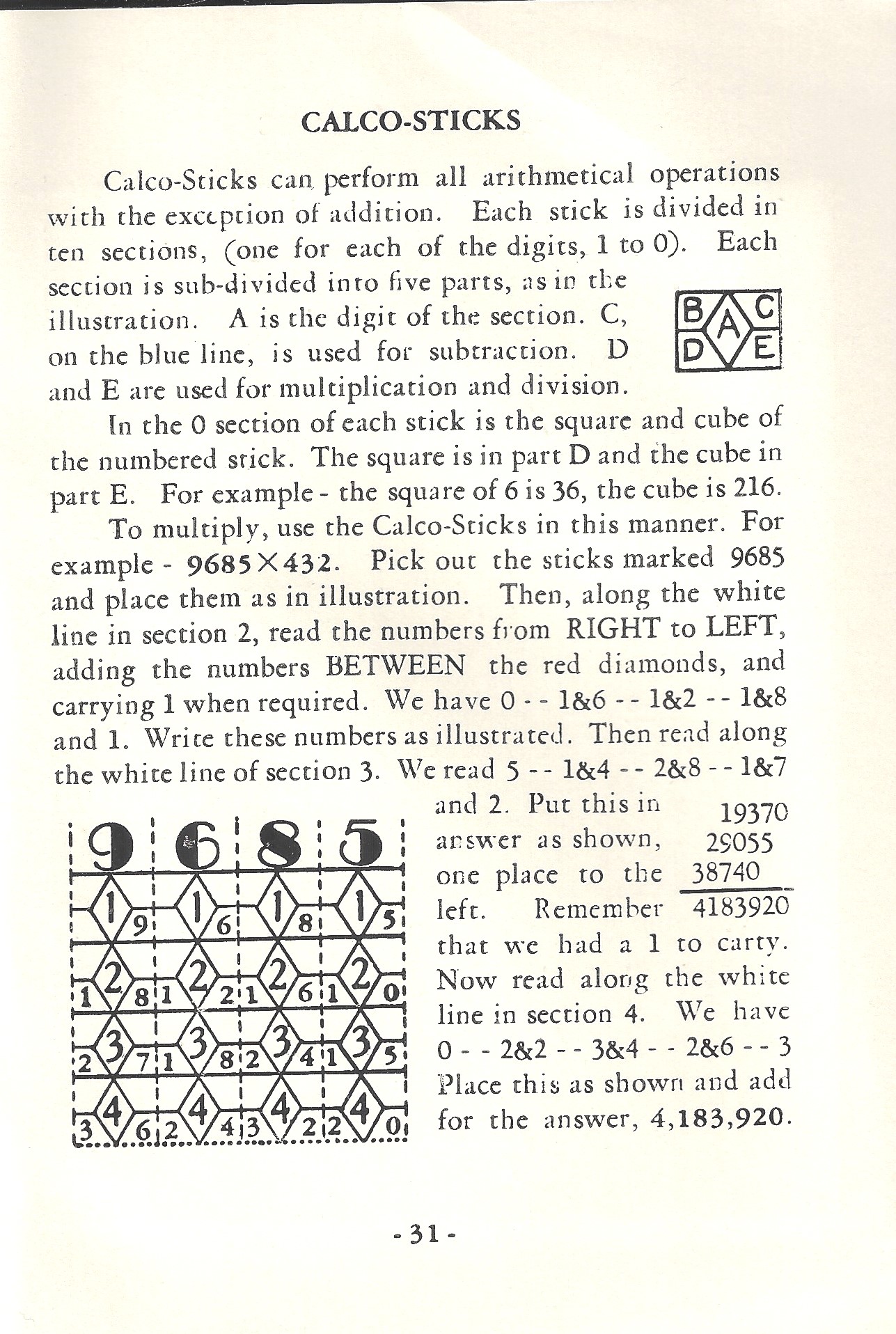
  • The Art of Arithmetic–Numbers on a Stick Calculator, 1936

    JF Ptak Science Books   Quick Post

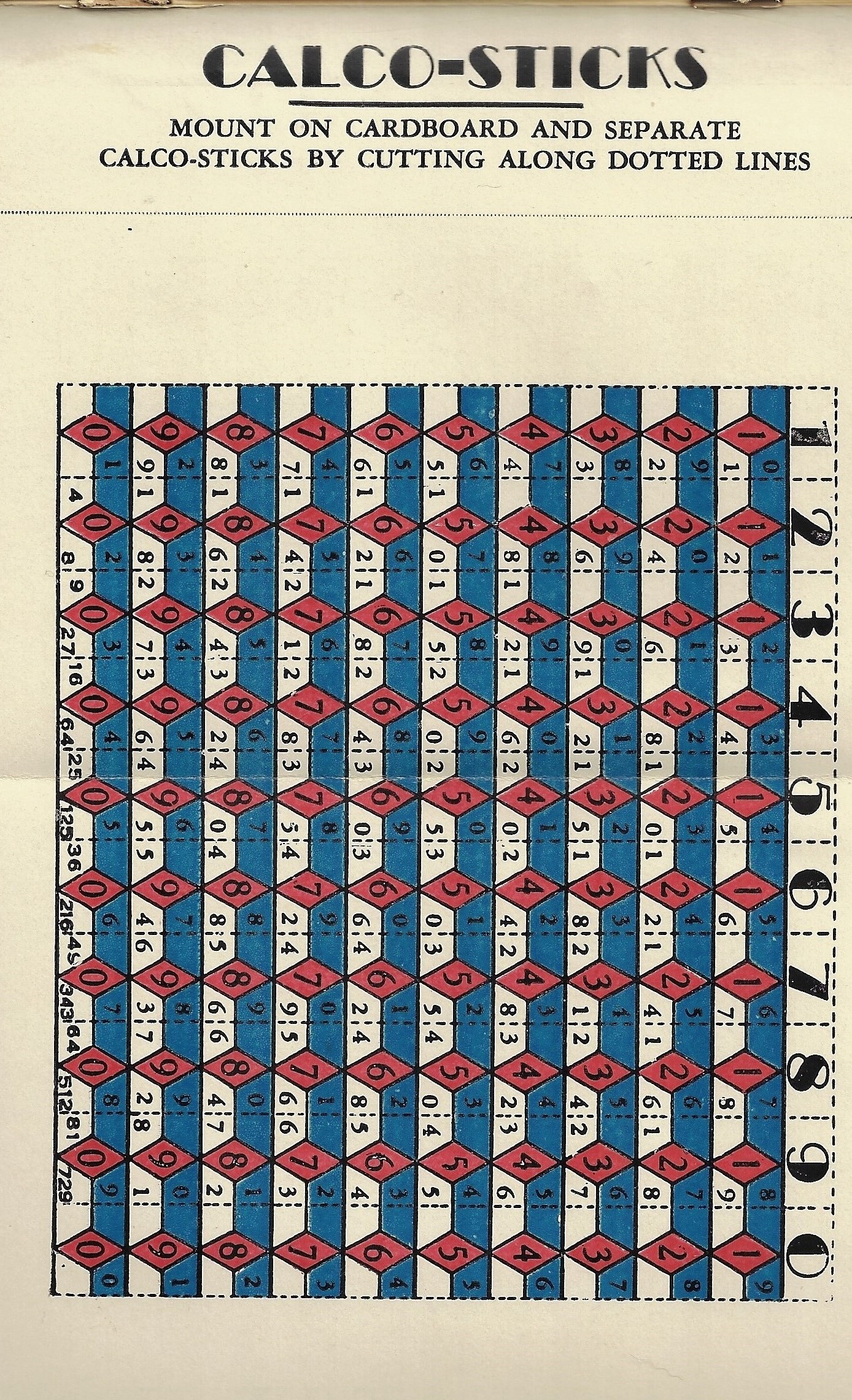
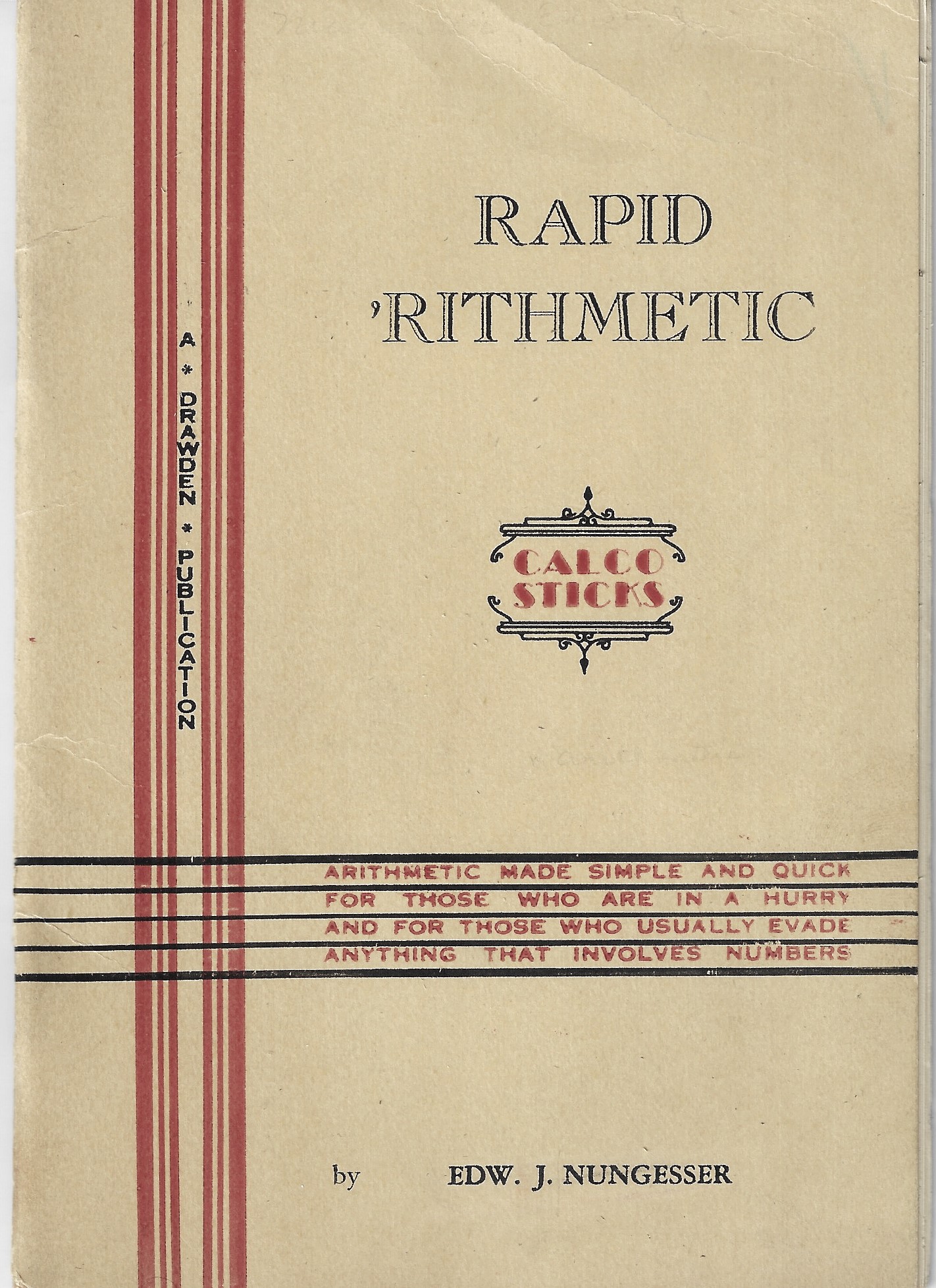
    Here’s your chance to download a DIY cardboard reckoner. I think it would be much more satisfying to do the arithmetic by hand, or use your phone-device, or just call up The Internet and ask it to divide some number y by some number x, but that’s not the point. Making it would certainly be a pleasure of some sort because the Napier-like sticks/bones are such a lovely assemblage. And of course all hats off to the person who created the thing to begin with–and I assume that person to be the author of the little pamphlet in which the calco-sticks are found. Edward J. Nungesser published Rapid ‘Rithmetic/Calco Sticks (Arithmeic Made Simple and Quick for Those who are in a Hurry and for Those who Usually Evade Anything that Involves Numbers). It was published by Drawden Publications of 7 W 44th St NYC in 1936, and is a pocket-sized 5″ tall and 32pp thin. In any event, I really like this little guy, and I think Mr. Nungesser did a fine job. (I tried to find references to him but came up empty; for an instant I thought his name but be a pseudonym (“No Guesser”) but I’m pretty certain that this is not the case. Also there is no sign of it at all on WorldCat/OCLC.)


    DocFile (5)

    And the instructions:

    DocFile (6)

    And the wonderful cover:

    DocFile (7)

    ·Posted by :

    ·in:


  • Outside Looking Out–Space, 1899.

    JF Ptak Science Books   Post 2751

    Back in 1899 the astronomer Adolphe Duponchel1 published a pamphlet on his very involved theories of the motion of the stars and star clusters and the shape of the universe.  I couldn’t understand much of it, and when I thought about it more, I understood less, and probably less than that. I just couldn’t decide what the idea was that he was trying to decipher and share, except to say that it was big. 

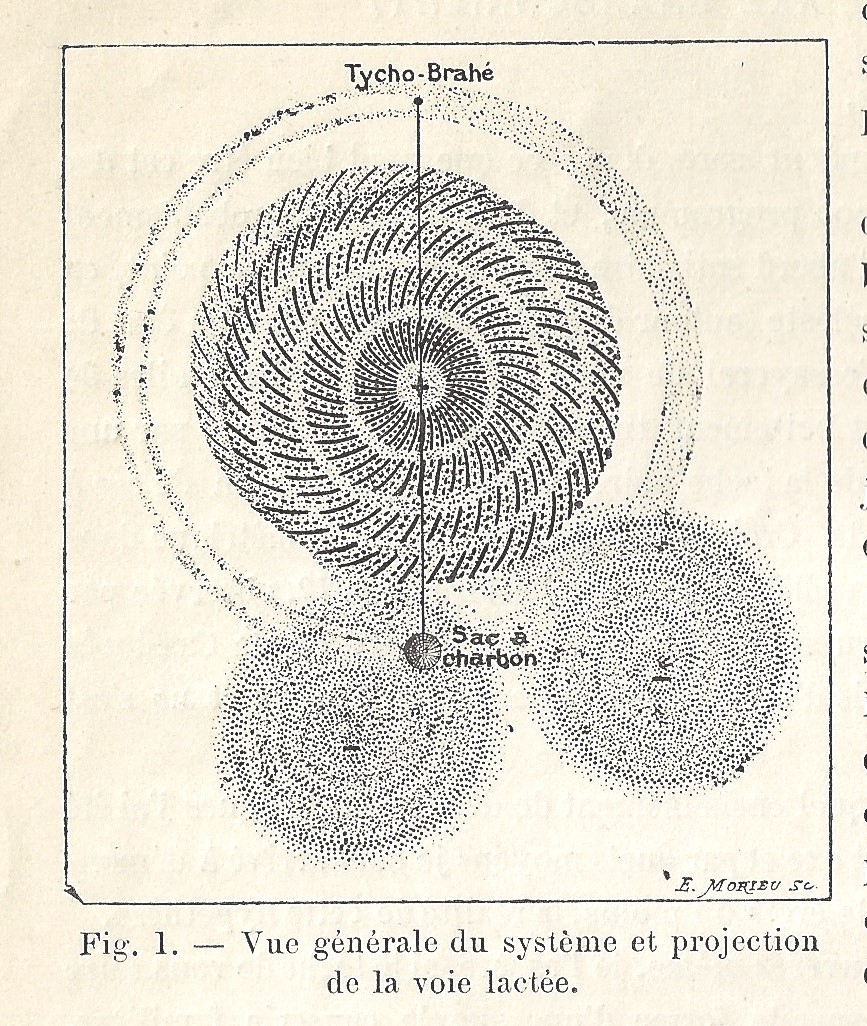
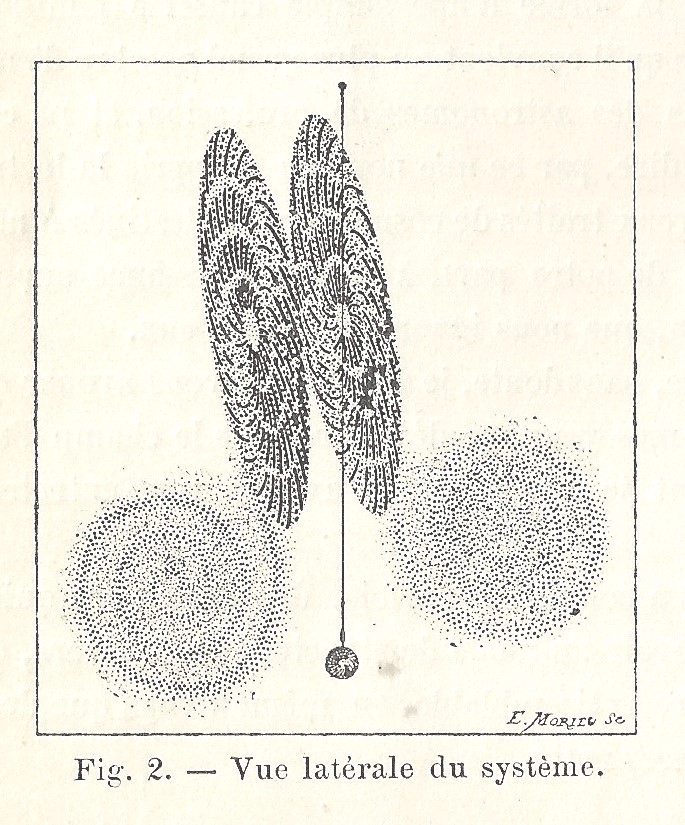
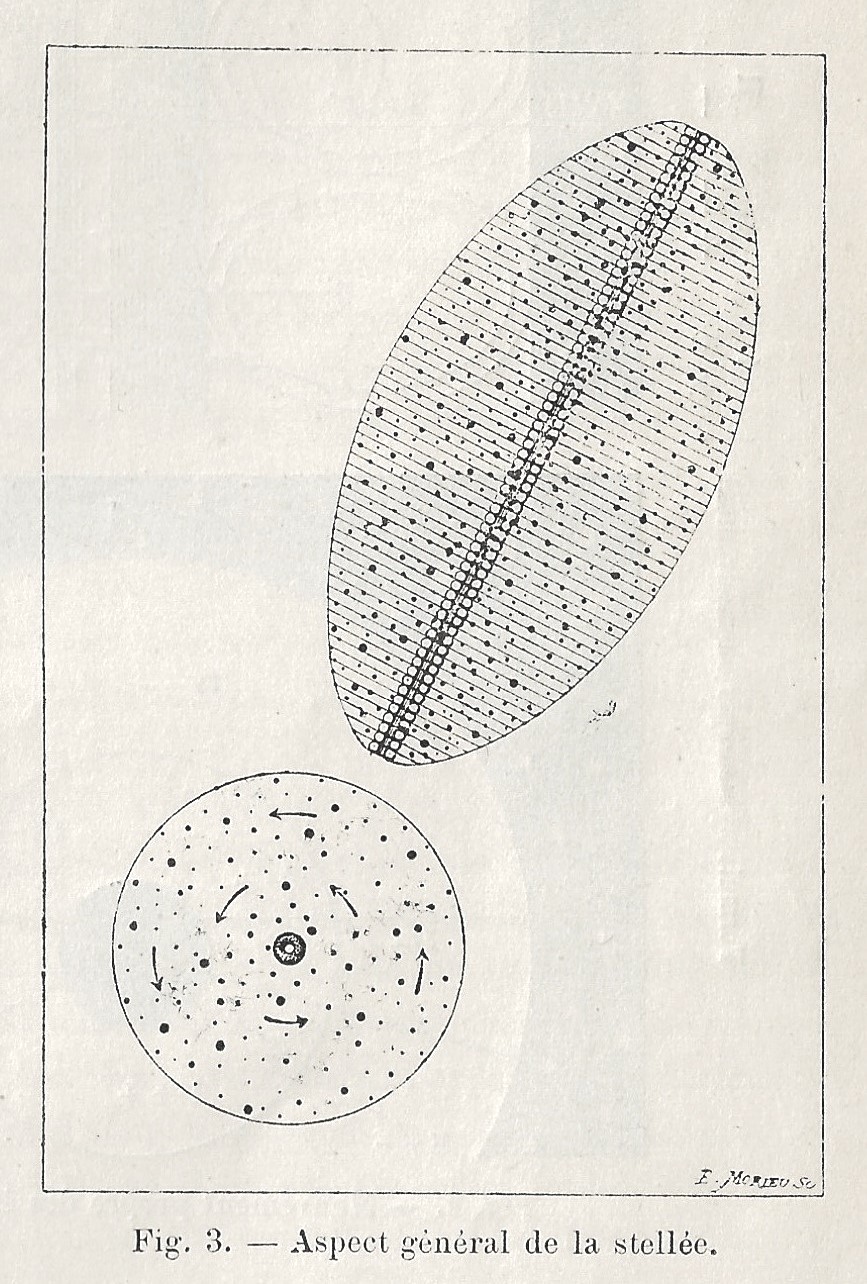
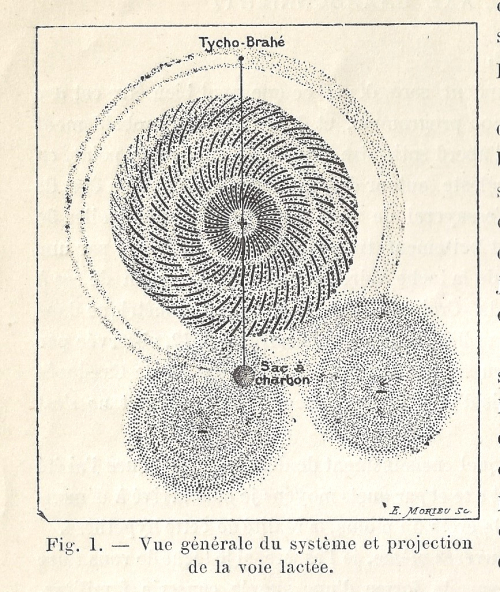
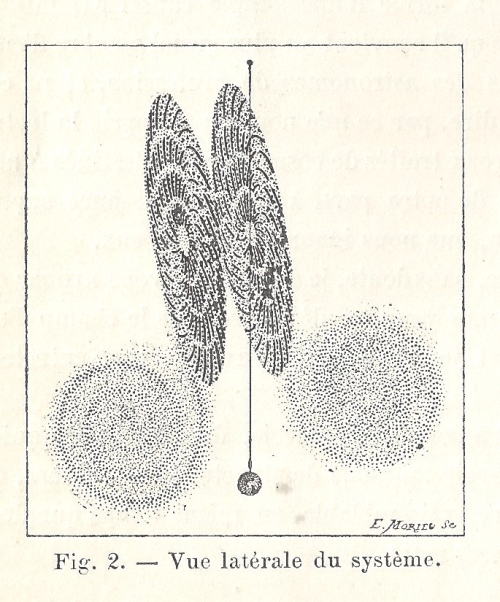
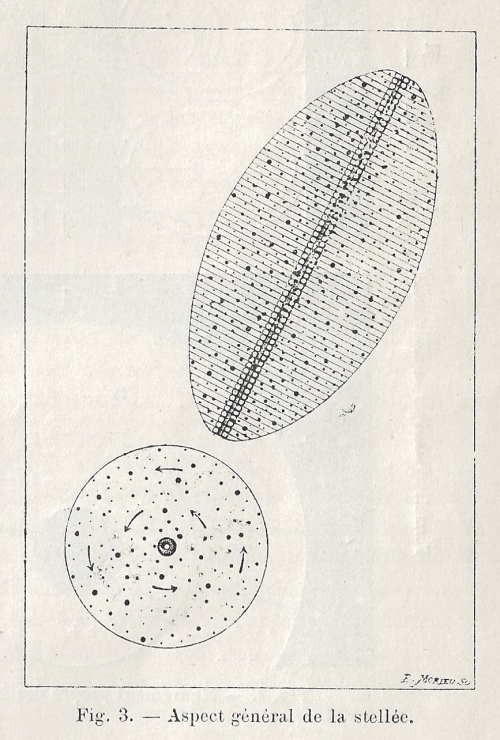
    I wouldn’t have thought about this pamphlet at all it if was not illustrated, because the illustrations in this short pamphlet are quite, well, inspired:
    DocFile (3)

    Duponchel was an accomplished and published civil engineer, canal and bridge builder, and hydrologist, who later in life veered into cosmogony, publishing on the effects of meteors and solar activities on the distribution of stars, the structure of the galaxy, and the motions of the planets. He met with no success from what I can determine, though he seems to have been very active in his starry pursuits through the 1890’s, which was a prime period for French cosmogony. At the very least his ideas look entertaining, and as I said the imaging is quite lovely.
    DocFile (4)

    The truth of the matter is that I do not understand what he is talking about, though sometimes it seems as though he is talking about black holes and the motion of stars, except that he seems to be talking about “apex charbonnier” that are dark regions of space that could not be penetrated given the optics of the day. In general though he writes about what effects the “circulation” of the stars and star clusters.  Liberally translating he states that “no astronomical problem could offer more interest, and in the absence of a solution of a rigorously demonstrated accuracy can be I am happy to have arrived at finding a plausible and at least probable explanation of the simultaneity of all these coordinated movements in the same state of general equilibrium.

    After this very pro forma and enormous statement, we arrive at the unknown stuff of his insight: 

    “…points noirs isolate correspondent a des rayons visuels qui auraient traverse les mailles des deux reseaux sans rencontrer aucune etoile sur leur passage. Dans une seule direction, sur un espace sans doute assez restreint, mais parfaitement defini par son contour piriforme, cette illumination fait reellement defaut.” (“Isolated black/dark spots correspond to visual rays that would have passed through the meshes of the two networks without encountering any stars in their path. In one direction, on a space which is doubtless rather small, but perfectly defined by its “piriforme” outline, this illumination is really lacking.” The translation doesn’t help the original too much, which left me understanding nothing.

    Then, a few pages later, he writes: 

    “…étudier ici tapissant en quelque sorte les parois du vide de l axe s y trouveraient distribuées en anneaux ou pour mieux dire en tores successifs dont chacun correspondrait à une strate particulière en forme discoi dale d étoiles extérieures. Ces to res successifs (figs 1+2) correspondant aux sphères magnétiques qui accompagnent les noyaux solides du Soleil et des planètes comprendraient chacun un certain nombre d étoiles circulant autour de l axe du tore avec un mouvement de rotation ac célérée en spirale comme celui des sphères magnétiques mais avec des vitesses alternativement de sens direct et de sens inverse de manière à assurer des vitesses concordantes de même direction aux points de tangence de deux tores consécutifs…” Or, “Firstly, to study here somehow lining the walls of the void of the axis would be distributed in rings or, to put it better, in successive tori, each of which corresponds to a particular stratum in the form of a disc of external stars. These successive rests (fig 1+2) corresponding to the magnetic spheres that accompany the solid nuclei of the Sun and planets would each include a number of stars circulating around the axis of the torus with a spiral arc rotational movement like that of the magnetic spheres but with alternately direct and reverse direction so as to ensure concordant speeds of the same direction at the points of tangency of two consecutive tori…”  Again, a not-good translation, but I really didn’t have much of an idea of what he was writing about. 
    DocFile (1)

    The pictures are pretty.

    If I’m missing something big, please let me know.


    Notes:

    1. Adolphe Duponchel,  “Circulation de notre groupe stellaire autour de l’axe charbonnier et mouvement parallactique de l’apex Solaire”. Printed by the author, in Paris, 1899, from its appearance in Societe Astronomique de France, 1 March 1899.  9×6″, 18pp.  WorldCat/OCLC reports 1 copy in the U.S. And either 1 or 3 copies at the Observatoire de Paris—otherwise there are no other copies of this work located. Provenance: Smithsonian Institution, and then the Library of Congress (small mostly-faded oval stamp for the SI on front cover, and the LC surplus stamp on the back cover).  

    “Et les individus qui participent à cet engouement pour la quête des origines cosmiques n’épargnent ni leurs efforts ni leur temps pour développer, étayer, rendre publique, et faire reconnaître leurs théories. Ainsi, l’ingénieur des Ponts et Chaussées Adolphe Duponchel (1821-1903), après avoir déposé un pli cacheté à l’Académie des sciences le 27 mars 1893 contenant le sommaire d’une brochure exposant ses « Principes de cosmogonie générale », fait imprimer celle-ci à ses frais et l’envoie à l’assemblée savante. Il n’obtient aucune réponse mais persévère et soumet six Notes ou Mémoires à l’Académie sur ce sujet entre 1893 et 1894. Ne parvenant pas à obtenir le soutien académique qu’il recherche, Duponchel va finalement publier sa théorie dans des revues populaires de science, d’abord dans la revue Cosmos le 2 septembre 1893 puis, sous une forme augmentée, dans la Revue Scientifique les 28 juillet et 4 août 1894.”Volny Fages, “Dire l’origine scientifique des astres. L’engouement pour la cosmogonie en France dans la seconde moitié du XIXe siècle”https://www.cairn.info/revue-romantisme-2014-4-page-32.htm

    See:

    ASTRONOMES FRANÇAIS 1850 – 1950 D’ABBADIE, Antoine.  www.obs-hp.fr/dictionnaire/astronomes_A-Z.pdf

    See: Agnes Mary Clerke , A Popular History of Astronomy During the Nineteenth Century, p 202, a review of some of the later 19th c solar astronomers.

    ·Posted by :

    ·in:

    — —

  • A Beautiful Diagram of Cyclone Activity (1922)

    JF Ptak Science Books  Post 2750

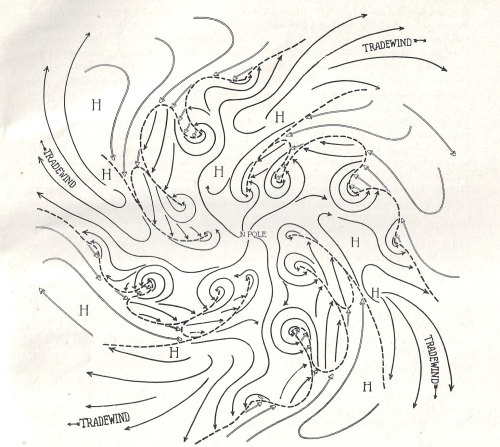
    This lovely and significant piece of sci-art appeared in Jacob Bjerknes and H. Solberg’s  “Life Cycle of Cyclones and the Polar Front Theory of Atmospheric Circulation”1 in 1922. This was an expansion of an earlier paper of 19192, and provided the basis for the motion of the atmosphere in terms of warm and cold fronts. “Although rapid transitions or discontinuities in temperature, pressure, and wind velocity had been noted in Jacob’s first model—and even by nineteenth century meteorologists—and although such discontinuities had been theoretically postulated, the 1919 Bergen cyclone model represented the introduction of discontinuities into meteorology as the major focus for practice and, eventually, theory. These “fronts,” as they later were termed, were endowed with scientific reality through the introduction of major changes in forecasting practice. The cyclone model based on fronts entailed the ability to specify in time and three-dimensional space important weather phenomena associated with cyclones to a much greater degree than earlier models could achieve. During the next few years the Bergen group of Vilhelm and Jacob Bjerknes, Ernst Calwagen, Halvor Solberg, and Tor Bergeron, among others, expanded this preliminary cyclone model and accompanying forecasting methods to a comprehensive system for explaining midlatitude weather changes. The polar front, the occlusion process, an evolving cyclone model, and air mass analysis were the conceptual foundation for a new era in meteorology.”3


    Bjernkes

    The two authors “…pictured the polar front as a string of families of cyclones, described by dashed lines linking successive warm and cold front”.–Mark Monmonier, Air Apparent: How Meteorologists Learned to Map, Predict, and Dramatize Weather, pg 64, with several reproductions of some of the lovely diagrams.

    Notes:

    1. J. Bjerknes and H. Solberg, Life Cycle of Cyclones and the Polar Front Theory of Atmospheric Circulation. Offprint/separate, Geofysiske Publikationer 3, no. 1, 1922. 12×9, 18pp (paginated 1-18). Bound in cloth, with a half-title and title, though no publication data save for a running abbreviation of the journal name and volume above the text. Nicely bound in buckram. Provenance: U.S. Navy, Naval War College. “Polar front theory is attributed to Jacob Bjerknes, derived from a coastal network of observation sites in Norway during World War I. … The convergence line ahead of the low became known as either the steering line or the warm front. The trailing convergence zone was referred to as the squall line or cold front.”–Wiki
    2. This was evidently a longer and more thorough version of a paper submitted by Bjernkes and Solberg to the Monthly Weather Review in 1919 on the findings of the Bergen group. –Robert Marc Friedman, Appropriating the Weather: Vilhelm Bjerknes and the Construction of a Modern Meteorology, p. 180; also noting that this article is “frequently cited”.
    3. Complete Dictionary of Scientific Biography.
    4. Wikipedia entry for Bjerknes. 

    “Bjerknes was part of a group of meteorologists led by his father, Vilhelm Bjerknes, at the University of Leipzig. (“Bjerknes’s father, Vilhelm. has often been called the father of modern meteorology. This title is doubly appropriate, for not only did Vilhelm’s vision and research programs lead to establishing new directions, methods, and the conceptual foundation for the science, but Vilhelm’s son also played a fundamental role in creating this new era in atmospheric science.”) Together they developed the model that explains the generation, intensification and ultimate decay (the life cycle) of mid-latitude cyclones, introducing the idea of fronts, that is, sharply defined boundaries between air masses. This concept is known as the Norwegian cyclone model.”–Wikipedia

    “The “Bergen School of Meteorology” is a school of thought which is the basis for much of modern weather forecasting. Founded by the meteorologist Prof. Vilhelm Bjerknes and his younger colleagues in 1917, the Bergen School attempts to define the motion of the atmosphere by means of the mathematics of interactions between hydro- and thermodynamics, some of which had originally been discovered or explained by Bjerknes himself, thus making mathematical predictions regarding the weather possible by systematic data analysis. Much of the work was done at the Geophysical Institute, University of Bergen, in Bergen, Norway.”–Wikipedia  It should be noted that Jacob was the chief forecaster and head at Bergen 1918-1931.–Complete Dictionary of Scientific Biography

    ·Posted by :

    ·in:


  • Radio HATE, Stuttgart, 1939/1940

    JF Ptak Science Books    Quick Post

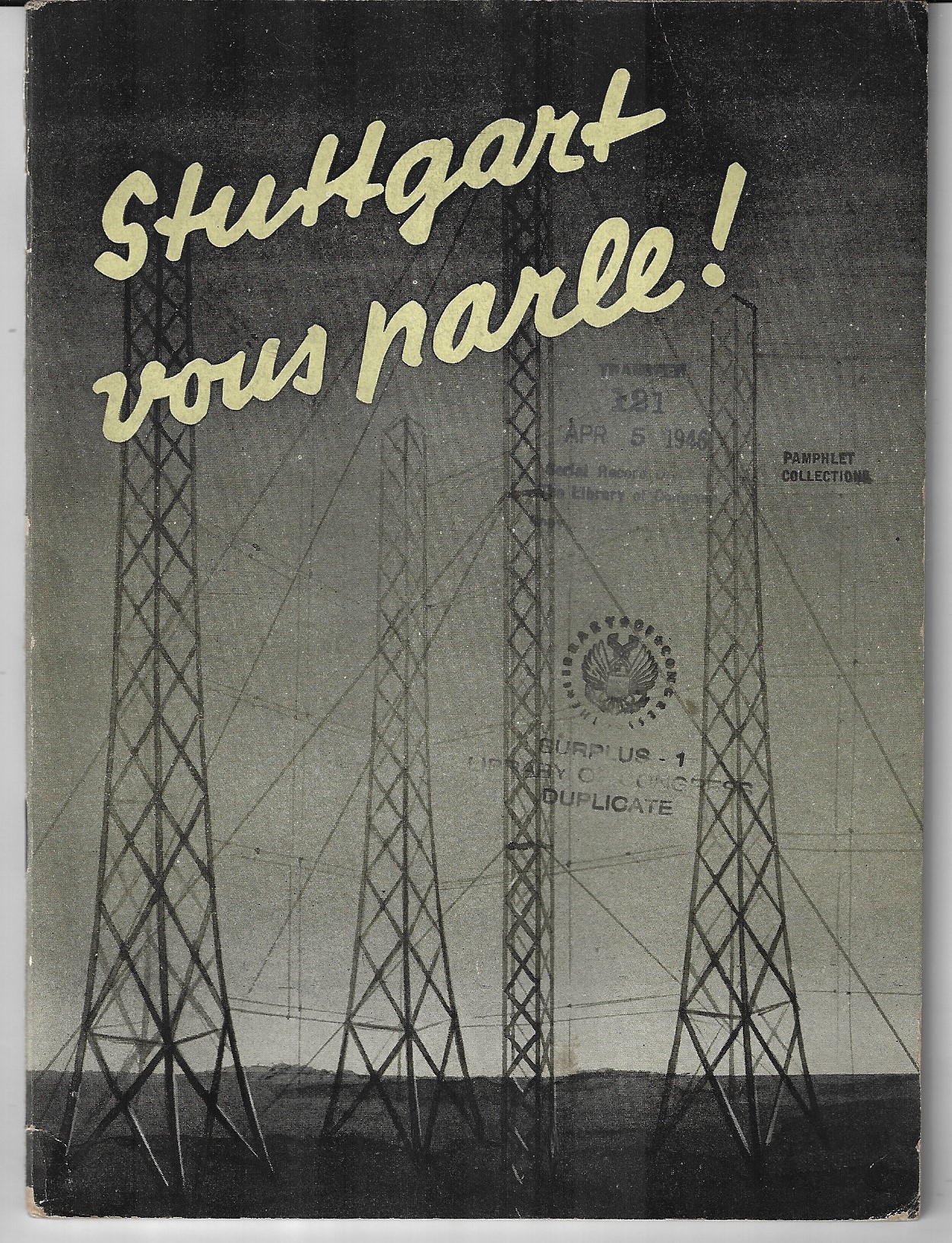
    Books covers stuttgart radioThe pamphlet Stuttgart vous parle! (ca. 1941) is nearly the same name as the Stuttgart radio station/program which was a propaganda arm of the Nazis, broadcasting into France in 1939 and 1940, and progressively less so after the French capitulation. Goebbels was very thorough in controlling the radio and television programming/writing/distribution in Germany, as well as creating propaganda broadcasts into Nazi-occupied countries. There is very little question about where this pamphlet is heading, its pro-German, appeasement, anti-Ally, anti-USSR, pro-Vichy sentiments being very clear.  For an example, here’s a bit from page 30, which recommends the immutability of Mein Kampf:

           “Si en quelques jours, devant l’evidence des menaces et des pieges que l’Angleterre lui tendait, le Reich s’est reconcilie avec Moscou, il faut admettre qu’il n’existe pas d’idees preconcues dans la mentalite du Fuhrer et qu’il dirige la politique allemande au mieux des eventualites. Que ces quelques explications vous fassent saisir ce qu’il y a d’immuable dans mein kampf et ce qu’il s’y trouve de momentane, c’esttout ce que nons esperions aujourd’hui.”

    Experts state that the principal broadcaster for the radio show was Paul Ferdonnet. Captured at the end of the war in Germany, Ferdonnet was tried as a war criminal, a charge he denied, saying that it was not he who was the broadcaster and so on. The court found otherwise, and Ferdonnet (“le traître de Stuttgart”) was convicted and executed in short order, not living to the end of the summer of 1945.

    [There is also a publication Stuttgart vous Parle! Les Discours de Paul Ferdonnet Diffuses vers la France a partir de la Radio Allemande en 1939-1940 (edited by VHO), which seems to state in certain terms that Ferdonnet was indeed guilty of war crimes for his participation in pro-Nazi propaganda. It is also interesting to note that  Stuttgart vous parle!  has no identifying marks for publisher, printer, or place of publication. Nothing.]

    On the one hand, free speech is a big deal; but free speech does not extend to shouting “Fire!” in a crowded theater. (I’m slipping up on the name right now, but there was a case back in the ‘teens of 100+ people, mostly women and children, family of union members, who were meeting in a hall when an anti-union thug yelled “fire!”, starting a deadly stampede.) Working away at the psyche of a people trying to defend itself, trying to survive, is very nasty and murderous stuff. Ferdonnet was executed for this action, a fate escaped by E. Pound for his Fascist broadcasts in Italy during WWII…but all of that is another story. 

    ·Posted by :

    ·in:


  • Creating National Monuments Made of the Ashes of the Dead (1917)

    JF Ptak Science Books  Quick Post

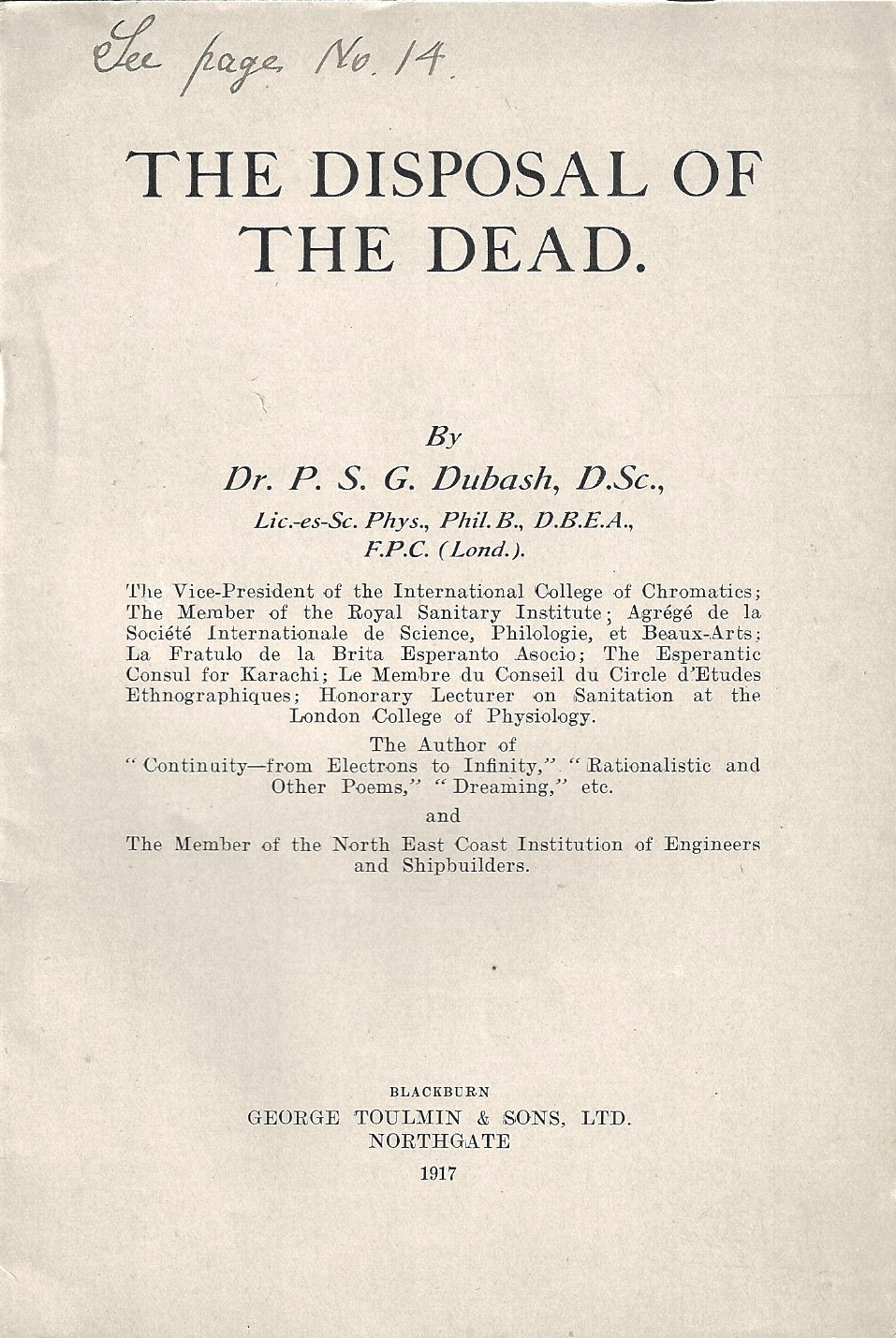
    Books covers disposal deadIn the death-drenched year of 1917, in the third year of the then Great War, P.S.G. Dubash offered to readers here and there the idea of transforming the ashes of the dead into something “useful”, using them as the material for creating statues of the “Great Departed”.  “The world today is so much the poorer for not having the ashes of such great men as Isaac Newton, Lord Kelvin, Martin Luther…”  and so, we can create statues of them using the ashes of others. This would be particularly so for people contributing their ashes to the statue of someone whom they admired. In that way, as Dubash points out, the remains of soldiers would live a more sustained post-death state by being part of a statue of, say, Lord Kitchener. “Towns can be thus adorned with the living memories of the great dead.”

    Part of this 18-page pamphlet (published by George Toulmin & Sons of Northgate) describes the four ways of disposal of the dead: internment, embalming, burning in the open, and the towers of silence (where bodies are brought to a height and displayed to be eaten by birds).  Dubash makes the case of great waste in three of the four, only finding use in the “exposure” category.  

    And so, there you have it. There’s a certain something here that makes sense, using thousands and tens of thousands of remains to create statuary. Gravestones and memorials aren’t made of ashes, but they are reminders of what sleeps underneath, and in a way they are a type of mostly-repetitive statuary sans biological remains. 

    There is an interesting part here at the end of the pamphlet, where Dubash makes the case that “there should be no colour prejudice, because after death there is no colour prejudice, because in the eyes of God the colour prejudice is a sin”. This is a provoking comment, and makes me think of the history of the skin color in Heaven…a history that I do not know.


  • Data Visualization and Enormity 2: NYC Overtaken by Gigantic Corn, Bread, and Cigars (1912)

    JF Ptak Science Books  Post 2745

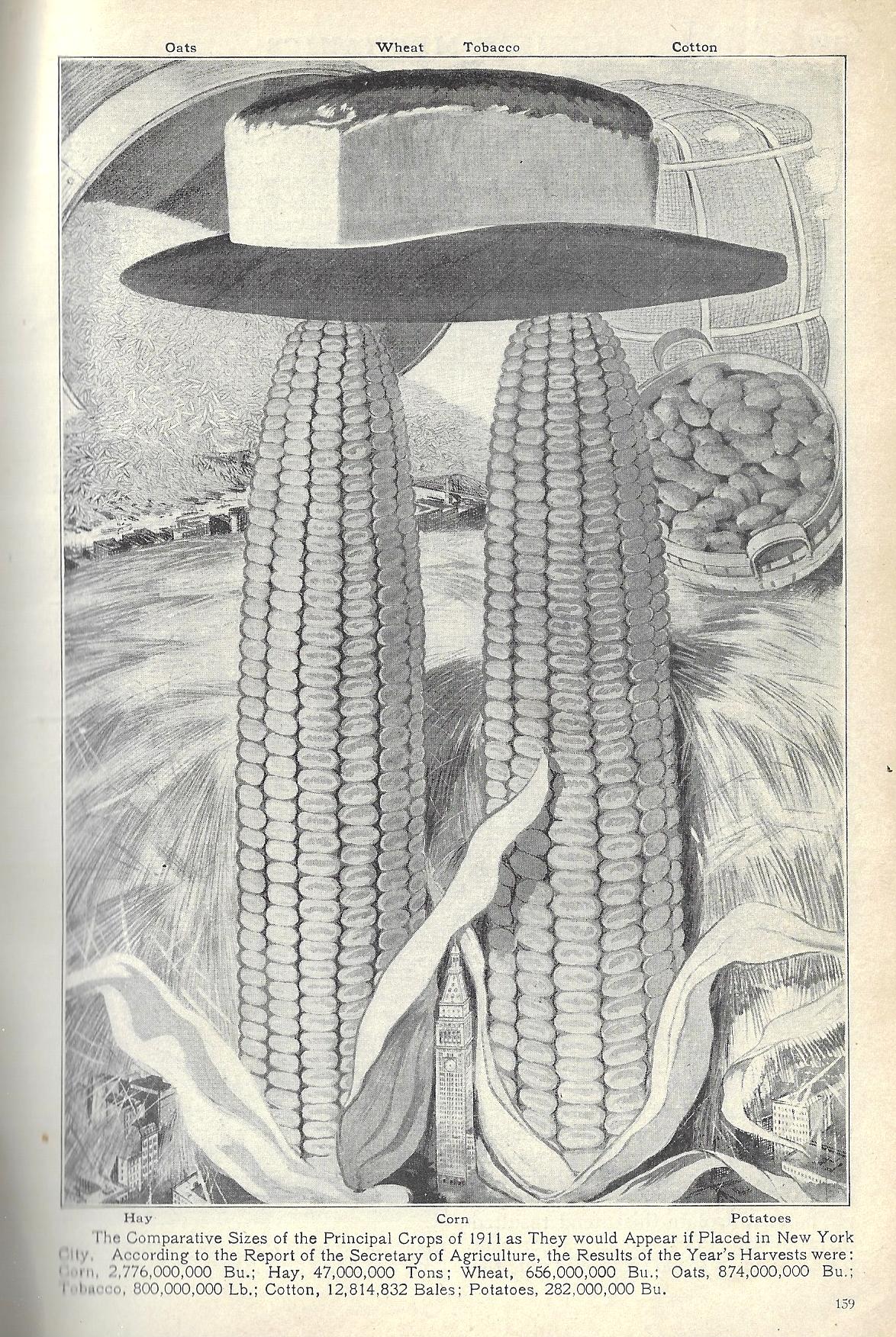
    On this blog I have entertained stories about Manhattan being completely detached/uprooted, attacked by bloomers and aliens and spaceships and spaceship aliens, floated above itself, nuked (numerous times), miniaturized, crushed under sudden ice, joined to Brooklyn and New Jersey (?!), and other such game-enders. There have also been posts on data visualization techniques comparing the known to hard-to-grasp bits of other information or statistics or entities, using the Brooklyn Bridge, Woolworth Building, Empire State Building, Eiffel Tower, Hoover Dam, and so on, as measuring sticks for oil or nail or auto production and the like. It seems that only once before on this blog of nearly 5k posts has Manhattan been used as an intellectual tool of comparison for something non-nuclear-related, and that was for a salt mine. (And according to advisers to President Merkin Muffley the salt mine comes close to playing a strategic nuclear role.) This in mind, finding today’s piece of Overtaken Manhattaniana was a fabulous bridge between two imaginary islands of not very useful data visualizations(s). 

    Pop Mech 1912 Dataviz crops NYC

    Image source: Popular Mechanics, 1912, pg 159.

    So what we have here is the presentation of the yearly production of some principal crops of the USA for 1911, spread across Manhattan with a wide-data butter knife. Nestled between the two ears of corn is the tallest building in NYC (and the world) for 1911, Metropolitan Life, which stood 700′ tall, and reigned for a few skinny years until the Woolworth Building was finished off at 792 feet in 1913. So it looks like the corns were about 2100′ tall with a 600′ diameter at the base. Big. On top of that rests a cigar which is crowned buy a loaf of bread, all of which lords over a sea of hay that covers the rest of the island and almost all of its buildings. For some reason nothing very creative is done with the potatoes, which are just sitting there in a 1000′-tall basket. In the upper left there is a positively enormous pouring of something-or-other of disaster movie proportions. It is slightly disappointing that the maker didn’t figure out how many people it would take to eat all of that stuff in one day. (Throwing caution to the wind mainly because getting to the mostly-useless answer to this is not all that interesting, I will guess that it would require 10x the current global population to eat Manhattan clean in one day.)

    There you have it.   

    The ironic thing here is that this use of corn size really doesn’t tell you very much, except that corn production in the U.S. is (1) a lot and (2) more than bread, which of course you can tell by just looking at the numbers…though that isn’t quite fair as it does give some basic common denominator for measures that are given in pounds, bushels, and bales. The point is that whether the twin corns were 2000′ or 8000′ tall probably didn’t help your understanding of what the numbers meant. But all is fair in war and war, and since this is basically an info-toon, we’ll just enjoy it for what it was, or is.  

    ·Posted by :

    ·in: