A Daily History of Holes, Dots, Lines, Science, History, Math, Physics, Art, the Unintentional Absurd, Architecture, Maps, Data Visualization, Blank and Missing Things, and so on. |1.6 million words, 7500 images, 4.9 million hits| Press & appearances in The Times, Le Figaro, Mensa, The Economist, The Guardian, Discovery News, Slate, Le Monde, Sci American Blogs, Le Pont, and many other places… 5000+ total posts since 2008.

Author: JF Ptak

  • Monsters in the Clouds–Conan Doyle and High Flight

    JF Ptak Science Books    Post 1688   (Part of the series on the History of Blank, Empty and Missing Things–Upper Atmosphere Monsters.)

    Flight soar heights105
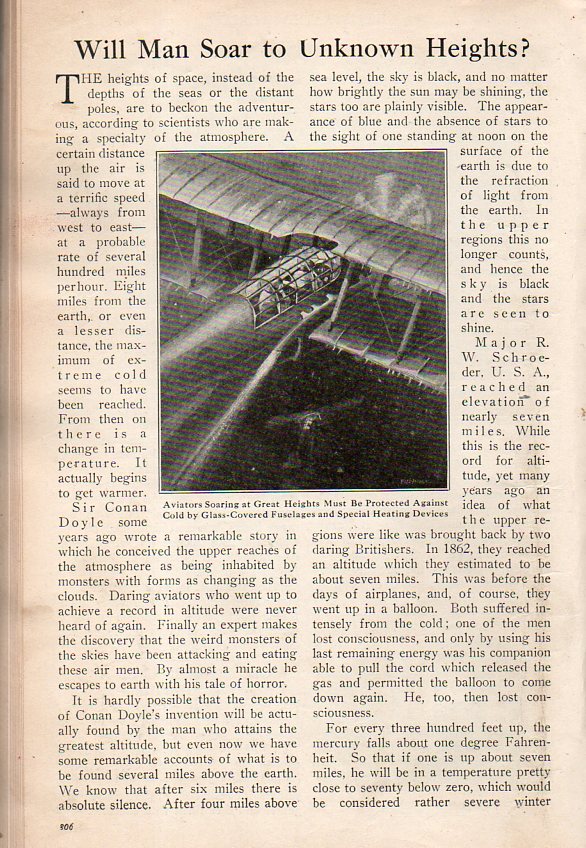
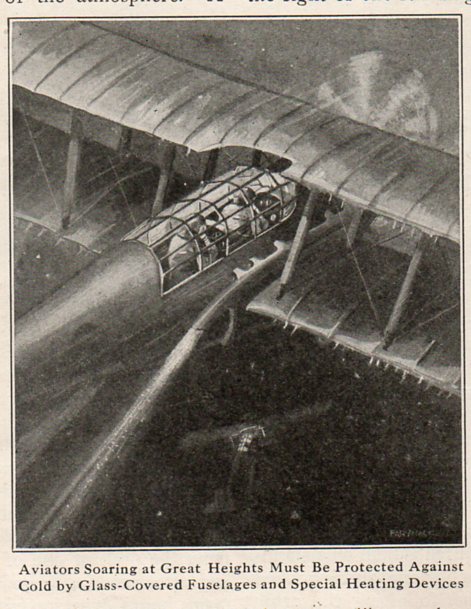
    Illustrated World for July-August 1920 asks the question “Will Man Soar to Unknown Heights” and indeed, they answered in the affirmative, saying that the “heights of space instead if the depths of the seas or the distant poles are to beckon the adventurous,  according to scientists who are making a specialty of the atmosphere”.  In what must seem to the modern reader to be an enormous and naive statement of the obvious, the future aviators would fly in “glass enclosed fuselages” in order to gain great heights.

    There would however be no monsters–except for lack of oxygen and the cold.  he editors did mention a Conan Doyle story in which monsters lived at high altitudes, monsters that were form-changers, much like the clouds they lived above.  This was his “The Horror of the Heights”(1913), a short story about a flyer named Joyce-Armstrong who longed for great heights–and for the “something else” that was up there, something dark and sinister that lived in the stuff that we breathe, as the story is told through the pages of a recovered, blood-stained notebook found in a field. We learn that Joyce-Armstrong was a dreaming pragmatist, longing for the ethereal of great heights but loathe of it also, aware of a danger so great that he carried a shotgun along with him in flight.  We read in the flight book that the aviator had an experience at 40,000 feet, meeting a new air-jungle world of semi-formed gelatinous creatures, one of which has a more solid form with tentacles and a beak, and does battle with them, surviving, returning to the ground.  He vows to go back, at which point we assume he met his doom. 

    In 1913, an altitude of 40,000 feet was extreme, the record at the time being about 9,000′, and that reached in a Wright biplane–quite an achievement I think for such an aircraft,  By the time this article appeared in 1920, the record altitude was 33,000′, which at least got a lot closer than the 9k’ of 1913. The aircraft for this record–the LUSAC-11 (Lepère United States Army Combat) was much more considerable than the Wright plane, though it seems to me a work of fantastic skill/effort/courage to take such a thing so high. Flight soar heights103


  • Atom Eyes in Hollywoodland, 1950’s

    JF Ptak Science Books   Quick Post

    (An earlier post on 1950’s atomic bomb popular culture appears here.)

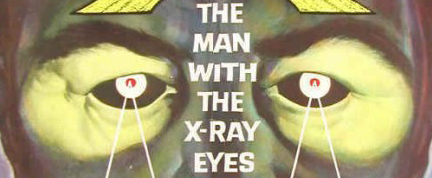
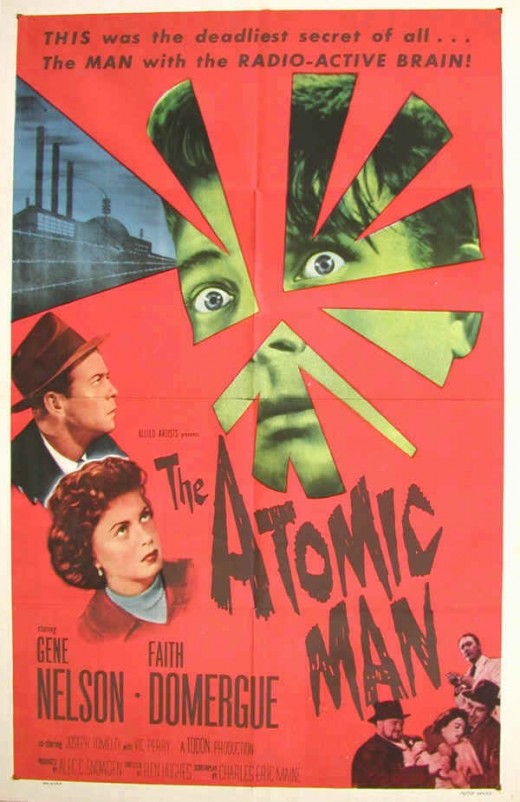
    I strongly doubt that anyone could “read” or dowse or interpret eyeballs in these movie advertisements and take very much away from them at all outside of the big atomo-nuclear death-fear that gripped most people in the U.S. and the U.S.S.R in the 1950’s and 1960’s.  That, and it made for a good way of selling the promised fear in these movies, gentle as they were by curernt standards, but fearsome nonetheless in context with their time.   

    [Images from the wonderful Retronaut site, here.]

    Atomic bomb movie 8b Atomic bomb movie 8

    It is a little difficult watching even the clip of the Ray Milland movie in that he wasn’t really that much more different than the people around him, judging him.  And it turns out that in this differentially-abled-free world, where everyone looked like the white couple in some commercial for Borax, that his weirdish blackish eyes were deemed so incredibly repulsive–though since not having slickee-boy hair was enough to be set apart from most groups, or at least those in this movie, its not that surprising that he would be turned into a monster.  It didn’t take all that much to get down Monster Road, then. 

    Atomic bomb movie 6b

    Atomic bomb movie 6


  • Blank, Empty and Missing Things series: the Footprints of Great Things

    JF Ptak Science Books      Quick Post in the series The History of Blank, Empty and Missing Things

    At the beginning of it all, the Titanic started out as a space in a dry dock, a line of horse carts, and a big puddle; Disneyland a flat piece of not-desirable land in California; the Sydney Opera House a nice spit of land jutting into the harbor, and the Pentagon a very large swath of semi-swampy land near a river. It is interesting to look at these images and image the massive things that would soon fill the “empty” space.

    [Source, with entire series of images, from the Retronaut, here.]


  • The Invasion of America (Part III)

    JF Ptak Science Books   Post 1688

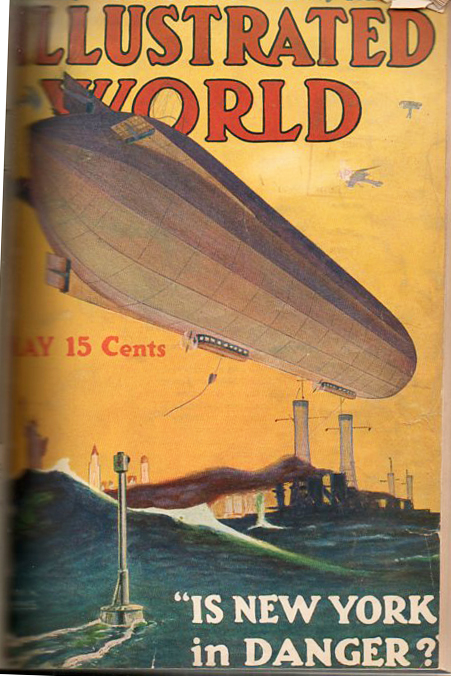
    The New York City harbor looks pretty rough in this picture, tall whitecaps with surprising little reflected in what should be pretty choppy water, meaning that light should be reflecting everywhere, a difficult collection of reflected reflections. 

    America invaded086[Image source:  May 1917 issue of the uncommon magazine, Illustrated World.]

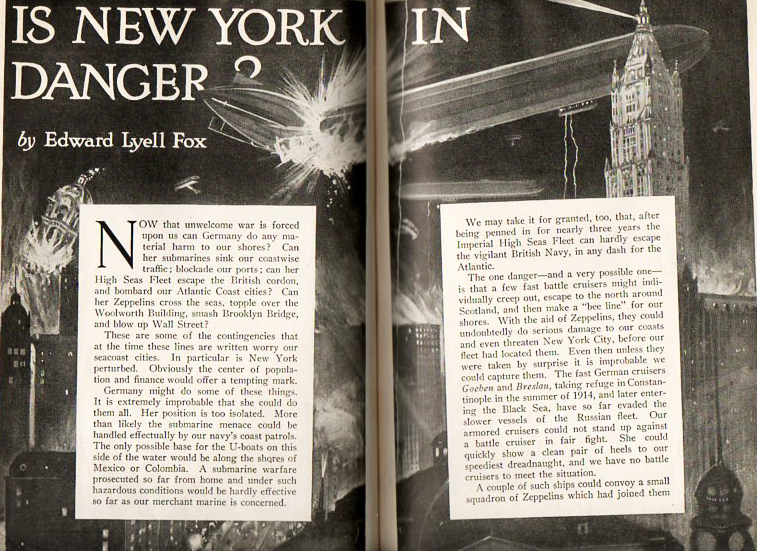
     The submarine, battleship  and zeppelin menaces were real, at least in Europe or in the Atlantic–the aeroplanes far less so1.  But the applications of these fears directly to American shores were still very distant things, particularly when it came to an attack on New York City–except of course that the U.S. had just declared war against Germany, finally, just a few weeks before this issue was published.

    America invaded b088
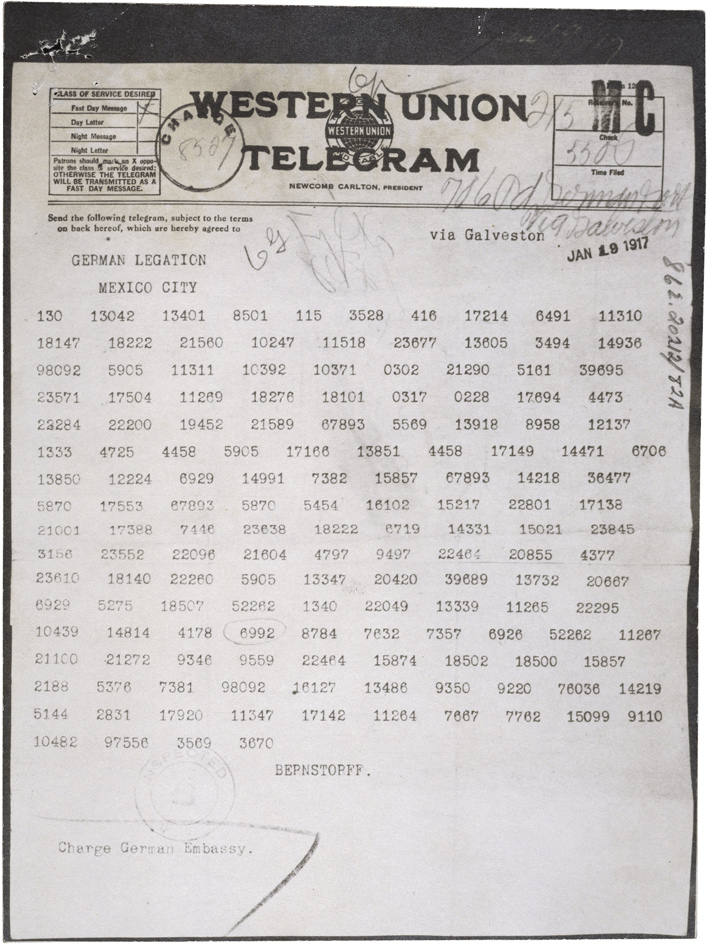
    The war began for real in Europe in August, 1914, so the fighting had been going on there in fratricidal earnestness for two and half years, costing millions and millions their lives and limbs.  America had been isolationist and non-interventionist up until this point, remaining sweatily on the sidelines, until the capture of the infamous Zimmerman telegram2, which was a coded message sent from Germany (the German Empire) to Mexico (and taken by the Brits as it was sent, the crypto-boys of Room 40 breaking the thing) suggesting that Mexico join in a war against the U.S.  It hit the American press on 1 March, and the story exploded–literally. This is what the beginning of war looks like, sometimes:

    File:Zimmermann Telegram.jpeg

    So perhaps there was some amount of yellow journalism involved here, and some inflationary propaganda as well, and some good-old profit-taking on a half-sci-fi story–on the other hand, the German Empire did just sink 800,000 gross tons of shipping during the 30 days of April (1917), so sub fears were in general real and palpable.  The issue of them sighting the Staten Island Ferry though was quite another matter. 

    The first American soldiers would arrive for fighting in June.  The whole thing would be over in 17 months, which is well less than half of the time that the U.S. spent in WWII. 

    The United States would suffer 116,000 military deaths during its part of the war–a small fraction of the overall military deaths (9 million) and a smaller part still of overall deaths including civilians (totaling 16 million).  There would be 205,000 American wounded in this conflict, a little less than 1% of all war military casualties. 

    It would be interesting to see the coverage in England of the American invasion fears.

    Notes:

    1.  This was not so much a war of bombing than it was for air-to-air combat; bombing became more of a realm of aircraft in the suppression of indigenous populations by occupying powers in the 1920’s, and then in Fascist Spain in the mid-1930’s, and then graduating as it were in WWII. 

    2..  The telegram was named for the Foreign Secretary of the German Empire, Arthur Zimmermann,, who sent the thing out on January 16, 1917.  President Wilson delivered his war address to Congress on 2 April 1917. 

    A military death pie chart for the Entente Powers [source, Wiki]:

    File:WorldWarI-MilitaryDeaths-EntentePowers-Piechart.png


  • On the Invasion of America, Part I

    JF Ptak Science Books  Post 1687

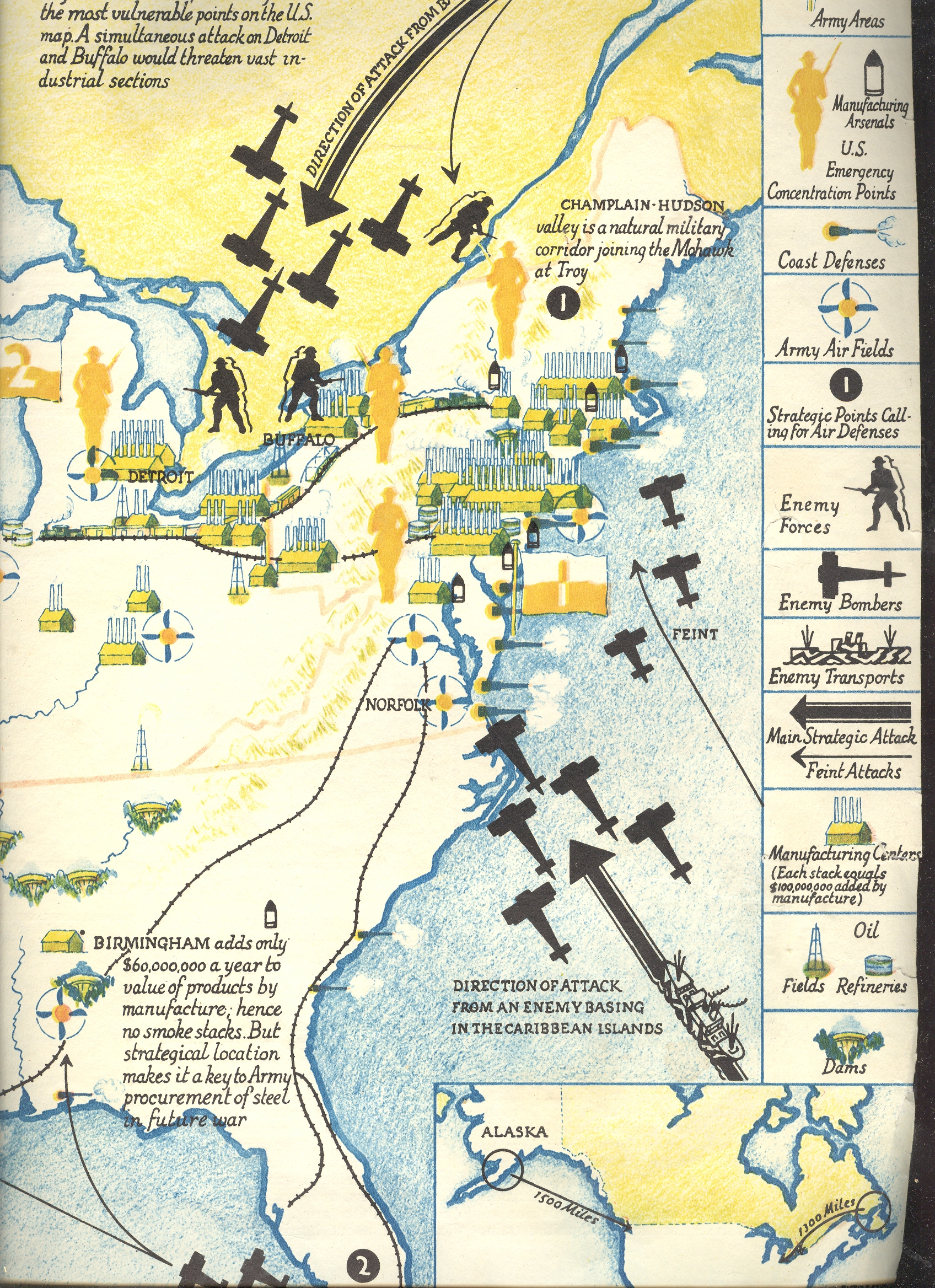
    See also: Invasion Routes to the U.S.  and this blog’s most-viewed posting (with over 500k hits) Maps of the Invasion of America, 1942 . 

    America has almost never been invaded. I should clean that statement up a bit: the United States has almost never been invaded.  America–which included North/Central/South once upon a time long in the dim past–was constantly invaded until the invasions no longer counted themselves as such, which I guess means that the “invasion” forces became  “resupply”. (Perhaps an invasion is over once you surpass a certain ratio of houses : forts.)

    “Invasion” does not include “attacks”.  A few guys getting off a Nazi sub and wandering around until they got picked up (with some (all?) being executed) does not an invasion make.  9/11 was not an invasion, though the subsequent invention of impending and pervading fear was–that’s why we have “storm centers” rather than “weather reports” on broadcast news–but even that fear business was more home-grown than anything else.

    The Japanese Army were on two small islands in the Aleutian chain (which may have been closer to Tokyo than NYC) for a bit in WWII–also does not make for an invasion, even if they were there for a long time.  Or even if they were still there.  Nor does sending hundreds or thousands of paper incendiary balloons across the Pacific an invasion make. 

    UFOs don’t count, either.  (I still find it remarkable that such a large percentage of the hundreds of thousands of “sightings” has the UFO with landing or whatever lights on it. I figured out at one point that there has been a report on one of these critters every ____ minutes since Roswell. And in all of those hundreds of thousands or reports, if you took them all and stacked them one on top of the other, they would reach perhaps the height of a grain of sand.)  The Beatles don’t count, either.   

    What also doesn’t count (but probably should) but which is not military–not really, though it may have the impact of a military force at some time in the future–are Chinese-made imports of, well, everything.   At Thanksgiving I wondered how much of a dinner could be composed of foods that were shipped from China and to no great amazement an almost-complete table of food could be set, plus napkins, flatware, plates, candles, tablecloths, tables, chairs, paper turkey decorations, carpet, flooring, wallpaper, paint for the walls and ceiling, screws for the Chinese-made door hinges, lighbulbs, tubes for the McIntosh preamps, all of the clothing worn by the guests, and so on.  The electricity is still American-made. The fact that Mott’s Apple Juice is coming from Chinese apples is a bad sniff of the future. The country of origin is usually on juice bottle necks-check it out.)  

    Certainly something that does count is the invasion by Great Britain of the United States in the War of 1812–they invaded long and deep enough to burn the White House and cause general havoc.  We won that one.  But of course the Brits were otherwise involved on the Continent.

    Perhaps this non-invaded bit explains why the most-viewed post on this blog (with at last 500,000 views, 340k alone coming from the post being carried by IO9.com) was a LIFE magazine article from 1942 on the possible invasion routes to the U.S.  Maybe the volume was driven by war-gamers, though I suspect it was made up largely of the curious who weren’t used to seeing “Invasion of” and “America” together in a military sense.

    Maps from 1942 of the never-was Nazi invasion of North America
    Maps from 1942 of the never-was Nazi invasion of North America
    Maps from 1942 of the never-was Nazi invasion of North America


    sending request

    (An another set of maps from Fortune magazine for September 1935, a predecessor to the above,  and from my post here):
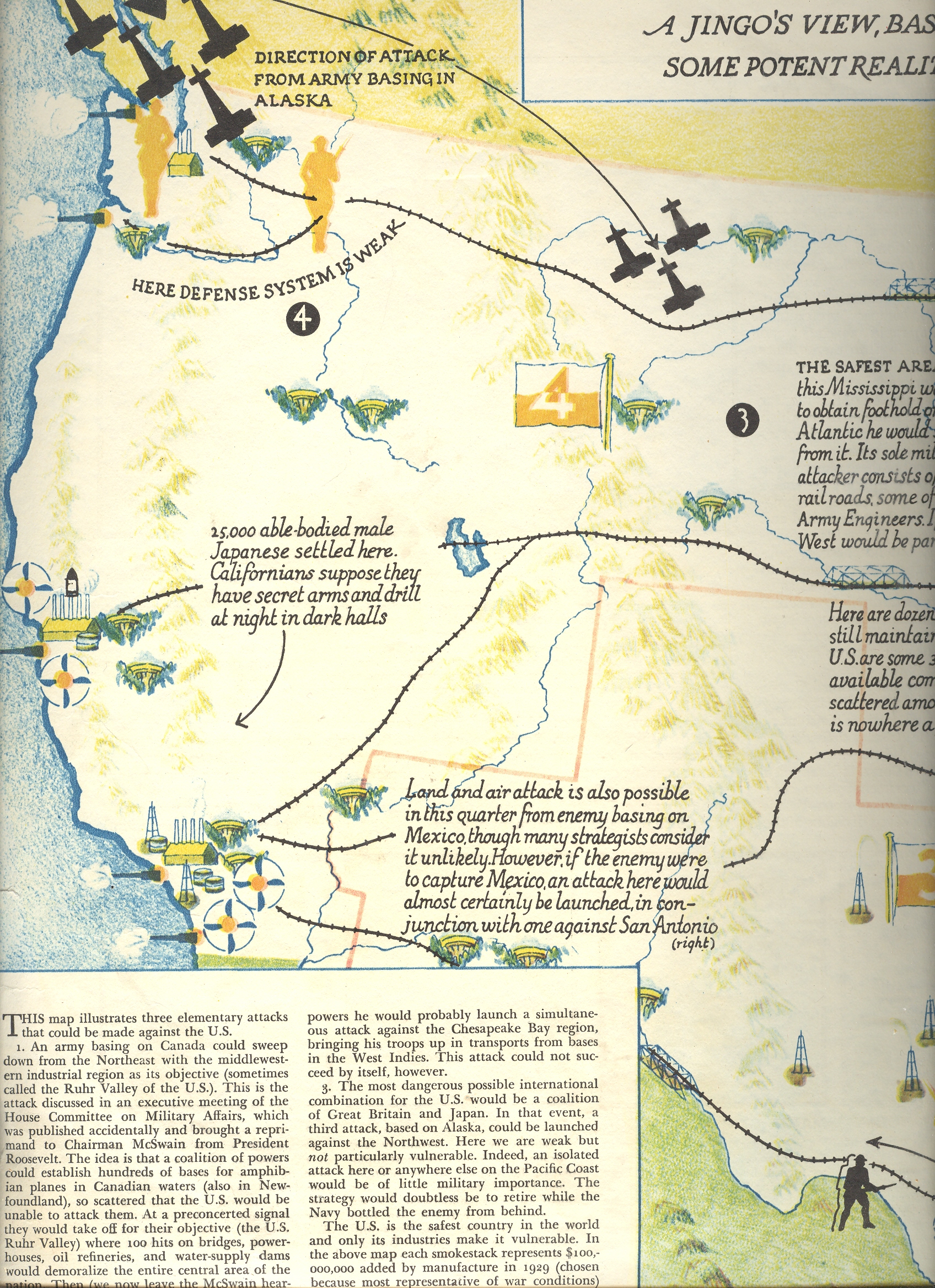
    https://historyofideasblog.com/a/6a00d83542d51e69e20120a7a3225e970b-pi

    https://historyofideasblog.com/a/6a00d83542d51e69e2012876a5a4b4970c-pi

    https://historyofideasblog.com/a/6a00d83542d51e69e2012876a5a5e4970c-pi

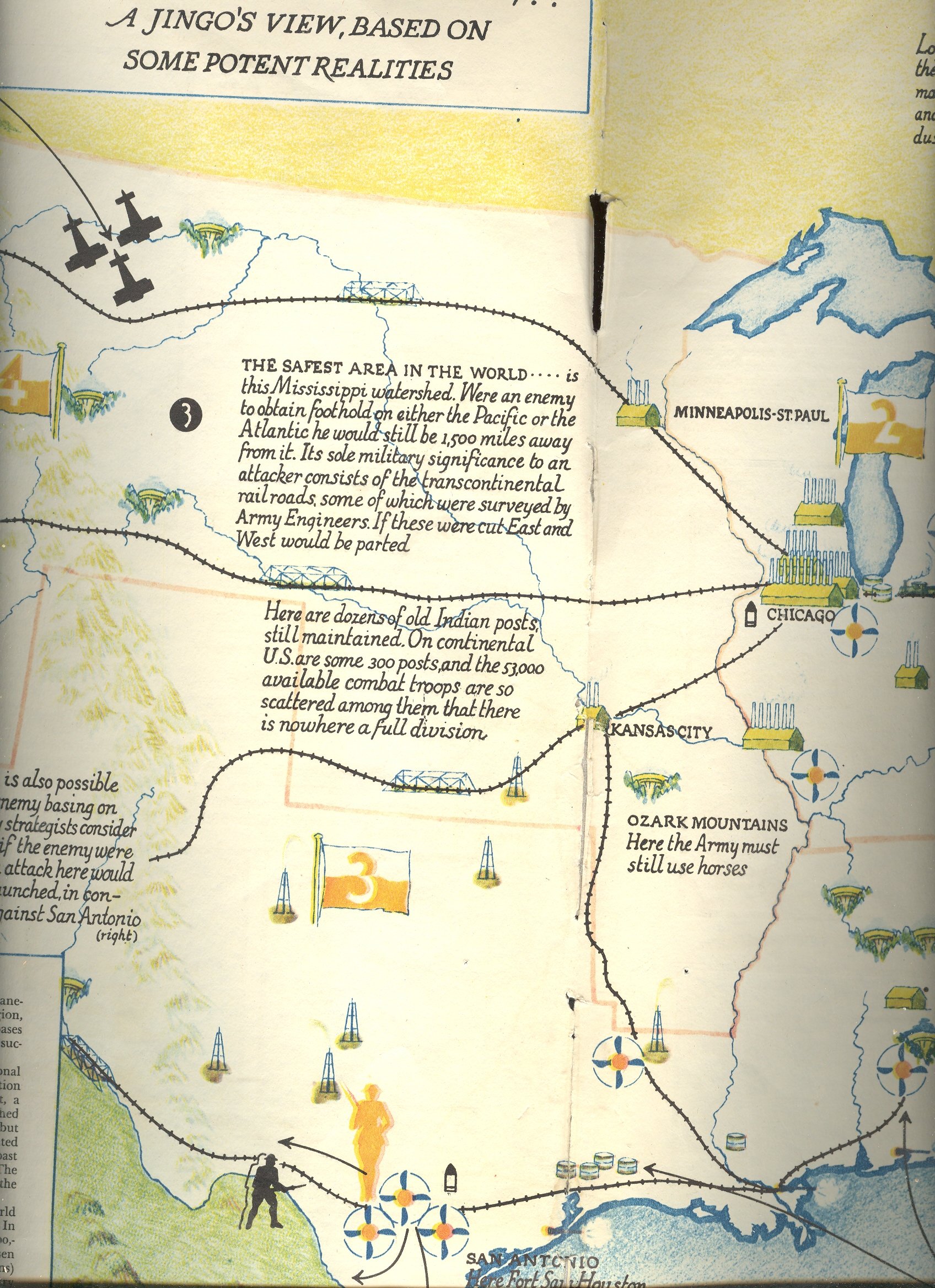
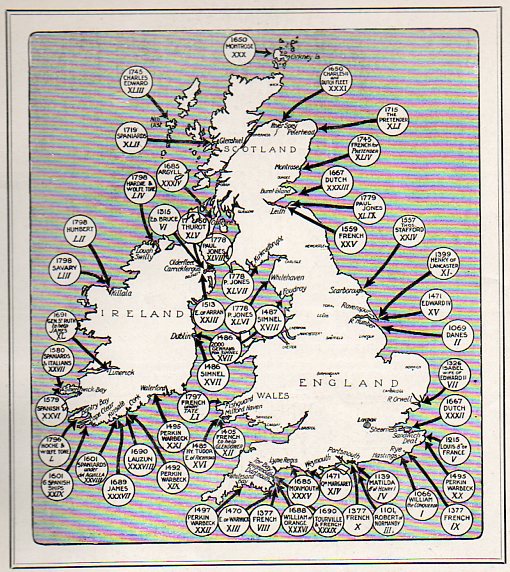
    But now for the  real stuff:  a map of the 54 invasions of Great Britain (and “the places at which foreign troops have landed on British soil since 1066 (and all that), seen in the Illustrated London News for 27 March 1909):

    Invasion--Us and England120

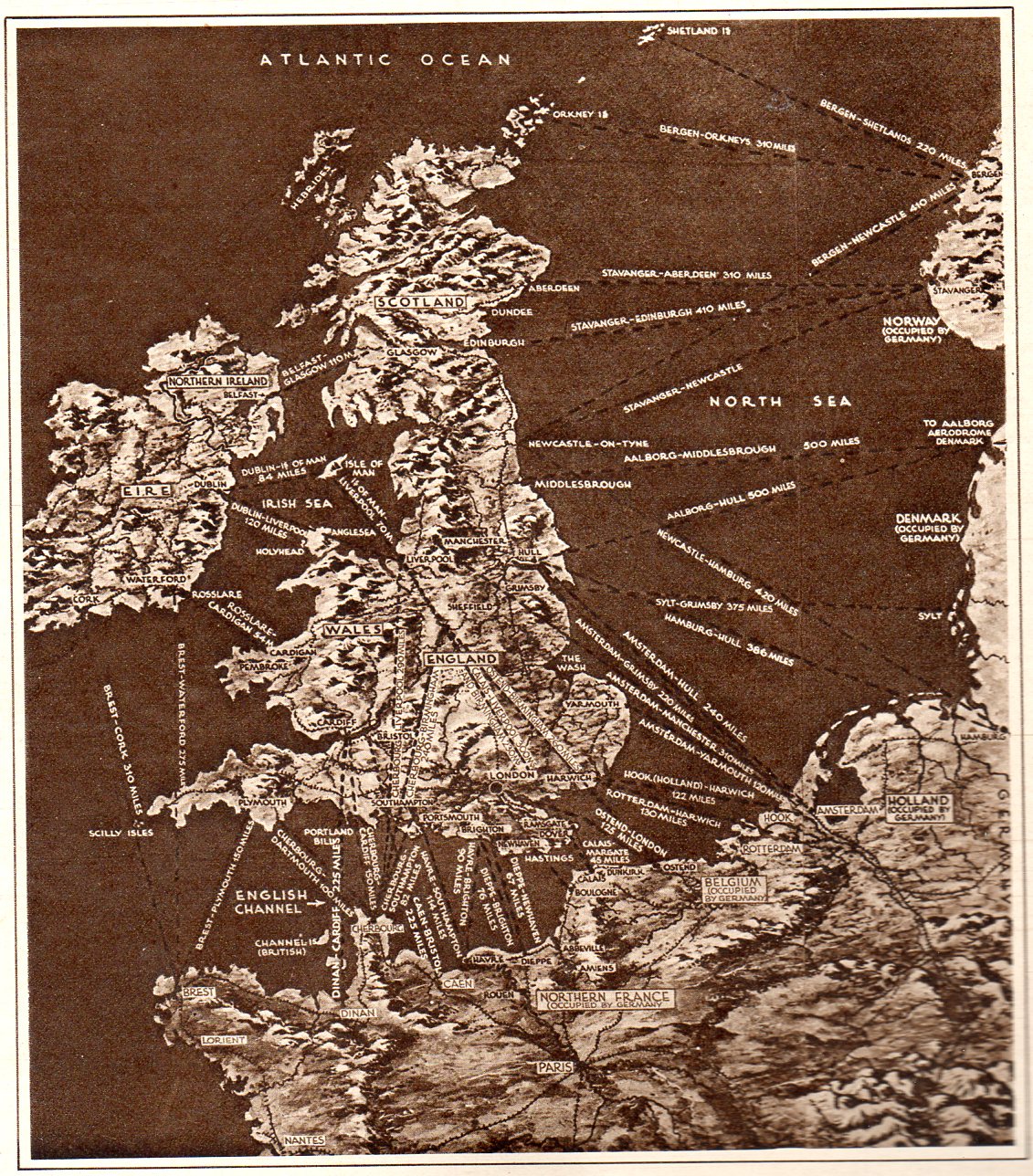
    And then this, where the WWII invasion routes were turned around: 
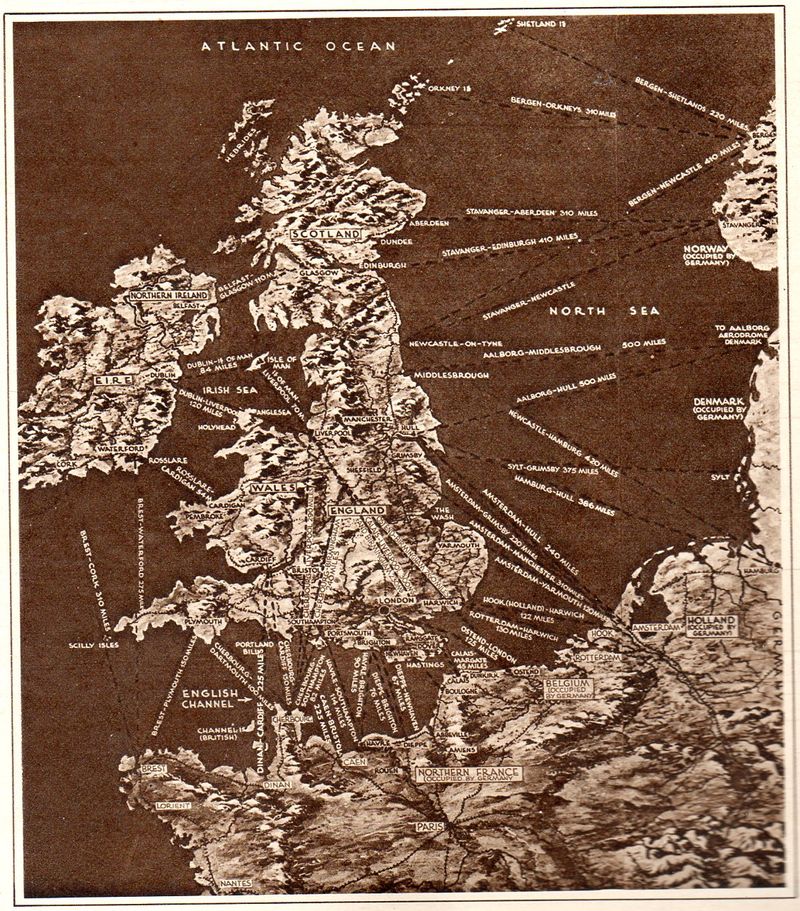
    Dunkerque124

    This map pretty well tells the story of the perilous situation of Europe and England at the beginning of June, 1940.  It appeared in the Illustrated London News on the heals of Churchill’s “Blood, Soil, Sweat and Tears” speech, and was a very frank presentation of the wearing of the war.  By this point in the war Nazi Germany had successfully invaded Belgium, France, Luxembourg and the Netherlands, sweeping across Europe in a broad westward movement, backing up British and French troops all the way to the sea at Dunkerque, where a monumental rescue operation (“Operation Dynamo”) saved them.  (There was an enormous amount of materiel left there on the beach, a devastating loss for the British Expeditionary Force, nearly crippling it.) This was a bad time for the Allies, this part of the war coined by Winston Churchill in 18 June 1940 in the House of Commons by:  “The Battle of France is over. I expect the Battle of Britain is about to begin”. There was very little good that came of these few months for the U.K and the Allies, though four things do stand out: (1) as I just mentioned, the saving of 300,000+ troops at Dunkerque; (2) the resignation of Neville Chamberlain, (3) the coming of Winston Churchill  as Prime Minister of the U.K., and (4) the first deciphering of the Enigma at Bletchley.  Other than that, the situation was dim, and these invasion routes (published at t he very time that Germany was studying such a feat in its “Operation Sea Lion“, or “Unternehmen Seelöwe”). The endgame at Dunkerque took place almost four years to the day of the invasion of Europe, when the intent (though not placement) all of these arrows were turned around for the Allied operation at the Normandy beaches on 6 June 1944..

    And so, there it is–a presentation of several maps showing invasions, real and imagined 

  • “Hidden from History–Unknown New Orleanians”

    I just wanted to pass along this very highly interesting exhibit::


    ·Posted by :

    ·in:


  • Intel vs. Obelisk: The Renaissance Beauty of the Single-Chip Microprocessor

    JF Ptak Science Books       Post 1685

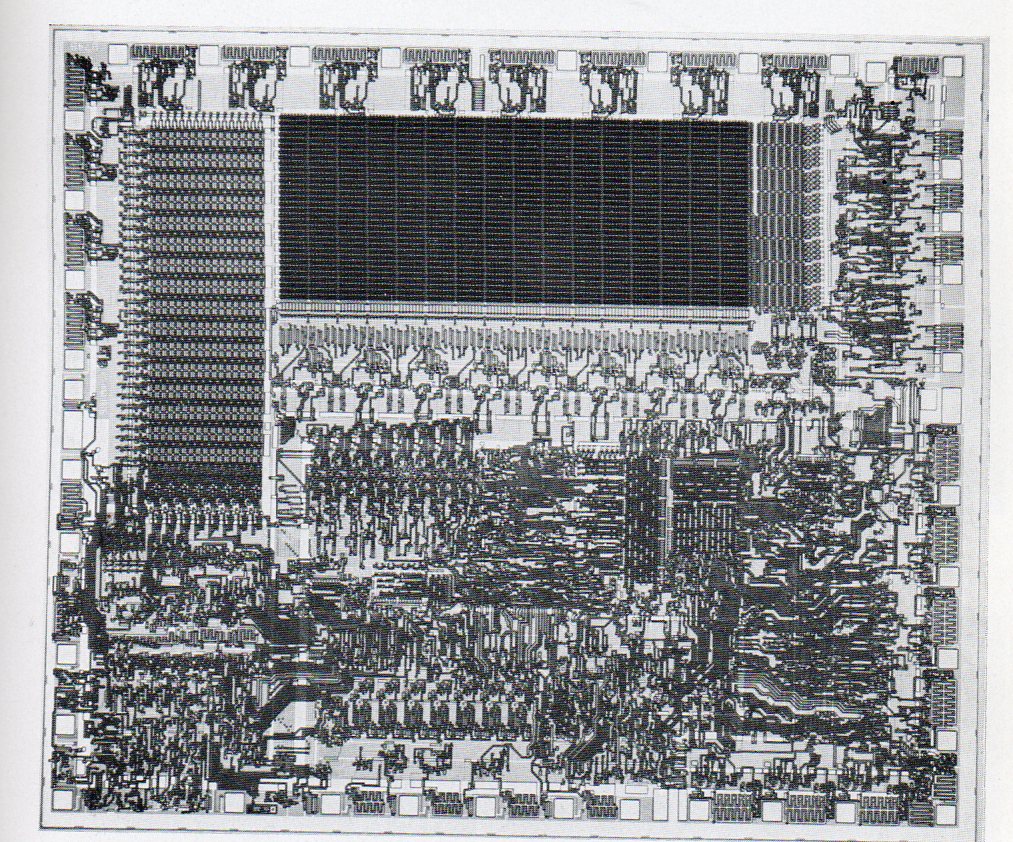
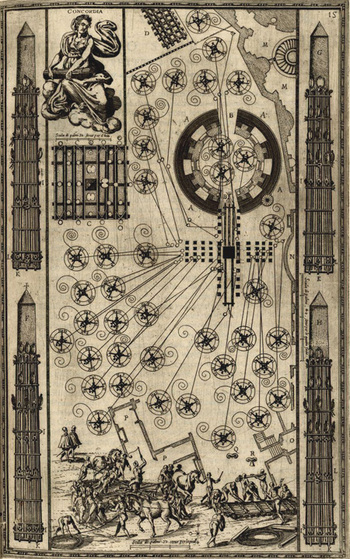
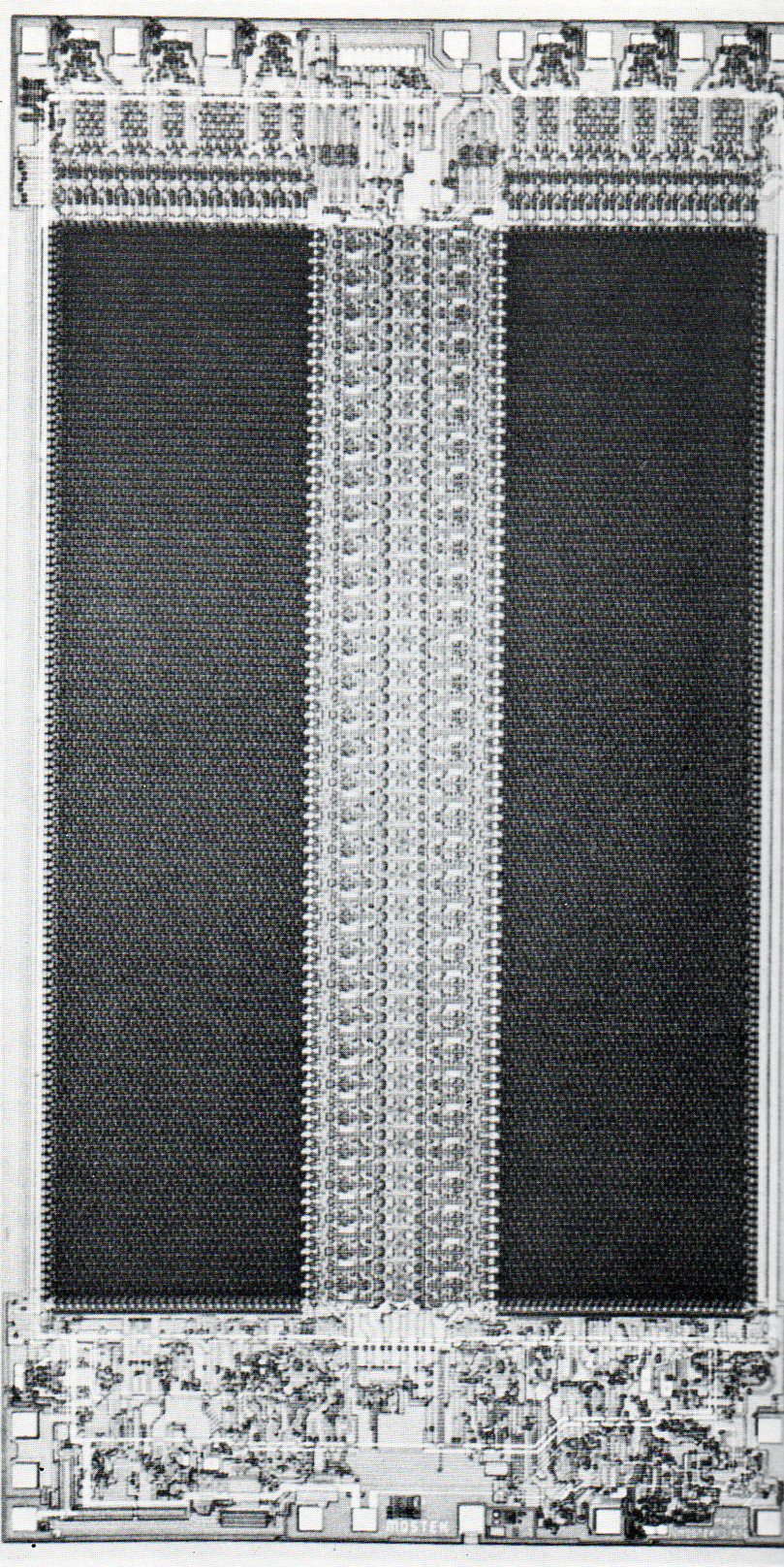
    The moment that I saw this image1 of (what I think is) the 8086 processor I thought of its great visual similarities to one of the greatest engineering works of the 16th century, so much so that with a little imagination, the older work seems a pentimento of the newer. This microprocessor–which in 1979 was a vast leap forward in development–looks like an architectural/engineering plan: large objects being hauled into place by legions of workers with wooden cranes, giant winches and mammoth rope, a fantastical display of concerted effort on a gargantuan scale.  It is, or was, in fact an enormous leap in hardware engineering, a micro-mammoth advancement.

    Fontana microprocessor209

    This older, pentimento image is a plan for moving of the great 500,000-pound Egyptian Obelisk (carved during the reign of

    Blogfontana_moving

    Nebkaure Amenemhet II, 1992-1985 BCE, and originally standing in the Temple of the Sun at Heliopolis) at the Vatican.  The engraving appeared in Domenico Fontana’s  masterpiece Della trasporatione dell’obelisco Vaticano…(published in Rome by Bassa in 1590) and illustrated  one of the greatest engineering feats of the Renaissance.  Moving this enormous and relatively delicate object (from the Circus Nero, where it was placed by the emperor Caligula in 37 ACE,  to St. Peter’s Piazza del Popolo, 50 years or so before it would be more enveloped by Bernini’s flying wings) took years of (very) careful planning and months of motion and movement, not to mention an extra month to get everything into place and slowly raise the obelisk into its final position.  Fontana had to be cautious and correct, and he was, performing a not-so-minor miracle of pre-industrial magic to move the priceless 250-ton iconic relic and place it perfectly down in the center of Christianity.  That must have been one hot Roman summer, especially for Fontana.

    I can easily see the similarities in Fontana’s work and that of Intel. Here, in a photograph of the 16k bit random access memory chip (via Mostek Corporation) I can see a vast palace at the top of the picture, with a long, columned entrance with manicured gardens on either side.  The image offers an elevation and a plan–that is, the top and bottom images of the buildings are seen in a deeply oblique view, while the central part of the image is a straight-out plan.  At least that’s what I see, its imaginative possibilities more appealing than the physical realities (though that’s where the extraordinary value is/was).

    Fontana microprocessor 2210

    Notes:

    1. J.H. Westcott, “The Application of Microprocessors”.  In Proceedings of the Royal Society of London, A, 367, 451-484 (197 9(. 


  • On the Invasion of America (Part II)

    JF Ptak Science Books    Post 1686  Works in the Reverse Esteem of the Gettsburg Address

    “The cheek of every American tingle with shame as he reads the silly, flat, dishwatery utterances of the man who has been pointed out to intelligent foreigners as the President of the United States”–The Chicago Times, on the Gettysburg Address, 1863.   

    We all know today what to expect when we hear something referenced as a Gettysburg Address–and we certainly know what something might be if it was referenced as not-the-Gettysburg-Address. The address as it was when Lincoln gave it didn’t even have a title, named as it was post  facto by the newspapers and periodicals covering the event (on the spot or remotely).  The speech is considered as being among the greatest ever given by an American, though at the time it its reception was very mixed—in many cases it was seen as a failure and even as an embarrassment to the solemnity of the moment and place. There were many newspapers which panned the speech (as in the case above with the Chicago Times, which at the time was considered more of a Democrat paper than anything else), while others (like the New York Times gave the speech a warm reception.   The speech’s presence in national memory was crafted over time (not unlike Mr. Leonardo), its perception formed into the polished gem that it is seen as being today. 

    ==Blog July 15==bsttle for amer

    The possibility of the implied actions of the titles of the pamphlet below were somewhat similar, though in reverse.  I’m not saying that some of them were always seen as quacky and the works of demented seers; their titles and possible content, though, were not seen as dismissible, and their concerns were real and a possibility. The concerns over “invasion” today depend on what invasion means.  I don’t imagine that people are seriously considering the possibility of a land or air force attacking this country, though other sorts of invasions (biological, chemical, cyber, etc.) are a possibility. 

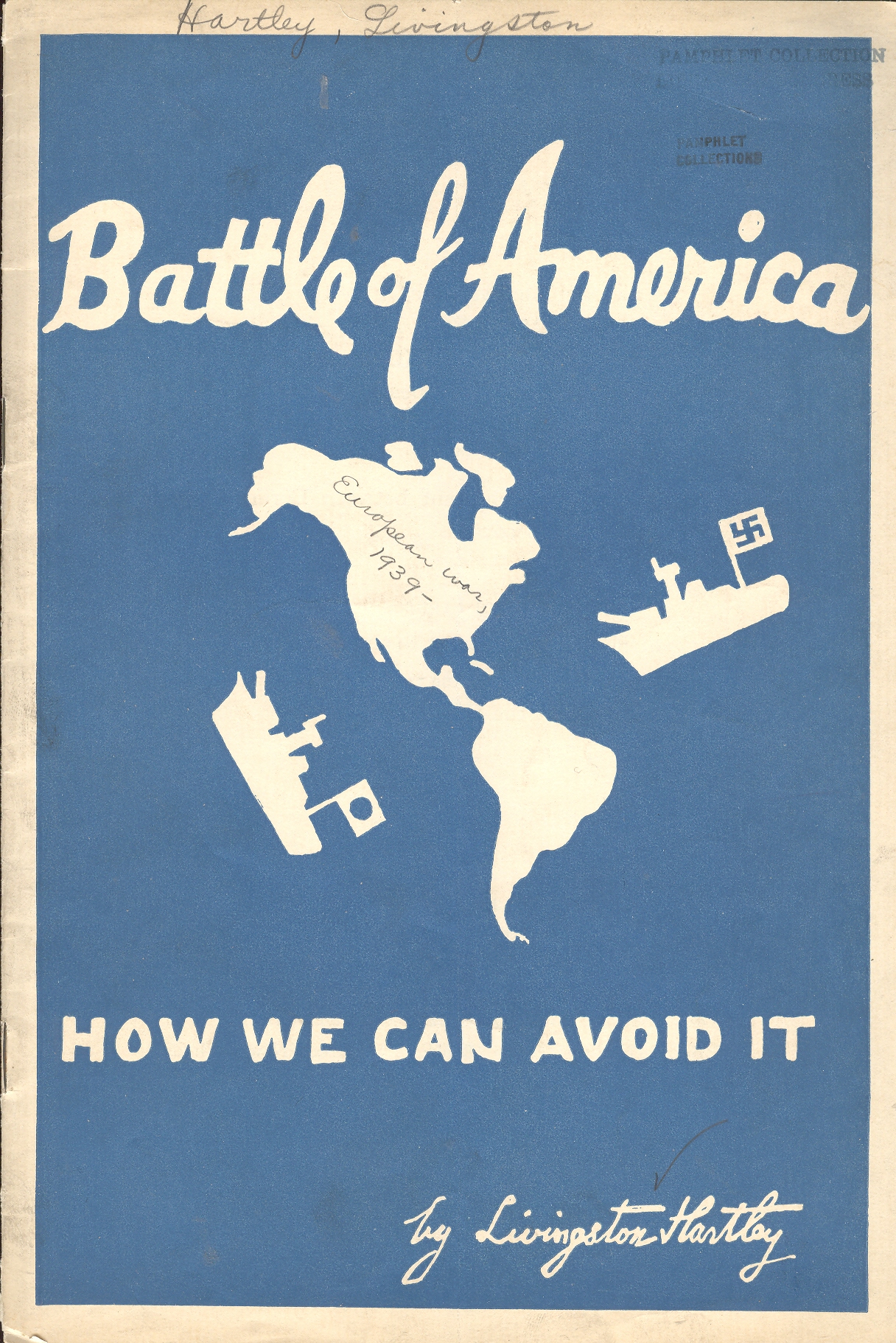
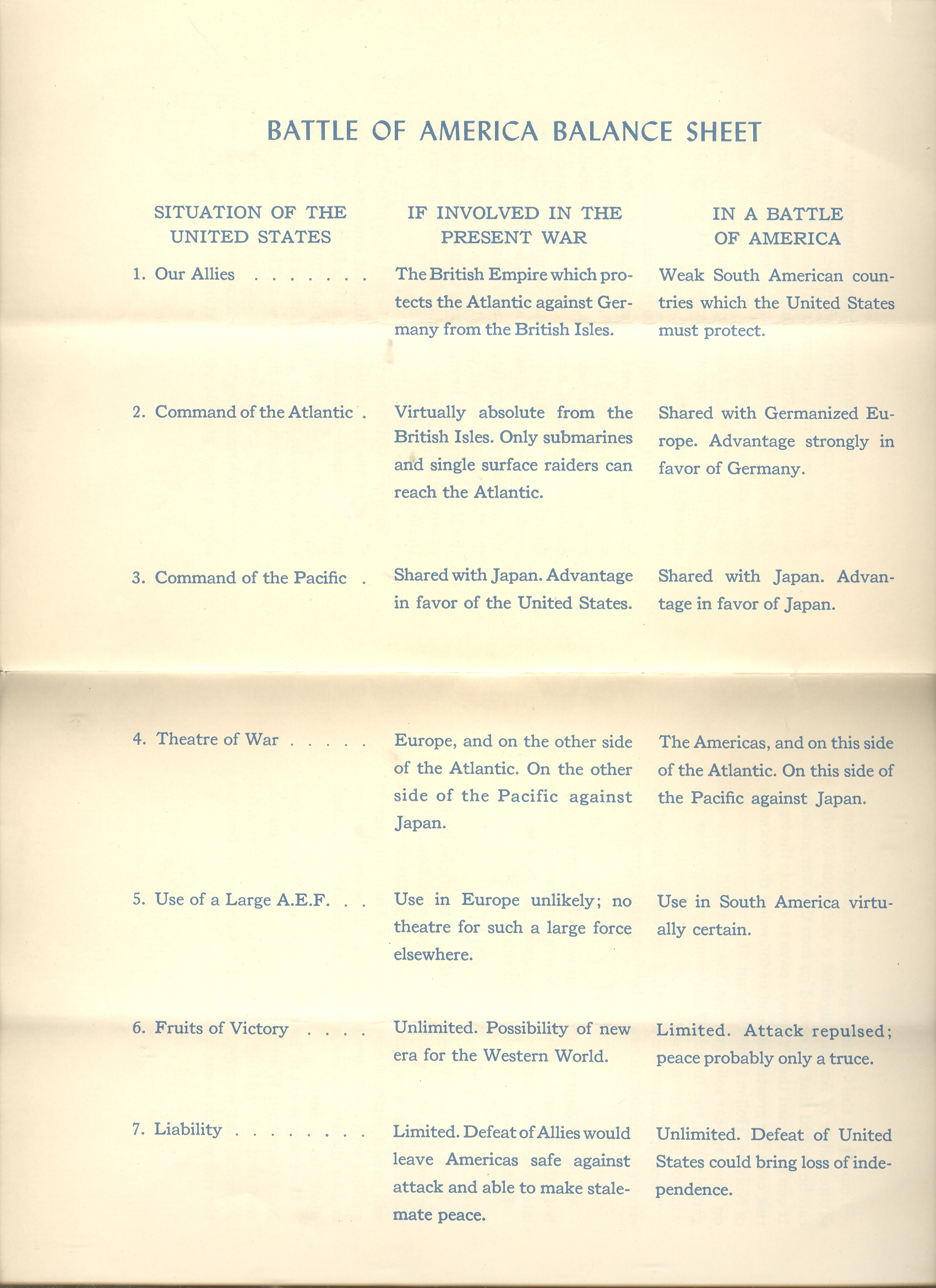
    The Battle for America/How We Can Avoid It (1939) was published by the Committee to Defend America by Aiding the Allies (and headed by William Allen White, iconic middle America newspaper editor and editorialist) which attacked isolationism and advocated strong support of the European effort.  The thinking here was that if America didn’t become involved now it would so later, with battle lines of a Nazi-illuminated truce drawn close to American borders.  So it was a pay-now-or-pay-more-later position from a man who supported the New Deal but whop didn’t support FDR.  ==Blog July 15==battle detail

    Much of this thinking looks a bit tenuous to me.  For example the position excluded the use of an American expeditionary force in Europe (“for theatre for such a large force elsewhere”), though if nothing at all were done there would be a “certain” use of the AEF in South America combating Nazism.  Also, if the U.S. backed the Allies with supplies and war materiel the “liability” to the US in the consequence of European defeat “would leave America’s fate against attack and able to make stalemate peace”.  So at the very least, doing a little bit of something would d at least allow us to make a truce with the German/Japanese alliance.   Doing nothing at all in this area would infer “unlimited” liability, and “defeat of the United States could bring loss of independence”. (“Could”?)

    The way aid ourselves in this war “(was) to aid  Britain to hold out to defeat Nazi Germany….the chance for Britain to hold out and win is a good risk for America”.

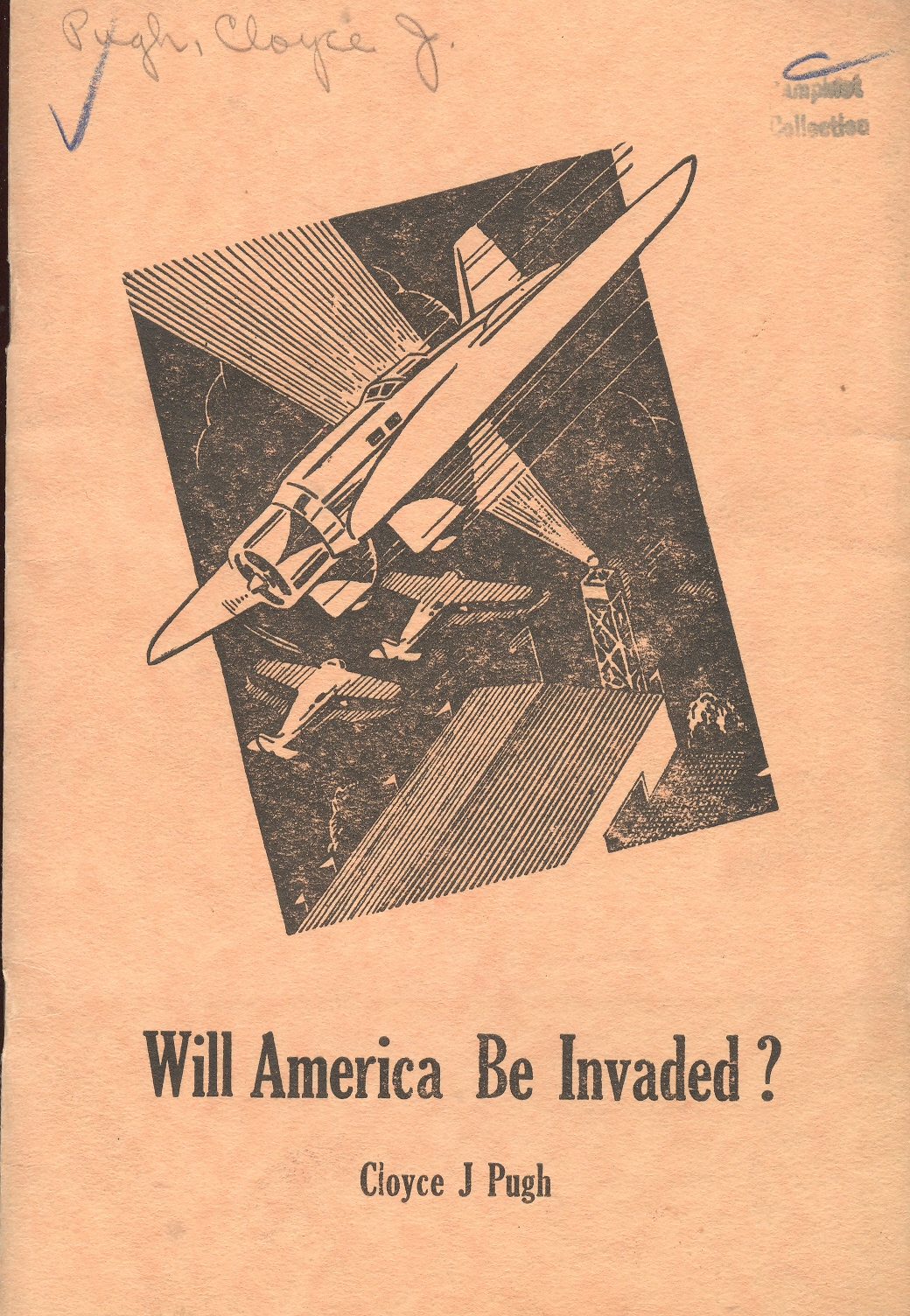
    The second pamphlet, Will America Be Invaded, was published by the Christian Fellowship Press in Akron, Ohio, in 1941, and leans mightily upon scripture to state assumptions about the coming menace to America being presaged in the Bible.  That invasion also seems to be allowed by God (according to prophesies and such) in pursuit of murky results.  The conditions which will prevail “when God permits invasion” (according to this person’s reading of the bible)) include the formation of monopolies, extensive wine and music, “unbelief in God’s judgments”, conceit, “wine and bribes in high places”, and “perverted moral stanfa5rds.  All of this—it is claimed—can be remedied through one medium:  prayer; and prayer through only one mediator, Jesus Christ, who would then take the communications to god’s ear.  

    ==Blog July 15==will america be

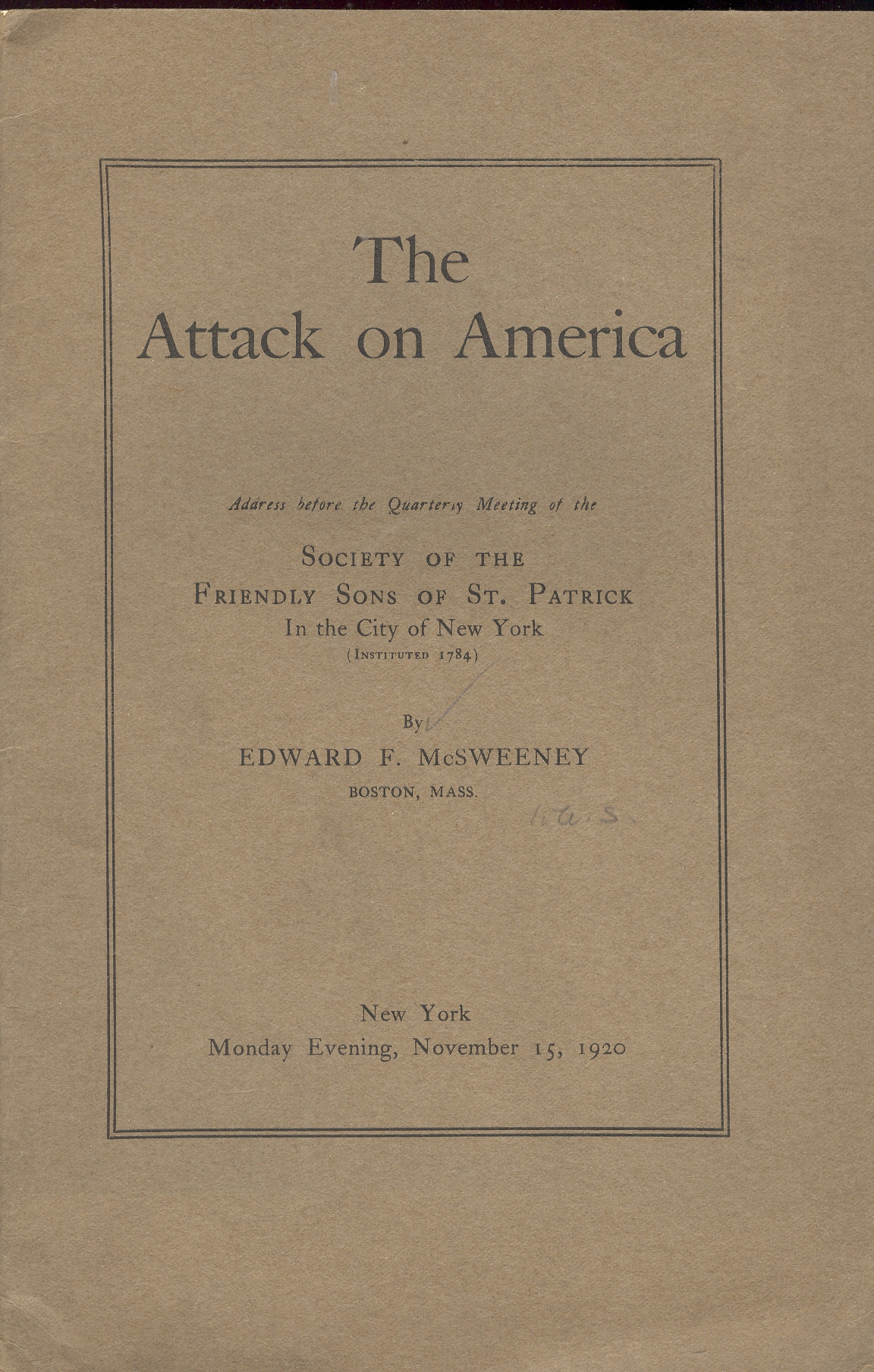
    The Attack on America, published by the Friendly Sons of St Patrick (of NYC), was a cautionary pamphlet published in 1920 warning against certain dispassionate evils of British propaganda in the United States.  Freedom or Enslavement for United States of America (sic), published in 1939 for the Mothers of United States of America (sic) advocated a freedom policy that prohibited conscription in foreign wars and would present a state of permanent neutrality. It also made some pretty vicious anti-Roosevelt attacks, finding him the Socialist root of the coming empire of American evils with a wildly power-mad and legislative-grabbing presidency.

     ==Blog July 15==attack omn amer

    Quite a grouping of pamphleteers concerned with the potential overthrow of the United States, each seeing the unfortunate possibility of national death via divergent and disparate means:  the fall of the country due to not being part of the Allies during the war and also for being in it; biblical ordination of invasion that is only combatable through prayer; British and European propaganda control of the national welfare; and of course the diabolical Socialist menace of Franklin Roosevelt and the imperial presidency as the ruination of the nation’s future.  All of this gently hidden by disturbing titles which really dont give you a hint about what wildly unexpected ways the end was approaching.  And whatever they were, they were definitely not high-order thinking.


  • A Fortune in Frogs, via the “American Frog Canning Company”

    JF Ptak Science Books     Quick Post

      Frogs081Well. In a small, simple way, a person reading this ad in the May 1936 issue of Popular Mechanics would have thought it quite easy to develop 10,000 frog eggs into a money-producing leg-farm in a scant 500 square feet of backyard scum pond. 

    And who in their right mind could resist the reader of “Raise Giant Frogs” with a picture of one of the three-pound bloaters to seal the deal? 

    And that luscious picture of 10,000 frog eggs–could that have simply been wasted space, unnecessarily pictured because the text and promises of frog killing were already so overwhelming the reading mind that the egg images were wholly superfluous? 

    I should say so.

    ·Posted by :

    ·in:


  • History of the Future: Super-sleek Tubular Ark, 1936

    JF Ptak Science Books    Quick Post

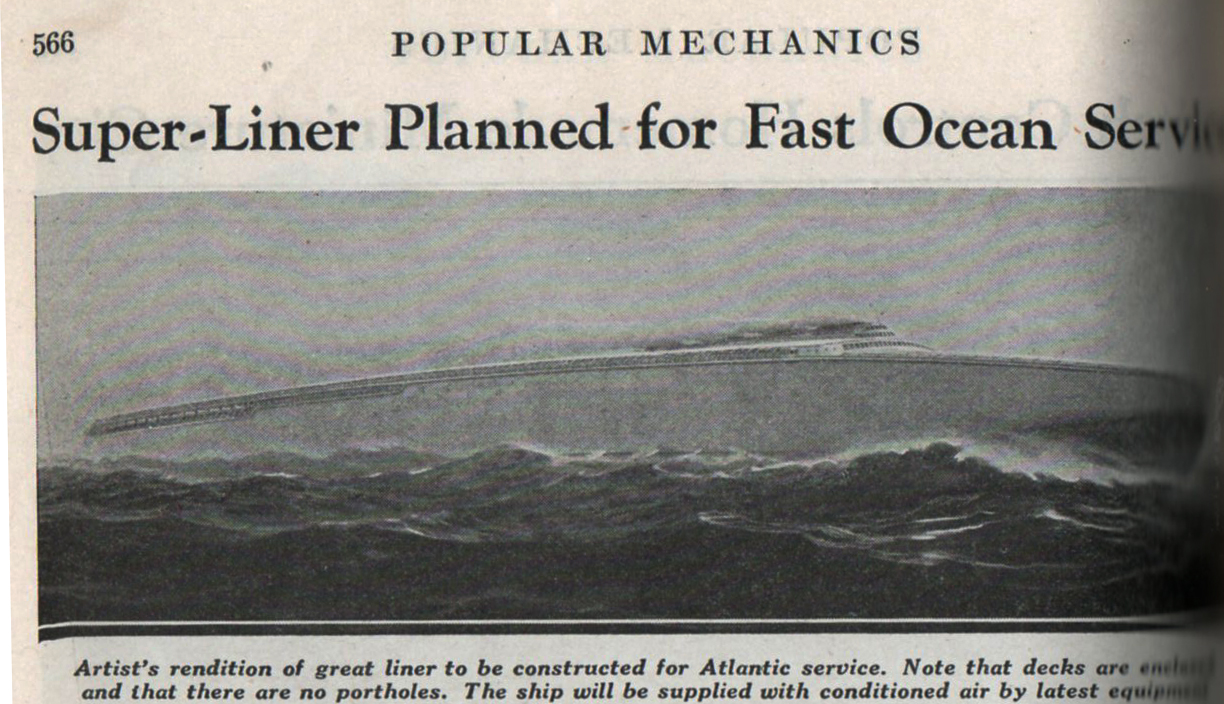
    There’s very little to go along with this image that I found in the April 1936 issue of Popular Mechanics, save that the massive ship will have no portholes, it will carry 7,000 and that the decks are enclosed (“sealed and air-conditioned”).  So, basically, the ships is a tube with a few above-deck exposures and not much else. 

    It looks a little bit like an ark.

    Future ocean liner080
    With coming events of the next few years, this ark would have been very busy had it ever been constructed.