A Daily History of Holes, Dots, Lines, Science, History, Math, Physics, Art, the Unintentional Absurd, Architecture, Maps, Data Visualization, Blank and Missing Things, and so on. |1.6 million words, 7500 images, 4.9 million hits| Press & appearances in The Times, Le Figaro, Mensa, The Economist, The Guardian, Discovery News, Slate, Le Monde, Sci American Blogs, Le Pont, and many other places… 5000+ total posts since 2008.

Author: JF Ptak

  • Found Art & a Massive Simplification

    JF Ptak Science Books   Quick Post

    Follow Me on Pinterest

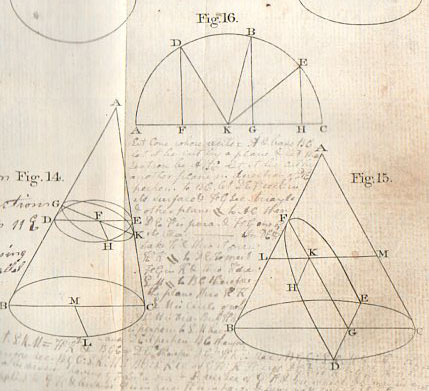
    I wrote yesterday about found poetry in Simson’s Elements of the Conic Sections (1804)–there was much more.  Some of the owners of this book used it pretty hard over the years (mostly in the early decades of the 19th century), and there are numerous examples of worked problems in the margins and in the folding engraved plates of illustrations of proofs.

    Found art list c230

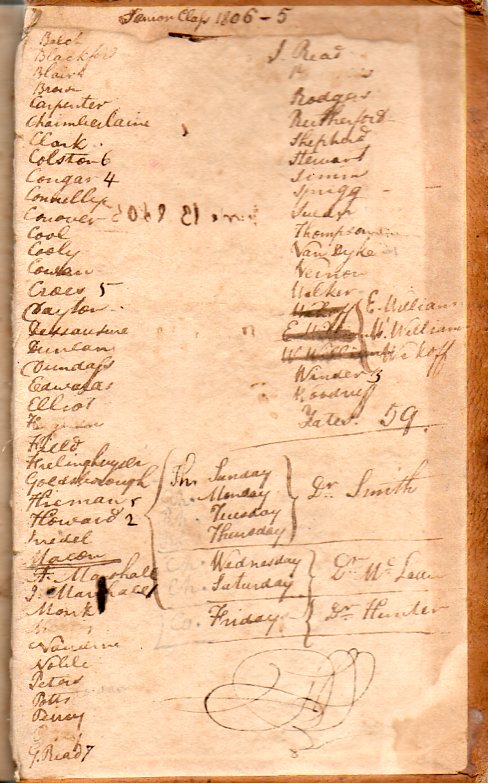
    They are beautiful works. But one of the other finds in this book is written out on the rear paste-down, which contains (on one sheet of paper) the entire 1806 class for the bachelor of arts degree at Princeton College for 1806. ( A little more information on these Princetonians is available at the General Catalogue, Princeton Universtiy–the list checks out to a man.)

    Found art list229
    It is interesting to consider that an entire attending class of what is today a very major institution could be easily listed on one 8×5-inch piece of paper.

    ·Posted by :

    ·in:


  • Found Art in Antique Books and Writing to the Future, 1808

    JF Ptak Science Books  Quick Post

    Follow Me on Pinterest

    Found art list d232

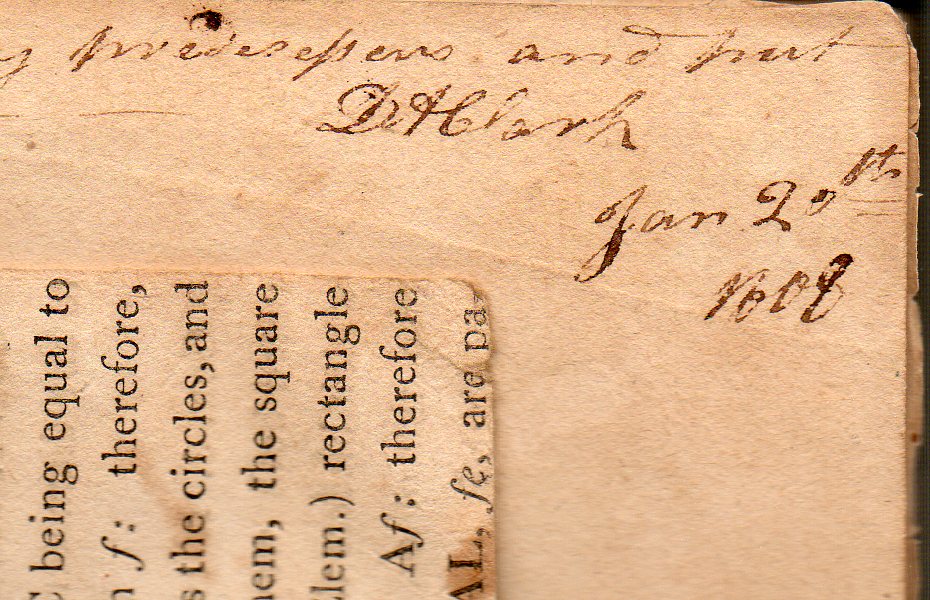
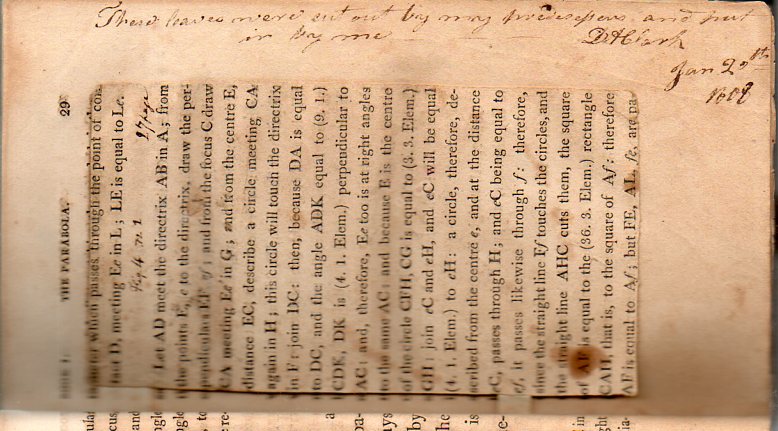
    • “These leaves were cut out by my predecesor and put/ in by me.  D.H. Clark, January 20, 1808”,  detail, inscribed on page 29 of Simson’s Elements, 1808.

    There was a leaf missing in Mr. Clark’s book–the leaf for page 27/28–some of which he salvaged and placed back into the book on tabs, which you can see at the side of the book.  He also did not want to have any future owner of this book to think ill of him for having disfigured it.

    The text is by Dr. Robert Simson, and called Elements of the Conic Sections, and was printed in New York in 1804. It was owned at some earlier point by Joseph Cheetham (“Princeton”), and then by L(ewis) D. Bevier (“bought of Cheetham”) and then probably by Clark. They were all at Princeton College, and all associated with the bachelor of arts class of 1806 (though Cheetham seems to have graduated some years later). 

    I am the owner of the book today, some 200 years later, and I hear Mr. Clark.  Somehow the page got loose Mr. Clark put it back. The end. 

    Found art list d232

    There is also a bit of found poetry in that bit of text:

    Being equal to

    therefore

    the circles, and

    the square rectangle

    therefore

    are.

    Found art list d231

    ·Posted by :

    ·in:


  • An Underground Tornado of Coal

    JF Ptak Science Books   Quick Post  #427 

    Follow Me on Pinterest


    Coal tornado220

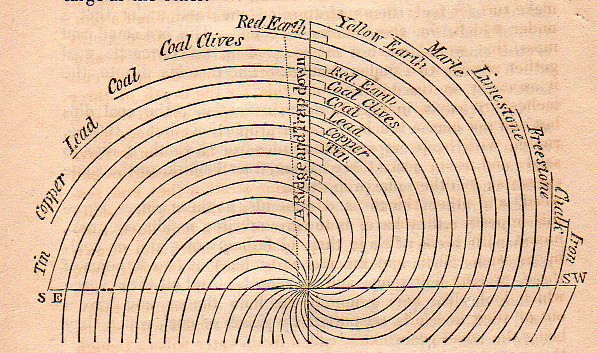
    This simple theoretical map is an invented scheme of John Strachey (1671-1743), an early geologist who with this thinking introduced the very big geological idea of strata. The original appeared in the Philosophical Transactions in 1725 (full text here, and another, with a more-realized version of representing strata, is here), and was reprinted I believe in Popular Science Monthly in 1869 with the above illustration (somewhat changed from the original).   My interest in the image is tinged with design, as it reminds me of an enromous subterranean tornado of coal, even though what Strachey is doing here is establishing the idea of strata.  

    Coal tornado221

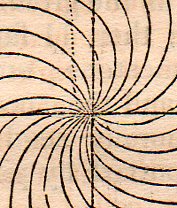
    These lines then are the strata of these geological elements as they fan themselves out like pages from a book from the center of the Earth outward.  Its all very vague at this point, but the kernel of a great idea is present.

    The phrase “underground tornado” appears very few times in the intertubes with the world “shelter” accompanying it.  It is nonsensical, mostly, to think of underground weather and particularly extreme weather, but it has certainy playud itself out many times in literature in the pre-science-fiction fiction days. In some stories there are multiple suns, amd waterfalls, and vast canyons many times the size of the Grand Canyon, and so on–there just doesn’t seem to be much bad weather, down there.

    [Note: Strachey, a country squire and gentleman of science, published his theories and findings in two papers in 1719 and 1725, and then in a small pamphlet in 1727.]


  • Daily Dose from Dr. Odd: Let Your Man fill Your Eyes With Smoke

    JF Ptak Science Books  Quick PostDaily Dose from Dr. Odd series

    Follow Me on Pinterest


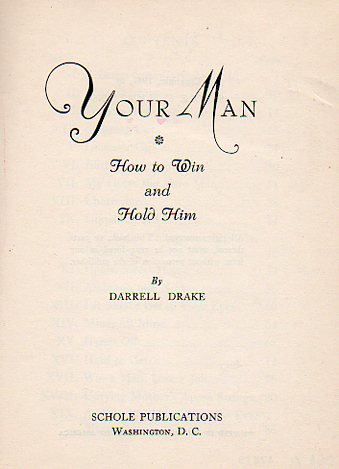
    Man Keep225Darrell Drake was full of advice, not much of which seems to have weathered the wearying bits of time very well.  Most of what he has to offer has to do with being coy, reserved, and retiring, and so much so to the point of being insipid acquiescing in the superior qualities of the man, forever in the back seat, quiet and demure, patient and understanding and making the back-step always the job of the woman. Not much of a surprise.  But what was very unexpected was the chapter called “Let Smoke Get in Your Eyes”, a four-page baiting in which he warns women against the antagonism of correcting the manners and behavior of the man, so much so that she should be well willing to have  smoke blown into her eyes rather than suggest that the smoker not do so–you don’t see that every day. 


  • Anti-Gravity & Anti-Aging Centrifuges, 1932

    JF Ptak Science Books  Quick Post

    Old-Age-Rejuvenator-Centrifuge-750x646

    [Source:  the great Modern Mechanix blog, here.]

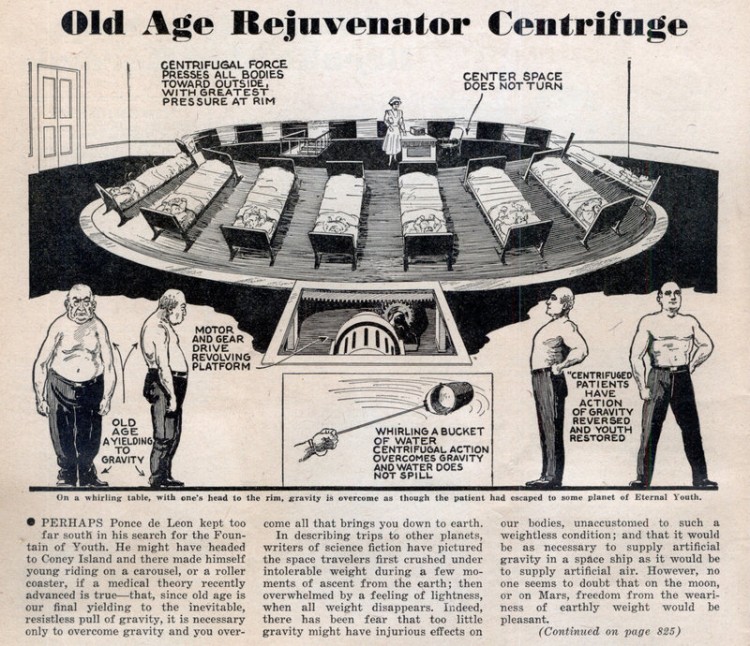
    Q:  What could possibly go wrong with the idea of settling out mostly-imaginary biological issues than spinning? 

    A:  Well, its not so much as getting something wrong than it is getting nothing right.

    Such is the case with the spinning hyper-centrifugal anti-aging machine, found at the Modern Mechanix site.  Among bad ideas it isn’t so much “bad” as it is “hyper-bad”, though it is not quite so hyper-bad when compared to the mega-hyper-bad-so-bad-it-isn’t-even-bad-but-worse idea for the centrifugal birthing patent that appeared in this blog earlier (here, in the Electro-IronPunk Centrifugal Birth Machine post). 

     The centrifuge had been around for a long time prior to its estrangement and corruption in the anti-aging scheme. James Watt created one (in 1786) as a regulator in his fabulous 1781 parallelogram steering of his double-acting steam engine, and Oliver Evans employed one in his Philadelphia-based mill at about the same time. (Robert Hooke in 1674 had proposed a universal system of cosmic glue using a balanced approach between centrigical force and gravitation as the stuff that held the universe together, only to be bitterly disappointed by the publication of Newton’s Principia nine years later.) Like other bold and advanced ideas corrupted to popular Atomic-Motel misuse, the centrifuge was no exception.

    ·Posted by :

    ·in:


  • Dance as the Godless Spasm More Dangerous than Hitler (1946)

    JF Ptak Science Books    Daily Dose from Dr. Odd

    Follow Me on Pinterest

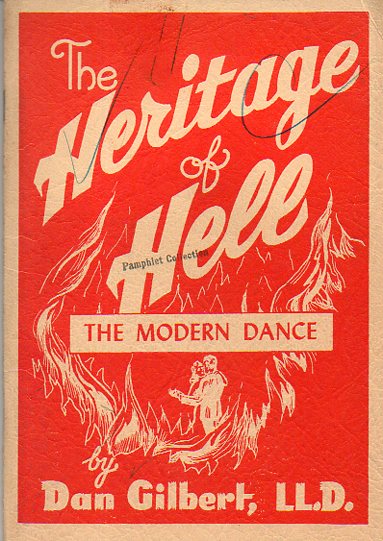
    Hitler was dead in 1946, but dance–the devil’s reach of hellfire and something worse than Hitler, according to the author of this pamphlet–wasn’t.

    Dance Hell222

    The author, Dan Gilbert LL.D., wrote a very _______ summation of modern dance, which was an assault on morals (well, Christian morals) and decency.  He does actually make the case that  dance music (jitterbug, swing, and jazz) was more dangerous than Hitler and was “Hitlerizing” American youth to its utter destruction.  “Jitterbug dens” preached a “faster jitterbuggery” (which was “conceived in the brothel to stimulate lust and vice”) which led youth into the Underworld.  The children of America were being lost to “razzy jazzy spasm bands” which would “strouse uncontrollable sex desire” and “infect youth with the disease of immorality” then to  “produce(s) a state of emotional and nervous derangement, which is scientifically indistinguishable from intoxication induced by stimulants or narcotics”. And on and on.

    These are just a few of the very choice morsels found in Gilbert’s 42-page diatribe, picked out by me rather quickly, plucked from the text with toothpicks–I just didn’t want to spend very much time with this book at all.  That said, I’m sure that there are tastier items than these, salted through a text of salt.

    I don’t know why Gilbert became this deeply interested in dance/death/Hell in the year following the end of WWII–after years of destruction, it seems hard for me to imagine to wake up, look out the window, and see the next assault on the U.S. coming in the form of dance.  He did carry on some about the “jitterbug insanity” of “improvisation”, and how dancers would abandon the appropriate and constrained methods of dance to simply move according to feeling and need.  This was the root of it all–happy feet. 

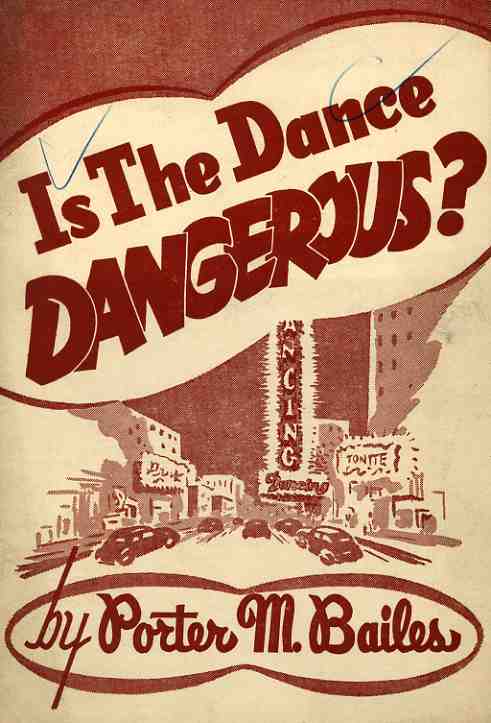
    An earlier post on this blog addressed a direct relative to this pamphlet:

    0 blog jan 20 dance danger391


  • NarcoPunk: Using Narcotics for Sleep & Enema Treatment of the Insane, 1845

    JF Ptak Science Books   Post 2009

    Follow Me on Pinterest


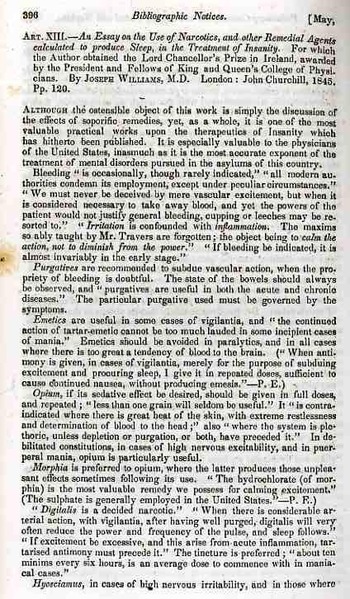
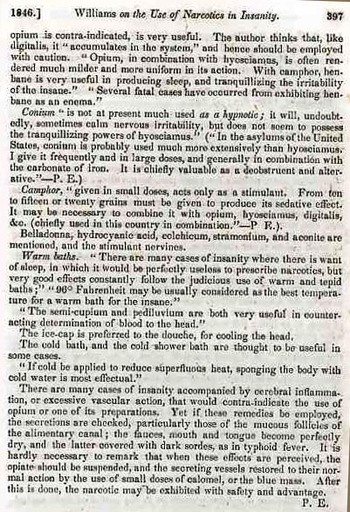
    This book review on the use of narcotics in treating the insane appeared in the New York Journal of Medicine for 1846.  The book, An Essay on the Use of Narcotics, and other remedial Agents calculated to produce Sleep in the Treatment of Insanity…., was by Joseph Williams, M.D., and was published in London in 1845.  The theory behind the sleep treatment was that the basic mechanism of insanity was “cerebral inflammation” or “excessive vascular action” in the brain—inducing deep sleep, evidently, was a good way to combat the over-active/inflammed/blooded-up brain.
    Blogdrugs_crazy254

    The article itself comes at an odd time in the history of the treatment of the insane.  It came almost 40 years after the establishment of  McLean Hospital (first known as the “Asylum for the Insane,” a division of the Massachusetts General Hospital), which opened on Oct. 1, 1818, and was the first hospital dedicated to the treatment of the insane in the U.S.  It came 70 years after the great advances of Benjamin Rush, who elevated the “Mental Patient” from chains on the floor to the status of medical or nervous illness or disease.  The use of narcotics over this period seems to have surged and waned.  In 1879, in an article in the New York Times, the reputation of the Asylum for the Insane on Ward’s Island in NYC was considered—and one of the high points was that it had (largely) discontinued the use of narcotics in treating the patients their. (There were still problems, of course, what with the asylum being overcrowded, housing 1100 in an institution meant to house 700, and where the chores and even nursing positions were staffed by the inmates, who were feed on 32 cents a day.)  As late as 1921, though, Jacob Alter Goldberg notes in his Social Aspects of the Treatment of the Insane, that there was a new, sharp increase in “toxic narcotic” treatments of the insane.  Of course, I guess one could replace “narcotic” with some sort of other misplaced treatment, like shock therapy, or Freudian mélanges, or something.  Each age must necessarily have their entry in the encyclopedia of embarrassments
    Blogdrugs_crazy255 . 

    In this article we find sleep assaulted by the use of the following:  purgatives (“to subdue vascular action when the propriety of bleeding is doubtful’), emetics, opium (to be used “in cases of high nervous excitability and in puerperal mania”), morphia (“the most valuable remedy for calming excitement”), hyosciamus (“to produce sleep, tranquilizing the irritability of the insane”).  It is weird to see that the last sentence in the description of hyosciamus reads “some fatal cases have occurred from exhibiting henbane as an enema”.  Henbane has been in use since ancient times, and is largely understood to be a dangerous/poisonous drug–to administer the thing as an enema leaves little doubt that it would kill people. 

    Still to come in the review is conium (“I have used it frequently and in large doses…it is chiefly valuable as a deobstruent and alternative”, followed by camphor, Belladonna, hydrocyanic acid, colchirum, stramonium aconite, and others.  “Warm baths’ makes an appearance (“90 degrees may be considered to be the best temperature for a warm bath for the insane”), as do cold baths, and the applications of ice caps. 

    I’m not so sure about what to make of it all, the sleep treatment of insanity I mean—after all, Joseph Lister only makes his epochal pronouncements on cleanliness in the operating theatre 15 or so years after this paper, which seems today to be the most rudimentary thing that one could do in treatment in the surgical room, so treating extra blood in the brain through drug-induced sleep doesn’t seem all that far away from the realm of possibility back there in early Victorian England.

    I don’t think I’ll forget the toxic narcotic enema any time soon, though.  Or the word “deobstruent”. 
    ·Posted by :

    ·in:

    —

  • A Found View of Brooklyn and Map of Green-Wood Cemetery, 1846

    JF Ptak Science Books   Quick Post 

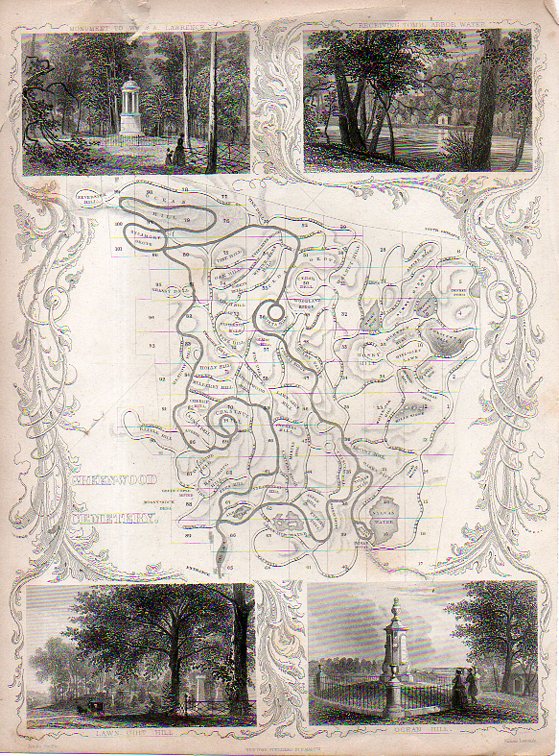
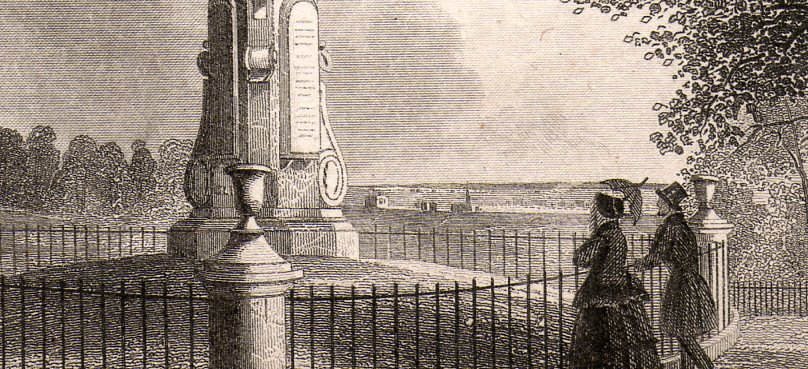
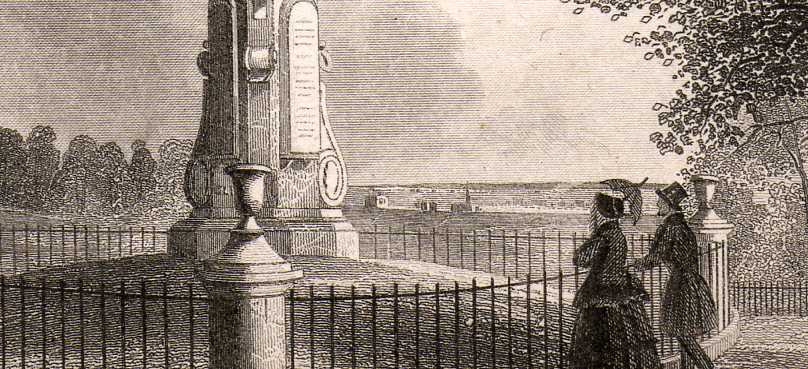
    Green-Wood223This interesting engraving shows a map of the relatively new Green-Wood Cemetery in Brooklyn, U.S.A. It was engraved by James Smillie (1807-1885) and published in 1846, 16 years after opening and addressing a need of the quick-growing burrough whose population grew from 47k in 1840 to 139k in 1850 to 279k in 1860. (Brooklyn would overtake Manhattan in population by 1930, with 2.5 million vs. 1.8 million for Manhattan. More population stats here.)  What interests me most is that small vignette at the bottom right, which shows a quiet scene at the rise in the cemetery called Ocean Hill–what it reveals in the background, though, is an uninterrupted view across Brooklyn and the Hudson River, and on into New Jersey.  Pastoral, Farmlands.  Its a found bit of history, a quiet, privileged view. 

    (The church in the engraving is about 2mm wide in the original.)

    Green-Wood224

    Green-Wood224


  • A Map of the Human Ability to Replace Itself, 1610-1723

    JF Ptak Science Books   Post 2009

    Follow Me on Pinterest


    Blogmissing_man041_3

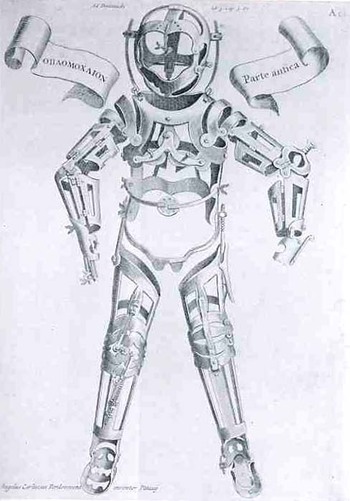
    This woodcut of applications and applicators to injured humans, lacking the human, waiting for the human, the missing human, was made by Hieronymous Fabrizzi (or Jerome Fabricius, 1537-1619), and found in his Opera Chirurgica, printed in 1723.  Even though this is a pretty straight-forward image, it strikes me as a little odd, a little off,  looking a bit like inhuman trappings, the entrapments of a human waiting to be built, an artificial skin with artificial bones.  It was much less than that, and in its way, much more—it was a statement of the advances of medicine in the 16th century, a map of the ability of man to replace himself; a map of the artificial man. Perhaps the image of our own artificial man, showing our ability to replace organs, bone, skin, limbs, etc.may come to look to the people of the near future the same way that we here in the present look back on Fabricius’ mage. 

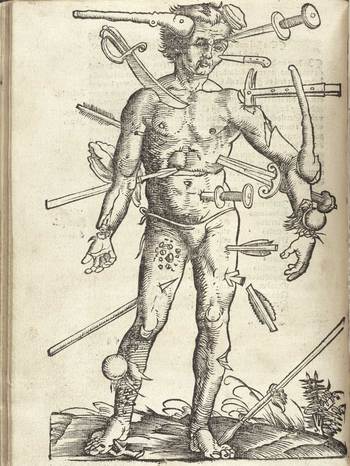
    A Map of Getting Wounded

    Gersdorff_p21v_3

    This map of the wounded man was a very popular, much reproduced image, seeing publication in many works since it first appeared in Johannes de Ketham’s Fasciculus Medicinae,  printed in the year Columbus set sail for India.  It was a battle map, really—a battle for the human body, showing the effects of what happened to that body when someone tried to erase its existence.  The image is graphic, realistic and fairly gruesome, and highly useful.  It was accompanied by instructions on how to deal with all of the trauma, and to save the man thus that he could fight again.  In its way, this might be the earliest issue of M.A.S.H.  This woodcut, as the next, appeared in Hans von Gersdorff. Feldtbüch der Wundartzney (printed in Strassburg, by  H. Schotten, in 1528).

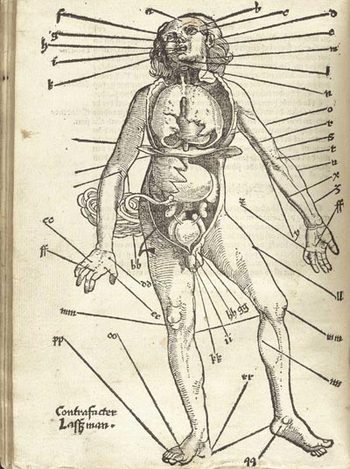
    A Map of Letting the Blood out of the Human Body.

    Gersdorffx400jpg_other_2

    Well, it really wasn’t like that, not how I mean by by snippy modernist viewpoint looking back on medical history with no contextual appreciation.  Bloodletting was an approach to healthfulness, as blood was seen as one of the four major elements (or “humours”) of the human body that needed to be kept in balance.  This was accomplished via the application of leeches or by the more common (and quicker) practice of venesection, or opening a vein to allow the blood to come out. (Let’s reference Steve Reich’s magnificent “Bruise Blood” creation of 1966 at this point—I don’t think that I’ll ever have a better chance to drop a reference to this piece of revolutionary music in regards to venesection again.)  Thus this map was map for the practiconers of bloodletting—the physicians, and more probably the barbers and other assistants who would inherit this lesser procedure from the more-busy doctors.  In the history of maps of anatomy and the general practice of mapping the human condition, this woodcut x-ray of the best places to drain human blood would not survive close to the age of modernity, disappearing almost entirely by the 18th century, and becoming much more scarce well before that.


  • BioPunk: Human Robots, 1900-1923

    JF Ptak Science Books  Quick Post #425

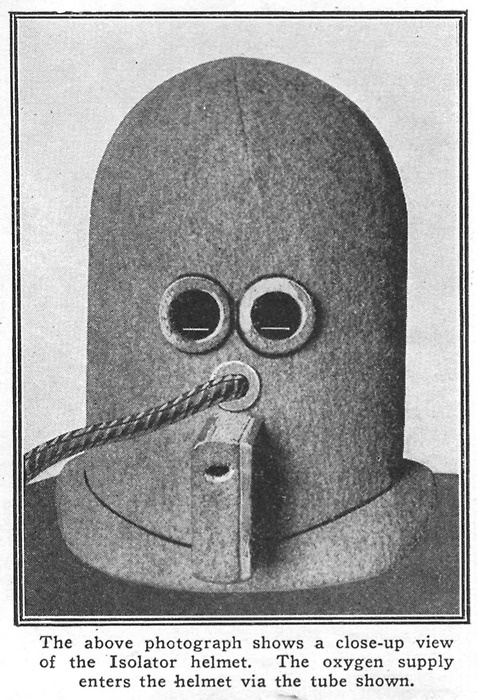
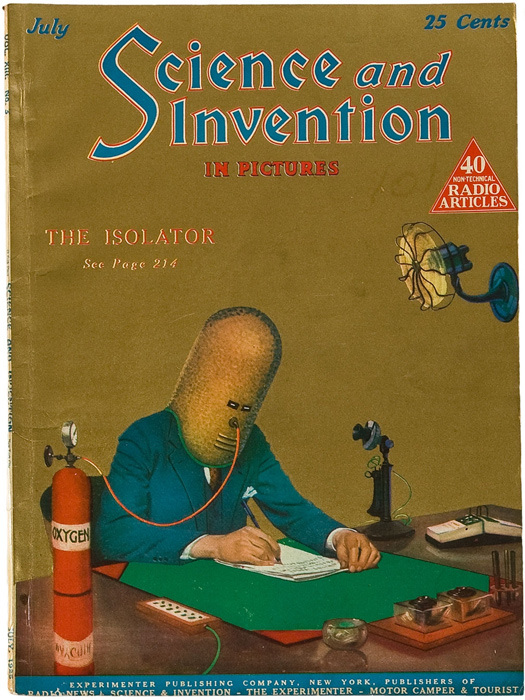
    I found this extraordinary image via collection of Finkiyaya on Pinterest, which is an interesting source for the unusual relating to the uncommon.  There is no attribution, but help came from correspondent Jeffrey Weston, who advised that the helmut belongs to none other than the ferociously active publisher/editor/thinker and creator of the term “science fiction”, Hugo Gernsback.  This was supposed to deliver a more powerful thinking and concentration experience to the user by delivering a flow of O2 , shutting off sound and auditory distraction, and by making the wearer focus their vision through a kind of horizontal pinhole slit. Gernsback I am sure did not use one of these things while working on his dozens of simultaneous projects, but he thought that it might help the rest of us–in today’s world, perhaps all we need to do to achieve this iolsation is turn off the electronics and sit at a clean desk.  In any event, the mask removed a fair amount of the human experience from thinking, and probably focused a LOT of attention on not-hearing and trying to see through those tiny slits. 

    Sub,arine helmet[Source: Pinterest account of Finkiyaya, here]

    [I wonder if Wilhelm Reich read about this as he was fiddling around with his “orgone accumulator” (read: “box”).   Even the crown prince of American Black Comedy, William Burroughs, could not wrestle this Reichian thing outside its impossible cellulosity of weird. As odd as Gernsback’s thing is, Reich’s goes on-beyond-zero with his, thinking that his siting-coffin collects/regulates an etherless ethery thing called orgone which was the seat of many and remarkable things, not the least of which was a controller of cancer and the weather.  It sounds sort of like a water-cycle thing but for a thing that influences thought and consciousness and biological systems as well as our ocean of air–that’s a long pull for a box with a chair in it.]

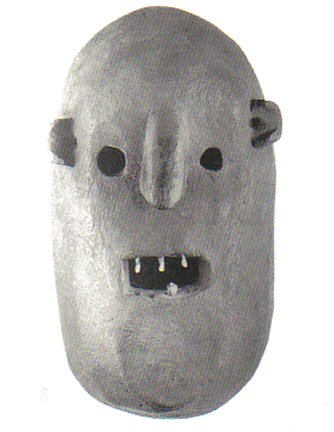
    Now three’s plenty in this helmet to suggest itself to the history of masks, but that is an enormous diversion, because I was really just looking for complements in the mechanical helmet world.  I could not resist though including this magnificent mask made by someone of the Sukuma ethnic group of Tanzania:

    Sukuma_mask_TAA

    It is interesting to note hwo the Isolator mask eprforms up to its name, isoalting human qualities to a high degree, muhc like the Sukuma mask.  There is a real encapsulating experience going on with these helmets and suits, looking far more robotic and alien than anything else. 

    And a last visit to Gernsback:

    BioPunk Isolator
    [Source: LaughingSquid, here.]

    And another (source here):

    Gernsback isolator

    How could any of this possibly go wrong?