A Daily History of Holes, Dots, Lines, Science, History, Math, Physics, Art, the Unintentional Absurd, Architecture, Maps, Data Visualization, Blank and Missing Things, and so on. |1.6 million words, 7500 images, 4.9 million hits| Press & appearances in The Times, Le Figaro, Mensa, The Economist, The Guardian, Discovery News, Slate, Le Monde, Sci American Blogs, Le Pont, and many other places… 5000+ total posts since 2008.

Author: JF Ptak

  • Anti-Nazi Cover Art, 1931

    JF Ptak Science Books   Post 2226

    German cover art044

    In a similar intellectual capacity (though not so much in the same genre) as the great John Heartfield, this cover illustration depicted what many were thinking about the Nazi Party in 1931. It appears as the illustration for Brechen die Nazis die Zinknechschaft?? Raffer und Schwatzer!, printed by the SPD (Sozialdemokratisch Partie Deutschland in 1931.  It also seems as though it was a response to the recent NSDAP victories in elections for the Reichstag on 14 September 1930.  That election was a major show of the Nazis and a semi-modern meet-and-greet campaign for Hitler, a political blitzkreig (in its way), a showing that had been unseen before in German politics, a production of short and repetitive phrasing, long promises and short details.  The result was an incredible win for the Nazis, going from fringe element with a comical leading figure to the second-most powerful party in the country, receiving more than 6 million votes and 107 seats in the Reichstag.  

    The SDP had a lot to worry about. In the last election the SDP had 153 seats with the Nazis 12; in September 1930 the SDP lost ten seats while the Nazis took 95, outpacing their new rival by over about 2 million popular votes.  In the March 1933 election the NSDAP took control of the Reichstag, ending with 288 seats, with the Social Democrats becoming the new second party with 120.  This was the beginning of the end–by the third week in March the Enabling Act was pushed through the NSDAP-Reichstag giving Hitler plenary powers with the ability to make laws without the input of the Reichstag.  The Act passed following the strong-handed rule-bending, with only the SDP members voting against it.  A new election was called in November 1933, with the Nazi Party being the only part to vote for–it received 92%  of the vote, consolidating Hitler’s control.  

    The pamphlet above was a slim 10-pfennig work, a diatribe against the Nazis.  The cover art warns the casual browser that once the Nazi mold/Facade (? of a relatively decent-looking Hitler-like face) was broken there was nothing underneath it but a snarling, puffy, monocled Brown Shirt.  (Unfortunately the cover art is unsigned. The pamphlet is pretty rare, with only one copy (NYPL) showing in the massive catalog of worldwide library holdings, the OCLC/WorldCat.)


  • The World Going On Underground: Miners, Sappers, Tom Waits

    JF Ptak Science Books 

    Underground working steep102

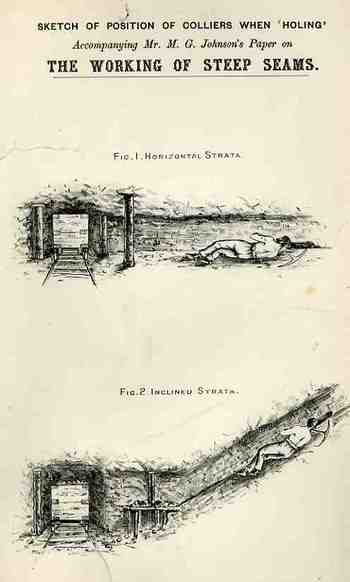
    Looking at these two images of the shirtless miner laying down and working on his side in the semi-dark way underground in what looks to be a tunnel about twice the width of his shoulders makes you wonder about how in the name of great bog could people have done this, day in and day out.  The fact that the appearance of these images were both essential and mundane further tells us—as we sit here in a comfortable chair in the print’s future—that this is, simply, what people did, and what they had to do.

    Blogjuly_17_work334

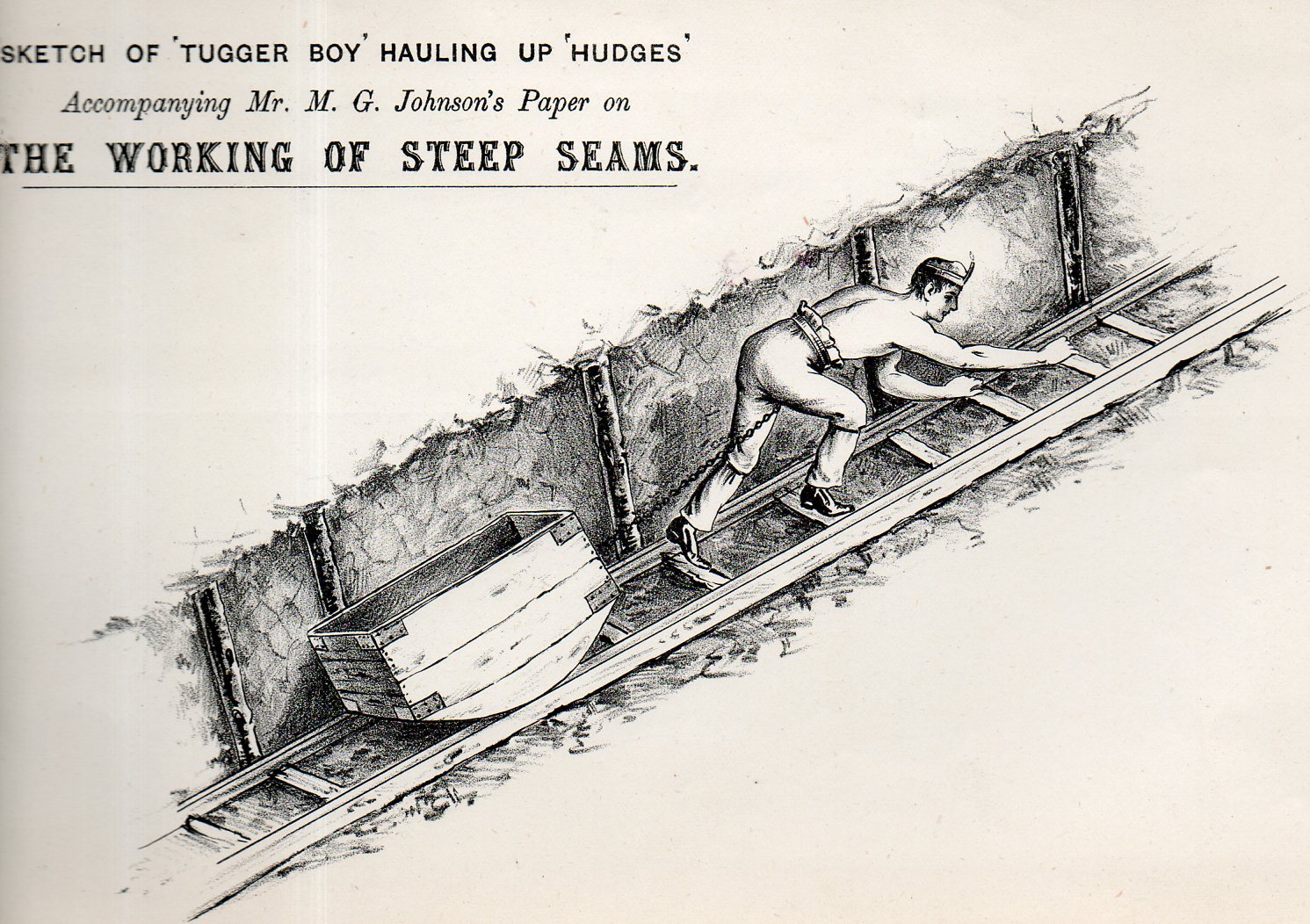
    This was “holing”, as in working in a hole, and served to illustrate a point in Mr. M.G. Johnson’s paper “The Working of Steep Seams”, which I think appeared in a West Australian mining journal around 1900.  So, it seems, the guy, the worker, in the picture would spend his day chunking coal from a hard vein, laying down, scrapping (I think) away at the coal in a too-tight tunnel.  Did he do this for hours?  Days?  Weeks?  I guess the bad answer is that he did this as long as the coal could be followed.   (Also, it looks as though that the major tunnel in which the coal car is located may be 4 or 5 shoulders high—certainly not tall enough to walk in, which means that this guy could’ve crab-walked to this position for a half mile or more, just to get to work.  The tenacity of this worker to do his work and collect his pay to feed his family was just incredible. 

    The first image really doesn’t need much commentary, though calling the worker a “tugger boy” pulling up a “hudge” was probably a bit of sardonic camraderie–except that the doing of the job would distance you from its folksy name. Well, that, or the “tugger boy” really is referring to a boy, as we see in the followlign mining definition: “Tugger boy (Brist). One who draws small tubs or sleds underground by
    means of a tugger. Called Tugger-work. (Gresley), 1883).  The depiction of what seems to be a mature man in the image might be a piece of propaganda. In any event,  the Tugger Boy carries his own flame on the top of his headgear, and the chain that attaches him to the heavy coal bucket runs from his waste down the front of his body and through his legs.  Very hard work needless to say–harder yet done by a child.

    George Orwell wrote perhaps one of the most brilliant descriptions of the mining environment in his superb The Road to Wigan Pier. (It is well worth reading all of Orwell’s books at this point—his insights almost never looked so fresh.)

    He  describes the crab-walk from the elevator to the place of work, telling how difficult and exhausting the process was of just getting to the place where you would then begin your difficult workday.  Of the miners he says at one point:  “Watching coal-miners at work, you realize momentarily what different universes people inhabit. Down there where coal is dug is a sort of world apart which one can quite easily go through life without ever hearing about. Probably majority of people would even prefer not to hear about it. Yet it is the absolutely necessary counterpart of our world above.”  Read more here.

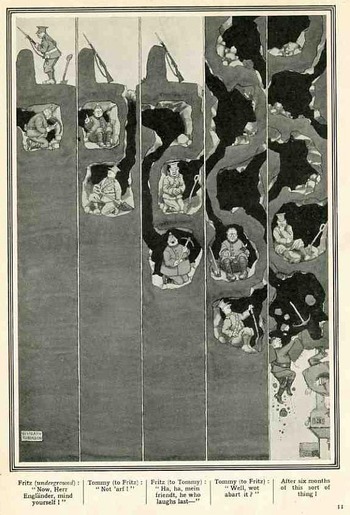
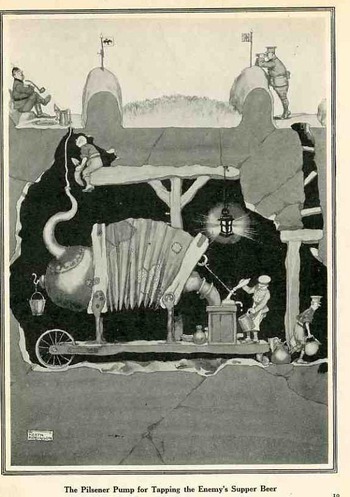
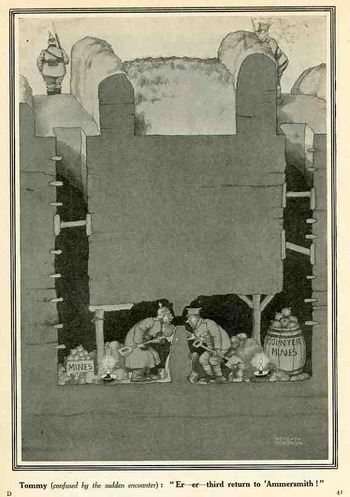
    The next series of images come from the pen of W Heath Robinson (1872-1944) who was a lovely, quirky, charming, skewed, dark, stiff-bouncing and creative illustrator capable of considerable whimsy (light and complex) and deep skepticism.  The images I’ve selected are from one of his three WWI books, Hunlikely, published in 1916 (Some “Frightful” War Pictures (1915), and Flypapers (1919), were the other two) and depict scenes from the intra-trench tunnel wars, which were battles fought in the midst (or, actually, beneath) other battles.  This was a savage, grueling, post-adjectival affair—exceedingly dangerous, difficult, awful.  And it happened a lot during the war, given the experience of stalemates between vast armies sunk into mole city trenches, with no one going anywhere for long periods because there was nothing in between the two impervious lines but a death vacuum. 

    Blogjuly_18_mining_robinson338

    So one of the solutions was to try and tunnel underneath the opposing army’s defenses, fill the far end with high explosives, and blow them up.  The other side was doing it too, and in the middle of it all was the incorporation of newer/better listening devices to detect forces rummaging around underneath your position dozens of feet into the ground.  It was a bad business. (One of the other means of breaching the trench lines was aerial combat, but bombers carrying tons of HE were still yet to be invented; poison gas was another.  Most of the time the armies would just meet in the middle  in wide plains of nothingness in a sea of hot, expanding metal,  where to this day in many of those places nothing can live).

    Robinson’s illustrations are odd, and oddly funny, the dark humor coming at the expense of both sides of the conflict, piercing each.   

    Blogjuly_18_tunnel_2_robinson340

    This puts me in mind of Tom Waits’ concrete-toothed “There’s A world Going On Underground” song from the Swordfishtrombones album. 

    Rattle big black bones in the danger zone
    There’s a rumblin’ groan down below
    There’s a big dark town, it’s a place I’ve found
    There’s a world going on underground
                
    They’re alive, they’re awake
    While the rest of the world is asleep
    Below the mine shaft roads, it will all unfold
    There’s a world going on underground
                
    All the roots hang down, swing from town to town
    They are marching around down under your boots
    All the trucks unload beyond the gopher holes
    There’s a world going on underground

    Blogjuly_18_tunnel_3_2_robinson341

    ·Posted by :

    ·in:


  • Atoms and Splitting the Atom in the OED

    JF Ptak Science Books   Quick Post

    Boy and his atom[Still from the IBM 2013 video “A Boy and His Atom”, where a team manipulated carbon monoxide atoms on a 45×25 nanometer frame.  Just for reference a human hair is 105 nm, and there are 24×109 nanometers to the inch. Small.]


    I was looking around, trying to figure out a chronology of small, of how small things can really be, when I decided to check out the basic terms of conversation in the Oxford English Dictionary.  I was surprised to see that the first reference to “sub-atomic” was much earlier than I expected, finding a place in the five-year-old science journal Nature, in 1874.  Just for the sake of it I’ve made a list of the atomic-related words that came to mind, just to see how they were entering relatively common usage in English.  And so, below:  sub-atomic, inter-atomic, atom, split the atom, proton, electron, and neutron.


  • Full Metal Jacket, 1918

    JF Ptak Science Books   Quick Post

    WWI Photos Blindfold077

    WWI Photos Blindfold078

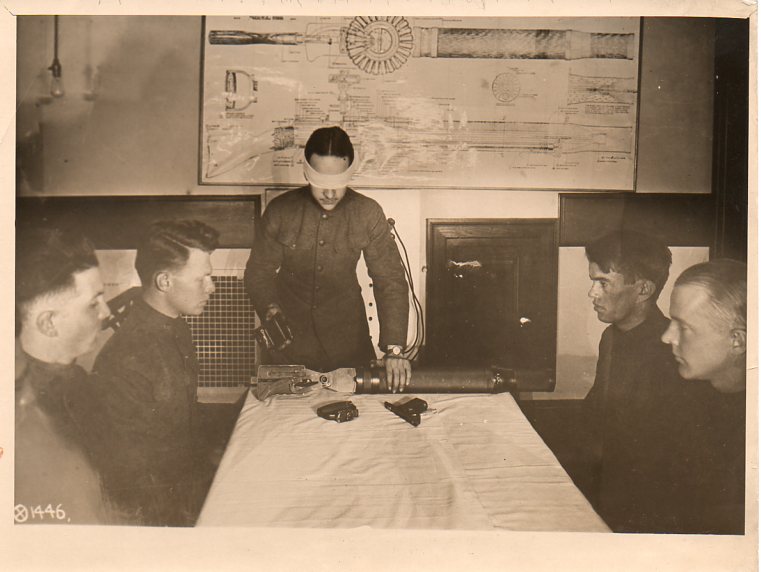
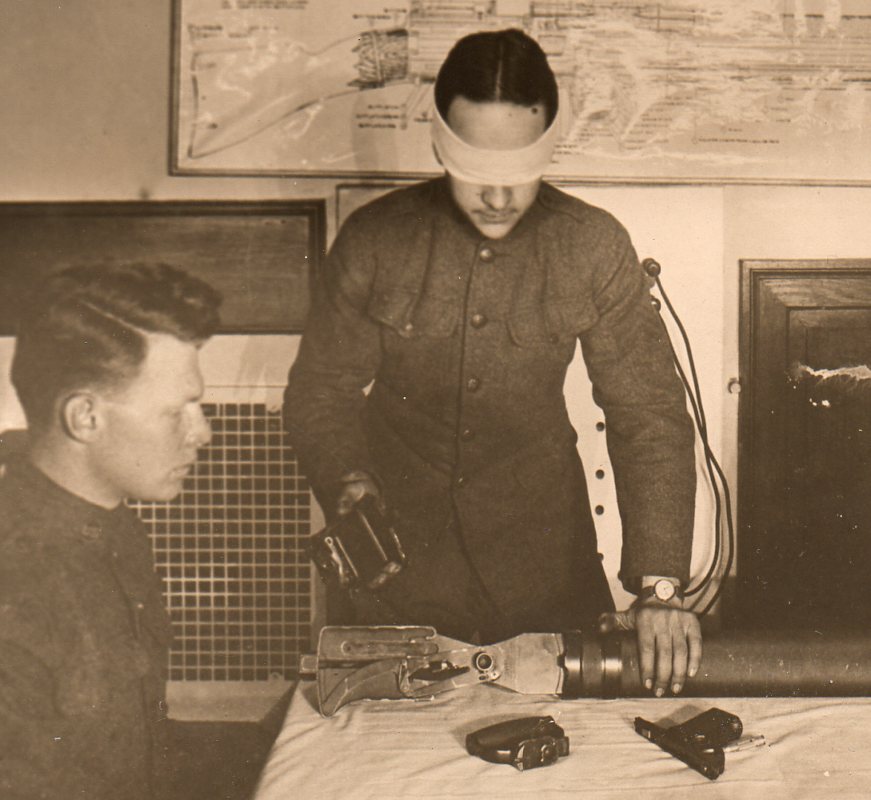
    I do believe that this is a Lewis Machine Gun, one of the most popularly-used automatic weapons by the BEF (and of American design). It was a gas-operated weapon firing a .30-06 Springfield at 500/600 rpm withan effective range of about a half-mile.  The drum magazine (not present here so far as I can see) held 47 and 97 rounds.  These soldiers were all business. (Source: this is one of perhaps 400 WWI news service photos down in the warehouse…)

    ·Posted by :

    ·in:

    — —

  • America Attacked, 1937–and the Unusual Architectural Response to Poison Gas and the Homeless Unemployed

    JF Ptak Science Books  

    [An earlier post on this blog, Mapping the Invasion of America, 1942, addressed another vision of the invasion of the United  States–it is also the most viewed post that I’ve written, having been read more than 400,000 times–Part II of this post may be seen here; and while you’re at it  consider a  related post on the Nazi sub-orbital Amerika Bomber.]

    America attacked poison962
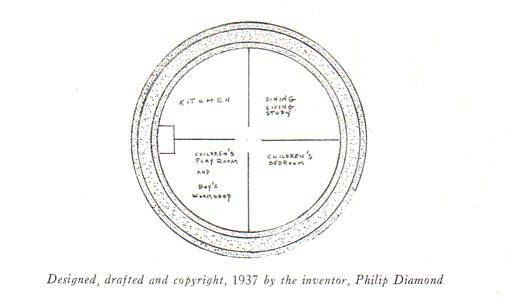
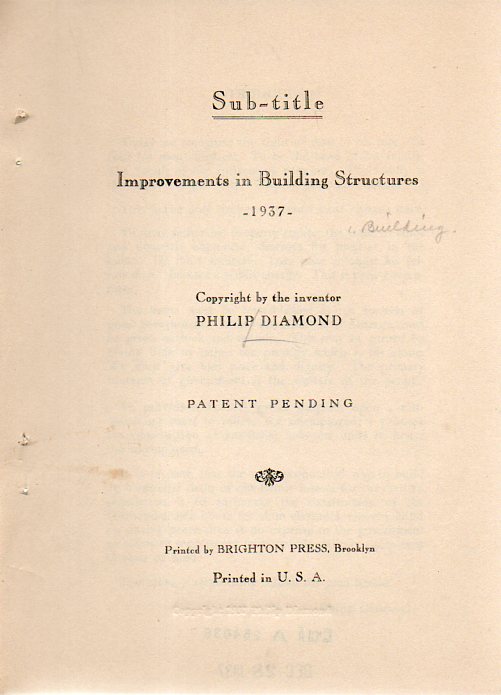
    Philip Diamond discovered an interesting concept in “blurryness” in the pursuit of building with a purpose.  In his pamphlet Should it Happen Here, self-published (and printed by the Brighton Press of Brooklyn, U.S.A.) in 1937, Diamond established a need for creating (1) inexpensive housing for the unemployed and (2) poison-gas-proof housing for Americans in general, and came up with (1.5) inexpensive poison-gas-proof housing.  In blurring the lines between the two needs I’m not sure that he satisfied anyone’s needs, spreading his engineering/architectural gifts jut a little (or a lot) of bit too thin.

    One thing Diamond was sure of was that the next war would be governed by “one man flying in an aircraft and releasing vapors of poisonous gas for destruction” and assured his readers that in this new war “there would be no front lines”.  “The future war will not be carried to the front line; it will be carried to the front door.”  That of course was true for hundreds of millions of people in Europe and the Soviet Union and South Asia, but not so in the same sense for anyone in America–unless those Americans happened to live on a remote chain of Alaskan islands.  Diamond was sure that war was coming directly to the U.S., and although he doesn’t name the country/countries that would be responsible for attacking America with poison gas, he did name one of the aircraft that would come here to do that–the HE112. (The HE 112 was a prototype fighter aircraft that wasn’t adopted, with fewer than 100 produced. How this would get across Europe and then across the Atlantic and then across the U.S. I’m not sure.)

    America attacked poison963
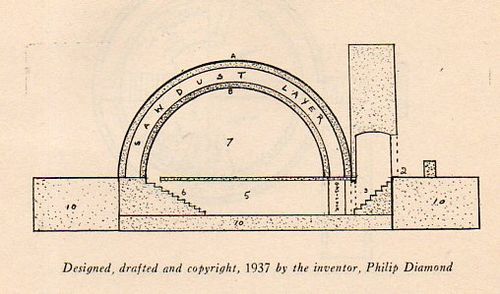
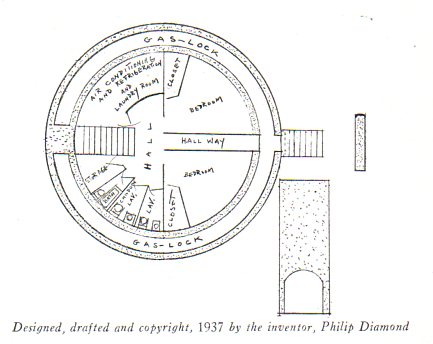
    Once Diamond gets to the design of his house things get a little fuzzy–and heavy./  Very heavy.  HE proposed a domed structure with a foot-thick “exterior roof” and a foot-thick “interior roof” of concrete, between which would be sandwiched three feet of sawdust.  The sawdust was supposed to act as both a filter to noise and soot and dust from the outside world, as well as a filter for poisonous gases. 

    The 5-foot thick structure would be embedded on a 10-foot thick concrete bed (for earthquake protection) and surrounded on its sides by another 10-foot concrete structure of something that I can’t figure out.  Not surprisingly, the author announced with a section headings that there would be “No WIndows”.  There would be a double entry equipped with an “air condition” that would wash folks entering the house and decontaminate the gases that might’ve impregnated their clothing or bodies (though Diamond says nothing about outerwear). 

    America attacked poison964
    Once inside (charmingly referred to as “the vault”) the occupants would find two bedrooms, a kitchen/dining room, and two lavatories (one “miniature” for the children, not so much for “hygiene”, but to “protect the delicate moal grace amongst the children”. That was the best line in the pamphlet, and about the only thing that really made any sense.)

    6 million of these houses could be constructed for the unemployed, costing $3,000/each, meaning that this part of the project could be funded with 18 billion dollars.  This was at a time when the New Deal was having a heart attack, unemployment was spiking again, and the entire GDP of the U.S. was $91 billion, which means that Mr. Diamond was seeking a 20% cut of the GDP pie.  In current terms, that 20% would mean $3 trillion. 

    So far as I can determine Mr. Diamond’s plan was not taken seriously. 

    Also, this I think is my only encounter with  a title pages that starts out with the words “Sub-title”.

    America attacked poison965


  • The Aeronaut as Improbable Panhandler, 1785

    JF Ptak Science Books   Quick Post    Aviation and Flight series

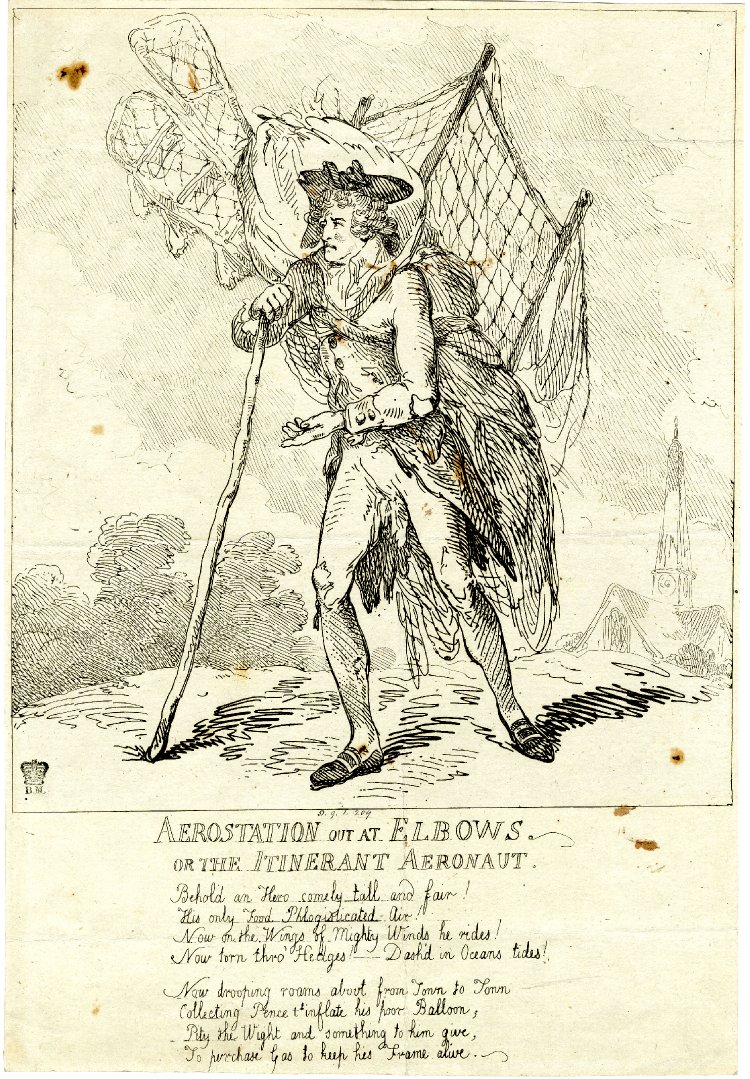
    Flying wasn’t always depicted as a mythic or glamorous or future-inspirational, as we can see in this 1785/6 etching by social memoralist and caricaturist Thomas Rowlandson:

      Aerostation out at elbows  BM[Image source: the British Museum.]

    “Lunardi, slim and handsome, walks diagonally towards the spectator from the right, supported on a staff, his left hand held out as if begging…”(–LOC) is one description of this print, though Lunardi himself seems to have been an upper-crust Frenchman of Italian lineage who made a number of successful ascents in 1784/5, or at least enough success to write a book about them. He did suffer a few tragedies, one of which did put him into a rescuable position in the sea. Currently, though, I’m not sure why this image came into being–perhaps he asked one too many times the wrong person for help with funding his project.  Nevertheless it is interesting to see such a grounding image of the enterprise of flight just a few years after the first Mongolfier flight.  

    The legend beneath the image is reproduced more legibly in Joseph Greco, Rowlandson the Caricaturist, 1880 (below, and here), revealing a Rufus Thomas-like versifying (Thomas would rhyme “Sidewalk” and “BAltimore” and make it work) by same-self-singing “town” and “balloon”:

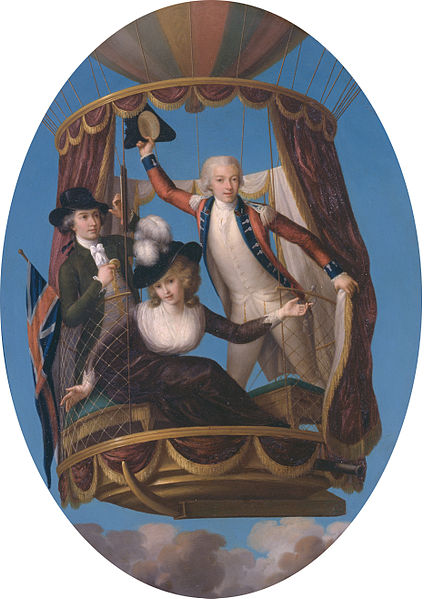
    And Lunardi depicted in happier circumstances (“Captain Vincenzo Lunardi with his Assistant George Biggin, and Mrs. Letitia Anne Sage, in a Balloon, by John Francis Rigaud”, via Wikipedia), which seems to be more the case in his making it into print than the panhandler image above:

    Lunardi


    ·Posted by :

    ·in:


  • Stalin’s Repugnant Haiku: Poetry Using Stalin’s Borrowed Library Book Titles (1926)

    JF Ptak Science Books    Post 2216  History of Blank, Empty, and Missing Things series

    I don’t mean this post to be snarky or irreverent, really, because we’re dealing with one of the most fantastically murderous people in the history of humans.  Since the seven book titles that I have been able to find so far are so, well, unusual, that pulling the individual words out and alphabetizing them might prove to be an insight into the mind of grown-up Soso, Joseph Stalin.  I found the titles while researching Stalin’s report card from when he was a child, and found “Stalin’s Library Card”, by David Wojahn, a poem in seven parts that treats each of the books borrowed by Stalin in 1926, when he was 47 years old. 

    Stalin in 1926 had been General Secretary of the CPSU for two years, in spite of several years of bickering and argument with the stroke-ridden Lenin, who for some years before his death (in 1924) grew more stratigraphically dissatisfied with Stalin and warned the resat of the leadership against him.  After maneuvering against Zinoview, and Kaneneov, and Trotsky, and Bukharin and all of the people below them, Stalin was by this time solidifying his power.  Purges, manufactured famines, internal deportations of millions, executions, imprisonment, and stupid decisions at the beginning of the German invasion of the USSR in WWII, Stalin had his had in causing the death of many millions of people.  

    What did he have in mind in 1926 with these books1? Well, I think we know. There are 36 words used in the titles, including six repetetives, leaving 30 unique words.  There’s certainly enough for haiku if you wanted the taint, and a poem like that could be one that would be difficult to unremember, not (in spirit but of course not in equivalence) unlike the unremembered masses who were forced into “non-personhood” by Stalin, who when he finally died was left out of the very next printing of the Great Soviet Encyclopedia as the Vast Un-nameable. 

    I’m cataloging this entry in the History of Blank, Empty, and Missing Things series because Stalin caused so muuch of that to happen to so many people, to nearly an entire country.  And then he became missing, himself.  


  • Being in Regret–Verdun, 1916-1918

    JF Ptak Science Books  Post 2215

    IMG_6842

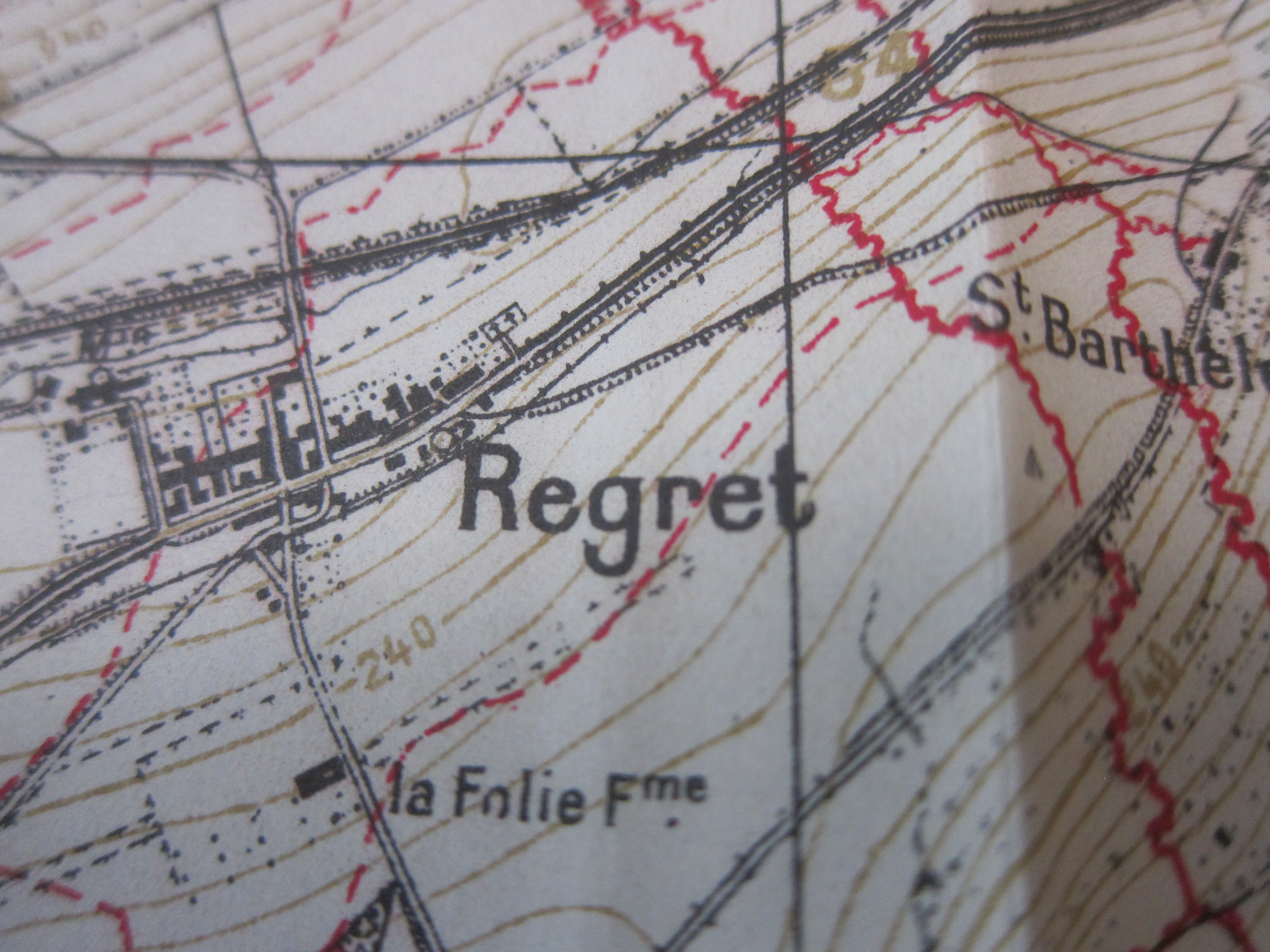
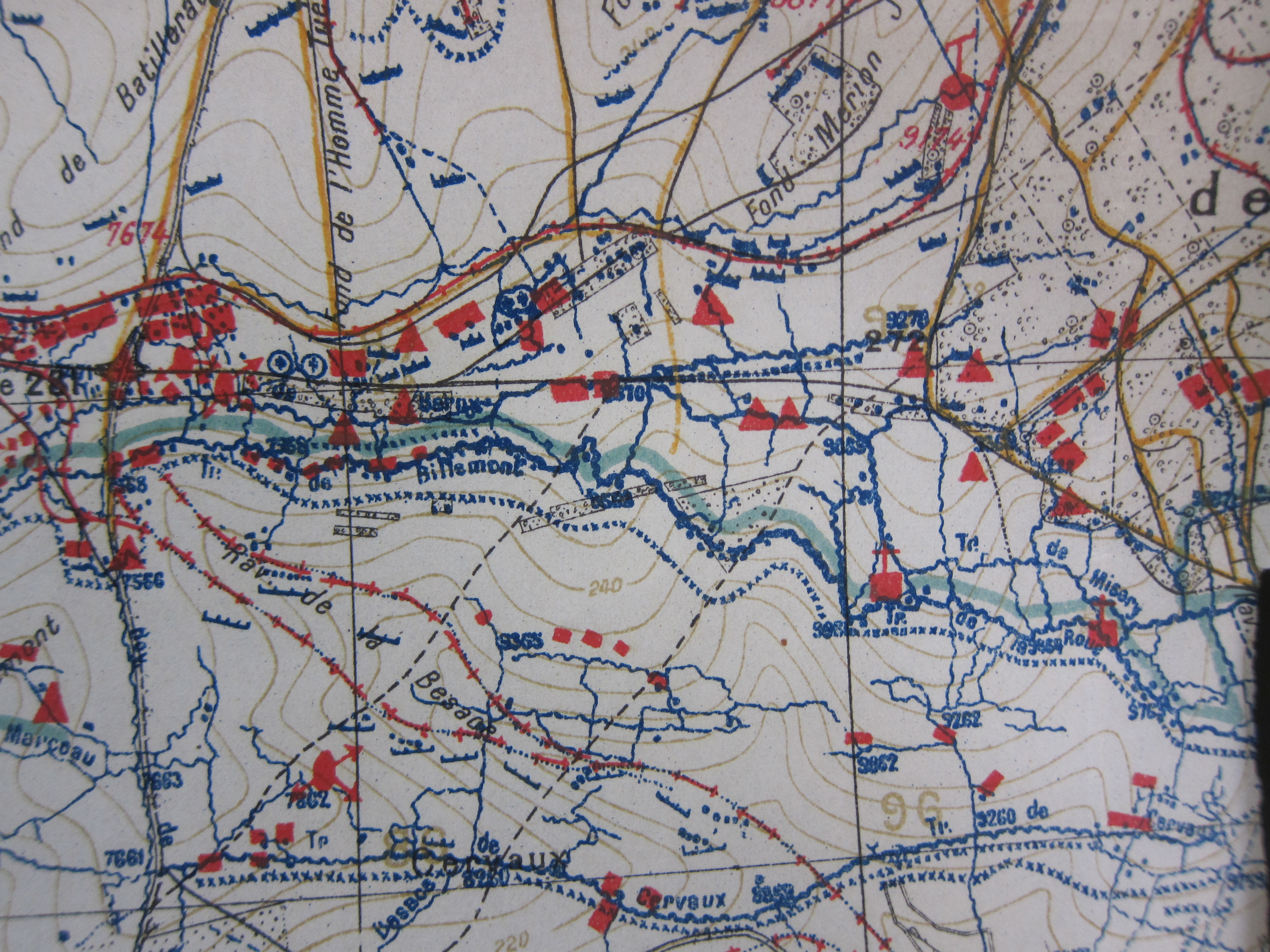
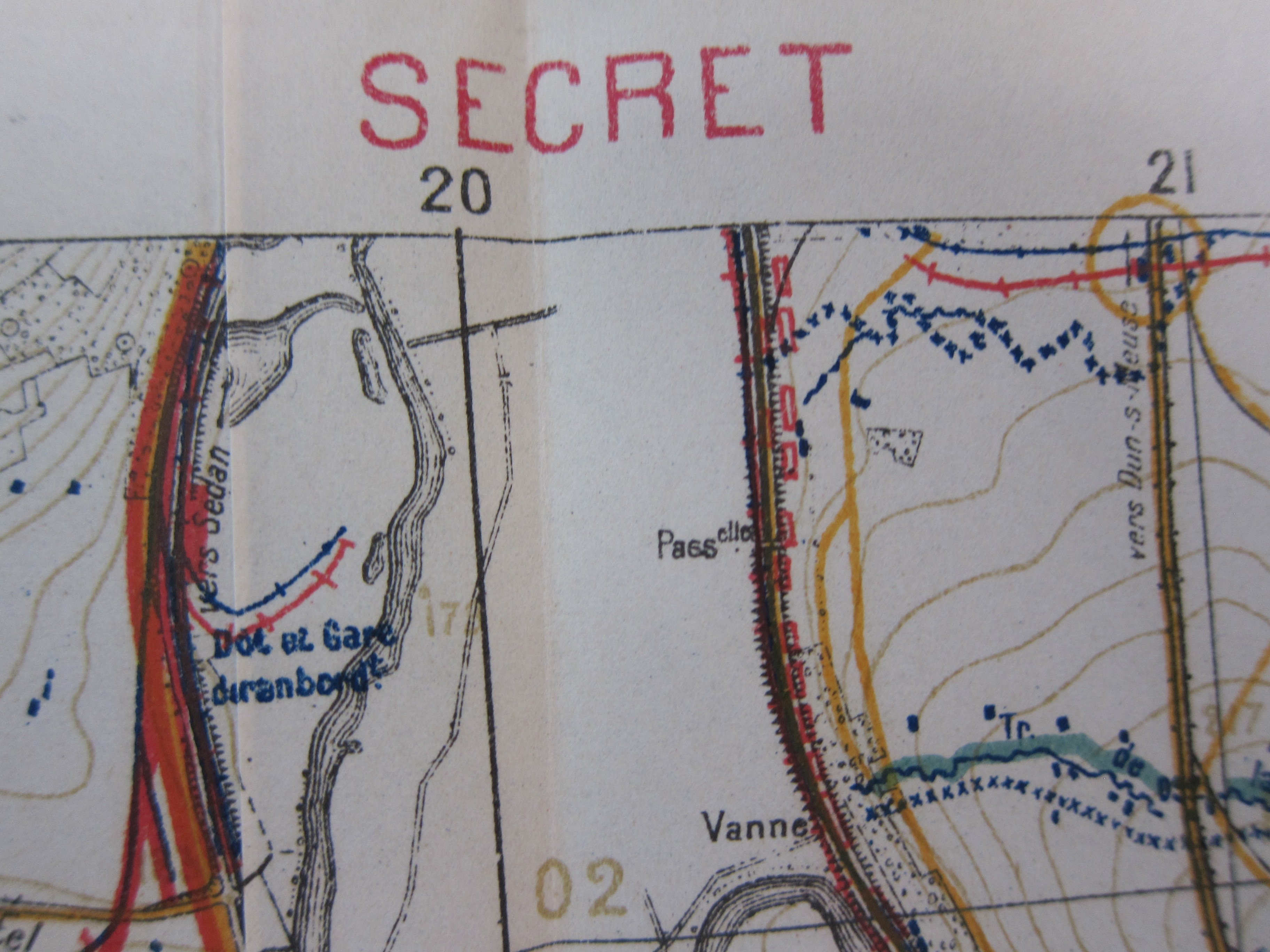
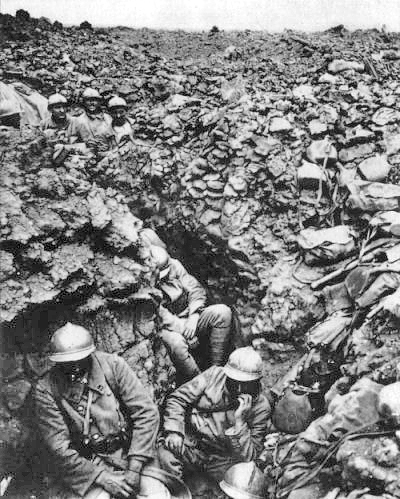
    I was looking through a very heavy volume from 1924 of Military Engineer and came upon a very large folding map1.  It was vanilla on the outside and stayed so, opening only the back of the map through one, two, three, four (!)  unfoldings,  not yet revealing itself, until it was at it full width, and then unfolded once down, which opened to the middle of the map, which was a mass of lines and shading of brown and gray.  Another unfold up, and then another down, and more of the same, so much detail that the context still was hidden. I unfolded the bottom half of the map three more times and at the bottom was the town “Regret”.  My right hand obscured the name of the much larger and antique-fortified town, which turned out to be the military-sacred city of Verdun.  When I unfolded the top of the map–making it about four feet long–I saw that it was for development of the battle and lines of communication and placement of troops and so on for part of the Autumn of 1918. And trenches.  

    (This was actually “Verdun B”, the mate of “Verdun A”, which together form a huge and wildly complex 4×4′ map. )

    IMG_6843

    This was a reprint six years later of the 34th edition of this particular map–that is a lot of editions.  But this was a lot of place, Verdun.  A fluid place of ordered killing chaos that was as dynamic as it was occasionally static, starting in a very contained space of massive fighting that took place from 21 February to 18 December, 1916. The map is of a place that was about the longest, costliest, and deadliest battles that humans have come to, so far.   Casualties were about the same on each side (370,000 French and 340,000 German) and totaled about 710,000 people, though scholars argue the point, some coming to a figure much higher, approaching a million.  That makes 70,000-100,000 per month for the battle, which was like a war in itself. 

    There were probably two million soldiers in motion here, at Verdun, in a relatively tiny area, with front lines extending about five miles or so, the battlefield being fairly narrow from point to point, perhaps totaling 20 square miles of heavily bombarded/shelled ground.  It was a terrifying place to be, and I’m certain that it must have scarred forever hundreds of thousands who survived the ordeal.  

    IMG_6844

    Unfortunately Verdun 1916 was only about the half-way point of the war, with these maps generated to show artillery targets for the American entry in the war for action that would take place just before the end of the war on the 11th hour of the 11th day of the 11th month of 1918. This was the French Fourth Army and the American First Army which attacked on a front from Moronvillers to the Meuse on 26 September 1918 through the end of September, and from which the German army began its gradual withdrawal from the area, continuing right up to Armistice Day.  

    Ultimately whenever I think of this war things usually boil down to Dalton Trumbo’s Johnny Got his Gun, which was required reading in my freshman year of high school in 1970.

     Verdun


    Notes:

    1.  Journal of the Society of Military Engineers, volume 16, 1924; the map titles are “Tranchee Francaise schematique a la date de 1er Sept 1918″ and “Carte Generale des Objectifs d’Artillery”.  


  • Monster Soup & Germ Constellations: the Thames, 19th Century

    JF Ptak Science Books   Post 2214

    “The whole of the river was an opaque pale brown fluid. ……. surely the river which flows for so many miles through London ought not to be allowed to become a fermenting sewer.” –Michael Faraday

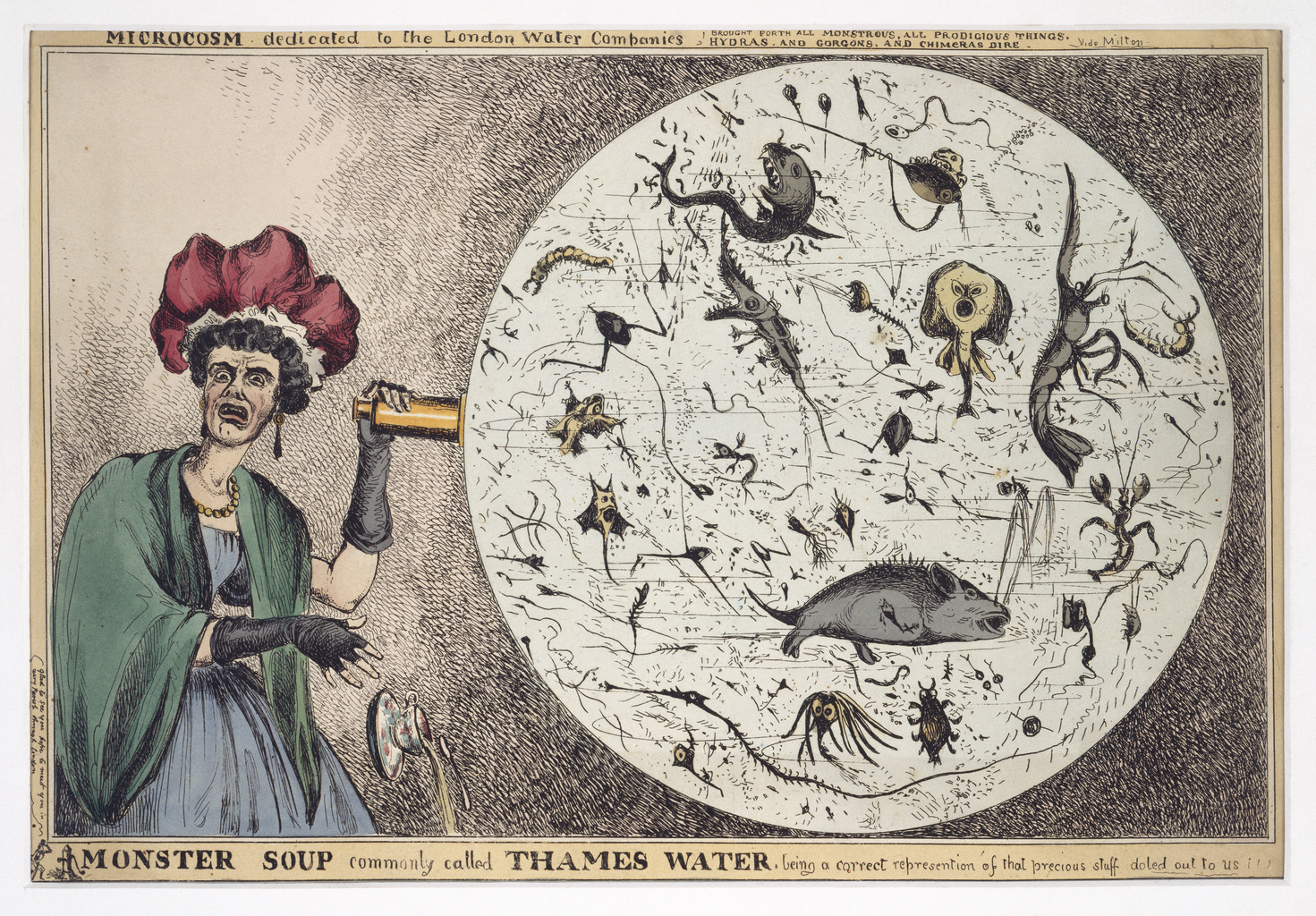
    The Thames evidently was all of that, and much more.–but its biography became all the more explicit in the 19th century when people took a very close look at samples of its water with microscopes.  The result was outrage and heaped disgust.  

    There is a much-quoted quote from Charles Dickens, spread around the internet, but offered everywhere without attribution, offering up the River Thames as  ‘a dank, stinking sludge, the scene of murders and crime’.  Another (attributed)  bit of Dickens celebrating the horribleness of the river goes further: “Miles of close wells and pits of houses, where the inhabitants gasped for air, stretched far away towards every point of the compass. Through the heart of the town a deadly sewer ebbed and flowed, in the place of a fine fresh river.”–(Little Dorrit, Cbook I chapter 3)  I don’t know if Dickens ever saw samples of the river water, and so far as I can tell he didn’t write about it, though perhaps he didn’t need to–the macroscopic level of the river was more-than-enough for him.  
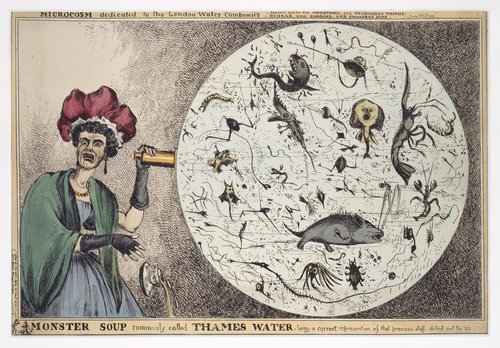
    Thames

    [Image source: the Wellcome Collection, following an image-post by Jennifer Ouellette]

    It is unknown to me how early published images get to be illustrating the microscopic world of the Thames, but as we can see above in William Heath’s 1828 hand-colored etching, the realization of the endless  varieties of constellations dislocated any warm/fuzzy feelings that Londoners would have harbored regarding their river.  

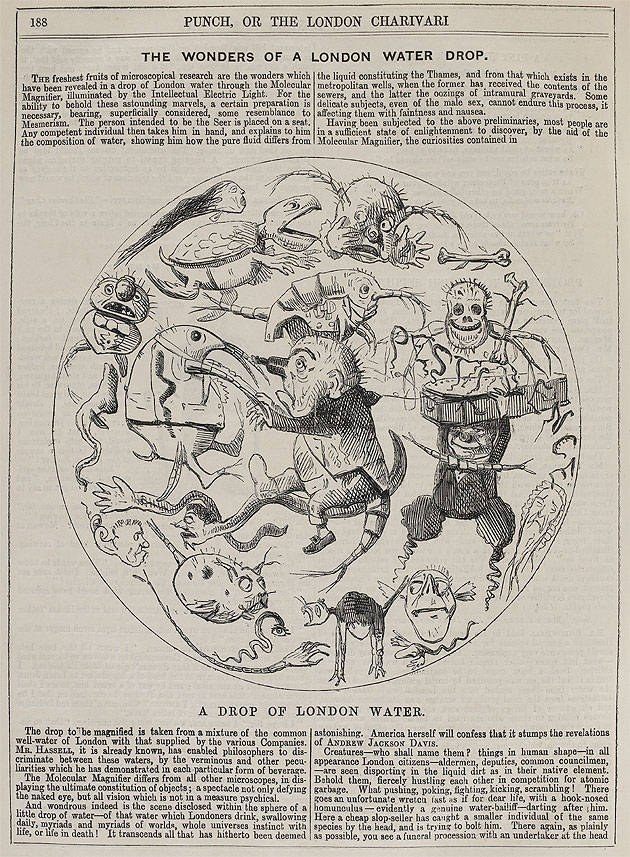
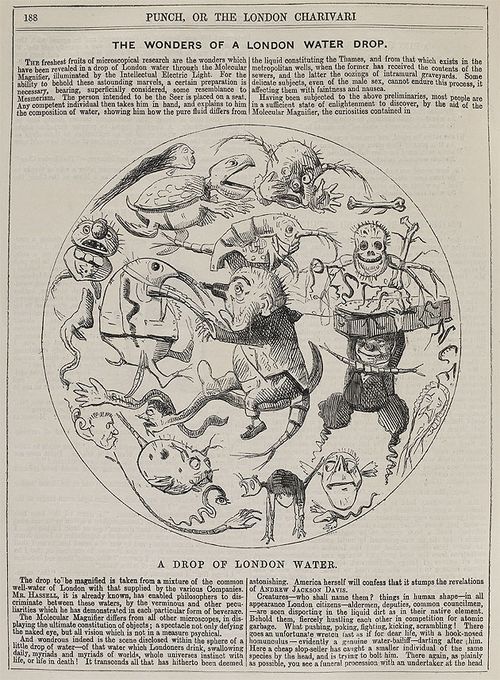
    Here’s another example of discovery, appearing in the much-read Punch, or the London Charivari (a satirical, sharp and biting magazine based on the earlier French periodical Le Charivari which began publishing in 1832) in 1850: 
    Thames punch 


    The caption reads in part: “And wondrous indeed is the scene disclosed within the sphere of a little drop of water of that water which Londoners drink swallowing daily myriade and myriads of worlds whole universes instinct with life or life in death.”

    There’s so much that can be written about the river and the stink and cholera and the general nastiness and healthy aspects of using it for human consumption, and of understanding epidemics and their transmission of disease and sanitation and flush toilet impact and so on, in addition to its general moral decay and criminality…but that will have to wait for some other time.  The 1840’s and 1850’s and Dickensian London was a Big Time for the Thames, and not in a good way. It was an effluent life-force of the city that was spiked with disease and terror, reaching a high/low exclamation in the cholera epidemic of 1854.  

    But there were many low points for the river in those decades, and Dickens (since I’ve been quoting him here) was a major proponent of sanitary engineering for London, writing (particularly in his newly-established literary journal, Household Words, begun in 1850) and  frequently speaking on the topic. He was a major public figure, and his words were influential and reached a vast audience.  Still the improvement of the river took decades, and its miasmic mess reached well into the 20th century, and was declared basically biologically dead int he 1950’s, though it has rebounded today into being one of the world’s cleanest rivers coursing through a city.    

    Here’s another nightmarish vision of the river by Dickens, this from David Copperfield: “The neighbourhood was a dreary one at that time; as oppressive, sad, and solitary by night, as any about London. There were neither wharves nor houses on the melancholy waste of road near the great blank Prison. A sluggish ditch deposited its mud at the prison walls. Coarse grass and rank weeds straggled over all the marshy land in the vicinity. In one part, carcases of houses, inauspiciously begun and never finished, rotted away. In another, the ground was cumbered with rusty iron monsters of steam-boilers, wheels, cranks, pipes, furnaces, paddles, anchors, diving-bells, windmill-sails, and I know not what strange objects, accumulated by some speculator, and grovelling in the dust, underneath which — having sunk into the soil of their own weight in wet weather — they had the appearance of vainly trying to hide themselves. The clash and glare of sundry fiery Works upon the river-side, arose by night to disturb everything except the heavy and unbroken smoke that poured out of their chimneys. Slimy gaps and causeways, winding among old wooden piles, with a sickly substance clinging to the latter, like green hair, and the rags of last year’s handbills offering rewards for drowned men fluttering above high-water mark, led down through the ooze and slush to the ebb-tide. There was a story that one of the pits dug for the dead in the time of the Great Plague was hereabout; and a blighting influence seemed to have proceeded from it over the whole place. Or else it looked as if it had gradually decomposed into that nightmare condition, out of the overflowings of the polluted stream.–David Copperfield, 1850, chapter 46. Courtesy of the World Digital Library: http://www.wdl.org/en/item/3956/zoom/

  • Mending Socks on the Western Front, 1918

    JF Ptak Science Books    Post 2213

    World War I photos--sewing in field297

    World War I photos--sewing in field298
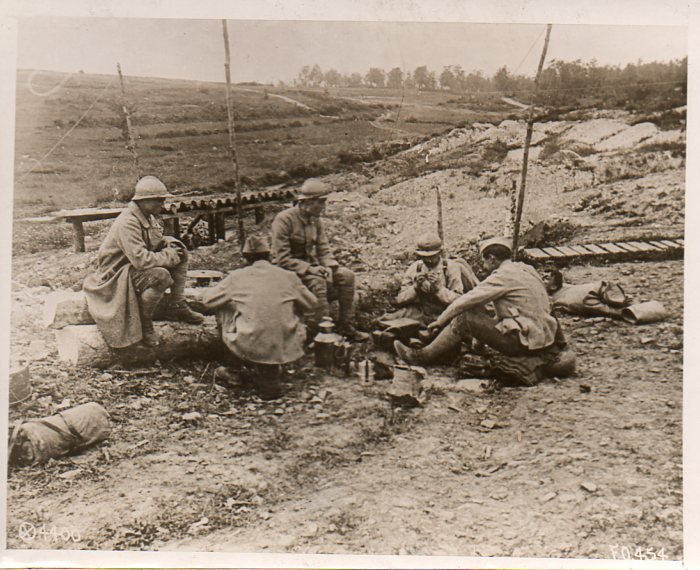
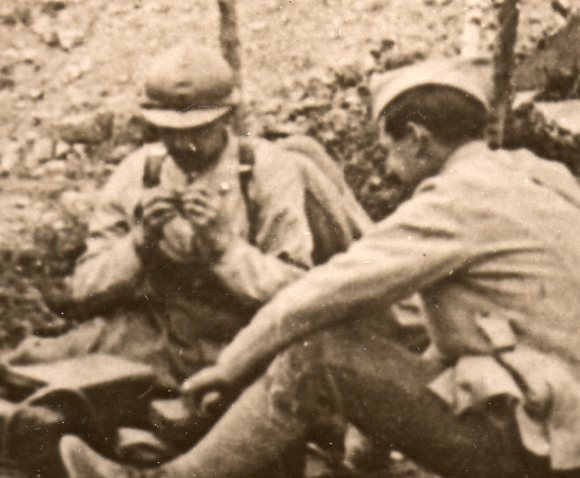
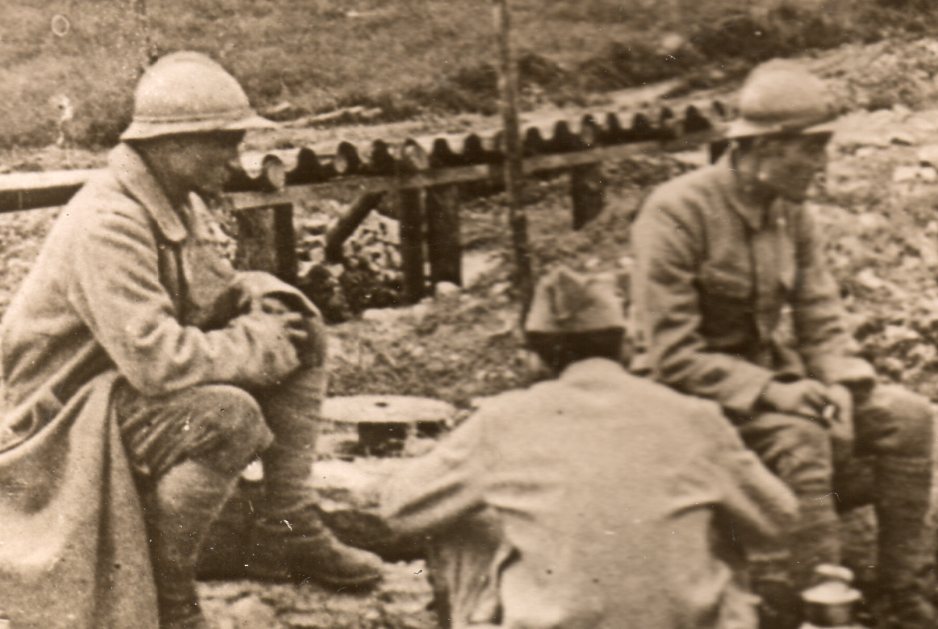
    This fantastic photograph calls to mind the importance of the little things of battle–dry socks, headgear, water, food, scissors.  And of course a good coat in the winter–a good coat that can be kept closed to allow the body to stay warm, or dry.  I mentioned in an earlier post here that it was a small thing that may have led to the demise of Napoleon’s army in Russia in 1812–the buttons on the overcoats of the soldiers were made of tin, and as tin becomes brittle in severe cold, it is conceivable that the buttons failed and therefore allowed the jackets to blow open much more easily than normal.  Little change that has an enormous impact.  

    World War I photos--sewing in field299

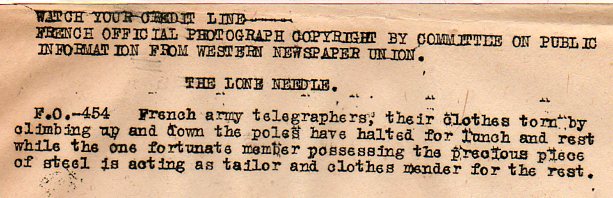
    This photograph–an official French photo published by the Western Newspaper Union in November 1918–shows a group of French telegraphic soldiers, taking a break, and mending their clothes.  The original text for the photograph (below) points out that their uniforms were torn and made shabby by continuously running themselves up and down telegraph poles.  It is important to keep yourself fit and fed and your uniform in good order, so they calmly awaited the repair of their uniforms y the one man with a needle and thread. 

    World War I photos--sewing in field txt300


    ·Posted by :

    ·in:

    — —