A Daily History of Holes, Dots, Lines, Science, History, Math, Physics, Art, the Unintentional Absurd, Architecture, Maps, Data Visualization, Blank and Missing Things, and so on. |1.6 million words, 7500 images, 4.9 million hits| Press & appearances in The Times, Le Figaro, Mensa, The Economist, The Guardian, Discovery News, Slate, Le Monde, Sci American Blogs, Le Pont, and many other places… 5000+ total posts since 2008.

Author: JF Ptak

  • Thrice Fortified is He Who Fights for Right

    JF Ptak Science Books  Quick Posts

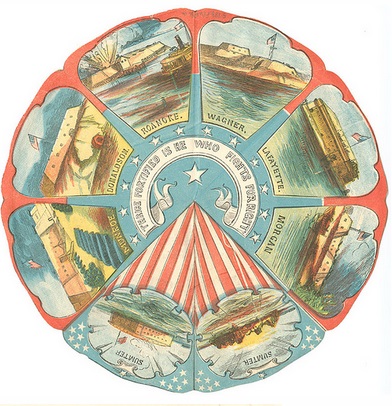
    These interesting rondelles (or “pies” as they are referred to on the Library of Philadelphia site, the home of these objects) are visually arresting images. The two examples below depict eight views of famous (Union) forts, and the second shoes the cycle of a Union recruit (“History of The Soldier Lad Folded in What He Best Loves, The Stars and Stripes, Red, White, and Blue”) and his progress through the war.  

    Civil War Pie--forts


  • A Beautiful Confusion

    JF Ptak Science Books   Quick Post

    Time Germany 2

    [Image source: Bibliodyssey, 19th Century Infographics]

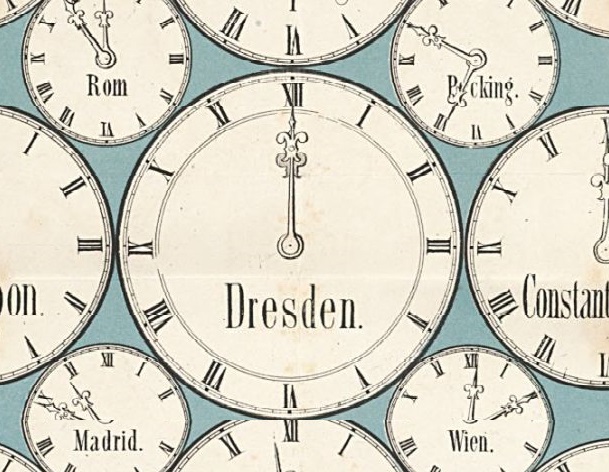
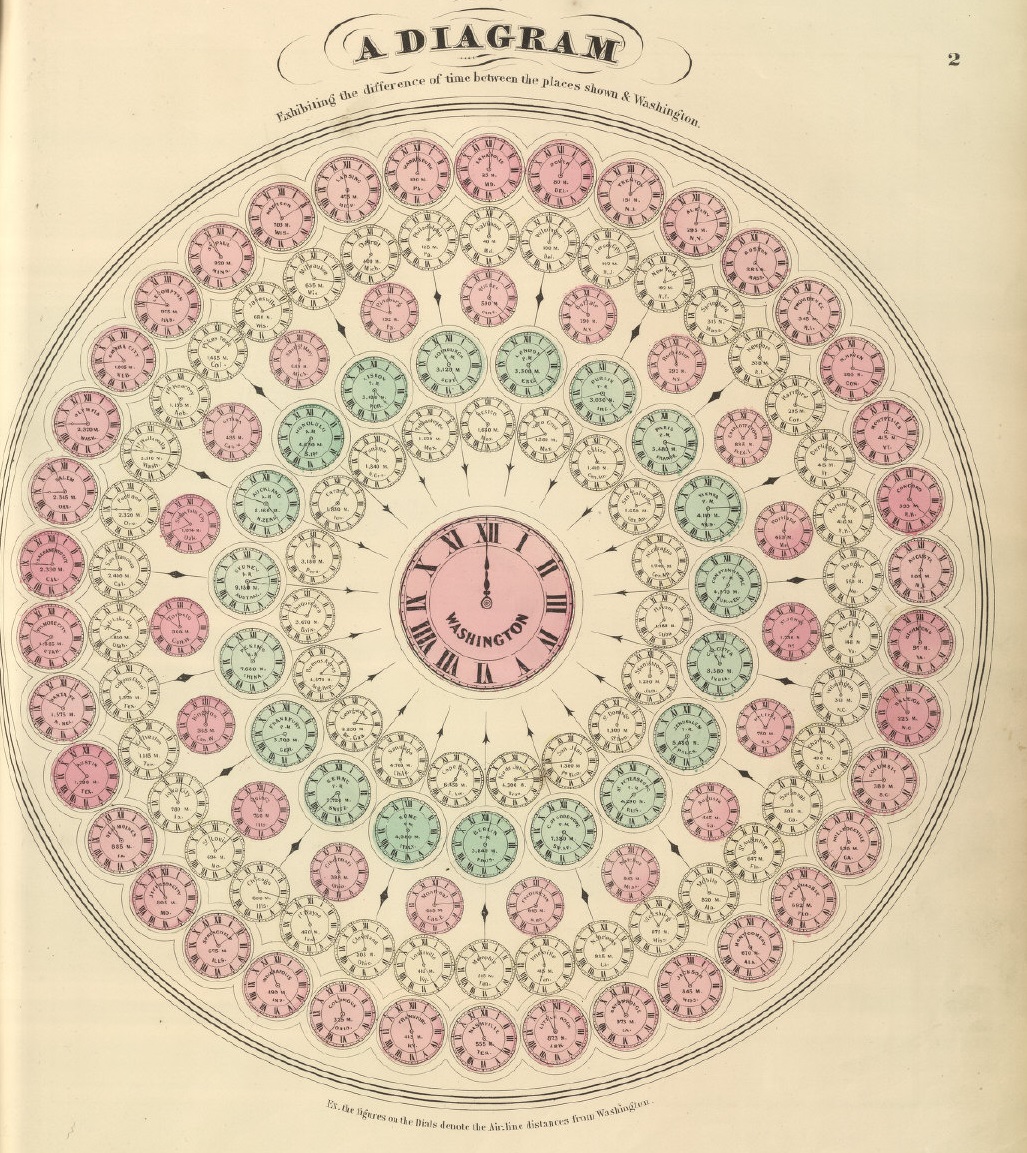
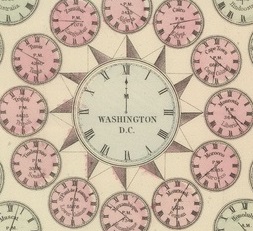
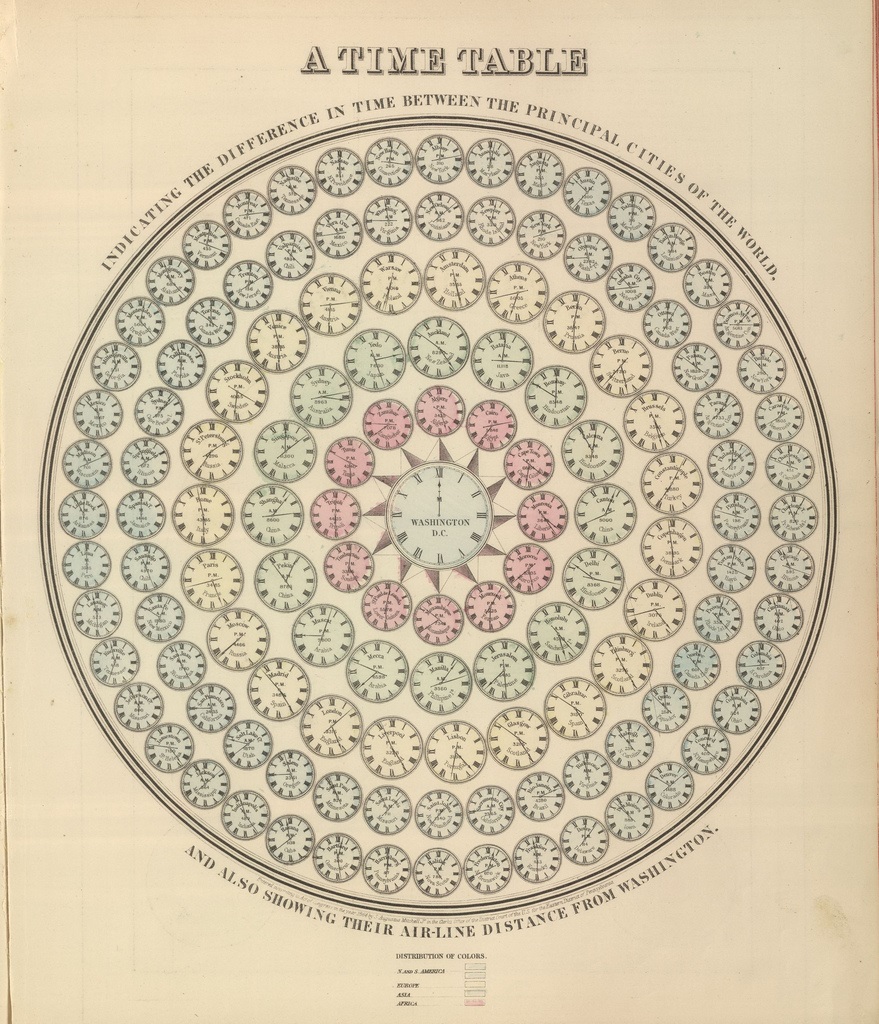
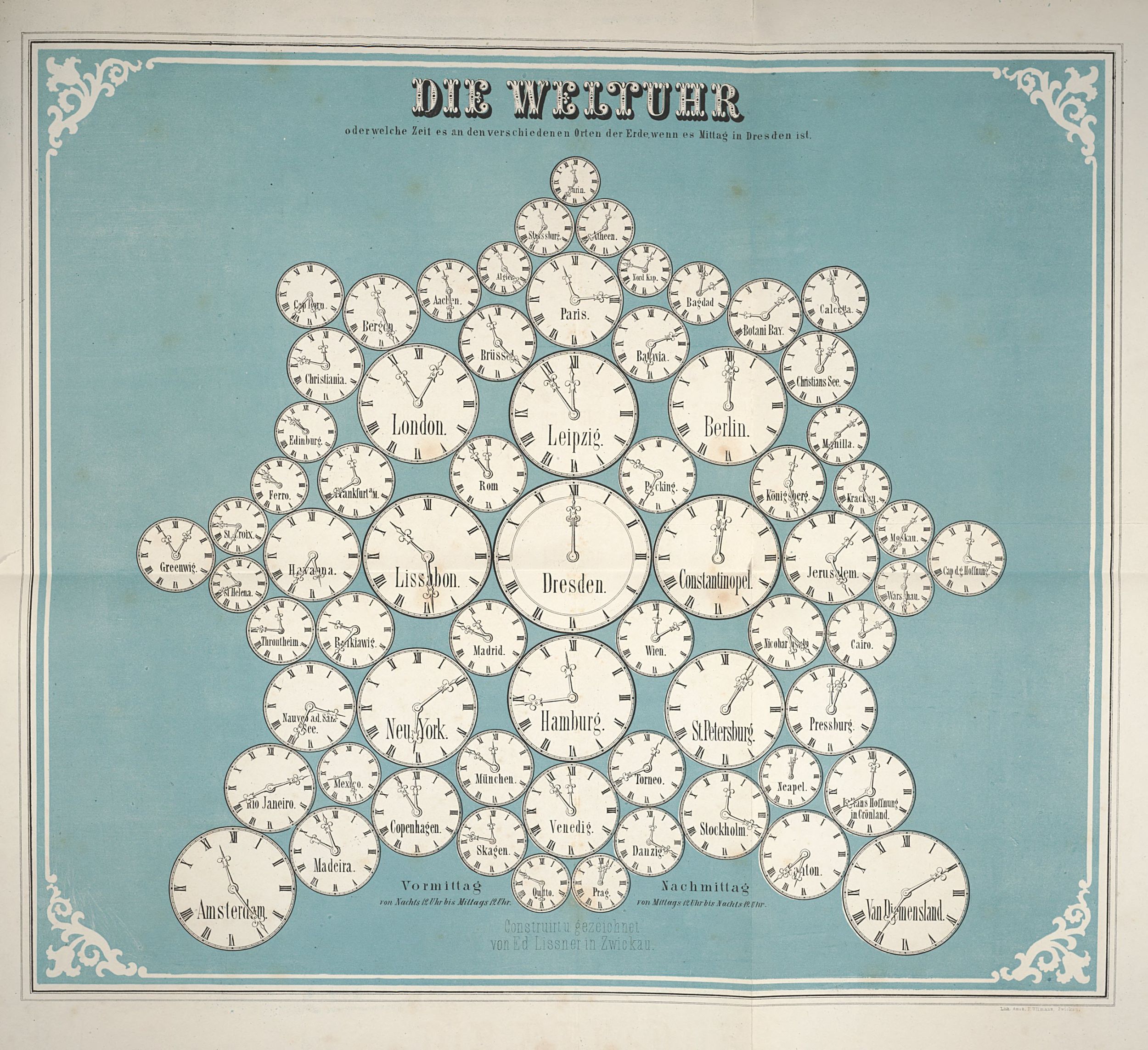
    Reckoning time from city to city before the adoption of Standard Time (1883/4) was a difficult and confusing process.  Local time was local, and usually dominated by a central timepiece located in a public area, as in a church steeple or town hall.  The problem is is that the foundation for this timekeeping–the zenith of the sun during the day–would be different from area to area. That’s not so bad when communication over periods of days was involved, bu tit was very noticeable to train travelers who would find their home-reckoned pocket watches to be not-quite-right when moving hundreds of miles over the course of a day.

    And that’s where these charts come in.  They were made before the institution of a standardized system for keeping time worldwide, and so the “Dresden Time” of new was actually equal to about 10:48 in Madrid or 12:02 in Vienna.  In the U.S. in the 1870’s there were hundreds of time zones (whittled down somewhat to 100 towards the end of that era) which made it a bit of a nightmare for maintaining railroad schedules.  Sanford Fleming fixed all of that (the end of a long line of people who attempted standardized systems) in 1884, and did away with the need for these beautiful but confusing time arrangements.  

    On the other hand the displayed results for dealing with the pre-standardized chrono-confusions are beautiful things…

    4574g(1)

    Image Source:  Johnson’s New Illustrated Family Atlas of the World, (1874). Source: David Rumsey Map Collection, here


    Time table 2


    Time table

    Time Germany

    [Source: Bibliodyssey, 19th Century Infographics]


  • History of Lines–the Extent of Birds, 1862

    JF Ptak Science Books    Post 2207

    World lines020

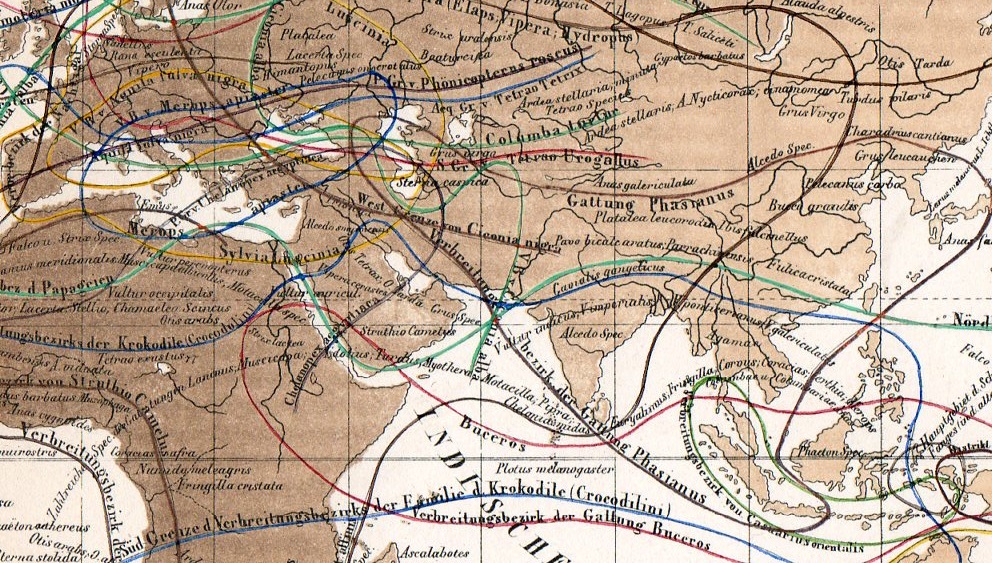
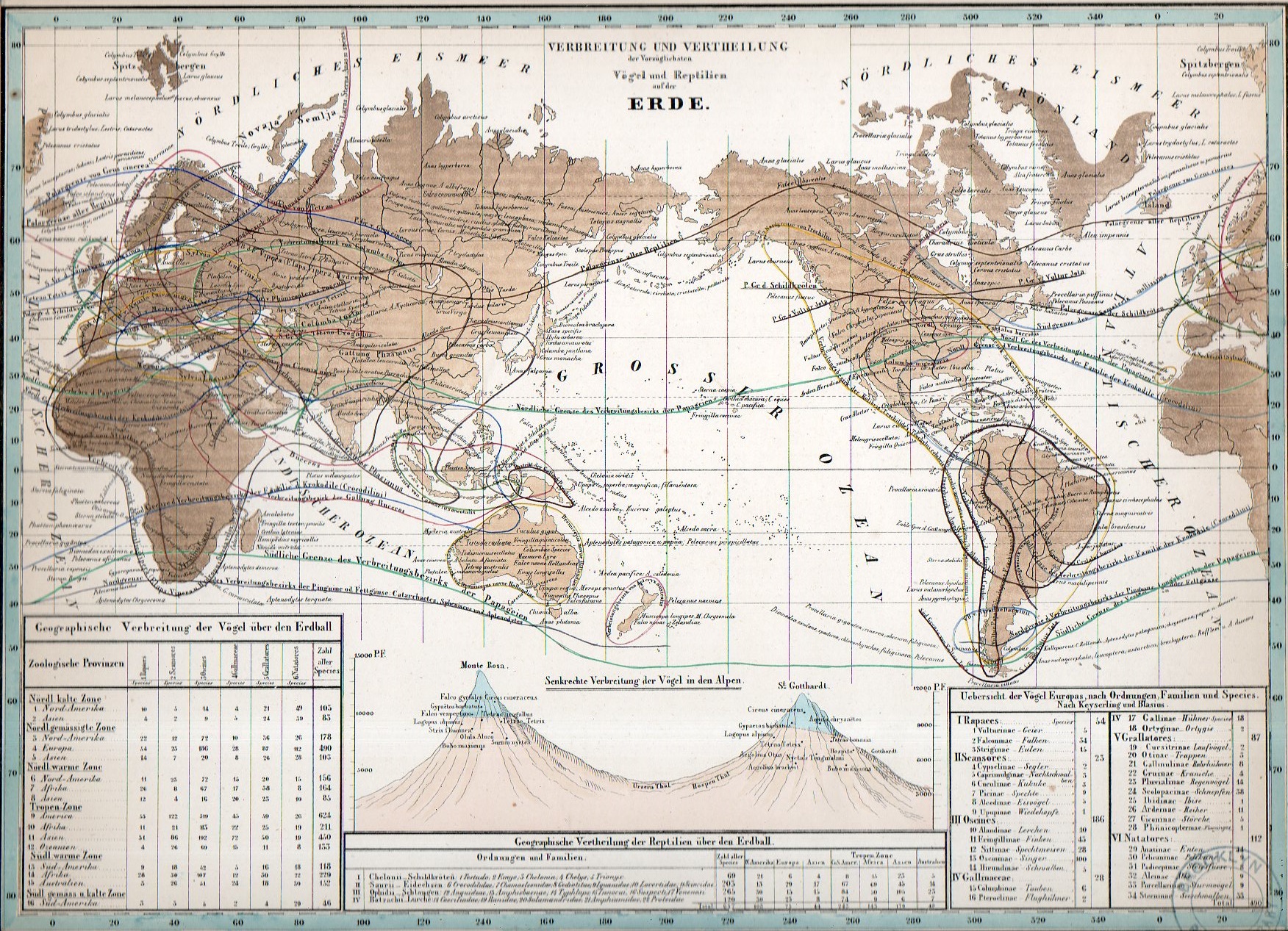
    There are many places and objects named for the German Alexander von Humboldt (1769-1859)–even so in the United States–a recognition and honor paid to a great observer and cataloger of things, the first biogeographer, the scientific traveler’s traveler, the man who Charles Darwin called the greatest scientific traveler ever.1  von Humboldt amidst much else also wrote–at the end of his life–a book that began as a composition of lectures that he gave in the 1840’s, developing into a monumental work called Kosmos, a General Survey of Physical Phenomena of the Universe, which was published from 1845 until three years after his death in 1862.  He meant what he said in the title, and tried to arrange all of the stuff of nature into a comprehensible and logical whole, gathered across five volumes.  It is a brilliant masterwork of vision and orderliness, and from what I’ve read it is like walking into a 3-D library of what was known of much of hte scientific world of the mid-19th century, the very structure and organization of the book being a scientific achievement.  

    There was a sixth volume to the work, an atlas, that is one of the crowning achievements of the 19th century for the display of scientific data.  It is about half-again as tall as the standard-sized text and twice as wide, so the book isn’t very big, and the maps are all single-page–but for as relatively small as they are there is a ton of information in them, more so when you realize what must have had to go into the collection of the data to begin with.  

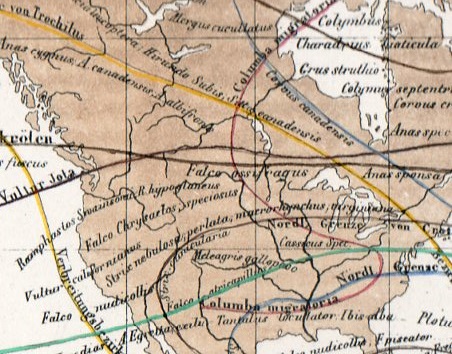
    I was very taken with this first representative because of its flowing lines (that show the range and occurrence of bird and reptiles) that make it a separate thing of beauty…had I the capacity to remove everything from this map save for the natural history lines, it would stand as an interesting work of very-pre-non-represnetational art.  I’m certain that the folks of the 1860’s poured over this and other maps in Kosmos, as well of course as the text themselves–this may have been among the first atlases to display some of its data in this way, and would’ve been fascinating. (Kosmos was actually a very popular work, the first volume selling out in a few months…it was a very popular book.)

    World lines017

    World lines018

    Notes:

    1. Found in the Darwin Correspondence Project » Letter 13277 — Darwin, C. R. to Hooker, J. D., 6 Aug 1881, just before Darwin’s death.

    You can purchase this map–my store has this and another 25 or so original maps from this atlas for sale. Send me an email and I’ll send you descriptions…

    Kopsmos--geological


  • Pluto in the History of Lines (1945)

    JF Ptak Science Books   Post 2206   History of Lines series

    The path of existence of the non-planet planet Pluto along with the rest of its Solar System friends can be nicely plotted out for visual ease on a  series of mostly-concentric orbital lines.  Pluto’s line is the longest, taking about 248 years to complete its orbit traveling at about 10,600 mph, which means that in a year’s 8760 hours that it moves very close to the equivalent along its path as the Earth’s distance from the Sun, which is an odd bit of trivial.  In any event, it is a long line.

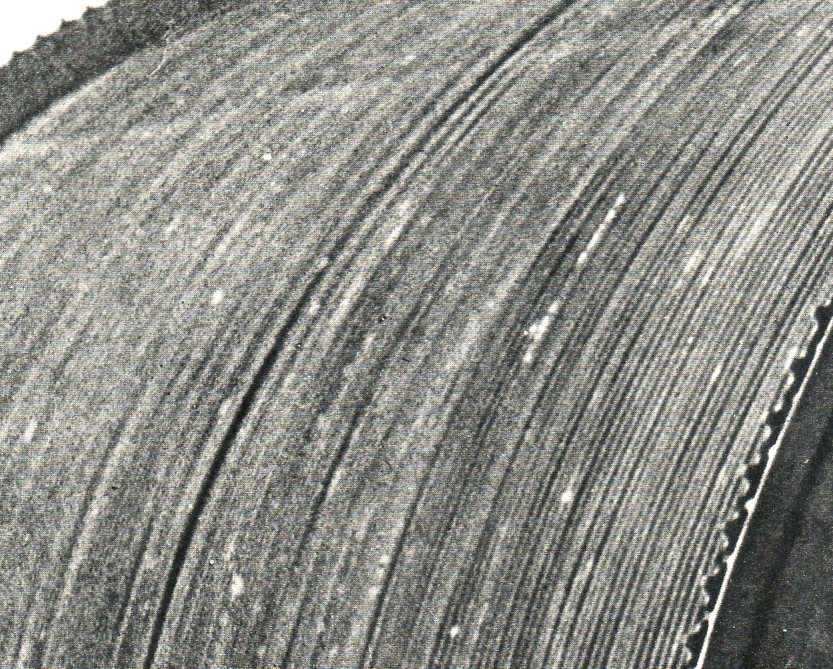
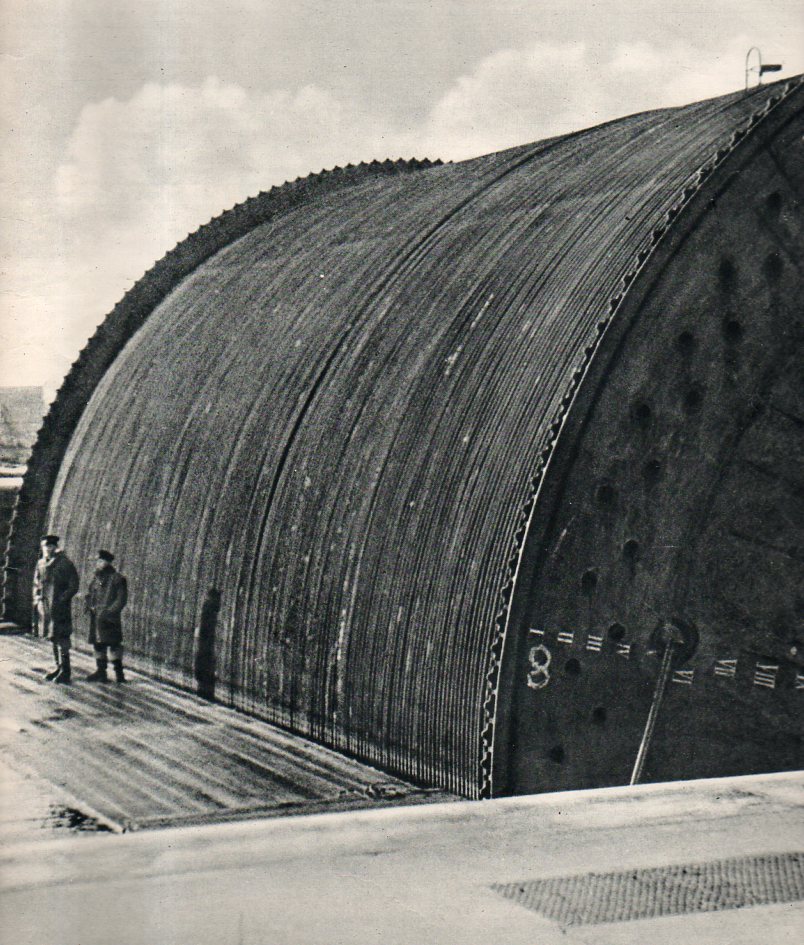
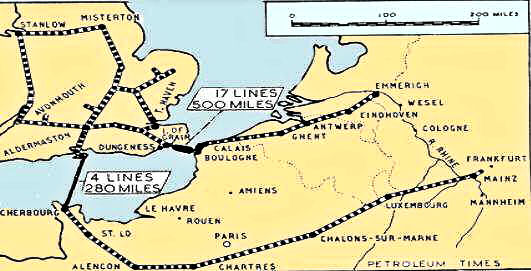
    There was another line/Pluto point of interest that takes us much closer to home, and much more near in time and space.  Project PLUTO (Pipe Line Under The Ocean) was a vast, integral, and magnificent engineering undertaken by the British government to surrepticiously and safely deliver petroleum to the Allied forces in Europe during WWII.  It reached through England and across the Channel in two places (code-named Bambi and Dumbo), via pipelines laid under the sea, and supplied armies in France, Belgium, Luxembourg, Holland, and Germany (as far as Mainz). 

    PLUTO016

     [This is a detail of one of the vast bobbins that were hauled across the sea, unspooling many hundreds of miles of pipe in several lines.] This is what it looked liek apart from a detail image:

    PLUTO015

     Of course getting fuel to your troops in advanced positions is a major undertaking–not being able to do so would kill an army (just such a thing arguably happened with the Afrika Corps).  Fuel could of course be trucked in in drums, and sent across the water in ships–but that doesn’t come close to the fantastic efficacy of having a pipeline.  And this is just what Pluto was–an extraordinary idea made real, with enormous positive consequences.  

    PLUTONetwork

    Map source, here

    And the 1945 Newsreel:

    ·Posted by :

    ·in:


  • Astronomy Board Games, 1661 & 1804

    JF Ptak Science Books  Post 2205 
    Astronomy game 1661

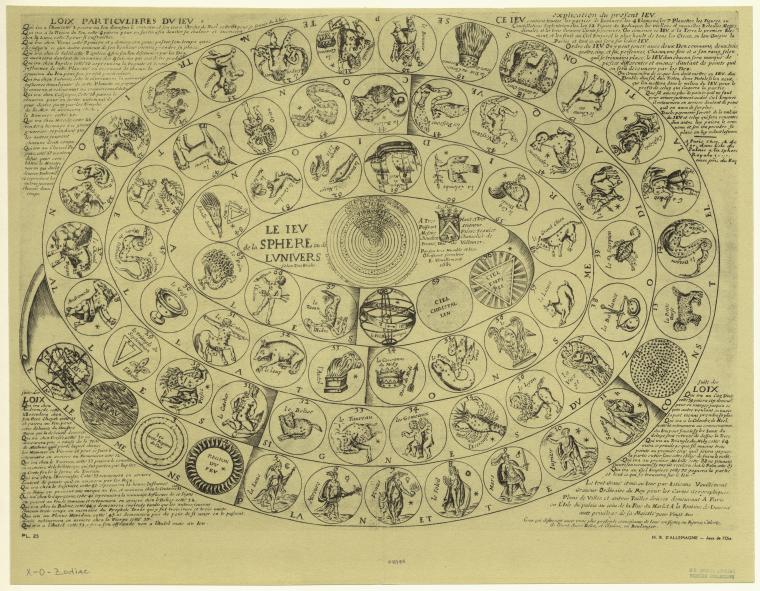
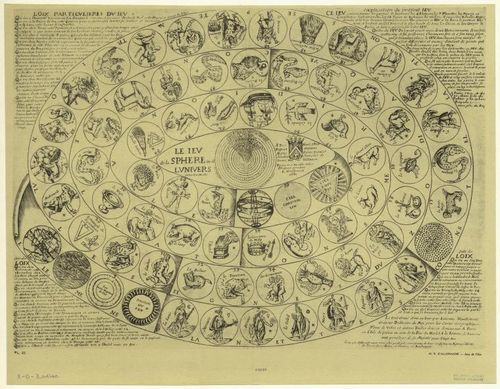
    This beautiful object is Le jeu de la sphere ou de l’univers selon Tyco Brahe  [The game of the (celestial) sphere, or the universe according…] and was printed in 1661, and was an educational toy for the advancement of kids young and old. It was played with a spinner and took the players on a tour of the universe, compiled in 4 elements, 7 planets, the constellations of the Northern hemisphere, the Zodiac, then constellations of the Southern hemisphere, and then the Empyrean. Presumably after playing at the game for some time the players would know something at least through familiarity.  

    Source;  NYPL Digital Collections, here.

    A listing of the stops areound the baord: 

     1) Earth ; Case 2) Water ; 3) the three Regions of the air;  4)  Region of Fire ; 5) the Moon ; 6) Mercury ; 7) Venus ;  8) the Sun ;  9) March ; 10)  Jupiter ; 11) Saturn ; 12)  the firmament ; 13)  the Little Dipper ;  14)  the Dragon ; 15) Cepheus ; 16) Cassiopeia ;  17) the Camel ;18) the Great Bear ; 19) La Teste in Cheveleure Berenice ; 20) The Bouvier ;  21) Hercules Crown of the North ; 22 ) The Serpent ; 23 )  Antinois ; 24)  Sting Eagle ;25)  the Liré sign; 26)  the Dolphin Horse ; 27)  the Pegasus Horse ; Case . 28)  Andromeda ; Case . 29 ) The Triangle of the North the Abelles ; Case . 30) : Perseus ; Case . 31)  the hide ;32)  the Aries ; 33) Taurus ; 34)  the Gemini ;  the Escreuisse ; 36) Lyon ;37) the Virgin  38)  Libra ; 39) : Scorpio ;  40): the Sagittarius ; 41) Capricorn ; ) : the VerseEau ;  43)  Pisces ; 44) : the Balene ;  45) : the Eridau River ; 46) : Orion ; 47) : the Unicorn ;48)  Little Escreuisse Canucule or small dog ;  49) the Hydra of the North Raven ; 50) : Vase ;  51) the Centaur ;52)  the wolf ;  53)  the Altar ; 54) Crown Midy Dard du Midi ;  55) : the Poisson ‘s Gruc ; 56)  the Phenix ; 57)  the Hare ; 58)  Canis Major ; 59) Rooster Turkey ;  60) : the Dove ; 61) : L’Arche Christmas ;  62) : the Dorado Cloud the Hirondele ;  63) The Cameleon Fly ; 64 ) The Triangle Midy Bee Indiene ;  65) the Peacock ; 66) Indian ;  67)  the Tocan the Hidre Southward ; 68)  Premiere Mobille ; 69) Sky Christallin ; 70) : Sky Empyrean.

    Earlier in this blog appeared a similar and later game: 

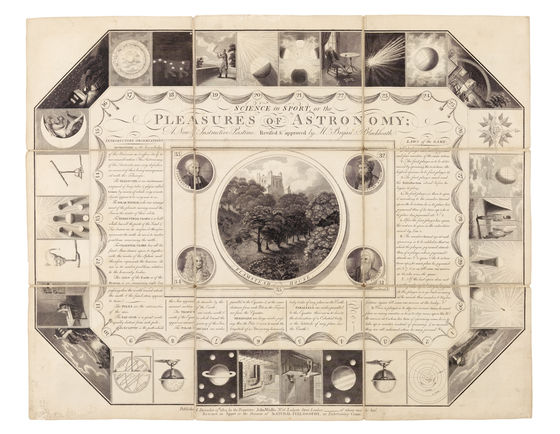
    –-“Whoever first arrives here is to take the title of Astronomer Royal‘”–end point of the game The Pleasures of Astronomy
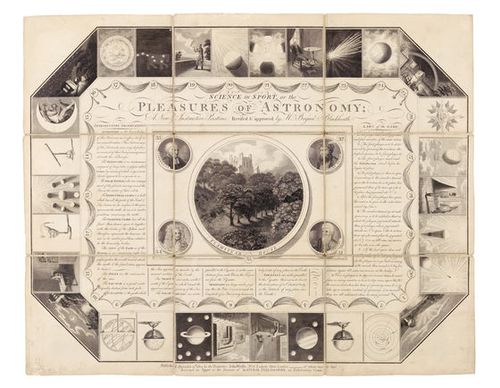
    Astronomy board gameI’m not sure how early the earliest board game featuring a scientific game might be, but I do know that this one–Science in Sport, or the Pleasures of Astronomy; A New & Instructive Pastime. Revised & approved by Mrs. Bryan; Blackheath–seems to be very advanced for its age.  Made in 1804 by John Wallis on London, the game such as it is isn’t very “game-y”–the gaming aspect of it isn’t very interesting or involved–mostly the mostly-representative aspect so the game is to just expose the young players to select aspects of the history of astronomy. As a pedagogical tool, the game probably works pretty nicely. 

    The game board, or the course of the game, is relatively standard, though the subject matter is not. The object was to arrive at Flamsteed House1, and by the course of victory the young player would become acquainted with elements of morals, ethics, natural philosophy (although Wallis did in fact produce a very similar game for that topic alone) plus of course some basics of astronomy. 

    Notes:

    1. “Flamsteed House, the original Observatory building at Greenwich, was designed by Sir Christopher Wren and Robert Hooke and built in 1675-76.”  See here for more information.

  • Very Early Paper on Four-Dimensional Space (1885)

    JF Ptak Science Books   Quick Post

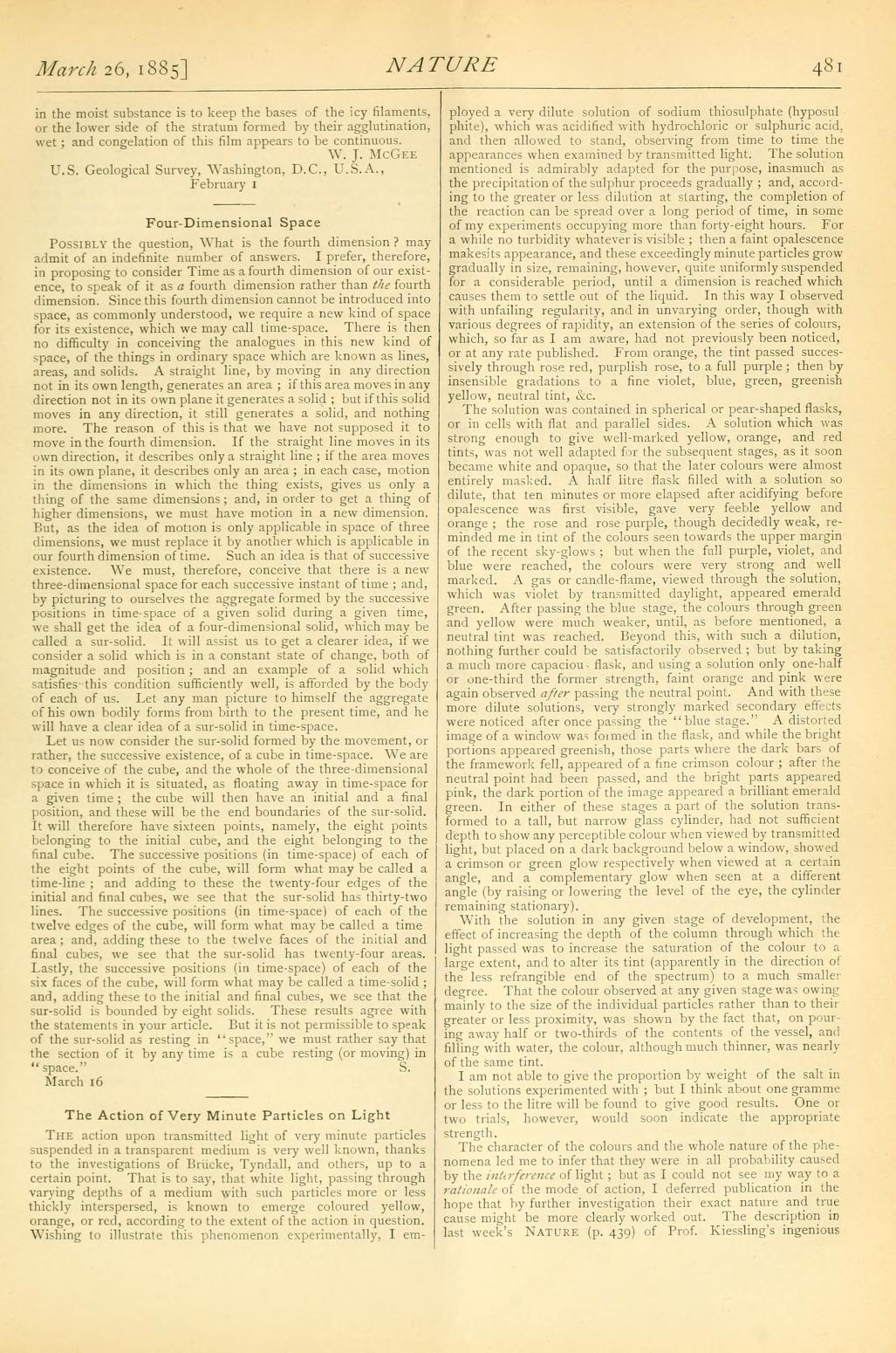
    Not only is this a very early article approaching the subject of space-time, appearing in Nature in 1885 (volume 31, issue 804, page 481), but it is also the most probable source for H.G. Wells’ earliest inspirational source for thinking that would result in such classics as The Time Machine. (See here for an earlier post in this blog for a review of Well’s book in Nature.)  I bumped into it recently on a graze through the endlessly interesting early-ish volumes of this great journal. 

    Four Dimensional Space

    And there were certainly many who came before Wells on the subject of the fourth dimension (though not many on the subject of time as the fourth dimension):  R.C. Archibald wrote on d’Alembert’s (1754) use of time as a fourth dimension (in the Bulletin of the American Mathematical Society for May 1914); Cayley’s “Analytical Geometry of n-Dimensions (Cambridge Mathematical Journal, 1843);  Grassmann’s Die Lineale aus Dehnungslehre (1844); Riemann’s 1854 effort on curved space (translated in 1873 for Nature by W. Kingdom Clifford); Beltrami’s introduction of the pseudosphere in 1868;  J.J. Sylvester (again in Nature for 30 December 1869); Hermann von Helmholtz and his curvature for three-dimensional spaces, and others.  Also,  according to Linda Dalrymple Henderson in her The Fourth Dimension and Non-Euclidean Geometry in Modern Art (Princeton, 1983) in Appendix B there were only a few other efforts before this Nature article. (Some of these include Halsted, “The New Ideas about Space”, in Popular Science Monthly, July 1877; Hinton’s “What is the Fourth Dimension?”, Dublin University Magazine, 1880; Lane “Transcendental Geometry” Popular Science Monthly, August 1882; and Fullerton, “On Space of Four Dimensions” the Journal of Speculative Philosophy, April 1894.)

    Text version: 

    Four-Dimensional Space, by Anonymous.

    From:  Nature, volume 31, issue 804, page 481.  

    ·Posted by :

    ·in:


  • A Rosey-Checked, Ice-Blue-Eyed Man with a Too-Small Hat, ca. 1875

    JF Ptak Science Books   Quick Post

    Hat Man013

    Hat Man014

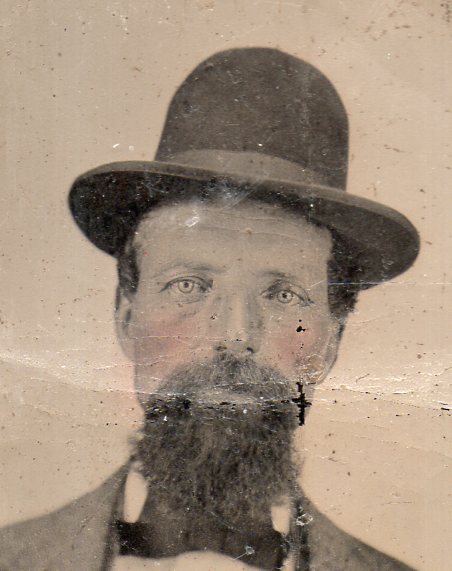
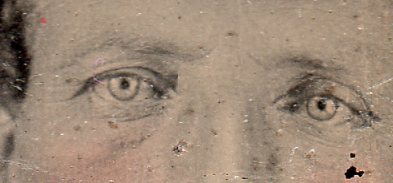
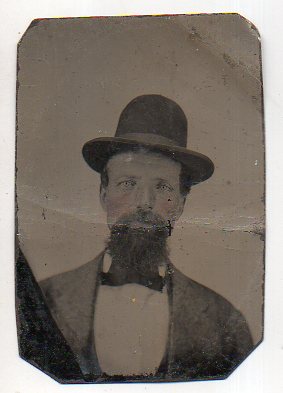
    Both images are details from this lovely tintype, a piece of photographic Americana I picked up in an antique store, found while looking for odd bits like it to construct an imaginary mug book for people who committed imaginary crimes, crimes against teh imagination.  But not this man–he held his imagination in his little hat, a hat too small for his head.  The original is really rather small, only about an inch tall, but for all of its minor dimensions it has major visual attractions.  

    Hat Man012

    ·Posted by :

    ·in:


  • An Addition to the Series on Early Mechanical People

    JF Ptak Science Books   Quick Post

    Frankenstein


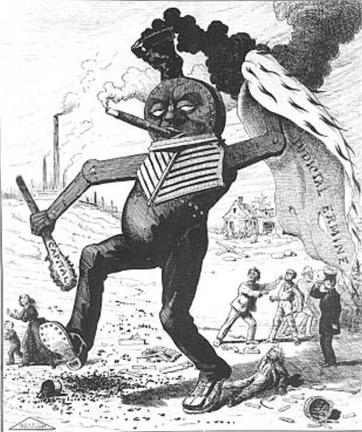
    I found this nice addition to a series of posts that I’ve made on this blog on early (pre-1930) mechanical people and robots. Here’s a selection of some of the other finds in this area on this site: 


    A Few Mechanical Men: Antique Anthropomorphic SteamPunk

    An Early Robotic Steam-Driven Society-Scrubber

    Robot-Man, 1915

    An Acrobatic Non-Semi-Robot, 1876

    An Edenless World: the First (?) Metalic Woman Robot

    Robot Roundup

    There are many others–just pop in “robot” in the Google search for this site and have at it.  I wanted to get this posted here before I lost it.  Again.  

    ·Posted by :

    ·in:


  • An Unusual Look at the World by Lord Kelvin, 1880

    JF Ptak Science Books   Quick Post

     The great Sir William Thomson, Lord Kelvin–one of the leading lights of the physics world of the 19th century and a man who worked deep and wide and over and under and around and through many different fields–contributed the following bit of unusual and interesting thinking. It came at the Swansea Meeting of the British Association (1880).

    ·Posted by :

    ·in:


  • A March of Millions to Berlin, 1917

    JF Ptak Science Books  Quick Post   World War I Photography series

    Authorization hotel011

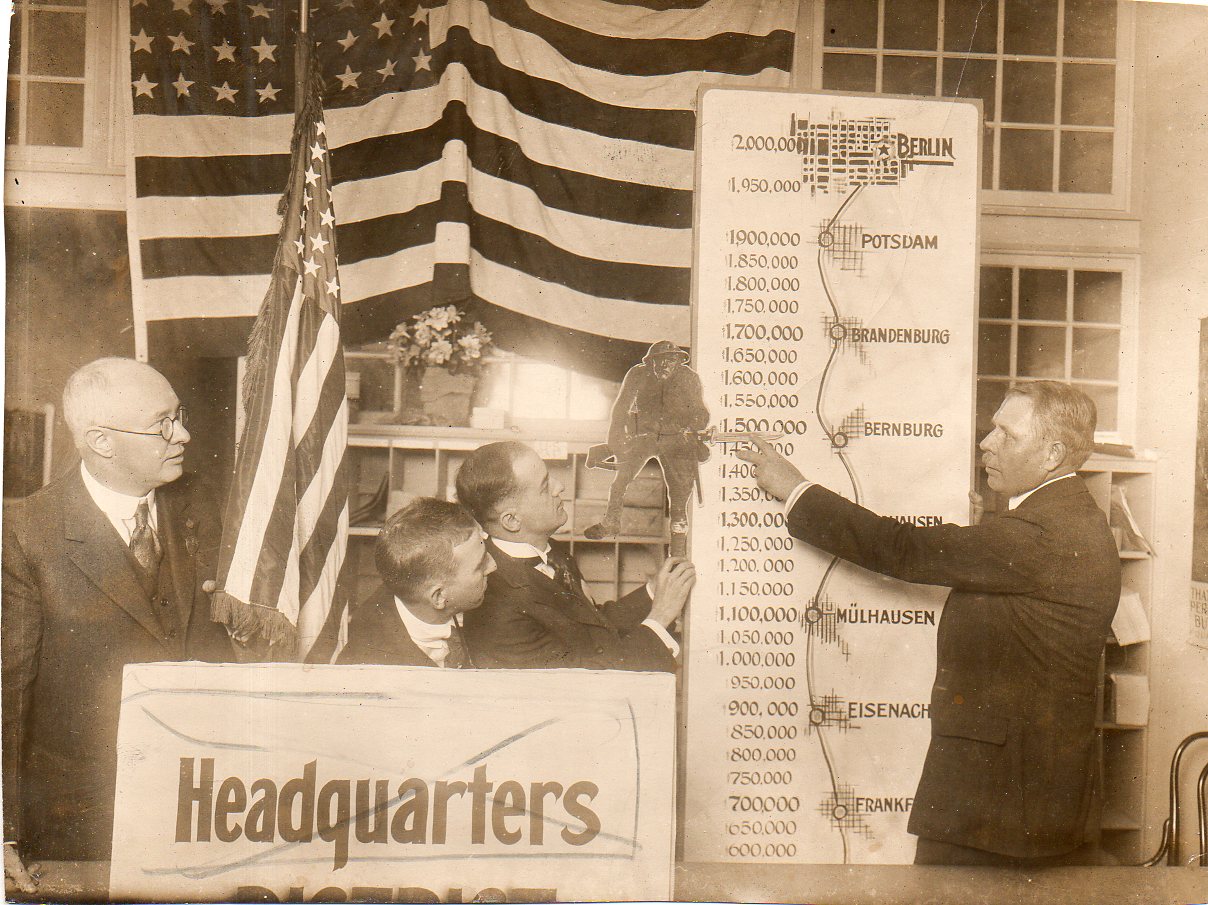
    I’m not sure at what point during the War this image  was made (though I suspect it was midway through the American experience) and shows what I think is the enlistment and draft numbers for U.S. soldiers. The progress of the growth of the Army is charted against German cities that were to be conquered or had already been engaged.  The Doughboy in the graphic along with everything else looks clean and hopeful and determined–the end result of all of this determination was Victory and Defeat and people dead everywhere.  

    ·Posted by :

    ·in:

    —