A Daily History of Holes, Dots, Lines, Science, History, Math, Physics, Art, the Unintentional Absurd, Architecture, Maps, Data Visualization, Blank and Missing Things, and so on. |1.6 million words, 7500 images, 4.9 million hits| Press & appearances in The Times, Le Figaro, Mensa, The Economist, The Guardian, Discovery News, Slate, Le Monde, Sci American Blogs, Le Pont, and many other places… 5000+ total posts since 2008.

Author: JF Ptak

  • I Love “Nature” Magazine

    JF Ptak Science Books    Post 2199

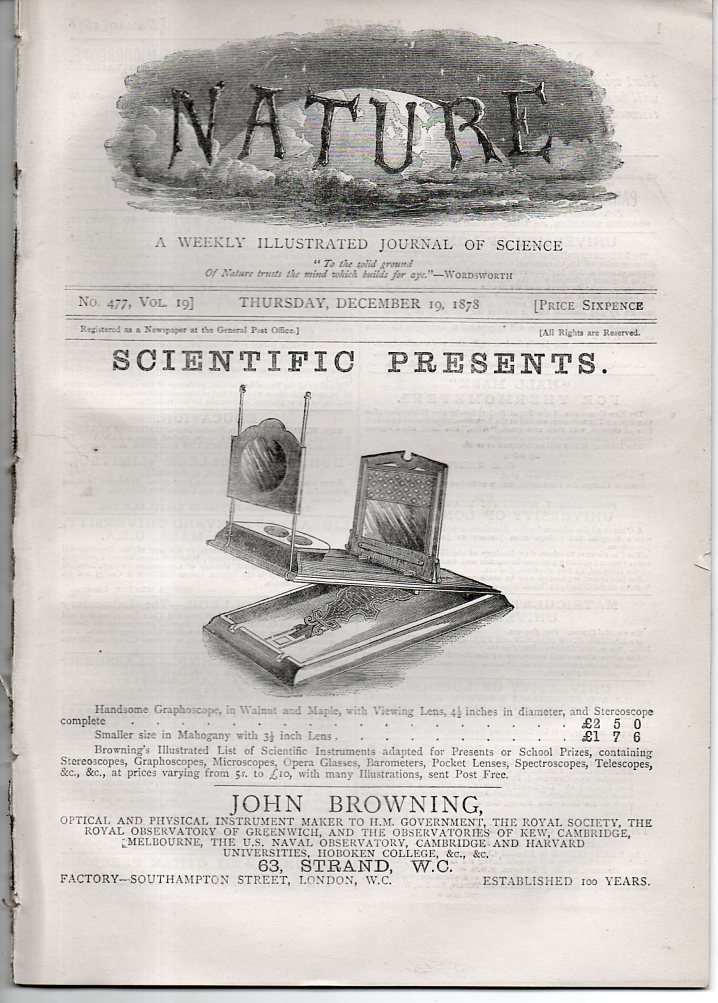
    One of the great pleasures in the business of antiquarian science book selling is the Advanced Ability/Capacity to Browse the books. Or Graze.  All in the semi-pursuit of an undefined goal that sometimes leads to something that leads to something else, and sometimes all of them get pulled together.  And so this came to be last night, working my way through an issue of Nature, a Weekly Illustrated Journal of Science, for December 1878–and yes, this is the same Nature that we know today, begun in 1869. The modern Nature is massive and perhaps one of the world’s foremost publications in the sciences–in 1878, the magazine was a semi-popular, quick-to-publication-and-print journal, usually less than two dozen pages long.  
    Thomson191

    The magazine was short and to the point, and it packed an enormous amount of material on a limited amount of paper–two columns of print per page, 7-10 words per line, 70 lines per column, or about 1500 words per page.  (An average novel has about 400 words per page.)  It attracted the attention of everyone, and virtually every big name in the sciences in the 19th century seemed to find their way into this publication: Darwin, Huxley, von Helmholtz, Thomson, Maxwell, Hertz, and on and on.  

    I admit that I was attracted to this issue by the beautiful engraved ad (“Scientific Presents” (!)) for a graphoscope, sold by John Browning (63 Strand) of London. (The graphoscope was an entertainment device created around 1860 and was an elegant/extravagant magnifying glass for viewing photographs and prints and such.  The base was lifted to meet the gaze of a seated viewer who would look through the large magnifying glass at an image that was placed on the theatrical/framework bit at the back of the device.)

    The contents are terrific.  The issue starts with a provocatively-titled work by James Clerk Maxwell, a review called “Paradoxical Philosophy”, which I like quite a bit–and it is rather long for Nature, and it was a joy to make my way through Clerk Maxwell as he makes his way through the story.  

    And then:  a short piece by E.D. Archibald on “Locusts and Sunspots”, which fits nicely into the history of th esun and sunspots and cycles and weather, nicely into teh early-ish modern period.  That also brought me to a fascinating book with this great graphic on the history of publications dealing with what I just mentioned.
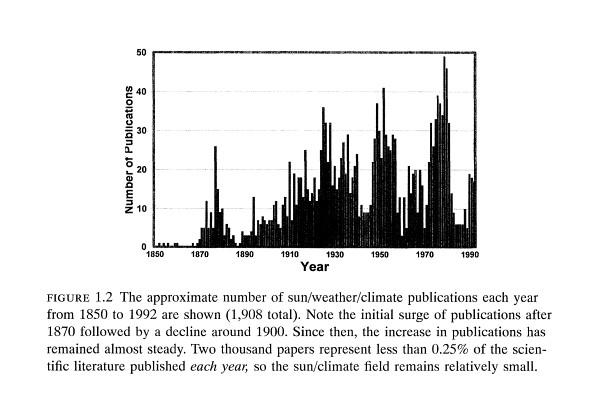
    Climate[Source: The Role of the Sun in Climate Change, by Douglas V. Hoyt, Kenneth H. Schatten Program Director of the Solar Terrestrial Research National Science Foundation.]

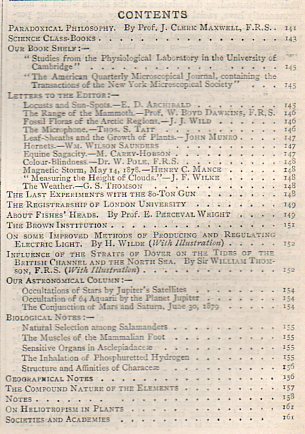
     The there is so much more, as we can see:
    Nature196

    Tait on the Microphone, Dawkins on the range of the mammoth, Wild on the fossil floras of the Arctic, Carey-Hobson on equine sagacity, Pole on colour blindness, and a beautiful effort by Wilke on measuring the heights of clouds–all lovely efforts.  

    And then, at the very end, under the unlikely title of “Societies and Academies”, emerged a magnificent effort by William Thomson, Lord Kelvin, another very major scientific name, and his effort at constructing a mechanical analog device, a very smart machine that wasn’t built until 1932.  His “On a Machine for the Solution of Simultaneous Linear Equations” is a remarkable effort, calculating its way through masses of numbers with pulleys and cords, as noted by Tom Woodfin of the MIT AI lab ( here):

    “Lord Kelvin proposed one mechanical system in 1878. Designed to solve sets of linear equations, it operated on a tilling-plate mechanism—essentially a collection of pulleys spaced along balanced plates and connected with rope. Coefficients of the linear equations would correspond to pulley placements, and the ropes would be tugged to balance the beams and hence the equations. Results would be read off as the lengths of loose ends of rope.”

    “Kelvin’s scheme had several advantages. First, it was based on rudimentary technology—within
    the capabilities of 19th century craftsmanship. Second, it was possible to increase the precision of a calculation through successive applications of the device, taking advantage of the characteristics of the linear equations it was designed to solve. Third, its mechanical nature made it ideal for “tweaking”—slight adjustments in inputs could be made quickly, and results obtained rapidly, without substantially reconfiguring the device.”

    All-in-all, the chance meeting with the graphoscope produced a number of very interesting finds, none of which really pulled themselves together in this context, but certainly could possibly play their role as missing pieces in some future puzzle–which is really what all of this is all about.  
     

    ·Posted by :

    ·in:


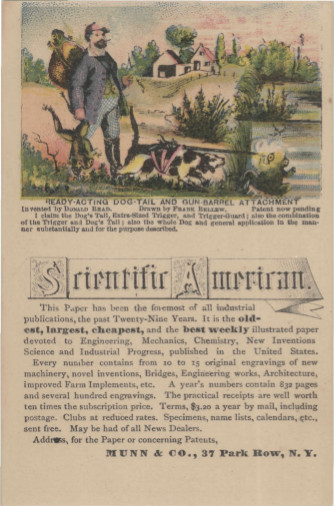
  • Ready-Acting Dog-Tail Gun Barrel Attachment for Frog Hunting

    JF Ptak Science Books   Daily Dose from Dr. Odd

    Sometimes there’s not much needed to say about something after you’re through with the title–and this may be one of those times.  

    Scientific American--frog hunting gun-toting dog[Found at paywall/subscription site, North Carolina State University libraries; another site plus text at the Library Company of Philadelphia, here]

    This is a trade card for Munn & Company, publishers of the Scientific American, then in its 29th year (which would be 1874).  I’m pretty sure that this was all done as a joke, to catch people’s ideal attention–especially since Bellew was a cartoonist, and a very well-known one at that. (For example, he created this iconic image of Lincoln, below.)  But the image is certainly arresting enough, odd enough, semi-insane enough, to have the casual nod turn into observation.

    ·Posted by :

    ·in:


  • A Beautiful Jackhammer–Lovely Design, 1928.

    JF Ptak Science Books    Quick Post

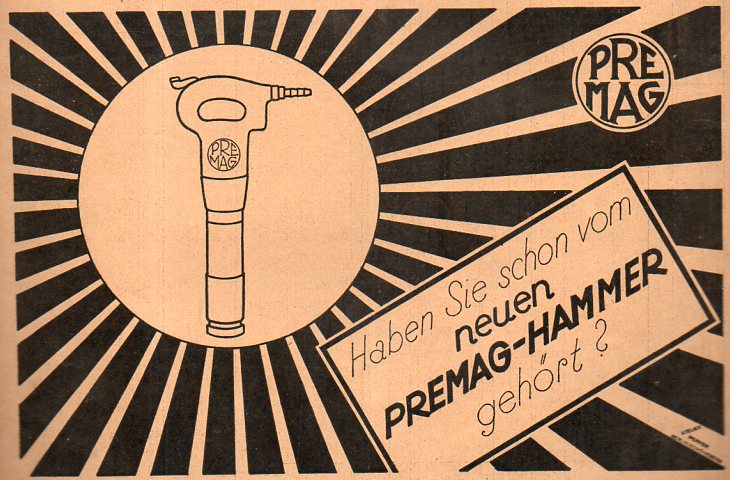
    There are sometimes exquisite images found in the mundane and every-day, beautiful objects hiding in plain site. Perhaps that is all there is, really, everything around us being available for beauty just for the looking-at-it, finding it.  (See an earlier post, The Beauty of Ball Bearings, for example. There is another series of posts on Looking Hard and Closely at Prints, which is more like taking a paper microscope to complex prints and finding the glorious minuatiae lurking in their minimal worlds.) In this quick example here I was stopped by what looks like a fantastic illustration of a jackhammer found in the  Der Bauingenieur, Zeitschrift fuer das Gesamte Bauwesen for 24 February 1928–right there on the front cover.  It is one fine piece of design, and may be the finest imaging of a jackhammer I’ve seen.  

    Pneumatic hammer184


  • Bikes and Bubbles (1884 & 1890)

    JF Ptak Science Books  Quick Post

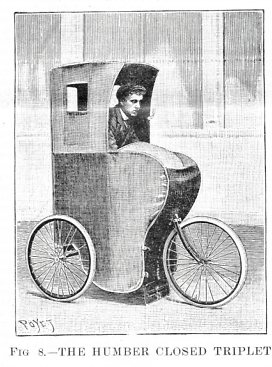
    Bike triplett187


    [Image source: Scientific American, September 15, 1902. This has nothing to do with the following, but it is a neat-looking bike, and I wanted to share…]

    C. Vernon Boys (1855-1944) was a British physicist and fine experimentalist and contributed this exemplary article on the physics of bicycles.  The article–“Bicycles and Tricycles in Theory and Practice”–appeared in the journal Nature (March 20, 1884), when the no-longer new-ish journal rapid-published the breaking and thoughtful science news of the day every week.  Generally articles in the early decades would seldom range over two pages–of course, the pages were dense, and in two columns, with usually 80 lines per column and ten words per line, so each page could be filled with 1600 words, which is four times the general length of a novel.  In any event Boys’ article ran nine columns, or about 7,000 words, which is a fairly meaty article.  

    I should point out that in addition to much else, Boys’ wrote a great classic of popular science, Soap Bubbles: Their Colours and the Forces Which Mould Them, in two editions of 1890 and 1911–and has stayed in print ever since.  It is a great book.  The full text can be found at the Internet Archive, here.

    ·Posted by :

    ·in:


  • Crystallizing a Scarce Perspective: Looking Straight Down & the Art of Photography

    JF Ptak Science Books   Post 2195

    There are many posts to this blog on this Looking Straight Down topic–just enter this phrase in the search box at left for a list.  

    The idea of representing a view straight down, of looking straight down from some height, is a relatively recent occurrence, this view being somewhat rare in the antiquarian world pre-balloon or pre-heavier-than-air flight.  The pre-human-flight reason for its scarcity is understandable, but even after the first Montgolfier ascension in 1787, there’s another 120+ years of scarcity yet to come before these views would start to pop up in common (and uncommon) literature..  Now I’m not talking about cartography, which is basically a straight-down view of the world—what I’m referring to is that same view but not as a map per se, but what you would see if you were dangling out of a plane or balloon. It is an unusual and scarce perspective.

    Looking down balloon181

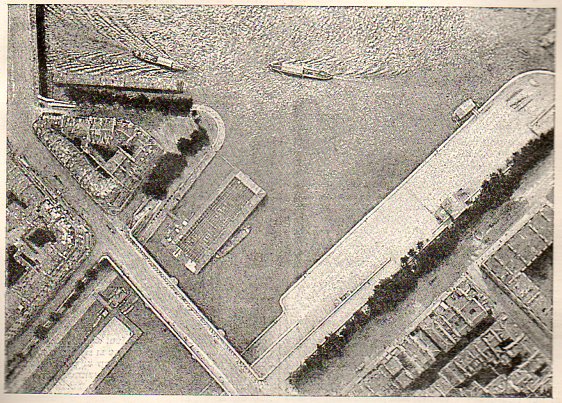
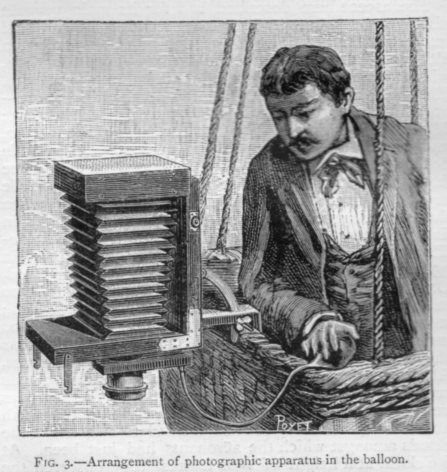
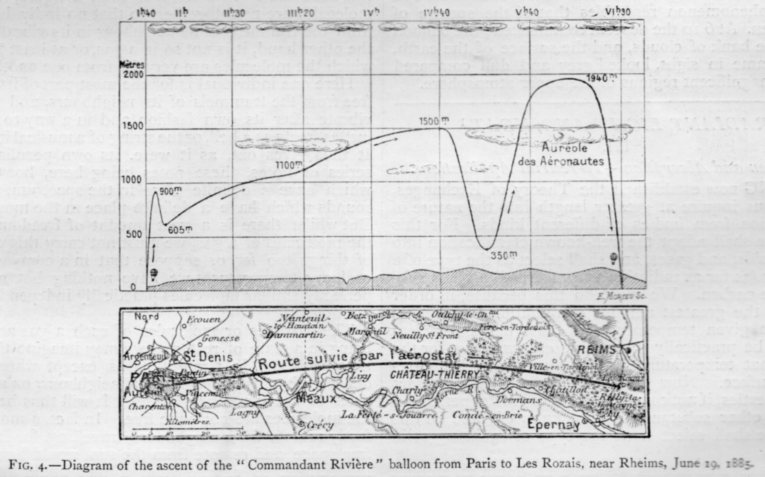
    This series of images was found in Nature (September 3, 1885, and already well established and in its third decade of publication) and shows a very scientific exploration of looking straight down. The images show the pioneer and bibliophile Gaston Tissandier and his equipment and their position in the research balloon engaged in “photographic aerostation”. Their experimentation was a clear success, the results of which were immediately applied to cartography, with the journal reporting “aerostatic photography has a great future”. And so far as the looking-straight-down part is concerned, it certainly crytalizes a moment in time in that part of visual history.


    Looking down balloon182

    And the cross-section of the map showing the progress of the Tissandier expedition and of the progress of looking straight down:

    Looking down balloon183


  • Homer Simpson on Perspective: the Rare Antique Image Looking Straight Down from a Height

     JF Ptak Science Books    Revisiting and expanding Post #20 from 2008

    Homer vitruvian

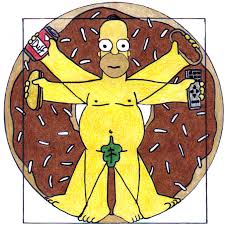
    I welcome the chance today to use our non-classical Homer instead of the beautiful Paolo Uccello to look at an issue of imaging a certain form of perspective drawing.  I’ve always been intrigued by antiquarian images that looked straight down, or up, at things–90 degree, perpendicular, real straight-on stuff, giving a feel for depth (or height) and perspective.  Funny thing is that in the wide world of scientific images, they really don’t show up very often.


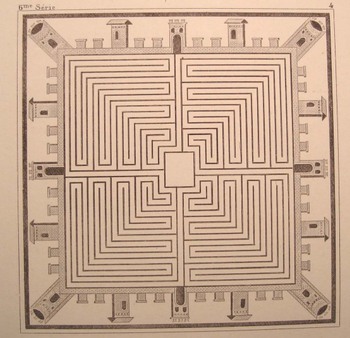
    A Mock-straight-down is found in this prettily-designed example (French, ca. 1860)–it seems to be view form a height of 250 feet or so down on the square of a low- (Western) renaissance town. That’s partly true, except that it is a mosaic from Pompeii (or Herculaneum), found embedded in the floor of one of those mummified houses. 

    Dsc04640

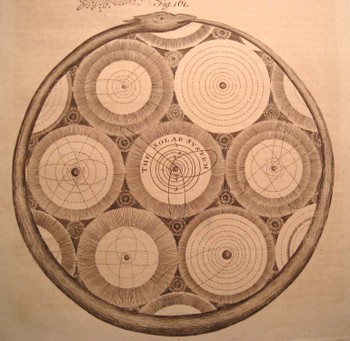
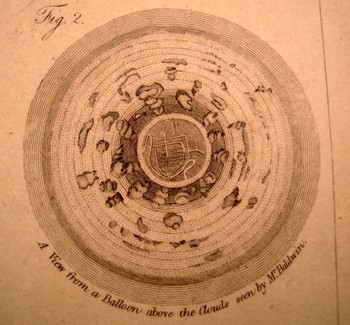
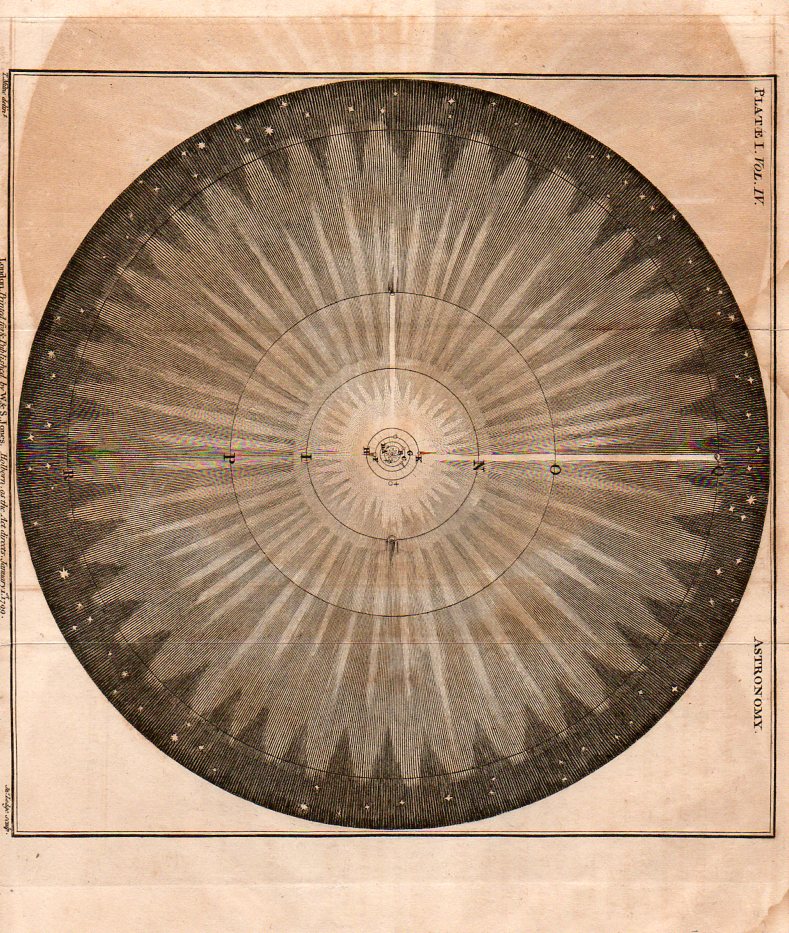
    Another pretender is this god’s-eye view (from Abraham Rees’ mammoth encyclopedia of 1800-1820) of the universe, centered upon our own helio-centric Solar System, which is centered, nested, amidst a whorl of other (contiguous and touching but not overlapping) solar systems, all of which is held in the
    infinite but knowable confines of an ourobus.   This again qualifies as a straight-down/up if and only if (iff) you squint real hard and imagine you’re seeing the scene through your CreatorView (TM!) glasses.  (The Creator needs glasses?)

    Dsc04642

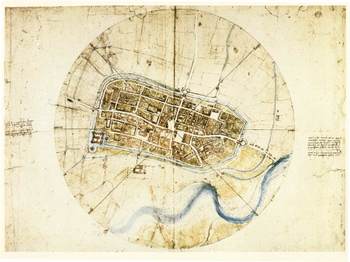
    The drawing by Leonardo of the town of Imola (currently resident with the Windsors) does come quite close to the concept–it has more artistic features than the common city plan , and is definitely at a perpendicular to its subject.

    Blogstraight_imola[Source for Imola image: www.leonardo-da-vinci-biography.com]


    But it is this that is so terribly interesting to me–a small part of a little print from an unidentified encyclopedia from the turn of the 19th c. It shows a picture of the earth looking straight down from a balloon, looking through an opening in the cloud cover, down to a small town. There is an iconic work on the representation of the world as known to succeeding generations where the picture of the world is seen through a succession of gradually diminishing clouds (being opened like drapes over time), but I honestly cannot think of an early image of looking at clouds from above and straight down.  My sense is that this image would have caused as muchinterest and wonder as the first (Soviet) images of the other side of the Moon (back in 1959). 

    Dsc04639_2

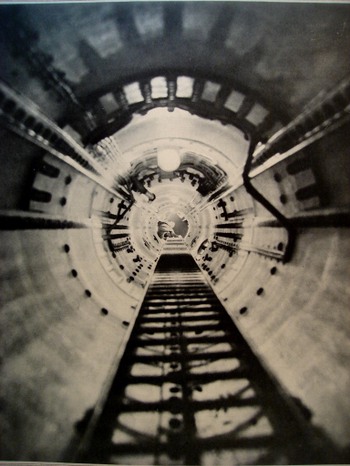
    Even when moving into the pre-satellite 20th century image, the straight-down picture is a rarity. In the last few years after having looked at dozens of thousands of popularly-published images (for another project), the straight-down/up were a scant tenth or perhaps hundredth of a percent of the total. There were a number of photographs made looking straight up (as in the two examples here, looking up the main mast into the crow’s nest of the Queen Mary, and the other with the same view, only in the Bremen. 

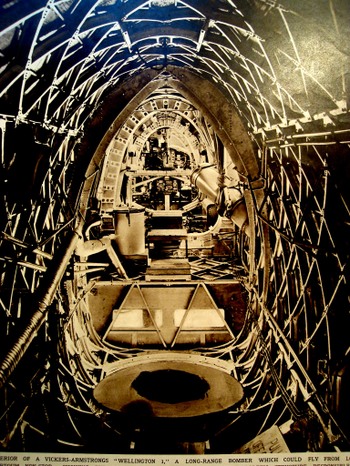
    Occasionally the view like this will show up (looking laterally through the Vickers-Armstrong “Wellington I” bomber aircraft (June 1939)

    I can’t leave this topic without mentioning two recent additions to this genre–the first is the Eames’ wonderful Power of Ten movie (go to youtube HERE, where in 40 steps we look at existence from quark to quasar. 

    Dsc04643_2

    The second is a little goofy but I like it nonetheless–the introduction to the Jodie Foster movie Contact (go to youtube HERE)  built on the bones of the Carl Sagan book. Here we swing out from the Earth and into space, following a broadcast-audio trail of humanity into the not-too-distant time/space (ignoring the signal degradation bit but so it goes), and then leaving that quickly behind, hurling itself backwards, to the outer reaches of the universe, until (and we don’t see this in the youtube clip) we wind up back in the iris of the heroine (and a bit too much like the Dave Bowman trip in “2001 a Space Odyssey”). 

    But we don’t see stuff like this very often, and I’m happy to go along for the ride. It really is just about seeing something new, after all.

    Dsc04644

    Perhaps the lack of this perspective is summed up by our old friend Homer J. Simpson. In one episode of the Simpsons (long ago and far away…or last week) Homer explains (to Lisa?) why cartoon characters’ faces are always oblique in profile. Homer turns and looks directly into the
    camera,” and his face gets all pancakey. It’s just not done “because it’s goofy” he says. And at least in Homer’s case, the proof is definitely in the puddin’.
    Dsc04645


  • An Unusual Engraved Portrait of Isaac Newton

    JF Ptak Science Books  Quick Post

    Newton engrav larger179

    Of the many portraits painted of Isaac Newton, the vast majority of them came after his death–some were fanciful, some were based on recollection, and others were based on the few examples that have survived painted of him in life.  This happened quite a bit–even someone as esteemed as his semi-counter-rival, the great Robert Hooke, received no attention at all from portraitists during his lifetime.

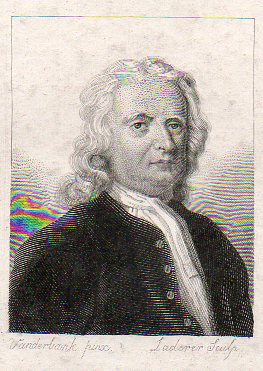
    I found this lovely portrait of Newton–a miniature, nearly–an engraving by Laderer after the 1726 painting by John Vanderbank, made just  a year before his death, and almost 40 years after he ascent to great fame. 

    Newton Laderer174It is an image I don’t see very often.  

    The original is about 1.5×1 inch on a 10×7 inch sheet, and printed in ca. 1820-30.  I’m unsure of the engraving’s origin. The full version is below.

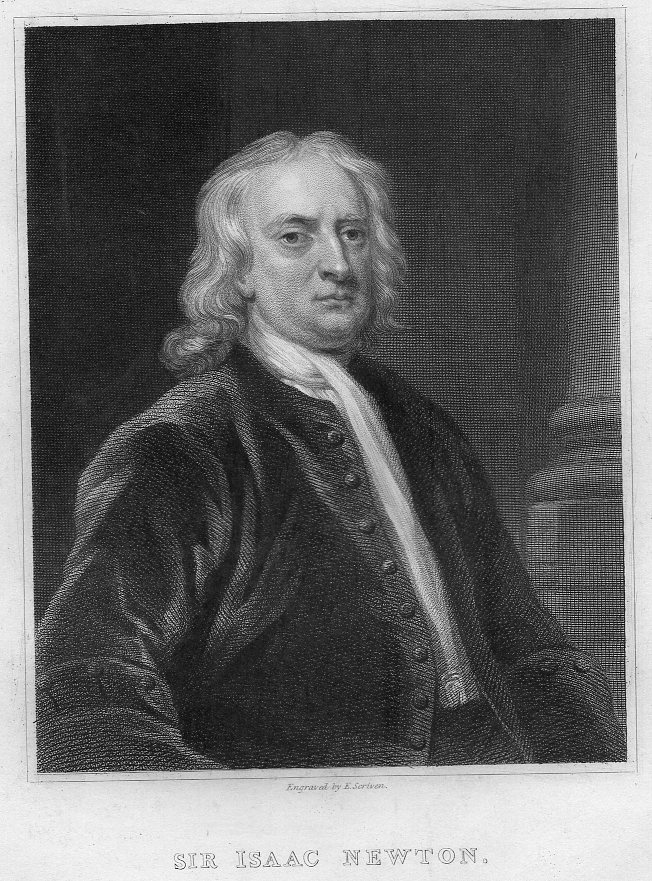
    THere’s also this engraving, made of the same painting, and executed in the 1830’s, that shows Newton in a little less flattering light–at least here he looks as though he has some decent age on him. 

    Newton engrav larger178

    ·Posted by :

    ·in:


  • Antique Circles–Astronomical Prints

    JF Ptak Science Books   An expanded version of a post from 2010

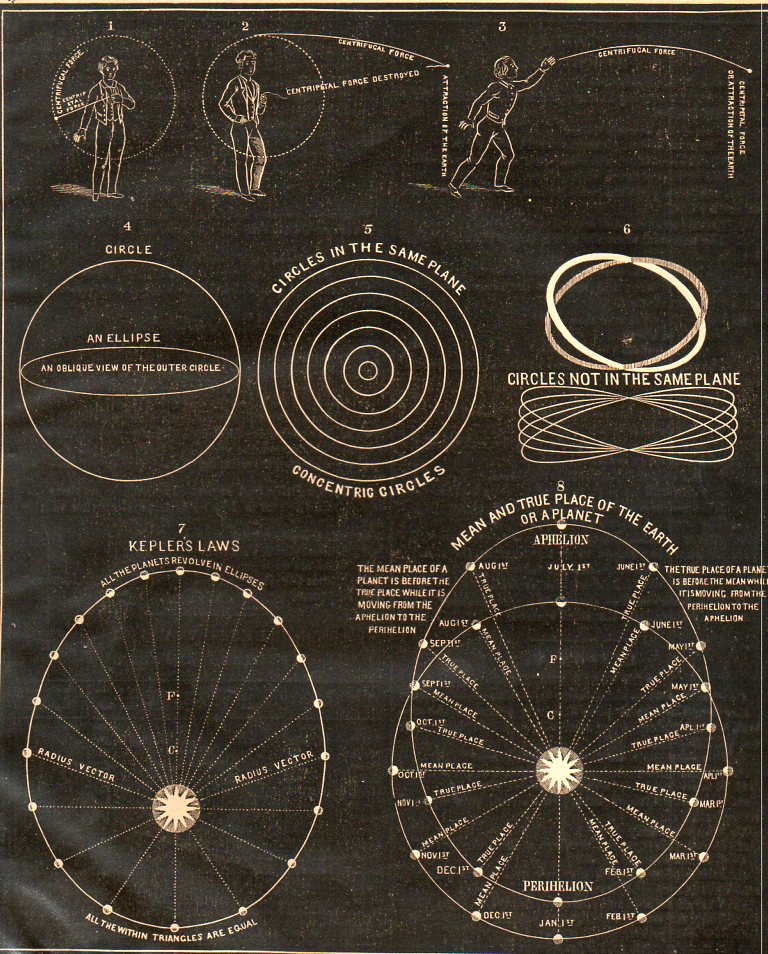
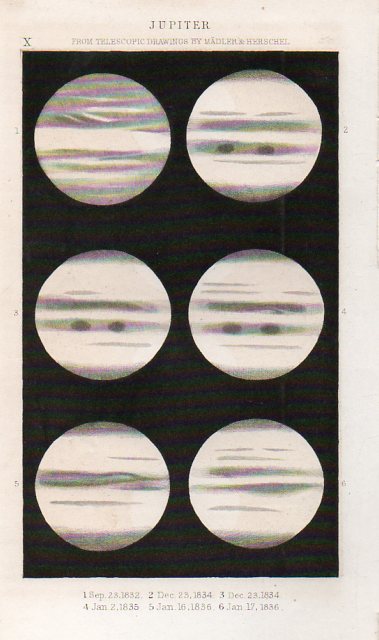
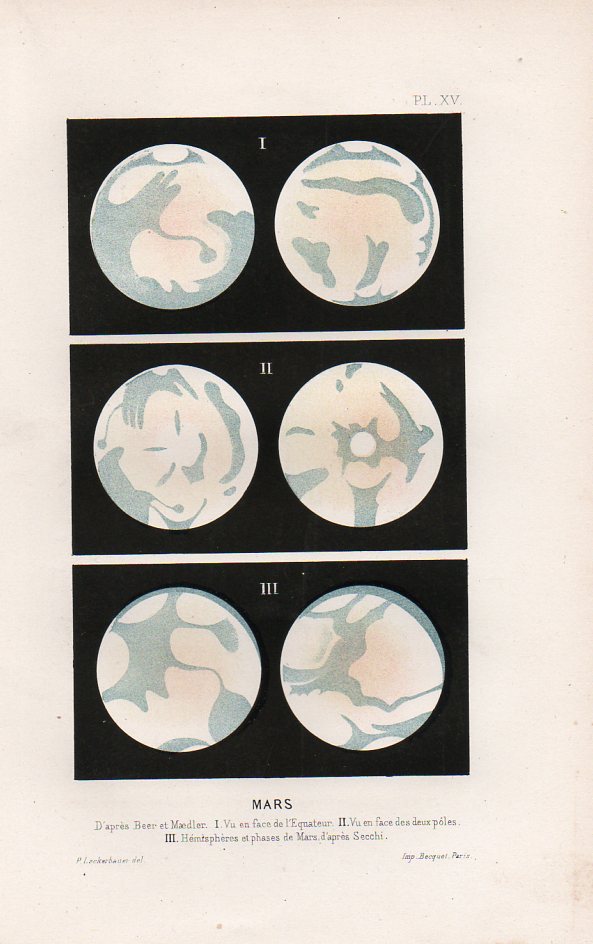
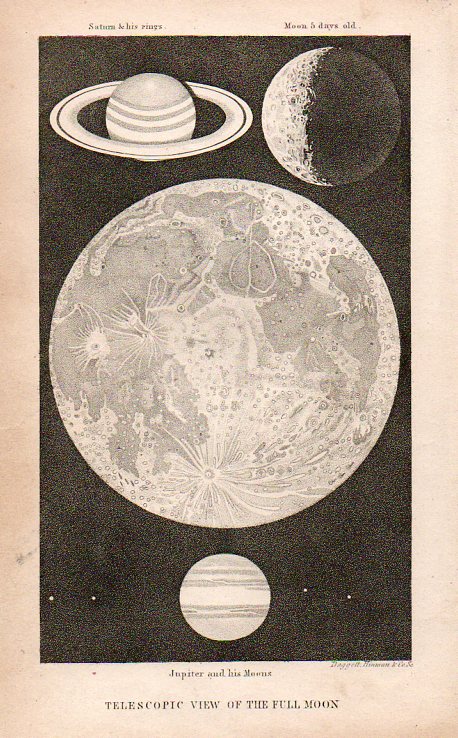
    Yes, the heavens are made of circles, somewhat, especially if you were observing a three-dimensional figure in two-space, where all spheres are circles.  But here we’re making those observations the other way ’round.  In any event, these are lovely images taken from a part of the history of astronomy images here in the bookstore–and I should say that they’re all available for purchase from the store as well.  But in the meantime, click away–you’ll find that almost all are expandable and mine-able for design elements.


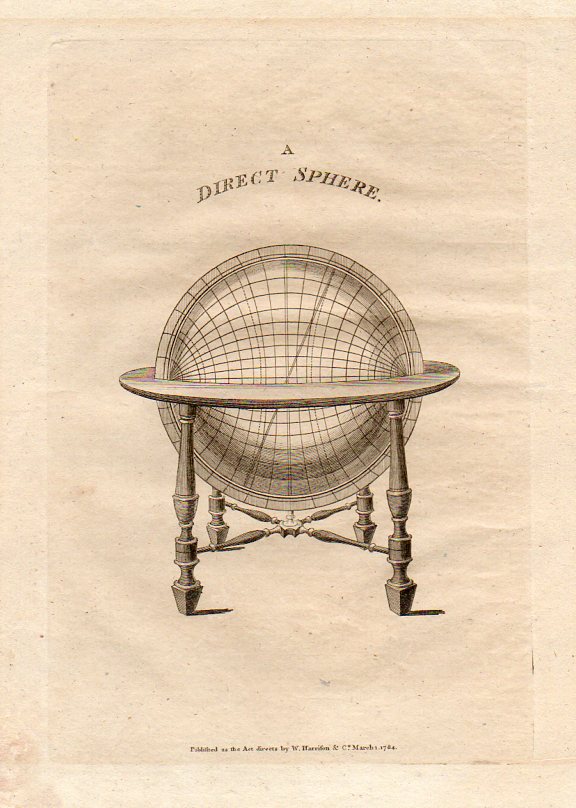
    Circles--direct sphere911

    Armillary Sphere, 1784.
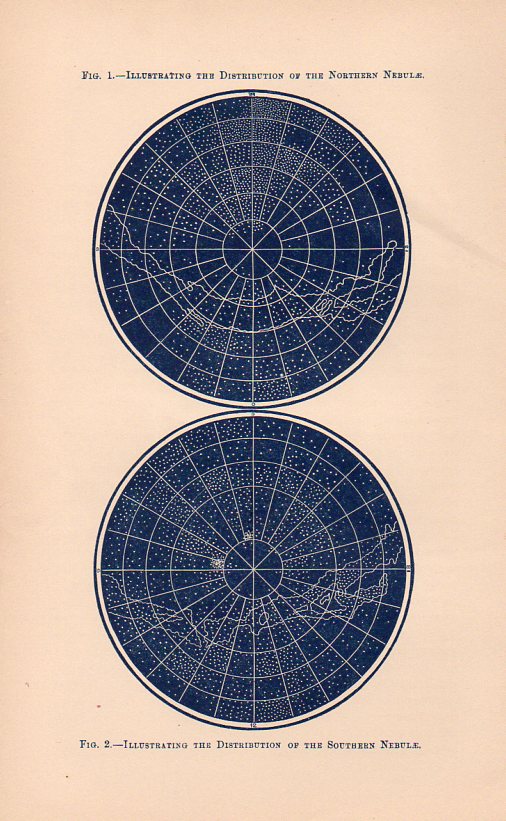
    Circles--distrib north nebulae918

    Distribution of the Nebulae, ca. 1860.
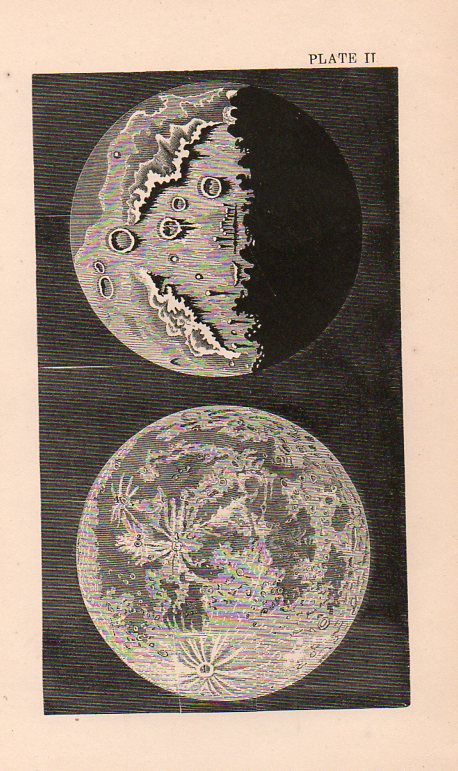
    CirclesDouble Moon908

    The Moon, ca. 1850.

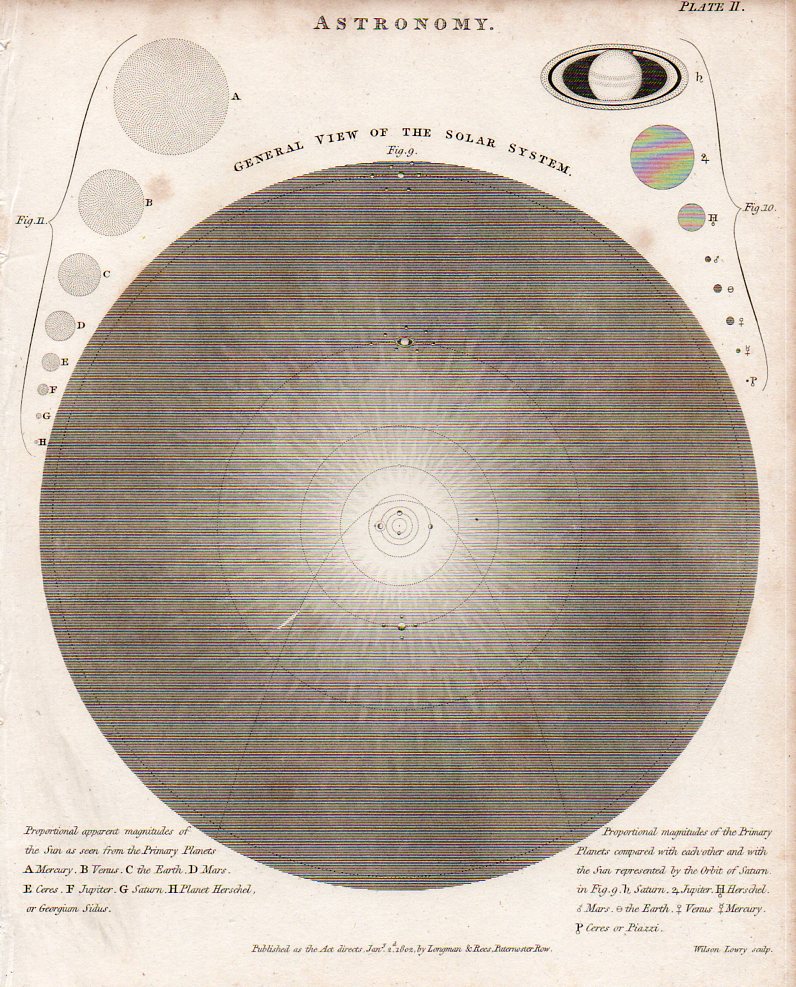
    Circles--general view solar ystem914

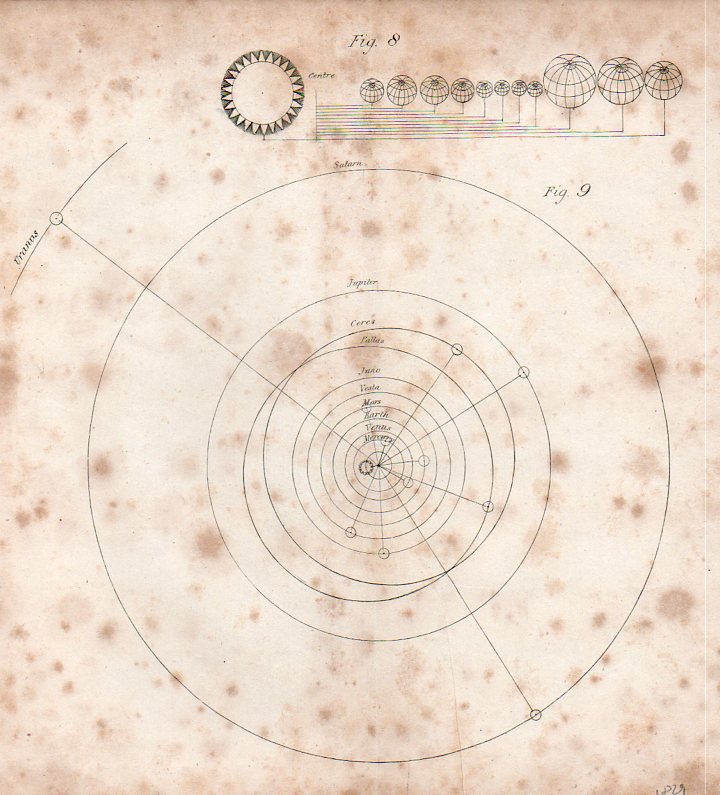
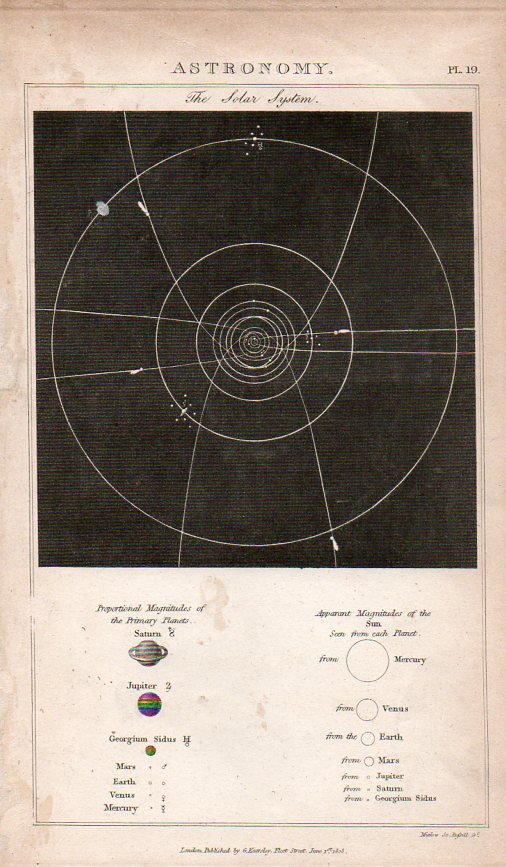
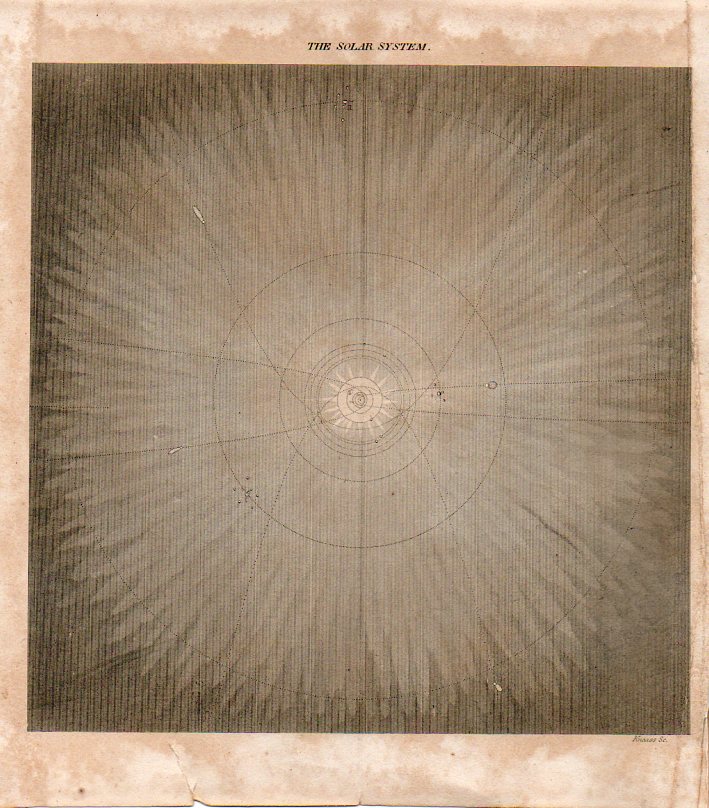
    The Solar System, 1804.

    Circles-in the same plane906

    1855.

    Circles--jupiter921

    Jupiter, 1864.Circles--mars913

    Mars, 1864.

    Circles-Moon and saturn907

    Full Moon, 1836.

    Circles--solar system916

    Solar System, ca. 1820.

    Circles--solar system c919

    Solar System, 1823.

    Circles--solar systemb917

    Solar System, 1808.

    Circles--sun planet comaprison size French902

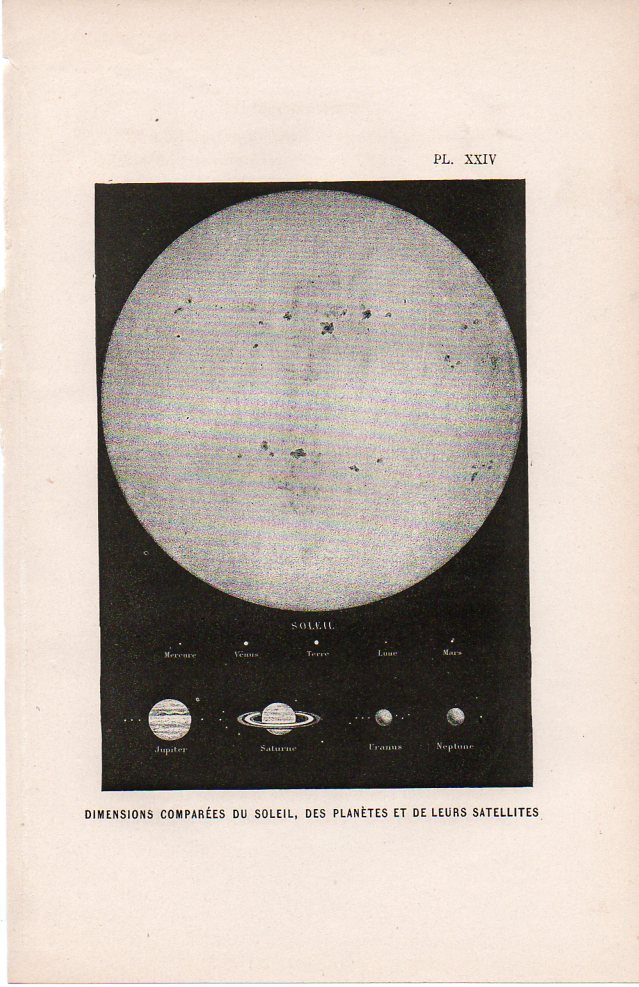
    Dimension of the planets in comarison to the Sun, 1850.

    Circles-the Moon Reesd905

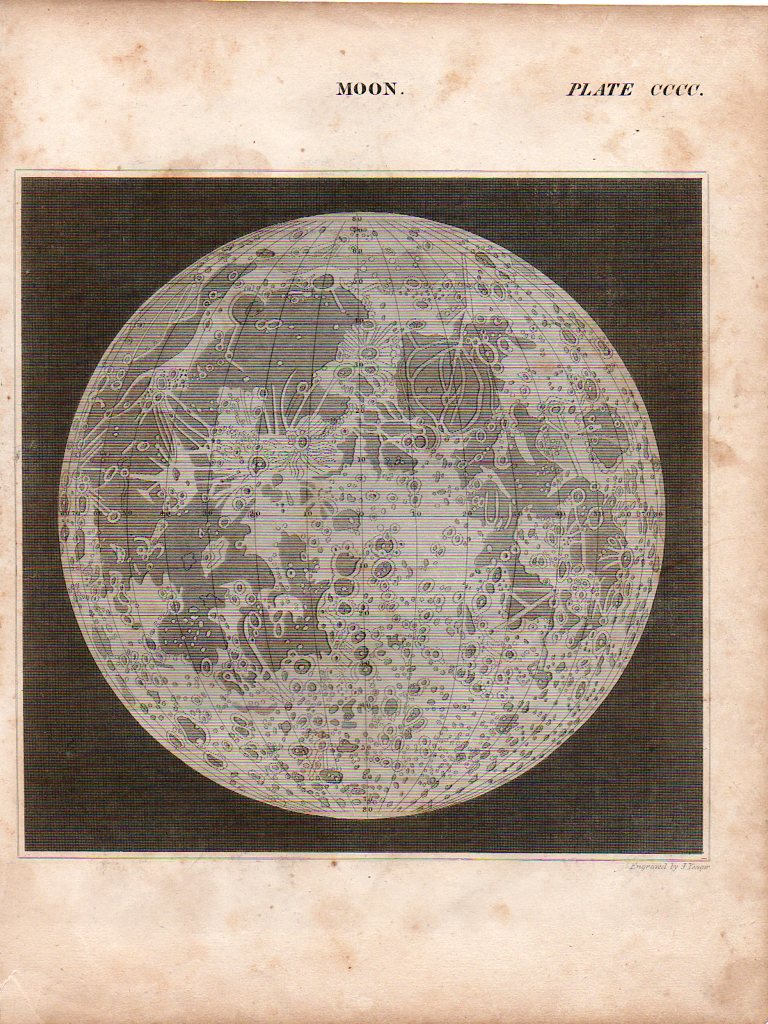
    the Moon, ca. 1810.

    Circles--the solar system912

    the Solar System, ca. 1825.

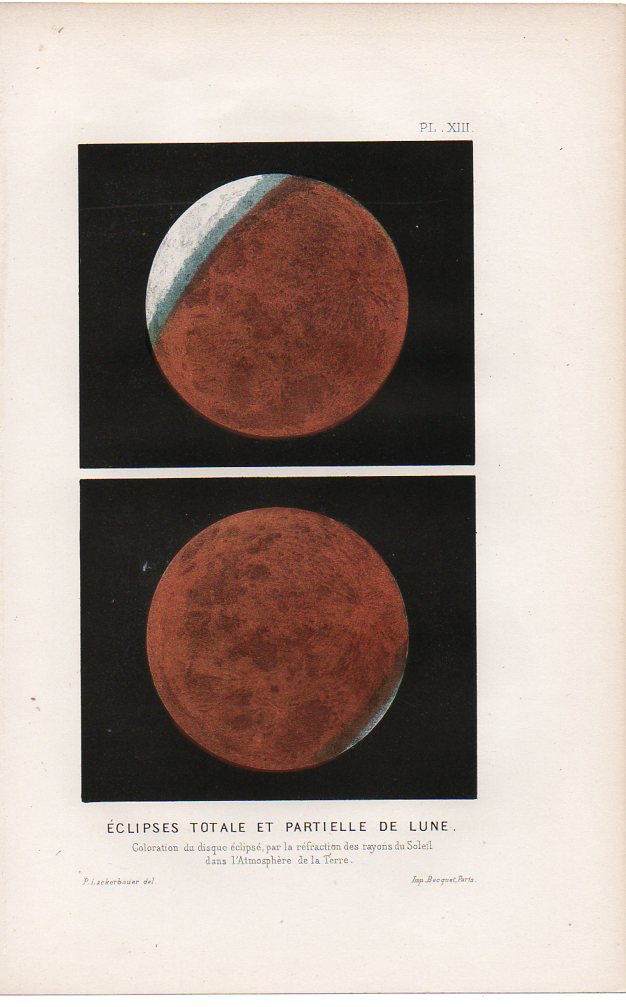
    Circles--toptal eclipse Moon900

    Partial eclipse of the Moon, ca. 1860.
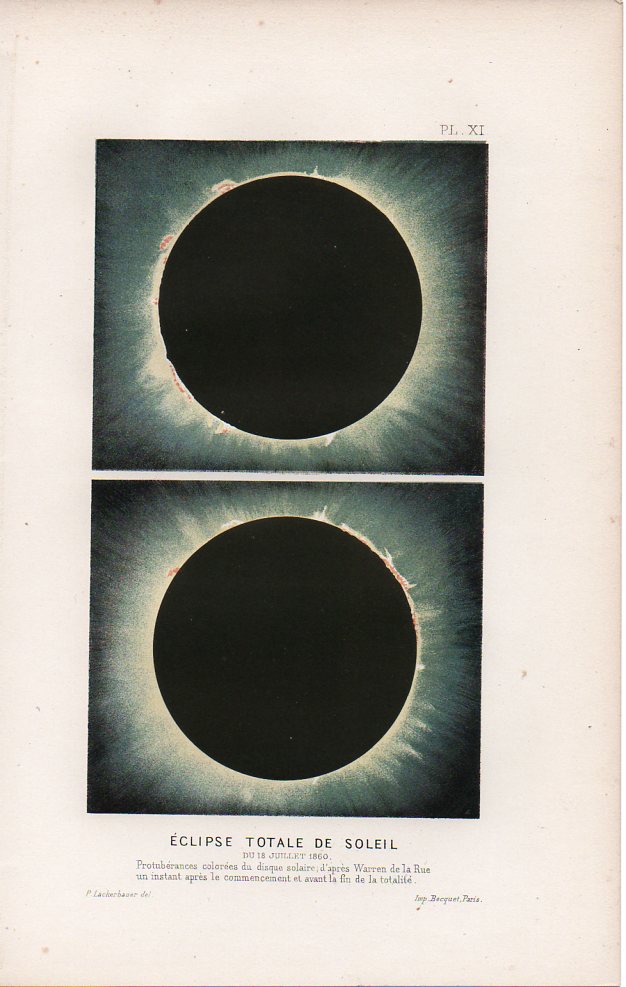
    Circles--toptal eclipse SUn901

    Total eclipse of the Sun, ca. 1860.

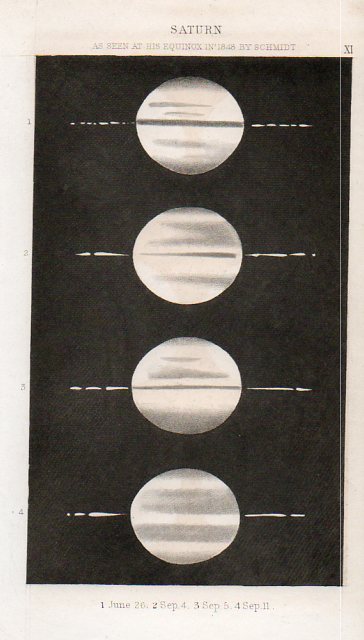
    Circles--saturn922


    Saturn, ca. 1870.

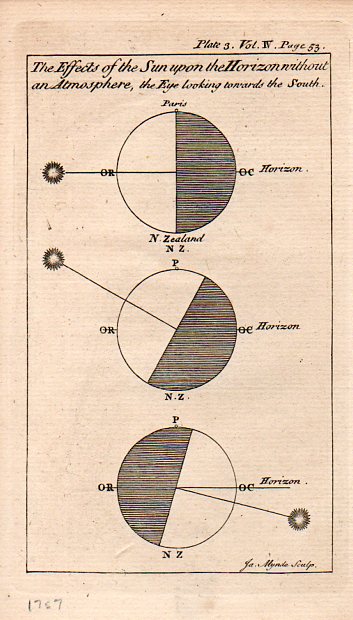
      Circles--effects of sun920
    1757.

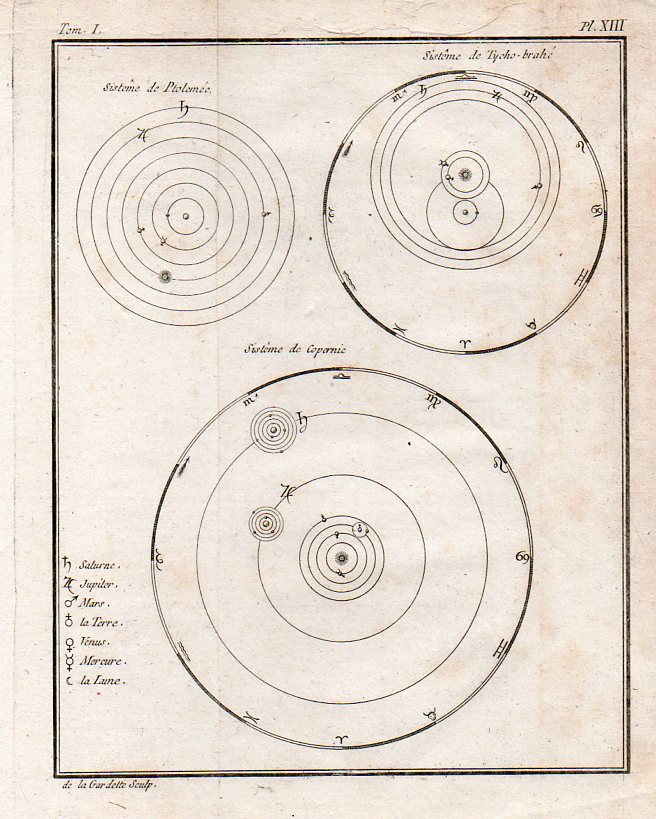
      Circles--comparative systems903

    Comparative cosmologies, ca. 1760.

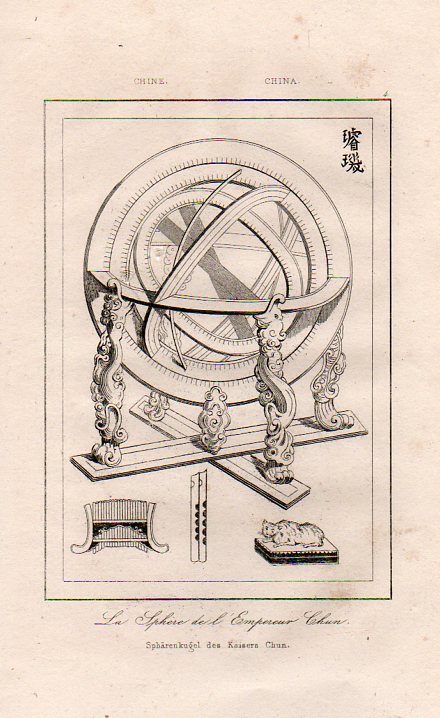
    Circles--chinese armillary910


    ·Posted by :

    ·in:


  • The Eyes of Gemma Frisius

    JF Ptak Science Books   Quick Post

    Gemma Frisius176

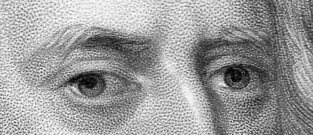
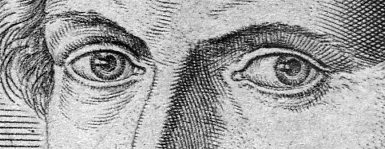
    This is a fine detail from a late 17th century print of Gemma Frisius (1508-1555).  He died young but with many accomplishments, not the least of which was being a mathematician of stature.  And a cartographer. And surveyor.  And instrument maker.  And physician. 

    In the original print (available for sale in our blog bookstore) Frisius’ eye occupy less than a half-square inch of paper–still they are powerful and direct in spite of their size.  

    The legend of the engraving read “Gemma Frisius, Doccomiensis, Medicus et Mathematicus.Ut simulat solem radiantis gemma pyropi, Sic Gemmam artifici picta tabella manu: Haec vultum dedit, ipse animi monumenta perennis; Ne quid in exstincto non superesse putes. Vita escessit Louany VIII. Kal., Iun. MCLV, Aet XLVII.”  

    Gemma Frisius175

    ·Posted by :

    ·in:


  • Found-Art in Book Fragments

    JF Ptak Science Books  Quick Post

    All art found in situ

    Book art found171

    Detail from:


    ·Posted by :

    ·in: