A Daily History of Holes, Dots, Lines, Science, History, Math, Physics, Art, the Unintentional Absurd, Architecture, Maps, Data Visualization, Blank and Missing Things, and so on. |1.6 million words, 7500 images, 4.9 million hits| Press & appearances in The Times, Le Figaro, Mensa, The Economist, The Guardian, Discovery News, Slate, Le Monde, Sci American Blogs, Le Pont, and many other places… 5000+ total posts since 2008.

Author: JF Ptak

  • Computer Art, 1949

    JF Ptak Science Books   Quick Post

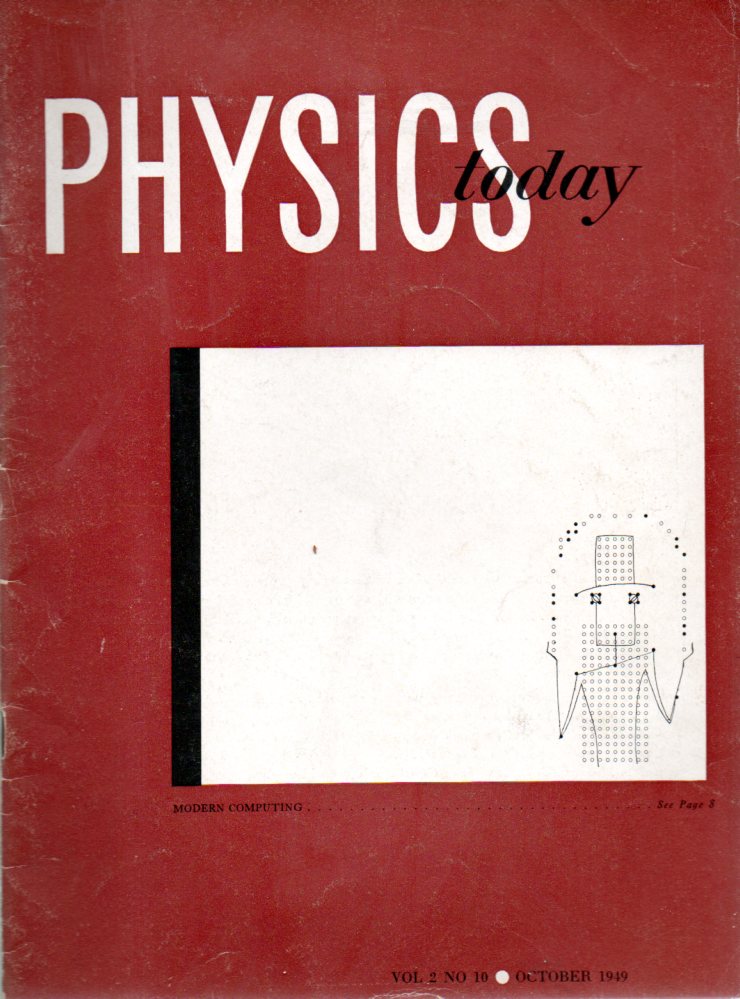
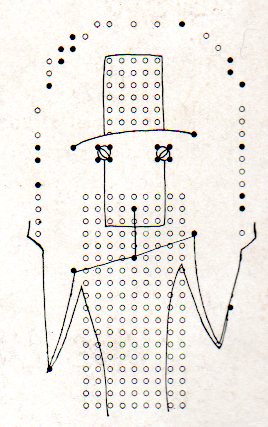
    Computer art154I’m not sure how to investigate this right off-hand, but I think that there is a special category in the history of art, subcat history of art and technology, subcat history of computer art, subcat using the image of the computer in art.  The image above comes from the front cover of one of the early issues of the “new” Physics Today magazine (volume 2, number 10), in October 1949–it is the artwork of Paul Bond, who created this portrait of a juggler “on a matrix sheet used for plotting computor [sic] plug board diagrams”, and is one of 11 such images. It illustrates an interesting article by pioneers R.D. Richtmyer and N.C. Metropolis (“Modern Computing”). Richtmyer/Metropolis have a very sober approach to the computer–mostly speaking about the ENIAC–and address its romance, possibilities, but seemingly (to me) most of all “a need for defining the limits of computing machine operation, as well as its promise”. In effect, then, the authors really only address the known quantities of computing capacity in 1949, and even though tempted by looking into the future, they really do not. Their vision of the future is very pragmatic: when speaking to future applications, they conclude “by their very nature, these applications are not easy to foresee, and perhaps, therefore, this is the point at which this discussion should close”. 

    Certainly there have been much earlier images of automated steam-driven robots with some sort of calculating brain, and images of imaginative computer-like objects…but art made by the computer seems to come a fair bit later than this issue, later still than what might be considered the first art generated via the computer (which were images made from manipulating an oscilloscope) in 1952. In any event, I think at the very least that the Bond artwork is very curious, interesting, and probably very early for what it is.

    Computer art153


  • Naming Things: Colors


    JF Ptak Science Books                                          Part of the series Naming Things
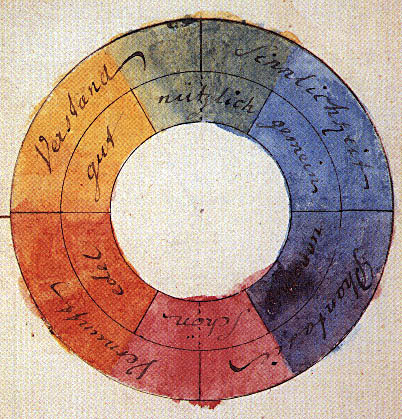
    GoetheFarbkreis

    (Almost) in the beginning were monsters.  The epic battle that Moses wages early on is not with Pharaohs, but with the dragon(s?) that the creator itself had fought on the opening whisper of creation (Book of Job 26:12, Psalms 89:10) and who would again meet at the very last bits of the closing days.  Behemoth, Leviathan, Rehab may all well have been monsters to these ancient folks, but they very well might look like rhinoceros or crocs or hippos to us.  Monster demons like Rehab (Psalm 87:4), a slaughtering beast who would be reintroduced to a different part of the world as Tiamar who would or could also be known as the Red Sea,  lifted straight from Mesopotamian mythology and placed directly into that of the Old Testament among the rest of the borrowed stories and beliefs, a problem by any other name.

    Following names and their cyclonic twists, and absences and sudden  re-emergence through the history of storytelling is dizzying—just consult your Robert Graves on myths  if you want to have  your memory plumbed (the great poet and writer doing not such a poetical or writerly job in this effort in my opinion though most people love it).  Keeping an eye on the mix and mash of gods and goddess and associated super beings from thousands of years ago, the god of the Old Testament makes it very clear and precise about just who he is in his self-introduction to Moses:  “I am the God thy Father, the God of  Abraham, the God of Isaac, and the God of Jacob” (Exodus 3:6)

    Equally almost in the beginning, again so far as the Bible is concerned, are colors—before that maybe everything was black and white, or just white, or maybe just black, depending on your epistemological concept of everythingness or nothingness.  (It looks like green may be the first color mentioned in the bible, (Gen 1:30 And to every beast of the earth, and to every fowl of the air, and to every thing that creepeth upon the earth, wherein there is life, I have given every green herb for meat: and it was so) though the mixing up of meat and veggie is a little confusing to me.))

    Over the years color names themselves have creepethed among themselves like a vocabularic ocean, a fluid dynamic of naming.  Names have flowed across their individual spectra, some names sticking, some not; the originator of the concept of the naming of “red”, the original namer of the color, lost to the earliest and deepest part f the collective human memory.

    I don’t know where many of the names of colors come from, or why.  Index to Color Names and Color Numbers of the Standard and Season Color Cards of America (published and created by the Textile Color Card Association), and published in 1923, is filled with color names whose meaning and origin are a mystery and whose necessity seem to hinge on sunspots.  Which is fine, though it might be interesting to have had color names more dependent on that which went before. Like the names of the streets on most of Connecticut Avenue in D.C. are alphabetical, and once the first 26 letters or so are monosyllabicly employed, the second set starts with two syllables, and then three.  It is a system that usefully indicates where long the long avenue you might be. It might be useful to employ such a method in color names; or not. 

    And I suspect it would be “or not”, unless the poetry and art and music inherent in these formulations would be imaginatively employed

    But on to the color names:  Ambulance, Basketball, Bosom,  Cowboy,  Squirrel, Chit, Old, Nymph, Old mephisto, Pelt, Racket are examples of some of the mystery colors.                             

    Some names which were part of institutionalized racism I’m sure are now gone:  Arab, Negro, African; Bagdahd (?), Bombay Brown,  Coolie Yellow, Coolie, Congo Brown, Egyptian Husk, Hankow (yellow), Kyoto Yellow, Korea Yellow, Mandarin Yellow, Punjab Brown, Kafir, Tar Baby.
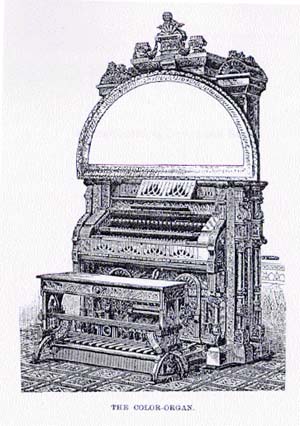
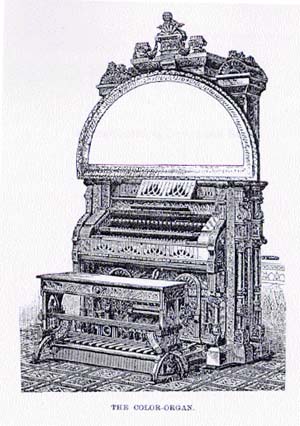
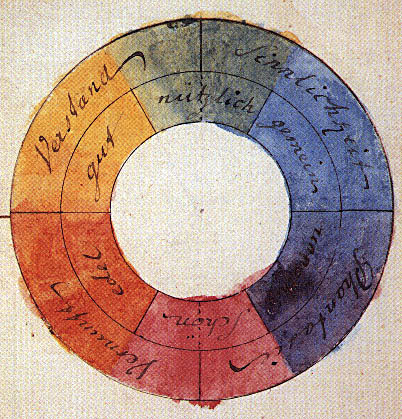
    Colororgan But I’ve got to say, even though the names may not have much to do with the colors, most of the names in the pamphlet sound quite lovely, and many are yummy: London Smoke, Log Cabin, Leadville, Madonna, Naked, Pitchpine, Pompeii, Prelate, Smoked Pearl, Swamp, Lucky Stone, to name a few. Overall I doubt that this is what Newton, Goethe, Chevreul, Rood, Maxwell and the rest had in mind when they were figuring out what color *is*, but I do think that all of them had large enough poetic natures (Newton the weakest and Goethe by far the strongest) to appreciate the occasional beauty of naming.  The unbelievable Shakespeare seems not to have spent that much time on color (so far as I know, and I don;’t much about the Bard), but (in a dear-sweet-god understatement) other people did:  people like Richard Feynman synesthesically thought in mathematical color terms, others created musical  instruments which would produce color from music while most of the rest of the world produced music which conveyed color, and on and on.  And then of course there’s the whole world of art.

    But I won’t go there now–I just wanted to follow this loose thread in what seemed to be a pretty inert pamphlet–in the end it opened itself to a lot of possibilities with just a little thinking. 
    ·Posted by :

    ·in:

    —

  • An Early Steam-Driven Robotic Society-Scrubber (1829)

    JF Ptak Science Books  Post 2183           History of the Future series

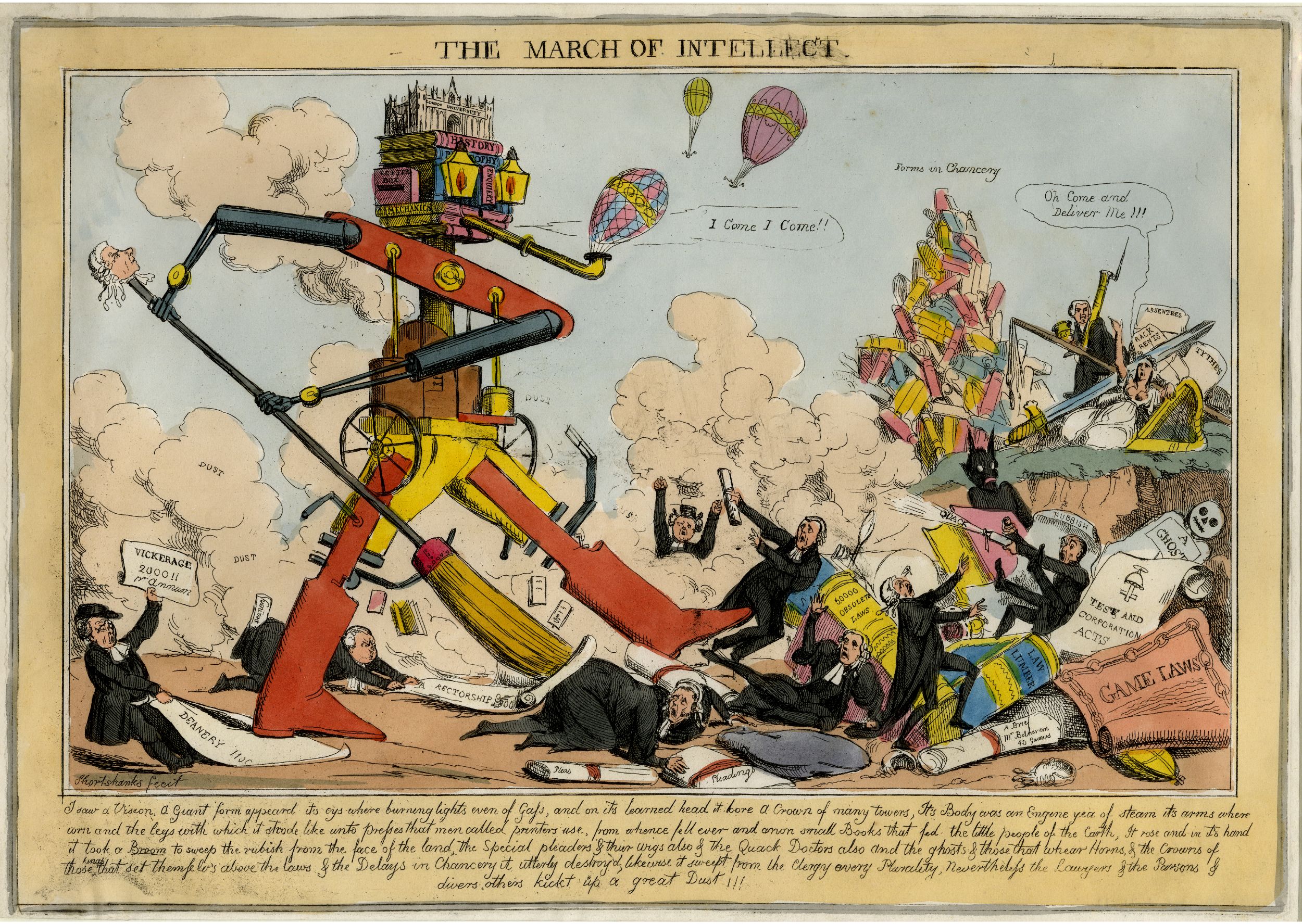
    I’ve addressed the ideas of early mechanical men elsewhere in this blog (just enter “robot” in the site search box at left and you’ll find two or three dozen related posts on the subject), but failed to include this very fine and early example by William Heath in his March of Intellect series (printed from 1825-1829).  

    Steam man heath

    He was particularly bitter about what he saw as an aristocracy of official ruination, and created an unusual steam-driven mechanical man with a book-driven intellect that swept up the great “rubbish” and “dust” of society.  At the top of this early robot (preceding the invention of the term by about 100 years) was a pile of books with a “crown of many towers”, which was London University, beneath which was a set of gas-light eyes, iron arms, and legs made of printer’s tools, sweeping away useless and insulting lawyers and jurists and their legal wigs and obsolete and repetitive rules, medical quacks, and the dust of other official abuses, “sweeping rubbish from the land”. 

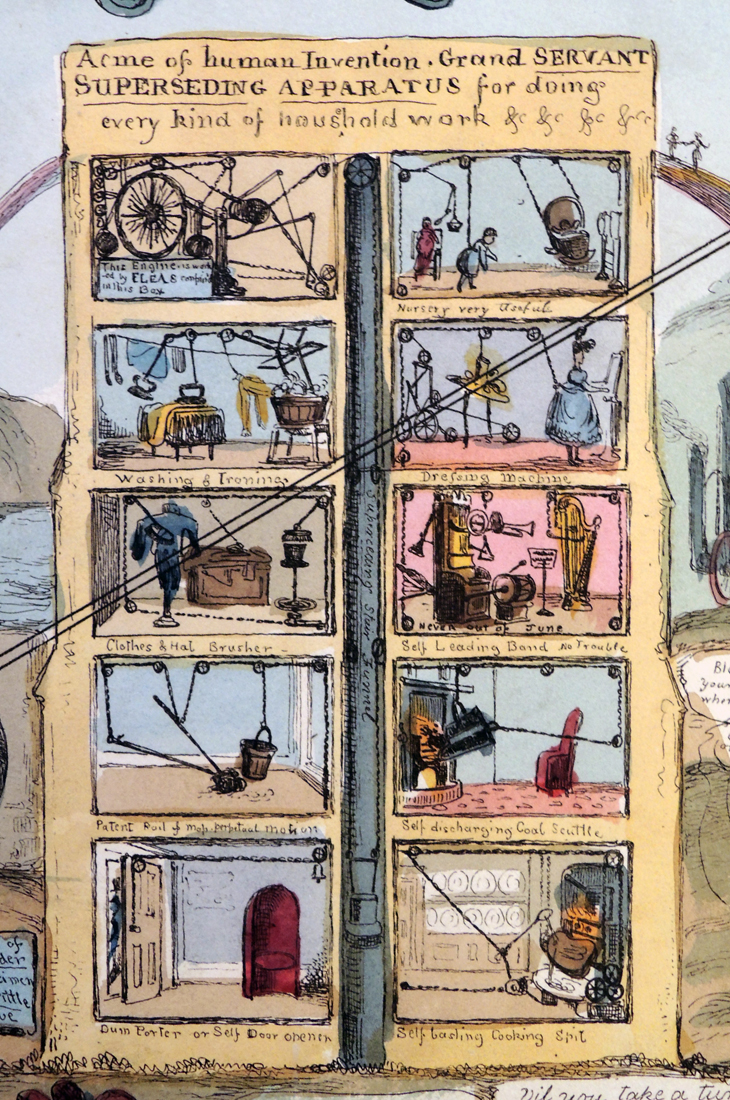
    Another near-robotic image by Heath is his pre-Rube Goldberg automatic house, a central feature in the March of the Intellect No.2 (1829) which features fantastic flying machines hovering and screaming past the house. 

    Heath march of intellect 3

    [Source:  Graphic Arts Collection, Princeton University libraries, here]

    It isn’t a robot unless you consider the entire house as a host for all of the things going on inside itself, and then you have something else entirely.  


  • The Family Who Shoots Together…(1890)

    JF Ptak Science Books  Daily Dose from Dr. Odd

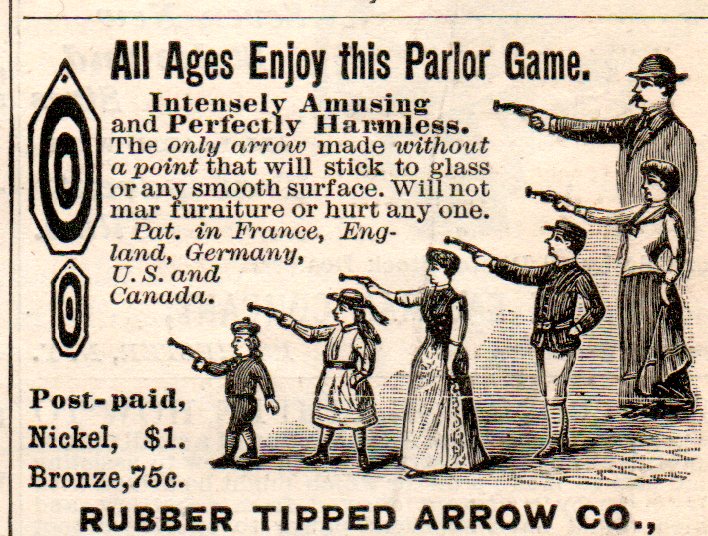
    The beautifully and accurately named  Rubber Tipped Arrow Company supplied an assortment of parlor games for children (and adults) for “perfectly harmless” shooting.  The truth is that I really liked the image of progression of shooters, reminding me a little of the “Ages of Man” prints.  This appears in the advertising section of the Scientific American for 3 August 1890–two issue before their famous cover showing Herman Hollerith’s critical calculating machines at use in the American census.  

    Family guns148

    And this ad, from one of their competitors, found in The American Stationer, 1889, page 957:


    ·Posted by :

    ·in:


  • The Beauty of Mathematical Manuscripts, 1840

    JF Ptak Science Books     Post 2082

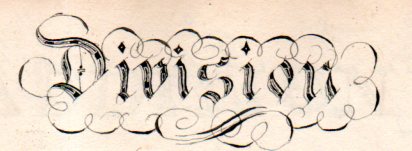
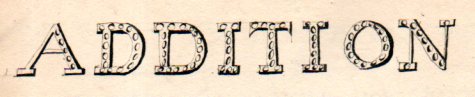
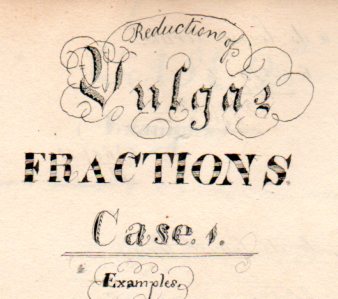
    From the warehouse comes this lovely find:  a manuscript notebook of a combination of elementary and slightly advanced mathematics, kept by a young person, written around 1840.  It is a beautiful work, and given that it is only about 100 pages long, it is a surprisingly and refreshingly thorough review of the mathematical necessaries of the mid-19th century.  

    Math beauty134

    Math beauty135

    Math beauty136

    Math beauty137


    Math beauty145

    ·Posted by :

    ·in:


  • Atomic Cloud X-Rays: the Bomb Cloud in Pop Culture, 1940’s – 1960’s

    JF Ptak Science Books   Post 2181 
    Follow Me on Pinterest


    This is part of a collection of popular-culture images of the atomic bomb cloud–an x-ray of cloud bones, if you will.  These (along with their attributions) can all be found on my pinterest page in the “Atomic Hopes and Fear” section. There is also a 100+-post section on this blog for Atomic and Nuclear Weapons.   

    Can We Atomize the Arctic?
     

     Atomic

    ·Posted by :

    ·in:


  • Thirst and Defeat–the Somme, 1916

    JF Ptak Science Books  Post 2180

    WWI--German THirsty124

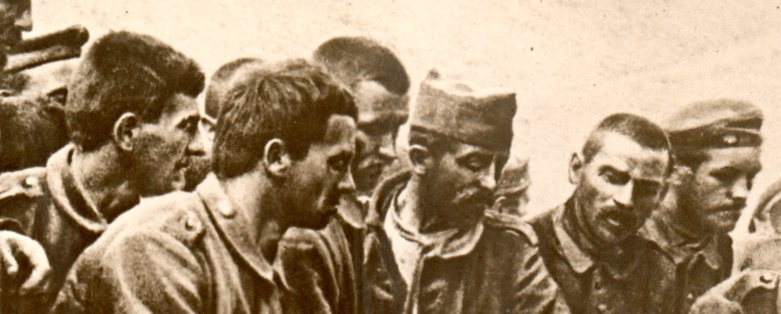
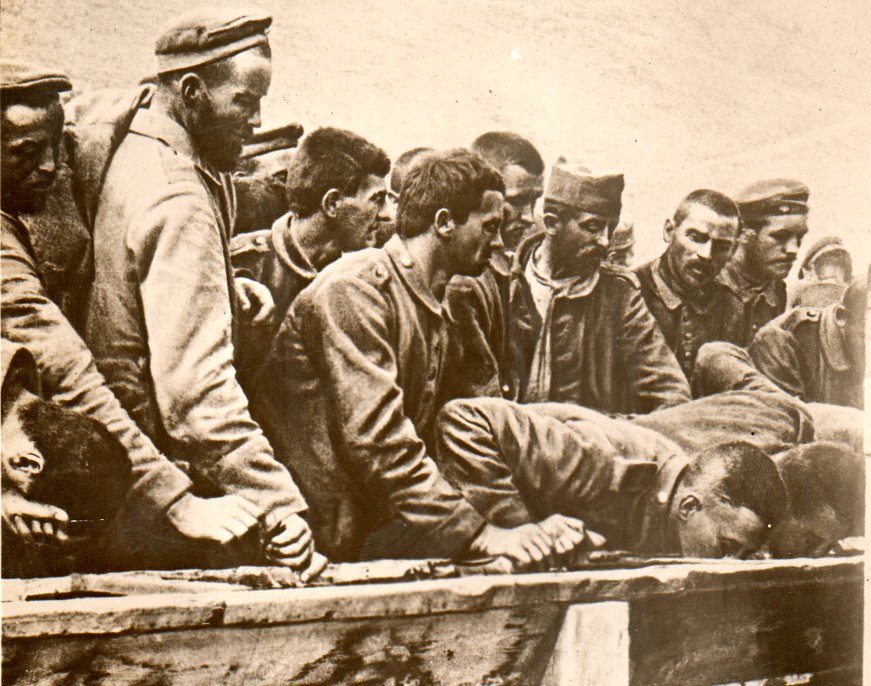
    TO have been on the River Somme, in France, in the summer of 1916, and to be in uniform, and carrying a gun, was perhaps the worst place to be in the whole of World War I.  More than one million soldiers were killed or wounded in that time, with millions more engaged.  It was impossible.  

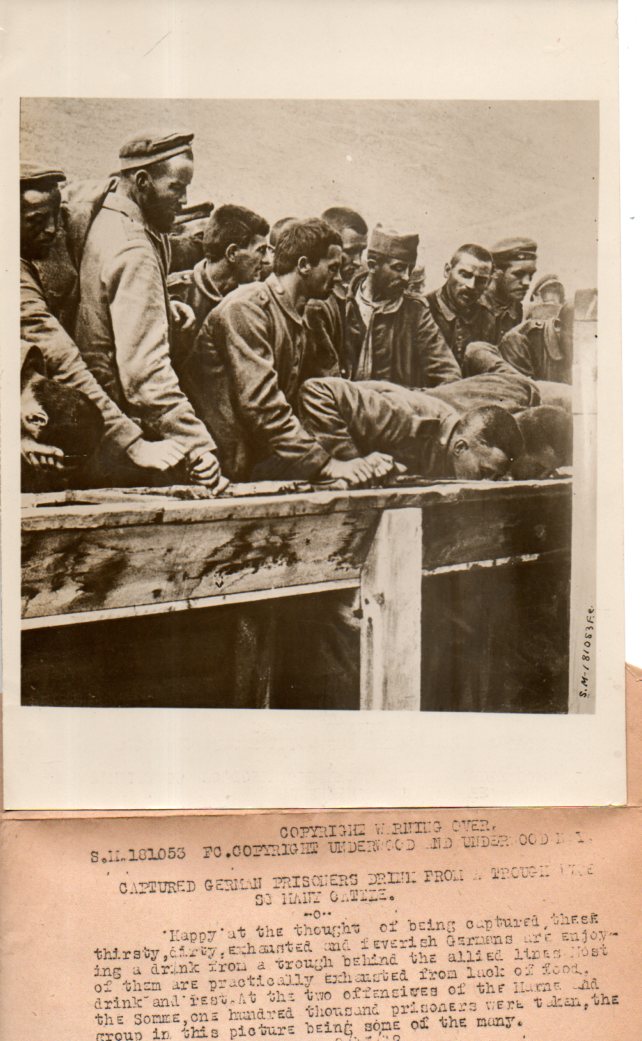
    This photograph tells part of the story. It was released September 27, 1918, by Underwood and Underwood, a news photo service agency that distributed sanctioned photographs of war action to newspapers and other periodicals.

    The photograph was accompanied by a caption supplied by U & U (bottom) and tells the story of these captured German soldiers–dazed, starving, frightened, hungry, thirsty, and were part of a group of more than 100,000.  They were offered water from a trough, and in spite of it all, they were so thirsty that they were desperate for whatever they could get.  

    WWI--German THirsty123

    For whatever reason, the entire trough was not filled with water–only limited sections were.  The soldiers were holding their place in line with their hands on the empty trough, inching slowly forward. In my collection of these photographs it is rare to see faces in despair or pain like this, and these faces are definitely telling stories.  (This is another example of the unusual display of emotion in WWI news service photographs.)

    WWI--German THirsty122


    ·Posted by :

    ·in:

    —

  • On American vs. Japanese Propaganda in Occupied Peking, Sino-Japanese/WWII

    JF Ptak Science Books     Post 2179  

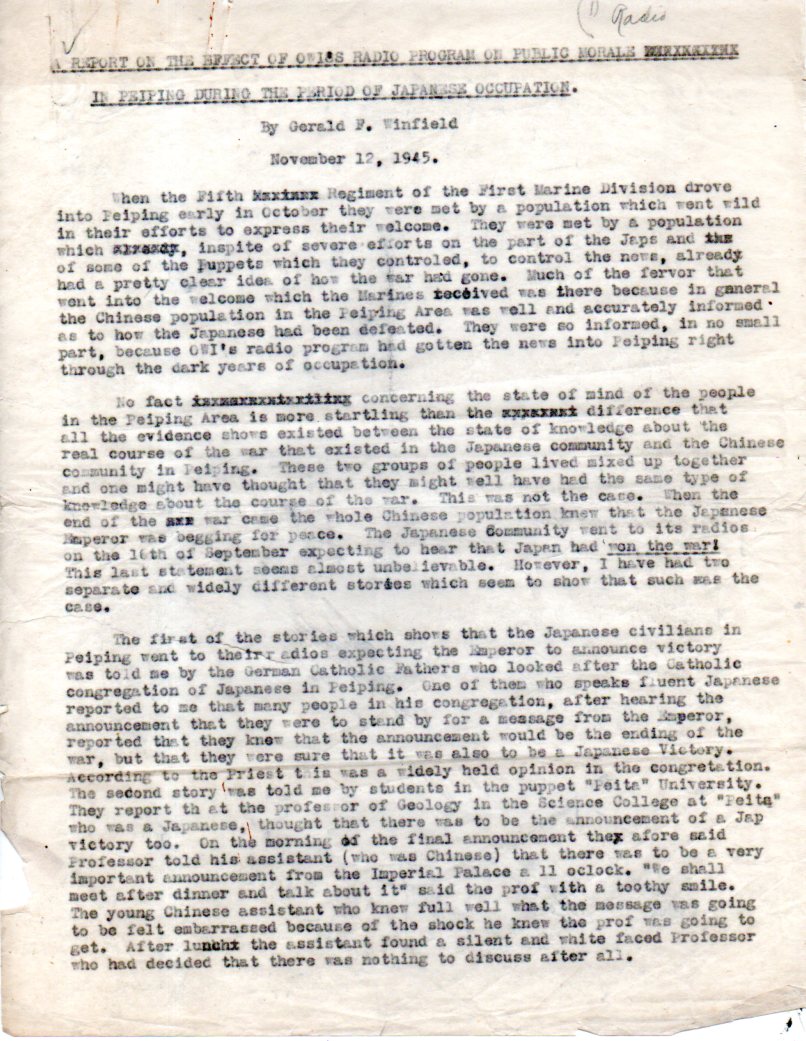
    I stumbled upon this very interesting bit of information in the hoard of materials I purchased of the Library of Congress years ago.  “Report on the Effect of OWI’S Radio Program on Public Moral in Peiping During the Period of Japanese Occupation”, by written by George F. Winfield (November 12, 1945) might sound fairly high and dry, but it brings out a very interesting series of points, one of which was that the Chinese of Peking were far more informed on the progress of the war than their Japanese occupiers.

    Japanese Prop117

    Japan began this second war (following the first Sino-Japanese War of 1894/5) in July 1937 (more than two years before the beginning of the European war in September 1939).  It followed decades of “incidents” between the two countries, revolving into pre-war (if there is such a thing) in the early 1930’s before the beginning of full out-and-out war in 1937.  The War of Resistance Against Japan (for the Chinese) and the Great Holy War and the Great War of East Asia (to the Japanese) was an enormous conflict, claiming three million KIA and WIA on teh Chinese sjide and about half that for the Japanese…plus between 15 and 25 million Chinese civilian deaths and untold numbers of wounded.  I don’t know if there is a figure for displaced people, children left parentless, and war rape.  

    There were nine years of brutal occupation by the Japanese, during which time the Chinese received some minimal if not risky help from the Allies.  It is interesting to see in this report that the occupied Chinese were expecting the announcement of surrender because they had been kept informed via the Office of War Information (OWI) radio broadcasts that were received without interference from the Japanese (“the OWI’s radio program had gotten the news into Peiping right through the dark years of occupation”).   Winfield writes that even though the two groups lived within each other’s spheres, they did not share the same information from radio broadcasts.  According to this report, when it was announced that there would be an announcement from the Emperor that the Japanese in Beijing thought it would be the announcement of the end of the war–but with a Japanese victory.  After years of propaganda from their own government, the Japanese in Beijing were in general totally surprised by the announcement of surrender, the occupiers occupied by the lies of their own government.  

    ·Posted by :

    ·in:


  • America Has No Enemies in Asia (1938)!

    JF Ptak Science Books  Quick Post

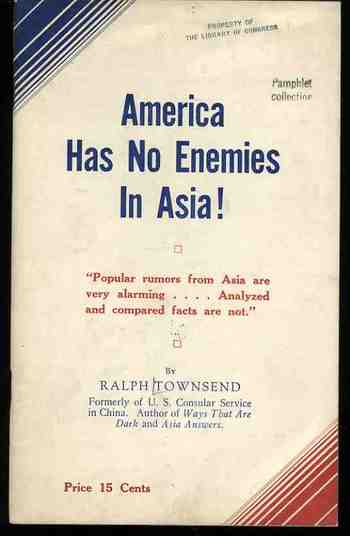
    Ralph Townsend provided one of the oddest, least-time-conscious, and pernicious titles (printed in 1938!) in my experience with pulpy propagandistic quick-publications of the 1930’s.  Townsend (1900-1976) was a Columbia School of Journalism product, but something happened, and emerged in the 1930’s as a deep Sinophobe, an anti-Roosevelt anti-interventionist far-right apologist for the imperialism of the Japanese government.  

    1ebaysept19_japanese_prop599

    He got into trouble after Pearl Harbor, deeper in 1942, for being an unregistered agent of the Japanese government and was sent to jail. He survived himself and had a career writing about his very far right-wing ideas, and is evidently a favorite of some out-on-the-end-of-the-spectrum Right Wing folks today for his isolationist and ultra-orthodox America-for Americans views.  

    What it boils down to in Asia, for Townsend, is that the Sino-Japanese war as the fault of the Chinese, and that Japan simply fought to protect its interests, and then, with the occupation of China, to further protect itself and (yes) China.  This sort of thing still happens.

    ·Posted by :

    ·in:


  • Bizarriana Logica: Japanese Nazis Stole the Lindbergh Baby (1944)

    Lindbergh kidnapping116JF Ptak Science Books             Daily Dose from Dr. Odd

    America was obsessed with the Lindbergh Baby for years after the case was decided and the kindapper executed. Decided or not, the crime captivated many, and people continued to debate the case; and as time progressed, the conspiracy theories regarding the kidnapping seemed to reach out to explanations further and deeper into the Deep and Far.  

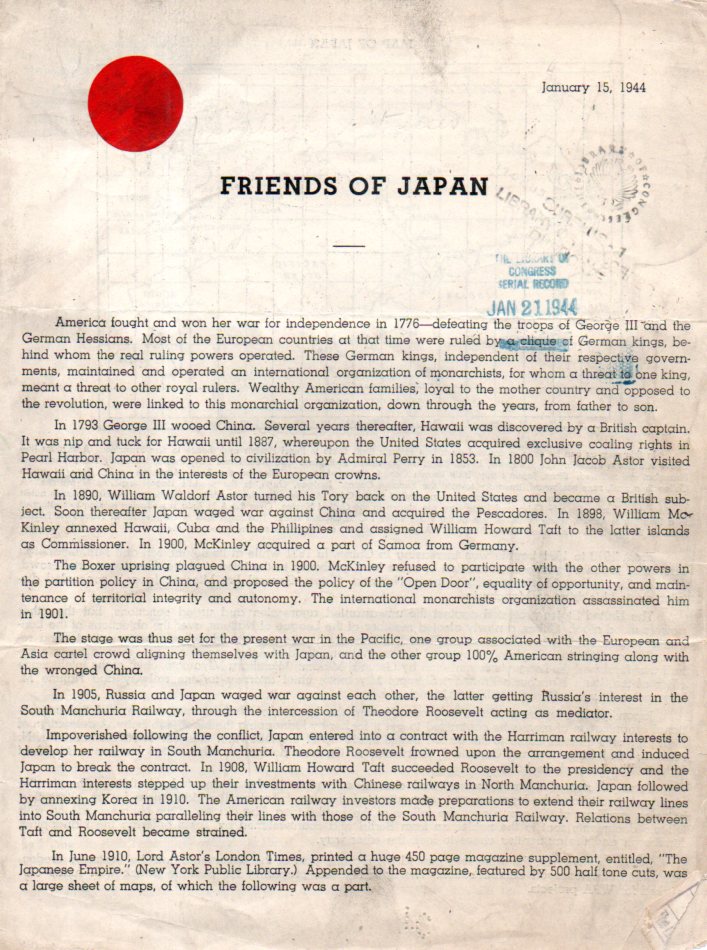
    This four-page pamphlet, published in 1944 by “The Lindbergh Witnesses”, a conspiracy group evidently stationed on hapless Staten Island, pushes the barriers a little further, contending that the Japanese Empire and the German Nazis and a secret church and even the Republicans orchestrated the crime.  

    The “friends” of Japan turn out to be co-conspirators in the case to what becomes the “barbarian Japs” and their Berlin counterparts.  This was easy stuff to believe, I guess, what with the world at war, even when most of their evidence seems to be exceptionally flimsy and invisible.  

    ·Posted by :

    ·in: