A Daily History of Holes, Dots, Lines, Science, History, Math, Physics, Art, the Unintentional Absurd, Architecture, Maps, Data Visualization, Blank and Missing Things, and so on. |1.6 million words, 7500 images, 4.9 million hits| Press & appearances in The Times, Le Figaro, Mensa, The Economist, The Guardian, Discovery News, Slate, Le Monde, Sci American Blogs, Le Pont, and many other places… 5000+ total posts since 2008.

Category: Technology, History of

  • The Mysteries of Air Travel (1945)

    JF Ptak Science Books   Quick Post

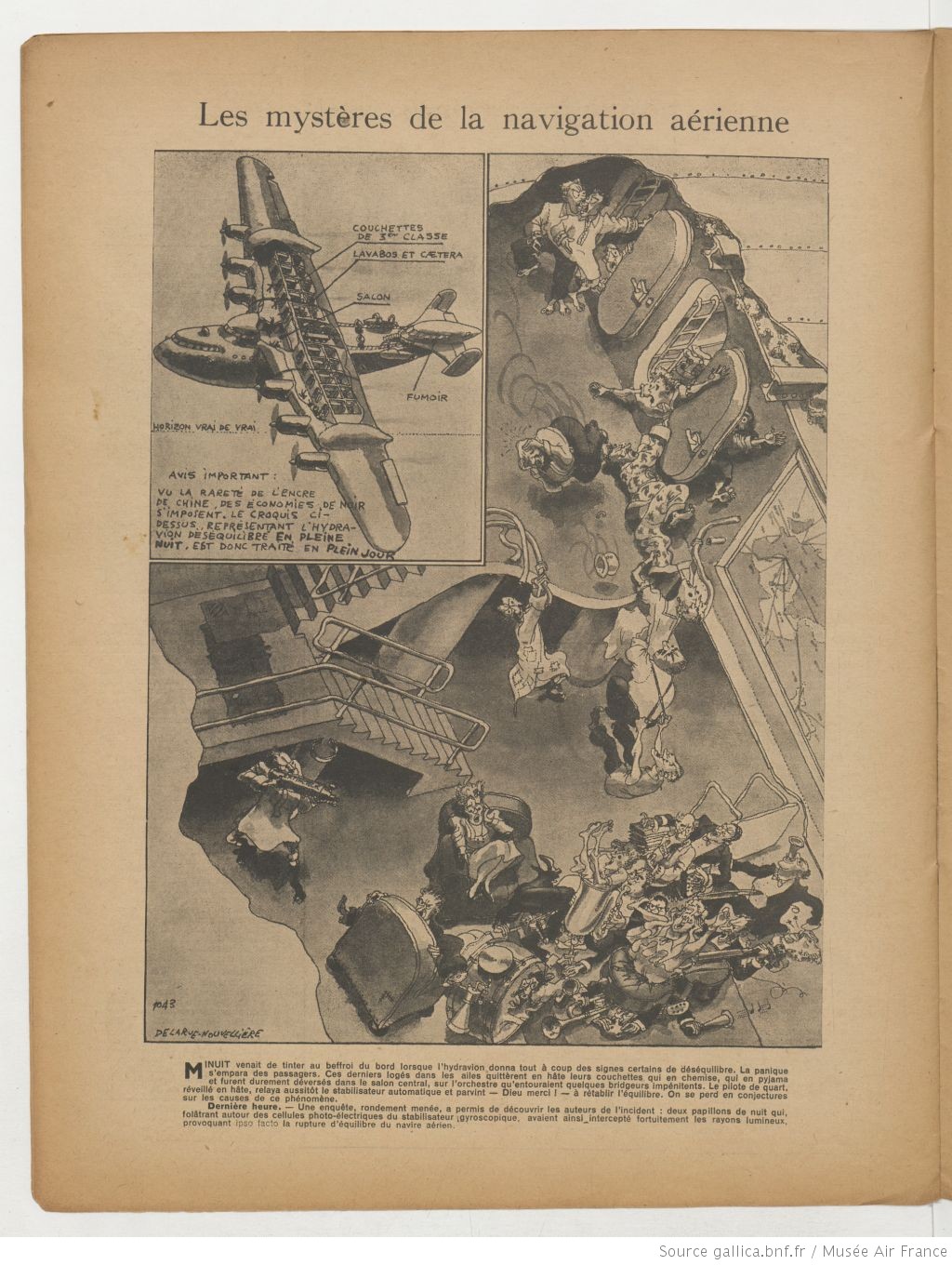
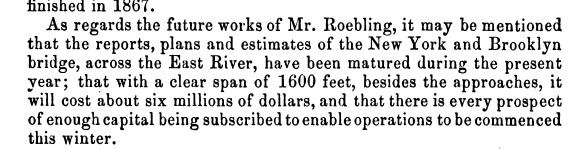
    There’s very little detail of the aircraft in general, though like a lot of free-thinkers the artist has imagined plenty of life being lived in the interior of the plane’s wings, where all of our attention is directed. It seems that the plane has banked to such a degree that it has completely upset the pace of life of its passengers. Many of the travelers have taken a big tumble, and we can see a guy hanging onto another man’s suspenders who in turn is hanging on to a woman clutching a man grabbing a man holding onto a door. Beneath that circus routine is another–we see a small band jostled and imploded into itself (with the clarinetist swallowing his instrument and someone landing in a tuba) while a man in sock garters and a night shirt takes aim at the group with something-or-other.  

    Evidently, the plane’s performance was destabilized by a moth–all was brought back to normal.  

    In any event, I came upon this looking for early published tech reports on the V-1, so there was something that came from this rabbit-hole research:

    Cross section L Air Jan 1945 turbulent flight

    Source: L’Air, revue mensuelle: organe de la Ligue Nationale populaire de l’aviation (France).  January 15, 1945 (via the wonderful Gallica site)


  • Chicago Underground: the Hard Contrast of Work Underground and the Harsh Light of David Lynch (1943)

    JF Ptak Science Books  Quick Post

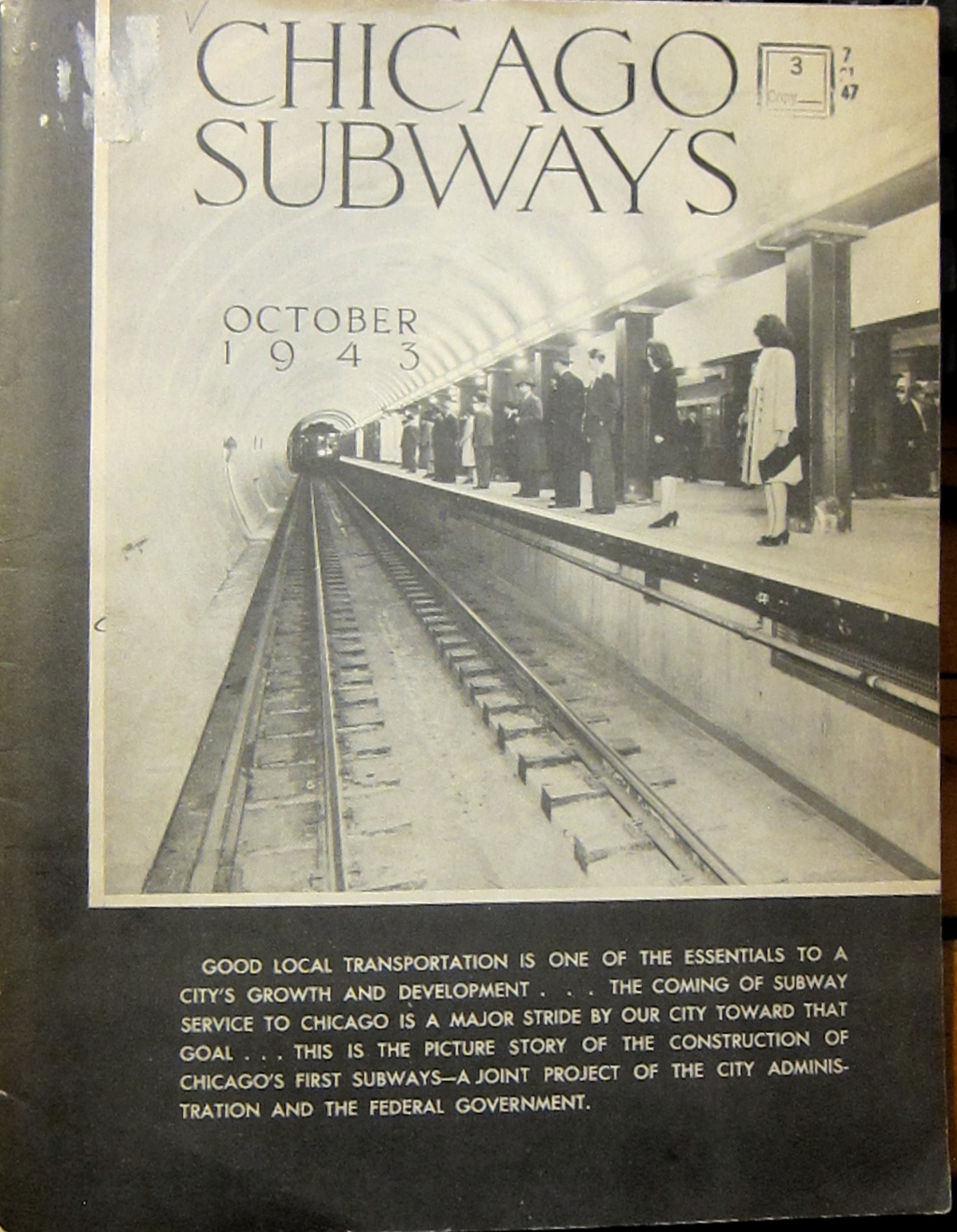
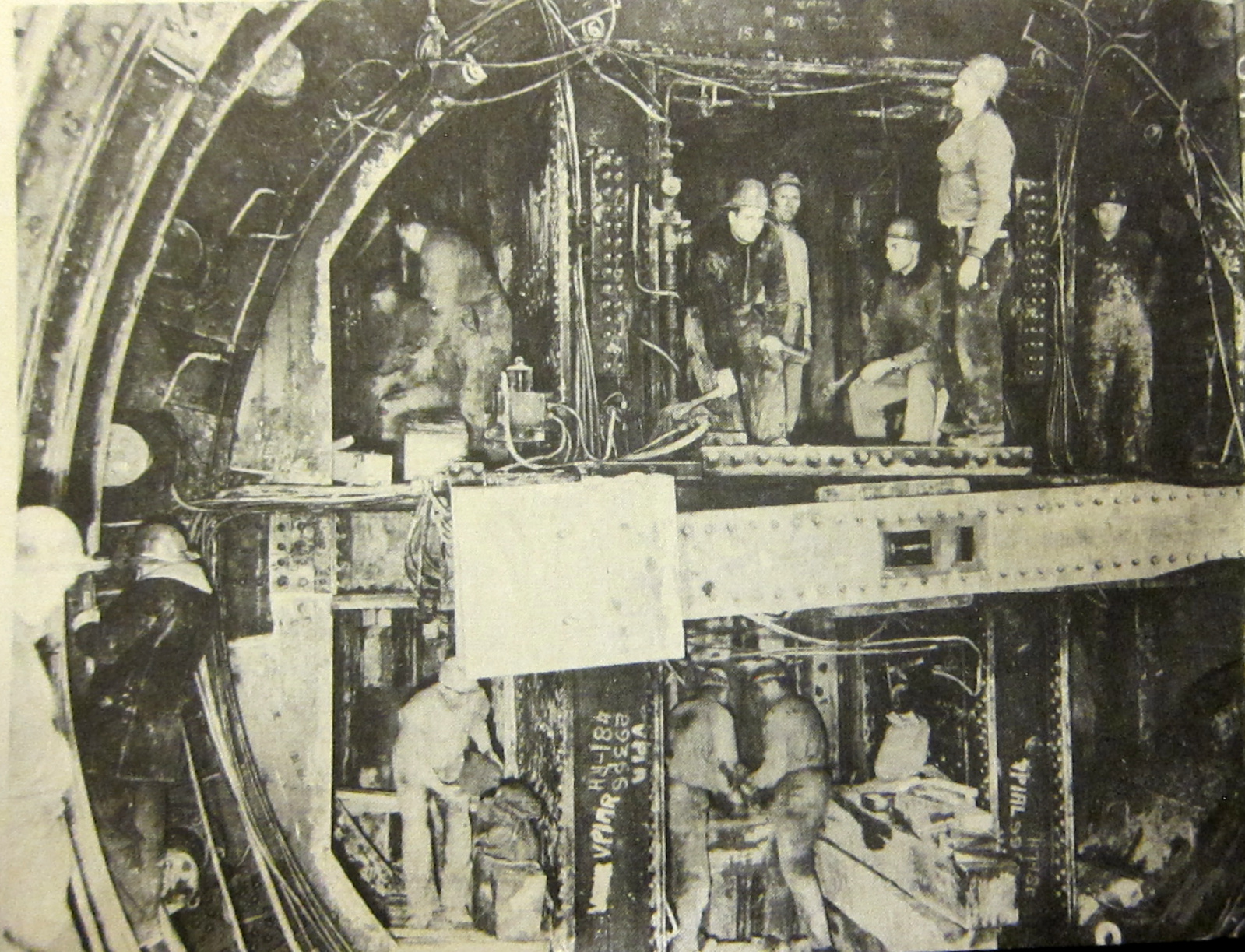
    Chicago subways 1943 coverRight at the start here I’d like to say I know nothing about the Chicago subway system–I would however like to share this little gem on it that I just found. The pamphlet looks unexceptional except for the date, which caught my attention because it is the month/year that the subway opened. The pamphlet also looks like it is a serial of some sort, but it isn’t–it just has a bad title. When I checked it out in WorldCat I was surprised to find that I couldn’t find it, even after a few adventurous searches, thinking that I was just asking the wrong questions of the enormous database…but the results held, and for some reason, the pamphlet just isn’t recorded in being in the many thousands of libraries using WorldCat. It is slim–only 31 pages long–but once you get beyond the first few pages of laudatory photos for the movers and shakers the work takes on a semi-documentary air, with some compelling images, which were another surprise. (The big exception to this flavor was the cover which features some very-regularly-spaced riders waiting for the train, giving the whole image a pod-people feeling.)  

    The photos of the workers show a familiar scene of men working in the cramp quarters of caissons and tunnels, not that much changed in a hundred years:


    Chicago Subways in tunnel _1_

    ·Posted by :

    ·in:

    —

  • On Doing and Done: the Differences in describing the Difference Engine of Charles Babbage, 1832.

    JF Ptak Science Books  Post 2792
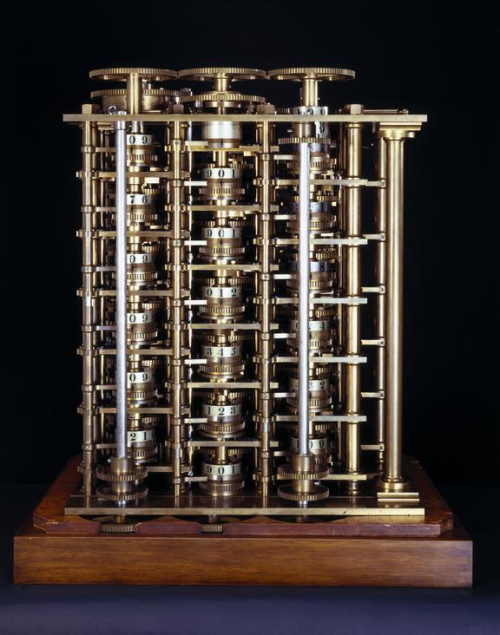
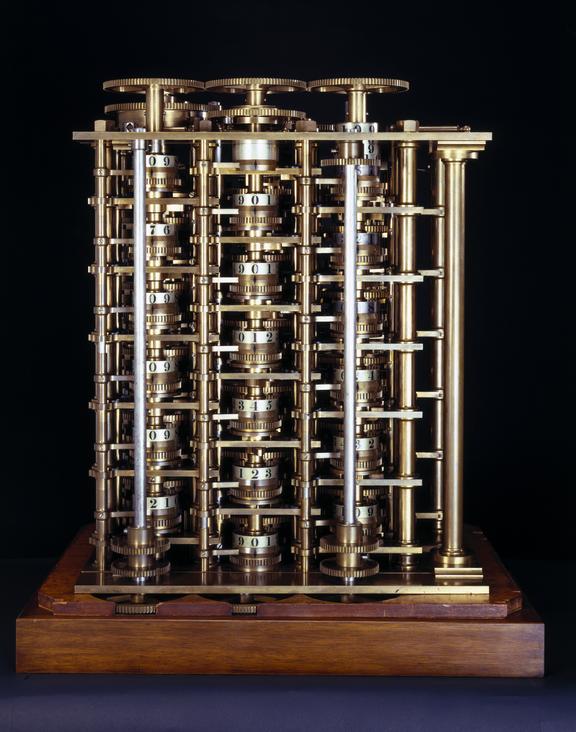
    Babbage difference engineThere’s a big difference being “inventing” and “invented”. You virtually never hear or read of someone declaring “I am inventing thus-and-so” imply that they’re working on something; “I invented the letter number seven” implies that you’ve completed the act of invention and the number seven exists. 

    In cataloging a book for my bookstore I came upon this difference in reference to Charles Babbage and his early calculating machine, and proceeded to make a mountain of a molehill, and then the reverse. 

    The “incident” was sparked by a volume of the Journal of the Franklin Institute1 with the appearance of a very early mention of Babbage having built his Difference Engine  (No. 1) found in a one-paragraph mention in the article “The Results of Machinery”:

    [Image at left of Babbage’s machine in 1832, from the Science Museum http://collection.sciencemuseum.org.uk/objects/co62243/difference-engine-no-1-difference-engine-portion-only]

    “Mr. Babbage…has invented a calculating machine…” referring to the newly (1832) “completed” 1/7th  of the machine. (The Difference Engine No. 0 announcement came June 14, 1822; the Difference Engine No. 1 appeared in this year, 1832, though work was suspended on it in 1833 (with government funding removed);’work soon to begin on Difference Engine No.2 (1846-9), (and with A. Lovelace’s famous “Notes” appearing on the Analytical Engine in 1843.)

    The article is a review/abstract of the book by Charles Knight, The results of machinery : namely, cheap production and increased employment exhibited : being an address to the working-men of the United Kingdom, which appeared in a second edition in London in 1831 (and a fifth in 1832) with a first American appearing in 1831. The Babbage calculating machine bit from the JFI is taken very nearly verbatim from these editions, where in the original the mention of the machine is referred to as “almost perfected”–here in the JFI it shows up as “invented”, which as they say is something quite different, the world of “almost-perfecteds” being much wider broader deeper than that of “the perfecteds”.

    Leaving out the fact that the machine was yet really built is of course a minor thing compared to the overall message of the paper and the book in general, but I just got my scarf wrapped around the axle on it. 

    The full note on Babbage reads:

    “The inventions for saving mental labour, in calculations of arithmetic, have been carried so far, that Mr. Babbage, a gentleman whose name we have twice before mentioned, has invented a calculating machine, which not only does its work of calculation without the possibility of error, but absolutely arranges printing types of figures, in a frame, so that no error can be produced in copying the calculations, before they are printed. We mention this curious machine, to show how far science may go in diminishing mental labour, and ensuring accuracy.”

    This was part and parcel the principle thrust of this article: investigating the application of machinery in a positive way to production and labor and showing its “…effects of saving unprofitable labor”.

    The few paragraphs of background leading to the Babbage reads as follows:

    “The foot-rule of the carpenter not only gives him the standard of a foot measure, which he could not exactly ascertain by any experience or any mental process; but it is also a scale of the proportions of an inch or several inches, to a foot, and of the parts of an inch to an inch. What a quantity of calculations, and of dividing by compasses does this little instrument save the carpenter, besides ensuring a much greater degree of accuracy in all his operations! The common rules of arithmetic, which almost every boy in England now learns, are parts of a great invention for saving mental labour. The higher branches of mathematics, of which science arithmetic is a portion, are also inventions for saving labour, and for doing what could never be done without these inventions.

    There are instruments, and very curious ones, for lessening the labour of all arithmetical calculations; and tables—that is, the results of certain calculations, which are of practical use, are constructed for the same purpose. When you buy a joint of meat, you often see the butcher turn to a little book, before he tells you how much a certain number of pounds and ounces amounts to, at a certain price per pound. This book is his “Ready Reckoner,” and a very useful book it is to him; for it enables him to despatch his customers in half the time that it would otherwise require, and thus to save himself a great deal of labour, and a great deal of inaccuracy.

    The inventions for saving mental labour, in calculations of arithmetic, have been carried so far, that Mr. Babbage, a gentleman whose name we have twice before mentioned, has invented a calculating machine, which not only does its work of calculation without the possibility of error, but absolutely arranges printing types of figures, in a frame, so that no error can be produced in copying the calculations, before they are printed. We mention this curious machine, to show how far science may go in diminishing mental labour, and ensuring accuracy.”

    So in this message of insight and hope I got stuck on one word, which ultimately really doesn’t mean anything. The message was significant and an interesting and insightful way of phrasing the possibilities for the application of more advanced machines in the future, and was much bigger whatever the state of completion of the Babbage machine was.
  • “I’ve Got a Bridge to Sell You!” First (?) Notice of the Sale of the Brooklyn Bridge? (1867)

    JF Ptak Science Books  Quick Post 

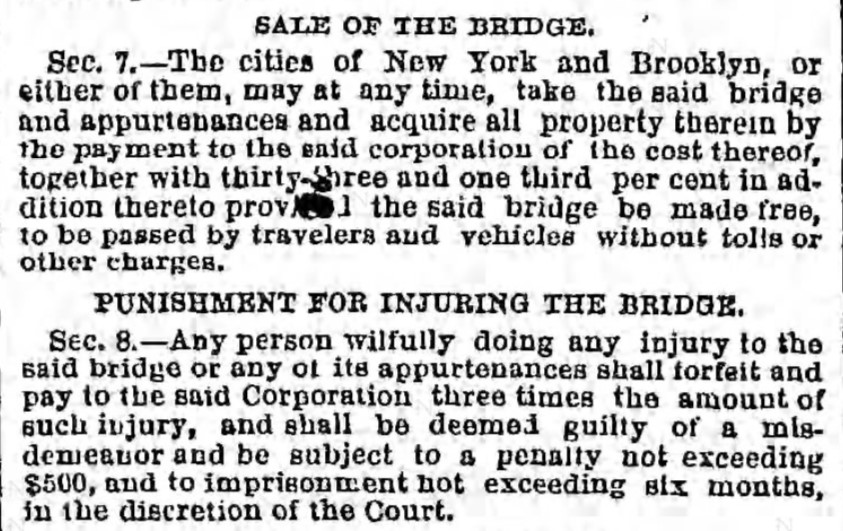
    The butt of an old tag-line for a gullible person convinced of something that could be easily disproved was something along the lines of “…and if you believe THAT I have a bridge to sell you”, that bridge being of course the Brooklyn Bridge. Well, the snippet below from an article in The Brooklyn Eagle (January 25, 1867, page 2) in which the agreements were made to start construction of the bridge (commencing in 1869) also included a section about the sale of the bridge from the corporation building it to NYC or Brooklyn or both. Now this is not what the comedy tag referred to of course as this was real, but it is a little amusing to see such a thing in black-and-white.

    Also its amusing to see below it a notice on “punishment for injuring the bridge”.

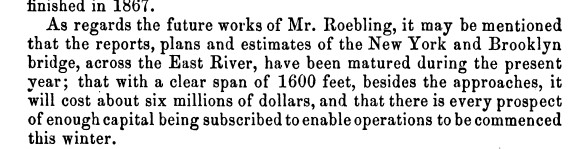
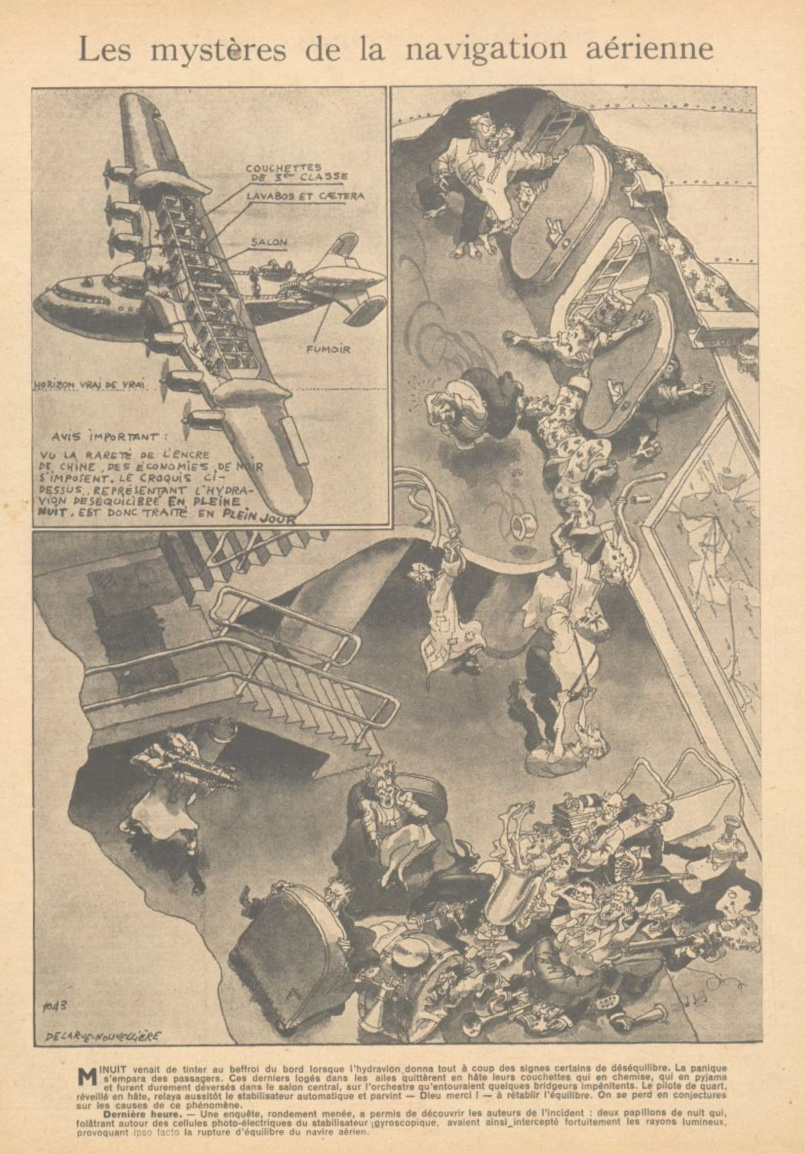
    Lastly in this short post I include an interesting view of the future, found at the end of an appreciation of John Roebling in a volume of the Journal of the Franklin Institute for 1867.  It is a statement on the plans for building the Brooklyn Bridge–at teh time it was still the “New York and Brooklyn Bridge”, and then the “East River Bridge”, though “Brooklyn Bridge” was also used, the official designation of that final name coming in 1915. 


    Brooklyn Bridge sale of

    [Source: Brooklyn Eagle archive at the Brooklyn Public Library, now gloriously online.]

    JFI 1867 Roebling _detail_


    [Source: Journal of the Franklin Institute, volume 84, pg 410.]


  • A Fine Engineering Effort: Constructing the Foundation for a New Building Under the Still-in-Use Building to be Replaced (1922)

    JF Ptak Science Books   Quick Post

    Here’s a very interesting engineering and building feat: placing the foundations for a new building to replace an older one while the older one was still (1) standing and (2) in use. The recipient of this effort was the McVickers Building in Chicago, a theater that opened in 1857 and came to it slow end in 1922. It looks like the last bit of currency was squeezed out of this old building, performances being given right to the very end while foundations for the new building were being constructed 24 hours a day. Int he world of cross sections this is a good one, and also pretty unusual. Also in the top left corner we see a photo of a caisson under construction–a shot I don’t see very often in my searches of old stuff.  

    Pop Mech 1922 Cross section theatre caissons

    Source: Popular Mechanics, February, 1922. 


  • A Proto-typewriter, 1857.

    JF Ptak Science Books  Quick Post

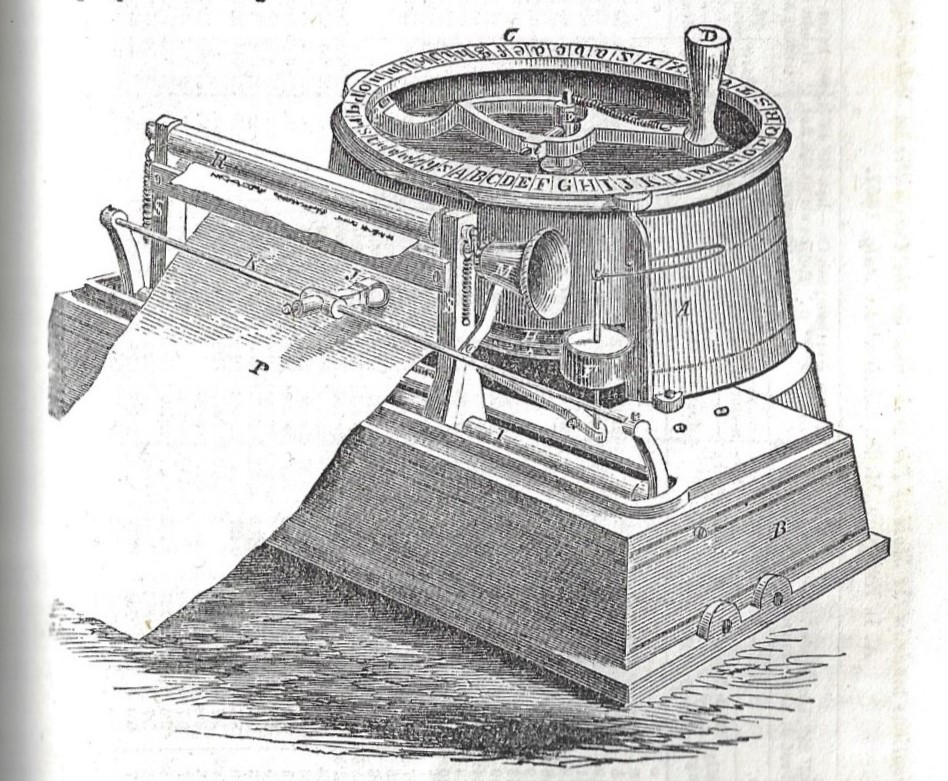
    Here we have a lovely attempt at what is close to being a typewriter (a “hand-printing machine”), found in the Journal of the Franklin Institute for June 1857. The size isn’t given but my guess is that it would be about the size of foolscap paper, easily desk-top. It seems fairly simple in a slightly complex way, and I can easily see where it would serve as a stop-gap implement between what came before and the typewriter. 

    The short article introducing the workings of the machine is surprisingly, and very readable, even though it is brisk and sharp. It is just well done.

    It is difficult to see some of the annotations, even in the original, and even with a magnifying glass, but for that first indicator “H” you can find it just southward of the bell-like object (“M”, which turns out to be a handle for the paper roller), and “E” was another difficult one to find, and that one turns out to be the pivot in the center of the type circular.  In any event, the thing operates much like a typewriter, the lever “D” moved to the position of the letter needed, then pressed down, moving the type into place against the ink and the paper, which is loaded in rollers much like a modern typewriter. 

    JFI 1857 typewriter _2_


  • A Different Sort of Motorcycle Sidecar (1917)

    JF Ptak Science Books   Quick Post
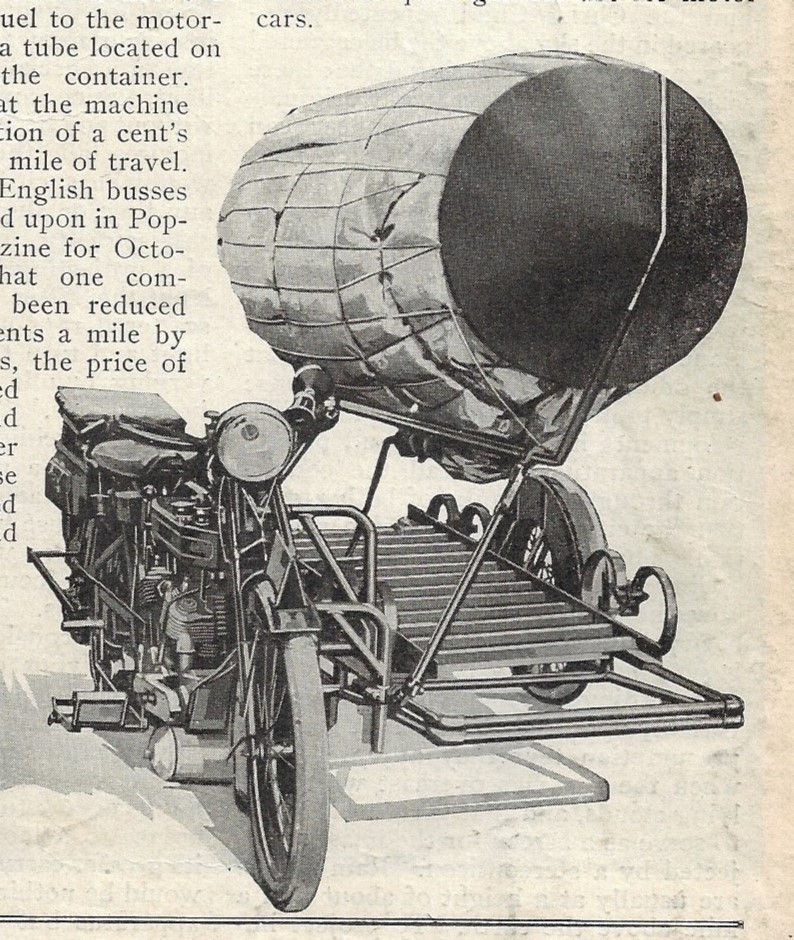
    Pop Mech 1917 gas powered motorcycleThis unlikely combination of vehicle and fuel source appeared in Popular Mechanics for June, 1917. 

    It was fueled by “illuminating gas” which was a hydrogen/hydrocarbon mix and which was made to fire street lamps and such, a destructive process introduced in the very early 19th c.  It is highly flammable. Highly.

    This suggestion for a 600 cubic ft power envelope for a motorcycle was supposed to save about two-thirds on fuel costs and replace the use of wartime gasoline, but…

    [For “illuminating gas” see the following 1869 entry from Scientific American: https://www.scientificamerican.com/article/illuminating-gas-what-it-is-and-how/]


  • Electric Time (1847)

    JF Ptak Science Books  Quick Post

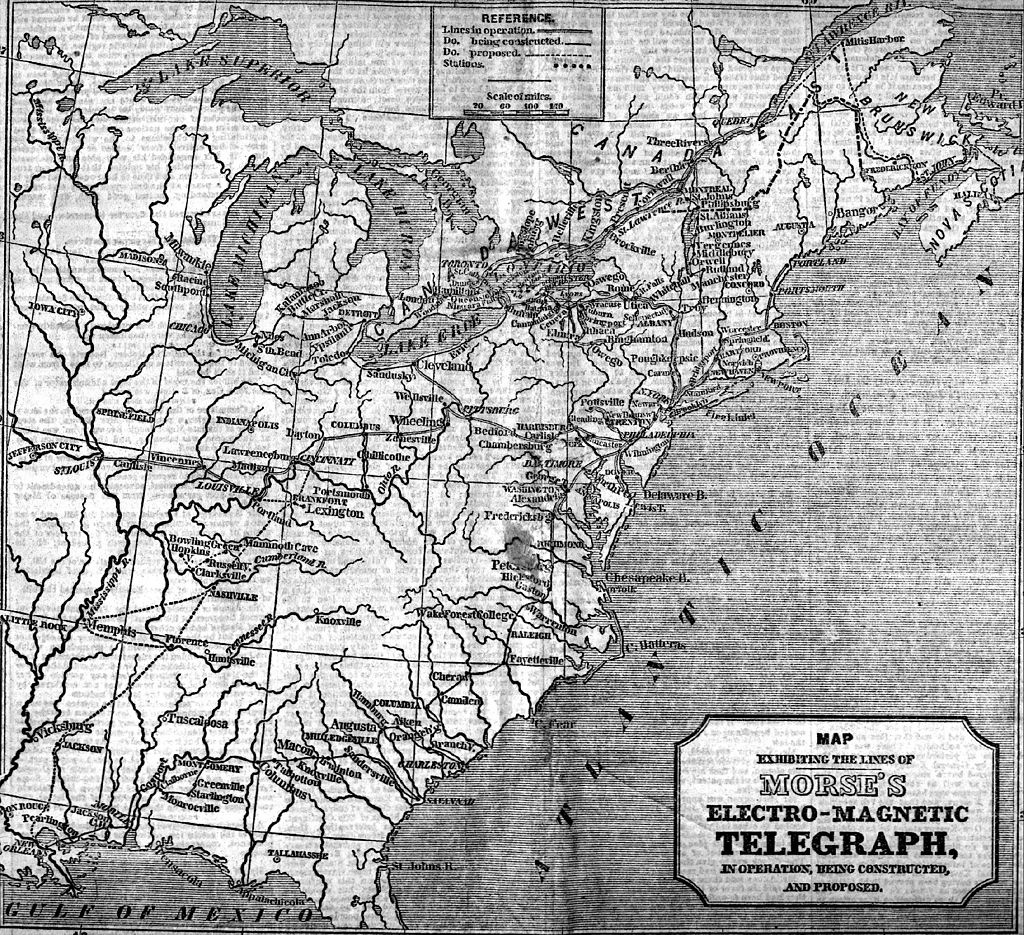
    There were some ways of getting around the problem of geography and communications over long distance–visual semaphores, smoke, drums, that sort. The issue of long-distance relatively instant communication wasn’t solved until the appearance of the telegraph, which for the most part outside of starts and fits and a complicated pre-history really wasn’t solved until Morse and Vail in about 1843. The first line was laid in the U.S. between D.C. and Baltimore in the next year, and then with the display of this success a network of electric communications exploded, as you can see in the map below showing telegraph lines in the U.S. in 1848, just five years after there was nothing at all. 

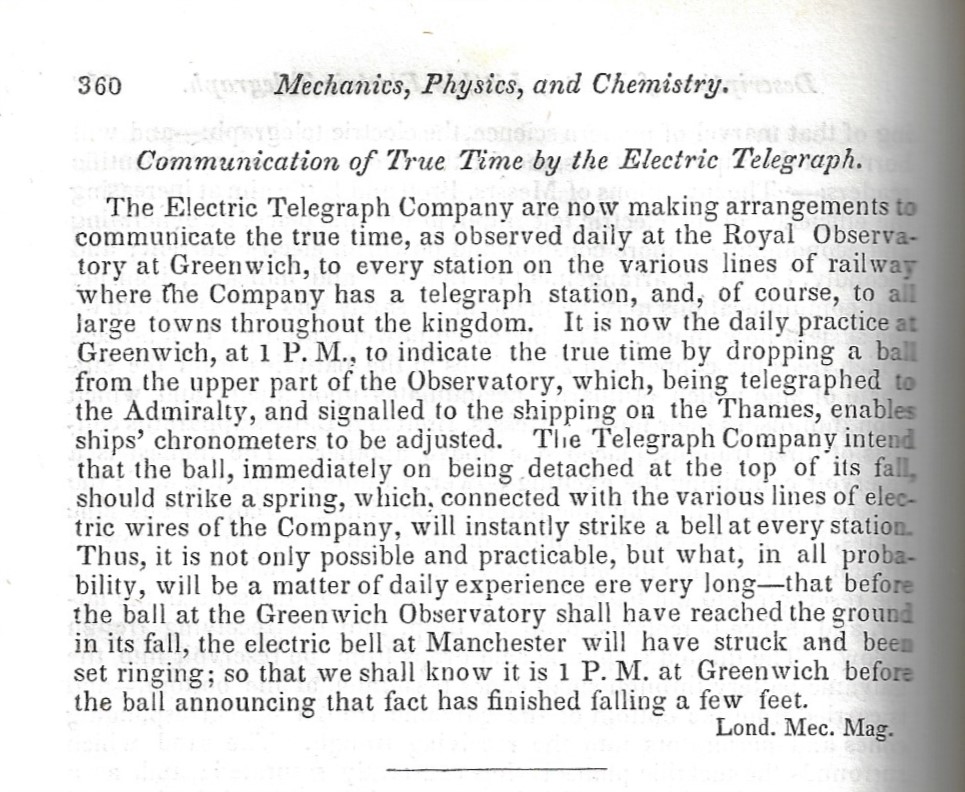
    Anyway this is what came to mind when I stumbled on the following short notice that appeared in the Journal of the Franklin Institute in December 1847–the fixing of a “constant” time communicated by electric telegraph, reporting the standard time from Greenwich, to be sent out to the furthest reaches of the telegraphic world, and which was an early attempt at the mass distribution of regulated synchronous time keeping over long distances. Pretty cool idea.  

    • “It is now the daily practice at Greenwich, at 1 P.M., to indicate the true time by dropping a ball from the upper part of the Observatory, which, being telegraphed to the Admiralty, and signaled to the shipping on the Thames, enables ships chronometers to be adjusted.”


    JFI 1847 telegraph time

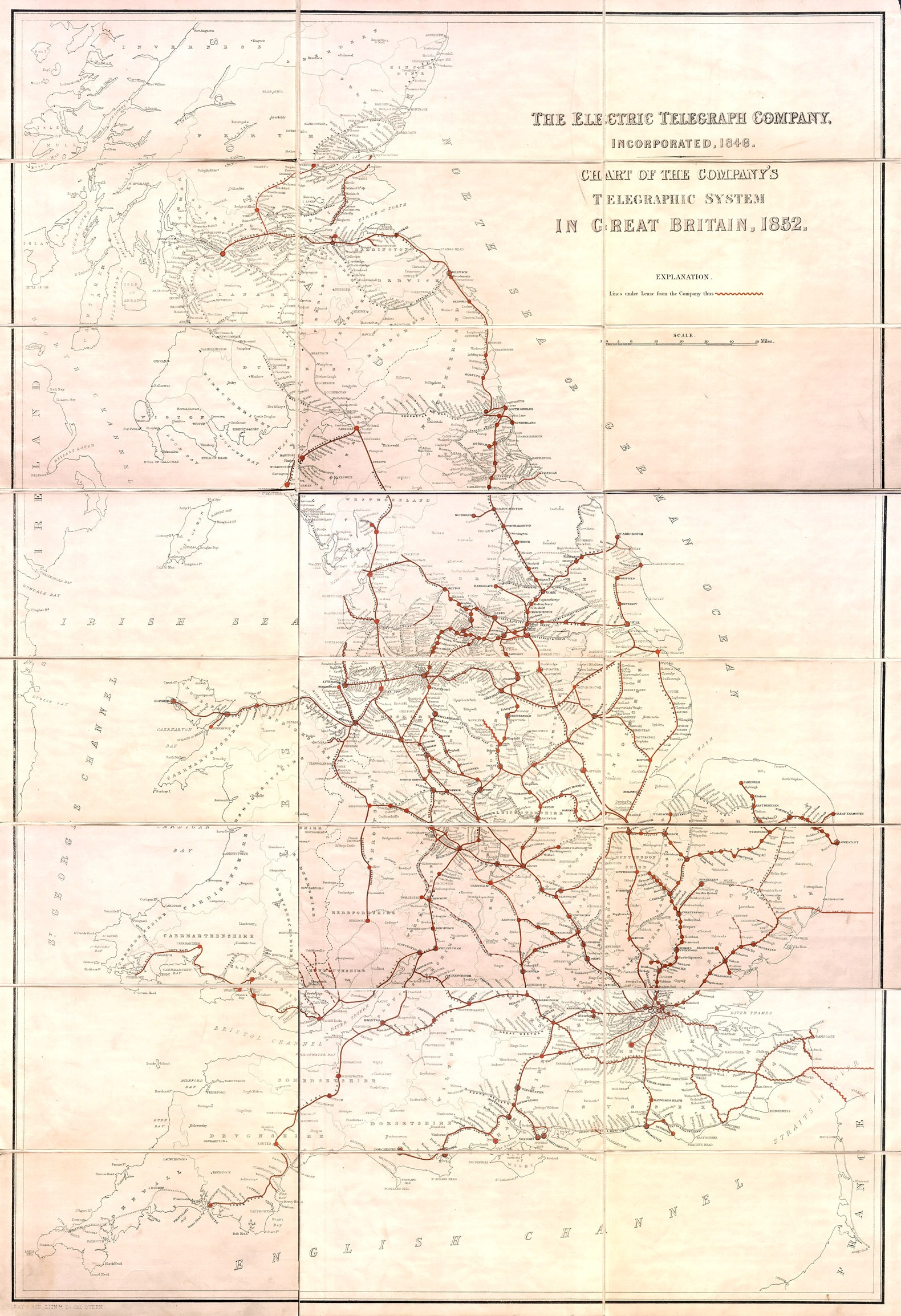
    A map of the telegraph lines in Great Britain in 1852:


    Telegraph map GB 1852

    Source: distancewriting.co.uk 

    And the map of telegraph lines in the U.S.:

    Telegraph map wikipedia

    Source: wikicommons on “telegraph history”


  • Time, Motion, and Awe in Regards to Moving Pictures

    JF Ptak Science Books   (This is a revision and expansion of a post from 2012.)

    Backwards--magritte

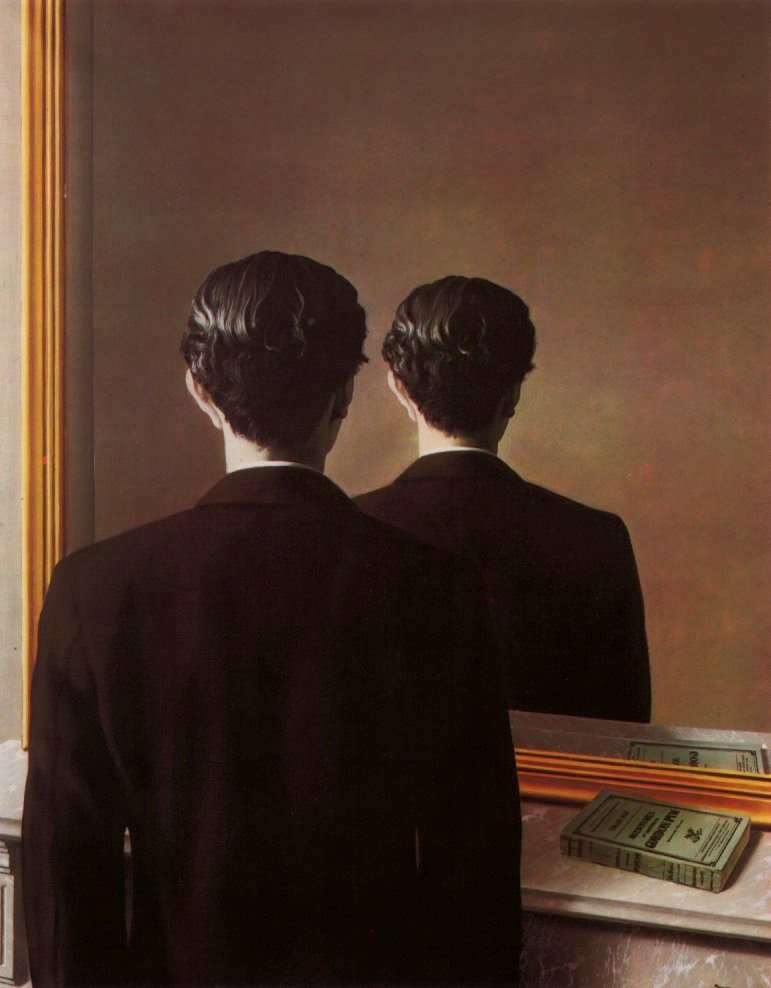
    Leonardo wrote backwards and from right to left, Benjamin Button lived backwards at the hands of Scott Fitzgerald, Rene Magritte’s man in the mirror saw the back of his head, Ignatz the Mouse I am sure saw the back of his head looking around the world with the world’s most powerful telescope, rugby passes are all done backwards, paper images of vue optiques appear backwards, lightning for all intents and purposes starts backwards from the ground up, reverse mathematics are worked from theorems to axioms, the Chicago River (1900) was engineered to flow backwards for the foreseeable future, while the Mississippi River famously flowed backwards for just a bit in the New Madrid earthquake of 1812. 

    Backwards--marey12

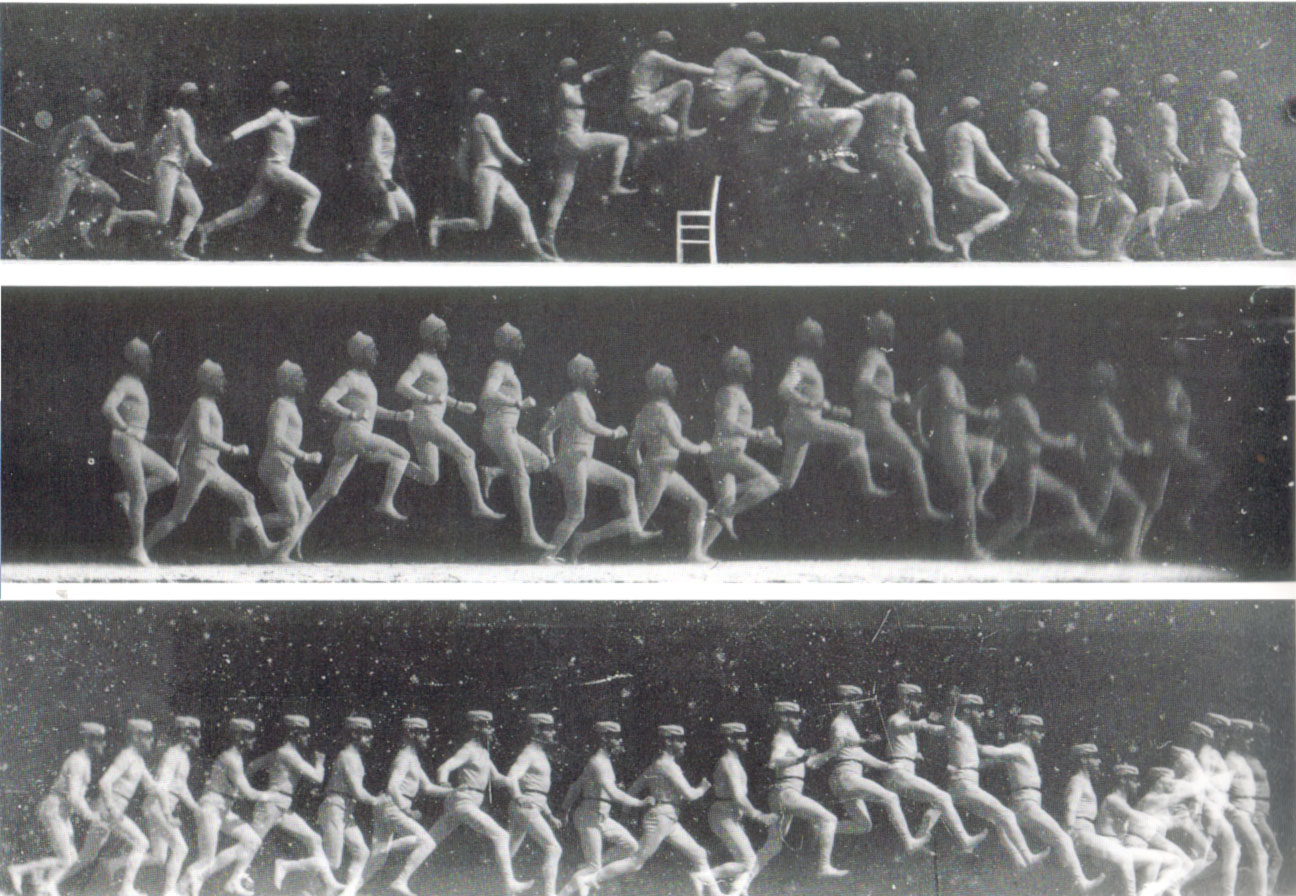
    I can only imagine what audiences must have felt when they saw the first moving pictures played backwards–seeing them played forwards was a novel-enough (and revolutionary) idea, but the simple idea of reversing the direction of the film would have proved to be equally fascinating.  Imagine the first time you witnessed a staged train wreck on film, back there in 18951, and imagine being able to see it played over and over again, until you were filled.  I’m not so sure that there were even any still photographs of a train wreck as it occurred to this point, even with advances in film speed and lens, so seeing the even unfold in front of you at leisure must have been overwhelming.  Now imagine these same folks seeing the event and watching the locomotives reconstitute themselves.  It would have been an extraordinary event.  Even observing the Marey sequences (above) and seeing what actually happens when a person bends over to pick up a pail of water would have revealed almost as much in new detail as when Galileo was in the middle of his earliest observations. 

    In a way the chance of controlling the direction telling of a story and seeing it displayed via moving images, and being able to see them backwards, may well have seemed a form of third-person time travel.  This came on the heals of what is for all intents and purposes the first time travel novel in  H.G. Wells’ (also in) 1895 The Time Machine (appearing earlier as “The Chronic Argonauts,” in 1888)2 and Mark Twain’s 1889 but much earlier than the first motion picture to use the idea of time travel (which was in 1921 and based on Twain’s work).  Being able to show a motion picture, and then stop it at will, and then reverse the order of time to begin everything all over again–visually–must have seemed a magnificent advantage. 

    And so to this end I’ve got the following few questions for which I have no firm answers:

    1. When was the first time people saw moving images of a of a currently deceased person? That is, when did the first dead person become “reanimated” by virtue of their images being captured by a motion picture? This question could be asked of the first viewing of a photograph of a dead person, and also the first experience of listening to a now-dead person whose voice had been recorded by an Edison machine, but I think the moving picture element is much more powerful. 

    1. When exactly was the first viewing of backwards motion, of seeing action in reverse?

    2. When was the first viewing of a continuous moving picture in which motion was purposely interrupted ?

    I’ve probably overlooked some long list of “firsts” in film, somewhere, but for now these questions are still questions. If anyone out there has answers, I’d love to hear them. 

    Notes:

    1.  It is interesting that this very early motion picture , made by the great scientist-brothers Lumiere, l’Arrivee d’un train en gare, was produced in the same year as the Wells book.  Just two years later, the Lumiere Brothers published a catalog of their available movie strips, numbering 338 productions.  In 1898, after six catalogs, there were over a thousand strips.  This is remarkable, especially considering that there wasn’t a cinema industry yet.  The Lumieres are an interesting pair of people (both of whom survived their invention by about a half-century), making perhaps the most important discoveries in the history of cinema, and continued to be interested in other fields throughout their lives.  The cinema-industry part of their work didn’t seem to interest them all that much. 

    The history of moving images is complex and long.  I’m not saying at all that it begins with the Lumieres, or with Edison, as the pre-1900 field is well sprinkled with different and interesting attempts at fooling our eye–Chronophotograposcopes, Counterfivoscopes, Phantasmagorias, Klondikiscopes, Vileocigraphiscope, and so on, are just a few examples of the many attempts at locating the seat of photographic motion in the brain.  There are very early efforts, principally by J.A.F. Plateau (1801-1883) who rediscovered in 1829 the “persistence of vision” effect in which the eye will see a continuous stream of images if presented with a flow of static pictures at 16 frames per second over a one second period, which of course is the basis for the rest of everything that was to come.  There’s much more, but I wanted to at least point out these few important bits. 

    2..  I’m not sure what to  with Mr. Dickens, if he fits in this order with the time traveling Scrooge in A Christmas Carol (1843), or not.  Perhaps he does, and if so, then he precedes Mr. Wells, though the latter’s time traveler is outfitted with a machine and a scientific basis for the belief in it.  At the very least he is worth mentioning in the same moment.


  • Tree Power (as in Kinetic Power Generated by Tree Movement in Wind!) (1840)

    JF Ptak Science Books  Quick Post

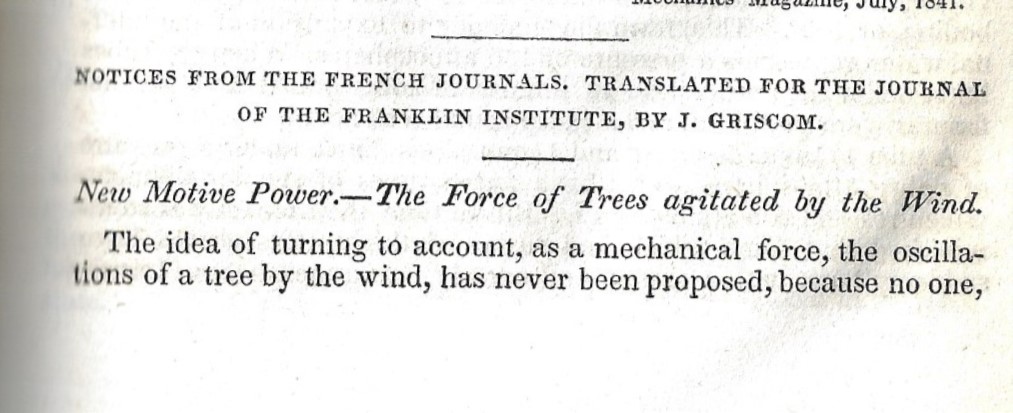
    A successful byproduct of not being to find something is finding the stuff that you weren’t looking for and didn’t know about. The article (below) is one such happy find, appearing in the pages of The Journal of the Franklin Institute, 1840. I certainly never thought of somehow (?) harnessing the movement of trees via the wind as a power source. As the author of the paper says, “The idea of turning to account, as a mechanical force, the oscillations of a tree by the wind, has never been proposed, because no one, it is probable, has ever deemed it to be a practicable source of power. A very considerable force, the least costly of all, is thus entirely lost.” There is an inventor named though I cannot find references for him–I also cannot visualize how the tree motion is transformed into that “motive force”. Have a look:


    Tree power _2_

    ·Posted by :

    ·in: