A Daily History of Holes, Dots, Lines, Science, History, Math, Physics, Art, the Unintentional Absurd, Architecture, Maps, Data Visualization, Blank and Missing Things, and so on. |1.6 million words, 7500 images, 4.9 million hits| Press & appearances in The Times, Le Figaro, Mensa, The Economist, The Guardian, Discovery News, Slate, Le Monde, Sci American Blogs, Le Pont, and many other places… 5000+ total posts since 2008.

Category: Technology, History of

  • An Unusual Term: the “Civilian V2” (1951)

    JF Ptak Science Books  Quick Post
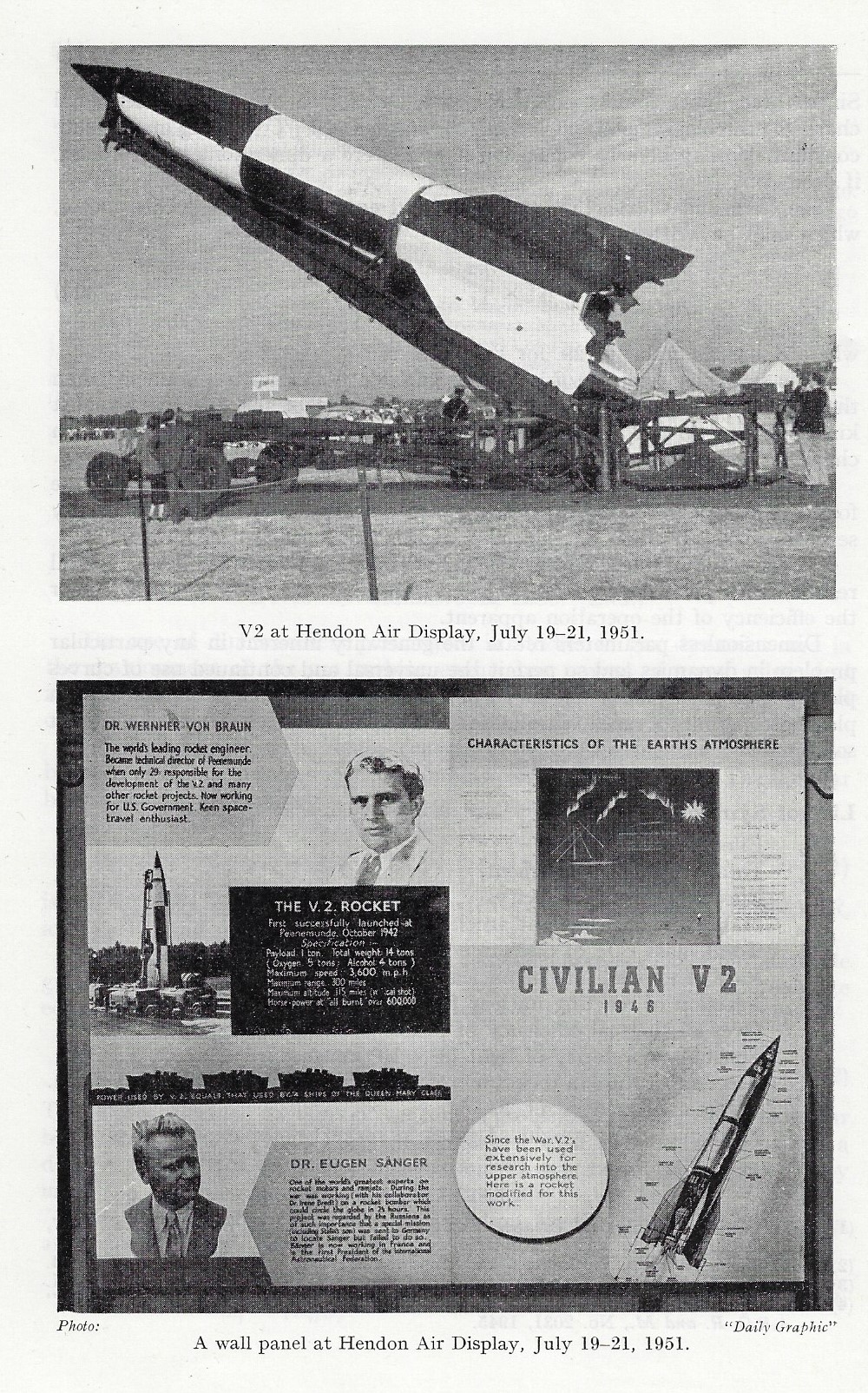
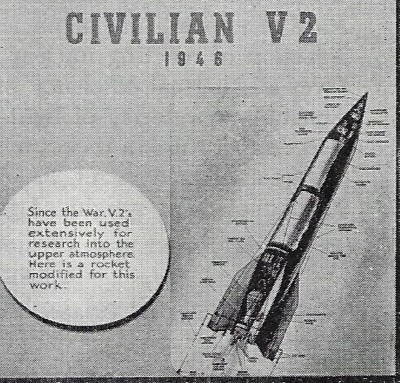
    British Interplanetary Society detailA few days ago in the pages of a 1951 issue of the Journal of the British Interplanetary Society I found a most unusual phrase: “Civilian V2”.  At the time it was probably necessary to distinguish between the wartime V2 and the astronautic research done with it over the next six years, but I’m pretty sure that I had never seen the term’s use before.  I’m not an expert in space flight, or early rocket-powered flight, though I have seen a lot of this sort of material and read around it over the last four decades–still, it looked very unusual to me. I did a simple search under “Civilian V2” and found only 9 hits in Google and 50-odd on “Civilian V-2”, none of which actually apply to the missile itself , but to a “civilian expert” on the V2 (“…civilian V2 expert…” In any event, this light look at the “Civilian V2” term indicates that it probably really is unusual and little-used.  If someone out there has any info on this, please let me know. 

    Source: Journal of the British Interplanetary Society, volume 10 no. 5, September 1951, page 212.  

    British Interplanetary Society full page


  • On the Future of the Telephone as an Instrument for Listening to Music Remotely (Summer, 1876)

    JF Ptak Science Books  Quick Post

    Here’s an interesting piece on the future of the telephone, written just a few months after Bell’s patent was granted him (at the age of 29) on March 7, 1876. “Telephones and other Applications of Electricity”, appearing August 24, 1876 in Nature (volume 14, pp 353-355),  was written anonymously though probably by the editor (and founder of the journal) J. Norman Lockyer, who discusses advancements in telegraphy and then switches his interest to the telephone. It was not Bell’s telephone that the writer was discussing, but (mostly) that of Elisha Gray and “Reuss” (actually meaning Philip Reis).—and as a matter of fact there is no mention whatsoever of Mr. Bell.
    The article turns its interest to the future and to the telephone, and how it may come to be that you could basically dial up any sort of music you’d like to hear, and thus do away with live musical entertainment. Curiously there isn’t an implication for the using the telephone for communication–maybe the absence of Bell is less surprising in a way because Reis’ instrument was actually pretty good at transmitting musical sounds and not-so with voice. Still this is a little odd, given that Bell made his famous demonstrations of the instrument’s efficacy just weeks after his patent was granted.

    The text:

    • “We do not, however, believe that in its [the telephone’s] present state, the invention is so complete that we can, at a distance, repeat on one or more pianos the air played by a similar instrument at the point of departure. There is a possibility here, we must admit, of a curious use of electricity. When we are going to have a dancing-party, there will be no need to provide a musician. By paying a subscription to some enterprising individual, who will, no doubt come forward to work this vein, we can have from him, a waltz, a quadrille, or a gallop, just as we may desire. Simply turn a bell-handle, as we do the cock of a water or gas-pipe, and we shall be supplied with what we want. Perhaps our children may find the thing simple enough.”


    ·Posted by :

    ·in:


  • A Note on the History of Backwards (1878)

    JF Ptak Science Books  Quick Post

    This is a tiny note on the idea of seeing/listening/thinking backwards–I’m not even sure what that means, except for teh obvious cases, especially when you throw technology into the mix to spice up the possibilities of investigation of a backwards form. First of all, the words “backward” and “backwards” go all the way back in the history of English, as we can see in these two pretty examples from the OED:

    • 1398   J. Trevisa tr. Bartholomew de Glanville De Proprietatibus Rerum (1495) xiii. xxvi. 456   “By vyolente puttynge of ayre bakward the body of the byrde meuyth forwarde.”

    •  1697  Dryden tr. Virgil Georgics iii, in tr. Virgil Wks. 101   “Clouds of Sand arise; Spurn’d, and cast backward on the Follower’s Eyes”

    • 1953 “When I go backwards I’m generally backing up”–Not Yogi Berra

    With technology I’m referring to the more subtle ways of exhibiting something/someone in backwards motion rather than the reserve of raising an obelisk–it would be more like seeing a fire burn a house in reverse or rain falling up or a locomotive recovering itself from a head-on collision with a tree via motion picture recordings, things can can’t be reproduced backwards simply by reversing the motion. 

    As long as I’m at it, I think this sense of “backwards” is differentiated from a reverse chronology.  Citizen Kane starts at the end and works it long and angled-dark ways from the beginning to the opening shot; the movies Momento and Eternal Sunshine… are fuller in their reverse chronology, as is the occasional episode of Seinfeld and the book (and movie) Benjamin Button, to name a few examples. 

    What brought me to this place was an article  by Fleeming Jenkin and J.A. Ewing on the new invention, “The Phonograph” in Nature (1878), where their entire interest in the short note was the use of the machine in playing recorded speech backwards. This would be among the first uses of the new technology in a way that displayed info in a new way from all other previous human experience. This leads me to think about the next step in the development of the motion picture, where people could “unwatch” a developed motion of something and have it reconstitute itself right before their eyes. No doubt that was an extraordinary experience. So far as the motion picture goes, it would be almost another twenty years before a motion picture would be exhibited popularly that showed an action in reverse–and that honor goes yet again to Louis Lumiere and his “Demolition of a Wall” in 1896, still in the first decade-ish of the invention of what we would think of as a motion picture film.  

    In any event, these are just some loose thoughts on the subject of “Backwards”. 

    Here’s the short article by Jenkin and  Ewing: 


  • A Giant Metal Kraken Worm, Beast Among Beasts: a Tunneling Machine, 1862

    JF Ptak Science Books  Post 2790

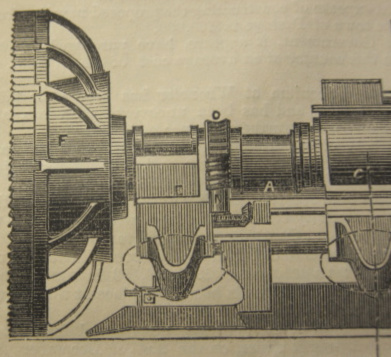
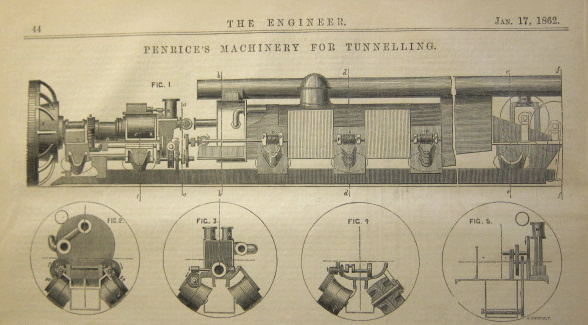
    This enormous  piece of machinery was designed and patented by Hubert Newton Penrice (of Norwich1) in 1862 for “tunneling and driving through rock and other strata”. The section labeled “F” is obviously the grinding business-end of the beast, meant to turn with a “variable” speed–what we see here is the outermost set of teeth which surrounded an unspecified number of smaller concentric cutting plates.  I imagine that if you looked at this machine straight-on from the front you’d see a number of concentric rings of hundreds of steel teeth, which immediately makes me think “Kraken!”, though this one is underground, boring its way through rock. No specifics are given for dimensions, though my guess would be that the cutting face had to be at least 8′ (?), meaning that the entire machine was on the order of about 50′. 

    Originally the steam-driven machine was powered “at a distance” though in this version the boiler and engine are right there behind the cutting face and a  car powered to inch froward as the tunneling is done.  The boiler would supply several engines–one to drive the cutting wheels, another to feed the machine that “swept” up the cut stone and directed them towards the back of the outfit another to power the forward motion of the whole thing to put pressure on the cutting face, and I think several more.  That long shaft along the top of the unit is for “waste steam” that would direct (some!) of the smoke and heat towards the rear and eventually out of the tunnel, somehow. 

    I don’t know how many workers it took to operate this thing and make it all work, and I find it difficult to imagine working in a cramped, hot, loud, dangerous and uncertain situation as this, and have it all underground and powered by steam. 

    The only thing worse that I can think of–outside of pure disaster–is failure: what happened if the thing got “stuck”?  

    • “On each axle is a screw or worm wheel and there are two parallel shafts one on each side of the boiler with worms or screws thereon there being one worm for each of the wheels by this means a slow motion may be given to the wheels and the machinery may thus be moved towards the face of the work. The speed at which the screw shafts are driven is capable of being readily varied in order to suit the varying strata and in order to be able readily to adjust the progress of the machine to the quantity of work which the cutters are enabled …”–from the article.

    Engineer 1862 tunnel cutter detail

    [Source: The Engineer, volume 13, January 17, 1862, p 44.]

    Engineer 1862 tunnel cutter full copy


    And by the way, the article identifies Mr. Penrice as being “of Wilton House, Norwich”, and so I looked that up:

    Wilton house

    Source: http://wiltontown.com/feature/wilton-house/


  • Found Poetry of Fallacies (1864)

    JF Ptak Science Books  Quick Post

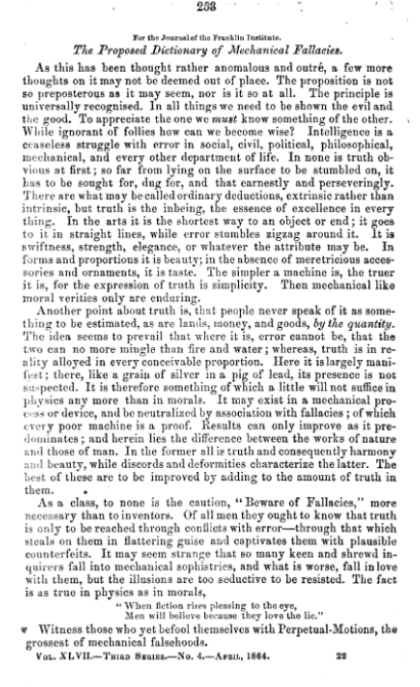
    “Proposed Dictionary of Mechanical Fallacies”

    “While Ignorant of Follies How Can We Become Wise?”

    The author (“E”) writes to the readers of 1864 in The Journal of the Franklin Institute1 an odd and open letter on truth, beauty, and the importance of recognizing fallacy.  “E” has a bit of a hard time of it, writing more in the style of an early 19th-century figure than someone at mid-century, but sooner or letter he gets to his point, and along the way there are some pretty interesting observations. He also takes things a bit too far in places, but if you concentrate on his successes, the article is worth a read. It isn’t a suggestion of De Morgan’s A Budget of Paradoxes, but “E” provides enough in three pages to make it a good read.  

    In the spirit of poetic adventure I offer some of the “E” article below in situ as “Found Poetry of Fallacies”:

    As a class to none is the caution, “Beware of Fallacies” more necessary than to inventors.

    Of all men they ought to know that truth is only to be reached

    through conflicts with error through that which steals on them in flattering guise and captivates them with plausible counterfeits.

    It may seem strange that so many keen and shrewd inquires fall into mechanical sophistries

    and what is worse fall in love with them but the illusions are too seductive to be resisted.

    The fact is as true in physics as in morals:

     “When fiction rises pleasing to the eye. Men will believe because they love the lie”  (Witness those who yet befool themselves with Perpetual Motions the grossest of mechanical falsehoods.”


    As this has been thought rather anomalous and outré a few more thoughts on it may not be deemed out of place.

    The proposition is not so preposterous as it may seem nor is it so at all. The principle is universally recognized.

    In all things we need to be shown the evil and the good.

    To appreciate the one we must know something of the other.

    While ignorant of follies how can we become wise.

    Intelligence is a ceaseless struggle with error in social civil political philosophical mechanical and every other department of life…

    The full article, via Google Books:

    ·Posted by :

    ·in:


  • Very Heavy Journalism, Old School–a Gift from H.L. Mencken

    JF Ptak Science Books   Quick Post

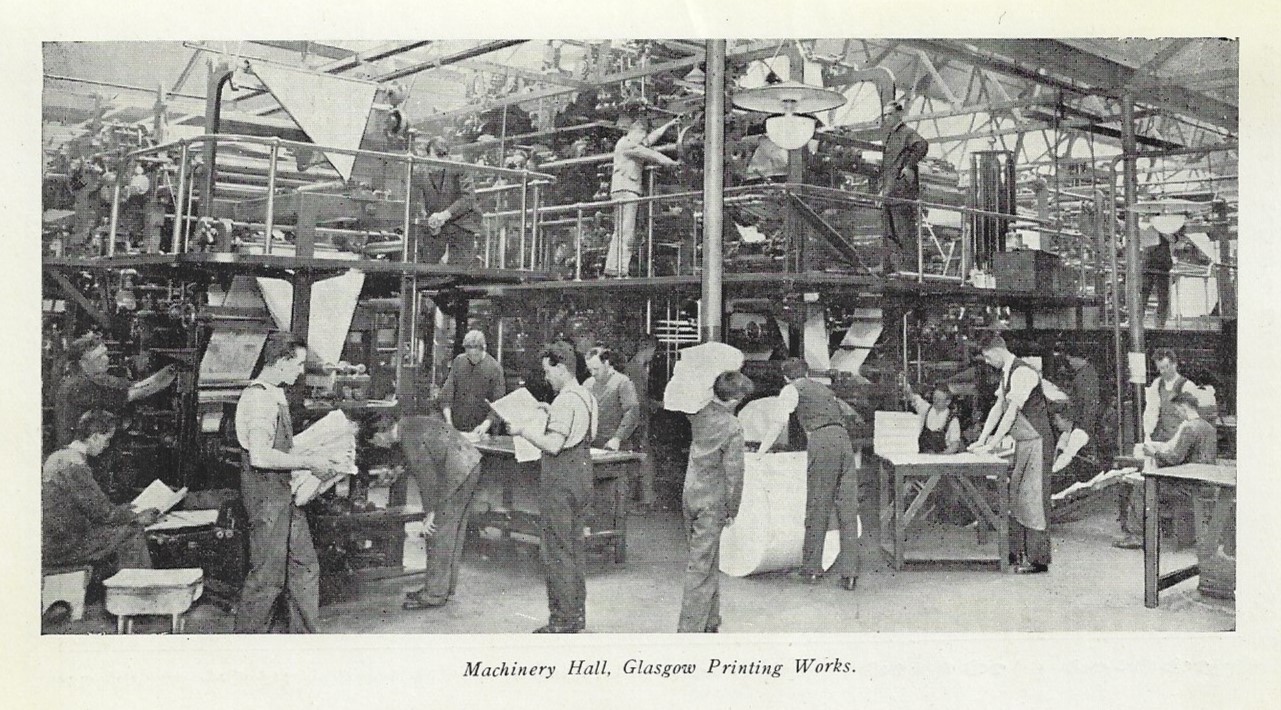
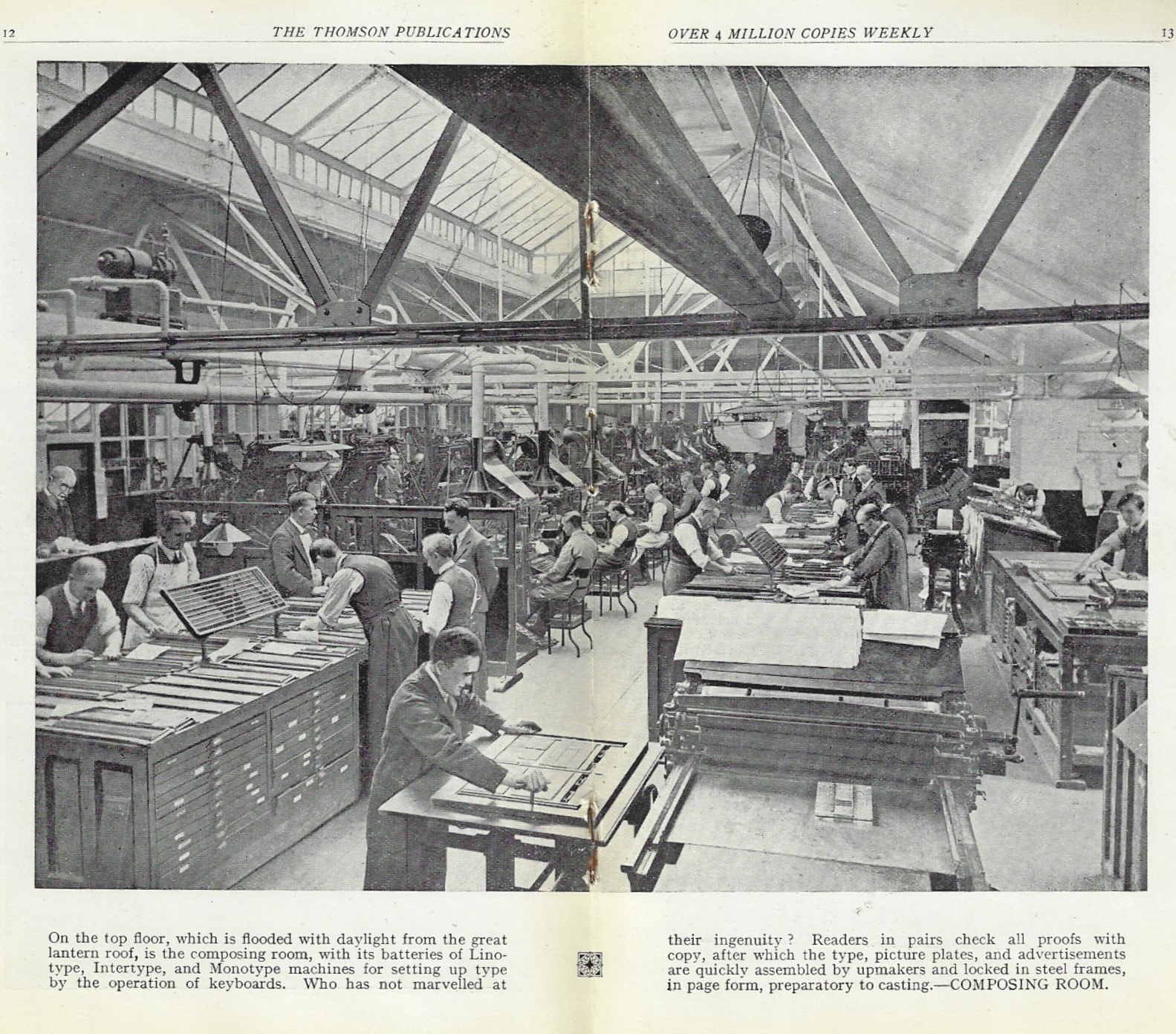
    Here’s another lesson in the continuing and forever-expanding series on not judging by appearances: the following terrific images were found in a very tall and slender, stiff and demure 1920’s publication celebrating the Thomson Printing Works of London (and Glasgow, Dundee, and Manchester). The calf-bound book has the feel of an antique wallet, and even though the binding is sumptuous the cover is imprinted “A memento of a visit to the Thomson Printing Works, Dundee, Glasgow, Manchester”, which made it a rather expensive give-away–if that is so it was probably given only to the special few and not to the great unwashed. (My copy belonged to H.L. Mencken, who kept it until 1935 when he gave it away). Anyway Thomson was a busy printing house/publisher, sending out millions of pieces, and the illustrations in the publication gives the reader an idea of the heavy hardware that went into the process. It is all very impressive. Also the photos of the human aspect of the firm–the crowded work and editorial and etc. rooms–well, it gives you an idea of the closeness and noise of the place as it might have been on a late summer afternoon in 1928.  [And by the way, I just checked WorldCat for this title and there’s only one copy listed–National Library of Scotland–which means the thing is pretty rare, and which also means that these terrific photos have probably not been shared very much at all…]

    The heavy hardware:
    Thomsons publications _8_ end product

    I wonder how much just the type weighed in the composing room?

    Thomsons publications _8_ end product

    ·Posted by :

    ·in:


  • On the Future of the Telephone as an Instrument for Listening to Music Remotely (Summer, 1876)

    JF Ptak Science Books  Quick Post

    Here’s an interesting piece on the future of the telephone, written just a few months after Bell’s patent was granted him (at the age of 29) on March 7, 1876. “Telephones and other Applications of Electricity”, appearing August 24, 1876 in Nature (volume 14, pp 353-355), written anonymously though probably by the editor (and founder of the journal) J. Norman Lockyer, discusses advancements in telegraphy and then switches to the telephone. It was not Bell’s telephone that the writer was discussing, but (mostly) that of Elisha Gray and “Reuss” (actually meaning Philip Reis).—and as a matter of fact there is no mention whatsoever of Mr. Bell.
    The article turns its interest to the future and to the telephone, and how it may come to be that you could basically dial up any sort of music you’d like to hear, and thus do away with live musical entertainment. Curiously there isn’t an implication for the using the telephone for communication–maybe the absence of Bell is less surprising in a way because Reis’ instrument was actually pretty good at transmitting musical sounds and not-so with voice. Still this is a little odd, given that Bell made his famous demonstrations of the instrument’s efficacy just weeks after his patent was granted.

    The text:

    • “We do not, however, believe that in its [the telephone’s] present state, the invention is so complete that we can, at a distance, repeat on one or more pianos the air played by a similar instrument at the point of departure. There is a possibility here, we must admit, of a curious use of electricity. When we are going to have a dancing-party, there will be no need to provide a musician. By paying a subscription to some enterprising individual, who will, no doubt come forward to work this vein, we can have from him, a waltz, a quadrille, or a galop, just as we may desire. Simply turn a bell-handle, as we do the cock of a water or gas-pipe, and we shall be supplied with what we want. Perhaps our children may find the thing simple enough.”


  • An “Analog” Telephone (1878)

    JF Ptak Science Books  Quick Post

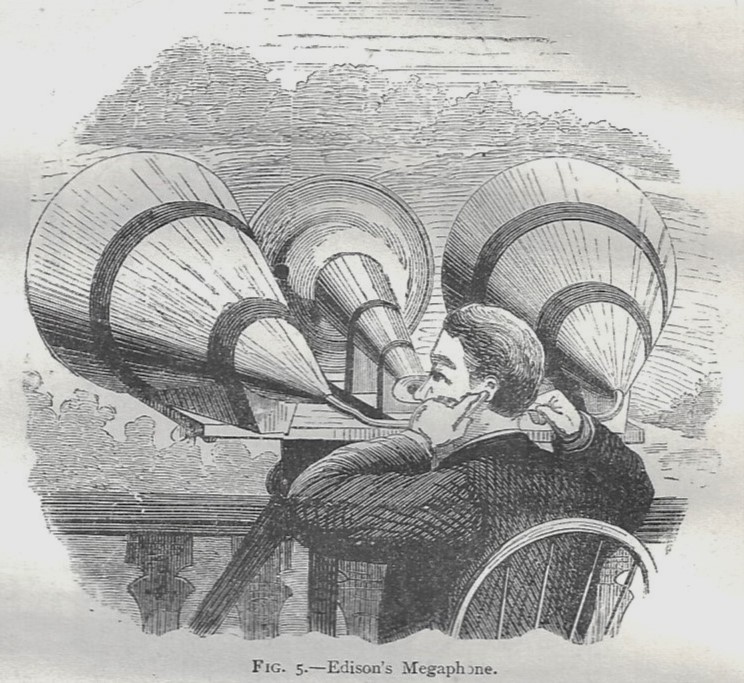
    Long-distance audio communication pre-telephone looked a little like this, brought to the world by Thomas Edison. What we’ve looking at here is a fellow positioned between a megaphone and listening devices–used in concert, they may have been able to communicate with a similarly-encumbered person a mile or two away (absent hills and dales and trees and buildings and so on…). All of this technology is very old: for example, the famous “Horn of Alexander” going all the way back to, well, Alexander the Great, who was said to be able to communicate by voice with troops ten miles distant. Athanasius Kircher also wrote about Old Tech in this department in his Ars Magna (1646) and Phonurga Nova (1674). It is interesting that Edison was tinkering around with this in the year following Bell’s telephone.  
    Nature 1878 Edison mega_2_

    There were at least several different versions of this scene, usually featuring one or two or four other people–this one comes from Nature of 24 October 1878 (the first version seeming to be in Scientific American of 24 August 1878),. 


  • Birds of a Feather: Flying and Perpetual Motion Machines (1848)

    JF Ptak Science Books  Quick Post

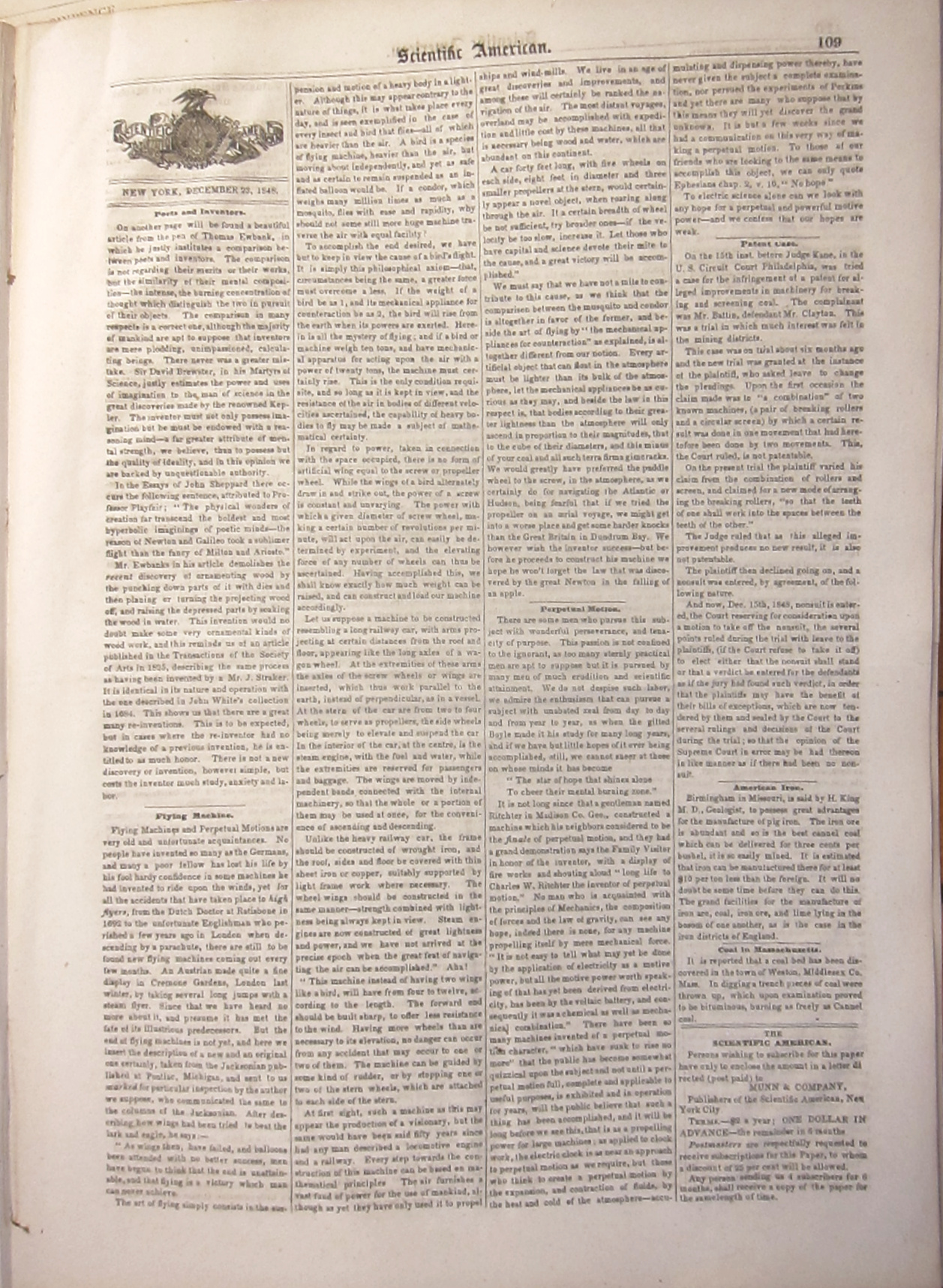
    Sci Am 1848 flying machineHere’s a wonderful and short editorial comment from the Scientific American on the possibilities of human flight, coupled with the observed fruitless pursuit of perpetual motion machines.  There wasn’t much hope expressed in flight, but “the end of flying machines is not yet” and the author shares a vision for one possible flying machine, which was a huge, steam-driven, wrought iron 40′ x 8′ design with between four and twelve wings. No mention is given of its weight. 

    “Flying Machines”, in Scientific American, December 23, 1848, vol 4, #14.

    “Flying Machines and Perpetual Motions are very old and unfortunate acquaintances. No people have invented so many as the Germans, and many a poor fellow has lost his life by his fool hardy confidence in some machines he had invented to ride upon the winds, yet for all the accidents that have taken place to high flyers, from the Dutch Doctor at Ratisbone in 1692 to the unfortunate Englishman who perished a few years ago in London when descending by a parachute, there are still to be found new flying machines coming out every few months.”

    “But the end of flying machines is not yet, and here we insert the description of a new and an original one certainly, taken from the Jacksonian published at Pontiac, Michigan…”

    “As wings then, have failed, and balloons been attended with no better success, men have begun to think that the end is unattainable, and that flying is a victory which man can never achieve. The art of flying simply consists in the suspension and motion of a heavy body in a lighter. Although this may appear contrary to the nature of things, it is what takes place every day, and is seen exemplified in the case of every insect and bird that flies—all of which are heavier than the air.”

    “Let us suppose a machine to be constructed resembling a long railway car, with arms projecting at certain distances from the roof and floor, appearing like the long axles of a wagon wheel. At me extremities or these arms the axles of the screw wheels or wings are inserted, which thus work parallel to the earth, instead of perpendicular, as in a vessel. At the stern of the car are from two to four wheels, to serve as propellers, the side wheels being merely to elevate and suspend the car. In the interior of the car, at the centre, is the steam engine, with the fuel and water, while the extremities are reserved for passengers and baggage. The wings are moved by independent bands connected with the internal machinery, so that the whole or a portion of them may be used at once, for the convenience of ascending and descending.”

    “This machine instead of having two wings like a bird, will have from four to twelve, according to the length. The forward end should be built sharp, to offer less resistance to the wind. Having more wheels than are necessary to its elevation, no danger can occur from any accident that may occur to one or two of them. The machine can be guided by some kind of rudder, or by stopping one or two of the stern wheels, which are attached to each side of the stern. At first sight, such a machine as this may appear the production of a visionary, but the same would have been said fifty years since had any man described a locomotive engine and a railway. Every step towards the construction of this machine can be based on mathematical principles The air furnishes a vast fund of power for the use of mankind, although as yet they have only used it to propel ships and wind-mills. “

    “A car forty feet long, with five wheels on each side, eight feet in diameter and three smaller propellers at the stern, would certainly appear a novel object, when roaring along through the air. If a certain breadth of wheel be not sufficient, try broader ones—if the velocity be too slow, increase it.”

    “We however wish the inventor success—but before he proceeds to construct his machine we hope he won’t forget the law that was discovered by the great Newton in the falling of an apple.”

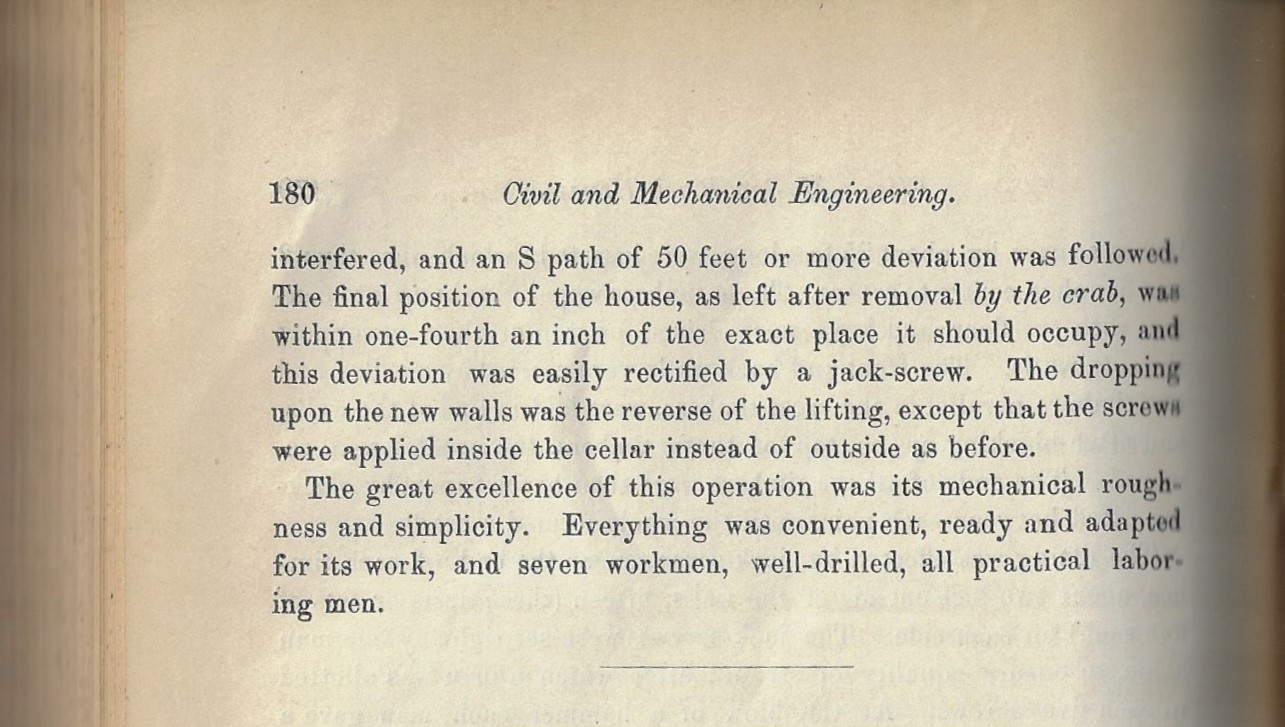
  • “The great excellence of this operation was its mechanical roughness and simplicity”–on Moving a Brick House, 1875

    JF Ptak Science Books  Quick Post

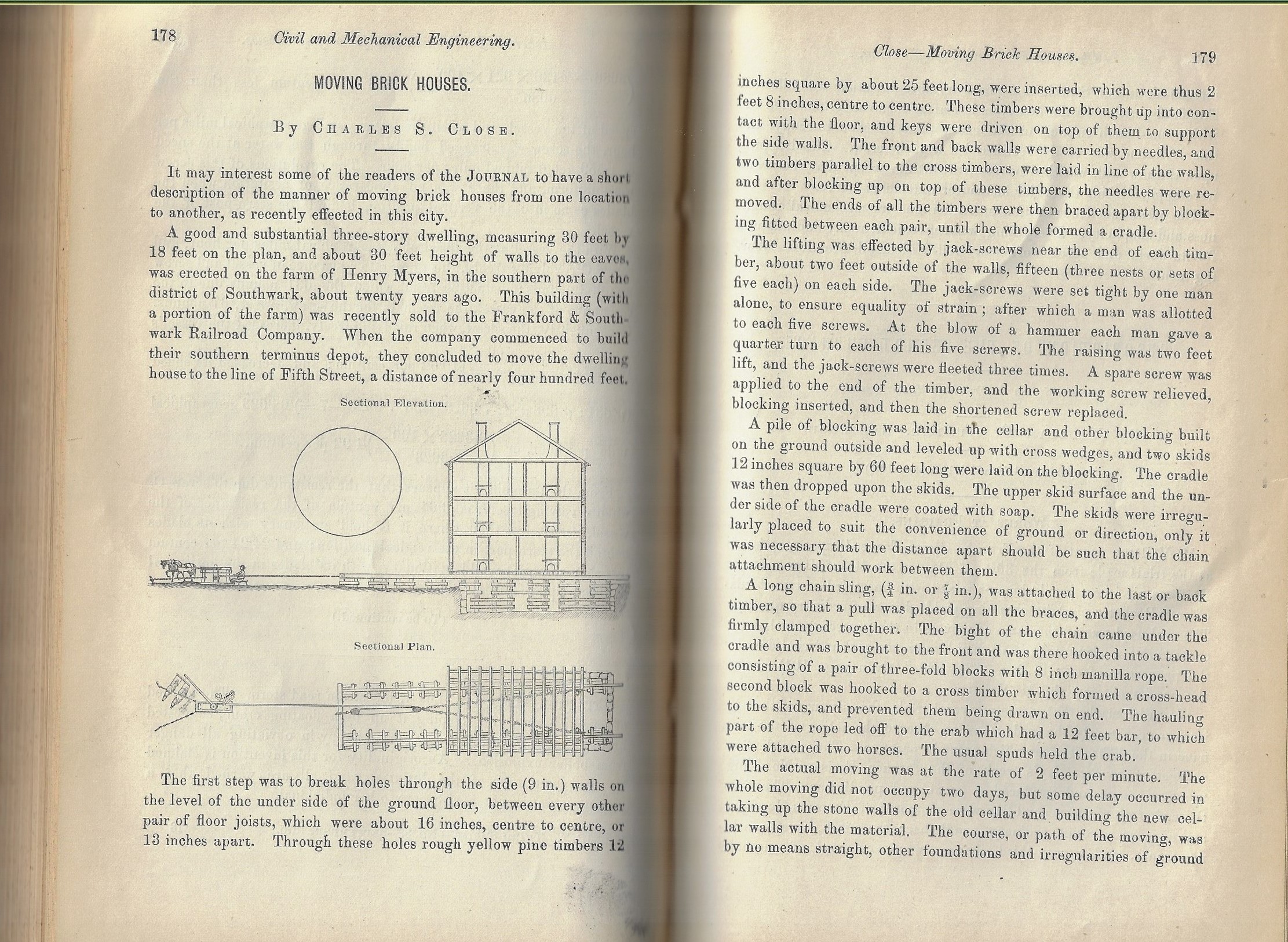
    This is one of the many small articles that appear in major sci/tech/engineering journals in the 19th century that are absolutely so filled with human spirit that it fills your heart with hope for humanity (even if everyone involved has been dead for at least 125 years.  This one is a ravishingly simple three-page report on how to move a (substantial) brick house with a few guys and a horse. The title of this post is taken from the report1, where (I feel) the writer just took a step back from his work and said “holy ____!”, and admired the sheer beauty of the simple and successful approach to a major task. And as it turned out, the house was all of 1/4″ from where it should have been, and that was quickly rectified with a screw jack.

    And about that lifting-of-the-house business–the main part of the job was done by one man and five screws, and as the writer observes with another fantastic-quote moment, “The screw jacks were set by one man alone, to ensure the equality of strain”! I know it is a technical expression, but “ensur(ing) the equality of strain” sounds very applicable to a lot of things, the equivalent of a bean thread base to a veggie stir fry. 

    Here’s the article in case you need to move a brick house:

    JFI 1875 moving house
    JFI 1875 moving houseNotes:

    1. Charles S. Close, “Moving Brick Houses”, in Journal of the Franklin Institute, 1875, vol 70/100, pp 178-180.