A Daily History of Holes, Dots, Lines, Science, History, Math, Physics, Art, the Unintentional Absurd, Architecture, Maps, Data Visualization, Blank and Missing Things, and so on. |1.6 million words, 7500 images, 4.9 million hits| Press & appearances in The Times, Le Figaro, Mensa, The Economist, The Guardian, Discovery News, Slate, Le Monde, Sci American Blogs, Le Pont, and many other places… 5000+ total posts since 2008.

Category: Industrial & Technological art

  • Little Pieces and Superb Design: Rockets, Canons, and other Boom Boom

    JF Ptak Science Books  Post 1420
    Artillery285

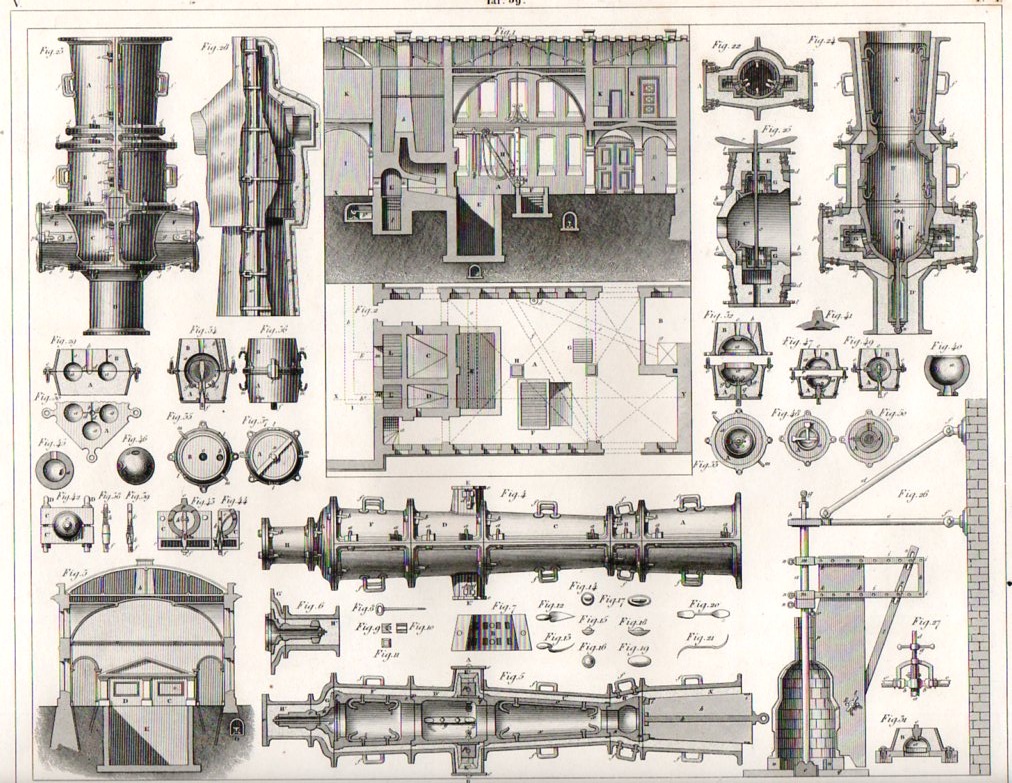
    The Iconographic Encyclopedia of Johan Georg Heck (printed 1851)  turns out to be perhaps one of the best designed books of its type in the nineteenth century.  Seemingly no  matter how much diverse information is hosted per page, whether the items number in the dozens or over a hundred,  the artist managed to distribute them with such grace and apparent ease that it is an absolute pleasure to see it all arranged before you. 

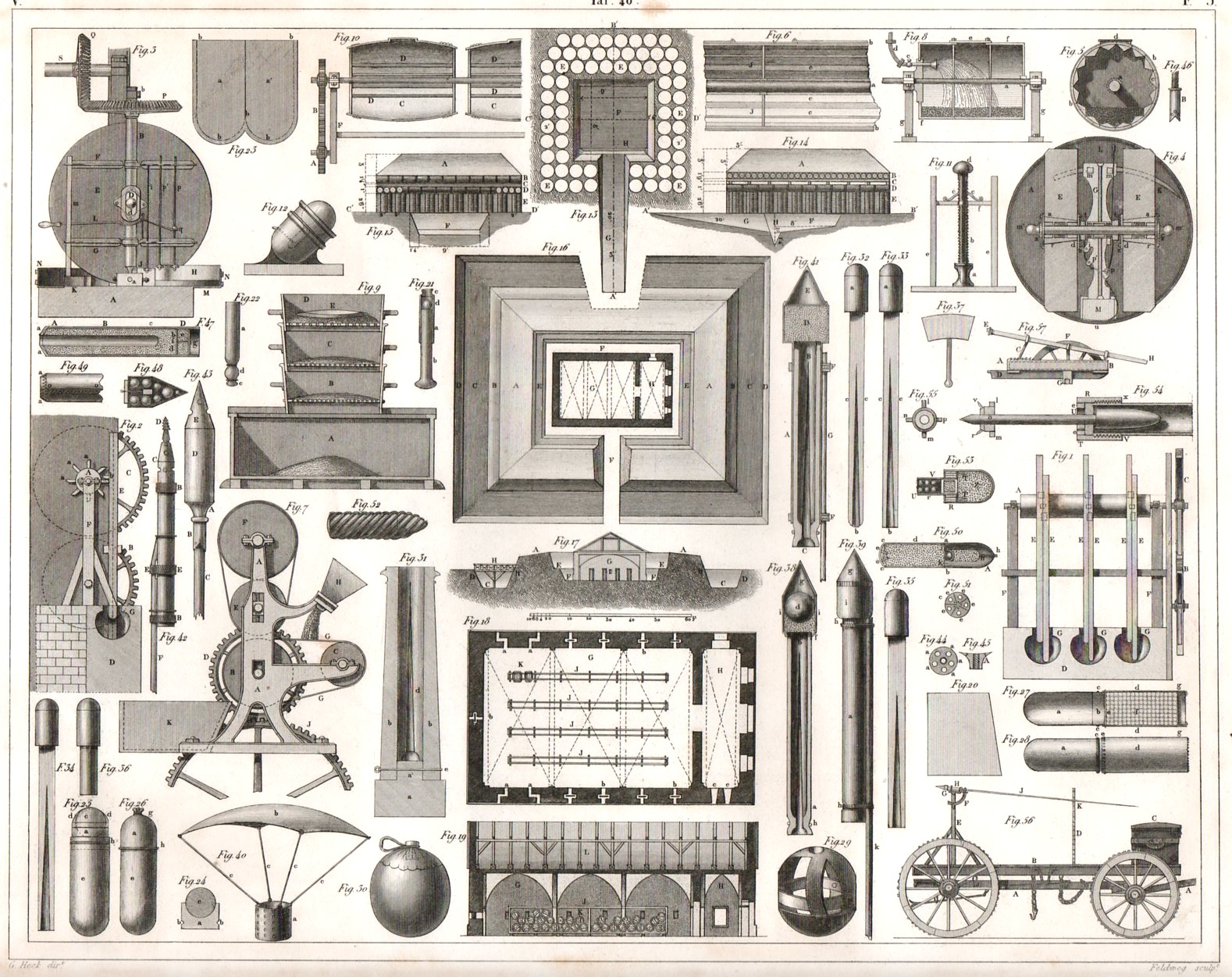
    Take for example the following two engravings of artillery fabrication of the early/mid 19th century.  There are 49 complex images on this first  piece of 11×8-inch paper (above), and yet there seems to be also a lot of white space.  It is a full but not crowded display of superb craftsmanship–it is also all very interesting. (Both are available for purchase from our blog bookstore.)

    To start, the main figures at top-center shop the plan and elevation of a workshop for casting canons, and we can clearly see the main furnace (“A”) for the big guns, surrounded by smaller auxiliary furnaces for smaller pieces.  Off to the side we see “K”, which is the drawing room and also the place where the director of the plant would live. Underneath it all in section we see various pipes and drains used to take away water and ash.  The structure on the lower right is for forming the business end and the purpose of the canon or mortar–namely, the ammo, and in particular, the pattern mold of a 50-lb mortar.  The long vertical pole at left used to place he liquid metal under pressure in the hearth, the ball being at the very bottom center.

    I’ve enlarged figures 4 and 5 to show the particulars of a canon (dry sand) mold, #4 being the exterior of the mold and #5 showing a cutaway so that one could see the six-ponder canon that was being formed inside.
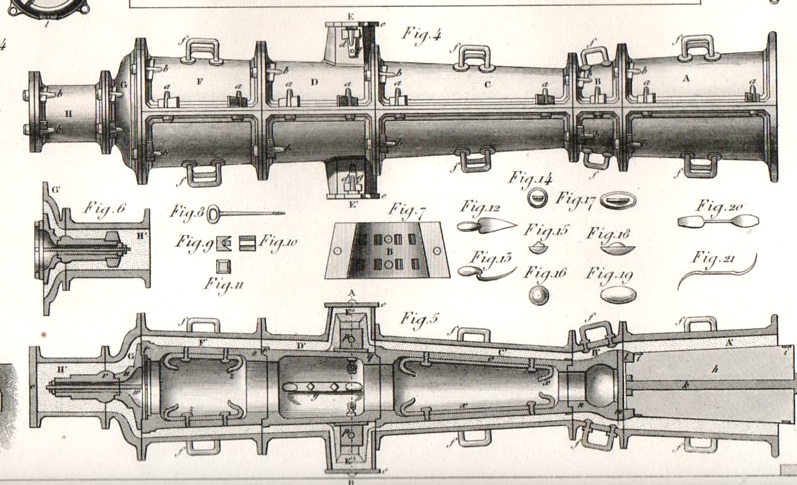
    Artillery286

    There is just so much in this image that a more knowledgeable person could easily go on for pages describing each and every bit. 

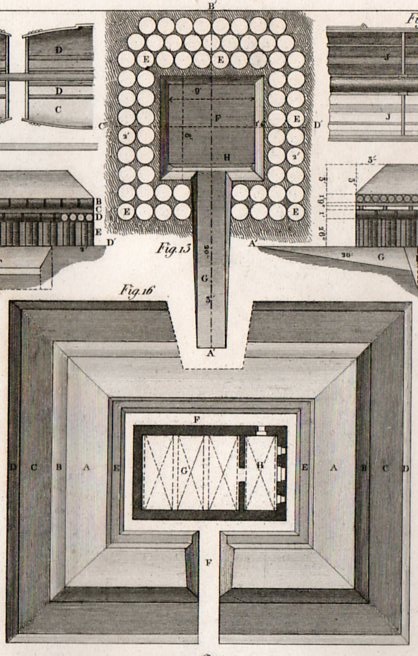
    The second image displays cartridges and (in general) fireworks–military pyrotechny.  What strikes me right away in this image are the five architecturals in the running vertically down the middle of the sheet.  They show what to do with gunpowder once it has been manufactured, which is an important consideration on handling and safety prior to it being used in battle–the first plan shows a field magazine, while the other four show the disposition of the construction of a permanent magazine, which show plenty of ventilation as well as massive walls which are in turn sunk into the earth and surrounded by ramparts.  It also seems that the roofing is huge, built no doubt to accommodate an earth filler.  Each of the barrels carried a hundred pounds of powder, so there was considerable interest not to allow the magazine to blow up, and if it did, to have the blast go mainly skyward. 
    Artillery287

    Some other items of interest in the second engraving include the incendiary devices (at bottom, #s 29+30),  signal rockets (#s 32,33,34,35), and the Congreve rocket, (#40 and #52,  which is much bigger and meant to be fired on the enemy, it being an incendiary); #53 is another Congreve, but this one scatters grenades as it is in flight. 
    Artillery288

    There’s a lot that can be described here but it goes a little beyond what I wanted to do with this post–it is also a lot beyond what I know about the subject.
  • The Problematic and Unspeakably Brief Beauty of Linoleum: Italy, 1933

    JF  Ptak Science Books   Post 1418

    Linoleum italian275
    In my imaginary History of Lines there is a chapter or two for humans-in-line(s).  In the history of the world, the fourth and fifth decades of the twentieth century—the 1930’s and ‘40’s—were big ones for human lines.   Big does not imply good, because as we all know lots of humans lined up for all manner of unspeakable nastiness during this time and well more than 100 million didn’t make it out alive (considering all of the wars, purges, revolutions and stupidity).

    The lines here are a little more benign, though with shriveled overtones of corrected respect.

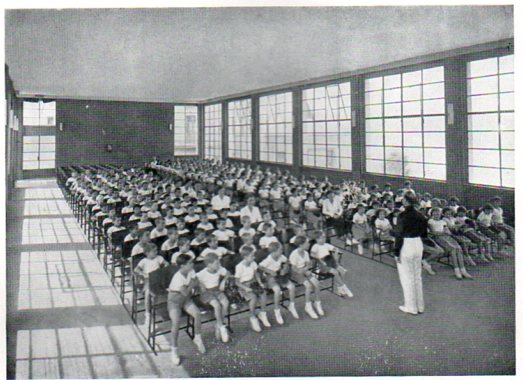
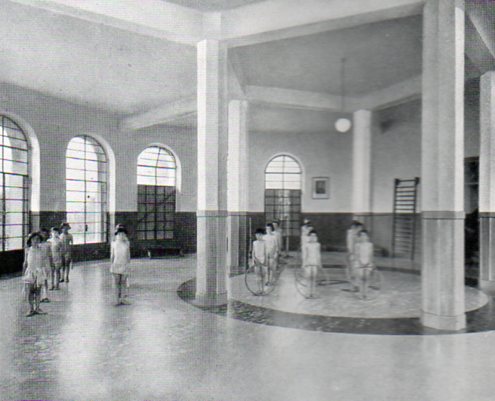
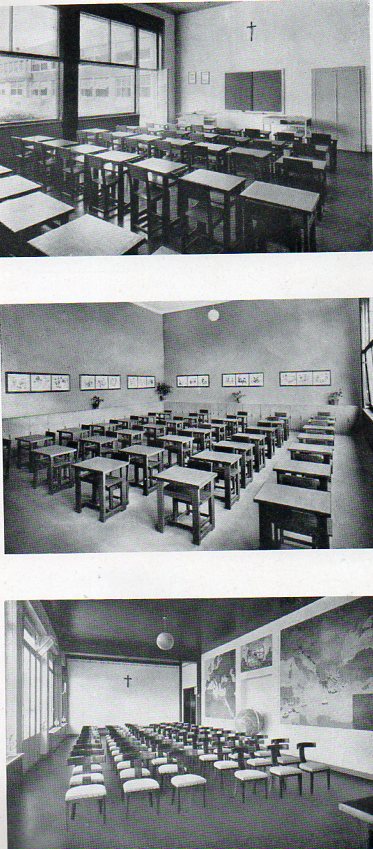
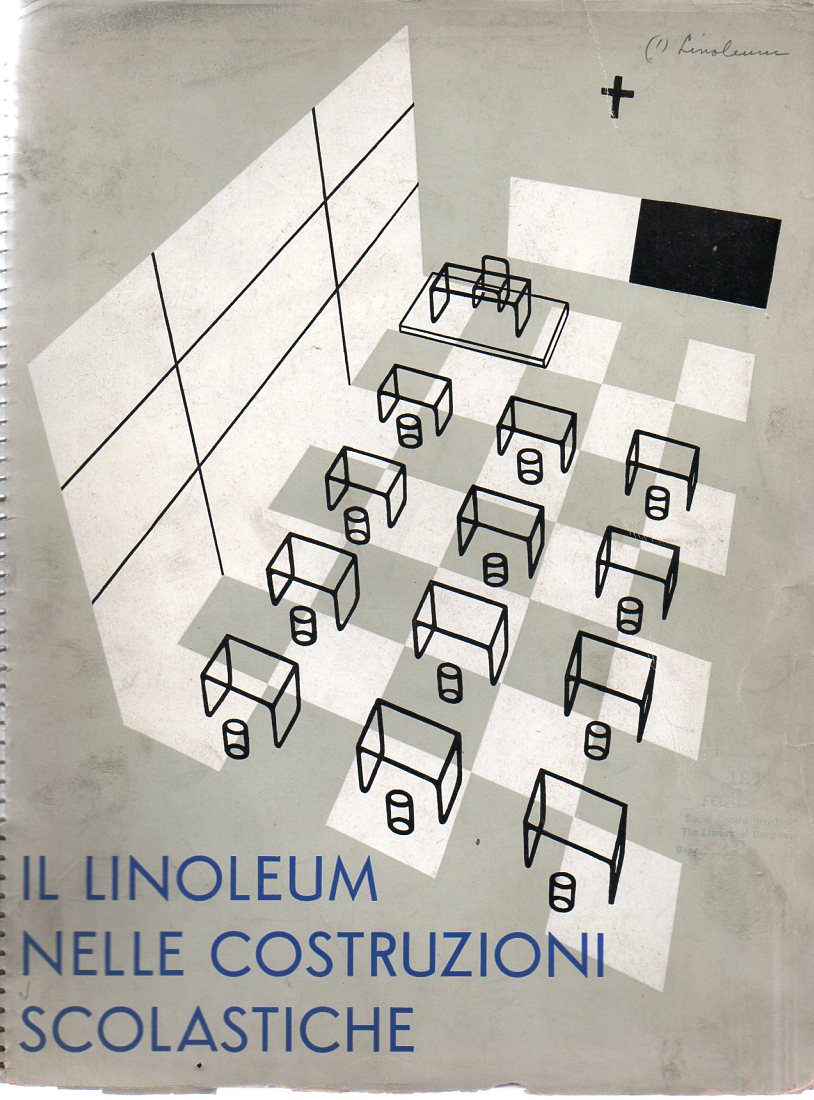
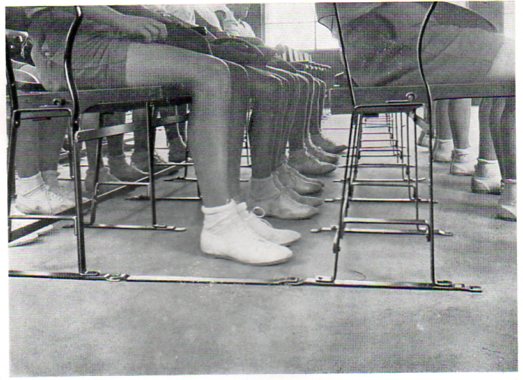
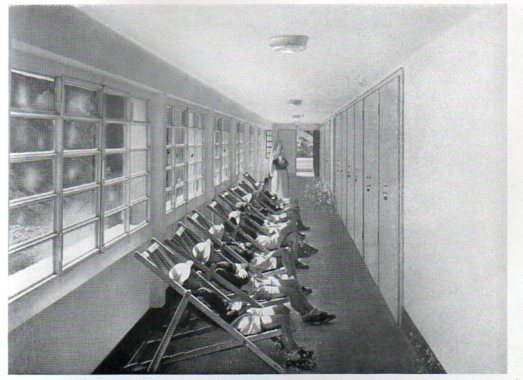
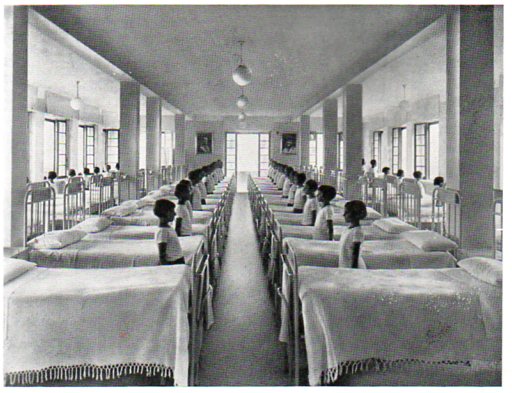
     Oppressive obedience in a well-designed environment is still like dressing your ear-infected 14-year-old St. Bernard/Jack Russell (?!) mixed breed in baby booties—its just not right, and these images attest to this simpy comparison. All of these photographs come from a delightful manufacturer’s catalog for linoleum products (Il Linoleim nelle Costruzioni Scolastiche), which was printed in Milano in 1933.(The original is available at our blog bookstore.)

    Linoleum italian277
     I’ll undoubtedly write a post on this stylistic beauty later on, but suffice to say for right now that it really is a lovely thing.  If only we could forget the Mussolini part.  Now I’m no fan, necessarily, of linoleum, but if I had to live on a linoleum island far removed from civilization and I had to choose a design for my world, I would choose the designs from this catalog, without hesitation. They’re spare, well-proportioned, beautifully design utilitarian designs; they are also very shiny and cold with a dispirited order, but so it goes.  The catalog seems to speak for its times, the inspired design bowing to the weighty needs of the flatulent state.

    Linoleum italian278

     Even though the people (mainly child people) are in very structured environments, they still look as though they really don’t believe in whatever it was was happening–of course the y were at school, or in an academic environment, or hospital, or something (as the titlf of the work states). There is something just wrong in the child-straight lines and seemless expanse of linoleum, something that looks as though details have been left out, that there is a ground-in sameness to everything, that the indifference to difference is so to make the children of a sort of sameness.  Ihope that they did okay–most would be around 80 or 85 by now, if they survived.

    Linoleum italian276


    Linoleum italian279

      Linoleum italian271

    Linoleum italian272 

    Linoleum italian270


  • Display of Information: What a Dreadnougth was Worth in Airplanes, 1911

    JF Ptak Science Books  Post 1408   [Display of Quantitative Information series]

    Info display dreadnought237

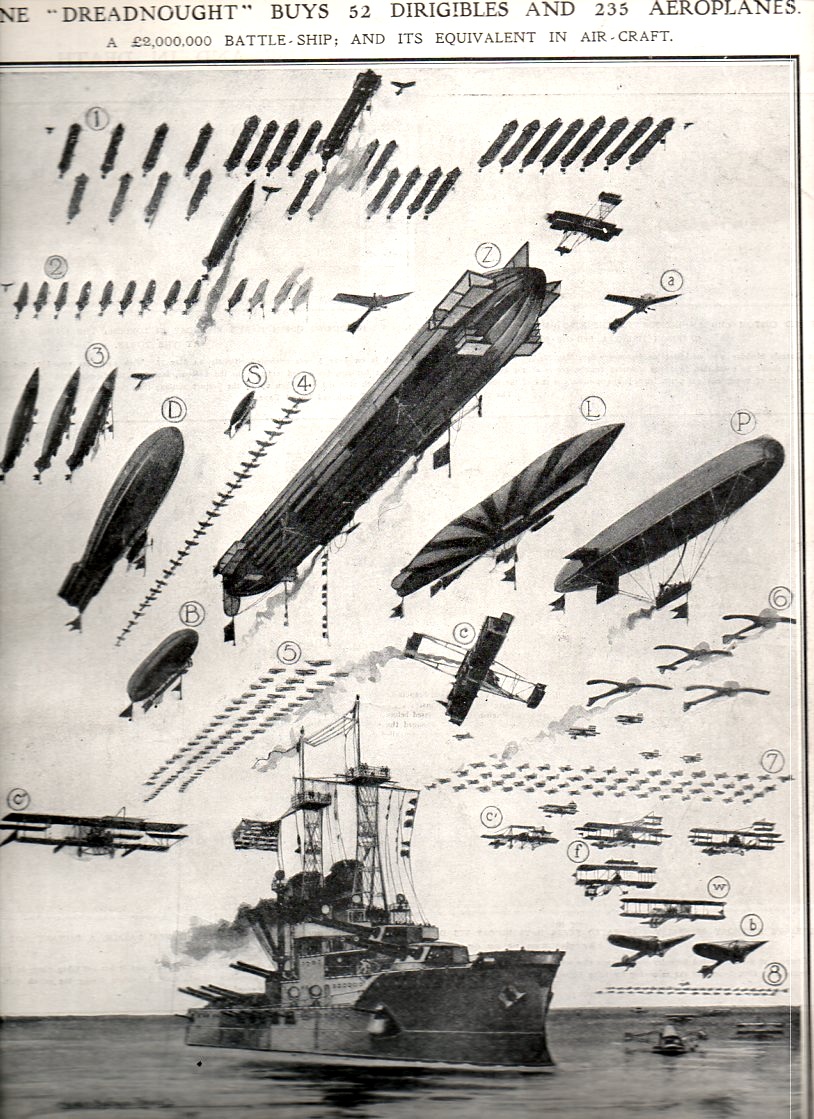
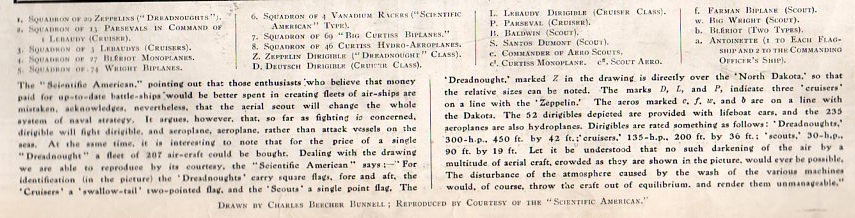
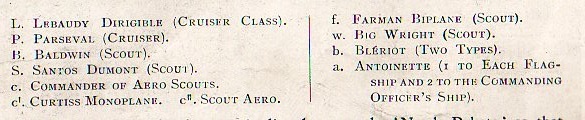
    There’s nothing quite so satisfying as seeing a representation of quantitative data like this where the graphical displays are flying.  “One Dreadnought Buys 52 Dirigibles and 235 Aeroplanes” is a full-page diagram appearing in the 3 June 1911 , making a very strong point that in the new air-age 2 million pounds for one battleship buys a lot of aircraft.  Of course this is a British journal and the ship is flying an American flag–the image originally appeared in the Scientific American just a short while before this publication, and so it also enumerates American and international aircraft, making for a lovely representation of a broad range of airplanes filling up the same sky.  (This image is available for purchase from our blog bookstore, here.)

    Info display dreadnought238
    Info display dreadnought239
    Info display dreadnought240


  • Elegant, Lightweight Steam-Powered Vehicle, 1877

    JF Ptak Science Books  Post 1407

    Steam car232

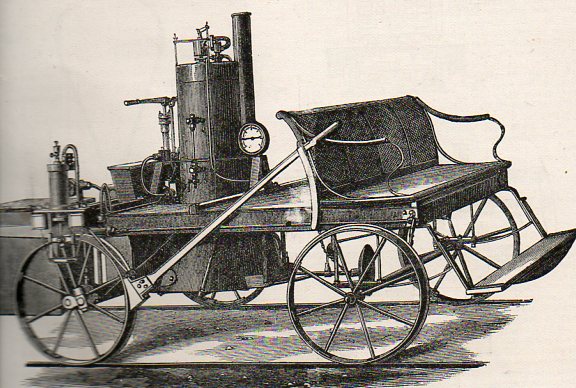
    This lovely steam-powered trolley looks as though it was just <this> close to being lifted off of its tracks and placed on the street for tooling around town.  Of course part of the reason why Joseph Green Cooke’s trolley was so lightweight1 is because it was traveling on rails, which meant the surface over which it would be propelled was smooth and predictable, unlike the streets that it would have to use to makes its way through a town.  Uneven, choppy, bumpy roadways would mean that the vehicle would have to be more sturdy; more sturdy means more weight, more weight means bigger engine, and so on.  So instead of this relatively light 1,200 pound vehicle you might wind up with something at 5,000 pounds, or more–at least in 1877’s mindset. (The issue of Scientific American is available here.)

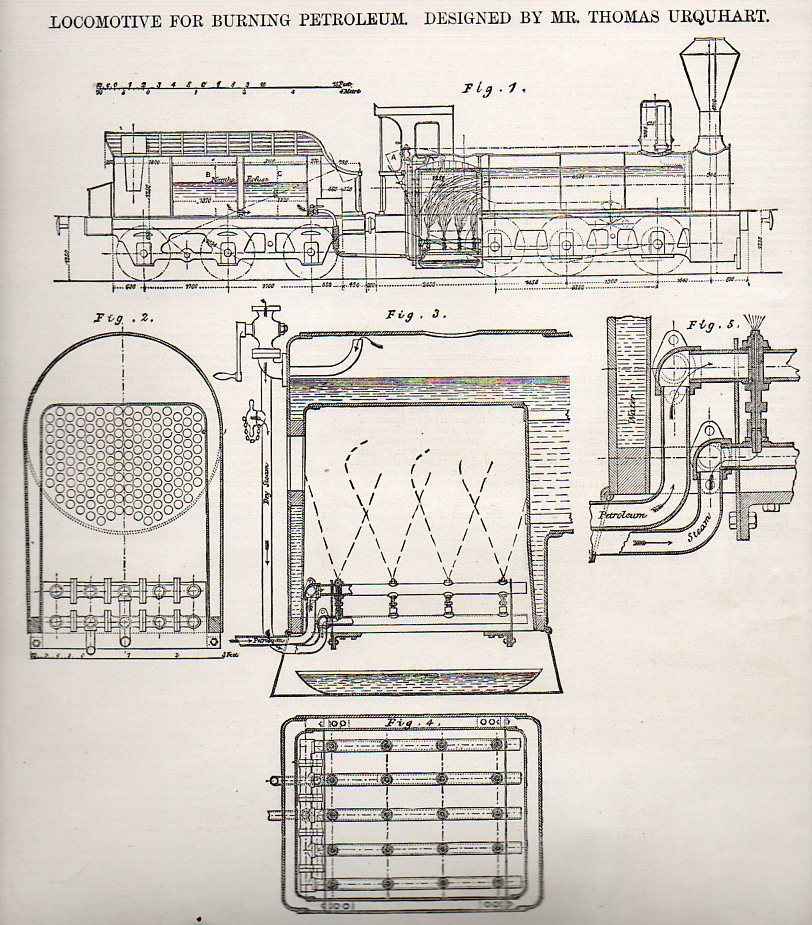
    The lighter vehicle would come before the end of the decade, but it had mostly to do with getting away from the steam engine to the lighter gasoline engine2.  It is serendipitous and perhaps ironic that the illustration facing the steam trolley is for the gasoline-burning train locomotive engine of Thomas Urquhart, who developed it for the Grazi-Tsaritsin Railway (Russia), which converted all of its 143 engines to this method by 1885.  When the pages of the magazine are closed, the two images lay one on top of the other. 

    Steam car234

    Notes:

    1. Earlier efforts at putting mobile steam-powered vehicles on the road stretches back into the very dim pre-automobile with the behemoth of Nicolas Joseph Cugnot, which strained its way along French streets as early as 1869….it also in the first recorded automobile accident, which caused enough trouble and damage and injury to scare away development money.  There were engines that were considered “portable” traction devices in the earliest part of the 19th century (by Trevithick and Tuxford, among others) , though they were not mobile–the “portable” part was that they could be moved (at all).  The movable, working traction machine (“tractor”) would begin to make its appearances in the 1860’s, though these were generally major pieces of machinery, locomotives on wheels. 

    2. Thanks to Gottlieb Daimler’s 1885 prototype, and Karl Benz’s 1886 patent for the gas-fuled car, and of course to the Charter Gasoline Engine Company of Illinois, whose work in the mid/late 1880’s brought about the production of several gas-powered traction engines in 1889.

    From the Western Review of Science and Industry, 21 December 1876: STEAM TROLLY. “Mr. Joseph Green Cooke, the locomotive and car superintendent of the  Oude and Kohilkunde Railway, has constructed a steam troll}” or carriage, the object of which is to enable resident engineers to inspect their tracks,  bridges and works with rapidity


  • A 16th Century Wooden Internet: Agostino Ramelli’s Magnificent Technologies

    JF Ptak Science Books  Post 1386

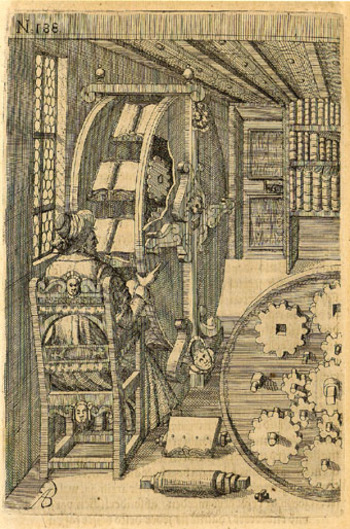
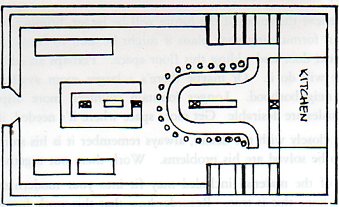
    Bloginternet Okay, it wasn’t really the internet, or ARPANET1 or any of those things—the invention did however deliver reading material to a waiting reader/researcher in a novel way, bringing twelve already-opened books into the line of sight within seconds.  And insofar as the internet delivers reading material in such a way, well, then, so does this, so long as you chose the right twelve books.  This was a great innovation though I cannot say how many might have been constructed via the representation of this machine in Agostino Ramelli’s (1531-1600) :masterpiece Le diverse et artificose machine, which was published in 1588, the same year that England sent the Spanish Armada to Davy Jones’ locker.  
    The book was a wonderland of contrivances and engineering feats of pumps, fountains, logging mills, mining materials, bridges, hydraulic material, dredges, derricks, metal-working machinery, bellows, looms, foundry materials and (my favorite) cranes—they were all of Ramelli’s design, and the book, which contained 198 engraved plates of these splendid illustrations, had a remarkable and deep impact on engineering in the 17th century.  There really wasn’t anything else quite like it in the whole of the Renaissance, except for Agricola’s book on mining.  Ramelli touched on so many subjects and in such great detail that I believe he simply had no equal.

    As it turns out most of the devices in the Ramelli book had to do with raising water, which included piston pump machines, rotary pumps, well buckets and a host of other more unusual devices.  The faintest majority of these devices were powered by water itself, the other 49% ere powered by people, people walking on treadmills, or turning a giant wheel, or using a hand crank, and many other such energy-transfer devices.  Of the 198 plates, fully 110 displayed water-raising devices, and of these 54 were powered by man. The rest of the deices were grain mills (21), sawmills (4), machines for dragging heavy objects (7), machines for raising and moving excavated earth (2), and cofferdams (2, both absolutely beautiful engravings).  Rounding out the rest of the book were 15 engravings of military bridges, 14 images showing lockbreaks/barspreaders and other means of gaining entry through re-enforced doors and window coverings, 4 images of fountains, 1 of a gunner’s quadrant, and 4 of some very impressive military hurling machines. (One of the throwing machines was specifically designed ot hurl barrels of dirt and other debris so as to fill up moats.)   And of course there was one entry for a movable, rotating bookshelf, our first wooden internet.

    Ramelli’s  attention was fixed by the growing solidification of the use of mathematics in engineering as the basic structure of construction, as found in such earlier works as was greatly influenced by the increasing importance placed on mathematics and geometry as an important tool for engineers and artists, and particularly by the writings of Guidobaldo del l Monte (1545-1607) and Petrus Ramus (1515-1572).

    What I particularly like about these images is that Ramelli shows us the guts of the apparatus—if you really wanted to build this thing, you actually could, given the details in the engravings. And in spite of the fact there there was only one edition of this book–and that it was the only book of Ramelli’s to make it into print, regardless of the fact that as he states on his title page the book press was in his own house–there must have been a fair number of them printed, because there are so many examples of the work existing today.  So, it was a popular book I have no doubt–it was easy to use, displayed its data splendidly, and there were no other books quite like it. Why didn’t it go into a second edition?   Perhaps Ramelli felt no need, perhaps he felt he got things right, perhaps there were so many books printed in the first edition that there was no need for a second.  And perhaps it was that Ramelli would be dead in a dozen years.  One thing is for sure, though–the book did get reprinted, or many of its images did, as publishers and authors seemed to steal his work and images with some regularity…maybe these people filled the need gap.

    Returning to our reader in his high-tech biblio-turntable–it was hardly the stuff of the internet, but it was adventurous, and it did allow folks to have a good, quick look at twelve books at a sitting–which as Ramelli points out would be good news to sufferers of gout. But everything that you needed to build this thing is shown int eh engraving, and if you had some gifts in woodworking and a few tools this device could’ve been your’s for the doing, as all of the key ingredients are shown.   . 

    Notes:

    1) I’ve got to point out that it also wasn’t the 1961 paper on packet switching theory, Leonard Kleinrock’s , “Information Flow in Large Communication Nets.”, (RLE Quarterly Progress, Report) or his 1965 Communication Nets–both of these were foundation works for the construction of the Internet..  Nor was it J.C.R. Licklider & Welden Clark’s  “On-Line Man Computer Communication”, which was the first true paper on the Internet concept; nor was it the Lawrence Robert’s (MIT Lincoln Lab) 1965 experiment on the first actual network experiment; nor was it Douglas C. Engelbart’s 1963, “A Conceptual Framework for the Augmentation of Man’s Intellect,” in P.W.Howerton and D.C.Weeks, eds., Vistas in Information Handling. Washington.D.C.: Spartan Books, 1963, but you get the idea.
    A nice chronology lives here.

     Later we’ll get to a much more bona fide aspirant for the Very Early pre-Internet Internet status:  Vannevar Bush and the Memex Machine of  1945. 

    2) See Ron Brashear’s (Smithsonian, Dibner Library) article on Ramelli  for a good introduction to the man and the milleau.


  • A Romance of Swivel Chairs, 1945

    JF Ptak Science Books  Post 1376

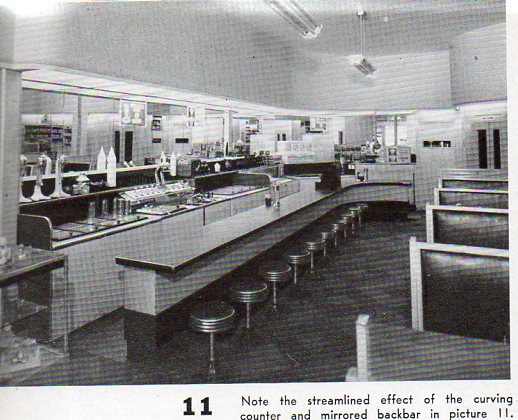
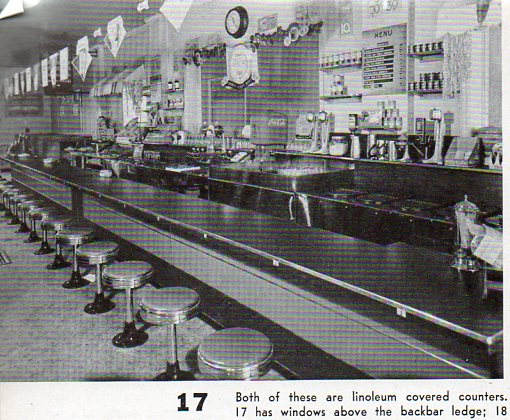
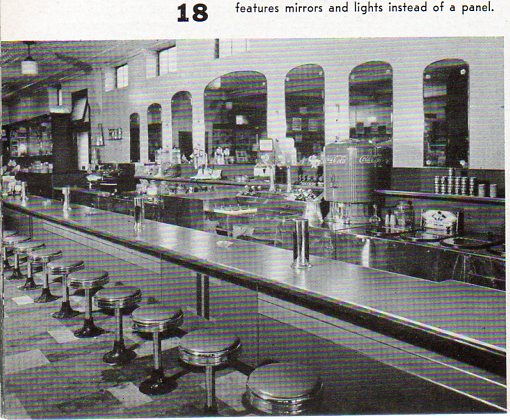
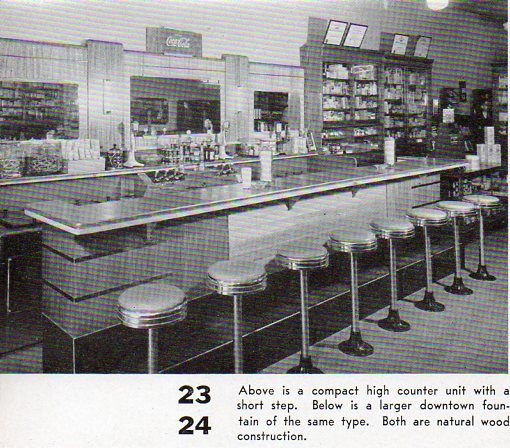
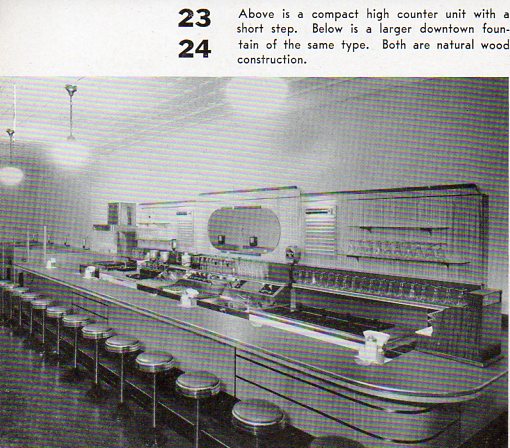
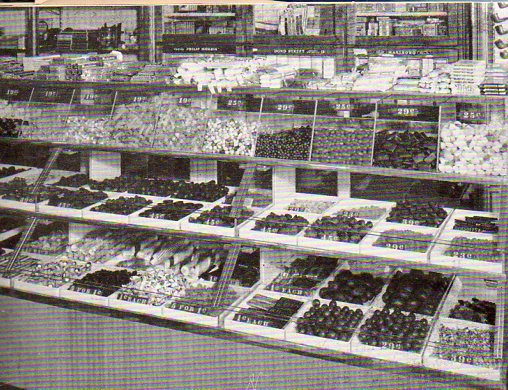
    Swivel chairs schematics099 The Borden Company–at one time the largest producer of dairy products in the U.S.– published the little pamphlet (Modernization Handbook) from which these pictures below are taken. Published in 1945, this slim work was meant to entice owners of luncheonettes and pharmacy/soda shops to upgrade their businesses, so that they could sell more product, so that they could buy more supplies from Borden.  Borden wasn’t offering financing, just supply-side friendly advice to the folks selling their goods.

    Swivel chairs091

    A large amount of this “modernization” had to do with swivel chairs/stools, chairs around a long lunch counter that stood to serve the maximum number of people in a small space in the minimum amount of time, all while giving the patron a maximum visual field to the other stuff for sale in the establishment.

    Swivel chairs093

    I’ve got to say that there is a long simple elegance to this–sitting at a table within sight of the person cooking your meal, check-to-jowl with probably-unknown fellow diners, getting your food quickly and probably freshly and with minimum fuss. There is definitely pleasantness seeing your food prepared before you, a better type of fast food, far removed to a comparatively superior land when compared to dealing with simple human interfacers between customer and the Conglomerate Cook of the modern fast-food behemoths.

     Swivel chairs094


    Swivel chairs097

    Swivel chairs098

    And if you were to turn around in your chair,  this is what you would see:

    Swivel chairs turn around103
    Swivel chairs turn around102
    Of course this was all about sales for Borden, and that’s fine, especially when the end result of the money-making idea produces the ultra-sweet highly anticipated sound of your plate sliding arorss the linoleum countertop.  Don’t forget your napkin. 


  • Children, Artillery and the Geometry of Cannon Fire

    JF Ptak Science Books  Post 1366

    Cannons ha003

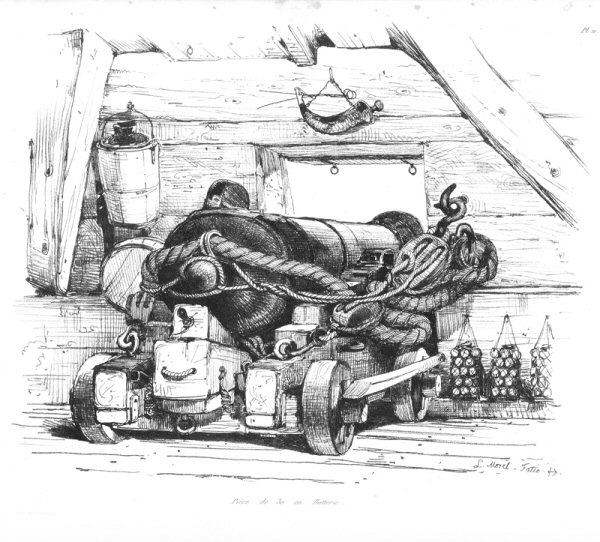
    There were many integral components to firing a cannon on a ship, not the least of which were the Powder Boys, the small, young, semi-strong kids who would run the gunpowder from a below-decks armory to whatever gun deck was needed.  It was a relatively simple procedure, filling up a longish tube (cannon  derived from the Italian  cannone–or large tube–which came from the Latin canna from the Greek  kannē , meaning something like a reed or any similar hollow thing) with gunpowder and then cannonball/shot and then wad, then causing the gunpowder/propellant to ignite and throw the ball.  Basically, that was it, though you needed to maintain the cannon, aim it, and so on (don’t forget to first swab the bore from unexploded gunpowder so you don’t blow things up!).

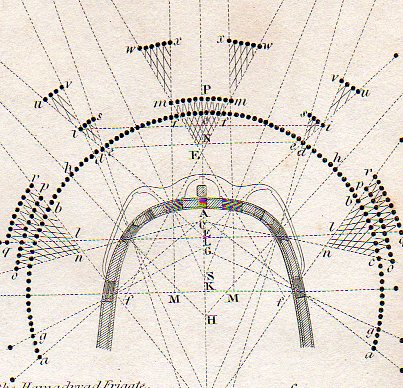
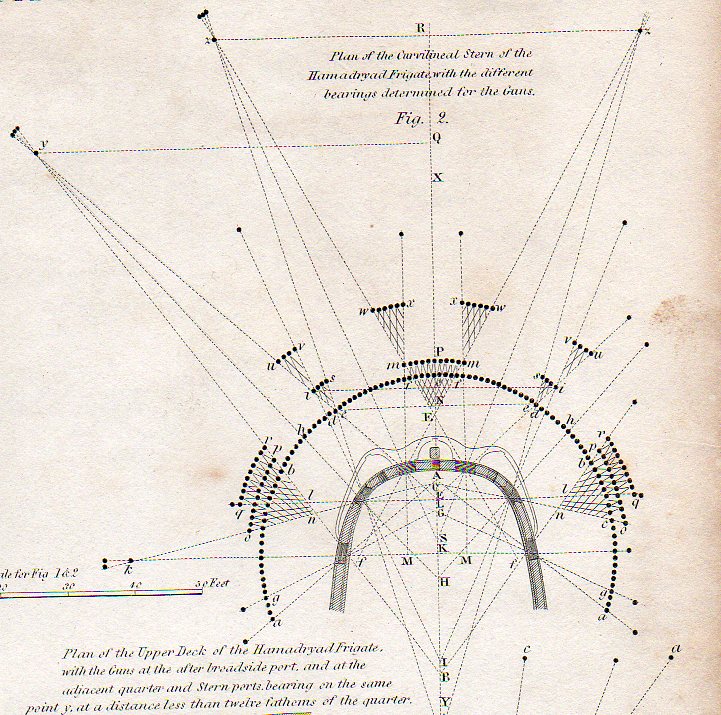
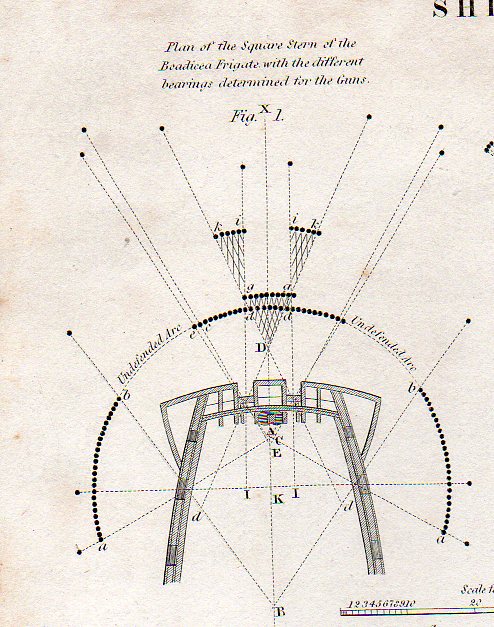
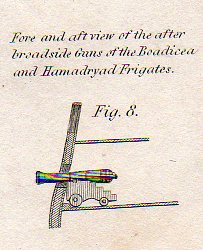
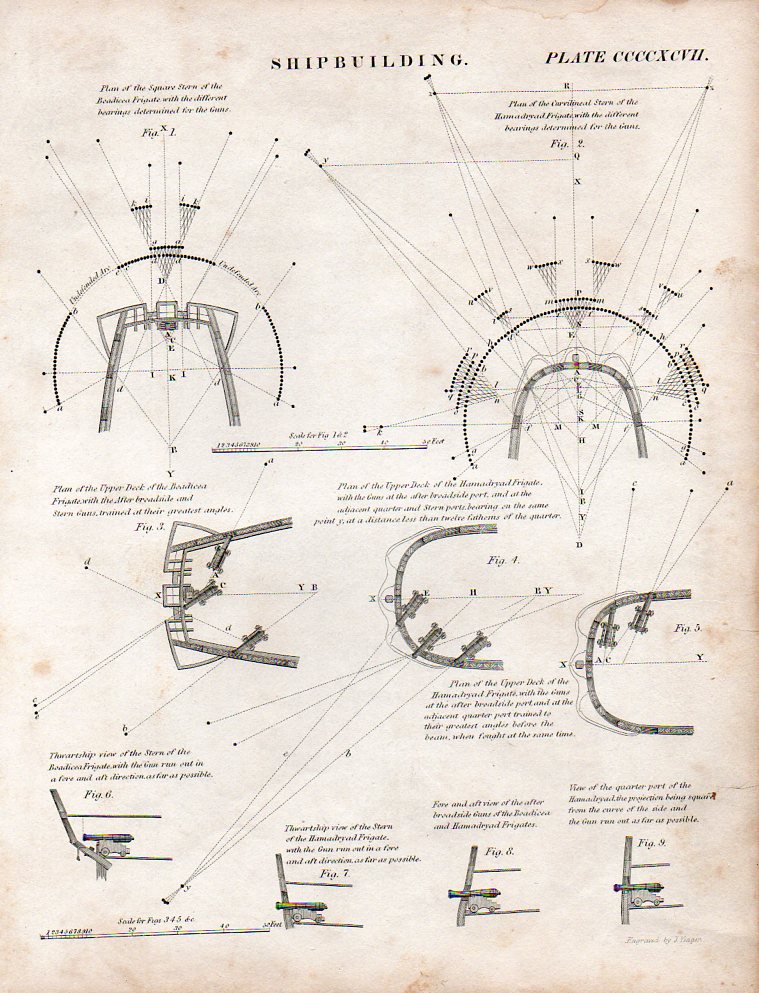
    The (first)  image above of found modernist/semi-dadaist artwork comes form 1812 and was found in Rees’1 Encyclopedic Dictionary from the article on “Shipbuilidng”   and illustrates the ways in which the stern of a ship can be outfitted with cannons–actually, the sterns of the HMS Bodiceae (28 18-pounders)  and HMS Hamadryad  (36 guns). Also by this time cannons had been carried on naval ships for nearly four hundred years, while the first cannons appeared on the ground in Europe another few hundred years before that. 

    Cannons ha002


    In the third detail (below) we see the coverage of the four cannons placed in the stern of the Bodicae, mainly pointing out its weaknesses, showing the undefended arc, which comprises about 1/3, or about 60 degrees of the defensive posture.  The Hamadryad on the other hand shows 100% coverage of the 180+ degrees of attack possibilities shown, along wioth secondary and teriary areas of fire coverage covered by mor ethan one gun.

    Cannons b004

    A fine,tiny detail from the full engraved sheet:

    Cannons little005 And the full sheet, available at our blog bookstore:

      Cannons001

    This is pretty much all that was needed to fire a cannon, except the men of course.

    File:Antoine Morel-Fatio pl10.jpg

    NOTES:

    1.   I’ve written about before here, just enter “Rees” in the google box and there will be a dozen or so other posts.


  • Technical Drawing–Superb Shadowing, Shipboard Cannons, 1887

    JF Ptak Science Books   Quick Post

      Shadow ship 515

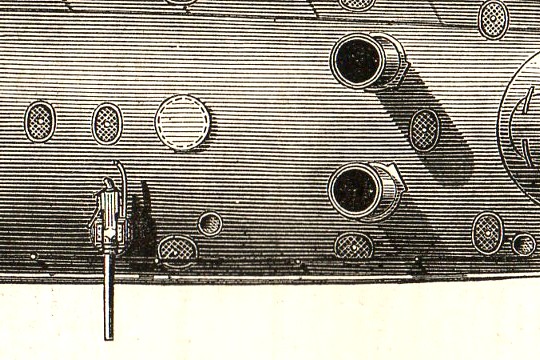
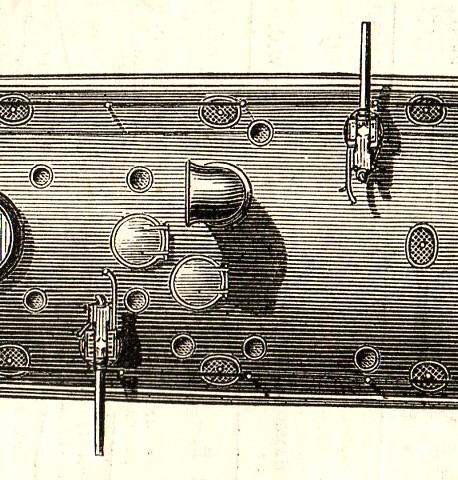
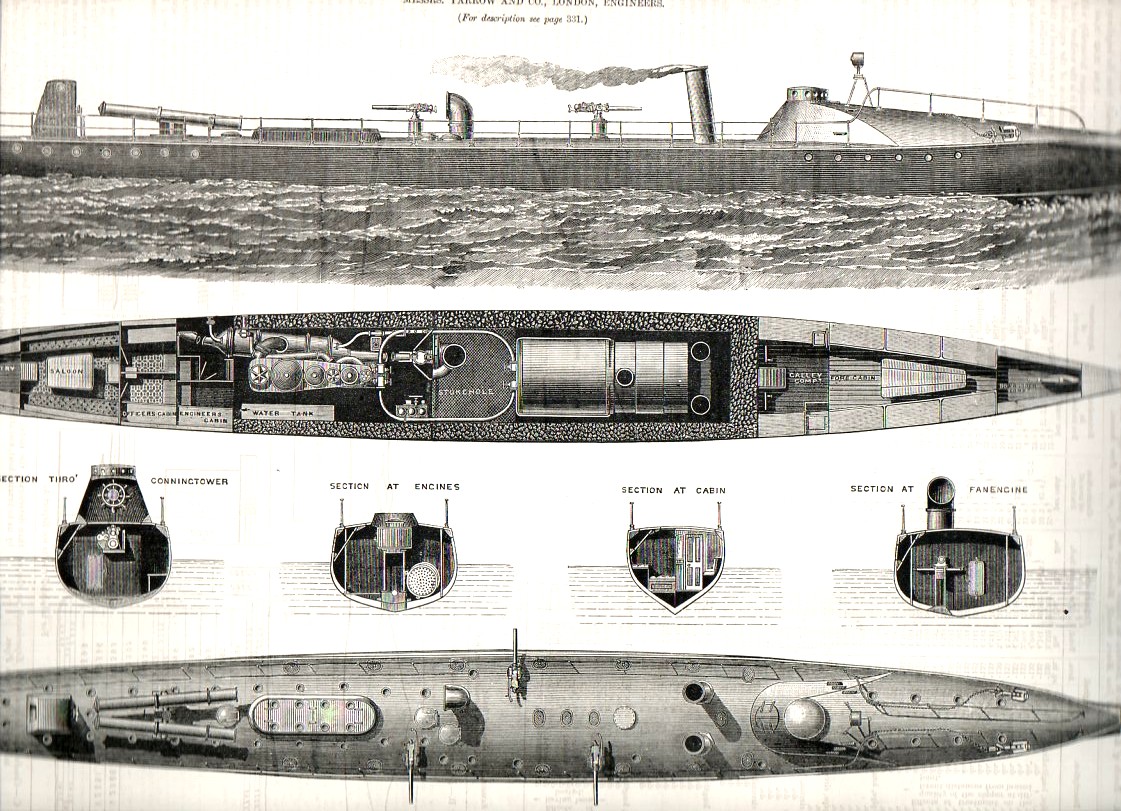
    Horace may have said “Pulvis et umbra sumus” (“We are but dust and shadow”)- and meant it, but the artist working here on this ship would definitely have replaced “dust” with “metal and wood”.  The details above and below are two very small bits (each about a half-inch long or so)  from a 15-inch long engraving of a Spanish torpedo boat, and published in The Engineer on 21 October 1887.  The workmanship is superb and the sense of design to me is absolutely glorious–the entire image of the plan of the ship is below. [The original is available from our blog bookstore.]

    And another detail:

    Shadow ship 516


    Shadow ship 513


  • Technical Drawing–Superb Shadowing, Steamship Boilers, 1880.

    JF Ptak Science Books  Quick Post

    Boiler511

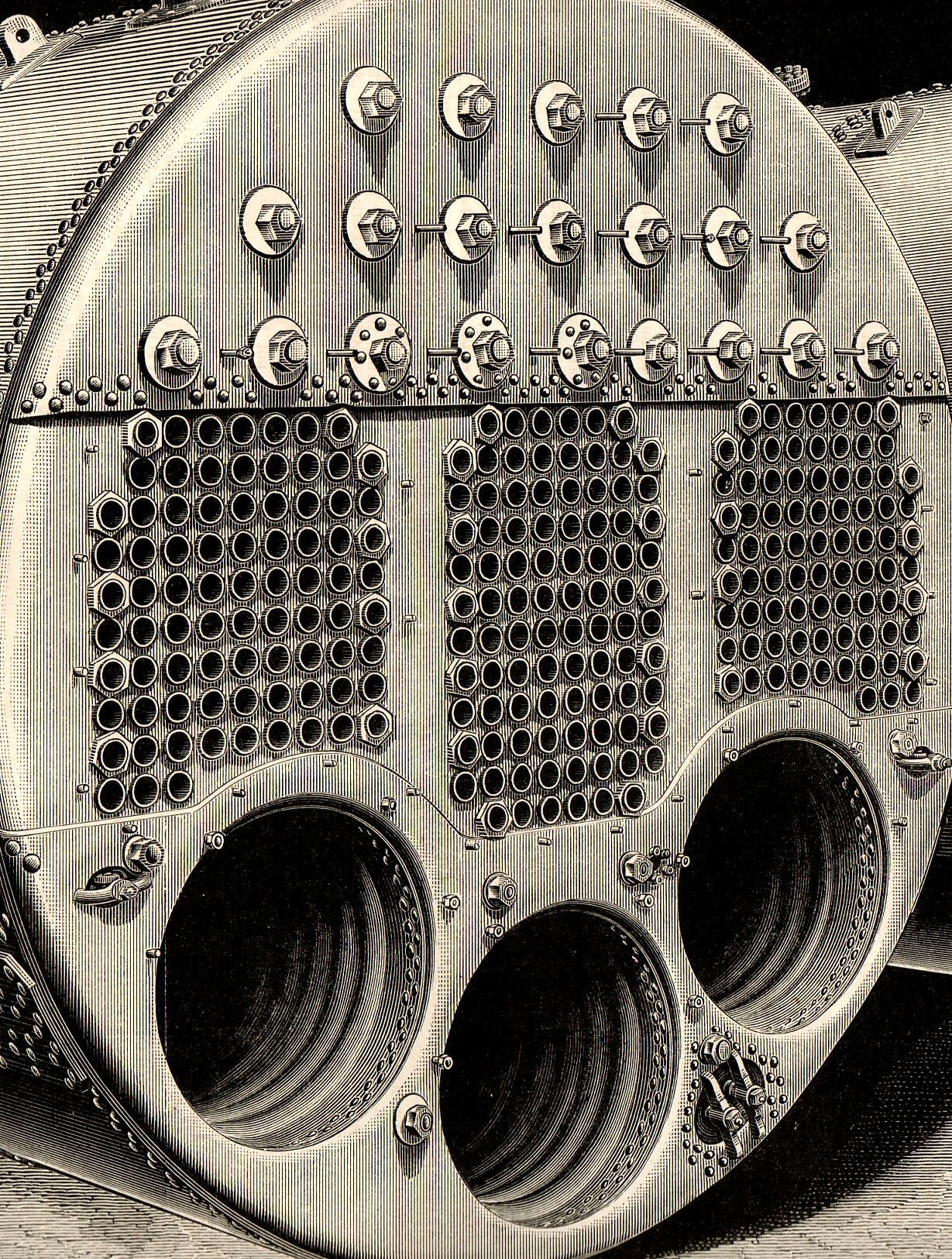
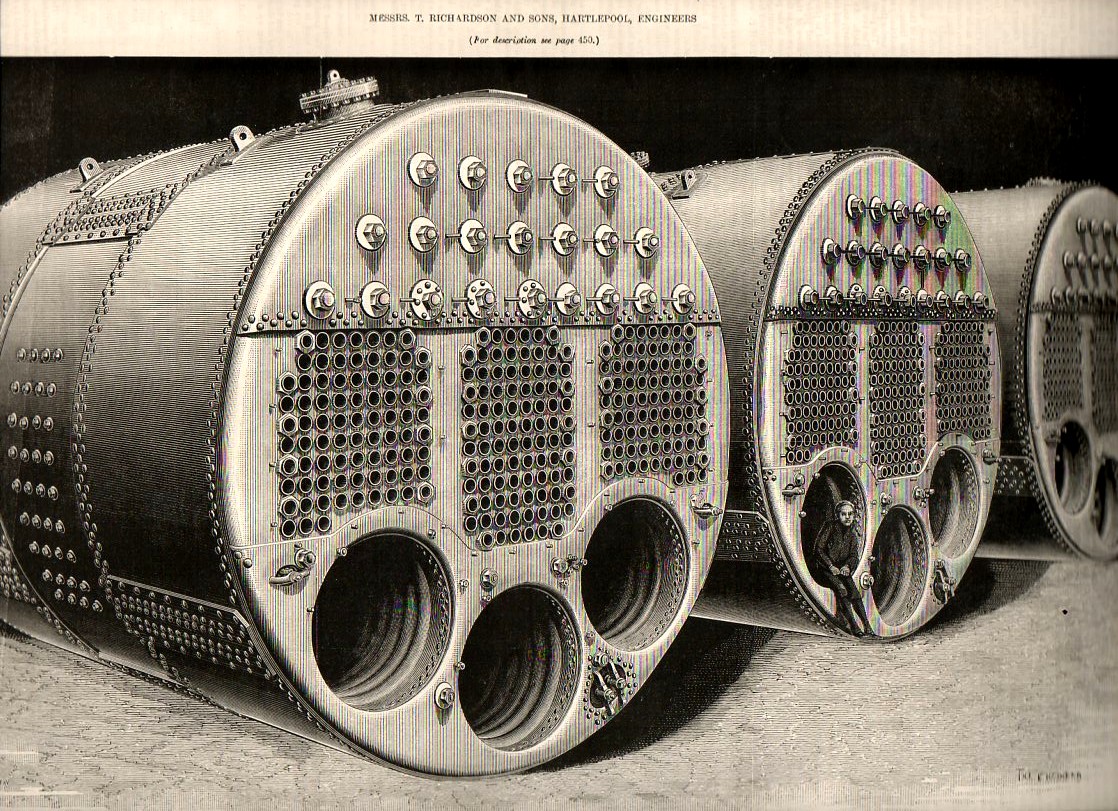
    This is another in a beginning series on superior draftsmanship in rendering technical, physical and biological objects.  The image–boilers for the RoyalMail  Steamshp Roslin Castle, published in The Engineer on 30 November 1880–is a very contained complexity, beautifully shadowed.  [The original is available for purchase at the blog bookstore.]

    Which is a detail from this:

    Boiler510

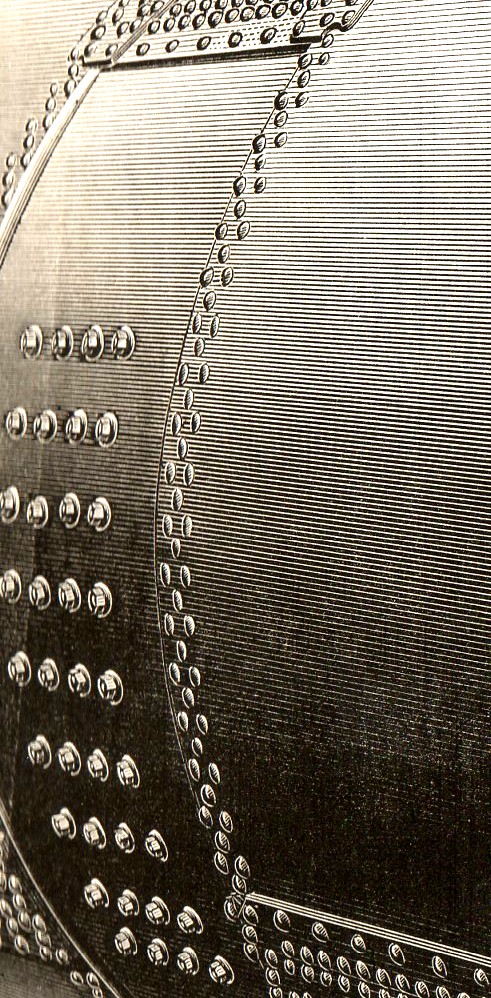
    And from which also comes this detail:

    Boiler512


  • Beautiful Technical Shadowing, 1880

    JF Ptak Science Books    Quick Post

    Techno art wheel488

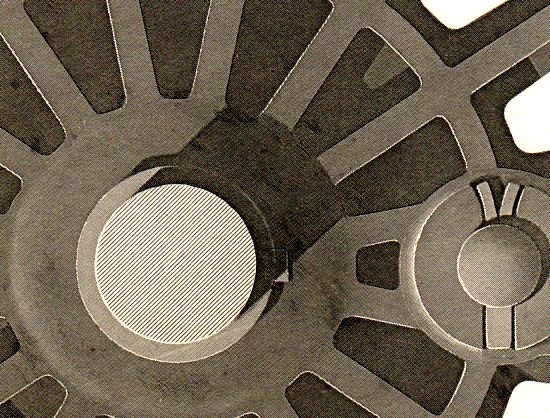
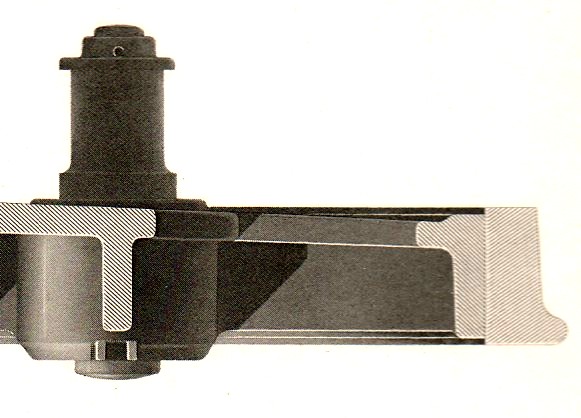
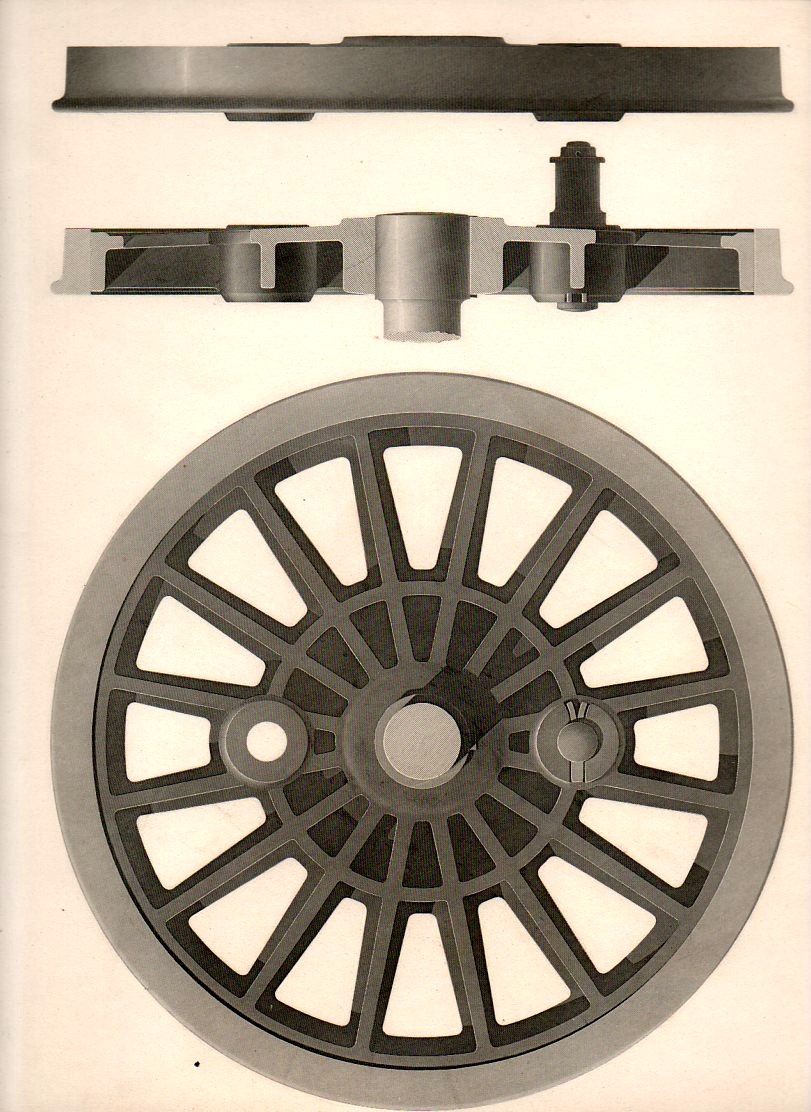
    This superb engraving, “Examples of Finished Shading, Locomotive Wheels” (source unknown) was engraved by J.W. Lowry after the original of C.J. Wallis, and published by Blackie & Son of Edinburgh and London around the year 1880.  The work is detailed yet spare, heavy yet elegrant, beautiful, and of course perfectly shadowed.  Splendid. The details (above and below) could be almost anything, but the first does have a certain pull of the 18th century masters of Fench visionary architects (Boullee, Leduc & co.) to it. The full engraving (which is available at our blog bookstore) is follows the following.

    Techno art wheel489
    And the full engraving: Techno art wheel487