A Daily History of Holes, Dots, Lines, Science, History, Math, Physics, Art, the Unintentional Absurd, Architecture, Maps, Data Visualization, Blank and Missing Things, and so on. |1.6 million words, 7500 images, 4.9 million hits| Press & appearances in The Times, Le Figaro, Mensa, The Economist, The Guardian, Discovery News, Slate, Le Monde, Sci American Blogs, Le Pont, and many other places… 5000+ total posts since 2008.

Category: Future, History of the

  • Atomic- , Vacuum- , & Solar-Powered Dirigibles with Built-in Airports–Bits of a Bad Historic Future

    JF Ptak Science Books   Post 1487

    A post (“Nuclear Everything”) over at Dark Roasted Blend that featured a magnificent and stodgy atomic-powered zeppelin pushed me into this short visual note on differentially-powered airships, and then in general about airships with airports on them. (There’s a whole other category for planes-of-tomorrow that were so enormous that they had landing strips on their wings, but that’s another story.)

    And they remind me of things that just aren’t “right”, because these things just weren’t.  I’m not sure why, but I’m drawn into an old story about the legendary Charlie Goodnight, Texas pioneer, one of the creators of the idea of the cattle drive (the Goodnight-Loving Trail), a man who lived an extraordinary and powerful life.  He lived for a long time, too, from 1836 to 1929 (almost to the year of the birth of Larry McMurtry, who told a version of Goodnight’s story so spectacularly well in Lonesome Dove), well into a future so far advanced from the year of his birth that he could scarcely have imagined it.  Anyway, towards the end of his life, in 1916, Goodnight had the idea of making a movie of the Old West that included a “final” Indian buffalo hunt.  I’ve seen the film, and it is a fascinating, heartbreaking, wonderful/awful thing, that somehow might appeal to almost no one.  It certainly didn’t appeal to the folks at the time looking for a cowboy film, because much like Mr. McMurtry’s cowboys, Goodnight’s reality didn’t much resemble the cowboys that the public wanted to see.  In a sense Goodnight lived beyond the history that he so much helped to create, and that his old, passed “present” was something that the people in his future really didn’t want to recognize. Then of course one of the things that made it all seem “not right” to me was seeing a vignette of Goodnight entering into one of the scenes, in  a car, making the whole thing a little spooky.

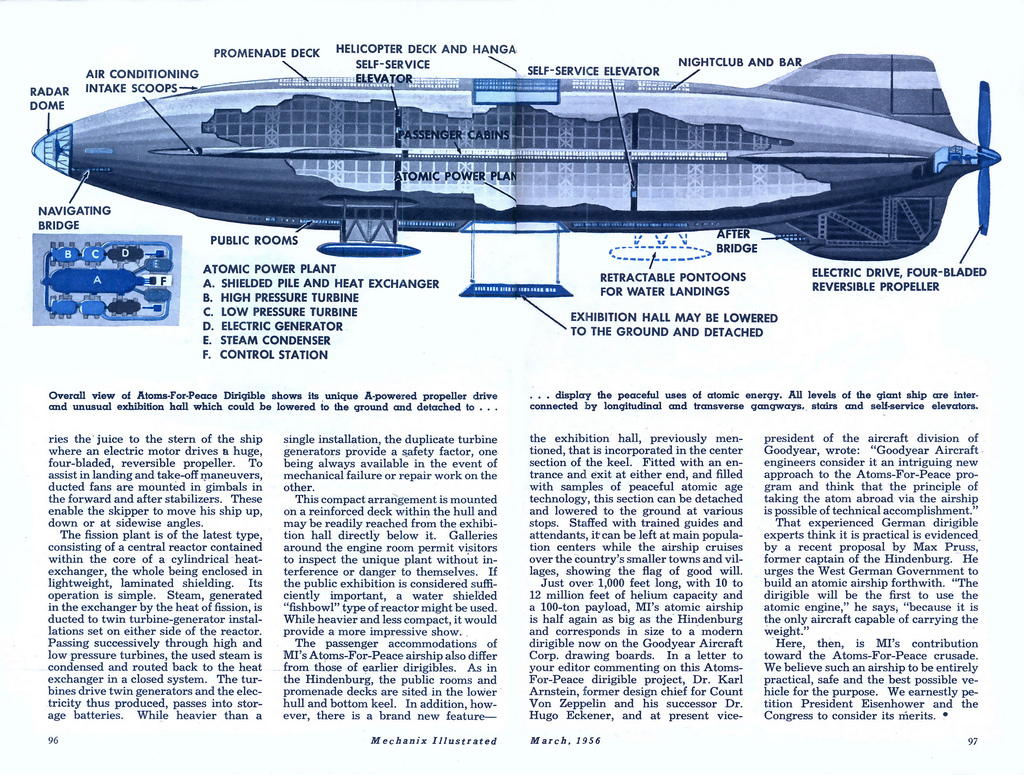
    First up is this mammoth flying advertisement to both peace and war, a nuke-powered dirigible proposed by Eisenhower in 1953 as part of the Atoms-for-Peace push, a move which by this point was already entirely too late.
    Atom everything zep for peace

    For some reason it was seen as a good idea to have a detachable convention hall built for the airship. \

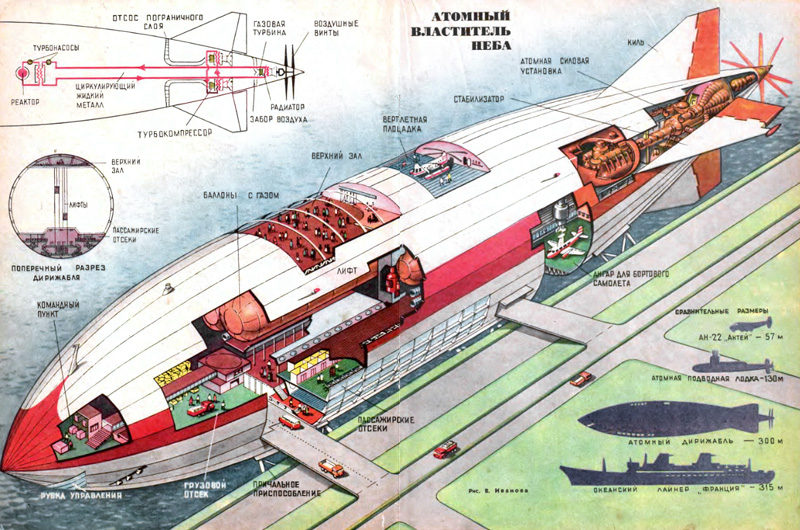
    And of course there is no greater element of a Something-for-Peace anything unless there was a competing idea, as seen in this mammoth Soviet atomic zeppelin, a ship completely absorbed in being bigger than the big thing that it already was:
    Atom everything zep

    At 300 metres this monster had room enough for virtually anything, though it didn’t have the retractable/detachable convention hall–it did however have a small airport. 

    Another dirigible approached the airport-on-board idea, but preferred solar power for its energy source.


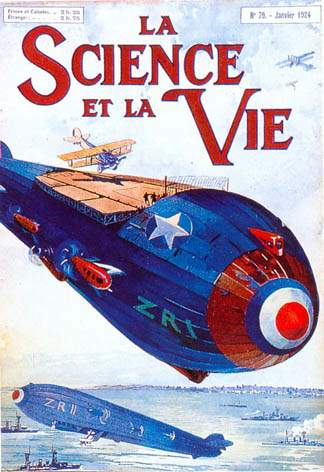
     The magnificent possible, 1924, saw another kind of airborn airport:
    https://historyofideasblog.com/a/6a00d83542d51e69e2012875ea3636970c-pi

    Guido Tallei’s 1932 Diri-Disk was a combination airplane/dirigible, and looked as though it could harbor an expansive airport on its NCC-1701-like wing, but didn’t, alas:

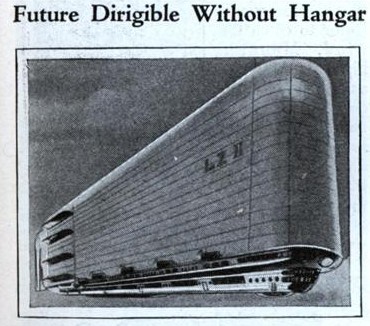
    Konstantin Eduardovich Tsiolkovsky (1857-1835), the Russian/Soviet space pioneer who was nearly without peer (and who somehow survived the bloodlust of Stalin which sucked up and murdered so many of his scientific colleagues),  stepped outside his spaceflight bubble to write about this monster with collapsing sheathing:
    https://historyofideasblog.com/a/6a00d83542d51e69e20128769ed30d970c-pi

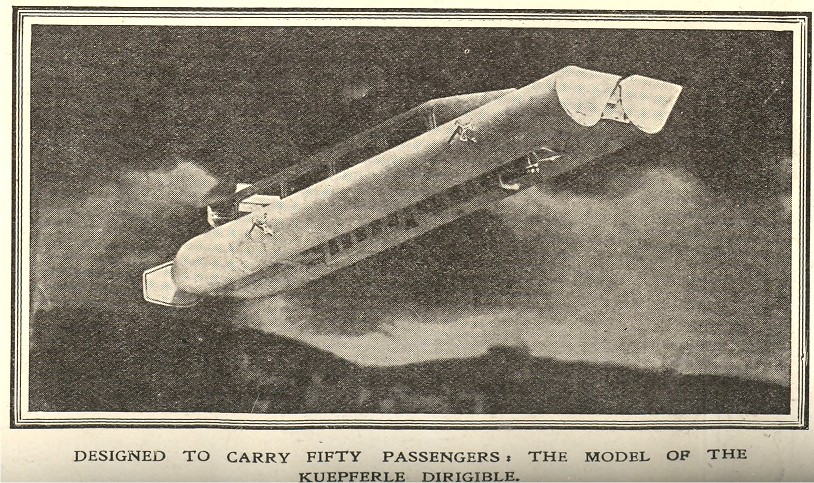
    The Kueperle dirigible, planned in 1909, was nothing if not pretty, and pretty is pretty much what the whole thing consisted of:
    https://historyofideasblog.com/a/6a00d83542d51e69e2012875ea2c87970c-pi

    And lastly, this example of the tracked airship–this must have been a popular notion because I’ve seen perhaps 15 different plans and I don’t spend much time at all reading in this area.  But harnessing the power of the balloon or dirigible or (kite!) whatever to a track system seemed to be a good idea, once upon a time:


  • Really, Really Big Plans: Filling in the East River and Parts of NYC Bay, 1911-1916

    JF Ptak Science Books   Post 1470

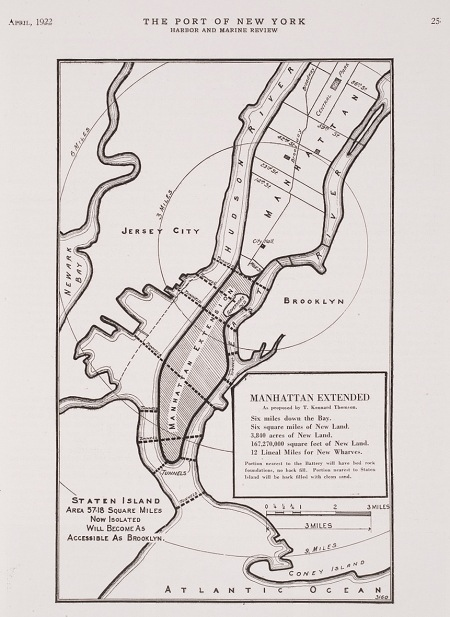
    Last week I wrote a post on  Herman Soergel’s  plan for extending the landmass of the countries around the Mediterranean Sea by damming the straits of Gibraltar, lowering the sea and irrigating the Sahara–an original, interesting but not very good idea, filled with briney cultivation and racial politics. In the past on this blog I’ve written about other city plans–and in particular, for New York City–that have involved floating Manhattan into the harbor, or filling up large chunks of the Narrows, or floating the city on an enormous anti-gravity platform, and so on. Some of those plans were real, some science fiction, and some were plainly beyond both.  The plan presented above is another monster, but at least this one could work, if not for the doing of it, and the expense. And the will.

    NYC Really Big
    But the bottom line, according to the engineer doing the thinking on this project, Kennard Thomson, would supposedly net the city a cool billion dollars after everything was said and done, and that would be 1916 dollars–that was equal to about 5% of the American GDP (!) in 1916, which would be about $400 billion in terms of 2010 GDP.  I’m not sure how Thomson came up with this very big/very round number, though it must have been done for effect–I can just imagine him standing before a smokey room filled with civil engineers talking about his massive plan for enlarging NYC and throwing out the billion-dollar figure, watching the cigars glow red in exhaled disbelief.

    Thomson did know what he was talking about–he was a busy (and “leading” according to the NYT) Manhattan civil engineer of stature, working on the Canal Barge and being the principal engineer for the Municipal and Singer buildings, for example–and his project seems to be well within the scope of possibility.  Their sensical aspects however are, well, questionable. 

    Here’s the story–around 1911, while examining proposals to repair and extend New York’s wharves, Thomson came upon the idea–a magnificent, fabulous idea–of adding new wharves by adding new lands to the city.  In short, the overall plan was to fill in the East River (!!) and reclaim the new land for city living,  dam Hell Gate,  construct a New East River (from Flushing to Jamaica Bay),  extend the tip of Manhattan Island from the Battery to within a quarter-mile of Staten Island (!), create a new 40-square-mile island between Sandy Hook and Staten Island, extend the Jersey shoreline, add two new Manhattan-sized appendages to the east shore of Staten Island, and more.  All of this would be connected by various new bridges and roads and tunnels, as well as a 6-track elevated railway that would circumnavigate the city.  The purpose of all of this would be to add 100 miles of new docks, an enormous amount (“50 square miles of reclaimed land”) of new land and the capacity for NYC to house 20+ million people, all of which would be worth a billion dollars. 

    Thomson really meant “really” in the title for the proposal. There have been reclamation projects undertaken in New York Bay since then of course, and I think that virtually all of what Thomson talked about could be done.  I think it would be a very interesting project for a class of some sort to undertake an estimation of what such a thing would cost today (and I would guess to duplicate the idea in real terms now would take up a sizable chunk of the GDP).  Maybe all of this will make sense at some more future point. 


  • The Triumph of the World as Rota Fortunae

    JF Ptak Science Books    Quick Post  //  Update

    Fortune, good night, smile once more; turn thy wheel!.  King Lear, Act II Scene I

    World german410

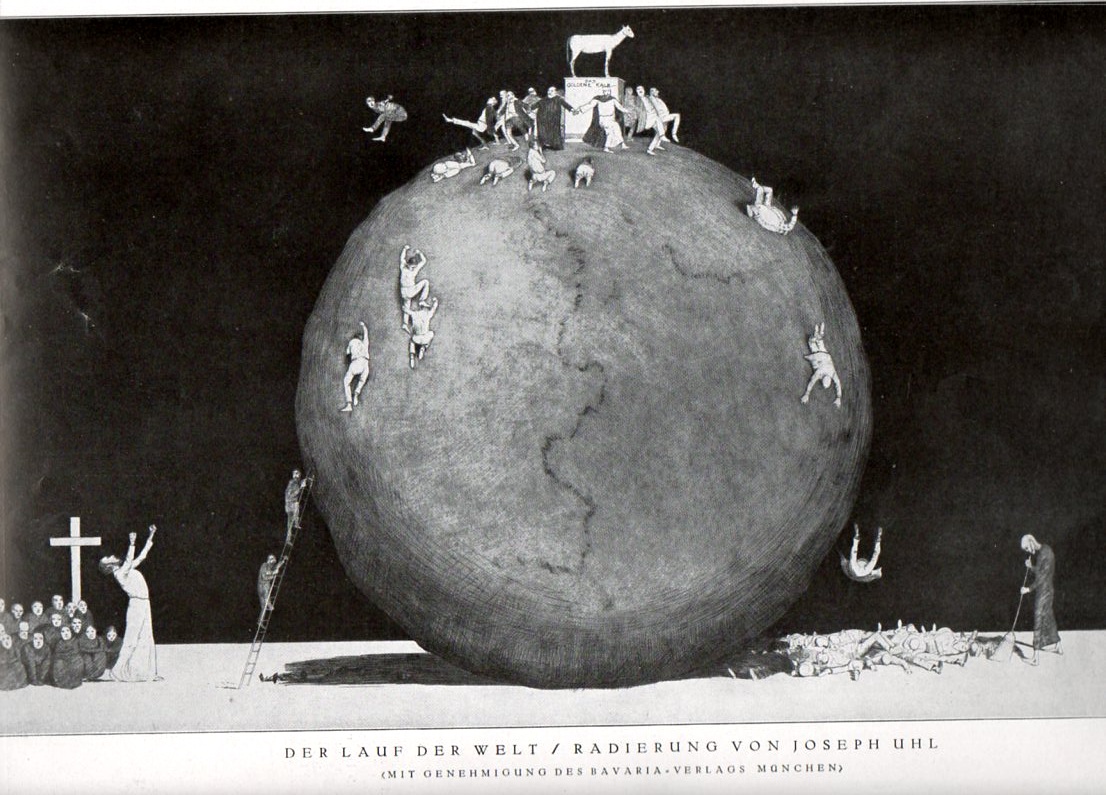
    Not to be confused with another, earlier, engraving by Abraham Bach (the Elder, “d.A”) of the same title (published in Nuremberg in the late 17th century), this work by Joseph Uhl (published in the Illustrirte Zeitung, Leipzig, 24 October 1926) seems far more pessimistic, a scene of symmetrical futility.  The title translates roughly into the Triumph of the World, or the World Conquers All, or something along those lines, I think, and we definitely see the old orb impassively withstanding whatever it was that was happening on it–and whatever it was, it didn’t matter. 

    World german410
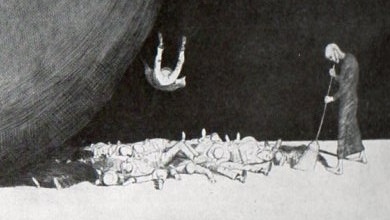
    The cleric at bottom left seems to be extolling the heavens in support of those who ascend the world to his favor (?), and as they reach the apex they either protect or try to repeal those who are supporting the golden calf.  At bottom right we see the ultimate disposition of the players, swept into a pile by an unconcerned sweeper. 

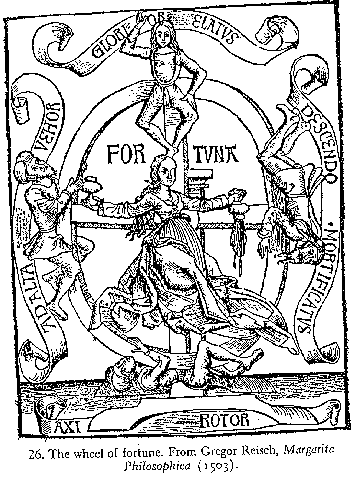
     My thanks to the commenter Redtarts for communicating “rota fortuna”–wheel of fortune–which I hadn’t connected to this image but which does of course make sense.  It does bear some striking similarity to the more classical wheels, which generally depict four (or more) figures of people in various stages of rising or declining in the course of life, the person on the top of course reigning supreme.  The allusion may have begun in early Roman times with the goddess Fortuna, famously depicted here in 1502 by Albrecht Durer:

    Durer, Fortune 1502

    The image of the wheel though is much earlier,, most people recognizing it so:

    Wheel of fortune

    This is the basic desin that is seen so often through the Medieval and Renaissance periods. 

    Carmina Burana:

    Fate – monstrous
    and empty,
    you whirling wheel,
    status is bad,
    well-being is vain
    always may melt away,
    shadowy
    and veiled
    you plague me too;
    now through the game
    bare backed
    I bear your villainy.
    . . . . . . . . .
    The wheel is turned by Fortuna;
    I go down, demeaned;
    another is carried to the height;
    far too high up
    sits the king at the summit –
    let him beware ruin!
    for under the axis is

    Dante’s Divine Comedy/the Inferno:

    No mortal power may stay her spinning wheel.
    The nations rise and fall by her decree.
    None may foresee where she will set her heel:
    She passes, and things pass.
    Man’s mortal reason cannot encompass her
    She rules her sphere as the other gods rule theirs.
    Season by season her changes change her changes endlessly,
    and those whose turn has come press on her so,
    she must be swift by hard necessity.

    Dante, Inferno VII 82-90


  • A Vision of the Future: Filling Up Manhattan, 1887

    JF Ptak Science Books   Quick Post

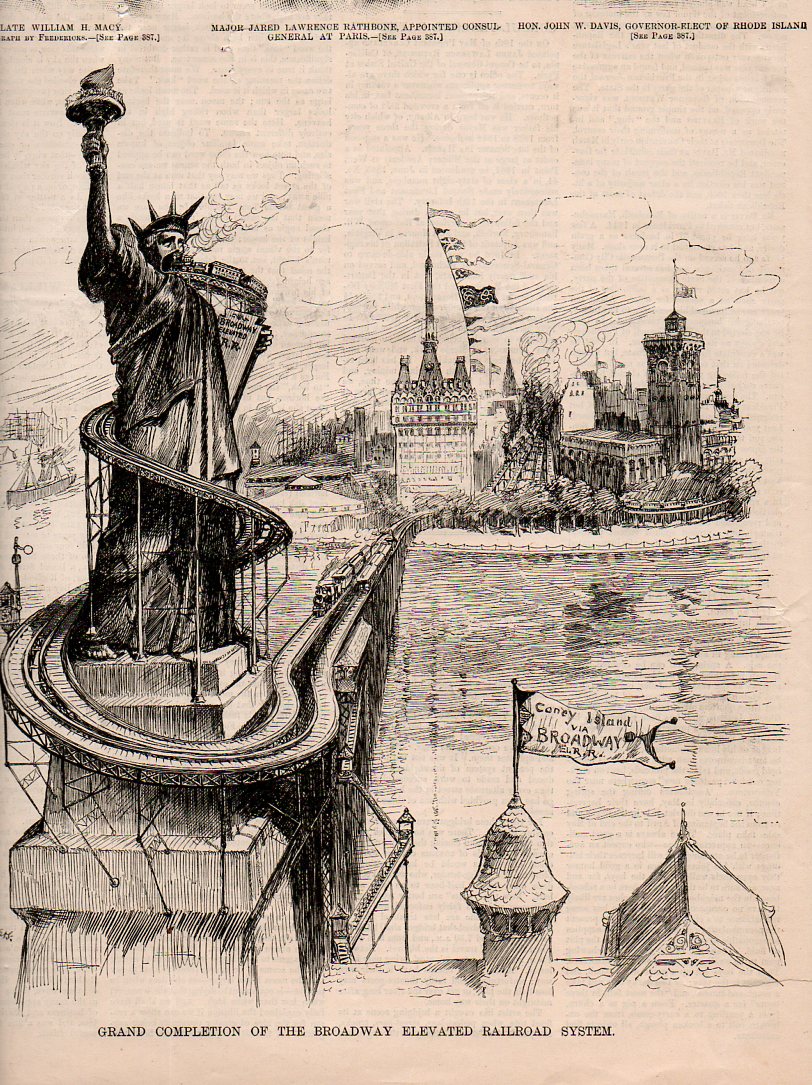
    This peep into a possible future appeared in Harper’s Weekly on 18 May 1887.  It is the work of artist W.A. Rogers and depicts a filling-up lower Manhattan, complete with broad avenues lined by elevated trains whose reach evidently knows no bounds. The new elevated subway winds its way across the harbor to Liberty Island, where it wraps itself around the feet and up the body of the newly-dedicated Statue of Liberty (opened in October of the previous year).  In the foreground is the cupola of a transit station with a fluttering flag advertising “Coney Island via Broadway”–I’m not sure what this is all about, as the placement of the island has nothing to do with anything except making a point in the cartoon. 


    Statue liberty407


  • Seeing into the Vast Future, 21 Years Hence: Futurama, 1939

    JF Ptak Science Books  Post 1461

    Futurama 9
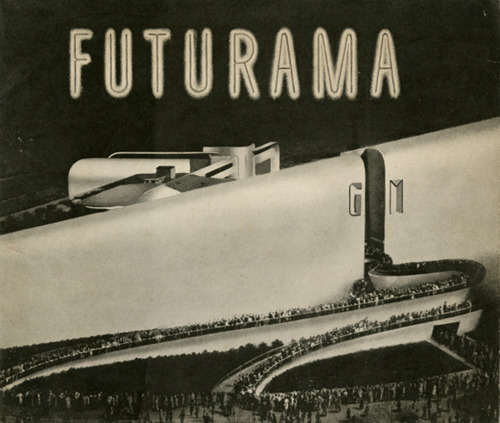
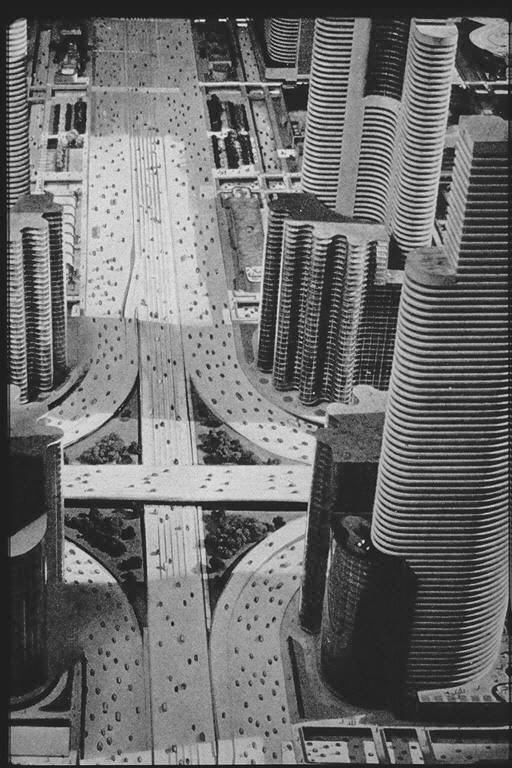
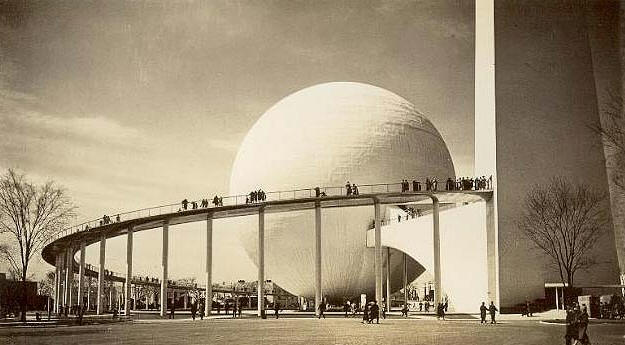
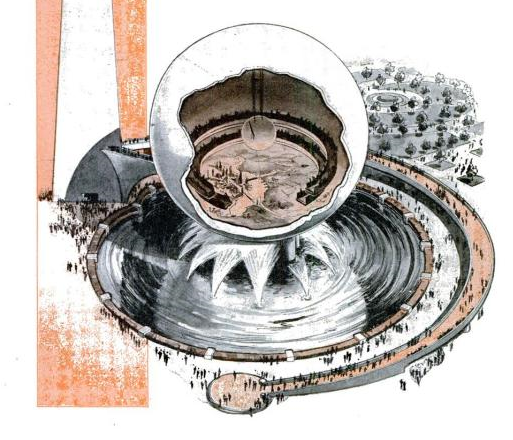
    The 1939 World’s Fair in NYC famously exhibited a spherical attraction that exhibited a semi-robotic display of what the future would be like–a future that was only 21 years away, in 1960.  There would be an enormous amount of weight on the shoulders of 1960, given what the World’s Fair had to say about it in 1939.  Few things were very right, and many of course were necessarily wrong–but that must be the case when looking into the short-ended future with a monstrous amount of anticipation.  That–and since this was a feel-good celebration–nobody was talking about the world war that had already started. 

    Futurama 07

    Futurama 06
    One thing is for sure–the pavilion’s creator, General Motors, did foresee that highways and automobiles will be in high demand up there in the tomorrowland of 1960.  The display was designed by the fantastic Norman bel Geddes, who actually expanded on his superhighway theme in the next year with his book Magic Motorways (which can be read here).  Anyway people were very excited by the whole affair–waiting in line for a few hours, winding their way through the pavilion to take their seats in a circular gallery overlooking a vast and complex assemblage of miniature societal models, the seating arena rotated to give the viewers views of the entire display.  More than 26 million people saw the display over a six month period.

    Perisphere04
    Perisphere_cutaway
    26 million is a big number.  Futurama drew as many people in six months as the three New York City baseball teams (the Yankees, Giants and Dodgers) brought in for almost the entire decade.  It is also equal to all of the deaths suffered by the Soviet Union during WWII. 

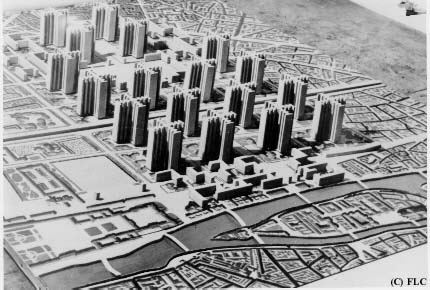
    I guess this was as good a vision as any–or at least it didn’t seem to involve very much planning outside the new automatic automobile nervous system that would leech into the life-blood of the country.  Other planned visions of the future do not look quite so good.  For example, Le Corbuser’s demolition of central Paris to make way for his Soviet apartment block reconstruction in his Voisin Plan (1925):

    Plan Voisin - Paris
    Again, this is not a wholesale look into the future, just the resurfacing of one of the world’s greatest cities.

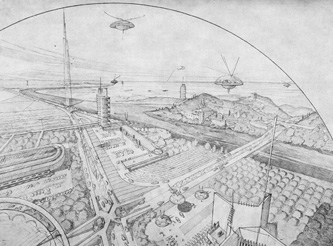
    A man with a little bigger vision, Frank Lloyd Wright, saw a heavier future in his Broadacre CIty:

    Broadacre City 2 I’m not sure how these domed cities worked.  B. Fuller had an idea like this for central Manhattan that I wrote about earlier in this blog, but his idea escaped me too. 


  • Monumentally Large (1400′) Wind Turbine, 1932

    JF Ptak Science Books   Quick Post

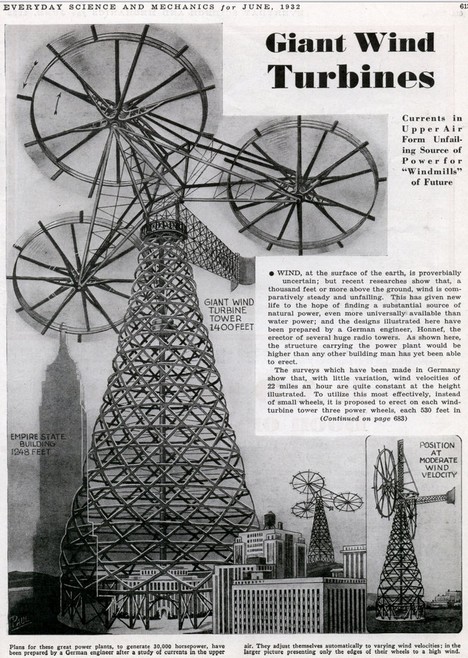
    Here’s a big idea:  a fantastically oversized, super-heavyweight wind turbine from 1932.  This monster was 1400 feet tall, fully 700 feet taller than the tallest modern wind turbine.  Actually, by conjecture, it looks as though the wind collecting units (or blades, or whatever these things are) might be 250′ long just by themselves, forming collecting space over 500 feet wide.  So that’s six blades at 250′ each per collecting unit, times three.  18 250′-foot long blades per structure.  It feels as though you could ride this thing to the Moon.  I have no idea how much the structure weighed.

    Giant-turbines
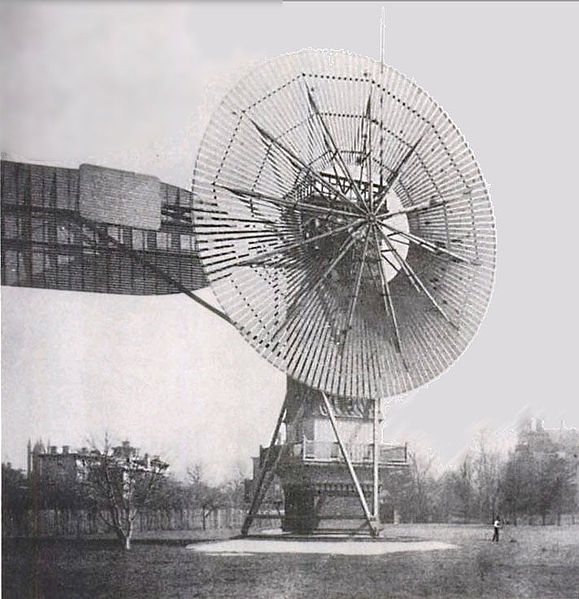
    For comparison’s sake, here’s a photo of the first successful wind turbine:

    579px-Wind_turbine_1888_Charles_Brush

     Charles F. Brush’s 1887 accomplishment, built in Cleveland (Ohio) was 60 feet tall and weighed 4 tons.  The beast above would have single blades that were four times the size of this entire structure. (Or thereabouts–the 60′ tall thing doesn’t look quite right in this photo, seems to be somewhat taller.)


  • The Future of Hope and Fear: Fortune-Telling Questions for Men and Women, 1540

    JF Ptak Science Books  Post 1456

    In 1540 Francesco Marcolini (or Marcolino), a typographer born in Forlì, published in Venice Le sorti intitolate giardino d’i pensieri (“The oracle called garden of thoughts”). This book is among the earliest known documents of cartomancy (divination with cards), a card-playing fortune-telling and future-telling game and belief system. (I’ve written about other beautiful if not proud accomplishments in this area, other products of the 16th century, here.)  I find the illustrations of the combinations of cards to be rather beautiful, a suggestion of an unknown alphabet or hieroglyphic for a civilization of hope or distress or both that hangs somewhere out there in the gauzy future, the characters capable of change and interpretation depending on the needs of the viewer.  Therefore the story that is told can easily become the story that could be told, the characters permeable to whimsy and insight.  It seems unlikely that there is a numeral system associated with this quicksand.

    Image:Marcolini fraude.jpgThe tarot encyclopedia website provides an interesting insight to the times if not so much to the gearing of this wonder machine–this mainly in the form of the fifty questions to be asked of the players of this game/amusement/hopenet, including thirteen each to be answered solely by men and women. 

    Questions Asked of Men

    It turns out that for the men, 8 of the 13 questions deal with his wife or mistress–4 about wives, 3 about mistresses, and 1 that can go either way.  The remaining few questions then are left to cover the range of All Other Things

    1.Will the destiny of the man will be good or bad? [Fato - Fate]
    2.Is the lover loved by his mistress? [Fama / Fame]
    3.Is it better to marry a beautiful woman or an ugly one? [Beneficio - Gain]
    4.Will the desire of the man be fulfilled? [Tempo - Time]
    5.In which will the man be more lucky? [Fortuna - Fortune]
    6.Will the man have to suffer for his beloved? [Dolore - Pain]
    7.Is the man appreciated by the other people? [Virtu' - Virtue]
    8.How many wives will the man have? [Punizione - Punishment]
    9.Will he that goes to war gain victory? [Vittoria - Victory]
    10.Will a strange wife become humble? [Pertinacia - Obstinacy]
    11.Is it good to change mistress? [Peccato - Sin]
    12.Is it good to take a wife? [Matrimonio - Marriage]
    13.Which is the best mistress: the widow, the married woman or the unmarried woman? [Timore - Fear]
    

    Questions to be asked by women

    The questions for the women actually seem a little more balanced, or at least don't 
    deal with the blossoming aspects of additional/multiple lovers, though the question of

    whether her husband will be faithful does come up, as does the issue of whether it
    is good or not to change lovers. And the issue of how often she will be married.
    And whether or not she will suffer for her lover--I'm not sure what this one means
    in the antiquarian sense, but there seems to be a follow-up
    on whether the bad
    husband will become good. But overall these seem not so extra
    ordinarily self-indulgent
    as do the questions for the men.
    14.Is the woman appreciated by the man she adores? [Vanita' - Vanity]
    15.Will the destiny of the woman will be good or bad? [Destino - Destiny]
    16.Will the woman will give birth to a boy or a girl? [Natura - Nature]
    17.In which will the woman be more lucky? [Honore - Honour]
    18.How many husbands will the woman have? [Penitenza - Penitence]
    19.Will the woman have children? [Sterilita' - Sterility]
    20.Will the woman suffer for her lover? [Dipserazione - Desperation]
    21.Will the desire of the woman be fulfilled? [Insidia - Danger]
    22.Will the bad husband become good? [Sorte - Chance]
    23.Is the woman loved by everyone? [Disgrazia - Disgrace]
    24.Is it good for the woman to change lover? [Odio - Hate]
    25.Is it good to get married? [Servitu' - Slavery]
    26.Will the husband be faithful? [Occasione - Occasion]

    Questions that can be asked both by men and women

    Certainly the non-gender-specific questions are most interesting, some even poetically
    captivating ("will two lovers make peace?")
    , most of which could be asked today, and
    some still demanding long thought. In general though they do mostly have an
    adult-version of a Ouija experience, with a few golden nuggets tossed in for higher
    cortical seasoning.
    27.Is a certain courtesan infected with the French disease? [Difetto - Defect]
    28.Is it good to take vengeance of an offense? [Virilita' - Virility]
    29.Will the world find peace? [Parche - Moirae]
    30.Will art or trade produce gain? [Industria - Industry]
    31.Will some trouble bring happiness in the end? [Ricchezza - Richness]
    32.Is the rule of a Lord appreciated by the people? [Verita' - Truth]
    33.Is it good to serve Lords and priests? [Infingardo - Idler]
    34.Will a promise be kept? [Fraude - Fraud]
    35.Is the person that traveled far alive or dead? [Sapere - Knowledge]
    36.Will the exile return? [Esilio - Exile]
    37.Is it better the wife or the husband? [Poverta' - Poverty]
    38.Who loves with more passion, the man or the woman? [Nobilta' - Nobility]
    39.Will a dream come true? [Ignorantia - Ignorance]
    40.Is it good to start a certain enterprise? [Otio - Idelness]
    41.Will the person that went away be back soon? [Desiderio - Desire]
    42.Will the awaited new be good or bad? [Malinconia - Melancholy]
    43.Does the appearance of the person give a good impression? [Menzogna - Lie] 
    44.Must one trust what people say? [Discordia - Conflict]
    45.Will two lovers make peace? [Pace - Peace]
    46.Which will be the end of a very deep love? [Caso - Chance]
    47.Will changing place bring better luck? [Consiglio - Counsel]
    48.Will the person be the winner of a dispute? [Corruttella - Corruption]
    49.Will someone get free of a certain vice? [Furto - Theft]
    50.What will be the reward for faithfulness in serving? [Calamita' - Calamity]

    In short, much of this seems modern to me, at least with a little editorial clean-up.
    The big difference seems to be that people in 1540 actually interacted and answered
    these questions, while in 2011 most folks would be watching other folks talk about
    answering these questions on a reality t.v. show.

  • An Antiquarian Print Rarity: Depicting the Destruction of the Earth

    JF Ptak Science Books  Post 1439

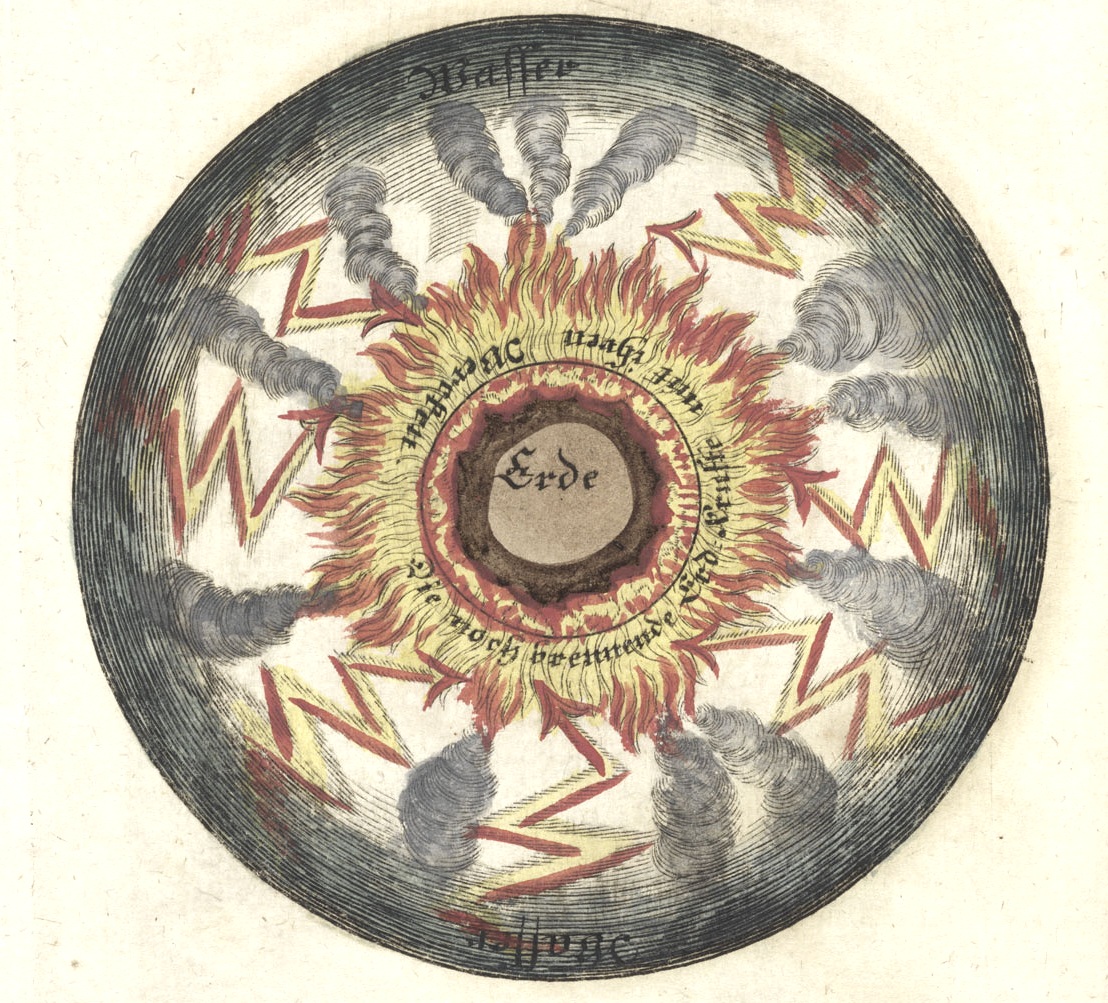
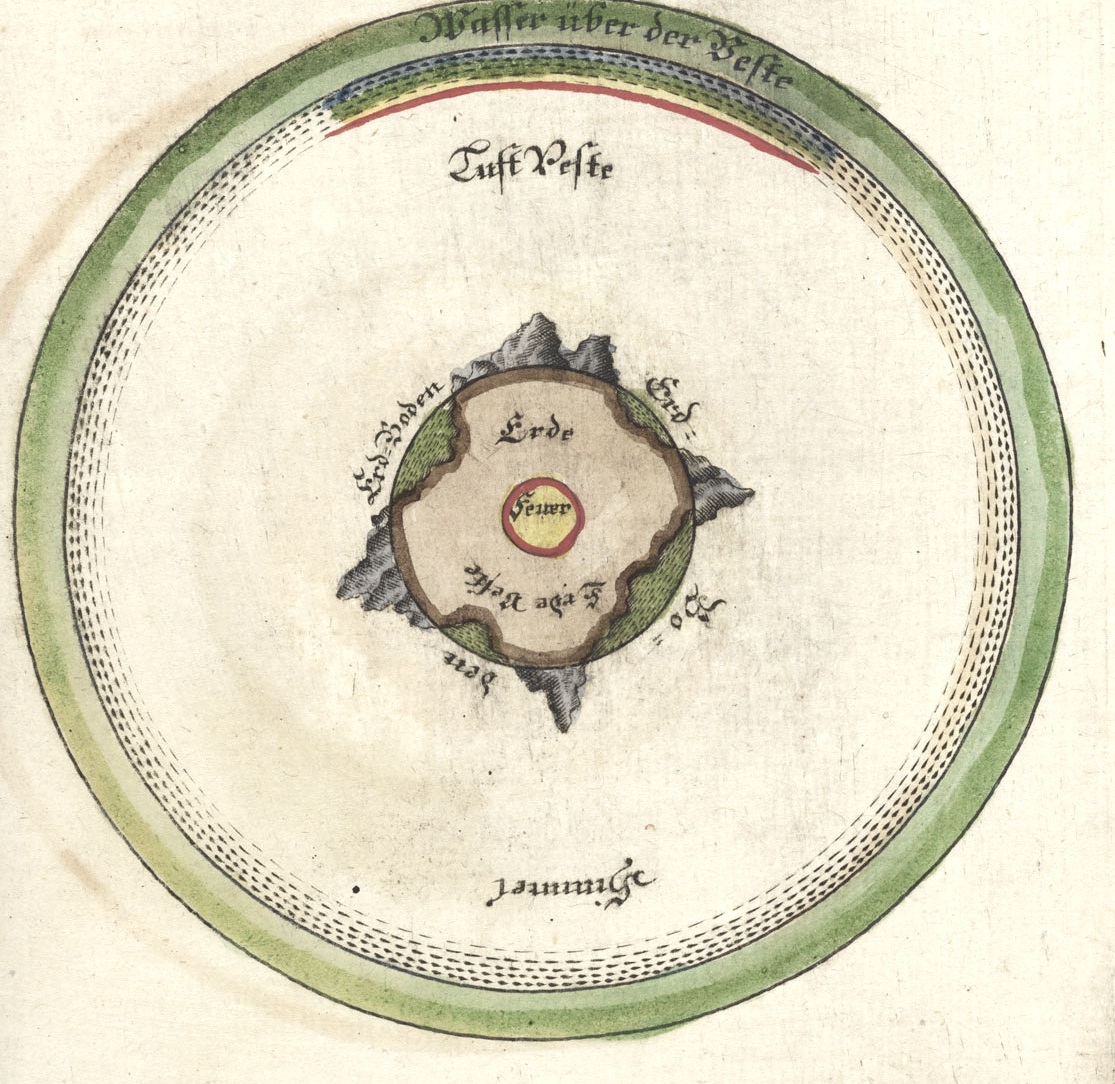
    There appeared earlier in this blog a bit on an engraving depicting an exploding Earth, one of a series of twelve images, eleven of which were unavailable at that time–not so anymore.  So an update to this post is happily made, starting with the exploding part (below), a nasty millennial vision steeped in a volcanological/geological/meteorological 18th-century primordial stew, the Earth in a sea of fire and blasted volcanoes, lightning striking from above:

      Frisch 5
    [All image sources:    Herzogin Anna Amalia Bibliothek, Weimar.]

    Hades, Heaven, Meru, Valhalla, Elysium, Olympus–the places at the end of the terrestrial road, the great emancipation. In some theological doctrines these places are reached collectively after the great conflict at the end of time; the end of days in the Old Testament, when the earth is devoured by holy vengeful wrath and reconstituted for godly comings –and-goings.

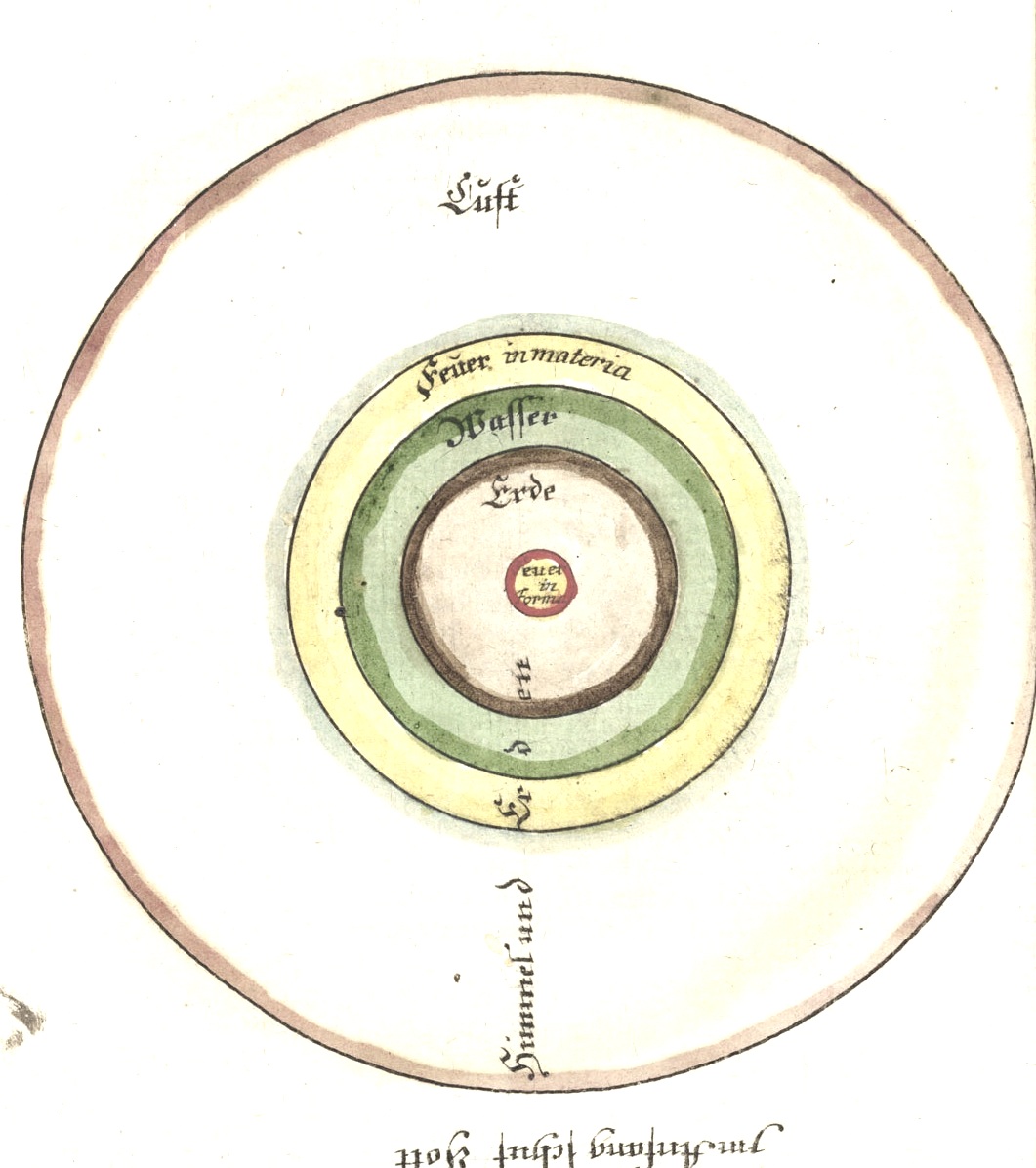
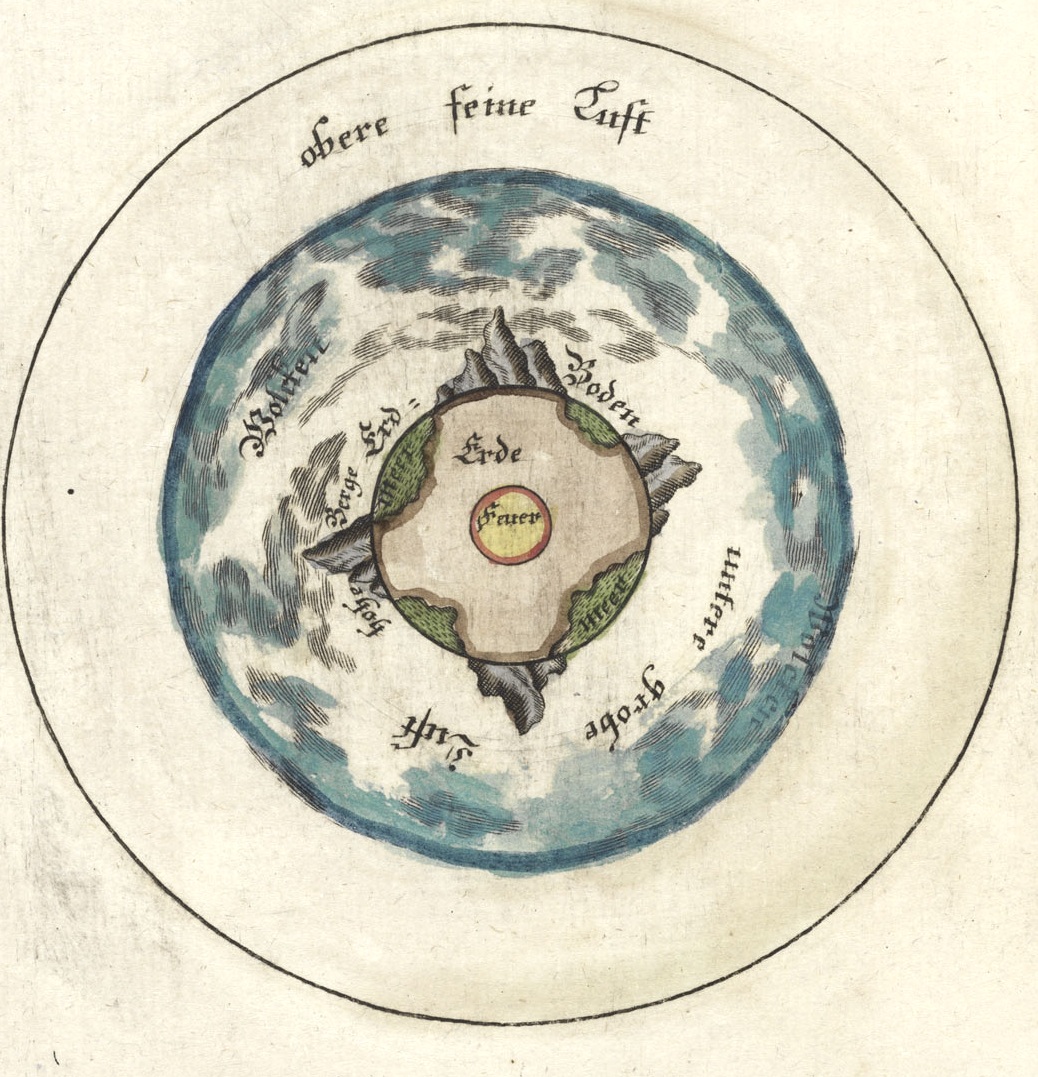
    This engraving is one of twelve found in a fine little book, the brainchild of clergyman/semi-scientist Jodocus Frisch (1714-1787), who delivered to the (un-) waiting world his vision of how the earth and heaven will come to an end, there at the end of days.   Die Welt im Feuer, Oder das Wahre Vergehen und Ende der Welt, Durch den letzten Sünd-Brand  (printed in Sorau by Gottlob Heboldm in 1746) is one of very few works that depict (in  illustration) the destruction of the Earth, and even though Frisch illuminates biblically-based theory, the idea of the earth exploding into bits in primordial fire and so on was extraordinary.  The images were done in four colors representing the four elements:  yellow, brown, green and white represented (respectively) fire, earth, water and air. In this image, we see the fire-centric earth encircled by a sphere of water, which is surrounded by a sphere of fire, which in turn is surrounded by a sphere of air,  with much bad stuff happening. 

    Not having the book in hand I’m relying on the  description of the Dutch bookseller Asher & Company, an old-line bookseller of very fine antiquarian works, which wrote the following descriptions of the other images in the book (and which appears for sale right now at their site):

    “The second and third engravings show how the sphere of water disappeared after the torrential rains of the deluge, leaving the earth directly exposed to the sun. In the fourth and fifth engravings the earth is consumed by fire from within and without, demonstrating in what way the biblical prophecies about the destruction of heaven and earth may come to pass. Plates 6 and 7 depict the new heaven and earth that look entirely similar to plates 1 and 2, the first heaven and earth. Plates 8 and 9 show heaven and earth in their present state with precise specifications of what the biblical vocabulary names “heaven.” Plate 10 shows how the sphere of water breaks the rays of the sun in such a way that they shine on all parts of our planet in equal manner, wherefore all regions have a temperate climate. However without the tempering function of the sphere of water, the air focuses the rays of the sun in the equatorial zone.”

      Frisch 1 page 26

    The water of the great deluge now gone, revealing the land masses, plate 2:

    Frisch 2
     And so again, in plate 3:

    Frisch 3


  • Remaking Chicago, 1945–a Map of the Future

    JF Ptak Science Books   Post 1435

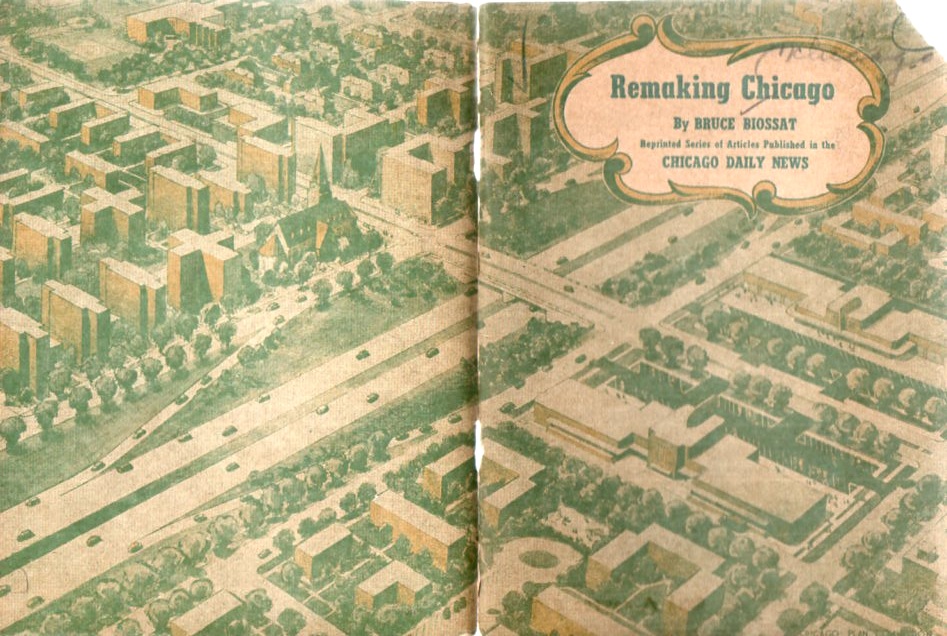
    Earlier today a post appeared here on re-envisioning the “one city” megalopolis of San Diego–Los Angeles–San Francisco by hoisting 2-acre neighborhoods into the sky to support some 5 million people or so.  Bruce Biossat, a writer for the Chicago Daily News, also had an ambitious plan for the city of Chicago, though in the face of putting thousands of acres of neighborhoods (with years) into massive highrises, Mr. Boissat’s plan–while massive–is not nearly so as the L.A. scheme.

    Chicago devel367

    For reasons I cannot determine, this small pamphlet1 (available at our blog bookstore) seems to be nowhere–no mention on the web, nothing in city planning databases, nothing in WorldCat (an actually nothing at all in this massive database about Mr. Biossat).  It was a massive undertaking, part of a project of the Chicago Plan Commission, and sought to relieve “blighted” areas from the city by replacing them with new housing and neighborhood design. This was part of a larger construction scheme nationwide:

        “The goal most mentioned as the desired postwar level of home construction is 1,000,000 units a year.  Both major labor organizations call for higher objectives, with the A.F.L. demanding 1,500,000 and the C.I.O urging 1,750,000 annually.”

    That is a lot of building, and I have no doubt that the ALF/CIO would’ve been behind a spending/earning opportunity like this 100%.  I’m not sure where all of this money was coming from, though I guess there would’ve been enough workers to handle the job.

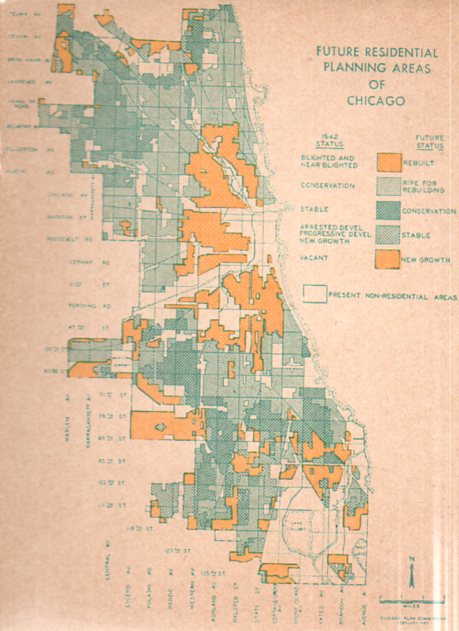
    Chicago devel366

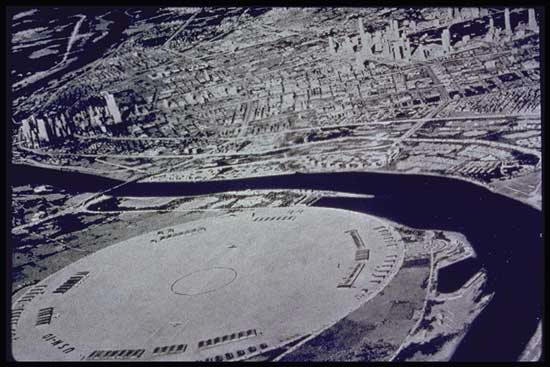
    In any event, the plan was massive, as we can see in the map above–perhaps the designers/developers felt the end of the war coming, the return of millions of soldiers, and an opportunity to make some major changes in the development of the future of Chicago. 


  • The Almost-Tomorrow Department: Radio-Vision, 1928.

    JF Ptak Science Books  Post 1415

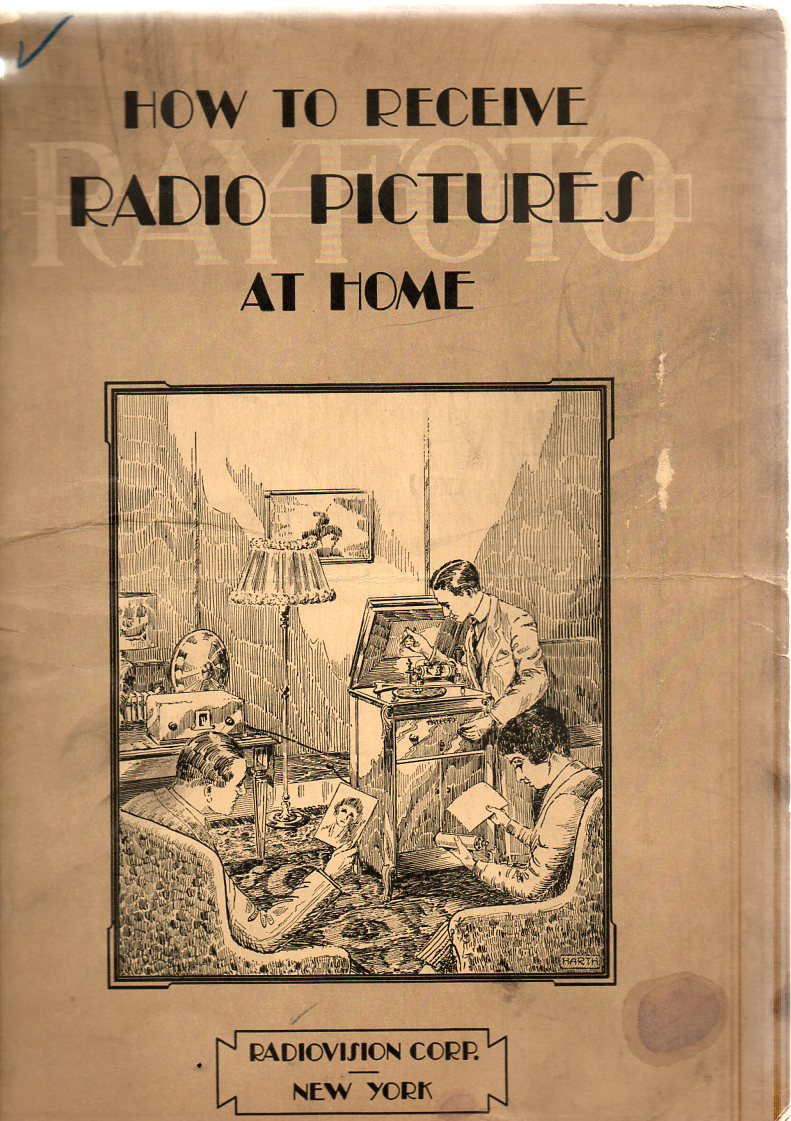
    Radio vision258 Tomorrow seemed to be almost there to readers of this pamphlet, what with the idea of looking at pictures relating to the radio broadcast you were listening to looming before a slightly disbelieving mind.  The fact of the matter though is that this breakthrough by Mr. Austin G. Cooley1–basically attaching what we would know today as a fax machine to a radio cabinet which would receive and print images relating to the show being heard–was rubbing up mightily against the real wave of the future, the television. (The original is available here at our blog bookstore.)

    Mr. Cooley’s invention of the Rayfoto just didn’t quite fit the demands that would soon be established and met by television.  The idea of practical television goes back a fair way2, at least to Arthur Korn in the late 1890’s, which much work being done on both broadcast television and facsimile transmissions.  But tv was definitely a high scent in the air when Cooley published his Rayfoto pamphlet in 1928–as a matter of fact, this was the same year in which the first television license was granted (to Charles Jenkins, W3XK).  And just two years later the BBC would begin regular television broadcasts, while also in 1930 Mr. Jenkins initiated another television-first, the t.v.commercial. 

    Radio vision259

    “No greater thrill awaits the radio experimenter than receiving his first picture through the ether…Not many months will pass before picture broadcasts will be a part of every radio broadcast”–A. Cooley, 1928

    So the time was definitely note ripe for Cooley’s idea as an image supplement to radio, though it did have other possible applications–like the “fax” delivering newspapers to your home–though they are not listed in the pamphlet. 

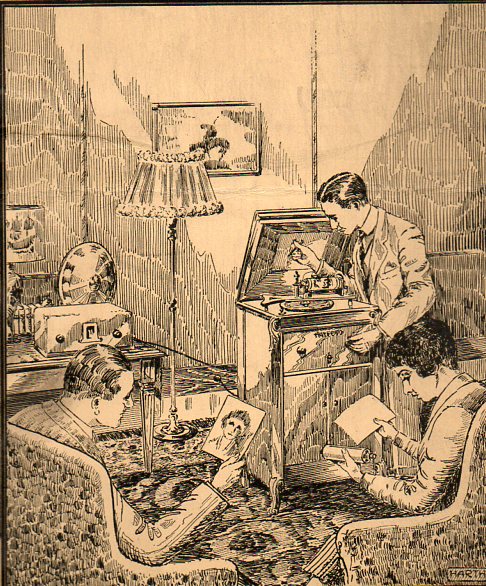
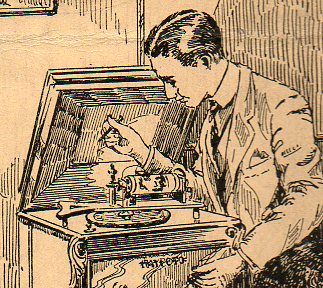
    What we see here the drum of the apparatus (we don’t see the three-tray developer/fixer wet set-up inside the apparatus), one of the listeners retrieving an  incoming vision-image, something that evidently took quite some time, depending on the image and the ways in which the developing trays have been set.  Dark images might’ve taken the entire length of a 15-minute broadcast to transmit and print; other, simpler efforts took less time.

    Radio vision260
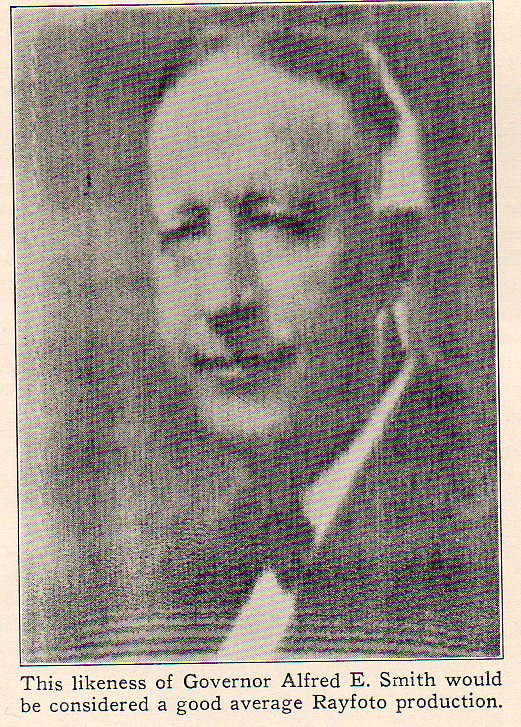
    Here’s an example of a successful, medium-quality image that one could expect using Cooley’s Rayfoto system:

    Radio vision261
    It doesn’t look like much now, and maybe it wouldn’t’ve looked like much to people familiar with the new television.  But even a grainy, static image accompanying a voice performance is a fabulous thing when compared with never having seen anything like it before, never having had such an experience, if even only as a novelty.

    _______

    Notes:

    1. Cooley,  Austin G.  How to Receive Radio Pictures at Home.  New York:  Radiovision Corp,  1928.  1st edition.  26pp, 2 folding blueprints  4to.   This unusual publication describes the construction and use of an apparatus which would receive broadcast (facsimile) images that would be used to illustrate radio transmissions/shows.  The idea (in this form of illustrating radio shows) at this date would be reduced to almost-nothingness once television entered the picture in the next year or so.  Still, it was an elegant idea to illustrate the spoken word.

    This system was offered by Austin G. Cooley (1900-1993), inventor of the Rayfoto system, “the first authentic radio picture apparatus”. This was a very early attempt at mass entertainment via a mechanical medium that proved ineffective by 1929/1931 against the advances of television. (The radiovision method was something like a facsimile device, offering a static image every now and again, and was completely outclassed by the moving image).

    2. Followed by Paul Nipkow’s rotating discs in the earliest part of the 20th c, then by Vladimir Zworkin’s iconoscope (1923), Charles Jenkins and John Baird’s television of 1924, and then of course by Philo Farnsworth’s 1928 image dissector.