A Daily History of Holes, Dots, Lines, Science, History, Math, Physics, Art, the Unintentional Absurd, Architecture, Maps, Data Visualization, Blank and Missing Things, and so on. |1.6 million words, 7500 images, 4.9 million hits| Press & appearances in The Times, Le Figaro, Mensa, The Economist, The Guardian, Discovery News, Slate, Le Monde, Sci American Blogs, Le Pont, and many other places… 5000+ total posts since 2008.

Category: Daily Dose from Dr. Odd

  • Daily Dose of Dr. Odd: a Portrait of the Good Doctor

    JF Ptak Science Books   Quick Post      Part of the Daily Dose from Dr. Odd series


    Follow Me on Pinterest


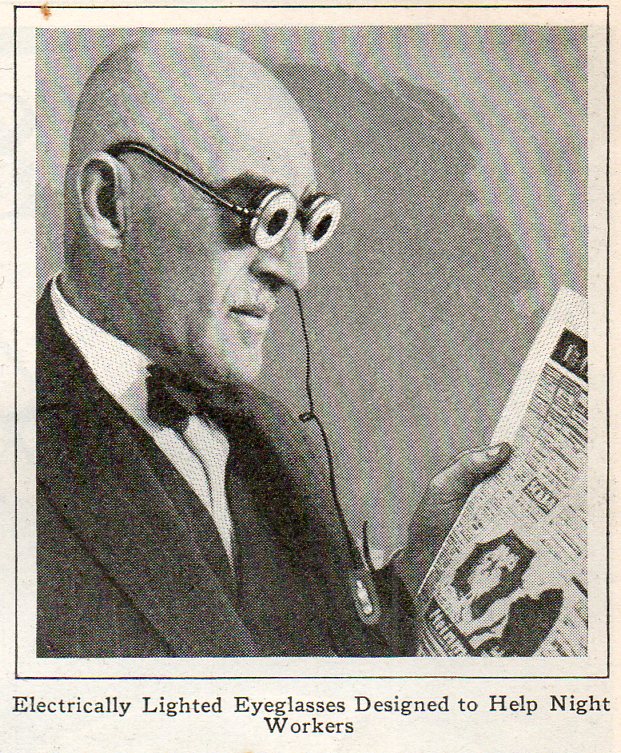
    Dr odd013
    Lurking in the pages of the Spetmeber 1930 issue of Popular Mechanics is this little-known portrait of Dr. Odd, who was simply displaying his latest gizmo: a battery-powered set of specs with lightbulbs on the rims to be used for reading in dim light. 


  • Prison Labor and the Price of Kegs of Lard, 1875-1885

    JF Ptak Science Books Quick Post
    Follow Me on Pinterest


    Fat and prison
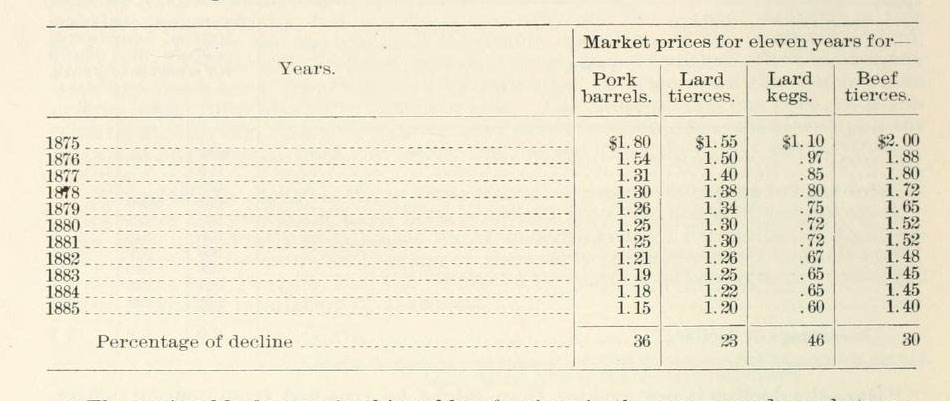
    The title of this quick post seems both irresistibly attractive and horribly repelling in an oh-g_d-is-this-what-we’re-down-to dissertation for a moderately-good university.  But really all this post is is a title–I stumbled upon this table looking for emigration figures to illustrate a dot-matrix map from the United States Industrial Commission (printed in 1900), volume 3, which concentrated on the statics and sociology of prison labor.  So what this table shows is the effect of prisoners’ labor on the price of pork and pork fat in the Chicago market for a ten year period at the end of the 19th century, and what we see is that the “free” labor in prison in this area produced cheaper prices in the fat market.  There you have it. [Source: Internet Archive, here.]


  • Movable Maginot: a Feast of Morbidly Techno-Gigantism

    JF Ptak Science Books LLC   Post 959, extended.     Daily Dose from Dr. Odd
    Follow Me on Pinterest


    Nothing
    quite exceeds like excess said Mr. Wilde (and others) , and he/they could be no
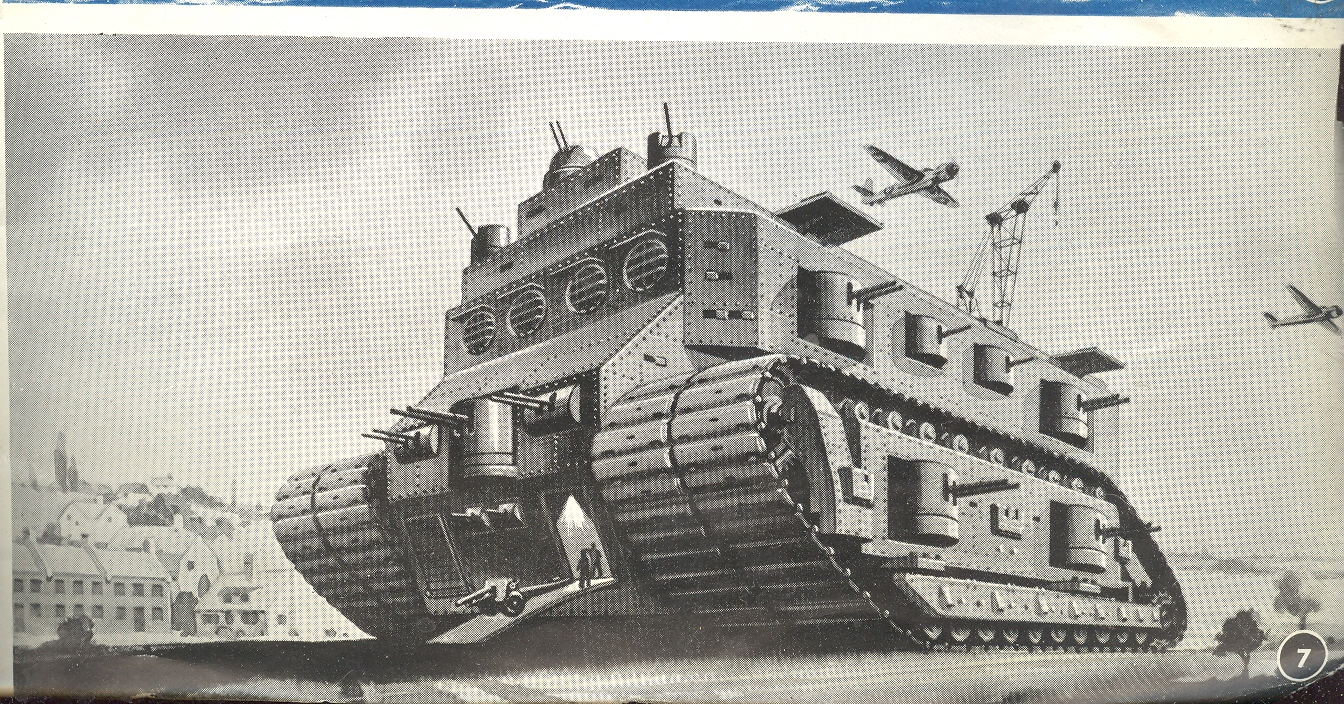
    more correct when looking at this picture of a Movable Maginot Line—it is a
    mobile fort, complete with plane launching capacity, two dozen long canons, a
    crane, and a host of other stuff.  
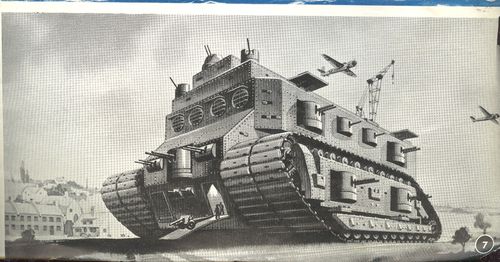
     

    000--win--land tank


    It
    looks as though it has ample room for all sorts of materiel though leaving
    little room for, perhaps, an engine.  I
    just can’t see where it might be…perhaps it is near the
    not-room-enough-for-it-either ammunition compartment.  Maybe they were in a smaller armed cart being
    pulled by the mothership?  I reckon that
    this beast was 66 feet high, 100 feet long and 60 feet wide, which is a very
    big, heavy near-cube. Good luck with driving the thing in anything that was
    less than perfect conditions.  A big
    profile like this, filled with guns and canons or not, also makes for a big
    target profile—a tall, broad target with flat/non-inclined sides. ( I should
    also point out that there are two 10’ loudspeakers mounted on the front of the
    fort to instill fear in the people that the thing was approaching with loud
    noise.  The author points out that the
    Nazis used noise against the French with their “screaming dive bombers”, and so
    the fort would use the same tactics against the Nazis in the moveable fort—not
    that the sound of the engines and the attendant noise wouldn’t’ve been enough
    of a fear factor in themselves…)000--win--tubular ship
    But
    the image of such a monster, sensical or not, was enough for the purposes of
    the pamphlet in which it appeared.  The Brains to Win was a piece of British
    spirit/hope propaganda issued at about the time of the Battle of Britain in
    1940, and it listed the sorts of technological breakthroughs that were going to
    push the nation over the top to victory. 
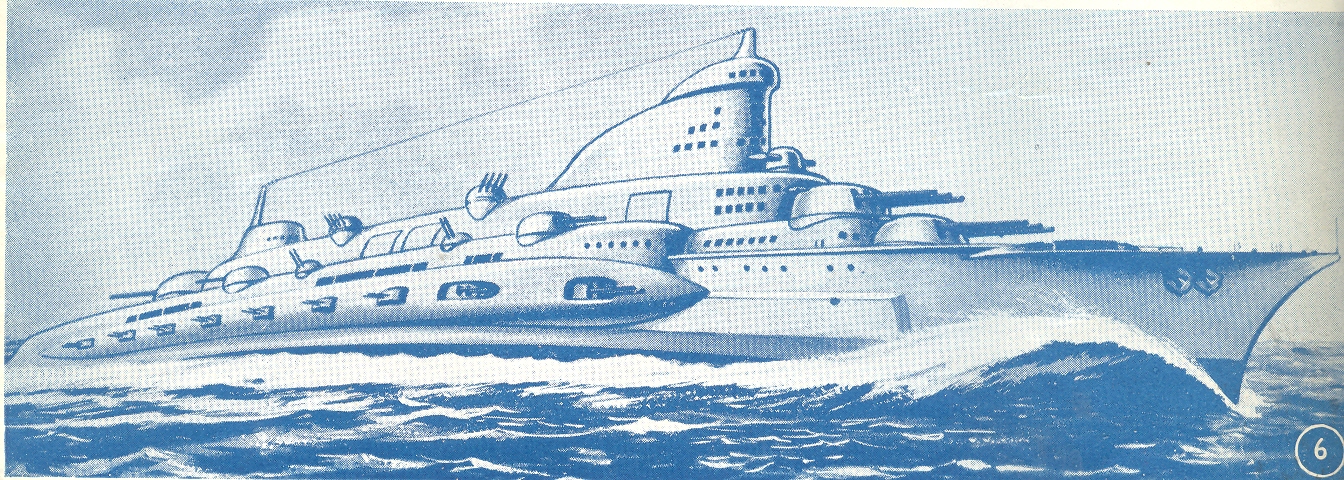
    Some of the stuff was real, some not—like the moving fort/Howl’s Castle
    above, and the floating fort, below.


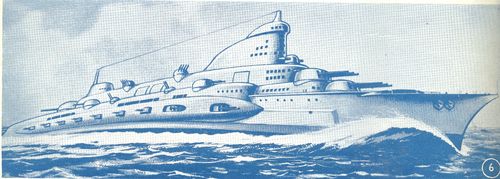
    000--win--floating airport


    I’m
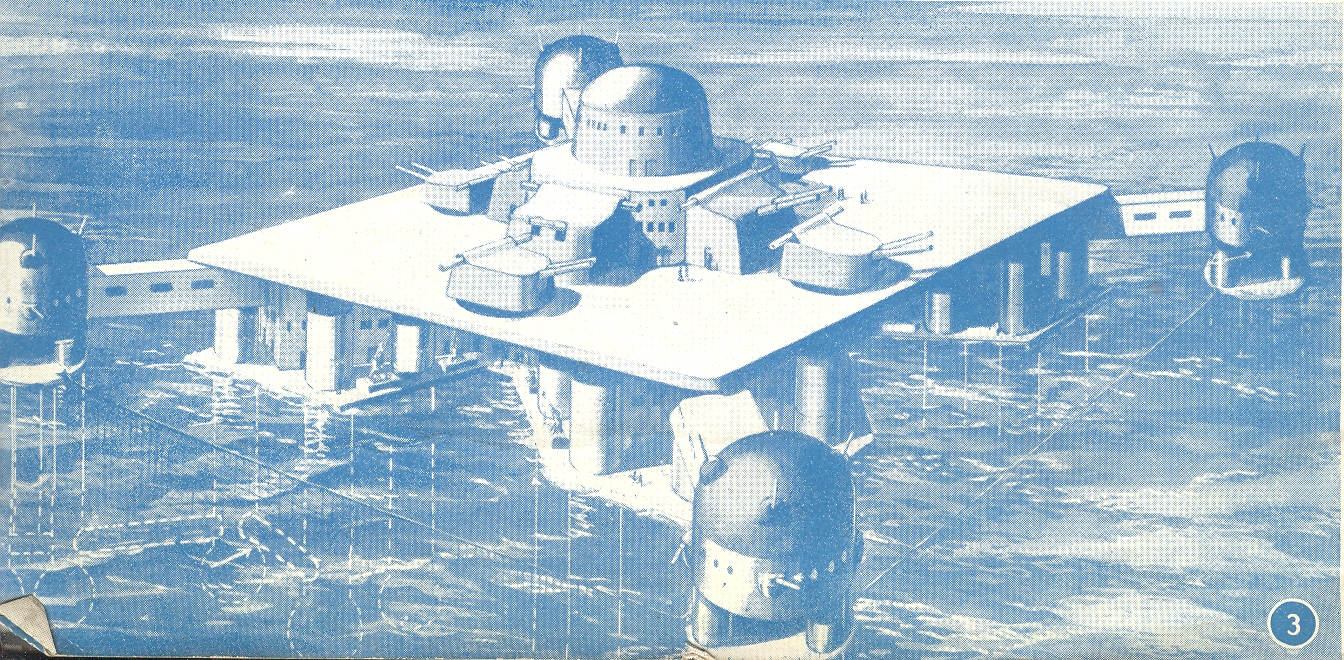
    not sure where a floating fort would make sense, especially one of that size.
    (Iterating the figures on deck into distance, it looks as though the deck on
    the floating platform was 150 or 200’ square. 
    It would’ve looked like a big target from above.) Given the time and
    expense and material  needed for such a
    thing, it seems that it would’ve been cheaper to make a moveable fortress not
    quite so big, with less of a profile, and more mobile—I think that this was
    called a “destroyer” or “battleship”.  

    But
    no matter, I’m just poking fun at some of the future vision that became archaic
    the moment it was drawn, punk retro-future. 
    All the pamphlet was trying to point out in its 32 pages was that
    overall the Brits were smarter than the Germans and that would be the balance
    for victory in the war.  “Hitler will get
    some very unpleasant surprises before this is over” the author very politely
    pointed out, no doubt with one eyebrow raised.  The scientists agreed.

    And
    they were right, which is all that matters.


  • Standing on Your Stagnant Nerve-Juice Nostril Tube? The Daily Dose from Dr. Odd

    JF Ptak Science Books     Daily Dose from Dr. Odd  
    Follow Me on Pinterest

    This cure-all from G. Anston looks simple, but the hydraulics of his nerve juice pumper is actually a little involved, or more involved than it needed to be given the fact that the machine didn’t actually do anything productive.  That said, Anston was  setting out to “move fluids” and cause all manner of cure-alls for “air stagnation” in the body, without the trouble of losing any time except for sticking those tubes into your nostrils.  I do not know why the artist has the subject standing on  #44 (the nerve-waste elimination tube) which was basically the tail-pipe of the cure-waste that was supposed to be flushed from a window.  It seems as though stopping the exit of the stagnated brain-air and nerve-fluid effluvia might’ve made the subject’s head pop off a little, which would be problematical. 


    [Source:  Google Patents, here.]


  • More Outhouse Book Reviews: British Privy Statement

    JF Ptak Science Books  Quick Post   [Part of the Daily Dose from Dr. Odd series]

    Follow Me on Pinterest


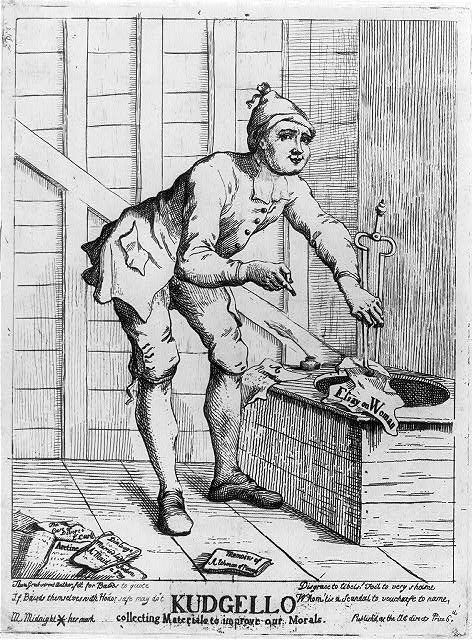
    Just two days ago there appeared in this blog a bit on an image I had never seen before–dogs acting as biological book reviewers, doing with books one of the things dogs do best. And then, this, (“Kudgello collecting materials to improve our morals”) printed around 1766 and another scatological review of books, this based on morals and highly scented books of a sexual nature, all seemingly removed with fire tongs from the wastebucket of an outdoor privy.

    Outhouse books
    {Source: the Library of Congress]  

    The books on the floor, the rescued books, include Dialogue
    … Married Lady … A Maid, Aretine
    (Mansfield, William Murray, Earl of, 1705-1793), Sodom, a play, and Memoirs of a woman of pleasure (Cleland, John, 1709-1789)

    The verse at bottom includes: “Thou Grub street author, fit for Bawds to
    quote / If Bawds themselves with Honor safe may do’t / Disgrace to
    libels! Foil to very shame / Whom ’tis a Scandal to vouchsafe to name.” Also: “M. Midnight * her mark ; Publish’d as the Act directs, Price 6d.”

    Of course the principal interest here is what the semi-smug Kudgello is hoisting from the pit, Essay on Woman, which was written by Thomas Potter in about 1755 with the assistance of John Wilkes This was a take-off of Alexander Pope’s Essay on Man, though without the intelligence, art, insight or writing ability. I’ve included this image in the blog because it is so unexpected–and that it comes fast on the heals of a similarly-unexpected scatological book review found only 48 hours earlier.


  • Daily Dose from Dr. Odd: Clock Made Entirely of Straw, 1916

    JF Ptak Science Books   Daily Dose of Dr. Odd 

    Follow Me on Pinterest 

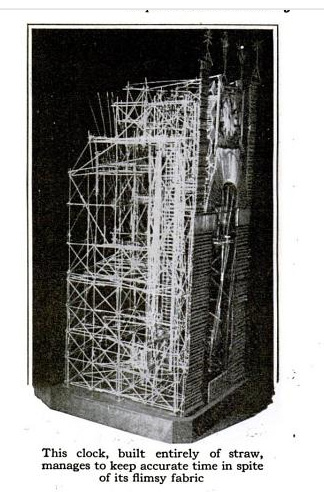
    Extraordinary! 

    Clock of straw[Source: Popular Science, 1916, here.]
    Clock straw text


  • Daily Dose from Dr. Odd: The Geo-Cube Durer Plastic Man of 1942

    JF Ptak Science Books     Daily Dose from Dr. Odd

    Plastic war899
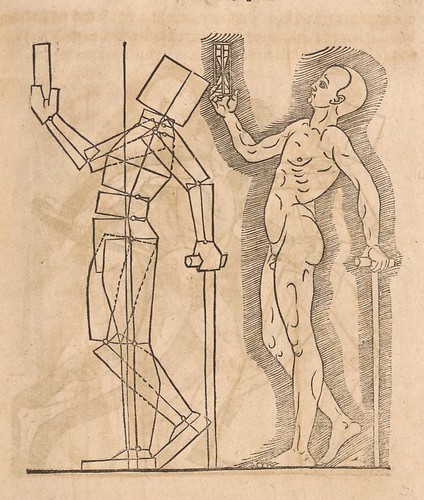
    This puts me in mind of the work of Albrecht Durer’s (1471-1528) revolutionary drawing
    of a geometrical man, compartmentalizing the body into distinct
    chunks–these and other woodcuts appeared in his Symmetria partium…humanorum corporum
    and must have been an amazing, startling site for the new reader to
    such things in 1537.

    . 

    Perspectiva (Lautensack) 1564 e

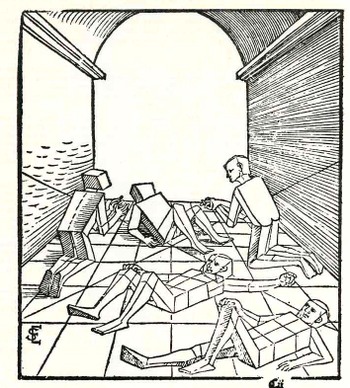
    To me this looks like visionary thinking in trying
    to understand the motions of living beings with no actual way of
    capturing the image in motion.  There’s also Erhard Schoen who published Unnderweissung der proportzion unnd stellung der possen, liegent und stehent…,which showed that the human form was reducible to connected but discrete Euclidean solids. This must’ve been an intriguing concept in the 16th century, this associate of form and function and the geometry of substance, all wrapped around the still-developing European re-discovery of perspective.  (A post on this subject appeared earlier in this blog here.)

    I really just like the red background of the Plastic Durer Man.

    Blogmissing_peopl_2e077_2


  • Daily Dose from Dr. Odd: Apple Maps of Eating, from the Little to the BIG Eat

    JF Ptak Science Books    Daily Dose from Dr. Odd

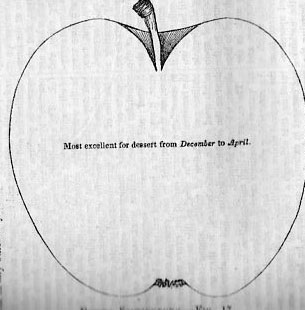
    I’ve made a post here before on the location of the Garden of Eating, um, “Eden”, here, which I guess might be the ultimate of all Apple Maps, The Big Eat; but I’ve found these two (below) that are entertaining and probably not interetsing though they are without the overwhelming consequences of the first map. They’re just about apples, and not what apples might represent (which I think was an unwieldy way for a Creator of the Universe to test the future of humankind with).

    Apple map897 detail[Source:  “Choice Variety of Apples”, in American Agriculturist, New York, 1848, vol VII/no. III, page 79.]

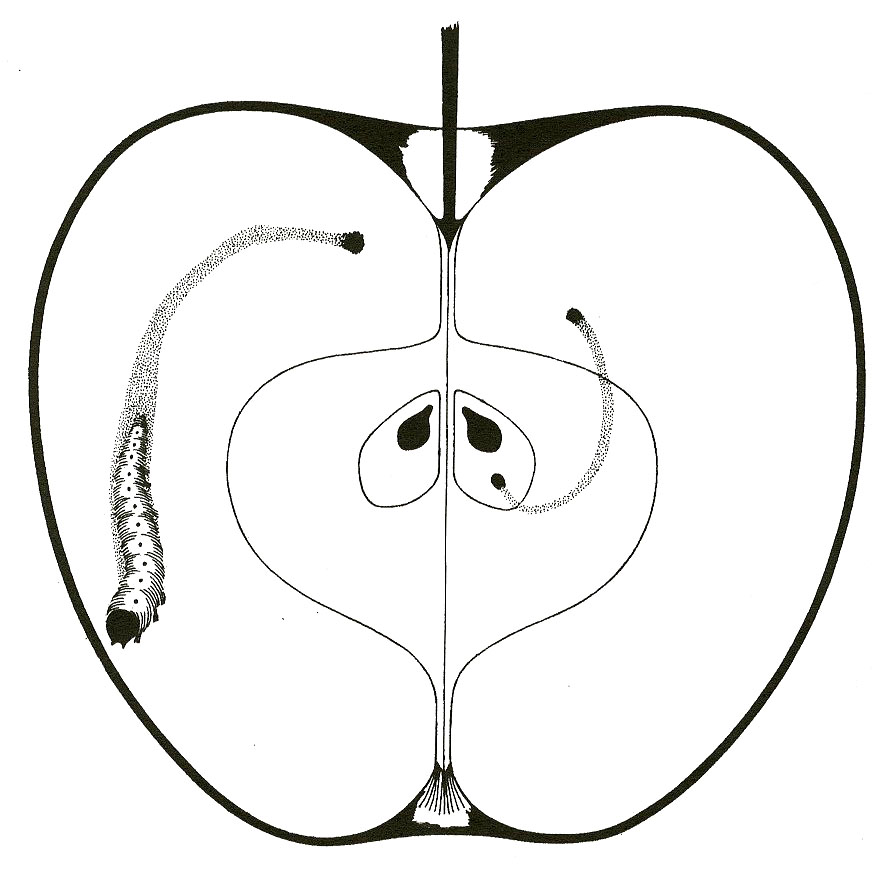
    And of course the route of Small Things Internally Eating Apples:

    Apple map[Source: Maps Incohate, here.]

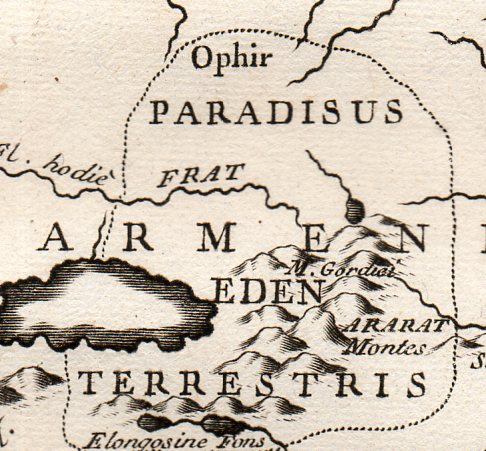
    Eden 2359
    [Source:private collection, Tabula Paradisi Terrestris justa Systema Auctoris incisa a P. Stark-Man was
    printed late in the 18th century, probably around 1775, and locates the
    GOE far in the north country, near the Dead Sea, deep in old Armenia,
    near Mount Ararat (where Noe and his family were supposed to have landed
    after the creator flooded the world killing everything, where
    everything else, young and old, infant younger, men women children,
    beasts and ants, were killed by a wrathful OT maker.).]


  • Daily Dose from Dr. Odd: Hermits, Putridity & Long Life Spans in “The Bible”, 1826.

    JF Ptak Science Books   Quick Post

    [Les Ages de l’homme (The Ages of Man)  by D de Vosthem, late 16th century, source here.]

    Increasing nothingness and putridness can possible lead to longer life spans, at least this is an hypothesis posed by John Blake in his Geographical Atlas…, published in New York in 1826:

    ” Rare examples however of extreme longevity of a life of more than 150 years seem to he common to all countries without distinction. If England the salubrity of which is so highly extolled has furnished thrice or four examples of men arriving at the age of from 150 to 169 years. Hungary which generally speaking is not a very healthy country has scen the celebrated Pierre Czartou prolong his life to the 185th year and John Uovin at the age of 172 had a wife of 164 and a younger son of 117. It is in the Bannat of Temeswar a very marshy district and subject to the putrid fever that these examples of longevity and many others have been observed A mode of life which is soher and unruffled by tumultuous passions singularly contributes to longevity…”

    “According to the author of a very curious little work called the Apology for Youth* 152 hermits taken in all ages and under every climate produce a sum total of 11,589 years of life and consequently an average of 70 years and a little mare than thrice months for each whereas the same number of Academicians the one half belonging to the Academy of Sciences and the other to that of Belles Lettres gives only 10,511 years of life consequently 69 years and a little more than two months for the mortal career of each. It is therefore not improbable that in the ages of patriarchal innocence the period of 150 or even 200 years was much more commonly attained than it is in our times…”

    Notes:


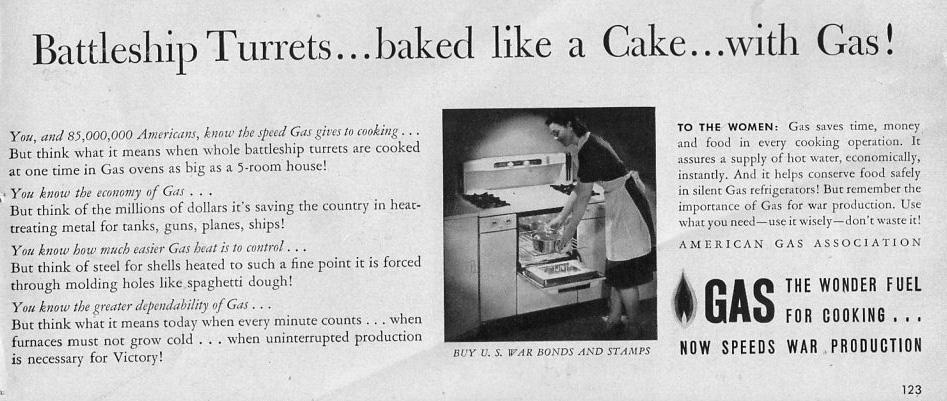
  • Baking the Big Bang–Guns in the Oven, 1943

    JF PTak Science Books     Daily Dose of Dr. Odd


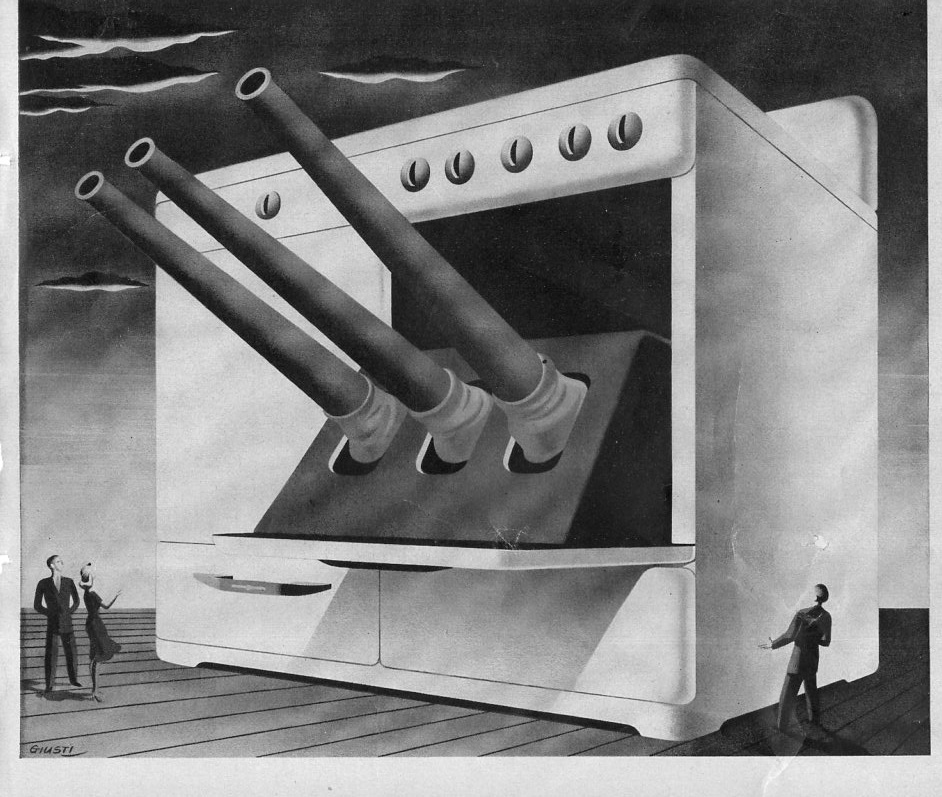
    Big Bang OVen861
    Having made a casual stroll through LIFE magazine during the War Years  (1939-1945) it seems to me as a general observation that there wasn’t that much attention paid to covering the war until 1942.  Then there was gradual coverage from January ’42 to the summer of 1942, when things really started to pick up for American involvement–of course there was the Japanese invasion of China earlier than that in the Sino-Japanese War of 1935-1945, and most of the rest of Europe and the U.K. had been busy fighting Germany since the autumn of 1939, and then the Soviets were brutally brought into the war following the abrogation of their on-aggression pact with the Nazis in 1940.

    The U.S. during those early years was having a very difficult national dialog about how America should deal with the conflict, a conversation that wasn’t turned into a great national monologue until 7 December 1941.  Anyway, its my impression that war coverage in the nation’s premier picture magazine was fairly skimpy until 1942.  By 1943, it was, in a way, all-war-all-of-the-time in the magazine’s pages, and in the ads as well.  Suddenly (over the course of 15 months or something like that), relatively benign products like Ronson lighters sold themselves on their “being able to take it”, with squinty-eyed sailors lighting their cigs with the war-tough Ronson; Mrs. Don Ameche was selling Coleman’s Mustard with a war flavoring, underwear ads used Hitler’s name to sell their product, and so on. (These examples appeared on just two consecutive pages.)  Use of the war in advertising appears in the Brit equivalent of LIFE, the Illustrated London News, but less so; in Germany, the Illustrirte Zeitung (Leipzig), the most popular popular-illustrated-read in that country, also featured war-based ads, but far less frequently. (Also the war coverage in that journal wasn’t nearly as frequent as in th eother two; and from my experience, as sanitized as the other two mags were, there was never any bad military news in the Illus Zeitung that I could see. Maybe ever.  Certainly Hitler wasn’t taking about it, even when he was sacrificing entire armies to the Soviets and Mother Winter.)

    So.  What does this mean?  I don’t know, not really. If the company was doing something for the war effort, and they advertised in LIFE, then the readers of that mag were going to know about it.  On the other hand, if the company produced underwear and seemed to really have nothing to do with the conduct of the war, they were wrapping their product up in a kill-Hitler ribbon  as well.  Was this “bad”?  Das machts nichts.  It is interesting, though, but I really don’t know how it is interesting beyond knowing that it is. 

    Big Bang OVen862
    Caveat: even though I’ve breezed through all of these magazines for the war years out in the warehouse, doing that rather than Doing Something Else, my grazing was not exactly an experimental undertaking. My observations are just general observations that seeped into me from a six-foot pile of war mags.)