A Daily History of Holes, Dots, Lines, Science, History, Math, Physics, Art, the Unintentional Absurd, Architecture, Maps, Data Visualization, Blank and Missing Things, and so on. |1.6 million words, 7500 images, 4.9 million hits| Press & appearances in The Times, Le Figaro, Mensa, The Economist, The Guardian, Discovery News, Slate, Le Monde, Sci American Blogs, Le Pont, and many other places… 5000+ total posts since 2008.

Category: Daily Dose from Dr. Odd

  • Daily Dose of Dr. Odd: the Future at the End of Burning Ash (Cigarette Card Visions)

    JF Ptak Science Books   Quick Post
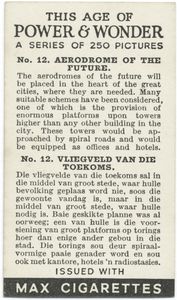
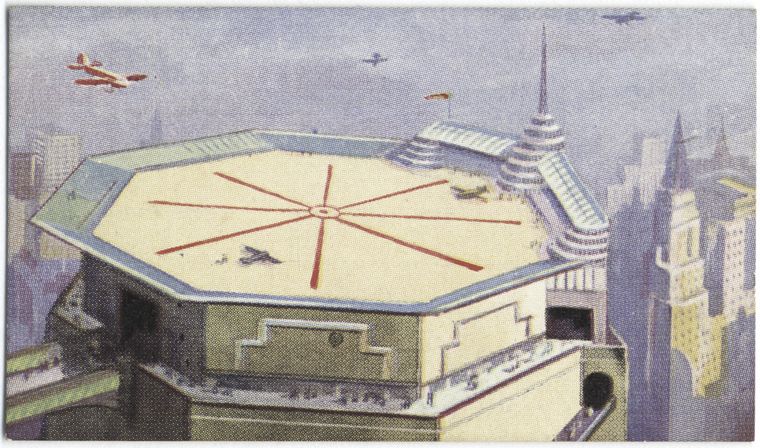
    Three wonderful images of the future, brought to the viewer via the tobacco trading cards interests in the 1920’s–a future that could very well have been denied by the user of the product that advertised it. 
    Source: New York Public LIbrary Digital Collections, here.

    Aerodrome of the future.
    Aerodrome of the future.

  • Daily Dose of Dr. Odd: Double Dose! Instructions and Regulations for Dealing with the Plague, 1338

    JF Ptak Science Books  Quick Post

    Ordinances For Sanitation In A Time Of Mortality

    Pistoia was a provincial city of about 11,000 in the early fourteenth century located in the region of Tuscany, less than thirty kilometers northwest of Florence. Its government was in the hands of a small executive council made up of the Anziani or Elders of the People and the Standardbearer of Justice. The chief administrative officers were the Captain of the People and the Podesta who served six-month terms. They could not be Pistoian or even Tuscan. They were allowed limited social contact with Pistoians and their behavior was audited, or “syndicated” at the end of their terms of office. This allowed anyone who felt wronged by their actions to bring charges. The eight Anziani and the Standardbearer of Justice were citizens of the city selected by lot to serve two-month terms from among the citizens of the city who met age, professional and property qualifications. This small council debated all issues and made recommendations to a general city council, the Council of the People which was required either to approve or reject proposals without amendment. As will be clear from the ordinances, there were virtually no issues which affected life in the city which the government could not debate.

    The context of the Ordinances was the arrival of the Plague early in the Spring of 1348. Plague probably cost the city and surrounding countryside about one fourth of the total population. The statutes themselves reflect both the scientific knowledge and the practical issues which this crisis brought to a head.

    In the name of Christ Amen. Herein are written certain ordinances and provisions made and agreed upon by certain wise men of the People of the city of Pistoia elected and commissioned by the lords Anziani and the Standardbearer of Justice of the said city concerning the preserving, strengthening and protecting the health of humans from various and diverse pestilences which otherwise can befall the human body. And written by me Simone Buonacorsi notary. . . in the year from the Nativity of the Lord MCCCXLVIII, the first Indiction.

    First. So that no contaminated matter which presently persists in the areas surrounding the city of Pistoia can enter into the bodies of the citizens of Pistoia, these wise men provided and ordered that no citizen of Pistoia or dweller in the district or the county of Pistoia . . . shall in any way dare or presume to go to Pisa or Lucca or to the county or district of either. And that no one can or ought to come from either of them or their districts … to the said city of Pistoia or its district or county on penalty of £ 50 … And that gatekeeper of the city of Pistoia guarding the gates of the said city shall not permit those coming or returning to the said city of Pistoia from the said cities of Pisa or Lucca, their districts or counties to enter the said gates on penalty of £ 10 … It is licit, however, for citizens now living in Pistoia to go to Pisa and Lucca, their districts and counties and then return if they have first obtained a license from the Council of the People ….


  • Daily Dose of Dr. Odd: Chronicle of the Plague, Florence, 1336

    JF Ptak Science Books   Quick Post

    The Florentine Chronicle on Medieval Plague Marchione di Coppo Stefani

    Marchione di Coppo Stefani was born in Florence in 1336. He wrote his Florentine Chronicle in the late 1370s and early 1380s.  [Stefani, Marchione di Coppo.Cronaca fiorentina. Rerum Italicarum Scriptores, Vol. 30. ed. Niccolo Rodolico. Citta di Castello: 1903-13.]

    “Rubric 643: Concerning A Mortality In The City Of Florence In Which Many People Died”

    “In the year of the Lord 1348 there was a very great pestilence in the city and district of Florence. It was of such a fury and so tempestuous that in houses in which it took hold previously healthy servants who took care of the ill died of the same illness. Almost non of the ill survived past the fourth day. Neither physicians nor medicines were effective. Whether because these illnesses were previously unknown or because physicians had not previously studied them, there seemed to be no cure. There was such a fear that no one seemed to know what to do. When it took hold in a house it often happened that no one remained who had not died. And it was not just that men and women died, but even sentient animals died. Dogs, cats, chickens, oxen, donkeys sheep showed the same symptoms and died of the same disease. And almost none, or very few, who showed these symptoms, were cured.


  • Daily Dose of Dr. Odd: Patent Drawings of Mazes and Puzzle Games

    JF Ptak Science Books   Quick Post

    I’ve been indulging a new category of this blog–the Daily Dose of Dr. Odd–with more than a single daily post.  It is an effective and easy way to post some of the many images that I see daily that in general wouldn’t be posted.  The following images are from the U.S. Patent and Trademark Office via Google Patents, and show several lovely applications of mazes, many of which remind me of some 18th century garden designs. 

    ·Posted by :

    ·in:


  • Daily Dose of Dr. Odd: Proto-Surrealist and/or Absurdist Images of Artists by J.J. Grandville, 1844

    JF Ptak Science Books   Quick Post

    I’ve remarked on this blog several times on the work of the fabulist proto-surrealist (etc.) J.J. Grandville (for example, here), and today I’d like to return again to his soaring Un Autre Monde (published in 1844) for the work he did in satirizing conventions by reversing their orders, presenting common entities in their “opposite”position. (Perhaps “opposite” is a too far-reaching word, perhaps “contrary” is more appropriate in these cases–for now, either will do.)

    photo


  • Daily Dose of Dr. Odd: Canaries as Fortune Tellers

    JF Ptak Science Books   Quick Post

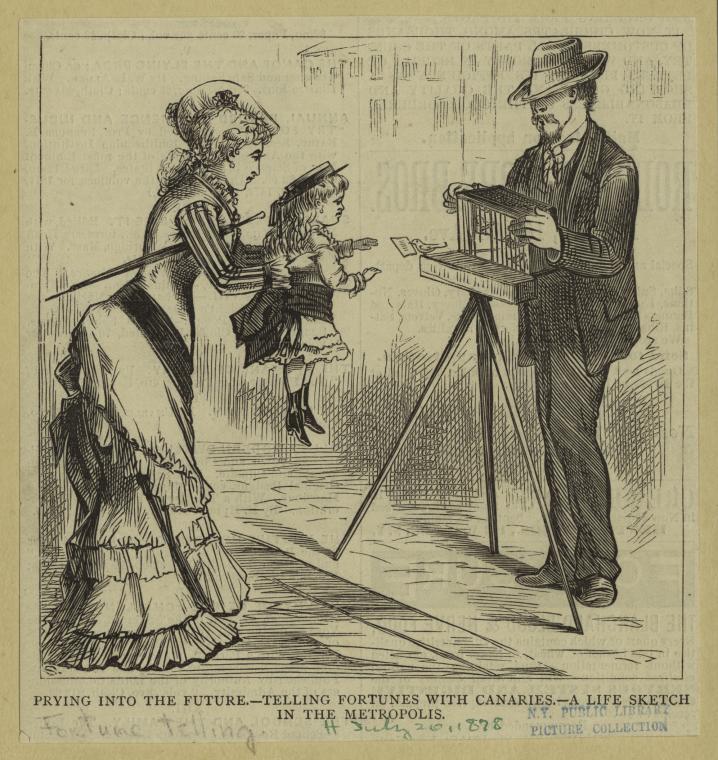
    Prying into the future--  telling fortunes with canaries-- a life sketch in the metropolis..
    What I know for sure about the future vision of canaries can be summarized very quickly: if it was 150 years ago, and you were a miner, and you were down in the mines, and the canary being carried in the cage in front of you suddenly keeled over and died, it was a very good indicator that if you didn’t get out of the mine very quickly that your future would be extremely limited.  I’m guessing that ths canary was trained to retrieve a bit of paper for some cotter, to the delight of the young observer. On the other hand it is at least as good as 99% of other sources of predicting future events.
    [Source:  “Prying into the future– telling fortunes with canaries– a life sketch in the metropolis (1878)”, New York Public Library Digital Collections, here.]

  • Daily Dose of Dr. Odd: On What Silent Massive Bells Sound Like

    JF Ptak Science Books   Quick Post  

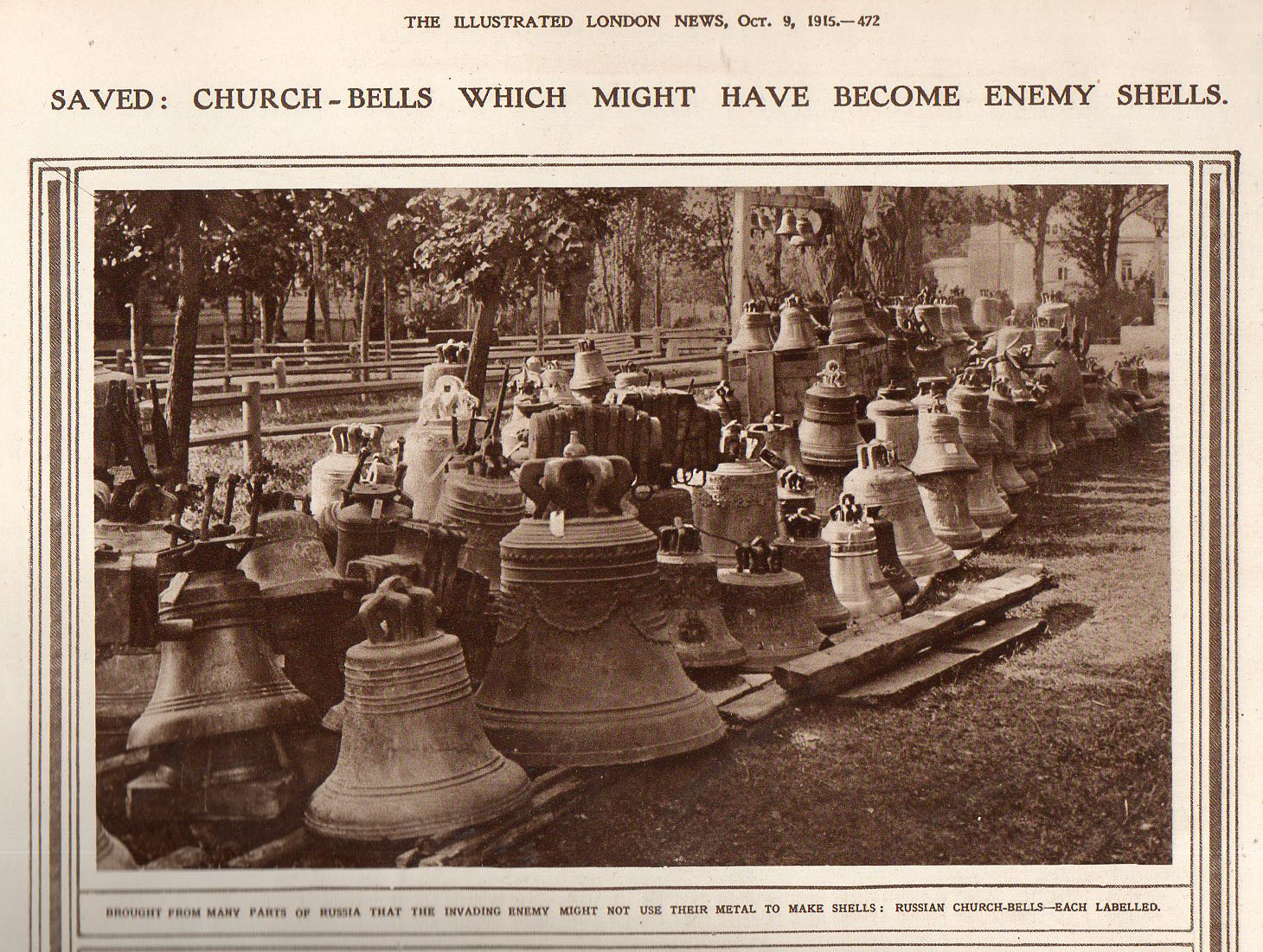
    Looking at these pictures, the first thought about what silent bells sound like is pathetic nothingness, and that apart from any secular importance or significance.  But when the Russians pulled out of Poland they took the bells of the churches with them, keeping them from the advancing German army, keeping them so that the Germans didn’t melt them down to use in munitions.  The bells disappeared too from many Russian cities, pulled back deeper inside Mother Russia, far from the advancing army.

    Bells 578[Source, above and next three images, from the Illustrated London News, 4 October 1915.]

    Bells 578_edited-1


  • Daily Dose of Dr. Odd: Physcial Culture, 1920, Part II: Women & Cigarettes

    JF Ptak Science Books    Quick Post

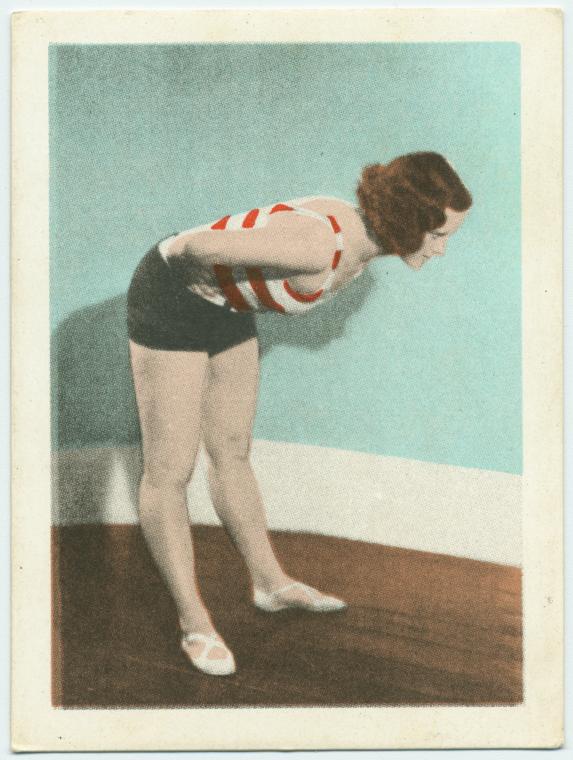
    This is a continuation of the Health-into-the-Future post–for MEN!–brought to modernity in 1920 or so via your friendly neighborhood tobacco conglomerate.  Yes, these are tobacco cards, given away with a pack of smokes, and were intended in their coy way to try and keep the smoker living longer tobacco-filled lives–after all, the longer a smoker lives, the more they can smoke, and so it was to the producers’ benefit to keep their subjects both loyal and healthful. [Source:  New York Public Library Digital Collections, here.]

    Exercise 1. For the thigh muscles.

  • Daily Dose of Dr. Odd: Planking & Physical Culture for Ordinary Folk–Men, 1920

    JF Ptak Science Books  Quick Post

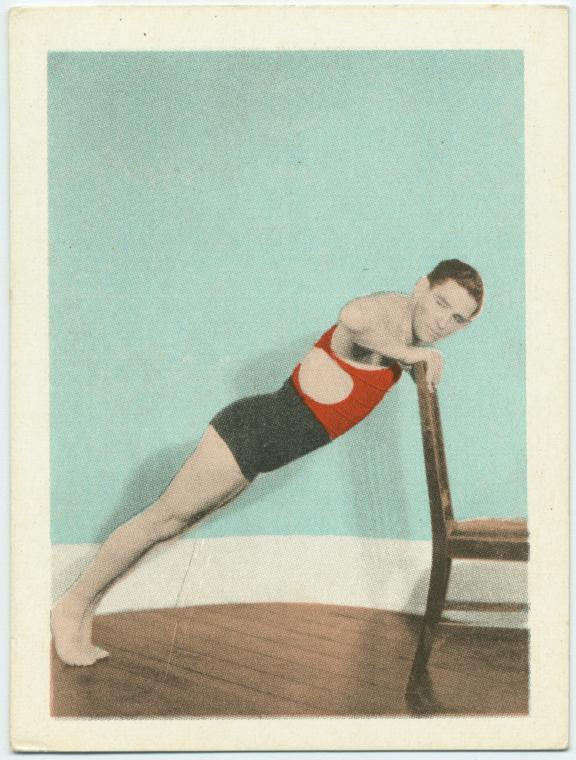
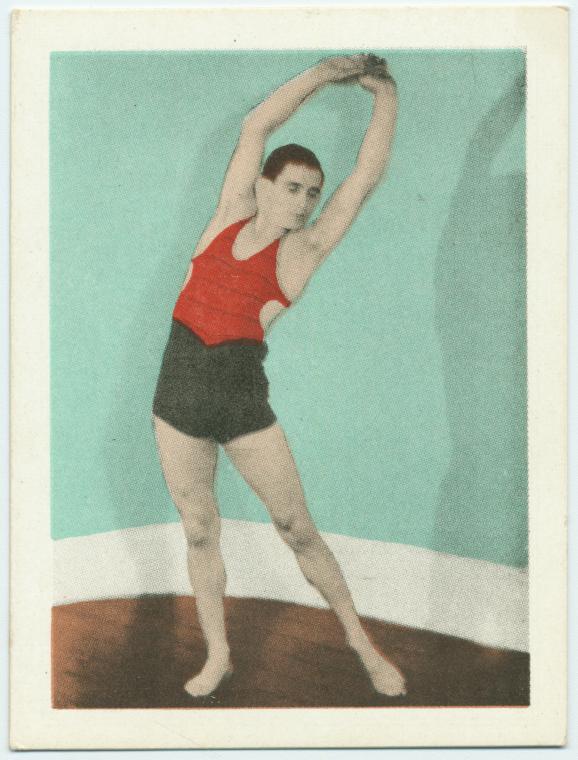
    Exercise 9. Stretching exercise.

    It is little wonder that in the advanced period of modern communication and all-points-being-connected-to-almost-every-other-point (at least in the U.S.) that the aspect of physical culture was made available to the great unwashed and slightly-privileged masses.  These images (available from the New York Public Library Digital Collection) introduced bunches of people to the possibilities of being physically fit, and doing something about it. 

    There has been instruction of physical training for many centuries, but outside of military exercise and its related bits teaching everyday people how to keep themselves healthy via exercise just didn’t exist.  Perhaps this interest exhibited below was a result of recent medical issues like the massive influenza outbreak, or polio, or rubella, and that physical exercise might be able to address that.  Or perhaps it had to do with the physical culture shown the troops during WWI.  In any event, the distribution of that information by the early ’20’s was certainly close to being free, so that it could reach people as never before.  And in this special case, the free-ness came with a purchase of a pack of smokes, as these are tobacco cards; so the longer you smoked the more you would look at these cards, and via the same sort of constant exposure that brought you to smoking in the first place might lead you to exercising and getting healthier so that you could live longer to smoke more ciggies. 

    All of the exercises could be done without equipment, meaning that anyone–at any time–could take a sip from the fitness cup.  Or men could–there was a separate set of images for women, which will follow in just a moment on this blog. 

    Exercise 12. For the serrated muscles under the arms.
    The rest of the series are available, below:
  • Daily Dose from Dr. Odd: Superbly Unusual and Beautiful Baseball Portraits

    JF Ptak Science Books   Post 1831

    (Please also see this blog’s post on Women in Sports, from about the same era, here as well as here)

    Strolling through the New York Public Library Digital Collection (here), I came across many hundreds of images of baseball players.  What struck me with some of them were their stubborn, unabashed pride, images made of the ballplayers standing squarely in front of the camera, mostly looking directly into the lens, shoulders set squarely under that, a straight, dead-on shot.  Its not just in cartoons where the full frontal is rare–my experience shows it to be uncommon almost across the board. 

    [Unidentified baseball player in pitching form.]