A Daily History of Holes, Dots, Lines, Science, History, Math, Physics, Art, the Unintentional Absurd, Architecture, Maps, Data Visualization, Blank and Missing Things, and so on. |1.6 million words, 7500 images, 4.9 million hits| Press & appearances in The Times, Le Figaro, Mensa, The Economist, The Guardian, Discovery News, Slate, Le Monde, Sci American Blogs, Le Pont, and many other places… 5000+ total posts since 2008.

Category: Daily Dose from Dr. Odd

  • A Tiny Worm, 1839

    JF Ptak Science Books   Daily Dose from Dr. Odd 

     
    Follow Me on Pinterest

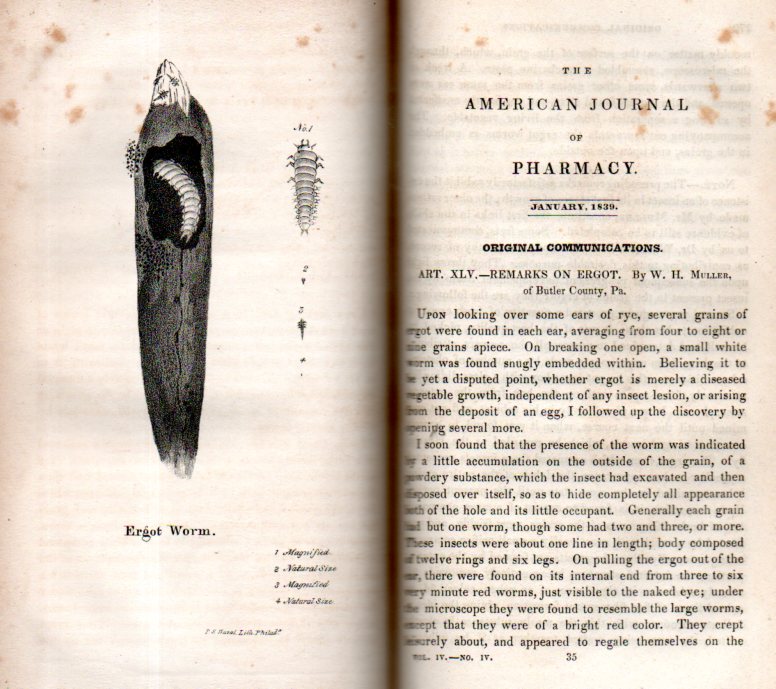
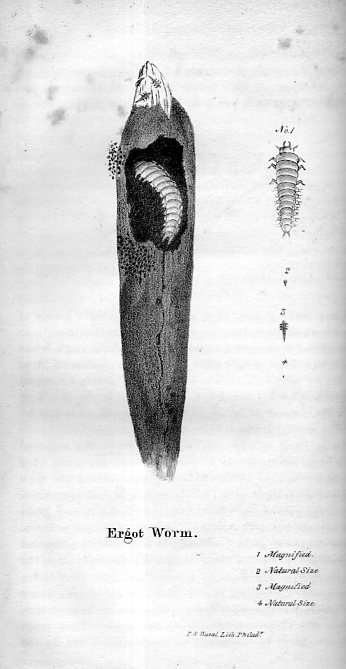
    I’m just passing this engraving along–the last dot in the right-hand column in the engraving below (shown in more detail just below that) exhibits the life-size dimensions of the guilty worm.  The way in which the worm is presented is just very well done and beautiful in its own way. 

    Ergot435

    [Source:  The American Journal of Pharmacy, January 1839, volume 10, “Remarks on Ergot”, by W.H. Miller. 

    “They crept leisurly about, and seemed to regale themselves on the mouldy matter on the surface of the grain, which, through the microscope, resemed a saccharine paste…”

    And the detail:

    Ergot432

    ·Posted by :

    ·in:


  • A Top 1% Card Catalog Title Entry. Seriously.

    JF Ptak Science Books  Daily Dose from Dr. Odd 

    Follow Me on Pinterest


    Card catalog409 
    Triple-F (Frank Freemnont Frazee) came up with an all-time-great-title entry when he wrote his pamphlet about _____ back in 1947.  I have a copy of it, purchased in a 90,000-item collection from the Library of Congress–something called “The Pamphlet Collection”, housed in 1,500 blue document boxes from 1952, all of which were categorized in a Borgesian nightmare way, according to nothing. Therefore the “General” box might have had General Electric pamphlets, or something about General Malaise, or Boston General, or General Rules of Parking in Providence (R.I.), and so on.  So, although categorized and alphabetized, it was all useless.  Among this beautiful mess were a thousand or so pamphlets like Mr. Frazee’s–incredibly titled, about stuff visible and invisible, complaints, claims, praises, warnings, sufferings, advanced supra-backwards premonitions, and so on.  My Frazee copy happened also to be the U.S. Copyright Deposit copy (or one of them, rather) that was sent to the Library of Congress to be housed forever (or until I got them), along with a carbon copy of the card catalog entry. 

    The card is a work of art. (More about this pamphlet here.)

    Dr Odd series069


  • The Batmobile of Teacher’s Desks, 1898

    JF Ptak Science Books    Daily Dose from Dr. Odd
     
    Follow Me on Pinterest


    Sometimes there are certain things that must not be refused–this is one of them.  St. Jerome may have had a number of interesting  and complex desks granted him during his imaging heydays in the late Medieval through Renaissance periods, and  there have been fabulously simple approaches like the table-top/lap desk of Thomas Jefferson or the Easy-Boy arm desk of Roald Dahl, and there have been desk/floors like that of Albert Einstein, and desk beds like George Costanza‘s, and refigerator-desks like Thomas Wolfe’s, and standing desks like Winston Churchill’s, and non-desks of Sherlock Holmes, and so on; but I think given all of those I’d rather have the desk below, patented by M. McC. Parr in 1898.  It seems to have it all, including a possible built-in bed–the only thing it is missing is an engine and a driveshaft and some wheels…you can add the brakes later on.  

    ·Posted by :

    ·in:


  • Isolated Crowds & People in Crowded Isolation

    JF Ptak Science Books  Quick Post  Daily Dose from Dr. Odd

    There are crowds and then there are crowds, crowds that are big and filled with people, and then crowds that are filled, but somehow strangely not with people even though they are there–large groups of isolated people.  These photos show up now and again, as they did today–I gathered four examples, below.

    Isolated crowds

    [Student nurses, Roosevelt Hospital, New York City, 1938. Found at the Pinterest collection of Christian-Paul North, here]


    Crowd isolated prison
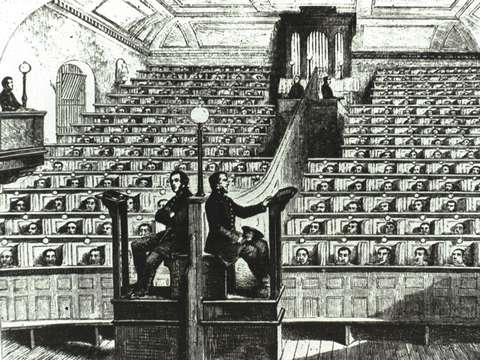
     This image is of a church or social service at Pentonville Prison in 1855. 

    Crowded and lonely

    Lonely hatted man in a very large crowd on Coney Island, Brooklyn, U.S.A, as captured by Weegee, ca. 1950.  Weegee_-_Coney_Island-big (The Hat Man is at the extreme bottom right corner.)


  • A Telephone Book for the Dead and a Telephone to Deadville Redux (1912)

    JF Ptak Science Books     Daily Dose from Dr. Odd  

    Follow Me on Pinterest


    Dead club334
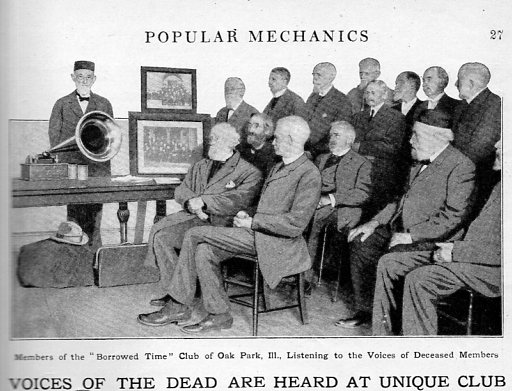
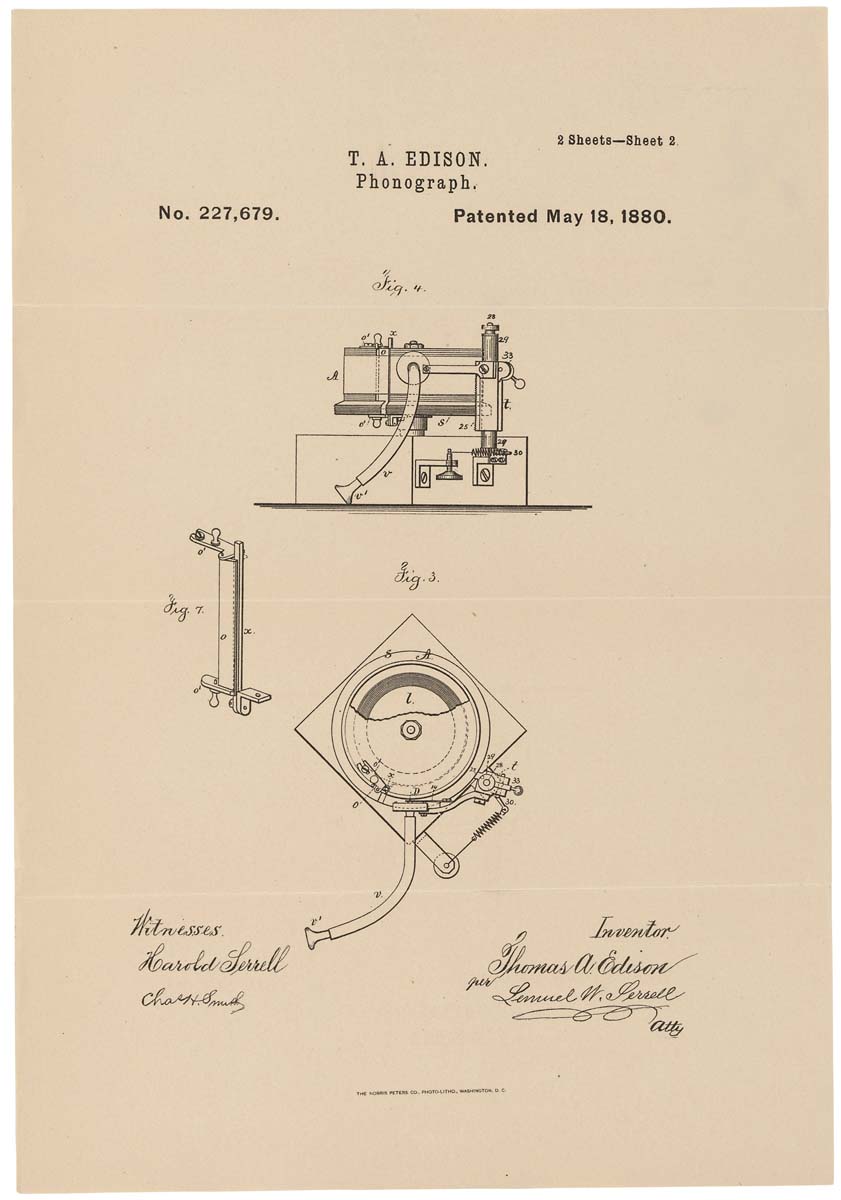
    Two years ago I posted “My Zombie ‘Phone to Deadville” and Tales of the Infinite Boneyard, by Tom Edison which addressed a prickly mock-interview that the great inventor gave in 1910 about the possibility of communicating/telephoning with/to the dead.  On the other hand, his recording phonograph did accomplish this, in a one-way way–for the first time in human history it allowed a person to listen to the sounds of something that couldn’t make sounds anymore.  Dead People Talking must have been an enormous idea to those of the first few years of Edison’s 1877 recordable/playable device–it still its own enormity if you stop to think about it for a moment. 

    This is to some degree what was in the minds of the members of the Talking-with-the-Dead Club in Chicago’s Oak Park as seen in an article in the endlessly interesting Popular Mechanics (for 1912). The members of the “Borrowed Time” club really weren’t so much interested in talking with the dead but rather were more consumed with the dead talking to them. On waxed cylinders.  Perhaps it was a new modern miracle and a possible comfort to their own soon-to-be demise that it would be possible to reach out from the grave to have your voice heard.  The club was founded in 1902, and of its 25 charter members only 10  survived in 1912. It would have been an odd conceit to join a club to sit with fellow members to listen to the voices of dead members, a strange if new insistence on corporeal attention to dead stuff. But it is a very recognizable wish–“need’, even–to have your the memory of your dead self improved or at least substantiated with a recording of your years-dead voice available to the curious. 

    This makes me think about a telephone book for the dead–there’s certainly enough material out there for one, or to at least think about organizing one. Certainly in the near future there will be millions of new dead people, and given the extent of cell phone communication and etc. this will be one of the fastest-expanding communities of potential communicants. Probably the idea of a “telephone book” for the Dearly Departed is old fashioned, especially when we can have an entire internet (the world wide dead web) devoted to them, the them that are us. This may sound trivial and snarky, but it isn’t and I’m not trying to be–I’m dead serious.

    PhonographPatentEdison1880


  • Daily Dose from Dr. Odd: Let Your Man fill Your Eyes With Smoke

    JF Ptak Science Books  Quick PostDaily Dose from Dr. Odd series

    Follow Me on Pinterest


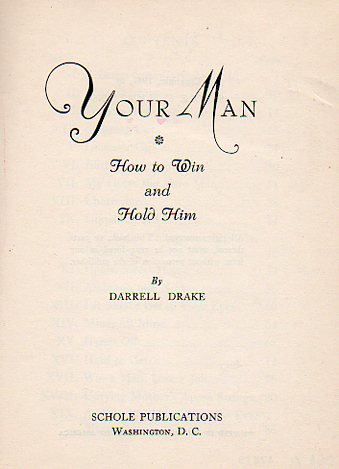
    Man Keep225Darrell Drake was full of advice, not much of which seems to have weathered the wearying bits of time very well.  Most of what he has to offer has to do with being coy, reserved, and retiring, and so much so to the point of being insipid acquiescing in the superior qualities of the man, forever in the back seat, quiet and demure, patient and understanding and making the back-step always the job of the woman. Not much of a surprise.  But what was very unexpected was the chapter called “Let Smoke Get in Your Eyes”, a four-page baiting in which he warns women against the antagonism of correcting the manners and behavior of the man, so much so that she should be well willing to have  smoke blown into her eyes rather than suggest that the smoker not do so–you don’t see that every day. 


  • Dance as the Godless Spasm More Dangerous than Hitler (1946)

    JF Ptak Science Books    Daily Dose from Dr. Odd

    Follow Me on Pinterest

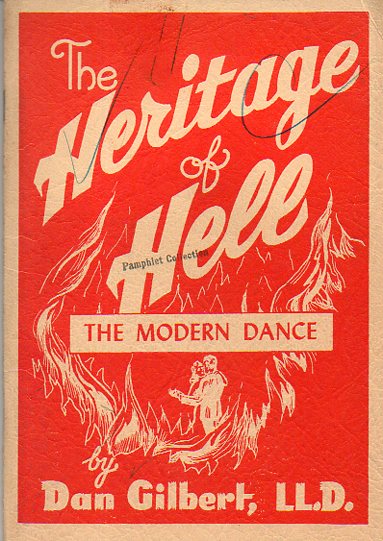
    Hitler was dead in 1946, but dance–the devil’s reach of hellfire and something worse than Hitler, according to the author of this pamphlet–wasn’t.
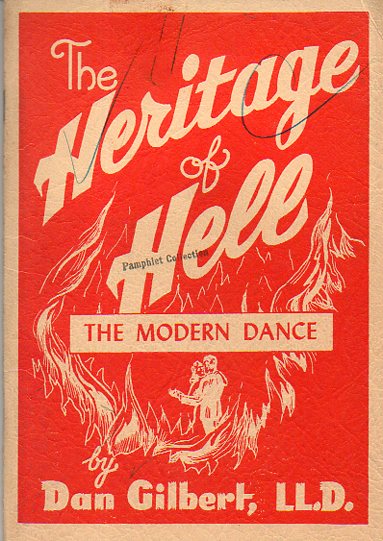
    Dance Hell222

    The author, Dan Gilbert LL.D., wrote a very _______ summation of modern dance, which was an assault on morals (well, Christian morals) and decency.  He does actually make the case that  dance music (jitterbug, swing, and jazz) was more dangerous than Hitler and was “Hitlerizing” American youth to its utter destruction.  “Jitterbug dens” preached a “faster jitterbuggery” (which was “conceived in the brothel to stimulate lust and vice”) which led youth into the Underworld.  The children of America were being lost to “razzy jazzy spasm bands” which would “strouse uncontrollable sex desire” and “infect youth with the disease of immorality” then to  “produce(s) a state of emotional and nervous derangement, which is scientifically indistinguishable from intoxication induced by stimulants or narcotics”. And on and on.

    These are just a few of the very choice morsels found in Gilbert’s 42-page diatribe, picked out by me rather quickly, plucked from the text with toothpicks–I just didn’t want to spend very much time with this book at all.  That said, I’m sure that there are tastier items than these, salted through a text of salt.

    I don’t know why Gilbert became this deeply interested in dance/death/Hell in the year following the end of WWII–after years of destruction, it seems hard for me to imagine to wake up, look out the window, and see the next assault on the U.S. coming in the form of dance.  He did carry on some about the “jitterbug insanity” of “improvisation”, and how dancers would abandon the appropriate and constrained methods of dance to simply move according to feeling and need.  This was the root of it all–happy feet. 

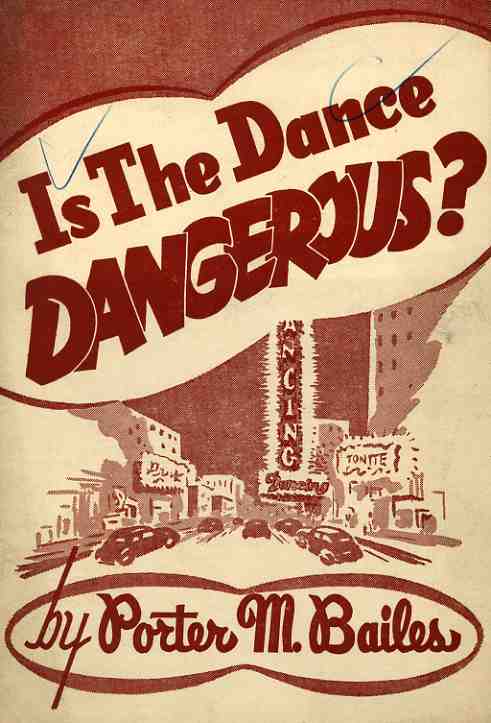
    An earlier post on this blog addressed a direct relative to this pamphlet:
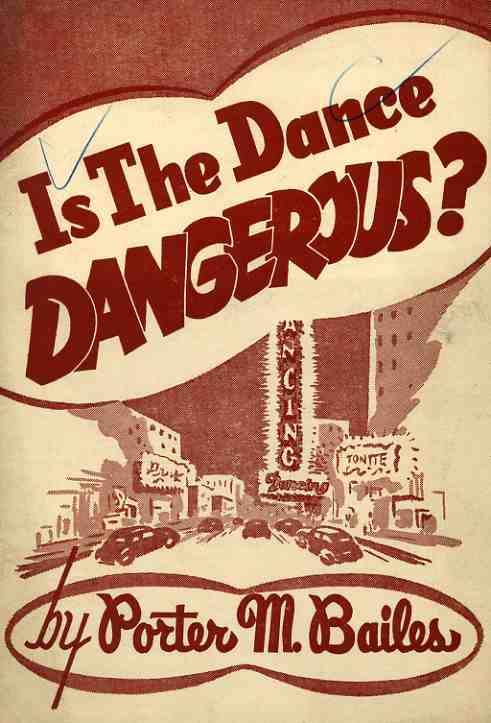
    0 blog jan 20 dance danger391


  • On Tanning Names on Newborn Babies (1930)

    JF Ptak Science Books  Quick Post  Daily Dose from Dr. Odd

    Baby tan181[Source: Popular Mechanics, October, 1930]

    I’m looking for post #2000–this isn’t it.  It is however Quick Post #450 or so, which means that we’re closing in on 2,500 overall posts in this blog since 2008.  But there should be something with a little more flavor than baby tanning for #2000. 

    This is a good/appropriate installment for the Daily Dose from Doctor Odd series.  As ideas go, it is not a very good one–but it is not among the Dantean 9th-level-worst.  If we classify bad ideas on a six-point Major-Minor scale, from MajorMajor to Major to MinorMajor and then to MajorMinor and then Minor and finally MinorMinor, this one would probably rank at the MinorMajor level. Or maybe even a full Major.  It is a bad idea.  (An example, by the way, of a full MajorMajor bad idea would be the electropunk centrifugal birthing patent machine, described earlier on this blog, here. Okay, here’s another:  on draining the Mediterranean Sea, here.)

    There are less invasive ways of ensuring that the correct baby is delivered to the correct parent(s) than tanning the baby’s name onto their body–which doesn’t of course take into account the instances where the baby’s skin is too dark or whatever to be tanned.  But the idea of subject a brand-new baby to a tanning lamp as  its welcome to the world seems a bit–what?–horrible. Exposure to ultraviolet rays that will cause a six-month brand sounds like it might stir up the melanosome pot to cause damage to organs other than the skin, that it could have been a real assault on the DNA.  Also, that metal object on the table looks a lot like a clamp–I hope it wasn’t. 


  • The Crucible of Weight and the Overweighted State of 1920 Geology

    JF Ptak Science Books     Daily Dose from Dr. Odd

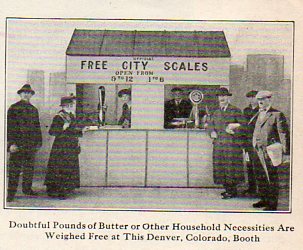
    Scales060
    Grazing the issues for 1920 in the Popular Mechanics-esque popular-techno-magazine, Illustrated World, I found this superb near-Dadaist photograph.  The image is for a free weighing station, where people could come and have their stuff weighed, and weighed for free.  This no doubt came into being to help protect consumers from being under-weighted and over-charged for their weighed goods like butter and whatever, where their good grocer might have had a thumb or more on the scale or even used a crooked/salted scale when selling their goods.  What someone would do at the point of being told that their stuff was overweighed, I don’t know–I mean these are people walking around in the street with things in their pockets or bags….its not exactly “evidence” showing up at the weigh station (staffed by “a woman”) saying that the half-pound blob roll in their hand was sold them as a pound on their word of the purchaser probably wouldn’t stand up in court.  In any event, I like the idea of the story of the world being told from the viewpoint of the person weighing stuff for free, and the people who came to them, and the stuff brought to be weighed.  Maybe there were weighing-in groupies; maybe there were old people who would just kick up a rock or something and take it to the weigh station for a bit of conversation and complaint on the over-weighted state of geology.  Maybe between 12:00 and 1:00 the weighers weighed stuff out-back, sotto voce, for fun.

    If only there was a sign for “no waiting” this photo would be complete.


  • Daily Dose from Dr. Odd: Diving Archery Water Sports

    JF Ptak Science Books   Quick Post  Part of the series Daily Dose from Dr. Odd  

    Follow Me on Pinterest

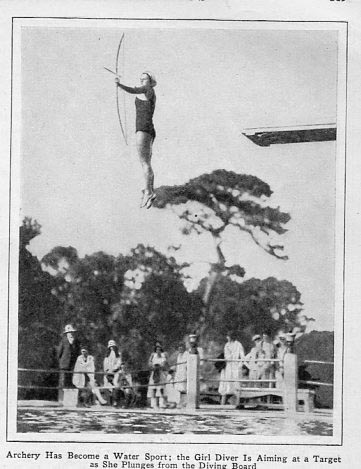
    What could possibly go wrong?  from Popular Mechanics, November 1930.


    Dr odd diving arrows049


    Dr odd diving arrows047
    Dr odd diving arrows048