A Daily History of Holes, Dots, Lines, Science, History, Math, Physics, Art, the Unintentional Absurd, Architecture, Maps, Data Visualization, Blank and Missing Things, and so on. |1.6 million words, 7500 images, 4.9 million hits| Press & appearances in The Times, Le Figaro, Mensa, The Economist, The Guardian, Discovery News, Slate, Le Monde, Sci American Blogs, Le Pont, and many other places… 5000+ total posts since 2008.

Category: Computer Tech/History

  • Computer Art, 1949

    JF Ptak Science Books   Quick Post

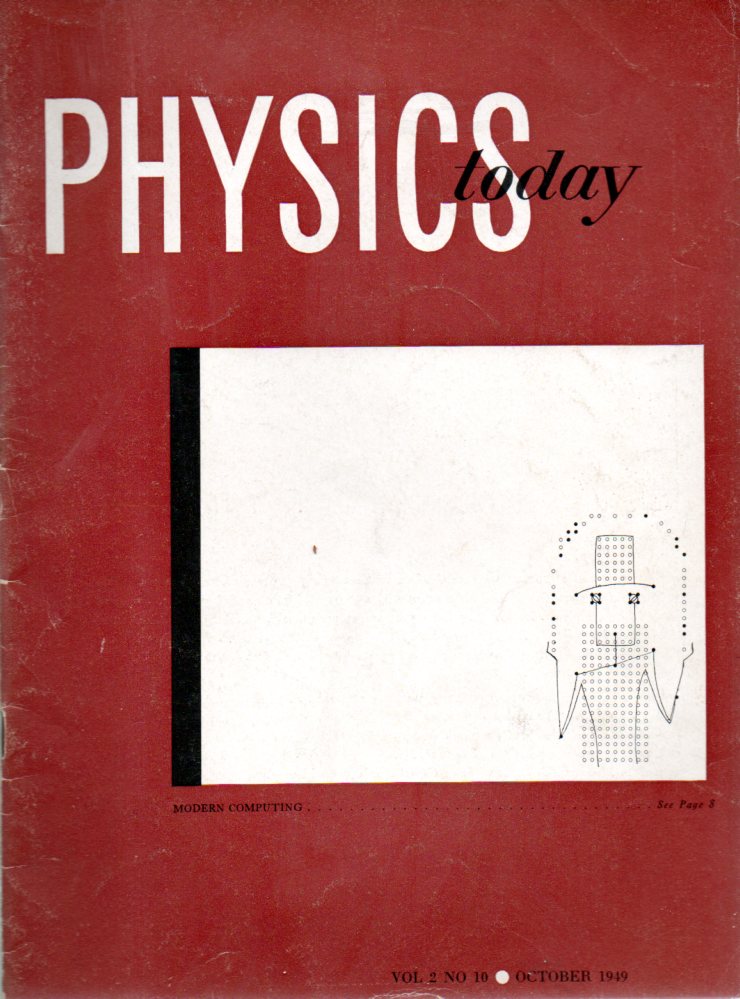
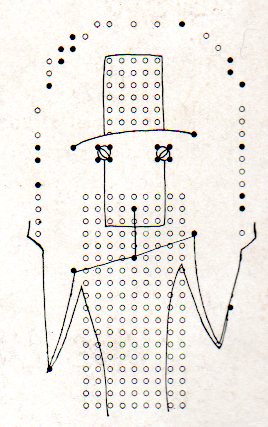
    Computer art154I’m not sure how to investigate this right off-hand, but I think that there is a special category in the history of art, subcat history of art and technology, subcat history of computer art, subcat using the image of the computer in art.  The image above comes from the front cover of one of the early issues of the “new” Physics Today magazine (volume 2, number 10), in October 1949–it is the artwork of Paul Bond, who created this portrait of a juggler “on a matrix sheet used for plotting computor [sic] plug board diagrams”, and is one of 11 such images. It illustrates an interesting article by pioneers R.D. Richtmyer and N.C. Metropolis (“Modern Computing”). Richtmyer/Metropolis have a very sober approach to the computer–mostly speaking about the ENIAC–and address its romance, possibilities, but seemingly (to me) most of all “a need for defining the limits of computing machine operation, as well as its promise”. In effect, then, the authors really only address the known quantities of computing capacity in 1949, and even though tempted by looking into the future, they really do not. Their vision of the future is very pragmatic: when speaking to future applications, they conclude “by their very nature, these applications are not easy to foresee, and perhaps, therefore, this is the point at which this discussion should close”. 

    Certainly there have been much earlier images of automated steam-driven robots with some sort of calculating brain, and images of imaginative computer-like objects…but art made by the computer seems to come a fair bit later than this issue, later still than what might be considered the first art generated via the computer (which were images made from manipulating an oscilloscope) in 1952. In any event, I think at the very least that the Bond artwork is very curious, interesting, and probably very early for what it is.

    Computer art153


  • A Note on the Biology of Computer Virus Names

    JF Ptak Science Books   Post 2193        

    I was looking around for one of the original references to the earliest human-tech definition of “singularity” and found it in a roundabout way, a classic reference referenced in a classic paper on singularity. Vernor Vinge wrote a breakout paper in 1993 called “The Coming Technological Singularity:  How to Survive in the Post-Human Era”1.  Among many other things the San Diego State math prof quotes how the great Stan Ulam  paraphrased John von Neumann saying: “One conversation centered on the ever accelerating progress of technology and changes in the mode of human life, which gives the appearance of approaching some essential singularity in the history of the race beyond which human affairs, as we know them, could not continue.” This was in 1958, and it appeared in Ulam’s “Tribute to John von Neumann” in the Bulletin of the American Mathematical Society, (volume 64, number 3, part 2, pp 1-49).

    It struck me as ironic that the “singularity” would appear just at the time von Neumann2–perhaps without equal in this century in thinking in terms of the computer and its applications and overall sheer brain-power–died, Ulam surfacing the term in what was basically a memorial/obituary/celebration issue of the Bulletin, the carbon-based life-form container finally failing the great mind.  

    It was then that I came to realize how much biologicalization has taken place in compsci terminology–not the least of which is the self-replicating and damaging “virus”, which itself of course is a massive biological deal, though in the digital world it is not its most abundant entity3.  E-viriology is found just about everywhere, much like its bio counterpart, which is located in every ecosystem on Earth.

    Even the word “computer” has an earlier biological counterpart–the “computer” was a human tabulator, a person grunting out figures into some sort of tabulating device. (Tracts for Computers, a series that began in 1919 and edited by Karl Pearson, is filled with statistical elements intended for the human computer…)

    But what strikes me first are the bio references for the bad stuff.  The viruses, and then later, the worms, and Trojan horses.  (I should point out the “bug” enters the computer vernacular fairly early, in 1949, via (later Admiral) Grace Murray Hooper, though it doesn’t get listed by her in her 1954 glossary of computer terms as published in two parts in Computers and Automation, volume 4, 1954.  There’s no “bug”, though there is “de-bug”.) 

    “Virus” emerges in a science fiction effort by Douglas Gerrold in 1972, a few years before they were artificially produced, which was a few years before a virus was released into the e-phere (“in the wild”).  In 1975 John Bruner unleashes a “worm” in his Shockwave Rider. 

    Others early viruses have biological names:  Creeper (1970), Rabbitt (1974), ANIMAL (by John Walker, though not created for being malicious, 1975), Top Cat (1980),   Elk (1982), Whale (1990), Hare (1996),  Blackworm (2006).  There are of course many more names for viruses (and company) that are not biological, but it struck me of how many of the earliest examples do have animal names.  I’m not sure that I have much to say about this presently, though I did want to put the general observation out there in this note.  

    Notes:

    1. The abstract of the paper begins: “The acceleration of technological progress has been the central  feature of this century. I argue in this paper that we are on the edge of change comparable to the rise of human life on Earth. The precise cause of this change is the imminent creation by technology of entities with greater than human intelligence. There are several means by which science may achieve this breakthrough…”

    2.  Perhaps of most interest here is von Neumann’s 1949 paper, “Theory and Organization of Complicated Automata”, which looks as the logic required for the self-replicating machine, in A. W. Burks, ed., Theory of Self-Reproducing Automata [by] John von Neumann, University of Illinois Press, Urbana, pp. 29-87. This was based on transcripts of lectures delivered at the University of Illinois, in December 1949, and then edited for publication by A.W. Burks. 

    3.  “Virus” is an old word, and is Latin for “poison” or “poisonous”, and which first appeared in English in 1392.  “Virulent” appears in English in 1728, “viral” in 1948, “virion” in 1958.  “Virus” as we know it bioloigcally today has a somewhat complicated history, escaping Pasteur and his microscope until it emerges (again) with Martinus Beijernick in 1898.

  • A Note from the Future: a Computer-Needs Questionnaire from 1953

    JF Ptak Science Books   Post 2089 

    At a time when computers were big, heavy, electrically-scented, hot and expensive
    (ranging into the hundreds of thousands of 1953 dollars, many millions in 2013
    bucks), and coming at a time when very few individual companies (exterior to
    the military/industrial sphere or insurance) actually owned one of these
    machines, Lawrence Wainwright wrote a useful guide to potential computer-buyers,  “Digital
    Computer Questionnaire”. Appearing in  the world’s first publicly-published
    computation/computer journal, Computers
    and Automation,
    Wainwright sets out in six single-spaced pages a
    very tight and logical set of questions for the would-be buyer of one of these
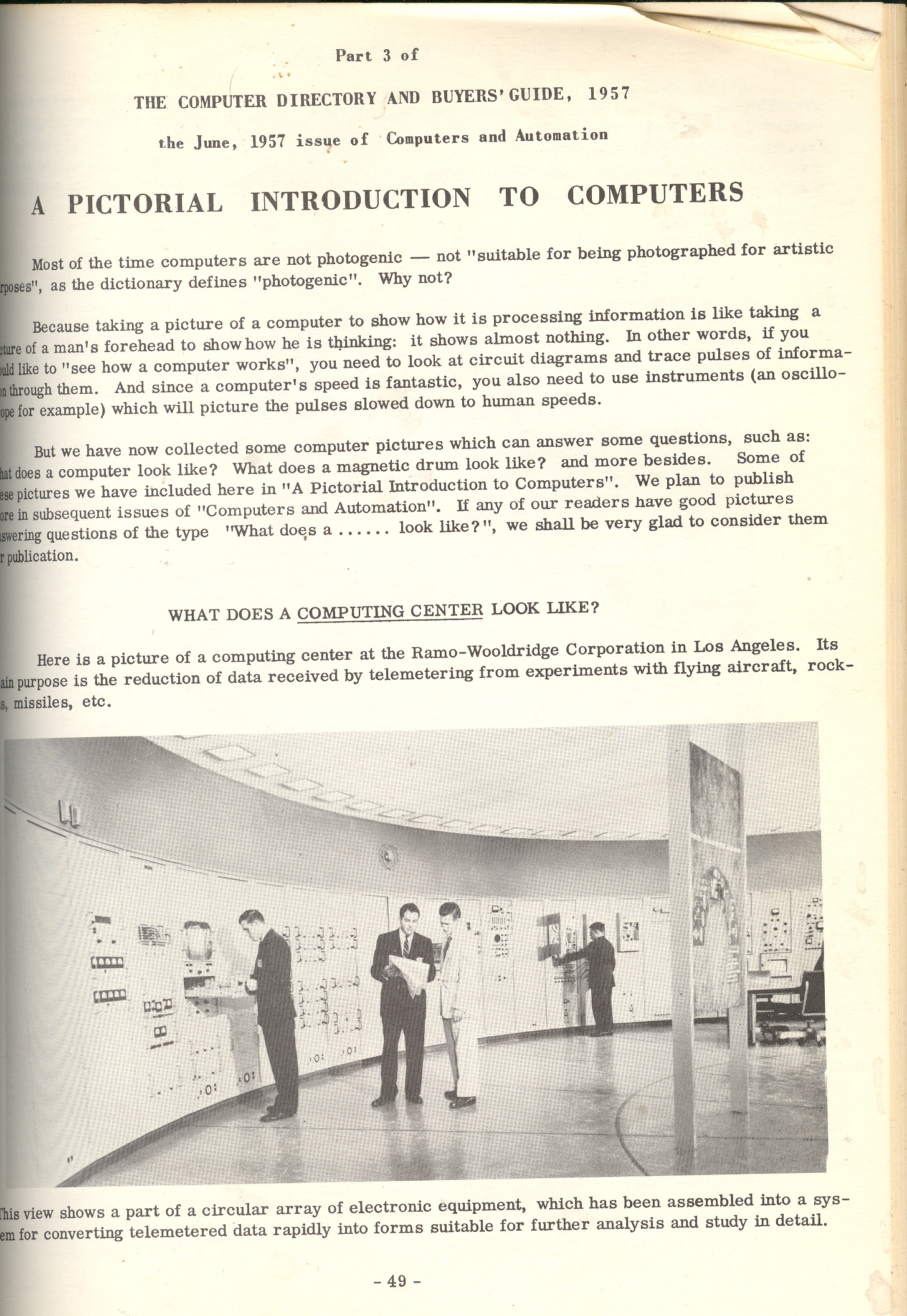
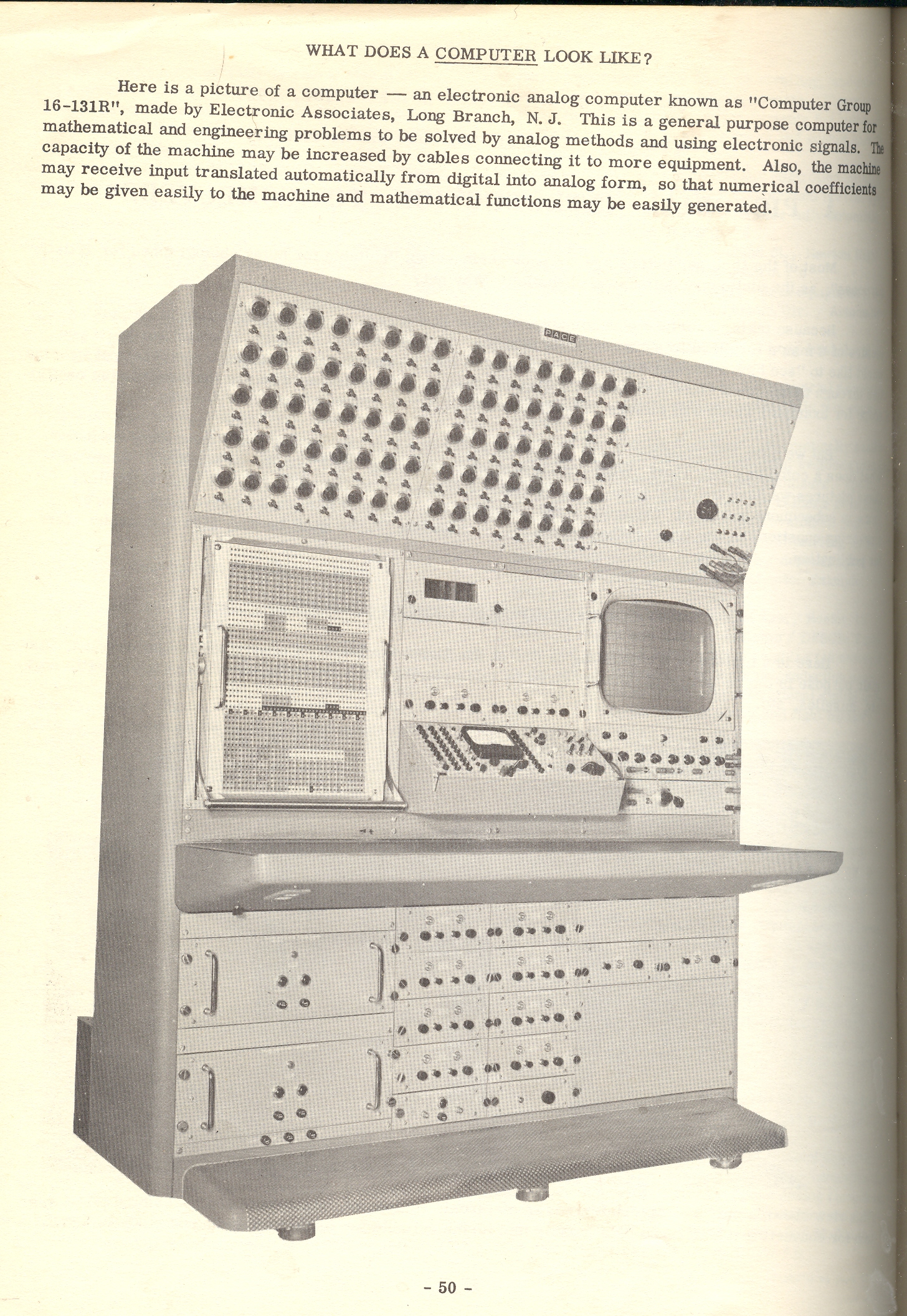
    early god-sent beasties. I’ve illustrated the non-illustrated questionnaire with a series of images from another article found a little deeper in the same journal, “A Pictorial Introduction to Computers”,  which appeared in June, 1957.  

    Mar 10 comp 1


    As I read through the list (excepted below) it becomes
    obvious that the really good questions are deftly asked, and that the possible
    buyer would be well on their way to having a good dialog with the seller.

    The questions do have a real flavor of antiquity to them,
    much like monied Parisians  with their
    detailed list of questions for their 15th century water-carrier:  where are you getting your water? What sort
    of bucket? How distant the source?  How
    cold? Is it sweet? Soft? Etc.  Good
    questions that made sense for their time, important, integral–until the water carrier (like the brick/mortar bookstore, or the computer questionnaire from 1953) was replaced by something more efficient, like a water delivery system.  

    This questionnaire is like a communication from the future to me, a
    reminder about our own current organization of knowledge and how it will seem to an observer
    in 25 years (or 50, or 100) and how soon pressing issues and sustained/necessary info will be delegated to the ever-creepingly speeding “antiquity”.
     The
    questions are excellent—they are just old, and no longer applicable, much like
    our own will soon be.   

    Mar 10 comp 2


     Digital
    computer Questionnaire

    [Lawrence Wainwright, Del Mar California]

    ·Posted by :

    ·in:


  • Robot Man, 1915

    JF Ptak Science Books      Quick Post   
     
    Follow Me on Pinterest

    Robot man437

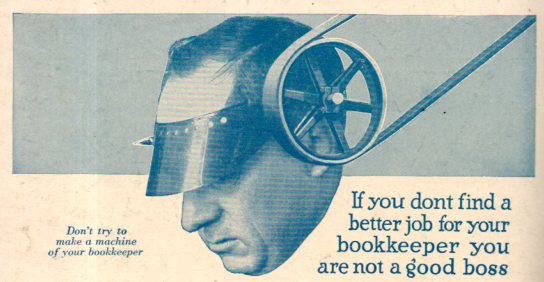
    The Burroughs Adding Machine company did about as much as anyone to objectify the worker in America during the 1880-1915 period, making the worker a part of a machine within the machine. In a way it was like creating the Ford assembly line for people sitting down. 

    The company was founded on the work of William S. Burroughs’ grandfather, William Seward Burroughs (1857-1898 and native son of Rochester, NY), who created a mechanical calculator to help him add long columns of numbers in his job as a bank clerk. American Arithmometer Company was founded by him and others in 1886, later evolving into Burroughs Adding Machine Company (1904), Burroughs Corporation (1953), and then into Unisys (combining with Sperry Univac in 1986) before sliding away.

    In any event the adding machine connected millions of people to a mechanizing process of what had previously been a mental operation–the flywheel in the side of the head of the clerk/accountant in this add for Technical World (More Fascinating than Fiction) for August 1915 wasn’t too terribly far from the truth. Interesting that on the other side of the head of this fellow, behind the other ear, is a pencil. 

    Robot man438


  • The History of Holes: Empty Holes in an Early “PC”

    JF Ptak Science Books   Post 2074   History of Holes series  Follow Me on Pinterest

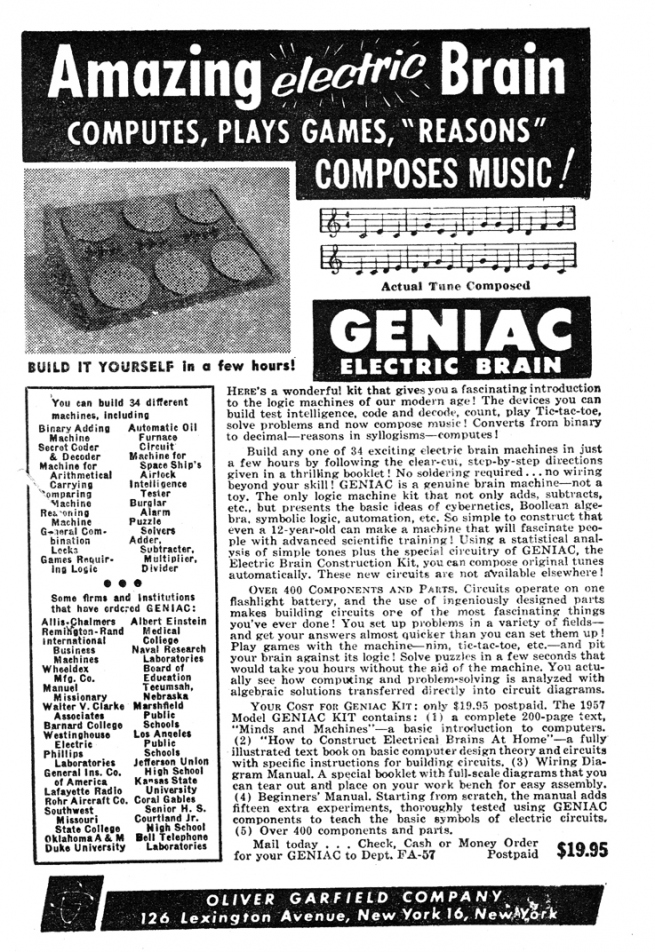
    These are some of the earliest holes in one of the very first personal computers–they were made for ease of wiring and other applications in the Geniac, a 1955 DYI kit from the indomitable Ed Berkeley, a machine well in advance but much of course the inferior of the Mark 8 (1974) and the Altair 8800 (1975), the later of the two seen as being about the very first modern “personal computer”. There weren’t too many empty holes in those two machines.


    Geniac415
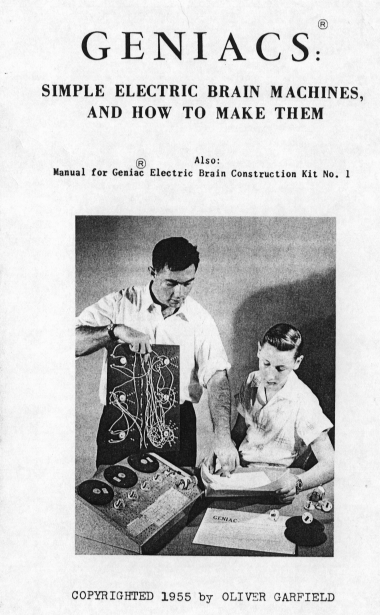
    What had no relays, or transistors, or tubes, and was manually self-sequencing and human bit state switching, the name ending in “-iac”, and made in 1955? The “Geniac”, made and manufactured by the smart and enterprising Edmund Berkeley and Oliver Garfield–the “Genius Almostt Automatic Computer”. It was I think the first in a line of early non-computer-computer-that-really-was-a-computer-according-to-Alan-Turing computers that a person could own and own at home, and it was followed pretty close on heals by the Tinyac, the Weenyac, and the Brainiac. 

    Geniac[Source: Dr. Gangrene, here.]

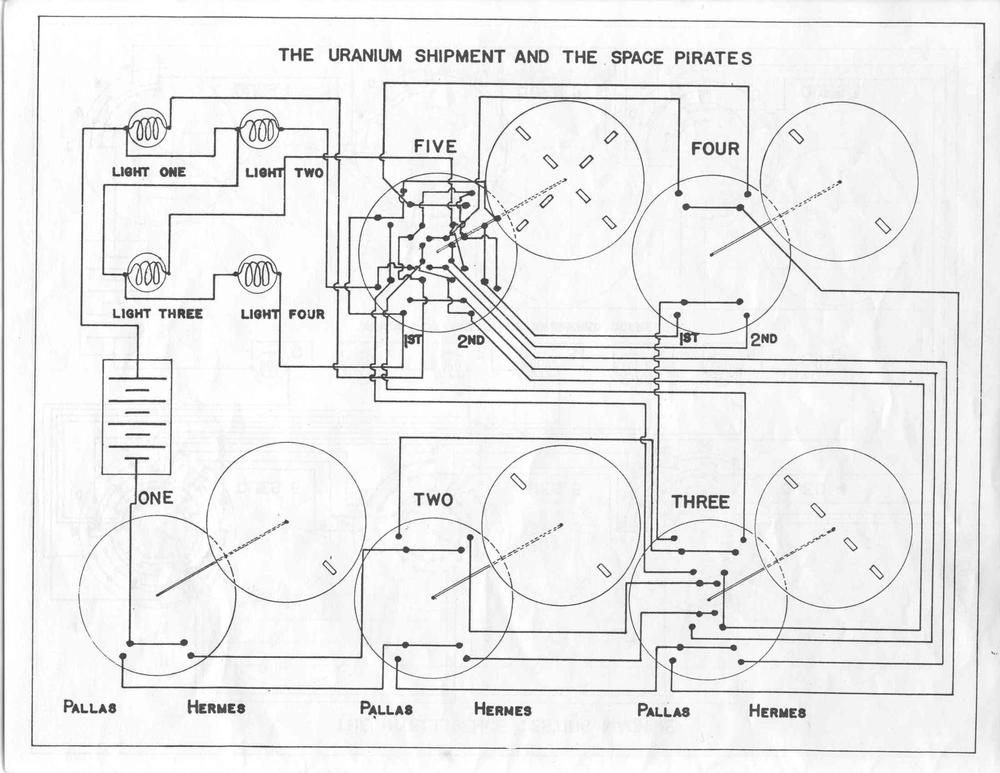
    The Geniac was/is a pretty neat tool–I hesitate to call it a “toy” as others have, mainly because it takes itself pretty seriously and still have fun, and includes diagrams and drawings for interesting sets of problems and tasks, from playing tic-tac-toe, to “testing” I.Q., to determining the male/female-ness of the respondent, to playing a very very mildly interactive game of uranium prospecting and alien hunting.  It was a fine construction, and  introduced the user to Boolean equations and the concepts of a working computer, all with hands-on education and a dry cell power course.  And that’s pretty good. 

    Geniac cover[Source:  Blinkenlights, here.]

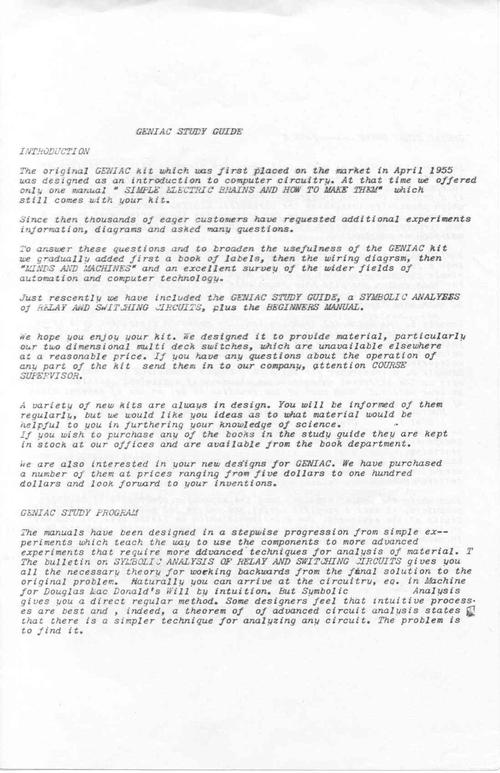
    Geniac Study Guide, via Computercollector.com (for the rest of the document):

    GEniac study guide
    Wiring diagran for the Uranium Shipment and Space Pirate game, again, via the computercollector.com

    Geniac  uranium
    See also the GENIAC entry at the Old Computer Museum, here.


  • A Fine Calculating Machine by Bollee, 1889

    JF Ptak Science Books  Quick Post

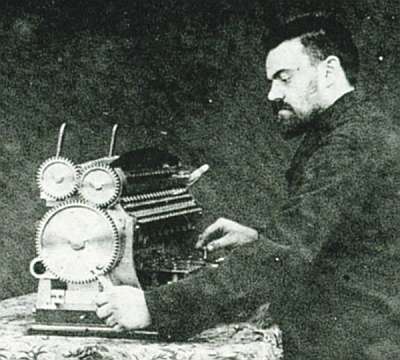
    Bollee
    [Source: http://www.rechnerlexikon.de/artikel/Bild:Bollee-mit-Maschine-CNAM1990.jpg]

    This was a surprise, finding M. Bollee’s article (Sur une nouvelle machine a calculer) in this 1889 Comptes Rendus, pecking around in that big 10-pound volume looking for something else.  It was very easy to miss if you weren’t looking for it, just a few pages long in a 1000-page book.  But there it was, nestled comfortably in pp 737-739.  It these few pages Bollee describes his machine and with particular reference to his innovative approach to direct multipilication–a fine addition (ha!) to the long line of contributions by Babbage and Clement, Scheutz, Wiberg and Grant and Hamann. 

    Notes:

    Léon Bollée: “Sur une nouvelle machine a calculer”, in Comptes Rendus de l’Academie Sciences (Paris), volume 109, 1889, pp. 737-9.

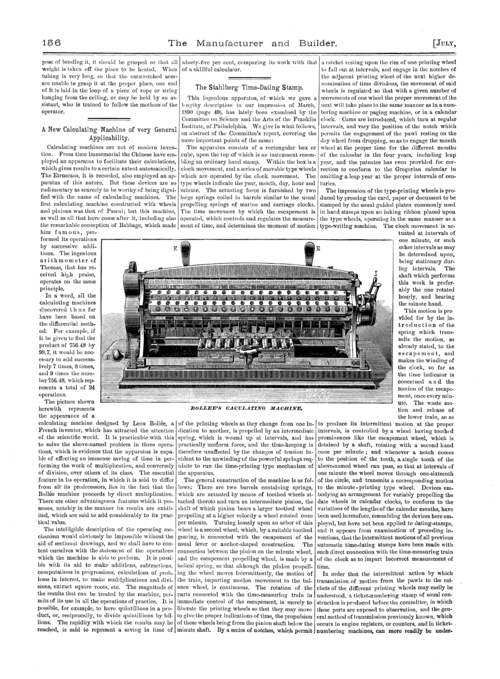
    An image of the machine from The Manufacturer and Builder:

    Bollee

    See:  the Making of America, http://digital.library.cornell.edu/cgi/t/text/pageviewer-idx?c=manu;cc=manu;rgn=full%20text;idno=manu0022-7;didno=manu0022-7;view=image;seq=0162;node=manu0022-7%3A21


  • Beginning an Alphabet of Science Fiction -Punkisms

    JF Ptak Science Books  Post 1981

    “The most ignorant person at a reasonable charge, and with little bodily labor, may write books in philosophy, poetry, law, mathematics, and theology, without the least assistance from genius or study.”  Jonathan Swift, in Gulliver’s Travels (Actually, Travels into Several Remote Nations of the World, in Four Parts. By Lemuel Gulliver, First a Surgeon, and then a Captain of several Ships).  1726.

    I’ve produced the beginning of an alphabet of –Punkisms for variations of robot.machine/computer past and futures, science fiction indicators of possibility. Why should we stop at “Steampunk” when there’s FuturePunk and DeadPunk and such to be had?  So, please find folllowing a few possibilities, and accept them in the playful way in which they are offered–also, the very abbreviated descriptions of the science fiction works desscribed are open to interpretation. And please give this a “pass” for the over-abundance of hyphens.

    A

    ActorPunk: Walter Miller, ‘The Darfsteller’ (1954), human actors are replaced by robots on stage, as compared to being replaced by digital figures online. Some steps have been made with great care over the years by “perfecting” the imaging of women in magazine advertisement—in this way even the models who appear in the ad and are modified find it impossible to live up to the expectations of what their ads depict.

    Anti-technologicalPunk-topia: Samuel Butler, Erewhon, (1872).

    AutomatoPunk:  Kurt Vonnegut, Player Piano (1955), like Brazil and 1984, but with machines.

    B

    BiologoPunk:  Philip K. Dick, ‘Autofac’ (1955), machines find that they can reproduce themselves in a ’50’s iron-bio kind of way. 

    BrainPunk: Miles J. Breuer, ‘Paradise and Iron’ (1930).

    C

    ConsciousnessPunk: Philip K. Dick, Vulcan’s Hammer (1960) and the development of computer consciousness.  Also David Gerrold, When Harlie Was One (1972);
    Frank Herbert, Destination Void (1966); Harlan Ellison, ‘I Have no Mouth and I Must Scream’ (1967);  Robert Heinlein, The Moon is a Harsh Mistress (1966), and many others.


  • The Machine in the Mind, 1919

    JF Ptak Science Books    Post 1979   Follow Me on Pinterest

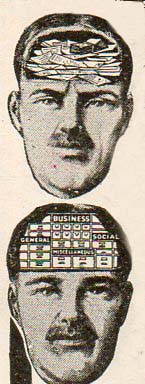
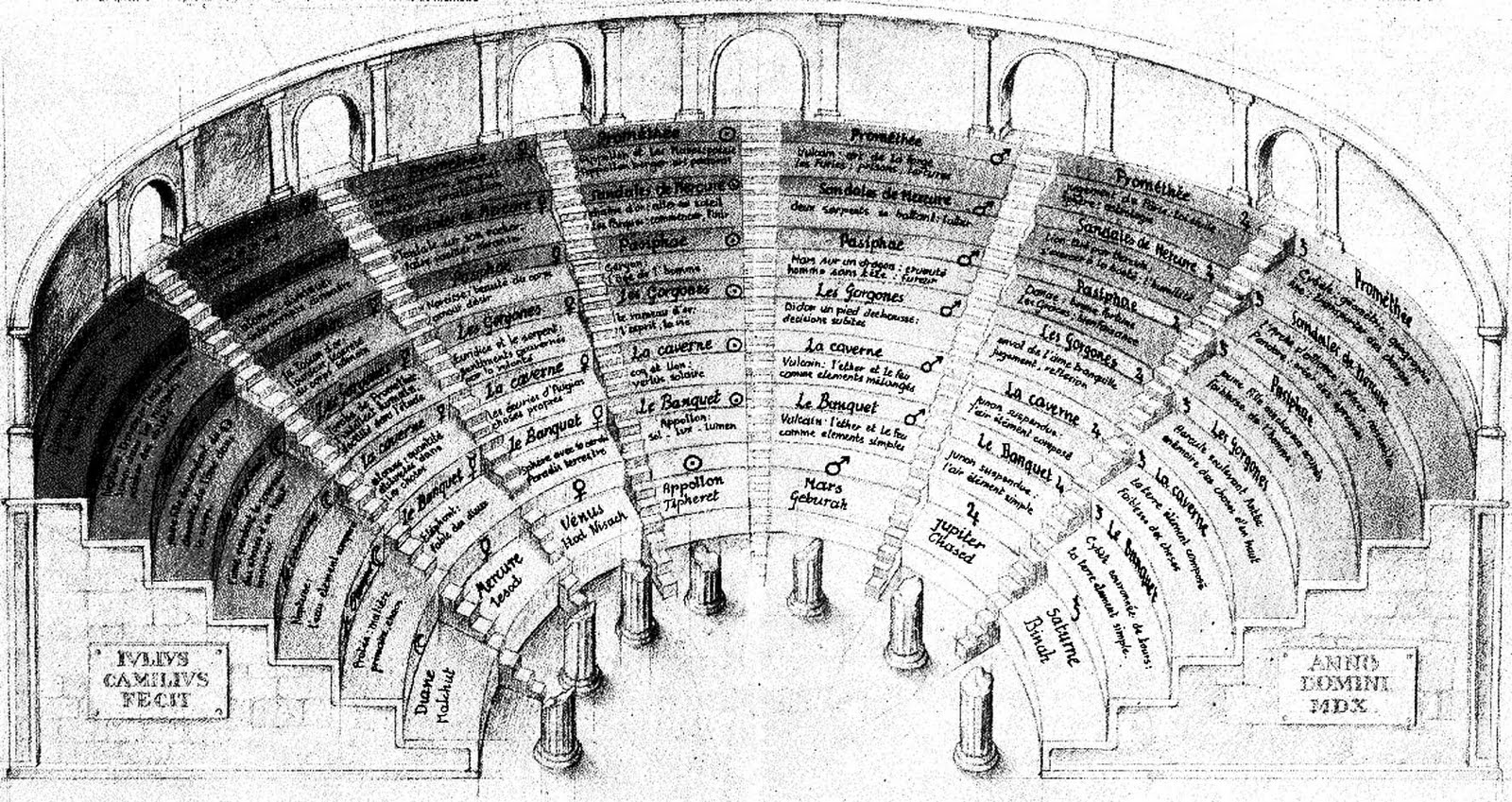
    Computer head089I’m unsure of when the first images appear representing the human mind as a sort of anthropomorphic filing system, utilizing a desk or filing cabinet or (later) a computer. From the early history of human memory-making mnemonic devices and memory palaces there are represnetations of where information in the brain could be stored for rapid access and retrieval, like memories being stored in rows of theater seating, or in the branches of complex trees, or in the buildings of a bird’s eye street map.  But these show where the memory “goes”, and not where this memory set sits in the brain of the individual. 

    Memory palace
    (An example of a memory palace, from Giulio Camillo,  L’idea del Theatro, 1550, from Bourbakisme blog).

    This came to mind seeing this odd little ad in the magazine Illustrated World for July 1919 seeing these fairly high-creep factor faces endowed with different sorts of cerebral applications. The top man is depicted with a messy desk and a hand-cranked calculator; at bottom we see the organized man, with papers sorted in their labeled places. (As it turns out, the image used for a company selling memory-improvement books).

     Perhaps this image was in a small way a pre-historic insight to brain computer interface (the acquired, direct signal processing of the brain to a computer), in the same way, say, as Hans Berger’s 1924 invention of the electroencephologram, where we can actually see electrical activity of the brain displayed on a piece of paper.  Of course, one image is a simple semi-folly to help hawk a mostly-useless huckerter book on memory improvement, while the other is a bona fide medical breakthrough.  But in similar ways they were insights into looking at the activity of the brain in connection to an external resource.

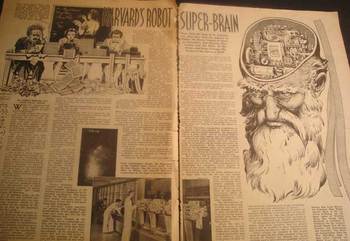
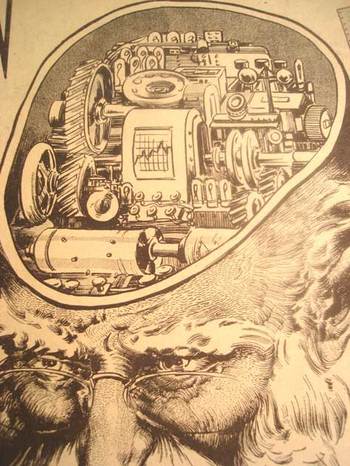
    In 1944 there was something else, something quite different allocated to the Leonardo-like head, something far in advance of the filing system of 1919: the computer.

    Blogharvardbrain
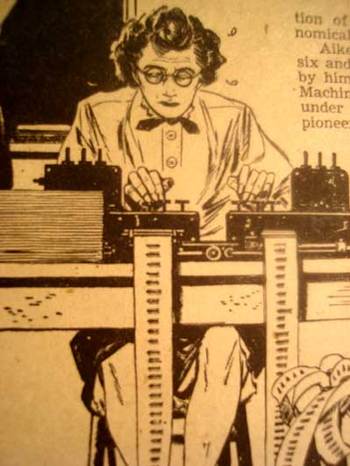
    This may well be the first public, popular, report on the Harvard Automatic Sequence Controlled Calculator (ASCC) (appearing in the American Weekly, 15 October 1944), the first automatic, general-purpose, digital calculator.  Known as the MARK 1, it was the brainchild of Howard Aiken (1900-1973), a graduate student at Harvard, who started it all in 1937 by proposing a series of coordinated Monroe calculators to function as a unified whole  that would cross the threshold of the physically-impossible calculation (though theoretically possible) to the eminently doable.  The project was immeasurably aided by the input of Harvard astronomer Harlow Shapley (who had earlier dealt with the enormously problematic aspects of the scale of the universe) who put Aiken in the hands of IBM at Endicott (NY).  From there the building of the computer came under the supervision of Clair D. Lake, with the engineering and theoretical team of Francis Hamilton, Ben Durfee and Howard Aiken.
    Blogharvardbraindetail

    The machine was basically completed in 1943 and tested in Endicott for the better part of the year before it was shipped of to Harvard in February 1944, where it was put almost instantly to work on ballistic calculations (like its cousin ENIAC at the Moore School at U Penn), as well as naval engineering and design issues. 

    The author of this article, Gordind Bhari Lal (“noted science analyst”), actually does a pretty decent job describing the machine and its (1940’s) possibilities, noting at the end that “it may even unleash for Man’s Use the long-dreamed-of energy of the atom”.  This part did come true, especially post-war, when the machine was put to fair use by the US Atomic Energy Commission. 

    The part I really don’t understand in this article is comparing the speed and function of the ASCC to two women working on calculators and Albert Einstein, working with a pencil, paper and pipe, none of whom look comfortable or happy.  (Actually the dresses on the women look a little hiked-up to me, just a little too high.)  Lal does make a decent comparative point (of uncertain veracity) about four generations of humans (the three above-mentioned calculators?) doing calculations that the ASCC could do in seconds.  Right or wrong, it gave the crowds in 1944 a real something to think about.

    Blogharvardbraingirl

    And so at the end of this post I believe that the representation of the brain as a mechanical device is relatively new, and I wonder if it isn’t a mostly-20th century creation.   Finding images of SteamPunk humans and robots and such roaming their ways through the literature in the 1920’s-1950’s is fairly easy, but showing the stuff inside the head and representations of how the mechanical brain was functioning seems to be a different matter.


  • On Seeing Things Backwards Series, 1: UNIVAC and the 1952 Election

    JF Ptak Science Books   Post 1917

    Univac-cronkite
    Leonardo wrote backwards and from right to left, Benjamin Button lived backwards at the hands of Scott Fitzgerald, Rene Magritte’s man in the bowler saw the back of his head, Herrimann’s Ignatz the Mouse I am sure saw the back of his head looking around the world with the world’s most powerful telescope, rugby passes are all done backwards, paper images of vue optiques appear backwards, lightning for all intents and purposes starts backwards from the ground up, reverse mathematics are worked from theorems to axioms, and the Chicago River (1900) was engineered to flow backwards for the foreseeable future, while the Mississippi River famously flowed backwards for just a bit in the New Madrid Earthquake of 1812. 

    I can only imagine what audiences must have felt when they saw the first moving pictures played backwards–seeing them played forwards was a novel-enough (and revolutionary) idea, but the simple idea of reversing the direction of the film would have proved to be equally fascinating. 

    Imagine the first time you witnessed a staged train wreck on film, back there in 1897, and imagine being able to see it played over and over again, until you were filled.  I’m not so sure that there were even any still photographs of a train wreck as it occurred to this point, even with advances in film speed and lens, so seeing the even unfold in front of you at leisure must have been overwhelming.  Now imagine these same folks seeing the event and watching the locomotives reconstitute themselves.  It would have been an extraordinary event.  Even observing the Etienne Marey sequences and seeing what actually happens when a person bends over to pick up a pail of water would have revealed almost as much in new detail as when Galileo was in the middle of his earliest observations. 

    Looking at things backwards is a good idea so far as thinking about engineering problems and of course in checking experimental results in the sciences–its not so good an idea though to change the results produced by the scientific method because they’re not a good intuitive fit to expected parameters.

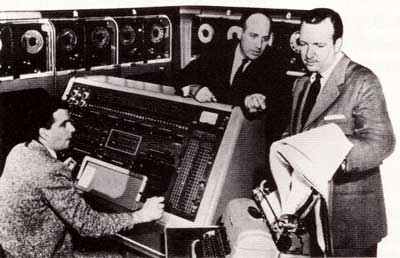
    Such was the cased with the first (and successful) employment of a computer to predict the outcome of a presidential election.  THe computer was the UNIVAC (the world’s first commercial computer and a blazingly fast machine at 10k operations a second, nearly six orders of magnitude lower than “superfast” by contemporary standards), which was brought in by Remington Rand to CBS News to crunch the numbers on the tight race between General Dwight Eisenhower and Gov. Adlai Stevenson (II) on 4 November 1952.  (Stevenson was the son of a former U.S. Vice President and would run again against Eisenhower in 1956.) Pioneers Pres Eckert and John Mauchley, along with Max Woodbury (and programmer Harold Sweeney, who is seated at the UNIVAC’s control panel and who seems never to be mentioned in the iconic photo at top, with Eckert at center and anchorman Walter Cronkite at left).   CBS News Chief Sig Mickelson and Cronkite were not comfortable with the proposal, but ran with it anyway, sensing a moment of the-future-is-now.

    The Eisenhower/Stevenson race was seen by the large majority of pundits to be too close to call, so when the UNIVAC’s results pointed to a landslide for Eisenhower (438 electoral votes and 43 states to Stevenson with 93 electoral votes and 5 states) folks got very sweaty and nervous, not trusting the outcome. As this was still a very early age in human-machine interaction, and the computed results fell far away from perception and expected response, changes were made in the UNIVAC’s programming to determine a more “reasonable” response by the machine, the new results making the race very tight and fitting human expectations and giving Eisenhower a very slim margin of victory.  As poll results started to sweep in an hour or so later indicating that Eisenhower was showing with a huge victory, the UNIVAC was again reprogrammed and at about midnight the announcement was made that the UNIVAC had indeed been correct in the first place.  The final results were 442 electoral votes for Eisenhower and 89 for Stevenson.  In the next presidential election in 1956 the three networks all had computers working for them–with them–and a different perception had been formed on working with computers. 


  • On Seeing the Future in Waves, 1876

    JF Ptak Science Books  Post 1847

    I wrote a few days ago on one great event of 1876–the invention of the Graham Bell telephone, the successful, most appropriate, best working telephone–mentioning that there were others great achievements in this year as well..  The four stroke engine (Nikolaus von Otto, the application of thermodynamics as applied to chemical change (J. Willard Gibb s, one of the very few portraits of whom would later hang on Einstein;s Princeton walls), Robert Koch’s bacterial cultivation, Eugen Goldstein’s work on Pluecker’s (cathode) rays, all came into being in this year.  But there was another remarkable development in that year that also contained a pretty clear vision of the future, of the shape of things to come.

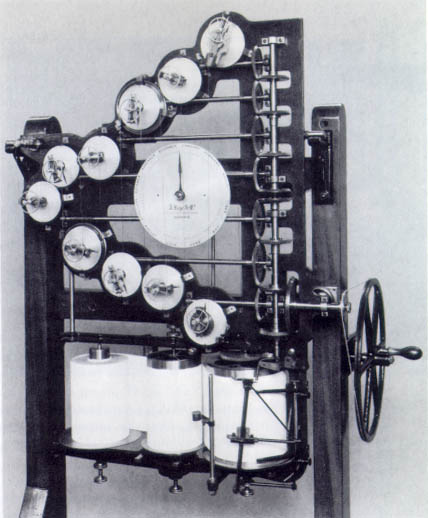
    That vision belonged to Lord Kelvin,  whose work across many different fields, and at great and expanded levels, was extraordinary; but it was in his tide predictor that the future materialized.. He was one a few people who could really wear the future-specs really well, right alongside Strickland, and Babbage, and Bush, and Turing and von Neumann, a true visionary whose vision awaited the appropriate technology to machine it.

    Thomson was attracted to many things, not the least of which were gadgets, like slide rules, to which he brought his profound capacities. He saw that these arithmetical tools were analog computers, and that bound together, they represented much more than just themselves, the seeds of far more powerful calculating engines. His great breakthrough was devising a tidal predictor, something that he devised in 1873, and wrote about in a seminal paper in 1876, describing what is basically the world’s first analog computer.

    Baron Kelvin's Tide Predictor (1876-1878)

    “1876-1878, Baron [ Lord ] Kelvin builds his harmonic analyzer and tide predictor machines. The harmonic analyzer broke down complex harmonic, or repeating, waves into the simpler waves that made them up. The tide predictor machine could calculate the time and height of the ebb and flood tides for any day of the year.“–York University, here.

    See Thomson’s excellent lecture given at the 25 August 1882 Southampton Meeting of the British Association for the Advancement of Science, here.