A Daily History of Holes, Dots, Lines, Science, History, Math, Physics, Art, the Unintentional Absurd, Architecture, Maps, Data Visualization, Blank and Missing Things, and so on. |1.6 million words, 7500 images, 4.9 million hits| Press & appearances in The Times, Le Figaro, Mensa, The Economist, The Guardian, Discovery News, Slate, Le Monde, Sci American Blogs, Le Pont, and many other places… 5000+ total posts since 2008.

Category: Bad Ideas

  • Racism in Space

    JF Ptak Science Books   Quick Post   Follow Me on Pinterest

    Attributing human characteristics to extra-terrestrial bodies is an ancient practice.  Constellation It is an ancient human practice of giving stuff human attributes, to allow things to have powers of reason,and understanding, in order to make them understandable, intellectuallyconsumable.  This applies to (Father) time, many aspects of the
    possibilities of g_d, constellations, planets, the Man in the Moon, facial appellations of the Sun, winds, rain, and so on. Large chunks of our real and imagined worlds are given faces and mentions–that, plus personifications of elements, where we describe the difficult and the invisible with traits that are in our common human understandable currency:  like, for example, sin “lurking” and storms “hiding” and meteors “racing”. It makes the complex and uncommon more reasonable. 

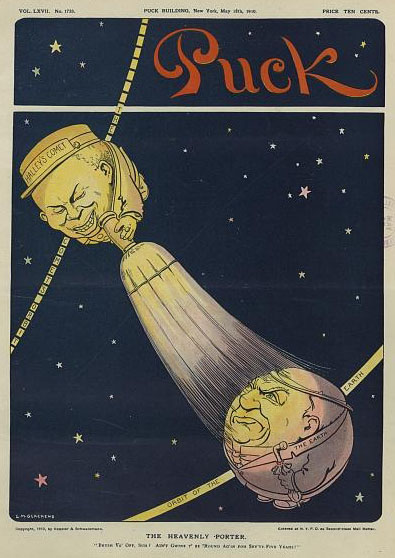
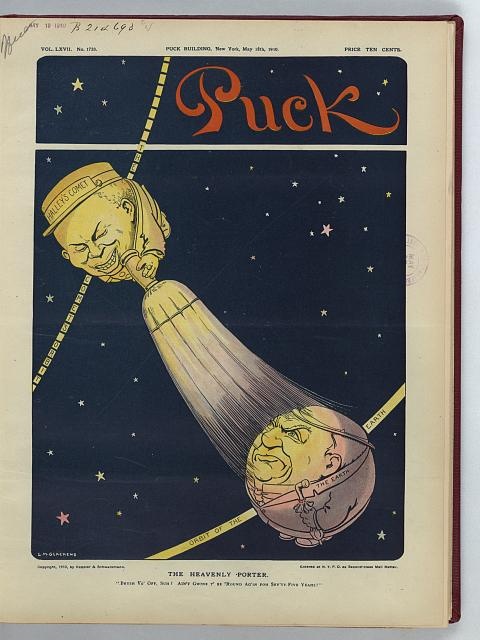
    In all of this, particularly in the personification and anthropomorphization of celestial entities, there are very few examples of vicious and cruel representation of a subject.  That is what struck me so about the following cartoon from Puck magazine–I am sure that I have never seen a racist representation of an element in the sky.  Until
    today. 


    Race sky

    [The heavenly porter: Caption: “Brush yo’ off, Suh? Ain’t gwine t’ be ’round ag’in foh sev’ty-five yeahs!”  Illustration in Puck, v. 67, no. 1733 (1910 May 18), cover.  Copyright 1910 by Keppler & Schwarzmann. Source:  Trevor Owens, via the LOC.]

    This is an example of how engrained racist thinking like this was at that time–and it makes a person think about the unthought aspects of racism exists elsewhere, at other times, and today. 

    ·Posted by :

    ·in:

    —

  • Crowd Series: Fascist/Anti-Fascist Demonstrations, London, 1934

    JF Ptak Science Books   Post 1984    Follow Me on Pinterest

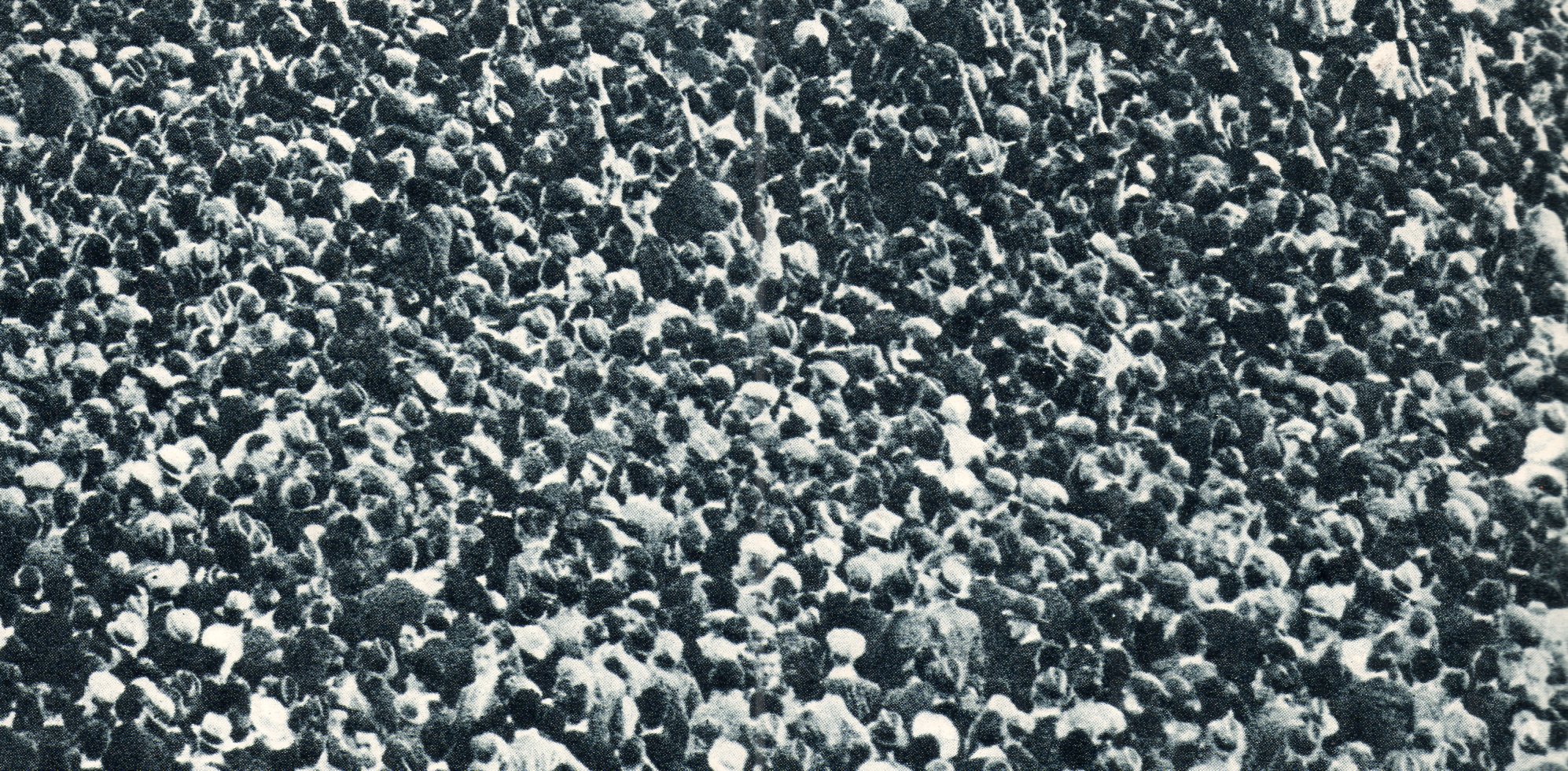
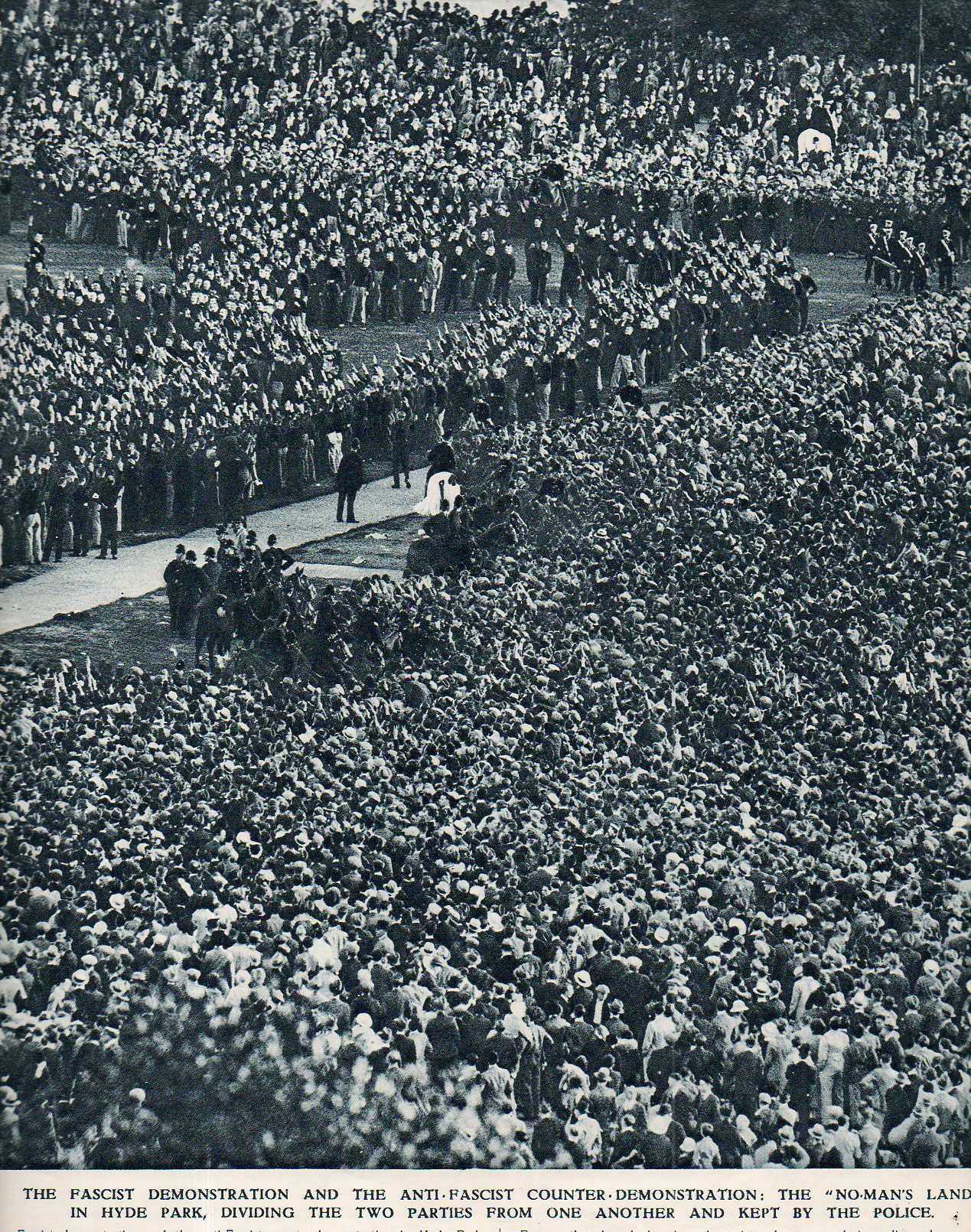
    This remarkable photograph was published in The Illustrated London News on 15 September 1934 and shows the Fascist demonstration in Hyde Park of 9 September. There was an “anti-Fascist counter-demonstration” at the same time, same park–the two sides were divided by the “No Man’s Land” path in the middle, screened by police on each side.  The crowd at the left/middle is the fascist group–easily discriminated by their salute and then their visual sameness, so many of them wearing the signature black shirts. At bottom/right/top is the counter-demonstration group, which is far larger–they were orderly but not having any patience for Hitlerism. 

    Crowds fascist105

    Which is a detail from:

    Crowds fascist104
    [Source: private collection]

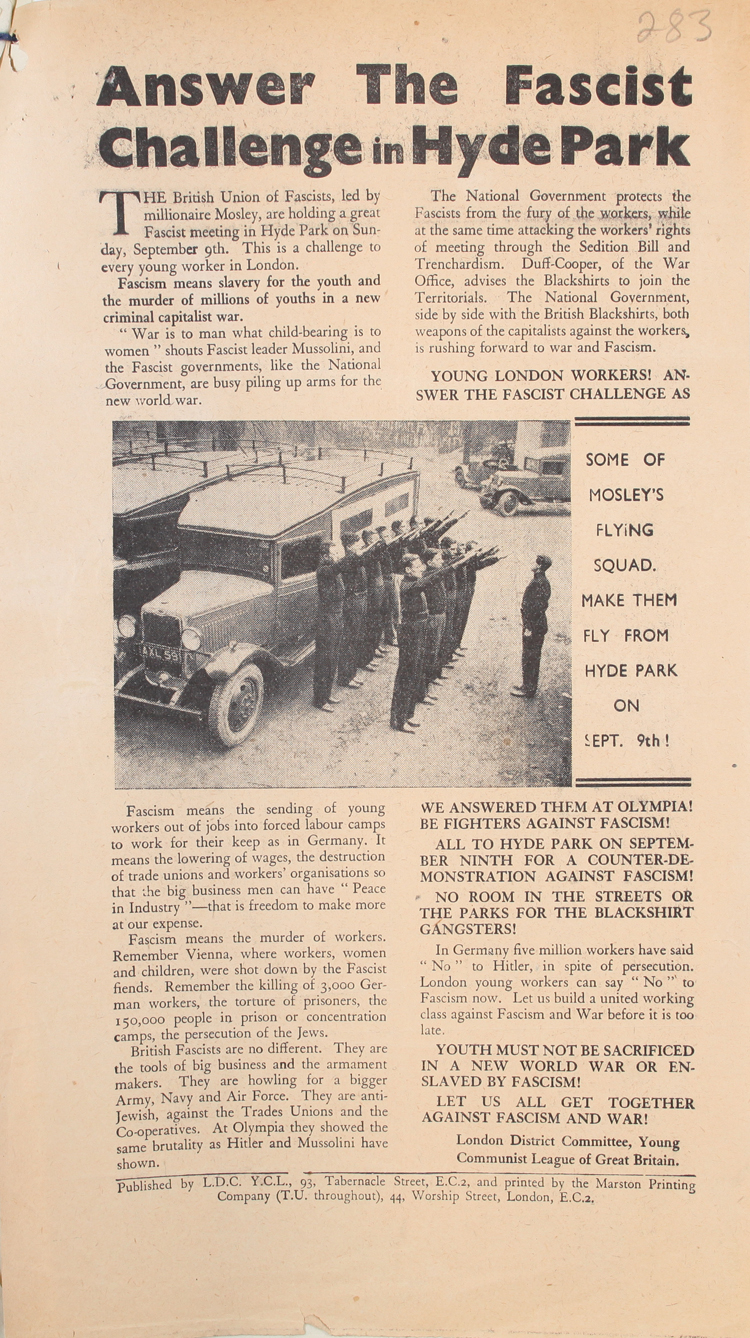
    I found a handbill for one of the opposing groups at the demonstration:  the Young Communist League, which evidently showed up in force.  In the caption of the above photo there is no mention of the party affiliation of the anti-fascists, except to quote witness Will Rogers saying “the Blackshirts were holding one meeting. Two hundred yards away the Communists were holding theirs. And in between was all of London lauhing at the both of them”.  According to a quick search I’m not sure that there were this many communists in all of London in 1934–I assume the anti-  crowd was very mixed.

    (These Blackshirts should not be confused with Albanian/Indian/Italian blackshirts, or German brownshirts (brown maybe because black was traditionally used for Christian Democrats?), or American silvershirts, though some do bear some resemblence. In the other color-shirt-political-affiliation categories there are, for example, the redshirts of Italy, the blue- and greenshirts of Ireland, the goldshirts of Mexico, the greyshirts of South Africa, the greeshirts of Romania, and the blue shirts of Taiwan).

    Fascist demonstration 193
    Source:  British National Archive, here.

    The “Mosley” here Sir Oswald Mosley (1896-1980), founder of The British Union of Fascists in 1932 which in 1936 changed its name to the British Union of Fascists and National Socialists and then in 1937, slimming it down to the British Union, until it was disappeared by the government in 1940 in a ‘defence of the realm action” under Defence Regulation 18B.

    Mosley and his wife were arrested in 1940 and spent a few years in relatively high privilege in prison, a situation granted by Winston Churchill. They lived in their own inner-prison cottage, with a garden and servents.  They were released in great controversy in 1943 and seem to have spent decades in the far right spectrum publishing and promoting questionable and of course distasteful political viewpoints. 

    ·Posted by :

    ·in:

    —

  • Breaking Bad in Half: a Book to Exhaust and Maim the Reader

    JF Ptak Science Books

    “Sometimes a book is just entirely bad, and sometimes it is entirely nothing. It is impossible for a book to be both very bad and very nothing. Impossible.  Except for this book, whose badness is exceeded only by its nothingness, and vice versa“. –Oscar Wilde

    And so into this black hole of imaged Wildeian description we go, into a very real-ish book.

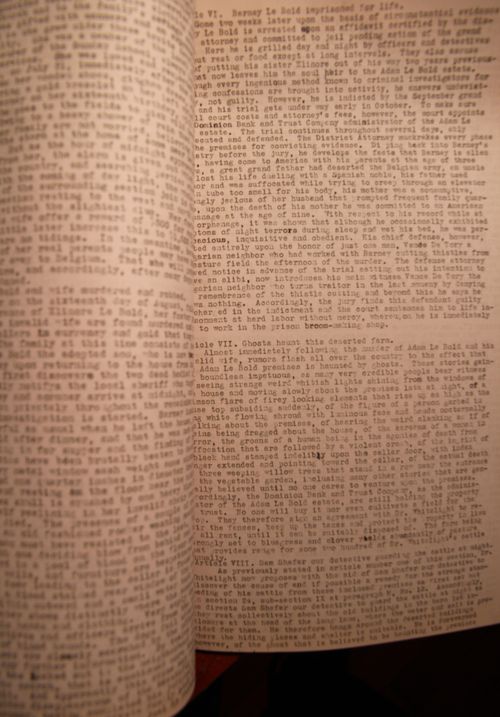
    I found a novel tonight, bought long ago and long ago mostly lost.  It was written by a doctor who worked in the District Hospital in Lima, Ohio, and written in 1934.  The Lima Hospital was the largest poured concrete structure in the world when it was built in 1915, and stayed so until the Pentagon was completed.  The hospital was established for the criminally insane, had 14″-thick walls, and reinforced steel bars laid into the walls that went “right down to bedrock”. 

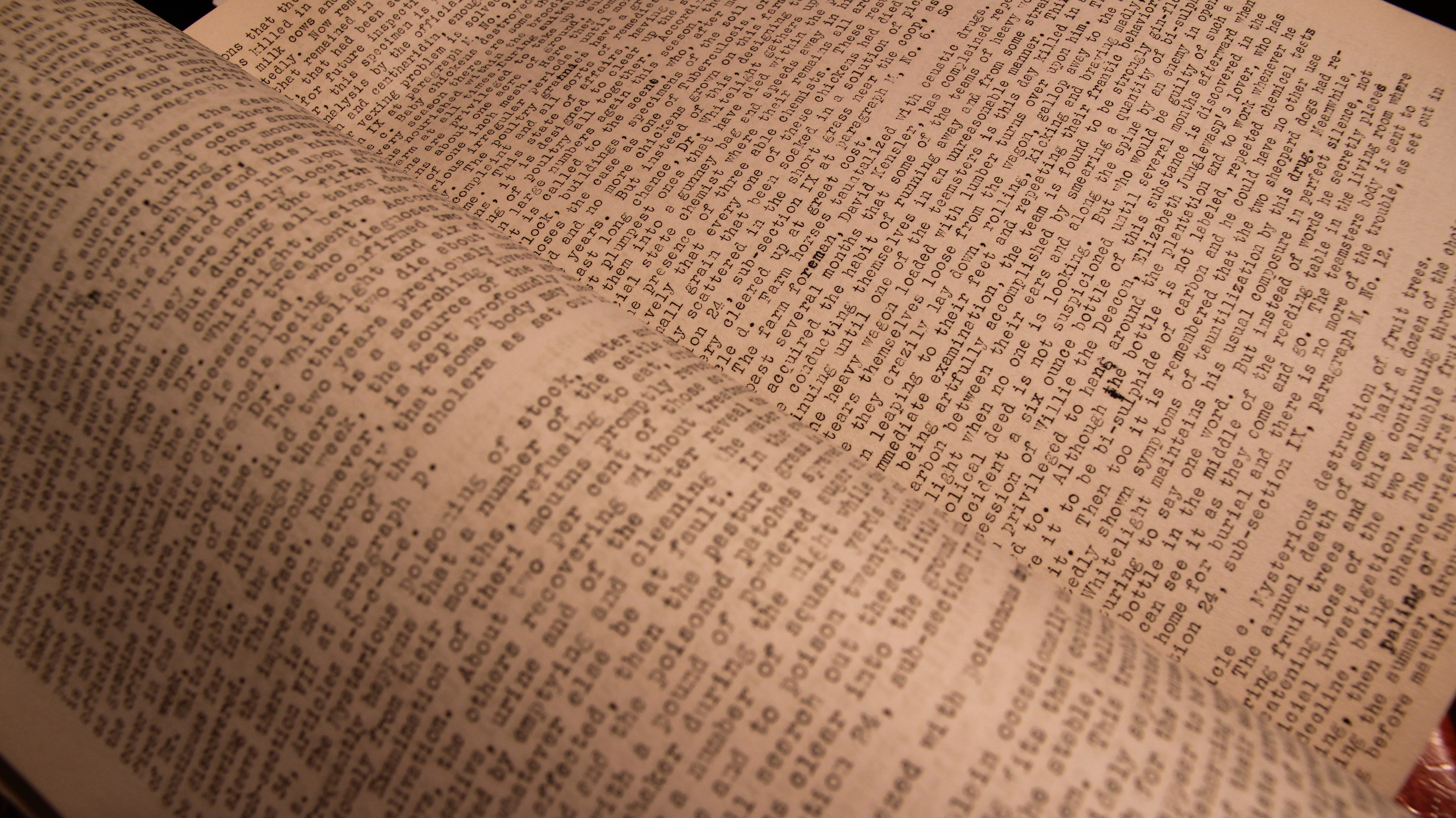
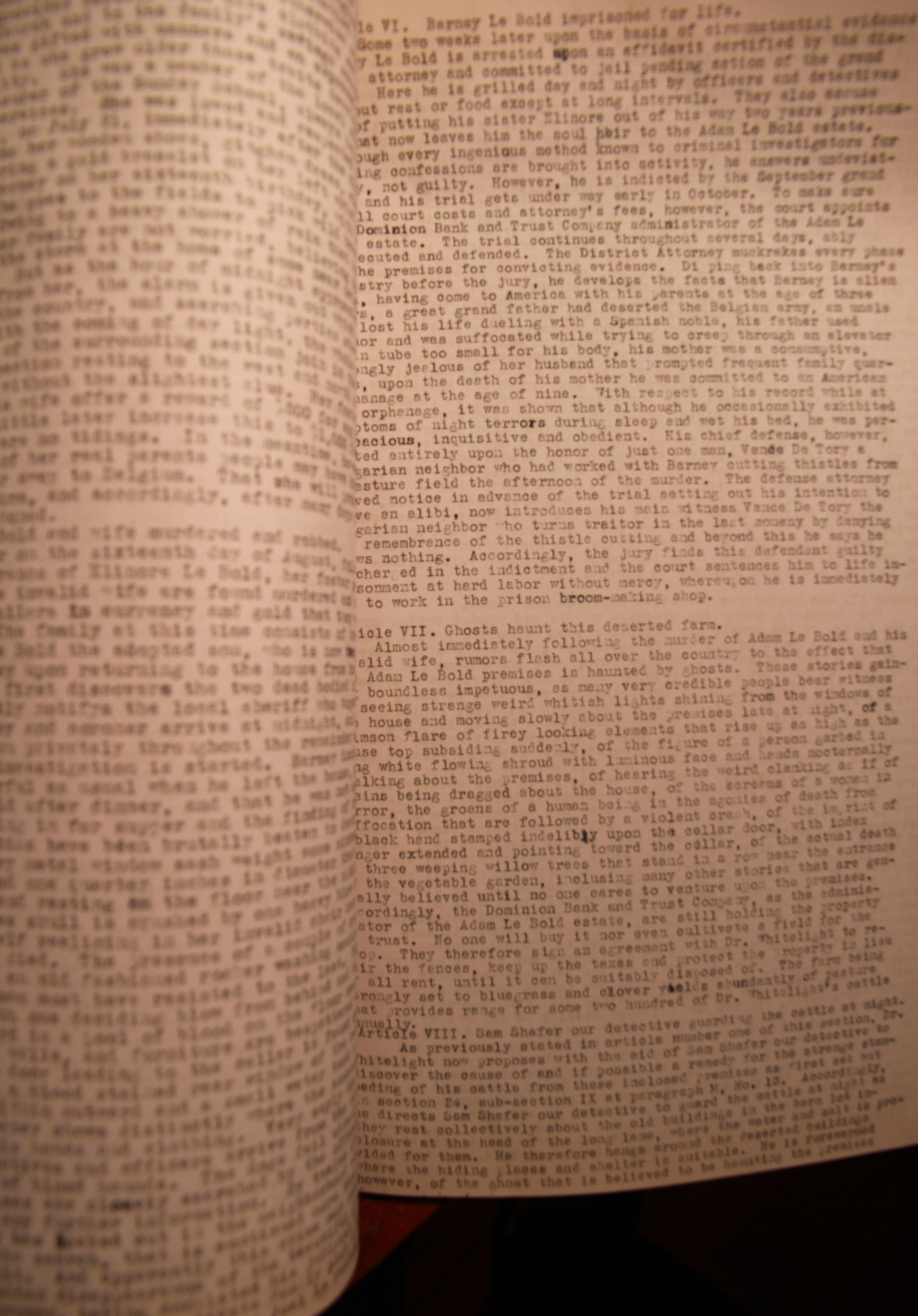
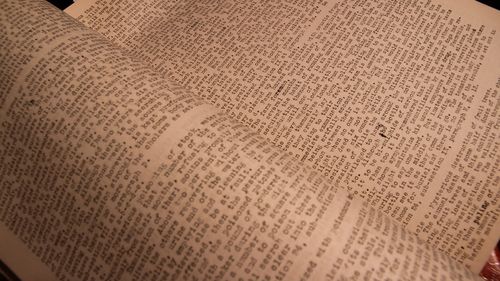
    It was somewhere in there that this doctor wrote something that was really so toweringly bad that it escapes comprehension. I own the carbon copy of the unpublished work, which is typed on 14×8.5″ sheets of paper, front and back, running 94 pages. It is a very crowded affair, with 90 lines of single-space typed lines, making the work about 115,000 words long. 

    There wasn’t enough space evidently for paragraphs, which gives the work a kind of insistent, casket-cramped cruelty.  To read it takes your breath away for its dullness–the book moves so weirdly and at the same time so very slowly that it doesn’t move at all even while moving.
    Manuscript insane one

    A few months ago I found the seven-foot-long scroll of the book’s plan–a work of crowded magnificence of nothing and confusion, being very orderly at the same time.  It went to a friend of mine who created artwork around it, and as it happens made a very noticeable appearance in a very significant yearly show in NYC last week. I was stunned to find that there was actually a text to go with the scroll-outline–it emerged from the warehouse this week, so perhaps this too will find a very celebrated life as art as well. Certainly the book would go nowhere on its own as a book, though it stood a chance at surviving on the grounds of its considerble design weirdness, which is of a complexified beauty.
    Manuscript insane two

    In the meantime, before all of the letters slide themselves off the page from sheer boredom and before the thing is resurrected as a magnificent artistic effort, I’ll share some ianges of the extra-ordinary book of reversed brilliant badness. I’ve also culled a few imaginary descriptions of the book from writers known and not:

    Potboiler scribbler:

    “He couldn’t speak.  He could barely see. Blinded by the flames ignited inside his eyeballs from the novel in his lap.  The words were like molten lead, sucked off the page by his eyes, forming a vacuum in his brain.  It was a bad book”.

    The first-time published novelist’s approach:

    “He couldn’t speak the words of the thoughts in his head, because they and all of his breath were stolen by the magic of the complete badness of the book in his lap”.

    Gertrude Stein:

    “The book was bad and bad, and bad was the book. Even the badness of the bad was bad, a whole new insight into being bad. It was the bad book by which bad books are called bad”.

    Ernset Hemingway:

    “He didn’t read the book so much as he looked through it.  It was easy–there was nothing there. As bad as it was, it could get no worse. So he shot it, and poured a drink”.

     You might wonder what this book is about.  Me too.


  • Strychnine for Weak Women, 1920

    JF Ptak Science Books   Quick Post

     
    Weak women061
    Women, weak women, women with iron-poor blood, were sought by the manufacturers of Nuxated Iron, a small-bottled mottled mess that promised to increase vigor and iron levels, mostly through miracle.  It turns out that, according to various early studies, there was a very small amount of iron in the concoction, as well as small amounts of strychnine.  An E.O. Barker, M.D., reported to JAMA in 1923 that a small boy he attended who had taken 32 of these Nuxated Iron tablets died from strychnine poisoning.  There was no benefit from the iron, evidently; I wonder what the long term effects of small dosage ingestion of strychnine led to?  [“Weak Women” ad for Nuxated Iron from Illustrated World, November 1920/]


  • Vaginal Opium Suppository & Rectal Exercise Dumbbell Patents (1881 & 1931)

    JF Ptak Science Books Quick Post

    Follow Me on Pinterest


    This is a Quick Post quickly posted, fast-quick, mainly because I’m not so sure what to say about it, other than “wow”.  So, I’m sharing these patents for the sake of sharing, mostly without comment. (Here’s another curious suppository-related post on this blog: Radioactive Suppository Sex Aids & Radium Toothpaste: Shining Lethal Nonsense).

    The first comes from Leonhard Roth, of Brooklyn, who won this patent in 1881:

    And:


    ·Posted by :

    ·in:

    —

  • Questions Answered with Guts, Wax, Bumps and Glory: Fortune Telling Patent Devices

    JF Ptak Science Books   Post 1956
    Follow Me on Pinterest


    [All images via the lovely and easy to maneuver Google Patents here]

    Fortune telling and divination is mostly the subject of the pretty patents (below), a quick penny-ante for the fulfillment of the instant treatment of possibility. reckoning via mechanical means,easing folks out of the necessity to think about What May Come, and also, possibly, relieving some of them of the possibilities of worry should the fortunes agree with their hopes.  And desires. Opposite, for the opposite. 

    This thinking goes back a long way into dark and dusty time, though it becomes interesting (to me, anyway) when it gets wrapped up in Renaissance magic and science. 

    I’m not sure what it reveals except for what people might have wanted to believe in during different periods of time.

    Anyway, the patent drawings are pretty.

    The ways of telling fortunes are broad and numerous and may have been dictated by the stuff that was readily available at hand; a veritable alphabet can be quickly summoned to deal with the most common of the sort:

    Alectromancy (telling the future by relatively brainless modern dinosaur roosters pecking at the ground for stuff);

    Astrology
    (thinking that the motions of stars that are light years away from the
    observer in a vast sea of space and their annotation on an
    infinitesimally small speck of universe dust called “Earth” can somehow
    interact with living organisms that are 1030000 the amount of space that can be affected by the light from the stars that are 1/1,000,000,000 of the age of those stars);


  • Movable Maginot: a Feast of Morbidly Techno-Gigantism

    JF Ptak Science Books LLC   Post 959, extended.     Daily Dose from Dr. Odd
    Follow Me on Pinterest


    Nothing
    quite exceeds like excess said Mr. Wilde (and others) , and he/they could be no
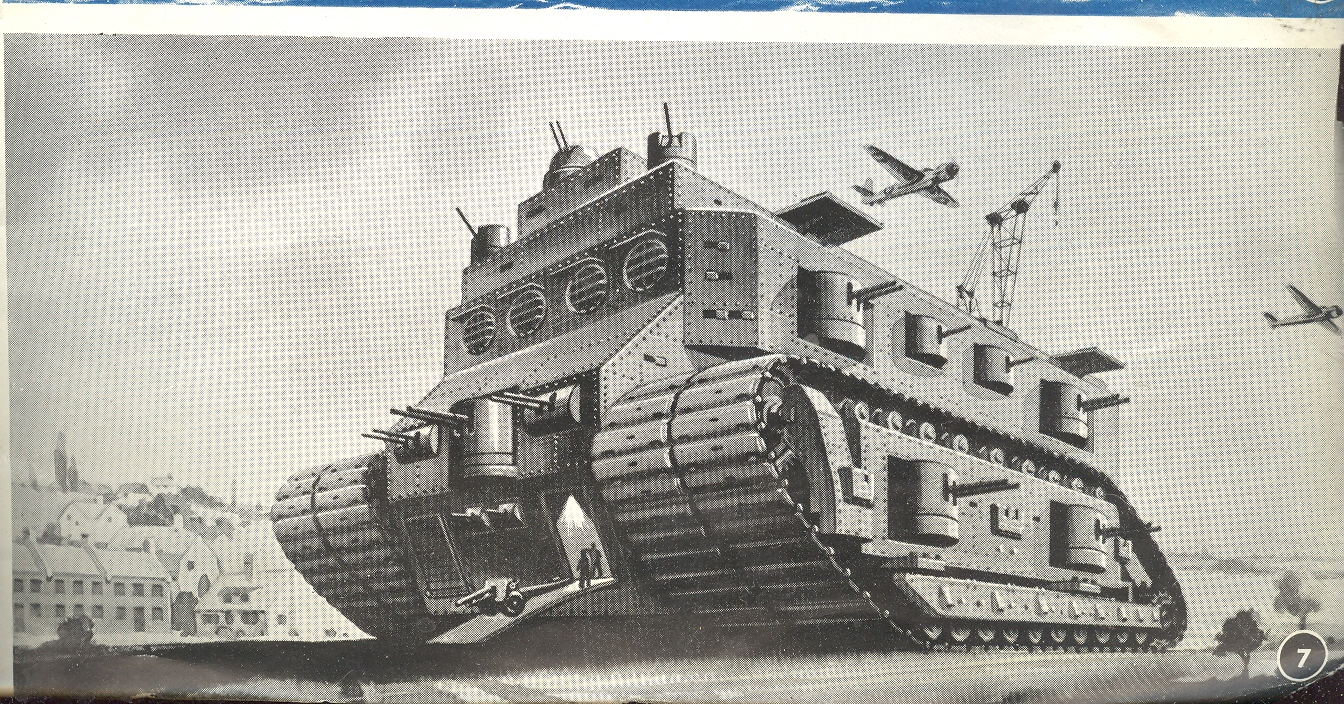
    more correct when looking at this picture of a Movable Maginot Line—it is a
    mobile fort, complete with plane launching capacity, two dozen long canons, a
    crane, and a host of other stuff.  


    000--win--land tank


    It
    looks as though it has ample room for all sorts of materiel though leaving
    little room for, perhaps, an engine.  I
    just can’t see where it might be…perhaps it is near the
    not-room-enough-for-it-either ammunition compartment.  Maybe they were in a smaller armed cart being
    pulled by the mothership?  I reckon that
    this beast was 66 feet high, 100 feet long and 60 feet wide, which is a very
    big, heavy near-cube. Good luck with driving the thing in anything that was
    less than perfect conditions.  A big
    profile like this, filled with guns and canons or not, also makes for a big
    target profile—a tall, broad target with flat/non-inclined sides. ( I should
    also point out that there are two 10’ loudspeakers mounted on the front of the
    fort to instill fear in the people that the thing was approaching with loud
    noise.  The author points out that the
    Nazis used noise against the French with their “screaming dive bombers”, and so
    the fort would use the same tactics against the Nazis in the moveable fort—not
    that the sound of the engines and the attendant noise wouldn’t’ve been enough
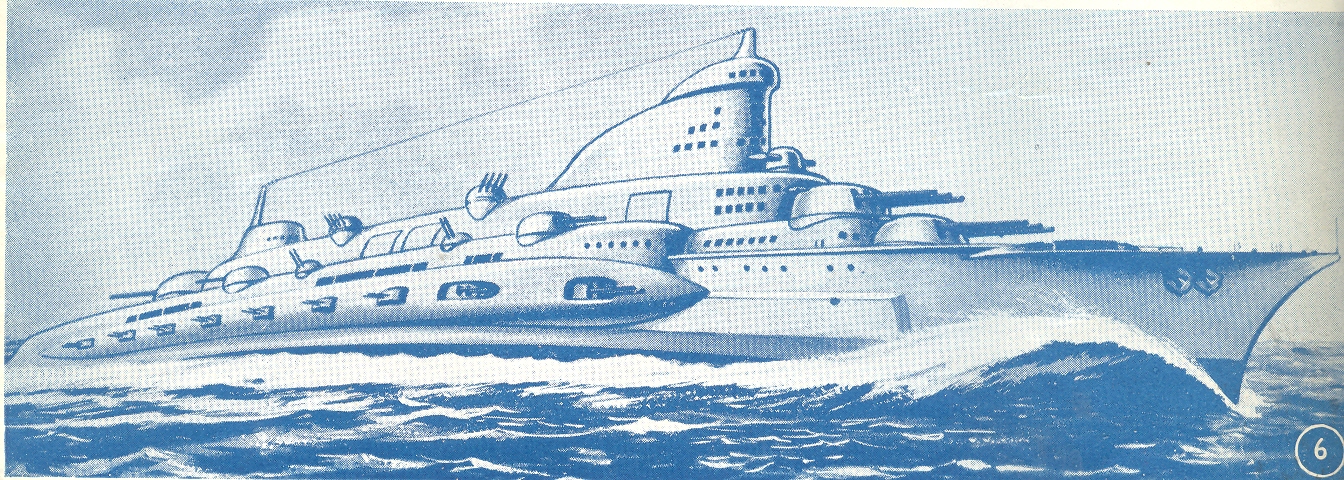
    of a fear factor in themselves…)000--win--tubular ship

    But
    the image of such a monster, sensical or not, was enough for the purposes of
    the pamphlet in which it appeared.  The Brains to Win was a piece of British
    spirit/hope propaganda issued at about the time of the Battle of Britain in
    1940, and it listed the sorts of technological breakthroughs that were going to
    push the nation over the top to victory. 
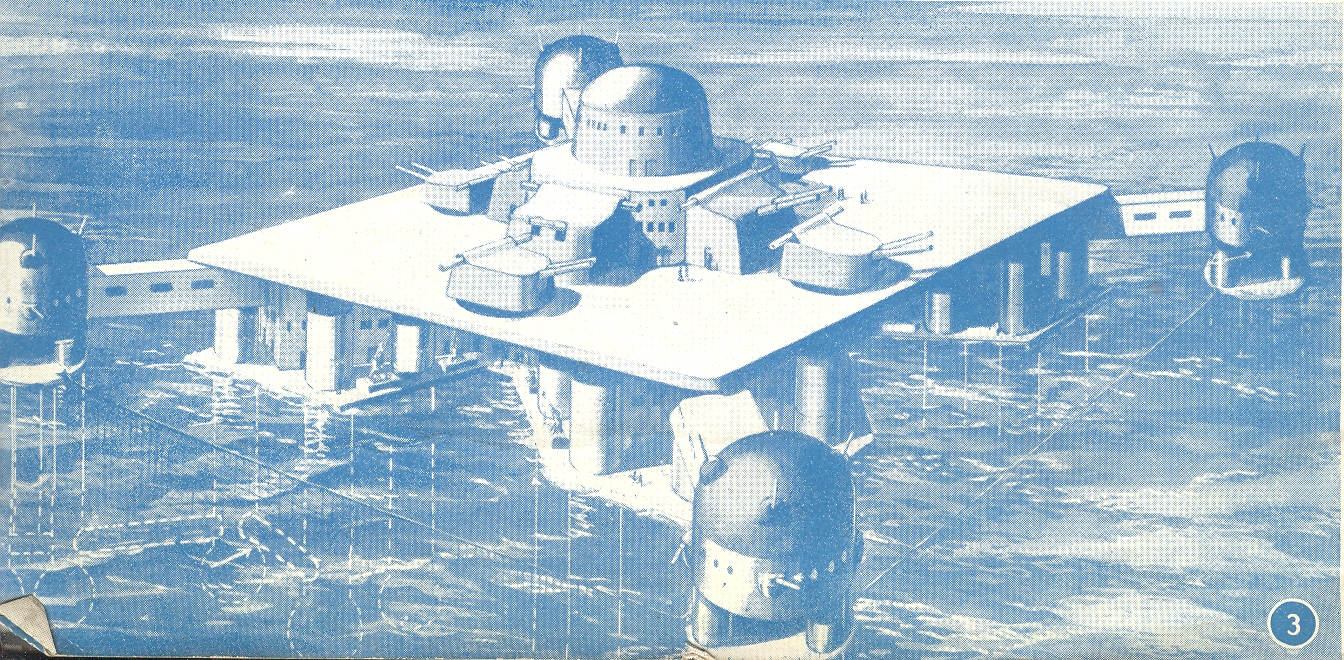
    Some of the stuff was real, some not—like the moving fort/Howl’s Castle
    above, and the floating fort, below.


    000--win--floating airport


    I’m
    not sure where a floating fort would make sense, especially one of that size.
    (Iterating the figures on deck into distance, it looks as though the deck on
    the floating platform was 150 or 200’ square. 
    It would’ve looked like a big target from above.) Given the time and
    expense and material  needed for such a
    thing, it seems that it would’ve been cheaper to make a moveable fortress not
    quite so big, with less of a profile, and more mobile—I think that this was
    called a “destroyer” or “battleship”.  

    But
    no matter, I’m just poking fun at some of the future vision that became archaic
    the moment it was drawn, punk retro-future. 
    All the pamphlet was trying to point out in its 32 pages was that
    overall the Brits were smarter than the Germans and that would be the balance
    for victory in the war.  “Hitler will get
    some very unpleasant surprises before this is over” the author very politely
    pointed out, no doubt with one eyebrow raised.  The scientists agreed.

    And
    they were right, which is all that matters.


  • Standing on Your Stagnant Nerve-Juice Nostril Tube? The Daily Dose from Dr. Odd

    JF Ptak Science Books     Daily Dose from Dr. Odd  
    Follow Me on Pinterest

    This cure-all from G. Anston looks simple, but the hydraulics of his nerve juice pumper is actually a little involved, or more involved than it needed to be given the fact that the machine didn’t actually do anything productive.  That said, Anston was  setting out to “move fluids” and cause all manner of cure-alls for “air stagnation” in the body, without the trouble of losing any time except for sticking those tubes into your nostrils.  I do not know why the artist has the subject standing on  #44 (the nerve-waste elimination tube) which was basically the tail-pipe of the cure-waste that was supposed to be flushed from a window.  It seems as though stopping the exit of the stagnated brain-air and nerve-fluid effluvia might’ve made the subject’s head pop off a little, which would be problematical. 


    [Source:  Google Patents, here.]


  • Have a Very Meaty Christmas and Other Christmas Advert Disasters

    JF Ptak Science Books  Quick Post

    Wrong is wrong, and sometimes there’s not much more than can be said…


    Photo


    Santa Meat

    ·Posted by :

    ·in:

    —

  • Child Labor Street Trades, 1908-1924

    JF Ptak Science Books  Quick Post


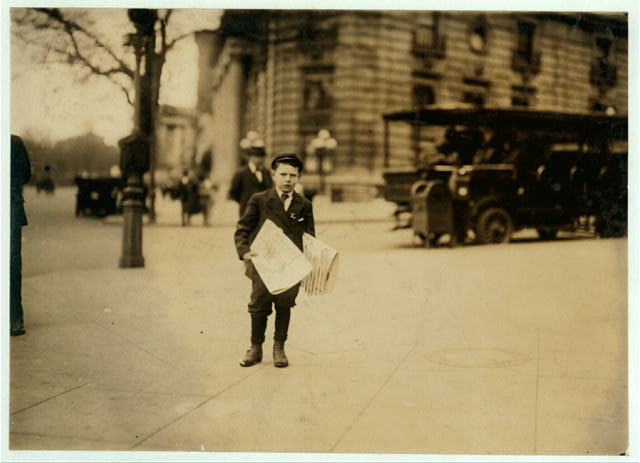
    Newsboy
    I’ve posted a number of times in this blog on child labor in the U.S. Today’s post is a simple display of images made by the great Lewis Hine (1874-1940) that are housed at the Library of Congress (findable here) showing the state of the child worker in the first quarter of the 20th century.  The children are chauffeurs, bootblacks, delivery boys, messengers, food vendors, shuttle runners (and all sorts of mill work activities), miners (coal handlers, underground mule guides, etc.) and many other jobs, including of course the most iconic and visible reminder that children were working–the newsboy. Hine’s documentary evidence shows the children working in all manner of weather, at all times of day and night, in all sorts of working conditions–and of course showing how little and frail and open-to-abuse the children were.

    Each of the images below is expandable and linked to the original at the Library of Congress site; shown below are two of the ten pages of images. 


    digitized item thumbnail

    digitized item thumbnail

    digitized item thumbnail

    digitized item thumbnail

    digitized item thumbnail

    digitized item thumbnail

    digitized item thumbnail

    digitized item thumbnail

    digitized item thumbnail

    digitized item thumbnail

    digitized item thumbnail

    digitized item thumbnail

    digitized item thumbnail

    digitized item thumbnail

    digitized item thumbnail

    digitized item thumbnail

    digitized item thumbnail

    digitized item thumbnail

    digitized item thumbnail

    digitized item thumbnail

    digitized item thumbnail

    digitized item thumbnail

    digitized item thumbnail

    digitized item thumbnail

    digitized item thumbnail

    digitized item thumbnail

    digitized item thumbnail

    digitized item thumbnail

    digitized item thumbnail

    digitized item thumbnail

    digitized item thumbnail

    digitized item thumbnail

    digitized item thumbnail

    digitized item thumbnail

    digitized item thumbnail

    digitized item thumbnail

    digitized item thumbnail

    digitized item thumbnail

    digitized item thumbnail

    digitized item thumbnail

    digitized item thumbnail

    digitized item thumbnail

    digitized item thumbnail

    digitized item thumbnail

    digitized item thumbnail

    digitized item thumbnail

    digitized item thumbnail

    digitized item thumbnail

    digitized item thumbnail

    digitized item thumbnail

    digitized item thumbnail

    digitized item thumbnail

    digitized item thumbnail

    digitized item thumbnail

    digitized item thumbnail

    digitized item thumbnail

    digitized item thumbnail

    digitized item thumbnail

    digitized item thumbnail

    digitized item thumbnail

    digitized item thumbnail

    digitized item thumbnail

    digitized item thumbnail

    digitized item thumbnail

    digitized item thumbnail

    digitized item thumbnail

    digitized item thumbnail

    digitized item thumbnail

    digitized item thumbnail

    digitized item thumbnail

    digitized item thumbnail

    digitized item thumbnail

    digitized item thumbnail

    digitized item thumbnail

    digitized item thumbnail

    digitized item thumbnail

    digitized item thumbnail

    digitized item thumbnail

    digitized item thumbnail

    digitized item thumbnail

    digitized item thumbnail

    digitized item thumbnail

    digitized item thumbnail

    digitized item thumbnail

    digitized item thumbnail

    digitized item thumbnail

    digitized item thumbnail

    digitized item thumbnail

    digitized item thumbnail

    digitized item thumbnail

    digitized item thumbnail

    digitized item thumbnail

    digitized item thumbnail

    digitized item thumbnail

    digitized item thumbnail

    digitized item thumbnail

    digitized item thumbnail

    digitized item thumbnail

    digitized item thumbnail

    digitized item thumbnail

    digitized item thumbnail

    digitized item thumbnail

    digitized item thumbnail

    digitized item thumbnail

    digitized item thumbnail

    digitized item thumbnail

    digitized item thumbnail

    digitized item thumbnail

    digitized item thumbnail

    digitized item thumbnail

    digitized item thumbnail

    digitized item thumbnail

    digitized item thumbnail

    digitized item thumbnail

    digitized item thumbnail

    digitized item thumbnail

    digitized item thumbnail

    digitized item thumbnail

    digitized item thumbnail

    digitized item thumbnail

    digitized item thumbnail

    digitized item thumbnail

    digitized item thumbnail

    digitized item thumbnail

    digitized item thumbnail

    digitized item thumbnail

    digitized item thumbnail

    digitized item thumbnail

    digitized item thumbnail

    digitized item thumbnail

    digitized item thumbnail

    digitized item thumbnail

    digitized item thumbnail

    digitized item thumbnail

    digitized item thumbnail

    digitized item thumbnail

    digitized item thumbnail

    digitized item thumbnail

    digitized item thumbnail

    digitized item thumbnail

    digitized item thumbnail

    digitized item thumbnail

    digitized item thumbnail

    digitized item thumbnail

    digitized item thumbnail

    digitized item thumbnail

    digitized item thumbnail

    digitized item thumbnail

    digitized item thumbnail

    digitized item thumbnail

    digitized item thumbnail

    digitized item thumbnail

    digitized item thumbnail

    digitized item thumbnail

    digitized item thumbnail

    digitized item thumbnail

    digitized item thumbnail

    digitized item thumbnail

    digitized item thumbnail

    digitized item thumbnail

    digitized item thumbnail

    digitized item thumbnail

    digitized item thumbnail

    digitized item thumbnail

    digitized item thumbnail

    digitized item thumbnail

    digitized item thumbnail

    digitized item thumbnail

    digitized item thumbnail

    digitized item thumbnail

    digitized item thumbnail

    digitized item thumbnail

    digitized item thumbnail

    digitized item thumbnail

    digitized item thumbnail

    digitized item thumbnail

    digitized item thumbnail

    digitized item thumbnail

    digitized item thumbnail

    digitized item thumbnail

    digitized item thumbnail

    digitized item thumbnail

    digitized item thumbnail

    digitized item thumbnail

    digitized item thumbnail

    digitized item thumbnail

    digitized item thumbnail

    digitized item thumbnail

    digitized item thumbnail

    digitized item thumbnail

    digitized item thumbnail

    digitized item thumbnail

    digitized item thumbnail

    digitized item thumbnail

    digitized item thumbnail


    ·Posted by :

    ·in:

    —