A Daily History of Holes, Dots, Lines, Science, History, Math, Physics, Art, the Unintentional Absurd, Architecture, Maps, Data Visualization, Blank and Missing Things, and so on. |1.6 million words, 7500 images, 4.9 million hits| Press & appearances in The Times, Le Figaro, Mensa, The Economist, The Guardian, Discovery News, Slate, Le Monde, Sci American Blogs, Le Pont, and many other places… 5000+ total posts since 2008.

Category: Aviation & flight

  • Will Aeroplanes Soar to Unknown Heights? (1920)

    JF Ptak Science Books    Quick Post
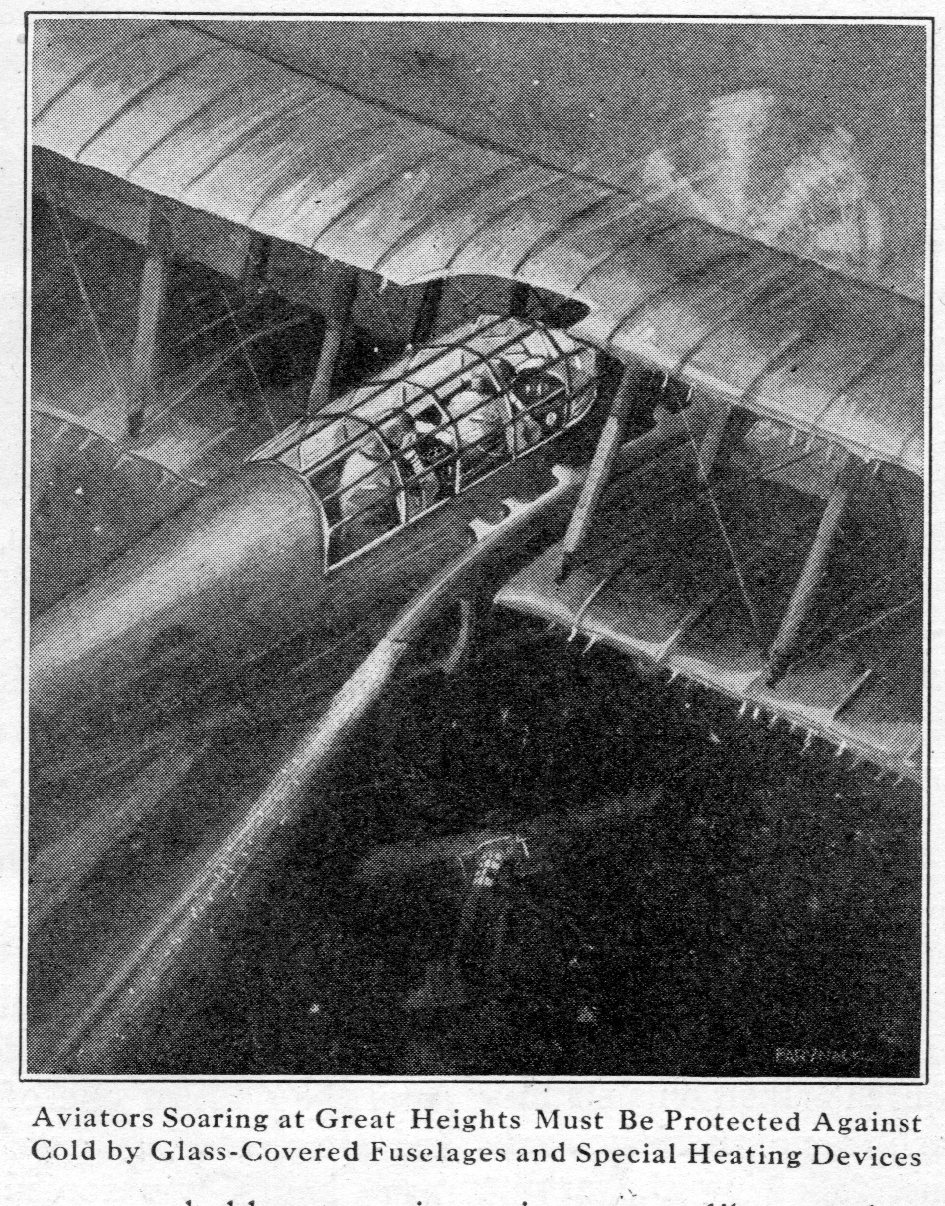
    Aviation soar to unknown heights128

    This was the vision of future high-altitude flight, at least according to Illustrated World magazine in their July/August  1920 issue , page 806. It was reported in these pages that at about 22,000 feet the sky above is perfectly black and all of the stars are visible.  This of course is not near the limit of the atmosphere, and not very close to the Karman line “outer space” it may have been believed to be (though the blackness part does come into play at around 60,000′. and at 100,00 kilometers the Karman line is far beyond that). 

    In any event the record for the highest altitude achieved by humans was still at the mark of 39,000′ set in a balloon in 1862, a record which would not be broken (at 43,800′) until 1927, when the achievement cost the aviator/balloonist his life.  The article was slim on the atmosphere and slimmer on the necessaries for the high-altitude aircraft–except to say that the current open-cockpit approach just wouldn’t do at cold temperatures, thus giving rise to a tiny discussion on the only mentioned feature of the future aircraft: that it would have an enclosed cockpit.  

    • Flight altitude records via Wiki https://en.wikipedia.org/wiki/Flight_altitude_record
  • Air Raid Instructions, Westminster, 1941–With Videos

    JF Ptak Science Books  Quick Post

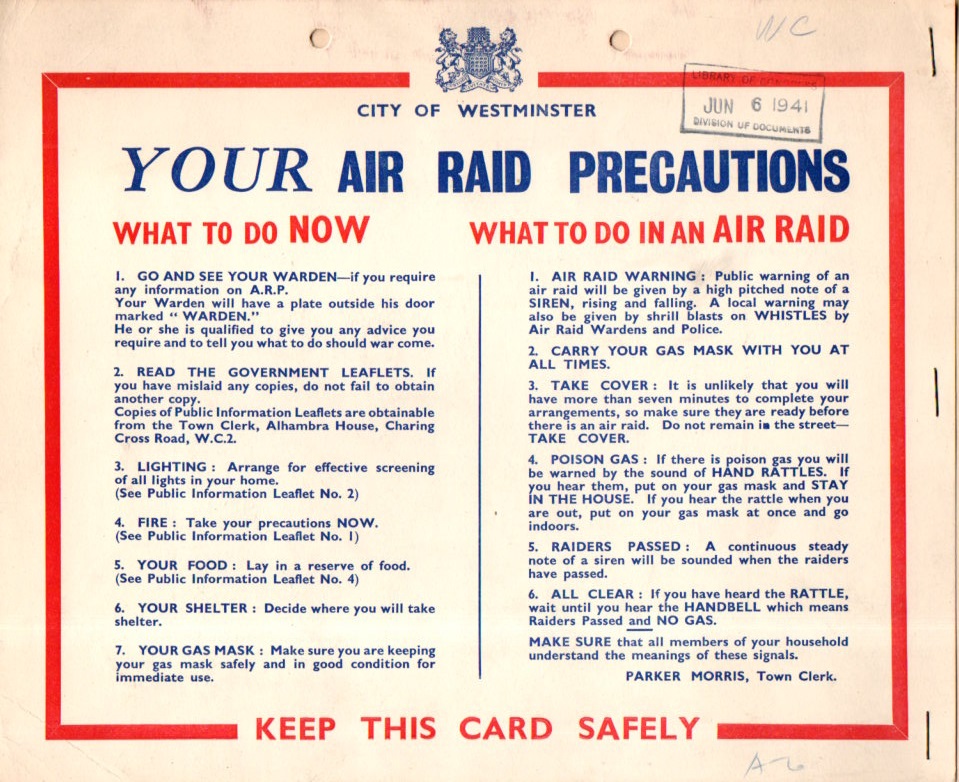
    I recovered this sample Air Raid Precaution poster from a box of WWII material, received by the Library of Congress on the very day that many historians declare to be the very end of the Blitz.  Of course the poster was printed earlier, collected in this case by the OSS and put in a folder and then sent off to the Library of Congress.  

    WWII Air Raid Precaution068

    It is a remarkably level-headed document, clear and concise, very stiff-upper-lip.  And these posters were very necessary, as we can see by the map following: 

    WWII Bomb Map London

    This incredible story (centered on Westminster) is a detail from an incredible (and interactive) map showing every bombed dropped by the Germans on London during the Blitz  7th October 1940 to 6th June 1941 [Source:  http://bombsight.org/?#14/51.5005/-0.1281]

    The following are instructional newsreels (all found on youtube) about what to do in an air raid (1940), while the second demonstrates the sounds of the air raid sirens discussed in the document above, and the third is a short history of the Blitz:


    Ource: https://www.youtube.com/watch?v=mHep5WA9qqU


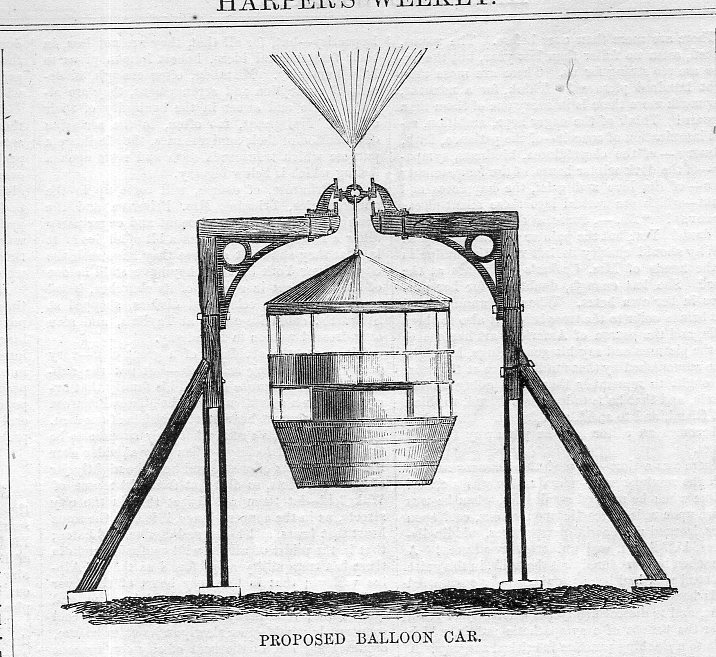
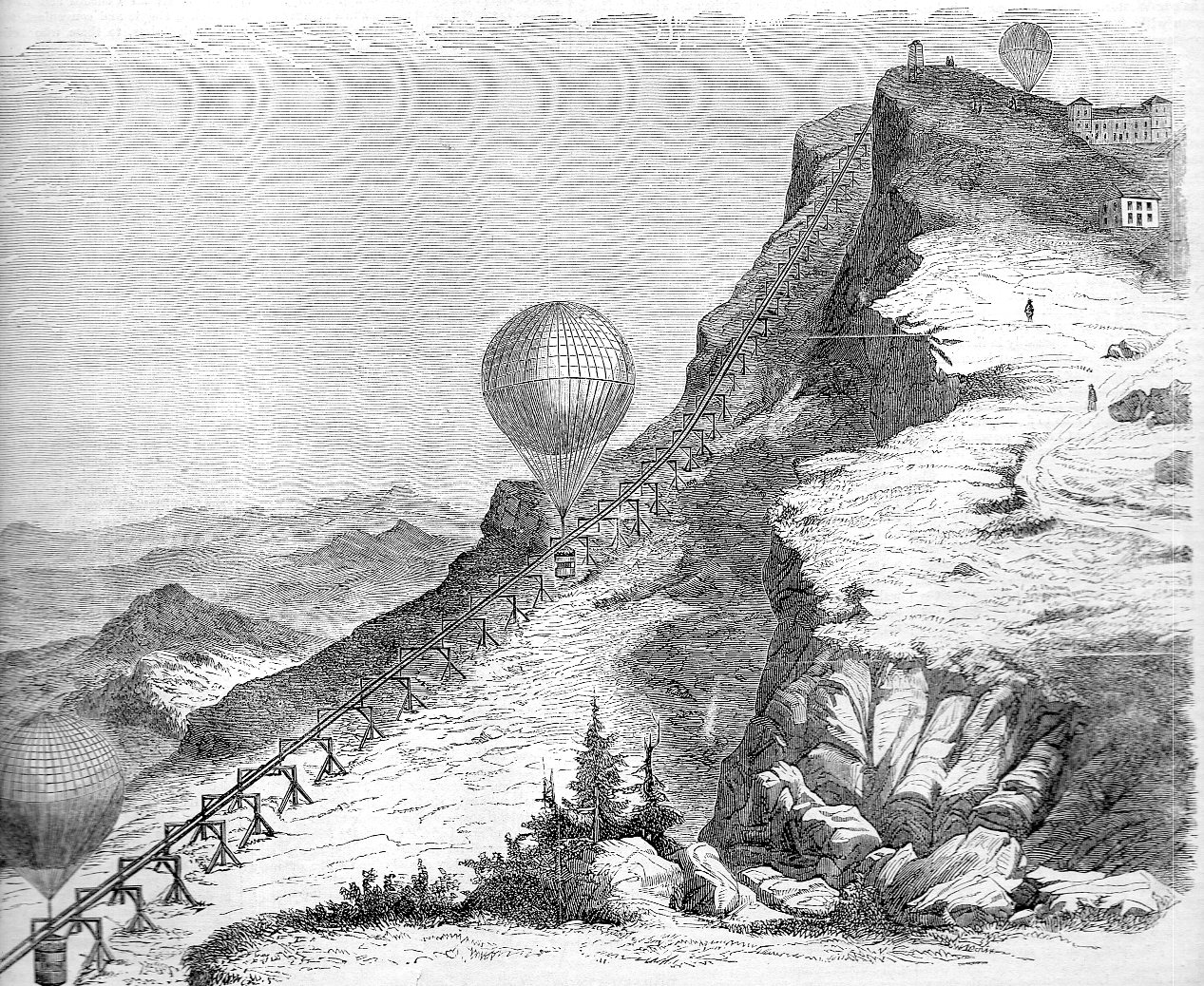
  • The Proposed Balloon Car of 1859

    JF Ptak Science Books   Quick Post      The Atlas of Dead Ideas series

    Balloon tramway054

    Harper’s Weekly published an account of a proposed mountain tramway for Mount Rhigi, In Switzerland, almost two years and two weeks before the beginning of the U.S. Civil War.  The author of the report seemed not to hope so much that this would be the inauguration of land air-ships, but that  it would be “an important step toward the final perfection of a [flying] air-ship”.

    If nothing else the engraving of the perspective of the tram car is precise, and light, and lovely.

    Balloon tramway052

    [Source: Harper’s Weekly, April 30, 1859.]


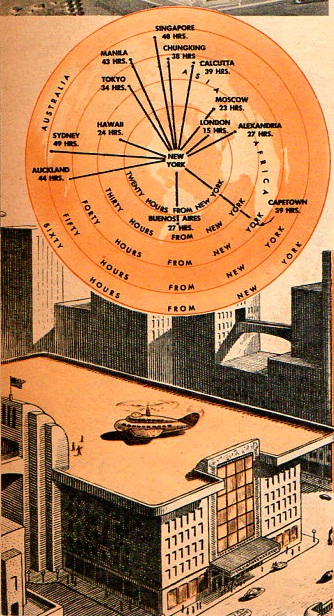
  • Another Rooftop Airport/Helipad, 1945

    JF Ptak Science Books   Quick Post

    There have been several posts to this blog regarding unusual airport construction–covering part of the Thames, floating in the NYC bay, on top of numerous/differential rooftops, floating and/or moored in the ocean, on top giant airplanes, landing and launched from dirigibles, and so on (including a vertical airport where the aircraft are dropped in tubes).  The example I have just found this morning is a mild twist on this topic, as it is a helipad–a futuristic one, judging from the Harley Earle/Buck Rogers-style design.  

    See, for example:

    • Floating and Airborne Airports: https://historyofideasblog.com/thesciencebookstore/2015/03/floating-and-airborne-airports.html
    • Underground Airports 1935-1941: https://historyofideasblog.com/thesciencebookstore/2015/04/underground-airports.html
    • Rooftop, Elevated, Floating Inner-City Airports  https://historyofideasblog.com/thesciencebookstore/2010/08/elevated-rooftop-innercity-circular-airports-1919.html

     (There are other examples scattered around the blog–just check out “airports” in the Google search box for more.) 

     There is also a time/distance map of air travel originating from NYC:

    Airport helipad rooftop014

     [Source: Popular Mechanics, February, 1945]


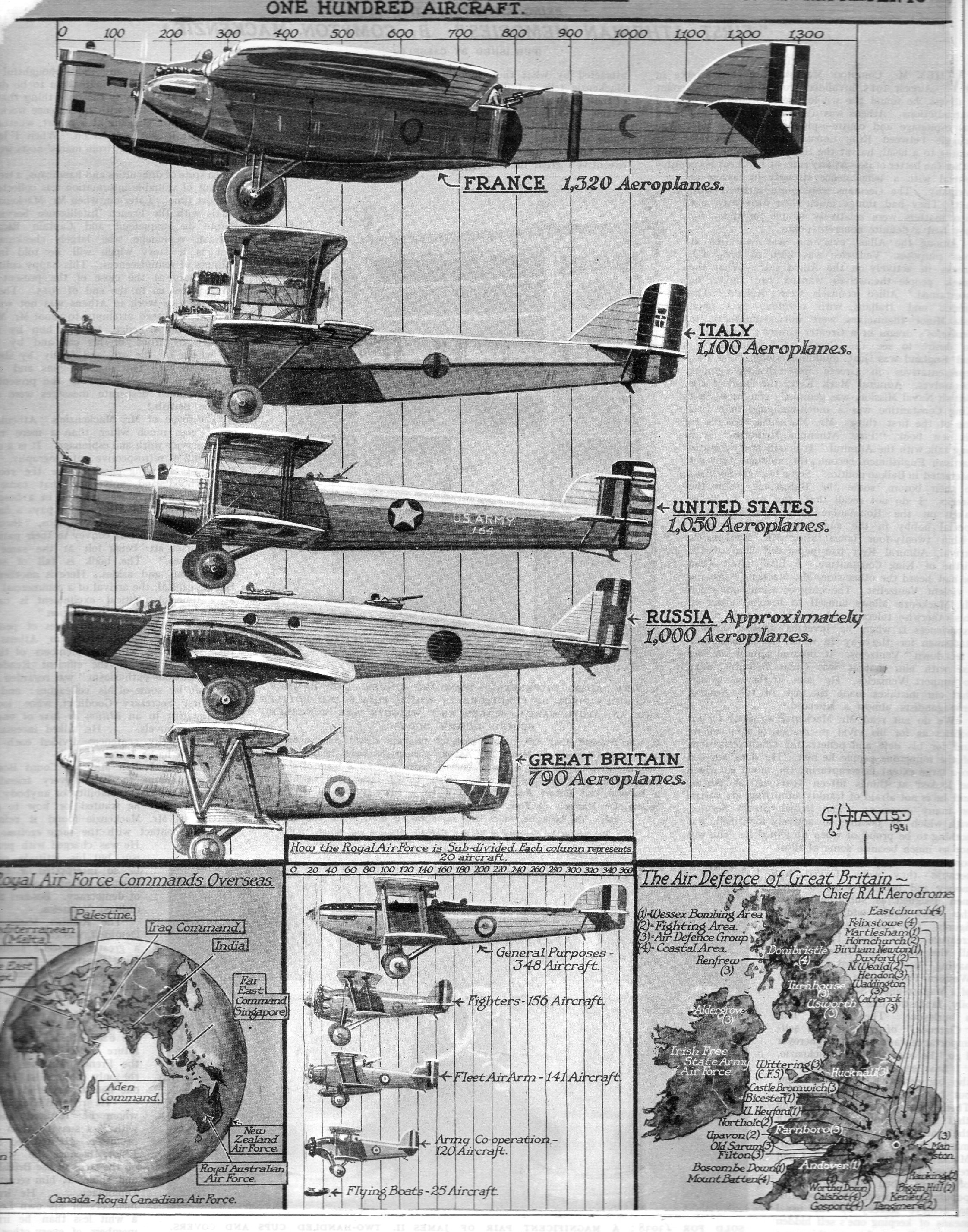
  • Airpower Power Illustrated Power Graphic, 1935

    JF Ptak Science Books   Quick Post

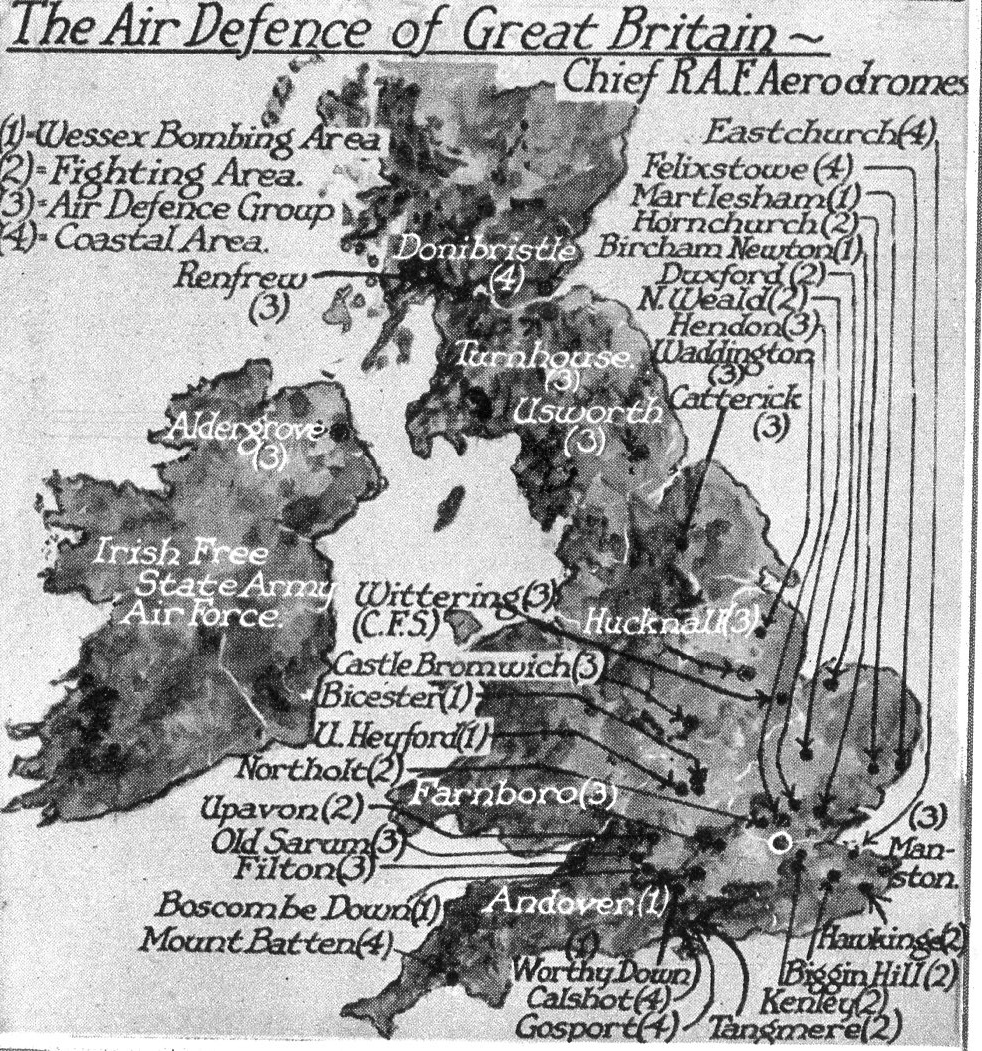
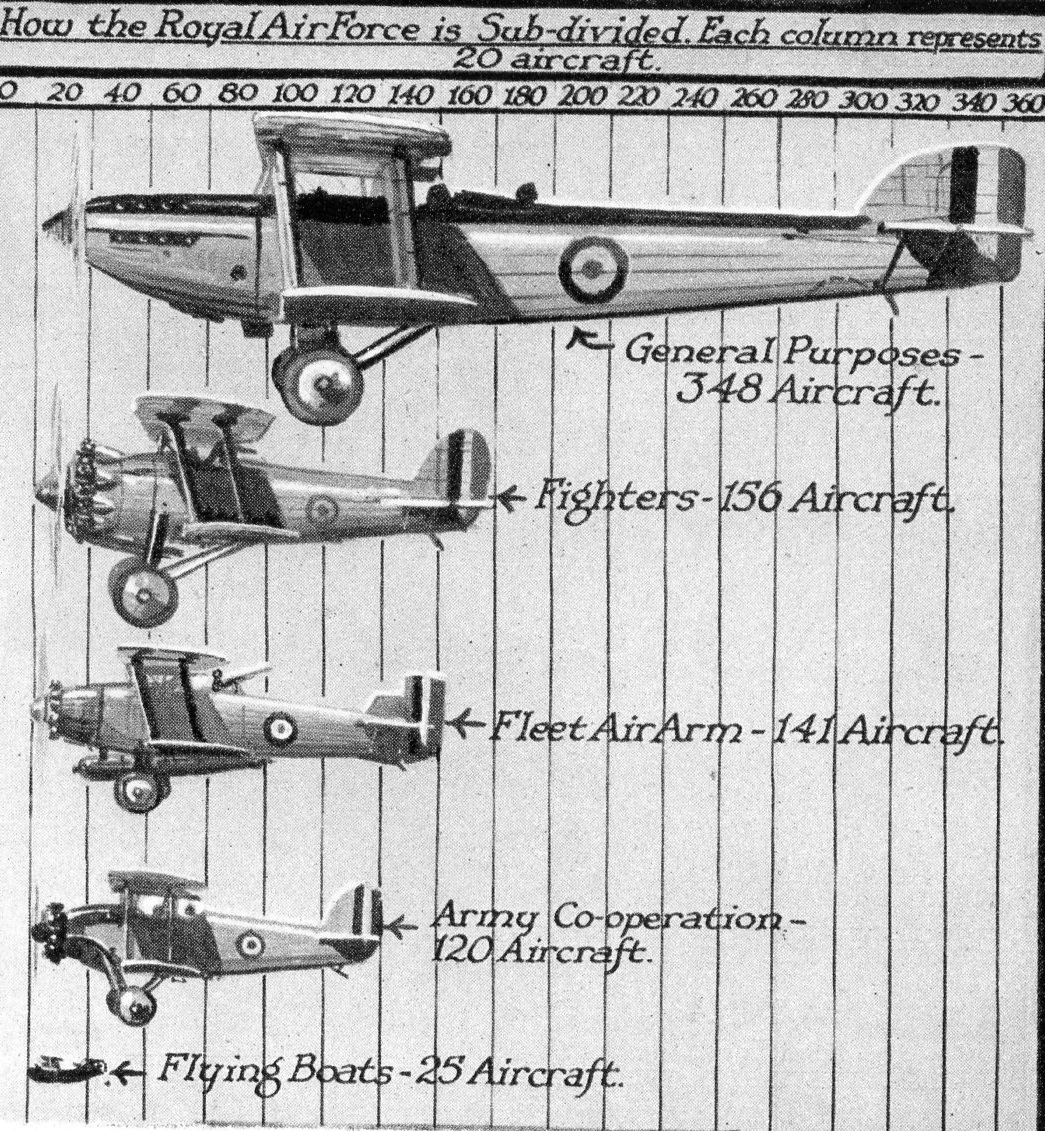
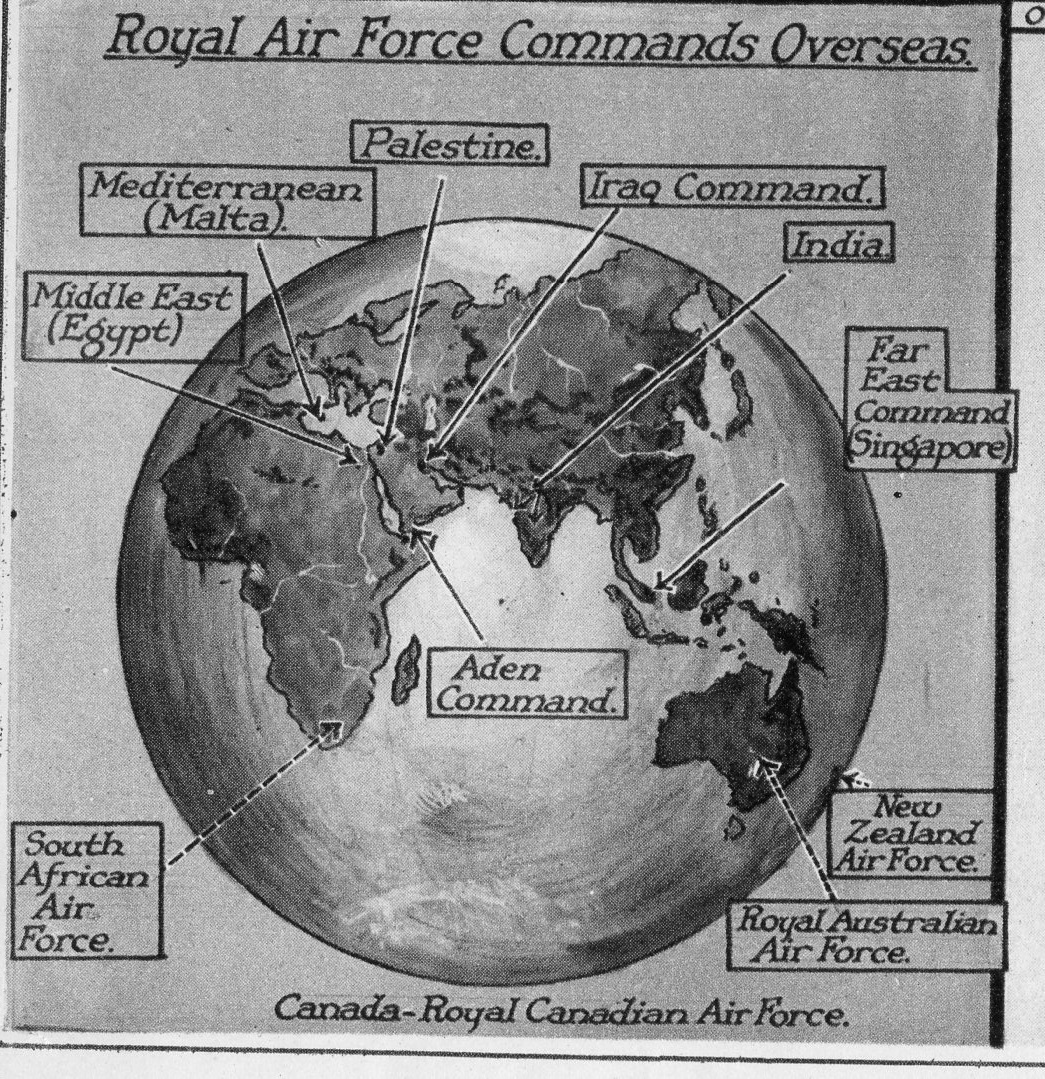
    Isn’t it grand to be charting variations on a graph using different-sized aircraft from 1935?  Sure, a line would be fine, but this is so much prettier–and of course a simple line is a line and would not display the workhouse military aircraft of the national quantity it was depicting.  This appears in the Illustrated London News for September (or thereabouts) 1935–this is the magazine I think that may have been the King/Queen of graphically/representationally displayed data of the 1920s/30s/40s.  The interest here of course is British-centric, comparing the air force of Great Britain to the rest of the world, but that is to be expected given the source of the images.  It is also remarkable how much this graph would be changed in the next ten years…

    There are also three fine inset images at bottom (about 2 x 2.5″ in real life) that I’ve carved out and enlarged–they are all fine works in themselves.  

    Airpower dataviz971

    And the details:

    Airpower dataviz973

    Airpower dataviz974

    And the cool hemispheric map:

    Airpower dataviz975

    And the text:

    Airpower dataviz972


  • Unusual Cross Section of Dirigible, 1929

    JF Ptak Science Books  Quick Post

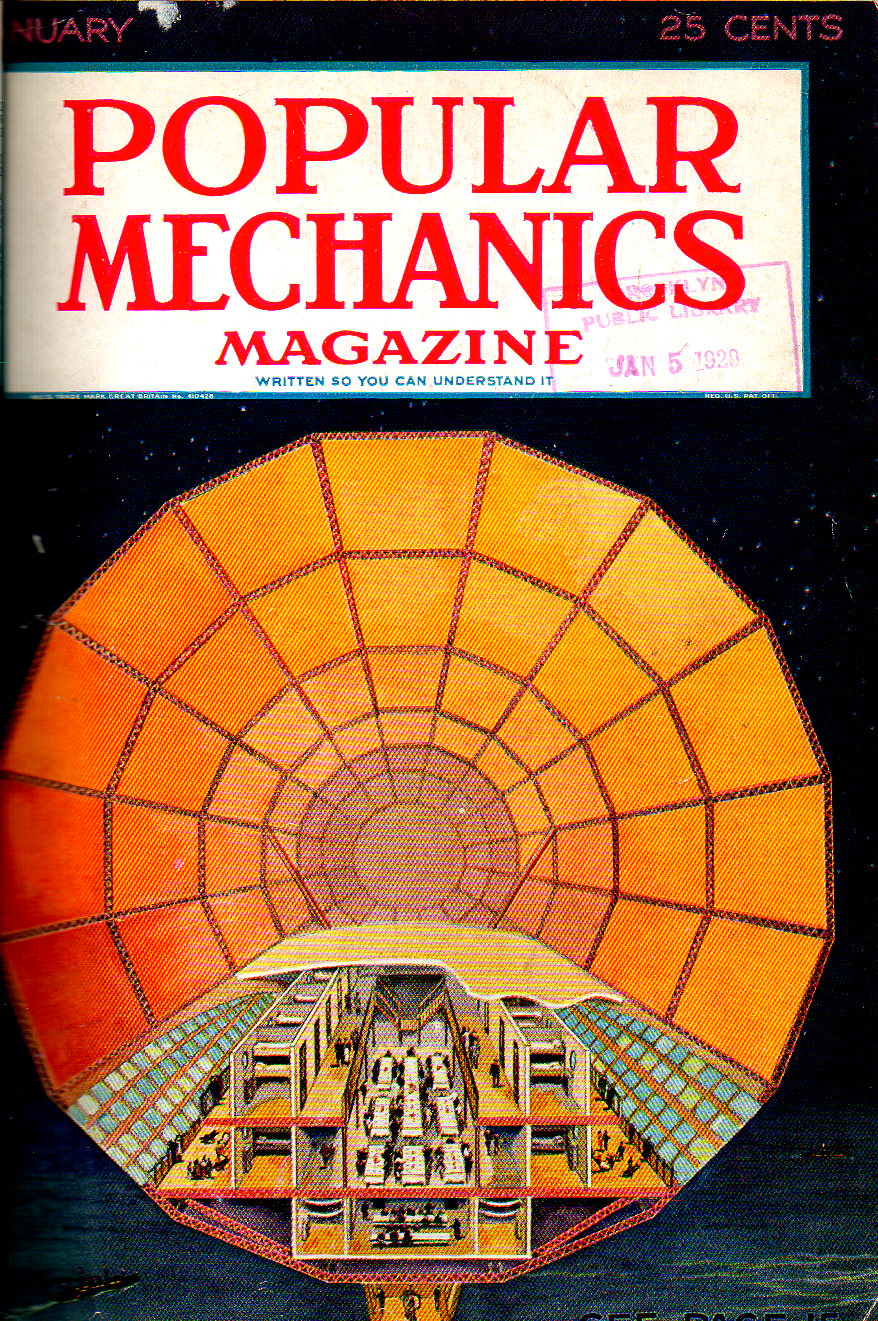
    I’ve seen other straight-on cross sections of lighter-than-air aircraft before, though seldom have they been at night, and seldom in color, making this one fairly unusual to my experience.  

    Dirigiv=ble 1929924

    Under discussion in the article were the current great lighter-than-air ships and their future. Mentioned prominently were the Graf Zeppelin (which flew it first intercontinental flight just months earlier in October 1928 (and which flew until 1937)), and the British R-101, which was under construction at press time of this article, and which would crash and burn in its maiden voyage in October 1930. But in 1929, with these great new developments, and with airplane service across the ocean still seemingly in the relatively-distant future, the future of the dirigible looked pretty goo.  But even by 1932 the great Graf Zeppelin’s service would be extremely curtailed by the new airplane services, and by that point the days of the dirigible were numbered–especially come May 1937 when the Hindenburg crashed (and burned) so spectacularly.

    Again, January, 1929, was a good time for the dirigible–but hundreds of days later, the situation would be reversing. 


  • Underground Airports, 1935-1941

    JF Ptak Science Books  Quick Post

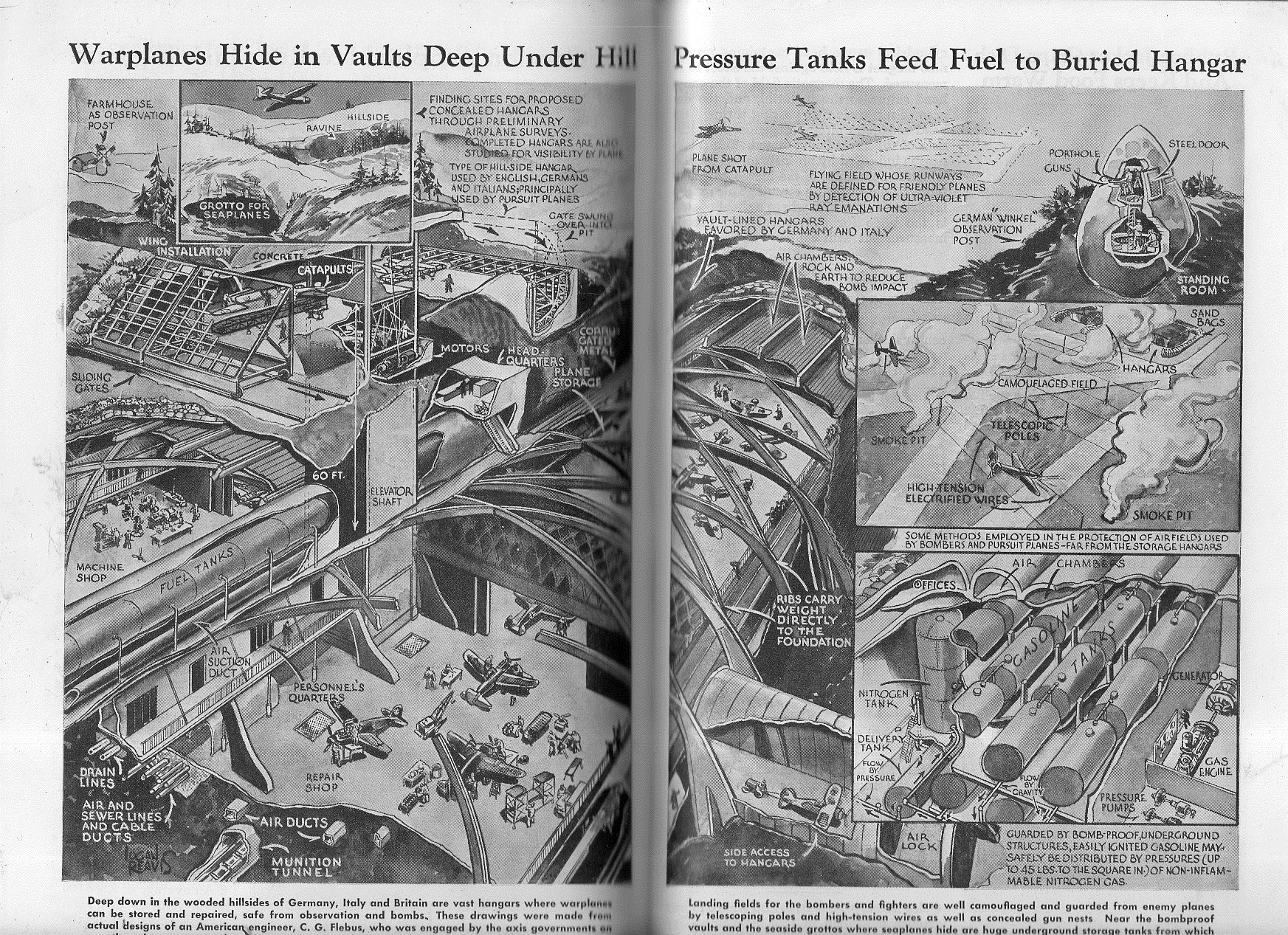
    I’ve seen a number of plans from the 1925-1935 period calling for skyscraper-topped airports, and airports built over a largely cover-ed themes, and over a covered-up Central Park, and floating in NYC harbor, and so on. I have not seen too many future visions of underground airports. This plan appears in Popular Mechanics for June 1941 and advocates a very tightly controlled underground environment for airports.  The war in Europe was nearly two years old at this point, and the bombing war from the air was very advanced. There is little doubt that all sorts of plans were being considered to protect air force complexes from bombing, though something of this scale, dealing with so few number of plans, could hardly have made it further than this public outing.) 

    Cross section under groun air908

    [Image is expandable]

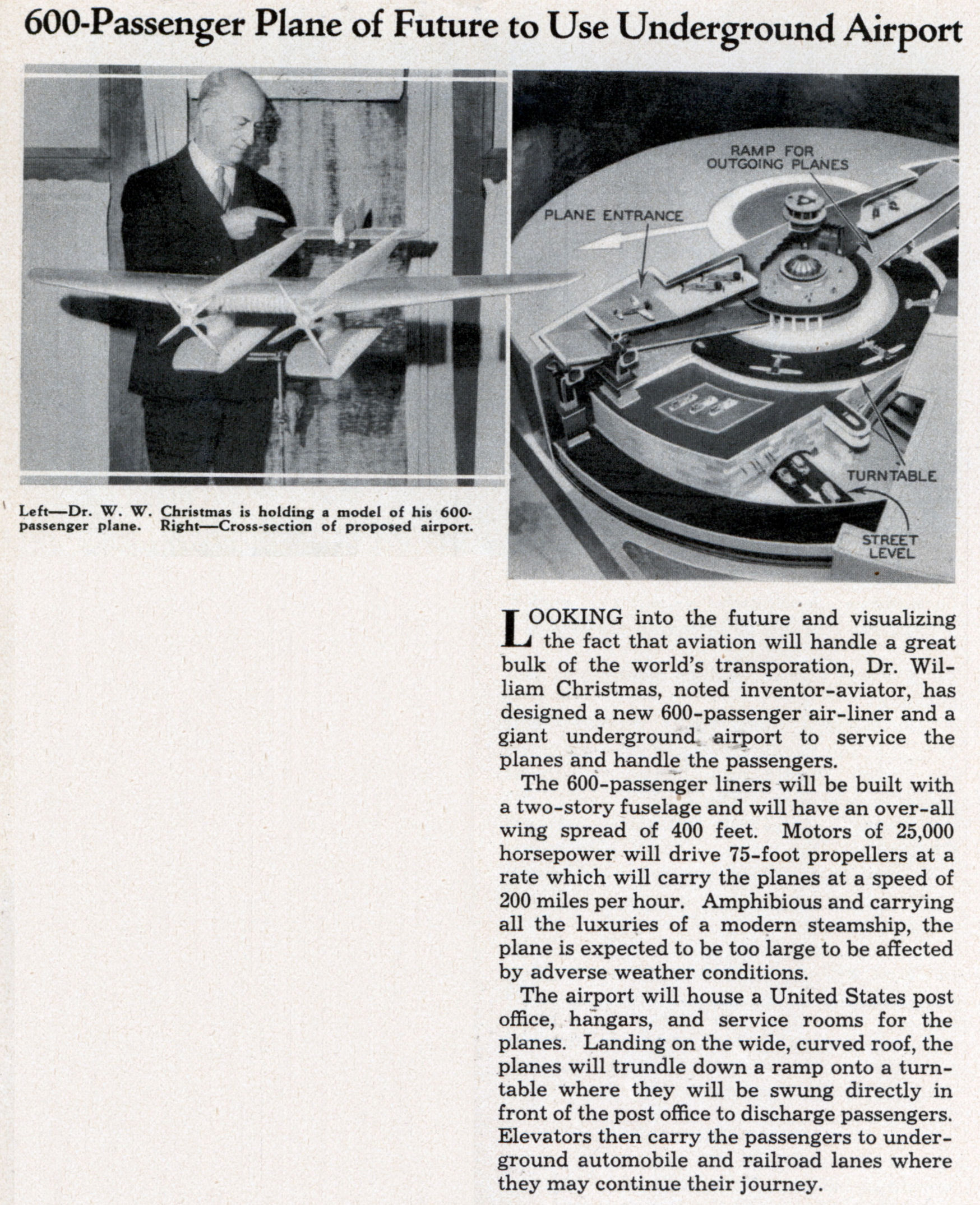
    An earlier and peace-time example of underground tech is found at the great Modern Mechanix blog, and features an April 1935 article in the journal of the same name an effort to remove the airport underground.  Dr. William Christmas is the chief major domo in the piece and he is depicted with his visions of flight of the future,  holding a model of his 400′ 25,000hp plane with 75′ propellers set to cruise at 200 mph.  The monster could not be accommodated by the plans for an underground airport at right, which frankly looks like a hard drive, and which seems like a positively enormous amount of engineering for a spinning platter underground airport with room for eight planes.  

    Underground airport

    [Source:  Modern Mechanix, http://blog.modernmechanix.com/mags/ModernMechanix/4-1935/under_air.jpg]


  • The R 101–a Great British Airship, 1929

    JF Ptak Science Books  Quick Post                                                                                                            Follow Me on Pinterest 

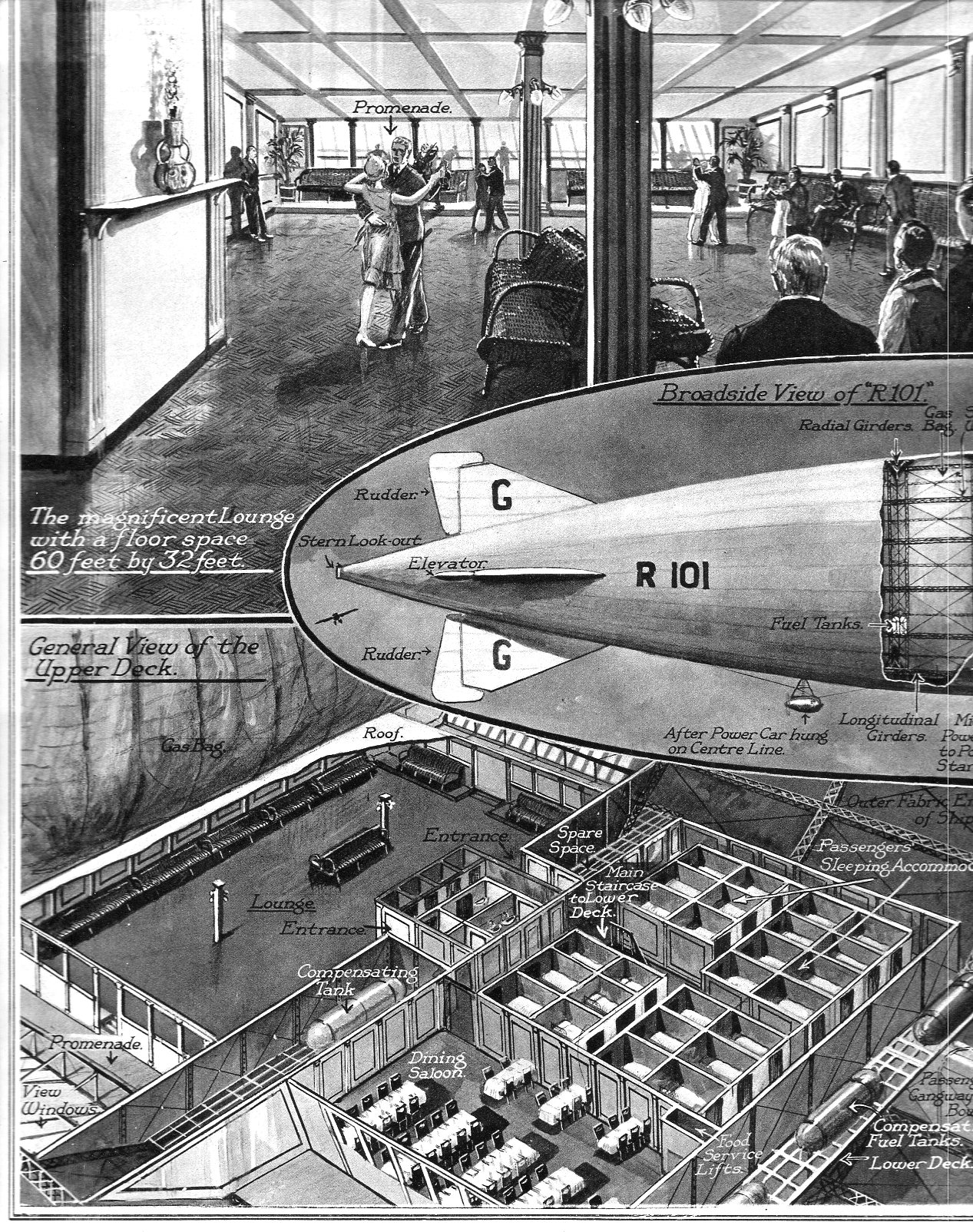
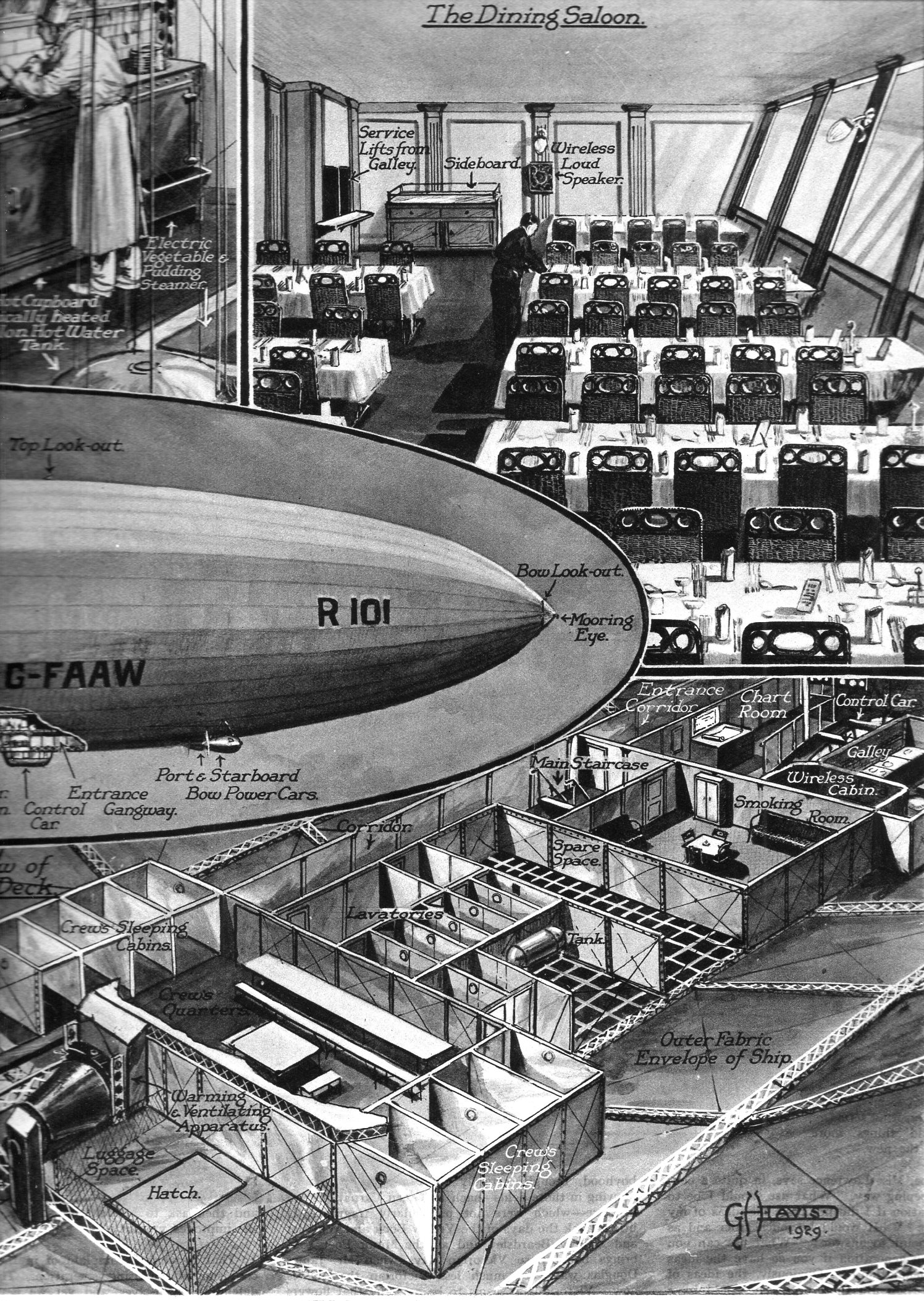
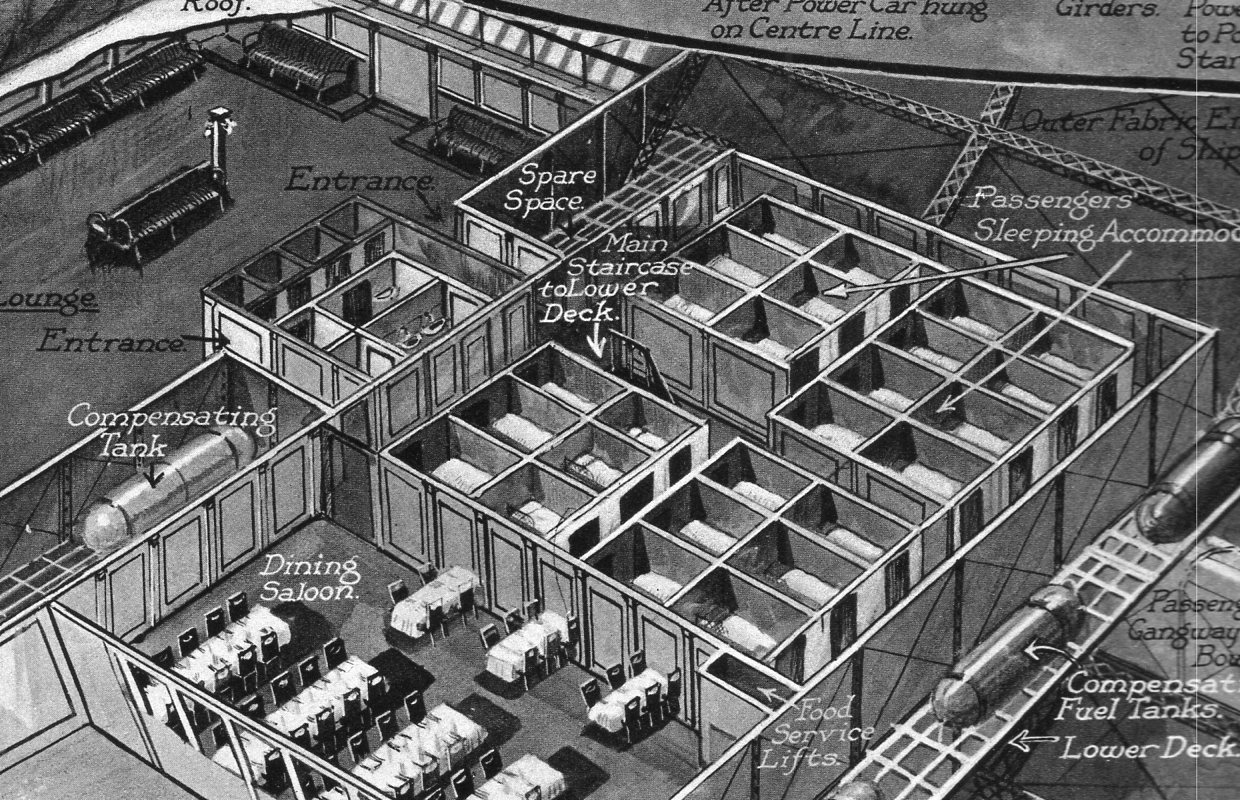
    The R 101 was one of the largest lighter-than-air airships ever created.  The ship was still about a year away from its maiden flight when this popular survey was published in the Illustrated London News on March 29, 1929–unfortunately this flight would also be its last, finding disaster over France on October 5, 1930. The airship was 777′ long, 140′ high, and had a volume of about 5 million cubic feet, and operated with a crew of 42–a big object.  

    R 101 airship898 R 101 airship900

    And the detail of the sleeping quarters:


    R 101 airship899
    And the text:


  • A Cutaway Infographic of the RAF Wellintgon, 1941

    JF Ptak Science Books  Quick Post

    Bombardier881

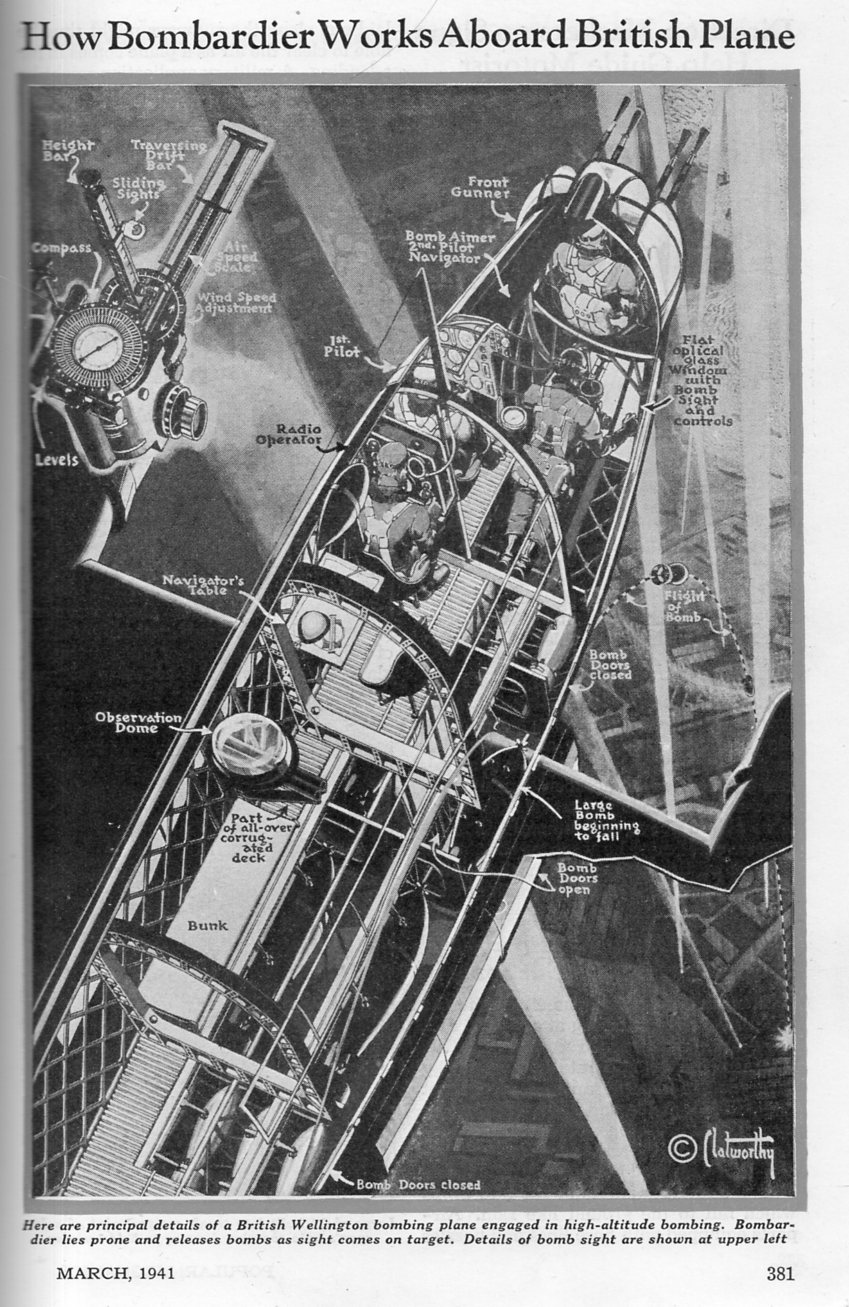
    This great cutaway by the prolific S. Clatworthy appeared in the March 1941 issue of Popular Mechanics. It illustrates a  section of the Vickers Wellington light bomber–a 6-man, 6’4 long and 86′ wide medium distance aircraft that saw service from the mid-1930’s and served with distinction throughout the entire duration of WWII.  It is an unusual view through the plane, an oblique but nearly straight-down view showing the position of members of the crew and most especially the bombardier.  

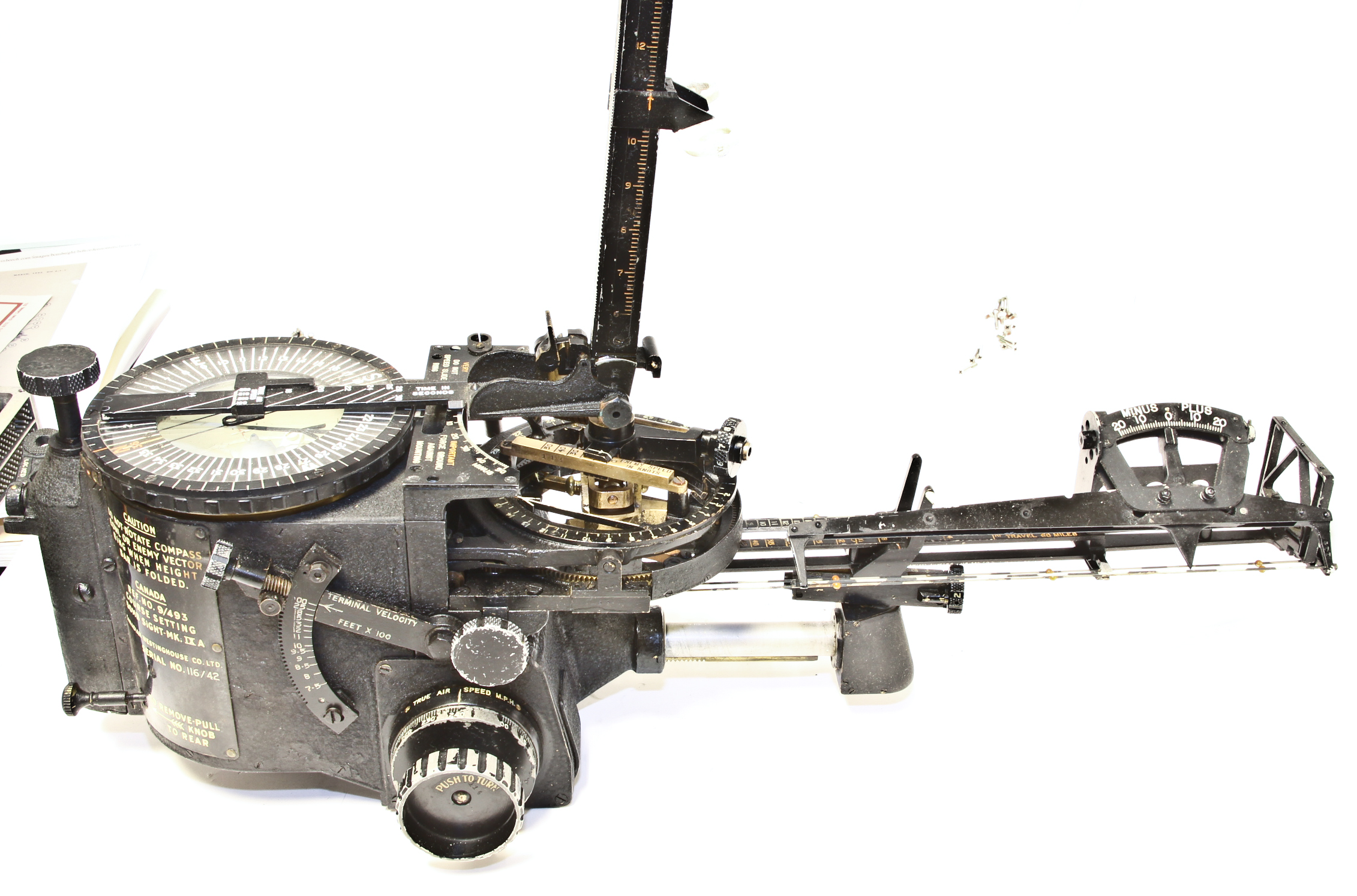
    Here’s a very nice presentation of the (Mark IX) bombsight shown in the inset of the cutaway, this from the Glenn’s Museum site, here: http://www.glennsmuseum.com/bombsights/pics/mark_ix_side.jpg

    “The British-designed RAF Mark IX bombsight was first introduced in 1939. It was used on Canadian and Great Britain planes in World War II: in particular Lancaster, Wellington and Sterling bombers, and Mosquitos, Beauforts and Beaufighters fighters. This was an early preset vector bombsight that involved squinting through wires that had to be manually set based on aircraft speed, altitude and bombload. The sight lacked tactical flexibility as it had to be manually adjusted if any of the parameters changed.”

    Bombsight mark_ix_side


    A nice image of a Wellington on the cover of Popular Science this same year (1940), here: http://www.popsci.com/archive-viewer?id=oScDAAAAMBAJ&pg=0&query


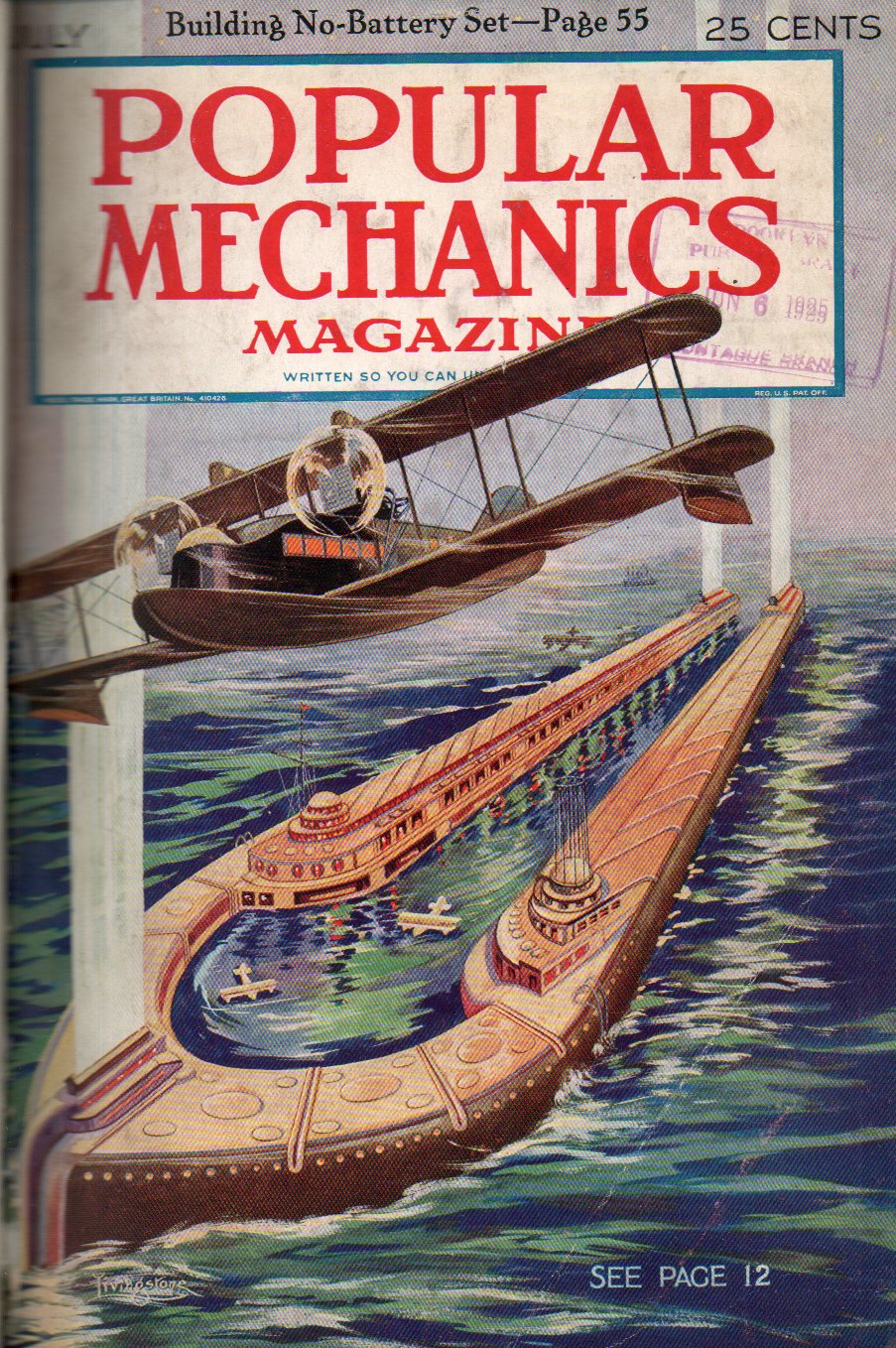
  • Floating and Airborne Airports, 1925

    JF Ptak Science Books  Quick Post

    Airport aerial740


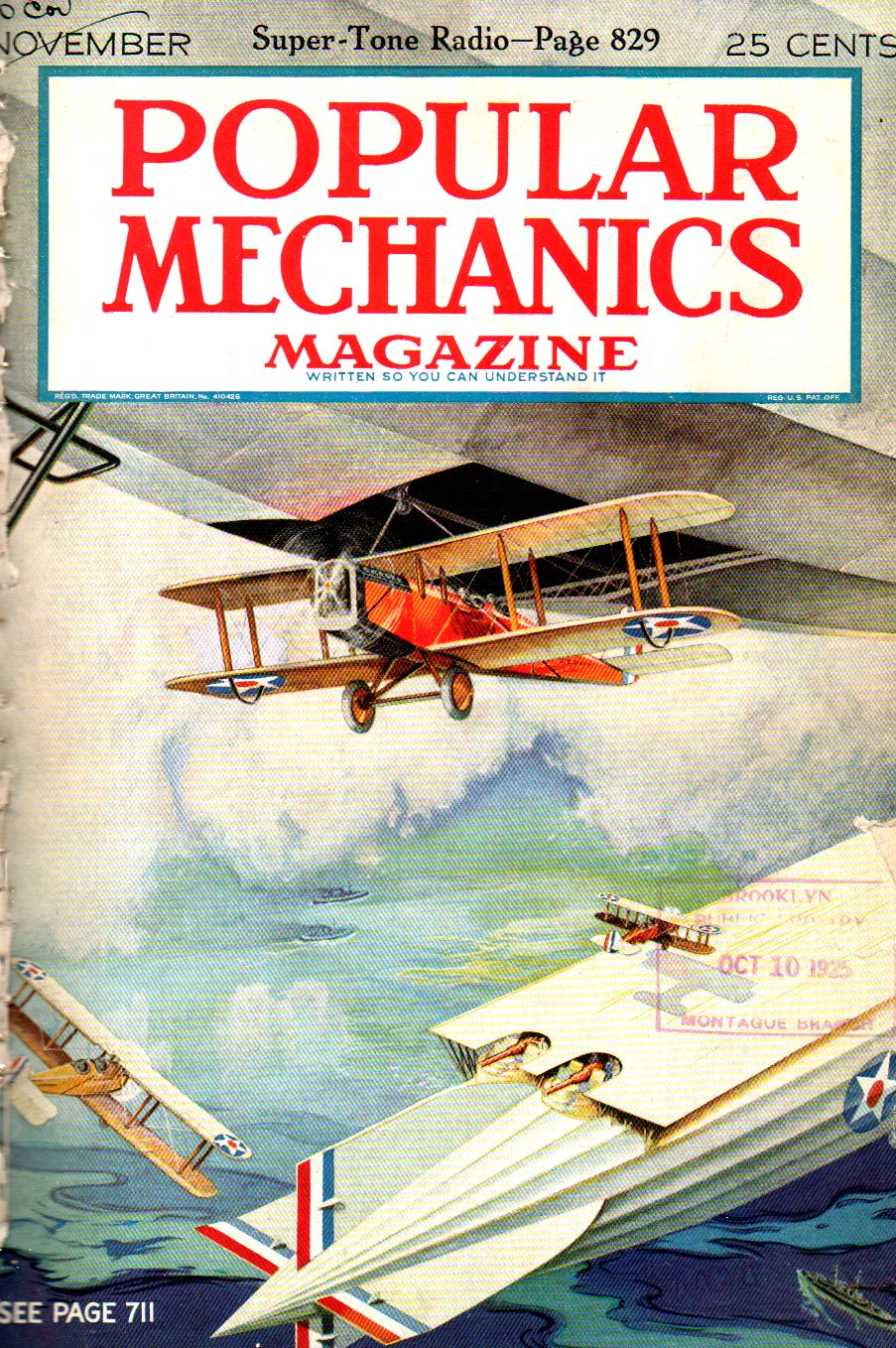
    One of the great dreams of early modern flight was to get across the Atlantic. In the decade+ before the first non-stop transatlantic crossing many plans were presented for making it across the Atlantic with stops. The problem of course was where the “stopping” would take place. Popular Mechanics presented two of these ideas in 1925: one was the floating airport, a series of four 1200′ long and 250′ wide aviation harbors on the high seas, four of which would be necessary to get aircraft across the ocean.  The other were aerial sky harbors, with zeppelins outfitted as aircraft carriers in the clouds.

    Airport floating739

    These proposals look like less-than-fresh ideas in 1927 when Lindbergh makes his flight, and obsolete by the early ‘thirties when several airlines offered transatlantic service.  Anyway given the available technology the ideas were not half-bad, though the technology would overtake the necessity for these ideas idea pretty quickly.  Considering that we go from the Wright flight in 1903 to transatlantic flight in 30 years, the speed of technological advancement was really pretty extraordinary. 

    Also from this blog see: