A Daily History of Holes, Dots, Lines, Science, History, Math, Physics, Art, the Unintentional Absurd, Architecture, Maps, Data Visualization, Blank and Missing Things, and so on. |1.6 million words, 7500 images, 4.9 million hits| Press & appearances in The Times, Le Figaro, Mensa, The Economist, The Guardian, Discovery News, Slate, Le Monde, Sci American Blogs, Le Pont, and many other places… 5000+ total posts since 2008.

Category: Aviation & flight

  • The Popular Plane: Aeroplane Sheet Music Covers, 1897-1911

    JF Ptak Science Books  Quick Post

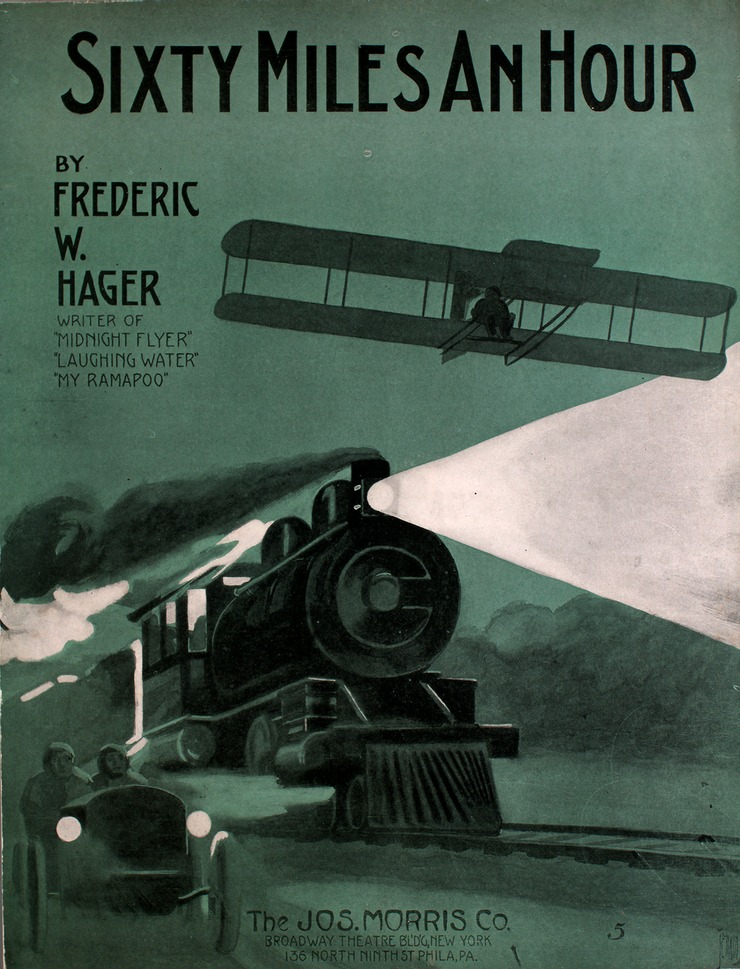
    I’m posting these following sheet music covers because of their lovely airplane covers. They are located at the wonderful (and highly available and useful) Lester Levy Sheet Music Collection at Johns Hopkins University.  

    Aeroplanes levy sixty

    “Sixty Miles an Hour. March and Two-Step’,  Frederick W. Hager, 1910.  [Image source: http://levysheetmusic.mse.jhu.edu/catalog/levy:059.065]

    ·Posted by :

    ·in:


  • WWI Aviator Pigeons, 1918

    JF Ptak Science Books   Quick Post

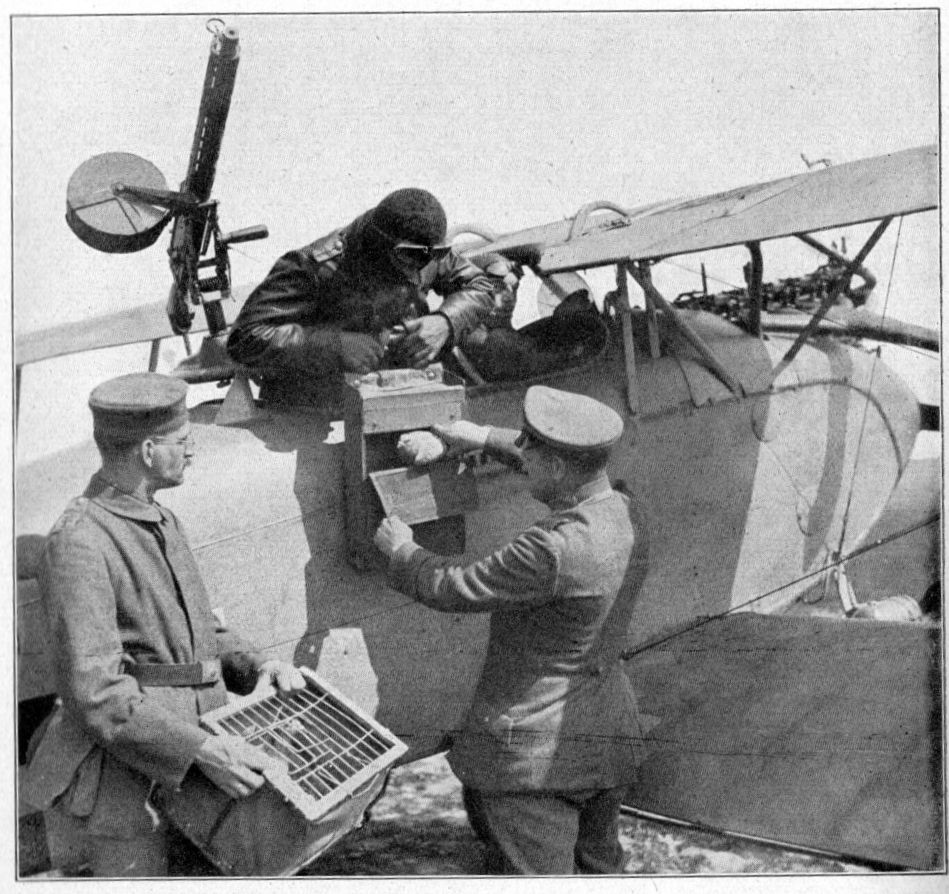
    I found this interesting image in Illustrirte Zeitung, 18 July 1918, though I very nearly passed it by. I saw its neighbor photo of a machine gunner and his ammo and a quick pass over this photo made it look very similar, my mind filling in cartridges before my brain recognized that the ammunition was actually a pigeon.  

    • [For other posts on WWI pigeons, enter that term in the google box at left]

    WWI pigeon231

     This is an image of German aviator pigeons, I know, but I included this U.S.-based explanation of the general practice of using pigeons in aircraft as a means of communicating with the ground in pre-airborne radio communication days:

    “U.S. Navy aviators maintained 12 pigeon stations in France with a total inventory of 1,508 pigeons when the war ended. Pigeons were carried in airplanes to rapidly return messages to these stations; and 829 birds flew in 10,995 wartime aircraft patrols. Airmen of the 230 patrols with messages entrusted to pigeons threw the message-carrying pigeon either up or down, depending on the type of aircraft, to keep the pigeon out of the propeller and away from airflow toward the aircraft wings and struts. Eleven of the thrown pigeons went missing in action, but the remaining 219 messages were delivered successfully.”–Wiki quoting Adrian Van Wyen,  Naval Aviation in World War I.  1969. Washington, D.C.: Chief of Naval Operations. p. 30.

    Here’s the contiguous photograph, the gunner looking as though he was reading for some abusive weather: 

    ·Posted by :

    ·in:

    —

  • The Giant Zeppelin Biplane

    JF Ptak Science Books   Quick Post

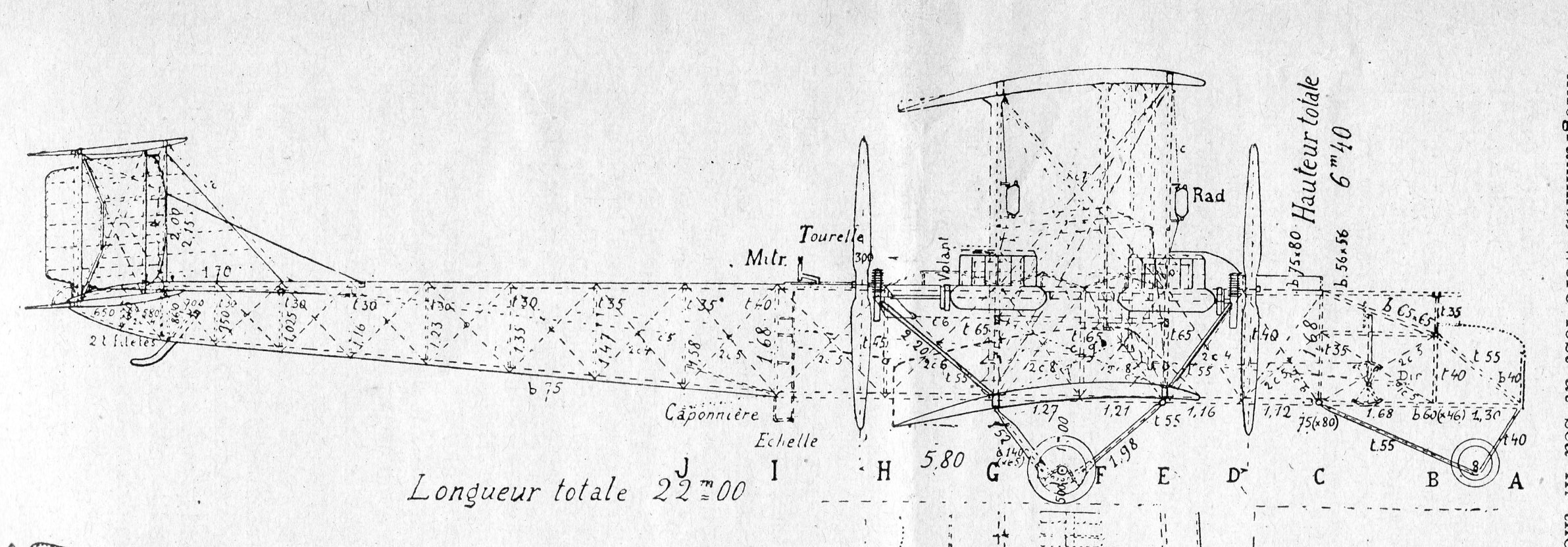
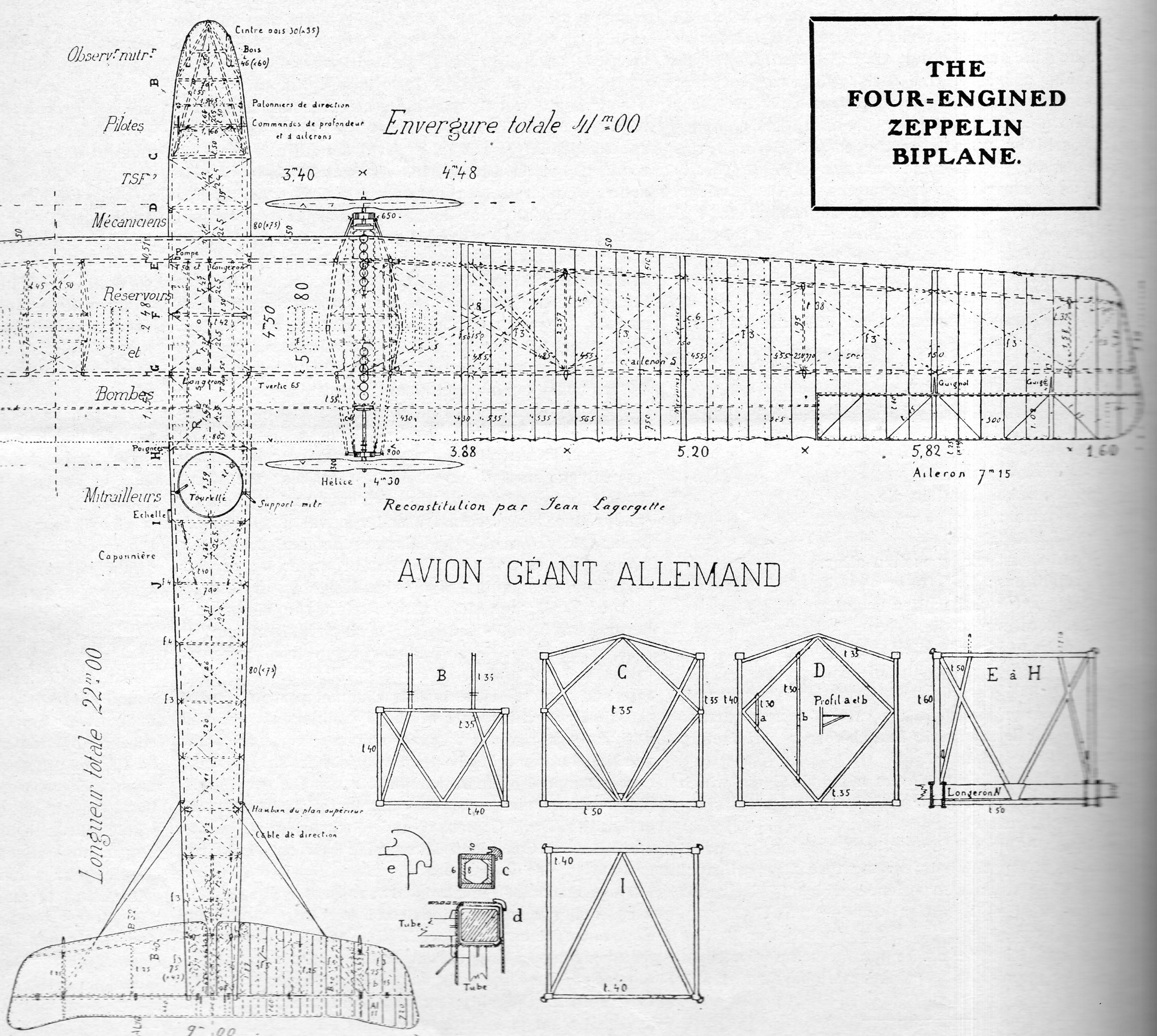
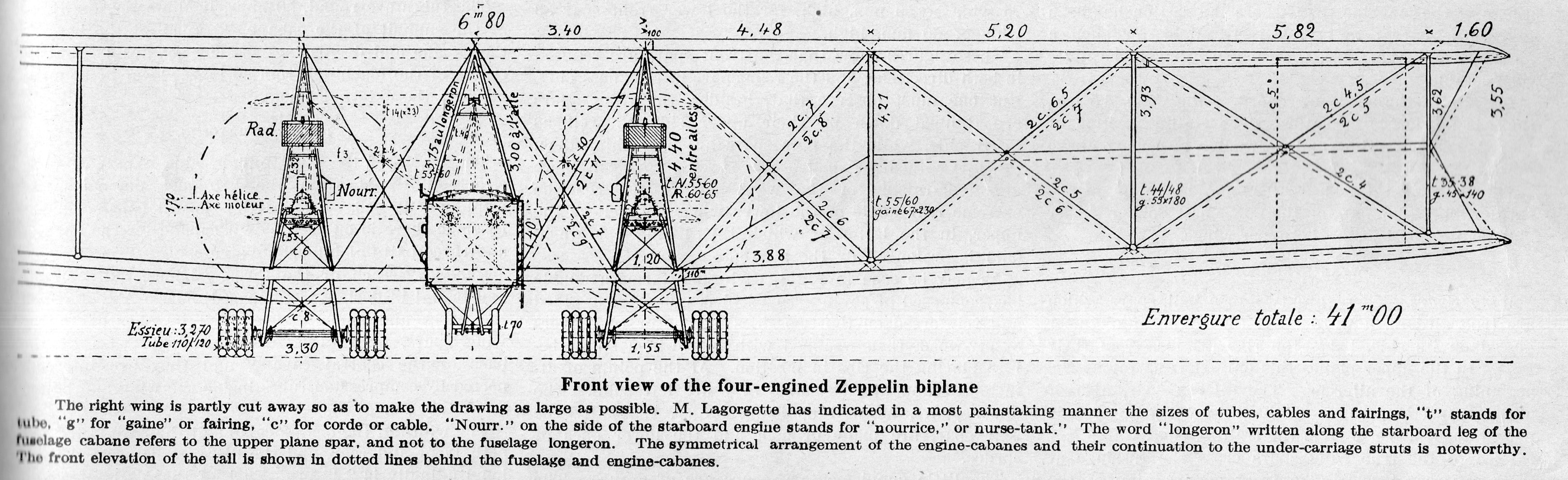
    I found these schematics in the November 16, 1918 issue of Engineering, published just a few days after the eleventh hour of the eleventh day of the eleventh month. No doubt the plans were made from a downed aircraft, and I suspect it was probably not published during the war.  This was about the largest plane produced during WWI, and it was a beast.  In any event, I’ve reproduced the plans below.

    Zeppelin biplane192

    and

    Zeppelin biplane193


    and

    Zeppelin biplane194

    And a larger version of the above, just because it looks so cool:

    ·Posted by :

    ·in:

    — —

  • One of the Many Mona Lisas of Early Flying Machines

    JF Ptak Science Books  Quick Post

    Flying macine 1885214

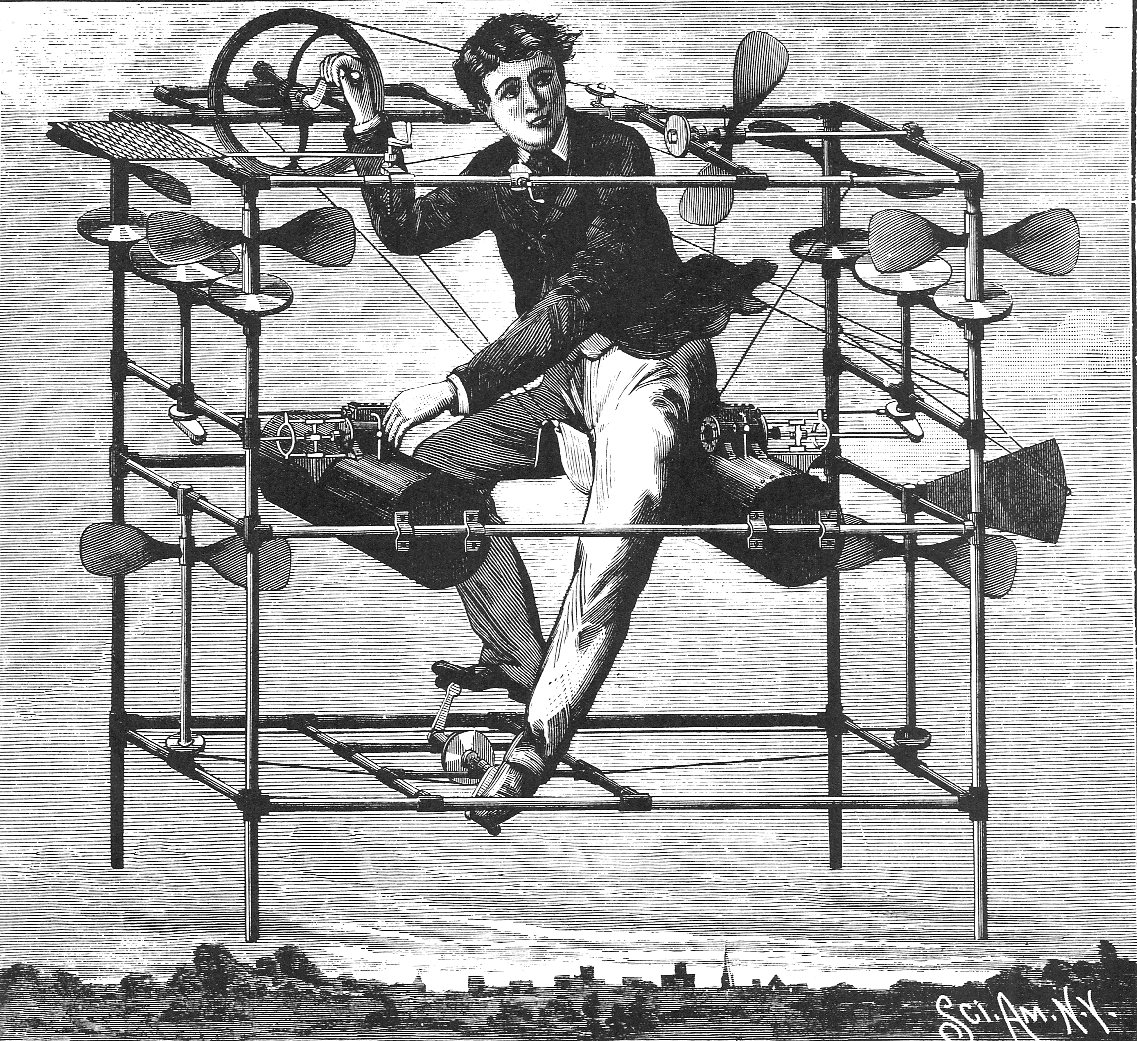
    I’m pretty sure that I’ve only written a plural of “Mona Lisa” a few times before in my history of writing–and that in reference to the real one, when it was stolen by Vincenzo Perugia (and company?) in 1911. (My guess is that it was stolen on demand for a collector and then offered for sale to a number of other underworld-y collectors who were sold fakes–at that point, what could they do (?) given that they couldn’t exactly report the swindle to the police.) For me there are some iconic image of flying machines that made the news in the pre-Wright Brothers era, and I would consider the one here to be one of them.

    It was designed by W. Ayres and happily and nattily appeared in the pages of the Scientific America (1885). It seems to have been a kind of helicopter/ornithopter, partially human powered and partially powered by compressed air that would run a generator that would run the little propellers situated around the aircraft.  The frame of the craft was made of 1/4″ steel tubes, though there is no indication of their thickness. Given that there’s something like 40 feet of this pipe superstructure, I’m going to guess that the pipe was a pound/foot; then given the weight of the pilot, and the other bits and pieces, this antique drone would have to work very hard to lift its 200′ payload.  The (May 9th) article states that there is enough power generated to lift that 200 pounds, but…

    In any event, I really like the image.  


  • Another Underground Airport (1935)

    JF Ptak Science Books   Quick Posts

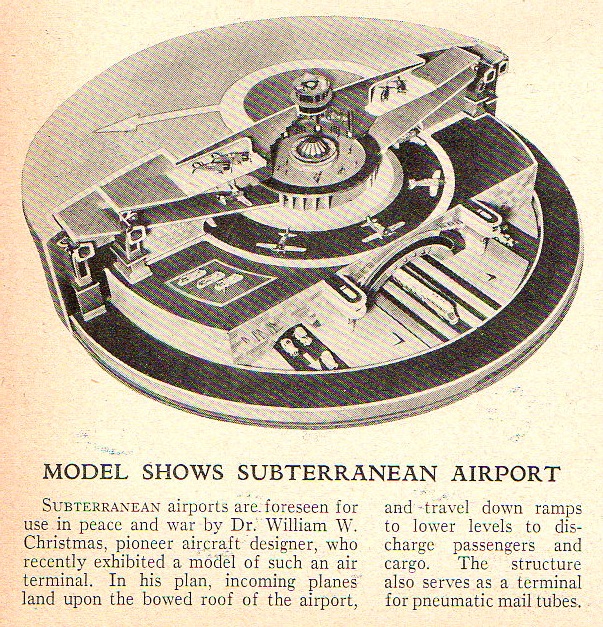
    Dr. William W. Christmas (1865-1960) a long-lived deep pioneer in the history of early aviation, proposed this interesting, streamlined, and odd underground airport, the image appearing in Popular Science Monthly in April 1935 (volume 126 for January-June 1935).  The numerous levels seem to establish a subway line, four lanes of vehicular traffic, a mall-type concourse, then perhaps something else, topped by a rotating platform of aircraft, above which was a pedestrian/passenger concourse above which was an access area for the aircraft.  I’m not sure why this was designed, but it is certainly engaging–and compact.  

    Airport underground210

    Here’s a photo from Smithsonian of Dr. Christmas and a cross section of the model of the airport:


  • The Flying Whirligig of 1935

    JF Ptak Science Books   Quick Post

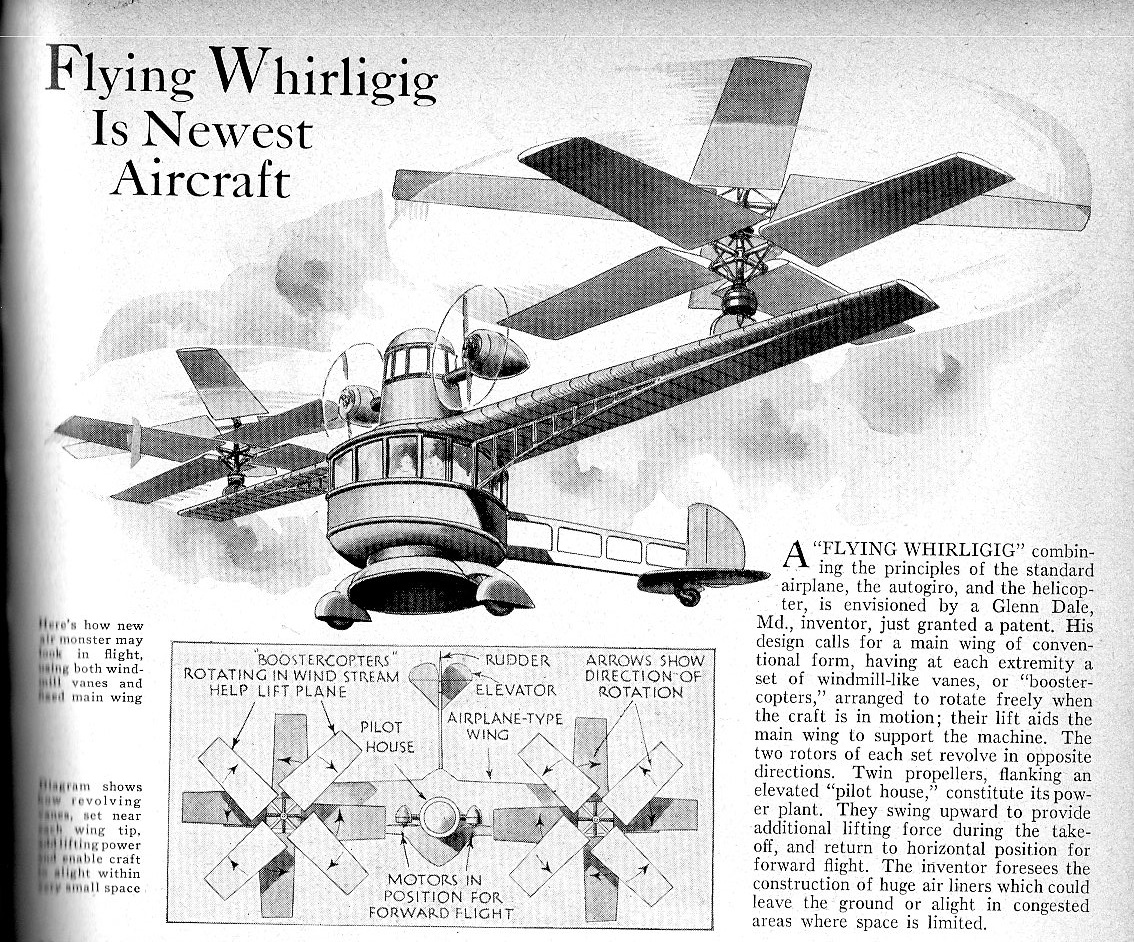
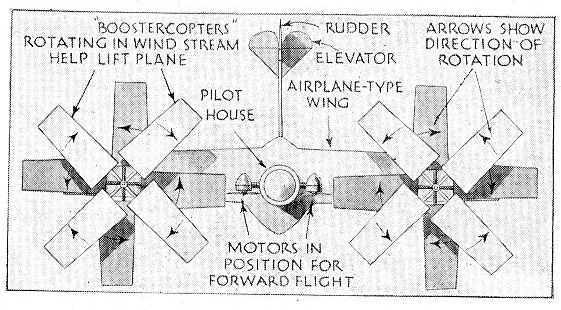
    This half-modern helicopter appeared in the Popular Science Monthly for February 1935–it seems t o have the fundamental of the body of the helicopter to be about right, and then adventures out with huge wings and two eight-blade rotors.  It was a monster of a machine, and appeared in print just about a year before the successful introduction of the Focke Wulf FW 61, and four years before Sikorsky’s true helicopter (VS-300) of 1939. The idea for a helicopter had been around for quite a while, at least from the time of Leonardo’s “aerial screw’, and through the coining of the word in 1861 by d’Almecourt, and was a long time in the making, though the main bits for the development of the aircraft came together in the 1930’s.  The “flying whiligig” here does have a squinty resemblance to the V-22 Osprey, but that would be a long time in coming.  

    Helicopter1935195

    And a close-up of the schematic:

    Helicopter1935196


  • Another “Archie”: Antiaircraft in 1916

    JF Ptak Science Books  Quick Post

    • There’s another interesting story on the use of “Archie” as a nickname in another military situation, here, in an earlier post, “George and Archie: Two Misty Names in Making Everything Into Nothing. Hiroshima, 1945.”

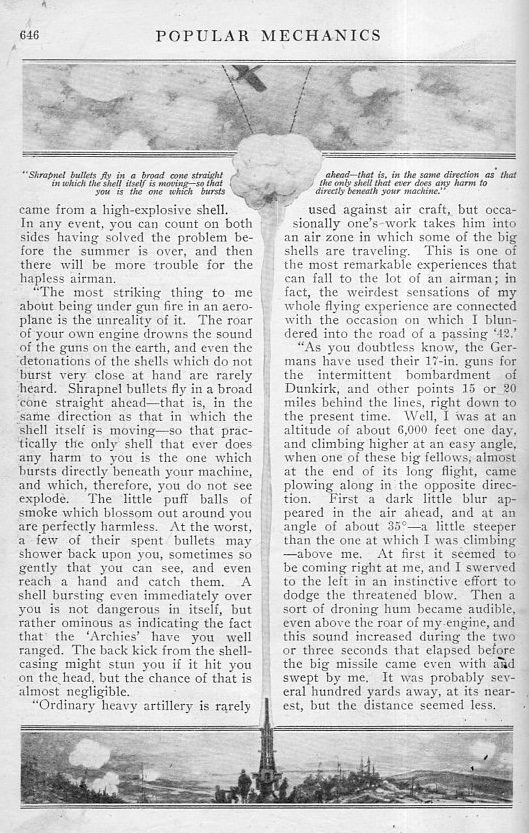
    This interesting graphic appears in the article “Airmen’s Sensations in Battle” in Popular  Mechanics, November 1916. It hows a cross-section, of sorts, of an air battle with antiaircraft involvement, and to my experience is of a very unusual design. The author writes of being chased by Fokkers and then met by “Archie” (British slang for antiaircraft guns) fire from below. Overall it is an effective design that heightens the sense of the story.

    WWI antiaircraft186

    Notes:

    “Archie”: “Nickname given to anti-aircraft fire during First World War. Said to derive from a British pilot who reacted to enemy anti-aircraft fire by shouting the line from a music hall song ‘Archibald certainly not’. This caught on and was inevitably shortened to Archie.”– Phil Jobson Royal Artillery Glossary of Terms and Abbreviations   Briefly put, the AA situation during WWI was, well, primitive–necessarily primitive, I mean. There was some improvisation against balloons earlier on but the first AA-downing of a military aircraft was evidently in 1912 in the Italo-Turkish War. In 1916, two years into the war, the development of firepower against aircraft (and the detection of them, which extended to acoustical devices for the greatest part) was still in its very earliest stages. 


  • Note on an Unusual Version of a Classic Russian Aerospace Text

    JF Ptak Science Books   Post 2527

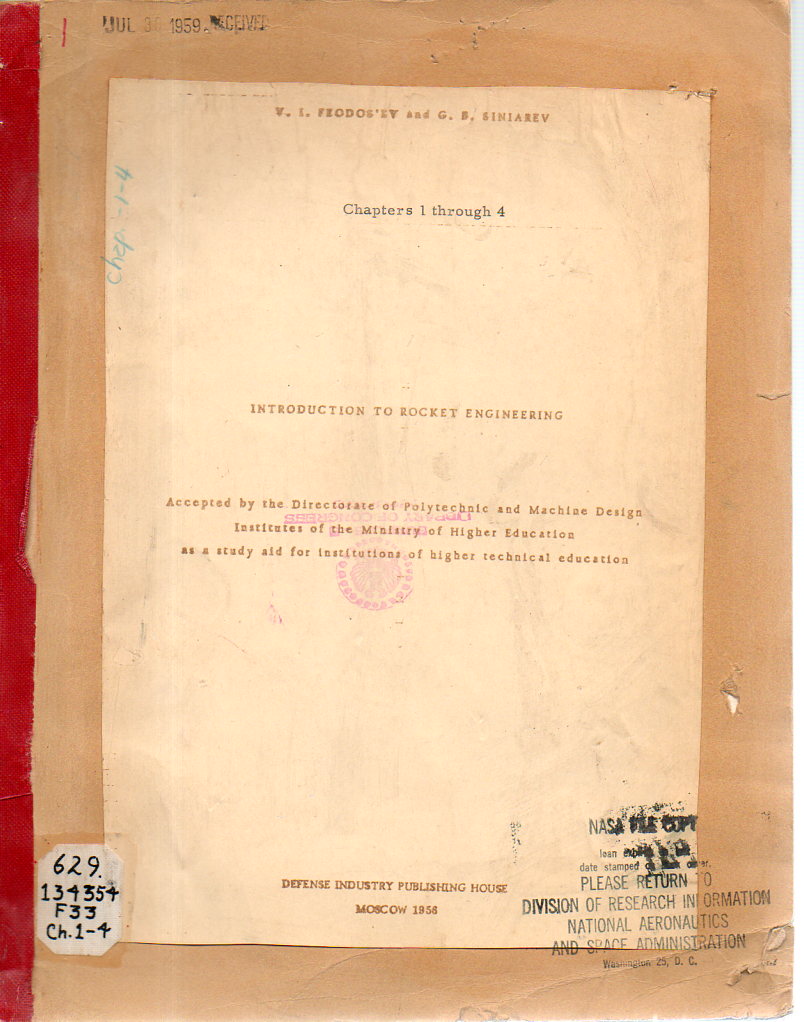
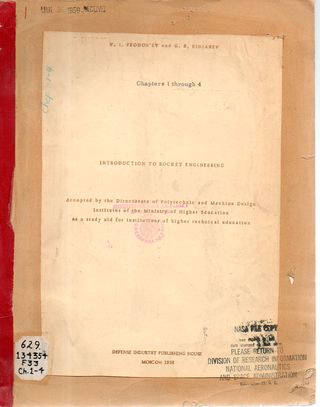
    V.I. Feodosiev (with his two initials looking ironically similar to the V1 that he wrote about) and G.B. Simiarev wrote a classic textbook1 in rocket technology which was published in Moscow in 1958.  Even though it was translated and published in English the following year by Academic Press, the version here seems to have been translated in the same year as its Russian edition. I’ve had some translations-on-demand in the store that were fast-tracked for the particular agency that needed the work, translations that sometimes didn’t appear in English for years afterwards.  In this case the Feodosiev was translated (anonymously) for an undisclosed agency, though this copy wound up in the library of  the NASA Division of Research Information2. It could well be that the work was produced for NASA but frankly there are many other candidates for the point of origin of interest.  This copy is definitely different from the Academic Press translation, so at least two different translations were made of the text.  
    Feodosev Rocket171

    I really don’t have that much to offer here on this edition, except to note its differences from the Academic Press version, though this may be of some use to someone working in this area.  

    • The original is available via the blog’s bookstore, here.

    Here’s an abstract/summary of the work (which has a slightly different title)  by the Academic Press 1959 version of this publication: 

    “Introduction to Rocket Technology focuses on the dynamics, technologies, aerodynamics, ballistics, theory of servomechanisms, principles of navigation instruments, and electronics involved in rocket technology.”

    “The publication first takes a look at the basic relationships in the theory of reactive motion; types of jet propelled aircraft and their basic construction; and types of reaction motors and their construction. Discussions focus on air breathing motors, anti-aircraft rockets, long range bombardment rockets, surface to surface, short range bombardment missiles, thrust of a rocket motor, and operating efficiency of a rocket motor. The text then examines rocket motor fuels and processes in the combustion chamber of a rocket motor.”
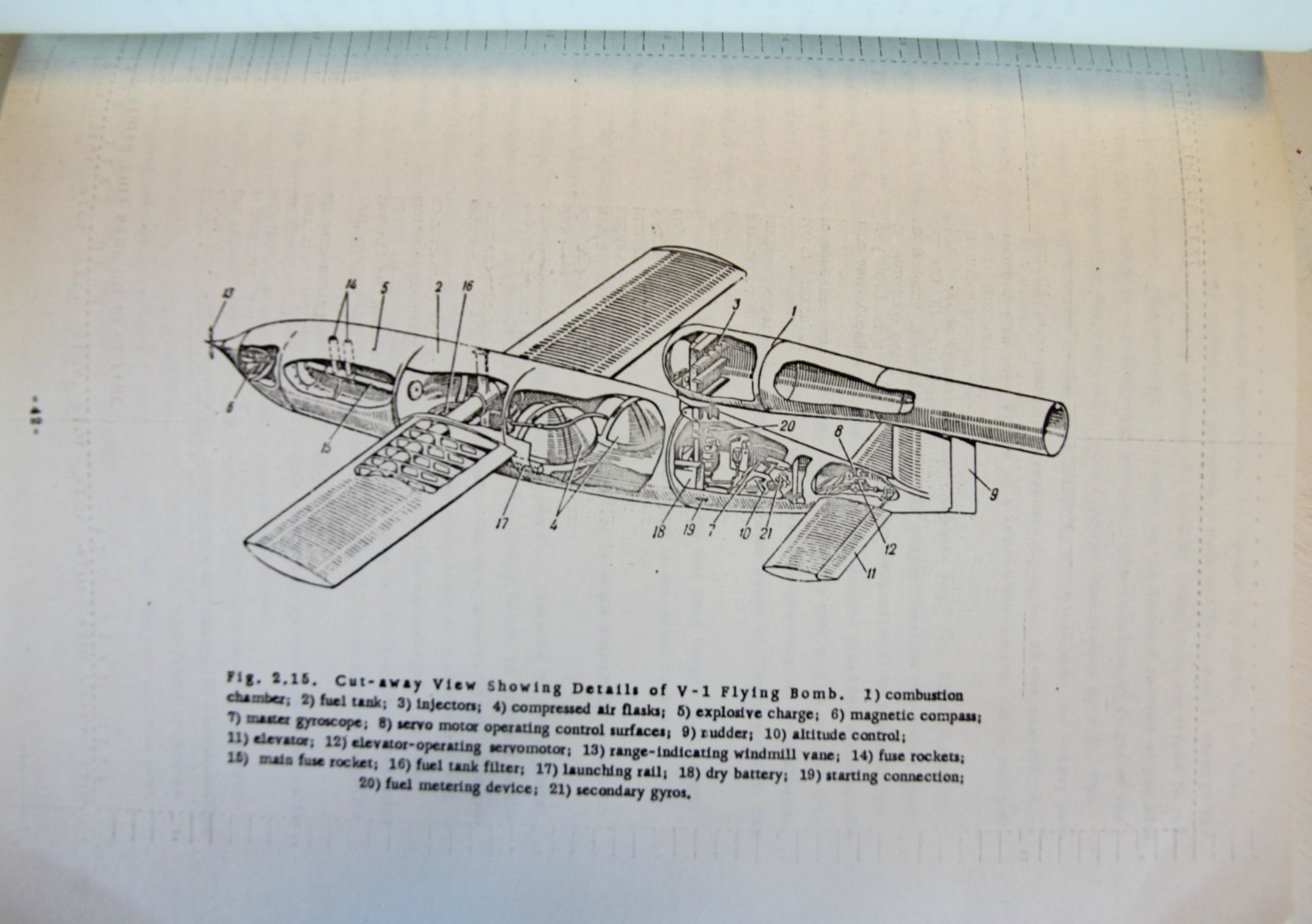
    Feodosiev _4_

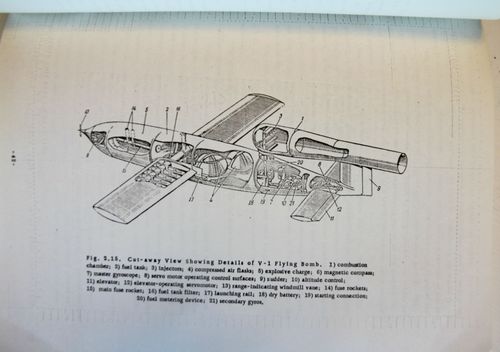
    [V-1, from page 42]


  • Will Aeroplanes Soar to Unknown Heights? (1920)

    JF Ptak Science Books    Quick Post

    Aviation soar to unknown heights128

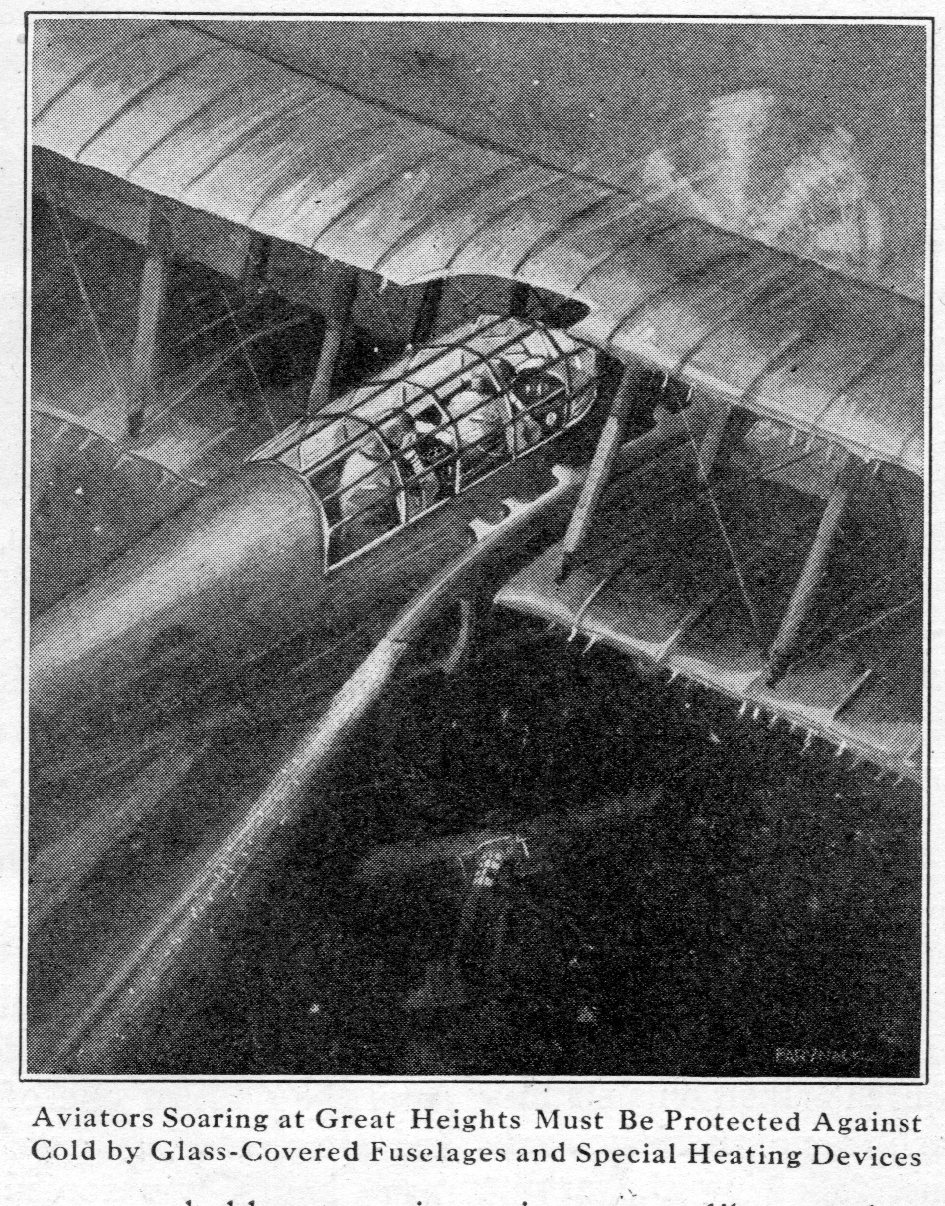
    This was the vision of future high-altitude flight, at least according to Illustrated World magazine in their July/August  1920 issue , page 806. It was reported in these pages that at about 22,000 feet the sky above is perfectly black and all of the stars are visible.  This of course is not near the limit of the atmosphere, and not very close to the Karman line “outer space” it may have been believed to be (though the blackness part does come into play at around 60,000′. and at 100,00 kilometers the Karman line is far beyond that). 

    In any event the record for the highest altitude achieved by humans was still at the mark of 39,000′ set in a balloon in 1862, a record which would not be broken (at 43,800′) until 1927, when the achievement cost the aviator/balloonist his life.  The article was slim on the atmosphere and slimmer on the necessaries for the high-altitude aircraft–except to say that the current open-cockpit approach just wouldn’t do at cold temperatures, thus giving rise to a tiny discussion on the only mentioned feature of the future aircraft: that it would have an enclosed cockpit.  

    • Flight altitude records via Wiki https://en.wikipedia.org/wiki/Flight_altitude_record

  • Air Raid Instructions, Westminster, 1941–With Videos

    JF Ptak Science Books  Quick Post

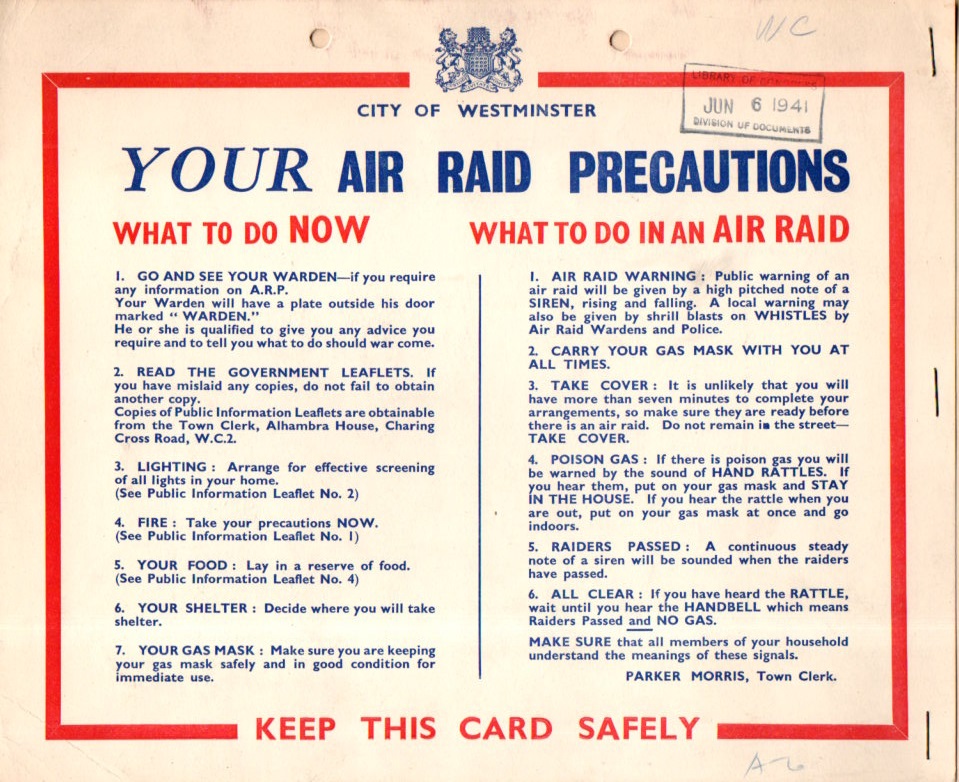
    I recovered this sample Air Raid Precaution poster from a box of WWII material, received by the Library of Congress on the very day that many historians declare to be the very end of the Blitz.  Of course the poster was printed earlier, collected in this case by the OSS and put in a folder and then sent off to the Library of Congress.  

    WWII Air Raid Precaution068

    It is a remarkably level-headed document, clear and concise, very stiff-upper-lip.  And these posters were very necessary, as we can see by the map following: 

    WWII Bomb Map London

    This incredible story (centered on Westminster) is a detail from an incredible (and interactive) map showing every bombed dropped by the Germans on London during the Blitz  7th October 1940 to 6th June 1941 [Source:  http://bombsight.org/?#14/51.5005/-0.1281]

    The following are instructional newsreels (all found on youtube) about what to do in an air raid (1940), while the second demonstrates the sounds of the air raid sirens discussed in the document above, and the third is a short history of the Blitz:


    Ource: https://www.youtube.com/watch?v=mHep5WA9qqU