A Daily History of Holes, Dots, Lines, Science, History, Math, Physics, Art, the Unintentional Absurd, Architecture, Maps, Data Visualization, Blank and Missing Things, and so on. |1.6 million words, 7500 images, 4.9 million hits| Press & appearances in The Times, Le Figaro, Mensa, The Economist, The Guardian, Discovery News, Slate, Le Monde, Sci American Blogs, Le Pont, and many other places… 5000+ total posts since 2008.

Category: Aviation & flight

  • Over and Under Stories: an Underwater Lighthouse and a Piggy-Back Bomber (1916)

    JF Ptak Science Books   Post 2593
    Airplane piggyback

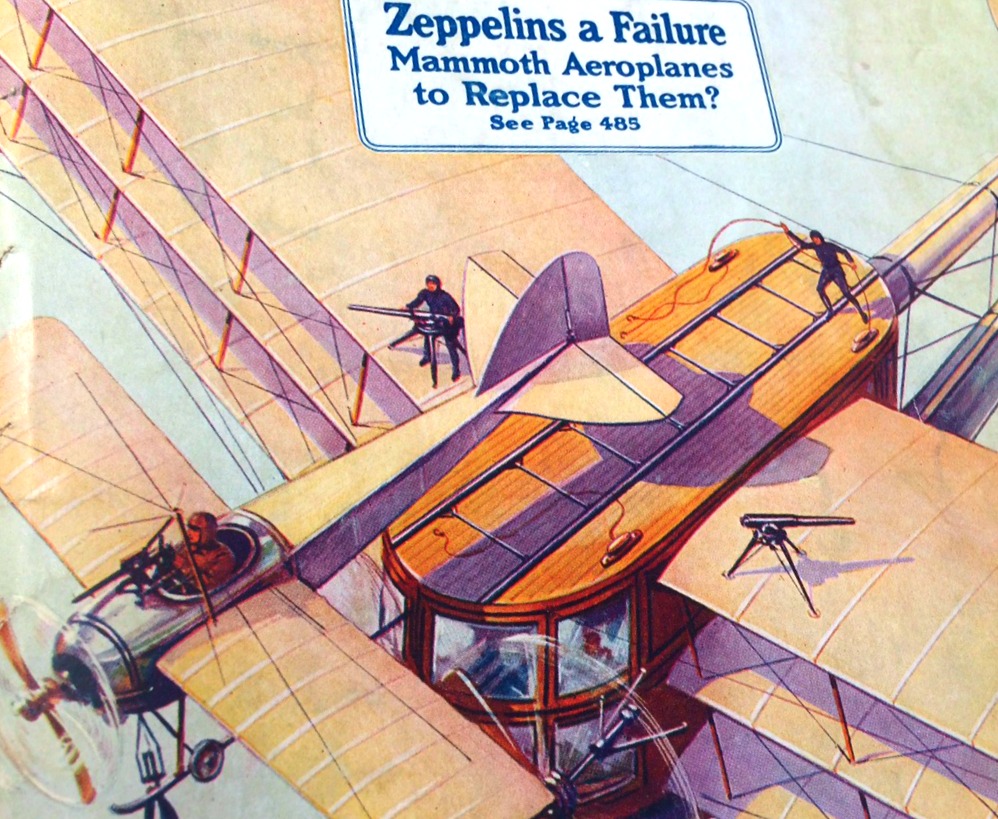
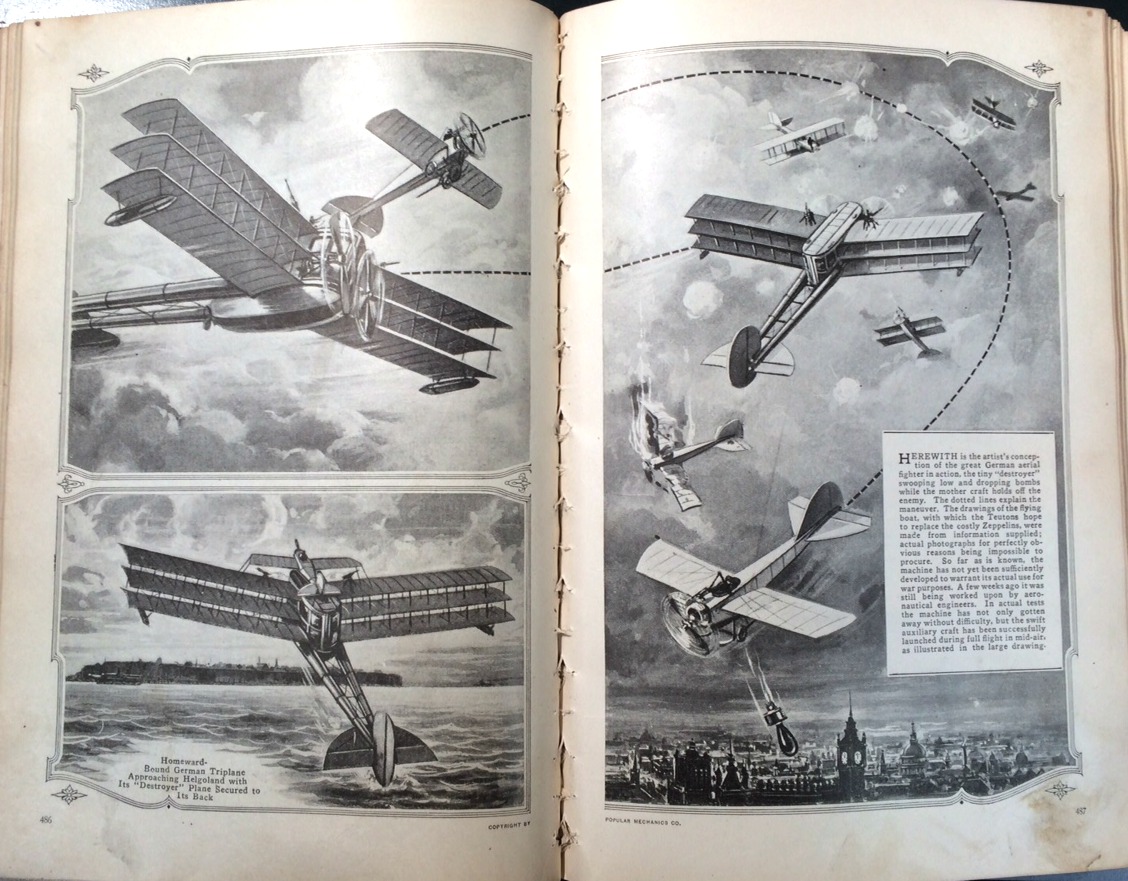
    There are two interesting and remarkable techno-military suggests in this October, 1916 issue of Popular Mechanics.  First is the cover story, a (“destroyer”) aircraft bomber is to be launched from a “battleship” aircraft for a one-two punch of carpet and strategic bombing. The large “mother ship” was to have a 143′ wingspan, making it a monster of a plane for the time. It would enough fuel and oil to keep it aloft for 48 hours, and also have a 1000-pound payload “of bombs”, and a crew of five, two of whom would be wingwalkers firing machine guns. And another plane. The smaller aircraft was “equipped with bomb-dropping devices” and was to be launched for a special raid and/or to ward off enemy attack planes. But the fly in the ointment, says the article, was getting the smaller aircraft back to the larger one–launching was no problem; landing was.  And I can see why.  
    Airplane piggyback 2

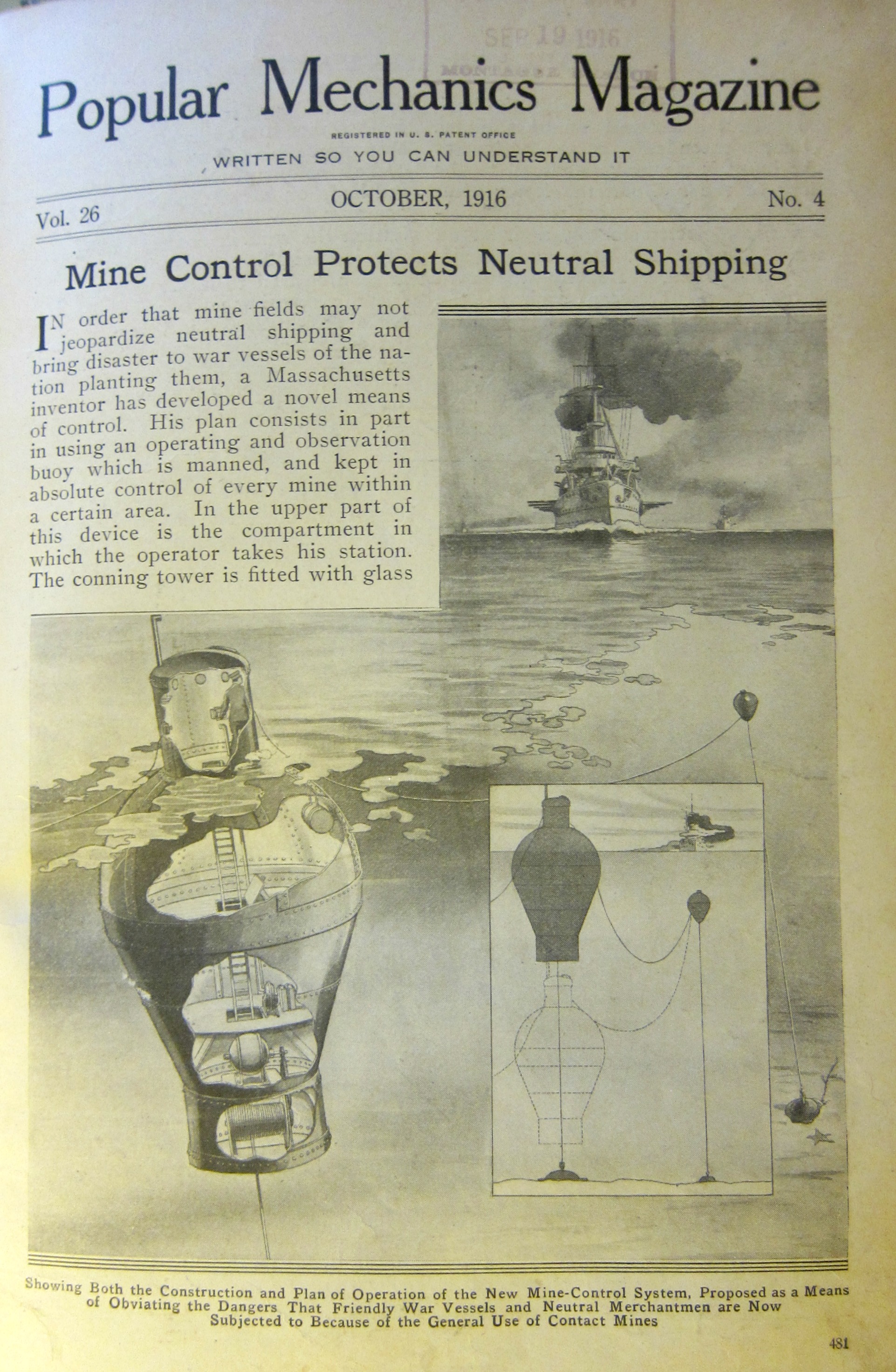
    The second article in the issue–the so-called underwater lighthouse (appearing under the far less amusing but much more informative title of “Mine Control Protects Neutral Shipping”)–was a defensive and offensive buoy-structure that would provide a very claustrophobically-unwantable job for someone. The buoy was made to control an undisclosed-number field of mines in/near shipping lanes and differentiate friendly from unfriendly ships.
    Popular MEchanics--buoy mine

    The buoy would have an observation area  from which our unlucky guardian would scan the seas; once a ship was spotted, the buoy would submerge to periscope depth, and after some time the nationality of the ship would be identified; at that point if an enemy ship is recognized the operator could submerge the buoy further (being anchored to the sea floor) via a winch to 50 or 60 feet beneath the surface, and then when the mine made contact (proximity or otherwise?) the buoy operator could detonate the mine. It was thought in this way that you could mine an area of sea and not have to worry about ships being damaged by friendly fire. The whole thing seems highly problematic to me–not the least of which would probably be a very jostling ride to the buoy operator. 

    And so two adventures in speculative military technology in one single war-time issue of Popular Mechanics.
  • A Transatlantic Flying Wing/Boat, 1927

    JF Ptak Science Books  Quick Post

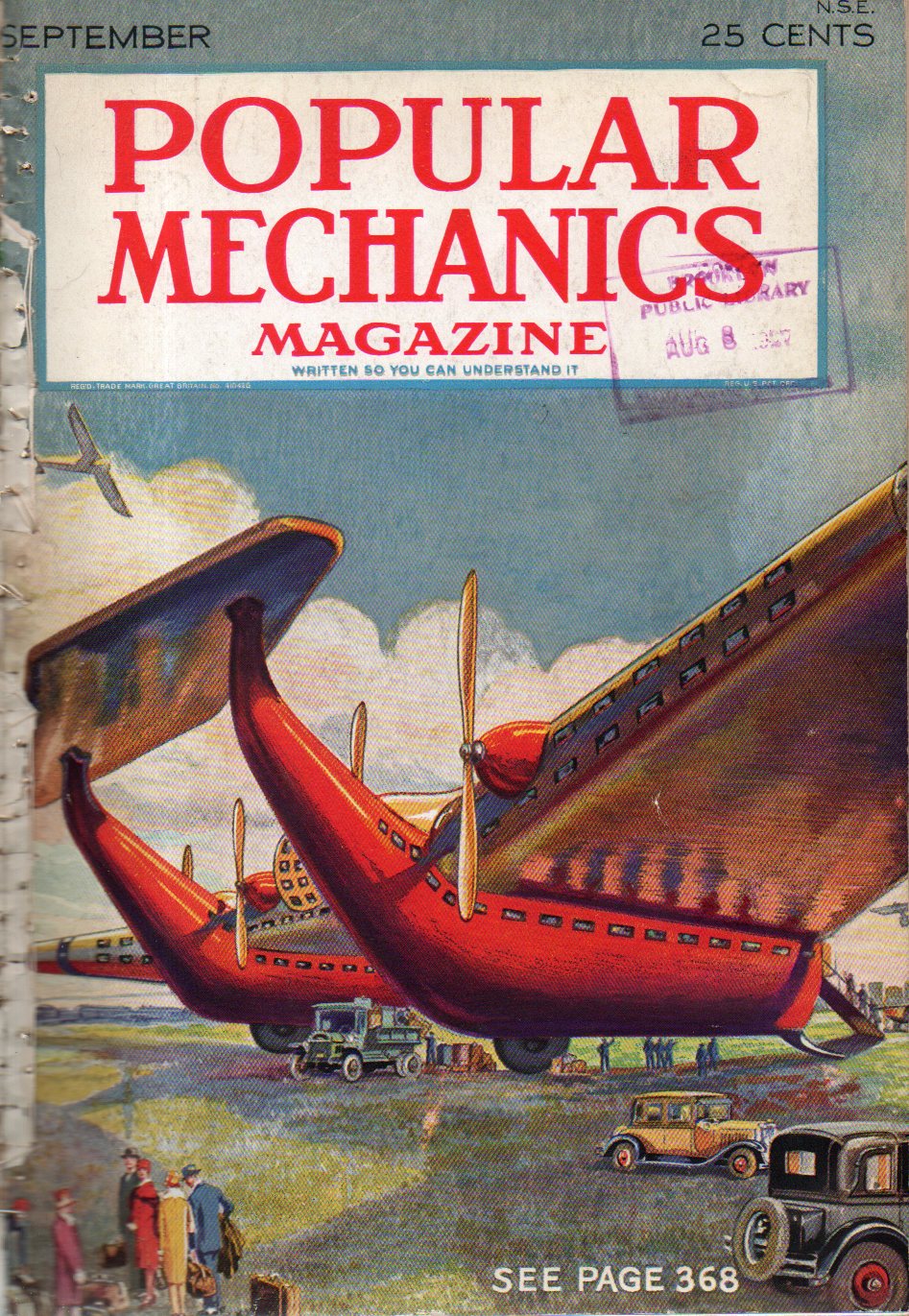
    The beautiful aircraft was being built primarily on high hopes and a sleepless night, but that’s okay. This was a vision for a transatlantic aircraft, and appeared int he September 1927 issue of Popular Mechanics, and was an interesting and in some ways remarkable insight to the coming prospects of long-distance passenger flight. The Wright flight was only 24 years before this, and the Lindbergh solo crossing of the Atlantic occurred just a few months prior to this publication, an event which no doubt added fire to the speculation of future transatlantic flights. The artist imagines a massive aircraft with a 400′ wingspan, the wings offering room enough for sleeping quarters for the passengers.  The Transatlatic flight was technically difficult, and outside of crossings by the Graf Zeppelin and the Hindenburg in the late 1920’s, passenger service really wasn’t instituted on any large scale until after WWII.  There were crossings by aircraft in the early 1930’s, but there (as with the famous flight by Dornier in the DO-X seaplane in 1931) the majority of those flights were over the ocean to South America, and then continued to North America. A notable exception is the Yankee Clipper. which was a luxury flight (carrying 74 and sleeping 36) and which was a massive aircraft, though the real plane’s wingspan was less than half (at 150′) of the visioneered aircraft below.  In any event, recognition is in order to the designer who thought about flight in this manner just 10 weeks1 after Charles Lindbergh made his NYC-Paris flight.

    Airplane flying wing029


    A newsreel of the parade held in Lindbergh’s honor in NYC on June 13, 1927 showing the enormous reception of the new world-wide hero:

    Notes:

    1. The September issue of Popular Mechanics would have been issued in early August (as we can see in the stamp on the cover, this issue being received by the Brooklyn Public Library August 8.


  • The Pistol in Air-to-Air Combat (1914)

    JF Ptak Science Books  Post 2588

    Air combat 1914The news of the Wright Brothers and their historic powered flight in December 1903 was a monumental deal, though the report of the success was buried in middle of the Scientific American issue that first covered it.  Eleven years later heavier-than-air powered aircraft went from being from non-existent but with potential/possibility to machines used in war.  It took eight years from the Wright plane for an aircraft to be used in combat dropping bombs on people, a role that would of course be exploded beyond all recognition just a few years later. During the first few months of WWI aircraft were used but mostly for surveillance and mapping–aerial combat existed, sort of, though without any firepower. The first air victories were results of aircraft ramming one another (the first seems to have been August 25, 1914), while the first instance of one plane shooting down another didn’t occur until the war was in its second month, a French plane shooting down a German aircraft with a machine gun and a rifle.1

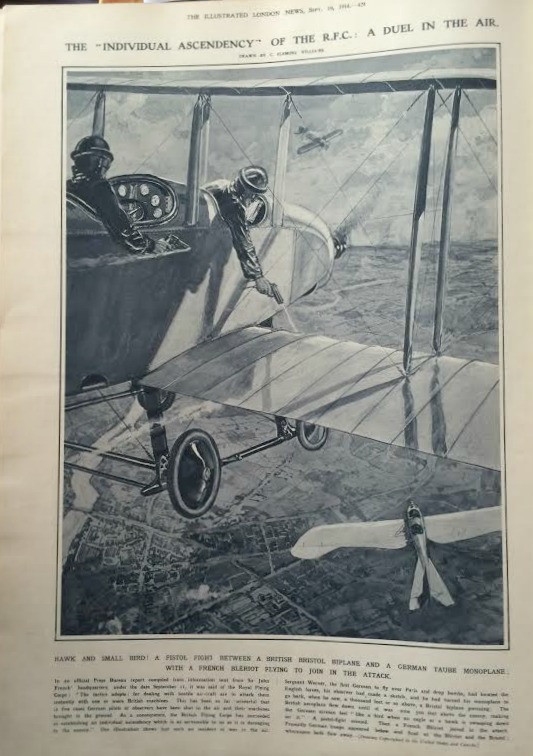
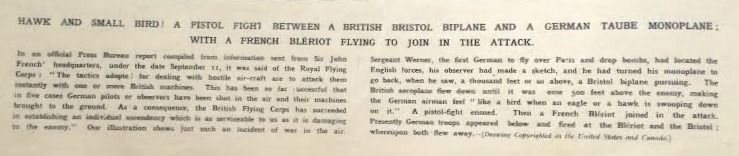
    These notes are simple background for the image that I found in The Illustrated London News (September 19, 1914)  showing aerial combat between a British Bristol and a German Taube.  What is striking of course is that the Royal Flying Corps aircraft was attacking with the co-pilot firing a pistol at the German plane–a little unexpected. The description of the image identifies the pilot of the German aircraft (“Sergeant Werner, the first German to fly over Paris and drop bombs”) and that he had been on a reconnaissance flight mapping allied positions–how that information was known I do not know.  In any event the British aircraft pursued the German and nearly had it within rights–that is until German soldiers on the ground returned fire on the British aircraft, forcing it to retire.  

    Air combat 1914 b

    Luckily I own the war years for the ILN and I do believe that this was the first image in that journal showing air-to-air combat. The ILN does have earlier images showing the first bombing raids from aircraft and also of air-to-ground machine gun attacks, but at this point this may be the first of its kind. It all seems very removed–quaint,even–given how quickly things developed over the next year.  

    Notes

    1. “On October 5, 1914, Sergeant Joseph Frantz and Corporal Louis Quénault of Escadrille VB24 scored the first air-to-air kill (not involving ramming – see Pyotr Nesterov) of the war, shooting down a German Aviatik B.II with machine gun fire. Quénault fired two 48-round magazines at the Germans. The Germans returned fire with rifles. When the Frenchman’s 8 mm Hotchkiss M1909 machine gun jammed, he successfully returned fire with his rifle. Oberleutnant Fritz von Zangen and Sergeant Wilhelm Schlichting of FFA 18 fell to their deaths. This is believed to be the first air-to-air kill in any war.”–a good Wikipedia contribution on the Voisin III, here: https://en.wikipedia.org/wiki/Voisin_III

  • An “Air Garage” Airport Skyscraper, 1927

    JF Ptak Science Books  Quick Post

    Air garage028


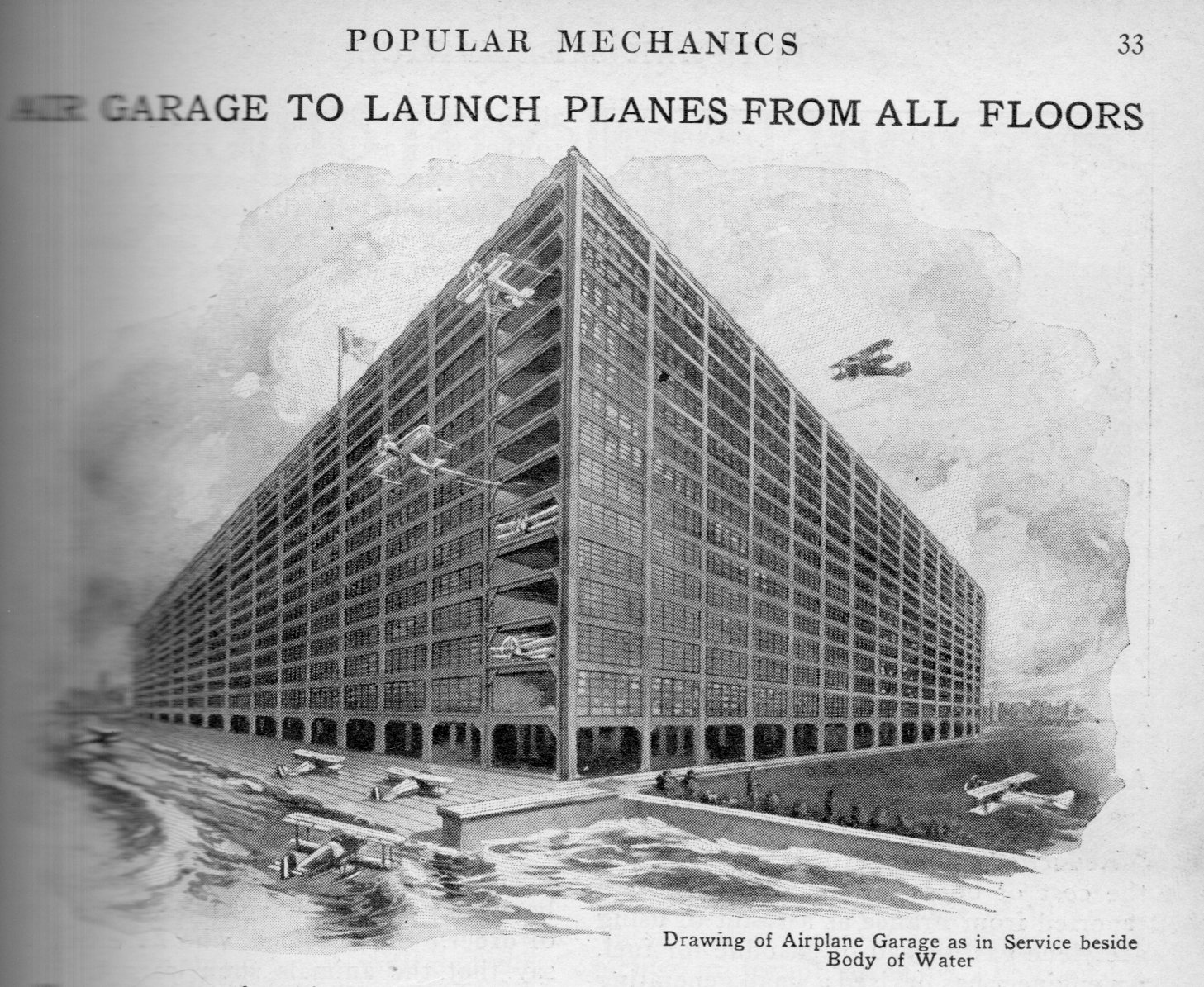
    There were a number of interesting/unusual/bizarro ideas for air travel int he heady aeroplane decade of the 1920’s (search for “airport” in the google search box at right to find some of this blog’s posts on the subject). This one appeared in Popular Mechanics for July, 1927–a 14-story “Air Garage” that would serve to launch 14 planes from its 14 floors, times four, I guess.  I reckon that the interior of each floor would function like a garage/taxi/pre-flight area, and the planes would use the areas closest to the exterior of the structure as a runway. No doubt the writer was envisioning the need for this as the popularity of the airplane was, well, soaring, and the vision may have inched the airplane close to the ubiquity of the Model A.  I commend the writer for thinking Big.  


  • Balloons I Know But Do Not Love–Deaths from Above in Ads and Bombs (Revisited)

    JF Ptak Science Books   Post 1771 (b) (from 2012)

    In the early days of aviation aerial assault must have seemed incredible–and an abomination.  Hurling stones and other offensive weapons by trebuchet and catapult is one thing, and  launching balls and shot from cannons and mortars is quite another–but actually having your weapon flown over an enemy’s position and dropped, remotely or via cable, must have been ab excruciating achievement, militarily speaking.  To be able to direct an explosive charge over a position not reachable by an infantry (say in 1915) must’ve been a short-lived comfort on the offensive end, though the user of such a technology would also have to contend with the contrary, as the enemy would be able to do the same thing themselves. 

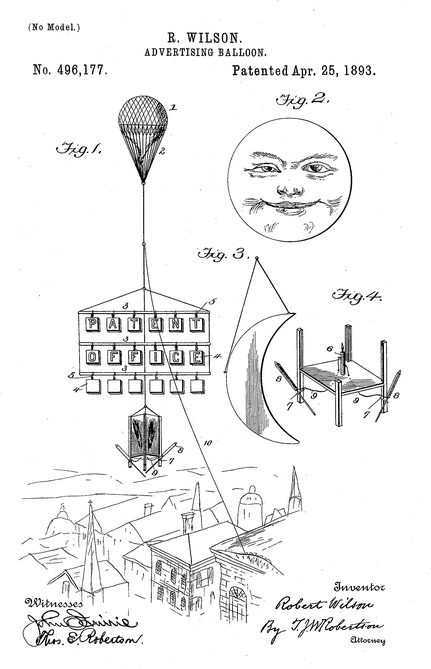
    This idea was not limited to just military purposes.  Companies could now wage an advertising war war against competitors  in a thee-sky’s-the-limit campaign, hoisting their ads on balloons anchored over a city, making it possible for the first time to have your message so universally read, a pre-intertubes version of smoke signals. 

    Patent balloon advertising 1893[Source:  Google patents, http://www.google.com/patents/US496177?dq=balloon]

    Sky speakers413

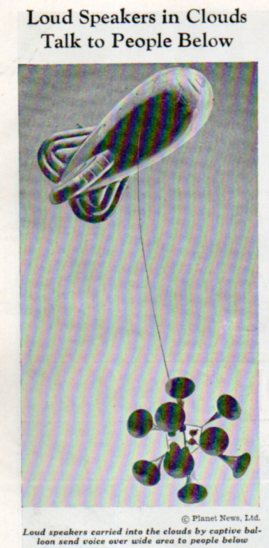
    And this, seeming more on the Orwellian/1984 side, or perhaps more contemporary as an instrument of the Dear Leader in North Korea (left, from Popular Mechanics, July, 1939).


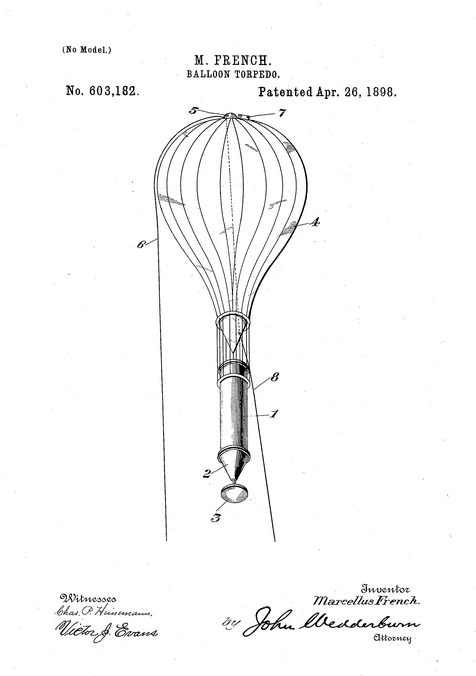
    Here’s an interesting, pre-airplane, airship-delivered explosive device: floated over an enemy’s position, the chord would be pulled at the desired time to create a tear in the balloon’s top, sending the craft down, with the bomb exploding on impact:

    Patent balloon torpedo[Source: Google patents, http://www.google.com/patents/US603182?dq=balloon]

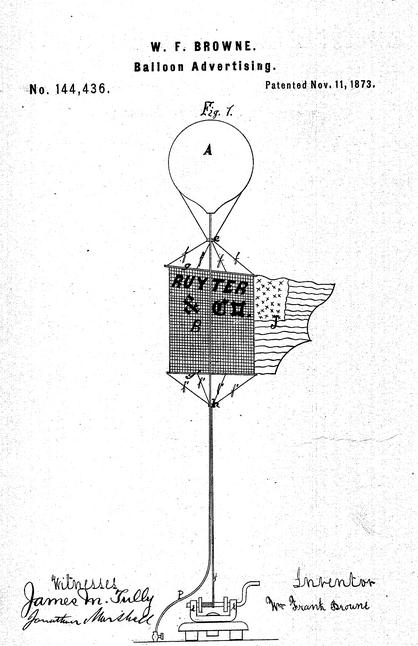
     Another sort of slow death from above advertising scheme:

    Patent balloon 1873

    [Google patent:  http://www.google.com/patents/US144436?dq=balloon]

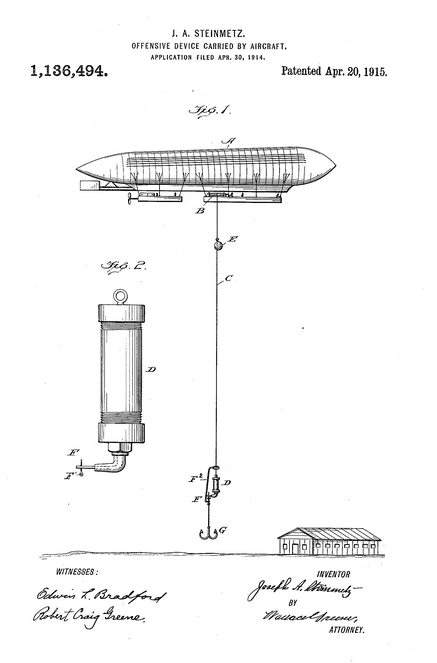
    In this device patented by Steinmetz the explosive device is still actually attached to the aircraft when exploded–not a very common way of delivering your weapon.  The airship would advance on the enemy, with the bomb  attached to a cable just above an anchor at bottom; the anchor would grapple the target, and the bomb detonated from the  gondola of the airship:

    Patent Balloon gondola


  • On B-17s & Death–from the Other Side (Vichy France, 1943)

    JF Ptak Science Books   Post 2580

    The U.S. bombing raid on Schweinfurt–the location of a German ball bearings complex–on October 14, 1943, was the most devastating loss of life and aircraft suffered by the USAAF to that time.  In the week prior to the Schweinfurt raid there were already enormous losses, more than 90 B-27s lost in three missions.  Of the 351 B-17s that started the mission on the 14th only 228 actually made it to the target–some dropping out of formation and some being shot down–at the end of it all some 60 planes came down over Europe, 5 over England, and another 17 were damaged beyond repair. Bombs were delivered to the target, though without great success, the factory being up and running again after a few weeks. It was a disaster. 

    B-17 Schweinfurd _a_ 367 B-17 Schweinfurd _b_ 368

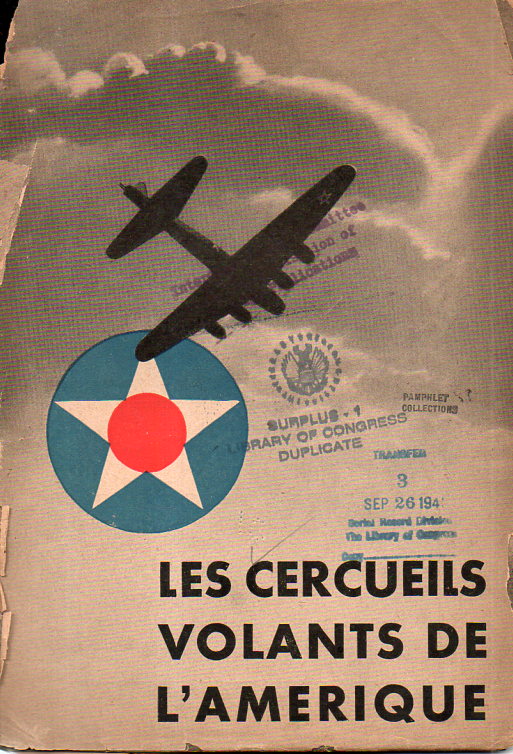
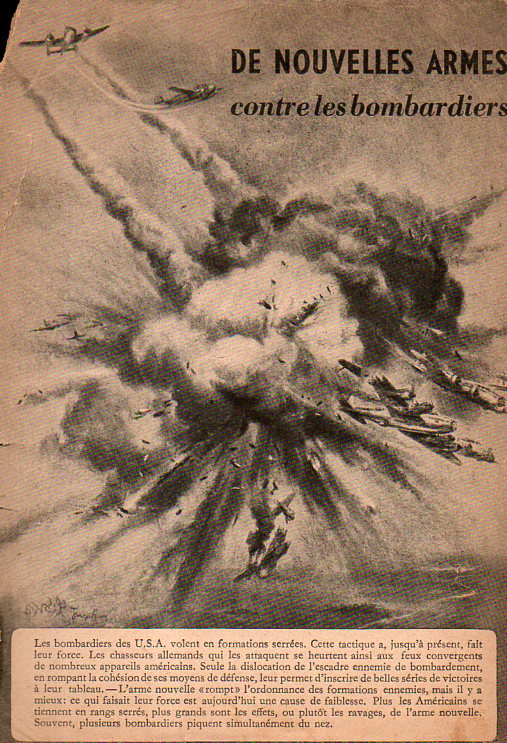
    The Nazis working no doubt through the Vichy regime in France produced a quick little pamphlet on the raid, Les Cercueils Volants de l’Amerique, a play on words, working the “Flying Fortress”  into the “Flying Coffins”.  In 1943 the Lutftwaffe was still formidable, though that would not last for much longer, the Allies gaining more-or-less uncontested control of the skies by Overlord, though with Schweinfurt (which translates to “Pig Crossing” or Pig Ford” or something along those lines) more than 300 were sent aloft.  In any event the Nazis sought to make good use of the disaster for their French readers.

    There are a number of pictures at the centerfold depicting dead and maimed U.S. fliers, and a lot of words about how much it will take to replace the aircraft, and the crews, and the bombs that were “wasted”, and so on.  And that the German resistance to Allied bombing raids were making inroads and will eventually save the day.  They were wrong of course, what with the astonishing industrial base in the U.S., and the state of the dying Nazi war machine.  (After everything was said and done, Schweinfurt was bombed 22 times during the war, receiving something like 590,000 bombs; there seems to have been no real effect on the important production of ball bearings, and for whatever reason the German military seems not to have been in desperate need of them at any point. The town of course was decimated, and a thousand or so civilians were killed, but ball bearing production seems to have not been affected, overly.)  It is a nasty little pamphlet. [Evidently this is a rare work–only one copy is located in WorldCat, at the Bibliotheque de Documentation Internationale Contemporaine Nanterre. I should probably reproduce the whole thing right here, but some of the images are pretty disturbing…maybe I’ll do it later.]  

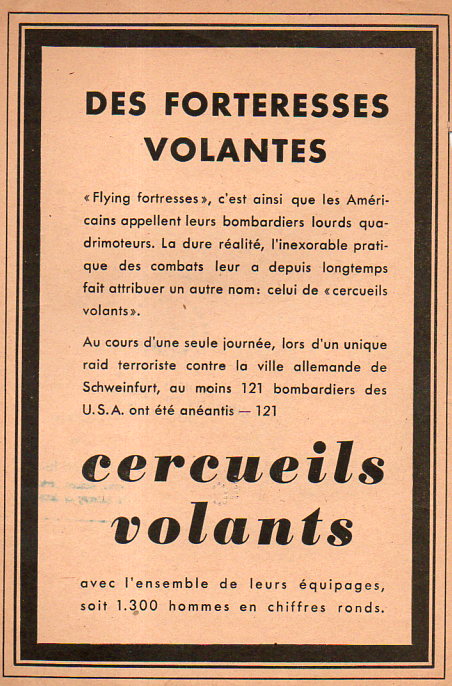
    Also: the page at upper right claims different numbers of planes shot down (121) as well as aviators killed (1300) but that is the job of propaganda. That, or they just got it wrong.  The reports from the gunners on the B-17s recorded many times the number of Luftwaffe planes shot down than actually were–this could be due to several/many gunners shooting the same plane, and so on.


    B-17 Schweinfurd _c_ 369

     Notes:

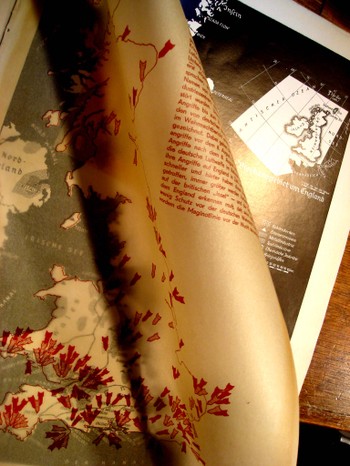
    Years ago on this blog I wrote a short piece on the bombing of Great Britain as reported in the Illustrirte Zeitung–it is worth a look. https://historyofideasblog.com/thesciencebookstore/2008/03/bombing-england.html

    Dsc04741


    ·Posted by :

    ·in:

    —

  • An Unusual Image Featuring a “Surrender” of London, 1917

    JF Ptak Science Books  Post 2567

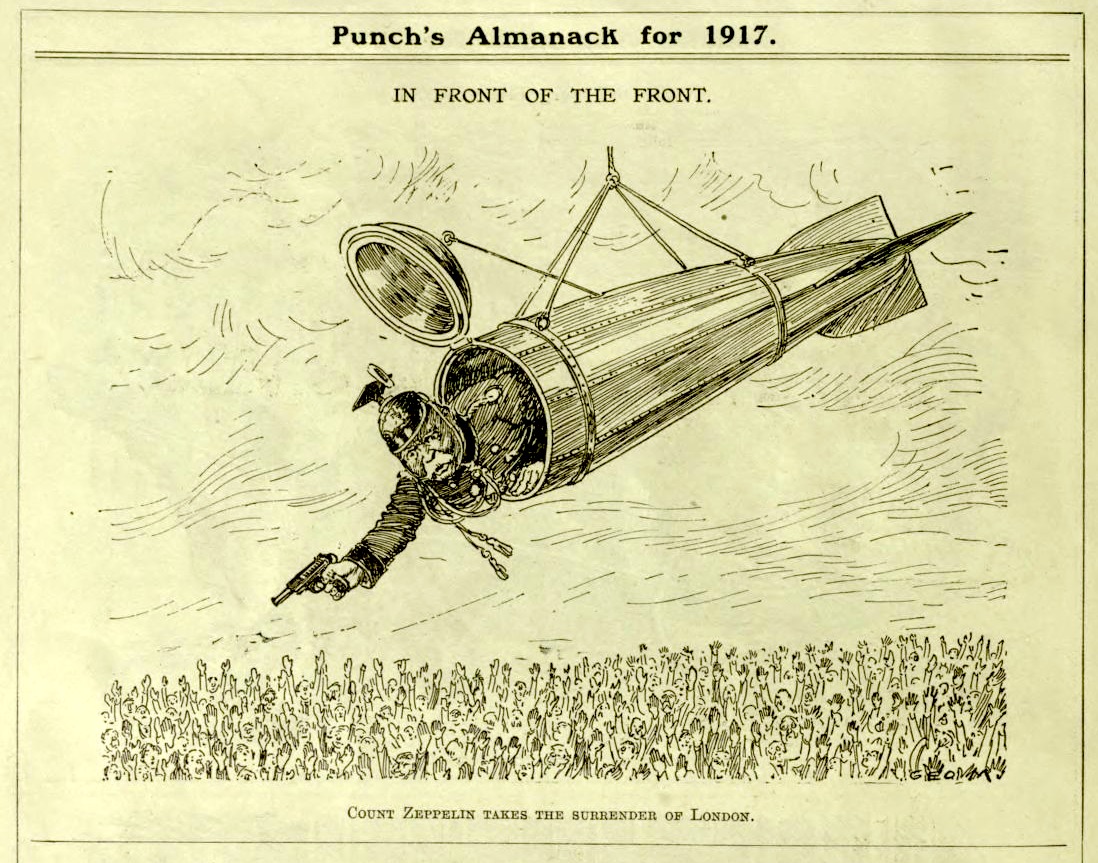
    I came upon this image unexpectedly with the sneaking realization that I have rarely (ever?)  seen the words “London” and “Surrender” together. But there it was, in the high-end satirical and critical magazine, Punch, or the London Chiaravari, in the January 1917 “Almanack” section.  WWI was a war of stunning adjectives, and in 1917 their brutal nature grew even greater. The aerial bombing raids which commenced in 1915 extended to  London, thanks in large part to Ferdinand von Zeppelin. During the war there were 50-odd bombing raids to the U.K., causing 1900 casualties, the result of 5000 bombs dropped from airships. In 1917 the raids were more the result of airplane bombing, with 27 raids and 2700 casualties.  So compared to WWII standards the damage and casualties inflicted on the population was not great–except of course these people weren’t living in their future, and the practice of dropping bombs from the sky was only a few years old (and the Wright brothers’ flight took place only 11 years before the start of the war) the idea of being blasted by Zeppelins and airplanes must have been a furious worry. 

    That’s what gives this cartoon such a poignancy, with the great newness of this new fear, the Brits displayed a characteristic “stiff upper lip” in the face of aerial attack–in this case perpetrated by the Count himself.  Here is Zeppelin being lowered from one of his airships over a compliant and surrendering London populace–no doubt the “surrender” part being far from anyone’s mind. Zeppelin would be dead in two months, and his airship replaced by a newer adversary, but right here in January, 1917, the Count and the fear of his attacks were being deflated, somewhat, displayed in a ridiculous situation so far removed from reality that its impossible possibility is humorous.

    WWI London surrenders


    The real thing caused a lot more damage via fear and trepidation than it did with actual casualties–unless you or your family were a casualty, and then it is a different story. But the fear was real, and it was used/displayed in a very provocative recruitment poster:

    WWI Zep raid poster detail

    [Detail]

    ·Posted by :

    ·in:

    —

  • A Peek into the Very Near and Short-Lived Flying Future, 1928-9

    JF Ptak Science Books    Quick Post

    AIRPLANE GIANT964

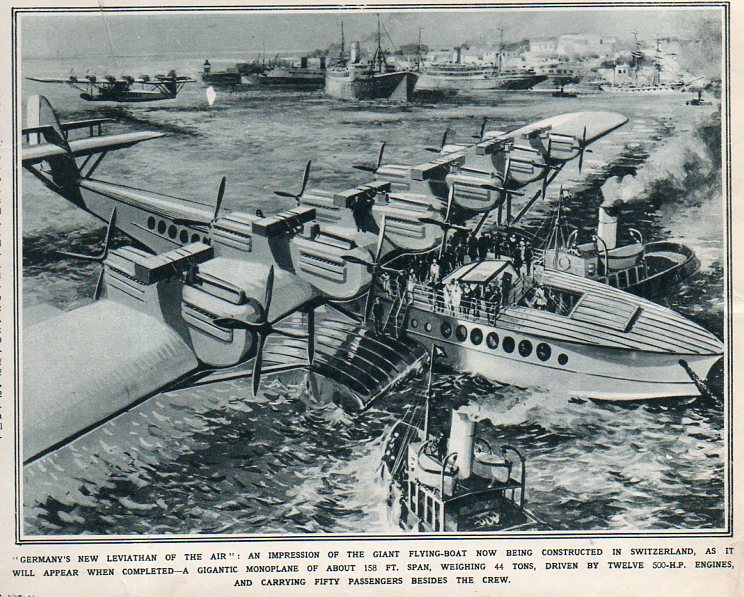
    This mammoth German aircraft appeared in the pages of the Illustrated London News on 31 March 1928, a sneak-peek into the future. It may have been a shock to British aviation sensibilities–it was supposed to dwarf the largest such plane that the Brits had (the Calcutta) : 158′ to 93′ wingspan; 44 tons to 9 fully loaded wright; engine power, 6000hp to 1500hp, with  twelve very impressive 500 hp fore-and-aft engines.  

    The plane made an appearance in real-life in the air in July 1929 as the Dornier Do X,  the largest and heaviest flying boat in history, with pretty much the stats that appeared on it a year earlier. (Stuff happens) and the Dornier is broken up for scrap by 1937.  


  • Graphical Display of Data: Korean War Aircraft Production, 1950

    JF Ptak Science Books  Quick Post

    Information and Qualitative Display of Data Series

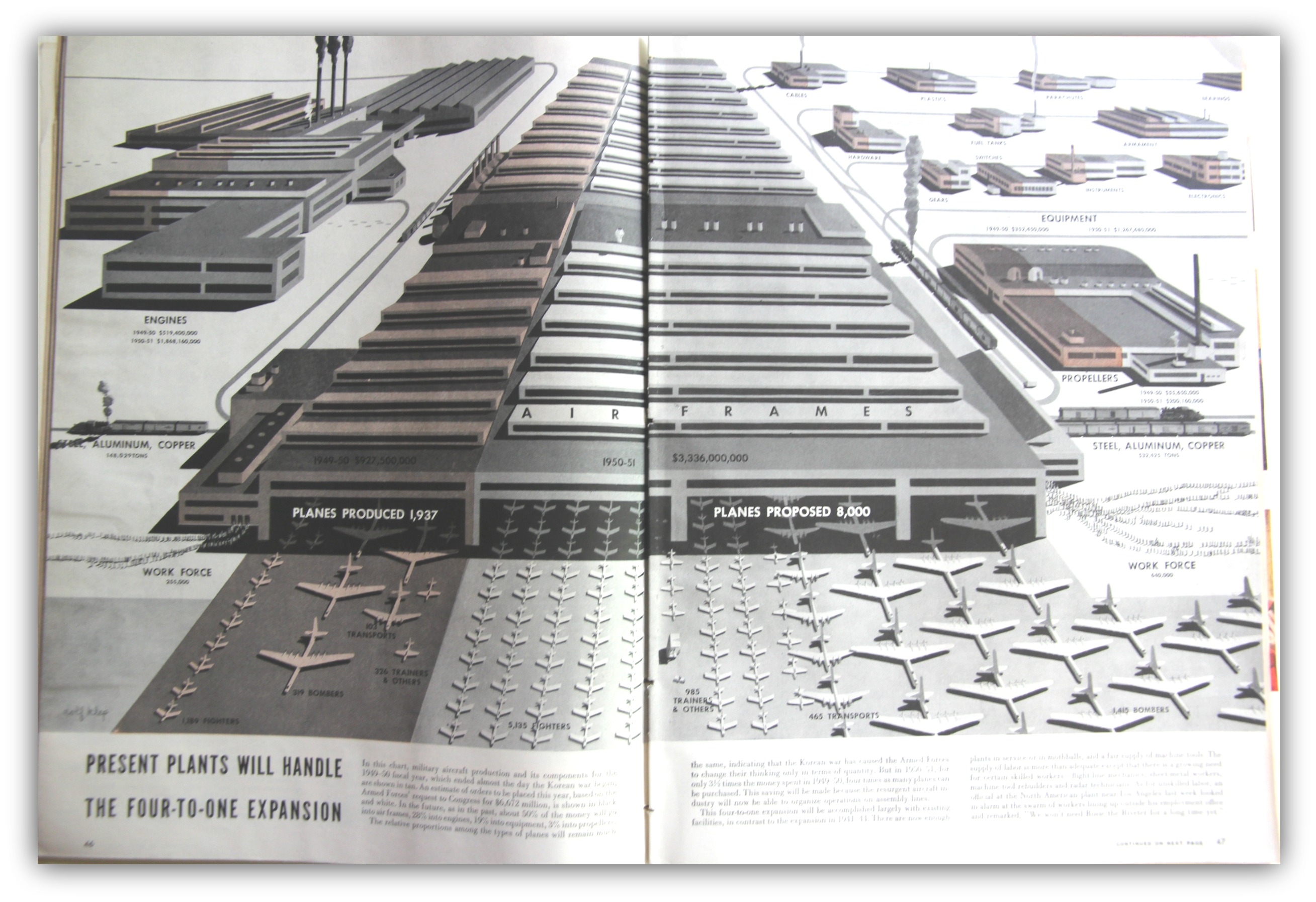
    As stated, this is a simple post of an interesting piece of graphical display of data, this time coming from Life magazine, August 28, 1950. It vividly compares the general production of military aircraft for 1949/50 versus what was coming in 1950/1.  We can see comparisons for budget, workforce, aluminum, copper, engines, and of course aircraft (trainers, fighters, transports, bombers), and shows the huge difference between the relative peace of 1949 and the beginning of the Korean War  two months earlier than this article in 1950.  

    Korean War Aviation[Source: LIFE Magazine, August 28, 1950]


  • A Musical Two-Step Trip to Mars in 1898

    JF Ptak Science Books (Expanding  Post 693  from 2009)

    Also have a peek at my post on pre-historic space flight: de Bergerac, Leonardo & Co.

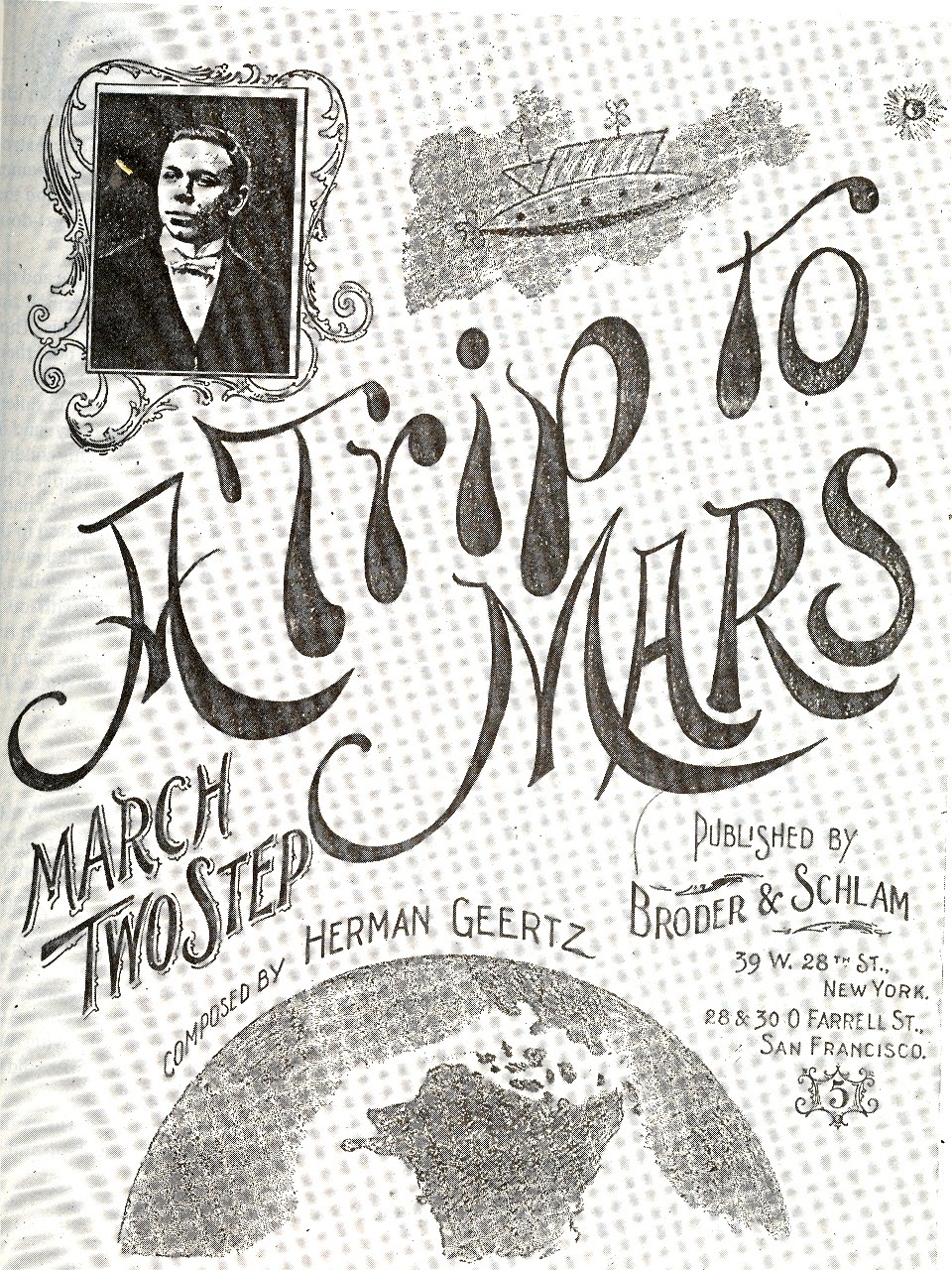
    Herman Geertz–a mysterious, unknown quality of a person to me–made a major contribution to the history of American spaceflight, albeit an unusual, ephemeral one.  In 1898 he published a song—with the firm of Broder & Schlam of San Francisco—called “A Trip to Mars (a March Two Step)”, and is perhaps the first piece of music ever published in the United States about interplanetary spaceflight. 
    ==Blog July 21=mars
    The musician–whose portrait appears in a frame at the upper left—also includes an odd view of the planet Mars, and, most important, an image of a space ship.  It actually took about 20 years for this sort of popularization of Mars to grab a hook in song, even though the interest in the planet and the possibility of life there had been bubbling since Schiapparelli’s  (misunderstood) work on the planet  in which he famously identified its “canali” (and which was infamously and wrongly translated as “canals”.  Much of this great misunderstanding was rooted in Percival Lowell’s book Mars in which he takes the canali idea and runs with it to the goal line of Martian civilization).

    One year later, in 1898, Kurd Lasswitz—a professor of math and physics, a Kant expert and philosophe, and an historian of science—published what was to make him the equivalent of Germany’s Jules Verne/H.G. Wells (in importance if not in quantity).  Auf  Zwei Planeten (first published in Leipzig in 1898) was an immediate best seller, as it was Germany’s first work of science fiction, and it made its scientist/historian an instant sensation.  It was an interesting, high-tech-utopian story that describes humans finding and dealing with an isolated Martian colony existing at the North Pole; humanity has its ups and downs, as do the Martians, the species trading moral highgrounds and such, until a peaceful co-existence comes into play between the two planets.  It was pretty heady stuff for the time.  Lasswitz saw into the future in this book, bits here and bits there:  space travel is rather accurately summarized as is a sort of television (that was actually a Martian tele-telescope) and synthetic fuels and foods. 

    Mars, signal from

    [Source: https://www.pinterest.com/pin/525584218990235994/  and Found on levysheetmusic.mse.jhu.edu]

    This period right before the turn of the century was particularly progressive for the sciences and for science fiction.  In the world of science fiction, for example, in 1895 there was Lowell’s Mars, Williams Morris’ The Wood Beyond the World; for 1896 there was Morris’ The Well at the World’s End, H. G. Wells The Island of Dr. Moreau and The Invisible Man, and Louis Tracy’s The Final War.  1897 saw Lasswitz’ Two planets, Bram Stoker’s Dracula and William Le Queux The Great War in England in 1897.  1898 rounded things out very nicely with Well’s War of the Worlds.

     Frankly though science outstripped the fiction part of the creativity index:   the end of 1895 saw an entirely new world intruded by Roentgen’s X-Rays; 1896 saw Becquerel’s discovery of radioactivity and Langely’s aerodrome; 1897 Thomson’s discovery of the electron; 1898, the discovery of radium by the Curies; 1899, Collin’s invention of the wireless telephone, 1899/1900 the introduction of the quantum theory by Max Planck and also the rediscovery of Mendel’s work by Correns.    It was, in short, a remarkable and remarkably-intense period whose outward reach seemed to be more dominated by the fiction aspect of science (with spaceflight and invading aliens) while the vast  new interior worlds of the previously unseen were totally dominated by the sciences, which was of course the stuff that would stick,  If you stretched this period by just another five years, the Einstein annus mirablis would be included, further deepening this unbelievable period of achievement.  Then again, nearly the whole of modernity is invented during this time:  from 1875-1915 or so nearly every genre of human pursuit entered the modern period.  New methods of writing in literature and for the stage, new ways of painting (from impressionism to non-representational art), through music and the sciences, biology and geology.  Everything changes, except for one field:  political science.  Actually, if you included the invention of the concentration camp during the Boer War(S) then I guess you could throw polysci into this group, though but by screaming and kicking. 

    ·Posted by :

    ·in:

    —