A Daily History of Holes, Dots, Lines, Science, History, Math, Physics, Art, the Unintentional Absurd, Architecture, Maps, Data Visualization, Blank and Missing Things, and so on. |1.6 million words, 7500 images, 4.9 million hits| Press & appearances in The Times, Le Figaro, Mensa, The Economist, The Guardian, Discovery News, Slate, Le Monde, Sci American Blogs, Le Pont, and many other places… 5000+ total posts since 2008.

Category: Aviation & flight

  • Underground Military Airbases, 1938

    JF Ptak Science Books  Quick Post

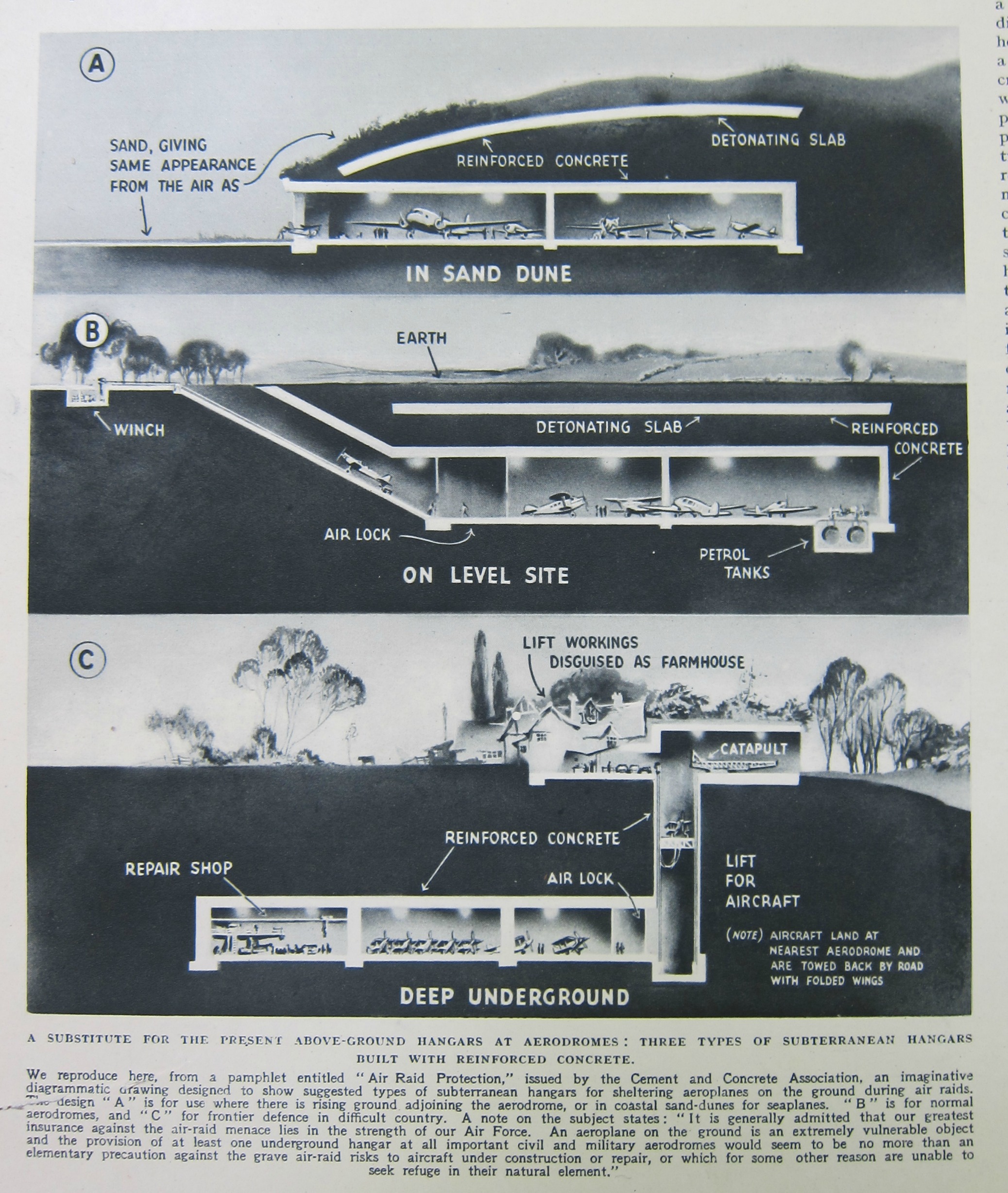
    The Cement and Concrete Association of Great Britain had issued several pamphlets in 1938 regarding air raid shelters for the protection of individual families, groups, and  cities.  In the pages of the Illustrated London News, writer and war correspondent John Langdo-Davies (1897-1971) reviews (or at least shares) the associations plans for underground fortified military airfields, the illustration for which I reproduce below:

    AIrport undergrouned 1938

    Langdon-Davies saw utility in these ideas, no doubt tempered by his experience covering the Spanish Civil War, which saw the first modern wide-scale use of bombing from aircraft, including the work done by the German Luftwaffe the impact of which was not lost on too many people. In any event, the aviation facilities were not moved underground for a variety of general reasons, some of which have to do with the utility of  the vast scale of the operation versus the introduction of replacement aircraft.  This doesn’t address some of the most adventurous ideas shown in the drawings, like the (assumed to be) very large hangar “deep underground”, the planes hauled up and shot into the air on a catapult, which is a different matter entirely.  The overall interest here though is the recognition–growing in 1938–that there is something going on in Germany that requires this sort of response.  


  • WWII Military Secrets in British Politics (1945)

    JF Ptak Science Books   Post 2632
    British political pamphlets fido detail705

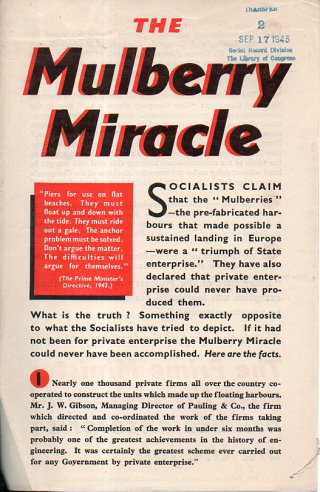
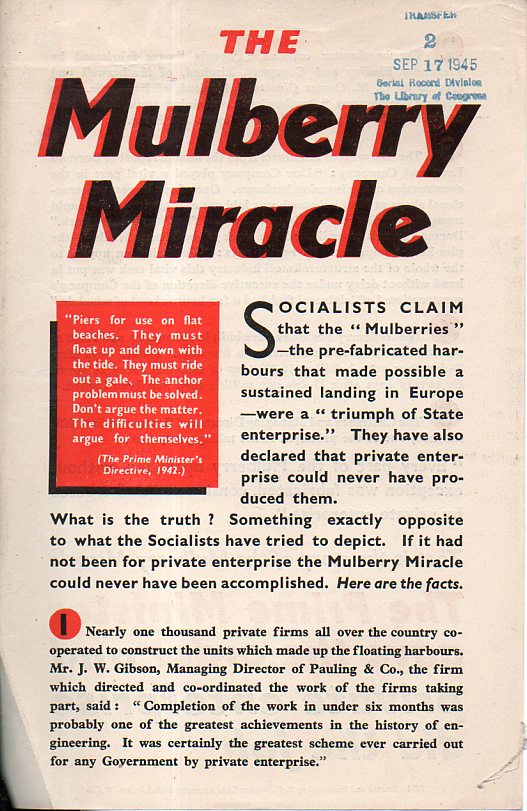
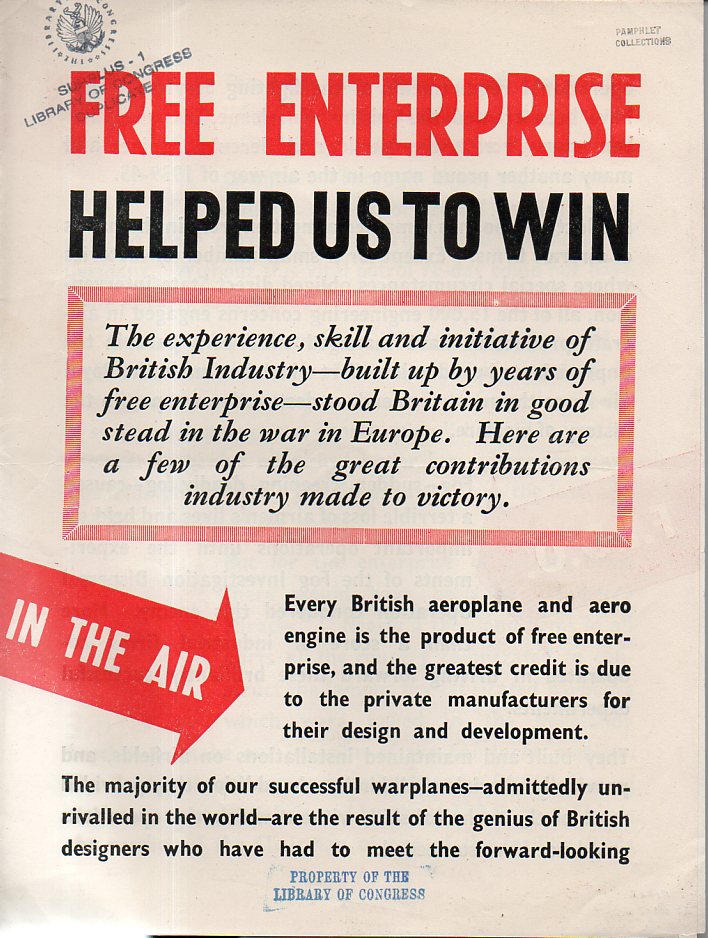
    British political pamphlets Mulberry703Earlier this morning I was looking at a collection here of British political leaflets (half around the 1893-1895 period, and then a bunch around the election of 1945) when I read a very dynamically-designed handout on how the Conservative government mobilized private industry into wartime production, and concentrating on the much-beloved and critical creation of the “Mulberry”, or the Mulberry Floating Harbor.  It was striking to me as the creation of the enormous floating harbor was a deep secret as it was an essential element in supporting/supplying the Allied invasion force in Normandy–and yet here it was, used by the Conservative party in an effort to re-elect Prime Minister Churchill, in a publication printed perhaps just a year after they were pulled across the Channel and presented to the world.  

    And it happens again in the following leaflet, though this one employs more of the previously secret stuff.

    I should say that this election in July 1945, just weeks after VE Day, produced what must have been a very surprising/shocking result, a result probably none the less surprising ti the unexpected victor, Clement Attlee, whose Labor Party produced a seemingly impossible small landslide victory over the (probably) most important man to the Allied war cause in WWII, Winston Churchill,  and the Conservatives.  (Churchill would return the favor in 1951.) 

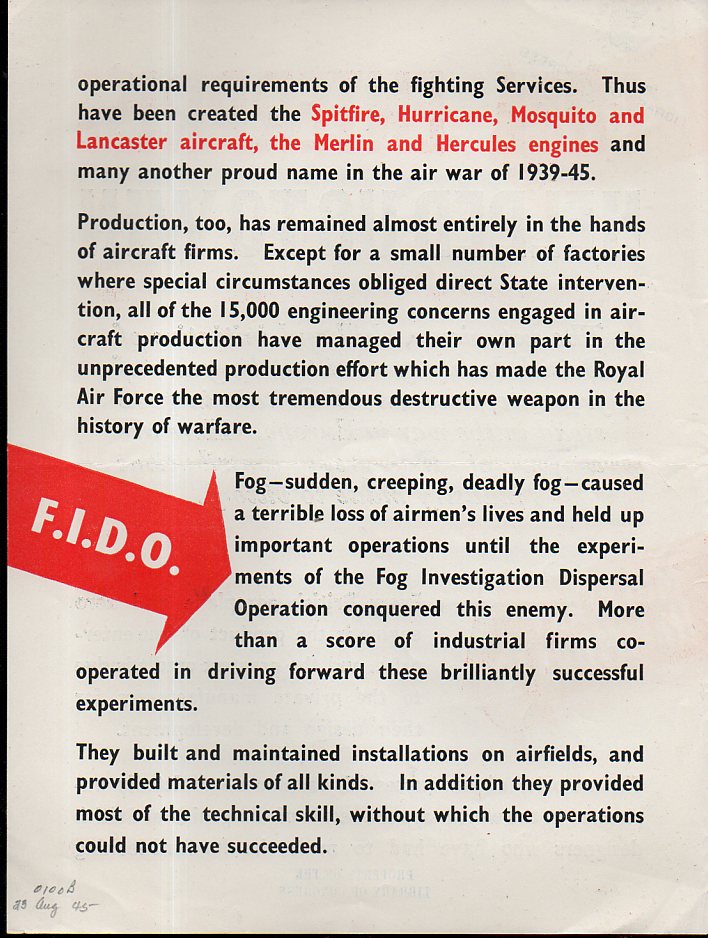
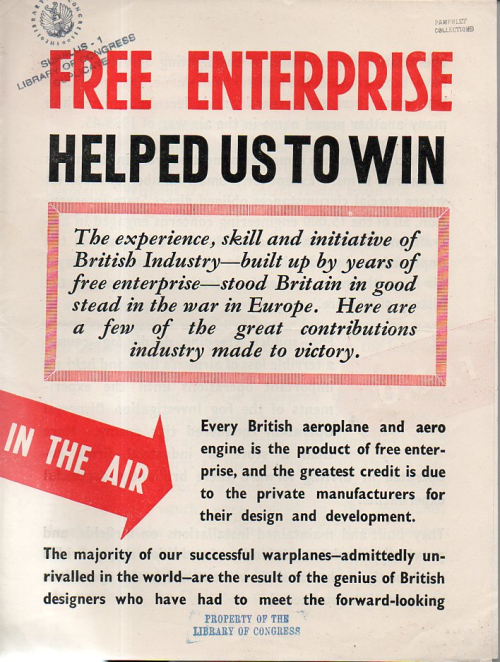
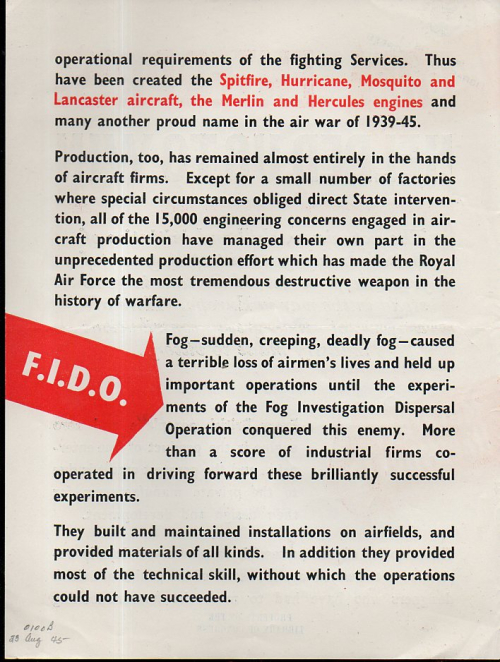
    Be that as it may, in this leaflet, “Free Enterprise Helped Us To Win”, produced by the Conservatives and ending with the ringing slogan, “Vote National”, used a number of the important and secret military developments of WWII as examples of private enterprise contributing to the war effort and standards of free enterprise.  Included here are:
    British political pamphlets fido704

    • the private designers who helped produce the singular Spitfire and other warplanes;
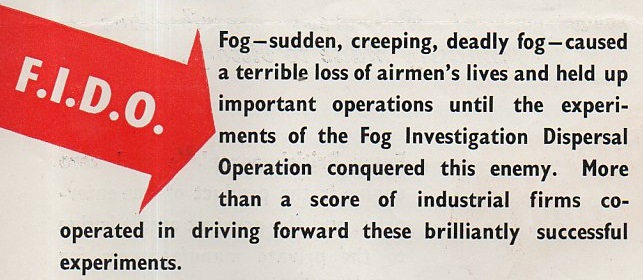
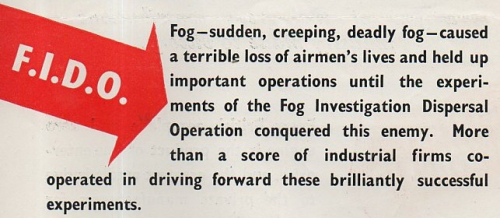
    • F.I.D.O, the Fog Investigation Dispersal Operation, which was a system installed at airfields by which (as teh acronym tells us) dissipated fog and smog so that bombers and fighter planes could land in foggy conditions;
    • P.L.U.T.O.: “Pipe Under the Ocean”, an enormous operation, was an oil pipeline that stretched from England under the Channel and basically deep into Europe, a much more efficient and effective way of getting fuel to your advancing armies than, say, the German shipping fuel across the Mediterranean where Rommel’s necessary petrol was happily torpedoed;
    • and as mentioned the Mulberry Harbours, plus the “sticky bomb”, the “flying dustbins, the Spigot mortar, and the P.I.A.T…all brought about by Free Enterprise, according to the leaflet.

    I’m not saying anything about this in a judgmental way–I was just very surprised to see all of this here, in a public handout leaflet, a brief description of some formerly very secret stuff. 
    British political pamphlets fido705


  • Inside and Outside the B-19 (1940-1)

    JF Ptak Science Books   Quick Post

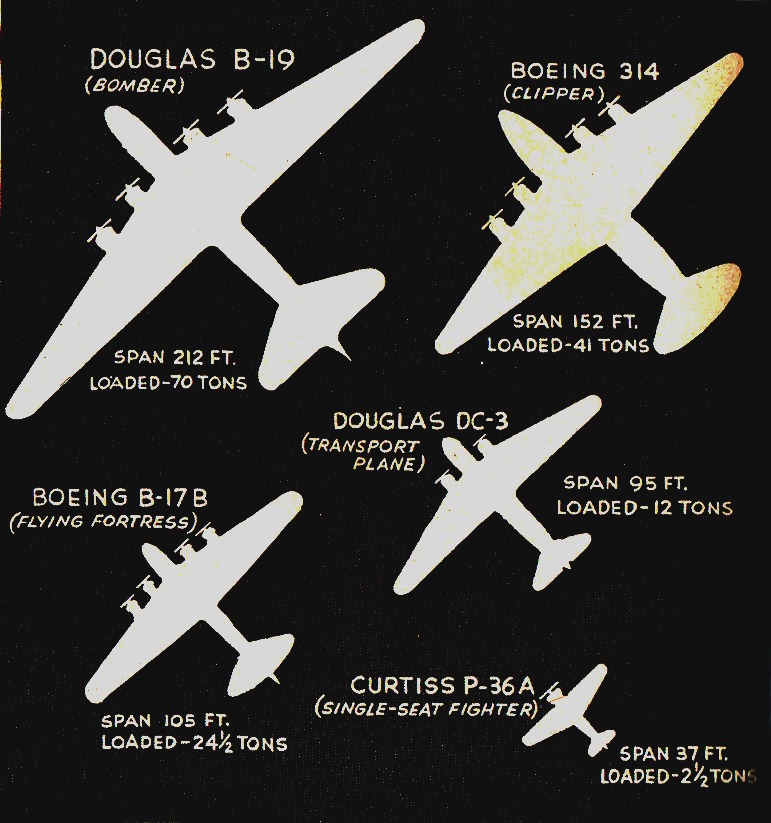
    The massive B-19 bomber built by the Douglas XB-19 (originally designated XBLR-2, the eXperimental Bomber Long-Range 2) was a prototype for a U.S. Army Air Corps transcontinental bomber–a striking and revolutionary plan when it was begun in 1938. So far as I can tell this is an early public discussion of the aircraft–it must have been an intimidating piece of propaganda so far as Axis forces were concerned.  It was about the size of a 747 and carried an extended crew of 24 for the long mission, which could see the plane to Europe and back over a 24-hour-long flight as it lumbered out and back at about 180 mph (which would explain the crew rotation and size). At the heart of the aircraft was its 18-ton payload–dwarfing the then-huge payload of the B-17B’s 3 tons (and later 17G’s 4.5 ton), which was deliverable in a flight range of over 7,000 miles, which was more than three times that of the B-17.The aircraft first flew experimentally in 1941, but even then it was seen as being of an obsolete design, and wound up being discontinued by 1949. The development of the plane served its purpose in aiding design for other aircraft, and it never saw service during the war.  

    The article that sparked this post is below, found in Popular Science Monthly for December, 1940.  

    B-19548

     Here’s a remarkable video found on youtube on the B-19–notice the size of the tires and the enormous cockpit (and so on):

    ·Posted by :

    ·in:


  • A Bad Place to Be in 1917

    JF Ptak Science Books  Quick Post

    “From my mother’s sleep I fell into the State,
    And I hunched in its belly till my wet fur froze.
    Six miles from earth, loosed from its dream of life,
    I woke to black flak and the nightmare fighters.
    When I died they washed me out of the turret with a hose.”–Randall Jarrell, formerly of the USAAF

    Jarrell explains the poem so: “A ball turret was a plexiglas sphere set into the belly of a B-17 or B-24 and inhabited by two .50 caliber machine guns and one man, a short small man. When this gunner tracked with his machine guns a fighter attacking his bomber from below, he revolved with the turret; hunched upside-down in his little sphere, he looked like the fetus in the womb. The fighters which attacked him were armed with cannon firing explosive shells. The hose was a steam hose.”–(Wiki)

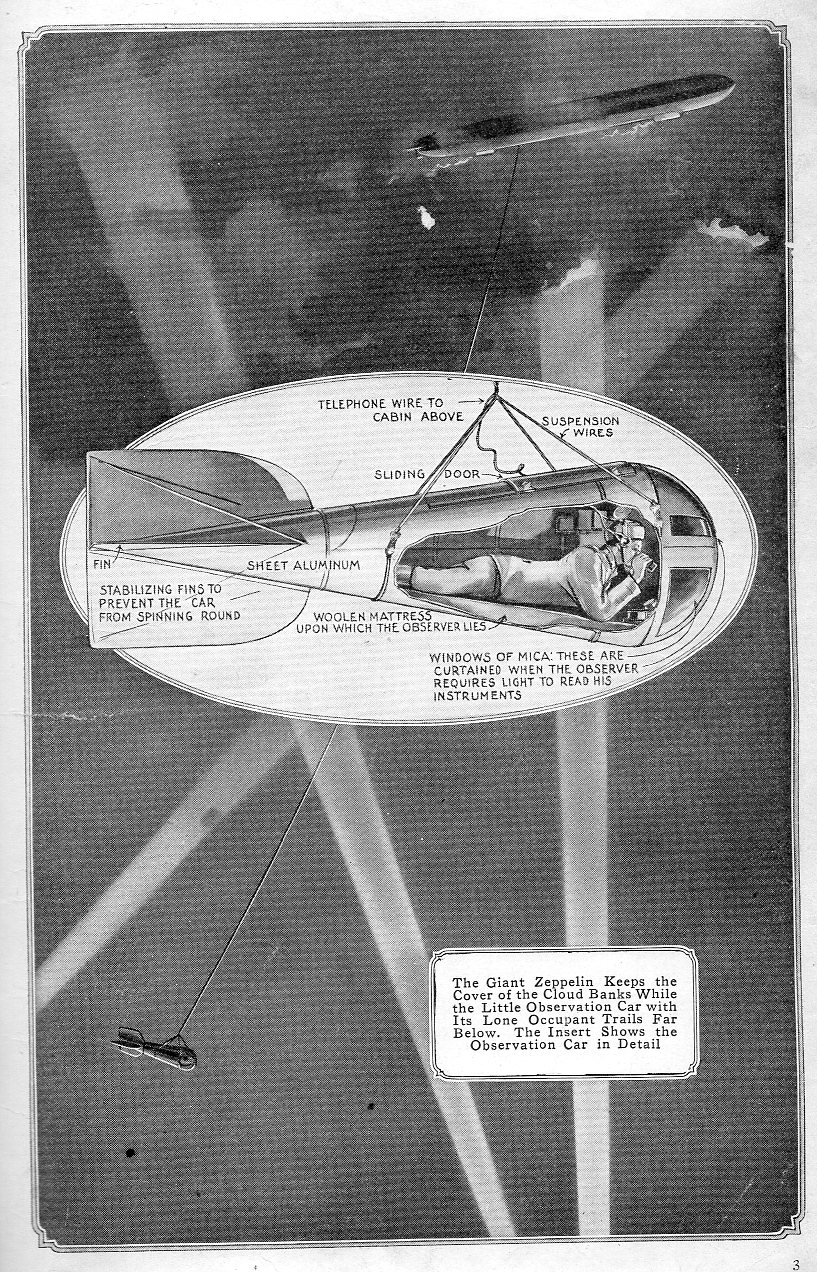
    I used to think that the belly gunner (in a ball turret) in a B-17 (or B-25, or PB4Y-1) was about the most dangerous/wrenching position to be in an aircraft–that is, until I saw this illustration in the January 1917 issue of Popular Mechanics:

    Aviation  zeppelin observation car472


    This was just a bad place to be, in a 14′-long bomb-like aluminum casing, hanging from a 3000′ 3/8″ cable suspended from a Zeppelin, trying to relay the positions of whatever you could find, and with people shooting at you. At least, though, the observer had a woolen mattress on which to lie (so says the caption).  

    ·Posted by :

    ·in:

    — —

  • Understating an Understatement: One Week Over Germany, March/April, 1945

    JF Ptak Science Books   Post 2622 Leafletone week of bombing469

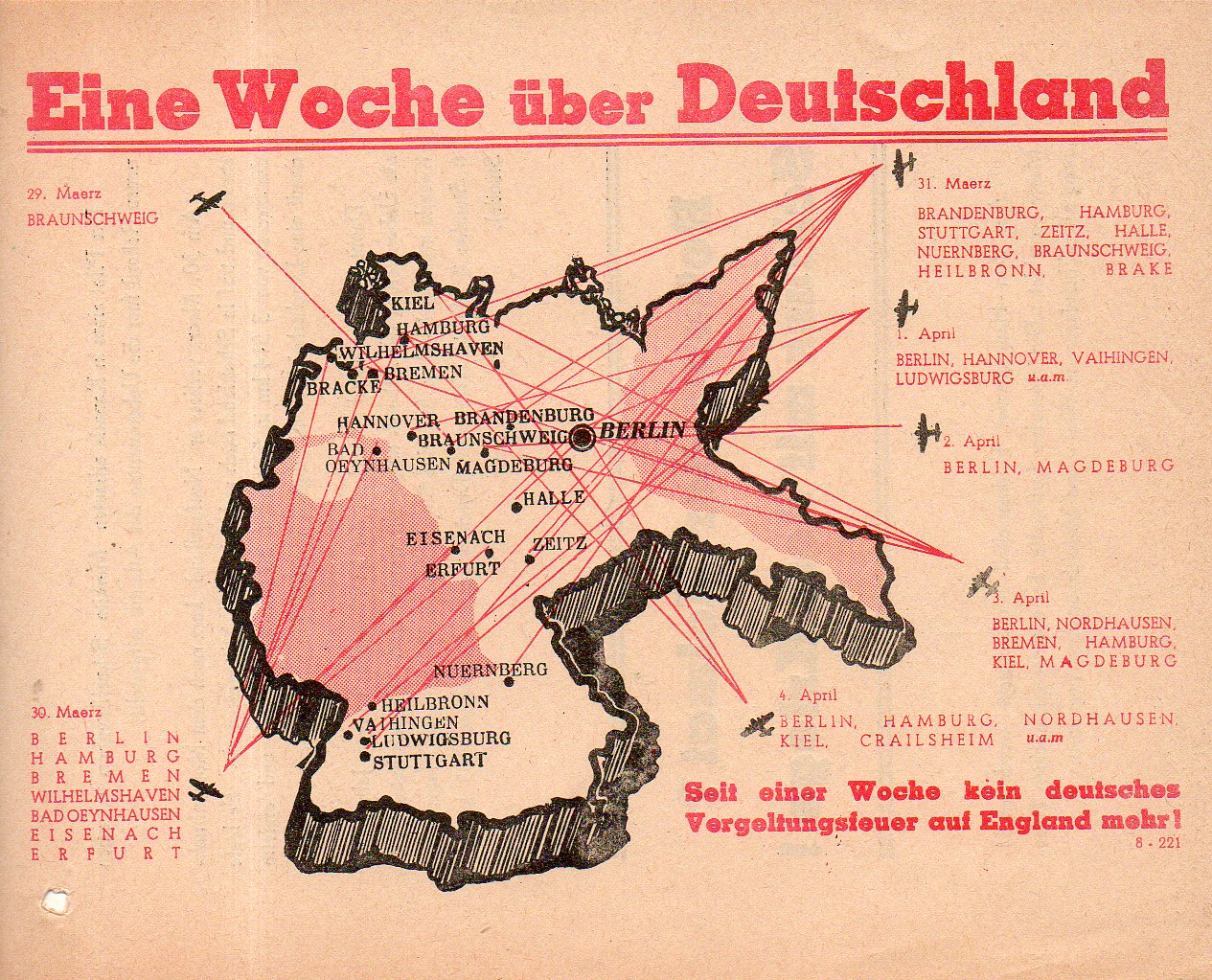
    Here’s a map the meaning of which was destined to be understood by even the most casual observer. It appeared on a propaganda leaflet distributed by the U.S. 8th Army and shows the Allied bombing campaign against Germany from 29 March to 4 April, 1945.  (Most of the action depicted here looks to be the U.S.A.A.F., though I haven’t gone through each and every bombing location.  I do know that in the last two weeks of the war that the Soviets used about as much bomb tonnage on Germany as was used by the Allies over the preceding two years.) The red lines show the destination of bombing raids, of which there are many for a seven day period, and for my reckoning this is not a complete listing.

    Perhaps this leaflet would have been even more provocative if it represented the number of planes on average that would participate in one of these missions, which would of course would be in general hundreds of aircraft. For example, for the raid on Hamburg on March 30 there were over 530 aircraft involved; and for the same location on the next day, another 469. Also there were another five raids on Hamburg over the week following this one depicted, including one on April 8/9 with 440 aircraft.  Also this week of raids takes place right after and before other series of massive raids, including a mission over Berlin on February 3 1945 involving 1000 B-17s and 575 Mustangs, followed 11 days later by the bombing of Dresden, which was followed three weeks later by incredible bombing of Tokyo. And later, on April 14, more than 2200 aircraft would take to the air.  As impressive and scary as this leaflet looks, it doesn’t really begin to approximate the amount of damage inflicted on Germany from the air. (One last example–the large raid on Crailsheim, where I happen to have been born, destroyed about 80% of the small city.)

    The title Eine Woch ueber Deutschland (“One Week Over Germany”) must have been disturbing for a soldier to read–particularly with the corollary at bottom, which stated that there was no German response so far as bombing England in retaliation was concerned.  By this point, the German soldier knew the situation was FUBAR, though I do not know if there is a good German translation for that.  


  • Tremendous Montage of Early Airships

    JF Ptak Science Books  Quick Post

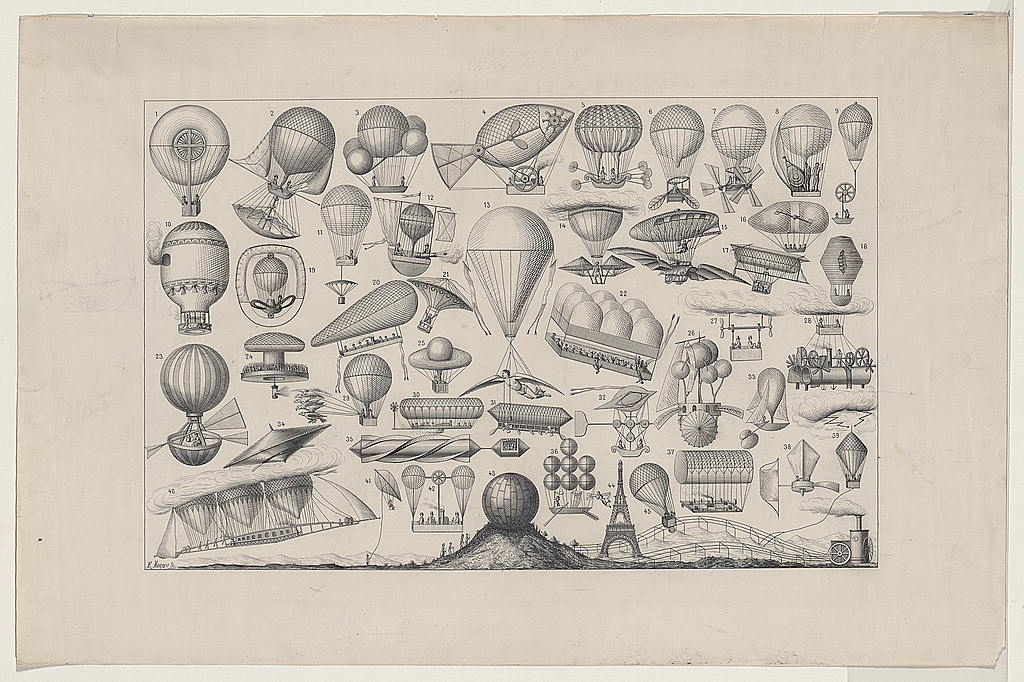
    I stumbled upont his fantastic illustration depicting nearly four dozen early balloons, many of which are a mystery to me. The image comes from the Library of Congress site, though the origin, title, and even the date of the engraving are unknown. It is known as “Balloons, airships, and other flying machines designed with some form of propulsion” though the title was bestowed by the library–one thing for sure is that it was engraved by “E. Morieu, and was printed between 1880-1905.   

    Airships from LC

    Source: Library of Congress [https://catalog.loc.gov/vwebv/search?searchCode=STNO&searchArg=2002722676&searchType=1&recCount=10]

    Somebody at the LC identified some of the airships, as follows: 

    •  “Single sheet with 45 numbered illustrations; lacking identification key.-  no. 18 shows a collapsible Montgolfier balloon from 1784; no. 23 is the design for a glider balloon as described in “Reflections on the aerostatic sphere,” 1783 (September); no. 24 depicts Jean-Charles (l’avocat) Thilorier’s plan for transporting troops across the English Channel to invade England, ca. 1800; and no. 32 shows the dirigible balloon glider used by Charles Guillé for an attempted ascension in Paris, November 13, 1814.”
    • Also, I know for sure that the last figure, #45, at bottom right, is a steam-powered balloon railway…

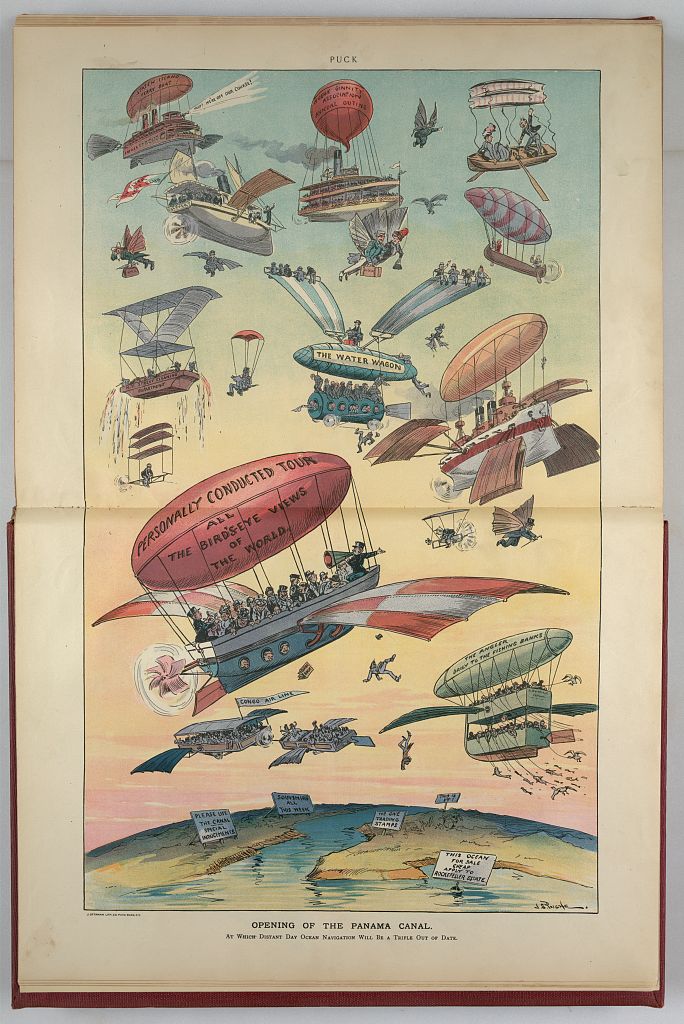
    There’s another fine image of fantastical airships below, also from the LC, and published in Puck, volume 59, no. 1509 (1906 January 31)–this shows the airships of the near future putting the Panama Canal out of business:

    Airship LC Puck

    Source: Library of Congress: https://www.loc.gov/resource/ppmsca.26030/?loclr=pin


  • Very Early Spotter’s Guide for Enemy Aircraft, London, February 1915

    JF Ptak Science Books  Quick Post

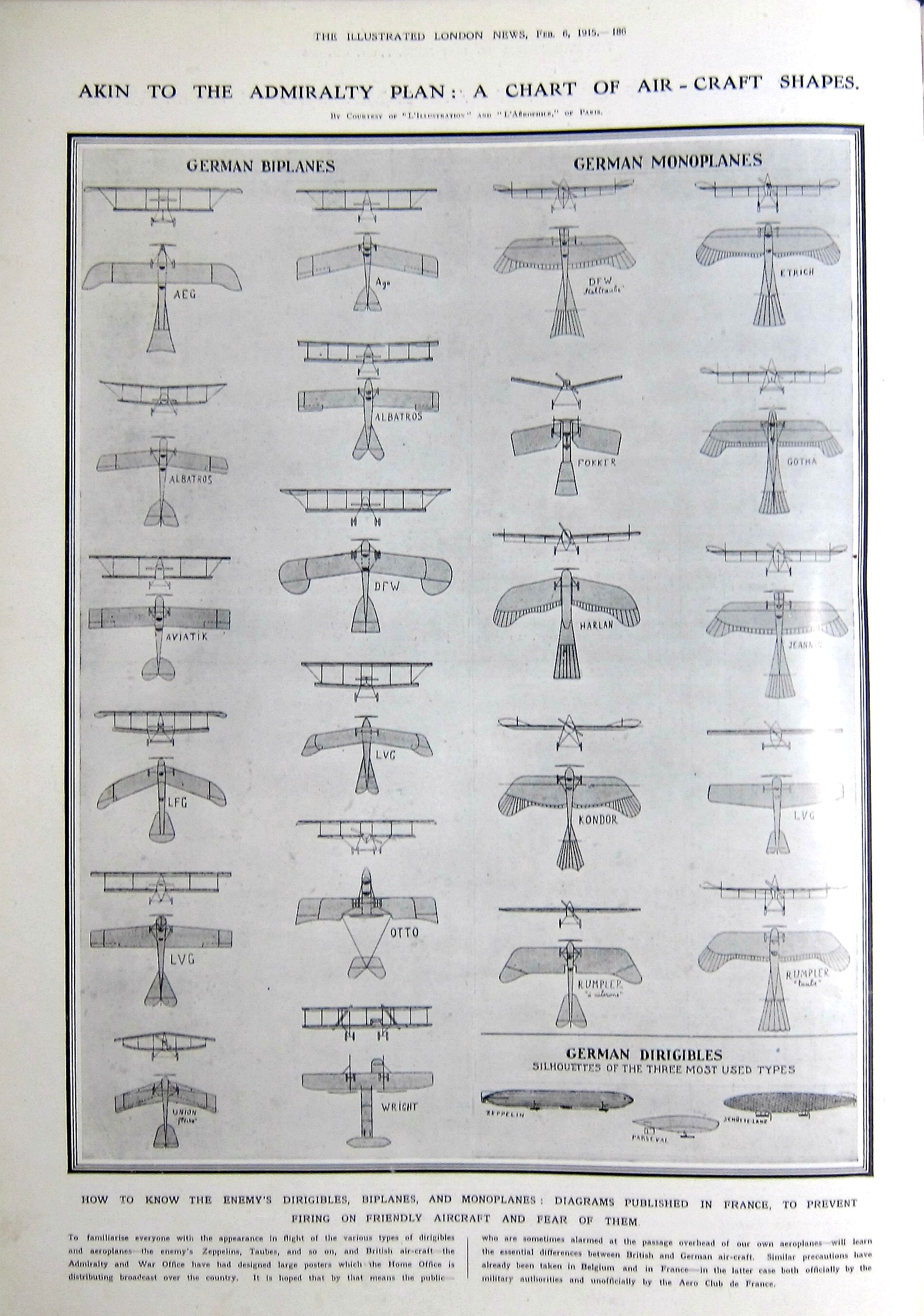
    It seems to me that this is the first time that a spotter’s guide to enemy aircraft appeared in The Illustrated London News for WWI–ditto the Illustrirte Zeitung.  I luckily own both journals covering the war years, and I’ve been through every page of coverage, and I do believe that this is probably a very early display of German aircraft identification for popular use.  Of course it couldn’t really get that much earlier, as the war was on for 150 days or so. And the “air forces” in general were very new–the German army received their first aircraft in 1910 for what would eventually become the  (for France it was 1911), so the concept of a unified fighting force of the air was still very new.  In another 1111 days or so, the aircraft losses for the Entente and the Central Powers would be about 110,000, or about 5,500 of these pages showing destroyed aircraft.  

    WWI Aviation German spotters guide


  • The Modern Rancher: Bombing Sheep from Planes (1917)

    JF Ptak Science Books  Quick Post

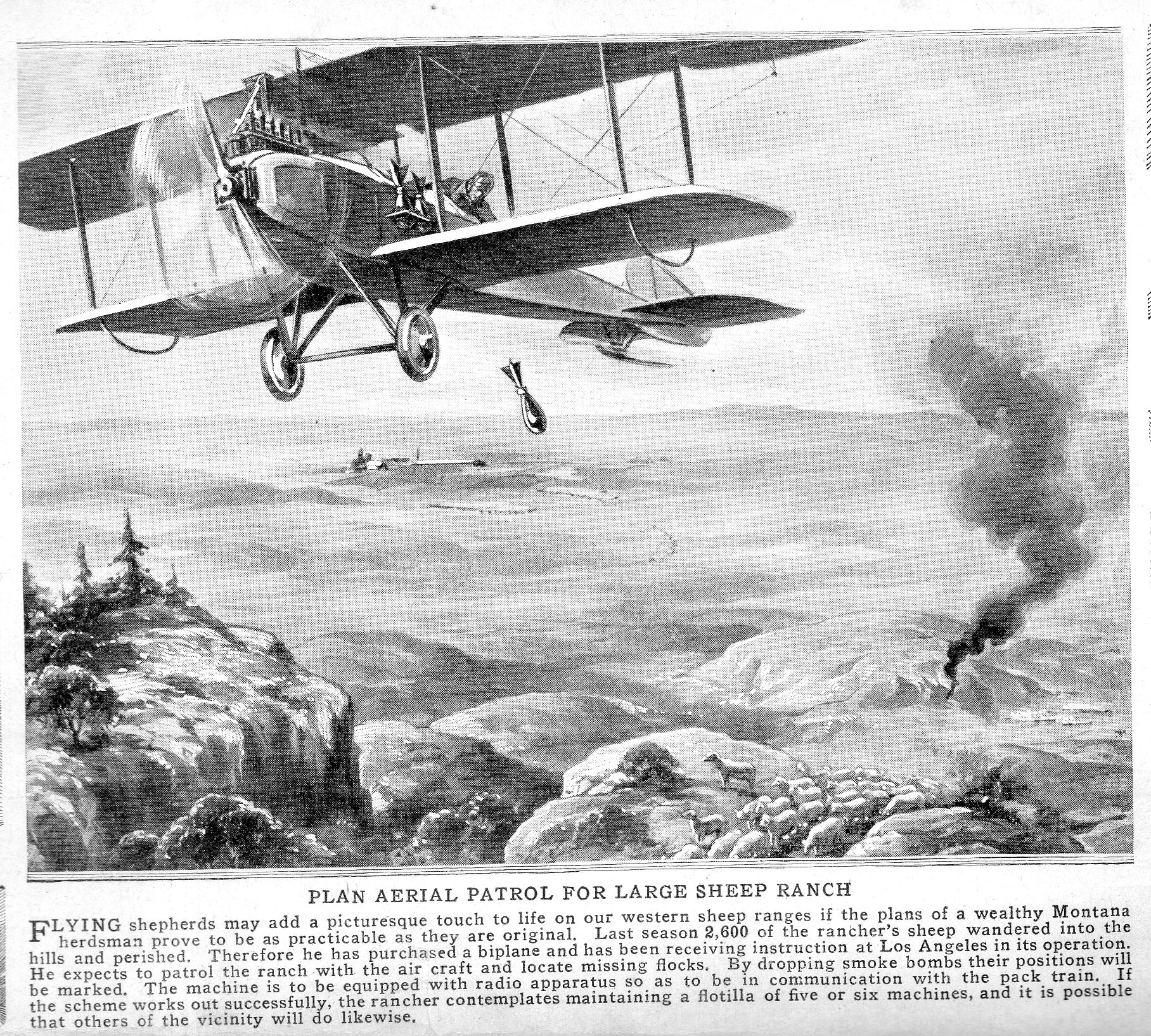
    I’ve made a number of posts to this blog on the history of aerial bombing, and throughout most of the early history of bombing (say up to the end of WWI) the vast majority of the uses of dropping bombs from airships and airplanes has been for killing people and destroying property and infrastructure. There has been an occasional stray article that I’ve found about delivering mail by non-exploding bombs–this to save time and fuel in landing/taking off (there have been other plans to deliver mail by rocket, but that is another story)–but the other uses of dropping b on things from the sky have been, shall we say, “limited”.  And then today I’ve stumbled upon this one–shepherding by dropping bombs near sheep.  This story, found in the pages of the June, 1917 issue of Popular Mechanics, details the plans of a wealthy Montana rancher to patrol his flock using aeroplanes and bombs. It is said in the caption that if the initial tests with the practice are successful that he may use six such planes at his ranch.  I’m looking for metaphors for this story, but the only thing I’m coming up with is adding a lot of exclamation points and underlinings to words like “leads” and “makes” in Psalm 23.

    Bombing sheep458

    ·Posted by :

    ·in:

    —

  • WWI Aircraft Identification Poster, 1915

    JF Ptak Science Books   Quick Post

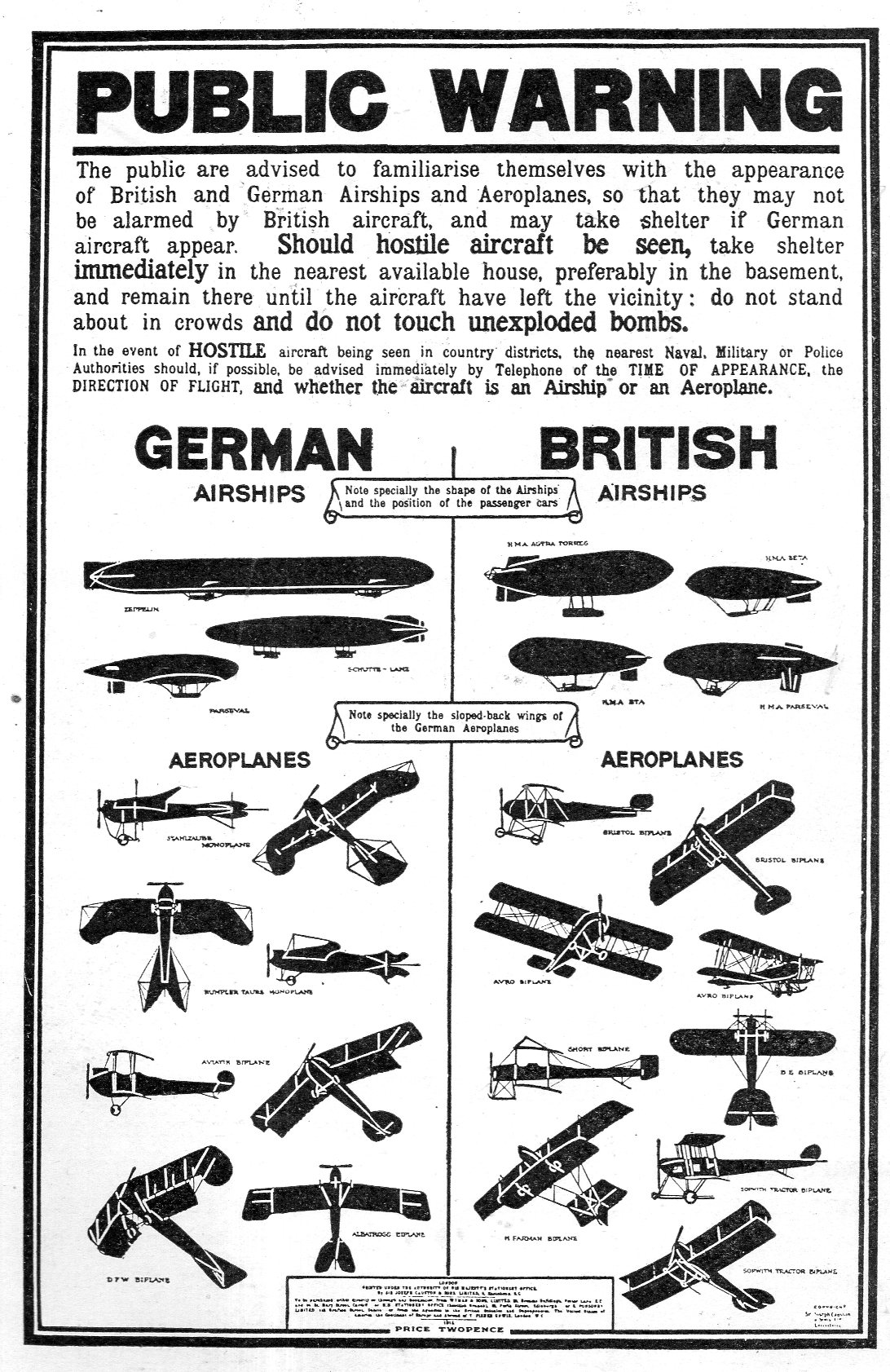
    “Public Warning” was a large, billboard-sized poster that appeared throughout England, posted in the first year of the war, appeared in Technical World Magazine in May 1915. Outside of delivering some good, solid information on behavior and bombing it supplied German/British aircraft silhouettes to help people distinguish between friendly/enemy aircraft, meaning that they could take cover and report the actions of enemy aircraft (valuable information in pre-RADAR days) and also not fret with British aircraft sightings. 

    Wwi poster public warning457

     The National Archives (U.K., http://www.nationalarchives.gov.uk/pathways/firstworldwar/transcripts/spotlights/public_warning.htm) transcribes the poster, identifying the aircraft (just in case you can’t read the text on the poster):

    ·Posted by :

    ·in:

    —

  • The Italian “Flying Cucumber”, 1915

    JF Ptak Science Books   Quick Post

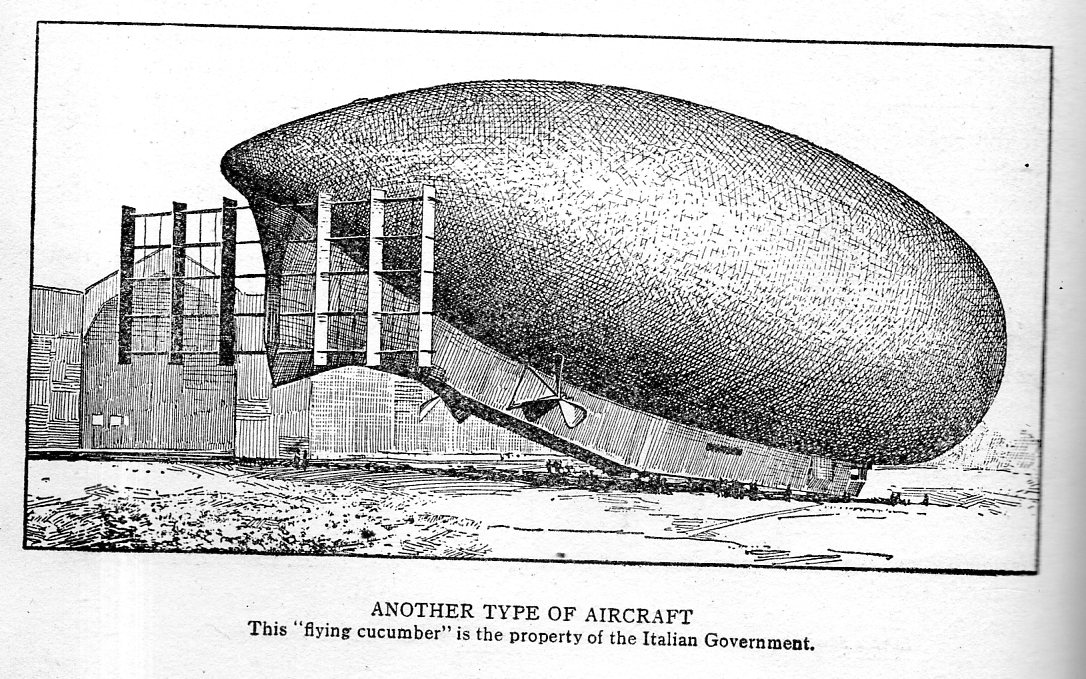
    Here’s an unusual (semi-rigid) airship designed by Enrico Forlanini (13 December 1848 – 9 October 1930, an Italian engineer, inventor and aeronautical pioneer), appearing in Technical World Magazine for May, 1915, and bearing the fetching caption “Another Type of Aircraft”.  It certainly was different, referred to here as the “flying cucumber”, though I doubt the Italians thought that.  In any even the airship went down in 1914 and was not a factor in the war.  

    Wwi aviati cucumber452